



Abstract
This article covers the impact of soil initial stress field heterogeneity (ISFH) in wave-passage analysis and in prescribed structural acceleration in the context of dynamic soil–structure interaction (DSSI) analysis. ISFH is directly related to the natural behavior of soil where a significant increase in net effective confinement, as is the case in the foundation soil under a building, tends to increase the soil’s modulus and strain. This creates a heterogeneous stress field in the vicinity of the foundation elements, which results in a modification of the dynamic behavior of the soil–structure system. A simple method for considering the impact of ISFH on the value of the soil’s modulus and strain was developed using the direct DSSI approach. The method was used to analyze numerical artifacts and its impact on the surface acceleration values of a nonlinear two-dimensional (2D) numerical soil deposit under transient loading. This analysis was followed by a sample application for a three-story, three-bay concrete moment-resisting frame structure erected on a deep soil deposit. Floor acceleration and relative displacement were used for comparison. The soil deposit was modeled using the typical geotechnical properties of fine-grained, post-glacial soil samples obtained in Eastern Canada from in situ geotechnical borehole drilling, geophysical surveys, and laboratory testing. Ground motion was based on eastern calibrated seismic signals. The results of the soil deposit analysis show that ISFH had a significant impact on surface acceleration values. The effect was found to be period-dependent and to have a direct impact on prescribed acceleration values at the base of structure. Thus, failure to take the effects of ISFH into consideration can lead to errors in calculating prescribed structural accelerations (i.e. over- or underestimation).
Keywords
Introduction
We have long known that the dynamic behavior of a structure is largely influenced by site effects during an earthquake (Reid, 1906). The first documented work in North America that provided a better understanding of this phenomenon was carried out by Rogers (1906) in the aftermath of the California earthquake of 1906, when it was observed that “the character of the foundation was a far more potent factor in determining the damage done than nearness to the fault line” (Reid, 1906: 49). The same observation was made in 1985, when the soft soil beneath Mexico City amplified the ground motion of the Michoacán earthquake and caused severe damage to many structures (Mitchell et al., 1986). More recent experimental work (Gajan and Kutter, 2008) and post-event reports (Avilès and Pérez-Rocha, 1998; Cubrinovski et al., 2011) made it clear that site effects, including dynamic soil–structure interaction (DSSI) (Stewart et al., 1999), play a major role in the dynamic response of a structure. This is particularly true for rigid structures built on deep, loose soil deposits (Stewart et al., 2012).
One common method for modeling DSSI is to use the simplified substructure approach (Kausel et al., 1978; Lysmer et al., 1975), which is based on the superposition principle for linear systems. This method involves analyzing the effects of so-called kinematic and inertial interactions using two separate models. Analyzing kinematic interactions in the time domain consists in examining wave propagation in the soil column, where massless structural foundation elements are included in the model, to obtain the foundation input motion (
The first effect is related to the soil moduli, which are known to be influenced by the level of confinement (Hardin and Black, 1968). This aspect is usually accounted for by imposing proper loads on a static soil model and calculating the increases in the soil moduli (shear, bulk, and Young’s) caused by the net increases in confining stress (Stewart et al., 2012). The values of the moduli are then recorded and serve as input in the dynamic soil model used to conduct the kinematic interaction analysis, where no structural loads from the structure are otherwise considered. In doing so, the initial state of confining stress associated with the moduli calculated in the first static soil model is not preserved in the kinematic analysis phase. This results in a kinematic interaction analysis where the soil moduli values are based on computation using the state of stress under the structural loads, while the actual state of stress in the model is that of the free field.
The second effect is related to the spatial distribution of the vertical load transferred from the structure. Because all footings have finite dimensions (B), loads from the structure are transferred to specific areas of the supporting soil, thus creating an anisotropic stress distribution within the soil’s elements. Consider the case of a single footing of width B, where net increases in the confining stress due to loads from the structure can be assumed to be bulb-shaped (Figure 1; Boussinesq, 1885).
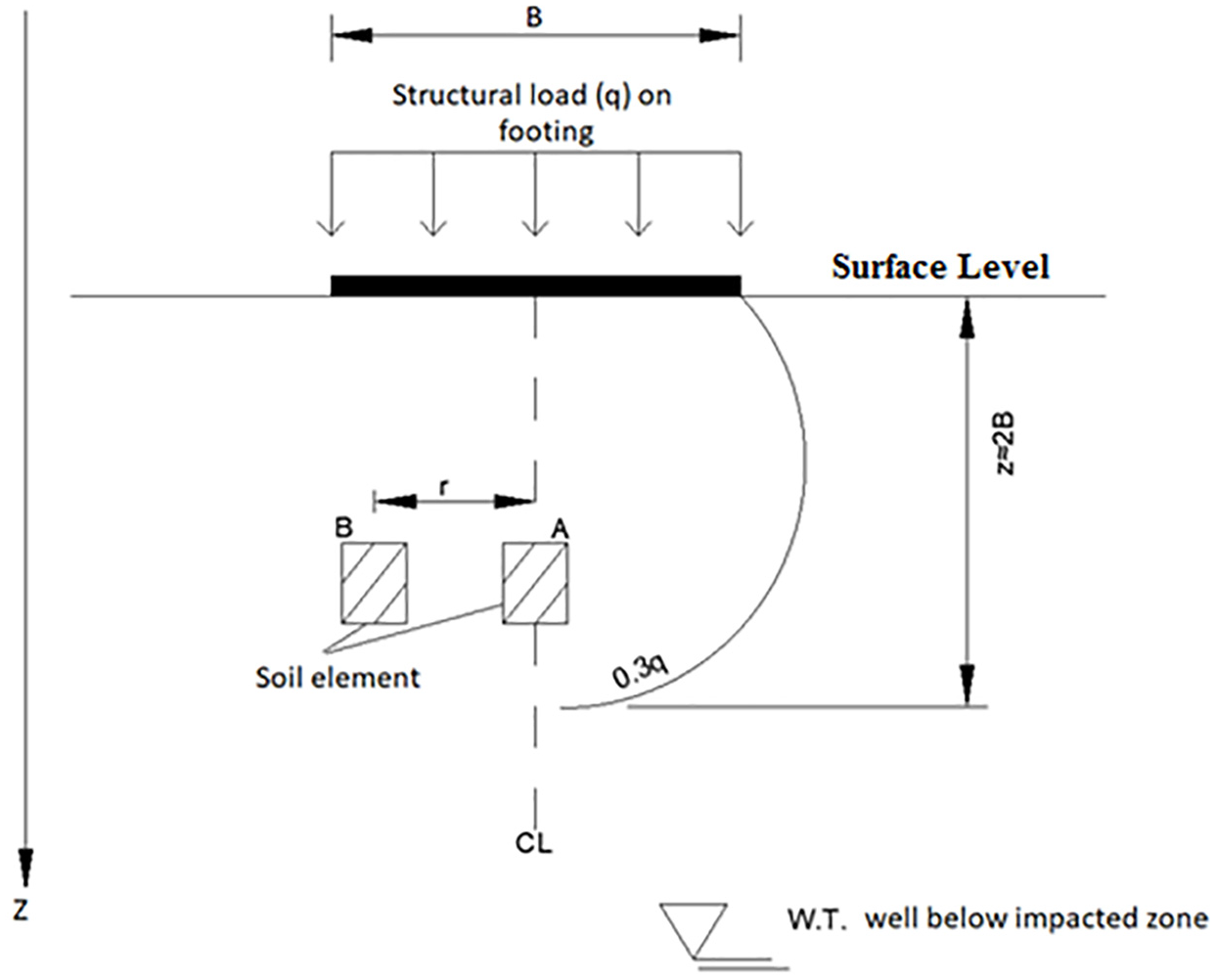
Transfer of structural load to supporting soil.
Before any structure is erected at a site under free-field conditions, the state of stress for elements at depth Z = B is shown in Figure 2a, where the ratio between the initial effective vertical and horizontal stress can be estimated using Jâky’s (1944) relation. Once the structure is built, structural load is transferred to the supporting soil, and the soil element centered under the footing (element A) is anisotropically consolidated beneath the structural load (Figure 2b). In the case of elements located at distance r from the center line (element B), the net increases in vertical stress are not symmetrical and can be depicted as triangular loading, as shown in Figure 2c, which indicates that the main stress axis is rotating as it generates a certain level of shearing stress on the vertical and horizontal planes.
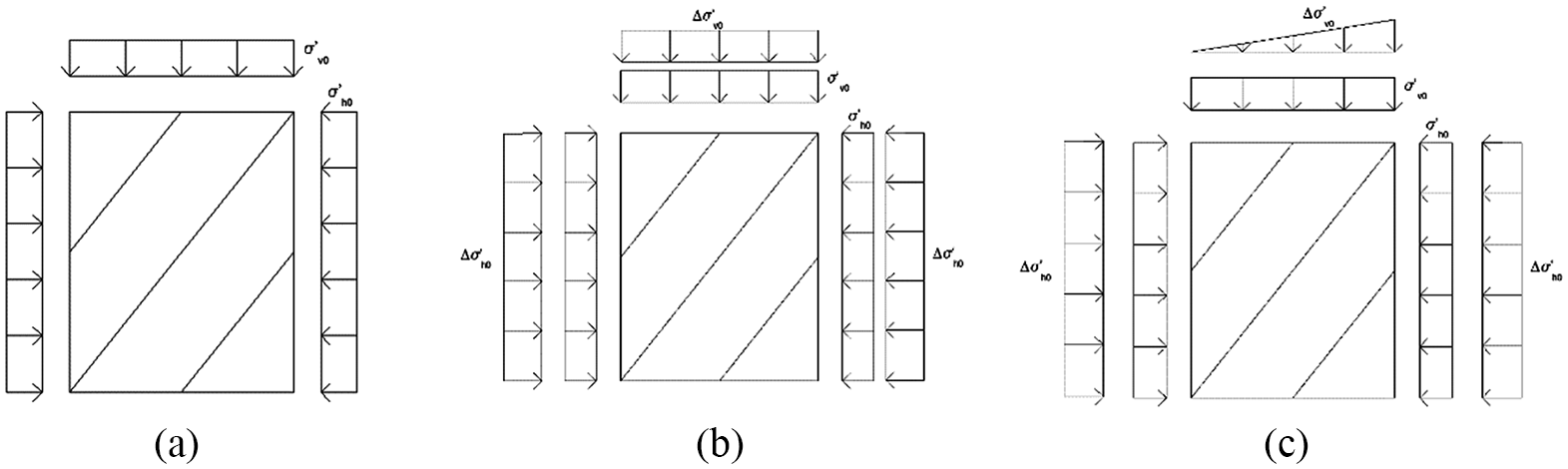
Stress applied to (a) soil element before construction (free field), (b) element A, and (c) element B.
Now, consider the state of stress under free-field conditions for point A and the state of stress at the same element but after construction (A′). When thought of in the classical p′-q plane of critical state soil mechanics, this change in stress can be thought of as passing from point A to point A′, as shown in Figure 3. The critical state line (CSL) represents an equation giving the magnitude of the deviator stress (q) needed to keep the soil flowing continuously as the product of a frictional constant (M) with effective pressure p (
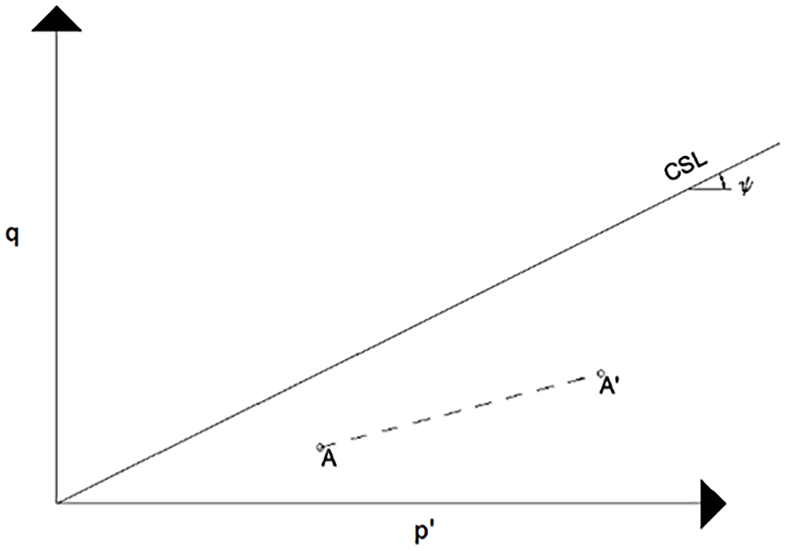
Evolution of the state of stress for element A—free field to construction (A–A′).
The angle of line AA′ with the spherical axis is given by
For soil element B, the picture is more complicated and depends on the solution to the eigen problem, which will give the rotation of the principal planes and allow for calculation of deviatoric and spherical stresses. At a given depth, this solution will largely depend on the relative position of the element with regard to foundation CSL (Figure 1). Because net increases in stress depend upon both depth and distance to the foundation, direct calculation is cumbersome. However, using a direct approach to the DSSI model, the stress within each element can easily be computed. The problem can thus be managed with the proper selection of element sizes. In any case, the results are the same as for element A, namely, a different initial position for the stress path and a different distance to the CSL.
The cumulative impact of these two shortcomings of the usual substructure approach is that the initial state of stress in the supporting soil element is different than what would be expected under actual loading conditions, resulting in an incorrect initial position on the p′-q plane.
The objective of this article is thus to examine the effect of ISFH in a nonlinear, DSSI finite-element analysis conducted in the time domain using the direct approach in the geo-tectonic context specific to Eastern Canada and evaluate its impact through an application example. The work is presented in two parts.
In part 1, the algorithm developed to analyze ISFH is presented along with its theoretical background. The algorithm was implemented as part of a finite-element program developed in-house using the OpenSees (OS) platform (McKenna et al., 2010).
In part 2, the algorithm developed in part 1 is included in a complete DSSI analysis of a building resting on the same soil deposit to determine the impact of including the effect of ISFH on the dynamic behavior of the structure. The building was a three-story, three-bay reinforced-concrete (RC), moment-resisting structure with masonry infill walls typical of school buildings found in the province of Quebec (Canada) in the 1960s. The dynamic response of the building was analyzed by comparing floor accelerations to relative displacements.
Soil properties were carefully selected based on data from an actual soil deposit that yielded high-quality in situ and laboratory geotechnical and geophysical data (Crow et al., 2017). The site, a deep, sensitive clay deposit in Eastern Canada, was selected for its high potential for DSSI effects. In both parts 1 and 2, the strong ground motion used was compatible with Eastern Canadian earthquakes characterized by a high-frequency content (Atkinson and Boore, 1995).
Methodology
This section covers the selected soil deposit data, the details of the numerical soil model, the stress–strain relationships used, the simulation plan for both parts 1 and 2, and the strong ground motion used for transient loading.
Selected soil deposit
The selected soil deposit is located close to the Quebec–Ontario border, in the Pontiac area called the Breckenridge Valley, which is part of the Champlain’s sea pool (Quigley, 1980). This deep soil deposit is mainly composed of post-glacial marine clay and silt with higher concentrations of sand at depths greater than 63.9 m. Sampling was stopped at this depth due to the artesian conditions present in the region. Geophysical measurements estimated the depth of the soil deposit at 85 m (Hunter et al., 2010). The mean plasticity index (PI) of the collected samples was 37. The exhaustive in situ geotechnical testing, geophysical measurements, and laboratory testing carried out on the selected soil deposit by the Geological Survey of Canada (GSC; Crow et al., 2017) allowed for a clear definition of the site’s geotechnical properties. The water table at the site was estimated to be approximately 5 m deep. The laboratory testing was conducted by the GSC and Duguay-Blanchette (2016). The geotechnical data used in the laboratory tests included unremoulded shear resistance (Cu-fc) and remolded shear resistance (Cr-fc) obtained from the Swedish fall cone test, the Atterberg limits, and the determination of grain size distribution and water content (w). In situ variations in shear wave velocity (Vs), undrained shear resistance (
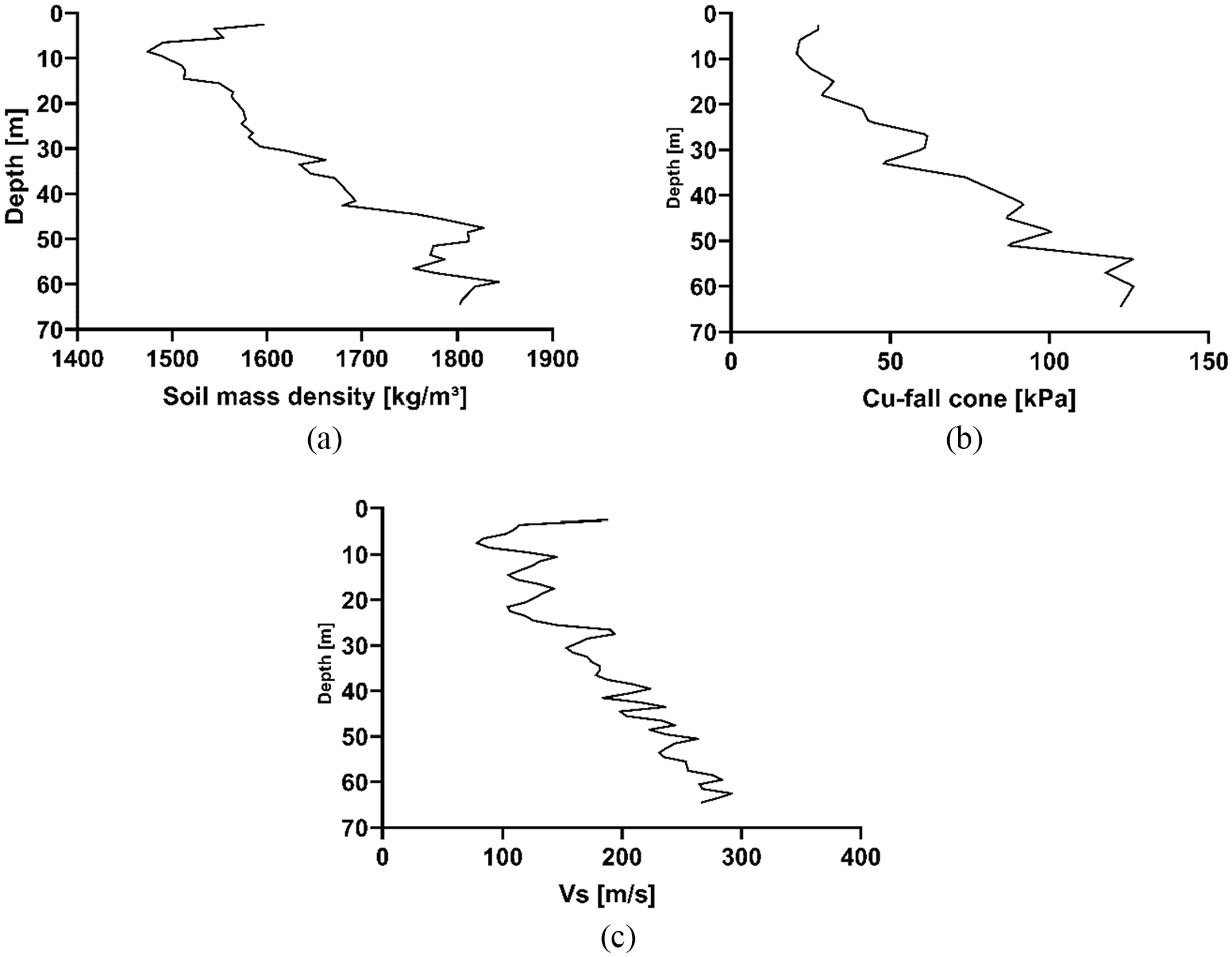
Geotechnical profile of soil deposit: (a) soil mass density (ρ), (b)
Figure 5 shows the water content (w) and effective (
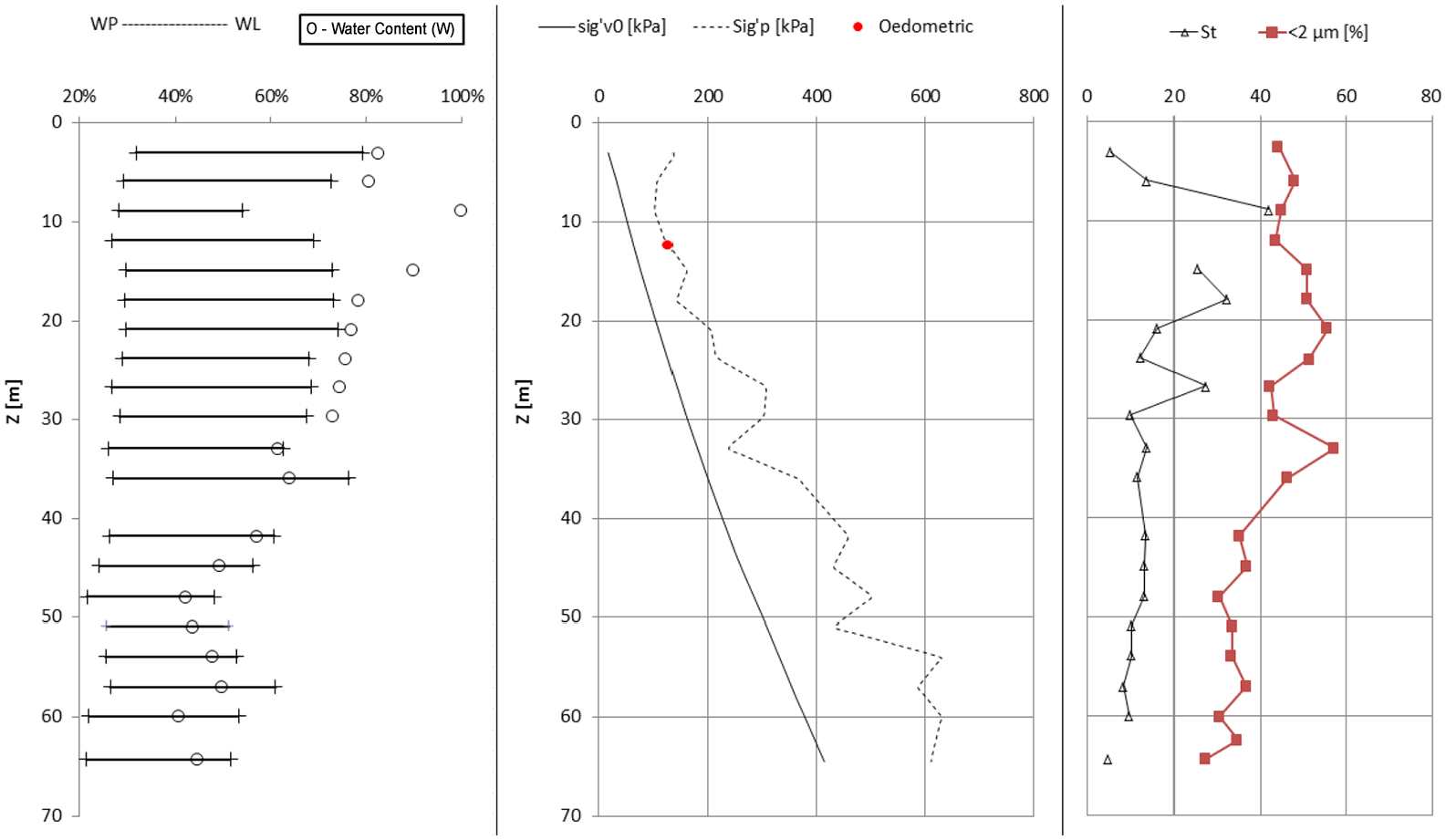
Water content, effective and preconsolidation stress, sensitivity, and percentage of clay as a function of depth (Crow et al., 2017).
Preconsolidation stress and sensitivity values were estimated using the empirical correlation developed for Champlain Sea clay (Leroueil et al., 1983). The result of the oedometer test conducted at depth z = 12.35 m (Duguay-Blanchette, 2016) differed from the empirical calculation of 2.37%. The geophysical measurements of Vs with depth are shown in Figure 4c. The shear wave velocity (Vs) and soil mass density (

The basic geotechnical values used to define the PressureIndependMultiYield (PIMY) material were ρ,

Numerical soil model
All soil models and numerical simulations were carried out using the OS finite-element platform, which allows for nonlinear dynamic analysis of large numerical systems. Each soil model was built as a two-dimensional (2D) assembly of plane-strain, quadrilateral, stabilized single-point, isoparametric elements (McGann et al., 2012). Mesh dimensions were selected in accordance with the standard conditions for accurate wave propagation of up to 25 Hz (Kuhlemeyer and Lysmer, 1973) (
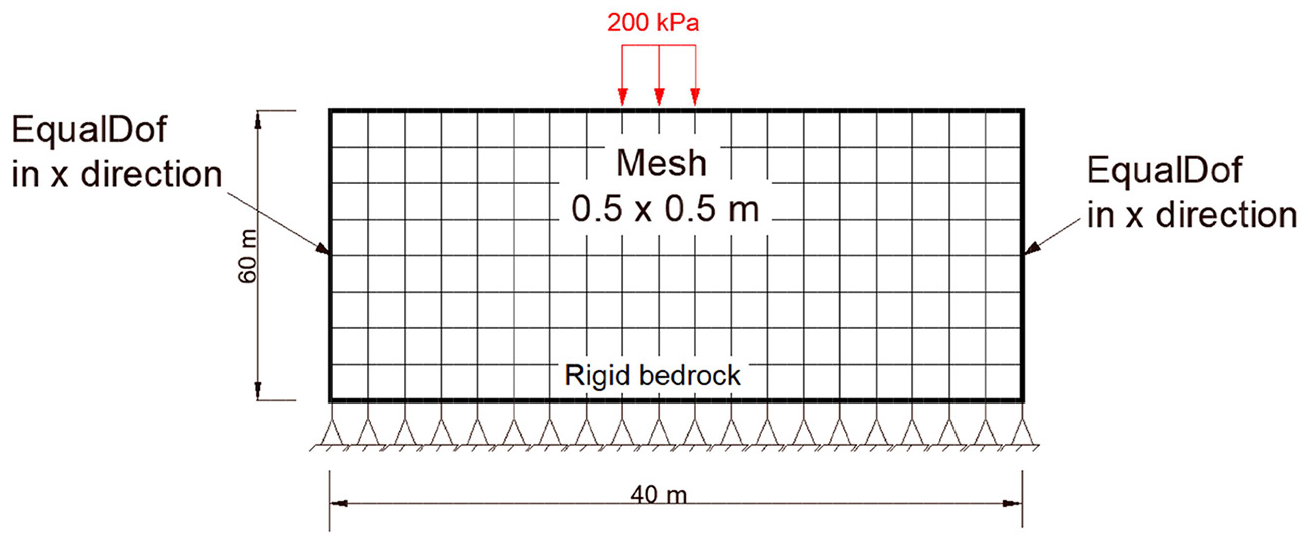
Schematic view of coupling relation on numerical lateral frontier.
Lateral confinement was applied using lateral force on each node of the artificial lateral boundary. The values of these loads were determined in the preliminary static analysis stage by attaching highly rigid springs to soil elements. The forces in the springs were recorded and used as values for the load intensity. The bottom boundary was considered fixed in the vertical direction and free in the horizontal direction. In all models, a low level of numerical damping was injected to filter out parasitic noise from the Newmark algorithm by selecting γ = 0.6/β = 0.3025 (Boulanger et al., 1999). This necessary numerical damping is related to the resolution algorithm and should not be confused with other sources of damping, which are naturally present in any dynamic system (e.g. material damping). Because all components of our models were nonlinear, physical source of damping were implicitly considered via their material formulation. Hence, Rayleigh damping, which is commonly used in elastic analysis to account for damping in a general manner, was not necessary.
Constitutive soil model
The nonlinearity of soil was achieved using PIMY (Yang et al., 2003) material, a constitutive stress–strain relationship defined in the OS software. The PIMY material, which is based on the Prevost (1985) multisurface plasticity theory, features a series of nested yield surfaces of increasing dimension based on J2 criteria, which make it possible to consider soil hardening at small strain. The number of yield surfaces can vary from 1 to 40. The backbone curve of the PIMY material is defined piecewise in relation to the number of yield surfaces (Figure 7) and is thus an approximation of the Ramberg– Osgood model (Ramberg and Osgood, 1943). Alternatively, the user can define their own backbone curve by providing a series of
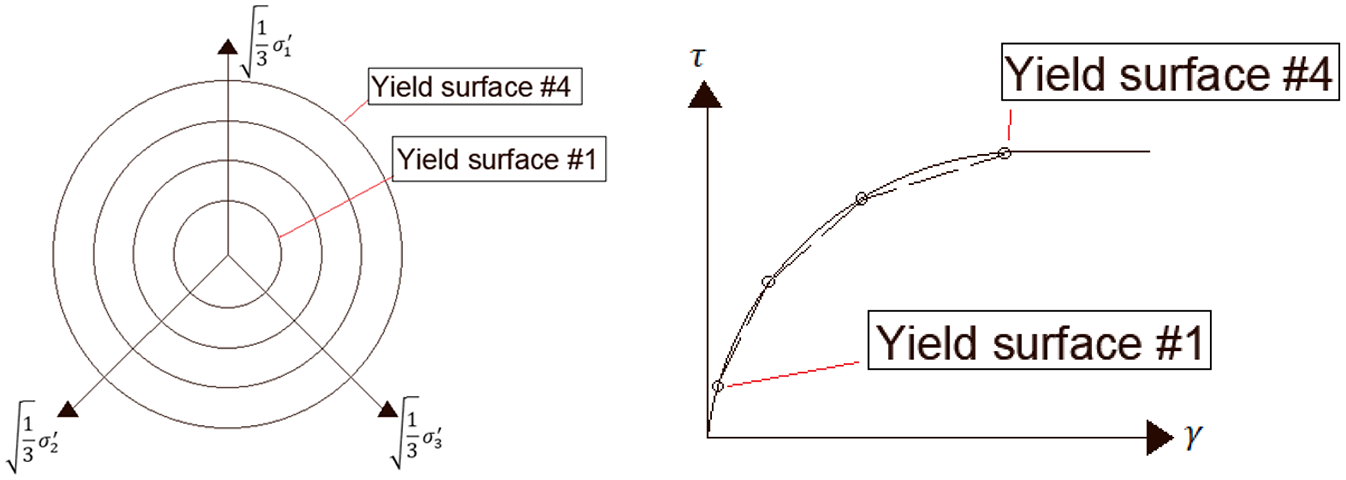
Nested surface and skeleton curve of the PIMY material.
Simulation plan
The simulation plan was divided into two stages. In the first part, the effect of ISFH was evaluated by comparing the surface acceleration of three numerical inelastic models to a series of calibrated seismic signals specific to Eastern Canada.
In the second part, an example application of the developed procedure was used in a DSSI problem involving a three-story, three-bay structure resting on the soil deposit used in part 1.
Simulation plan—part 1
The calculated surface accelerations were used to produce elastic response spectra (ERS) with 5% damping, which were then used as a basis of comparison between the models. A site-specific updating process described in the section on the impact of modulus values below was then developed to obtain the spatial distribution of moduli G and K under the applied load, as shown in Figure 6.
The results of the PIMY-IND model served as a benchmark for evaluating the impact of soil ISFH. For this model, the iterative process for the G and K moduli was not implemented and standard nonlinear analysis was conducted.
The results of the PIMY-DEP model served to evaluate the impact of the updating procedure itself. In this model, the iterative process was applied while keeping all other aspects similar to those of the PIMY-IND model. The results of the comparative analysis conducted using the ERS calculated from the surface accelerations were then used to assess the impact of the updating process.
In the last model, PIMY-DEP200, the iterative process was implemented with a surface stress of 200 kPa. The surface pressure was applied as vertical load on three distinct nodes, resulting in a footing of width B = 1 m. This surface stress created a net increase in the soil confinement, which dissipated with both depth and width. A comparative analysis was then conducted using the ERS calculated from the surface acceleration obtained with this model. Table 1 provides an overview of the simulation plan.
Parameters of the simulation plan—part 1
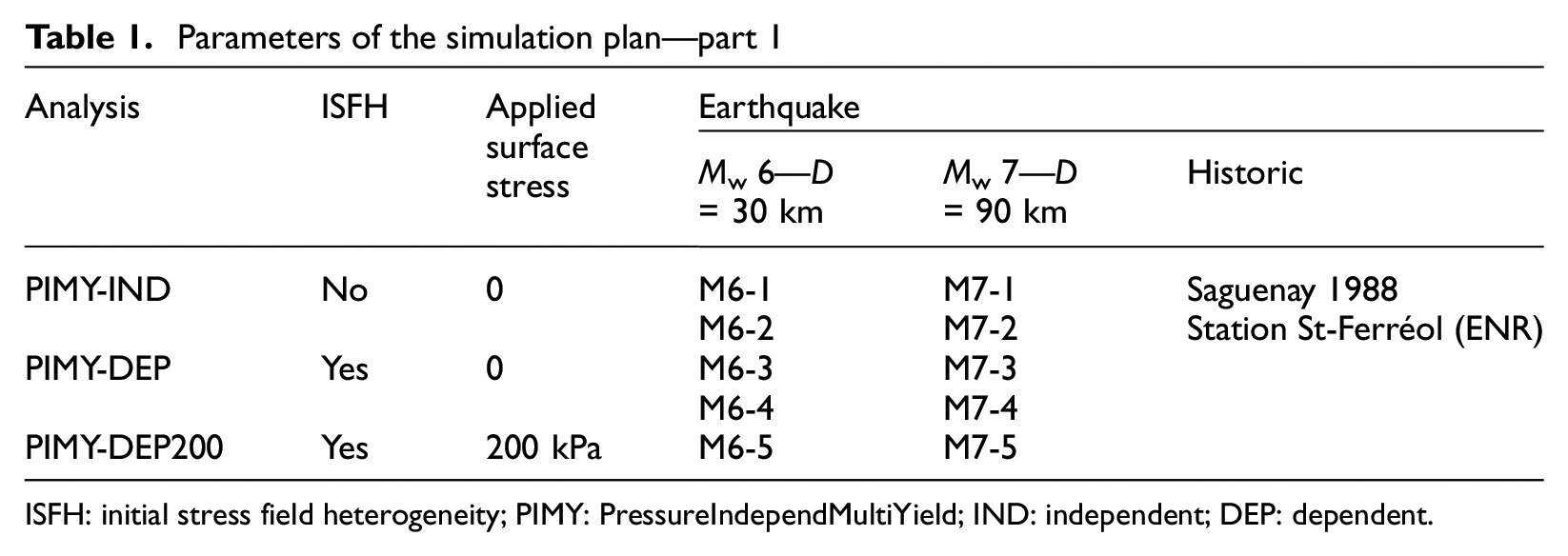
ISFH: initial stress field heterogeneity; PIMY: PressureIndependMultiYield; IND: independent; DEP: dependent.
Simulation plan—part 2
In part 2 of the simulation plan, the impact of ISFH on floor acceleration and relative displacement was examined by analyzing the DSSI effect on a three-story, three-bay structure (Figure 17) resting on the soil deposit described above. The direct approach was used to evaluate the impact of DSSI on the structure. In a first series of analyses (M1), the effect of ISFH was disregarded, while in a second series of analyses (M2) it was considered using the process outlined in the section on the impact of modulus values below. The dynamic input used constituted the complete set of signals described in the following subsection.
Ground motion
The seismic signals used for the dynamic analysis were 10 eastern-specific synthetic signals (Atkinson and Assatourians, 2008) and one historical accelerogram (Mitchell et al., 1989). Each signal was calibrated against the National Building Code of Canada standard NBCC-2015 (National Research Council Canada (NRCC), 2015) design spectrum for rock conditions for a class-A site in Quebec City using the spectral time domain method wavelet algorithm (Abrahamson, 1992). The earthquake magnitude and distance (M-R) considered in the calibration of the seismic signals were scenario 1 for 0.075 ≤ T ≤ 0.5, M-R = 6-30 and scenario 2 for 0.5 ≤ T ≤ 4 M-R = 7-90 (Halchuk et al., 2007). Each dynamic signal was applied at the base of the soil profile, which was considered to be the rigid bedrock. Table 2 provides the peak ground acceleration (PGA) values for each of the 10 calibrated synthetic signals.
PGA of selected synthetic signals
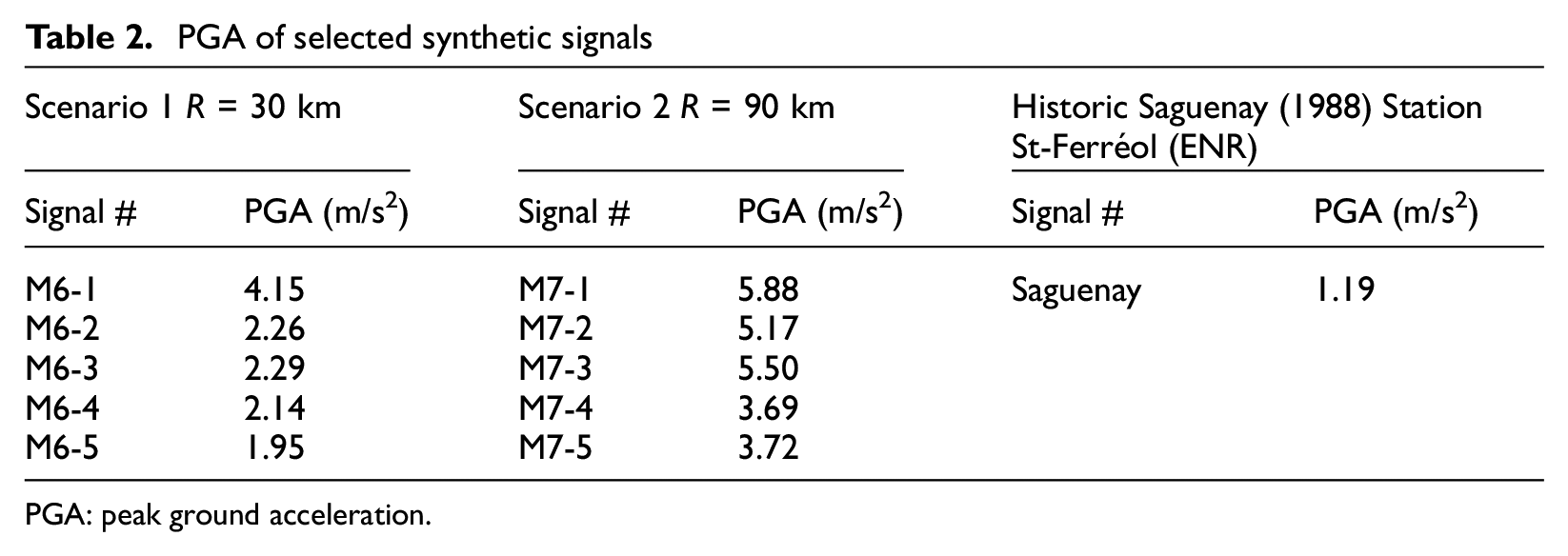
PGA: peak ground acceleration.
The ERS for the signals calibrated to a maximum of 2 s for scenario 1 are provided in Figure 8a and those for scenario 2 are shown in Figure 8b.
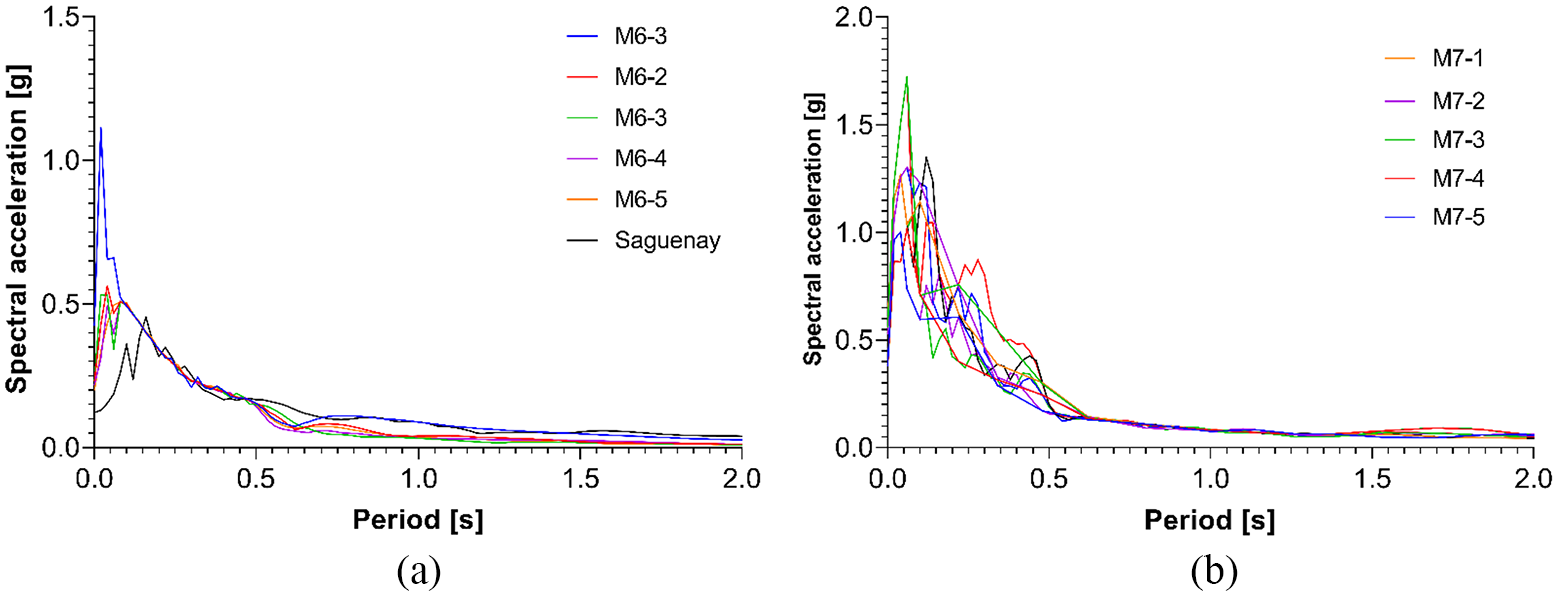
ERS (5%) for calibrated ground motion applied to the base of the model: (a) Mw = 6 and Saguenay (b) Mw = 7.
Modeling of soil stress field heterogeneity
Static initialization of the in situ state of stress
For every numerical model, prior to conducting any dynamic analysis, an initial, static analysis was carried out where the value of the effective stress,
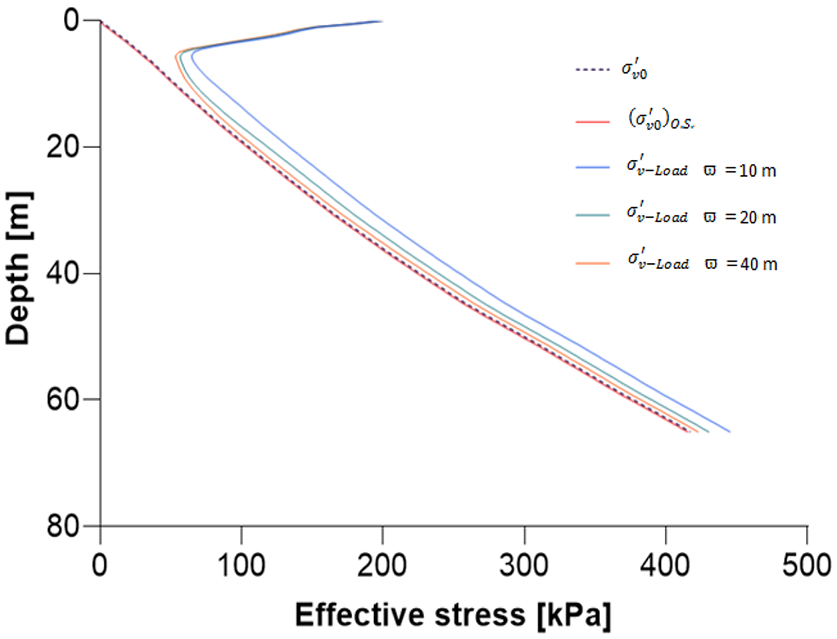
Comparison of
For model PIMY-DEP200, the state of effective stress under the 200-kPa surface pressure applied at the center of the model (
Impact of modulus values
This section outlines the procedure followed to calculate the values of the G and K moduli in relation to the value of the effective stress within the element considered. This approach was used for models PIMY-DEP and PIMY-DEP200. In the following sections, we first describe the method and then demonstrate its applicability and its impact in a dynamic analysis.
Estimation of G and K values
Structural loads transferred into the soil result in a heterogeneous increase in the effective stress field in the foundation soil. Previous works have shown that for clay material, there is a dependency of

where
To do so, the value of

A first static analysis of the numerical model was then run, in which the values of

The associated values of Knumerical were then calculated using Equation 2, and the numerical values of
Difference in modulus as artifact of numerical formulation
Theoretically, the values of
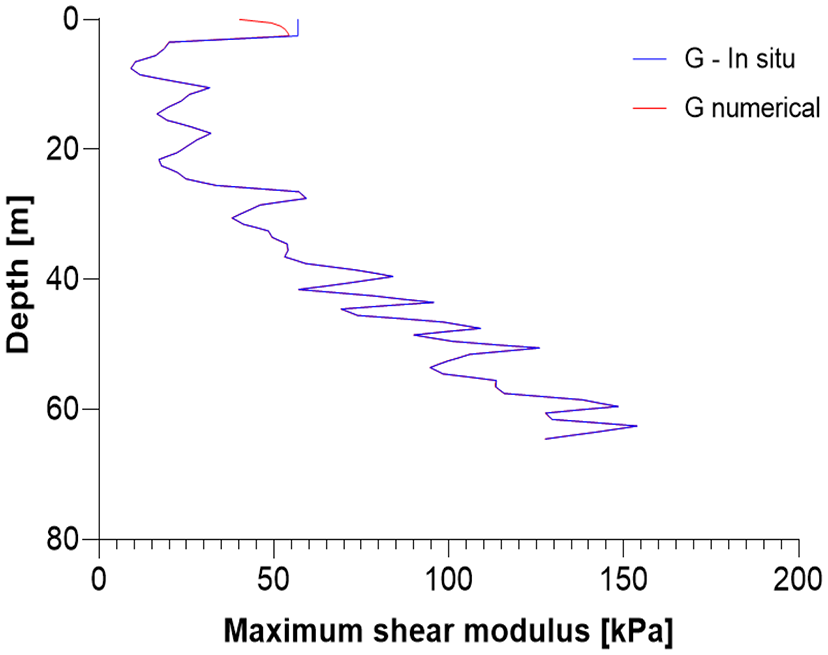
Comparison of G from in situ value and numerical value with depth.
As can be seen from the results, the numerical and in situ values are relatively similar. The mean difference throughout the depth of the soil deposit for z > 3 m is +0.27% (
Since the difference between the calculated and numerical value of
However, in a case where no loading is applied (see model PIMY-DEP in Table 1), it is likely to result in a difference between the dynamic analysis of the soil column using
Numerical impact of ISFH
Figure 11a shows the distribution of
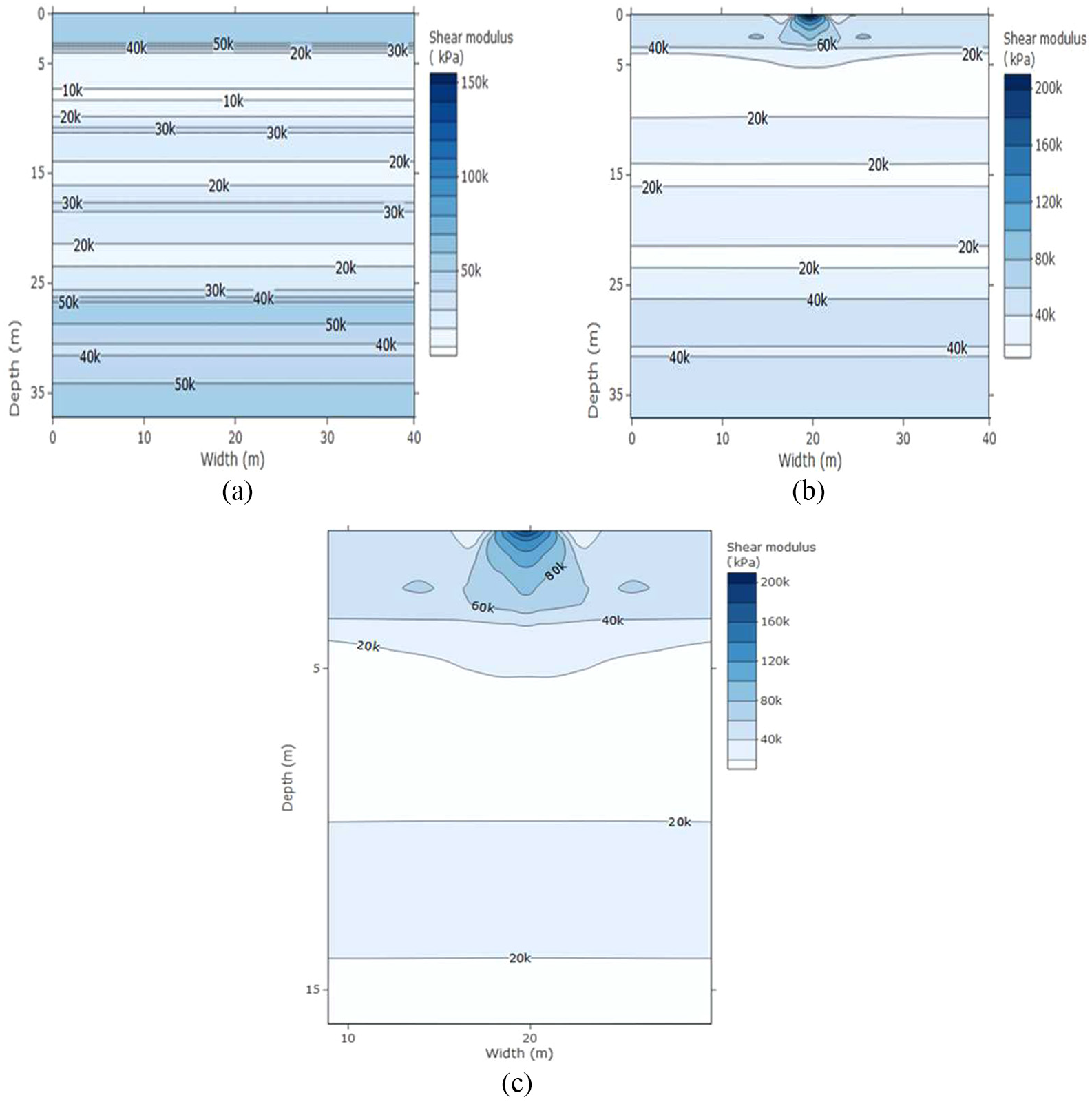
Comparison of impact of ISFH on spatial distribution of moduli values obtained from PIMY-DEP200 analysis: (a) no ISFH, (b) ISFH effect included, and (c) zoom of impacted zone.
As can be seen from the results, the impact of the increase in stress creates a spatial distribution of the value of
Part 1: ISFH analysis results
This section presents the results of the dynamic analysis conducted using the three models described in the “Methodology” section. For each model, the dynamic signals were applied at the base of the soil and surface accelerations were recorded at the surface of the soil deposit. These accelerations were then used to calculate a surface ERS, which served as the basis of comparison between the models.
Results of numerical artifact evaluation
This section provides the results of the evaluation of numerical artifacts used for the above-mentioned ISFH calculation under nonlinear dynamic conditions. Model PIMY-IND, for which no ISFH was calculated, served as the benchmark. Model PIMY-DEP, where ISFH was calculated but no surface load applied, served as the comparative model.
Figure 12a compares the mean ERS value obtained from the surface accelerations calculated using models PIMY-IND and PIMY-DEP for signal Mw 6 and historical earthquake data. Figure 12b compares the mean ERS value obtained from the surface accelerations calculated using models PIMY-IND and PIMY-DEP for signal Mw 7.
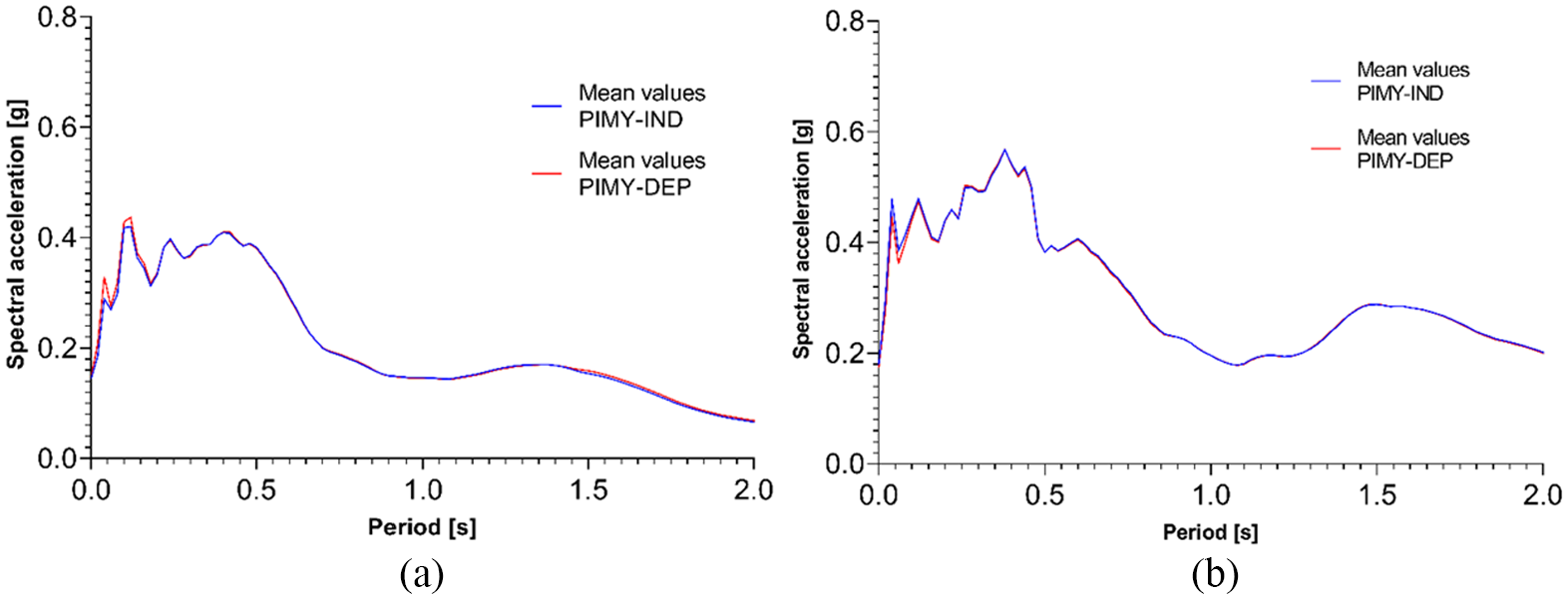
Comparison of the elastic response spectra with 5% damping for Mw 6 earthquake using (a) in situ value and (b) numerical value without surface pressure.
As can be seen, both models produced similar results, which means that the algorithm induced limited error. The greatest differences between the mean values from models PIMY-IND and PIMY-DEP are 0.04 g at T = 0.04 s for Mw 6 and 0.04 g at T = 0.04 s. Therefore, although present, the numerical artifacts remained insignificant and did not significantly alter the dynamic response.
Results of ISFH calculation
This section compares the results of the dynamic analysis conducted using models PIMY-DEP and PIMY-DEP200. In model PIMY-DEP200, ISFH was considered and a pressure of 200 kPa was applied at the soil surface.
The ERS in Figure 13a and b show the respective results from models PIMY-DEP and PIMY-DEP200 for signal Mw 6. There is clearly a difference in amplitude, particularly in the short range (T < 1 s). As expected, the difference in acceleration amplitudes is period-dependent, meaning that the difference between models PIMY-DEP and PIMY-DEP200 is not constant throughout the time period in question but rather varies from period to period. For example, at T = 0.2 s, the difference between the PIMY-DEP200 and PIMY-DEP maximum acceleration values is 0.0357 g (8.87%), while at T = 0.5 s, it is 0.0034 g (0.74%). For some periods, such as T = 0.4 s, the maximum acceleration values from the PIMY-DEP200 model are lower than those from PIMY-DEP (−0.88%).
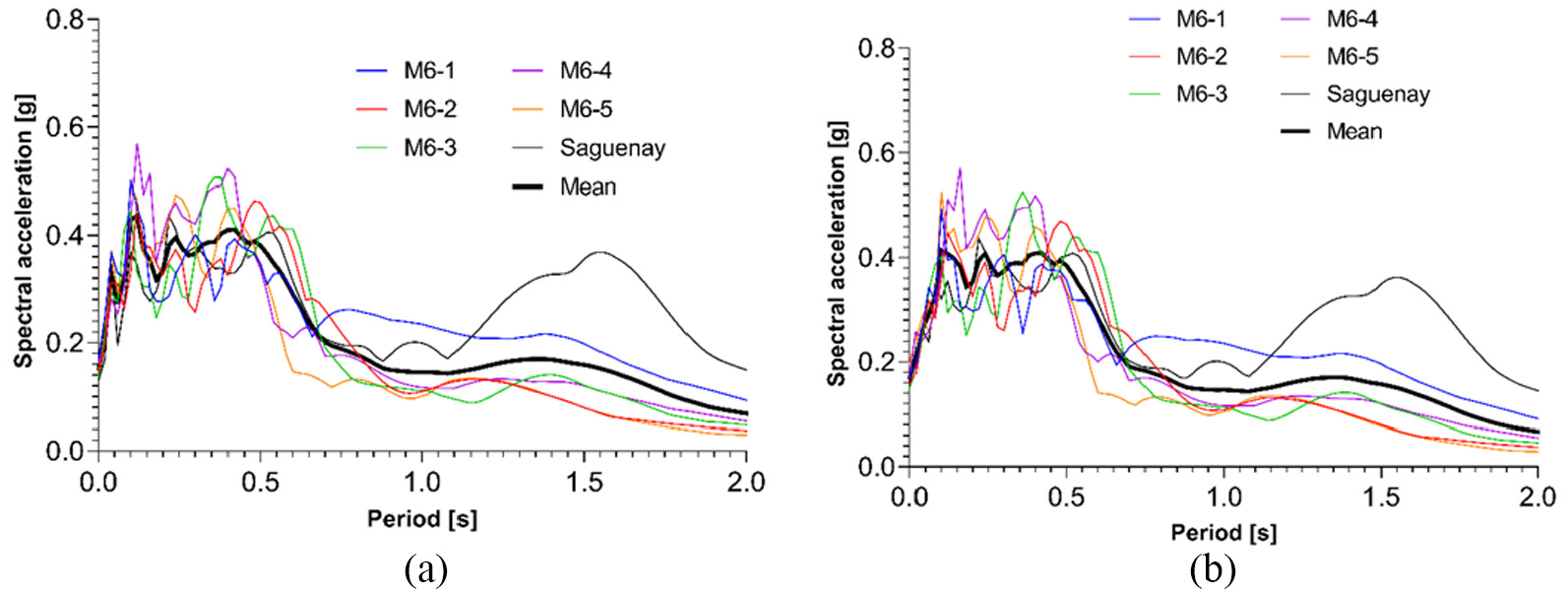
Comparison of the elastic response spectra with 5% damping for Mw 6 earthquake using (a) in situ value and (b) numerical value with surface pressure.
Figure 14a and b provide the respective surface acceleration ERS values from models PIMY-DEP and model PIMY-DEP200 for signal Mw 7.
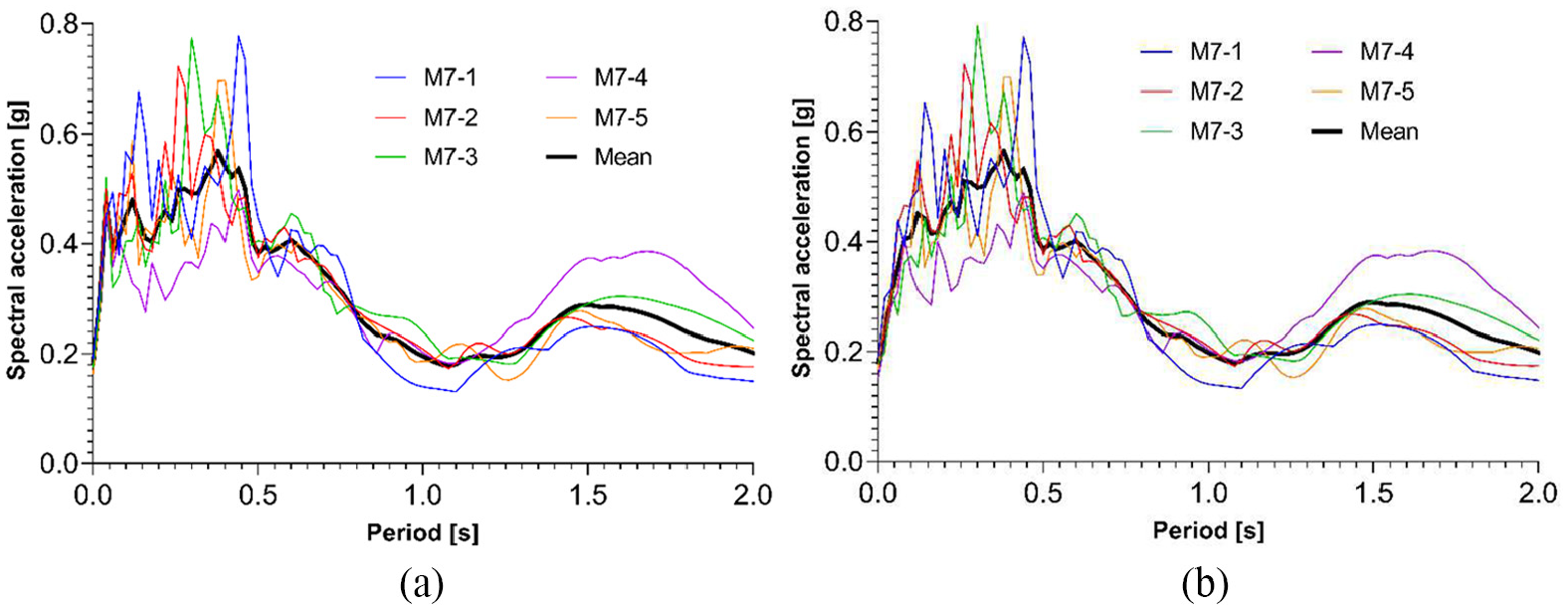
Comparison of the elastic response spectra with 5% damping for Mw 7 earthquake using (a) in situ value and (b) numerical value with surface pressure.
As was the case for signal Mw 6, the difference in acceleration values between models PIMY-DEP and PIMY-DEP200 is most noticeable for time periods of less than 1 s. The impact of ISFH is very similar for both Mw 7 and Mw 6 signals.
Figure 15a and b shows the mean values from models PIMY-DEP and PIMY-DEP200 for Mw 6 and 7 earthquakes, respectively. As we can see, there are differences in the dynamic responses in the models particularly in the short period range (T < 0.5 s) and in the range of T = 0.7 s.
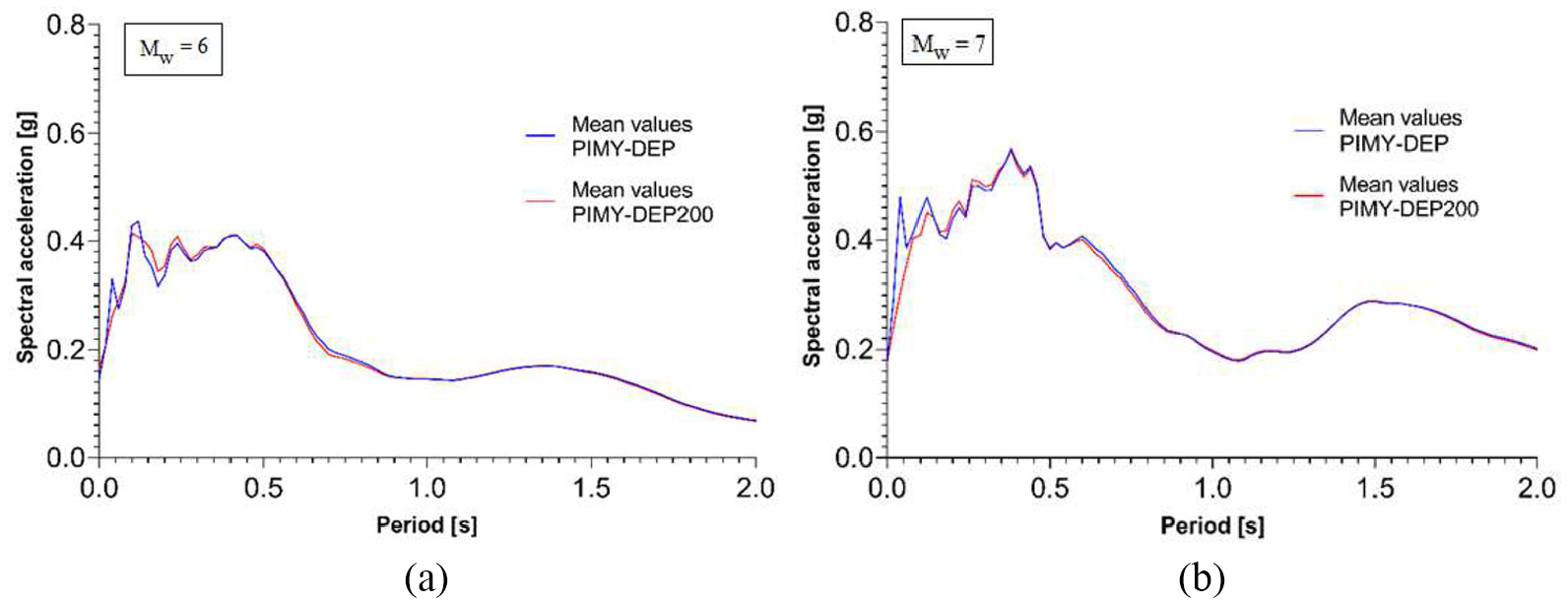
Comparison between mean values in models PIMY-DEP and PIMY-DEP200 for earthquake (a) Mw 6 and (b) Mw 7.
The results show that there was a marked difference in the short range (T < 0.3 s) in both scenarios Mw 6 and Mw 7. Figure 16 provides a clearer picture of the difference between the mean surface acceleration values obtained with models PIMY-DEP and PIMY-DEP200.
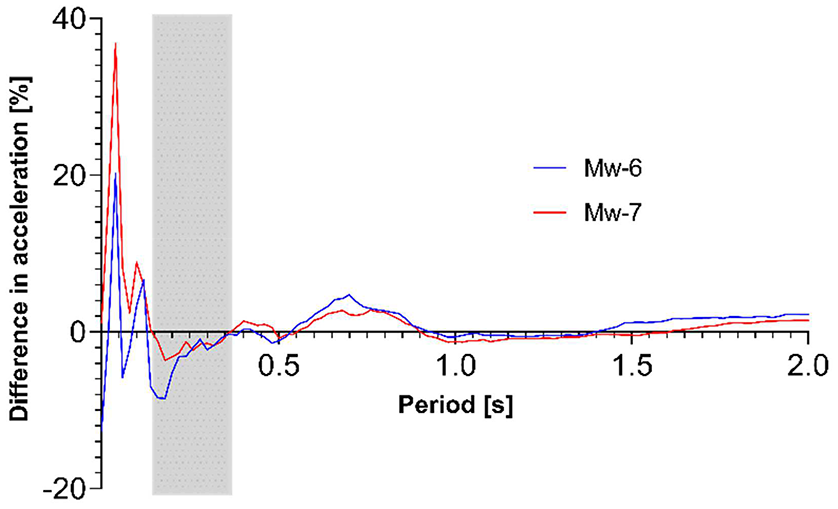
Differences (%) between PIMY-DEP and PIMY-DEP200 for Mw 6 and Mw 7 scenario.
The difference was calculated as follows:

When the difference was >0%, the associated PIMY-DEP200 value was lower than that of the PIMY-DEP model. However, when the difference was <0%, the associated PIMY-DEP200 value was higher than that of the PIMY-DEP model. For T < 0.14 s, the PIMY-200DEP model tended to give lower acceleration values than those from the PIMY-DEP model. For 0.14 s < T < 0.36 s (gray zone in Figure 16), the opposite was true and the PIMY-DEP200 values were higher by a mean percentage of 3.6% for scenario Mw 6 and by a percentage of 1.67% for scenario Mw 7. For period range 0.56 s < T < 0.9 s, the PIMY-DEP200 values were lower than those of the PIMY-DEP model by a mean of 2.51% for scenario Mw 6 and by a mean of 1.69% for scenario Mw 7. These results also show that in this case, the relative impact of ISFH was significantly greater for earthquake Mw 6 than for earthquake Mw 7.
To evaluate the impact of soil ISFH, a structure with a seismic resisting force system (SRFS) consisting of a moment-resisting concrete frame with masonry infill walls was considered. The periods of such a structure can be estimated based on Tischer’s (2012) work using Equation 6, where

The height of a typical three-story institutional building can be estimated at 12 to 15 m (Mestar, 2014). The associated periods would then fall within the range of 0.15 s ≤ T ≤ 0.32 s. For this range of periods and the soil deposit considered, the results show that failure to consider the confinement and anisotropy effect in the dynamic analysis would have caused the acceleration to be underestimated by 7.7% and 1.6%, with a mean value of 4% for earthquake scenario Mw 6. Interestingly, for earthquake scenario Mw 7, the results show that underestimation of the acceleration would be between 0.47% and 1.7%, with a mean value of 1.1%. It can thus be seen that the under- or overestimation of the effect of confinement and stress anisotropy in the soil is not simply a function of earthquake intensity but rather is due to a complex interweaving of signal frequency content and soil properties.
Part 2: application to an existing RC building
The above-mentioned updating procedure used in the ISFH analysis was applied to the study of the DSSI effect on a three-story, three-bay structure resting on the soil deposit described earlier. The direct approach was used to evaluate the impact of ISFH on the structure’s response. ISFH was disregarded in a first series of analyses (M1), but considered in a second series (M2). The dynamic signals used were the same as those previously described in the section covering wave-passage analysis in part 1.
Figure 13 shows the plan view and typical elevation of the hypothetical building studied. This three-story building is typical of the institutional structures built in the province of Quebec in the 1960s. The building was designed in accordance with the provisions of standard NBCC-1965. Further details regarding the design of the building can be found in Apari Lauzier (2016). Lateral loads are resisted by three RC frames in the long direction and four frames in the short direction. This example focuses on one of the three-bay interior frames in the short direction (circled in red in Figure 17). The RC frame is erected on four separate surface footings located 2 m below ground level for frost protection. Eigen analysis yielded a fundamental period of 0.66 s for the soil–structure multi-DOF (MDOF) system, while Equation 6 gave an estimate of 0.54 s. The difference is attributable to the fact that Equation 6 did not consider the foundation soil type as it was derived from ambient vibrations from structures on more competent soil than that considered in this work. Consequently, the value of 0.66 s was used as the structure’s fundamental period. For this period, according to Figure 16, we should expect a decrease in prescribed structural accelerations at the RC level in the range of 5% to 6 % for a scenario 1 earthquake (blue line), whereas a scenario 2 earthquake (red line) would also show a decrease in accelerations on the order of 4%. It is important to note that this assumption is based on the idea that the structure will remain in the elastic range. When structural elements yield, the solution to the eigen problem changes because of a reduction in structural rigidity, which, in turn, results in period elongation. Hence, depending on the level of yield in the structural elements, the expected value in Figure 16 will vary.
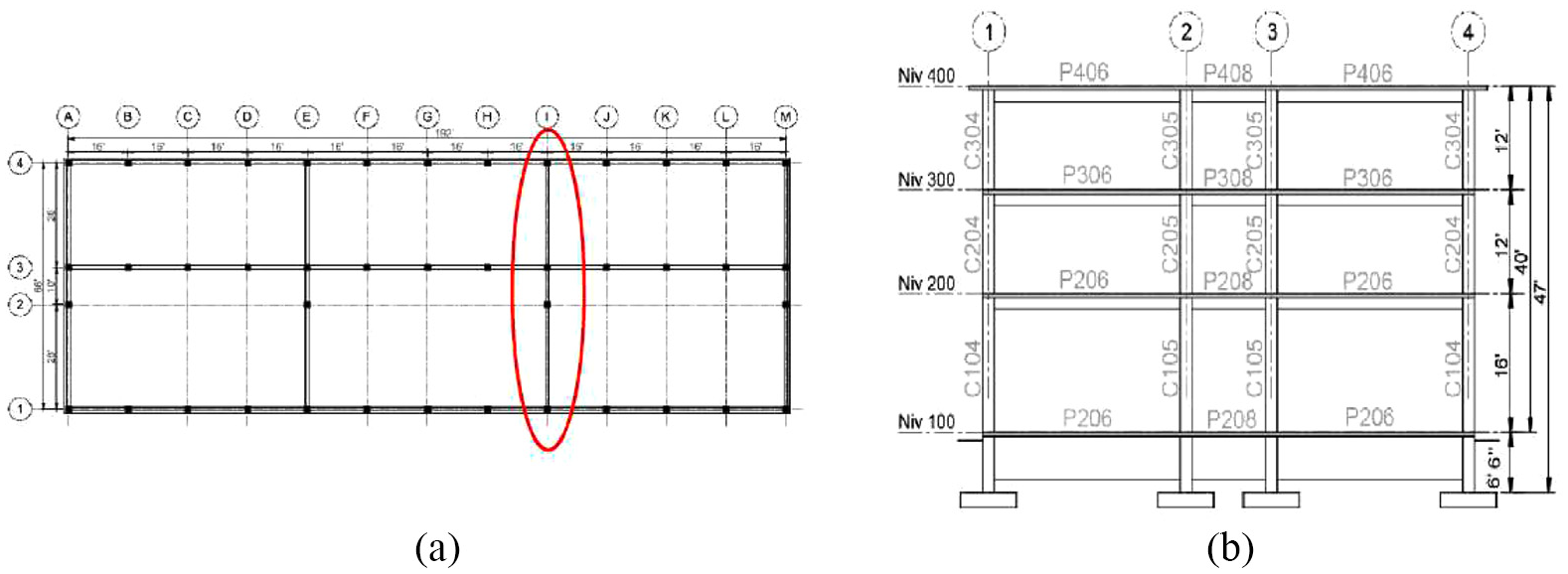
(a) Floor plan (Apari and Lauzier, 2016) and (b) elevation view of building studied.
The calculated data include displacements and accelerations at each story of the structure. Story displacements were subtracted from basement displacements to yield relative displacement, which were used for comparison purposes. Acceleration values were reported as either positive or negative, indicating the direction of the acceleration. A negative value indicates that the acceleration was directed toward the left (Figure 17b), while a positive value indicates the acceleration was directed to the right.
Numerical model
The numerical model for the frame structure was built using nonlinear BeamColumn elements available in the OS element library. Each section was discretized into fibers for which the nonlinear material stress–strain response was defined. Distinct fibers were defined for confined and unconfined concrete zones and for the steel reinforcement. The fiber section model considered the bending moment and axial load interaction, but the shear–bending or shear–axial load interactions could not be represented. To represent concrete inelastic behavior, the uniaxial Kent–Scott–Park model with linear tension softening (Concrete02; Mohd Yassin, 1994) was applied. The Giuffré–Menegotto–Pinto (Steel02; Filippou et al., 1983) hysteretic material was employed to describe the inelastic behavior of the reinforcing bars. Specific values used in the definition of the steel and concrete model can readily be found in Apari Lauzier et al. (2017). The nonlinear solution for the BeamColumn elements was based on the iterative force procedure using the Gauss–Lobatto integration point. To ensure a proper local solution, a total of seven integration points were selected on each member in accordance with the recommendations found in the literature Neuenhofer and Filippou (1997).
To model the soil–structure interface, the node making up the footing and the corresponding node constituting the soil element were directly linked using a coupling relation. The nodes used in the soil domain had two DOFs, while the nodes in the structural model had three. An additional series of nodes, referred to as ghost nodes, was inserted at the soil–structure interface. The ghost nodes had no physical meaning; they merely served as a numerical bridge. The ghost nodes were defined in the structural domain as having three DOFs, the third being fixed, that is, having zero rotation. The soil node displacements along two DOFs were expected to coincide with the two ghost translational DOFs. The ghost nodes were then linked to the structural nodes at the base of the footing using the zeroLength element, to which specific uniaxial material properties can be assigned, irrespective of the direction considered. This approach allows for defining various horizontal, vertical, and rotational contact conditions. For this study, a “glue”-type link was used at the soil–structure interface to prevent the footing from slipping or lifting. The seismic signal was then applied at the base of the soil model, resulting in immediate transfer of the excitation to the structure. In this series of analyses, the soil model extended 190 m from the structure in either direction to minimize lateral frontier impact. The rest of the numerical soil model was similar to that used for the wave-passage analysis described earlier.
Structural response to transient loading
Acceleration
Figure 18a provides the comparative results of scenario 1 signal M6-2 floor accelerations for model M1, where ISFH was ignored and model M2, where ISFH was considered. Figure 18b shows the mean floor acceleration values for scenario 1, models M1 and M2.
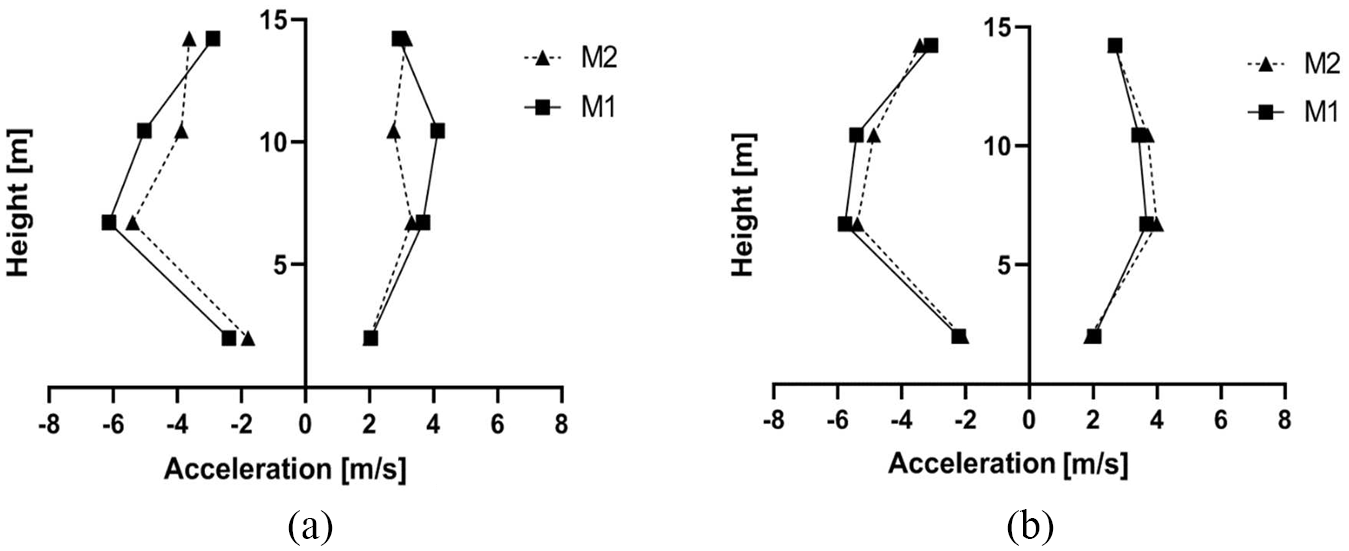
Comparison of acceleration values (minimum and maximum) in models M1 (effect of ISFH disregarded) and M2 (effect of ISFH considered) for (a) scenario 1 signal M6-2 and (b) mean values for all signals in scenario 1.
For signal M6-2 in scenario 1, ISFH yielded a mean decrease in acceleration of 14.02% for the entire structure. However, the results obtained for each story are more complex. At the roof level, ISFH yielded an increase in acceleration of up to 20%. At the main-floor level, the acceleration values calculated for the first and second stories using model M2 were higher by a mean value of 23%. Considering all scenario 1 signals (Figure 18b), the results indicate that ISFH yielded a decrease in maximum acceleration values of 0.44%. Here again, there was significant variation in the values for each story. ISFH increased the mean acceleration values at the roof level and the first two stories by 4.77% and 0.42%, respectively. However, at the second-story and main-floor levels, it decreased acceleration by 1.73% and 5.24%, respectively. These values are in line with those shown in Figure 16 (blue line) and suggest limited yielding in the structural elements.
Figure 19a shows the moment–axial interaction load curve (M–P) of the external columns (axes 1 and 4 in Figure 17b) for earthquake signal M6-2. As can be seen, little or no yielding occurred for this signal. The same situation was observed in all other loading scenarios with the exception of signal M6-1, where yielding did occur. Figure 18 illustrates the hypothesis of a fixed-period hold for scenario 1 signals, which correlate with calculated accelerations at the main-floor level.
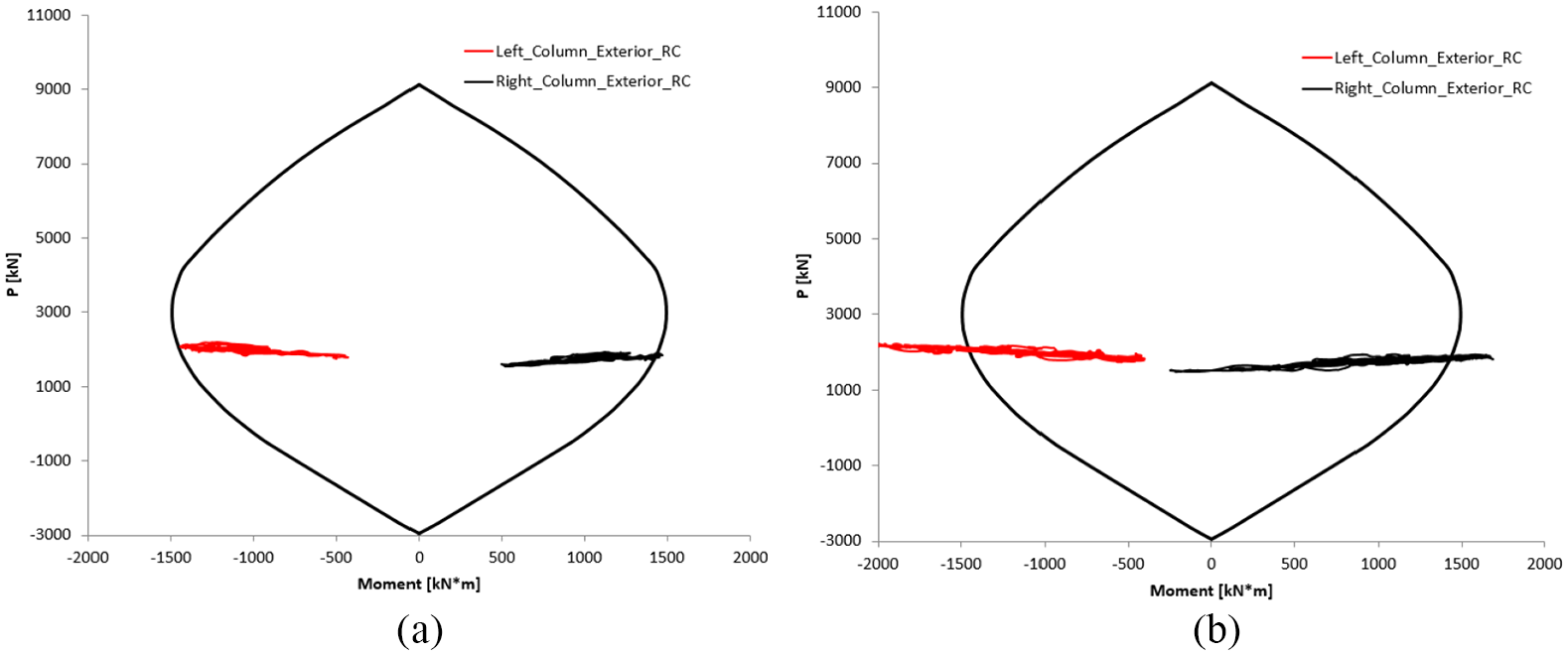
M–P interaction curve for exterior RC columns for (a) scenario 1 signal M6-2 and (b) scenario 2 signals M7-3 and M2 (effect of ISFH considered) and for (a) scenario 1 signal M6-2 and (b) mean values for all signals in scenario 1.
The results for scenario 2 show a mean decrease in main-floor accelerations of 0.58%, while Figure 16 shows an anticipated decrease on the order of 4%. This can easily be explained by the yielding observed in several elements of the structure for all signals in scenario 2. Figure 19b shows the M–P interaction load curve for the external columns (axes 1 and 4 in Figure 17b) for earthquake signal M7-3. The results clearly show that there was yielding in the column during loading, which led to period elongation on the order of 36% during peak earthquake loading. This explains there was less reduction in acceleration values for this scenario. Similar results were obtained for all signals in scenario 2.
The results thus demonstrate that taking ISFH into consideration had a major impact on the acceleration values calculated for the structure. As expected, the results also show that the impact of ISFH depends on the nature of the dynamic signal (i.e. intensity and frequency content), type of soil deposit, and structural characteristic of the building.
Structural displacement relative to foundation
Figure 20a shows the relative displacement values for scenario 1 signal M6-2 from models M1 (ISFH ignored) and M2 (ISFH considered). Figure 20b shows the mean relative displacement values for the scenario 1 signals from models M1 and M2. Figure 21a and b, respectively, provides the relative displacement values for scenario 2 signal M7-4 and the mean relative displacement values for the entire set of signals in scenario 2.
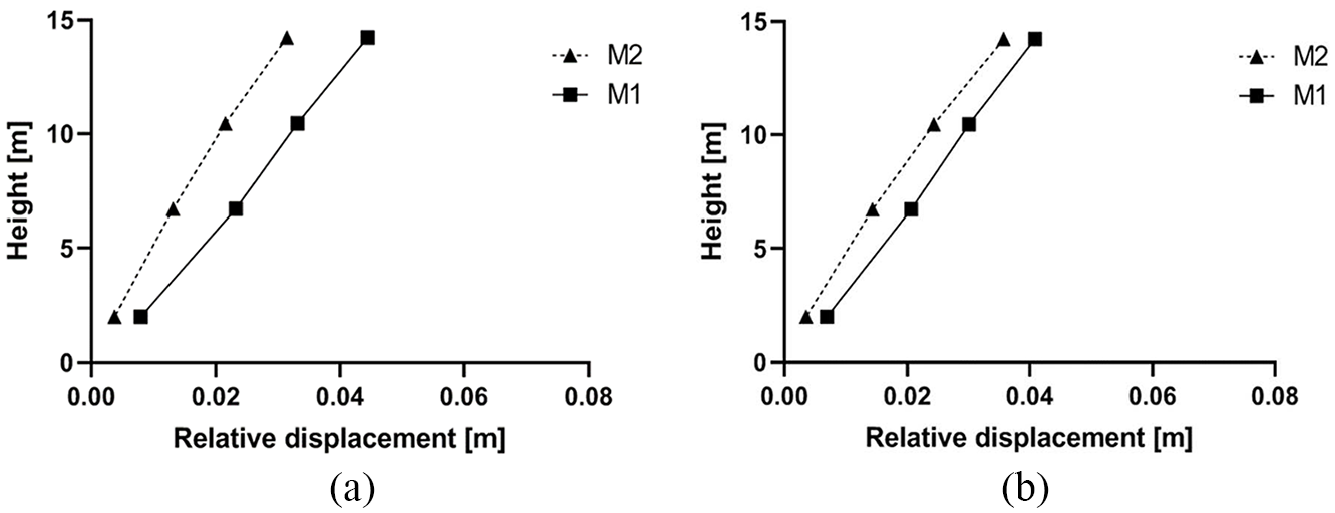
Comparison of relative displacement values from models M1 (effect of ISFH disregarded) and M2 (effect of ISFH considered) for (a) scenario 1 signal M6-2 and (b) mean value of all signals in scenario 1.
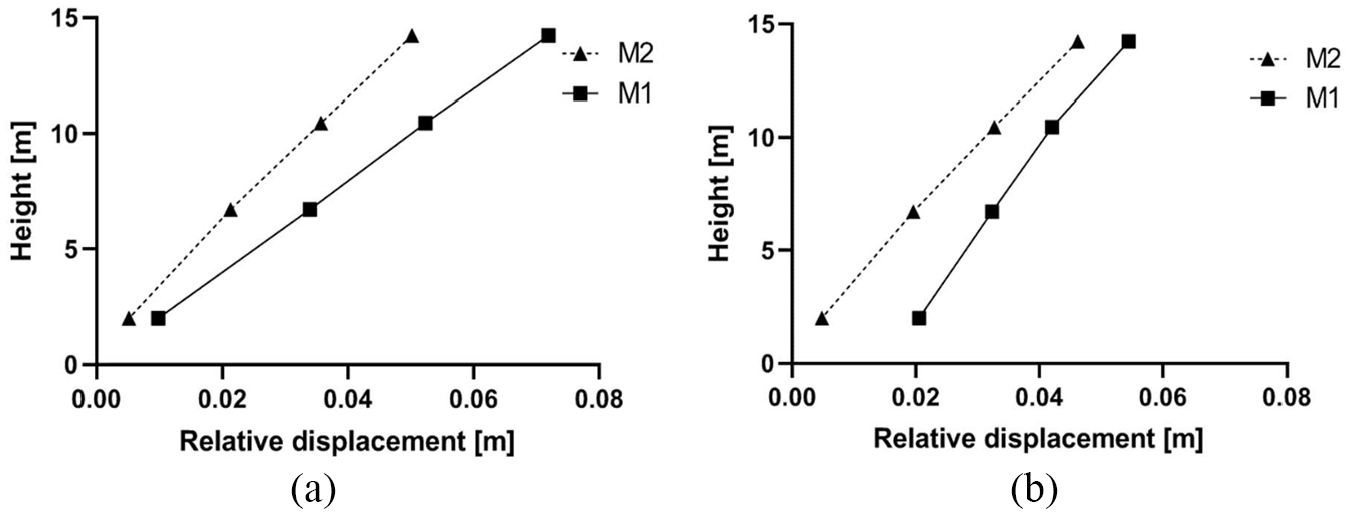
Comparison of relative displacement in models M1 (effect of ISFH disregarded) and M2 (effect of ISFH considered) for (a) scenario 2 signal M7-4 and (b) mean values for all signals in scenario 2.
The results for scenario 1 signal M6-2 show that the consideration of ISFH decreased relative displacement by a mean value of 40%. This general downward trend was observed on every story and for every signal. Consequently, the mean relative displacement values for scenario 1 decreased by 27.7% when ISFH was considered, which is consistent with the expected results shown in Figure 16.
As can be seen in Figure 21, a similar decrease in relative displacement was observed for the signals in scenario 2. Signal M7-4 in scenario 2 yielded a mean decrease in relative displacement of 36.8%. A similar trend was observed for all signals. The mean decrease in relative displacement for all signals in scenario 2 was 38.4%. The yielding observed in the column during the scenario 2 signals explains the apparently significant reduction in relative displacement, considering the small decrease in acceleration.
The fact that ISFH caused a decrease in relative displacement is not surprising, considering that it increased the supporting soil moduli values. The downward trend was observed for all signals, irrespective of the intensity or frequency content considered.
Conclusion
The objective of this article was to investigate the effect of ISFH in a nonlinear DSSI numerical finite-element analysis conducted in the time domain using the direct approach for the geotechnical and seismological context specific to Eastern Canada, and to evaluate its impact through an application example.
In part 1, a numerical algorithm was developed to consider ISFH. A series of wave-passage analyses was carried out to assess the impact of ISFH on the dynamic response of a natural soil deposit located in Eastern Canada. In this part, a surface load was applied to the soil model and the impact of ISFH was either considered or ignored.
In part 2, the algorithm developed in Part 1 was included in the comprehensive DSSI analysis of a building resting on the same soil deposit to determine the impact of considering ISFH on the dynamic behavior of the structure. The building considered was a three-story, three-bay RC moment-resisting structure with masonry infill walls typical of the institutional buildings found in the province of Quebec in the 1960s. Two distinct sets of DSSI analyses were conducted where stress field heterogeneity was either considered or not.
The results from part 1 reveal that the net increase in the soil’s effective stress from the applied surface pressure caused an increase in the shear and bulk moduli in the supporting soil of the structure, thus creating a bulb-like zone beneath the footing with a higher rigidity than under natural conditions (i.e. with no structure). The results of the subsequent wave-passage analysis show that the impact of this increased-rigidity zone beneath the foundation led to a modification of the calculated surface acceleration values, which varied depending on the periods considered. For example, for period T < 0.14, consideration of ISFH in the supporting soil resulted in a decrease in calculated surface accelerations. However, in period range 0.14 < T < 0.36, the opposite happened, and the calculated surface accelerations increased by mean values of 3.6% for a scenario 1 earthquake and 1.67% for a scenario 2 earthquake. Interestingly, the results seem to indicate that the impact of considering ISFH on calculated surface accelerations was not related to the intensity of the shaking but rather, to signal frequency content versus soil deposit rigidity. Hence, the results suggest that for a structure with fundamental periods (T) of 0.15–0.32 s, soil ISFH would tend to increase mean surface acceleration values by 4% in the case of signal Mw 6 and by up to 1.1% for signal Mw 7. In this case, the maximum increase in calculated surface acceleration values was 7.7%. Conversely, for a different period interval, prescribed surface accelerations would decrease, as demonstrated in part 2 of the study. While the effect of ISFH is relatively minor (i.e. a difference in surface accelerations of less than 8% in this case), the difference may be greater in buildings supported on mat foundations with high bearing stress, as a larger zone of soil would be affected. On the contrary, ignoring IFSH would probably not have a significant effect on surface accelerations in pile-supported structures as there would be minimal transfer of structure stress to the ground, although further studies should be conducted to demonstrate this.
The results of part 2 reveal that for an MDOF soil–structure system with periods of around 0.66 s, the effect of ISFH was to reduce prescribed mean structural accelerations and displacement at the main-floor level in the range of ≈5% for a scenario 1 earthquake and ≈0.6% for a scenario 2 earthquake. These results are in line with the findings of the wave-passage analysis, which demonstrated that, for this range of periods, taking ISFH into account would lead to a decrease in structural accelerations applied at the base of the structure. This finding has major implications as failure to consider the effect of ISFH may lead to miscalculations in prescribed structural accelerations, that is, over- or underestimation of the magnitude of the acceleration. This phenomenon is complex as it is directly related to the frequency content of the applied signal, the geotechnical properties of the soil deposit and the structural characteristics of the building considered. Considering that it is relatively simple to take ISFH into consideration in the calculation and given its potential impact on the result, this natural soil characteristic should be considered in all DSSI analyses.
The results of this study are based on a single soil deposit and a limited number of signals. Further work is needed to increase the variability of the dynamic signal used, and the characteristics of the soil models (i.e. investigate different types of soil deposit) and structures.
It is worth noting that the ISFH calculation procedure described in this article considers the void ratio to be constant. This assumption is wrong in the case of the initial stress application as the soil is expected to be loaded for several years, that is, in drained conditions, prior to experiencing an earthquake. In the context of critical state soil mechanics, this problem involves a relationship between deviatoric stress, volumetric effective stress, and void ratio; work is ongoing to consider this aspect of the problem.
Footnotes
Acknowledgements
We acknowledge the support of the Fonds de Recherche Nature et Technologie du Québec.
Declaration of conflicting interests
The author(s) declared no potential conflicts of interest with respect to the research, authorship, and/or publication of this article.
Funding
The author(s) received no financial support for the research, authorship, and/or publication of this article.
