




Abstract
The creation of the Catalan Association for Artificial Intelligence (ACIA) was driven not only by practical and scientific objectives, but also by a powerful symbolic vision. It showcases the potential of Catalan society to produce innovative ideas and add value on a global scale. This paper illustrates the pivotal role of the ACIA in the development and consolidation of artificial intelligence (AI) research in Catalonia and across Europe. Founded in 1994, ACIA emerged from the need to create a cohesive AI research community in Catalan-speaking territories and to promote AI literacy. Over the past three decades, ACIA has made significant contributions to AI research through initiatives detailed in this paper, such as the International Conference on AI (CCIA), the magazine NODES, the Marc Esteva Vivanco Award for the Best PhD thesis in AI, and the donesIAcat working group. By presenting these initiatives, analyzing the evolution of AI research topics in Catalonia, and detailing ACIA’s involvement in Europe—including its role within EurAI and its industrial and international impact—, this article highlights how local AI societies contribute to the advancement of AI in Europe while preserving their unique cultural and academic identities. Finally, the future evolution of AI in Europe is discussed.
Keywords
Introduction
Nowadays, artificial intelligence (AI) is impacting many aspects of our lives, reaching across all sectors of society, from healthcare to industry, finance, and commerce. There is a need to educate people on AI literacy, and the history of AI across countries needs to be studied to understand the evolution of the field. This paper describes how researchers in AI in Catalan-speaking territories came together to create an association with the aims of furthering collaboration, addressing challenges within the AI community, and disseminating AI research and technology to Catalan society. This community of researchers has worked in a close relationship with EU researchers under the umbrella of EurAI, the federation of AI societies in Europe.
We cannot explain how we have come this far without the contribution of European AI associations, including ACIA. The Catalan Association for AI (ACIA) has played a key role in developing and consolidating an AI research community and in improving AI visibility in Catalan society. To understand the role of ACIA and its impact on AI advances in Europe, this article presents its relationship with Catalan-speaking territories, the birth of the CCIA (the annual International Conference on AI organized by ACIA), the evolution of research topics in the Catalan academic community, the magazine NODES for scientific debate and popularization, the PhD Awards program, and the donesIACat working group to bridge the gender gap in AI. This paper also contextualizes ACIA in Europe by analyzing: (i) The origin of AI in the context of a Catalan society recovering its linguistic and cultural plenitude; (ii) the first contributions by ACIA members to the initial stages of AI in the 1980s; (iii) the involvement of ACIA in EurAI activities and governance; and (iv) the industrial and international scope of ACIA. We also compare and discuss the relation between the topics at the CCIA and at the European Conference on AI (ECAI) organized by EurAI.
This paper is intended to help readers understand that the evolution of AI in Europe has been possible thanks to the EurAI member societies, like ACIA, which pursue common goals while preserving a direct connection to their members.
Origin and Foundation of ACIA
The Catalan Association for AI (ACIA) originated around 1993, when about 20 AI researchers from diverse academic institutions met at the Center for Advance Studies in Blanes (CEAB) and began to discuss the need to create a more connected AI community in Catalonia. Our aims back then were to be especially useful for doctoral students in AI and to improve the visibility of AI (both as a science and a technology) within Catalan civil society. The use of Catalan language has been acknowledged as a distinctive feature that allows AI research to be communicated to the general public; addressing also the scarcity of AI information in Catalan. This initial group sent an open letter via email to known Catalan researchers, asking whether they supported the creation of ACIA and requesting that they forward it to other scientists not on the initial list to build a comprehensive mailing list encompassing the Catalan AI community.
Since the response was highly positive, the task of creating ACIA was delegated to a group of volunteer researchers from academic institutions with well-established AI labs: The Institut d’Investigació en Intel.ligència Artificial (IIIA-CSIC), the Universitat Autònoma de Barcelona (UAB), and the Universitat Politècnica de Catalunya (UPC). This group drafted the ACIA bylaws and organized a meeting of the Catalan AI community to discuss them and to determine the main tasks the new society should undertake. Thus, ACIA was legally constituted on 28 March 1994. The first ACIA Board had five members: Enric Plaza (IIIA-CSIC) as president, Ramon Sangüesa (UPC) as vice-president, Jordi Vitrià (UAB) as secretary, Miquel Sànchez (UPC) as treasurer, and Felip Manyà (IIIA-CSIC) as a member.
According to its bylaws, the mission of ACIA comprises: Promoting and disseminating the studies, methods, techniques, and applications of AI within the Catalan culture; Bringing together a group of professionals from various academic disciplines; Advising members, entities, and companies that request it on issues of AI; Promoting the organization of the professionals that form the Association, and looking after their interests when appropriate; Establishing relations at a European and international level with other associations that have similar purposes.
Strategically, ACIA soon decided that two main activities would consolidate the society: (i) Establishing regular scientific meetings, which started as workshops and later became a full-fledged scientific conference (CCIA), and (ii) publishing a magazine on AI in Catalan that would help the AI community to know each other better and improve the visibility of AI in the Catalan society. Although ACIA was founded in Catalonia, one of the main purposes of the society was to gather all Catalan-speaking AI researchers in what is known as the Catalan Countries, which includes not just Catalonia but also Andorra, the Balearic Islands, the Valencian Country, Northern Catalonia (Pyrénées-Orientales, France), and L’Alguer/Alghero (in Sardinia, Italy). The first general assembly took place on 11 July 1994, along with a round table about doctoral programs in AI. In September 1995, the first workshop for young AI researchers was held in the new building of the IIIA-CSIC at Bellaterra. That same year, ACIA formally joined the European Coordinating Committee on AI (ECCAI), thus gaining international recognition.
ACIA was initially created by a group of about 20 senior researchers 1 from several Catalan institutions, mainly public universities. The first workshop was instrumental in increasing the number of members, with some students joining ACIA, bringing the total to almost 100 members. During its first years, the association grew to around 200 members. This number has been maintained for the past 30 years. Although a stable majority of associates belong to the association long-term, there is also a group of around 30 student members who join ACIA only during their master’s or doctoral studies. These students take advantage of ACIA activities, grants, and networks for some years but later leave the association, either because they do not continue in AI research or because they are international students who move to other countries. In addition, over the years, some ACIA researchers have moved abroad to advance their careers and have maintained their membership, opening the network to a wider territorial scope. The association has different fees for regular members and students, including access to journals such as AI Communications (now The European Journal on Artificial Intelligence), IEEE Intelligent Systems, and AI Magazine, as well as discounts for affiliation to other related societies and student mobility grants.
Figure 1 shows the geographic scope of the current ACIA members. ACIA covers all Catalan countries, with members in Catalonia, the Valencian Country, and the Balearic Islands. Most of the members are researchers at public universities. Barcelona, as a large metropolitan area, hosts the majority of ACIA members (see the zoom on the right side of Figure 1), with four public universities, two private ones, and seven research institutions, with Valencia as the second hub. Research institutions, companies and universities are listed in Figure 1. With regard to external organizations, ACIA allows institutional memberships for companies and research laboratories. Currently, ACIA is involved with these three companies as institutional members: BigML 2 , PAL Robotics 3 , and Torre Juana Open Space Tech 4 .
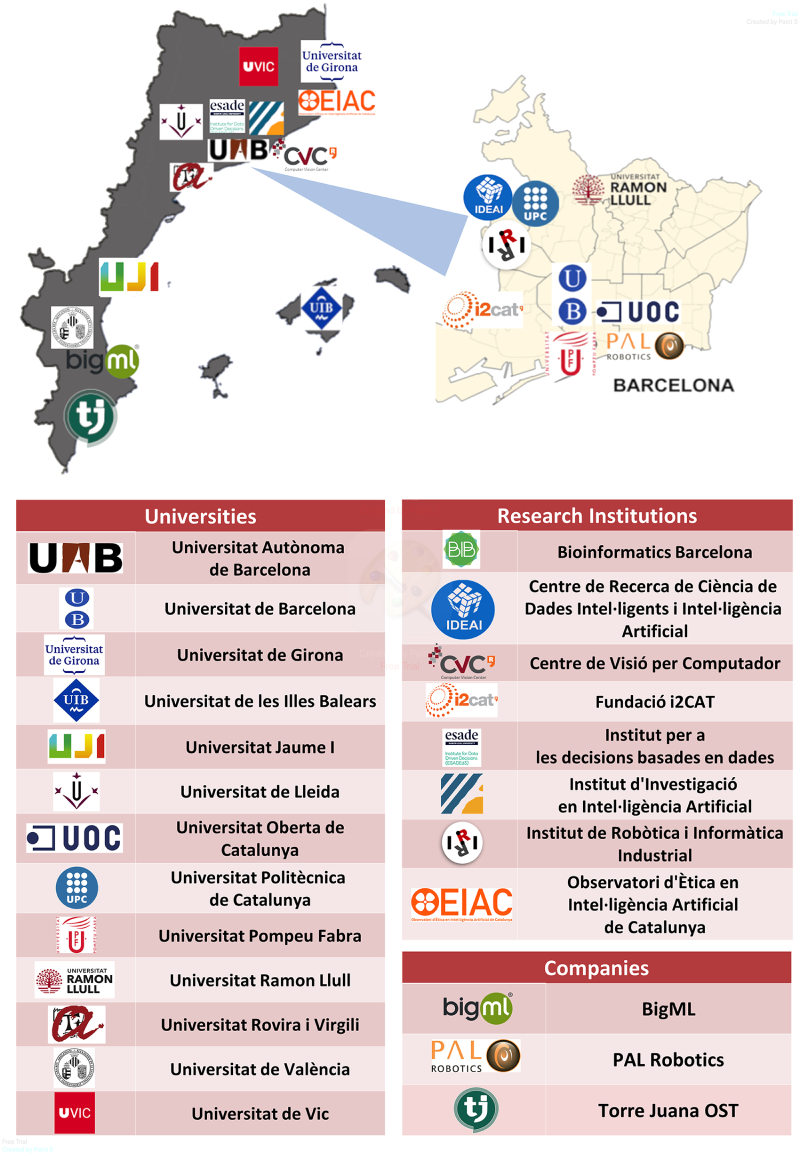
Geographical affiliation of ACIA members in 2025.
ACIA started as a community that facilitates networking by providing a mailing list where news, grants, and job opportunities were published. Later, a website was created to make ACIA more accessible to society: www.acia.cat.
As ACIA consolidated and grew, it began to define actions to promote AI across Catalan society. In 2003, a prize for the best Catalan Master’s and Bachelor’s Thesis in AI was created. In 2012, a prize for the best Catalan doctoral thesis in AI was established (see Section on Marc Esteva Vivanco Award). That same year, the prize for the best popularization work was also created. In 2021, ACIA started a new prize for the social impact of research. All prizes are awarded annually during the CCIA conference. Moreover, since 2011, ACIA has been granting scholarships to students to financially support their presentation of work at international AI conferences, including CCIA.
From October to December 2016, celebrating 60 years of AI (dating from the Dartmouth conference), ACIA organized a popularization campaign to foster AI awareness among Catalan society, with activities in many cities across the territory (Figure 2). Activities included a cinema forum series with several films (including Her, Ex Machina, and Eva), AI-related science fiction novel reading events with the collaboration of bookshops in several cities, round table talks, popularization conferences, and high-school and primary-school activities. Popularization activities continued in 2017 with ACIA participating in the YoMo Steam festival (part of the Mobile World Congress). At the 2017 YoMo event, ACIA engaged with high-school students over four days regarding “The Limits of AI.” In subsequent editions of YoMo (up to 2020), ACIA participated with other activities, including several AI application shows.
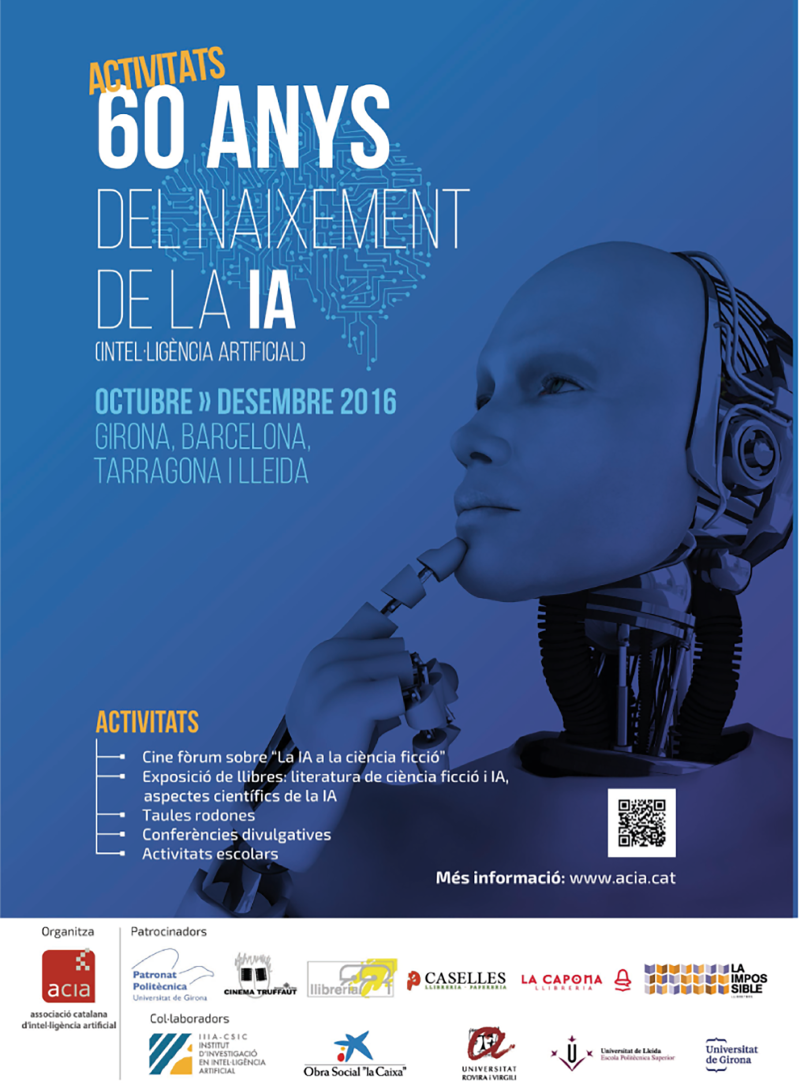
Poster for the celebration of 60 years of artificial intelligence (AI).
In 2011, ACIA sponsored the publication of the book Ramon Llull: From the Ars Magna to Artificial Intelligence (Fidora & Sierra, 2011). This book represents a stepping stone in looking for the roots of AI and was given to attendees at International Joint Conference on AI (IJCAI)’2011 as a way to visualize ACIA as the backbone of AI research in the Catalan Countries.
The association has been led by 8 presidents so far: Enric Plaza, Carles Sierra, Ramon López de Mántaras, Núria Agell, Vicenç Torra, Beatriz López, Josep Puyol, and Cecilio Angulo.
ACIA dedicates considerable effort to plan, organize, and carry out a variety of annual core activities, namely the ACIA Conference on AI (CCIA), the ACIA magazine NODES for scientific debate and popularization, the ACIA awards and scholarships to promote youth research, the Marc Esteva Vivanco PhD Award, and the donesIAcat activities to bridge the gender gap in AI. The following subsections describe these core activities in detail.
ACIA Conferences on AI
The initial ACIA biannual workshop became a conference in 1998, named the Catalan Conference on Artificial Intelligence (CCIA). Its first edition was held in Tarragona and organized by the Universitat Rovira i Virgili, where the chair of the local committee was Dr. Vicenç Torra. The CCIA conference has been organized every year since then, with the unique exception of 2020, when it was postponed for a year due to the COVID-19 pandemic. In that year, the conference was canceled and replaced by an online event with the yearly awards presentation and a keynote lecture about COVID and AI models by Dr. Alfonso Valencia from the Barcelona Supercomputing Center.
Throughout its 27 editions, the CCIA conferences have spanned a wide geographical area, with venues hosted across the Catalan Countries (see Figure 3), from the northern city of Perpinyà (France) to the country of Andorra, the city of Roses in Catalonia, and the southern city of Alacant in the Valencian Country, as well as the islands of Mallorca (Palma) and Sardinia (L’Alguer, Italy).
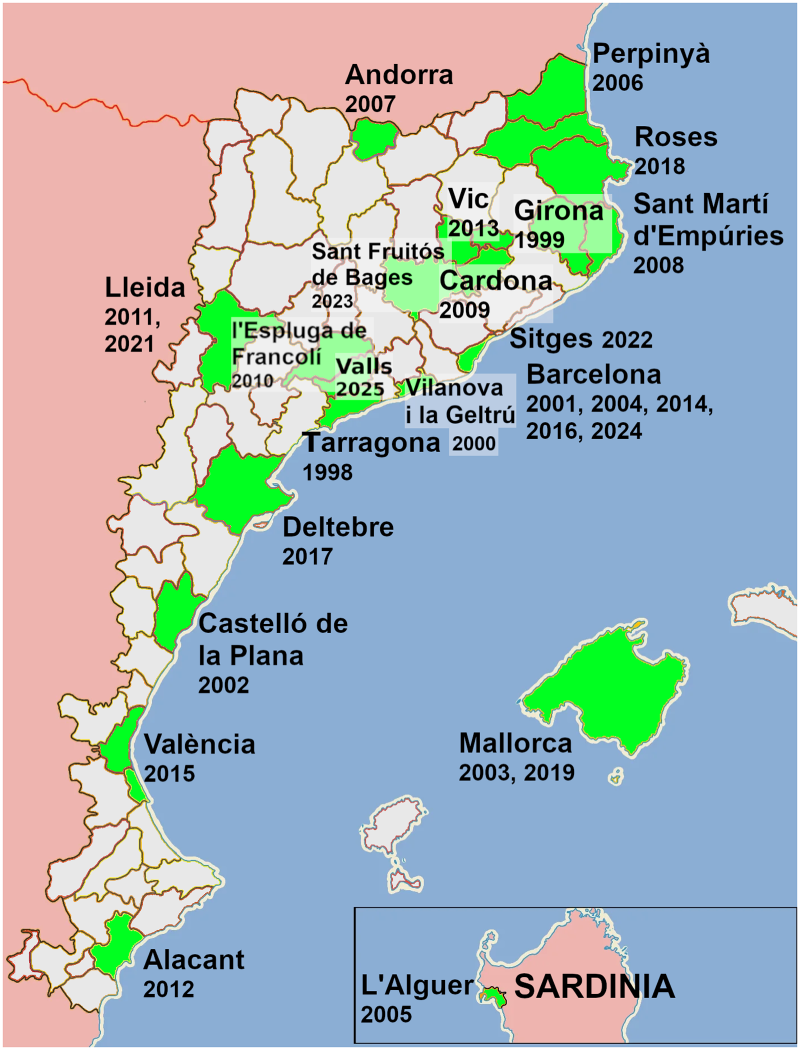
Geographical distribution of CCIA conferences.
The topics addressed in the CCIA editions have evolved, the main ones being: Machine learning; classification methods; decision support systems; deep learning and applications; Information fusion and aggregation; fuzzy systems; data science; data mining; sentiment analysis and text analysis; consensus; social media evaluation; Reasoning models; constraint satisfaction; constraint reasoning and planning; case-based reasoning; recommender systems; logics for AI; satisfiability; explainability and argumentation; knowledge engineering; planning; Problem resolution in AI; combinatorial problem-solving; Multi-agent systems; agent-based systems; Robotics; Computer vision; artificial vision; Natural language processing; Ethics and e-governance; AI for good; ethics and society.
Proceedings of the ACIA International Conference on AI
The first four proceedings of the Catalan Conference on AI (CCIA) were published in the Butlletí de l’ACIA, later known as NODES. Specifically, the articles from CCIA 1998 were included in Butlletí de l’ACIA, Issues 14-15; Issues 18 and 19 contain the articles from CCIA 1999, whereas the articles from CCIA 2000 and CCIA 2001 were published in Issue 22 and Issue 25, respectively. In 2002, the CCIA proceedings were published as a Lecture Notes book and also in Butlletí de l’ACIA, Issue 28. In 2003, the CCIA conference acquired an international scope and changed its name to the “International Conference of the Catalan Association for Artificial Intelligence”. Since then, as shown in Table 1, these proceedings have been published in the series Frontiers in AI and Applications by IOS Press.
Proceedings of CCIA published by IOS press.
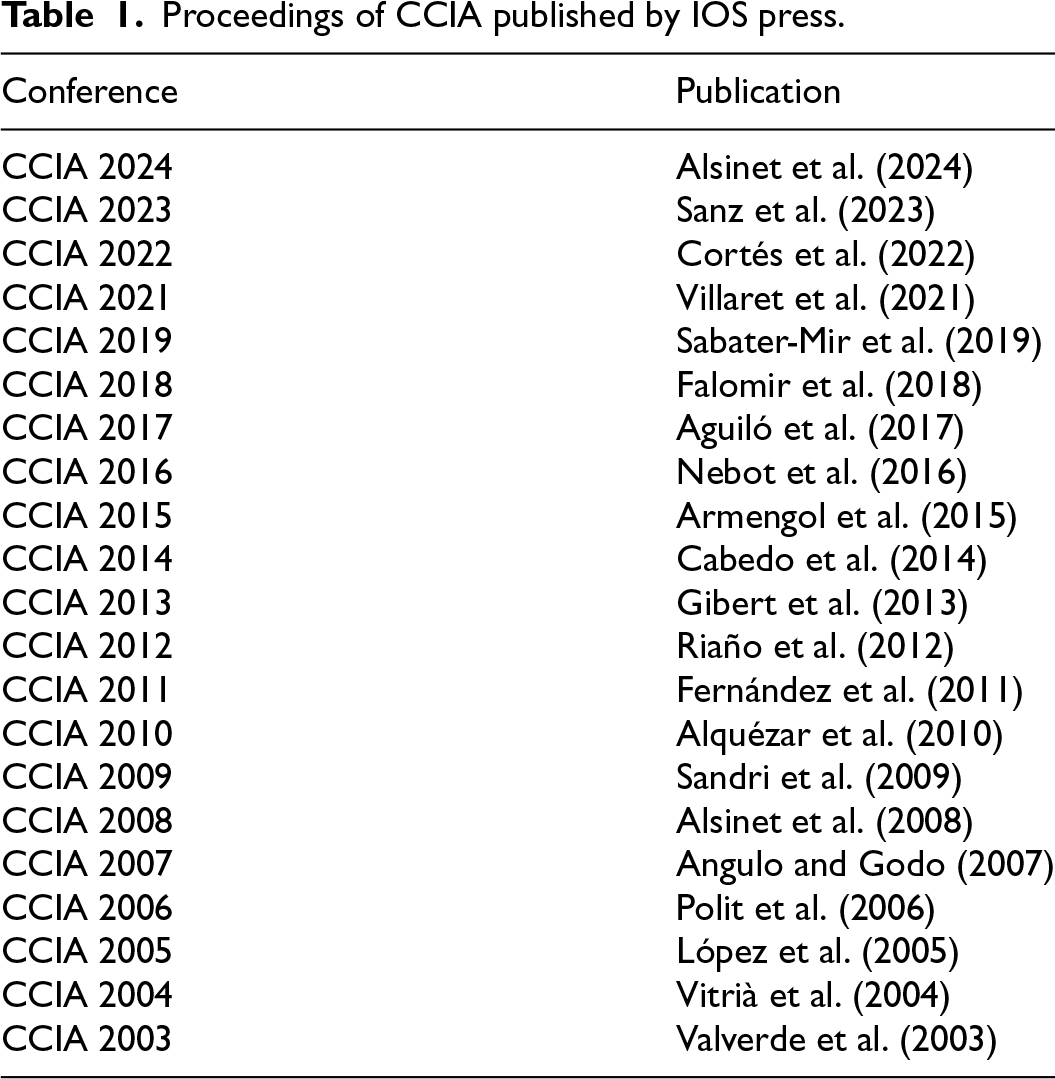
Proceedings of CCIA published by IOS press.
A series of special issues in different journals were originated from trending topics identified at CCIA conferences. These special issues had an open call for papers on that topic, and extra peer-reviewing was carried out to select the final articles to be published. Special issues were published on the following topics: AI for a Smart Society, in press AI Cognitive Systems Applied to Social Scientific Research, in press Advancing the Common Good: Special Issue on Applied AI Solutions, in press New Reasoning Models: Improving Optimization and Decision Support with the Management of Uncertainty and Constraints (Valls et al., 2023a) Data Mining, Machine Learning and Decision Support Systems in Health Care (Valls et al., 2023b) Women in AI (Valls & Gibert, 2022) Logics and Artificial Intelligence (Falomir et al., 2021) Bridging Cognitive Models and Recommender Systems (Angulo et al., 2020) Pattern Recognition and Cognitive Assistants (Falomir et al., 2020) Environmental Data Mining (Gibert, 2016) Cognitive Knowledge (Museros et al., 2015a) Similarity-based systems (Museros et al., 2015b) Introduction: The first Catalan Conference on Artificial Intelligence (Torra, 2000)
NODES: A Magazine for Scientific Debate and Popularization
The inaugural issue of the NODES magazine was published under its original name, Butlletí de l’ACIA, in the summer of 1994 and is known as NODES since 2006. That initial Issue 0 served as an introduction to the association and articulated the magazine’s ambitious goal: In the words of Carles Sierra, the first editor-in-chief, “to become the communication media for the Catalan-speaking AI community.” Since its inception, 61 issues have been published 5 , with the most recent volume—Issue 60—released in 2024 to mark the 30th anniversary of ACIA. The magazine has been published almost entirely in Catalan.
The history of our magazine demonstrates significant variation in its publication frequency, editorial coordination, formats, and content structure, reflecting the evolution and challenges of European science communication initiatives over the past three decades. Its publication frequency followed a downward trend, which eventually led to an annual publication. In the early years, this trend can be attributed partly to the fact that NODES also served as a platform to announce job positions, vacancies, conference calls for papers, and similar notices, which required more frequent issues. Later, as these announcements were increasingly handled by other formats, such as digital newsletters or websites, the need for a higher publication frequency diminished. It is important to note, though, that until 2015 (with the exception of 2013), at least two issues were published per year. Furthermore, no issues were published during two specific periods: 2016–2018 and 2020–2022. The first period of inactivity (2016–2018) is explained by ACIA’s focus on organizing a series of activities in 2016 to celebrate the 60th anniversary of AI, which shifted ACIA’s attention from its popularization efforts in print to in-person public activities. The second period (2020-2022) was largely the result of the COVID-19 pandemic and the subsequent crisis. Moreover, the growing interest in science communication across Europe has led to an increasing number of popularization channels, prompting ACIA members to diversify their contributions.
Among all the published issues, four authors stand out for their clear, incisive, yet respectful vision of AI evolution, addressing both historical and current topics: Miquel Barceló, Enric Plaza, Ton Sales, and Llorenç Valverde. Over several years, each of these authors contributed to their individual regular columns of the magazine. In order to express the association’s gratitude and to commemorate the 20th anniversary of ACIA’s foundation, four books were published, each compiling their respective articles from these columns: Amorrat al Teclat (Glued to the Keyboard) by Valverde (2013), Intel
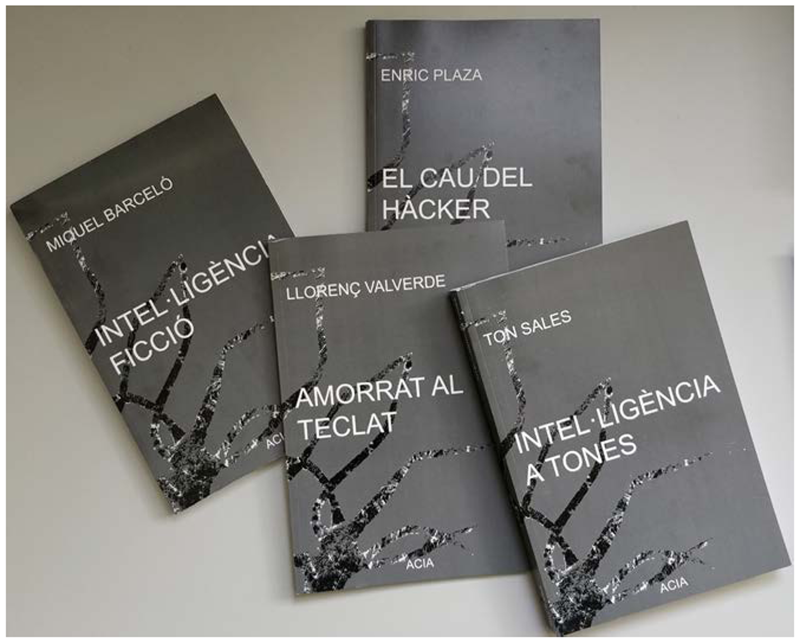
Booklets published to commemorate the 20th anniversary of ACIA: (i) Intel
Regarding the editorial coordination of our magazine, when it began in 1994 as the Butlletí de l’ACIA, Carles Sierra served as its first editor-in-chief. In 1996, Ramon López de Mántaras took over the editorial direction, overseeing Issues 8 to 13. In 1999, Enric Plaza became the editor-in-chief and held the position until 2002. As aforementioned, the proceedings of the first five CCIA conferences were published in different issues of the magazine, each featuring different guest editors, until it ended with Issue 28 in 2002.
A year later, three issues were published under the coordination of Josep Maria Garrell i Guiu, during which the journal transitioned from black and white to color. In 2005, Núria Agell became the first, and to date, only female editor-in-chief of the magazine. Under her leadership, the magazine underwent a significant transformation in 2008, marked by the adoption of its new name, NODES. Figure 5 shows the evolution of the magazine’s design, the transition to color, and the name change. From 2011 to 2016, Josep Puyol continued as the editor-in-chief of the newly renamed magazine, concluding his tenure with Issue 57. In 2019, under the supervision of Marco Schorlemmer, a new section structure was introduced, and since 2023, the magazine’s annual publication cycle has continued under the direction of Vicent Costa as editor-in-chief.
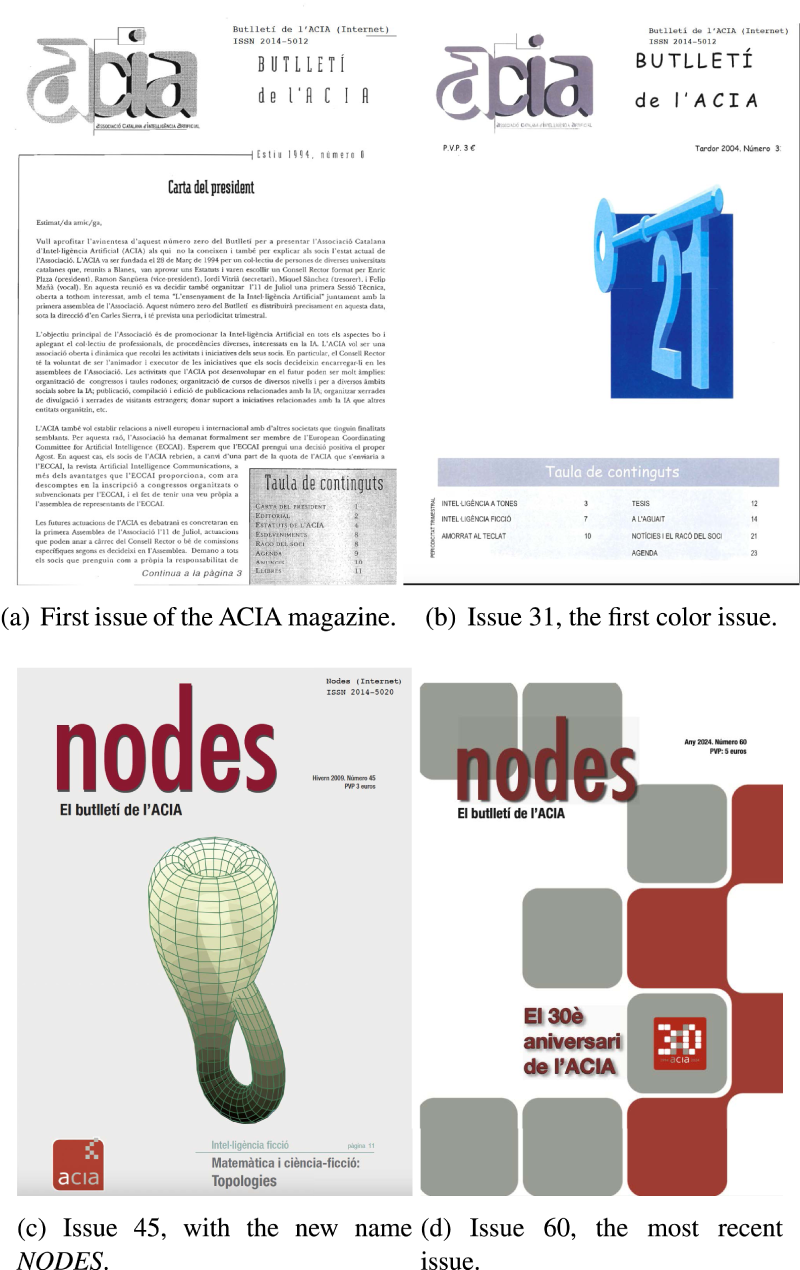
The evolution of NODES, the Magazine for Scientific Debate and Popularization by ACIA. (a) First issue of the ACIA magazine., (b) Issue 31, the first color issue., (c) Issue 45, with the new name NODES. and (d) Issue 60, the most recent issue.
Our AI magazine was originally printed on paper. This changed in 2011 when ACIA switched to an entirely digital format with the publication of NODES Issue 48. Recognizing the high value of print in readership rates, the ACIA general assembly held in 2018 decided to transition to a hybrid model, publishing both print and digital formats for NODES since Issue 58. The decision to maintain a printed edition underscores the association’s commitment to fostering a sense of community. A printed publication serves not only as a historical record but also as a tangible legacy of ACIA’s activities and evolution. Furthermore, it captures changes in scientific, technological, and social priorities over time. While digital tools are indispensable in the modern era, the physical and visual presence of a printed magazine often leaves a more lasting impression. Maintaining a printed magazine since 1994 is a physical testament to our commitment to science, a means of preserving ACIA’s history, and a valuable tool for scientific outreach.
The importance of popularization journals in academic and scientific communities is well documented. These journals play a crucial role as platforms for sharing research findings, promoting scholarly communication, contributing to the cohesion of the Catalan scientific network, and advancing knowledge across various disciplines. While some European AI associations occasionally publish reports or white papers, and others run academic journals like KI - Künstliche Intelligenz by the German society KI Bundesverband, to our knowledge, no other AI association in Europe has published a regular popularization magazine like ACIA has done since 1994.
The diversity of topics in NODES over the past 30 years reflects Europe’s strengths, challenges, and evolving position within the global AI ecosystem. A representative example is the topic of ethical and societal aspects of AI, which has become increasingly important not only in research but also as a central theme in scientific debate and popularization. NODES reflects this evolution; the topic of ethical and societal AI appeared as early as 2005 in Issue 34 and subsequent issues, especially through the work of Enric Plaza and Miquel Barceló. The topic later gained more importance, eventually leading to two regular sections: The Society section and the Philosophy and Thought section, which covers ethical aspects of AI, as well as a special issue on Democracy and AI in 2019. On other occasions, NODES has included articles on emerging topics that were not yet mainstream in Europe. For example, Ramon López de Mántaras’ article on Artificial Creativity was published in Issue 7 in 1996. At that time, the topic of AI and creativity was present in Europe but was not a central issue in the discipline. The 31-year publication history of NODES demonstrates its success as a platform for scientific popularization and the exchange of ideas, strengthening the educational mission of our association while promoting member participation and facilitating knowledge-sharing among ACIA members.
ACIA encourages and rewards its members’ work quality through different awards: The best all-public science communication work (issued since 2012), the best work of AI for social good (issued since 2021), and the best BSc and MSc thesis on AI 7 . Due to the high increase in machine learning applications to different fields, since 2022, the BSc and MSc awards were awarded into two categories: (i) Best theoretical study on AI and (ii) best application on AI.
In order to foster youth participation in research, ACIA opens twice a year scholarship calls for attending the conference organized by the association itself (CCIA Grants, issued since 2012) and for attending any other high-quality conference worldwide (ACIA Conference Grants, issued since 2011).
In addition, ACIA also issues the Marc Esteva Vivanco PhD Award on AI research, which is described in the next section.
Marc Esteva Vivanco PhD Award
The Marc Esteva Vivanco Award for the best doctoral thesis was established in 2012 by ACIA to honor the memory of Dr. Marc Esteva Vivanco. Generously funded by his family, this award annually recognizes the best doctoral thesis in the field of AI. With a focus on originality, impact, and scientific quality, the award is a hallmark of excellence in AI research within the Catalan academic community.
In addition to a monetary bonus, this award promotes visibility for the recipients’ work. Winners are invited to present their research at the CCIA conference, fostering connections within the AI research community. The dissemination of award-winning PhD theses through platforms like the ACIA’s NODES magazine further amplifies their impact.
The Marc Esteva Vivanco Award has recognized outstanding doctoral research in AI, showcasing the evolving landscape of the field. Winners have focused their research on topics including: Evolutionary algorithms for efficient data clustering (García-Piquer, 2012); ontologies and the semantic web (Martínez, 2013); AI and healthcare, such as analyzing human movements to detect Parkinson’s disease (Sama, 2014), breast cancer image interpretation (Abdel-Nasser, 2017), and diabetic retinopathy risk estimation (Ali, 2021); privacy, protection, and risk assessment (Abril, 2015); machine learning and social media (Lopez-Iñesta, 2018); AI and cognitive science, including sensorimotor exploration, early vocal development (Acevedo-Valle, 2019), and human–robot interaction in adapting robot behavior to user preferences (Camprodon, 2020); 3D perception and scene interpretation, such as image understanding for geometry and fashion (Simo-Serra, 2016), monocular depth estimation (Abdulwahab, 2023), and 3D point cloud understanding (Zoumpekas, 2024); and finally, on AI ethics, value-aligned norm selection in multi-agent systems (Serramia-Amoros, 2022).
The geographical distribution of the awardees demonstrates the extensive AI expertise present throughout the Catalan Countries. Institutions such as the UPC and Universitat Rovira i Virgili (URV) have been prominently represented, with the Universitat de Barcelona also contributing significantly in recent years.
The Marc Esteva Vivanco Award has consistently honored doctoral research that mirrors the prevailing themes of the ECAI in corresponding years. This alignment shows ACIA’s commitment focus on recognizing cutting-edge AI research. For example, the first award in 2012 recognized a thesis on evolutionary algorithms for data clustering (García-Piquer, 2012), a topic that was heavily featured at ECAI 2012. Similarly, winning theses on ontologies (2013), AI for healthcare (2014), and data protection (2015) were aligned with major themes at concurrent or recent ECAI editions. This pattern has continued in subsequent years, with awards for image understanding (2016), AI in healthcare (2017, 2021), machine learning for social media (2018), cognitive systems (2019), human–robot interaction (2020), ethical AI (2022), and computer vision (2023, 2024), all reflecting key topics at ECAI. This consistent alignment illustrates the award’s success in recognizing research that addresses practical, real-world challenges and reflects the dynamic evolution of the AI landscape.
A review of the gender of the award winners and their supervisors reveals an ongoing disparity. In the 13 PhD theses awarded, only 36% of supervisors were women, and only one award went to a female author. This highlights the need for continued efforts to promote gender equity in AI research and leadership.
donesIAcat Addresses the Gender Gap in AI
The integration of women in the Catalan Association of AI faced the societal and systemic challenges existing at the end of the last century. Some of the main difficulties included a lack of role models and structural barriers. Despite these challenges, significant progress was made due to the efforts of several pioneering women, such as Núria Piera, Carme Torras, Eva Armengol, and Petia Radeva, who were already researching AI when ACIA was founded.
As outlined in previous sections, the presence of women in AI has been historically low. For this reason, donesIAcat, the gender working group of ACIA, was created on March 8, 2019, International Women’s Day. From its foundation, the ambition of reaching all points in the territory and having a decentralized structure was a priority. Thus, donesIAcat has a clear territorial structure with a delegate in every division. The first board of donesIAcat involved eight members from the different geographical areas where ACIA had associates. The main goal of this working group is to reduce the gender gap in AI by increasing the presence of women in AI within the Catalan society. Currently, only 20% of ACIA members are female. Although the ACIA board has always tried to have a gender-balanced composition, only two out of eight presidents of ACIA (25%) have been women.
The mission of the donesIAcat working group is to provide a supporting structure for coordinating and disseminating existing activities to stimulate technological vocations in girls, to increase the number of females in Science, Technology, Engineering, and Math (STEM), and to enhance the visibility of Catalan female AI researchers and create role models. A recent paper by Gibert and Valls (2022) proposed a conceptual framework based on how support for women has to evolve throughout their education and professional careers to bridge the gender gap in AI effectively. This proposal is based on the experience accumulated by the group members in developing gender-oriented activities. Figure 6 shows a graphical representation of this circular framework. The outer circles represent the female population, separated into students from primary school to postgraduate level, and working professionals and scientists. Role models are a key element in inspiring new generations who, after training, may become future female AI role models. Furthermore, professional networking is crucial for fostering career advancement, particularly in a male-dominated environment.
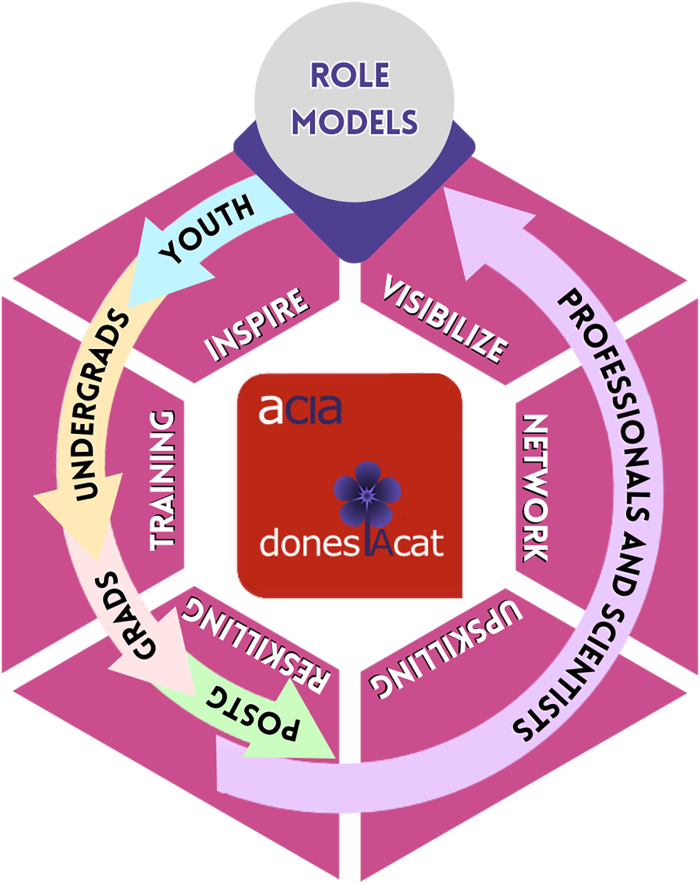
Actions carried out by donesIAcat include: (i) Inspirational talks at primary and secondary schools within other Catalan programs like Aquí-STEAM, INSPIRA-STEAM, #cientifiques, or Technovation Girls; (ii) participation in the Top Secret Rosies training program, designed to generate female talent in AI, with online training designed by women from the IDEAI research center and rich participation from donesIAcat role models; (iii) co-organization of specific events, like Women in Data Science or special sessions at the Mobile World Congress; (iv) popularization publications that discuss gender bias in technology 8 and the presence of females in STEM 9 ; (v) promotion of research led by women through a special issue restricted to papers with a female first author (Valls & Gibert, 2022); and (vi) working to transform society towards a more gender-balanced scenario, including changes at institutional and governmental levels whenever possible. In five years, donesIAcat has achieved institutional representation in governmental committees, such as the female experts’ commission for the review of the Catalan Science Law, to introduce a gender perspective.
This section contextualizes the Catalan Association for AI in the broader European context, presenting how AI research started in the Catalan Countries, the first works on AI by ACIA members in the 1970s, the involvement of ACIA in EurAI activities and governance, and the industrial and international scope of ACIA.
Beginnings of AI in the Catalan Countries
The origin of AI in Catalonia in 1968 was influenced by several factors, including computer science studies starting to be offered at the Catalan universities. In 1972, the Autonomous University of Barcelona (UAB) launched a science degree with a specialization in Computer Science. Later, in October 1977, the Barcelona School of Informatics (Facultat d’Informàtica de Barcelona) at the UPC began its academic activities. One of the early teachers was Dr. Ton Sales, who initially taught at UAB while working at IBM, and later was a full-time professor at UPC and became a beloved mentor figure in the field.
As far as we know, the first AI-related PhD in Catalonia was defended by Ramon López de Mántaras at the UPC in 1981, on the topic: “Learning algorithms in shape recognition. Application to robotics” (López de Mántaras, 1981). This originated the first informal AI research group at UPC, directed by Prof. Ramon López de Mántaras, that led to the creation of a formal AI research group at the Center of Advanced Studies, an institute of the Spanish National Research Council in Blanes (CEAB-CSIC) in 1985. This institutionalization facilitated the start of several doctoral and research works in AI, creating the conditions for the development of a strong Catalan ecosystem for AI. The development of further AI research groups ultimately led to the creation of the Catalan Association for AI (ACIA), which celebrated its 30th anniversary in 2024.
Initial Contributions by ACIA Members
As far as we know, the first paper on AI by Catalan authors, and certainly one of the earliest papers on Machine Learning in Europe, was “A self-learning algorithm for the classification and the recognition of vectorial patterns. Mathematical Pre-requisites and Programming Form” by J. Aguilar-Martin and R. López de Mántaras, published in 1976 in the Pattern Recognition track of the International Symposium on Information Theory by IEEE held in Ronneby, Sweden. The first journal paper about AI in Catalonia was “Results and tendencies in AI” by R. López de Mántaras, published in Novatica in 1980.
Following the creation of the AI Group at the Center of Advanced Studies in Blanes (CEAB-CSIC) in 1985, the 7th ECAI was held in Brighton, UK, in 1986, where some founding ACIA members were already present. The participation of ACIA members continued at the 8th ECAI held in Munich in 1988. This highlights themes of enduring relevance; although the field has evolved considerably, many topics that were prominent then are still central to the discipline nearly four decades later (e.g. robotics and vision, cognition, multi-agent interaction, machine learning, etc.)
ACIA and EurAI Activities
The Catalan AI community has grown with the help of ACIA, reaching high standards of international recognition. The distinction of EurAI Fellow has been conferred upon ten ACIA members: Lluís Godo, José Hernández-Orallo, Ramon López de Mántaras, Pedro Meseguer, Enric Plaza, Juan Antonio Rodriguez-Aguilar, Carles Sierra, Vicenç Torra, Carme Torras, and Hector Geffner. This prestigious honor is granted to less than 3% of EurAI associates. Only the AI societies from France, Germany, the UK, and Italy have more EurAI Fellows than ACIA.
Furthermore, ACIA members have held prominent roles on the EurAI Board, with Carles Sierra serving as president (2020–2024), Ulises Cortés as vice-president (2006–2008), and Ramon López de Mántaras as a board member (1988–1992), among others. ACIA members have also contributed to EurAI by serving on the PhD award evaluation committee (e.g., Ulises Cortés, 2004–2007 and 2022–2024) and by organizing major educational events, such as the 2022 EurAI Summer School in Barcelona, organized by Karina Gibert and attended by more than 150 PhD students. 10
ACIA has also supported, in an organizational capacity, highly relevant international AI conferences held in the Catalan Countries, such as the 16th ECAI in Valencia in 2004, with an ACIA member serving as General Chair (Ramon López de Mántaras), and the 22nd IJCAI in Barcelona in 2011, where the organizing committee was shaped by ACIA members, including Carles Sierra as the local chair. ACIA members have also been recognized with other prestigious European and international awards. For instance, Ramon López de Mántaras is the recipient of the EurAI Distinguished Service Award, the Robert S. Engelmore Award by AAAI, and the Donald E. Walker Award by IJCAI. Other notable accolades include the ACM/SIGAI Autonomous Agents Research Award for Carles Sierra, the SMIA Fellow recognition for Ulises Cortés, the 2007 iEMSs Fellow for Karina Gibert, and the 2016 IEEE Fellow for Vicenç Torra.
Industrial and International Scope of ACIA
ACIA members have also played a significant role in transferring AI knowledge to the private sector. Entrepreneurial postdocs and ACIA members have founded numerous spin-off companies, like Francisco Martín who founded both iSOCO and STRANDS in Catalonia, and BigML in Oregon, US. Other significant spin-offs include CogniCor Technologies, founded by Sindhu Joseph in San Francisco; Cognitive Robots, founded by M.T. Escrig; and Newronia, founded by B. López and colleagues. Additionally, Immense Simulations was co-founded by D. Busquets, and SemanticBots was co-founded by I. Sanz.
The AI research carried out at ACIA has also had an international impact, as shown by the current affiliations of some ACIA members distributed across Europe and the world. In the realm of AI ethics, ACIA members authored the “Barcelona Declaration for the proper development and usage of AI in Europe”, a pioneering initiative in the field. The influence of ACIA members also extends to cultural and pedagogical domains through science fiction. For example, the novel by Carme Torras La Mutació Sentimental was translated into English as The Vestigial Hearth. Published by MIT Press, it was released together with a companion course on Ethics and Social Robotics, which has been adopted as teaching material by some European universities. Today, ACIA members continue to shape global AI policy and ethics. For instance, since 2022, Ulises Cortés has been involved in the Global Partnership for AI (GPAI) working group 11 on Data Governance, contributing to guidelines on responsible AI. In parallel, Karina Gibert has advised both the European Commission and the Commonwealth of Nations Government on AI ethics and digital transformation.
Discussion
AI is on everyone’s mind and lips in 2025, but it has been less visible and understood by civil society and government in past decades. ACIA and its members have been persistently active within Catalan society and in collaboration with civic, business, and cultural organizations to organize events and activities. For instance, computer music and AI have figured prominently as a topic that, through several events over the years, has provided an accessible bridge to civil society. Other cultural events include the CCCB exhibition on AI and the premiere of Luc Steels and Oscar Vilarroya’s opera Fausto during IJCAI-11 in Barcelona’s Palau de la Música Catalana.
The relationship between AI, the academic community, and the private and public sectors has been less smooth than would be desirable. Government action is often bureaucratic and cumbersome, while the small number of large private companies and the near non-existence of venture capital firms complicate knowledge transfer from academic research to society. For instance, although the Spanish and Catalan governments theoretically deploy funding targeted at new companies, some AI spin-offs that were later succesful were never granted any funding; iSoco, Strands, and BigML raised their initial capital through friends, family, and fools. Moreover, some spin-offs, like BigML and CogniCor, eventually moved to the USA to reside in an economic milieu where access to capital to maintain viability was easier.
The resurgence of AI in the public view, as a result of the development of Large language Models and the cataclysmic forebodings of some outspoken individuals, has increased AI’s visibility but also changed the public perspective. Consequently, ACIA members have been extremely active in responding to requests from newspapers, radio, and TV networks on the problems that AI is compounding. Concerned about AI and ethics, some ACIA members convened a two-day meeting in 2018 to write, discuss, and publish the Barcelona Declaration for the proper development and usage of AI in Europe. The first day focused on deliberation by a select group, while the second day offered an open meeting for public debate. This resurgence has created an expectation that the constraints and difficulties in transferring AI knowledge to society can improve. However, even if the private and public sectors are now expected to favor investing in AI, most of these difficulties (bureaucratic government processes, lack of access to venture capital) are systemic and require overall reforms. The promises and expectations of favoring AI as a technology will likely be hindered by these systemic drawbacks, which are quite general in Europe as a whole. Advances in AI in Europe cannot be understood without the contributions of the different AI societies that constitute EurAI. The ECAI has been a core meeting place for the research community to share progress. In that regard, topics addressed at ECAI have evolved at a similar pace to those at the ACIA conference. At the first ACIA conference in 1998, the topics were aligned with ECAI subjects (see Figure 7), and this alignment continued through 2024 (see Figure 8). These figures show how topics have changed over time, partly due to the spin-off of more specialized conferences like the European Conference on Machine Learning and the European Robotics and Intelligent Systems Conference.
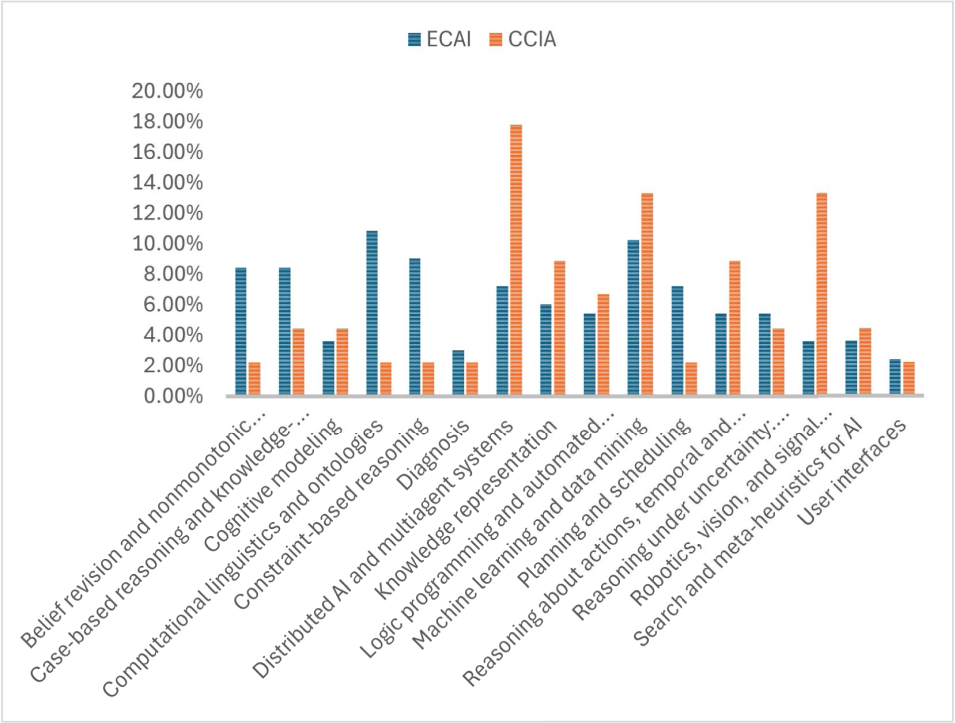
Comparison of topics at European Conference on AI (ECAI) and CCIA in 1998 by percentage of conference papers.
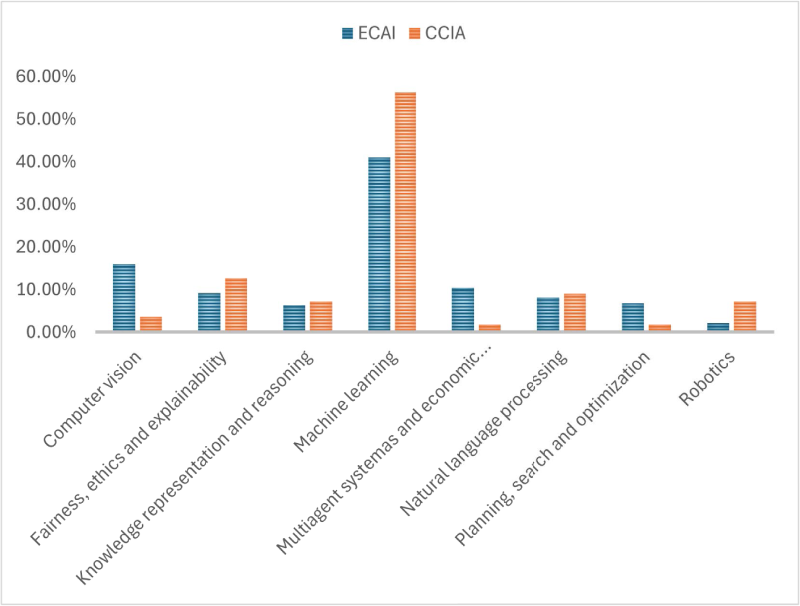
Comparison of topics at European Conference on AI (ECAI) and CCIA in 2024 by percentage of conference papers.
ACIA possesses some specific traits compared to other EurAI member societies. In particular, the association’s magazine is a unique, distinctive feature. ACIA has published a magazine with good regularity since its origins. It includes diverse content, such as research advances, news, and author columns, from which several books have been produced. The magazine is printed and represents a valuable source of information for historical scientific studies. Another significant trait of ACIA is its Bachelor’s and Master’s Thesis Awards which, in addition to the PhD Award, promote scientific talent among young people and bring them closer to the scientific community. Finally, ACIA conferences (CCIAs) have always been designed to foster community, with very few parallel sessions, which facilitates cross-disciplinary sharing of results.
The concerns and challenges of the ACIA community are shared with EurAI. One of the main concerns is retaining excellent researchers in academia to focus on basic research as a seed for further AI developments. Recent advances in Large Language Models have skyrocketed the economic interests in AI, and many companies are hiring people with salaries that academic institutions in most European countries cannot afford. The role of women in the scientific field is another challenge, from which AI is not excluded.
In this article, we have delineated the history of the Catalan Association for AI (ACIA), tracing its journey from its foundation in 1994 to the present. We highlighted how it has strengthened Catalan society’s ability to generate knowledge and contribute to the global AI community with its own distinct voice. We discussed key aspects of ACIA’s evolution, including the CCIA conferences, the NODES magazine, the Marc Esteva Vivanco PhD Award, and the special issues springing from CCIA. These initiatives have played a crucial role in advancing AI research in the Catalan Countries and, in turn, have strengthened AI research in Europe through participation in EurAI. Finally, we wish to emphasize an often-overlooked but vital aspect: ACIA’s role in fostering collaboration, meaningful connections, and lasting friendships among its members. We believe this strong sense of community has been essential in enabling a medium-sized stateless country to develop a highly productive research ecosystem with a significant presence in the international AI landscape.
Footnotes
Acknowledgments
The authors acknowledge the information provided by Ramon López de Mántaras, Vicenç Torra, Ulises Cortés, Marco Schorlemmer, and Carles Sierra, which enriched the content of this paper. We thank Jordi Pascual and Gerard Pascual for their assistance in the elaboration of the maps in Figures 1 and 3 and the collection of data. We also thank Sònia Orós for their assistance in designing  .
.
Funding
The authors disclosed receipt of the following financial support for the research, authorship, and/or publication of this article: Núria Agell acknowledges funding by grant PID2020-114247GB-I00 funded by MICIN and the support of the AGAUR research group 2021 SGR 01340. Vicent Costa acknowledges the support of research group 2021SGR00517 and funding from the project LINEXSYS: Logic-based Methods for Inconsistency Management in Explainable Intelligent Systems (PID2022-139835NB-C21). Zoe Falomir acknowledges funding by the Knut and Alice Wallenberg foundation and the Wallenberg AI, Autonomous Systems and Software Program (WASP). Karina Gibert acknowledges AGAUR 2021 SGR 01532. Beatriz López acknowledges funding by Generalitat de Catalunya 2021 SGR 01125. Lledó Museros acknowledges funding by grant PID2021-123152OB-C22 funded by MICIU/AEI/10.13039/501100011033. Aida Valls acknowledges funding by the Departament de Recerca i Universitats de la Generalitat de Catalunya (Consolidated research group 2021-SGR-00114) and URV (2023PFR-URV-00114).
Declaration of Conflicting Interests
The authors declared no potential conflicts of interest with respect to the research, authorship, and/or publication of this article.