




Abstract
Aging accelerates the degeneration and calcification of heart valves, driving valvular heart disease (VHD) development. As Japan’s population ages, the prevalence of VHD continues to rise, increasing the burden on caregivers. This article draws on insights from the Japan Heart Health Survey (JHHS) and a targeted literature review to examine VHD’s impact on caregivers who support older patients in Japan. The discussion also explores how promoting early diagnosis and treatment through medical innovations can help alleviate caregiver burden. Caregiving burden is multifaceted, impacting caregivers physically, emotionally, and financially. However, older patients often underestimate its impact. Underdiagnosis and undertreatment of VHD can exacerbate symptoms, contributing to greater caregiving strain. Low awareness among older adults and caregivers was identified as a key barrier to timely diagnosis and treatment of VHD. Leveraging advancements in medical innovation, including less invasive treatment options, could improve attitudes toward treatment, enhancing patient independence, and easing caregiving demands. Addressing the burden of VHD requires acknowledging its significant, often overlooked, impact on caregivers. Targeted public health initiatives can increase disease awareness and promote less invasive treatment options to encourage treatment. With more effective VHD management, both patients and caregivers can be adequately supported, ultimately improving health outcomes for all.
Introduction
Valvular heart disease (VHD) is a condition where one or more heart valves do not function properly due to congenital defects, infections, or age-related degeneration and calcification (Watanabe, 2019). In Japan, the prevalence of VHD continues to rise, driven in part by the aging population (Doi et al., 2020). As of 2020, approximately 2.5 million people in Japan live with VHD. This accounts for a nationwide prevalence of 1.96%, which increases with age—more than 80% of VHD patients are 65 years old and above (Igarashi et al., 2023). Recognizing VHD as a growing concern in Japan, the JCS/JSCS/JATS/JSVS 2020 Guidelines on the Management of Valvular Heart Disease was published to capture new advancements in diagnosis and treatment (Izumi et al., 2020).
VHD can manifest as a range of symptoms including shortness of breath, dizziness and chest pain. These symptoms are frequently normalized as signs of aging, particularly among individuals over 65 (Watanabe, 2019). This misperception, coupled with VHD’s latent and asymptomatic period, contributes to the underdiagnosis of VHD (Izumi, Matsuyama, Asaoka, et al., 2023). VHD can also worsen and develop into heart failure (Watanabe, 2019). In Japan, as many as 55% of VHD patients experience heart failure (Igarashi et al., 2023). Conversely, VHD is the second most common cause of heart failure in Japan, accounting for 12% to 28% of heart failure cases (Izumi, Matsuyama, Yamabe, et al., 2023). Heart failure can be fatal, and for survivors, it can severely limit their quality of life.
More than half of older heart failure survivors face challenges across multiple domains of health, including physical, cognitive, and social functioning (Hamada et al., 2021). Survivors often experience functional deficits, including frailty and mobility issues, that hinder their ability to perform activities of daily living (Narii et al., 2024). Heart failure can also cause cognitive impairment, limiting survivors’ ability to self-care. This includes taking medication and attending follow-up care, which is critical for effective recovery and rehabilitation (Hayashi et al., 2021).
Therefore, heart failure survivors can be highly dependent on others for day-to-day care. The responsibility of caregiving often falls on family members, as 86% of heart failure patients in Japan are discharged from hospitals to their homes (Obata et al., 2021). This can result in a substantial caregiving burden if their condition is not adequately managed.
Given that more than half of VHD cases in Japan progress into heart failure, timely diagnosis and effective treatment are essential to limit disease progression and in turn, reduce VHD’s impact on patients and caregivers. Despite this, the majority of VHD patients in Japan do not undergo treatment (Izumi, Matsuyama, Yamabe, et al., 2023) due to reasons such as under-diagnosis and potential ineligibility to undergo open-heart surgery. Advances in medical technology now offer less invasive treatments for VHD, presenting an opportunity to increase treatment rates and, consequently, reduce the burden on caregivers.
While the clinical implications of VHD are well-studied, no Japanese studies to our knowledge have examined its impact on caregivers. In this article, we discuss the societal impact of VHD in Japan, focusing on its impact on caregivers. We also explore how encouraging early diagnosis and increasing treatment rates by leveraging medical innovation can alleviate caregiver burden.
The Japan Heart Health Survey
We leverage findings from the Japan Heart Health Survey (“JHHS”), conducted in 2022 among older Japanese individuals, older patients with heart disease and caregivers. The survey explored their perceived burden of heart disease, with a particular focus on VHD, as well as key barriers to diagnosis and treatment. A portion of the survey data has been published in a press release (Edwards Lifesciences, 2022b), while other data points are presented for the first time within this article.
Half of the 1,600 JHHS respondents comprised older individuals (65–80 years old)—197 diagnosed with heart disease, 300 exhibiting heart disease symptoms but not formally diagnosed, and 303 without heart disease symptoms. The other 800 respondents comprised primary caregivers corresponding to these categories of older individuals (N = 195, N = 305, N = 300, respectively).
In addition to the JHHS, a targeted literature review was also conducted to supplement survey findings and reinforce key points. Search strings containing keywords such as “valvular heart disease,” “caregiver burden,” and “medical innovation” were entered into PubMed and Ichushi databases to retrieve potentially relevant articles published between 2020 and 2024. The title and abstract of the 225 search results were reviewed and filtered using pre-defined eligibility criteria. Articles in the context of heart disease in Japan and covering the topics of caregiver burden, societal impact or medical innovation were included. In total, 64 articles underwent full-text review where key points were extracted and organized thematically. Additional gray literature was also used to supplement any data gaps.
Caregiving Burden: Multifaceted, Prevalent, Yet Overlooked
The JHHS highlighted the physical, psychosocial and financial stress experienced by caregivers of older individuals in Japan. The majority (57%) of caregivers of older individuals in poor health reported having no time for themselves due to the extensive hours devoted to caregiving. Almost two-thirds (64%) of caregivers reported feeling emotionally stressed about caring for their loved ones (Edwards Lifesciences, 2022b).
Notably, among caregivers of older patients with heart disease who were not receiving treatment, a high percentage reported heightened stress levels (75%; Edwards Lifesciences, 2022b) and pronounced physical symptoms (52%), including weight loss and headaches (Edwards Lifesciences, 2022a). The majority of these caregivers (68%) said that their daily lives had been significantly impacted by engaging in caregiving, and 59% reported that their freedom had been limited by the health status of their loved ones (Edwards Lifesciences, 2022b). This suggests the potential role of appropriate treatment in reducing caregiver stress, though comparative data would be needed to establish a clear connection.
The physical and emotional toll on caregivers is further compounded by concerns regarding financial stability. A substantial proportion (79%) of caregivers expressed worries about their children’s futures, while 64% and 63% were concerned about their retirement and own medical expenses, respectively (Edwards Lifesciences, 2022a).
Critically, the JHHS identified disparities between the perceptions of caregivers and older individuals, highlighting the interpersonal complexities of caregiving burden. While older individuals generally viewed themselves as healthy (Figure 1a) and felt that their health conditions had minimal impact on their self-reliance and independence (Figure 1b), caregivers did not always share the same perception. Most caregivers emphasized the substantial support they provide to meet the personal and social needs of their loved ones, which contrasts the notably smaller proportion of older individuals who recognize their need for such assistance (Figure 1b). Moreover, almost half of the caregivers surveyed felt that their independence had been limited by their loved one’s condition (Figure 1b).
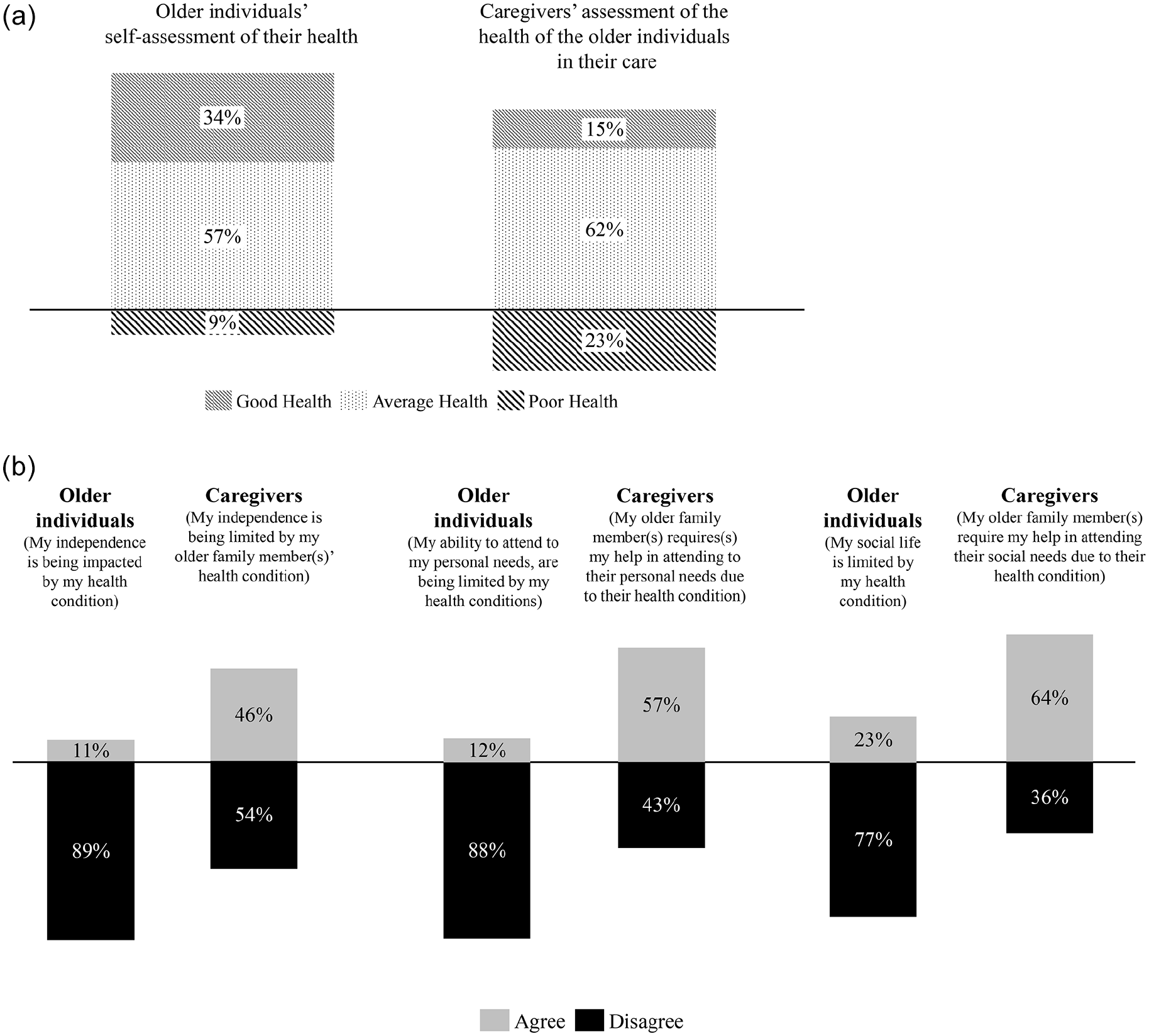
JHHS responses regarding respondents’ (a) assessment of elderly’s health and (b) their perceived impact of the heart disease on elderly’s self-reliance and independence (Edwards Lifesciences, 2022b).
In terms of attending regular heart health checks, more caregivers viewed the activity as time-consuming compared to older individuals (Figure 2a). A larger portion of caregivers also foresaw facing challenges in attending these appointments (Figure 2b). This indicates that caregivers experience greater burden when accompanying their loved ones to medical appointments than older patients themselves (Edwards Lifesciences, 2022a).

JHHS respondents who (a) agreed that regular health checks are time-consuming, and (b) foresaw challenges in getting regular health checks (Edwards Lifesciences, 2022b).
This divergence in perceptions suggests that the extent of caregiving burden may be underestimated. Underestimation of caregivers’ burden has been found to be significantly associated with caregivers having higher levels of depression and anxiety, lower quality of life and compromised caregiving experiences (Shin et al., 2018). Fostering open dialog between caregivers and older individuals could help to bridge this perception gap so that caregivers feel valued in their roles.
To our knowledge, there are currently no Japanese studies that specifically address caregiver burden in the context of VHD. However, studies focused on heart failure have examined its effects on Japanese caregivers. As aforementioned, more than half of VHD patients will progress into heart failure (Igarashi et al., 2023). Given this strong association, findings from heart failure studies remain applicable to VHD, particularly to severe cases of VHD.
In a study by Hayashi et al. (2021), findings reiterate caregivers’ crucial role in the daily lives and management of heart failure survivors. Caregivers of heart failure survivors reported needing to provide daily support with preparing meals (47%), traveling out of home (40%), shopping (38%), alongside other activities. While this creates opportunities for connection with their loved ones, it can also lead to caregivers experiencing poorer health outcomes and distress (Hayashi et al., 2021). Such caregiving activities were found to impact the physical well-being of caregivers. Almost half the caregivers (44%) reported feeling physically tired and 41% neglected their health. The physical impact of caregiving can also manifest as fatigue, pain, and sleep disturbances. Mental and emotional stress were also pervasive—62% of caregivers worried about their loved one’s condition, and more than half felt stressed (59%), mentally tired (53%), or lonely (53%; Hayashi et al., 2021). Another Japanese study among caregivers of heart failure survivors treated with left ventricular assist device (LVAD) also found caregiving burden to be an independent predictor of lower mental quality of life among caregivers (Kato et al., 2017).
The financial stress experienced by caregivers is evident in the high healthcare costs and potential loss of income they may face while providing care for their loved ones. In Japan, heart failure patients face an average annual healthcare cost of about ¥1.5 million (USD 10,500), of which 37% is directly attributed to heart failure healthcare costs including hospitalization and medical expenses, while the remainder consists of healthcare costs not directly linked to heart failure, such as those related to comorbidities (Eguchi et al., 2022). Moreover, adult children caregivers, many of whom are economically active, may reduce their working hours or retire early to provide care for their loved ones, contributing to further financial strain and insecurity (Washio et al., 2018).
Overall, the findings from the JHHS and supporting literature highlight that caregiving burden is characterized by a complex interplay of physical, emotional, and financial challenges. Preliminary evidence indicates that the caregiving burden associated with VHD may be underestimated in Japan, suggesting a need for further investigation to fully understand the scope and impact of this issue. Recognizing and addressing this burden is critical for developing comprehensive support systems that can better assist caregivers, improve their quality of life and strengthen their relationships with the loved ones they care for.
Underdiagnosis and Undertreatment: The Ripple Effect on Caregivers
Today, VHD remains underdiagnosed and undertreated in Japan (Izumi, Matsuyama, Asaoka, et al., 2023). Without appropriate management, VHD can progress, and symptoms may worsen. Consequently, patients would require higher levels of care, increasing their reliance and burden on caregivers.
The JHHS revealed significant gaps in awareness, knowledge, and attitudes toward heart disease and VHD among older individuals and caregivers in Japan, which may be a contributing factor to delayed diagnosis and undertreatment. Despite heart disease being a leading cause of death globally, it was not perceived as a major concern among older Japanese individuals and caregivers. Fewer than one in four respondents (24%) regarded heart disease as a worrisome disease among older individuals. One-third of older respondents (37%) and caregivers (32%) noted their lack of understanding of heart disease and its symptoms as barriers to attending regular heart health checks (Edwards Lifesciences, 2022b).
Consequently, most older respondents only attended heart health checks, such as cardiovascular disease screening (83%), when symptoms surfaced. Only 27% reported undergoing auscultation (listening to heart sounds with a stethoscope) annually (Edwards Lifesciences, 2022b). Auscultation is an important and one of the most common diagnostic methods for assessing heart risk, as it can help identify irregular and weak heartbeats, signaling the first signs of deteriorating heart health. Additionally, checking for heart murmurs during auscultation can identify aortic stenosis, a type of VHD. Particularly among older individuals who reported poor health, more than half (52%) never had their heart sounds checked or had only done so when they experienced symptoms (Edwards Lifesciences, 2022b).
Specific to VHD, respondents’ understanding of its symptoms and association with heart failure is similarly limited. Over 60% of respondents knew “little” or “not at all” about VHD (Edwards Lifesciences, 2022b), and even fewer were knowledgeable about structural heart disease (17%; Edwards Lifesciences, 2022a). Furthermore, one-third (34%) of respondents were unable to identify any symptoms of VHD, and only 38% associated it as a cause of heart failure (Edwards Lifesciences, 2022b).
More than one-third of older individuals and caregivers were unsure or held the misconception that VHD is normal for older people (Figure 3a) or is only present at birth (Figure 3b). Additionally, the majority did not know that a healthy lifestyle could prevent VHD (Figure 3c) and falsely believed that it leads to sudden, unexpected, and painless deaths (Figure 3d). This shows that beyond just low disease awareness, many respondents also held misconceptions about VHD’s causes and treatment, which may contribute to a dismissive attitude toward its management.

JHHS responses regarding statements specific to VHD. Statements: (a) Valvular heart disease is normal for older people and there is not much to worry about; (b) Heart valve conditions are only present at birth; (c) Valvular heart disease can be prevented by healthy lifestyle, including eating, exercising and not smoking; (d) Valvular heart disease leads to sudden, unexpected, and painless deaths. Each statement is either true or false, as indicated in the box at the bottom of the pie charts (Edwards Lifesciences, 2022b).
Altogether, these findings indicate that older individuals tend to take a reactive approach, where heart health checks are neglected until symptoms arise. This pattern can lead to delayed or even missed diagnoses, which can worsen health outcomes (Izumi, Matsuyama, Yamabe, et al., 2023). Increasing awareness of heart disease and VHD, including their symptoms and significance particularly among the older population, could encourage more proactive management of heart health.
Beyond diagnosis, the JHHS also identified treatment anxiety and misconceptions as significant obstacles to effective heart disease treatment. The fear of treatment, hospitalization, and surgery were key psychological barriers, reported by 26% of older respondents and an equal percentage of caregivers. One-third of older individuals (36%) and caregivers (27%) also considered their lack of knowledge about heart disease to be a barrier to treatment (Edwards Lifesciences, 2022b).
Many held misconceptions regarding the need and options for VHD treatment. For instance, over two-thirds of respondents were uncertain or falsely believed that VHD treatment was not necessary and that individuals with VHD can live a painless life as long as they maintain a healthy diet and exercise regularly (Figure 4a). A similar proportion did not know that medication alone was insufficient in treating VHD and that interventional procedures are necessary (Figure 4b). Additionally, the majority were uncertain about the safety of heart disease medications, assuming that all medications have damaging side effects (Figure 4c).
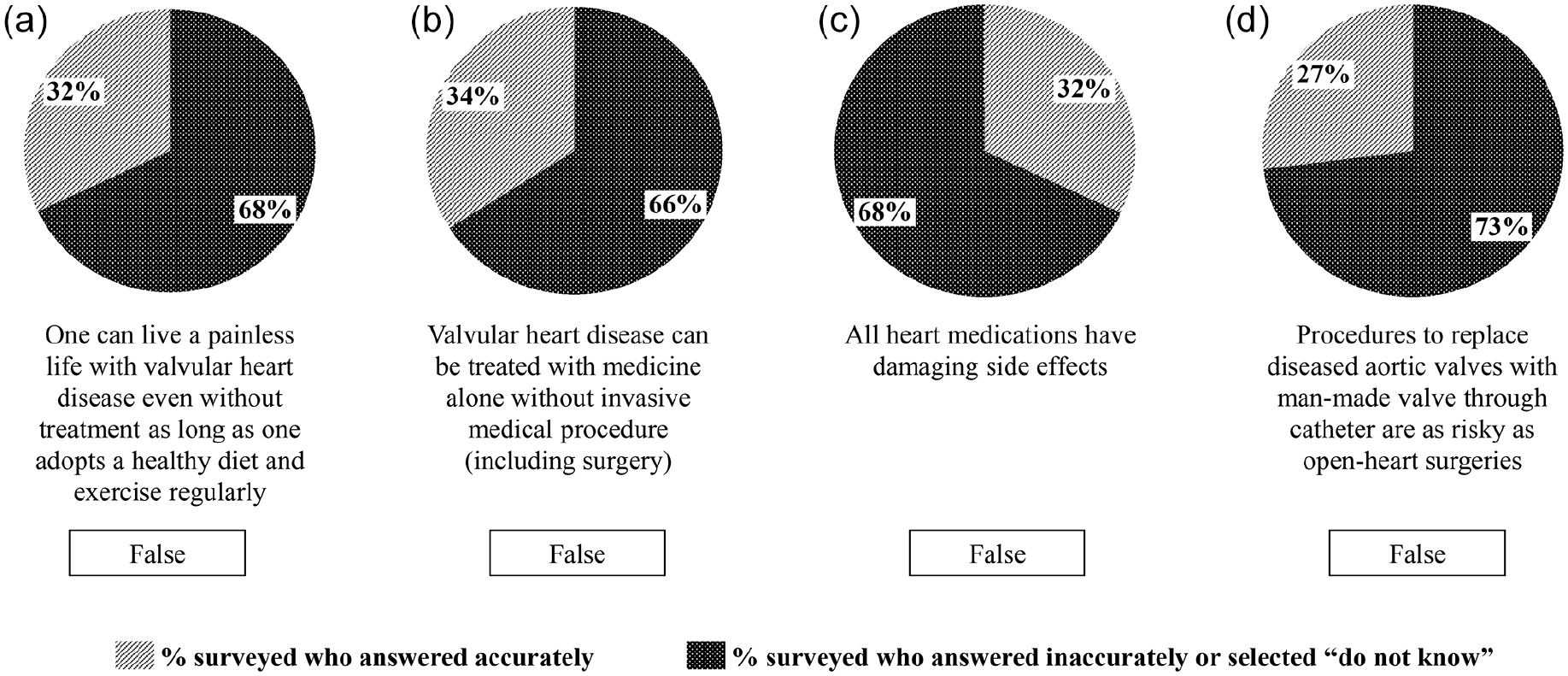
JHHS responses regarding statements specific to heart disease or valvular heart disease management. Statements: (a) One can live a painless life with valvular heart disease even without treatment as long as one adopts a healthy diet and exercise regularly; (b) Valvular heart disease can be treated with medicine alone without invasive medical procedure (including surgery); (c) All heart medications have damaging side effects; (d) Procedures to replace diseased aortic valves with man-made valve through catheter are as risky as open-heart surgeries. Each statement is either true or false, as indicated in the box at the bottom of the pie charts (Edwards Lifesciences, 2022a, 2022b).
Respondents also expressed uncertainty toward interventional treatments. Almost three-quarters of respondents did not know that aortic valve replacements using a catheter are less risky than open-heart surgeries (Figure 3d). Limited understanding of modern, less invasive treatments like transcatheter aortic valve implantation (TAVI) procedures may discourage individuals from seeking timely interventions, ultimately worsening health outcomes and thus increasing caregiver dependency.
In summary, these survey findings indicate that low awareness and misconceptions of VHD, its severity, symptoms and treatment options form a barrier to both diagnosis and treatment. Increasing knowledge in these aspects may facilitate more timely diagnosis and treatment, as demonstrated by case studies from other regions. An American study concerning atrial fibrillation found that patients with inadequate health literacy and disease awareness were more than twice as likely to remain undiagnosed compared to those with adequate health literacy (24.6% vs. 11.9%; Reading et al., 2017), highlighting the importance of knowledge in facilitating diagnosis. Additionally, the United Kingdom’s “Be Clear on Cancer” campaign, which aimed to increase lung cancer diagnosis rates by promoting awareness of persistent coughs as a key symptom, led to a substantial rise in public awareness of lung cancer and encouraged individuals to seek early medical help. General practitioner consultations for at-risk individuals rose by 67%, and an 18.6% increase in chest X-rays following general practitioner referrals was noted. Lung cancer diagnoses increased by 9.1% during the campaign period (Ironmonger et al., 2014).
Such initiatives could be similarly implemented for VHD in Japan to boost diagnosis rates. Given that VHD symptoms may overlap and be frequently mistaken for the usual aging process, it would be prudent to raise awareness among older populations about the need for regular health checks, as well as specific warning signs to distinguish VHD from general age-related changes. Efforts in promoting health-seeking behaviors, diagnosis, and acceptance toward treatment would ultimately benefit both patients and caregivers through improved health outcomes and reduced caregiving burden.
The Value of Innovation: Beyond Patients to Caregivers
The JHHS identified treatment anxiety as a key barrier to heart disease treatment. More than one in four (26%) respondents reported the fear of treatment, hospitalization, and surgery as a barrier to treatment. Fear of a long recovery process (older individuals: 18%, caregivers: 24%) and side effects (older individuals: 13%, caregivers: 21%) were also noted to contribute to treatment anxiety (Edwards Lifesciences, 2022b).
In providing patient-centered care, medical teams assess the clinical benefits and risks of treatment options before recommending the most suitable approach for each patient (Izumi et al., 2020). The advent of innovative therapeutic options in recent years presents a broader array of alternatives tailored to meet the diverse needs of individual patient profiles. Beyond traditional methods such as symptom-managing medications and conventional surgery, novel VHD treatment approaches can help to overcome existing treatment limitations and broaden the range of patients eligible for effective care (Dimytri et al., 2012). For example, less invasive treatment options, such as TAVI, have become integral in managing VHD among older Japanese individuals since its introduction in 2013. This population often faces treatment limitations due to frailty and comorbid conditions, making them less suited for high-risk surgeries (Izumi, Matsuyama, Asaoka, et al., 2023).
Beyond expanding the pool of eligible patients, advancements in treatments can help minimize side effects, particularly for vulnerable patients with comorbidities or contraindications. For instance, a meta-analysis found that TAVI was associated with fewer bleeding complications and strokes, as compared to surgical intervention. Moreover, patients undergoing TAVI spent 3.6 fewer days in the hospital (Latif et al., 2020). While the JHHS identified the fear of treatment side effects and long recovery periods as key contributors to treatment anxiety among older Japanese individuals and caregivers, over two-thirds of respondents did not know that aortic valve replacements using a catheter are less risky than open-heart surgeries (Edwards Lifesciences, 2022a). Closing the awareness gap that innovative medical solutions offer a safer and enhanced treatment experience could help alleviate these concerns, building confidence and acceptance of VHD treatment.
Research also indicates that TAVI has the potential to help patients improve their physical function, mobility, and quality of life as well as help preserve their independence (Kim et al., 2014; Krane et al., 2010). This could translate into less mental stress for caregivers, as demonstrated in a Danish observational study on caregivers of heart failure patients who underwent TAVI versus surgical intervention (Rosseel et al., 2019). While similar comparative studies are limited in Japan, a longitudinal study by Kato (2017) found significant improvements in caregivers’ mental health scores 3 months and 6 months after their loved ones with heart failure underwent LVAD implantation, as compared to pre-implantation phases where caregivers reportedly experienced an “emotional rollercoaster” marked by great emotional distress, anxiety, and fear. These findings highlight the reciprocal benefits of advanced medical technologies, which not only improve patient outcomes but also address the often-overlooked issue of caregiver burden (Kato et al., 2017).
It would be crucial for future research in Japan to further investigate the social impact of VHD, especially on caregivers, and to explore how innovative treatments bring additional societal value. For instance, caregivers in Japan may switch from full-time to part-time work or even retire early to attend to caregiving needs at home (Washio et al., 2018). Effective treatments that improve patients’ post-operative independence could reduce their reliance on caregivers. Consequently, this could enable caregivers to return to work, contributing to overall economic productivity.
Moreover, caregiver burden can negatively affect family dynamics, potentially leading to conflicts between family members (Ghasemi et al., 2020). By reducing the intensity and frequency of caregiving needs, innovative treatments could contribute to a more positive home environment that fosters intergenerational harmony. For healthcare systems, innovation can drive operational and economic efficiencies to better manage the long-term financial impact of chronic conditions like VHD (Izumi, Matsuyama, Asaoka, et al., 2023), contributing to a sustainable healthcare model for Japan’s aging population.
As medical innovation continues to advance to meet the growing challenges of VHD, its benefits to individuals and the wider society can only be fully realized with adequate uptake. Patient education should hence extend beyond disease awareness to also include available treatment options, empowering patients and caregivers to make informed decisions in the management of their condition.
Conclusion
In addressing the growing challenges of VHD in Japan, it is important to consider caregivers who play an essential, yet sometimes overlooked, role in managing care. It is important to recognize that caregivers bear significant burden from their caregiving responsibilities which can diminish their quality of life and productivity. The findings from the JHHS highlight the multifaceted nature of caregiving stress, which includes emotional, physical, and financial strains. The survey also revealed significant gaps in VHD knowledge, which may contribute to late or missed diagnosis and treatment.
Targeted education and public health campaigns, especially among older Japanese individuals and their caregivers, can help increase disease awareness and rectify prevalent misconceptions. Such efforts should also inform patients and caregivers about the advantages of less invasive medical innovations to improve attitudes toward receiving treatment. Initiatives can also seek to foster more open communication between caregivers and older patients, allowing for a more accurate understanding of caregiving needs and expectations.
In envisioning the future of VHD in Japan, it is essential to adopt a collaborative strategy that not only focuses on treating VHD effectively but also supports the invaluable role of caregivers in the healthcare continuum. Fostering a system that values and supports caregivers, alongside patients, will ultimately result in better health outcomes for all.
Footnotes

Ethical Considerations
This manuscript relies on secondary data, which does not require ethical approval.
Funding
The author(s) disclosed receipt of the following financial support for the research, authorship, and/or publication of this article: Edwards Lifesciences provided funding support for this manuscript and participated in discussions regarding its development and the decision to publish. Bruce Crawford, William Brown and Rui Min Fung are employees of Vista Health, an organization compensated by Edwards Lifesciences for the development of this paper.
Declaration of Conflicting Interests
The author(s) declared no potential conflicts of interest with respect to the research, authorship, and/or publication of this article.
Data Availability Statement
Aggregate data from the Japan Heart Health Survey (JHHS) that support the findings of this manuscript may be available from the corresponding author, Aya Ono, upon reasonable request.