



Abstract
Discussions of informed consent—the cornerstone of twentieth- and twenty-first-century biomedical ethics—have largely unfolded in isolation from other fields where consent is equally central, such as sexual ethics, contract law, and political philosophy. Yet developments in IT, Big Data, AI, and human–computer interaction demand closer dialogue between bioethics and contract law. Emerging technologies—including genetic testing, biomarker analysis, wearable sensors, brain imaging, drones, social media, and smartphones—raise ethical and legal concerns about access to private data, evidence of agreement, and the boundaries of autonomy. This paper brings the bioethical notion of informed consent into conversation with legal conceptions of consent, showing how each can enrich the other. Insights from visual and comic contracting demonstrate how legal design can make consent more genuine and comprehensible in biomedical contexts. Conversely, bioethics’ commitment to “two-way” informed consent offers a model for more relational and ethically grounded approaches to legal contracting.
Introduction
This court readily acknowledges that a [thumbs-up] emoji is a non-traditional means to ‘sign’ a document but nevertheless under these circumstances this was a valid way to convey the two purposes of a ‘signature’ – to identify the signator […] and as I have found above – to convey acceptance of the flax contract. Justice Keene, Court of Saskatchewan
1
Effective consent forms, terms and conditions, and privacy policies all ostensibly serve as conduits for the transfer of information, the acknowledgment of risks, and the establishment of a foundation for mutual understanding. In law, we note that times are changing, as evidenced in the quote above, and even emojis can—in some circumstances—signify contractual consent.
In medical procedures and research, patients must provide informed consent to uphold fundamental ethical standards. This consent is typically evidenced by the patient's signature on a Patient Informed Consent Form (PICF), written in accessible language and outlining the procedure, along with its potential risks and benefits. By contrast, in contexts such as website privacy policies, consent may be reduced to merely ticking a box. The evidential basis for such consent being “informed” is, therefore, far weaker. Privacy policies and term sheets are often excessively long, complex, and written in inaccessible language, with the result that few individuals read—let alone comprehend—the conditions to which they formally consent (Nguyen and Solomon 2018; Andreotta et al. 2022; Andreotta 2024).
Efforts to make consent forms, policies, and contracts more accessible and comprehensible have gained welcome momentum in recent years. Visual and pictorial aids—including, in some cases, entire comic-style contracts—have been employed to clarify employment agreements, terms of service, and other legal documents (see Andersen and Corner 2022). Although the use of comic contracts is a relatively recent legal innovation, evidence of their effectiveness in contexts previously dominated by text-based agreements is beginning to emerge. Zan et al. (2023), for instance, provide empirical data demonstrating the success of visual contracts within two Australian companies—a bank and an engineering consultancy.
These developments naturally prompt a broader question: if visual aids or comic contracts can help banks communicate terms and conditions more effectively to customers, and enable companies to provide clearer employment contracts to employees, in what other domains might they prove useful? Discussions are already underway about incorporating visual aids into medical consent forms (Kirkham and Andersen 2020). Might similar approaches enhance consent in domains where it is currently deficient, such as online interactions with technology companies?
This paper addresses that question by identifying a key prerequisite for the successful implementation of visual or comic contracts: a genuine, reciprocal interest in what we term real two-way consent. To clarify this concept, we first examine how consent is traditionally understood within the disciplines of law and philosophy. We then show how visual communication can facilitate mutual, transparent, and informed consent, illustrating this argument through case studies that demonstrate how real two-way consent can be achieved across diverse contexts.
We argue that in the context of legal contracts, policies, and terms of service, the law should reconsider—and perhaps abandon—its reliance on a non-relational, formulaic, and ultimately empty notion of consent. As bioethics demonstrates, consent is only genuine when it is informed. We propose that one of the most effective ways for the law to achieve this is through the use of visual and pictorial aids, including comic contracts, which can foster genuine two-way informed consent.
Building on growing empirical evidence supporting the efficacy of visual aids (see, e.g., Garcia-Retamero et al. 2012; Mbanda et al. 2021; Zan et al. 2023), we explore contexts where such reciprocal consent relationships are currently lacking and suggest ways to cultivate them. While acknowledging the continuing strength of bioethical conceptions of informed consent, we argue that actual consent-gathering practices in medical and research settings remain imperfect and could benefit from innovation. Emerging legal technologies—particularly comic-style contracting—show significant promise for improving these practices.
Bringing contract law and philosophical ethics into dialogue, we suggest, offers mutual enrichment: the robust bioethical conception of informed consent can inform more relational legal understandings, while innovations in visual communication and comic contracting can, in turn, enhance real-world consent practices in medical and research contexts.
So, What is “Consent,” Anyway? The Lawyer Versus the Philosopher
To clarify the central aim of this paper, we must first take a detour through the definitional landscape of consent and examine how the disciplines of law and philosophy approach this concept. Our purpose here is comparative: to explore the convergences and divergences between these perspectives, revealing both their strengths and their shortcomings. Ultimately, we argue that each discipline has much to learn from the other in refining its understanding and practice of consent.
For the lawyer, consent is the foundation that renders an agreement or contract legally binding; without it, the validity of the agreed terms may be called into question. Consent is a litigious issue across many areas of law, as numerous factors can affect the capacity of the parties to consent. Because contracting parties typically seek to protect their own interests while forming relationships enforceable by law, the absence or invalidity of consent raises concerns about fairness, autonomy, and intent across domains including business, finance, and human rights. At the heart of legal consent lies intention—the willingness to be bound. Yet this very focus on intention can produce overly formalistic interpretations of consent in law.
Ideally, consent presupposes a “meeting of the minds,” in which terms are communicated, and a mutual understanding—consensus ad idem—is achieved. Offer and acceptance form the formal structure of this communication. However, case law demonstrates that even uncommunicated acceptance may suffice where there is objective evidence of intent to be bound. 2 From this, it follows that while communication is central to the process of obtaining consent, it is not an absolute prerequisite in every instance.
Nonetheless, communication remains a fragile foundation for consent. It is susceptible to misunderstanding, omission, asymmetries of capacity, and exploitation by parties seeking to benefit from unequal exchanges. In cases of mistake or imbalance, the validity of consent often determines the outcome: agreements based on knowingly incorrect or unjust terms may be invalidated, yet courts have frequently upheld consent that appears facially valid, even where one party is disadvantaged. 3 The underlying assumption—shared by lawyers and laypersons alike—is that each party's informed agreement to the contract's terms is integral to the legitimacy of the exchange.
The harsh reality of contract law, however, is that “a person who signs [a contract] either has read and approved the contents of the document or is willing to take the chance of being bound” 4 without doing so. Relief from this presumption is granted only in the presence of vitiating factors—such as misrepresentation, deception, duress, undue influence, or unconscionable conduct—which impede a person's ability to give fully informed consent.
Recent court actions and mediation efforts in estate law have grappled with issues of influence and the capacity to consent, particularly where subsequent wills have been invalidated due to a testator's lack of knowledge or understanding 5 —often exacerbated by cognitive decline or language barriers. In most circumstances, however, and absent strong protective mechanisms (to be discussed later), an individual may be deemed to have legally consented to terms they have neither read nor comprehended, even where that consent is signified by a click, a signature, or an emoji. 6 To the non-legal observer, this may appear troubling, yet the reasoning is initially sound: the law must adopt an objective evidentiary position on whether consent was given.
This distinction between subjective and objective consent rests on evidentiary pragmatism. Subjective consent—whether a person truly read and understood the terms—is notoriously difficult to establish, as it requires insight into private mental states. Objective consent, by contrast—whether one signed a document or clicked “I agree”—is a matter of record and thus more readily provable. Consequently, the law's conception of consent has become strikingly minimal. What might be called “express consent”—the ticking of a box, a handshake, or a thumbs-up—often suffices to render an agreement binding. While consent has not become irrelevant, contract law has historically required little more than such formal gestures, rarely demanding what we term real two-way informed consent. To promote consistency and predictability, legal doctrine thus prioritizes objective over subjective consent.
Yet this objectivity is no longer absolute. As protectionist principles gain traction, exceptions increasingly emerge. Data analytics, for instance, can now verify whether users actually viewed the terms before clicking “I accept.” Consumer and small business protections, such as those in the Unfair Contract Terms Act 2023, 7 invalidate unclear or unfair clauses and may even impose penalties for their inclusion. Moreover, vulnerable individuals benefit from enhanced protections requiring that their perceptual and communicative needs be met—further underscoring the importance of transparency in any context requiring consent. 8 Internationally, the distinction between actual and formal consent has become a matter of access to justice, with informed consent gradually entering the legal definition of consent itself. 9 Increasingly, some demonstrable effort to ensure the clarity of contractual terms is required before consent can be deemed valid. This shift represents a welcome acknowledgment that transparency serves the mutual interests of all parties by aligning expectations through clearly communicated and properly understood documentation.
Nonetheless, despite these developments, the dominant rule in contract law remains rooted in mid-twentieth-century precedent: if one signs—or clicks—without reading, one is still bound. 10 The “I agree” button, the so-called “biggest lie on the internet,” 11 continues to determine legal outcomes. 12 A 2016 U.S. study (Obar and Oeldorf-Hirsch 2018), replicating an earlier London experiment (Fox-Brewster 2014), demonstrated this vividly. Participants enrolling in a fake social media service, NameDrop, overwhelmingly skipped the privacy policy and terms of service. Seventy-seven percent ignored the text entirely, and those who did read it spent an average of just seventy-three seconds before agreeing. Unsurprisingly, 97% accepted the privacy policy and 93% the terms—thereby agreeing, unbeknownst to them, to a clause surrendering their hypothetical firstborn child. 13 Despite such absurdity, judicial reasoning remains consistent: as Justice Beach observed in a 2020 Federal Court decision, failure to read a click-wrap agreement—whether by neglecting to scroll or merely clicking “I agree”—neither excuses compliance nor affects enforceability. 14
Now, the philosopher will take one look at this legal outcome and insist that it does not constitute consent in any meaningful sense. They might concede that express consent has occurred, but from an ethical standpoint this notion is hollow. The very purpose of informed consent is to ensure that individuals understand what they are agreeing to, the risks involved, and the potential consequences of that agreement. As Manson and O’Neill (2007) argue, informed consent in the medical context is designed to protect individuals from coercion and manipulation. None of these ethical safeguards are achieved when a person merely clicks “I agree” to terms they have not read or cannot comprehend. This problem is only exacerbated by the deluge of terms, policies, and agreements that characterize contemporary digital life—so much so that it has become a recurring subject of satirical commentary in the media. 15
If this is the state of consent in law, what does it look like from the perspective of philosophical ethics? The concept of informed consent has been central to twentieth- and twenty-first-century bioethics—the cornerstone of both medical and research ethics. Its prominence arose in response to the atrocities of twentieth-century eugenics and the human experimentation conducted under the Nazi regime. The Nuremberg Code (1947), which asserts that “the voluntary consent of the human subject is absolutely essential,” established the ethical foundation upon which subsequent bioethical frameworks have been built. Yet even this principle remains contested: philosophers continue to debate the precise nature, scope, and moral grounding of informed consent.
Tom Beauchamp offers a widely cited definition: “A person gives an informed consent…if and only if the person, with substantial understanding and in substantial absence of control by others, intentionally authorizes a health professional to do something” (2011, 517–518). Although Beauchamp's account is specific to medicine, it offers insights applicable to broader contexts, including law. His definition emphasizes two crucial elements. First, the subject must understand what they are consenting to; someone who clicks “accept all cookies” without any awareness of how their data will be used cannot be said to have given informed consent in this sense. Second, the subject must act autonomously—free from coercion, deception, or undue influence. Express consent obtained under pressure or through manipulation lacks ethical validity (see, e.g., Kiener (2021) for a discussion of when nudging undermines voluntary consent).
Informed consent, properly understood, is not merely a procedural formality but a moral relationship grounded in respect for autonomy and trust. As Walker (2022) observes, the opportunity to make an informed choice carries intrinsic value: it affirms individual agency and fosters mutual confidence between the consenting parties.
Similar insights are found in Margaret Gilbert's (2015, 2022) work on “join commitment,” which frames agreements between individuals as social acts rather than isolated decisions individuals make, such as simply clicking “I agree.” Gilbert argues that agreements involve the formation of a joint commitment: a shared normative stance taken toward some collective goal which places obligations and responsibilities on each party. For example, when an individual signs a consent form allowing a health provider to collect and use her health data, she may form a shared commitment with her health provider to advance medical research. If, however, the health provider fails to be transparent about this collective goal, then this would undermine the integrity of the agreement, since, as Gilbert notes, “the parties are jointly committed to endorse a particular goal as a body” (2022, 404). Seen this way, the providing of informed consent reflects a kind of genuine cooperation between parties.
Michael Bratman's (2014) work on collective intentionality further illuminates the cooperative nature of informed consent in his analysis of shared commitments and planning structures. 16 Bratman defends the continuity thesis, which is the thesis that “the conceptual, metaphysical, and normative structures central to such modest sociality are . . . continuous with structures of individual planning agency” (2014, 8). When agents make plans together, he argues, their individual planning structures, that is, their commitments, interlock to form shared intentions. While the act of providing consent is not the shared intention itself, it may be an important component of the interlocking plans that constitute it. For example, a patient may provide their health data, because they intend to contribute to health progress and receive appropriate medical care; a health provider may, in turn, intend to ensure the patient's welfare and contribute to medical research. These plans only align if both parties are transparent about their goals. If the provider misleads or withholds information, the shared planning structure collapses, undermining cooperation and trust. This means that transparency and mutual cooperation are essential. Informed consent on this view involves more than clicking “yes” or “I agree”; it requires genuine cooperation.
Practical Problems in the Digital Context
Many of our online interactions—whether through websites, apps, or messaging services—fail to satisfy even the minimal ethical standards of informed consent. Most users routinely click “accept” without reading the accompanying terms at all. The American visual artist Robert Sikoryak's (2017) graphic novel Terms & Conditions captures this perfectly: a superhero comic that reproduces Apple's iTunes Terms and Conditions verbatim. What began as satire—pairing engaging illustrations with the world's most tedious text—accidentally achieved what few users ever do: it got people to read their iTunes contract. Many readers quickly realized they did not agree with several provisions to which they had already “consented.” 17 Here, as with countless online agreements, consent was purely express—a procedural click—rather than informed. Whether motivated by convenience, trust in Apple, or the sheer impenetrability of legal prose, users had agreed to terms they neither read nor understood. 18
This phenomenon recalls the “Herod clauses” that have surfaced in end-user license agreements over the past decade. While a clause transferring one's firstborn child is legally unconscionable and unenforceable under common law or public policy, less obviously unfair “spoof” terms are more troubling. In 2017, the Wi-Fi provider Purple inserted a clause in its terms requiring users to perform 1,000 h of community service—including unblocking sewers and cleaning festival toilets (Glenday 2017). Over 22,000 users agreed, presumably without reading the text. Ironically, the repetition of such “joke clauses” risks normalizing them to the point where they could be deemed neither unusual nor unfair—and thus enforceable. If so, the result would meet the formal legal definition of consent but remain ethically void, since users never knowingly agreed to these obligations.
The Purple example also illustrates the depth of the problem. Its terms included a “finder's fee”—a cash reward for anyone who actually read and emailed the company. Of the 22,000 who consented, only one did so (Hern 2017). The pattern is consistent: people simply do not read click-wrap agreements, EULAs, or consent forms unless something exceptional compels them to. And this indifference extends beyond consumers. In a recent UK case, two CEOs signed contracts negotiated by external counsel without reading them; the court ultimately instructed both to rely on precontractual negotiations for interpretation. The case, though quietly settled, underscores a larger issue: genuine consent requires awareness and understanding of one's commitments. 19 Without these, neither intent nor informed consent can meaningfully exist.
The now-famous “thumbs-up emoji” case offers another instructive contrast. Justice Keene did not treat the emoji as a formal signature per se, but as part of a holistic interpretation of the parties’ communications and their mutual identification (Soh 2024). The relevant test was whether a reasonable observer would conclude that a contract had been formed. 20 This evidentiary approach stands in stark contrast to the ethical standards of informed consent in medical and research contexts. Ana Iltis (2006) identifies four normative conditions for valid consent: (1) disclosure—adequate explanation of the proposed intervention, its risks, and benefits; (2) comprehension—information conveyed in language the participant can understand; (3) capacity—the competence to appreciate the information provided; and (4) voluntariness—freedom from coercion or manipulation. These conditions reflect a fundamentally relational and normative understanding of consent: one grounded in respect, understanding, and choice.
The conceptual gap between these two worlds is striking. Whereas legal reasoning often treats consent as a matter of objective form—clicks, signatures, emojis—bioethical reasoning treats it as a matter of moral substance, involving comprehension, capacity, and autonomy. Yet, there are signs of convergence. As digital contracting expands, courts are beginning to grapple with the inadequacy of purely formal consent. The legal concept of consent—and the procedures that sustain it—are slowly being reinterpreted in response to the realities of digital life.
Practical Problems in the Medical Context
For all the philosophical work that has gone into characterizing the nature, and ethical importance, of informed consent, the reality is that informed consent is often not achieved in the various contexts in which it is required. This is not to imply that philosophers are in agreement about the nature of informed consent, as this is not the case. For some, what is important about informed consent is that it respects human autonomy (see Wertheimer 2014). Manson and O’Neill (2007), on the other hand, stress the importance of informed consent for protecting patients from harm. And Walker (2022) stresses the significance of actually giving people choice, namely, that people can feel dehumanized when they are deprived the opportunity to have a say in what occurs to them. Without weighing into these philosophical debates and taking a stance on which features are crucial to informed consent, we take it that the “transferring of information” from one party to another is a significant component of informed consent, if not by itself necessary, or even central. It is that fact that undermines whatever values informed consent is supposed to serve, whether it's autonomy, protection from harm, or respect for choice.
There are several reasons informed consent often fails to be secured but let us first examine some of the “practical problems” that give rise to this issue. One is that consent forms in the medical (and clinical trials) context are getting longer. Wisgalla and Hasford (2022, 2) note, for example, that in the last three decades, the length of informed consent documents has increased 10 times (cf. Nathe and Krakow 2019). This is an issue because the longer a consent form is, the less likely it is to be read carefully and in full. And as Walker (2012) points out, this obviously makes the task of obtaining consent more challenging. So, while the philosopher stands on strong normative grounds when they claim that the “proposed interventions” ought to be disclosed to the patients—so that people can comprehend what will occur to them—there remains the question of how a consent form should be designed to allow this to occur. A lack of information would seem to prevent the obtaining of informed consent, of course, but equally problematic is the worry that the more information you add to a consent form, the less likely people are to read and fully understand it.
A second and related problem concerns the complexity of some modern-day consent forms. Wisgalla and Hasford for instance, note that it is common to see consent forms in clinical trials with “complex study designs, novel methods like next-generation sequencing and processes like biobanking or data sharing” (2022, 4). On the one hand, it is good that transparency is provided to prospective participants; on the other, if these concepts are too difficult for subjects to grasp, then this could result in low levels of understanding. Wisgalla and Hasford add that “these concepts reach beyond the knowledge and experience of the general population and are thus intuitively difficult to understand and prone to misunderstandings” (2022, 4). Again, we see the dilemma: the philosopher might be on strong normative grounds to insist that, for example, Participant Information Consent Forms (hereafter, “PICFs”) should be written in layman's terms. The reality is that this becomes very challenging to do in practice, especially when some topics are complex by their nature, and resist being expressed in plain language. In such a scenario, the lawyer might be thought of as the practical realist, working within an imperfect system, and one that often produces a failure to secure fully informed consent.
A third problem relates to motivation. If consent forms are too long or too complex, then patients and research subjects will simply not be motivated to read them. In a recent study, Parfenova et al. (2024) examined how long “communication participants” spent reading consent forms before taking part in a study and found that “[p]articipants spent an average of 35.4 seconds on consent documents.” This is better than not reading them at all and is enough time for participants to “skim content,” as the authors state, but does paint quite a pessimistic picture (cf. Perrault and Keating 2017). And in certain contexts, subjects may not be motivated to read consent forms in depth, especially where they feel powerless to negotiate the conditions in question (Andreotta 2024). To recap, three practical problems with contemporary consent forms concern length, complexity, and motivation.
In our view, there are important and relevant developments in legal contracting that have arisen in response to the recognition that the legal notion of consent is not sufficiently robust to ensure justice and fairness. These developments might be fruitfully applied to the abovementioned issues in biomedical contexts, where the focus is on informed consent rather than merely formal consent.
Practical Solutions from Consent Forms and Comic Contract Law
Contemporary consent forms face practical problems that often prevent genuine informed consent. In recent years, scholars have proposed empirically grounded improvements. Tendler et al. (2023) argue that clinical trial consent forms are typically designed on “intuition and opinion rather than evidence” (p. 9). They recommend testing revisions with participants to assess comprehension gains, suggesting that dense paragraphs be replaced by summary tables that consolidate risks. This approach, they claim, produces “more readable documents” (p. 9).
Similarly, Geier et al. (2021) tested six consent forms with varying interactivity and found that “highly interactive” versions significantly improved comprehension (p. 162). Such results show that form design directly affects engagement and addresses problems of length, complexity, and motivation. Yet, growing evidence suggests that text-only consent forms have limited potential. Incorporating images can better resolve these issues and achieve outcomes text alone cannot. The next section examines comic contracts—agreements that use imagery—showing how they improve comprehension and engagement across sectors.
Comic and visual contracts address the three core problems of consent forms. Visuals reduce length, simplify complex concepts, and attract readers, boosting motivation. Passera et al. (2016) identify two key functions of visuals: information clarification and framing. Beyond these advantages, visual contracts can also empower users, manage expectations, and serve as relational “manuals” between parties.
For over a decade, the University of Western Australia's Comic Book Contracting (CBC) project has demonstrated that illustrated, plain-language contracts enhance comprehension, engagement, and perceptions of fairness. By combining insights from law, psychology, and graphic design, these contracts help stakeholders manage expectations and minimize disputes, yielding both direct and societal financial benefits. 21 They also reduce anxiety around financial literacy (Gignac et al. 2023).
The CBC project has developed consent forms that strengthen provider–client relationships by clarifying expectations and promoting mutual understanding. 22 Each form is designed with attention to pain points and behavioral drivers, ensuring insight and compliance. Through visual communication, one-sided terms are transformed into a genuine two-way understanding of the consent relationship.
We provide three examples here, but there are many others.
Mission Australia—Coloring in for children Ruah Consent contracts Raine Study Patient Informed Consent Forms
Mission Australia—Coloring in and Signing for Children
One of the most obvious client/provider relationships that necessitates collaboration and empowerment is that of therapist and client. As a therapist will tell you, it is very challenging to work with a client who is unwilling to collaborate. For their Mission Australia project, CBC began with a thorough examination of the pain points of a client and provider relationship. Among the key things to communicate were attempts to empower the child in the relational consent, despite the guardian/parent being the signee, and communicating mandatory reporting despite confidentiality being important. The way in which CBC addressed these challenges has been the subject of research in media and communications, as it reportedly breaks the circuits of culture in legal consent and assent communication (see Maras and Andersen, forthcoming). While that is outside the scope of this paper, the images below relay the innovative way in which two-way understanding for children and guardians/parents is sought (Figures 1 to 3).
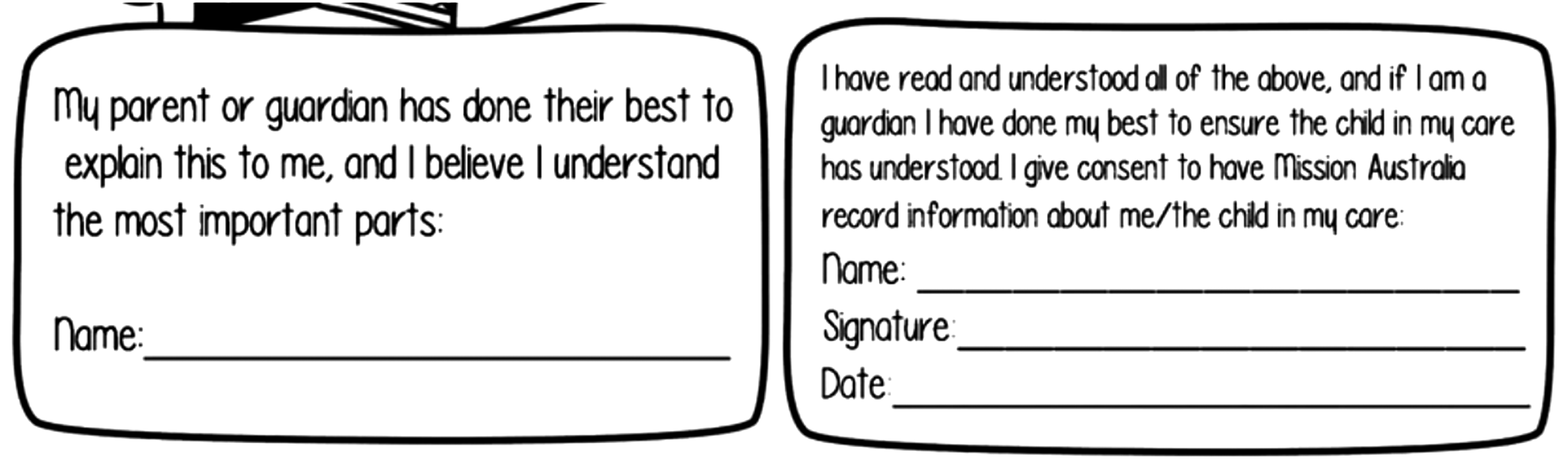
Excerpt of visual contract from Mission Australia. Adapted from the Comic Book Contracts project (© Camilla Baasch Andersen).
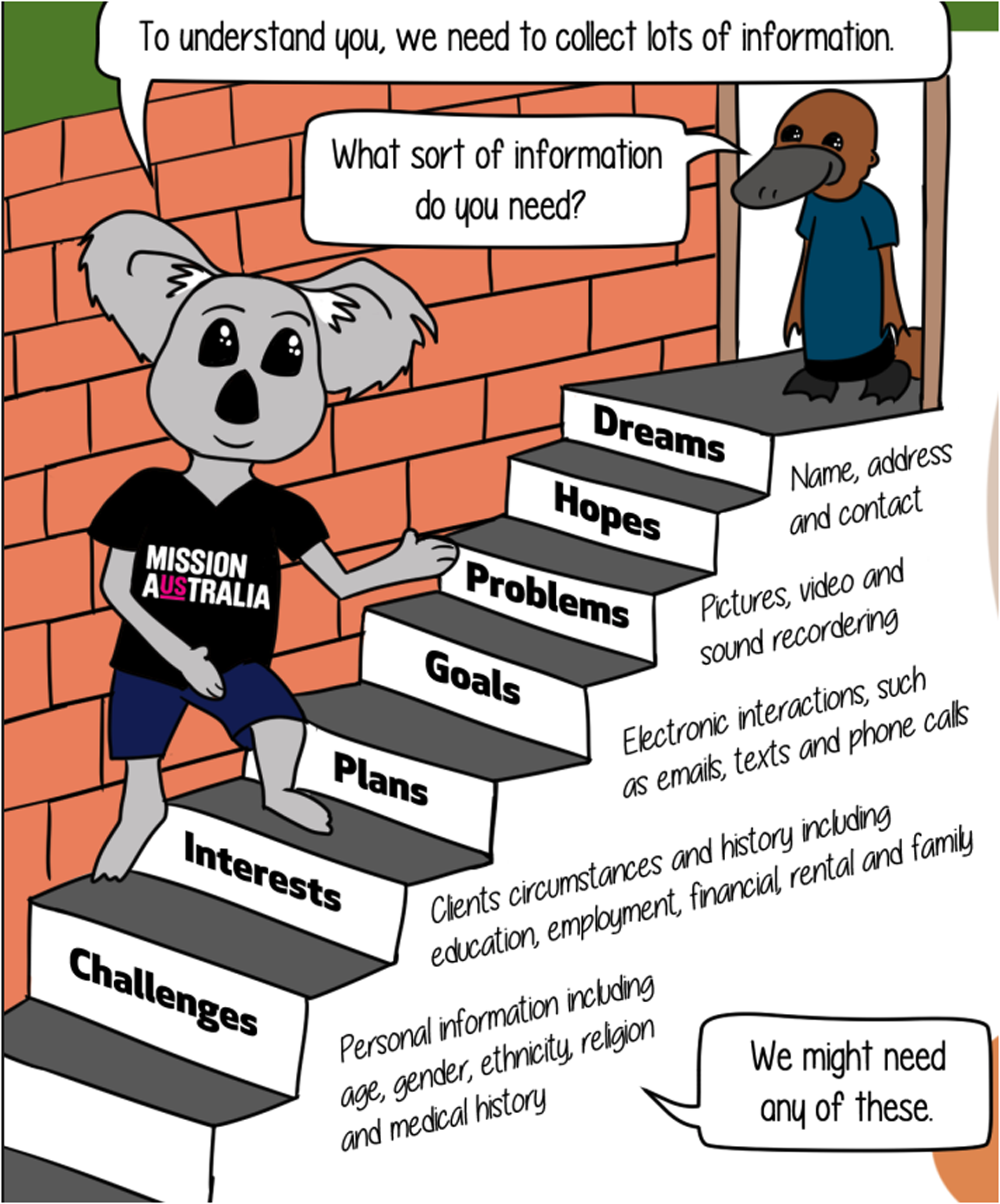
Excerpt of visual contract from Mission Australia. Adapted from the Comic Book Contracts (© Camilla Baasch Andersen).
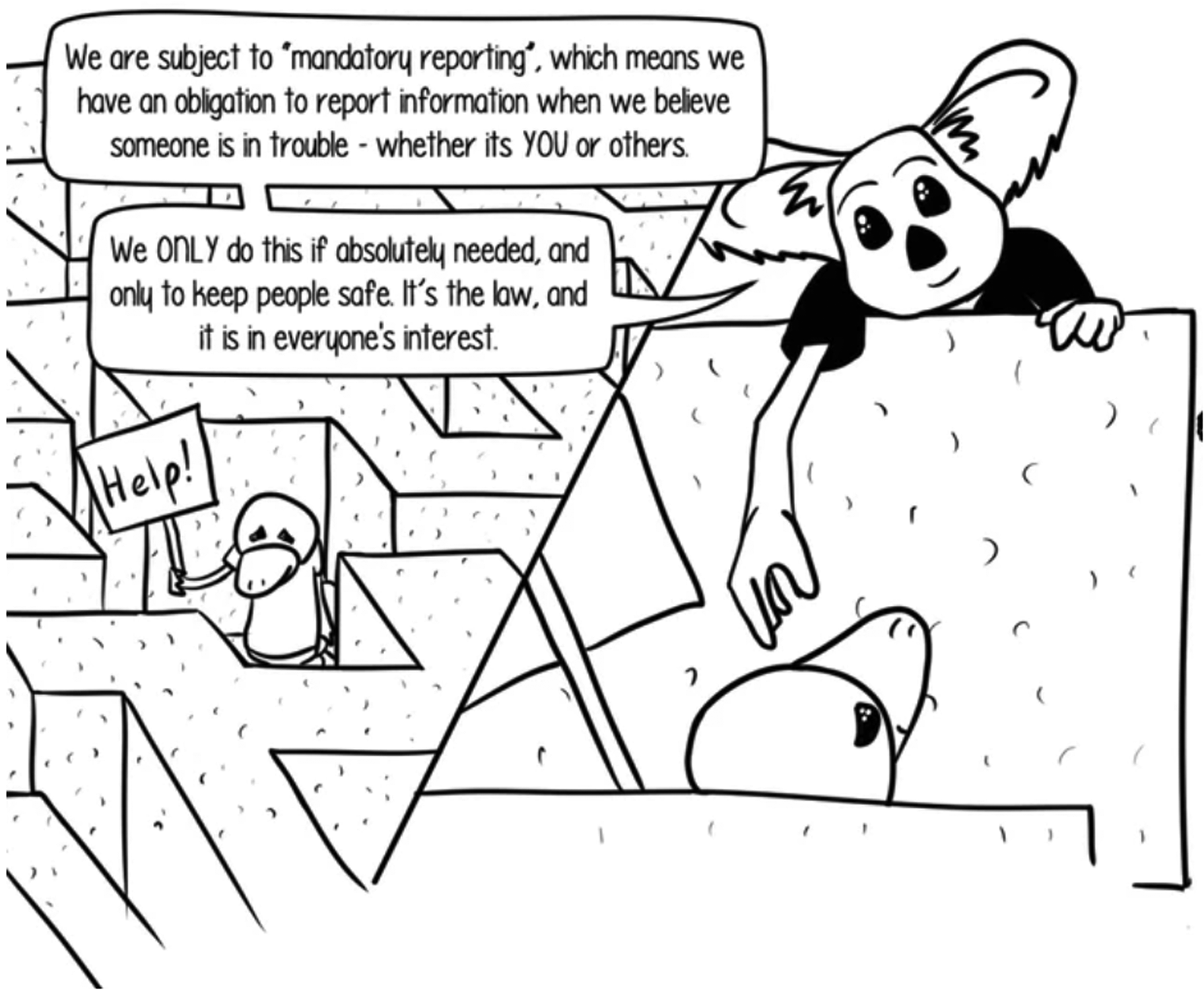
Excerpt of visual contract from Mission Australia. Adapted from the Comic Book Contracts (© Camilla Baasch Andersen).

Excerpt of visual contract from Ruah Community Services. Adapted from the Comic Book Contracts (© Camilla Baasch Andersen).
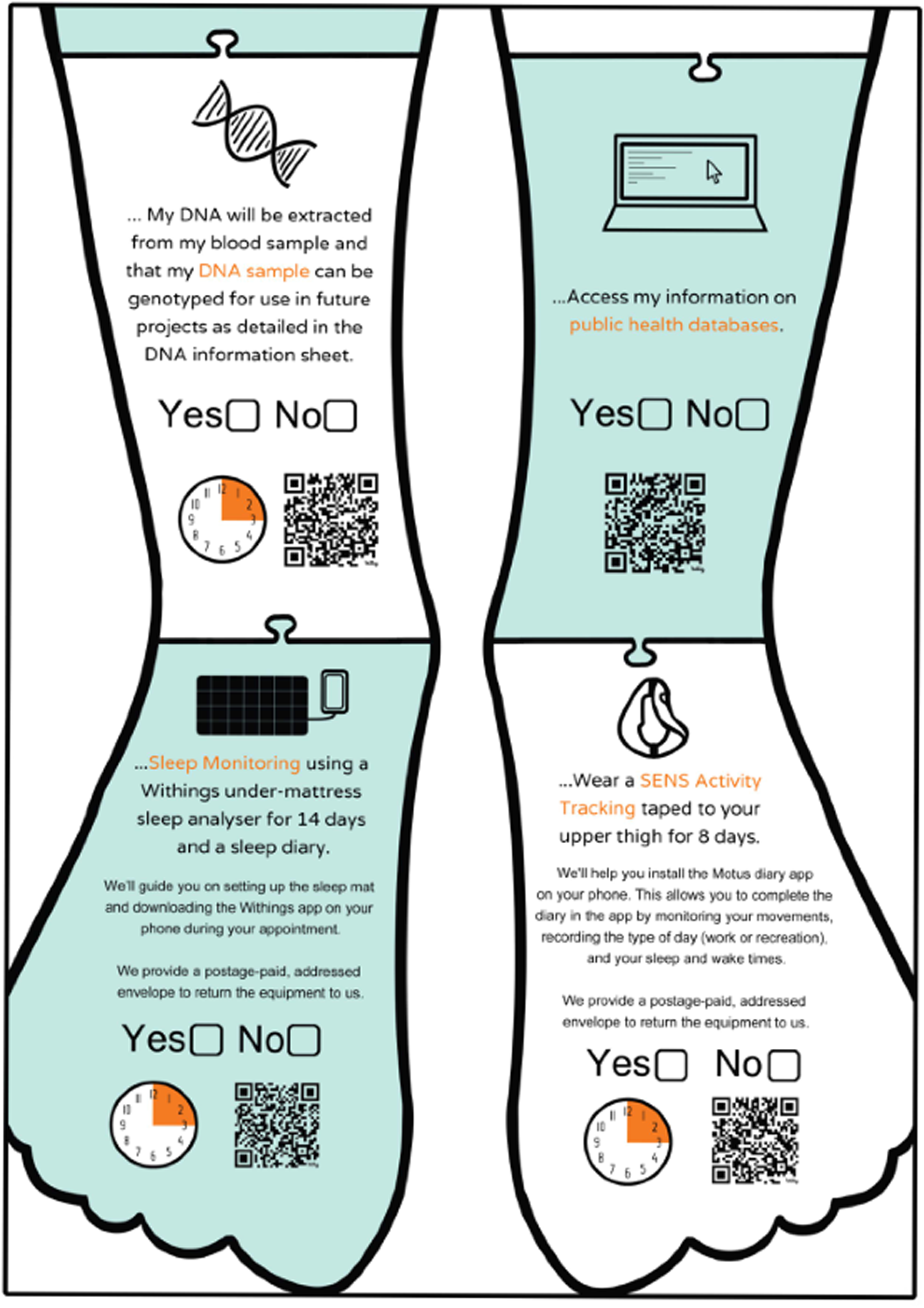
Excerpt of visual contract from Raine Study. Adapted from the Comic Book Contracts (© Camilla Baasch Andersen).
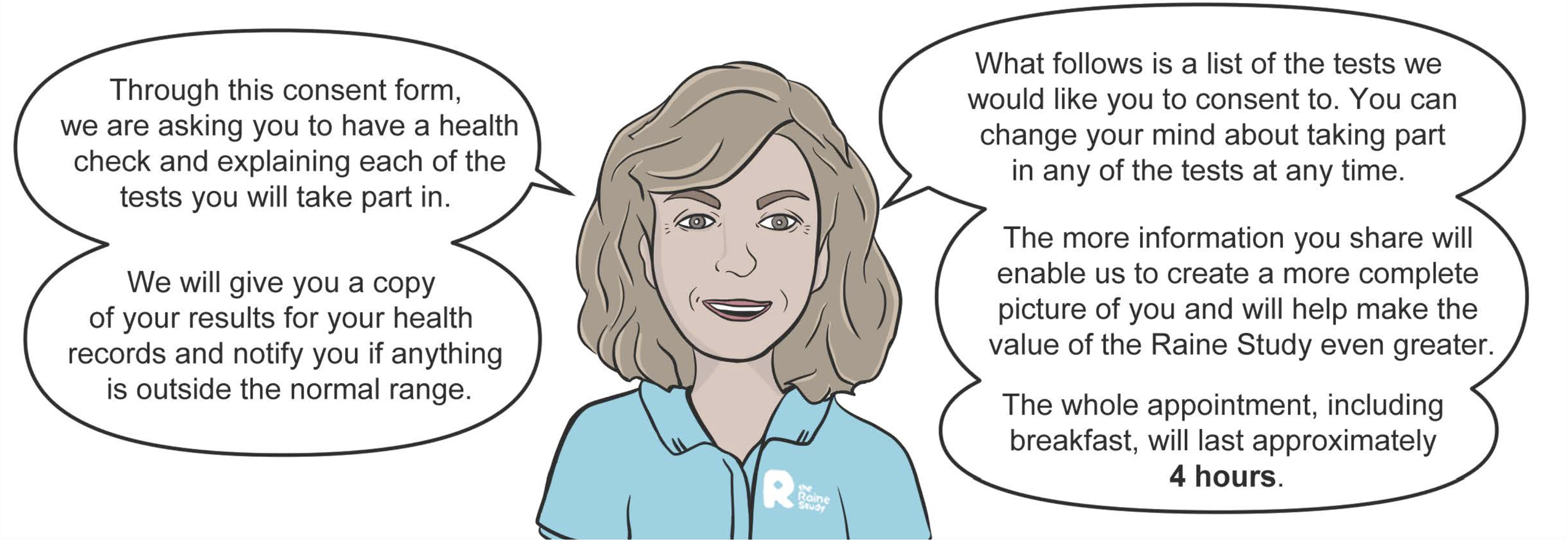
Excerpt of visual contract from Raine Study. Adapted from the Comic Book Contracts (© Camilla Baasch Andersen).
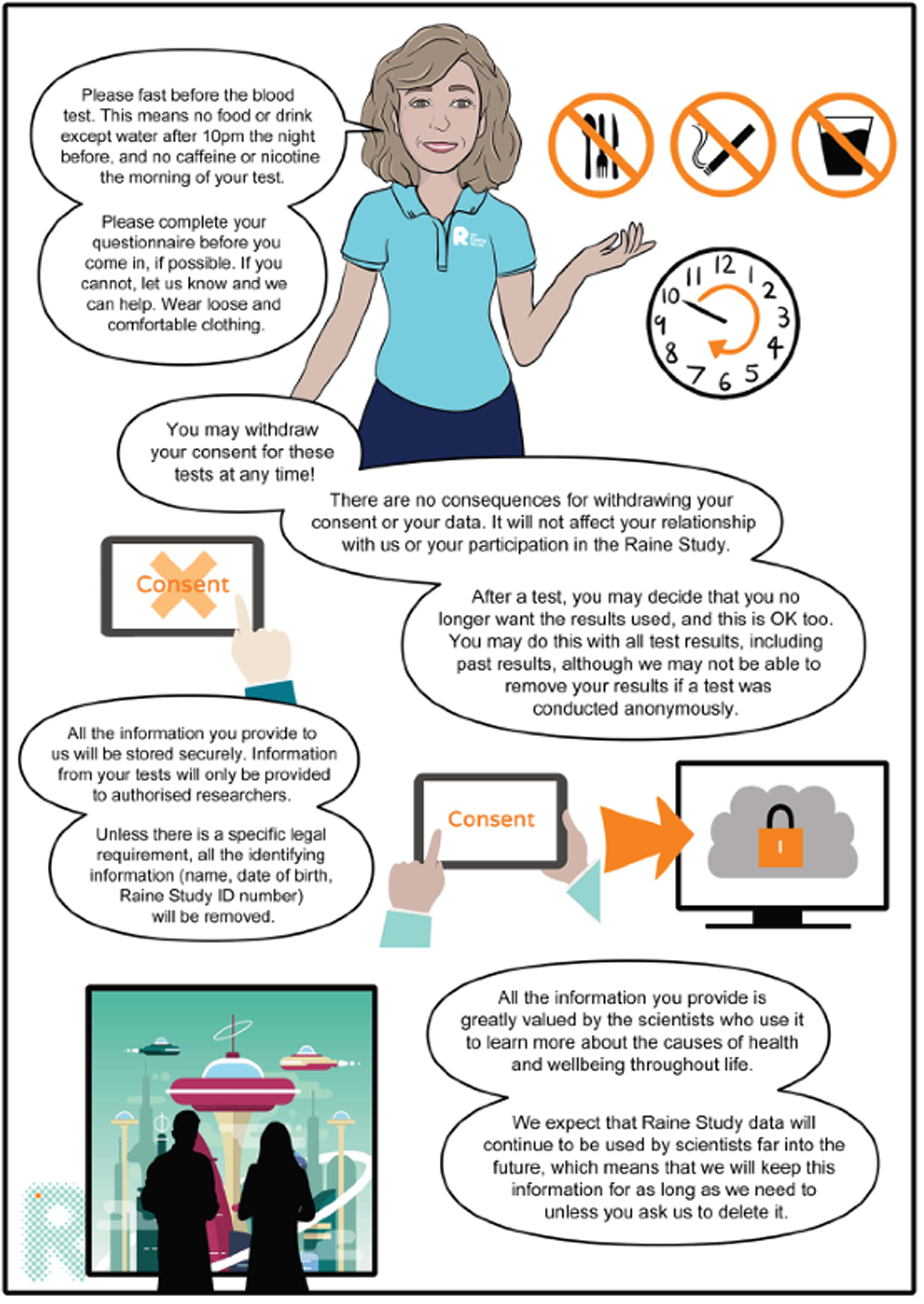
Excerpt of visual contract from Raine Study. Adapted from the Comic Book Contracts (© Camilla Baasch Andersen).

Excerpt of visual privacy policy, adapted from Andreotta (2024).
CBC designed a document for the therapist which requires the child to sign—regardless of any legal effect or lack of it—to strongly communicate the significance of the child's empowerment in the process and the relationship. CBC also asks parents/guardians to consent to the terms, in addition to their deliberate inclusion of the child. Child friendly visuals are utilized, and even a black/white version for younger children which they can color in to gain ownership (as well as improved memory of) the terms. The key here is not only reaching a clear understanding for all the stakeholders in the relationship—including the child—but ensuring the child feels empowered in their specific relationship with the therapist, through this process.
And for both parties, the necessity of gathering information (steps to get to know you) and mandatory reporting (an important aspect of helping someone in need) is illustrated in friendly and relatable images. Thus, combining an engaging “I want to read it” with a friendly explanation for why it is needed in both cases.
In this way, comic contracts can help empower people. Further, while the example with children is important, the approach can be usefully generalized to other vulnerable stakeholders, who might feel sidelined if the documents they are signing are not made for their comprehension levels. Traditional legal text contracts—even in plain language—can be intimidating and thus fail to be inclusive of neurodiverse individuals and those who are vulnerable.
Ruah Community Services
A similar approach to the challenging and complex issue of “mandatory reporting” was created for the organization Ruah to help improve their three-point approach that focuses on consent, values, and document sharing. In their consent form—developed for the organization as part of a larger research project, 23 —the conception of Ruah as standing alongside their clients to help guard them from danger is communicated through the use of a kangaroo avatar wearing a hard hat. In Figure 4, the two pain points which arise from Ruah's duty to report to government, and the mandatory legal requirement to report those at risk, is faced head on. Initial research indicated these two issues (reporting those at risk, and the duties of the organization to report to government) were both seen as problematic in the informed consent process, and frequently not well understood or differentiated by Ruah clients. In situations where a client found the need to report difficult to comprehend or relate to, it could act as an alienating factor in an otherwise confidential relationship. Clearly identifying the notion of “someone at risk” as the driver for reporting in a less threatening way—by the use of the image of the hard hat wearing kangaroo—helps the clients to better understand the necessity of this rule, it facilitates the consent process which in turn provides a stronger foundation for building relationships of trust and transparency between Ruah and their clients. In other words, the raison d’être of mandatory reporting, as well as its extent and limitation is made very plain. It is contextualized and made comprehensible as part of a friendly, supportive process of consent. To achieve this same outcome purely with text would likely have required a great deal more complexity and the use of language with the potential to distract from the key point of the clause.
Raine Study
A third example comes from a consent form issued by The Raine Study (formerly known as the “West Australian Pregnancy Cohort Study”). In this seven-page consent form, comprised of a combination of images and text, CBC created a framework agreement for the seventeen different consents required for participation in the medical study. PICFs are notoriously difficult to produce in a way that balances the need for full and detailed information about often complicated medical procedures and the need to be easily comprehensible by a lay person with basic education.
The Raine Study PICF houses each individual consent on a visual “puzzle piece” which is depicted as a part of the human body and includes a brief description and a few icons relating to the relevant medical test, as well as a timer displaying how long the test will likely take. Each one is accompanied by a QR code for those wanting more detailed information (Figure 5).
The main advantage of an image-based form in this instance is brevity—obtaining 17 consents in traditional text is cumbersome and repetitive. Most participants in The Raine Study are not there for the first time, so a text heavy and time-consuming consent process is not considered helpful or desirable by the stakeholders—both participants and researchers. While each test does require individual consent, participants are requested to consider allowing the “whole picture” of all pieces comprising the cartoon human body (Figure 6).
All information that might have been repeated in the individual consents previously (such as fasting, data protection, withdrawing consent, etc.) is communicated clearly with iconography—once for all tests—so it is not repeated. Another key advantage of the chosen imagery is the “talking head” depicting a caricature of manager of the study in her uniform. Because she looks in the consent form very similar to how she will appear on the day of the study, she presents a reassuringly familiar face to the participants (Figure 7).
The intention is that this significantly shorter and friendlier PICF will reduce the time-consuming informed consent explanations for returning study participants, which was found to be a deterrent to those considering volunteering for the study. It is also hoped that it will reflect positively on The Raine Study's image as friendly, accommodating, and grateful. Upcoming data, to be collected in 2025 and 2026, will determine whether this is borne out; however, early observations seem to indicate a surprising similarity in reception between the visual and text-based versions.
Two-Way Consent and Motivation
Even if it is true that comic contracts are effective in addressing some of the practical problems with contemporary consent forms, a crucial question remains about motivation—that is, what would motivate stakeholders to seek them out if they are not legally required to do so.
Stakeholders may of course have some normative reasons to use more effective means of communicating consent, but would they actually be motivated to do it? For example, as Millum & Bromwich note, on the so-called “standard view,” “the recipient of consent has a duty to disclose certain information to the profferer of consent because valid consent requires that information to be understood” (2021, 46). Making consent forms shorter and less complex, motivating individuals to read them in full, as well as engaging and empowering them as part of a “two-way” consenting relationship, are all both instrumentally and inherently valuable. If there is good evidence that comic style and image-based contracts do a better job of addressing the practical problems listed above—and can empower their users—then we have at least the basis of a moral argument for them to be used. However, there are practical issues to consider. From a legal perspective, if all that is required is the disclosure of information, this can be achieved through standard text-based contracts. Why, then, would people be interested in using comic contracts if they are under no legal obligation to do so, and doing so will require them to deploy financial resources that might be used elsewhere?
The problem is exacerbated by the fact that providing two-way consent could actually be contrary to certain business models in some contexts (cf. Andreotta 2024). Take, for instance, online consent agreements, which, as we suggested above, can be long and, at times, hard to understand. In some cases, the language is vague about how user data are collected and used (see Kyi et al. 2024). In some cases, these characteristics may be beneficial for private companies that collect and use personal data. The more users know about what is happening with their data, the less likely they might be to use the product. Take online targeted advertising, for example, which works by analyzing a user's browsing behavior and other online activities to construct a profile about them in order to send them the advertisements they are most likely to be receptive to.
This is a common practice, but it can be neatly illustrated by focusing on the case of Spotify, which collects personal data (e.g., listening history, likes) that can then be used to target personalized ads to users. If one were to devise a visual privacy policy in order to draw users’ attention to such a process, it might help reveal the potentially intrusive nature of data collection and sharing (Figure 8).
While this might be good for transparency it would likely be in direct tension with the aims of the company, especially if it has the effect of deterring users from the service. Could we really expect companies for whom it is beneficial to maintain opaque contractual terms to seek out groups like the CBC to design and implement contracts that aid mutual understanding?
Conclusion
The nature and significance of informed consent has been a central preoccupation of bioethics for several decades. Yet, despite its ethical sophistication, there remains a persistent gap between the normative ideal of how consent ought to be obtained and the practical realities of securing it. Bridging this gap is crucial if consent is to retain its moral and legal integrity in increasingly complex and digital contexts.
We have argued that while philosophers have illuminated the ethical standards that informed consent should meet—clarity, autonomy, voluntariness, and understanding—the practical question of how to realize these conditions in everyday consent processes remains unresolved. Legal and institutional mechanisms have too often reduced consent to a procedural formality, detached from its ethical purpose.
Comic contracts and other visual communication tools provide a promising way forward. By reimagining how information is presented and understood, they enable a more participatory and relational form of consent—what we have called real two-way consent. These innovations do more than solve pragmatic problems of accessibility and comprehension; they also redistribute power within the consent process, allowing individuals to engage with clarity, confidence, and genuine choice.
In this way, visual and comic contracts offer not only a practical improvement to existing consent forms but also a philosophical corrective: they remind us that consent is not merely a checkbox or signature but a communicative act grounded in mutual understanding. By aligning the normative ideals of bioethics with the practical demands of law and digital communication, such approaches bring us closer to a model of consent that is both ethically meaningful and operationally effective.
Footnotes

Ethical Considerations
This research does not involve humans and/or animals. As such informed consent is not applicable as there are no human participants.
Author Contributions
All authors contributed to the writing and development of the article. After several discussions, the first draft of the manuscript was written by Adam Andreotta and all authors commented on previous versions of the manuscript. All authors read and approved the final manuscript.
Funding
The authors received no financial support for the research, authorship, and/or publication of this article.
Declaration of Conflicting Interests
The authors declared no potential conflicts of interest with respect to the research, authorship, and/or publication of this article.
Availability of Data and Materials
There are no data and materials as well as software application or custom code support that are associated with this article.