




Abstract
A sense of belonging predicts engagement, performance and wellbeing in educational and workplace settings. However, much existing literature on belonging at university foregrounds social integration, which may not be valid for neurodivergent populations. We report a participatory action research project, aiming to understand and promote belonging for neurodivergent people at an English university. Anonymous contributions (n = 152) were received across a multi-media cross-campus installation. Content analysis identified key determinants of belonging: (1) Meaningful inclusive practice, characterised by flexibility and choice in learning, inclusion by default, validation and being believed; (2) Neurodivergent representation as a shared responsibility, supported by identity spaces and visible acceptance of difference; and (3) Capacity to navigate time, space and transition, highlighting the cost-benefit decision-making needed to navigate campus life. These themes informed follow-on interviews with staff and students (n = 13), analysed using reflexive thematic analysis. Findings are presented as a Model of Neurodivergent Belonging at University, framed through five questions that people negotiate to construct a sense of belonging across contexts. We conclude that belonging at university for neurodivergent people requires authentic acceptance, rather than assimilation or institutional affiliation. Making small, achievable changes across university systems can cascade into meaningful gains in success and wellbeing for neurodivergent people.
Lay Abstract
What is already known about the topic?
A sense of belonging is central to students’ engagement, wellbeing, and academic success. Existing research on belonging at university often emphasises social integration and conformity, which may not reflect the experiences of neurodivergent people, including those who are autistic, have ADHD, or specific learning differences.
What this paper adds
This participatory study explored how neurodivergent students and staff experience belonging on campus. Analysis of creative campus-wide contributions and follow-up interviews identified three determinants of belonging: inclusive and flexible practices; visible acceptance and representation of neurodivergence; and the capacity to navigate time, space, and transitions. The resulting Model of Neurodivergent Belonging highlights that authentic acceptance, rather than assimilation, underpins a sense of belonging for neurodivergent people at university. Belonging is dynamic and actively negotiated across university contexts.
Implications for practice, research or policy
Universities can enhance belonging by prioritising flexible administrative processes and teaching practices, visible acceptance campaigns, and supported transitions. Small adjustments across university systems can lead to meaningful improvements in wellbeing and success for neurodivergent students and staff.
A ‘sense of belonging’ at university is an important psychological predictor of students’ academic success and wellbeing (Pedler et al., 2022; Strayhorn, 2018). Students ‘belong’ within a wider university ecosystem, inhabited by academics, professional services and other employees, who likewise benefit from feeling that they belong in the workplace (Wilson et al., 2026). However, research indicates that people from minority groups are less likely to establish a strong sense of belonging in educational and employment settings (Dalessandro & Lovell, 2024; Taff & Clifton, 2022). Neurodivergent students and staff – for example, those identified with autism, attention deficit hyperactivity disorder (ADHD) and dyslexia – represent a growing, yet understudied, minority in university communities (Clouder et al., 2020; Podsiadlik, 2026). In this paper, we report a participatory action research study that sought to conceptualise and promote neurodivergent belonging on campus in the context of a public university in northern England.
While research on belonging at university has proliferated, a lack of conceptual clarity persists. Classic psychological theories conceptualise belonging as a fundamental human motivation, encapsulating the need for connection and positive interpersonal interactions (Baumeister & Leary, 1995; Deci & Ryan, 2000). Drawing on these theoretical foundations, social connection with peers and/or faculty is often foregrounded in literature on belonging at university. However, a recent systematic review identified 52 different measures of belongingness reflecting various conceptualisations, with common misalignment between concepts and measures (Dias-Broens et al., 2024). Unidimensional conceptualisations of belonging as social integration within a dominant university culture risk excluding diverse student groups, who may not value, desire or be able to achieve belonging in this assimilative sense (Brodie & Osowska, 2021). Normative definitions have been problematised as invoking community as conformity in the context of the massification of higher education, with ‘belonging’ harnessed in the service of student recruitment and retention goals (Graham & Moir, 2022; Gravett & Ajjawi, 2022). In contrast, recent work has begun to characterise belonging as multidimensional, relational, dynamic, and context-specific (Dost & Mazzoli Smith, 2023; Lee et al., 2024).
Students from certain demographic groups often report a reduced sense of belonging at university (Taff & Clifton, 2022). In a national survey, racialised and first-generation students at U.S. universities reported lower peer belonging and/or institutional acceptance than their peers (Ribera et al., 2017). Healey and Stroman (2021) argue that students from under-represented groups can experience ‘belonging uncertainty’, underpinned by awareness of how their demographic or identity group might be perceived and treated within university systems. Thus, the components and determinants of belonging for these students might differ from mainstream conceptualisations. Specifically, belonging can mean feeling safe, accepted and valued within university environments that explicitly prioritise diversity and inclusion (Allen et al., 2024).
The few studies focusing on disabled students’ experiences suggest that their belonging is often compromised (Barnes et al., 2021; Raines et al., 2023). Vaccaro et al. (2015) identified three factors that reciprocally influenced disabled students’ belonging during the first year of university: self-advocacy (the ability to understand and ask for what they needed), mastery orientation (proactively developing learning strategies and using feedback effectively) and social relationships with peers. However, these variables did not predict belonging in a UK sample of disabled students. Instead, the perceived accessibility of their university setting was a unique predictor (Edgar et al., 2024), underscoring the importance of going beyond intrinsic determinants of belonging to consider the campus environment and teaching practices when researching the university experiences of disabled students. For example, inaccessible teaching and assessment practices can contribute to feelings of shame and negatively impact peer relationships, thereby inhibiting belonging for students with learning differences (Nieminen & Pesonen, 2022).
While several neurodevelopmental conditions can be considered cognitive disabilities under the UK Equality Act (2010), not all neurodivergent people identify as disabled. Some students are not yet diagnosed at university entry; others choose not to disclose neurodivergence (Frost et al., 2019; Kennedy et al., 2025). Disaggregating accurate data for these students is therefore challenging. Available research suggests that neurodivergent students are at elevated risk of drop-out and poor mental health while at university (Clouder et al., 2020). Existing studies largely focus specifically on autistic students, with emergent findings indicating that university affiliation is less important, and peer relations more important, for autistic students’ belonging in comparison with non-autistic peers (Santilli, 2024). This highlights both the potential of neurodivergent peer networks in fostering belonging (Back et al., 2025) and the current (un)preparedness of universities to welcome neurodivergent students into their wider culture. Tan et al. (2025) argue that, while autistic students often want to belong, they can experience a deep sense of ‘otherness’ at university. This is exacerbated by negative past experiences of school, needing longer to make sense of university systems, and frequent experiences of loneliness and overwhelm, which can drive students to leave before completing their studies. There is clear impetus for change towards compassionate, anticipatory approaches to inclusion of neurodivergent students and university employees (Butcher & Lane, 2025; Hamilton et al., 2025; Hamilton & Petty, 2023).
In summary, little is known about neurodivergent people's experiences of belonging in university settings. The current study aimed to address this gap in several ways. First, while studies focusing on specific diagnostic categories are important, advances in the field signal the need for research that takes a transdiagnostic approach to developmental neurodivergence: that is, wide heterogeneity within, and co-occurrence between, diagnostic categories (Astle et al., 2022) and commonalities in university experience reported across diagnostic groups (Rebecchi, 2024). Second, since most studies prioritise students, little is known about the experiences of other university members. The limited research highlights social, environmental and structural barriers to inclusion of neurodivergent university employees, which likely overlap with those experienced by students (Hamilton et al., 2026; Jones, 2023). Third, there is little participatory research on disability and neurodivergence in university settings (Raines et al., 2023). The current study therefore adopted a participatory approach to understanding how neurodivergent students and staff establish a sense of belonging at university. By embedding neurodivergent perspectives throughout the study design, we sought to identify pockets of meaningful good practice to inform the development of inclusive university systems.
Method
Participatory Design
The study took place in a medium-sized university in northern England, attended by a higher proportion of disabled students than the national average (Hamilton & Knight, 2025).
Ethical approval was obtained from the School of Education, Language and Psychology Ethics Committee at York St John University (ETH-2324-0131). The study design was informed by principles of participatory action research, in that experiential knowledge was centred throughout research processes with the joint aims of generating new knowledge through systematic empirical investigation and effecting emancipatory change (Cornish et al., 2023). The research team included members with experience of inhabiting university spaces as neurodivergent students and employees, and of providing specialist support for neurodivergent students. We recruited a participatory advisory group (PAG) via university networks, comprising six neurodivergent students and alumni. The PAG convened several times during the 2023-24 academic year to contribute to research design, recruitment, data analysis and dissemination. PAG members received payment for their time.
Discussions with the PAG resulted in a two-phase qualitative research design, characterised by accessible, democratic methods. A cross-campus recruitment campaign was launched in February 2024, inviting members of the university community to participate in the project. Following feedback from the PAG, project materials did not refer to diagnostic labels, instead describing common transdiagnostic experiences (e.g. ‘Do you get so into things you lose track of time and forget to eat or drink?’). Given long waitlists for neurodevelopmental assessment and likely underdiagnosis in adults (O'Nions et al., 2023), we adopted an inclusive conceptualisation of neurodivergence: materials included the project name (Inclusive Neurodiverse Campuses) but stated that no diagnosis was required to participate. Recruitment was purposefully open to any member of the university.
People could take part anonymously, by posting notes to six post-boxes that were discreetly placed around campus (e.g. university library, disability services) or contributing to a digital Padlet board. By scanning a QR code, participants accessed the Padlet, where the various means of participation were explained. This flexible data collection approach was designed to democratise participation (Edwards & Brannelly, 2017), allowing neurodivergent people who might wish to retain anonymity, or find a lengthier interview format aversive, to contribute their insights in a way that felt comfortable at any time or place. We intended for experiences to be shared ‘live’ and in situ as university members navigated their usual routines (Phase 1). Participants could also sign up to take part in an in-depth interview (Phase 2).
Phase 1: Anonymous, Cross-Campus Data Collection
Data Sources
A campus-wide installation, comprising recruitment materials (on-screen displays, posters, postcards and roller-banners) and post-boxes for data collection, was live for three months in 2024. The Padlet remained open for a further two months to allow new contributions, or for people to reflect and add to earlier contributions. Open prompt questions structured the Padlet into sections addressing different aspects of university life: social experiences, learning and teaching, assessment and exams, sensory experiences, processing style, support and accommodations. Posts were moderated to ensure that no personal information was disclosed and no offensive content uploaded. Thereafter, comments were publicly visible, so that contributors could respond to each other's posts. Phase 1 respondents were not required to disclose demographic information, but could identify their role (e.g. student, professional services, academic) if they wished. In total 152 contributions (8667 words) were received across all sites; it is likely that contributors added multiple posts.
Data Analysis Procedure
Data collected via Padlet and postboxes were transcribed into a single document and subjected to conventional content analysis (Hsieh & Shannon, 2005). All authors read the full dataset and discussed initial observations. A coding scheme was developed inductively by consensus, with the aim of identifying common experiences and implicit meanings, and subsequently applied to the full dataset (Kleinheksel et al., 2020). We then grouped codes that shared some meaning into categories, defined with reference to neurodiversity principles, and collated relevant coded extracts. Finally, categories were organised into higher-order themes, describing common experiences, processes and/or meanings across two or more categories.
Phase 2: In-Depth Semi-Structured Interviews
Participants
Anyone who accessed the Padlet could volunteer to participate in an interview. Twenty expressions of interest converted into 13 interviews. Participants were students (n = 6) and staff members (n = 7). The sample comprised seven women, four men and two non-binary participants; ages ranged from 18 to 60. The majority described their ethnicity as White British (one mixed ethnicity; one preferred not to say). All interviewees identified as autistic and/or ADHD; several disclosed co-occurring neurodivergence, physical and/or mental health conditions (e.g. dyslexia, dyspraxia, hypermobility, depression). Twelve interviewees had at least one formal neurodevelopmental diagnosis.
Data Collection Methods
Interviews were maximally flexible and accessible, in line with principles of universal design (Black et al., 2015). Participants completed a brief questionnaire on communication preferences and were offered a pre-meeting to agree the interview format (Hume, 2024). A semi-structured interview schedule, based on Phase 1 analysis, was sent to participants in advance. Alternatively, participants could opt for a less structured format, by bringing a piece of ‘creative homework’ relating to their individual campus experience (e.g. doodles, poems) and choosing from an array of postcard prompts derived from the Phase 1 data to direct the course of the conversation. Participants could access the Padlet posts before and during the interview for reference. This flexible design was intended to facilitate authentic communication with participants with diverse communication profiles.
Interviews were conducted in a quiet room on campus or online via Microsoft Teams according to participant preference. The option to participate via text chat was offered, but not taken up. Interviews lasted for an average of 92 min (SD = 24.9); all were audio-recorded and orthographically transcribed.
Data Analysis Procedure
We selected reflexive thematic analysis (RTA) using a critical realist epistemological lens to analyse the Phase 2 data (Botha, 2025; Braun & Clarke, 2022). Interview data were understood as reflecting the ‘empirical domain’, that is, participants’ observations and experiences arising from real-world events, shaped by individual perspectives and sociocultural contexts (Bhaskar & Danermark, 2006). The analysis sought to identify ‘causal tendencies’ underlying the experiential accounts (Fryer, 2022). RTA foregrounds the role of researchers’ subjective experiences, background knowledge and social position in identifying patterns and developing themes. We reflected on the influence of our various positionalities – as current and former students, university employees and/or specialist support providers of different neurotypes – on the analysis. We met regularly to discuss the developing analysis, aiming to triangulate insights from our various perspectives, and kept a reflective log throughout (Braun & Clarke, 2021).
All authors read and re-read the transcripts, noting and discussing initial observations. Next, two authors implemented a combination of inductive and deductive coding (using the Phase 1 categories) on the student and staff interviews separately, iteratively clustering codes and restructuring the dataset accordingly. We developed a thematic structure which captured latent patterns across the combined student and staff dataset. Feedback from the full research team and the PAG was integrated as the themes were finalised as a model of neurodivergent belonging on campus.
Results
Phase 1: Content Analysis – Determinants of Neurodivergent Belonging
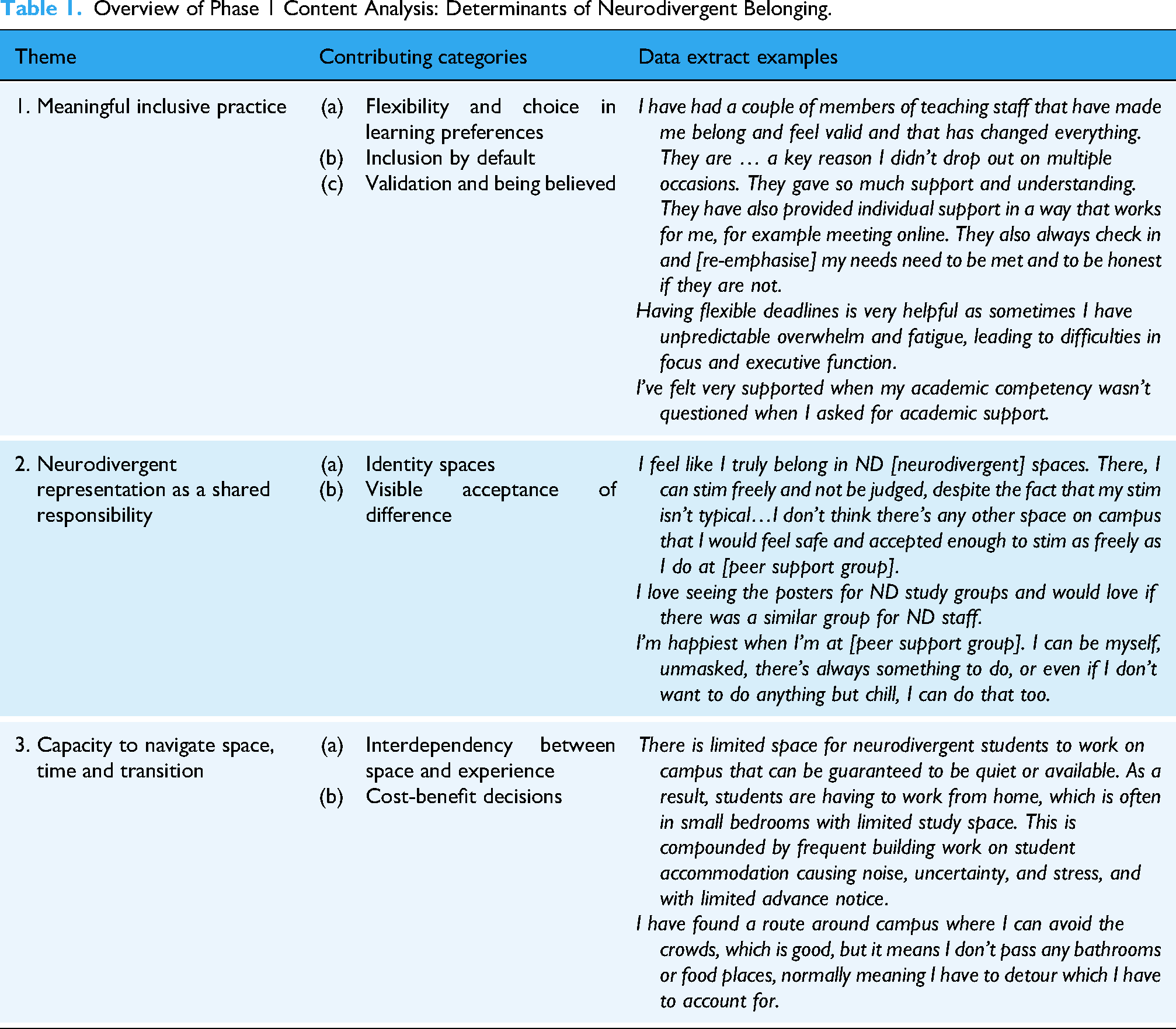
Seven categories of meaning, organised into three higher-order themes, were derived from the anonymous, campus-wide data to describe aspects of university experience that influenced people's sense of belonging (Table 1).
Overview of Phase 1 Content Analysis: Determinants of Neurodivergent Belonging.
1. Meaningful Inclusive Practice
This theme captures the positive impact of affirming adjustments being proactively implemented, in practice often by individuals rather than by strategic design.
Students highlighted the wide-ranging benefits of Flexibility and choice in learning practices (1a). When offered multiple methods to access teaching and assessments, students felt valued, which fostered confidence and engagement. Specific techniques that were welcomed included mixed-media resources, interactive quizzes, group discussions where verbal contribution was explicitly not compulsory, advance notice of discussion topics and class activities, uncluttered teaching slides avoiding blocks of text, varied teaching methods balanced with independent study, regulation breaks, and assessments that allowed extra processing time. Students also appreciated small-group tutorials that reduced anxiety when asking questions, assistive software and specialist knowledge within support services.
Inclusion by default (1b) highlighted people's need for supportive adjustments to be routinely and proactively implemented, avoiding the burden of repeated self-advocacy. Respondents described difficulties in correcting tutors, colleagues, and managers when approved adjustments were overlooked. This was especially challenging for ‘high-masking’ individuals or those who experienced burnout, as self-advocacy could induce anxiety and drain limited energy resources.
Validation and being believed (1c) captured participants’ wish to feel accepted for their differences and for necessary adjustments to be understood, without feeling ‘like a burden’. Respondents were highly aware of stigmatised views of neurodivergence, and wary of being perceived as lazy, rude or incompetent. Validating interactions with others at university were therefore important and appreciated.
2. Neurodivergent Representation as a Shared Responsibility
This theme captures the benefits to belonging of seeing authentic and positive representations of neurodivergence on campus, alongside access to affirming spaces.
Respondents shared the value of neurodivergent-led student and staff networks offering Identity spaces (2a) for socialising, regulating, and co-working. These physical or digital meeting-places allowed participants to stim, communicate, and share interests authentically and without judgment. This contrasted with other campus spaces, often deemed inaccessible due to sensory overload or fear of social rejection. Respondents wished for more dedicated neurodivergent spaces, highlighting the limited availability and frequent misuse of low-sensory areas.
Relatedly, Visible acceptance of difference (2b) highlights the positive impact of seeing other neurodivergent individuals succeeding. This could mean people openly using noise-cancelling headphones and stim toys, or integrating movement breaks in study and work contexts. Observing neurodivergent success, albeit rare, encouraged participants to value their own strengths. Respondents emphasised the importance of authentic representation of neurodivergence in university communications, teaching and marketing materials, avoiding deficit-focused or stereotypical portrayals. They called for the university to share the burden of advocacy for neurodivergent needs as ‘part of a team’.
3. Capacity to Navigate Space, Time and Transition
This theme captured a widespread need for comfortable and predictable sensory environments for teaching, studying, socialising, and communal activities through ‘proactive effort’ to accommodate diverse needs. Sensory sensitivities fluctuate and people continually engaged in decision-making about how to manage their time at university on any given day.
Interdependency between spaces and experiences (3a) highlighted connections between campus environments and people's emotional, cognitive, and social experiences. The link between a classroom's sensory properties and students’ ability to learn was frequently drawn. However, engagement in class-based learning was also influenced by sensory challenges outside the classroom, including noisy study spaces and cafeterias, limited access to quiet spaces in which to ‘decompress’ between classes, commuting and accommodation difficulties. Although pre-term campus visits helped students to identify suitable spaces and routes around campus, many respondents described how challenging sensory environments negatively affected their focus, learning, and sense of belonging.
Cost-benefit decisions (3b) refers to the mental energy that respondents expended in working out how to navigate the campus environment and university day, in order to stay regulated and avoid burnout. This unseen additional cognitive load could interfere with individual capacity to focus on study or work tasks.
The three factors identified through content analysis combined to modulate respondents’ capacity to safely access, inhabit, and achieve a sense of belonging within university contexts. Varying experiences of (1) inclusive practice, (2) authentic representation and (3) space and transition affected people's attendance, performance, wellbeing and social connections. Achieving a sense of belonging on campus was generally desirable for Phase 1 respondents. However, belonging was represented as situational across contexts, dynamic over time, actively constructed by individuals, and contingent upon others in the campus environment.
Phase 2: RTA – Can I Belong Here?
Analysis of the interview data builds on the themes developed through the inductive Phase 1 analysis, and is presented as a model of Neurodivergent Belonging on Campus. The model is framed as five questions that neurodivergent university members negotiate to construct a sense of belonging in their contexts. Each theme contributes a sub-question to the fundamental question: ‘Can I belong here?’ (Figure 1).
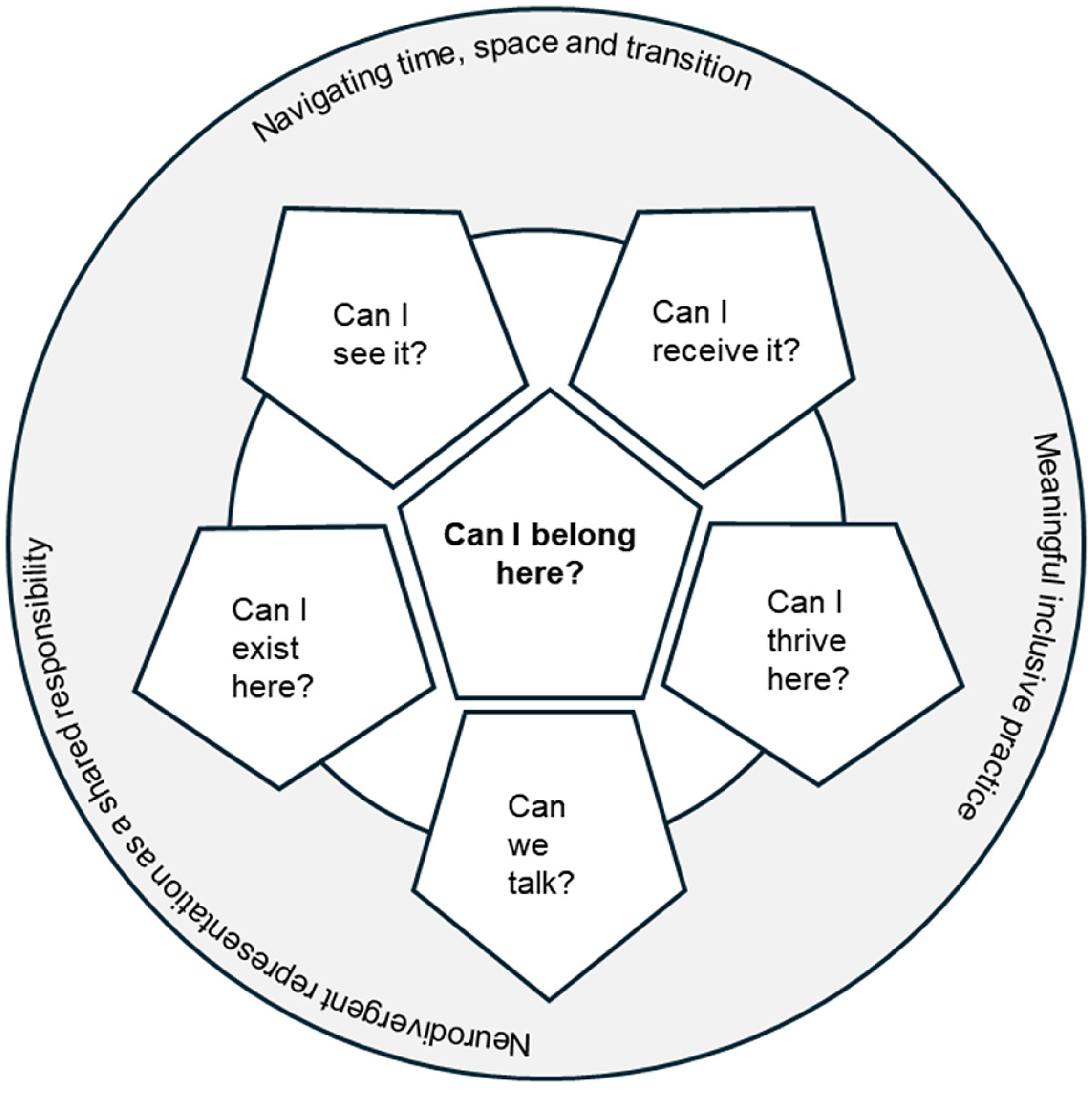
Model of neurodivergent belonging at university. Questions represent the active construction of belonging within university contexts; contextual determinants of belonging are represented in the outer circle.
Theme 1: Can I see it? – Neurodivergent Visibility and Empowerment
Participants emphasised the importance of neurodivergence being visibly welcomed and validated throughout campus spaces. Practices that signalled active acceptance of neurodivergence, such as the open use of sensory aids across campus, were appreciated and sometimes intentionally modelled: For staff and students to feel more comfortable wearing noise-cancelling headphones, ear defenders, using fidget toys, and sensory stimming toys. I just think the more people do it, the more people feel like “Oh, I could that as well”. That's why I do it on campus. (Staff member) I think it's easy to forget that there are other people like you with similar sensory persuasions and challenges. […] If there was just that obvious on-the-wall, neurodivergent group poster, things like that, I think that brings about that constant feeling of you're not alone. (Staff member) How are you going to show neurodiversity [in a photoshoot], like get us to hold Lego? (Student) It's all stuff that's [based on] the nineteen-fifties young male children, basically. (Staff member) Isn't it important to see that a neurodivergent person can get work, can stay in work, can be ill and you know, I'm being supported? (Staff member)
Theme 2: Can I Receive It? – Shared Intersecting Challenges
Participants described a constellation of interconnected challenges extending across academic and non-academic domains of university life. While there were commonalities, their specific manifestation was shaped by individual identities and circumstances. Challenging experiences accumulated as participants navigated their day, influencing the extent to which they could qualify for, request, and obtain appropriate support. How these challenges were responded to by peers and the wider institution shaped participants’ sense of belonging, and in some cases, their belief in whether belonging was attainable.
Participants arrived at university with personal histories, which often involved difficult experiences within education and/or employment. These histories informed cost/benefit decisions at university, in which the anticipated burden of self-advocacy was weighed against the possible gains of securing supportive adjustments: It feels like I've got homework for being disabled or neurodivergent […] I've got to publicly tell everyone about my issues in life […] Certain things can just be put in place without having to put the burden on us to deal with everything, because it sometimes feels like a full-time job being neurodivergent at university just to get your support. (Student) I think sometimes you communicate something and it takes effort […] and quite a lot of vulnerability to communicate it. And then it's not that it's not cared about, but it just gets forgotten […] And you end up having to ask for it again. And that's more exhausting. And you feel like more of a burden. (Student)
These intersecting difficulties could be eased by personalised, flexible, and compassionate support at university. Proactive, ongoing outreach reduced the pressure to represent needs perfectly on arrival, allowing individuals to engage in support conversations when ready: I think if people asked each other about their access needs or about their preferred communication style, or, like, ‘what else are you juggling? Do you have a kid at home? […] I feel like care and curiosity about your colleagues and how they work is a great start. (Staff member)
Theme 3: Can We Talk? – Tackling Communication Barriers
The importance of open, reciprocal dialogue with the university and its representatives was emphasised across interviews, from participants active in neurodivergent activism on campus to those who rarely attended university. Perceptions of how far two-way communication was possible shaped whether belonging could be established and sustained.
The benefits of mutually respectful conversations were substantial. Some participants felt that they were often positioned as responsible for ensuring that communication succeeded (and blamed when it did not). Communication breakdowns were aligned with, and even directly attributed to, the ‘double empathy problem’ (Milton, 2012), where differences in disposition, communication style, expectations and experience between interlocutors hinder reciprocal understanding. Yet, if trust could be established, people felt safer to share differences and support needs: It would be starting with […] say if someone discloses their diagnosis or their self-diagnosis and just approaching it from the position of saying like, ‘Congratulations, that's really great. Thank you for sharing that with me. What can I do to help?’. I think that's just like the building blocks of it. (Staff member) ‘Hi, I'm so and so, you know, I've got these conditions. This means these elements of my life can be really tricky. And this is a support I may require from you, but please feel free to have a conversation with me’. I feel like that would be a lot easier. (Student) I'm being asked what would help me, rather than being told. I think a lot of the time it's presumed what you need to help you learn or you need to go on with life. And I guess that links back to […] the stereotypes. Not presuming they know what you need, just because they've read a [support plan] or because they've seen the word autism, but more just having a conversation and seeing what works for you […] as an individual. (Student) After our first lesson [they] said, ‘Oh, do you have a few minutes just to talk? I've read your [support plan], so I just want to clarify some stuff or if you have anything you want to add […]’. We had a great conversation. I was like, “This is how it's meant to go!”. (Student) I got told “Oh yeah, and neurodiversity isn't really a disability” […] I think that instantly set a tone of, ‘Oh here we go again’, because I've had those negative experiences in the past and it was like, ‘I’m going to have to start fighting’. (Student)
Theme 4: Can I Exist Here? – Towards a Suitable Environment
Participants described negotiating work, study and socialising in physical environments that caused discomfort and sensory pain, impacting their capacity to be present on campus and engage in opportunities at university. The benefit of consistent and/or adjustable light, temperature, visual stimuli and noise in campus spaces was significant. However, access to low-sensory spaces was inconsistent, and communal areas could be experienced as overcrowded and harsh in their sensory demands. Some people regularly left campus to access basic facilities such as food, drink, or toilets, and described difficulty finding designated workspaces: If campus had more options of neuro-friendly spaces with the low-level lighting and the bookable quiet spaces then it would definitely encourage me on campus more. (Staff member) I think if an area is hostile to you in a sensory sense, it's difficult for it not to feel hostile in a community sense as well. So having a space that accommodates you I think is quite key to feeling like you are allowed to be there. (Student) We would go in there because you can turn the lights down and have the lamps on. So she would turn all the overhead lights off, put the lamps on and it would be nice and quiet. And she would do her work in there and I'd join her sometimes. (Student) I think getting to know the campus helps a little bit, because you start to know where the loud and the quiet sections are and you can kind of avoid things a little bit better. (Student)
Theme 5: Can I Thrive Here? – Valuing Divergent Ways of Being
This theme encapsulates the factors that enable neurodivergent people to harness their strengths, moving beyond merely existing on campus. Students welcomed, or wished for, inclusive pedagogical practices, such as Universal Design for Learning and competence-based assessment. Course design which proactively integrated flexibility and choice allowed students to perform to their potential in ways that suited them: If I could do vivas as my assessment, I would. I'm much better verbally than I am written down. […] I think that would allow me to demonstrate my knowledge and understanding of the text in a way that, like, essays or questionnaire-type answers wouldn't. (Student) I think just a mixture of different learning methods […] So there might be like a discussion, but then you're watching a video and it just helps you learn. Like your brain is more engaged because you're doing different things. (Student)
Relatedly, staff described a ‘hidden handbook’ of unclear expectations and institutional jargon that was not always communicated accessibly. Lack of clarity about role requirements and performance standards discouraged some from seeking progression. Here, another cost/benefit decision was identified, with participants weighing the potential gains of seeking clarification against fear of being misunderstood or perceived to be less competent. Mentorship from other disabled and neurodivergent colleagues could help navigate these challenges, disambiguate workplace terminology and processes, assess the potential ‘costs’ of social events, and make ‘safe’ decisions for career advancement: I think I've been incredibly lucky to have been mentored and championed by other disabled academics. […] Obviously there's a huge range of impairments, not everyone gets it, but having mentorship from autistic senior colleagues has been life-changing for me. (Staff member) I think the lecturer themselves is also neurodivergent, which is probably why it was more accessible, maybe more of an awareness. (Student) I didn't want to miss any of the lectures because I knew I'd really get a lot out of them, whereas some of the other modules it felt like it won't matter if I miss one because I'm not focused anyway. Yeah, definitely more interested, more motivated. More excited about learning, I suppose. (Student) We have to build flexibility into our systems that doesn't exist at the moment, and that flexibility has to account for natural variation in individuals. […] It's building in, to process the flexibility, to do things a little bit differently. It's not being so rigid in the way one examines something or […] teaches something. You just cannot have one rule for everybody ‘cause it doesn't work like that. (Staff member)
Discussion
In this study, we used participatory methods to collate breadth (Phase 1) and depth (Phase 2) of qualitative data on neurodivergent experiences of belonging at university, with the aim of informing inclusive practice and emancipatory change.
Phase 1 analysis identified key determinants of belonging. Meaningful inclusive practice allowed people to feel valued and accepted at university. Here, inclusion was defined by embedded flexibility and choice in learning, anticipatory inclusion of neurodivergence by design as opposed to retrofitted accommodations, and by being believed when discussing differences. This finding converges with a recent systematic review in highlighting the potential of pedagogical approaches that anticipate diverse learning needs in the university classroom, such as Universal Design for Learning, to positively enhance experience and outcomes for neurodivergent learners. However, these benefits are dependent on teaching staff being well informed about neurodivergence and engaging relationally with students (Star et al., 2025). Second, authentic, non-stigmatising representation of neurodivergence on campus promoted belonging. Respondents were alienated by stereotyped and reductive representations of neurodivergence, calling instead for representations to be nuanced, realistic and positive, in line with neurodivergent perspectives reported in other recent studies (Gibson et al., 2025; Webber et al., 2024). Finally, difficult sensory and social environments inhibited belonging on campus (Tan et al., 2025), exacerbated by the additional mental load of planning transitions between these settings. Taken together, this analysis adds nuance to Edgar et al.'s (2024) finding that the perceived accessibility of the university environment is a unique predictor of belonging for disabled students, above and beyond person-level factors. More broadly, identifying these aspects of the university environment as potential targets for intervention aligns with a neurodiversity framework, in which difficulties are understood as arising from the interaction between neurodivergent characteristics and non-affirming environments (Hamilton & Petty, 2023). From a critical realist perspective, these determinants can be understood as ‘causal tendencies’ (Fryer, 2022), which partially explain neurodivergent people's experiences of belonging at university.
Phase 2 analysis, informed by these contextual determinants, led to the development of a conceptual model of belonging on campus for neurodivergent people. Framed as a set of five questions, the model emphasises that, for both students and staff, belonging is not a fixed psychological state, but is constantly renegotiated across time and context. Most conceptualisations of university belonging emphasise social connectedness (Pedler et al., 2022; Ribera et al., 2017); this was important for participants in this study, but with notable conditions. Many people established connections within neurodivergent communities; in these spaces, students and staff felt an authentic sense of belonging as they perceived differences to be accepted without judgement. This finding signals the potential of neurodivergent peer networks and mentoring opportunities to reduce social isolation and support wellbeing. Such initiatives are not yet widespread, but are beginning to be supported and evaluated in some universities (Back et al., 2025). Social connections outside community spaces were more vexed, constrained by constant risk-benefit decision-making. People weighed the benefits of interacting with the wider university community with the emotional costs of masking their differences, so that their behavioural presentation might be deemed acceptable. Awareness of double empathy barriers (Hamilton & Knight, 2025; Milton, 2012) meant that participants often anticipated being misunderstood or held accountable for communication breakdown. Personal histories contributed to stereotype threat (Foy, 2018), so that people anticipated being perceived as awkward, lazy, disorganised, less intelligent, or otherwise subjected to stigmatised views of neurodivergence (Hamilton & Petty, 2023). These constraints could lead people to withdraw from social, learning and advancement opportunities at university, and thus inhibit belonging. These findings signal the risk to validity of using standardised measures that conceptualise belonging as static and unidimensional in research aiming to understand, predict or promote belonging for neurodivergent people (Gravett & Ajjawi, 2022).
A growing literature highlights the significance of a sense of belonging for positive educational and employment outcomes; however, the conceptualisation and determinants of belongingness at university are not uniform across populations (Dias-Broens et al., 2024). For students and employees from minoritised groups, integration within a majority university culture may not be possible or desired (Brodie & Osowska, 2021). Our analysis supports this proposition, characterising belonging for neurodivergent students and staff as more a matter of authentic acceptance and inclusion than assimilation or affiliation (Allen et al., 2024). People thrived when they could see neurodivergent strengths supported and celebrated, when spaces and systems were designed with diverse ways of processing information and sensory stimuli in mind, and when they were enabled to work to the best of their ability. Such practices mitigate the ‘belonging uncertainty’ (Healey & Stroman, 2021) and ‘existential isolation’ (Pinel et al., 2022) attendant to being neurodivergent at university. Widely used conceptual definitions of psychological constructs should not be applied uncritically to neurodivergent populations. We join others in stressing the importance of directly engaging with neurodiversity people in order to understand what constructs like ‘belonging’, ‘wellbeing’ or ‘thriving’ mean to them (Dantas et al., 2025; Deakin et al., 2024).
Our findings also indicate a range of actions that universities could take in order to recognise, and intentionally modify, institutional practices and systems that disadvantage neurodivergent people (Clouder et al., 2020). First, the data collection methods used in this study offer a template for meaningful engagement with neurodivergent students and staff. Any action for neuro-inclusion must be taken in partnership with neurodivergent stakeholders, which requires accessible communication, listening with humility and without defensiveness, and a commitment to co-producing local solutions. Second, genuine inclusive practice in higher education requires systems thinking. If teaching is accessible, but university processes or campus design are inaccessible, neurodivergent people continue to be disadvantaged. For responsibility to be shared across university systems, rather than the burden of self-advocacy falling on neurodivergent people, everyone on campus should have access to high-quality training that is both evidence-based and coproduced with neurodivergent people, as well as opportunities for ongoing peer learning and mentoring in inclusive practice. Finally, universities can anticipate neurocognitive diversity in all their activities: teaching, research, public engagement, administration and leadership. This means designing spaces, communications, processes, study protocols and curricula to be suitable for people with diverse sensory, communication and cognitive profiles. It means a commitment to needs-led support for students and staff, without diagnostic gatekeeping (Hamilton et al., 2025).
Limitations
While we sought to facilitate participation from the widest possible range of neurodivergent members of the university community, it is important to acknowledge limitations to the diversity of the sample recruited. The study context is specific to one English university with a majority white British student population. While multiple means of participation were offered, in practice the vast majority of contributions were made verbally or in writing, which may not have been maximally accessible for all neurodivergent people. Moreover, students experiencing the most serious difficulties (e.g. those considering leaving university) are least likely to have engaged with the cross-campus campaign and their experiences and insights may therefore be missing from the dataset. In the study design, we prioritised accessibility and community involvement over specificity. This meant that we cannot be sure how many people contributed to Phase 1, nor know their demographic characteristics, neurodivergent profiles or university roles. However, we argue that this approach led to wider engagement with the project from people who would not usually consider participating in research.
Participatory action research aims to share control between stakeholder groups and research teams to promote meaningful change. In this study, there was overlap between these groups as the research team contained ‘insider researchers’. We sought to ensure that roles and responsibilities were clearly defined, that PAG members were appropriately recompensed for their contributions, and that decision-making in the research design phase was genuinely democratic. However, time and budget constraints limited the degree of participation that was possible in some aspects: for example, the core research team conducted the data analysis and consulted the PAG for feedback, rather than fully co-producing the analysis, which might have been preferable. Nonetheless, co-research and inclusive enquiry were prioritised, strengthening the authenticity, relevance and quality of the fundings reported. The methods provide an innovative model for future research relating to neurodivergence in higher education.
Conclusion
In conclusion, there is a need for universities to adapt to better include the growing numbers of neurodivergent people on campus. Through participatory action research, this study offers specific points of intervention to promote belonging, informed by diverse staff and student perspectives. Our Model of Neurodivergent Belonging signals opportunities for change towards compassionate, anticipatory approaches to inclusion across university systems that are owned by, and beneficial for, all university members. By moving beyond a diagnostic focus and foregrounding what works, we highlight how small, achievable changes can cascade into meaningful gains for neurodivergent people at university. This approach can complement the wider systemic change that is necessary, yet often slow to materialise.
Footnotes
Acknowledgements
The authors would like to thank Christian Hanser, Kay Aldred and Brianna Ralston for assistance with data collection. We are extremely grateful to members of the Participatory Advisory Group for their significant contribution to the design and delivery of the project and, in particular, to Milo Kat for facilitating the student community's engagement with the project.

Ethical Approval
Ethical approval for this study was received from the School of Education, Language and Psychology ethics committee at York St John University (ETH2324_0131). Participants were informed of the aims of the study in advance and provided informed consent before taking part in the study. The authors confirm that the study complied with the APA ethical principles in full.
Author Contributions
Lorna G Hamilton (ORCiD: 0000-0003-0526-8252): Conceptualisation, data curation, formal analysis, investigation, methodology, writing–original draft preparation (lead) and writing–review and editing. Jamie Williams: Conceptualisation, data curation, formal analysis (lead), investigation, methodology, writing–original draft preparation and writing–review and editing. Darcy Neilson: data curation, formal analysis, and writing–review and editing. Stephanie Petty (ORCiD: 0000-0002-1453-3313): Conceptualisation, data curation, formal analysis, investigation, methodology and writing–review and editing.
Funding
The authors disclosed receipt of the following financial support for the research, authorship, and/or publication of this article: This study was funded by a Community Partnership Grant awarded by the Institute for Social Justice at York St John University.
Declaration of Conflicting Interests
The authors declared no potential conflicts of interest with respect to the research, authorship, and/or publication of this article.