



Abstract
Background
Despite the increase of more inclusive practices in work, school, and other settings, the neurodiverse community often gets overlooked in a predominately neurotypical world. The pandemic introduced many challenges and opportunities that shifted our sense of “normal” as a society (i.e., online schooling and social isolation).
Objective
To explore the impact of COVID-19 on daily lives, coping strategies, accommodations, and accessibility of services in a sample of undergraduate university students.
Method
Semi-structured interviews were conducted virtually or in person with 17 neurodivergent university students (N = 17) surrounding the impacts of COVID-19 on their daily lives, coping strategies, accommodations, and service accessibility. Open-ended responses were qualitatively coded using an inductive thematic analysis. Participants were asked questions regarding the effects of the COVID-19 pandemic on their daily life, coping strategies, symptoms, barriers, and advice they have for others with a similar diagnosis.
Results
Challenges included exacerbation of symptoms, difficulties following protocols, increased challenges in school, social settings, and overall negative impacts on mental health. However, despite these challenges, the pandemic also offered opportunities to live authentically, self-reflect, connect with an online community, and for some participants, gain a formal diagnosis.
Conclusion
The COVID-19 pandemic brought both challenges and opportunities to the neurodiverse community of university students.
Lay Abstract
Neurodiverse university students were significantly impacted by changes due to the COVID-19 pandemic such as the transition to online learning and social isolation. A study involving 17 of these students explored how the pandemic affected their daily lives, coping strategies, and access to services. Interviews revealed that many faced worsened symptoms, academic struggles, social challenges, and negative mental health effects. On the other hand, some found opportunities to live more authentically, reflect on their condition, connect with online communities, and obtain formal diagnoses. Overall, the pandemic presented both challenges and potential benefits for the neurodiverse community.
Keywords
Introduction
An estimated 15–20% of the global population is neurodivergent (Doyle, 2020). Neurodiversity is an umbrella term used to describe the idea that people experience and interact with the world around them in a variety of ways (Doyle, 2020). It includes diagnoses such as autism spectrum disorder (ASD), attention-deficit/hyperactivity disorder (ADHD), and learning disability (LD). For some, being neurodivergent can offer strengths in understanding mathematics, patterns, memorizing, creativity, hyperfocus, and imagination which can greatly benefit individuals in both school and work settings (Stolte et al., 2022). However, there is a stigma that surrounds the neurodivergent community, often focusing on the lack of social and interpersonal skills occasionally seen in those who are neurodivergent (Turnock et al., 2022). Given the significant global population of individuals diagnosed with conditions associated with neurodivergence, it is important to focus research efforts on addressing the gaps in the literature surrounding this population.
Limited qualitative studies have been conducted surrounding the effects of the COVID-19 pandemic on neurodivergent individuals. Neurodivergent individuals face challenges daily in navigating a neurotypical world (Hennekam et al., 2024). Pre-pandemic, neurodivergent individuals faced unique challenges in their academics, mental health, and well-being (Black et al., 2024). With their unique challenges and strengths, many questions arose surrounding how the neurodivergent population was uniquely impacted by the challenging circumstances of the pandemic. The current study aimed to explore the effects of the COVID-19 pandemic on the lives of neurodivergent individuals using a qualitative approach.
Neurodivergent individuals faced various challenges brought on by the COVID-19 pandemic (Mellifont, 2022). Prior research has shown that the pre-existing struggles common to neurodivergent people were exacerbated by the COVID-19 pandemic, including social isolation, anxiety, and academic challenges (Pellicano et al., 2022). In contrast, prior research highlighted opportunities gained by the unique circumstances (Dallman et al., 2023). Specifically, the potential for increased flexibility of online learning and the benefits of learning from a comfortable environment (i.e., your bedroom). This helped many students focus and, with parental involvement, stay on top of coursework (Mukherjee & Halder, 2022). However, it is important to recognize that not everyone had access to a safe, secure, comfortable, or private space during the pandemic, and the impacts of isolation varied greatly among individuals. Thus, the experiences of those in less favorable conditions are equally, if not more, important to consider, as they highlight significant inequalities and the assumption that all had ideal home environments.
Impact on Social Interaction, Masking, and Increased Isolation
The COVID-19 pandemic introduced new social norms and challenges that particularly impacted autistic individuals, exacerbating existing difficulties related to social interaction and sensory sensitivities (Capp et al., 2022). Additionally, for many on the spectrum who already face challenges with social interaction, the changes to social norms were challenging to navigate (Freeth & Morgan, 2023). Moreover, the sensory issues associated with autism can be triggered by the smells and pressure that are caused by wearing a mask (Clegg et al., 2024). For those who already faced barriers to social interaction, the added obstacles could be quite distressing.
Further, challenges surrounding social communication and relationships are commonly associated with autism. This is marked by social isolation and difficulties in making close long-lasting connections with others (Chan et al., 2023). Additionally, social difficulties are a common feature of ADHD. Regarding those with ADHD Hyperactive and Impulsive presentation (ADHD-H/I), individuals may face challenges with impulsivity during social interactions, which leads them to interrupt or talk excessively. Further, concerning ADHD Inattentive presentation (ADHD-I), they may face challenges maintaining friendships and appear “zoned out” during conversations with others (Carpenter Rich et al., 2009).
Despite these challenges, many individuals highlighted the positive impacts of the pandemic. During the height of the pandemic, the world went into lockdown and with physical distancing the need for social interaction decreased significantly (Hwang et al., 2020). Research has found that qualitatively, autistic individuals and/or those with ADHD reported feeling more comfortable going out in public as they were not expected to interact with others in the same manner as was expected pre-pandemic (Mellifont, 2022).
Impact on Academic Performance and Adjusting to Online Learning
In individuals with ADHD, the shift to online schooling further exacerbated their symptoms including difficulties with staying on task, sustained attention, motivation, task completion, working through effortful tasks, and time management (Davoody et al., 2022). Individuals with ADHD reported that during the pandemic, they often missed assignment deadlines, did not attend lectures, experienced a lack of motivation, and struggled to regulate themselves physically and mentally as they were confined to their homes (Davoody et al., 2022). However, studies also reported many benefits to online schooling. Many professors recorded lectures and posted them online for students to watch at home. This allowed those who struggle to stay focused for sustained periods to take breaks, speed up, slow down, or rewatch the recording at their own pace which was beneficial for many students (Hollingdale et al., 2021).
However, prior studies have shown that cognitive load plays a key role in individuals’ experiences with online learning. A study examining the impact of online learning in neurodivergent versus neurotypical students revealed that neurodivergent students report more challenges with reading long texts without visual aids and sitting through long lectures. Watching long lectures increased the cognitive load for neurodivergent students, and many had difficulty getting through asynchronous video lectures. Further, many autistic individuals found note-taking increasingly challenging with background noise and external factors impacting their ability to properly focus on lecture material (Le Cunff et al., 2024).
However, another study highlights the positive impact of the pandemic on autistic youth. Many participants indicated that the initial transition to online schooling was challenging as they found navigating the new changes difficult. However, many youths, once settled, flourished in their new environment. Some parents indicated that their children appeared more relaxed within the home, and many youths reported they learned new things about themselves during isolation (Heyworth et al., 2021).
Impact on Mental Health and Well-Being
Prior research has highlighted that neurodivergent individuals are commonly diagnosed with mental health conditions. Autistic adults are at disproportionate risk for mental health comorbidities, with anxiety being one of the most prominent (Joshi et al., 2013). A meta-analysis by Hollocks et al. (2019) reported pooled estimates of 27% for current and 42% for lifetime prevalence of any anxiety disorder in autistic adults. Difficulties associated with the pandemic such as loss of jobs, health anxiety, social isolation, loss of life, and scarcity can all lead to impacts on mental health (Jeffers et al., 2022). A study conducted on the impact of COVID-19 on youth mental health found that the pandemic presented a profound disruption to psychosocial development and increased rates of anxiety, depression, and loneliness among youth (Bell et al., 2023).
While some autistic individuals benefited from the flexibility and comfort of working from home, others found it challenging to adapt to the changes (Hamilton et al., 2023). Many neurodivergent students reported that social isolation and increased health anxiety due to fears of contracting the virus negatively affected their mental well-being. Additionally, research indicated a rise in depression, anxiety, burnout, and overall mental strain as the pandemic progressed (Capp et al., 2022).
A study examining youth mental health found that the COVID-19 pandemic caused severe disruptions to psychosocial development, resulting in higher rates of anxiety, depression, and loneliness among youth (Pongou et al., 2022). Additionally, adolescents reported both positive and negative effects across various aspects of their lives including mental health, well-being, and functioning (Bell et al., 2023).
Health concerns related to the pandemic led many to fear contracting and spreading the illness. Health concerns combined with the increased social isolation, further heightened levels of anxiety and depression in the general population (Achdut and Refaeli, 2020). Studies have shown a significant impact on mental health across six domains: depression, anxiety, irritability, attention span, hyperactivity, and obsessions/compulsions during the pandemic (Blanc et al., 2021).
Additionally, social anxiety increased throughout the general population (Kindred & Bates, 2023). The negative effects on mental health extended to first-year undergraduate students, who faced increased anxiety, hopelessness, and a higher likelihood of dropping out of school due to social isolation and changes to the learning environment (i.e., the shift to online schooling) (Appleby et al., 2022). For individuals with pre-existing mental health conditions and co-occurring neurodiversity, the pandemic significantly intensified stress and strain, impacting their daily lives.
However, for some autistic individuals, the pandemic also presented opportunities for engagement and personal growth. Many found solace in reconnecting with nature through activities such as walking, which provided relaxation and comfort (Realpe et al., 2023). Additionally, the pandemic reduced the need for “masking,” a term used to describe the act of concealing neurodivergent behaviors to fit in with neurotypical norms. This reduction allowed autistic individuals to be more authentic to themselves and confident (Friedman et al., 2023). Despite the pandemic's challenges, these opportunities contributed to making daily life easier for some neurodivergent individuals.
Methodology and Methods
Objectives
This study aimed to assess the impact of the COVID-19 pandemic on individuals in the neurodivergent community using qualitative methods. Key insights were provided on the impacts of the pandemic on daily life, academics, and social and mental health domains and examined coping strategies and barriers to support. The study addressed two main topics of investigation:
First, researchers explored participants’ experiences during the pandemic across various domains, including daily life, academic, social, and symptom management. Second, researchers explored the coping strategies participants used throughout the pandemic and any adaptations they made.
Researchers aimed to identify common experiences faced by neurodivergent university students during the pandemic. This study was conducted between 2022 and 2024 and aimed to fill gaps in research surrounding the impact of the pandemic on neurodivergent individuals. The current study used a qualitative approach, aiming to give participants a voice and share their experiences through their own words.
Neurodivergent literature is often medicalized, and for people outside of the academic community, the findings are at risk of becoming dehumanized and unrelatable. This study aimed to bridge a gap in the literature by making the research more “human” to readers. Further, participants of this study shared advice for others with a similar diagnosis, and the researchers hoped this would allow other neurodivergent individuals to learn new coping strategies and hear advice from others who have been through similar situations. Overall, the researchers aimed to highlight neurodivergent voices and share the impact the pandemic had on a community that is often overlooked.
Implications
The main implication of this research is that it will contribute to the growing body of knowledge on the impact of the COVID-19 pandemic on neurodivergent individuals. At the time of data collection, minimal research has been published surrounding the impacts of the COVID-19 pandemic on this community in particular. Therefore, the research will offer further insight into this understudied topic. Additionally, this research will add to the existing literature on neurodiversity, its impact on daily life, and the support offered to neurodivergent students. Finally, the findings can be used to highlight gaps in services for neurodivergent students and identify barriers individuals face to accessing resources.
Design and Procedure
Study Participants
Seventeen undergraduate students (N = 17) from a large urban university in Toronto, Ontario, were selected in a rigorous sampling process. Flyers were placed around campus advertising the study and encouraging neurodivergent students to participate. The flyer included a QR code participants scanned and inputted their name and email address for follow-up from the researcher. The researchers then reached out to interested participants and shared a background screening questionnaire to explore their diagnosis, impact on daily life, and availability for an interview. Once participants completed the initial screener and met one of the below criteria, an interview was conducted either online or in person, depending on the participant's preference (Table 1).
Characteristics of the Study Participants (N = 17).

To be included, participants had to be currently enrolled in university courses at the time of data collection and meet at least one of the following criteria: being diagnosed as neurodivergent (e.g., ADHD, ASD, and LD), being in the process of receiving a formal diagnosis, or being strongly suspected of being neurodivergent. The decision by the research team to include individuals with suspected neurodiversity was made due to barriers to accessing diagnostic services, which were exacerbated by the pandemic's social isolation, hospital overloading, and quarantine measures. Interested participants completed a 10-minute screening questionnaire to determine their eligibility, and those who met the criteria were contacted for a semi-structured interview. Three participants (n = 3) were excluded from data collection as they did not meet the inclusion criteria. Participants who completed the interview were compensated with a twenty-dollar gift card of their choice. This study was approved by the York University Office of Research Ethics (certificate #e2023-023). All participants provided written informed consent.
Screening Questionnaire
The virtually administered screening questionnaire served two purposes. First, it determined whether students expressing their interest in the study met all eligibility criteria. Second, the questionnaire collected background information from each participant. The questionnaire took approximately 10 minutes to complete and included space for participants to ask any relevant clarification questions. The questionnaire gathered information on the following: (a) name; (b) pronouns; (c) gender; (d) age; (e) diagnosis; (f) approximate date of diagnosis; (g) extent to which their diagnosis affects their daily life (using a Likert scale); (h) family history of their reported diagnosis; and (i) preference for virtual or in-person interview. Based on the preference of individual participants, two students (n = 2) completed an in-person interview, and the remaining 15 participants (n = 15) chose to complete their interview online through the secure streaming platform Zoom.
Study Population
The study included 17 undergraduate university students, aged 18–38 years (N = 17). Participants identified as female (n = 8), male (n = 7), and non-binary/other (n = 2). The study sample included participants with one or more reported diagnosis, including ADHD (n = 12), ASD (n = 7), and LD (n = 4) (Figure 1). Among them, four participants (n = 4) reported having one or more neurodevelopmental co-occurring conditions, and four participants (n = 4) had one or more co-occurring conditions (i.e., generalized anxiety disorder (GAD) and panic disorder (PD)).

Breakdown of Participant Diagnoses.
Semi-structured Interviews
Interview questions were designed according to relevant literature surrounding qualitative interviewing and insight from subject matter experts (McGrath et al., 2018). The interview began with background questions, including participants’ names, ages, gender, diagnosis, and the impact of their condition on daily life. The interview then explored experiences before the pandemic, focusing on how their diagnosis impacted their life, school, and social experiences. Questions addressed noticeable differences compared to peers, emotional responses, and the effectiveness of coping strategies learned and used before the pandemic. The latter part of the interview concentrated on the pandemic's impact, investigating how the participant's experiences and coping strategies changed over time, how their situation evolved, and their feelings about these changes. Participants were also invited to share any additional insights. This approach aimed to provide a comprehensive view of the COVID-19 pandemic's effects on neurodivergent students.
Data Collection
All participants deemed eligible for the current study following completion of the screening questionnaire were contacted via email by the research team. The scheduling for interviews was determined according to participants’ availability. All semi-structured interviews took place in person or online via Zoom, depending on the preference of the participant. Interviews were conducted by the research team either virtually using a secure computer to ensure privacy and without the presence of a third party. Both online and in-person interviews were audio-recorded using a secure hands-free device. Each interview lasted approximately 45 minutes, and no constraints on time were made for participants. Participants were informed before their interview that they may provide as much or as little detail as they are comfortable with and may skip any questions without penalty (Figure 2).

Neurodiversity and COVID-19 Study Flow Diagram.
Transcription
After the interviews were completed, the audio recordings were transcribed within 48 hours. Participant responses were read in-depth and coded using the identifying features of their statements. Statements were then labeled with an initial code name, capturing sentence by sentence participants’ experience during the pandemic. An example of combing through a sentence for codes is as follows: I remember quarantine being I became a bit of a hermit […]I became mostly nocturnal […]I did deal with […] bad spouts where the things I normally do isn’t really appealing […] One of my coping mechanisms is to isolate so I didn't talk to you anyone and became a hermit. (P06, Dx: ASD, LD, and Depression)
The code for this passage would include “social isolation.”
Statements from participants were examined for key messages, and common experiences reported by many participants became themes (see Tables 2 and 3).
Main Challenges, Themes and Sample Quote.

Main Opportunities, Themes and Sample Quote.

Once all codes had been extracted, the researchers examined for overarching common themes and sorted out the most reported experiences. For the purpose of this manuscript, the themes were sorted into the further overarching categories Opportunities and Challenges and presented accordingly. As mentioned before, the answers to the advice question remained untouched to best preserve the thoughtfulness of their responses. The initial codes and themes can be found in the table below (Figures 3 and 4).

Description of Challenges, Initial Codes and Themes.
Data Analysis
The data was transcribed after the interviews were complete and analyzed using an inductive thematic analysis. This study aimed to let the authentic experiences of neurodivergent students show through the findings and to accomplish this, the data was analyzed through the following steps (Braun & Clarke, 2006).
The researchers interviewed participants, audio-recorded, and took detailed notes during the interviews. The semi-structured format of the interviews allowed participants the opportunity to express themselves freely, while still giving researchers the flexibility to seek clarification when needed. Audio recordings taken during the interviews were transcribed. Additional noted were taken on individual transcriptions as necessary. Each interview was coded based on what the participant shared. The initial codes included better coping, self-confidence, seeking a diagnosis, suspected they were neurodivergent, meeting people online, hearing stories through social media, struggling to keep up with work, inability to regulate, social isolation, physical isolation, lack of support, and need for more qualitative research. Initial codes were grouped into themes to group common experiences: insights into self, diagnosis, found community, academic challenges, isolation, and lack of support. Themes were further organized into the overarching analytical categories: (a) challenges; and (b) opportunities (see Figure 5). These themes describe the overall sense of how the pandemic impacted the neurodivergent students and are described below. During this process, discrepancies were solved by discussions and consensus with experienced peers within the research team.
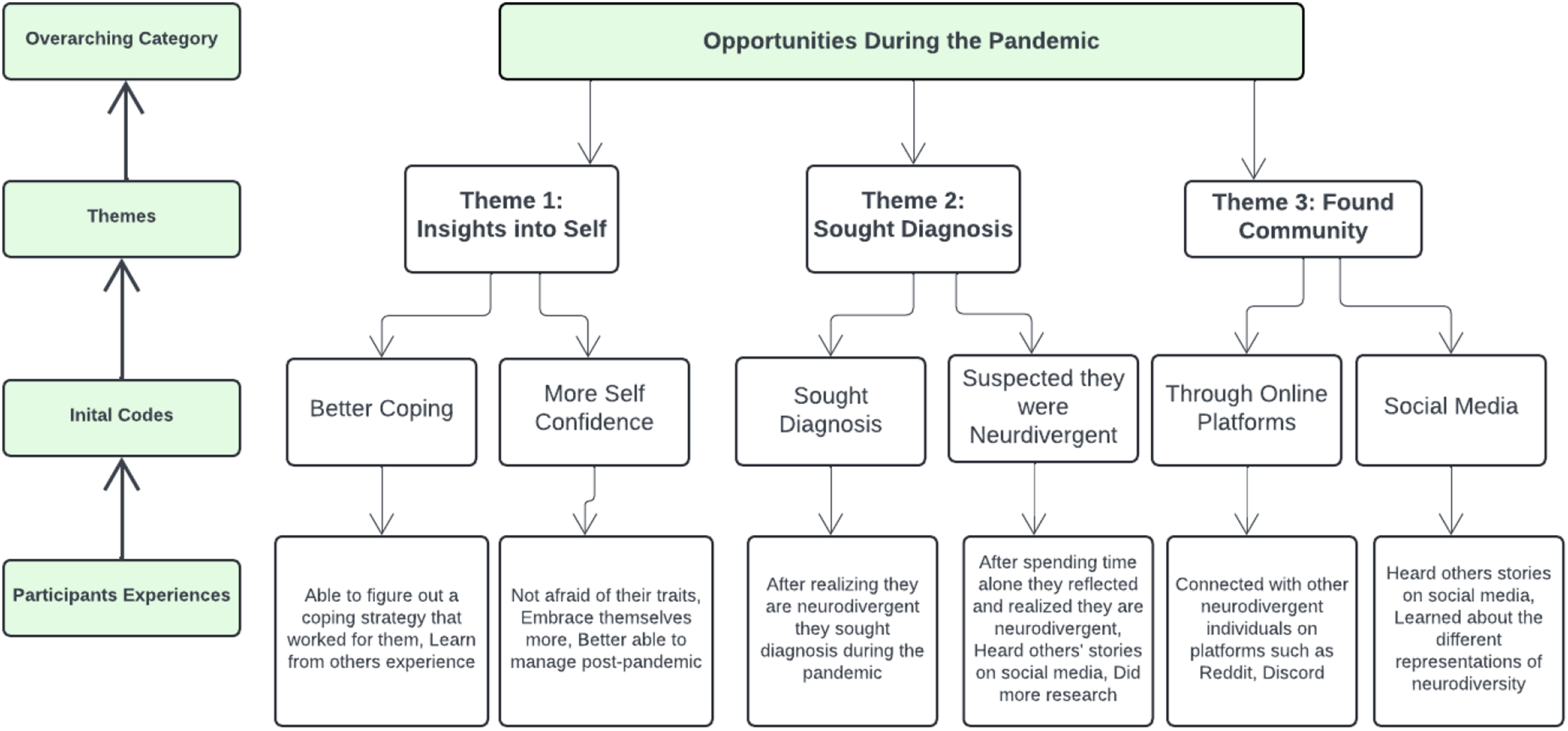
Description of Opportunities, Initial Codes and Themes.

Thematic Map of Themes Found: Main Challenges and Opportunities by Diagnosis.
Results
Challenges
Several participants reported experiencing significant negative impacts due to COVID-19 in many aspects of their lives. Across all diagnoses, participants shared challenges, including feelings of increased isolation, increased struggles in academics, lack of support and resources, and harm to their overall well-being.
Theme 1: Increased Academic Difficulties
Academic challenges were shared by several participants (n = 9) during the interviews. Participants reflected on their lower attendance, difficulty with the lack of routine, requesting extensions, and lack of motivation to complete assignments. Notably, academic difficulties during COVID-19 were most prominently reported by participants with ADHD, who cited that the pandemic exacerbated challenges they were previously experiencing pre-pandemic. I always struggled in certain subjects. […] it only it started getting kind of difficult during high school when I had to keep up with so many things. It started getting difficult there and then, as we'll talk about, during COVID. [COVID] made it a lot worse. (P15, Dx: ADHD)
The transition to online learning led to a decrease in external motivation in students, who reflected on their low attendance rates and increased difficulty meeting deadlines. Participants shared that this resulted in increased procrastination and last-minute assignment completion, leading to a low grade, which led to further increased stress. Many students indicated that the lack of routine and accountability allowed them to fall behind, which in turn had an impact on their academic performance and social life. It was so easy to not be [in class] that I just skipped. And because I skipped that one, I had to skip the next [class] […] For the first time in my life I was like ‘I'm not going to skip for a month’ […] I would lay in bed […] I didn't go to class and I would never check [my phone] because I knew my friends would be asking me where I was […] I ignored that entirely and I was completely [focused on] my hyper fixations and rotting in bed. (P18, Dx: ADHD-I)
Many course offerings took place asynchronously, providing significantly fewer opportunities for the engagement and stimulation that would otherwise take place in the physical classroom. According to participants, many resorted to dropping, deferring, or failing their courses as they struggled to find the self-motivation necessary to focus during virtual lessons. Students reported that the lack of routine and change in the external environment impacted their motivation to keep up with coursework. During the pandemic […] it was easier in the sense that [courses were] online and on Zoom, […] I started skipping Zoom classes because everything [was] recorded […]. As we moved back into in-person classes, I've noticed I've been attending a lot less and it's not because I'm uncomfortable in the classroom - I'm just so out of the routine of attending all the lectures, and […] Zoom made me a little bit lazy. (P03, Dx: ASD, ADHD, OCD, TD, GAD, and Panic Disorder (PD))
Additionally, participants reflected on how the pre-pandemic physical classroom environment helped them to focus on their work. Specifically, participants discussed the benefits of feeling external motivation to focus when they attended physical lectures, studied in the library, and many purposely chose to enroll in courses with friends whom they identified as “strong students” who would help motivate them in class. Following the transition to online learning, these strategies were no longer available, and participants indicated the distracting nature of their home environment as an obstacle to their overall academic success. Participants indicated that they found themselves falling behind due to the changes in the learning environment and lack of accountability from friends, peers, and professors. I practically failed a lot of my classes just because I couldn't study at home and because it was online and there was no one face-to-face I didn't feel obligated to attend. […] [Currently] I tried to find classes that [are not] online if I'm choosing courses and I'm trying to make sure that I always attend because I need an external environment with people to be able to study better. (P08, Dx: ADHD-I) Of course, the nature of having to do several hour-long classes online was difficult just in the sense of staring at an end screen for several hours with is tiring at the best of times, but when being able to regulate attention is a problem to begin with, staying on task for three hours at a time is quite difficult. (P13, Dx: ADHD) When [school] was online, I feel like I got a lot more distracted in my room and even though I still work on my assignments when I'm at home and not so much at school or in the library, I find that I'm like grasping the information a lot better at school than I was in my online lectures […] I can like keep focused more […] and I'm less likely to be distracted by, playing games or going on my phone or other things happening around me. (P19, LD, GAD, and Depression)
Theme 2: Isolation Presenting Challenges for Students
Participants indicated that the imposed isolation, both physical and self-imposed, presented challenges. Several autistic individuals and students with ADHD indicated that although their self-imposed isolation existed before the pandemic to an extent, it was subsequently exacerbated during the pandemic. Notably, participants discussed isolation from two distinct perspectives. Some participants shared their struggles with physical isolation away from their friends, while other participants highlighted the difficult decision to self-isolate as a coping mechanism to focus on their schoolwork. In contrast, some students indicated thriving with the decrease in social demand, whereas others found themselves increasingly dysregulated. […] I think because it was less than around people, your camera could be off and stuff and I think that we could “maskless” […] I if I was in my bedroom on Zoom [people cannot see] my facial expressions or like anything I was doing […] so I think that aspect of it helped […] I do think that level like reduce social interaction kind of helped me regulate myself little bit better. (P07, Dx: ASD) I had been sitting at home more or less looking at the same four walls for months, and so the sort of feeling of being confined was already quite bad by the time things started and my sense of time was completely off kilter. The immense lack of structure was an incredible struggle. I didn't have to go anywhere; I didn't have to do anything most days. I couldn't remember what day it was. It was torturous, to be quite honest, not so much the not being able to go anywhere, so much as having nothing to structure my life around. (P13, Dx: ADHD)
Participants who self-isolated because of public precaution found themselves distressed because they had low external motivation to do schoolwork which reportedly resulted in lower academic performance. As mentioned before, many participants relied on their friends to help motivate them to complete assignments and do homework. Additionally, many students indicated that the external environment in-person school provides helps their motivation and without this, they found it increasingly challenging to motivate themselves. If there's no external force again pressuring me into doing something I don't often, do it that well. […] For activities [..] getting friends to work with me helps me with [keeping on task] and sitting in groups to study helps me rather than being alone. The teacher talking [during in-person class] really helped me like actually focus on my work. I'm still noticing that in [online] class I didn't do too great as compared to if there was a person that was talking to me. (P08, Dx: ADHD-I)
With social isolation, individuals were restricted from gathering in large crowds and urged to isolate within their immediate household. The compounding factors of online coursework, self-motivation in the presence of household distractions (e.g., siblings, phone, and pets) and having minimal to no external motivation only added to the academic difficulties seen.
Additionally, participants who had previously used self-isolation as a coping mechanism reported an exacerbation of this behavior during the pandemic, with some describing they became “hermits” during the pandemic. Autistic individuals and those with ADHD frequently used self-isolation both as a means of self-soothing and to enhance focus on their work. Many participants exhibited ridged “all-or-nothing” thinking regarding the balance between academic and social life. For instance, some participants indicated that achieving academic success required them to forgo social interactions entirely, leading them to ignore their friendships and concentrate solely on their studies. In contrast, others reported being “excessively social,” which left them with insufficient time for their academic responsibilities. However, a common theme many students reported was that to keep up with schooling during the pandemic, they isolated themselves, forcing themselves to focus strictly on schoolwork. I would basically give up literally everything for school, I like during exams [and] projects [I had] very little social life again like sort of like basic life skills and like self-care out the window. (P06, Dx: ASD, LD, and Depression)
For many autistic individuals, self-isolation is often used to manage sensory sensitivities and prevent overstimulation (Friedman et al., 2023). Similarly, individuals with ADHD might rely on self-isolation to mitigate academic difficulties and address tasks they have been procrastinating. However, during the pandemic, both autistic participants and those with ADHD tended to overuse self-isolation to an extreme extent. This overuse resulted in some participants not seeing or speaking to friends (physically or virtually) for extended periods, adversely affecting their mental health, social relationships, and academic performance. I remember quarantine […] I became a bit of a hermit. Also, when I was like pretty much in full quarantine, I became mostly nocturnal […] One of my coping mechanisms is to isolate, so I didn't talk to anyone and became a hermit. (P06 Dx: ASD, LD, and Depression)
Theme 3: Harm to Students’ Overall Well-Being
Additionally, many participants reported that the pandemic affected their overall well-being. Factors such as lack of routine, online classes, isolation, the threat of illness, and the ongoing changes impacted participants negatively. Notably, the lack of routine or change to routine brought on by the shift to remote learning impacted many participants negatively. Additionally, the social isolation and anxiety surrounding getting sick made participants feel increasingly anxious. Further, participants reported feelings of anxiety surrounding getting sick, which increased their isolation further. I have always experienced a lot of anxiety about getting sick, like hypochondria [..] something that I think is related to my autism is I very I can be very upset about gathering facts or wanting to stay up to date on information, like wanting to know everything that's happening. (P11, Dx: ASD) I had to essentially take extra proportions one of the facets of ADHD is impulsivity, so making sure I wasn't engaging in reckless behaviour. So, I was beyond careful and, quite honestly, I'm still rather hesitant to do away with some of the precautions that were mandated previously. (P13, Dx: ADHD)
Theme 4: Lack of Support and Resources for the Neurodivergent Community
During the pandemic, as schools transitioned to online learning, accessing support services became increasingly challenging for students. New barriers emerged and there was widespread confusion about available resources. Analysis of the interviews revealed that the issues related to support varied depending on the student's stage in their university career at the onset of the pandemic. For students who were already established at university when the pandemic began, the primary issue was the difficulty in accessing support. Students across diagnoses experienced problems such as unanswered emails, new challenges with online learning for which they had no accommodations, and delayed responses from professors. Conversely, students who were transitioning into university during the pandemic faced significant confusion regarding available support services. Many participants had Individual Education Plans (IEPs) in high school, but the shift to university amidst the pandemic complicated the process of finding and navigating support. I think sometimes I get frustrated almost like the institutional supports or that are kind of available or […] I find myself a lot of times I will be looking for different accessibility things [about alternative exams] […] [the website] just kind of assumes you know [how to access resources][…]. It's just like one of those kind of institutional issues where they just like no one really thinks of it […] sometimes the [website itself] is inaccessible at its core. (P06, Dx: ASD, LD, and Depression)
Opportunities
However, participants also indicated experiencing positive changes during the COVID-19 pandemic. Across all diagnoses, participants also shared opportunities, including more time to self-reflect, seek diagnosis, improved coping strategies, gained friendships and community, and a new sense of confidence post-pandemic.
Theme 1: More Time to Self-Reflect and Insights Into Self
Several participants highlighted the unique opportunities presented to them during COVID-19. The extended time spent alone and away from school and work allowed participants to engage in self-reflection, leading to a deeper understanding of their own neurodivergent condition. This deepened understanding led some to seek an assessment during the pandemic and for others, it allowed them to strengthen their pre-existing coping skills. Additionally, with the increase in social isolation, individuals joined online forums to meet other neurodivergent individuals. At the start, the pandemic was almost needed, for me. Maybe not the illness part, but the lockdown came at a great time for me because a lot of my assignments were kind of starting to get like taken out and I didn't have to go see people, I didn't have to go to work because there was no work, and like that was kind of nice. Also, I need a lot of alone time. So, like, in some ways, that has been good because I've had so much opportunity to have a long time. (P11, Dx: ASD)
Improving Their Coping Strategies and Finding New Ways to Cope
Nearly half of the participants reported a notable enhancement in their coping strategies during the pandemic (n = 9). This improvement manifested as either the refinement of their existing coping mechanisms to better suit their current needs or the discovery of entirely new strategies.
Participants felt a greater capacity to manage their neurodiversity effectively. These experiences may be related to receiving a formal diagnosis, which participants reported validated their experiences and gave them a clearer understanding of their neurodivergence.
The pandemic provided an extended period of solitude, free from the usual demands of classes, work, and other commitments. In a typical pre-pandemic routine, individuals often juggled classes, part-time jobs, extracurricular activities, homework, and commuting, leaving little time for self-reflection or self-care. However, the reduction in commuting time and the shift to remote learning and work allowed individuals to manage their schedules more flexibly at their own pace. This newfound flexibility provided participants with the opportunity to explore and understand themselves in ways that were previously constrained by their busy routines. Many participants gained a deeper understanding of their values, boundaries, and behavioral triggers, leading to a more profound self-awareness. This increased insight enabled them to adjust their coping strategies or discover new, more effective ones. Many students also reported that the increased time spent alone made them more forgiving of their neurodivergent traits, which continues to impact them post-pandemic. I think for me, one of the things that has really helped my mental health overall, has been like embracing the parts of me that are different and being attentive to my own needs and not being so afraid to tap out of a social event If that's something I can't handle, or ask for accommodations in a situation where I need them. (P11, Dx: ASD) I think now my coping strategies are more geared towards autism, whereas before it was more anxiety and depression. Now it's just autism-focused, because that's the only thing I really feel affects me now, I just dealing with that. (P12, Dx: ASD, LD)
A New Sense of Self and Confidence Post-Pandemic
Further, the period of solitude during the pandemic also allowed individuals to “mask-less,” a term often used to describe the concealment of traits associated with neurodivergent conditions (e.g., stimming, fidgeting, sensory overload, difficulty understanding social norms or emotion, and hyper fixations). With fewer social interactions and more time alone, participants felt more comfortable being themselves. This newfound authenticity boosted their confidence in their identity and diagnosis, helping them embrace their true selves as they transitioned back to regular work and school routines. Several students indicated that the pandemic made them accept their identity more, which has improved their self-esteem post-pandemic. [After getting a diagnosis realized] that many people also have these struggles. It's like, oh, I'm not alone in this and this is something that many people struggle with and they get treated for. [….] There's nothing wrong with that. That's kind of been a lot nicer. (P18, Dx: ADHD-I) [When asked about their experience after the pandemic] I exhibit more traits of autism [….] I exhibit the same traits actually, it's just I'm more overt with them, I'm not hiding them anymore. If I'm pacing around or openly stimming, I'm not gonna really stop doing it in public because I don't really care what people think. I don't know, maybe it's like a learning experience for those people. (P12, Dx: ASD, LD) [When asked about coping strategies after the pandemic] They have changed a lot [….] If I feel overwhelmed, I leave or I just do what I need to do. [….] Yeah, I think now my coping strategies are more geared towards autism. (P12, Dx: ASD, LD)
Theme 2: Seeking Diagnostic Confirmation
One of the most notable findings of the current study was the significant number (n = 13, 76%) of participants who sought and received a formal diagnosis during the pandemic. The pandemic appeared to provide an ideal environment for self-discovery, characterized by increased solitude, reduced external distractions, and an abundance of time. Before the pandemic, many participants were preoccupied with school, work, and other obligations, which often left little time for the lengthy and often complex process of seeking assessment. The pandemic, however, allowed participants to reflect on their experiences and question whether they might be neurodivergent, prompting them to pursue diagnostic validation.
Increase in Neurodiversity Awareness
During the pandemic, there was a significant increase in social media content related to neurodiversity. Platforms such as TikTok, Reddit, YouTube, and Instagram served as prominent sources of information. While these platforms facilitated the sharing of personal experiences and provided insights into neurodiversity, it is important to recognize that social media was not intended as a substitute for professional healthcare but rather as a supplementary resource. However, the content on these platforms often sparked curiosity and encouraged individuals to seek formal diagnoses through established clinical channels.
Participants reported that social media content, particularly on TikTok, was a key factor in piquing their interest in obtaining a diagnosis. They noted that while the medical descriptions of their conditions found through traditional sources like Google often felt abstract or unrelatable, seeing real-life examples on social media made the conditions more tangible and understandable. For instance, some participants initially misunderstood ASD as predominantly being those with higher support needs, leading them to dismiss the diagnosis. However, exposure to a broader range of experiences on social media helped them recognize that ASD is a wide spectrum, including many high-functioning individuals, prompting them to pursue a formal diagnosis. Students indicated how seeing other neurodivergent individuals’ journeys online led them to introspect about themselves and what they have been experiencing. I've also seen so many folks who were using the time at home to make podcasts and videos and TikTok and blogs and stuff about their experiences. [..] It's like I knew I related to the experiences of folks on the spectrum […] But I think that having that time in the pandemic and also folks using their time to share their experiences really was what made me seek out a diagnosis. (P11, Dx: ASD) There aren't that many resources and it's easier to [find] resources for very young children. But then the communities like adults or teenagers […] is not as common there's definitely some really good ones. But they're not […] backed by a lot of research like medical institutions or any sort of institutions that weighs a lot more like community's style research. Sometimes you wish there were other people noticing this community. (P07, Dx: ASD)
Theme 3: Gaining Community with Others
A key theme that emerged was the discovery of a supportive community during the pandemic. Many individuals turned to online platforms such as Reddit, Discord, and TikTok to connect with others who shared similar diagnoses. The pandemic saw a surge in individuals seeking social connections online. These platforms provided a valuable space for participants to meet others, exchange advice, and find support from those who truly understand their experiences.
Despite the potential for misinformation on these platforms, participants reported that connecting with other neurodivergent individuals helped them develop new coping strategies and gain a better understanding of themselves. In fact, some participants continue to engage with these online communities and maintain the friendships made during this period. After I found out like that it was neurodivergent so many different pathways have opened up for me and I was able to understand why I act the way that I do and that helps me not only create healthier boundaries […] I acknowledge my limits and have a very supportive support system [online and in person] that's very understanding of my situation and lifted off my shoulders because of that. (P09, Dx: ADHD, ASD) I also adopted things like structured socialization, where I would join an online chat group every night and have developed really close bonds with friends there and the structure. I just feel motivated to get work done during the day. There was something I was really looking forward to in the evening because these people became some of my best friends while we were all kind of isolated in our houses. (P10, Dx: ADHD)
Advice for Others with a Similar Diagnosis
As part of the interview, participants were asked what advice they would have for others navigating a similar diagnosis. Students were prompted to think of where they were during the beginning of their neurodivergent journey and to reflect on what they would say to their younger selves. Some of the student's advice for others with a similar diagnosis can be found below (Table 4).
Students’ Advice for Others with a Similar Diagnosis.

Discussion
This study used an inductive thematic analysis to explore the experiences of neurodivergent students during the COVID-19 pandemic, highlighting their challenges and opportunities. The interviews took place between March 2022 and October 2023. The analysis demonstrated how the pandemic impacted these students’ academic performance, social interactions, access to support, and personal development. Findings are discussed below according to the initial codes and themes identified in the study.
Challenges
Academic Difficulties
Participants with ADHD experienced several academic challenges during the pandemic. The transition from structured, in-person learning environments to asynchronous remote learning disrupted their routines and sense of motivation. The absence of a physical classroom setting during the pandemic reduced the external accountability that previously supported their engagement and performance. This finding aligns with prior research indicating that individuals with ADHD often require structured environments to maintain focus and motivation (Barkley, treatment in school settings, p. 549). Additionally, prior research has also revealed that students with ADHD may benefit from enhanced support systems (Hollingdale et al., 2021). The shift to online learning shows the importance of external structures in supporting these students’ academic success, as highlighted by the impact of their absence.
Further, autistic individuals and those with learning disabilities also faced academic difficulties during the pandemic. The lack of routine and decreased physical contact left many students feeling lost. While some autistic students enjoyed online schooling, many disliked the lack of routine and found themselves falling into a pattern of self-isolation and missing assignments. Further, those with learning disabilities indicated that they took longer to complete assignments and began falling behind in classes due to the lack of structure and direct support. These findings align with prior studies that have found that autistic students found it challenging to transition to a new learning environment. Many students found the platforms themselves difficult to navigate and became confused without the help of direct instruction (Heyworth et al., 2021). Additionally, for students with learning disabilities, prior research reported that students experienced barriers to accommodations and challenges adjusting to online learning (Goegan et al., 2023).
Isolation
The pandemic intensified both physical and self-imposed isolation among neurodivergent individuals. Several participants reported that self-isolation, which was sometimes used as a coping mechanism, became more pronounced during the pandemic. While some participants found temporary benefits in reducing their social interactions, these extended periods of isolation led to an exacerbation of mental health conditions and affected their social connections. This finding indicates that while self-isolation may provide temporary relief, it may also risk longer-term adverse effects on well-being and social relationships.
Lack of Support and Resources
The pandemic also highlighted significant limitations in support and resources for neurodivergent individuals. Students already established in their programs faced difficulties accessing the necessary support services, whereas those transitioning into university experienced confusion about available support. Many participants, particularly those transitioning from high school with a pre-existing Individuated Education Plan (IEP), were unaware of similar support options at the post-secondary level. The challenges experienced by participants in accessing support indicate the need for universities to enhance their support systems, especially during times of crisis (Dwyer et al., 2023; Hamilton & Petty, 2023). Clear, accessible information and proactive outreach may help students to receive the support they need.
Opportunities
Self-Reflection
The pandemic provided an opportunity for students to self-reflect and further their personal development. More time alone facilitated their introspection and led many to seek formal diagnoses and better understand their experiences. Social media appeared to play a significant role in this process as participants reported that exposure to neurodiversity-related content gave them insight and curiosity about their own conditions. This finding aligns with Paterson and Park (2023), who noted that solitude during the pandemic allowed many millennials to escape social pressures and dedicate time to mindfulness and introspection. As a result, they were able to act more authentically and experienced enhanced well-being.
Improved Coping Strategies
Another key finding was the development of refined or new coping strategies among participants. This is likely related to increased self-awareness as many reported a clearer understanding of their neurodiversity following their formal diagnosis. Additionally, the pandemic allowed participants to manage their schedules more flexibly and have time to explore ways to cope with their symptoms. Virtual interactions provided a unique opportunity for students to freely use coping strategies, such as stimming, that might not be socially accepted in other contexts (Dallman et al., 2023). This also allowed participants to try out new coping strategies and gave them time to figure out what works best for them while in a safe environment.
Self-Identity
Further, the opportunity to “mask” less during the pandemic was a critical aspect of participants’ experiences. With fewer social interactions, participants felt more freedom to express their neurodivergent traits authentically, which contributed to a boost in self-confidence and self-acceptance. This finding aligns with Bobo et al. (2020), who reported that students experienced increased self-esteem during the pandemic due to the absence of negative feedback in the classroom environment which allowed them to act more freely and comfortably. Additionally, Dallman and colleagues (2023) reported that the reduction in masking behaviors during the pandemic strongly supported participants’ mental health. These observations suggest that reducing social pressures on these participants and creating a more supportive home environment may contribute to increased self-esteem in neurodivergent individuals.
Community
The pandemic also allowed participants to discover supportive online communities during a time when face-to-face interaction was limited. Platforms including TikTok, Reddit, and Discord gave participants a safe space to connect with others who shared similar experiences. These online communities offered emotional support, practical advice, and a sense of belonging. This finding aligns with past research highlighting the positive role of social media in providing peer support and health information during crises (Abbas et al., 2021). Despite the potential for misinformation, participants found these communities to be an excellent opportunity to develop and maintain a strong social support network. Prior research has shown that peer support through social media enhances self-efficacy and self-esteem, and reduces feelings of isolation, which is crucial for managing mental health challenges (Abbas et al., 2021).
Limitations and Future Directions
The study was conducted between 2022 and 2024 and has several limitations that should be noted. The small sample size is a key limitation, as qualitative research inherently involves smaller groups and does not aim for broad generalizability (Leung, 2015). Additionally, the study's sample was predominantly comprised of autistic individuals and students with ADHD, which may have influenced the depth of analysis for LD's, given the limited number of participants with an LD. Additionally, the presence of co-occurring conditions among participants made it challenging to isolate the effects of individual diagnoses.
This study focused on undergraduate university students, which may limit the generalizability of findings to other populations. The sample covered an age range of those aged 18–38 years; however, the majority of participants were on the younger end of the age range (M = 23). Thus, the implications may be less applicable to younger children or older adults. Due to the nature of this study, researchers were unable to examine how different age groups were impacted by the pandemic. Participants in this study were examined as a whole however, due to the large age range of participants (18–38 years), the results are not specific to specific cohorts (i.e., first-year students, 20-year-olds, etc.) but rather general university students as a whole.
For future research, it would be beneficial to include larger sample sizes capturing a wider age range to improve the reliability of the findings. Further, future research could also examine different age cohorts to make the results more specific to certain populations (i.e., 20-year-olds, 30-year-olds, etc.). Future studies could also explore how the pandemic impacted different cohorts compared to others to see if there are similarities or differences.
Additionally, future studies may also consider exploring a broader range of cultural contexts to provide valuable insights into the applicability of these results. Further, future research should examine how these findings can inform ongoing support for neurodivergent students as they adapt to post-pandemic social and academic settings.
Many participants indicated that they sought diagnostic validation for the first time during the pandemic after spending time on their own and getting to know themselves better. This highlights the power of social media and others sharing their experience with neurodiversity. Many participants reported that the over-medicalized presentation of neurodiversity led them to neglect their traits for years, believing they did not fit the criteria for diagnosis. However, after hearing how neurodiversity presents itself in others and reflecting inward on themselves, they sought a diagnosis. Future research could explore the influx of people seeking diagnosis during the pandemic and how the internet plays a factor.
Conclusion
The COVID-19 pandemic presented neurodivergent students with significant challenges and opportunities. The academic difficulties exacerbated by the shift to online learning, isolation, and limited support highlight the need for enhanced and adaptable support systems. The pandemic also provided opportunities for self-reflection, the development of effective coping strategies, and a more authentic expression of self-identity. Overall, this study aimed to capture the impact of the COVID-19 pandemic on neurodivergent individuals and highlight the nuanced experience they face navigating a neurotypical world. The authors hope this study will inspire new tailored accommodations and inclusive support for neurodivergent individuals, especially in times of crisis.
Footnotes
Acknowledgements
The authors would like to thank the participants for their time and engagement.

Ethical Considerations
This study was approved by the York University Office of Research Ethics (certificate #e2023-023).
Author Contributions
TA led the research and authored the initial draft of the manuscript and contributed to subsequent versions. KMB provided preliminary revisions and substantially contributed to the final manuscript. MD supervised the project and offered critical feedback throughout the revision process.
Funding
The authors received no financial support for the research, authorship, and/or publication of this article.
Declaration of Conflicting Interests
The authors declared no potential conflicts of interest with respect to the research, authorship, and/or publication of this article.
Informed Consent
All participants provided written informed consent prior to participating. Informed consent for publication was provided by all participants.
Position Statement
We used identity-first language (e.g., autistic person) in this article based on the perspective of disability advocates and scholars who assert that person-first language (e.g., person with autism) contributes to disability stigma (Collier, 2012; Gernsbacher, 2017). Qualitative interviews were used to capture the authentic voices of neurodivergent individuals. This choice aligns with our commitment to accurately represent their lived experience and perspective. Our goal is to present their narratives with respect and accuracy and ensure that their identities are portrayed in a way that resonates with their own self-understanding.