



Abstract
Urban green infrastructure (GI) plays a pivotal role in enhancing residents’ well-being. While most existing studies explore the link between GI and human well-being primarily through the lens of urban ecosystem services (UES), the moderating impact of physical activity (PA) has garnered relatively little attention. This study extends current theoretical models by integrating PA into the UES framework, proposing that urban GI influences human well-being through the mediating roles of both UES and PA. Taking Shanghai as a case study, we empirically test this hypothesis and identify the mediation pathways of UES and PA. A survey of 419 urban residents was conducted to quantify the quality of GI, the contributions of UES and PA, and the overall level of human well-being. Structural equation modeling was then employed to validate the proposed relationships. Our findings indicate that (1) urban GI positively influences human well-being through UES and residents’ PA, with correlation coefficients of 0.8 and 0.31, respectively; and (2) natural elements and landscape design within GI significantly enhance UES, while the presence of artificial facilities and effective management practices boost the frequency of residents’ PA. To promote human well-being, it is recommended that Shanghai’s GI strategies prioritize enhancing natural elements while supplementing them with sports and recreational facilities. This approach would strengthen multiple UES and provide more opportunities for residents to engage in PA. Overall, our findings advance the theoretical understanding of the pathways from GI to human well-being and support the adoption of human-centered design and management practices for urban GI.
Keywords
Introduction
Urbanization continues to expand globally, presenting both opportunities and challenges for transitioning toward sustainable development to improve residents’ living standards. Currently, more than half of the world’s population resides in urban areas, and by 2050, 68% of the global population is expected to live in cities (United Nations, 2012). Rapid urbanization has significantly enhanced the quality of life for residents but has also introduced numerous environmental risks, such as air pollution, urban flooding, and urban heat islands (Fu et al., 2024; Wu, 2014). To address these multifaceted environmental challenges, urban green infrastructures (GI) have gained increasing attention as nature-based solutions (Fang et al., 2024a, 2024b; Yang et al., 2020). The rapidly growing urban population (Wolff, 2021), the increasing demand for urban green spaces (Wu and Kim, 2021), and the limited availability of space (Luo et al., 2022) collectively present significant challenges. In this unprecedented era, there is an urgent need for evidence-based scientific guidelines to clarify the relationship between urban GI and human well-being, ensuring their coordinated development.
GI consists of natural and semi-natural elements within urban areas, including urban parks, community gardens, water bodies, and more (Bartesaghi Koc et al., 2017). GI can provide residents with a range of critical urban ecosystem services (UES), such as mitigating environmental changes (e.g., urban heat islands, air pollution, urban flooding) and offering non-material benefits (e.g., tourism, recreation, physical and mental health) (Gómez-Baggethun et al., 2013; Yao et al., 2024; Yu et al., 2024a). Existing studies have made significant and comprehensive progress in understanding how GI delivers UES to enhance human well-being. For instance, Zhang and Muñoz Ramírez (2019) mapped the supply of UES in Barcelona to identify protected, newly established, potential, and renewal areas of GI; Peng et al. (2021) analyzed the impact of land-use changes on UES under multiple future scenarios in the Wuhan urban agglomeration, providing insights for future GI planning; and Cortinovis and Geneletti (2020) developed a performance-based approach to integrate UES supply and demand to assess the potential requirements for GI in Trento. However, limited research has focused on exploring residents’ access to and use of UES from their perspective, which could result in misjudgments regarding the health and well-being benefits that UES bring to residents.
The human well-being benefits derived from UES encompass opportunities for people to access and enjoy the advantages provided by GI. These benefits depend on both the advantages offered by the natural environment and residents’ willingness to use these environments for physical activity (PA) (Remme et al., 2014). PA has been proven to positively impact health improvement, social cohesion, and more (Mears et al., 2020), including activities such as walking, jogging, social interactions, relaxation, reading, and birdwatching (Hartig et al., 2014b). Although PA is often associated with the built environment, research highlights that GI can enhance residents’ opportunities for PA, contributing to healthier, more equitable, and sustainable cities (Kabisch et al., 2017; Van den Bosch and Sang, 2017). This implies that residents’ well-being is influenced by the reciprocal determinism between UES and PA. To date, numerous studies have confirmed significant positive correlations among GI, UES, PA, and human well-being (Bratman et al. 2019; White et al., 2013). However, the mechanisms underlying these relationships remain unclear. In particular, there is a lack of empirical research exploring how GI enhances residents’ well-being through UES and PA.
Currently, our understanding of the relationship between GI and human well-being remains limited. To our knowledge, only one empirical study has explored the relationships among GI, UES, and PA. Wang et al. (2022) investigated how GI enhances PA through UES, revealing that cultural services and shading have the most significant positive impacts on PA. While this study provides important insights into the relationship between GI and human well-being, there is still room for improvement. Recently, Remme et al. (2021) conceptualized the linkages among GI, PA, and resident well-being using a stepwise ecosystem services approach: PA was integrated into the scope of UES, alongside traditional UES, as benefits derived from GI (changes in human well-being resulting from the use of services). The enhancement of residents’ well-being was framed as UES value, reflecting the importance individuals or groups place on these benefits. In the theoretical framework proposed by Remme et al. (2021), PA and other UES (referred to simply as UES hereafter for clarity) are treated as parallel factors, jointly influencing human well-being. Although PA can be used to describe levels of human well-being in the absence of sufficient data (Akpinar, 2016; Coutts and Hahn, 2015), this approach overlooks the fact that the relationship between GI and human well-being is influenced by socio-economic and environmental factors, making it complex and nonlinear (McPhearson et al., 2022). For instance, engaging in PA in hot areas without shading or evaporative cooling may still pose risks to human well-being due to high temperatures.
In this study, we build upon the conceptual framework proposed by Remme et al. (2021) to empirically examine how ecosystem services and physical activity moderate the impact of urban green infrastructure (GI) on human well-being. In our analysis, we treat GI quality as the independent variable, with urban ecosystem services (UES) and physical activity (PA) serving as mediating variables, and human well-being as the dependent variable. To ensure that the evidence quantifying the relationships among GI, UES, PA, and human well-being is generalizable, transparent, and robust, we adopted a unified, questionnaire-based approach to measure these constructs. This method mitigates potential misunderstandings of the complex interactions among various GI attributes and the benefits they generate, which can arise from using mixed data sources (Koohsari et al., 2015). Focusing on the main urban area of Shanghai from a stakeholder perspective, our research addresses three key scientific questions: (1) What is the quality of GI in Shanghai? (2) What differences exist in residents’ access to and utilization of UES and PA, and are these relationships synergistic or trade-offs? (3) Do UES and PA mediate the pathways from GI to human well-being, and what are their respective contributions?
Method and materials
Study area
Shanghai is one of the most densely populated and highly urbanized cities in the world (N 30°40′-31°53′, E 120°52′-122°12′) (Beaverstock et al., 1999). Over 20 million people reside within its 6340.5 km² area. As one of China’s earliest cities to open up to the outside world and undergo industrialization, Shanghai’s urban planning has long prioritized economic growth (Wu, 1999). This has led to the reduction and fragmentation of GI in Shanghai, particularly within the urban core area (inside the Outer Ring Road) (Wu et al., 2019). Currently, the Shanghai municipal government is striving to achieve the goal of an ecologically livable city by integrating more functions, such as recreational and sports facilities, into GI to provide residents with comprehensive well-being benefits. However, whether the GI in Shanghai’s urban areas truly meets residents’ expectations and how it influences their well-being remain unresolved questions.
Data sources
The questionnaire consists of five sections. Section 1 collects residents’ personal and residential information, including gender, age, marital status, income, education level, occupation, and length of residence. Sections 2 to 5 assess residents’ evaluation of GI quality, perceptions of UES, use of PA, and life satisfaction. For statistical analysis purposes, we used a Likert scale ranging from 1 to 5, where higher scores indicate stronger agreement and lower scores indicate stronger disagreement. For details, see the Online Supplemental Materials.
For the GI indicators, we referenced previous studies on residents’ perceptions of GI (Bjerke et al., 2006; Jim and Shan, 2013; Kuo et al., 1998), focusing on several key aspects: land use types (green space area, tree canopy coverage, water bodies, square size), artificial facilities (seating, sports facilities, recreational amenities), management factors (crowding level, management effectiveness, visitor civility), and planning and design (proximity of green spaces to residences, aesthetic quality of green spaces, and internal pathway design).
For the selection of UES, we followed the classification by the United Nations Millennium Ecosystem Assessment (Reid et al., 2005) and integrated key urban ecological processes, core ecological risks in Shanghai, and relevant literature (Chen et al., 2022; Haase et al., 2014). We identified 14 UES most relevant to Shanghai. These include supporting services (habitat quality, biodiversity), provisioning services (food supply, freshwater supply), regulating services (air purification, noise reduction, climate change mitigation, soil erosion control, urban cooling, flood mitigation, water quality improvement), and cultural services (aesthetic landscape, outdoor recreation, mental and physical health).
In the PA section, we focused on the frequency with which residents use green spaces and the types of activities they engage in while using them. Based on existing studies (Maas et al., 2008; Ord et al., 2013), we classified PA into five categories: commuting activities (walking, cycling), occupational sports (running, sports), family activities (childcare, dog walking), recreational sports (sitting, leisure activities, socializing, cultural heritage experiences), and green sports activities (sightseeing, birdwatching, breathing fresh air).
For the human well-being section, we referred to existing studies (McGillivray and MacGillivray, 2007), exploring the impacts of GI from the perspectives of overall life quality, income, health, personal safety, and social relationships.
From February 25 to March 4, 2023, we distributed electronic questionnaires through the “PinSurvey” platform via the internet. This platform allows for the collection of both questionnaire responses and the geographical coordinates of the respondents. To ensure that the respondents had a certain level of familiarity with Shanghai, we excluded all questionnaires with locations outside of Shanghai. A total of 648 valid questionnaires were obtained, including 414 from areas outside the Outer Ring Road and 234 from areas inside the Outer Ring Road (Figure 1).
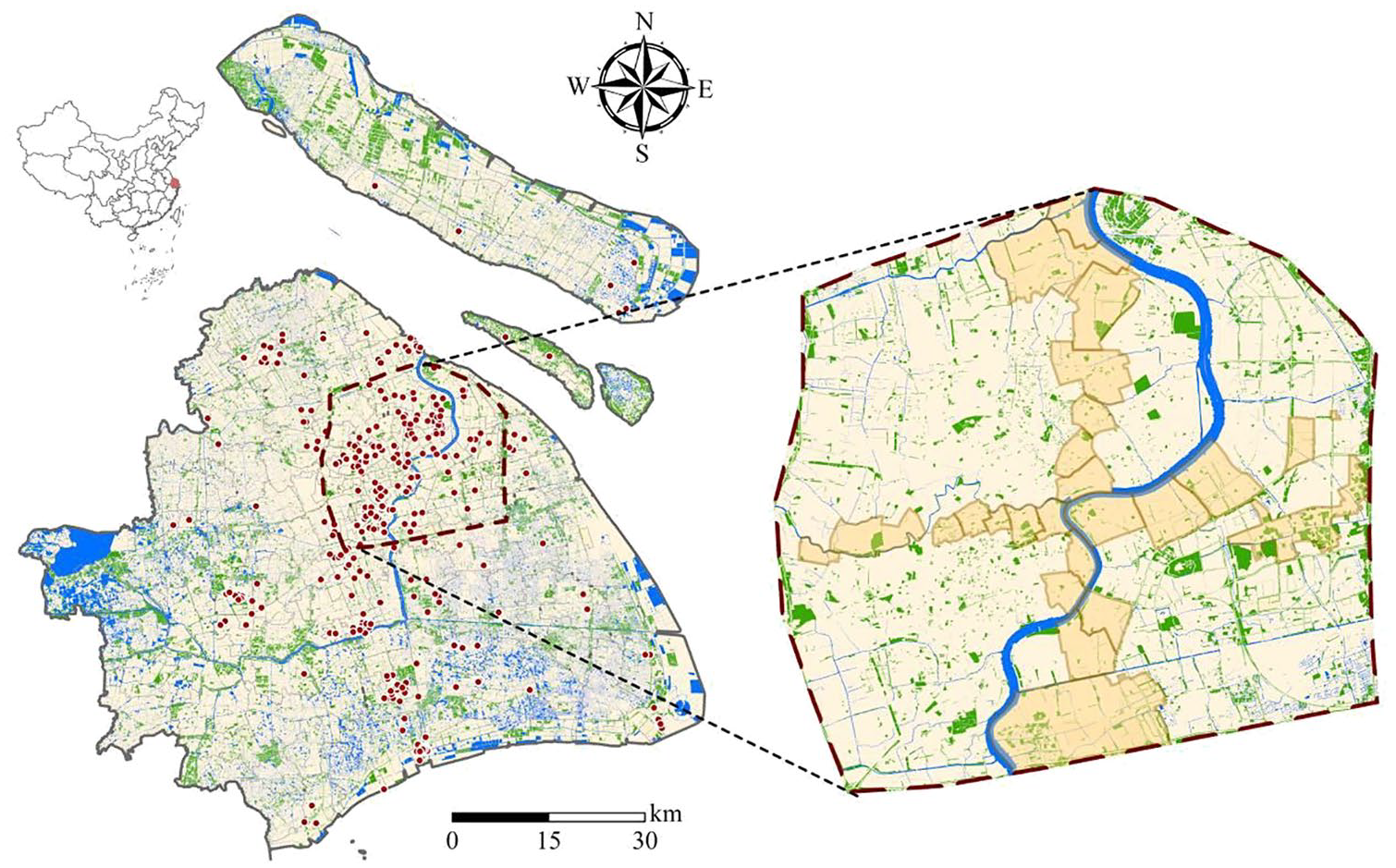
Distribution of sample points (red dots) and survey blocks (yellow areas). The green and blue areas represent green infrastructure.
We focused on urban residents’ perceptions of GI quality in the main urban area of Shanghai. In addition to supplementing the data from the urban residents’ electronic questionnaires, it aimed to better consider the perspectives of different groups on GI quality. The electronic questionnaire can only reach individuals who are capable of using the internet, potentially excluding vulnerable populations with limited internet access, such as the elderly, low-education groups, and low-income populations (Zhang et al., 2017). In our electronic survey data, the elderly (aged 60 and above), those with lower education levels (high school or below), and low-income groups (household income below 50,000 RMB annually) represented 1.7%, 16.98%, and 11.88%, respectively. However, after supplementing with field survey data, the proportions of elderly individuals and those with lower education levels significantly increased to 8.2% and 25.09%, respectively, while the proportion of low-income groups remained almost unchanged (11.83%). Additionally, the proportion of students in the electronic survey (50.66%) dropped to 37.15% in the total survey sample. These adjustments make the demographic distribution of our survey data more representative.
From 25 February to 4 March 2023, three teams, each consisting of six members, conducted field surveys in 24 streets within the urban areas of Shanghai (Figure 1). To address potential language barriers for residents who may only speak the local dialect, we ensured that at least one member of each survey team was fluent in Shanghainese, reducing language barriers and improving respondents’ understanding of the questionnaire. When respondents had questions about the survey, researchers provided objective explanations to help them understand the questions. A total of 118 valid questionnaires were collected through the field survey. Combined with the electronic questionnaires, a total of 829 valid questionnaires were obtained.
Data analysis
First, we standardized the paper and electronic questionnaires by inputting all data into excel, replacing the perception sections with numerical values ranging from 1 to 5 to represent residents’ recognition and perceptions of GI quality, UES, PA, and human well-being. Next, we conducted reliability and factor analyses on the questionnaire data using IBM SPSS Statistics 25 (Online Supplemental Materials). A Cronbach’s Alpha of up to 0.92 confirms that the data exhibits high reliability. Finally, we used ArcGIS pro to distinguish whether the questionnaires were completed in urban or rural areas based on the coordinates of the responses.
We analyzed the mean and variance of residents’ satisfaction with GI in urban and rural areas of Shanghai using Python 3.9 and performed comparisons. We focused more on the perceptions of urban residents regarding GI, PA, UES, and human well-being to better understand how GI contributes to residents’ well-being. To identify the interaction between PA and UES, we used Python 3.9 to conduct a correlation analysis of the trade-offs and synergies between the two. Since the questionnaire data is discrete, we applied the Spearman correlation analysis method.
To estimate the contribution of GI to human well-being through the mediation of UES and PA, we followed the conceptual framework developed by Remme et al. (2021) (Figure 2) and analyzed how GI elements affect UES and PA to influence human well-being using Structural Equation Modeling (SEM). SEM is a multivariate statistical analysis method that can handle multiple dependent and independent variables simultaneously and allows for the inclusion of latent variables. With SEM, not only can we evaluate the relationships between observed variables and latent variables, but also test the significance of paths in the model and the overall goodness-of-fit of the model.
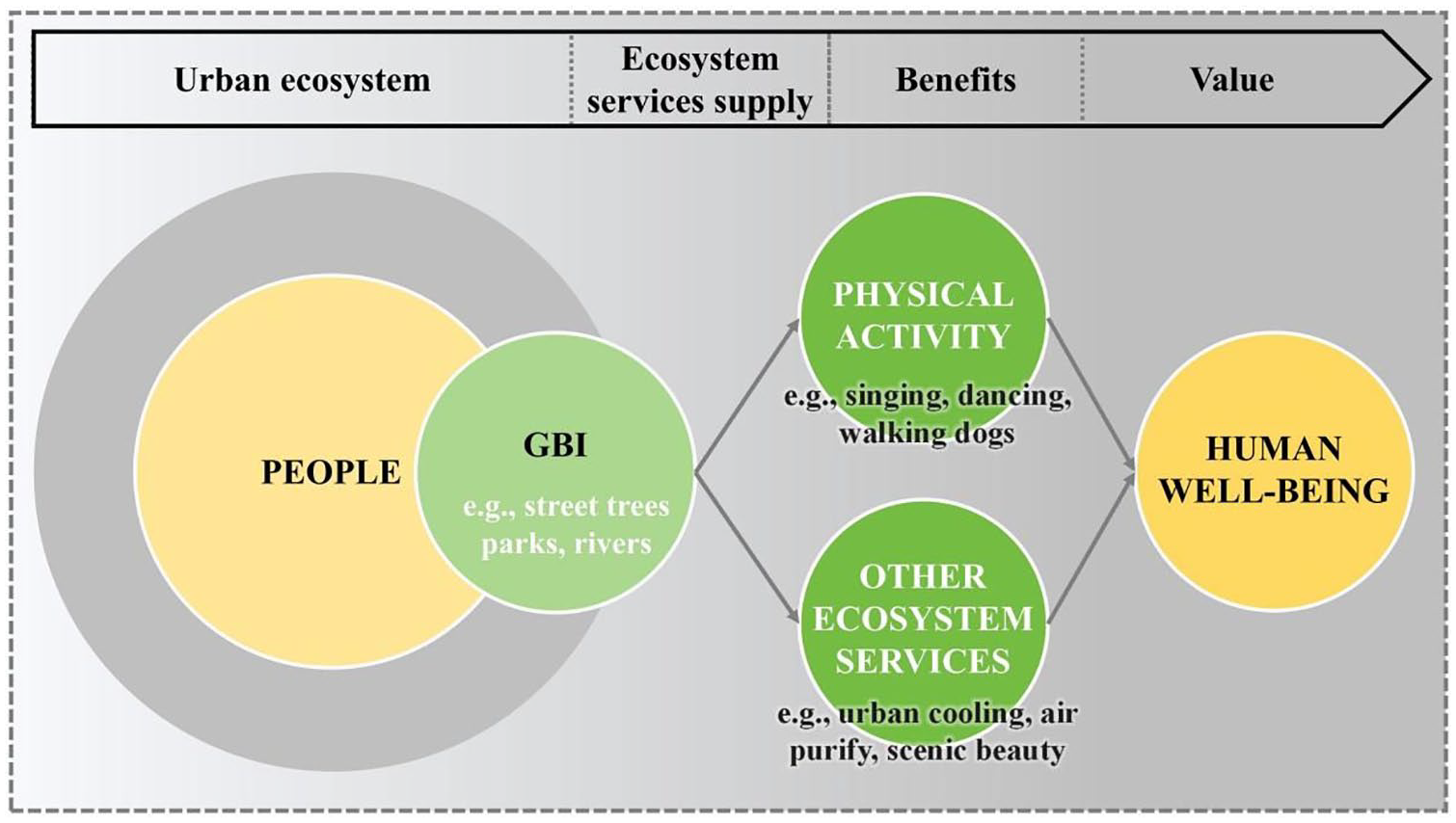
A conceptual framework illustrating the interrelationships among green infrastructure (GI), physical activity (PA), other urban ecosystem services (UES), and human well-being, adapted from Remme et al. (2021).
We developed three latent variables: UES, PA, and human well-being, with the objective of investigating the pathways through which GI elements influence human well-being via UES and PA. All variables were derived from survey data based on the Likert scale, representing ordinal data. GI consists of 13 observed variables, including green space area, tree canopy coverage, water bodies, square size, seating availability, sports and recreational facilities, crowd density, management quality, visitor civility, proximity of green spaces to residences, aesthetic appeal of green spaces, and internal path design. UES, as a latent variable, incorporates 14 indicators such as air purification, noise reduction, climate change mitigation, soil erosion control, urban cooling, flood mitigation, water quality improvement, landscape aesthetics, outdoor recreation, mental and physical health, habitat quality, biodiversity, food security, and freshwater provision. PA, another latent variable, comprises 13 activities such as walking, running, cycling, sitting, sports activities, child-rearing, recreational activities, dog walking, enjoying scenery, socializing, bird watching, breathing fresh air, and engaging with cultural heritage . Human well-being, also a latent variable, includes life quality, income, health, personal safety, and social relationships.
To analyze these variables derived from ordinal data, we employed the Diagonally Weighted Least Squares (DWLS) method for parameter estimation, which is particularly suitable for handling ordinal data like Likert-scale questionnaire responses. To assess the model fit of the SEM we utilized CFI and TLI fit indices. All SEM analyses were conducted in R using the lavaan and semPlot packages. Furthermore, we estimated the variances of the latent variables UES, PA, and human well-being to evaluate the model’s error and assess its accuracy.
Result
Sample characteristics and satisfaction with green infrastructure in urban and rural areas
A total of 829 valid questionnaires were collected in this survey, with 415 from urban areas and 414 from rural areas (Table 1). Overall, there is some demographic bias in the questionnaire responses, with a higher proportion of responses from females compared to males, accounting for 63% of the total responses. Additionally, students made up a large portion of the respondents, representing 40% of the sample. This situation improved in the urban area questionnaires, where the male-to-female ratio was almost balanced, at 1.25. The proportion of students in all occupations significantly decreased (by 17%), while the proportion of middle-aged and elderly individuals (aged 50 and above) increased in the overall sample (by 8%).
Demographic and socio-economic information of all questionnaires and urban area questionnaires.

The satisfaction with GI elements between urban and rural residents in Shanghai shows a generally similar trend, but there are also certain differences (Figure 3). Overall, the satisfaction of Shanghai residents with all types of GI elements remain within the neutral (3) to satisfied (4) range. Both urban and rural residents have the highest satisfaction with the proximity of green spaces to their homes, followed by tree canopy coverage and the amount of green space. The water quality and quantity, as well as the sports and recreational facilities in urban areas, are the most dissatisfactory to residents. In contrast, rural residents express the lowest satisfaction with the quantity and quality of seating and recreational facilities. Additionally, urban residents tend to show greater variance in satisfaction with GI elements, except for pathway design and sports facilities, indicating that urban GI might be more diverse. Sports facilities have both lower satisfaction and smaller variance, suggesting that sports facilities in urban GI areas of Shanghai generally require more attention.
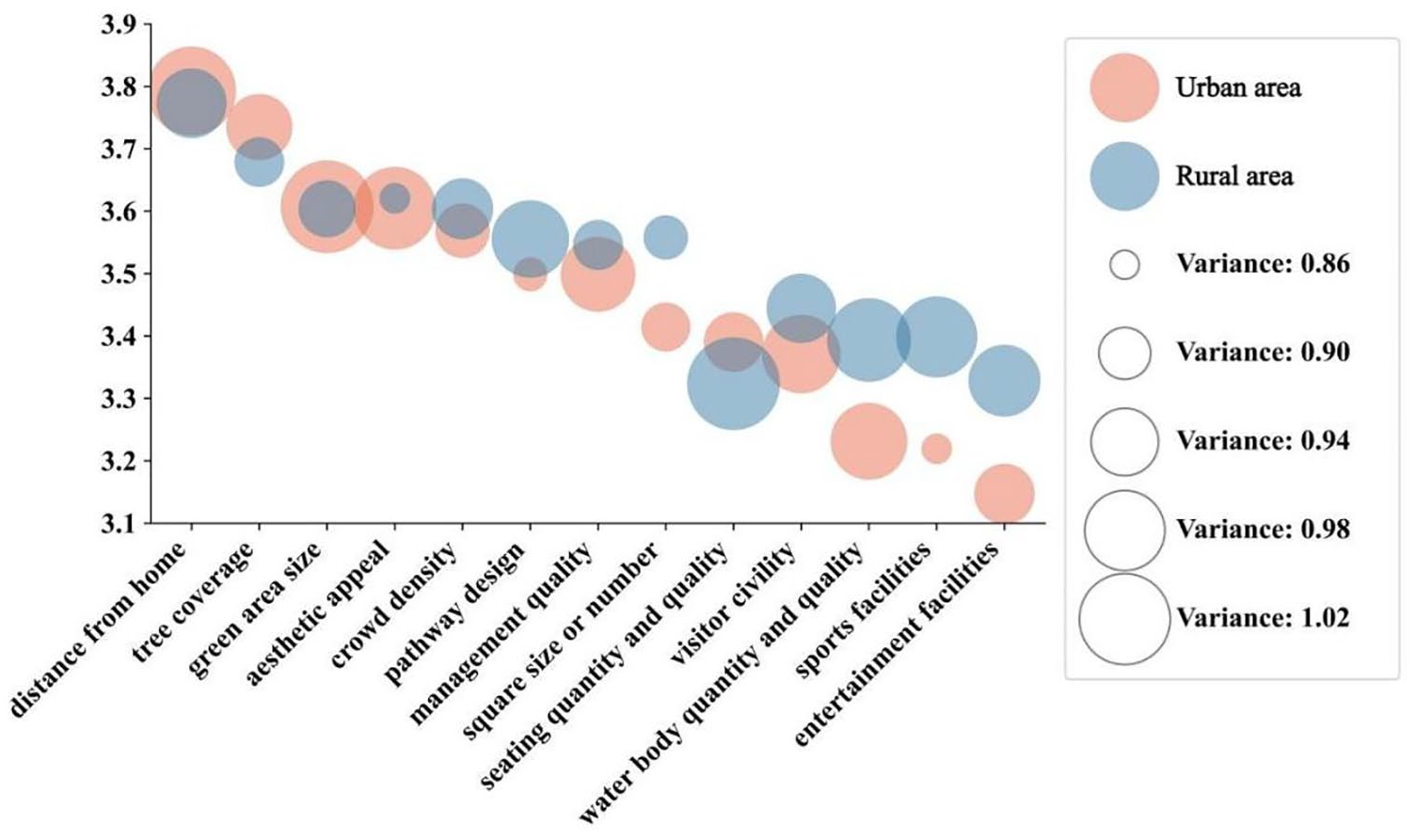
Satisfaction with green infrastructure quality in urban and rural areas of Shanghai.
Trade-offs and synergies between urban ecosystem services and physical activity
The statistical results for urban residents’ perceptions of UES and the frequency of engaging in various PA in GI show that residents generally perceive the impact of GI on various UES to range from “small impact” (2) to “large impact” (3). Similarly, the frequency of residents’ PA generally ranges from “once per month” (2) to “2-3 times per month” (3).
In terms of residents’ perceptions of UES, supply UES (such as freshwater supply and food provision) are generally perceived to have a smaller impact from GI (mean < 2.5). On the other hand, all cultural UES (such as aesthetic landscapes, outdoor leisure and entertainment, and physical and mental health) as well as the regulating UES of air purification are perceived to have a significant impact from GI (mean > 3.5). Among these, physical and mental health is considered to be the most impactful UES provided by GI.
The frequency of urban residents in Shanghai engaging in PA at GI is approximately 1-3 times per month (mean = 2.5), with running, cycling, walking dogs, and experiencing cultural activities being the most common (mean > 3). It is noteworthy that residents visit GI less frequently for activities such as sitting and relaxing or enjoying the scenery (mean close to 2.5), even though aesthetic landscapes are considered one of the most significant UES provided by GI.
The Spearman correlation analysis reveals that 66.3% of the UES and PA have no significant relationship (P > 0.05), while 29.1% show trade-off relationships and 4.6% show synergistic relationships (Figure 4). The trade-off relationships mainly exist in supporting UES (habitat quality and biodiversity), supply services (food supply and freshwater supply), and some regulating services (climate change mitigation, soil carbon storage, flood risk mitigation, and water purification). These are often associated with activities such as dog walking, playing with children, singing and dancing, running, experiencing cultural heritage, cycling, and birdwatching. On the other hand, outdoor recreation shows a clear synergistic relationships with all five PA.
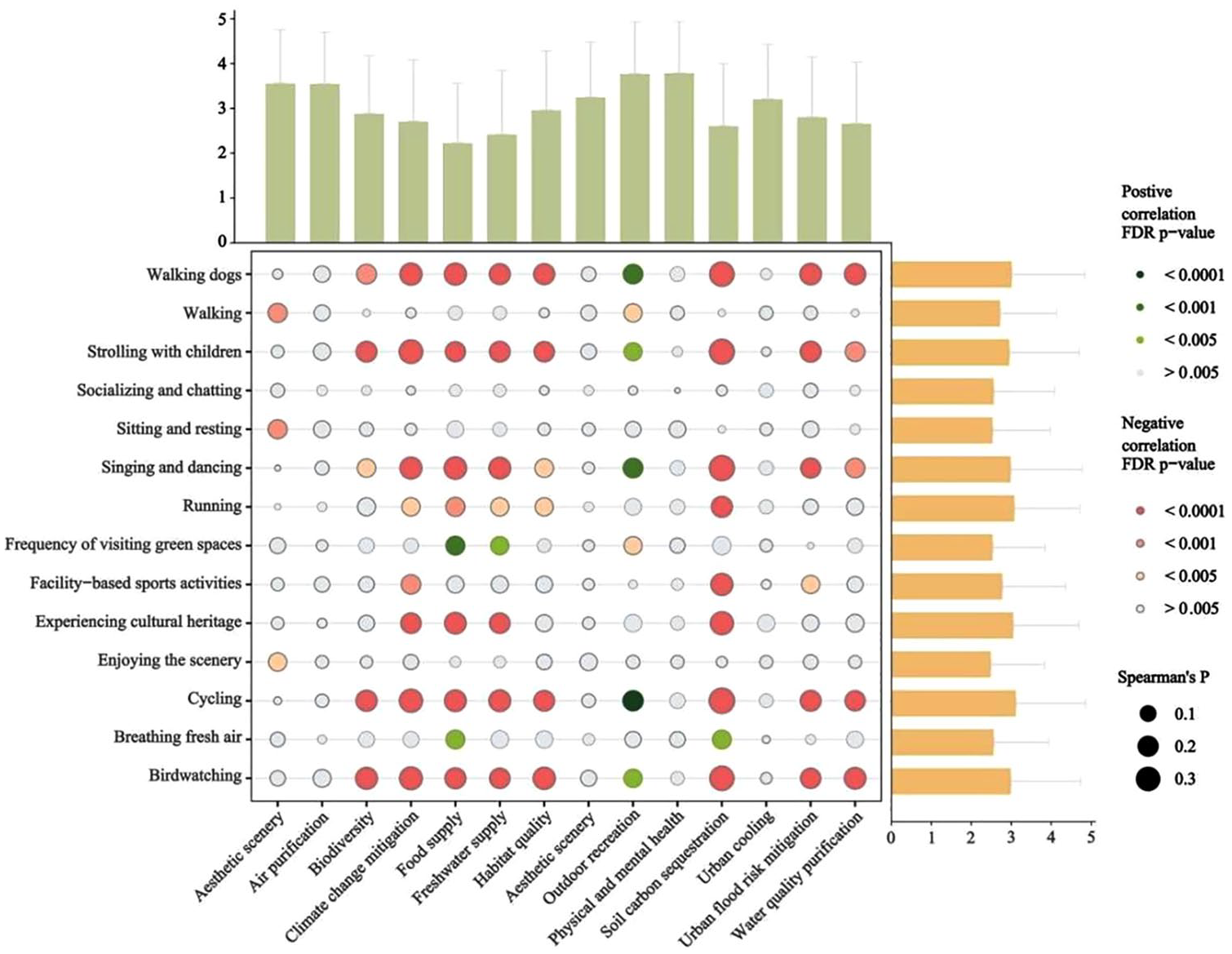
The correlation between urban ecosystem services and physical activity in urban areas. The bar chart represents the mean and variance of each element.
Contribution of urban green infrastructure to human well-being: Mediating roles of ecosystem services and physical activity
The results of the Structural Equation Modeling (SEM) show that the Comparative Fit Index (CFI) and the Tucker-Lewis Index (TLI) are 0.89 and 0.89, both greater than 0.85, indicating a good model fit (Hu and Bentler, 1999; MacCallum et al., 1996). The results reveal that all paths show a significant positive correlation (P < 0.05)(Figure 5). GI elements primarily influence human well-being through their impact on UES, with path coefficients as high as 0.8. The effect on PA is relatively weaker; however, PA still exerts a positive influence on human well-being, with a path coefficient of 0.31.
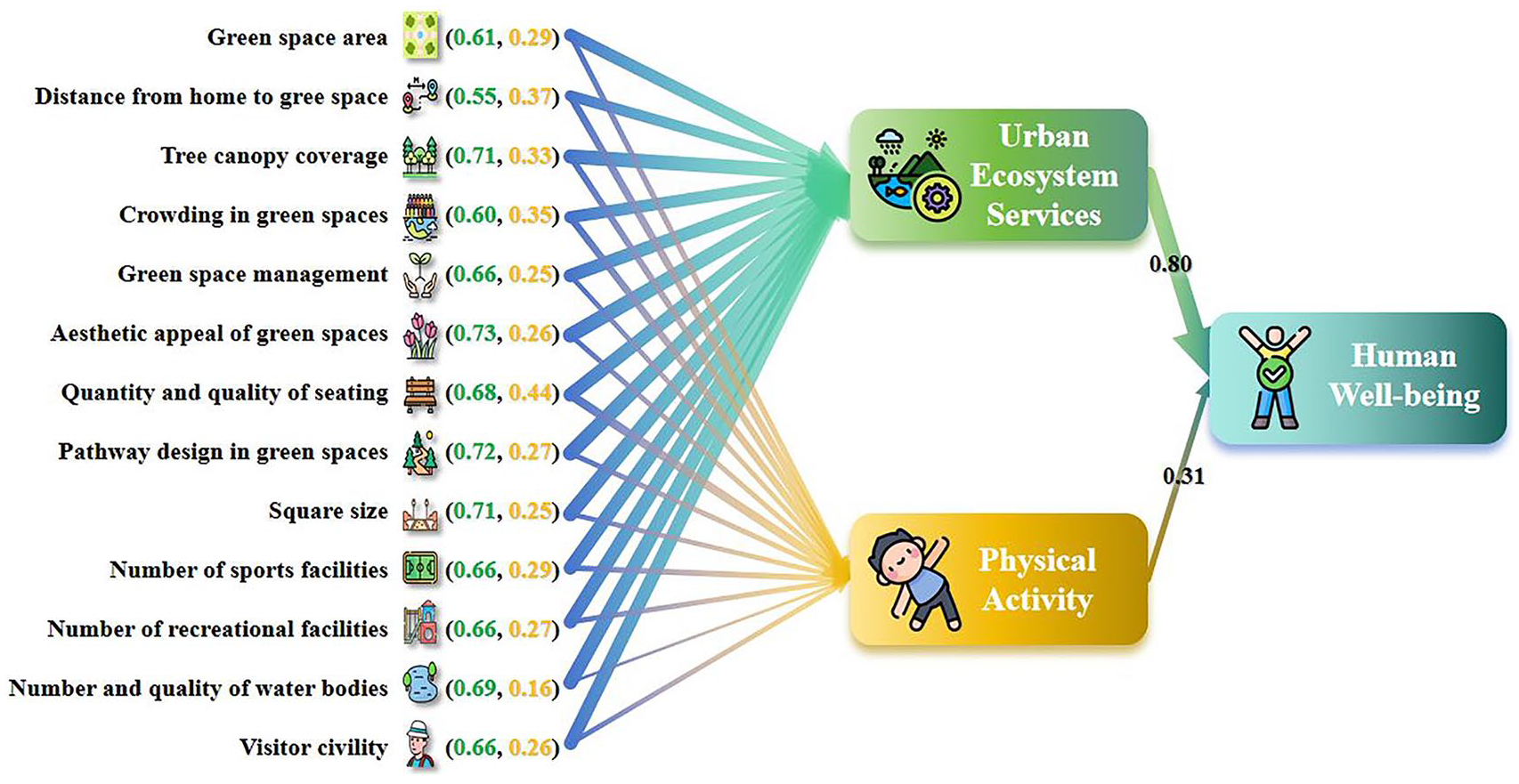
Structural equation paths of green infrastructure contributions to human well-being through ecosystem services and physical activity.
In terms of the impact of each GI element on UES and PA, the influence of GI elements on UES is generally greater than on PA (Figure 5). UES is mainly influenced by tree canopy coverage, landscape aesthetics, pathway design, and square size, with path coefficients greater than 0.7. The distance to green spaces has the least influence on UES, with a path coefficient of 0.55. In terms of PA, the quality and quantity of seating, distance to green spaces, and the crowding level of green spaces have relatively greater effects (path coefficients > 0.35), while water quality and quantity have a very small impact on PA (path coefficient of 0.16).
All latent variables exhibit significant variances (p < 0.05), suggesting the presence of some error in the model. The variances for UES, PA, and human well-being are 0.42, 0.68, and 0.38, respectively. The relatively small variances for UES and human well-being (variances < 0.5) imply that the GI elements effectively explain UES. Moreover, through the mediation of UES and PA, GI significantly contributes to human well-being. In contrast, the larger variance in PA indicates considerable variability in PA among individuals, suggesting that PA may not be fully captured by the selected GI indicators.
In the human well-being latent variable, all observed variables have high influences (factor loadings > 0.75) (Figure 6). Among them, physical health and life satisfaction have higher factor loadings, indicating that improvements in GI are more effective in enhancing these two aspects.
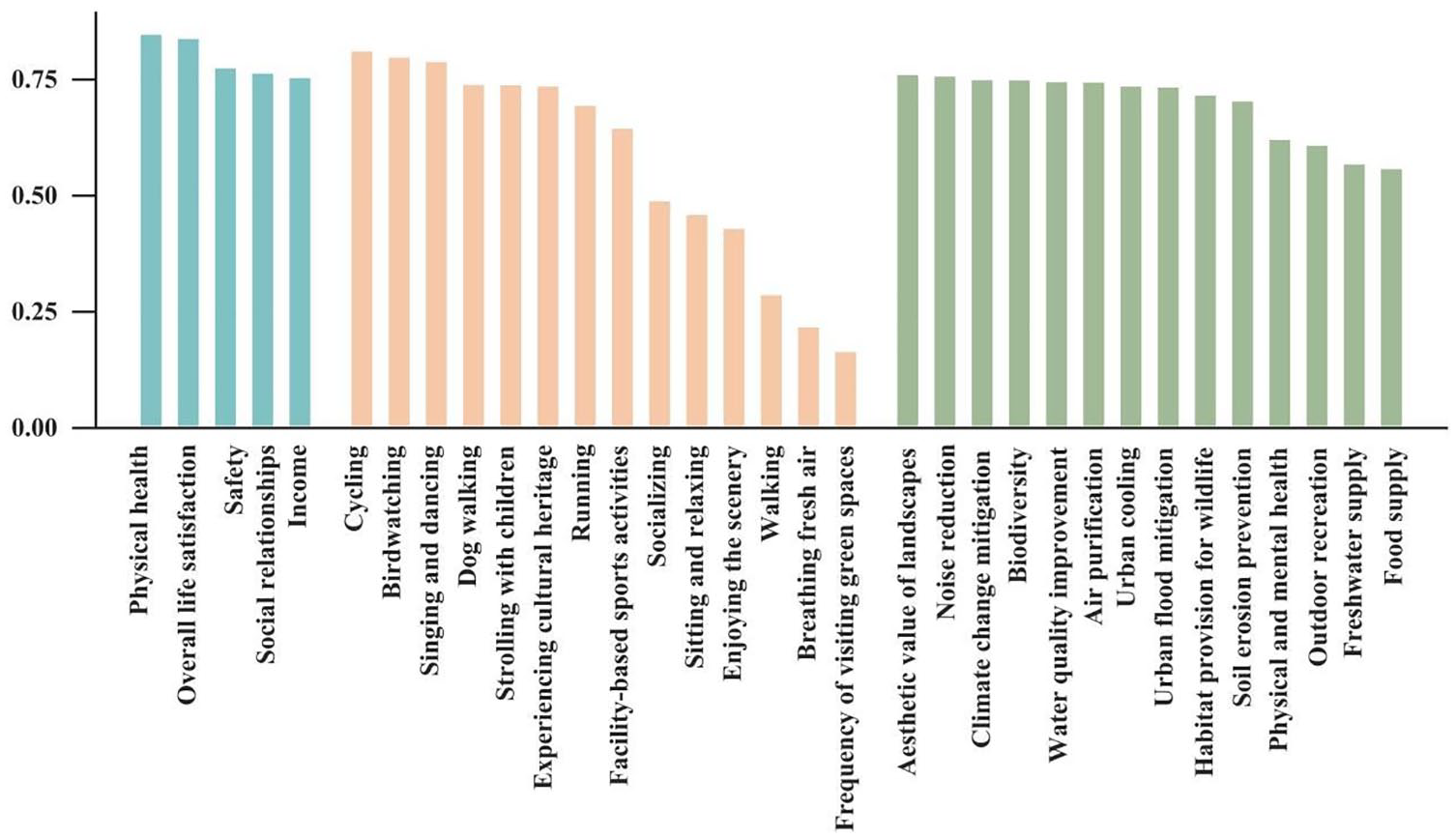
Influence of the components on human well-being (blue), physical activity (orange), and ecosystem services (green) in the structural equation analysis.
PA is most strongly influenced by cycling, birdwatching, and singing/dancing, with path coefficients > 0.75 (Figure 6). The frequency of these PA activities is more significantly impacted by GI elements, and they are better at converting the benefits brought by GI into improvements in human well-being. In contrast, walking, breathing fresh air, and the frequency of visiting green spaces are less influenced by GI elements (factor loadings < 0.3).
The contribution of each UES to the overall UES is relatively consistent, with factor loadings ranging from 0.55 to 0.75 (Figure 6). Among them, all regulating UES (air purification, noise reduction, climate change mitigation, soil erosion, urban cooling, stormwater alleviation, water purification) and supporting services (habitat quality and biodiversity) have factor loadings above 0.7. These UES are easily influenced by GI and convert GI into human well-being. Among the cultural UES, landscape aesthetics has the highest factor loading of all UES types, representing the main path through which GI enhances human well-being. In contrast, the factor loadings for physical and mental health and outdoor leisure activities are lower. The factor loadings for supply UES (freshwater and food supply) are the lowest.
Discussion
Residents’ perceptions of ecosystem services and physical activity within urban green infrastructure
Satisfaction levels with GI between urban and rural residents in Shanghai were compared. Overall, the urban GI in Shanghai is widely recognized and accepted by residents, especially in terms of greenery coverage and accessibility. However, urban residents exhibit greater variability in their evaluations of GI, suggesting that urban GI often has higher uniqueness, serving different functions across regions. For example, some parks may primarily provide recreational and leisure functions, while other green spaces might focus more on services like air purification or climate regulation (Jabbar et al., 2022). Urban residents are notably less satisfied with sports and recreational facilities in GI compared to rural residents. Our field surveys reveal that urban GI in Shanghai generally has superior quality and quantity of amenities compared to suburban areas. This aligns with previous studies, which found that although suburban GI may be of lower quality, residents in these areas have less demand for GI than their urban counterparts (Kim and Kaplan, 2004; Theodori and Luloff, 2000). This discrepancy could be attributed to the higher levels of congestion in urban GI (Arnberger and Eder, 2012), as well as differences in architectural aesthetics between urban and rural areas (Bonaiuto et al., 1999).
We conducted an in-depth exploration of urban residents’ perceptions of UES and PA within GI. In terms of residents’ perception of UES, cultural UES (landscape aesthetics, outdoor recreational activities, and physical and mental health) and air purification regulating UES were considered to be the most important UES that GI can provide, while supply UES (freshwater supply and food provision) were considered less important. This aligns with the design concept of urban GI, which focuses more on providing environmental aesthetics and recreational functions rather than agricultural functions (Ashinze et al., 2024). The frequency of PA among urban residents was 1-3 times per month, with a focus on dynamic PA such as running, cycling, and dog walking, while the frequency of static PA like sitting and enjoying scenery was lower. This is consistent with existing research, which shows that GI equipped with tracks, squares, and basketball courts is more likely to attract residents for physical activities, as these group sports are particularly popular among Chinese residents (Wang et al., 2019). Additionally, GI with exercise equipment are more effective in drawing residents in for physical exercise (Schipperijn et al., 2013).
The Spearman correlation analysis between UES and PA revealed that 66.3% of the relationships showed no significant correlation, 29.1% exhibited trade-offs, and 4.6% indicated synergies. Notably, outdoor recreational UES demonstrated significant synergies with all five types of PA, which aligns with previous studies showing that cultural ecosystem services are often positively correlated with physical activities (Havinga et al., 2020). However, most UES had no significant correlation with PA or exhibited trade-off relationships. A possible explanation is that while residents are eager to engage with nature and enjoy UES, green plants occupy a large portion of the open space in GI (Kaczynski et al., 2008). The increased vegetation reduces the available space for PA, limiting the scope of physical activities and thereby decreasing their duration and frequency (Wang et al., 2019).
Urban green infrastructure enhances human well-being by delivering ecosystem services and promoting physical activity
We extended the framework developed by Remme et al. (2021) and conducted a SEM analysis to examine how GI contributes to human well-being through UES and PA. GI contributes more to human well-being through UES than through PA. GI elements like tree cover, landscape aesthetics, pathway design, and square size have a greater impact on supporting, regulating, and cultural UES. This supports the role of urban GI in improving environmental quality, enhancing aesthetic experiences, and providing recreational spaces (Semeraro et al., 2017).
Although PA has a weaker impact on human well-being, its positive effect is still significant. In Remme et al. (2021)’s framework, PA is a subcategory of UES, but its effect exceeds that of over two-thirds of UES. Activities like cycling, birdwatching, and singing/dancing are heavily influenced by GI factors such as seating quality, proximity to green spaces, and crowding. These activities help translate GI benefits into improved human well-being. This aligns with Gianfredi et al. (2021), who found that green space design, management, and layout encourage residents to engage in outdoor physical activities. Some PA behaviors, such as walking, breathing fresh air, and visiting green spaces, showed weaker path coefficients, indicating that these activities may be more strongly linked to non-GI factors like residents’ socio-economic status (Barton and Pretty, 2010).
The benefits of GI for human well-being are multifaceted. In addition to the well-established strong correlations between GI and physical health and life satisfaction (Bratman et al., 2019; Hartig et al., 2014a), we found that residents’ satisfaction with personal safety, social relationships, and income is also significantly influenced by GI’s positive effects.
Implications for urban green infrastructure planning
Enhancing the UES provided by GI is key to optimizing urban living environments and improving residents’ quality of life. The contribution of various GI elements to UES is greater than their contribution to PA, and they have a stronger ability to enhance human well-being. Therefore, urban GI planning should focus on strengthening these environmental functions, particularly in the landscape layout and design of GI. This includes improving the ecological land use, aesthetic quality, and natural accessibility of GI, specifically in aspects such as tree canopy coverage, square size, path design, and landscape aesthetics.
The human well-being gained by residents through engaging in PA with GI should not be overlooked either. Regular physical activity not only improves physical health but also enhances mental health and strengthens social connections within communities (Marini et al., 2022). Our study indicates that the design, management, and layout of GI can significantly increase the frequency of residents’ PA. These related GI elements are often more connected with the convenience and management of parks rather than with natural environments, which aligns with existing research findings (Maas et al., 2006).
Our study in Shanghai can offer valuable insights for GI planning in other cities. The study reveals that urban GI mainly enhances human well-being through providing UES and opportunities for residents to engage in PA. Among these, UES is strongly influenced by GI elements, whereas PA is influenced not only by GI elements but also significantly by other factors. In GI planning, priority should be given to the natural elements and landscape design within GI, such as tree canopy coverage, landscape aesthetics, and path design, to enhance the ability of GI to provide UES. Additionally, attention should be paid to the artificial facilities and human management within GI, such as seating quality and crowding levels, to increase opportunities for PA. Furthermore, residents’ perceptions of GI may vary significantly across different cities (Franco et al., 2017; Jabbar et al., 2022). Therefore, in urban GI planning, differentiated strategies should be developed based on regional, socio-economic, and residents’ specific needs to maximize the role of GI in enhancing human well-being through UES and PA.
Limitations and future directions
GI, as a solution widely recognized and proven to enhance urban human well-being, is valued for its ability to provide various UES and offer opportunities for urban residents to engage in PA (Fang et al., 2023; Iqbal and Mansell, 2021). Although Remme et al. (2021) have proposed relevant theoretical frameworks and conducted preliminary validations, empirical research on the relationships among these four factors is still relatively scarce. This study takes the perspective of stakeholders and explores the contribution path from GI to human well-being based on the perceptions of Shanghai residents regarding GI, UES, PA, and human well-being.
Our study has several limitations. First, the CFI/TLI values of our SEM model are slightly below the conventional threshold of 0.90. This may be due to the need for further improvements in the accuracy of the questionnaire. The subjectivity and individual differences in respondents’ interpretations can lead to reduced consistency and accuracy in their answers (Zhang et al., 2017), particularly when dealing with vague or abstract concepts such as “aesthetic quality of green spaces” or “air purification services.” The presence or absence of relevant knowledge may influence residents’ judgments and choices. Additionally, respondents’ positive emotions are often exaggerated, and they may tend to answer in ways they believe are preferred by others, which could introduce bias into the data (Meijer et al., 2015). Future research could integrate multiple methods in the surveys. For example, photo elicitation could be used by presenting images of natural landscape features to help respondents better understand the questions (Oteros-Rozas et al., 2018). Moreover, survey data could be supplemented with social media data to obtain more reliable assessments (An et al., 2025).
Secondly, we did not differentiate the perceptions of GI and its benefits among different socio-economic groups. However, GI holds significant uniqueness among various resident groups (Franco et al., 2017; Yu et al., 2024b). Factors such as socio-economic status, lifestyle, and accessibility play a major role in determining whether residents engage frequently in physical activities (Barton and Pretty, 2010). For instance, low-income groups may reduce their frequency of park visits due to living in areas with limited green space or lacking sufficient leisure time (Giles-Corti and Donovan, 2003). Future research should take into account socio-demographic variables, such as age, socio-economic status, cultural identity, and gender (Keeler et al., 2019). It should also address critical aspects like residents’ sense of safety, discrimination, and inclusivity (Remme et al., 2021).
Conclusion
Building upon existing research, this study integrates physical activity (PA) into the ecosystem services (UES) framework, proposing that both serve as mediators in the relationship between urban green infrastructure (GI) and human well-being. Using Shanghai as a case study, we collected data from 819 surveys across the entire city to assess residents’ perceptions of GI quality, UES, PA, and levels of well-being. The findings indicate that while the relationship between PA and UES is predominantly characterized by a lack of significant correlation or trade-offs (95.4%), both are generally positively influenced by various GI elements, ultimately enhancing human well-being. Specifically, UES and PA contribute to well-being with correlation coefficients of 0.8 and 0.31, respectively. Among GI components, natural elements and landscape design play a crucial role in enhancing UES, whereas artificial facilities and management quality have a greater impact on PA frequency. The primary pathways linking GI to well-being operate through cultural, regulatory, and supporting ecosystem services, as well as through active engagement in activities such as cycling, birdwatching, and recreational performances. This study offers empirical insights into the mechanisms through which GI enhances human well-being via the mediation of UES and PA. It not only clarifies the potential pathways through which urban GI influences well-being but also provides practical recommendations for city planners and policymakers to adopt a human-centered approach in GI design and management.
Supplemental Material
sj-docx-1-tee-10.1177_2754124X251328543 – Supplemental material for Pathways linking urban green infrastructure to residents’ well-being: The mediating roles of ecosystem services and physical activity in Shanghai
Supplemental material, sj-docx-1-tee-10.1177_2754124X251328543 for Pathways linking urban green infrastructure to residents’ well-being: The mediating roles of ecosystem services and physical activity in Shanghai by Zhen Zhong, Xuening Fang and Lingqiang Kong in Transactions in Earth, Environment, and Sustainability
Footnotes
Declaration of conflicting interests
The author(s) declared no potential conflicts of interest with respect to the research, authorship, and/or publication of this article.
Funding
The author(s) disclosed receipt of the following financial support for the research, authorship, and/or publication of this article: This research was supported by the National Natural Science Foundation of China (No. 42201101).

Supplemental material
Supplemental material for this article is available online.
Author biographies
References
Supplementary Material
Please find the following supplemental material available below.
For Open Access articles published under a Creative Commons License, all supplemental material carries the same license as the article it is associated with.
For non-Open Access articles published, all supplemental material carries a non-exclusive license, and permission requests for re-use of supplemental material or any part of supplemental material shall be sent directly to the copyright owner as specified in the copyright notice associated with the article.
