



Abstract
Ecosystem restoration is a huge task for ecosystem management in the context of rapid urbanization processes from regional governance to global ecosystem restoration in the new era. Significant ecological restoration efforts are underway to improve the ecological quality in highly urbanized areas. However, the path forward is far from clear for those who wish to apply these approaches to manage the urban ecosystem. In this study, we present five core dimensions to guide a landscape-scale management approach to restore ecosystems, with the objective of integrating restoration targets, spatial identification, planning and projects, monitoring and evaluation across the whole ecological restoration. We illustrate some key steps of our approach to landscape-scale ecosystem management through case tudies from Shenzhen City in China. We propose that a landscape ecology pathway is best implemented at regional scale for ecosystem restoration.
Keywords
Introduction
The world has entered an era of ecological restoration (Suding, 2011). In the context of global change and urbanization, ecosystem restoration plays a crucial role in achieving sustainable development goals (Fu et al., 2019). Ecological restoration is defined as the process of facilitating the recovery of a degraded, damaged, or destroyed ecosystem to its historical state, as outlined by the Society for Ecological Restoration International Science & Policy Working Group (SER, 2004). Recognizing the challenges posed by climate change, water scarcity, food security, and biodiversity loss, the United Nations initiated the Decade on Ecosystem Restoration to address these issues (Aronson et al., 2020). Historically, ecological restoration efforts have primarily focused on ecologically fragile regions, such as arid deserts, loess plateaus, and karst areas. However, with rapid global urbanization, human activities have intensified the conflict between resource utilization and ecological preservation. Applying restoration approaches to urban ecosystems presents significant challenges, and a clear pathway for effective management remains elusive (Klaus and Kiehl, 2021).
Ecological space represents a critical bottleneck for effective ecological restoration, which seeks to repair and enhance the structure and functionality of ecosystems impacted by disturbances or environmental changes (Childers et al., 2015). It is essential to recognize the notable distinctions between urban and non-urban ecological restoration. Specifically, urban ecological restoration focuses on developing a comprehensive approach that addresses key aspects such as human health promotion, service equity assurance, and fostering suburban rewilding (Klaus and Kiehl, 2021). In urban settings, adhering strictly to natural ecosystem succession becomes notably challenging. While fragments of natural and semi-natural ecosystems may persist within cities, urban areas have undergone substantial transformations, resulting in the emergence of new urban ecosystems (Pickett et al., 2001, 2016). One of the prominent challenges in urban ecological restoration is the absence of a reliable reference system that can guide restoration targets and assess the effectiveness of restoration efforts (Pickett and Zhou, 2015). Given the relentless pace of urbanization, the restoration and conservation of ecosystems in highly urbanized areas has become an urgent and compelling imperative.
Here, we synthesize the characteristics of urban landscape, build a landscape ecology pathway and discuss the key scientific issues in restoration practices. We then design the approach into five steps, including assessing the current state of an urban ecosystems, identifying the potential space, planning the restoration, prioritizing projects and conducting monitoring and evaluation. We demonstrate application of our approach to restoration goals and actions through case studies from Shenzhen in China.
Landscape characteristic of urban ecological restoration
Rapid urbanization has resulted in a multitude of eco-environmental issues, necessitating the emergence of urban landscape ecology as a novel field dedicated to restoring ecological balance (Pickett et al., 2001; Wu et al., 2014; Zhou et al., 2022). Urban ecosystem restoration plays a pivotal role in fostering environmentally sustainable urban development while simultaneously enhancing the quality of life for urban residents. By comprehensively examining the urban social-ecological system, which encompasses the intricate interactions between people and their environment, the transdisciplinary study of urban ecology provides a holistic understanding (Pickett et al., 2008). With a focus on the human-environment interaction, we underscore the significance of integrating social-ecological elements and ecological processes to capture the distinctive landscape characteristics of cities.
Why the landscape pattern is important to ecological restoration
Urban ecosystems are characterized by intense human activity, leading to the degradation and fragmentation of natural habitats (He et al., 2017). The impacts of urbanization on these ecosystems encompass various aspects, including air pollution, land use changes, and water degradation, among others (Zhou et al., 2022). Urban social-ecological elements encompass the intricate and dynamic interactions between humans and their natural environment within urban contexts (Peng et al., 2021). These elements comprise the built environment, encompassing buildings, transportation networks, and infrastructure; the natural environment, encompassing air, water, and soil; and the social environment, encompassing the city's inhabitants, culture, and economy. Together, these elements intertwine, giving rise to a distinctive and perpetually evolving urban social-ecological system (Keeler et al., 2019; Wu, 2013). This system remains vulnerable to the impacts of human activities, including urbanization, industrialization, pollution, and climate change. Gaining an understanding of the complex dynamics governing urban social-ecological elements is paramount in formulating effective policies and strategies aimed at enhancing the health, safety, and well-being of urban dwellers (Keeler et al., 2019; Pickett and Zhou, 2015).
Urban areas exhibit distinct hierarchical characteristics that correspond to different aspects of human activity, including residential, industrial, and ecological spaces, each with its own gradient and mosaic features (Forman, 2014; Zhang et al., 2013). Within urban settings, ecological restoration encompasses a range of strategies aimed at promoting the preservation and revitalization of urban ecosystems, such as the implementation of green infrastructure and the establishment of urban parks (Lovell and Taylor, 2013; Sirakaya et al., 2018). Ecological restoration, most effectively conducted at the landscape scale, primarily targets a variety of landscape types and green infrastructures, encompassing farmland, hills, water bodies, forests, grasslands, and parks, as well as critical ecological infrastructures like coastal beaches, parks, and nature reserves (Figure 1). These approaches aim to restore habitats, mitigate the environmental impacts of urbanization, and offer multiple benefits to residents, including improved air quality and enhanced recreational opportunities (Keeler et al., 2019).
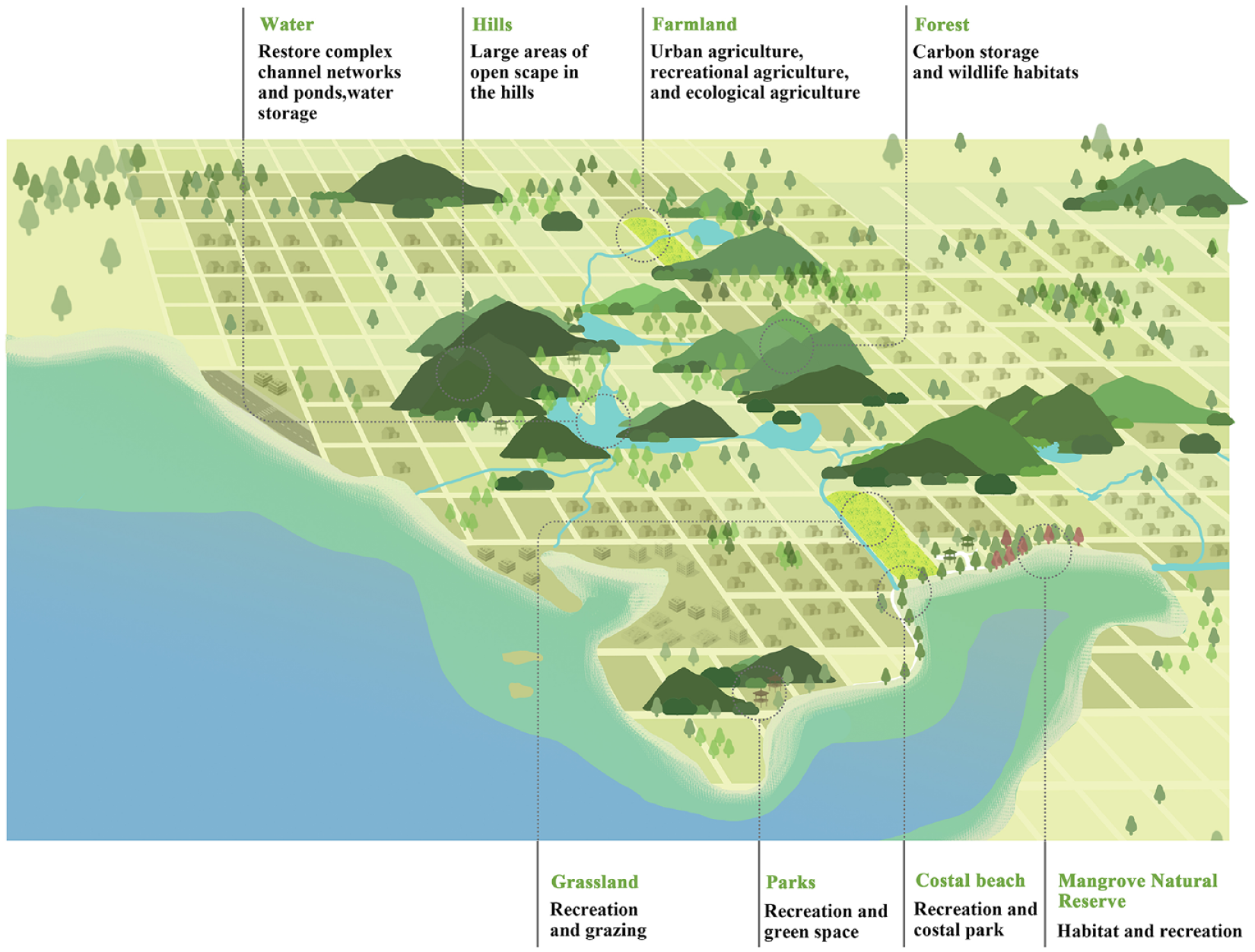
The socio-ecological objectives of ecological restoration in urban area, the case in western costal region of Shenzhen, China.
How to integrate ecological process into urban restoration
The spatial heterogeneity of urban ecosystems serves as a crucial foundation for urban restoration, encompassing the cascade of landscape pattern, ecological processes, ecosystem services, and landscape sustainability (Fu and Wei, 2018). Within highly heterogeneous landscapes, several notable ecological processes characterize urban ecosystems, including flooding and water pollution, heat regulation, wildlife activities, and more.
Ecological degradation in urban areas primarily results from disturbances and land occupation, leading to a decline in biodiversity and ecosystem services (Elmqvist et al., 2015; Ferreira et al., 2018; Geijzendorffer and Roche, 2013). Urban soils, which are sealed and compacted, suffer from erosion and pollution, impairing their capacity to provide ecosystem services (Ferreira et al., 2018; Halecki and Stachura, 2021). The sealing of urban surfaces also increases runoff, reducing the ability of ecosystems to regulate flooding (Maragno et al., 2018), while water pollution contributes to the degradation of aquatic ecosystems (Hogan and Walbridge, 2007). Biodiversity loss and the invasion of non-native species further exacerbate ecological challenges in urban environments (Shochat et al., 2010). To address these issues, restoration targets should include measures to regulate flooding, adapt to the heat island effect, mitigate biodiversity loss, and plan wind corridors and greenspace networks (Callaghan et al., 2019).
Ecosystem degradation occurs at varying speeds and rates (Hobbs and Norton, 1996). Assessing ecosystem services helps bridge the social and ecological impacts (Haase et al., 2014), providing a foundation for understanding ecosystem sustainability and human well-being. Such assessments are crucial for monitoring the restoration of degraded ecosystems (Chapman, 2012; Cord et al., 2017). When setting restoration targets, urban ecosystem restoration involves integrating different social-ecological elements of urban ecosystems and assessing ecosystem services through the monitoring of ecological processes. This approach aims to establish a pathway for understanding the interactions between urban landscape patterns and socio-ecological processes.
Landscape ecology approach for restoration
Landscape ecology offers a comprehensive framework for understanding the ecological and social complexities within cities and can guide restoration initiatives towards creating more sustainable urban environments (Fu and Wei, 2018; Standish et al., 2013). The cascade of landscape pattern -ecological process - ecosystem services - landscape sustainability provides a structured approach to ecological restoration within the landscape ecology framework, encompassing five key steps: urban ecosystem assessment, spatial identification of degraded ecosystems, restoration planning, prioritization of restoration projects, and monitoring and evaluation of restored ecosystems (Figure 2). The restoration process is intricate and requires comprehensive consideration, scientific coordination, and rational integration of various sectors, including urban ecology, target establishment, administrative management, and involvement of stakeholders (Gross and Hoffmann-Riem, 2005; Pickett et al., 2014; Xie et al., 2020). Urban landscape ecology focuses on understanding the patterns, processes, and services of urban landscapes, as well as their dynamic changes, which significantly contribute to studying and improving the integrated system of spatial patterns and ecological and socio-economic processes (Pickett et al., 2008; Wu, 2006). In Figure 2, we provide a brief overview of how urban landscape ecological research deconstructs urban ecological restoration through the lens of restoration measures, restoration objectives, and post-restoration monitoring and evaluation. To achieve the goal of urban ecological restoration, it is crucial to comprehend the feedback between landscape patterns and ecological processes, spatial arrangement of ecological restoration, engineering measures, and the efforts involved in ecological restoration. Understanding these factors is essential for effective urban ecosystem restoration (Gann et al., 2019). Thus, we propose a landscape ecology pathway to guide the restoration of urban ecosystems, which consists of five key steps: ecosystem assessment, identification of ecological restoration spaces, planning, prioritized project layout, and monitoring and evaluation of restoration efforts.
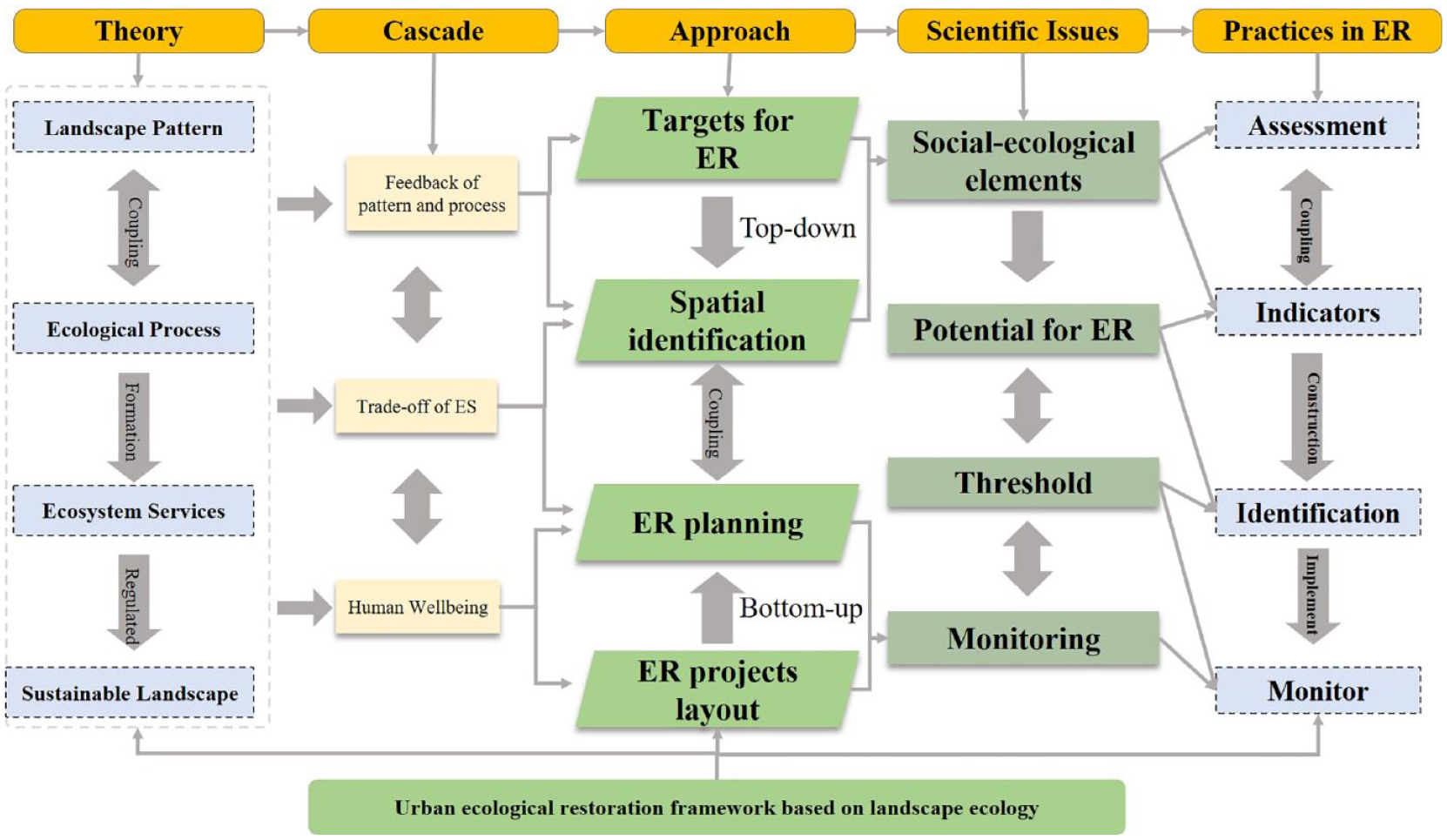
The framework of landscape ecological approach for urban ecological restoration.
Assessing urban ecosystems
Conducting comprehensive assessments of the current state of urban ecosystems is paramount for informing effective management practices and guiding restoration efforts. This entails tasks such as mapping vegetation cover, identifying specific habitats crucial for various species, and evaluating the quality of water and air. It is important to recognize that altered biotic and abiotic conditions pose constraints on the restoration of historic ecosystems (Hobbs and Norton, 1996). Understanding the historical ecological evolution within urban areas assumes a crucial role in the process of ecological restoration, primarily serving as a valuable tool for identifying suitable targets for restoration endeavors (Jackson and Hobbs, 2009). Key targets for urban ecological restoration predominantly encompass the establishment and maintenance of green spaces and networks, the preservation of native species, the protection and restoration of streams and wetlands, effective flood management practices, and the development of parks that cater to both nature conservation and recreational activities (Busbridge et al., 2021).
The urban ecosystem differs significantly from its natural counterpart in terms of both structure and function (Pickett et al., 2008). The primary goals of urban ecological restoration encompass alleviating ecological disturbances, regulating the regional environment, enhancing biodiversity, bolstering the capacity of ecosystem services, and rewilding the urban ecosystem (Pickett et al., 2016; Standish et al., 2013). Various restoration measures, including project layout and identification of ecological processes, can be employed to effectively restore the desired ecological outcomes (Suding, 2011). A crucial step in establishing the objectives of urban ecological restoration is the spatial identification of socio-ecological elements, which serves as the basis for defining restoration objectives, developing measurement tools, and establishing monitoring indicators (Dong et al., 2021, 2022). Parks, green spaces, open squares, and other green infrastructures exhibit characteristics similar to those found in natural ecosystems, albeit with fragmentation, but they are under human management.
To begin with, the assessment of critical ecological spaces within urban ecosystems is established by integrating various indicators such as landscape metrics, ecosystem services, ecological significance, and landscape ecological risk. This comprehensive evaluation allows for a thorough understanding of the current state of urban ecosystems. Subsequently, the ecological space can be categorized into different types, including areas of ecological functional importance, ecologically vulnerable areas, nature reserves, and high-risk ecological zones. This classification is achieved by establishing a ratio that designates the proportion of land dedicated to important ecological spaces, taking into account the intricate relationship between landscape patterns and social-ecological processes. Furthermore, an evaluation is conducted to determine which specific areas of the urban ecosystem are in need of restoration. In order to prioritize restoration efforts, a grading system is employed to classify areas based on their level of importance (Figure 3).
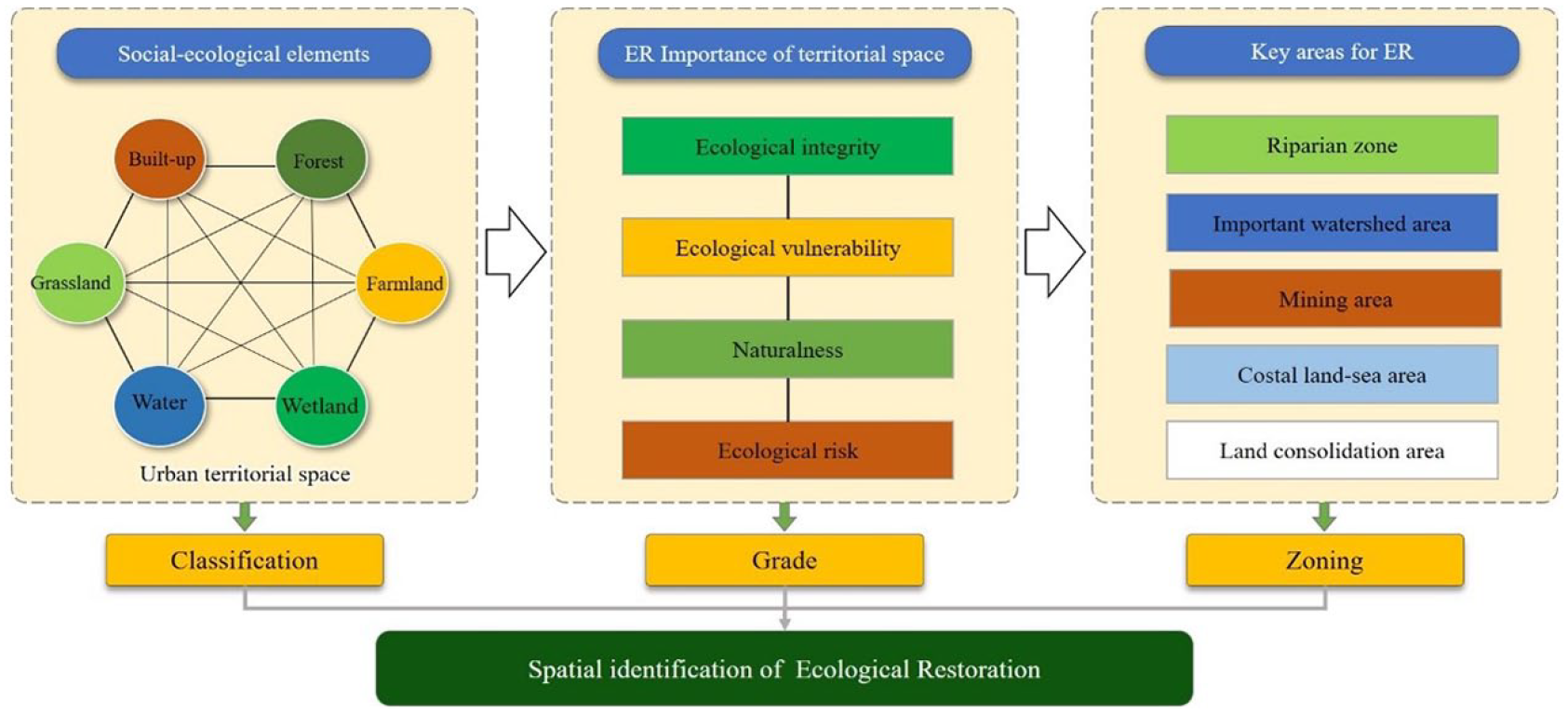
Spatial identification of ecological restoration in highly urbanized areas.
Spatial identifications
Ecological restoration represents a solution-oriented approach that integrates both natural and social understanding to rectify ecological degradation (Gann et al., 2019). A key aspect of successful restoration initiatives is the identification of areas with substantial potential for restoration. These areas may encompass brownfields, derelict buildings, or underutilized spaces that can be transformed into green areas. Consequently, the implementation of a systematic methodology for spatial zoning, classification, and identification of priority areas for ecological restoration becomes crucial in achieving urban ecological restoration objectives. Such an approach allows for strategic allocation of resources and targeted restoration efforts, maximizing the effectiveness and impact of restoration projects.
The process of identifying and prioritizing areas for integrated restoration involves several key steps, as illustrated in Figure 3. Firstly, the social-ecological elements and important ecological spaces are identified. This entails classifying the restored targets into different land use/land cover types, such as urban rivers and lakes, mines, forests, farmlands, greenspaces, wetlands, and grasslands. Landscape pattern analysis is utilized to measure the components and spatial configuration of the landscape. By setting appropriate thresholds for landscape components and optimizing spatial configuration, the proportion of ecological restoration areas can be regulated effectively.
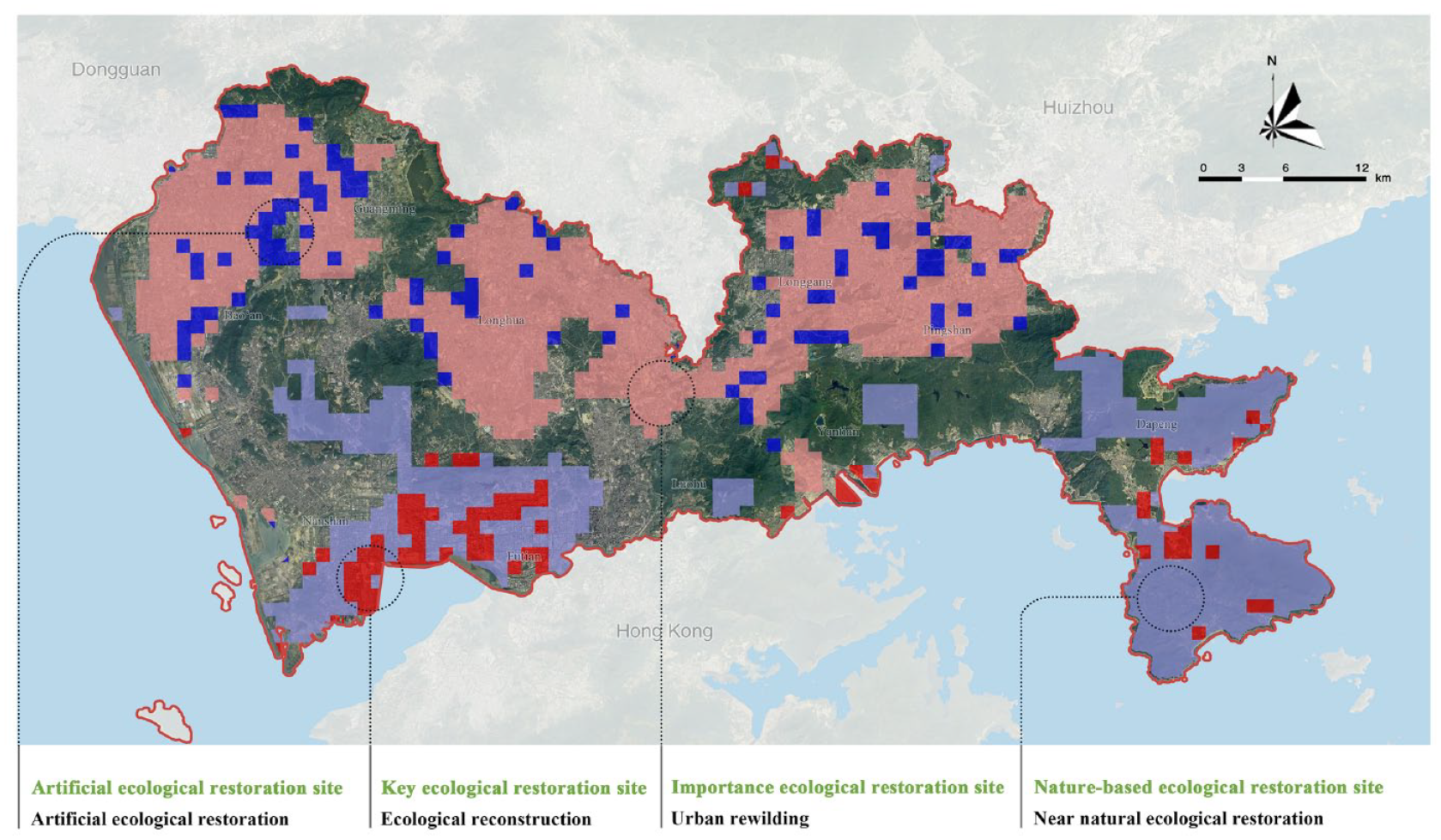
Secondly, ecosystem services assessment is used to evaluate ecosystem quality and identify important ecological spaces through an assessment of ecological risk. Then, a coupling between ecological quality, ecosystem service, ecological risk patterns, and eco-health status can be established. This coupling helps identify areas of ecological function importance, ecosystem vulnerability areas, key nature protection areas, and high-risk landscape ecological areas. It facilitates restoration classification work and determines the priority of restoration areas. Thirdly, the ecological restoration layout is applied to delineate ecological restoration zones and restore important corridor areas, areas for flood regulation, abandoned mining areas, significant coastal areas, land renovation areas, and more. In order to restore and enhance the regional ecological security pattern, the restoration of landscape connectivity is a crucial objective in bridging the gap between urban areas and natural environments. As an example, our focus was on urban restoration efforts in Shenzhen city, where we outlined the allocation of ecological spaces. This involved the implementation of four distinct types of restoration approaches: artificial ecological restoration, ecological reconstruction, urban rewilding, and near-natural ecological restoration. The specific details and spatial arrangement of these restoration strategies can be observed in Figure 4.
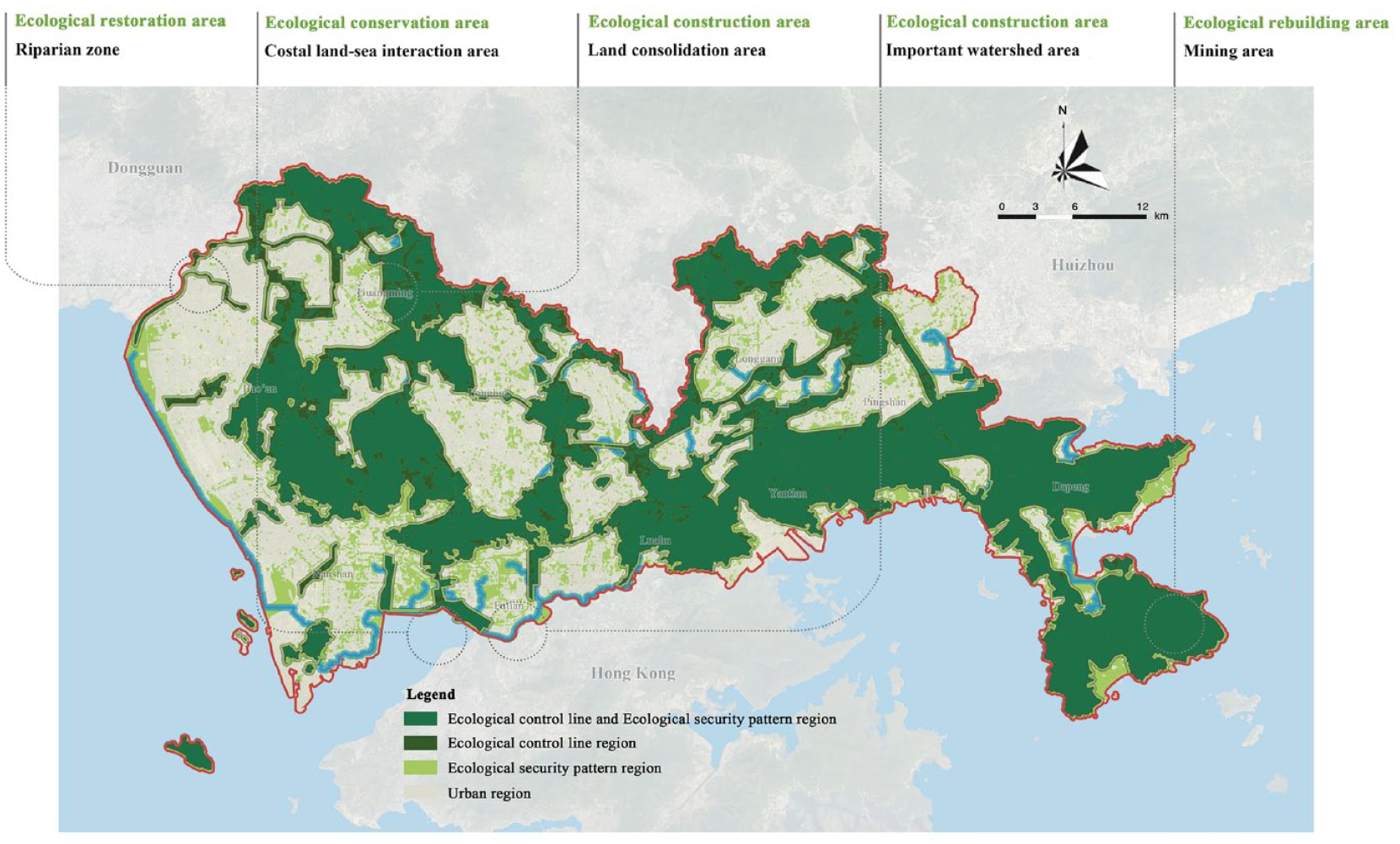
The ecological restoration sites based on the spatial identification in Shenzhen City.
Ecological restoration planning
The objective of ecological restoration has shifted from the mere utilization of natural resources to the broader scope of ecosystem management, aimed at enhancing ecological resilience in the face of uncertain future risks (Yang et al., 2021). Ecosystem management entails a comprehensive approach that involves multiple stakeholders, policymakers, and residents, with a primary focus on conservation and nature-based restoration, while incorporating both artificial restoration and reconstruction techniques (Liu and Zhou, 2021; Wang et al., 2018). To effectively guide ecological restoration efforts, it is crucial to develop a comprehensive management plan that encompasses various aspects of ecosystem restoration, such as land-use strategies, habitat creation initiatives, and invasive species management. This plan should also encompass measures that address human factors, including public participation and education, to ensure the active involvement and support of local communities in the restoration process. By adopting a holistic ecosystem management approach, we can enhance the success and long-term sustainability of ecological restoration endeavors.
In highly urbanized areas, ecological restoration can be approached through both top-down systematic strategies and bottom-up adaptation approaches. Top-down ecological restoration and protection planning focus on ensuring spatial connectivity and constructing ecological security patterns to guide planning strategies (Wang et al., 2021a). Ecological security patterns, as a passive and foundational approach to ecosystem management, determine the spatial location, extent, and identification of key ecological elements such as ecological sources, corridors, and strategic step-stones (Peng et al., 2018). This approach provides a unified and effective spatial framework for ecological protection and restoration, aiming to establish ecological networks that are vital for maintaining regional ecological processes and security, controlling human activities, and improving habitat quality (Wang et al., 2021b). On the other hand, bottom-up adaptation approaches play a crucial role in restoring ecological elements in urban built-up areas (Ramyar et al., 2021). These approaches involve the restoration of various ecological elements specifically designed for highly urbanized areas, such as green spaces, open squares, street trees, and artificial ecological spaces, including rooftop greening spaces. By restoring these artificially constructed green spaces, significant progress can be made in implementing key ecological restoration projects for urban ecological reconstruction (Wang et al., 2021a). To illustrate these concepts, let us consider the case of Shenzhen city, where the government has published an ecological control line and adopted ecological security pattern methods for planning and restoration efforts (Figure 5). This integrated approach combines top-down ecological planning with bottom-up adaptation measures to ensure the effective restoration and protection of urban ecosystems in Shenzhen. By combining both top-down and bottom-up approaches, we can achieve a comprehensive and strategic restoration of urban ecosystems, leading to the creation of more sustainable and resilient cities.
The ecological restoration and conservation planning, the case of Shenzhen.
Prioritizing restoration projects
The layout of ecological restoration projects is a key step in integrated urban ecological restoration. Indicators used to quantify ecosystem restoration are influenced by the complexity and dynamics of urban ecosystems, which makes it difficult to establish quantitative criteria for evaluating the success of ecological restoration. However, there is a lack of monitoring efforts at the regional scale to assess the overall effectiveness of ecological restoration projects (Wortley et al., 2013; Zhai et al., 2022). By considering the direct and indirect effects of ecological restoration and its long-term dynamics, we can gain a better understanding of the effectiveness and sustainability of ecological restoration projects (Kong et al., 2018).
Monitoring and evaluation
Ensuring effective monitoring of restoration efforts and evaluating the success of projects are essential aspects of achieving restoration goals. Metrics that assess ecosystem services, such as improvements in air quality and the creation of habitats, can be utilized to evaluate the effectiveness of restoration practices. Landscape ecology offers spatial analysis tools that help identify relationships among various aspects of ecosystem degradation, particularly long-term vegetation dynamics. Remote sensing-based approaches have gained widespread use in ecological conservation monitoring (Tong et al., 2017).
Monitoring the effects of ecological restoration projects can be conducted across key ecological elements, including water quality, atmospheric quality, soil quality, vegetation quality, and biodiversity (Lei et al., 2016; Smith et al., 2013). While short-term restoration effects are often evaluated based on indicators of economic, ecological, and social benefits, long-term assessments that consider the biophysical characteristics of ecosystems are often overlooked. Although numerous ecological restoration projects have been completed, comprehensive long-term assessments of their outcomes have been lacking. Therefore, indicative remote sensing indicators can be employed to monitor conditions before and after restoration efforts. Typical indicators such as water clarity, enhanced vegetation index, atmospheric quality index, soil moisture index, and remote sensing ecological index can be selected based on the specific restoration measures, enabling the monitoring of both the patterns and processes of ecological restoration projects. Moreover, targeted planning of ecological restoration should be accompanied by post-monitoring of restoration targets at multiple levels and with multiple objectives (Figure 6).
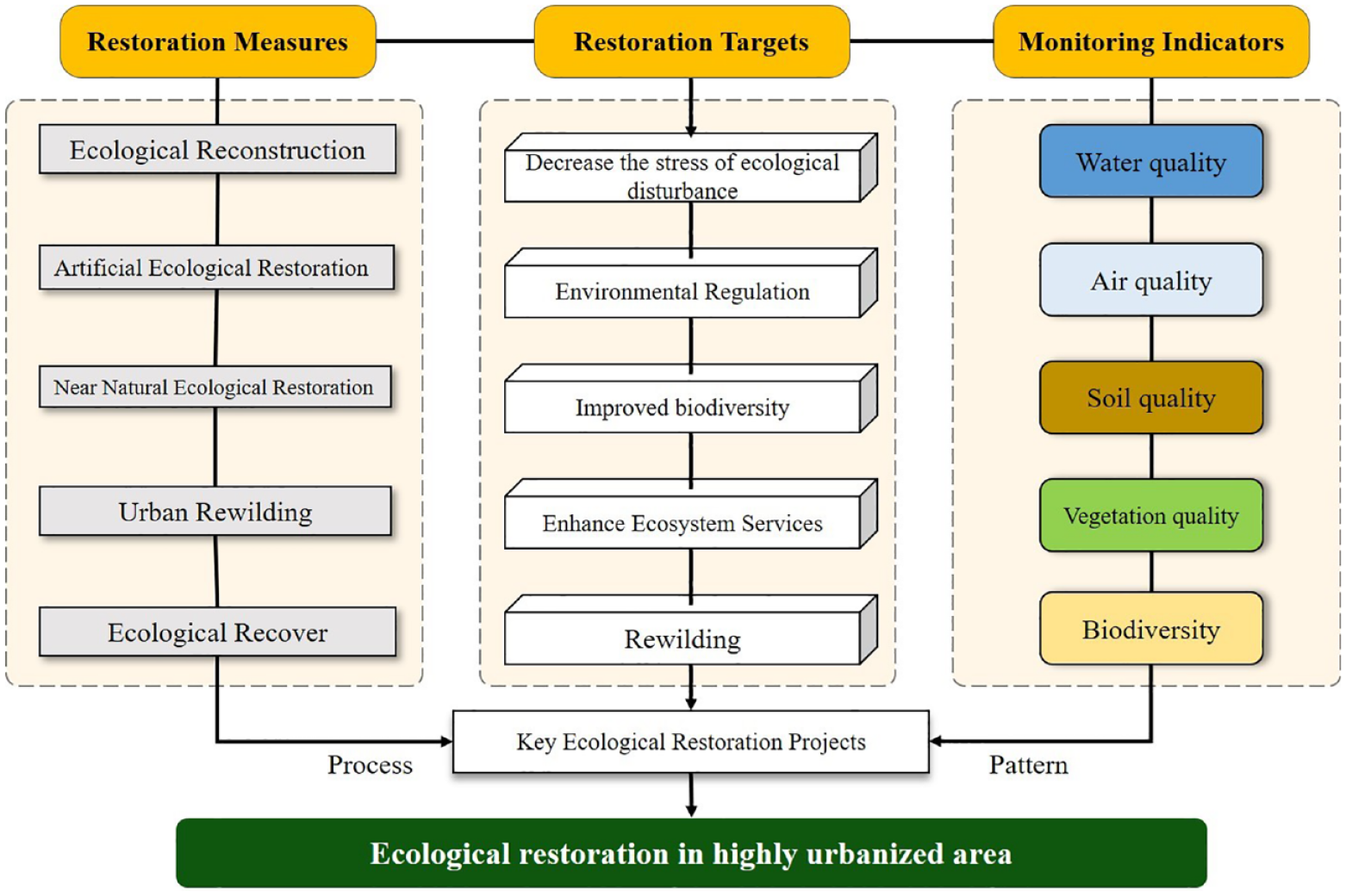
Objectives, measures, and indicators for assessing the nature-based solutions in urban ecological restoration.
Science-practice restoration issues
Nature-based solutions (NbS) have gained recognition as a mainstream approach to promoting sustainable development worldwide (Wang et al., 2021a). These solutions serve as valuable planning tools and actions within various urban contexts. However, their effectiveness in urban areas may fall short of expectations due to a prevalence of abundant yet fragmented research, coupled with a limited number of clearly defined actions in ecosystem restoration (European Commission, 2015). To bridge the gap between scientific knowledge and practical implementation, it is crucial for ecological restoration planning to further consider the interplay between social-ecological elements, the potential for restoration, threshold values, and evaluation criteria. By doing so, innovative approaches can be introduced to enhance the planning of NbS and address existing challenges. This integration of knowledge and practice will help foster improved NbS planning processes, ensuring that they are more effective and aligned with restoration objectives.
The ecological restoration of territorial space in high-intensity urbanized areas holds significant potential for enhancing theoretical and practical approaches in several key aspects: (1) Providing a practical pathway for the restoration of the social-ecological element system: ecological restoration efforts can serve as a tangible and practical means of restoring and revitalizing the interconnected social and ecological elements within urban areas; (2) Evaluating the potential of urban ecological restoration: through comprehensive evaluations, the potential for ecological restoration can be assessed, enabling informed decision-making and strategic planning; (3) Measuring ecological restoration standards and thresholds: by establishing clear standards and thresholds for ecological restoration, it becomes possible to create a holistic framework that combines top-down ecological restoration planning with bottom-up ecological restoration projects. By integrating measures, targets, and monitoring protocols, the planning and implementation of ecological restoration projects can be further refined. This approach facilitates the effective evaluation and management of key restoration projects, as depicted in Figure 6.
Coupling restoration of social-ecological elements
The ecological restoration goals pertaining to crucial social-ecological components are influenced by their spatial attributes. Employing remote sensing data enables the categorization of these social-ecological elements from a broader landscape standpoint. To establish a bottom-up socio-ecological coupling mechanism conducive to the ecological restoration of urban territories, an overarching hierarchical mosaic, founded upon ecological integrity evaluation, can effectively break down the process of socio-ecological restoration into distinct elements. This approach facilitates a comprehensive system restoration across the entire territorial expanse.
Potential for ecosystem restoration
Assessing the potential of urban ecological restoration is an important objective in determining the suitability of ecological restoration layout. It serves as a reference state for implementing artificial measures to restore damaged ecosystems. Ecological restoration of territorial space primarily focuses on repairing damaged ecosystems, as system governance can facilitate the positive succession of the ecosystem. The evaluation of urban ecosystem health plays a critical role in gauging the potential for restoration, as it encompasses the assessment of both the degree of degradation and the inherent resilience of urban ecosystems (Peng et al., 2015). While appraising restoration potential in urban ecosystems presents greater challenges than in natural ecosystems, an analysis of urban ecosystem disturbance and intensity, along with the quantification of resilience, can furnish vital insights into the potential for ecosystem restoration (Yao et al., 2022). The ecological resilience, serving as a pivotal criterion and threshold, assumes significance in evaluating the restoration potential of urban landscapes.
The historical progression of ecosystem services stands as a pivotal point of reference in delineating the concept of ecological restoration. By aiming to mitigate the impact of urbanization while maximizing the capacity of ecosystem services within urban development, there exists a comprehensive potential for urban ecological restoration. This approach serves as a scientific foundation for fostering synergy between ecological restoration and ecosystem management, achieved through the establishment of an interactive relationship between the effects of urbanization and the bundles of ecosystem services (Liu et al., 2022).
Thresholds for successful restoration
To ensure a scientifically rigorous approach to ecological restoration and accurate assessment of its effectiveness, it is essential to establish specific and quantifiable criteria. These criteria include standard indicators for evaluating ecological restoration, such as quantifying ecosystem services, measuring biodiversity, and determining the resilience threshold of ecosystems. When it comes to urban ecological restoration, landscape thresholds influenced by urbanization can serve as crucial benchmarks for addressing social-ecological elements like water quality degradation, heat island effect mitigation, and the provision of ecosystem services. Previous studies have provided valuable insights into these thresholds. For instance, research indicates that water quality degradation in small watersheds due to urbanization typically occurs when urban land cover reaches a range of 33% to 39% (Liu et al., 2013). Similarly, in urban water landscapes, an effective size for mitigating the heat island effect falls within the range of 0.47 to 0.7 ha (Peng et al., 2020). Furthermore, a significant threshold for urbanization’s impact on overall ecosystem services is often observed when population density reaches 229 persons/km2 or GDP reaches 1.07 million yuan/km2 (Peng et al., 2017).
Conclusion
As urbanization continues to advance rapidly, the focus on urban space development has shifted from extensive expansion to more nuanced and resource-efficient connotative development. In this new era, the aim is to achieve maximum urban development while minimizing the consumption of natural resources. Urban ecological restoration has emerged as a nature-based solution with the goal of enhancing the quality of sustainable cities. However, traditional approaches to urban ecological restoration have predominantly concentrated on localized projects, posing challenges in meeting the demands of urban development, particularly in terms of coordinating the impact and requirements of the social-ecological system. Landscape ecology offers a practical pathway for ecological restoration in highly urbanized areas. These pathways serve as a starting point for landscape ecologists dedicated to restoring ecosystems in densely urbanized regions. By establishing clear ecological restoration goals, identifying priority areas for restoration, and implementing strategic ecological restoration planning, this approach aims to create a framework that ensures the well-being and sustainability of the social-ecological system. Such an approach enables comprehensive protection and collaborative restoration efforts, ultimately enhancing the quality of life for urban residents. By adopting a holistic approach that considers both the ecological and social dimensions of urban landscapes, landscape ecology contributes to the development of sustainable and resilient cities.
Footnotes
Declaration of conflicting interests
The author(s) declared no potential conflicts of interest with respect to the research, authorship, and/or publication of this article.
Funding
The author(s) disclosed receipt of the following financial support for the research, authorship, and/or publication of this article: This work was supported by Guangdong Basic and Applied Basic Research Foundation (Grant No.2022A1515010062).
