



Abstract
China’s urbanisation is entering a new era. For decades, its development was measured by quantitative metrics: the percentage of non-agricultural population, the expansion of built-up land, GDP growth, etc. This model, while delivering extraordinary economic transformation, has also generated significant social and environmental costs. To address the challenges, China’s ‘second half’ of urbanisation necessitates a paradigm shift towards a ‘deep’ and ‘people-centred urbanisation’. To decode it, we first need to deconstruct the contested concept of the ‘urban’, linking to the classic definitions of Louis Wirth as well as the contemporary critiques of Neil Brenner, challenging the validity of demographic metrics. In this light, I propose to conceptualise people-centred urbanisation not as the attainment of a demographic benchmark, but as an ongoing, multi-dimensional process. This process should be assessed through indicators of human well-being: social integration, economic security, cultural and psychological belonging, political participation, and environmental justice. Drawing from recent practices and challenges observed in selected megacities, I argue that realising deep and people-centred urbanisation requires a structural reorientation of state policy – from prioritising land and capital to genuinely investing in people. This reorientation must cultivate an urbanism that is not only smart and sustainable, but also just and humane.
Introduction
The narrative of China’s rise is often linked to urban explosion (Wu and Zhang, 2025). In the last four decades, China’s urbanisation rate has risen from just 20% in 1978 to about 67% in 2024, an upgrade that took centuries in the Western countries. The process has lifted hundreds of millions from poverty and constructed a modern infrastructure of emerging megacities. Meanwhile, as the demographic dividend wanes and the social costs of the pro-growth model become apparent, Chinese policymakers and scholars have declared the beginning of a ‘new type of urbanisation’. The central tenet of this new phase is a pivot from a land-centred model to a ‘human-centred’ or ‘people-centred’ one (Wu, 2013). But what does it mean to put ‘people’ at the centre of a process that has, until now, largely prioritised industrial output, fixed asset investment, and land commodification/financialisation?
The crux of the issue lies in the chasm between statistical urbanisation and substantive urbanisation. By statistical urbanisation, I mean the traditional metrics – urban share of population, reclassification of rural areas, expansion of the built environment, and related indicators – which often diverge sharply from changes in people’s livelihoods, labour structure, and economic security (see Potts, 2018). The former is a measure of population movement and land conversion (Brenner, 2014), while the latter reflects the lived reality of urban life – the quality of social relations, the degree of economic security, and the sense of belonging (Randolph and Storper, 2023). Millions of individuals occupy an in-between status: although residing in urban areas – and in some cases formally reclassified as urban through administrative rezoning – they remain excluded from the full spectrum of urban entitlements, including stable employment, social services, and participatory governance. This phenomenon constitutes a form of shallow urbanisation – an incomplete and uneven transition that reproduces precarity, institutional fragmentation, and new forms of social stratification (Randolph and Storper, 2023; Roy, 2011). We need a new framework to reconceptualise and operationalise people-centred urbanisation. It addresses two questions: First, how can we define people-centred urbanisation in a way that moves beyond simplistic demographic and spatial metrics? Second, how to achieve people-centred urbanisation, and what governance efforts are required to overcome the challenges?
To answer the questions, I will first revisit the foundational and critical theories of urbanism. Then I will further examine China’s over-reliance on traditional metrics and propose a multi-dimensional definition of people-centred urbanisation, focusing on indicators of social integration, economic well-being, cultural inclusion, and environmental quality. The third section applies this framework to the realities of some megacities, say Beijing, Shanghai, Guangzhou, Shenzhen, Wuhan, and Chengdu, examining their struggles or successes in navigating the paradigm. The conclusion summarises my findings, arguing that a genuine people-centred urbanisation is not merely a policy adjustment but a fundamental reordering of developmental priorities.
Deconstructing the urban and urbanisation
The definition of the ‘urban’ has always been a contested terrain. For much of the 20th century, urban studies was dominated by the Chicago School and, most notably, Louis Wirth’s (1938) known essay, ‘Urbanism as a Way of Life’ (Wirth, 1938). Wirth proposed an ideal-typical definition of the city based on three variables: population size, density, and social heterogeneity. These characteristics, he argued, produced a distinct urban ethos or culture characterised (Park et al., 1925). For Wirth, to become urban was to undergo a profound psychosocial transition. This framework, however, has been subject to extensive critique (Gans, 1962). Scholars have argued that he overstated the anonymity and social disorganization of city life, ignoring the persistent strength of kinship and neighbourhood ties even in the most urbanised contexts. Furthermore, his model was largely based on the experience of Western, industrial cities and failed to account for the vast diversity of urban forms such as ‘Desakota’ in Asian contexts (McGee, 1998).
Contemporary theorists also challenged the very premise of using categories like ‘urban’ and ‘rural’ as distinct and universal settlement types. Brenner (2014) criticises the UN’s claim of ‘urban era’, arguing against what he terms ‘methodological city-ism’ – the tendency to assume the city is a self-evident, bounded object (Brenner, 2014). Instead, he proposes the concept of ‘planetary urbanisation’, which claims that the processes driving urban development (capital flows, logistics, resource extraction, communication networks) now operate on a global scale, restructuring all territories, including those traditionally considered ‘rural’ or ‘wilderness’ (Brenner, 2019). In this view, urbanisation is no longer about the growth of cities, but about the production of a variegated but functionally integrated spatial fabric.
Brenner’s critique is particularly salient for China. China’s official urbanisation rate is a classic example of a state-centred, demographic metric (Chen et al., 2019). It is primarily calculated based on the proportion of the population residing in administratively designated cities and towns, often supplemented by the share of non-agricultural hukou holders. This approach suffers from two major flaws. First, it is territorially trapped, ignoring the profound urban-rural linkages and the urbanisation of the countryside itself through agriculture, tourism, and digital connectivity. Second, as a statistical abstraction, it concerns little about the quality of life or the ‘way of life’ of the people it counts. An individual can be designated as ‘urban’ overnight when their village is annexed into a city through rezoning, yet their income, social status, and cultural identity may remain unchanged.
It brings us to the core of the Chinese urban paradox. The state’s powerful capacity to rezone land and reclassify populations may produce a rapid, statistically impressive urbanisation that is actually thin, i.e. ‘shallow urbanisation’ – the urbanisation of land or population figures that may outpace the urbanisation of people’s lives and opportunities. To achieve deep urbanisation, we need to turn towards people-centred urbanisation grounded in the realities of people’s everyday lives and subjective feelings.
A framework for people-centred urbanisation
To define and measure a deep and people-centred urbanisation, we must shift the focus from what a city is (in terms of population or land use) to what a city does for its residents. As such, urbanisation should be understood not merely as a change in administrative status or spatial form, but as a dynamic and continuous process centred on enhancing human capabilities and well-being (Wu, 2022). Based on a synthesis of critical urban scholarship and recent policy discourses in China, I propose a five-dimensional framework to interrogate people-centred urbanisation (Figure 1).
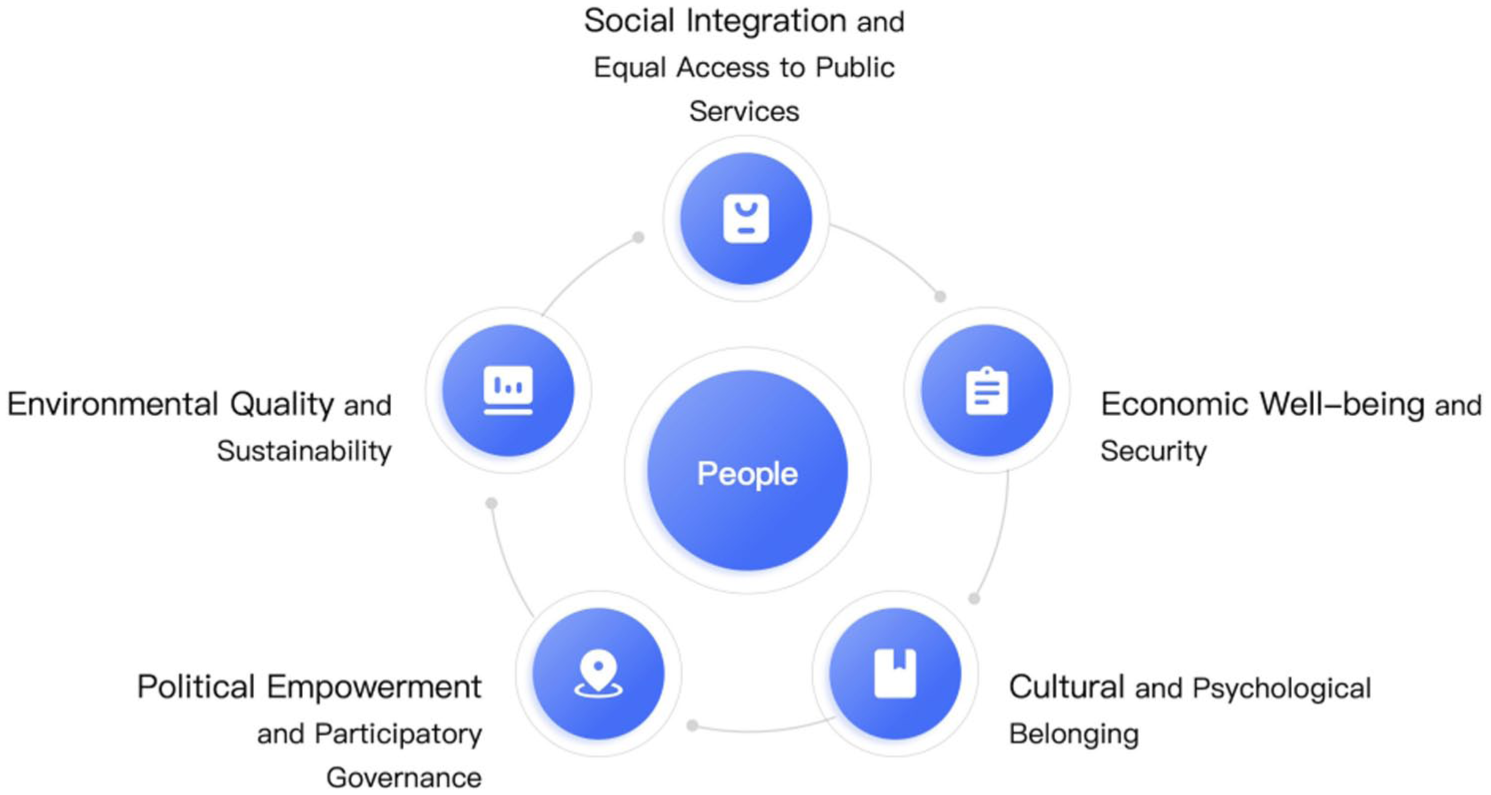
A framework of people-centred urbanisation.
Social integration and equal access to public services
This is arguably the most critical dimension in the Chinese context, say, the reform of the hukou system. The hukou system acts not just as an administrative arrangement but as a statecraft tool of social stratification, regulating both rural migration and migrants’ social integration. Far from being a neutral registry, hukou institutionalises differentiated citizenship, sustaining a regime of insider-outsider division within the Chinese cities (Chan and Buckingham, 2008). In this sense, people-centred urbanisation is structurally foreclosed so long as entitlements to education, healthcare, and housing are tethered to birthplace rather than residency. To move beyond policy reforms aimed at delinking services or improving the portability of benefits, people-centred urbanisation requires confronting how hukou reproduces uneven geographies of mobility, channels labour migration into conditions of precarity, and legitimises the systematic exclusion of rural migrants from full urban citizenship.
Economic well-being and security
Economic security is a prerequisite for long-term settlement and psychological belonging with the city. It involves providing stable employment with fair wages, safe working conditions, and robust social safety nets. For China’s vast rural migrants, who are often concentrated in low-paid, precarious ‘3D’ jobs (dirty, dangerous, and demeaning), it not just means strengthening labour laws and enforcement, it also includes opportunities for skill development and upward mobility, allowing new urbanites to build assets and settle down. Against the contexts of rising tariff battles between China and the US, it is becoming even hard to rural migrants in this vein to maintain their economic well-being and security.
Cultural and psychological belonging
A people-centred city fosters a sense of belonging and inclusive identity. Subjective well-being, measured through surveys on life satisfaction, community trust, and mental health – is a vital, albeit often overlooked, indicator of successful urbanisation. Empirical studies indicate that subjective feelings matter to the stay or return of rural migrants in large cities (Clark et al., 2017; Li and Wu, 2013; Zhu et al., 2021). This includes providing accessible public spaces for recreation and social interaction, supporting diverse cultural activities that reflect the heritage of both local and rural migrants, and combating the stigmatisation of newcomers.
Political empowerment and participatory governance
A city for people must also be a city by people. Fostering a sense of ownership and agency is crucial for turning a transient population into a committed citizenry. As such, all residents, regardless of their hukou status, should have routes to participate in the decisions that affect their lives. It covers various domains such as community planning, budget hearings, and representation in local governance process, through which the needs and aspirations of residents are translated into urban policy.
Environmental quality and sustainability
Last but not the least, human well-being is intrinsically linked to the sustain of human settlement environment. A people-centred city is a sustainable and resilient city. Its key indicators include access to clean air and water, the provision of green spaces and parks, efficient and affordable public transportation, and the promotion of a circular economy. The benefits of urban life are nullified if they come at the cost of severe environmental degradation and public health crises. We should create a liveable, not just a productive, city.
These five dimensions are interconnected and mutually reinforcing. For instance, hukou reform and social integration cannot be disentangled from economic security, as selected studies show that lack of stable employment and social protection prevents migrants from accessing healthcare and education even when policy reforms nominally allow it (Chan and Buckingham, 2008; Wu and Treiman, 2004). Economic security, in turn, is a prerequisite for cultural and psychological belonging, since precarious labour and insecure housing foster social marginalisation and weaken migrants’ sense of attachment to the city (Li and Wu, 2013). In the same vein, cultural belonging and political empowerment are mutually reinforcing. Research on ‘insurgent citizenship’ demonstrates that migrants’ collective claims for recognition often emerge from everyday practices of community-making and struggles over local governance. Environmental quality threads through all these dimensions, as migrant workers disproportionately reside in polluted industrial peripheries and informal settlements, where poor air quality and inadequate infrastructure exacerbate health inequalities and deepen social exclusion (Zhu et al., 2021). As such, the right to clean air, safe water, and accessible green space is inseparable from the broader ‘right to the city’ (Harvey, 2012). Taken together, these interconnections highlight that ‘people-centred urbanisation’ in China is not simply a technocratic project of service equalisation but a deeper restructuring of institutional hierarchies embedded in hukou, labour markets, and urban governance. Migrants must be recognised not as transient labouring bodies but as co-producers of urban space (Roy, 2011). The five dimensions thus provide a holistic framework for evaluating urbanisation not as a demographic shift but as a struggle over differentiated citizenship, social justice, and the production of inclusive urban futures.
The urban arena: Challenges and governances of China’s megacities
China’s megacities, especially those with more than 5 million population, are laboratories of urban governance. In the last decade, there are rising new governance efforts in these cities to turn towards people-centred urbanisation, thus an examination of which may exemplify the challenges and governance practices emerging in the pursuit of a deep yet inclusive urban future.
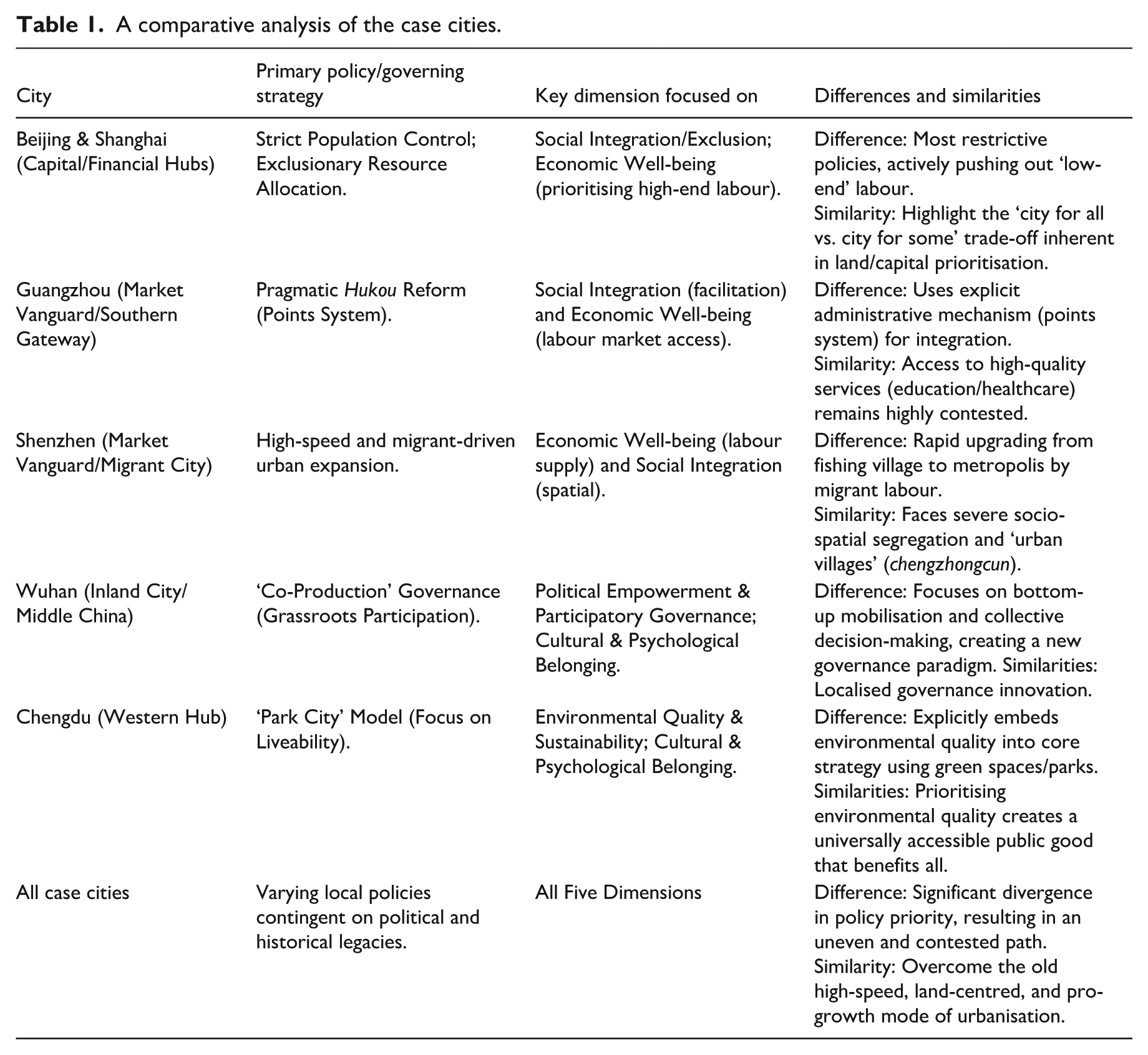
As China’s capital and financial hub, Beijing and Shanghai have long been magnets for rural migrants (Chan, 2009). However, they also exemplify the challenges of urbanisation. Faced with immense population pressure and ‘big city disease’, both cities have implemented strict policies to control the total populations, which is primarily achieved by tightening hukou regulations and raising the bar for access to public services, pushing out low-income migrants who are deemed ‘low-end’. These policies, however, have also exacerbated social segregation and created hardship for the everyday life of general urbanites, as the cost of living and labour has been largely increased (Li et al., 2020). The struggle in these top-tier cities highlights the fundamental political and economic trade-offs at the heart of the people-centred agenda: cities for all, or only for some (Figure 2).
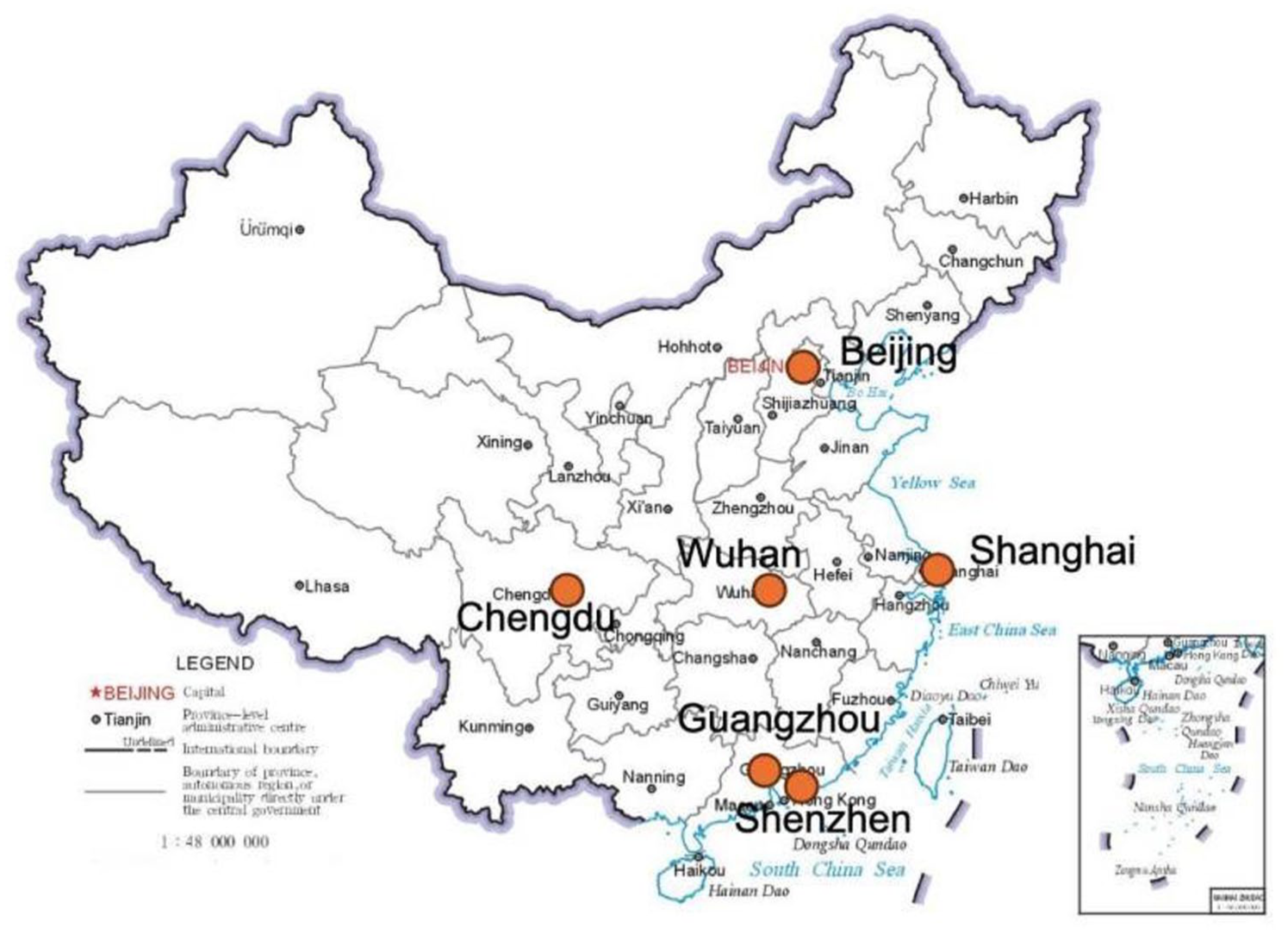
The location of six case cities, China.
In the south, Guangzhou and Shenzhen – the vanguards of market reform and open door, have been more open to rural migrants (Figure 3). Shenzhen, for instance, which in just four decades transformed from a fishing village into a metropolis of over 17 million people, is de facto built by migrants (Shin and Lee, 2017). However, it also faces socio-spatial segregation, with many rural migrants confined to ‘urban villages’ (chengzhongcun), whilst more affluent residents accumulate in expensive commodity housing estates (Hao et al., 2012; Shin, 2014). Guangzhou has used a points system to allow rural migrants to turn to be urbanites, but the access to high-quality education and healthcare remains highly contested (Guo, 2024). These cities demonstrate that while pragmatic policies can facilitate social integration, achieving deeper social and cultural integration requires more proactive interventions in housing, community building, and cultural recognition.
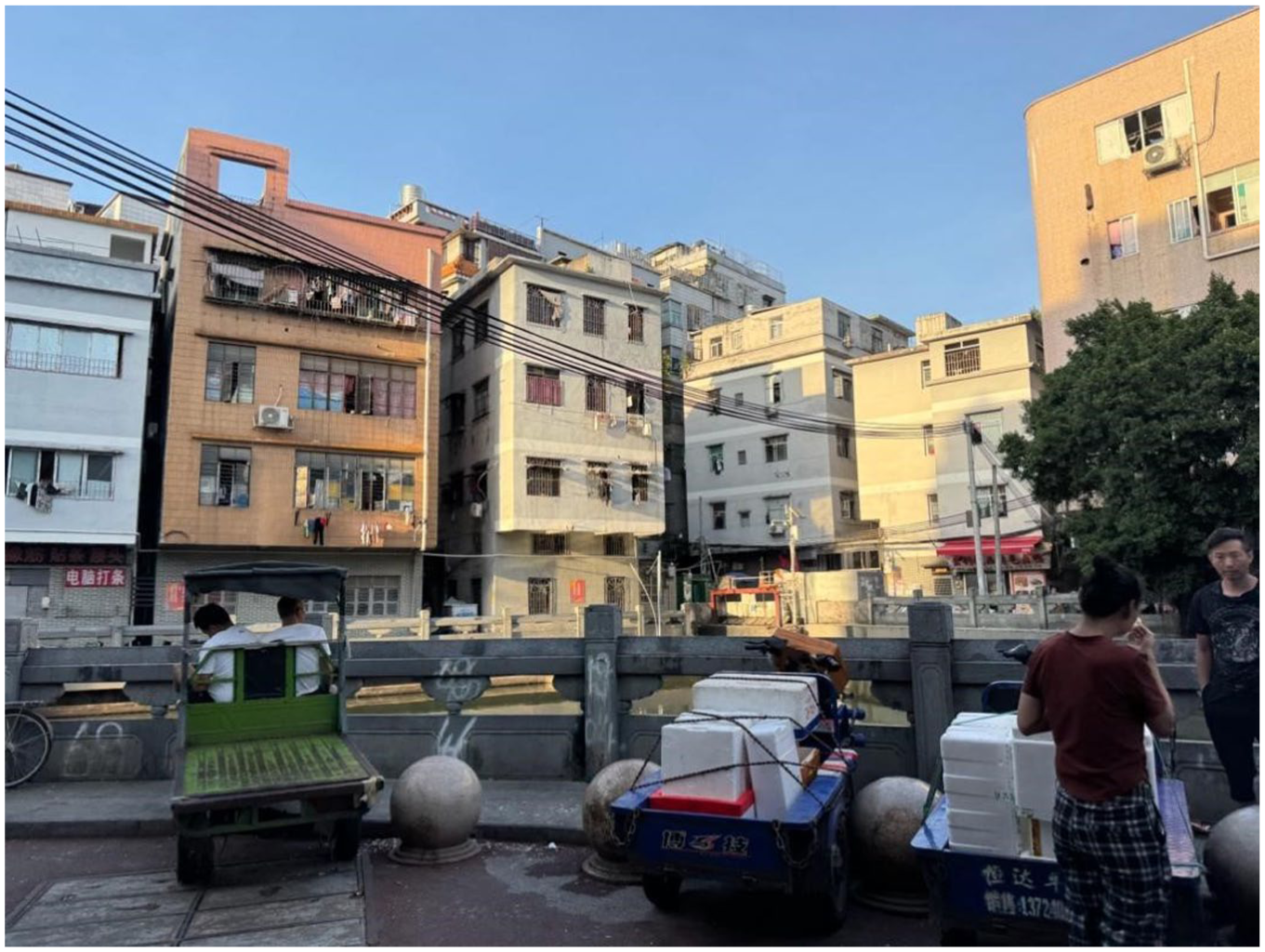
The typical landscape of chengzhongcun, Haizhu District, Guangzhou.
The inland cities of Wuhan and Chengdu offer new routes (Figure 4). Wuhan – the capital city of middle China, particularly after the COVID-19 pandemic, has adopted a ‘co‑production’ approach to govern neighbourhoods, integrating participatory planning, construction, and management into urban governance. Under the leadership of the CCP, street offices, neighbourhood committees, social workers, volunteers, and property managers at the grassroots level, mobilise residents by targeting upon small yet local needs (Wu and Zhang, 2025). Through such mechanisms as collective decision‑making, voluntary labour, and in‑kind donations, projects like micro‑redevelopment, shared‑space creation, and community kitchens have been implemented. This new model has not only strengthened residents’ sense of belonging or satisfaction, it also produced a new governance paradigm. Chengdu, the key megacity of Western China, has gained recognition for its ‘Park City’ model, explicitly embedding environmental quality and liveability into its core strategy (Zhang et al., 2022). By weaving a massive network of greenways and parks into the urban fabric, Chengdu is attempting to prioritise the well-being of all citizens (Zhang et al., 2022).
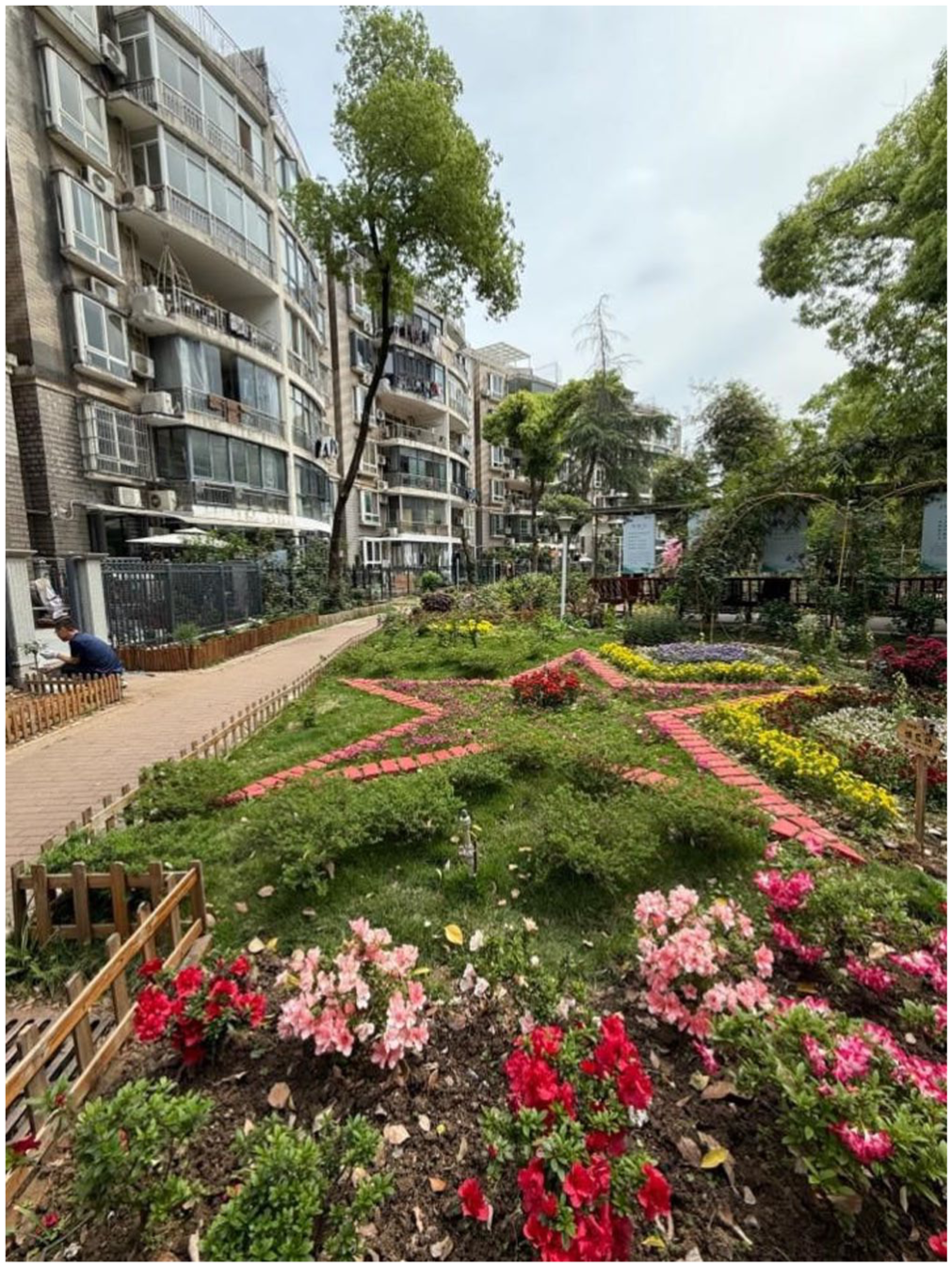
A co-production garden within Huajin Community, Wuhan.
Above all, there is no single path to people-centred urbanisation (Table 1). The process is highly contingent on local economic structures, political priorities, and historical legacies. Nevertheless, the overcome of the inertia of the land-centred pro-growth urbanisation model is the prerequisite for building more inclusive and liveable cities.
A comparative analysis of the case cities.
Conclusion: From urbanising land to urbanising lives
The key challenge for China in the 21st century is to manage the social and political dimensions of its urban transformation. The era of pure new spatial construction and expansion is over. The ‘second half’ of urbanisation must be about quality over quantity, and people over projects. This requires a move from a statistically-defined urbanisation to a deep, people-centred one. Moreover, it should be measured as a process, rather than just an index of urbanisation.
To do so, I propose a multi-dimensional framework for this new paradigm. A people-centred city is one that guarantees social integration through equal access to services, provides economic security and opportunity, fosters a sense of cultural and psychological belonging, empowers residents through participation, and ensures a healthy and sustainable environment. It is a city measured not by its skyline, but by the well-being of its inhabitants.
The path forward is fraught with difficulty. It demands tackling the vested interests tied to the land-based financial model and reforming the deeply entrenched hukou system. It requires a shift in the mindset of urban planners and administrators, from that of master builders to that of community facilitators. As the experiences of cities like Beijing, Shenzhen, and Chengdu show, progress will be uneven and contested.
However, the pursuit of people-centred urbanisation is not merely a normative ideal; it is an economic and political imperative. A society stratified by an urban-apartheid system is inherently unstable. A workforce that is insecure and alienated is ultimately unproductive. And an environment that is degraded cannot sustain long-term prosperity. By placing its people at the centre of urban vision, China has the opportunity not only to correct the imbalances of its recent history, but also to pioneer a new, more sustainable, and equitable model of urbanism for the world. The great task ahead is to turn the rhetoric of ‘people-centred’ into a living reality, for the hundreds of millions who call cities home.
These findings thus indicate that the future of urbanism across different contexts hinges on a theoretical shift from measuring quantitative expansion to assessing ‘deep urbanisation’, a multi-dimensional process centred on human capability and well-being. The primary policy implication is that the economic and political imperative to overcome institutional inertia, particularly systems that institutionalise exclusion and stratification, as an insecure, alienated workforce is ultimately unproductive and unstable. For both urban planning and governance, this transition requires a fundamental shift of the statecraft from ‘master builders’ to ‘community facilitators’, prioritising genuine investment in people over land and capital.
Footnotes

Ethical considerations
The research was undertaken in accordance with requirements relating to research ethics of China’s National Office for Philosophy and Social Sciences (Project Number: 24&ZD149), and ethical guidelines established by the Ethics Committee, Wuhan University.
Consent to participate
Not applicable. No personal data was used for this manuscript, and all interviews are fully anonymised. Informed consent was obtained verbally before participation from the participants.
Consent for publication
Not applicable. No personal data was used for this manuscript, and all interviews are fully anonymised. Informed consent was obtained verbally before participation from the participants.
Funding
The author disclosed receipt of the following financial support for the research, authorship, and/or publication of this article: This work is funded by the ‘The Major Program of the National Social Science Fund ‘Research on the Theory and Path of Spatial Governance Modernization in Mega-Cities with Chinese Characteristics’’ (Project Number: 24&ZD149)’.
Declaration of conflicting interests
The author declared no potential conflicts of interest with respect to the research, authorship, and/or publication of this article.
Data availability statement
The data used in this study are confidential.
Trial registration number/date
Not applicable. This study did not involve a clinical trial.