



Abstract
Urban villages are an important element of the urban environment in China. Often characterized by high densities, illegal construction and poor quality, the key issue of urban villages for city planners and officials is whether to try to comprehensively redevelop them or opt for gradual upgrading. This paper provides an evaluation of the comprehensive redevelopment of Pazhou Village in Guangzhou, China, after a decade and shows that under certain important conditions including good co-operation between governments, developers and village collectives, land use intensification and participatory planning, it is possible for comprehensive redevelopment to benefit the original villagers. The redevelopment was initiated by the local state, and the case study examines the dynamic interactions between the key actors and their respective roles in ensuring the success of the development. Using the theory of state entrepreneurialism, the findings highlight the leading yet subtle role of the state in Chinese cities.
Keywords
Introduction
In recent years there has been considerable debate and discussion about the best ways to improve living standards and housing condition in ‘urban villages’ (chengzhongcun). These are an unusual form of urban development which have become common in China in recent decades. ‘Urban villages’ are traditional village settlements which have been overtaken by urban development and incorporated in the city. They are often characterized by high residential densities, large numbers of migrant workers, conversion of older housing into rooms for rent, the construction of additional floors, haphazard or non-existent planning and various forms of illegal or semi-legal construction. Public services are often lacking, education and health levels are poor, and villages usually operate outside formal sectors.
The urban villages exist as ‘islands’ within the confines of more standard forms of urban development. Li et al. (2021a) note that they originated ‘from the dual track land ownership system in China’ in which urban land generally belongs to the state but rural land belongs to village collectives which are ‘governed by different ownership, planning and land management regulations’. As a result of the dual land ownership system, although villages are compensated for the loss of their farmland when it is acquired, they generally retain ownership rights over the housing plots (zhaijidi) of their village settlements (Wu and Wang, 2017). The villagers generally lose their traditional livelihoods and, because their labour market skills are limited, they move into small-scale landlordism, renting to migrant workers.
As a result, urban villages frequently pose a problem for urban planners keen to improve housing and general living conditions as well as trying to provide better educational, health and other social facilities to both permanent residents and migrant workers (Li et al., 2018; Song et al., 2008). They also present an opportunity for the local government to launch local ‘growth machines’, working with local communities, developers and bankers, to transform and upgrade the urban environment and increase its value. This type of ‘state entrepreneurialism’ is common in China (Wu, 2018; Wu et al., 2021).
The options range from doing nothing, or through small-scale renovation (or micro-rehabilitation, weigaizao) to large-scale demolition, clearance and reconstruction (dachai dajian) (Wu and Wang, 2017). But the different options have costs and benefits. One of the costs of the large-scale clearance and redevelopment is often thought to be dispossession and gentrification, as the original residents are displaced to new housing on the urban periphery if they are rehoused at all and new residents and businesses come in to occupy the new, and inevitably, more expensive property (Li and Li, 2011; Shin, 2015). Redevelopment-led displacement is widespread in China. Consequently, it is often recently argued that small-scale or micro-renovation is better than large-scale clearance and redevelopment (Li et al., 2019, 2021b; Wang et al., 2021).
This outcome is not always inevitable. The case study examined in this paper of the redevelopment of Pazhou Village, a settlement of 18,000 people on the banks of the Pearl River in Guangzhou, Guangdong province of China, suggests that it is possible, in specific circumstances (land use intensification, a booming property market and locational advantage), with balanced state (government) – market (developer) – civic society (village collective) negotiation, participatory planning and effective implementation, to ensure large-scale clearance and redevelopment of existing areas, a significant upgrading of housing standards and conditions, return of most existing property owners (but not tenants), the creation of large areas of urban public space, the provision of public health and education and other social facilities, a significant increase in overall village income and the development of the village collectives’ governance capacity. This raises the important question of what arrangements, conditions and processes are necessary to assist this beneficial outcome (Li et al., 2020; Lin et al., 2015) and the roles, relationships and negotiations between the key actors.
Through the case study, this paper examines the decision-making and negotiation process in the Pazhou Village redevelopment. The paper concludes that this type of large-scale redevelopment can be successful and can avoid large-scale displacement, but only under certain strict conditions and agreements between the village owner residents, the developer and local governments. The lessons and experiences could be of use for other cities in China or in other rapidly urbanizing countries (Nguyen and Kim, 2020). The structure of the paper is as follows. The following section examines the theory of state entrepreneurialism and its relevance for urban village redevelopment and looks at the role of different actors in the redevelopment process. The next section outlines the methodology employed in the study and examines the background to Pazhou Village and its dynamic redevelopment process. This is followed by an examination of the dynamic relationships between the state, developers and the local community within the context of a state-initiated project. The next section assesses the outcome of the redevelopment in terms of land use change and socioeconomic restructuring and the relationships between the key actors. There is a short conclusion reflecting on the conditions for success of the redevelopment and the limitations of the study.
State entrepreneurialism, local actors and the urban (re-)development process
The massive scale and speed of the urbanization and urban redevelopment process in China in the last 40 years has given rise to an extensive literature (for instance, Hamnett, 2020). It is now widely accepted that, unlike in most Western contexts, and given the leading role of the party in China, the urban development process is primarily state-led, partly as a result of local government desire to increase revenue from the sale of state-owned urban land, partly as a result of the competition between cities and partly from the desire for local government officials to be seen to successfully promote city growth (Chien and Woodworth, 2018). State entrepreneurialism in China means that the state often proactively operates through the market and uses market instruments as a tool rather than being subservient to the market (Wu, 2018). This differs from other forms of governmentality, particularly those in the West, where the market often plays a leading role.
Indeed, Tomba (2017) argues that urban redevelopment is now part of a wider Chinese policy for social transformation. Similarly, Shin et al. (2020) suggest that an entrepreneurial local state has emerged in China which is distinct from that of American urban growth machines (Molotch, 1976), where the private sector is dominant. The Chinese urban growth machine has distinctive Chinese institutional characteristics – specifically local government-led, top-down land use planning and land finance-driven (Lai and Tang, 2016, Wu, 2023; Wu et al., 2021). Wu (2018, 2023) terms this form of state-led urban development ‘state entrepreneurialism’. While large developers and markets are widely used, they are often tools for state-defined development goals, and many developers are even state-owned. In the context of state entrepreneurialism, the state is usually the lead actor who initiates the process and without the agreement and approval of the state, urban (re-) development is unlikely to occur.
The pressure to redevelop urban villages is part of this growth machine. But the special land ownership characteristics of urban villages, where the housing land is owned by the villagers who have to agree to redevelopment, mean that it is possible, given the right combination of circumstances, for villagers to benefit from redevelopment, gaining decent housing, income and an improved environment (Tan et al., 2019). But the relationship between the parties is crucial, as Hin and Xin (2011) and Guo et al. (2017) point out, and power inequalities can have an important role in shaping outcomes. Wu (2018) notes the special nature of ‘sanjiu’ redevelopment in Guangdong province where there are many urban villages, and the local government gave villagers development rights in order to encourage development. They were able to negotiate with developers but within a framework of land use plans and land use densities set by the local government. Wu (2018) notes that: ‘The formation of “sanjiu” policies involves policy co-ordination between central and local government, exemption from central government policy, bargaining between local state and villagers and a coalition between villagers and developers as development agencies. . . Behind the scenes there is intense bargaining and negotiation between the state, the market and society’ (2018: 1387–1388). But knowledge, finance and power relationships between the parties are generally highly unequal, and while the state and developers may have clear objectives, villagers may be disorganized and have unclear or competing objectives. Our study highlights these relationships and shows that when villagers can organize around a common set of objectives, it is possible for them to negotiate successfully and gain beneficial outcomes.
But, as we shall show, if villagers are to benefit this is likely to mean major land use intensification to permit developers to increase the amount of saleable and rentable space to generate acceptable profits. Where land use transformation and intensification are not possible, developers are unlikely to be able to generate the profits necessary to redevelop village housing and provide other facilities. We also argue that it is necessary for a high level of trust to exist, or to be created, between the villagers and the developers, in order for them to work constructively together and with local government. In situations where such trust does not exist it is difficult for the parties to agree variations to the plans or to get the necessary flexibility from government regarding increases in density and other changes to ensure that the development works (Zhang et al., 2020).
The case study: Pazhou Village and its redevelopment history
The case and the analysis methodology
The case examined in this paper is of Pazhou, an existing, well-located, redeveloped village on the Pearl River, in Guangzhou, Guangdong province (Figure 1). It is particularly interesting because its early redevelopment process was discussed by Shin (2013) in the context of a wider discussion of property rights activism in China and we can analyse and evaluate the longer-term changes in detail. Against the existing discourse on the state entrepreneurialism in China, we chose to analyse the stakeholder interests and their behaviours in the planning and negotiation process in Pazhou’s redevelopment, and to assess the physical, economic and social outcomes of the redevelopment, thus highlighting the underlying requirements for the success of the redevelopment, in terms of co-operation and trust between government, developers and local community.
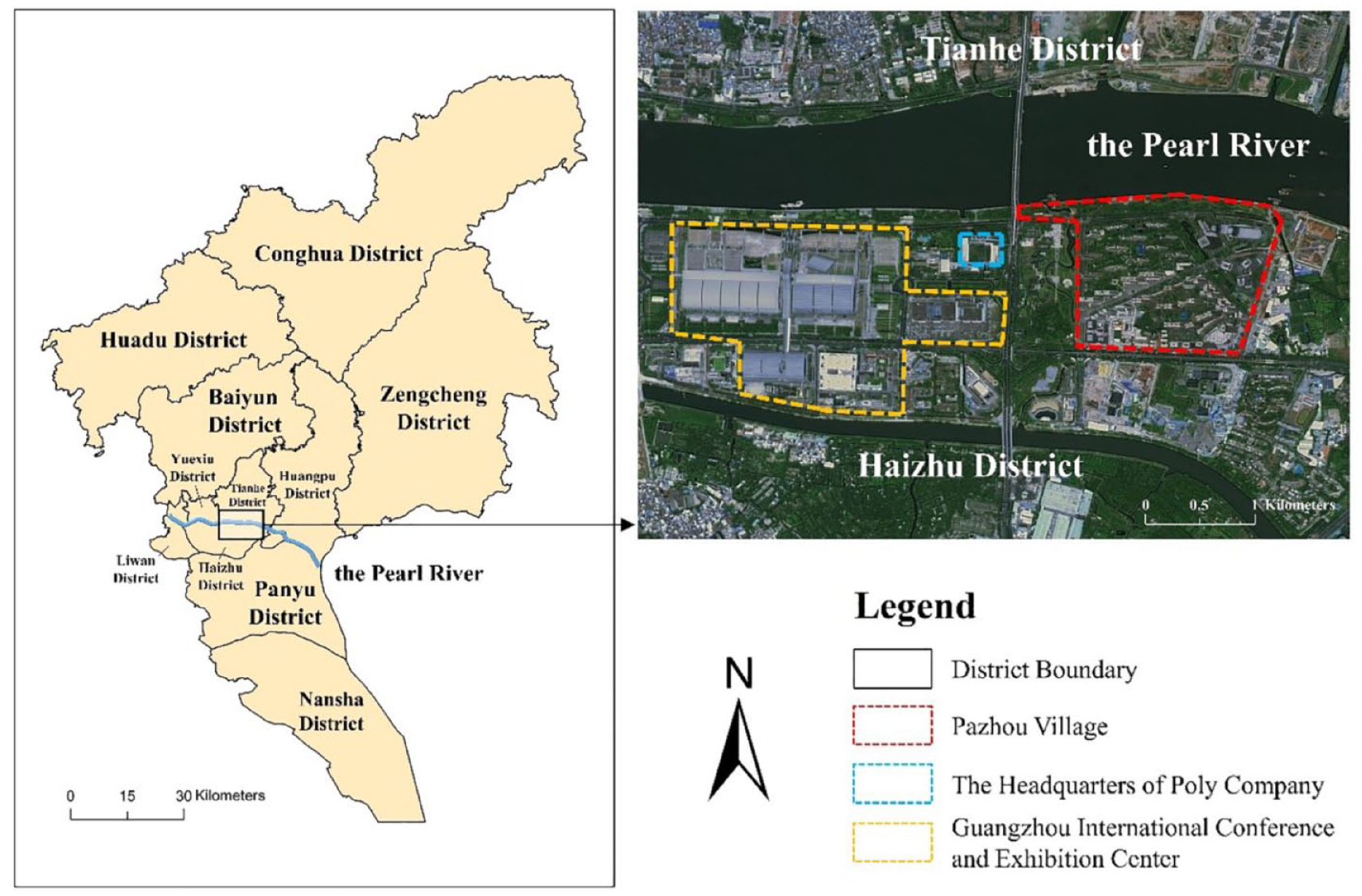
The location of Pazhou Village in Guangzhou, Guangdong Province, China.
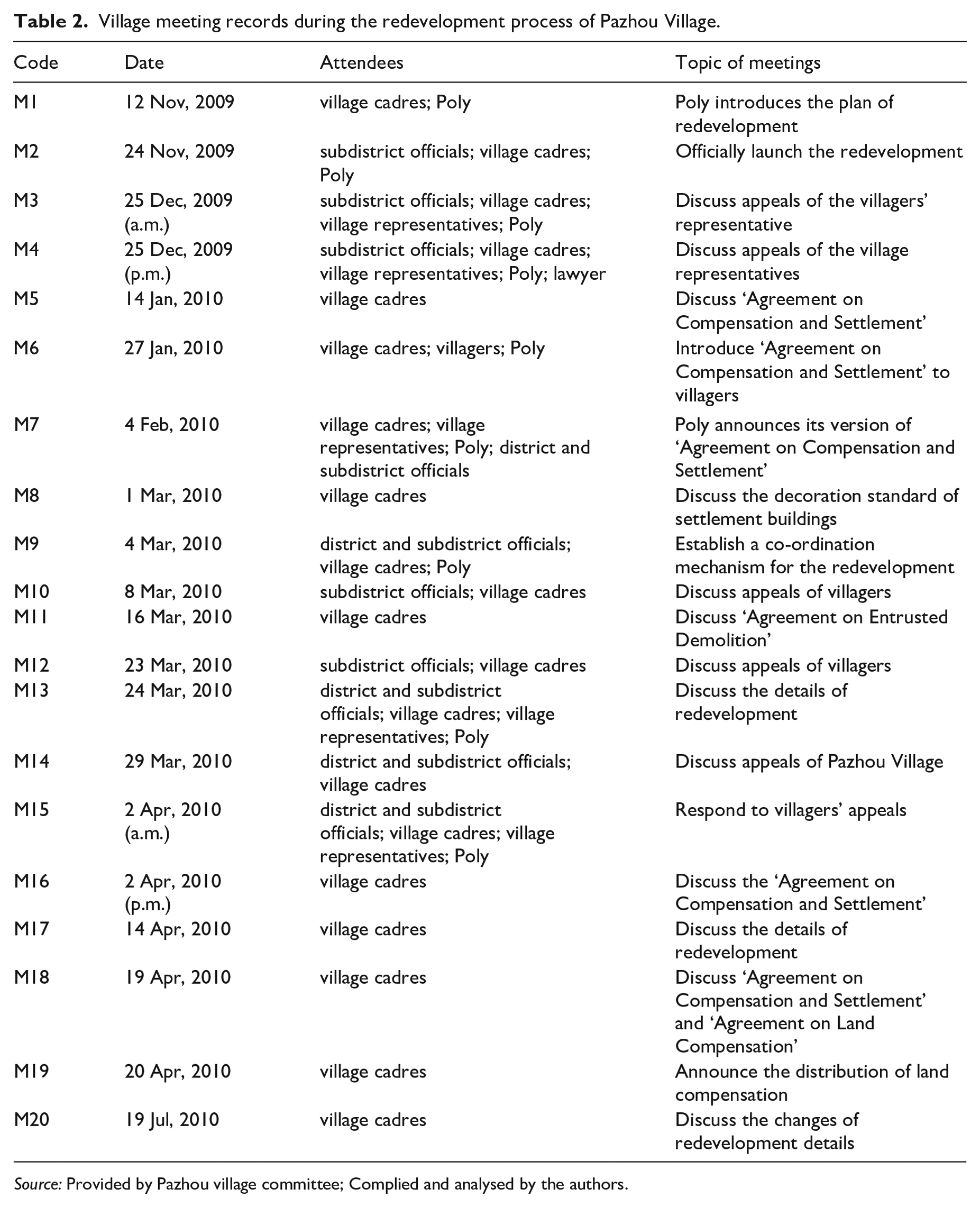
The analyses are based on four field trips and intensive interviews with local villagers, tenants, village cadres, developers, planners and district and municipal officials between 2019 and 2021. We employed a snowball sampling method to conduct in-depth interviews. The interviewees were representative of the key stakeholders in the Pazhou Village redevelopment process, as shown in Table 1 of the Appendix. The time for each interview was between 20 and 40 minutes. After obtaining consent from the interviewees, we recorded the interview contents for further analyses. We also collected various archives, which include planning documents from planning institutes and government regulations from public sources. One particularly valuable set of first-hand data were the 20 village meeting records during the key period (November 2009 – July 2010) of the redevelopment (see Table 2 in the Appendix).
To collect opinions from the tenants, we also undertook a follow-up questionnaire survey of 54 rental tenants in Pazhou Village pre redevelopment. We invited adult tenants who lived in Pazhou before the redevelopment to complete questionnaires. To ensure representativeness, we employed a combination of cluster random sampling and quota sampling to select the respondents. Though the data are from different sources, the information reported in this study have been cross-validated and present a consistent picture of the redevelopment process.
Pazhou in the 1980s and 1990s: The emergence of an informal property market
After the reform and opening-up in 1978, Pazhou began to develop light manufacturing industry. At that time, the village had land but no money, so villagers attracted investors to build factories on their land and collected rent from the investors. At this stage the villagers began to ‘recognize the value of their lands’ (Interview V1). However, the rental market was rather informal as the rural land property rights were not clearly defined in 1980s. The contracts between the village collective and outside investors were ‘just verbal promises’ and not protected by law de facto (Interviews O1, C1 and V2).
Beginning in 1990, according to the municipality’s policy, each original village household was assigned 20 square meters per person as a housing plot (zhaijidi) which villagers could use to build houses legally. Thus, a family of five would get 100 square meters land area for building. After 1991, villagers started building houses-for-rent, because the development of factories in the 1980s brought many migrants who created a demand for housing. By village consensus and following regulations, such buildings were limited to three and a half floors, and generally 60, 80 or 100 square meters per floor, ‘which were considered as licensed construction area’ (Interviews O2, P1 and C2). Villagers often lived on one floor and rented the others. This was the beginning of the intensification process and how the villagers were involved in the property market.
There were some idle housing plots for villagers and outside migrants were permitted to bid. ‘Anyone who wanted to build houses or factories could bid on it’ (Interview V2). However, according to the Constitution, rural land ownership belongs to the village collectives. Outside migrants could only bid for the land use rights for a certain period and could not have ownership. The ambiguous land rights (owned by the village collective but used by individual village households and outside migrants) and development status (mixed residential, commercial, manufacturing, and agricultural uses) caused many problems for the village and its subsequent redevelopment (Interviews C1, C2 and V2).
Local communities are not always united. In Pazhou, the constitution of the village was complicated. Originally, there were more than 5,000 local villagers, including 1,700 original residents with urban hukou. The latter were originally villagers but transferred to urban residents due to land expropriation or because they worked for state-owned enterprises and governmental agencies. In 2002, 3,025 shareholders of the Pazhou Village’s collective assets were identified, after excluding those with urban hukou. The number does not increase with new births, and there is no succession system. At the time of this study, there were around 2,700 surviving shareholders, and ‘this number will continue to shrink’ (Interview C2).
The existing literature sometimes overlook the complexity of local community. After analysing the meeting records (Archival M3, M4, M5, M6, M14 and M15), we were able to identify at least four types of property owners in the village, who had to sign agreements with the developer if the redevelopment could proceed. As tenants had no property ownership rights, they were not consulted.
(1) Shareholder villagers of the rural collective assets mentioned above. The 2,700 shareholders have received dividends from the collective assets since then. The shareholders are the key in the redevelopment process, and they are represented by the village committee.
(2) Original residents with urban hukou. They do not share rural collectively owned land, but they possess the ownership rights of their houses and the use rights of their housing plots. Thus, their properties (both housing plots and buildings) were compensated during the redevelopment, in the form of cash before redevelopment or apartments after redevelopment, but they have no dividends.
(3) Overseas Chinese. They had ancestral houses in the village but live abroad, and account for more than 10% of the total villagers. To some extent their property rights were defined and protected by social norms rather than by law. Their properties were also compensated but they do not have dividends. Initially those overseas villagers did not agree and preferred to hold-off. After rounds of persuasion and ‘pressure from within the big family’, the majority were finally willing to give up their properties and accept compensated apartments after redevelopment. As they were afraid of the possible failure of redevelopment, more than half of the overseas villagers chose cash compensation (Interview C1).
(4) Migrants who bought or built houses in the village. Their properties were also compensated during redevelopment. This was controversial because some villagers and government officials complained that the policy made ‘the illegal properties legal’ if the migrants choose to take apartments after redevelopment (Interview V1 and V3).
Pazhou Village in the 2000s and 2010s: The large-scale redevelopment process
The background and the early stages
The success of urban village redevelopment process in China is, to a large extent, dependent on their governance structure and their relationship to higher levels of government (Li and Li, 2011; Lin et al., 2015). Successful outcomes generally require a good level of village social and political organization and a good relationship with the local governments in order to ensure flexibility in the decision-making process and negotiations between the stakeholders.
In 2009, Guangzhou identified nine urban villages, including Pazhou, adjacent to the 16th Asian Games Park for redevelopment. Pazhou Village was chosen because it is between the Tianhe Sports Center and Guangzhou International Conference and Exhibition Center (Figure 1). For the municipal government to organize a successful Asian Games, it was imperative to change the messy and run-down landscape of Pazhou, as shown in Figure 2. Besides the motive associated with the mega-event, the municipal government also thought that ‘the economic output of Pazhou was far below expectations, given its locational advantage’ (Interview O1). With clear guidance from the Guangzhou municipal government, Haizhu District government initiated the redevelopment. This highlights the top-down characteristic of the process and the nature of the entrepreneurial local state. The municipal government was the lead actor, and the redevelopment process was then delegated down to the district government. Based on the interviews and meeting records (Tables 1 and 2 in the Appendix), we can divide the redevelopment of Pazhou into three stages: preliminary preparation, planning scheme preparation, and clearance/relocation and reconstruction/rehousing.
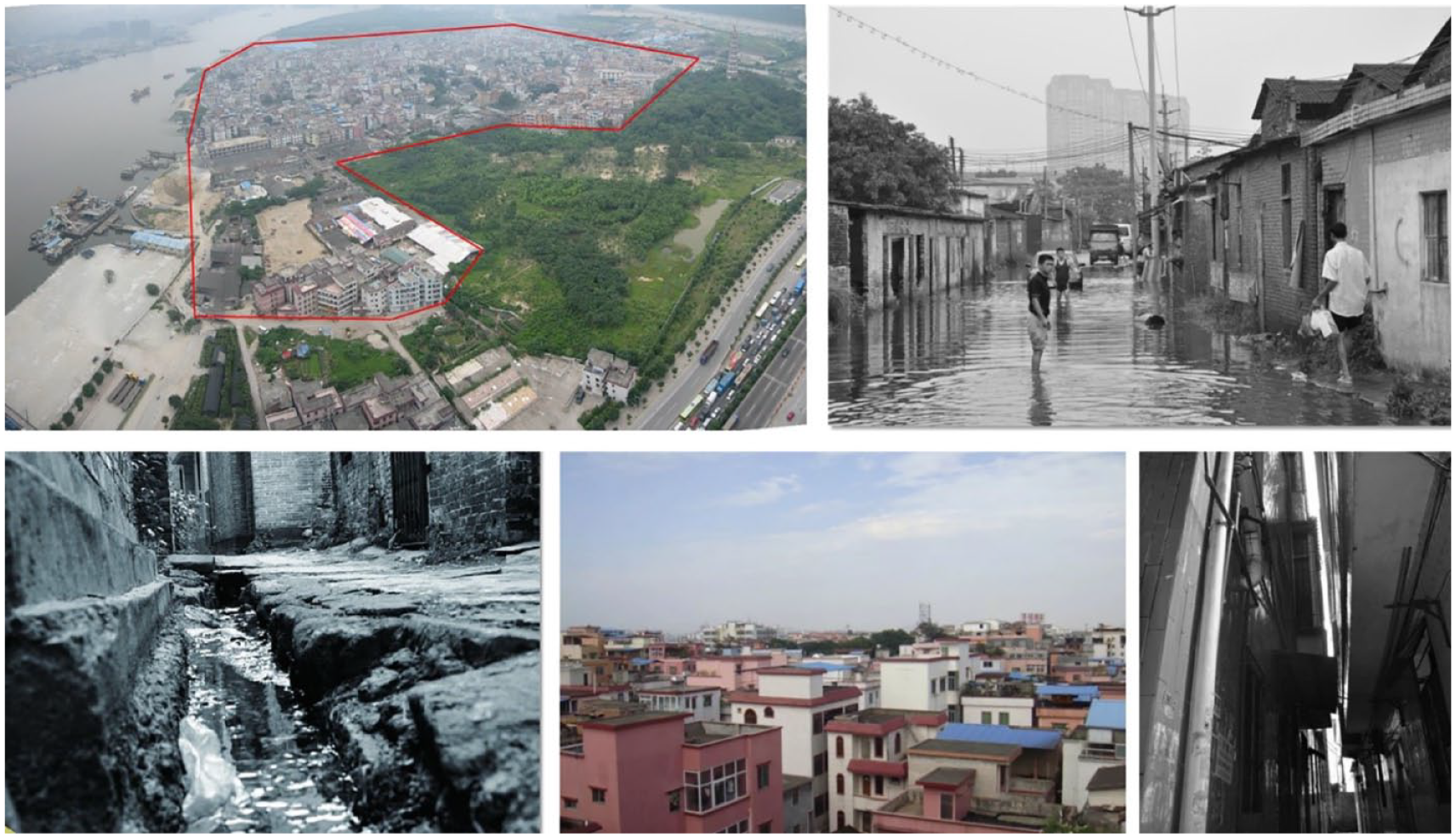
Pazhou Village in the 1990s.
At the preliminary preparation stage, Haizhu district government undertook investigation and collection of statistics on the population, land area, construction area and property rights of Pazhou. Poly Property saw the prospect and participated in the redevelopment process from the beginning. Poly Property is a subsidiary corporation of Poly Developments & Holdings, a state-owned public listed company which is one of the largest real estate developers in China in 2024. In 1992, Poly Property was established in Guangzhou by Poly Group, a giant state-owned enterprise focusing on property services, financial services controlled and managed by the Central Government. After rapid development, Poly Property went public on the Shanghai Stock Market in 2006.
Poly Property’s (Poly hereafter) headquarters are located within one kilometre of Pazhou Village and thus maintained good connections with the villagers and village leaders. The geographic proximity and state-owned identity were important reasons why Poly gained trust from both the governments and the village collective. For Guangzhou municipal government, Poly was a sensible choice as choosing it could reduce political and economic risks: ‘Even if it (the redevelopment) failed, Poly would share the burden and accusation with us’ (Interview O2). For Pazhou villagers, the state-owned identity of Poly was also preferred. The village committee often used expressions like ‘Poly represents the state’ when persuading the villagers to sign the contracts (Interview C2). The coalition between the governments and the state-owned developer clearly shows a common characteristic of state entrepreneurship in China.
However, Poly’s initial plan was to relocate villagers to an area far away from Pazhou. The villagers were very strongly opposed to relocation. Hundreds of villagers went to Poly’s headquarters, sitting there and shouting ‘Poly go away!’ (Interview V2) Thus the plan was changed to resettlement in-place (Interviews P2, C1 and V3). Total displacement was avoided due to the strong existing social capital in Pazhou and the relatively balanced bargaining power between the developer and village collective. This is important because it established at the start that the village collective would not be pushed around by the developer and shows that it was important for both Poly and government to ensure the success of the development. Unlike many cases in the existing literature, the state both initiated and led the redevelopment, but it could not dominate the process. The villagers had bargaining power which they used.
Interestingly, the village representatives meeting record for December 2009 (Archive M3 and M4) shows some representatives proposed rehousing in-place during the redevelopment, which meant Poly would have to redevelop Pazhou part by part in stages. Poly was worried by the uncertainty caused by the elongated rolling redevelopment mode and firmly rejected the proposal. A comprehensive large-scale redevelopment mode with temporary displacement was thus finally agreed by both sides. The bargaining process enhanced the mutual understandings between the village collective and the developer, forming an informal ‘growth coalition’. When the Guangzhou Government opened the bidding for Pazhou redevelopment project to the market, Poly was the only participant because other developers were concerned by the lack of the trust with the villagers and the local tacit knowledge (regarding for instance, ambiguous land rights, mixed land uses, differentiated villager groups) in the village.
At the planning scheme preparation stage, the Pazhou redevelopment scheme was formulated under the leadership of the Guangzhou municipal government and was reviewed and revised several times during the negotiations between the government, developer, village collective and villagers. Regarding the compensation standards, the villagers’ houses were compensated at a ratio of 1:1 in terms of the licensed construction area. This 1:1 ratio is very important. Essentially ‘for every square meter of licensed constructed floor area in their dwellings, villagers would receive 1 square meter of new apartment space’ (Archives M16 and M18).
However, in the past almost all villagers built larger houses than they were licensed to build, due to the lack of planning control. How to deal with the unlicensed construction area became a controversial issue for both the villagers and the developer. Poly did not want to compensate for the unlicensed area, and many villagers also thought ‘it would be unfair because normally the richer families built larger houses and thus more unlicensed construction area’. After several rounds of villagers’ representatives’ meetings and negotiations between the village collective and the developer, it was agreed that, for the unlicensed construction area, the compensation rate was RMB 1,000/m2, roughly equalling the construction cost. As for the collectively owned properties of the village community, Poly reconstructed more than 200,000 m2 commercial and office areas for the village collectives (Archive M18). Once again, using its bargaining power, the village collective was able to extract important concessions from the developer who was keen for the project to succeed.
The overall compensation scheme for Pazhou approved by more than two-thirds of all members of the village was announced publicly on April 20th, 2010 (Archives M19). The next, and crucial, issue was the redevelopment plan which specified the proportion of different types of development land and their distribution. There were three types: financial plots for developer to sell or rent on the open market, relocation and resettlement plots for the villagers housing, and the collective property plots. The financial plots provide the profit to subsidize construction of the other plots, while the collective property plots would provide income for the villagers who had lost their livelihood. The distribution of the plots reflects the outcome of the interests of both the village and the developer. After rounds of negotiation in which neither the village nor the developer could dominate, the plots were finally distributed in a mutually satisfactory fashion (Figure 3). The financing plot for residential development became one of the most expensive high-end apartment buildings in Guangzhou (Interviews P2 and P3).
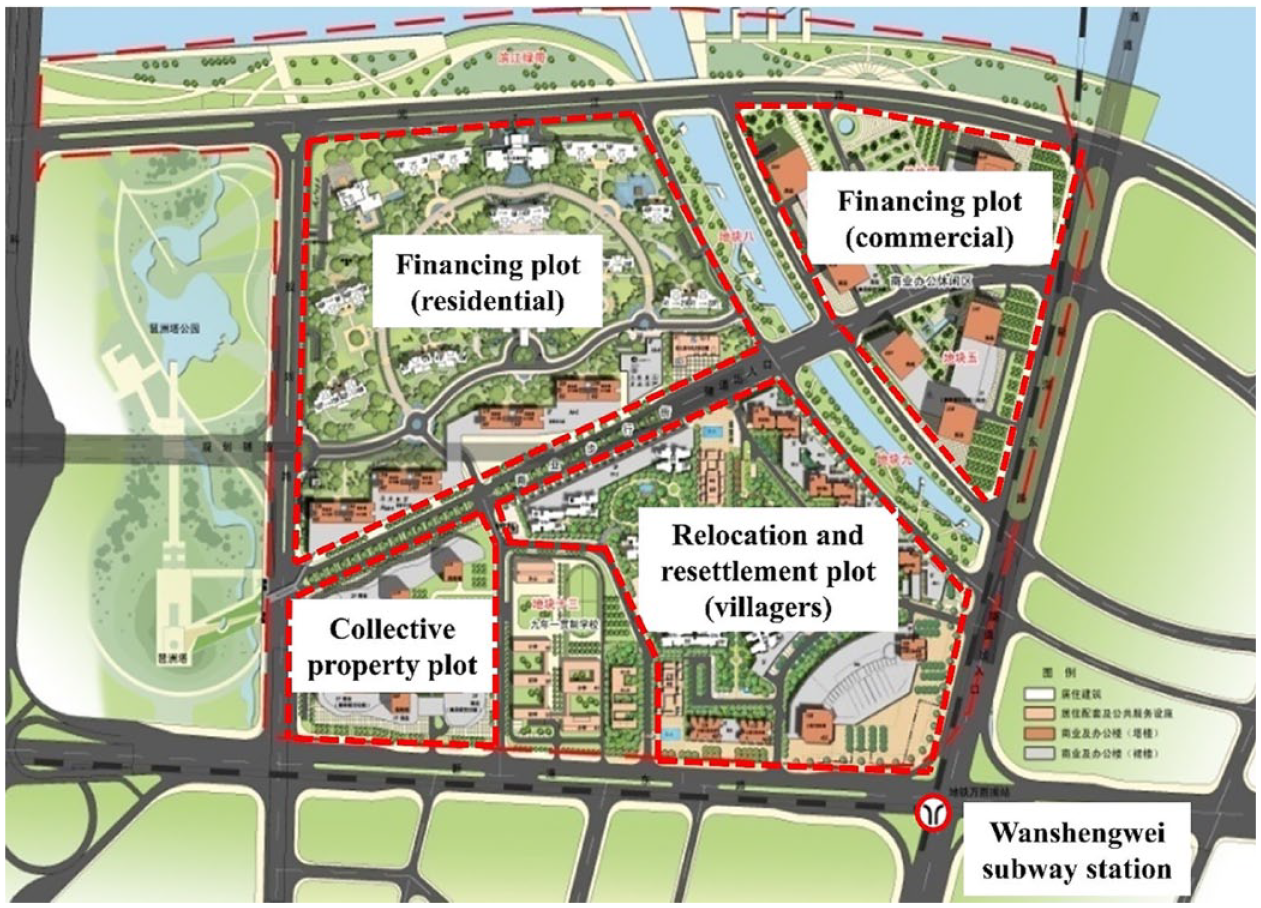
Redevelopment plan of Pazhou.
During the relocation & clearance and reconstruction & resettlement stage, Poly organized a removal and relocation team, with more than 100 staff, to complete the relocation work in the village in March 2010 (Archives M13 and M15). The team mobilized the villagers to sign contracts. With the mutual understandings and trust gained from rounds of negotiations, the contract signing rate of Pazhou reached 99% by September 2010. Pazhou officially handed over the land in December 2011, and Poly began the comprehensive large-scale clearance and reconstruction task (Figure 4). More than 6,000 apartments for resettlement were delivered to the villagers in December 2014 (Interviews D1 and D2). The resettlement in-place was successfully achieved.
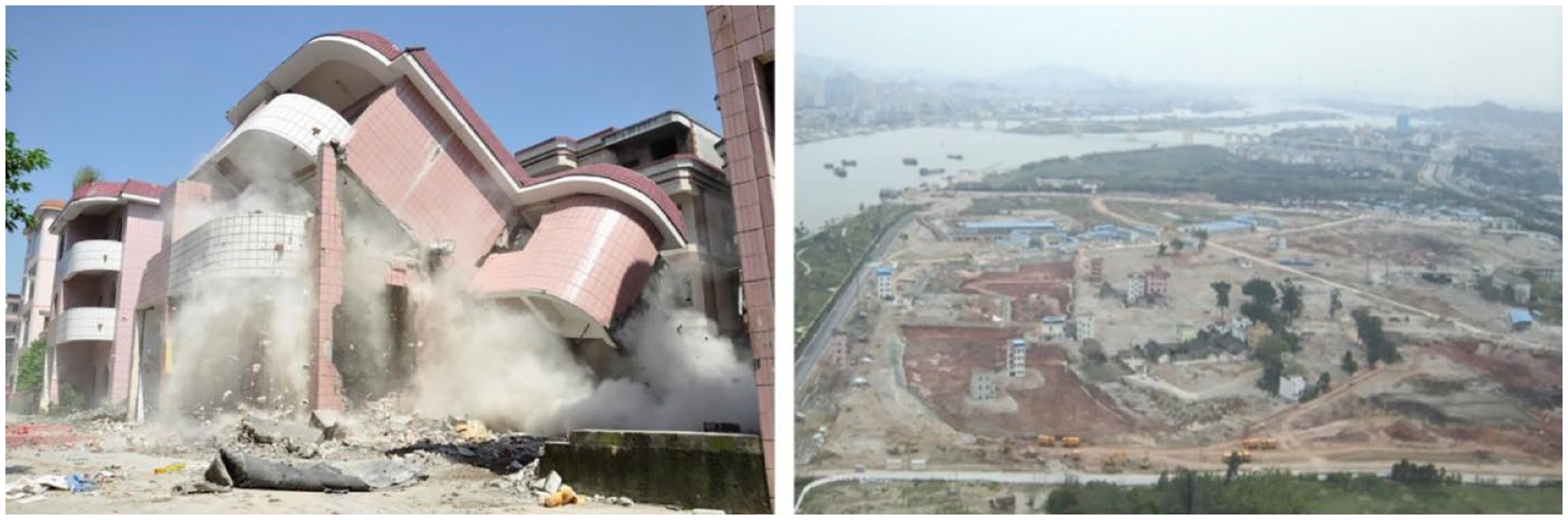
The clearance of Pazhou.
During the three years from 2011 to 2014, Poly and the village cadres made many efforts to maintain connections among the relocated villagers. Around 96% of villagers rented apartments in several nearby villages. Around 3% villagers bought apartments and stayed there. The remaining 1% stayed with relatives or friends out of the village. When the clearance was half done, Poly conducted three rounds of villager surveys for flat layout design and ‘ensured the villagers were kept informed about the resettlement process by SMS and QQ (a Chinese software similar to MSN)’ (Interviews D1 and D3). Their social networks were kept which proved to be very important for both the village and the developer.
Getting the villagers onside and dealing with the nail households
The reasons why the clearance and relocation went smoothly include the villagers’ willingness and the efforts of the developer, the government and the village leadership. In the 1990s, villagers had already tasted benefits from the emerging informal property market, so most of them wanted to take the opportunity to gain more. They supported the redevelopment in general. Besides, both villagers and governments agreed that ‘Poly worked hard to push the project forward’. Poly’s removal and relocation team visited every household in the village. Gradually most villagers were convinced that they could benefit from the redevelopment (Interviews D3 and D4).
Poly and village leadership set smart economic rules that those who signed the contracts early could get more compensation. They included relocation fees, signing incentives, moving rewards, etc. Villagers who signed the contract before May 2010 could get a 20,000 yuan reward directly. Poly also paid the relocation fees very quickly (Interview D3 and Archives M11 and M13). Other villagers became more willing to sign when they saw the benefits. ‘This led to the disintegration of the villager’s opposition.’ Another pioneering Poly initiative was an upfront institutional deposit. A 1.1 billion yuan deposit was put into a public account supervised by Haizhu district government, to eliminate villagers’ concerns about possible failure of the redevelopment project (Interview D2 and Archives M15). If the project failed, the villagers would lose all their farmland and housing plots but would at least have the 1.1 billion yuan. The villagers saw it as ‘security’, both emotionally and materially, because ‘the land was all we had and how we lived’ (Interviews C1 and C2). The deposit was an innovative institutional policy by both the developer and the local government, which reflects their joint desire to ensure the success of the scheme.
In addition to setting up the public account, the government played an important role in the redevelopment. According to the village representatives meeting records, the deputy mayor of Guangzhou, district government’s director and deputy director, and other governmental officials came to Pazhou and talked to the developer and villagers dozens of times. They helped adjust the original plan which was crucial for the redevelopment. They also asked the village cadres to take the lead in signing the contracts. The village CPC members and cadres were mobilized to sign first, which lead more people to sign and relocate. Importantly, the house of Ms. Xu, the village CPC secretary, was the first to be demolished. ‘Hundreds of people gathered around and watched’ (Interview C1). After the demolition of village CPC members and cadres’ houses, the demolition was carried out step by step. This highlights the key role of the local state as the scheme promoter and its links with the village collective and the developer.
Even so there still existed a few resistant ‘nail households’ who were not satisfied with the redevelopment plan and the resettlement layout design. This is a common and difficult problem (Shin, 2013). The hold-up caused by the ‘nail households’ would slow down or even jeopardize the redevelopment process and thus affect other villagers’ interests. Some villagers had rental experience and knew that small houses were easy to rent out. The detailed redevelopment plan and layout design were adjusted several times according to the villagers’ suggestions. Some nail households found that the collective property plot and relocation and resettlement area contained many smaller-sized apartments, which they thought cost-effective (Archive M20 and Interview V3). They then agreed to sign. The developers again modified the plans to accommodate the villagers’ requirements to enable the scheme to proceed.
There were also some nail households who wished to grab the opportunity to ‘make as much as I could because this is the only opportunity in my life’ (Interview V3). They expected to receive a better and better offer from the developer. To avoid unrealistic expectations and to ensure agreement of other non-nail households, Poly specified in the contract that ‘anyone who finds another villager gets better compensation shall enjoy the same standard immediately’ (Interview D1 and Archival M7). In the end 99.8% of the villagers signed the contract and moved out. For the remaining 0.2% nail households, the village collective started legal procedures. The court verdict was in favour of the village collective, who forced the nail households to move by collaborative operations with the developer and local governments. The village collective and the developer worked together to ensure success.
The negotiations between the developer, the village collective, and the governments
Bargaining between Poly and the village collective existed from the beginning. There were hundreds of rounds of large or small negotiations between the village collective and the developer, and both sides were trying to achieve win-win results with relatively balanced positions in the bargaining. The outcome was always that ‘either Poly makes a concession, or the village collective does’ (Interviews D1 and C2). The district government also sent representatives to help coordinate the negotiations.
A case in point was the negotiation about the collective property plots. According to the municipality’s policy, Pazhou village collective reserved 10% of land when expropriated. In the initial plan, the permitted construction area was only 120–130 thousand square meters. Therefore, the villagers strongly opposed it. However, the quota of permitted construction area was set by the district government. Normally government would be reluctant to change zoning because the rezoning procedural is complicated and may harm the interests of nearby landowners. Thus, the village collective cooperated with Poly to bargain with the government for a larger construction area permitted by the government (Interviews D1, C1 and C2 and Archival M15). In the end, the joint proposal by local community (the village) and the market (developer) was finally agreed by the state (the government). This is particularly interesting as it highlights the role of developer and villagers acting together to influence local government, who made the necessary concessions because they wanted the scheme to succeed (Li and Li, 2011; Wong et al., 2021).
Another similar but more important case was the increase of the overall land use density. In the beginning the overall planned construction area given by the government was relatively small. Poly took the initiate to fight with the government for more, and the village collective participated actively. It was a long and tough bargaining process, including more than dozen meetings. Although Poly’s request gained support from the village collectives, its main intention was to enlarge the building area and increase profit, which was noticed and disliked by the government. For this issue the developer and village collectives formed a strong coalition bargaining with the district government, arguing that the relocation could not be achieved without more planned construction area. Once again, the government retreated. To some extent, Pazhou Village and Poly did not act ‘within a framework of land use plans and land use densities set by the local government’ as stated in Wu (2018). Because success was important for all parties, concessions and rule changes were made where necessary. The village and the developer thus reframed the ‘framework’ set by the local government. This is important theoretically. While the state initiated the redevelopment, this does not mean that it always has the upper hand and the relationships between the three main actors were dynamic with changing allegiances.
During the rounds of negotiations, the village collectives could organize and have one strong voice because of the grassroots democracy. There are three working committees (the Party committee, the Construction Committee and the Community Committee) which organize representative frequent meetings. According to the records, there were at least 10 villagers’ representative meetings every year, each with more than 25 people gathering in the Village Chamber. There were also open general meetings for major events and decisions (e.g. ‘yes or no’ to the redevelopment), with more than 2,000 villagers attending. Only after two-thirds of residents accepted the redevelopment idea in the general meeting in September 2008 could the party and community committees go ahead with the negotiations with the developer and governments on behalf of the village collective (Archives M1, M3 and M4). This highlights the need to get village agreement before the plan could go ahead. It was not just imposed on them by the state.
An overall assessment of the redevelopment: An urbanized Pazhou
Built environment transformation: The key role of land use intensification
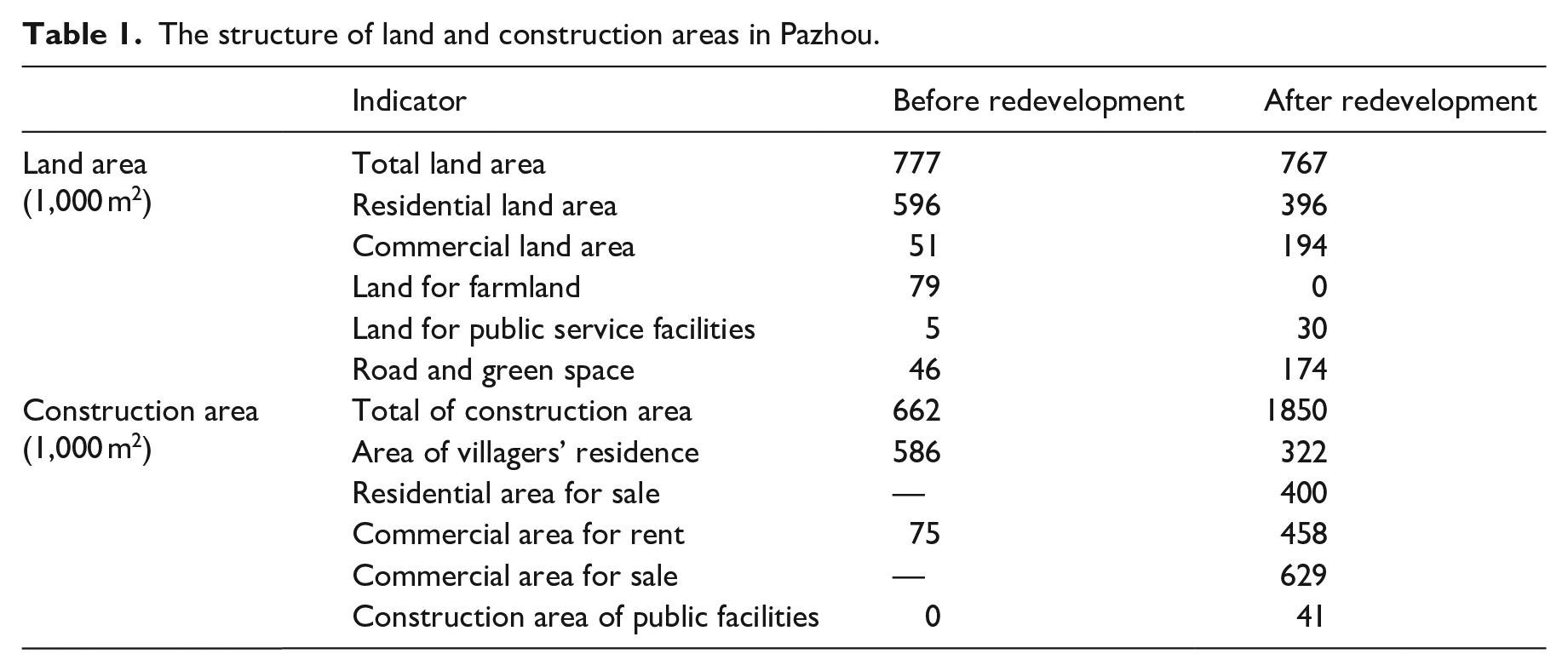
Before the redevelopment, the building density (defined in China as the ratio between the total amount of first floor areas of buildings and the land area) of Pazhou was 62%, the green area and road area density were only 4% and 2% respectively, and public space was scarce. After the redevelopment, the land area for roads, green space and public service facilities in Pazhou increased dramatically, and the building density was reduced to 18%. Because of high-rise construction, the land area of both roads and green space was increased by four times and the land area for public service facilities increased sixfold, from 0.5 hectares to 3.0 hectares (Interviews C2 and P1). But the key is the increase in commercial rentable and lettable space. Pazhou Village has been turned into a high-rise development urban district (Figure 5).
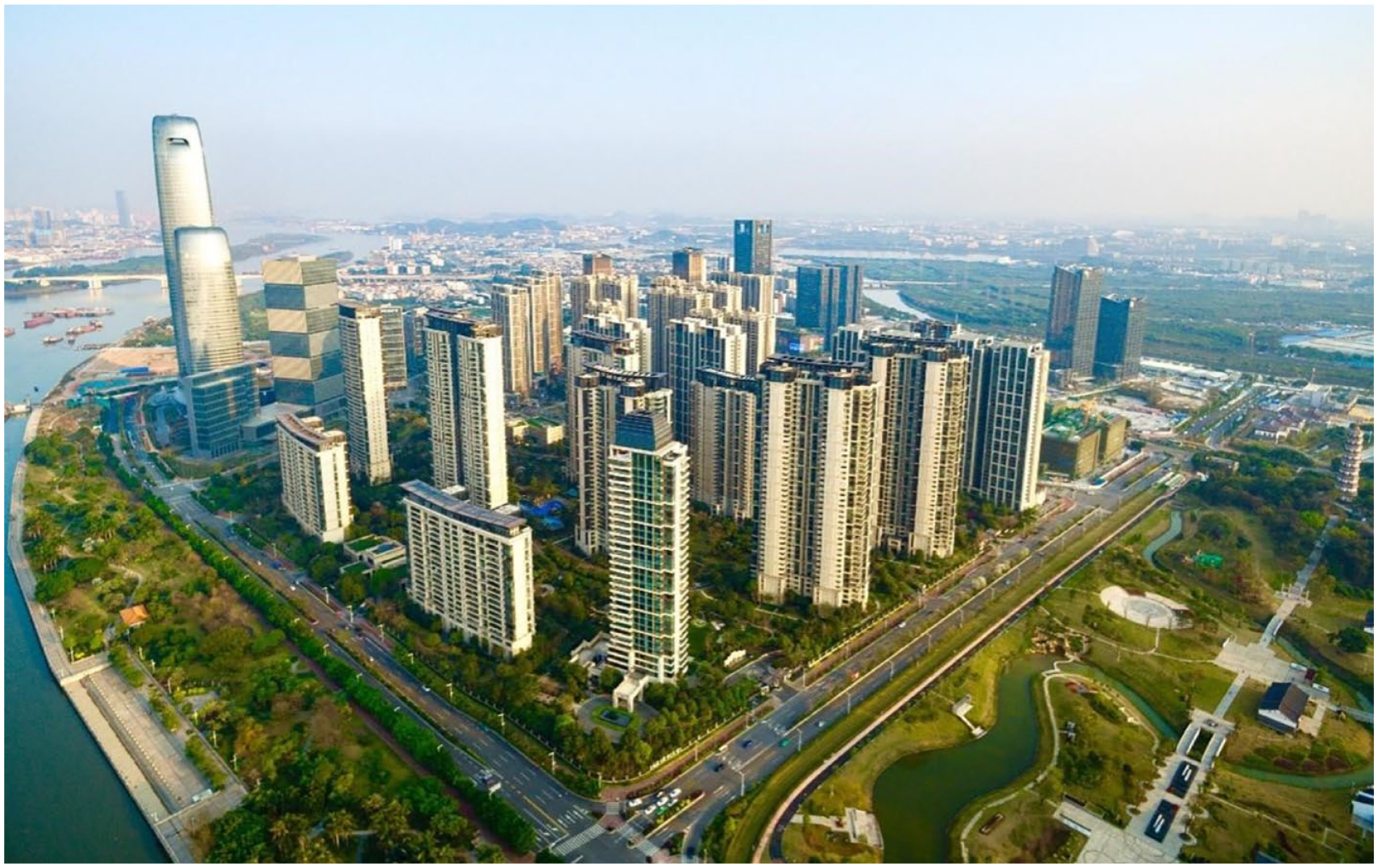
A bird’s-eye view landscape of Pazhou after the redevelopment.
Table 1 shows the structure of land and construction areas in Pazhou before and after redevelopment. The land use intensification is clearly shown in the table. The total construction area increased from 662 to 1850 thousand square meters, an almost threefold increase. The residential and commercial areas for sale were 400 and 629 thousand square meters respectively. These were the key to how Poly could profit from the redevelopment. Though the villagers’ residence area reduced from 586 to 322 thousand square meters, all the villagers who chose housing rather than cash compensation were allocated a residence area at the ratio of 1:1 in terms of their original licensed construction area, plus RMB1,000/m2 for unlicensed construction area (for details see ‘The negotiations between the developer, the village collective and the governments’). Without any loss in residence area and with more income from commercial space, these were the key to how the villagers could benefit from the redevelopment. The land use changes were a consequence of successful redevelopment, but they were also a requirement for it to succeed.
The structure of land and construction areas in Pazhou.
Economic development: Increasing property rents and rentable properties
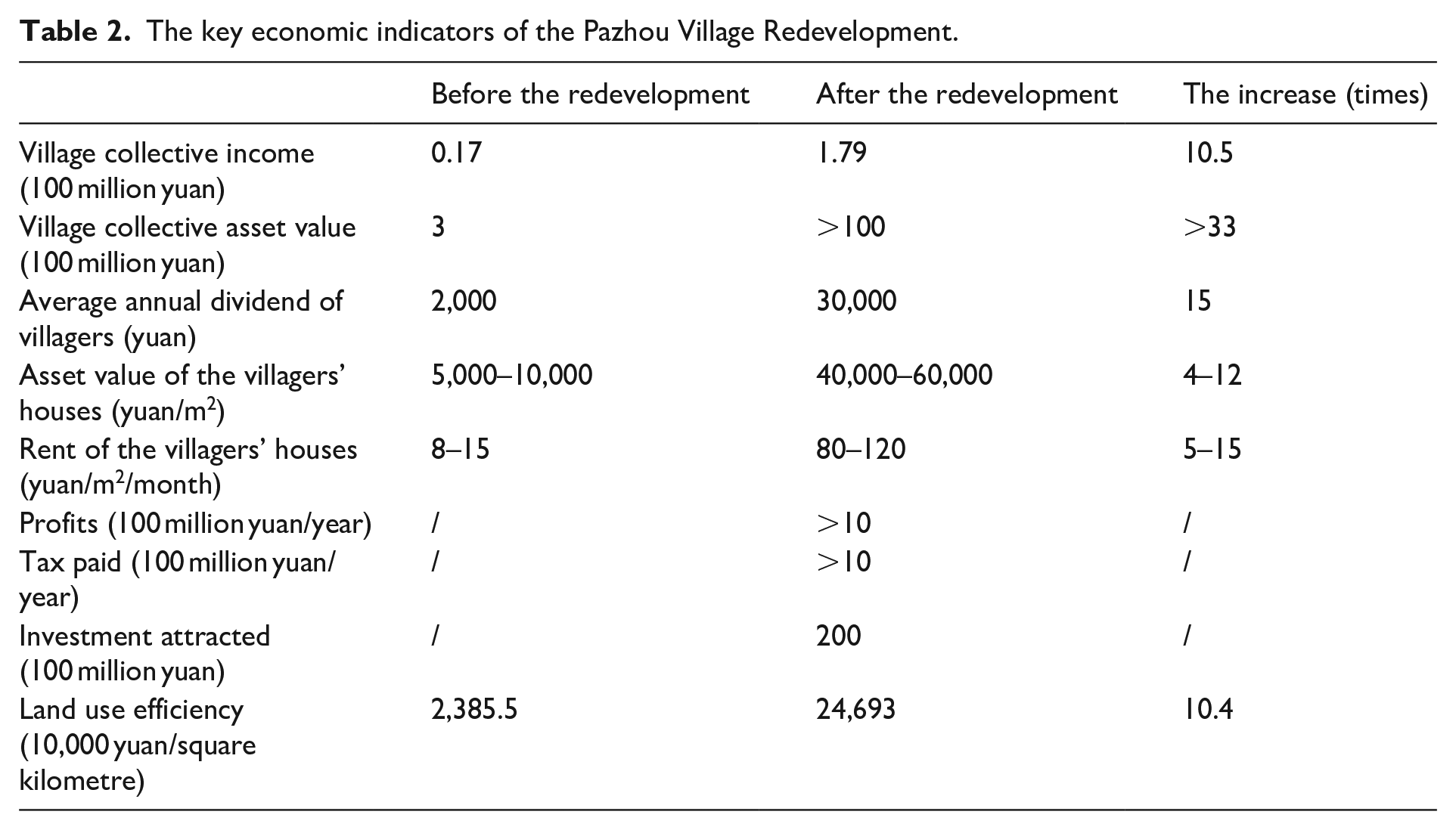
Before the redevelopment, the commercial area for rent in Pazhou covered an area of 75,000 square meters, rented to the low-end manufacturing industries such as printing factories and lamp manufacturing enterprises. The average monthly rent for the commercial area was RMB 10/m2. After the redevelopment, the commercial area for rent was increased to 458,000 square meters, including high-end shopping malls, hotels, office buildings, etc., and the industrial structure was upgraded to modern service formats such as commercial finance, business office, culture and entertainment, etc. The economic output per land area has jumped from 24 million yuan/km2 to 247 million yuan/km2, ‘a remarkable tenfold increase’ (Interview C2).
The redeveloped collective properties are rented and operated by Poly, and the rent is refunded to the village as income. For example, Poly Plaza, located next to Wanshengwei subway station, is a lively shopping mall with a commercial area of 88,000 square meters (Figure 6). It is operated by Poly and the rent refunded is RMB 82/month/m2 (an eightfold increase). After the redevelopment, the capital value of the collective properties in the village increased from 300 million yuan to more than 10 billion yuan, an increase of over 30 times (Interviews C2 and D1).
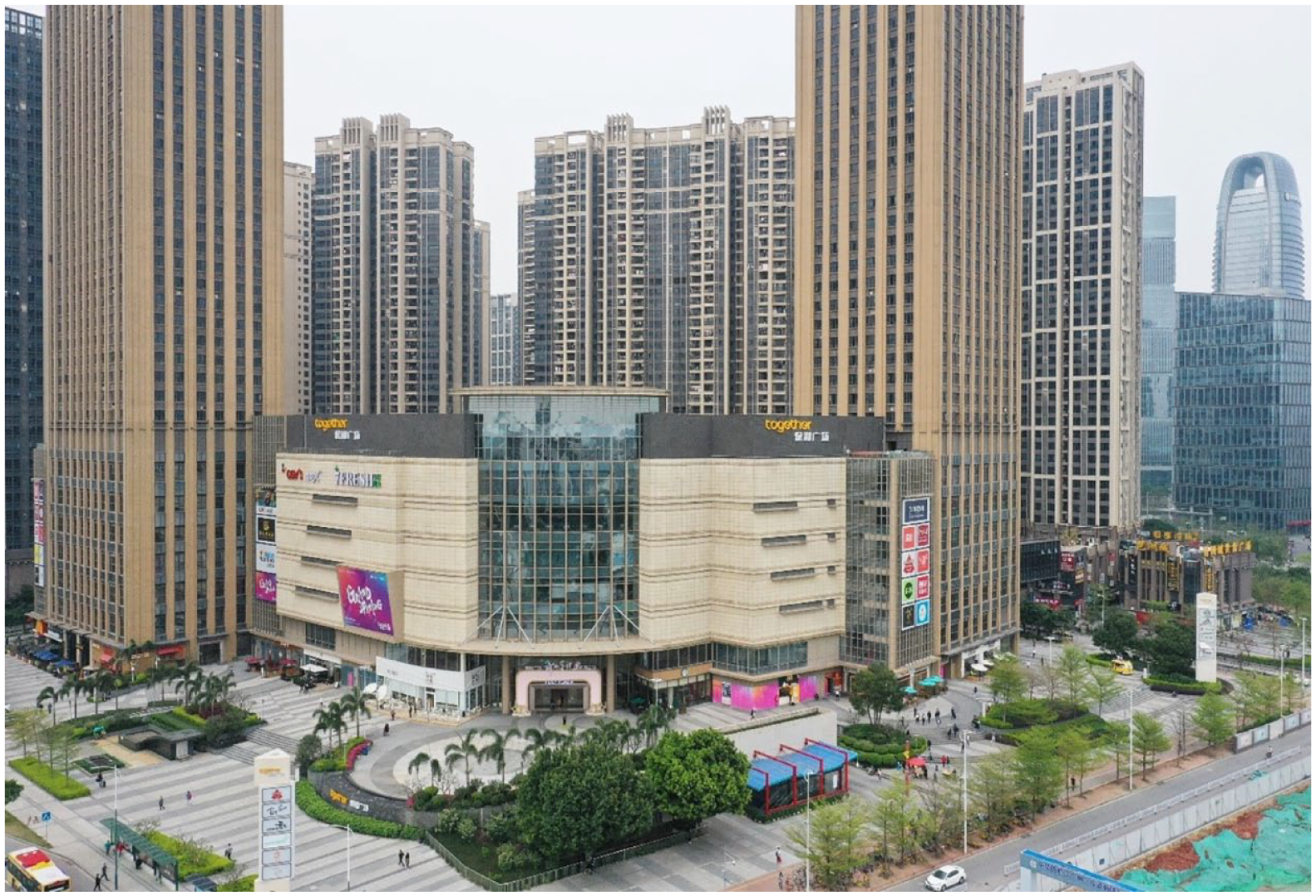
The Poly Plaza shopping mall.
After the redevelopment, the income of the village collective increased from 17 million yuan to 179 million yuan, a 10-fold increase (Table 2). The villager shareholders’ dividend increased from 500–1,000 yuan/share to 7,000–8,000 yuan/share, and the average annual share dividend has been increased from 2,000 yuan/person to 30,000 yuan/person: 15 times increase. The residential rental income increased from 8–15 yuan/m2 to 80–120 yuan/m2 (about a 10-fold increase). ‘There are many economic indicators increasing more than 10 times after the redevelopment’ (Interview C2). The process of land use intensification associated with the redevelopment has benefited all the village property owners.
The key economic indicators of the Pazhou Village Redevelopment.
The redevelopment of Pazhou has also produced long-term economic effects. Since the implementation of the redevelopment, the annual profit of the projects in Pazhou has been maintained at more than RMB 1 billion, the average annual tax payment has exceeded RMB 1 billion, and the cumulative fixed asset investment has exceeded RMB 20 billion. The redevelopment of Pazhou Village has provided a good foundation for the development of the whole Pazhou area. Many high-tech entrepreneurs and leading enterprises such as Tencent, Alibaba, Amazon, Alphabet, Mi and iFlytek have settled in the Pazhou area, and the total investment has been more than RMB 70 billion (Interviews O1 and O2). The village has been transformed from semi-rural low-level factory and agricultural industries into a high-value commerce and high-tech economy.
Social restructuring: The modernization of village governance and gentrification
Before the redevelopment, the administrative management system of Pazhou was not in line with that of the city. Crimes involving gangsters and the pornographic industry had occurred frequently, and the number of criminal cases per 10,000 people was significantly higher than the level of Guangzhou. In terms of public services, ‘there was only one kindergarten, one elementary school and one medical and health station’ (Interview C1).
After the redevelopment, the administrative management system has been updated dramatically. The public facilities of the kindergarten, cultural exchange room, fitness field, service station for the elderly, food market, etc. are constructed and managed according to urban first-class standards. In addition, a famous local primary and middle school, Zhixin School, was introduced (Figure 7).
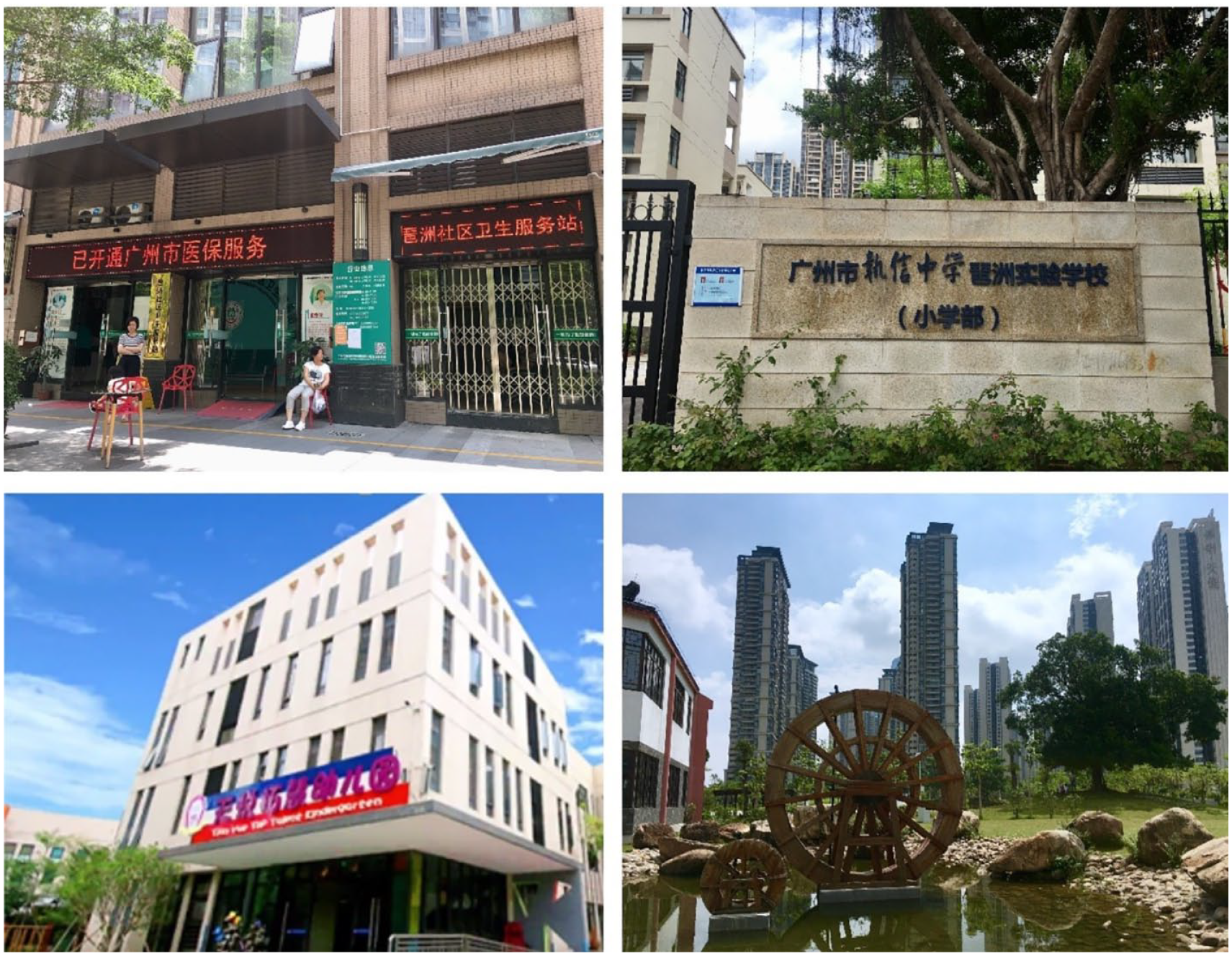
Public facilities in Pazhou: health service station, primary school, kindergarten, public park (from above to below, left to right).
Besides the visible urban public facilities, the improvement of the village’s governance capacity is noteworthy. Before the development, the Pazhou village leadership knew almost nothing about real estate development, management and business operation. Basically, they relied on Poly for how to plan, develop and manage their collective commercial and office buildings. Poly, as a developer, would ‘of course take advantage of the village collective’ (Interview V2). The monthly rent of Poly Plaza, for instance, was only 50 yuan/m2 in the beginning. During the development, the village leadership studied the real estate market and even hired a professional real estate consultancy company, DTZ/Cushman & Wakefield, to help analyse and assess the rental market. After negotiations with Poly, the rent is now 82 yuan/month/m2. For the village leadership, ‘how to manage RMB 10 billion yuan assets on behalf of the village collective is a huge challenge’ (Interview C2). They are teaching themselves corporate finance, real estate management, etc. and hiring more professional real estate, legal, construction and engineering experts. The modernization of village governance capacity and the learning spirit might be the most valuable assets for Pazhou after the redevelopment.
It would be naïve to deny the gentrification process in Pazhou, one of the most expensive residential areas in Guangzhou, with housing price at around RMB 150,000/m2. According to our follow-up survey, 31 of the 54 tenants (58%) before the redevelopment possessed a university degree or above, while 12 of the 15 tenants (80%) who chose to come back had a degree or above. It is also interesting to note that there are still some migrants who stay in the village (15 of the 54 surveyed tenants, 28%). They were typical middle class who pay more attention to living environment and life quality, but still could not obtain a Guangzhou hukou and buy public housing (Interviews T1, T2 and T3. The monthly rent for a 60 square meters apartment would be 4,000 yuan, which is considered affordable for the relatively senior employees in producer services and IT firms. On the one hand, they bring energy and rent to Pazhou. On the other hand, they regard the village as just an ‘arrival city’ (Saunders, 2012) and ‘lack a sense of belonging and social attachment’ (Interview T1).
The path-dependence of culture and institutions: Social capital and the ancestral halls
A rich social capital has been found important for urban village redevelopment (Tong et al., 2021). One important place for connecting the villagers and forming social capital in rural China is the ancestral halls which are built to honour the family’s ancestors. There are two big families (more than 70% of households) in Pazhou Village, with the surnames of Zheng and Xu. Both families constructed and preserved beautiful ancestral halls for many generations (Interview C1). They hold important events in the ancestral halls, including weddings, funerals, births, etc. These events enable villagers to get more acquainted with each other (Figure 8). This is part of the reason why Pazhou could form one strong voice when bargaining with the developer and the governments.
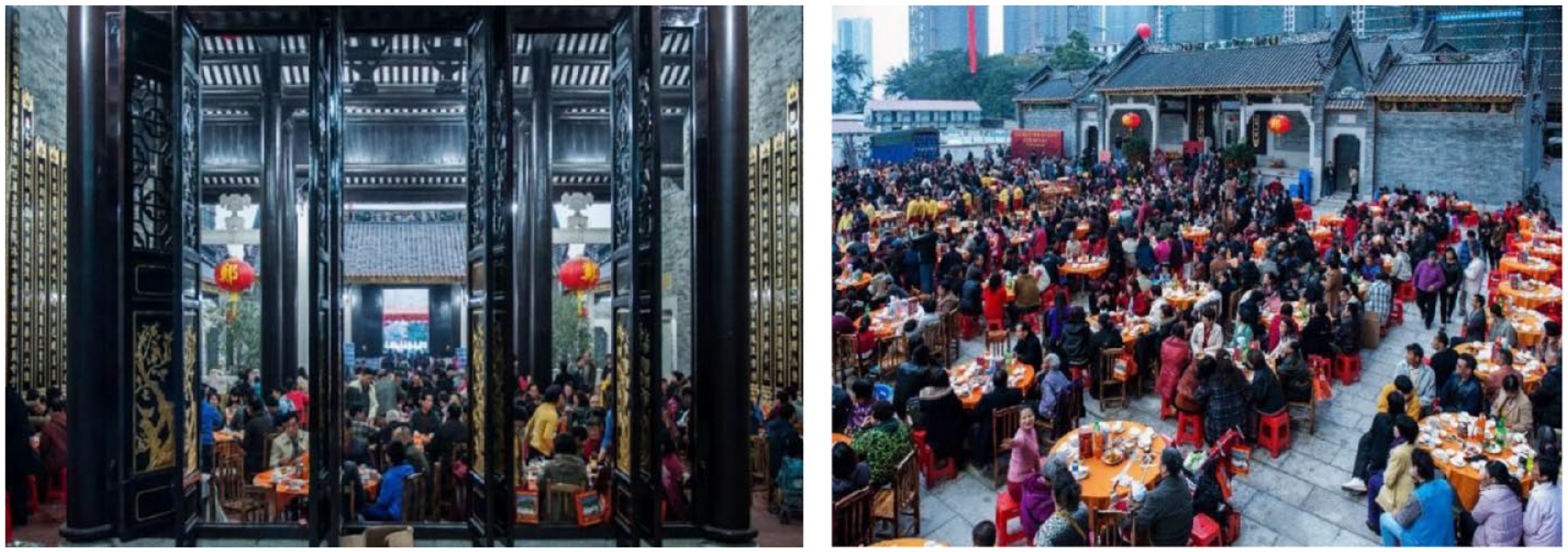
Ancestral halls preserved in Pazhou Village and villagers’ social events.
It was no surprise that the village collective requested to keep and renovate the two ancestral halls. The original sites of the two great Zheng and Xu ancestral halls have been reconstructed into elegant courtyards. Their carvings, couplets, historical relics, etc. have all been preserved. The ancestral halls have become entertainment spaces for the villagers in Pazhou to play ball, play cards and sing opera on ordinary days, and are also used as social spaces for drinking and gathering during the Chinese New Year, Dragon Boat Festival and marriages. Ancestral halls are rarely seen in other part of the urbanized area in Chinese cities. However, the ancestral halls continue to play an important role in Pazhou villagers’ daily life and help cultivate strong social capital in the village.
Concluding remarks
We have attempted in this paper to examine and evaluate the redevelopment of Pazhou Village, Guangzhou, 10 years after its completion in 2014. The Pazhou redevelopment is an interesting example of Chinese state entrepreneurialism and the operation of a Chinese urban growth machine. The Guangzhou municipal government initiated a policy of redeveloping a large number of urban villages to help improve the urban environment and housing conditions and social facilities and increase taxable income. Implementation of the policy was delegated to Haizhu district government and a large state-owned developer with good knowledge of the village and its history was selected to undertake the development. They worked together with the village collectives and local government to highlight potential advantages of the proposed scheme, to try to gain resident agreement to it and to overcome local opposition and reluctance to change. The results have been a total transformation of the built environment from a poorly provided semi-rural urban village to a successful commercial and office centre hosting major companies with new apartments for all the resident owners and communally owned rent-generating property to replace incomes from farming and industry. It is an example of successful urban entrepreneurialism where state, market and community have acted together to produce a set of outcomes which have benefited all the key actors with the exception of many of the tenants, who, lacking property rights, are forced to relocate.
It is also important to have an overall plan for redevelopment of the village, which combines significant private commercial elements in the form of high-rise housing, offices and other space which can be profitably let/sold by the developers. It requires collective, government-backed village agreement to the development, guarantees about the scale, size and quality of the new space provided, the timescale of development and the income flows to the village from rents and sales. What appears to be necessary for the Pazhou redevelopment is a dynamic but stable coalition among local governments, the real estate developer and the village collective. In general, the state initiated and led, but did not dominate, the redevelopment process in Pazhou Village. In some cases it had to concede to the developers and the villagers acting together. In other cases the developer had to concede (Yu et al., 2021). The case sheds light on the leading yet subtle role of the state in the ‘growth machine’ with Chinese characteristics. In Pazhou, where the villagers had bargaining power, both the state and the developer made concessions where it was necessary to ensure the success of the scheme.
What has happened in Pazhou, which was redeveloped over 10 years ago, is that through a process of large-scale comprehensive redevelopment almost all the original local (non-migrant) residents have returned, because they were guaranteed new apartments of equivalent size to replace their previous housing. The developer’s profits come from the creation and sale of new housing and commercial space via a process of land use intensification which has brought in new residents and occupiers. Without this it would be difficult, if not impossible, for developers to rehouse residents, build new social facilities and create collective open space and new office and commercial space. This increase in commercial space generates the revenue and profits to pay for the housing and other facilities – land use intensification is a key ingredient for success.
The study also serves as a reference for the recent debate between micro-renovation and large-scale redevelopment in urban scholars and policymakers in China (Li et al., 2021c; Wang et al., 2021). The case suggests that micro- or large-scale might not the key issue for redevelopment, while the land use intensification and good co-operation between the stakeholders in the growth coalition are the ingredients for success. We also show that the development succeeded in part because of a historically high level of village social organization which enabled strong village governance and successfully negotiation with both developers and local government. Indeed, the local community and the developers were able to jointly extract concessions from local government in terms of development density and profit generation and attract back a very high proportion of original residents who temporarily lived elsewhere during the process.
We suggest that large-scale comprehensive redevelopment can be successful and beneficial for residents in certain circumstances such as those found in Pazhou, but this degree of success may owe a lot to the locational advantages of Pazhou for development and the bargaining power of the village collective and might be difficult to find in other cases of cities in China (Cai et al., 2020; Yang and Oostrum, 2020; Zhou et al., 2021). This limits overgeneralization of this case study of Pazhou Village but it does not negate the success of the redevelopment.
Footnotes
Appendix
Village meeting records during the redevelopment process of Pazhou Village.
| Code | Date | Attendees | Topic of meetings |
|---|---|---|---|
| M1 | 12 Nov, 2009 | village cadres; Poly | Poly introduces the plan of redevelopment |
| M2 | 24 Nov, 2009 | subdistrict officials; village cadres; Poly | Officially launch the redevelopment |
| M3 | 25 Dec, 2009 (a.m.) |
subdistrict officials; village cadres; village representatives; Poly | Discuss appeals of the villagers’ representative |
| M4 | 25 Dec, 2009 (p.m.) |
subdistrict officials; village cadres; village representatives; Poly; lawyer | Discuss appeals of the village representatives |
| M5 | 14 Jan, 2010 | village cadres | Discuss ‘Agreement on Compensation and Settlement’ |
| M6 | 27 Jan, 2010 | village cadres; villagers; Poly | Introduce ‘Agreement on Compensation and Settlement’ to villagers |
| M7 | 4 Feb, 2010 | village cadres; village representatives; Poly; district and subdistrict officials | Poly announces its version of ‘Agreement on Compensation and Settlement’ |
| M8 | 1 Mar, 2010 | village cadres | Discuss the decoration standard of settlement buildings |
| M9 | 4 Mar, 2010 | district and subdistrict officials; village cadres; Poly | Establish a co-ordination mechanism for the redevelopment |
| M10 | 8 Mar, 2010 | subdistrict officials; village cadres | Discuss appeals of villagers |
| M11 | 16 Mar, 2010 | village cadres | Discuss ‘Agreement on Entrusted Demolition’ |
| M12 | 23 Mar, 2010 | subdistrict officials; village cadres | Discuss appeals of villagers |
| M13 | 24 Mar, 2010 | district and subdistrict officials; village cadres; village representatives; Poly | Discuss the details of redevelopment |
| M14 | 29 Mar, 2010 | district and subdistrict officials; village cadres | Discuss appeals of Pazhou Village |
| M15 | 2 Apr, 2010 (a.m.) |
district and subdistrict officials; village cadres; village representatives; Poly | Respond to villagers’ appeals |
| M16 | 2 Apr, 2010 (p.m.) |
village cadres | Discuss the ‘Agreement on Compensation and Settlement’ |
| M17 | 14 Apr, 2010 | village cadres | Discuss the details of redevelopment |
| M18 | 19 Apr, 2010 | village cadres | Discuss ‘Agreement on Compensation and Settlement’ and ‘Agreement on Land Compensation’ |
| M19 | 20 Apr, 2010 | village cadres | Announce the distribution of land compensation |
| M20 | 19 Jul, 2010 | village cadres | Discuss the changes of redevelopment details |
Source: Provided by Pazhou village committee; Complied and analysed by the authors.
Declaration of conflicting interests
The author(s) declared no potential conflicts of interest with respect to the research, authorship, and/or publication of this article.
Funding
The author(s) disclosed receipt of the following financial support for the research, authorship, and/or publication of this article: This article was supported by the Social Science Foundation of China (18ZDA082) and National Nature Science Foundation of China (42271211).
