



Abstract
China’s rapid urbanization over the past three decades has created a multifaceted social-spatial dynamic on the urban fringe – urbanized suburbs, wherein an influx of migrants juxtaposed with an outflow of the local population. Against this background, the extant migrant studies in China mainly focus on rural and urban migration, yet suburban migrants are relatively underrepresented. Suburban migrants have roots in the built-up urban, and they designate rural residents who have been resettled during the urbanization process and subsequently moved into other cities to live and work. As the complexities of governmental schemes, their household registrations (hukou) may or may not be changed from rural to urban during neighborhood redevelopment. In migrant studies that use rural-urban hukou as a dichotomous statistical classification, their socio-demographic characteristics as a sample group are hard to capture.
This paper examines the career development of suburban migrants in the manufacturing industry in Zhejiang China, where migrant workers are concentrated. It compares the career development of migrant workers from rural, suburban, and urban areas on four dimensions – unemployment risk, occupational skill level, income level, and occupational position. The study of 553 intra-provincial migrant workers finds that suburban migrants encountered comparable challenges in their career development as rural migrants did. Furthermore, the level of education attained by individuals has a noteworthy mediating effect, contributing to the disparities observed across urban, suburban, and rural groups. The gap in career development between suburban migrants and their urban counterparts – even in Zhejiang, a province with the smallest economic gap between urban and rural development in China and was relatively less impacted by the epidemic outbreak – is still significant.
This research aims to enrich scholarly dialogues surrounding the field of migrant studies and the intricate socio-spatial dynamics prevalent within Chinese suburban areas.
Introduction
China’s rapid urbanization over the past three decades has created a multifaceted social-spatial dynamic on the urban fringe – urbanized suburbs, wherein an influx of migrants juxtaposed with an outflow of the local population (He, 2013; Shen and Wu, 2013). In the context of host cities, extensive research has focused on the migrants who have migrated to the urban fringe, documenting their residential clustering patterns (Li et al., 2011, 2015; Liu et al., 2019a), challenges related to economic and social integration (Liu et al., 2019b, 2022; Wang et al., 2017), and everyday practice (Liu et al., 2015). Conversely, in the context of the place of origin, attention has been directed towards the resettled local residents who remained in situ, which highlights the intricate impact of urban expansion on rural populations from spatial (Yang and Qian, 2022), socioeconomic (Qian, 2019; Tian, 2008; Xu et al., 2022), and institutional (He et al., 2009; Wang, 2022) perspectives. However, notably less attention has been devoted to suburban migrants.
Suburban migrants can be understood in a processual way from the perspectives of both their places of origin and their host cities. In their places of origin, they are essentially rural residents who have undergone resettlement. In the urbanization process, these resettled rural residents typically confront two distinct choices after receiving compensation either in the form of cash or property: remaining within their cities or venturing to other cities – in pursuit of employment opportunities (Zhang, 2021; Zhang and Chen, 2021). Those who choose to stay are often engaged in self-employed endeavors, while those who opt to leave frequently join industries such as construction and manufacturing, integrating themselves into the migrant labor force within their host cities (Zhang and Chen, 2021). In this sense, the term “suburban migrants” designates rural residents who have been resettled during the urbanization process and subsequently moved into other cities to live and work.
The underrepresentation of suburban migrants in research can be attributed to the intricate redevelopment schemes implemented in urban peripheral communities in China. Due to a diverse mechanism for demolition and compensation methods, the household registration status (hereafter hukou) of the resettled residents may change from rural to urban in the process of demolition of urban peripheral communities, although it may also remain unchanged (Zhang, 2021). Consequently, resettled residents who choose to stay in the local area are comparatively more accessible to track and study. In contrast, for suburban migrants who decide to move, they are often categorized as either urban-to-urban migrants (hereafter urban migrants) or rural migrants in existing migration studies based on their hukou attributes (Cheng et al., 2014; Ming et al., 2020). This bifurcation in categorization underscores the challenge of capturing the experiences and dynamics of suburban migrants within the broader context of migration research.
A promising approach to studying suburban migrants involves examining their career situations. Several research that based on the China Labor-Force Dynamics Survey spanning from 2012 to 2016 offers a valuable entry point into this field. Analyses reveal that both skilled urban migrant workers and the rural labor force demonstrate a notable concentration within the manufacturing and construction industries (Hao and Liang, 2016; Qi et al., 2020; Zheng et al., 2020). This trend is further substantiated by the migrant worker monitoring and investigation conducted by China’s National Bureau of Statistics (CNBS, 2022), which reports that within the secondary industry, 47.8% of migrant workers are engaged, with 27.4% in manufacturing and 17.7% in construction. In this context, work organizations serve as the arena where the urban and rural dimensions of migration mobility intersect and unfold jointly.
Therefore, this study uses career development as its entry point and seeks to address the following research questions based on a sample of 553 intra-provincial migrant workers in Zhejiang Province: Is the career development situation of suburban migrants more akin to that of rural migrants or urban migrants? This research contributes to the discourse in migrant studies by highlighting the significance of distinguishing suburban migrants and conducting separate examinations of their unique experiences and dynamics.
Literature review and research framework
Jiehebu as a perceived suburb
“Chengxiang jiehebu” (hereafter jiehebu), translates literally to “urban-rural juncture” in Chinese. This term is commonly used to describe the transitional zone that lies between the city and the countryside. Its historical roots trace back to the Maoist era, when the Party-state sought to eliminate distinctions between urban and rural areas, agriculture and industry, and manual and intellectual labor in accordance with Marxist-Leninist principles (Zhao, 2018). Remarkably, jiehebu continues to feature prominently in the discourse of local residents, planners, and government documents to this day (Li, 2018). In everyday discourses, jiehebu serves as a focal point where various facets of rural-to-urban transformations converge, encompassing aspects such as population, land use, the economy, and the environment (Zhao, 2020).
Within the academic discourse, discussions and conceptual analyses concerning suburbs have only recently begun to incorporate the term “jiehebu.” The debate on suburbanization and urbanization in China was initially introduced by Zhou (1996). His series of studies aimed to construct a comprehensive typology of the urbanization process within the context of spatial and population governance, emphasizing the importance of recognizing distinct urban-rural spheres (Zhou, 2004, 2006; Zhou and Meng, 1997, 1998).
In response to the growing recognition of the need to understand the urban phenomenon within a diversified global context (Phelps et al., 2010), various concepts emerged to describe suburbs, including urban periphery (Simone, 2019), urban margin (Follmann et al., 2023), and urban frontier (Sarma and Sidaway, 2020). Extensive research have also explored the transitioning suburbs in China, grappling with three interrelated complexities: the coexistence of rural and urban land, the vested interest of local residents, and the integrated web of state policies (Feng et al., 2008; Wu, 2020; Zhou and Ma, 2000). Shen and Wu (2013) studies the characteristics of the suburban residents and identifies three patterns of suburbs in Shanghai: white-collar suburbs, migrant suburbs, and well-planned new towns.
However, the interchangeability of these concepts in Chinese suburban studies has raised reservations among certain scholars. This highlights the necessity for academic attention to the term “jiehebu”, which is commonly used in everyday discourse. Li’s study identifies jiehebu as a diverse suburban reality concerning both the community environment and its inhabitants. In this context, jiehebu encompasses a district where urban villages, high-end residences, and renovated communities coexist (Li, 2018).
Moreover, the residents in jiehebu exhibit significant diversity, including second-home or investment buyers, resettled urban residents from the inner city, resettled rural residents, and migrants. Therefore, it becomes imperative to examine jiehebu at the subdistrict or community level. In other words, relying solely on political or governmental boundaries to define Chinese suburbs proves insufficient. It is crucial to consider local residents’ perceptions of their community environment because individuals residing in different communities often perceive their lives in distinctly different ways. Some may not identify themselves as suburban residents, even if the area is officially designated as jiehebu. (Li, 2018).
Suburban migrants from Jiehebu
In their places of origin, suburban migrants can be fundamentally understood as rural migrants who have undergone resettlement as part of the urbanization process. This transition has brought about profound changes in their living environment, social surroundings, and socioeconomic characteristics, all of which have evolved in tandem with the redevelopment of their residential communities.
During the 1990s, urbanization initiatives proliferated in cities throughout China. The urbanization process entails the development of an urban economy and the establishment of new cities in these peripheral urban regions (Ren, 2013). Concurrently, extensive residential development projects began transforming suburban regions that had previously been devoted to agriculture or industrial activities, encircling once rural residential communities gradually into the built-up area (Wu, 2009; Wu et al., 2013). These initiatives led to the conversion of farmland, the relocation of urban and rural villagers, and substantial housing consumption driven by investment purposes in suburbs (Shen and Wu, 2013).
Since the turn of the century, rural residential communities situated in jiehebu have undergone extensive large-scale redevelopment efforts, resulting in the resettlement of 9.6 million rural residents between 2016 and 2020. It’s worth noting that a substantial number of these individuals were relocated within jiehebu, although not necessarily in the same location they occupied before the redevelopment (Yang and Qian, 2022). Throughout this process, the living environment of rural residents has generally experienced improvement following resettlement. However, their economic situations and adaptation to new communities can vary significantly based on specific cases and cities (Qian, 2017, 2019; Wang, 2022).
The nationwide household registration reform that commenced in 2015 has significantly complicated the identification of suburban migrants in academic research. At the early stage of suburban redevelopment, whether the hukou status of suburban residents changed from rural to urban typically depended on the mode of redevelopment and the compensation method employed. With a few exceptions involving rural communities with strong collective economic capabilities that could initiate self-directed renovations, government-led redevelopment initiatives often included changing the hukou status as part of the compensation policy (Wang, 2017; Zhang, 2021). In China, an individual’s hukou status is intricately linked to the level of social welfare benefits they are entitled to receive. At that time, urban hukou holders enjoyed more extensive social security and medical insurance benefits compared to those with rural hukou. Consequently, the hukou status of resettled residents presented a mixture of rural and urban attributes (Hung, 2022). However, since the implementation of the household registration reform, resettled residents who originally held rural hukou have gradually transitioned to urban hukou status (Wu and Zhang, 2018). This shift has further blurred the distinctions between rural and urban populations and added complexity to the study of suburban migrants and their socioeconomic dynamics.
Career development and the role of education
The career development of suburban migrants can be explored by investigating the employment opportunities available to rural migrants, which have predominantly concentrated on three key aspects.
First, regarding the current employment situation, many of the rural migrants have found employment in the construction, manufacturing, and low-end service sectors (Li, 2009; Zhang, 2021). However, their job opportunities are often limited, and they encounter challenges such as low income, job instability, and high unemployment rates (Chen, 2003). The work environment for these individuals is characterized by informal employment, prevalent discriminatory work relationships, and generally low job satisfaction (Chen, 2005).
Second, exploring the factors that influence employment acquisition for rural migrants reveals a multifaceted picture. From an objective standpoint, studies have highlighted the restrictive impact of human capital factors such as age, education, skills, and non-agricultural work experience (Fan, 2012). Additionally, the lack of social capital and exclusionary employment systems are also significant contributing factors (Li, 2009). On the subjective side, discussions have centered around the lack of preparedness for career transition and outdated job-seeking attitudes (Chen, 2008; Fan, 2012).
Third, research has explored measures aimed at promoting employment from social and policy support perspectives. Key areas of focus include strengthening education and skills training, establishing social support networks, enhancing employment policy support, and developing supportive systems for entrepreneurship (Wang, 2017; Zhang and Chen, 2021). These measures aim to address the challenges faced by rural migrants and facilitate their successful integration into the workforce.
In the study of career development, the role of education as a form of human capital has consistently been a focal point for scholars. Education is considered pivotal because it provides individuals with skills and knowledge that enhance their economic productivity (Kiani et al., 2020; Psacharopoulos, 1977). Research on the career development of rural migrant workers in China highlights a noteworthy disparity compared to urban migrants – rural migrant workers typically possess lower levels of educational attainment, which diminishes their human capital and subsequently leads to lower incomes (Zhang and Chen, 2021). Within the group of rural migrants, those with higher levels of education tend to earn higher incomes compared to those with lower educational attainment (Wang, 2020).
When examining the career development of migrant workers, both intrinsic and extrinsic aspects can be explored. Intrinsic career development refers to the personal growth of migrant workers through the gradual accumulation of specialized occupational skills. It involves obtaining externally recognized qualifications or honors (Zhang and Xie, 2013). The key to intrinsic career development lies in the enhancement of the individual’s human capital, which is an asset permanently attached to the individual and that cannot be taken away by others. Extrinsic career development, on the other hand, pertains to the occupational position, job type, and associated rewards and compensation that migrant workers attain within the organizations or companies they work for. This aspect of career development focuses on the external recognition, advancement, and opportunities for professional growth provided by the employing organizations. It encompasses factors such as job promotions, salary increases, access to better job benefits, and opportunities for career progression (Wang, 2020).
Research framework
Based on the literature review, we have established the following research framework (Figure 1). The study focuses on a specific subgroup, suburban migrants, and compares their career development with urban migrants and rural migrants, highlighting both the differences and similarities. It highlights two perspectives of career development: intrinsic and extrinsic. Intrinsic career development focuses on the level of occupational skills, reflecting the personal growth and accumulation of specialized knowledge and expertise. Extrinsic career development includes unemployment risk, income level, and occupational position. Education is introduced as a mediating factor within the framework, emphasizing its role in shaping and influencing career development outcomes.
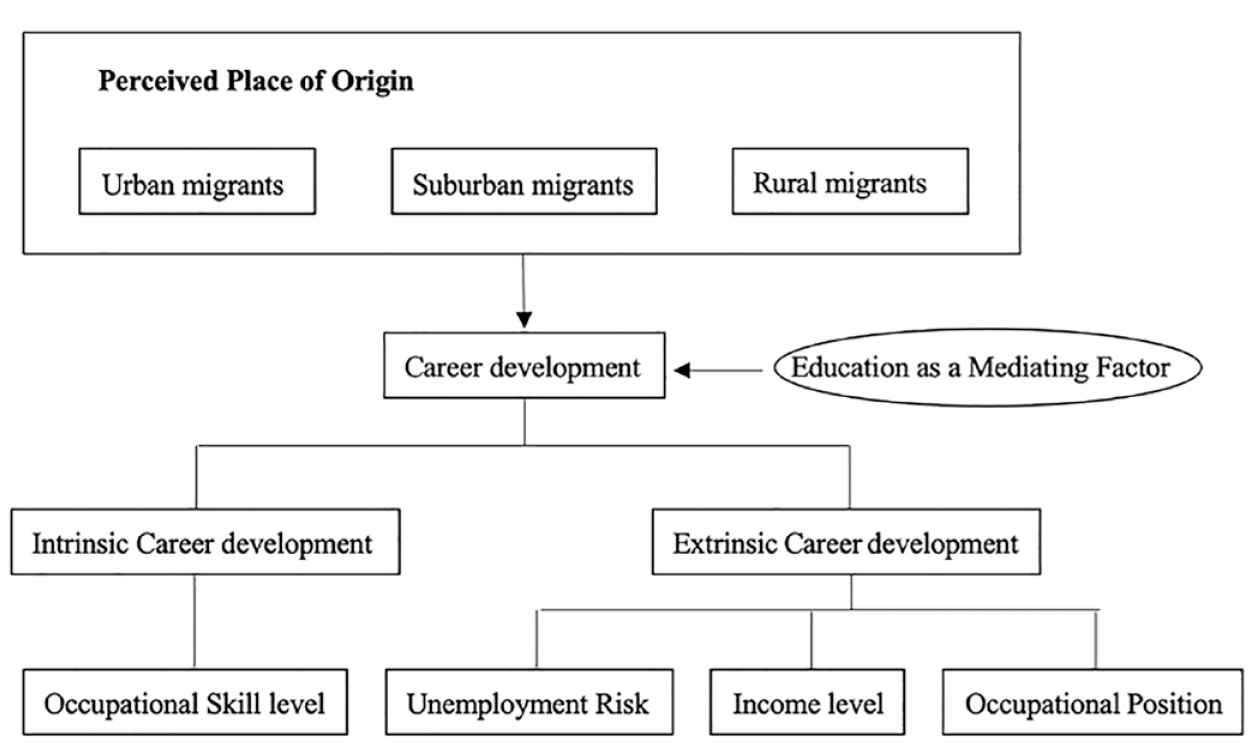
Research framework.
Furthermore, to distinguish between various subgroups of migrant workers, particularly with a specific focus on suburban migrants, this study incorporates the term “jiehebu”, a commonly used Chinese term, into the questionnaire survey to capture respondents’ perceived place of origin. This approach allows for a more nuanced analysis of career development experiences among different migrant populations.
Data and methods
Study area
Zhejiang Province consists of 11 prefecture-level cities. It is situated in the southeastern coastal region of China, adjacent to the East China Sea, bordering Shanghai to the north, Jiangsu Province to the northeast, and Fujian Province to the south (Figure 2). This strategic location in the Yangtze River Delta, one of China’s most economically dynamic regions, has contributed to Zhejiang’s growth and prosperity.
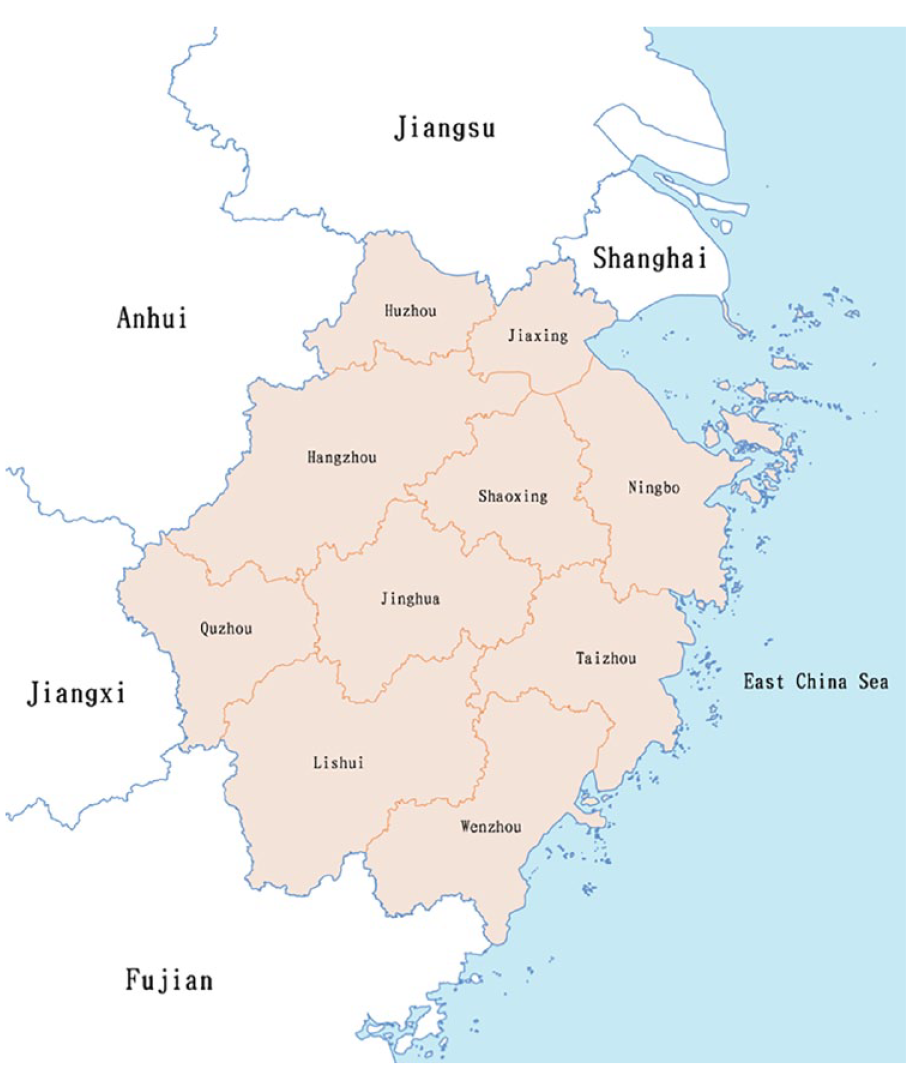
The location of Zhejiang Province.
Zhejiang is one of China’s most economically advanced provinces, boasting a strong and diversified economy. It also stands out as a demonstrative province of narrowing the urban and rural development gap. In 2021, Zhejiang’s per capita disposable income was 52,397 RMB, ranking only behind Shanghai and Beijing; the income ratio between urban and rural residents in the province was 1.94, showing a trend of narrowing for nine consecutive years (National Bureau of Statistics in Zhejiang [NBSZ], 2022a). With a focus on innovation, entrepreneurship, and private sector growth, Zhejiang has witnessed rapid industrialization and urbanization over the years. The province has established itself as a manufacturing powerhouse, encompassing various sectors such as textiles, machinery, electronics, automobiles, and consumer goods, serving as a driving force for economic growth, job creation, and technological advancement (Zhang, 2023).
Data
July 2021 marked the period of overall resumption of work and production in China following the most stringent COVID-19 prevention and control stage. Starting in July, we conducted a large-scale questionnaire survey among manufacturing industry employees. The purpose was to explore the career development of manufacturing workers in Zhejiang against a background of epidemic control. At the time of the survey, it was impossible to distribute questionnaires following the principle of random or probability sampling, as epidemic control was still in place. In order to maximize the coverage of employees from a wide range of enterprises, we adopted a multi-stage, snowball sampling method. The questionnaire was distributed through two channels. First, the questionnaire was distributed by teachers from vocational colleges and technical institutes who had established cooperative relationships with local manufacturing companies. Second, taking advantage of the summer social projects organized by colleges and universities, trained students were recruited to deliver questionnaires at their internship companies during the summer vacation.
In order to address the possible selection bias associated with the sampling method, several strategies were adopted to enhance the representativeness of the survey. First, we examined and enhanced the geographic sampling frame and the coverage of industrial subsectors to increase the likelihood of capturing a more diverse and representative sample. Second, we compared the survey sample characteristics to external data sources, which helped assess the validation of the sample and identify areas where adjustment may be necessary.
After verifying the information about the respondent’s cities of origin and company subsectors, the survey finally yielded 553 valid samples out of a total of 728 returned questionnaires, with a valid response rate of 77.8%. These valid questionnaires covered 11 prefecture-level cities in Zhejiang Province.
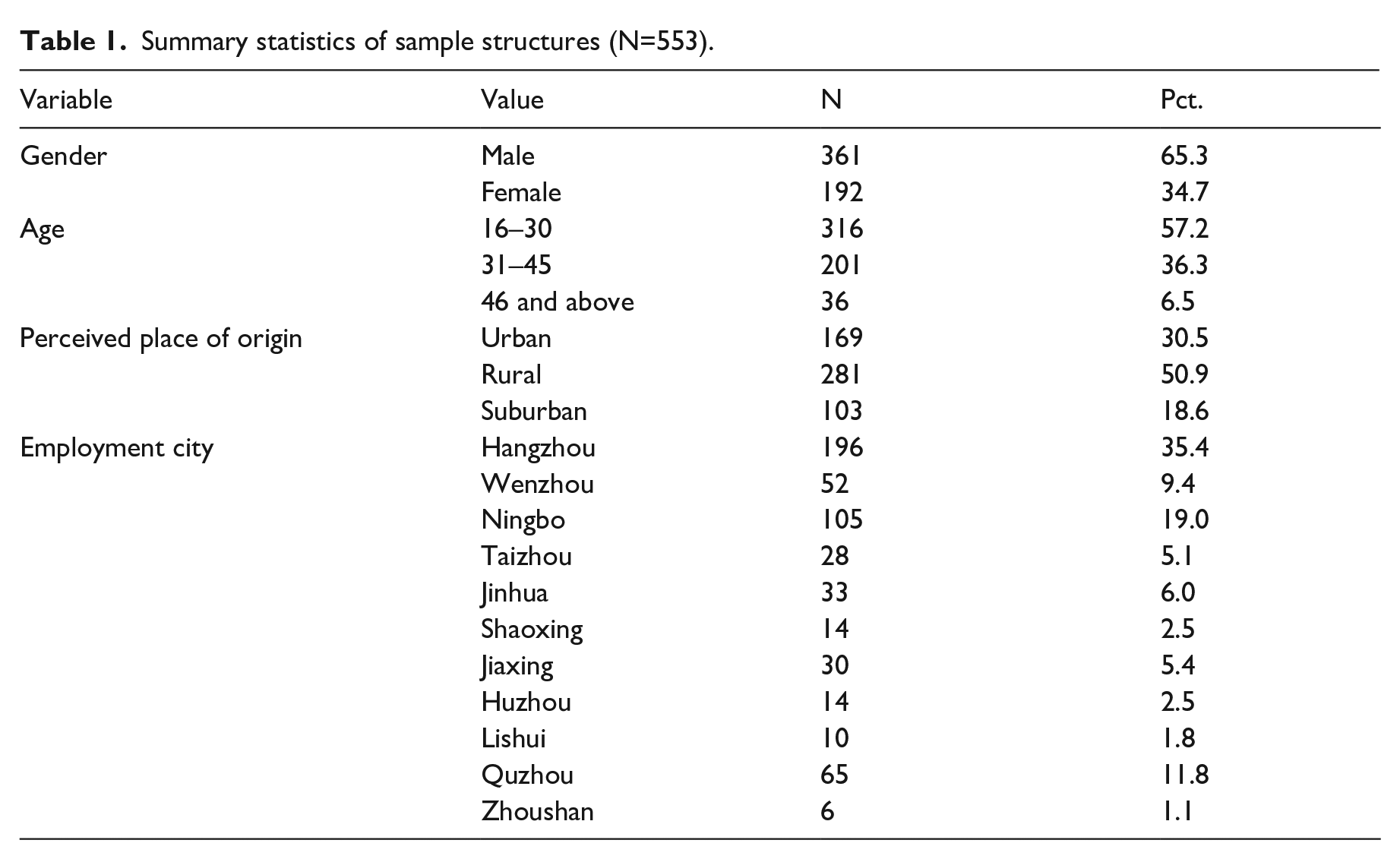
Regarding geographical and industrial coverage, the questionnaire covered 11 prefecture-level cities in Zhejiang Province and 163 manufacturing enterprises representing the 15 major manufacturing sectors in Zhejiang Province, such as general and special equipment, electrical machinery and equipment, textile manufacturing, clothing and apparel, automotive and automotive parts, and agricultural and sideline food processing. Among the surveyed enterprises, small to medium-sized enterprises accounted for 74.3%. According to data from the National Bureau of Statistics in Zhejiang (NBSZ, 2022b), in Zhejiang, private enterprises accounted for 92.5% of the total number of enterprises, of which 88.1% were small and medium-sized enterprises. Therefore, in terms of industry coverage and enterprise scale, the characteristics of the sample corresponded closely to the overall provincial data. Regarding respondents’ types of posts, 33.6% were operators, 36.1% were technicians, and 30.3% were in administrative positions, representing a relatively even distribution across different positions. See Table 1 for further summary statistics of sample structures.
Summary statistics of sample structures (N=553).
Variables
Independent variable
This research explores the influence of place of origin on the career development of migrant workers. Therefore, we took the respondent’s place of origin as the independent variable. As discussed in the literature review, identifying suburban migrants solely based on their hukou status can be challenging. Therefore, we opted to capture respondents’ perceived place of origin rather than relying on demographic records from their official documentation, such as the hukou, which categorizes individuals as either urban or rural residents.
To ensure an unbiased understanding of place of origin during the survey, we intentionally avoided using a specific term in the question measuring the independent variable. Instead, the question simply asked, “Where are you from?” Three response options were provided: urban, rural, and suburban (Chengxiang jiehebu). Consequently, respondents’ answers to this question were rooted in their personal experiences before relocating to the host cities and their subjective perceptions of the environment in which they grew up.
Dependent variables
Career development was captured by four sets of variables: unemployment risk, income level, occupational position, and occupational skill level (Table 2).
Summary of key independent variables.
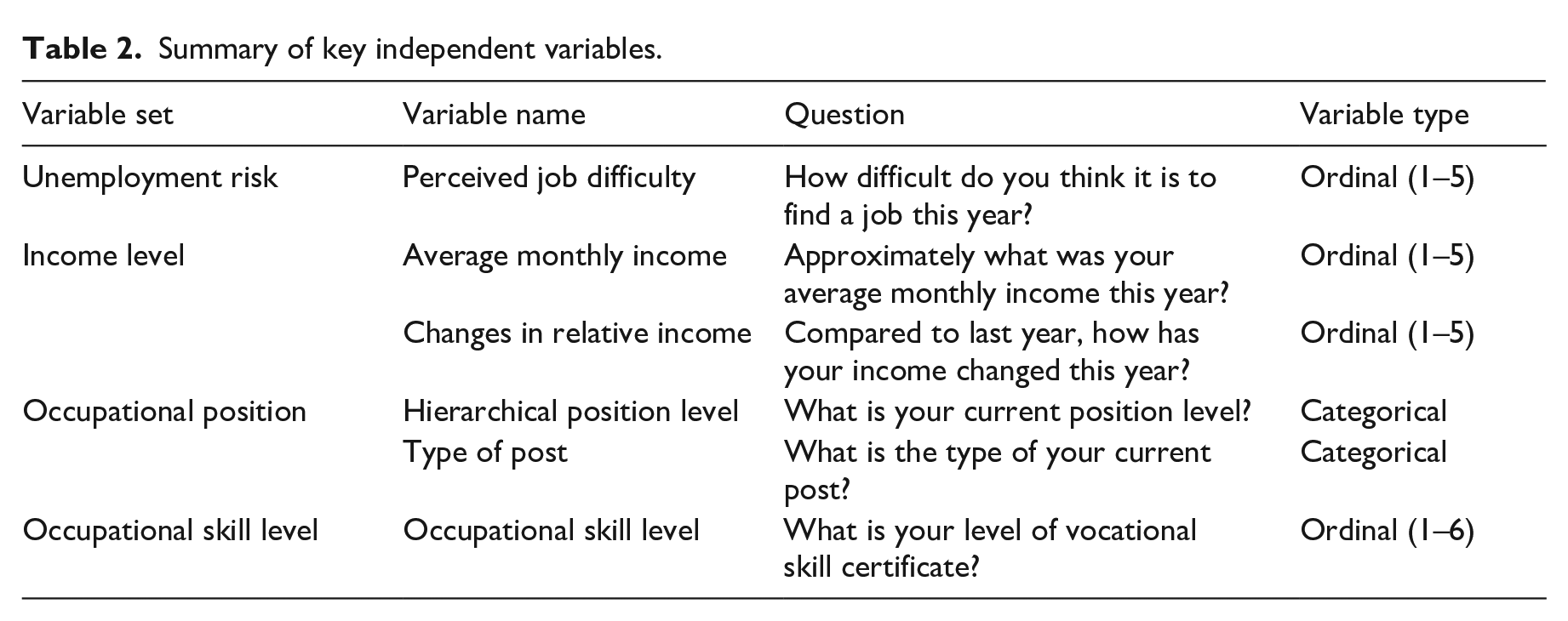
First, unemployment risk was measured by asking the respondents’ perceived difficulty in finding a job. The difficulty of finding work means a higher risk of unemployment. Second, income level was captured by two variables: average monthly income and changes in income relative to the previous year. Third, occupational position was captured by two variables: hierarchical position level (frontline employee, frontline manager, middle-level manager, and senior-level manager) and type of post (operator, technician, administration). Finally, the occupational skill level was measured by the national standards set by the Chinese vocational qualification levels for skilled practitioners. The respondents are categorized into six classes, from the lowest class to the highest class, based on the level of vocational skill certificate obtained: no certificate, junior worker, intermediate worker, senior worker, technician, and senior technician.
Control variables
Control variables encompassed socio-demographic characteristics of respondents, namely age and gender. Gender (1 = male) was controlled to account for potential influences on career development and educational attainment. Age was also controlled for its potential effects. The statistical analysis incorporated both linear and squared terms of age in the model. This choice was motivated by the observed pattern where income generally increased with age during the initial stages of labor market entry, reached a peak, and subsequently stabilized before gradually declining until retirement (Zhang and Chen, 2021).
Statistical methods
This study employed one-way analysis of variance (ANOVA) and chi-square analysis to investigate variations in career development among individuals from distinct birthplaces. Additionally, the study introduced education level as a mediating variable to explore the underlying mechanisms through which birthplace affects career development. The mediating effect was examined using the Bootstrap method (Hayes and Preacher, 2014). Data processing was conducted using SPSS 23.0 software.
Empirical findings
Descriptive statistical analysis
The impact of the epidemic on the full sample
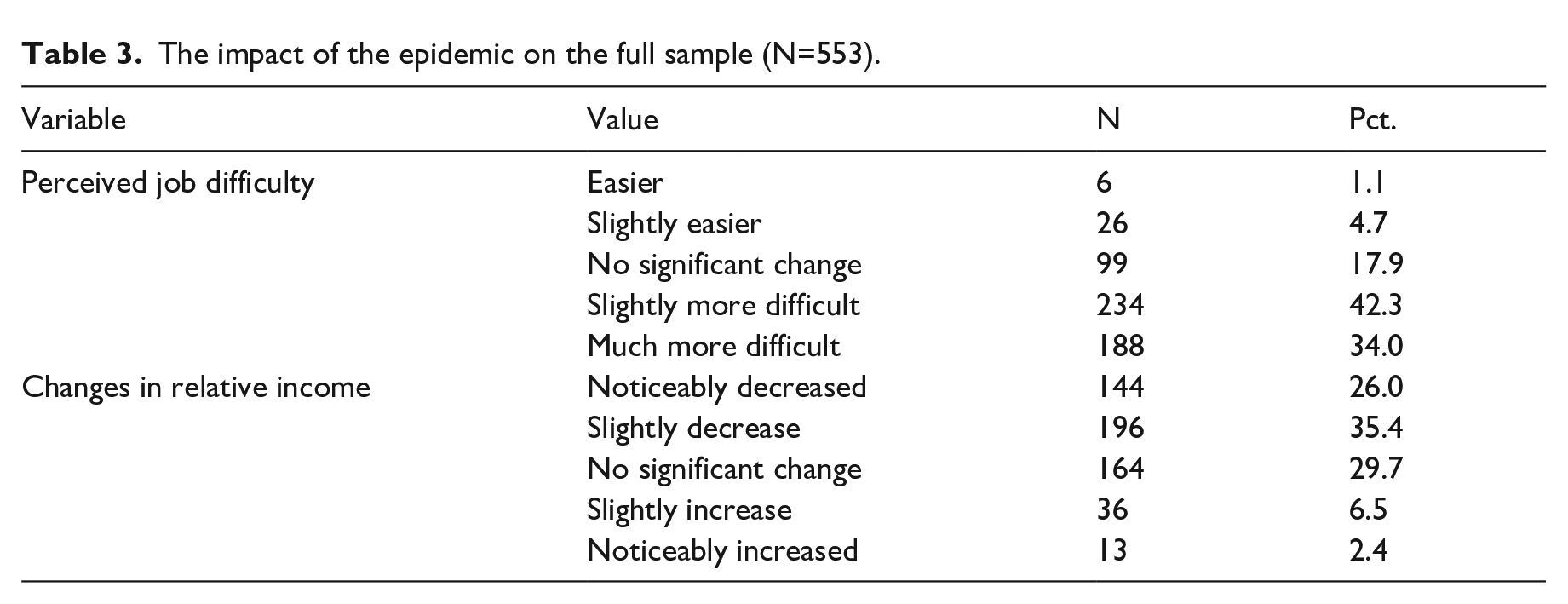
As the survey was conducted during the stage of the pandemic control. The influence of the pandemic on overall manufacturing workers is evident in two key indicators: “perceived job difficulty” and “changes in relative income” (Table 3). The results indicate that a substantial majority of workers (76.3%) faced heightened job difficulties compared to the pre-pandemic period, and 51.4% reported a decrease in wages compared to the previous year. These findings unequivocally illustrate the detrimental influence of the pandemic on the professional progression of manufacturing workers as a whole.
The impact of the epidemic on the full sample (N=553).
Statistical overview of suburban migrants
The study encompassed 553 participants, with the smallest subgroup consisting of 101 individuals who migrated from suburban areas, among these participants, 93 individuals held urban hukou, while 9 individuals held rural hukou.
Within the suburban migrant subgroup, 70 were male and 31 were female. Out of these, 37 individuals were employed in Hangzhou, the capital city of Zhejiang Province, while the rest were distributed across manufacturing-intensive cities such as Ningbo, Wenzhou, Quzhou, and Taizhou. Most respondents (49.0%) were aged between 21 and 30, and an additional 16.7% fell within the 31–40 age range. Regarding education, 11.9% had attained junior high school education or lower, while 25.7%, 38.6%, and 23.8% held high school/vocational school, junior college, and undergraduate degrees, respectively. Notably, none of the individuals in this subgroup possessed a master’s degree or higher. The career development of this subset is presented in Table 4.
Summary statistics of the suburban sample (N=101).
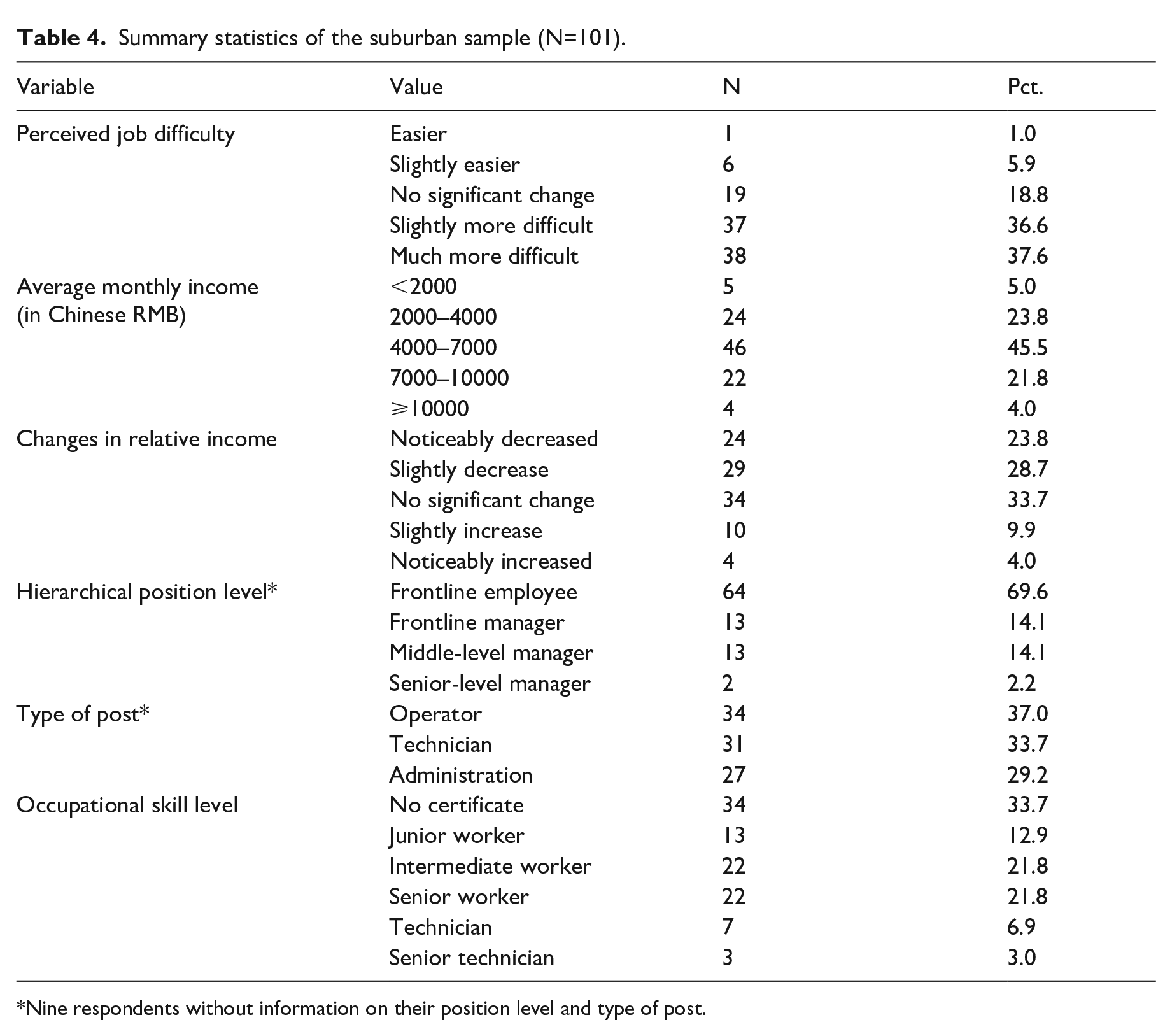
Nine respondents without information on their position level and type of post.
Difference analysis across urban, rural, and suburban groups
Using the place of origin types (urban, rural, suburban) as the independent variable, and variables pertaining to four dimensions of career development as dependent variables, we conducted an analysis of variance to explore the disparities in career development across urban, rural, and suburban groups (Table 5).
ANOVA tests of career development differences across urban, rural, and suburban groups.
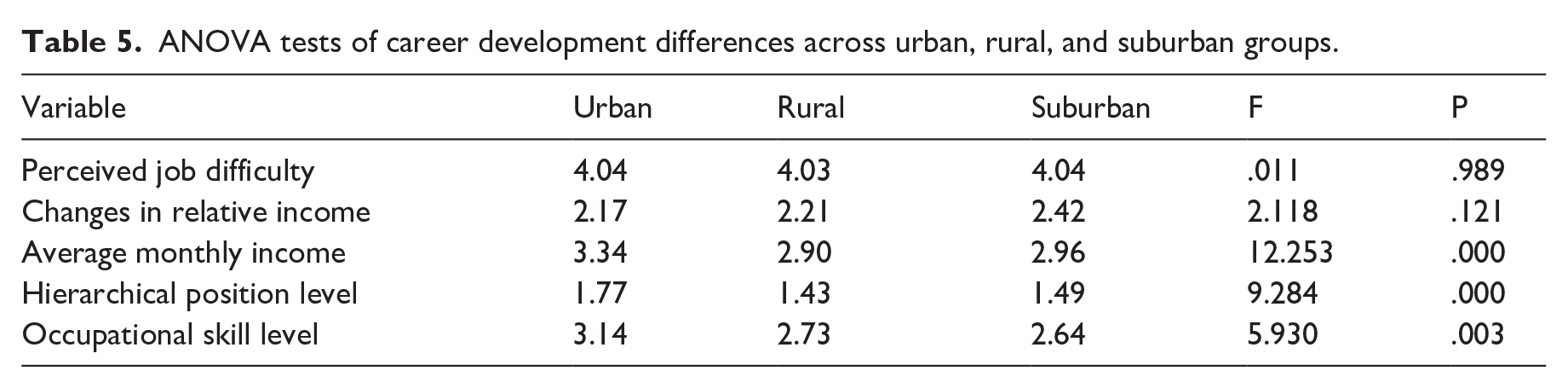
No significant disparities were found among urban, rural, and suburban workers regarding two crucial indicators: perceived job difficulty and changes in relative income. The majority of workers, regardless of their origin, experienced increased employment challenges and decreased income. This could potentially be attributed to the substantial impact of the pandemic, which may have reduced discrepancies among the three groups. However, notable variations were observed across urban, rural, and suburban categories regarding three indicators: average monthly income, hierarchical position level, and occupational skill level.
The post hoc multiple comparisons revealed significant disparities in average monthly income, hierarchical position level, and occupational skill level among manufacturing workers. These disparities predominantly exist between urban and rural groups, as well as between urban and suburban groups. However, no significant distinction was found between rural and suburban groups (Table 6). Notably, workers originating from urban areas demonstrate superior performance in terms of income, position level, and skill level compared to those from rural and suburban areas (Table 5).
Post hoc multiple comparisons of ANOVA tests.
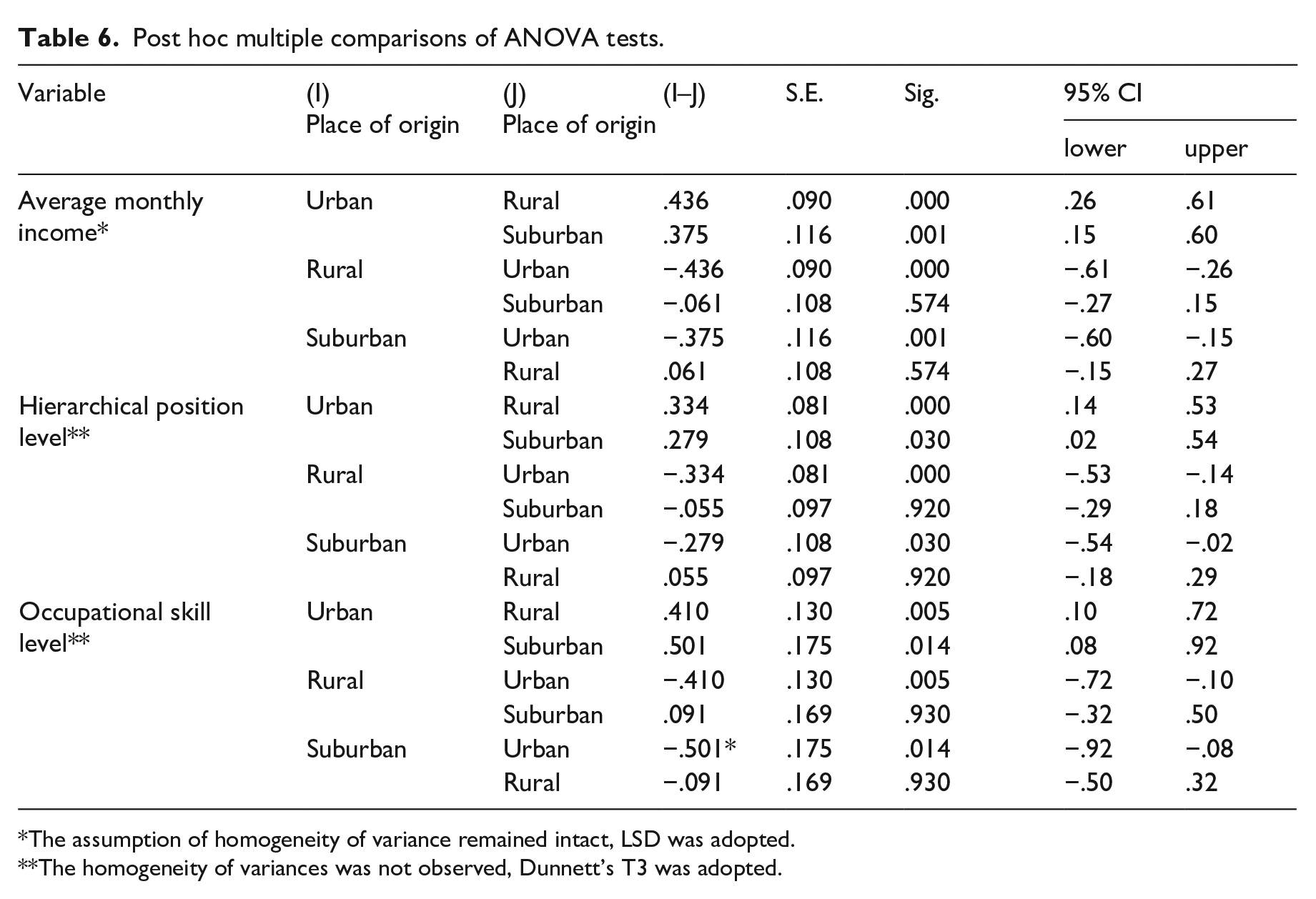
The assumption of homogeneity of variance remained intact, LSD was adopted.
The homogeneity of variances was not observed, Dunnett’s T3 was adopted.
A chi-square analysis was performed to examine the association between place of origin and type of post. Table 7 presents the results, revealing a statistically significant disparity in job nature across regions (χ2 = 15.678, p = 0.003). Urban manufacturing workers predominantly occupied technical or administrative positions, with only 23.21% involved in frontline operational roles. In contrast, rural and suburban manufacturing workers had a higher proportion (over 1/3) engaged in basic tasks.
Chi-square analysis of place of origin and type of post*.
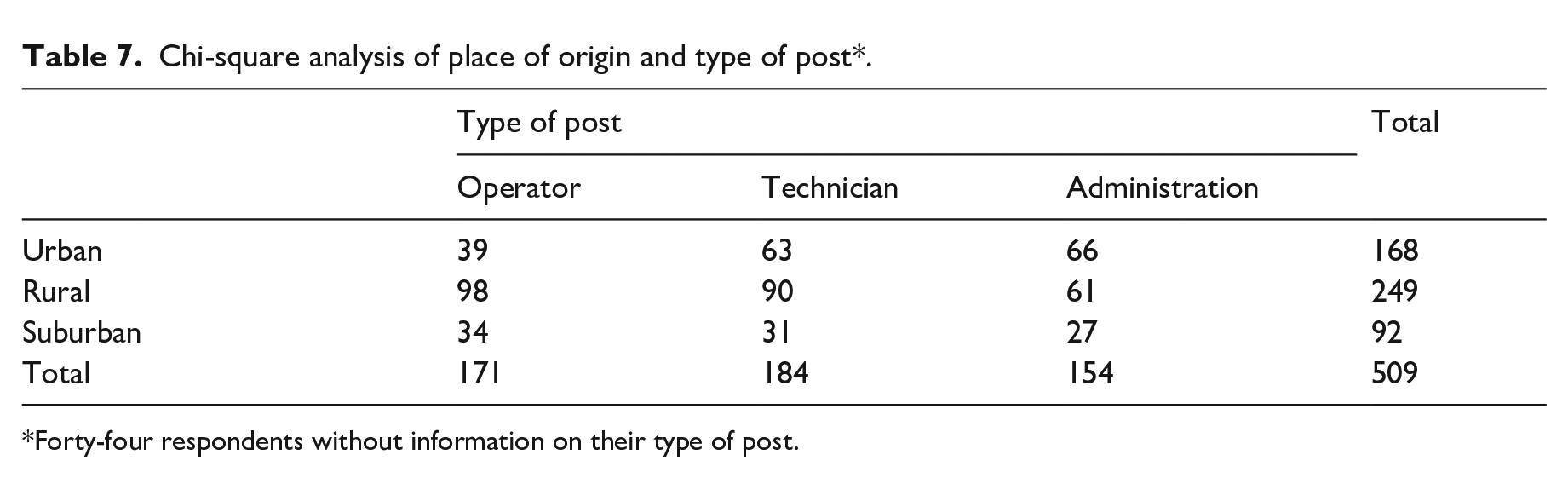
Forty-four respondents without information on their type of post.
Assessing the mediating effect of education
As discussed in the literature review, education plays a pivotal role in shaping one’s career development. In China, access to education before entering labor market is typically divided into three phases: compulsory education (usually from the age of 6 to 15), senior high or vocational schooling (usually from the age of 15 to 18), and higher education (associate schooling and above). The nine-year compulsory schooling 1 period is primarily determined by individuals’ hukou, limiting their freedom to choose schools outside of their designated school district (xuequ) – an area encompassing several blocks. High and vocational education is also closely tied to hukou and is typically restricted within the provincial level. 2 Therefore, it can be inferred that the quality of education one receives during the nine-year compulsory schooling and senior high schooling in linked to their place of origin.
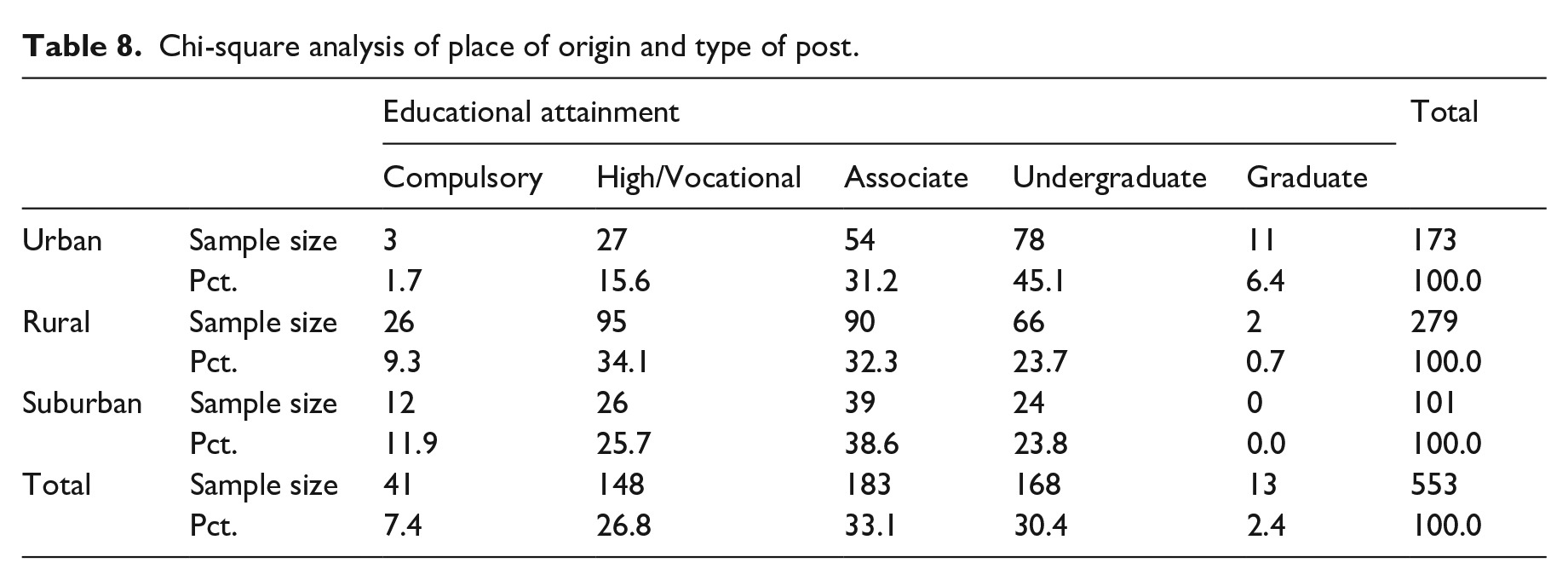
With this perspective in mind, we employed a chi-square test, which revealed a significant disparity in educational attainment among urban migrants, rural migrants and suburban migrants (χ2 = 61.693, p < 0.001). Table 8 displays the proportions of subgroup receiving education beyond the college level (associate degree or higher), indicating that urban migrants exhibited the highest proportion, followed by those from suburban areas, while individuals from rural areas had the lowest proportion.
Chi-square analysis of place of origin and type of post.
The literature review has confirmed the crucial role of educational attainment in influencing individuals’ occupational advancement, as consistently demonstrated in previous research. However, the relationship has yet to be investigated specifically for suburban migrants. Thus, we aim to reevaluate the connection between individuals’ place of origin and their career development, considering educational attainment as a mediating variable. To analyze the mediating effect, we employ a model structured as in Figure 3.
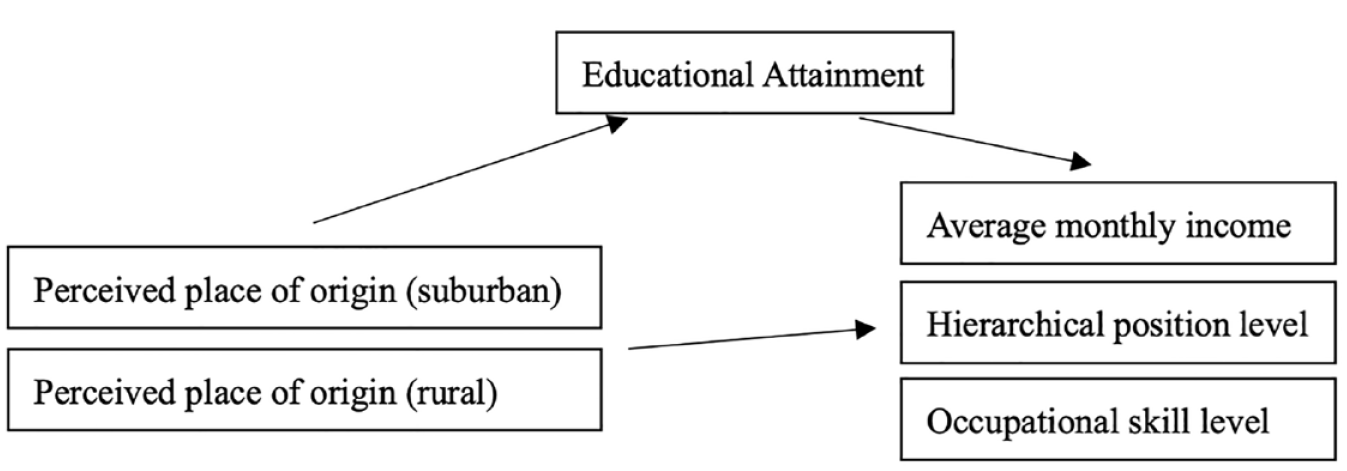
Model of the impact of place of origin on career development.
Utilizing the testing method proposed by Hayes and Preacher (2014) for mediating effects of multicategorical independent variables, we examined the influence of place of origin on income, position level, and skill level. The independent variable was encoded into two dummy variables (1 = rural or suburban; 0 = urban), using the city as the reference category. Gender and age were introduced as control variables. Based on the Bootstrap method, a sample size of 5000 was selected for testing the mediating effect, with a 95% confidence interval. The results are presented in Table 9.
Mediation analysis based on Bootstrap method.
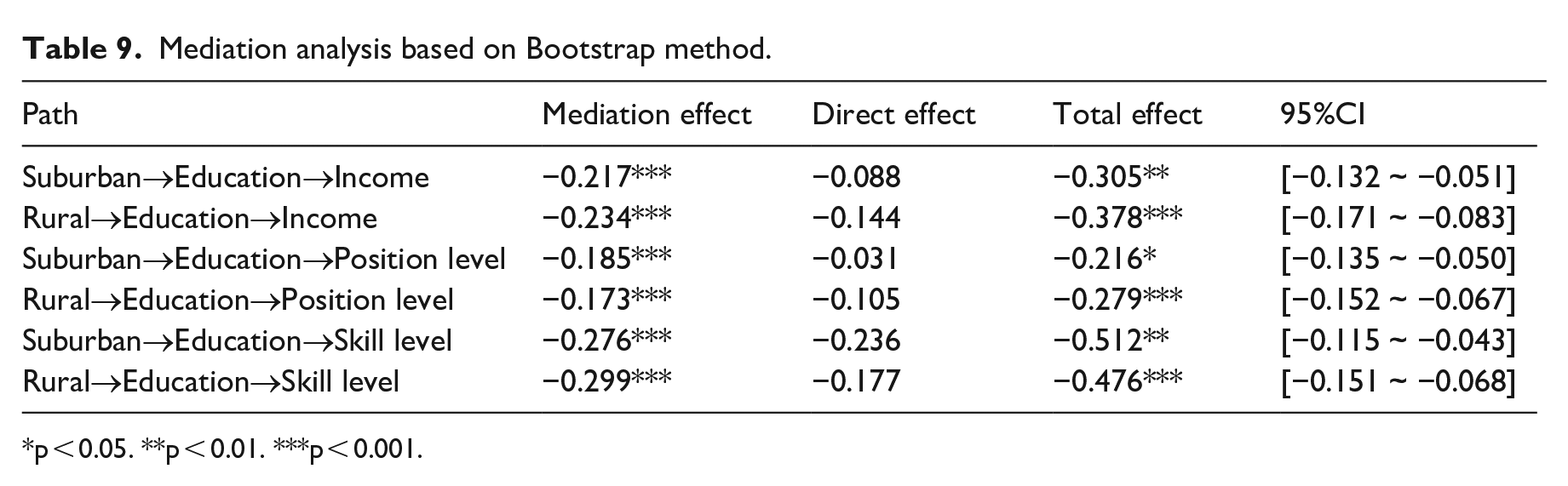
p < 0.05. **p < 0.01. ***p < 0.001.
The statistical findings demonstrate that when investigating the impact of independent variable (place of origin) on income, position level, and skill level, educational attainment plays a complete mediating role. This implies that education disparity is a key factor contributing to career development disparity across urban, rural, and suburban migrants.
Discussions and conclusions
Is the career development situation of suburban migrants more akin to that of rural migrants or urban migrants? In our study encompassing 533 manufacturing workers from urban, rural, and suburban localities, findings suggest minimal disparities in career development between workers from suburban and rural regions. These individuals exhibit relatively lower monthly incomes, occupy lower rungs on the occupational hierarchy, undertake more fundamental job tasks, and possess inferior occupational qualifications compared to their urban counterparts. Notably, the mediation analysis highlights educational attainment as the pivotal factor influencing these outcomes. Workers originating from suburban areas face limited access to high-quality education, thereby sharing similar educational levels with their rural counterparts, ultimately impeding their future career progression.
These findings align with the discussions put forth by Roast and his colleagues in their work on migration studies, where they underscore the importance of approaching displacement from a inter/subdisciplinary perspective and advocate for a collaborative research agenda to better understand and support the experiences of the displaced (Roast et al., 2022). Our study focuses on work organizations as the primary arena, where the urban and rural dimensions of migration mobility intersect and unfold jointly. It demonstrates that individuals from different urban development spheres do indeed have a correlation between their career development and their place of origin, which is influenced by education as a mediator.
While it’s worth acknowledging that the research data was collected during the challenging period of the COVID-19 pandemic, and we recognize the limitations imposed by the necessity of using a non-probability sampling approach due to lockdown policies, these findings hold two significant implications for future migration studies in China.
Firstly, the study introduces a novel type of migrant in China, complementing the existing typologies of urban and rural migrants (Wang et al., 2016; Wu and Wang, 2014). It refines the concept of resettled residents, further distinguishing between “local resident who has been resettled” (Wang, 2022) and off-site resident, whom we argue should be considered a type of migrant – suburban migrants. While their hukou status may primarily be categorized as urban from a statistical perspective, their experiences prior to leaving their places of origin often align more closely with those of rural migrants; and out findings highlight their common challenges in career development. In this context, it becomes evident that the subgroup of suburban migrants is underrepresented in existing research and warrants significant scholarly attention in terms of both research subjects and methods.
On the one hand, as a distinct subgroup of migrants, it is imperative to delve deeper into understanding the impact of urbanization on them in future studies. In suburban migrants’ places of origin, what were the themes of choice, value, and infrastructure in shaping their displacement (Roast et al., 2022)? In comparison to rural migrants and urban migrants, do they exhibit similarities in terms of socioeconomic integration and identity formation in the host cities? Does the notion of suburban migrant identity play a significant role in their adaptation processes? On the other hand, methods for collecting demographic information in future migration studies should be enhanced accordingly. For instance, researchers should design more nuanced statistical options when investigating household registration status, and incorporate questions about migrants’ pre-migration experiences into research protocols. In this context, it stresses the importance of acknowledging the diversity within the migrant population and conducting more context-specific studies to gain a comprehensive understanding of the experiences and challenges faced by different migrant subgroups.
Secondly, this study underscores the importance of scholarly attention to the construction of the “soft environment” for rural and suburban migrants. In general, factors influencing career development encompass education, family and social resources, and the working environment. However, due to the uneven distribution of education resources in China and its linkage to hukou, resettled residents’ access to public education resources depends on the pace at which public resource allocation keeps up with the urbanization process.
Despite the visible urbanization in certain suburban areas in recent years, caused by the emergence of numerous factories, commercial centers, and a shift from agricultural to industrial labor among farmers, and changes in household registration from rural to urban, it is crucial to acknowledge that these suburban areas still fundamentally lack urban characteristics in terms of educational resources and future occupational prospects for local residents. Despite external infrastructure changes, the underlying resource scarcity, particularly in the realm of basic education, persists and is likely to have enduring consequences for the socioeconomic advancement of the local population.
The survey conducted in the province of Zhejiang, renowned for its balanced urban-rural development and minimal disparities, highlights a notable context. In May 2021, the Chinese central government introduced explicit policies to support Zhejiang’s progress as a national demonstration zone for common prosperity, recognizing its commendable achievement in balancing urban-rural development. However, even within Zhejiang, significant disparities in basic education resources persist. National statistics reveal that a significant majority of dilapidated buildings in ordinary middle schools (88.21%) and ordinary primary schools (93.95%) are concentrated in suburban and rural areas. Moreover, national education expenditure data from 2006 to 2015 demonstrates that both per capita education funding and per capita public budgetary funds for ordinary junior high schools and primary schools in suburban and rural areas fall significantly below the national average.
It is in this context that the research calls for comprehensive examination of both the construction of the “soft environment” and the institutional support it necessitates. From the institutional perspective, soft environment construction extends beyond the physical landscape and places emphasis on creating supportive social and institutional structures, including education systems, policies, and resources, to facilitate the career development of migrant workers and promote positive outcomes within the urbanization process. This highlights the importance of addressing disparities in education resources and access as a crucial component of comprehensive urbanization strategies and policies in China.
Footnotes
Declaration of conflicting interests
The author(s) declared no potential conflicts of interest with respect to the research, authorship, and/or publication of this article.
Funding
This work was supported by the National Social Science Foundation of China (19CGL071/19BGL124).