



Abstract
Aligned with industrial restructuring and upgrading in China, many cities have issued favourable ‘talent’ policies, including ‘talent housing’ policies, to attract and absorb highly skilled rural-to-urban migrants. One such policy has been for local governments to offer Affordable Rental Housing (ARH) for talents and their families. While the migration motives and labour market positions of highly skilled migrants are well-understood, significantly less attention has been paid to their housing circumstances. This paper explores the housing strategies of highly skilled newcomers in accessing subsidised housing in Shanghai (from rural-to-urban migrants’ perspective). The qualitative data was drawn from 62 in-depth interviews with migrants and analysed thematically using NVivo.
This study extends existing theories by demonstrating that highly skilled migrants adopt multi-layered and multi-phased coping strategies. In their pursuit of desired housing outcomes, migrant applicants initiated multi-layered strategies, seeking information from diverse sources and evaluating their prospects. However, findings reveal that the actual institutional policy landscape sometimes conflicts with the proclaimed talent-oriented target, resulting in unexpected structural barriers and constraints. Consequently, highly skilled migrants are compelled to employ additional and ad hoc solutions, often deemed unsatisfactory and compromising. The paper then illustrates how coping becomes multi-phased as migrants grapple with these additional structural barriers, which their initial coping strategies alone cannot sufficiently address. By introducing the innovative concept of ‘coping with coping’, this paper enriches existing coping strategies and structuration theories, offering valuable insights for policymakers and government authorities.
Keywords
Introduction
In conjunction with intensified inter-city competition, China’s economic restructuring has brought about a shift to knowledge and technology-based industries, resulting in an increased demand for skilled labour in urban areas. Skilled migration has been recognised as a substantial contribution to the workforce in the era of globalisation (Fassio et al., 2019). Highly skilled migrants, due to their qualifications and expertise, tend to establish long-term residency in destination cities and actively pursue their aspirations of obtaining citizenship (Wang, 2010). However, despite their advantageous positions in the labour market, these urban newcomers still face significant challenges when it comes to accessing housing in cities. Over the past years, entry-level skilled migrants have experienced disadvantages in the housing market and have been compelled to leave major cities due to soaring housing prices (Cui, 2015).
To ease the housing pressure faced by new urban residents in big cities, the Chinese government introduced Affordable Rental Housing (ARH) as a policy solution to address housing issues in cities with net population inflows. While highly skilled migrants have been included in the scope of ARH, there is a scarcity of research on the implementation of this policy change and its impact specifically on skilled migrants. Additionally, little is known about how skilled migrants can effectively utilise this policy to secure public housing units. Given the increasing significance of skilled labour in enhancing the attractiveness of a location, it becomes imperative to examine whether migrants have obtained enough resources to ensure their successful housing application.
This paper explores the responses of skilled migrants to the opening of the ARH policy to migrants. Our study focuses on understanding the strategies employed by migrants in navigating the application process and securing housing units. Through an analysis of their housing pathways and experiences, we aim to gain a comprehensive understanding of how skilled migrants engage with the ARH policy and improve their housing outcomes. Our research addresses three key questions:
How do highly skilled migrants understand the ARH housing structures?
What strategies do they use to navigate their housing choices?
How do highly skilled migrants achieve collective action in negotiating within the allocation system?
To address these research questions and gain insight into skilled migrants’ experiences, we focus on their interactions with the ARH application process in Shanghai. Our analysis centres on their coping strategies at various levels and their perceptions of housing allocation practices across different district governments. We draw from interdisciplinary literature on social structures (Giddens, 1986) and coping strategies (Jin, 2009, 2010; Kolier, 1991; Lazarus and Folkman, 1984; Somech and Drach-Zahavy, 2007), with a particular focus on the interplay between institutional structures and the coping strategies individuals employ to navigate these structures. This research is particularly relevant given the current landscape in Chinese mega-cities, where there is growing pressure to attract skilled labour for economic advancement. The measures implemented by various local governments to compete for talent have garnered mixed reviews and scrutiny. Therefore, a comprehensive understanding of coping strategies within this framework is both timely and essential.
Specifically, we investigate highly skilled migrant groups in two districts within Shanghai: one in the downtown area and the other on the periphery. Our preliminary research findings reveal a range of intricate coping strategies employed by migrants at individual, employment-related, and community-based levels when making decisions regarding their ARH applications. Furthermore, our investigation highlights that the coping strategies of highly skilled migrants are context-specific and influenced by the distinct housing allocation structures in their respective districts. Consequently, variations in attitudes and behaviours emerge among migrant applicants in these two separate districts. Some of the coping strategies, grounded in migrants’ skill capabilities in the labour market, prove insufficient in addressing the newly arisen housing barriers. This inadequacy generates new anxieties among participants, prompting them to resort to additional ad hoc solutions, often perceived as unsatisfactory and compromising. Consequently, these additional coping strategies may exacerbate the marginalisation experienced by migrants.
Theoretically, the paper advances the structure/agency theory by introducing the concept of ‘coping with coping.’ It illustrates how highly skilled migrants navigate the intricate landscape of housing structures and elucidates why they are compelled to modify their coping strategies in response to housing barriers within their host districts. These findings have significant implications for government policymakers, as they provide insights into individual migrants’ coping mechanisms, support for migrant employers and communities, and the promotion of inclusive practices guided by various institutional arrangements.
Following the introduction, the second section provides a literature review on skilled migration, migrant housing, and their strategies, while the third section outlines the methodology. Building upon the interview data, the next section examines housing structure design and the implementation of migrants’ strategies within these structures. This section specifically delves into three main aspects: individual coping strategies, employment-based coping strategies, and community-based coping strategies. Furthermore, the fifth section argues that skilled migrants’ housing strategies are influenced by prevailing structural constraints and require additional coping mechanisms to address them. Finally, the sixth section concludes the paper.
Literature review
Skilled migration
Though treated as part of overall migration, highly skilled migrants are viewed as so specific that their analysis should always remain apart from other migrant groups (Marques et al., 2021). Loosely defined, highly skilled migrants are those who have obtained a college degree and are employed in white-collar jobs. In the Chinese context, the working definition of a highly skilled migrant in this research: a migrant who is 25 years or older, 1 having obtained at least a bachelor’s degree and specialised expertise in a specific sector, and migrated to a city different from their place of birth (Cui et al., 2015; Wang, 2010). This definition is chosen due to the fact that, for the sake of this research, this definition embodies the most relevant selection criteria in searching the respondents for the empirical part of the research. Moreover, the researcher includes employment status and job position as integral components of this definition. These factors are considered essential as they reflect the specific skills and expertise that migrants bring to various sectors.
The significance of attracting skilled migrants for urban growth and development has been increasingly recognised in the literature, particularly in light of the growing role of skills in global economic restructuring. Numerous studies emphasise the role of attracting highly skilled migrants in sustaining urban growth and development (Kennedy, 2008; Ryan and Mulholland, 2014; Scott, 2006). From a macro-level perspective, skilled migrants are often conceptualised in terms of their contribution to brain drain, brain gain, or brain waste, primarily from an economic standpoint (Salt and Findlay, 1989). Policymakers have also expressed concerns regarding human capital flight associated with skilled migration (Haque and Kim, 1995; Mayer et al., 2018).
Recent research provides evidence that a segment of the skilled migrant population actively seeks upward social mobility and integration into their destination cities (Cui, 2015; Liu et al., 2017; Wang, 2010). These studies highlight the agency exhibited by skilled migrants as they actively navigate and capitalise on the opportunities presented in their host cities (Arunachalam and Healy, 2009). Moreover, recent research in China underscores the increased opportunities pursued by migrant populations to enhance their socio-economic conditions (Huang et al., 2021; Niu and Zhao, 2018), challenging the conventional perception of rural-to-urban migrants as ‘passive pawns’ lacking agency (De Haas, 2010).
Migrants’ housing strategies
Extensive research has been conducted on the housing strategies employed by migrants to access urban housing in different contexts. Turner (1968) proposed a two-stage settlement process for migrants in Latin America during the 1960s. Initially, migrants typically seek affordable rental housing primarily in the central city, but they may also disperse throughout the town to ensure proximity to job opportunities. As migrants’ income increases, they become less dependent on centrally located dwellings and prefer more spacious accommodations in the suburbs. However, the recent expansion and redevelopment of inner cities have resulted in significant increases in land costs. As a result, migrants have developed location-based strategies to address this issue (Adjei et al., 2017; Andreasen et al., 2017; Gilbert, 2016).
Scholars have also examined the agency of different types of migrants in realising their housing preferences and needs (Mulder and Wagner, 1998; Sinning, 2010). These housing strategies are influenced by individual-level resources and the broader housing system context (Mulder and Hooimeijer, 1999). Owusu (1998) reported that the housing strategies of Ghanaian immigrants in Canada are impacted by factors such as the duration of residence, income, family size, initial motives of migration, ties to the hometown, desire for homeownership, and intention to return.
In the context of urban China, housing strategies have primarily centred around residential mobility and homeownership (Huang, 2004). Traditional factors like age, family composition, and income, as well as institutional factors such as hukou status, employer type, and Chinese Communist Party (CCP) membership, have been incorporated into the analysis of Chinese migrants’ housing strategies. Studies conducted during the transitional period of housing reforms in the 1990s and early 2000s have revealed that migrants, regardless of their skill levels, faced significant influences from institutional constraints on their housing behaviour (Huang, 2004; Li et al., 2005). These constraints prevented affluent migrants from purchasing owner-occupied housing and excluded low-to-middle income migrants from accessing housing welfare (Huang et al., 2014; Wu, 2004). Moreover, rising rent levels and housing prices in larger cities have further exacerbated these conditions (Logan et al., 2009; Wu, 2004). Consequently, a majority of low-skilled migrants encountered difficulties in escaping their ‘floating status’ and had to adopt a ‘saving orientation’ to minimise housing expenses (Li and Duda, 2010).
While low-skilled migrants have been extensively studied in China, there is a significant gap in understanding the housing strategies employed by skilled migrants who actively navigate the challenges they encounter in the local area (Liu et al., 2012, 2013). Therefore, it is crucial to examine the strategies utilised by these migrants. Notably, Huang et al. (2010) have observed a diminishing role of institutional factors, such as hukou status, in the social exclusion of rural-urban migrants. Liu et al. (2013) have emphasised the importance of comprehending the ‘coping strategies’ adopted by different migrant groups to examine their housing experiences in urban areas. Their research suggests that migrants who establish connections with local residents are more likely to reside in formal housing and enjoy better housing conditions. Furthermore, Wang et al. (2017) demonstrate that interactions between migrants and locals at the neighbourhood level contribute to the development of an affective relationship based on mutual trust, ultimately leading to improved integration outcomes.
The reform of public housing has presented new opportunities for skilled migrants in terms of housing access. In 2021, the State Council issued the Opinion on Accelerating the Development of Affordable Rental Housing in 2021 (General Office of the State Council of the PRC, 2021). This initiative aims to construct 2.4 million units of government-subsidised rental homes nationwide by 2022, with a particular focus on new citizens and young people in large cities. Skilled migrants thus become a crucial target group for the ARH programme. Some local governments have also developed policies and attraction schemes that offer financial support to employers and businesses, while others have focused on increasing housing capacity by encouraging market property actors to participate and sourcing private housing units to bolster supply.
However, despite these government support policies, it remains uncertain whether skilled migrants can fully benefit from the ARH policy. Due to their unfamiliarity with host-area housing structures, these migrants are likely to experience higher levels of anxiety and confusion than non-migrants when it comes to interpreting, responding to, and utilising the new ARH policy rules and measures imposed by the host-area government (Yu, 2022). Although migrants tend to become more familiar with their host city over time, especially those who are eager to integrate into the host society, many migrants still face barriers in accessing the same housing benefits as local residents (Röder and Mühlau, 2012). Notably, highly skilled migrants often perceive a disconnect between their value in the labour market and their unequal treatment in obtaining public housing benefits. As the ARH programme has now designated skilled migrants as its primary beneficiaries, it is imperative to investigate the strategies employed by skilled migrants to maximise their housing benefits. To fill this research gap, this paper examines migrants’ experiences with ARH application and their coping strategies.
Conceptualising migrants’ coping strategies
The concept of coping strategies is defined by Lazarus and Folkman (1984) as “constantly changing cognitive and behavioural efforts to manage specific external and/or internal demands that are appraised as taxing or exceeding the resources of the person” (141). Lazarus and Folkman further explain that the variety of coping strategies employed by individuals can lead to diverse outcomes. Therefore, coping involves an individual’s active assessment of a situation and the subsequent deployment of cognitive and behavioural strategies to effectively navigate their environment (Lazarus and Folkman, 1984; Rückholdt et al., 2019; Yen et al., 2021). Based on this framework, coping strategies can be categorised into problem-focused strategies (resolving or addressing external obstacles), emotion-focused strategies (managing emotional stress to such obstacles), and avoidance-focused strategies (withdrawing from or escaping such obstacles) (Duhachek, 2005; Kashdan et al., 2006). Drawing from these categorisations, it can be concluded that the efficacy of coping strategies is contingent upon the nature of the evoking event, its subsequent alterations, and individuals’ emotional and rational presuppositions, leading to either positive or negative adaptations within their environment (Duhachek & Rucker, 2015).
In conceptualising coping strategies of highly skilled migrants in this study, we conceive of their multi-layered strategies operating at micro, meso, and macro levels.
The micro-level analysis focuses on how individual migrants make their housing choices based on measurable factors. Mills (1967) and Muth (1969) proposed that the criterion for housing selection is to maximise a housing consumer’s utility constrained by affordability. According to Rosen’s (1974) model, migrants are supposed to make their housing choice based on four utility-bearing attributes: physical, locational, economic, and neighbourhood characteristics (Aljoufie et al., 2013; Tong et al., 2018). Recent studies looking at micro-level strategies are contextualised within the emergence of spatial inequality and development and housing policies. Commonly used strategies include individuals’ selective motivations toward applications and decision-making assessments.
The second dimension highlights the relational nature of coping strategies (Korczynski, 2003; Vlaisavljevic et al., 2016) that individuals adopt to reduce the impact on themselves and their families caused by financial crises, illnesses, discrimination, and racist abuse (Cappellini et al., 2014; Hutton, 2018; Kolier, 1991; Rzepnikowska, 2019). Hutton (2018) particularly emphasises how relational coping strategies empower women, fostering resilience to difficulties and enhancing their sense of empowerment. Studies in migration have identified commonly used strategies, such as leveraging various social networks that migrants can utilise in different areas, ranging from finding a house, to enrolling their children in school, to integrating into the new environment (Crawley & Hagen-Zanker, 2019).
The third dimension highlights the existence of communal coping strategies, where community members adopt ‘collective strategies’ alongside more commonly explored individual approaches (Baker and Baker, 2016). Bruce and Banister (2019) further explain that coping within communities is particularly effective in helping members combat experiences of vulnerability, providing both practical support (such as legal understandings, language skills) and emotional support from participation. This is supported by studies showing how community support is key in strengthening the coping strategies of migrants who have experienced marginalisation (Tervonen & Enache, 2017).
Having presented how coping strategies may operate at the micro, meso, and macro levels, we draw on Giddens’ (1986) structuration theory to further explain the heterogeneity of skilled migrants’ ARH applications and how they play out. In this context, structure refers to the pre-existing rules and resources that are recursively integrated and negotiated with human agents (Giddens, 1979), highlighting the duality and interdependence between structures in society (such as housing regulations or expected norms) and human agency/action (essentially, ‘what people do’). “Society only has form, and that form only has effects on people, insofar as structure is produced and reproduced in what people do” (Giddens and Pierson, 1998: 77). Consequently, structure can simultaneously act as a constraint and an enabler of individual actions.
A limitation of contemporary ‘coping strategies’ theories is the lack of attention to contextual factors that constrain or facilitate agency (Lindovská, 2014). Lindovská’s (2014) review found that few studies included socio-organisational context as an influential factor in ‘housing agency’. They see this as a gap in the literature and argue that housing access results from the dynamic interplay between the individual applicant and their environment. Rather than making a generalisation that everyone reacts to structures in precisely the same way, Giddens’ (1986) structuration theory allows us to position skilled migrants as individual actors (with different degrees of agency depending on their particular circumstances) within different social systems (employee/employer relations, organisational systems, public housing systems). Highly skilled migrants, influenced by and within these different contexts, make sense of and make decisions regarding various social practices (Giddens, 1986).
Figure 1 depicts our conceptual framework incorporating coping strategies and structuration theory across three levels. It attempts to provide a clear and integrated conceptual overview of the interactions between various elements within the framework.
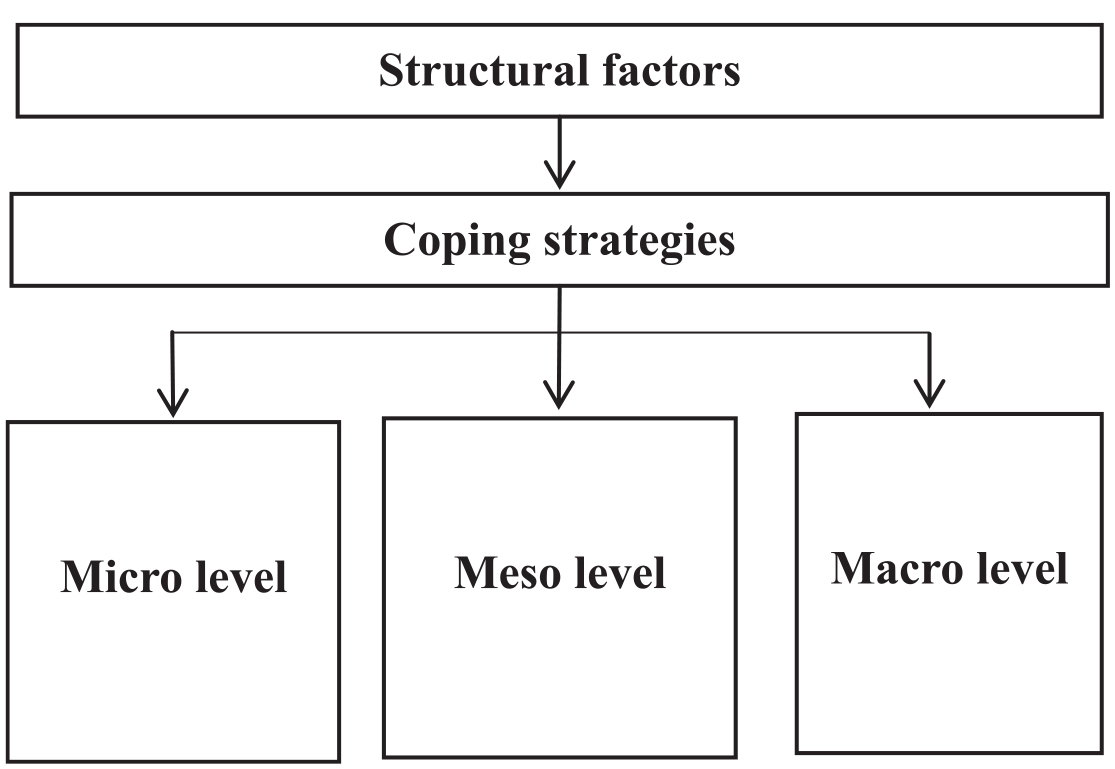
Conceptual framework.
Methodology
Study area
To answer the research question regarding the strategies highly skilled migrants employ to negotiate ARH access, we draw on empirical data from two districts in Shanghai: the core district (Yangpu district) and the peripheral district (Songjiang district), where the ARH programme was located. Except for the representative housing policy, the demographic and economic structures of this area share some similarities and differences with other mega-cities in China, making Shanghai a suitable case for the study.
First, it confirms general observations about a diversified migrant population among Chinese cities. In Shanghai, the share of migrants with a college or university qualification increased since 2010 and the age distribution of the migrant population changed. Moreover, Shanghai is assigned the role of being ‘a global science and technology innovation centre’, with a thriving high-technology industry that has contributed to its economic growth. As a result, the city has become an attractive destination for migrants. In 2020, out of its 24 million residents, nearly 42% were migrants (Shanghai Municipal Bureau of Statistics [SMBS], 2021).
Data collection and methods
Accordingly, the study adopted a qualitative approach to enable an in-depth examination of migrants’ subjective experience. Researchers generally assume that social reality is a human construct; they interpret and contextualise meanings from people’s perspectives (Denzin and Lincoln, 2011). To illustrate, two qualitative methods were adopted to answer the above questions. The first involved reviewing documents directly and indirectly linked to the implementation of the ARH housing policy. These documents support an understanding of the surrounding contexts of ARH provision and allocation in Shanghai. The second involved conducting qualitative interviews that were analysed using a thematic coding approach and narrative analysis.
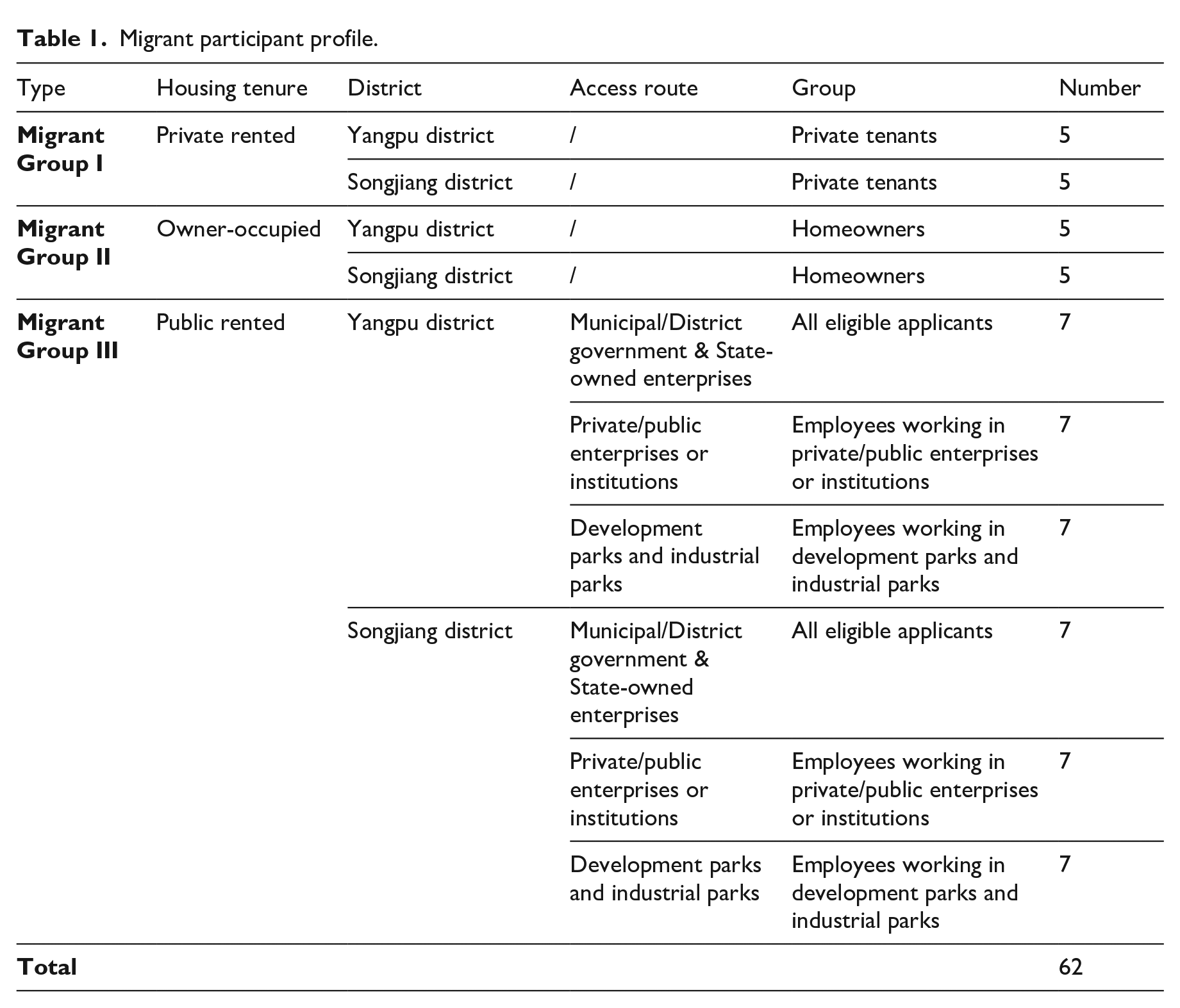
We focus on the perceived strategies of migrants adopted during the ARH application processes in Shanghai, within the system among different groups of stakeholders: highly skilled migrants, employers, and government policymakers. The data are drawn from fieldwork conducted in Shanghai from October 2021 to March 2022. The empirical basis for this study is formed by 62 semi-structured interviews with high-skilled migrants who were allocated with PRH (ARH) units by different housing providers. Participants were recruited through snowballing sampling. The participants originated from different employment sectors: 30 were from the tech sector and 10 from universities or schools, another 10 were from the public sector and 12 came from other sectors. Of the participants, 45 were men and 17 were women. This gender sampling reflects the gender composition of the talent pool, where women account for less than 20% of China’s most popular high-skilled positions (Madgavkar et al., 2019). Most of the migrants (52 out of 62) had university degrees and more than half (40 out of 62) worked professionally in high-technology enterprises. Their average age was 34 years old. Regarding their marital status, 20 were married with no children, 19 were married with children, while 23 participants were single. Table 1 provides a detailed summary of the migrant participant profile across the sample groups.
Migrant participant profile.
The length of the interviews was typically half an hour to one hour. An interview script was developed, consisting of a set of questions which provided a starting point to guide the interaction. The questions were based on the research aims and served as a framework for the thematic coding of the transcribed texts. All the participants were very open and willing to share their experiences in order to assist the research. Consistent with the practices of selective qualitative methods, a thematic coding approach was adopted to analyse data via NVivo.
All the respondents were assigned pseudonyms to maintain their confidentiality and the study was granted full ethical approval. The interviews were conducted in various settings – at the participants’ residences or in offices before the COVID-19, and sometimes online during the COVID-19. To deal with the limitations of qualitative research, data triangulation will be applied with the aim to develop a comprehensive understanding of phenomena (Patton, 1999). Additionally, 40 interviews were also conducted with government, policy makers, and administrators of the ARH system, which although not the focus of this paper, also provided wider contextual information and the opportunity for triangulation.
Data analysis
The data analysis follows a step-by-step procedure to ensure rigor (Gioia et al., 2013). With the support of NVivo software, interview transcriptions underwent a two-round coding process. In the first round of coding, the objective was to identify specific strategies as framed by each group of stakeholders in an inductive fashion (Strauss and Corbin, 1998). In the second round of coding, we re-grouped the first-order codes into more abstract second-order codes that synthesised the perceived challenges into distinct classes of strategies. Refinement continued until the resulting framework of topic areas for each of the second-order codes reached theoretical saturation. Theoretical saturation, in this context, refers to the state where the inductively derived topic areas comprehensively account for the data, and ‘incremental learning is minimal because the researchers are observing phenomena seen before’ (Eisenhardt, 1989: 545). An example of the interview data coding procedure is provided in Figure 2.
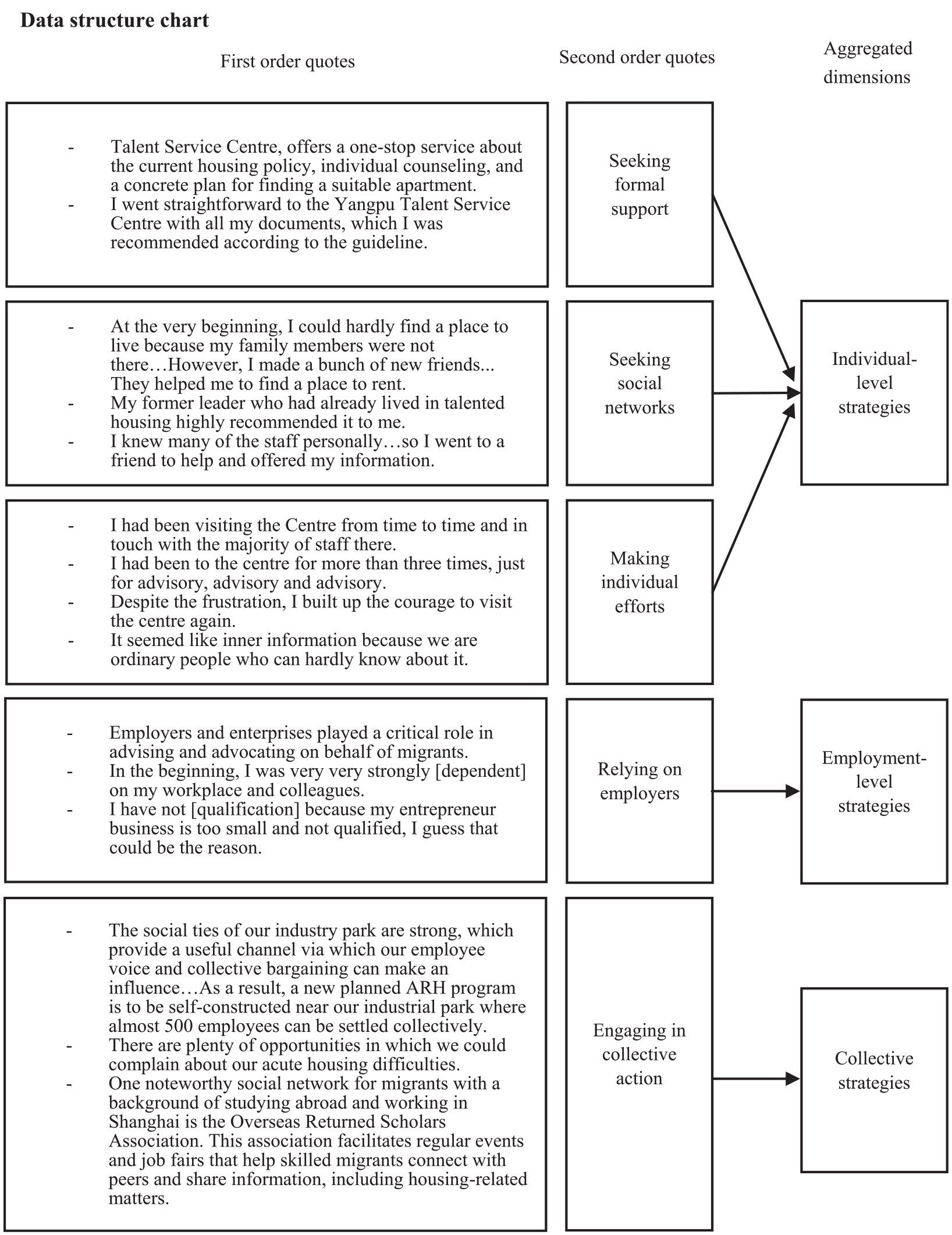
Data analysis sample.
To complement the analysis of interview data, we analysed policy documents and secondary data using the same coding procedure as for the interview transcripts. The analysis of the 22 policy documents provided additional insights into how government policymakers framed strategies for highly skilled migrants, as these documents indirectly represent the attitudes and considerations of the government. Additionally, the analysis of the seven secondary data sources offered further insights into migrants’ strategies from the perspectives of housing authorities and high-tech employers. Secondary data sources either confirmed findings from primary data or provided background information against which to assess the relevance of interview findings, as illustrated in the next section.
Empirical findings
Based on the analysis of framing by three groups of stakeholders (migrants, employers, and government policymakers), we identified both housing allocation procedures and migrants’ housing strategies. Analysis of the documents revealed that the ARH programme exhibits similar characteristics to other public housing schemes but prioritises specific skill groups in various ways, such as giving priority to key employers and providing preferential treatment to specific skill groups. This prioritisation creates opportunities for highly skilled migrants to employ various strategies to successfully access housing. To analyse these strategies, we will adopt Giddens’ structuration theory, which encompasses both housing structures and individual agency.
Allocation procedures of ARH in Shanghai
Since the housing reform of 1994–1998, housing prices in urban China have consistently risen. Our observations have revealed that rental expenses often consume a substantial portion of earnings for skilled individuals. Moreover, many participants have indicated difficulties in accumulating the requisite points necessary to qualify for homeownership opportunities in Shanghai. In such circumstances, public rental housing emerges as a viable solution for migrants seeking stability and integration within the city.
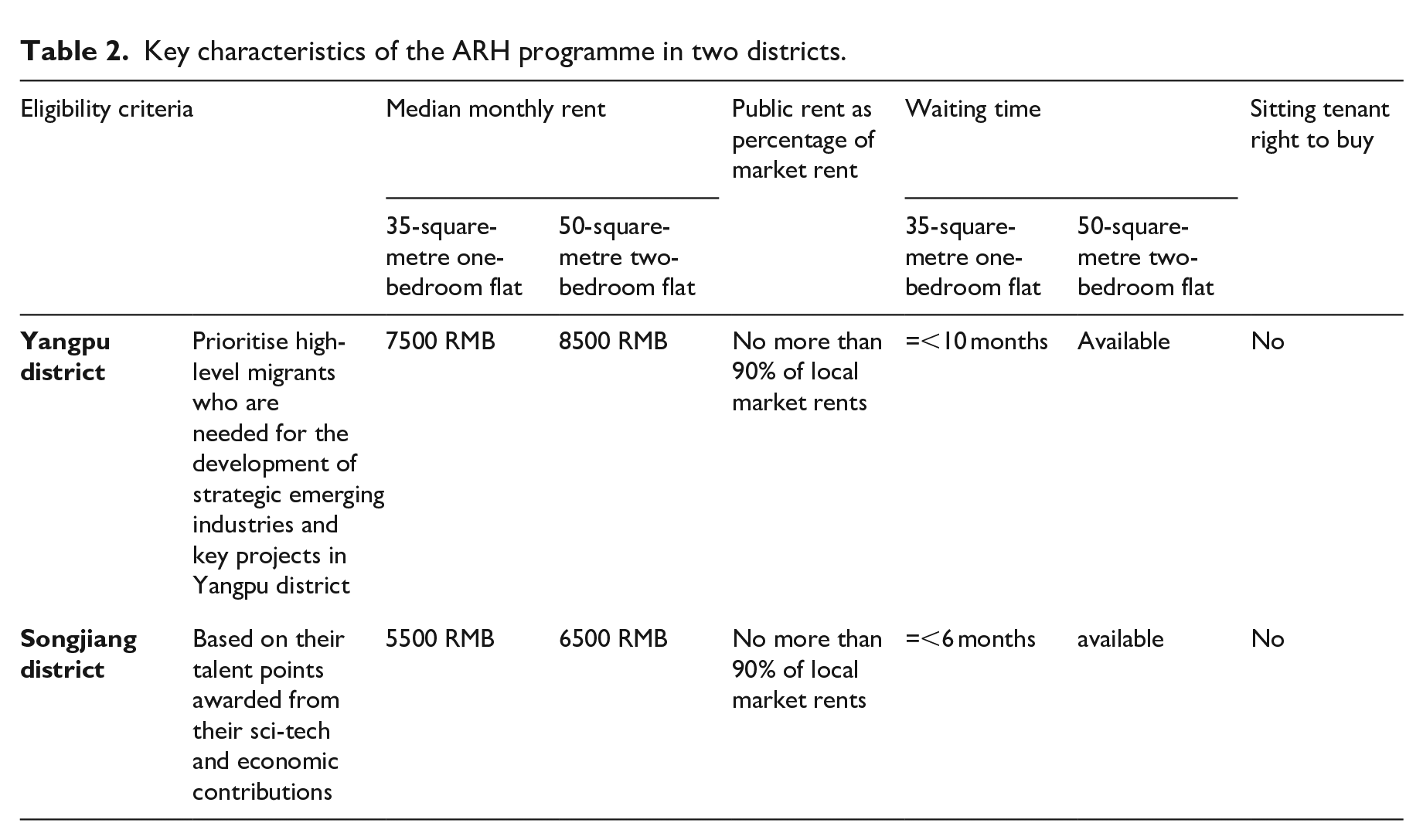
Since 2022, the Shanghai municipal government has promulgated the Shanghai Municipal Regulations on Affordable Rental Housing (SMG, 2022). Following this, the 16 district governments in Shanghai have further refined the implementation specifics of the ARH policy, which included allocating a portion of ARH units for talent-housing purposes. Talent housing is made available for rental use and typically targets individuals who meet specific eligibility criteria. These criteria encompass academic qualifications (a bachelor’s degree or higher), national vocational qualifications 2 (Level 2 or above), and district-specific criteria linked to local industrial and technological needs. Overall, Shanghai aims to allocate 200,000 ARH units for talent attraction by 2025. Table 2 provides insights into the critical dimensions of ARH programmes within two selected districts.
Key characteristics of the ARH programme in two districts.
Throughout the two-year research period, our study identified certain characteristics shared by ARH with other public housing schemes, while also uncovering distinctive features specific to ARH. By conducting interviews with key respondents and conducting a thorough analysis of the Shanghai Municipal Regulations on Affordable Rental Housing (SMG, 2022), we have identified two distinct models for ARH, as summarised in Figure 3.
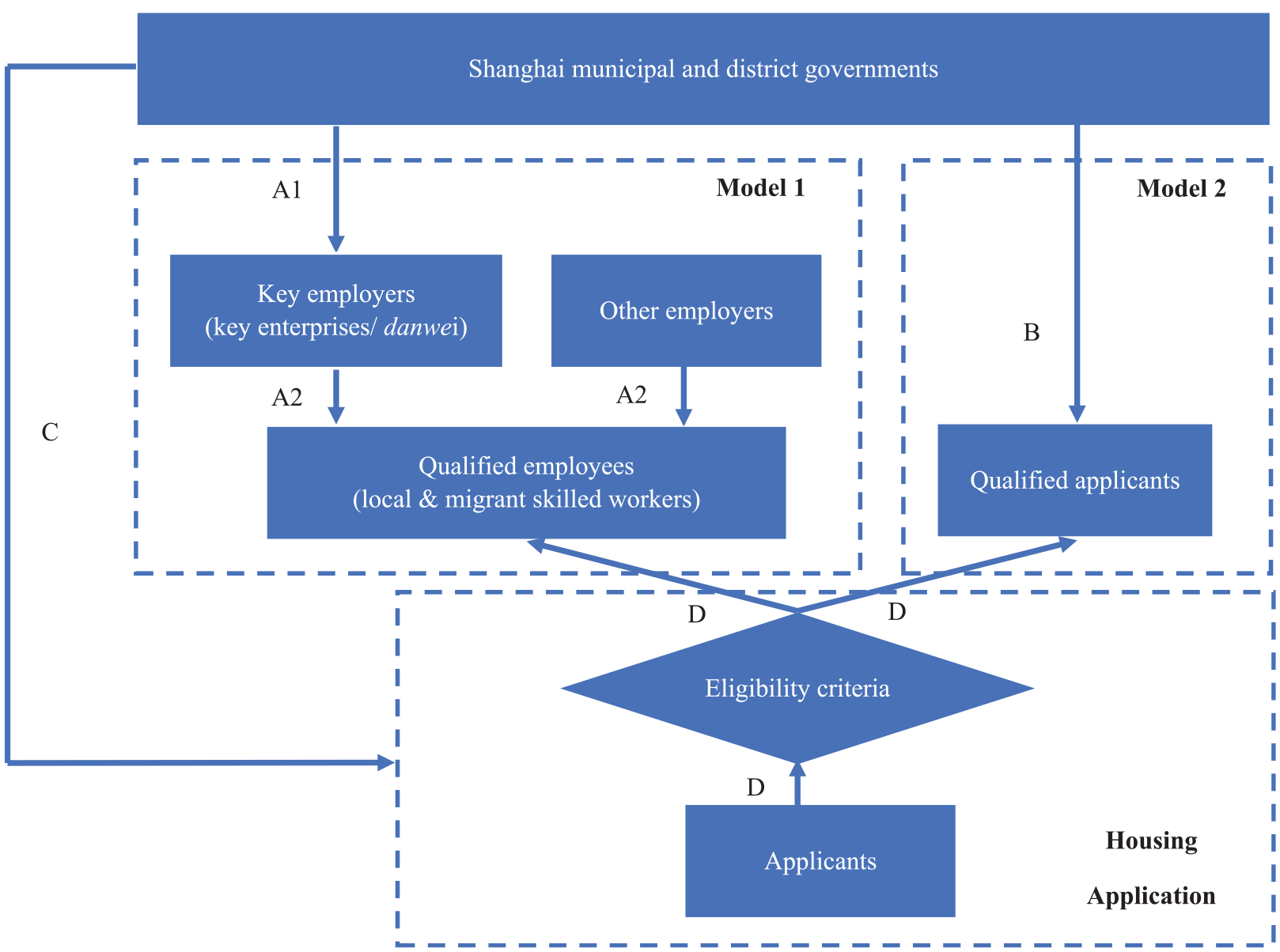
ARH allocation process (adapted from Gong and MacLachlan (2021)).
However, the interviews conducted during the study have revealed that local residents and highly skilled/educated migrant workers receive preferential treatment over those with lower skills. This indicates that Shanghai, like other major cities, prioritises specific groups during the allocation process. This raises the question of how the government manipulates the allocation system to favour these specific beneficiary groups.
Since 2020, the Shanghai municipal government has employed two models for the allocation of public housing in the city, namely the employer-mediated housing provision model (Model 1) and the direct government-to-applicant housing allocation model (Model 2). In Shanghai, Model 1 serves as the primary means to address the housing needs of skilled migrants. Additionally, the district government has specifically designated it as talent housing (TH) in order to align with the central government’s objective of offering accommodation to skilled migrants: Currently, we [municipal] government have expanded the housing options available to eligible migrant workers seeking accommodation in the city. Two options are available: 1) non-local residents can now access government-supplied dispersed talent apartments; 2) through their employers, migrants can now access collective talent apartments that are leased by the employers from the government.
Both options highlight the government’s role, whether direct or indirect, in providing housing for skilled migrants. This contextual background sets the stage for understanding the housing structures examined in this study. The subsequent section offers a comprehensive account of how skilled migrants navigate the process of accessing Affordable Rental Housing (ARH) units, either by engaging with their employers or by interacting with government authorities. These interactions are aimed at identifying the strategies migrants adopted to gain access to ARH units.
Housing strategies of skilled migrants
Participants reported employing various strategies to address a wide array of challenges encountered during their ARH application process. Drawing upon our analytical framework (Figure 1), we present an overview of coping strategies that were both shared and multi-layered, operating at micro-, meso-, and macro-levels. Our analysis of interviews yielded three themes: individual strategies, employment-related strategies, and community-based strategies, aligning with the conceptual framework encompassing these three levels.
Individual strategies
The analysis identified two main facets of the housing choices of the highly skilled migrant participants: application motivations and weighing up decision-making.
Application motivations
In order to understand the nature of migrant agency within the ARH system, the study first examines the motivations of the respondents in making an application. Application motivations and aspirations reflect the independent preferences of the respondents, a key component of agency. Yet the creation of motivations themselves is shaped by wider structures as economic, political and environmental factors impact upon migrants’ aspirations and what they think is possible and desirable. Drawing on the 62 narratives of the skilled migrants (when asked ‘Why did you apply for an ARH unit?’), the following motivations/aims were found to be key to their ARH application:
finding a housing that is ready to move in;
a desire to live close to migrants’ workplace and maintain social networks;
a desire to have well-decorated house with good facilities;
a desire to move nearby to migrants’ friends;
being allocated and subsidised by their employer (company), the awareness that they can save money.
Nearly all respondents aspired to live in stable, comfortable, and affordable housing. A primary motivation for the majority of respondents was to find housing that is ready to move in, because most of the time they were busy with ‘adapting to their new work and life’. This supports the hypothesis that compared with private rental housing, features of public rental housing, like a secure and stable tenancy, are more attractive for skilled migrants (Liu, 2022), especially for high-level technical migrants. Additionally, many respondents desired housing close to their workplace in order to easily reach their offices, as well as a well-decorated house with furniture, home electricity, air conditioning, access to entertainment and schools nearby. Moreover, a number of respondents expressed their desire to move nearby to friends in order to maintain their existing social networks.
However, the motivations for application were not just about migrants’ own aspirations. Some of skilled migrants made an active choice to apply for ARH, whereas others were allocated it by their employers, which is much more passive. In the interviews, several respondents had not formed aspirations to access ARH before coming into the job market, stating that they virtually knew nothing about public housing applications. They explained that ‘my employer’ or ‘my company’ provided this housing option (ARH) and described how their subsidised rent is paid directly by their employer (company) to the district government. In their cases, housing for talents is thus allocated by a state-sanctioned process where the approved employers are the lessees and the ARH company is the lessor. For example, a senior software engineer said: I was ‘headhunted’ by many companies in Shanghai and other big cities in China. . .After recruiting, a competitive remuneration and welfare will be provided. My current Internet company offered me incentives to renting an ARH unit close to my company. . .I suppose that. . .they really need me to take charge of that project.
From above, the fifth factor that made respondents apply for ARH was their desire to save more money. One respondent said: ‘I could save more if I lived in ARH with housing subsidies.’ Other respondents added regarding their financial situation in Shanghai: ‘In economic terms, the cost of public rents is almost 80% of the private rents, which a large sum of money can be saved.’ Due to the high cost of living, their saving money on rent leaves them with more ‘spending money’ in Shanghai. When asked ‘Why ARH?’ M45 explained that it was a temporary residence before buying a house: . . .you know, the price of the house is too high for new arrivals to afford, and Shanghai has many restrictions on the purchase of houses in Shanghai. So I was forced to rent while saving for a down payment on a house. In my plan, I felt capable of transitioning from renting to ownership after living in ARH for 3 years. But my eventual housing choice will depend on the housing market.
In this case, ARH provides a ‘safety net’ as tenants gradually adjust if their income increases. However, the instability of the housing market presents an example of structure constraining the formation of choices and, in turn, the extent to which these households can exercise agency over their housing choices.
Weighing up decision-making
Once being motivated to apply for ARH units, most interview respondents succeeded in meeting their ARH aspirations via a carefully planned approach. Most of the respondents explained that applying for ARH was a gradually familiar process that required preparation, planning and management. As one respondent summarised, it ‘involved the allocation of time, resources and efforts to this application process’. To achieve the best outcomes, the respondents often planned their access routes consciously by analysing their situation and balanced the potential ‘dividends’ from ARH application on the basis of information received from official channels, acquaintances, friends, and tenants who resided in ARH units.
Most respondents started from evaluating their chances of a successful application. When applying for ARH through the ‘talent housing’ stream, applicants first need to meet certain criteria in each district so as to successfully launch their housing applications. For example, M9 said: I preferred to live in affordable rental housing but was concerned about the success rate and policy stability. The application criteria seemed to be acceptable but assumed to be very competitive. I discussed with my husband about the causes and effects that I would hopefully get from living in ARH. I talked to my colleagues and friends who had successful applications. After communicating with them, I recognised that each district has different regulations in regard to the housing for talents. And I was evaluating in which way I could achieve the fastest access.
During the evaluation of their personal conditions for ARH access, several respondents said that they needed to make trade-offs when making housing choices. One trade-off is about housing location. Compared with ARH programmes in the city centre, most migrant applicants found it would be easier and would have a higher chance to be admitted near industrial parks or in the suburbs of the city. According to the officials in each district: [In Yangpu district] Allocations from the wait list are dependent on the availability of housing stock in different zones. In our district, demand for affordable housing greatly exceeds supply in a good location. At the end of March 2022, the average waiting time for applicants who chose ARH in the core areas is at least half a year. Comparatively, we still have vacancies in some less popular projects. [In Songjiang district] Many applicants are more likely to opt for new housing projects near the industrial parks. This is because over half of the ARH programmes have been planned near industrial parks in our district. The chance that applicants will be admitted to far away ARH projects would be rather larger.
As above mentioned, the lack of affordable housing in good position presents a structural challenge. In locations that lack ARH options for the migrants in need, respondents may strategically choose other locations to boost their chances of admission.
Another trade-off is about housing type. Compared with a family housing type, the findings revealed that single-person housing for talents is always in high demand. Some respondents were determined to wait a long time for private space and a comfortable living environment. Others, however, chose to share family housing with their colleagues or friends. The costs and benefits of different housing types were summarised by M18: When choosing available housing options, the staff told me there were only two-room apartments for talent right now. Otherwise, I need to wait at least one year for one-room ARH options because they are fully booked. I was hesitant but had no choice. . .the market rent is so expensive in surrounding areas and I could hardly afford it. Then, I looked for a roommate and found my colleague classmate who is willing to share with me. Much to my surprise, flat sharing can be very cheap and there will always be someone to talk to and the chores can be shared. The only disadvantage is that I should find another roommate if she moved to her boyfriend’s home after their marriage.
The analysis also found that several respondents had applied for ARH many times in order to have a greater chance of being allocated a unit. In some cases, some applicants gave up in an early stage of participation. But for those who persisted, after focusing on ARH policy for a period of time, many skilled migrants had accumulated rich experience and their persistence could pay off because new ARH programmes were consistently launched at regular intervals. But, this process could be at a very high cost in time and energy for skilled migrants.
In the interviews, most respondents used the expression ‘balancing between costs and benefits’ in relation to their application decision. Therefore, their stories showed that they developed a well-thought-out plan to implement their ARH aspirations, reflected in their rational decision-making.
Employment-related strategies
While individual strategies were clearly illustrated in participants’ narratives, these practices were not carried out in isolation; rather, they were deeply intertwined with their experiences within the workplace. Our analysis revealed that participants’ housing decisions and actions were not confined solely to the realm of personal choice but were profoundly influenced by their employment contexts. In interviews, participants consistently emphasised the pivotal role played by their employers or the enterprises they were associated with.
It became evident that employers and enterprises had assumed a significant responsibility in advising and advocating on behalf of migrant employees seeking affordable housing. This multifaceted involvement ranged from providing valuable guidance on navigating the complexities of the housing market to actively engaging in advocating for housing solutions that would better accommodate the needs of their migrant workforce. This collaboration between individuals and their workplace environments formed a crucial dimension of the overall coping strategies employed by skilled migrants in the context of Affordable Rental Housing (ARH) applications.
According to the interviews, skilled migrants affiliated with a particular employer have, upon arrival, access to well-established collective agency upon which they can rely during the initial adaptation period. Many respondents identified that the employers’ social contacts were the main part of collective agency that provided the migrant with further possibilities to obtain information and navigate the ARH system. As the following quotation testified, employers worked as collective representations that the respondents were able to rely on: There is no denying that I gradually build on my network through various channels. But in the beginning, I was very very strongly [dependent] on my workplace and colleagues.
As shown in the above quotation, the chances of migrants’ successful applications largely depended on the collective influence that their employers possess. Sometimes this may also limit the opportunities of migrants if their employers do not participate in ARH programmes. Moreover, it was found that the housing quota of each employer varied depending on whether the employer was a member of the ‘qualified community’ – either key danwei (e.g. high-level government agencies, universities, or large state-owned enterprises) or key enterprises (e.g. large tax-paying firms or locally-based high-technology firms).
On the other hand, in cases where skilled migrants did not work in a key enterprise or have an employer to rely on, the process of navigating the application system individually could become much more difficult. For example, a freelancer respondent experienced many problems applying for an ARH: But I don’t know, it may be that I have not [qualification] because my entrepreneur business is too small and not qualified, I guess that could be the reason. It may be that they did not process my application, because it was not in their priority lists. I have tried to find out if I could apply for district ARH by myself, but it seems not. . .The individual application has always taken a long waiting time, so that has not been of any help for my situation.
Community-based strategies
In addition to the pivotal role played by employers and enterprises, our participants also highlighted the significance of a network of relationships beyond their workplace settings. Specifically, they made reference to collective communities and the invaluable role these networks played in facilitating potential access routes to affordable housing. This recognition of the importance of community connections and collective action in addressing housing challenges was exemplified by one respondent, identified as M21, who articulated the necessity and criticality of utilising collective power: My enterprise is located in a high-tech industrial park which is famous for its first-rate talent policy. As the representative industrial park, many symposiums have been held here by local governments to hear enterprises’ views on how to improve the business environment. I have been invited (as an attendee) several times and knew. . .our industry park had tried every effort to garner more housing opportunities for the settled enterprises as a way of business attraction. As far as I know, the social ties of our industry park are strong, which provide a useful channel via which our employee voice and collective bargaining can make an influence. When the management team asking employee needs, many joined together to collectively claim their housing rights. As a result, a new planned ARH program is to be self-constructed near our industrial park where almost 500 employees can be settled collectively.
As the above quotation indicates, the industrial park acted as a communal entity, facilitating negotiations for housing benefits to attract protentional enterprises. In return, the tax revenue generated by these settled enterprises could further fuel the development of the industrial park.
Interviewees displayed a growing inclination to engage with the collective networks of the local migrant minority, especially when they shared similar backgrounds. These networks evolved through personal connections established both at workplaces and during various social and political activities. For instance, many young skilled migrants, who were also entrepreneurs, noted the presence of collective voices in talent-related activities within their respective districts. As expressed by M31: Talents are highly valued by the local government. There are plenty of opportunities in which we could complain about our acute housing difficulties. . .and it is the top priority except employment.
In this way, the capital of collective voice (action) is highly valued among migrants, who actively develop strategies to navigate ARH access. They also strive to access other forms of collective action and influence the broader society. One participant, for example, expressed concern about the limited duration of ARH contracts: ‘It’s never-ending. . . that I can never live in ARH all my life. . . the contract of ARH is at most 8 years, but I may not afford the housing at that time’ (M25). Many respondents have attempted to influence ARH policymaking to remove the ‘housing time limit.’ In their efforts to overcome this limitation, most respondents have engaged in collective petitions for longer contracts, although achieving ownership has proven challenging. It’s worth noting that the mobilisation of collective capital among migrants is often confined to specific districts, emphasising that the valuation of coping strategies is context-dependent and constrained by specific social contexts.
Coping with the conflicting context
Participants also highlighted the coping environment is not consistently supportive; in fact, it can be hostile towards migrants, resulting in significant changes in migrants’ behaviour. Within this context, participants have encountered various conflict situations that manifest at individual, employment, and community levels.
At the individual level, participants recount the difficulties they face once they decide to submit their applications and how they manage unexpected challenges, such as unclear eligibility criteria, prolonged waiting times, and complex application procedures. Initially, many attempted to cope by adopting ‘problem-solving strategies’, such as continuing to rent private housing and not terminating their previous contract until their public housing unit was guaranteed. The uncertainty surrounding access to ARH caused considerable stress and anxiety. Participants frequently expressed feelings of worry and instability, as exemplified by M2: It has been incredibly frustrating not knowing when I could secure housing. It was impractical for me to terminate my previous private rental contract, so I renewed it for another year, as required by my landlord. Exploring short-term rentals posed a significant financial burden, so I chose to remain in my previous housing while waiting (M2).
When confronted with such stressors, as exemplified above, an extended stay in alternative housing became a coping strategy to deal with the protracted waiting period. The unexpectedly lengthy waiting times, coupled with high private rental expenses, led to unforeseen emotional stress and anxiety. In response to what participants perceived as an unreasonable and unjust delay, they implemented additional coping strategies at individual, employment, and community levels.
At the individual level, some participants persisted in seeking support from their social networks, such as friends or relatives, even when such support was somewhat limited in its capacity. Others sought direct assistance from government-operated institutions and maintained contact with staff members they had become acquainted with during their previous visits. This approach was driven by the belief that the allocation system concealed a wealth of ‘hidden information’. Among various government-operated institutions, the Talent Service Centre emerged as a prominent and invaluable resource for skilled migrants. Respondents consistently identified the Centre in each district as the primary and most informative source of assistance. For instance, M46 illustrated how she turned to the Talent Service Centre for solutions after learning about the high demand for apartments in Yangpu district: The ARH programme is generally designed for all applicants with stable employment. But there are just too many applicants in the pool so nearly all existing talent apartments in Yangpu district are occupied. . .After researching online, I was advised to better choose newly launched ARH programmes and regularly visit to the Talent Service Centre. (M46)
While M46 initially possessed limited knowledge about the ARH programme, she acknowledged that her understanding and capabilities grew with time and effort. As she admitted, given the limited housing supply, she had no alternative but to proactively grasp the application process. However, this approach generated discomfort and unsatisfactory among highly skilled migrants, who felt they were undeserving of such welfare benefits. Even worse, some skilled migrants perceived themselves as ‘lowering their status’ by seeking housing assistance. Intriguingly, participants acknowledged that resorting to such compromise strategies to navigate a challenging environment added to their anxieties and stress, as these strategies openly contradicted their initial belief that these housing benefits were intended to recognise their contributions.
At the employment level, some participants expressed frustration and discomfort when seeking assistance from their employers. They cited the limited comprehension of eligibility criteria, unfamiliarity with application documents, and perceptions of opaque allocation practices within their respective companies as primary sources of frustration. For instance, M13 highlighted her unequal treatment while applying for ARH through her company. Despite her belief that she was more qualified than her colleague, M13 expressed her experiences of ‘dealing with hidden rules’: My colleague and I were competing for the remaining housing quota since other colleagues already had accommodations. Initially, HR had promised a fair competition, but it turned out that my colleague received the unit. Perhaps it was because of her close working relationship with the manager and HR. I felt like I was ‘dealing with hidden rules’.
This feeling of ‘dealing with hidden rules,’ as M13 expressed, was a common experience among many participants. They acknowledged how their high expectations clashed with the unfair competition they encountered in the workplace, leaving them feeling insecure, marginalised, and even self-doubting. To cope with these additional negative emotions resulting from unequal treatment, participants adopted various strategies, such as bypassing their company and directly contacting government departments. In some cases, they would be able to find alternative application pathways, even after multiple rejections from their employers. M21 shared a similar experience: I approached our HR, but they informed me that our company had limited housing supplies with numerous applicants already. This left me feeling lost. Despite the frustration, I had to take a chance and approach the Talent Service Centre. Fortunately, I encountered a responsive staff member who guided me through an alternative application process. He suggested that, ‘If you work for a high-tech enterprise, you can apply in your own name first and then seek your enterprise’s permission later.’
In these cases, despite the government’s well-intentioned collaboration with enterprises to establish target policies ensuring housing for their high-skilled employees, HR personnel, and responsible individuals within enterprises often lacked familiarity with the application procedures. This gap in knowledge created additional barriers and stress for highly skilled migrants. In a few instances, tensions escalated to the point where highly skilled migrants felt that their employers were merely making superficial efforts, rather than genuinely assisting them with their accommodation issues.
Conflicts within the community appear less prevalent among participants from the Songjiang district, whereas those from the Yangpu district often express dissatisfaction with their experiences in applying for ARH programmes: I felt that highly skilled migrants are not motivated to apply for ARH units at all. Possibly because most of us do not fully know this policy. For example, we used to believe that subsidised rental housing was only for low-income, but our employment in high-tech companies earn more than average. This is a complete misunderstanding of the ARH programme, largely due to the district government’s limited advocacy, [we] are unaware of the guidelines in place by the Yangpu district government (M28).
Isolation and limited access to ARH coverage are citied by M28 as cases of highly skilled migrants overlooking ARH policy. Other participants admitted that previous public housing programmes, which restricted migrants, have created negative impressions within the migrant community. Consequently, even though the document analysis in Yangpu district addresses housing challenges faced by highly skilled migrants, several factors hinder individuals from truly benefiting from housing policies: a general housing shortage, a significant influx of migrants, and rapidly changing policies influenced by evolving skill demands. These narratives resonate with prior studies that highlight the marginalised position of migrants in terms of housing benefits (Huang et al., 2018), preventing them from enjoying the same public rights as local residents, even when they meet the eligibility criteria.
In contrast, Songjiang district participants seem to be integrated in more active communities, where ARH coverage is more prominent. Many of them emphasised the overall environment valuing ‘talent’ across various fields in the Songjiang district. To leverage this talent-friendly environment, some participants even adopted a strategy of ‘expanding certain aspects of their collective identities, and reframing them as positive contributors to the district’s future development. This approach often involves engaging in activities organised by district and local communities. Others are encouraged to participate in suggestions and recommendations to improve talent housing, such as selecting representatives for online and offline discussions or sending government officials to conduct surveys in enterprises, where migrants can share their application concerns on-site or through social media.
Discussion
Our findings contribute to the interdisciplinary literature on coping by unveiling coping as a multi-layered and multi-phased process, which the study terms ‘coping with coping’. As depicted in Figure 4, coping is a process in which individual, employment, and community-based coping strategies are included in an environment which can trigger additional anxieties, requiring individuals to enact new multi-layered coping strategies.
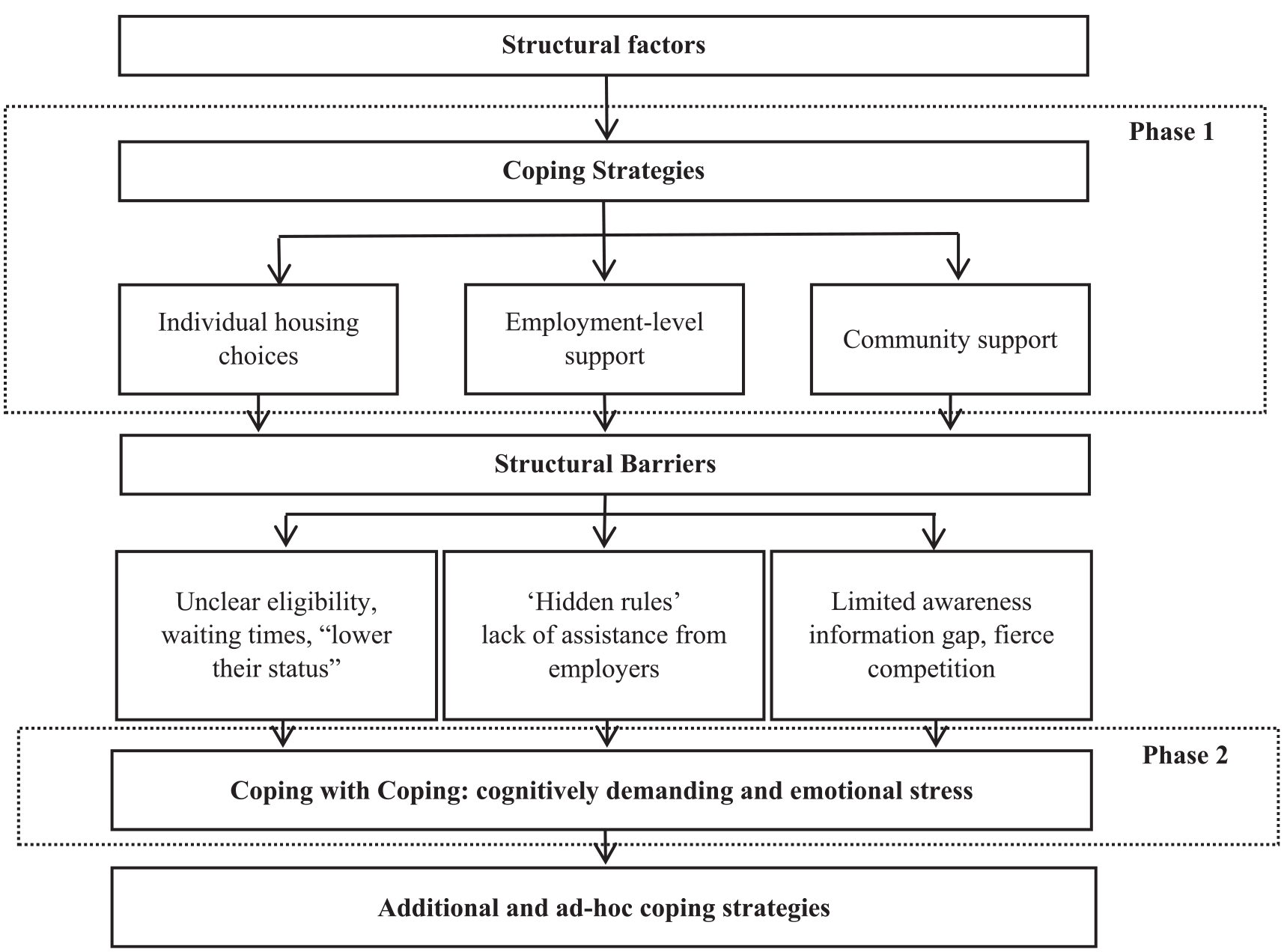
The model of Coping with Coping.
The initial phase of the coping process involves migrants deploying a multi-source and context-sensitive array of coping strategies to manoeuvre through the often intricate and contradictory procedures set by local governments (Phase 1). These strategies are determined not only by the decision to apply for ARH units but also by the relational nature of coping strategies as identified by Bruce and Banister (2019), which are influenced by interactions with employers and social networks. This includes the continuous negotiation of coping strategies across individual, employment, and community spheres. As such, these negotiations might reshape employer-employee and individual-community relations, resonating with Shepherd et al’s (2020) findings on the importance of resource endowments and social capabilities.
Moreover, the participants interviewed revealed their active involvement in their communities by offering free ARH application assistance to fellow community members, demonstrating multi-layered involvedness. Extending beyond the typical workplace focus of coping community studies, such as those by Tervonen and Enache (2017), our findings highlight the role of collective coping strategies within the community sphere. This supports a growing body of research, including Szmigin et al. (2020), advocating for a nuanced understanding of coping that considers both context and collective dynamics. Such an approach to coping recognises the intermingling of individual and shared community goals, demonstrating the intricate nature of these strategies.
Nevertheless, although all participants engaged in various coping strategies by acquiring new practices and information available in Shanghai, distinct differences emerged in their evaluation of local government policies. In our samples, participants from Yangpu district exhibited more critical views regarding the Yangpu government’s lack of support in securing housing units, while participants from Songjiang district displayed a more proactive approach in planning collective initiatives to support one another. Despite some practices being adopted universally, migrants’ attitudes toward these behaviours varied significantly based on their district backgrounds.
In Phase 1, initial coping strategies, enacted to mitigate uncertainty and alleviate stress derived from first application attempt, often led to unexpected new stress for highly skilled migrants. During this phase, migrants grappled with misunderstandings, frustration, prolonged waiting periods, and information disarray, which exacerbated their anxieties and stress levels. In response to emerging difficulties, migrants have developed additional coping strategies (identified as Phase 2). Participant interviews suggest that these strategies did not directly address the initial issue. Instead, they served to navigate the stress and anxiety stemming from a hostile environment. Intriguingly, these approaches reveal, rather than mitigate, the migrants’ susceptibility to the initial insecurity concerning their eligibility for local public benefits. This phenomenon, identified as the ‘coping paradox’ by Yen et al. (2021), highlights how skilled migrants, while navigating complex and challenging housing access structures, inadvertently trigger further anxieties and stressors. These new challenges, differing significantly from the initial complexities associated with application processes, remain unresolved by the coping strategies that the migrants initially employed. This paradox underscores the intricate interplay between coping mechanisms and the evolving nature of the challenges faced by migrants in hostile environments.
The evolution of additional strategies in Phase 2 demonstrates that coping is a complex, multi-stage process that adapts to specific situations, rather than a mono-phase process as conceptualised in previous literature. This understanding of coping as a dynamic, multi-layered process significantly enriches the scholarly discourse regarding coping strategies among highly skilled migrants. It underlines the crucial role of the host district’s perception of these strategies and the migrants’ ability to modify their approaches in accordance with the local policy framework. This perspective sheds new light on the intricate process of migrant adaptation and the interaction between their coping strategies and the socio-political dynamics of the host area.
The finding results indicate that the process of ‘coping with coping’ entails substantial cognitive effort and is profoundly context-sensitive. For skilled migrants, the challenge of coping not only brings frustration but also heightened stress, particularly when their coping methods are inadequate in relation to their advantageous labour market status. This often leads to less-than-ideal housing options and a sense of a disparity between expectations and reality. Despite resorting to additional coping, these strategies serve predominantly as compromising solutions. This process highlights the vulnerability of migrants to housing stressors and disproportionately prioritises their skill positions over their basic right to adequate housing.
Conclusion
The study has delineated three levels of coping strategies – individual, employment-related, and community-based strategies – employed by highly skilled migrants throughout their ARH application processes. By introducing the concept ‘coping with coping’, this study illuminates how coping is a multi-layered and multi-phase process, where highly skilled migrants’ coping strategies are both constrained and facilitated by the social structure(s) and (contexts). Even in face of limited housing opportunities, our sampled highly skilled migrants employed agentic responses towards these opportunities they perceived, especially at the community level.
These insights are important both theoretically and to inform practical action and strategies. They underscore the important social factors at play across organisational, individual, and institutional levels (e.g. the cultivation of a talent-friendly environment) that cushion the challenges faced by skilled migrants in securing public housing. Theoretically, by applying and adapting western-developed theories to the Chinese context, our research provides insights into the utility and adaptability of these theories in non-western settings. This contributes to the ongoing development and refinement of these theories to better capture the nuances of migration and housing dynamics in diverse cultural and geographical contexts.
At a practical level, our multi-level framework provides valuable insights for enterprises, policymakers, and skilled migrants, elucidating how coping strategies interact with structural factors to attain housing objectives. In contrast to prior literature, which predominantly portrays skilled migrants grappling with housing barriers hindering integration, our analysis reveals their capacity for agency in seizing emerging ARH opportunities to navigate the societal structures and processes they encounter.
Footnotes
Declaration of conflicting interests
The author(s) declared no potential conflicts of interest with respect to the research, authorship, and/or publication of this article.
Funding
The author(s) received no financial support for the research, authorship, and/or publication of this article.