




Abstract
Existing scholarship hypothesizes a causal chain from climate change to resource availability constraints, to forced migration and conflict risks. Limited research, however, synthesizes findings about the efficacy of interventions to alleviate resources conflict in communities hosting climate migrants. This systematic literature review identified and analyzed 33 studies that explore interventions contributing to climate conflict resolution and environmental peacebuilding in receiving and migrant communities. Despite limitations of current research, the review shows that multi-scale and cross-sectoral interventions are necessary though challenging to establish. Community-level initiatives and local support networks that create social capital are key interventions leading from conflict to cooperation between climate-driven migrants and host communities. However, such interventions often require external resources that come with strings attached. Our analysis also identifies gaps in the extant literature. First, few scholars explore how adaptive capacity—especially influenced by power relations among stakeholders in newly formed communities—evolves over time in response to multiple repeated threat factors. Second, there is limited research on whether and how external interventions can help climate refugees gain access rights to natural resources for long-term conflict avoidance. Finally, there is a lack of community-based performance evaluation metrics to assess long or short-term impacts of interventions.
Keywords
1. Introduction
Since the Inter-governmental Panel on Climate Change’s (IPCC, 2007) report, there has been increasing discussion on the potential security risks and conflicts associated with climate change (Scheffran & Battaglini, 2011). Climate change may increase likelihood of conflict through many pathways, including: local interpersonal conflict over land (e.g., Temudo & Cabral, 2023) or water (Pearson et al., 2021), inter-group conflicts including both civil and international wars (Davis, 2010; Ide et al., 2020; Zhang et al., 2007), and via both internal and transboundary migration (Balsari et al., 2020). In addition to multiple pathways, research increasingly highlights that climate is one of many interacting factors that may be necessary to drive migration and/or conflict (Ide et al., 2020).
With interest likely fueled by geopolitics, and a weak empirical basis for direct climate-conflict linkages (Theisen et al., 2013; Wischnath et al., 2014), the third mechanism above, in particular, has received increasing scholarly attention over the last few decades (Hendrix et al., 2023). The result is a limited body of research that describes how climate change produces (or exacerbates) natural resource scarcity, which precipitates migration leading to the increased risk or exacerbation of violent conflict in the receiving community, particularly without institutional or government intervention (Abel et al., 2019; Barnett & Adger, 2007; Balsari et al., 2020; Ghimire et al., 2015; IPCC, 2019; Palinkas, 2020; Reuveny, 2007; Salehyan, 2008; UN News, 2019). Popular media sources also report on these linkages (Podesta, 2019; Shapiro, 2022).
Given these stated concerns, it is essential for scholarship to investigate the veracity of this causal chain, and to identify any interventions that may disrupt it, given the increasing need for human societies to adapt in the face of a changing climate. As Wiederkehr et al. (2022) demonstrate, violent conflict is not a foregone conclusion in the context of human migration, with opportunities for governance interventions that reduce perceived resource contestation.
However, the full causal chain considered above requires evidence at several stages:
First, does climate change indeed cause environmental changes that lead to (and/or exacerbate policy driven) resource scarcity? There is, in fact, substantial evidence for this first causal claim. For example, Strzepek et al. (2010) show that climate change increases drought frequency and risks in the United States, and similar trends are found across other parts of the world (Naumann et al., 2018). Meanwhile, monsoon rainfall is predicted to become more variable and extreme (Wang et al., 2021). This makes events such as the devastating 2022 flooding in Pakistan more likely (Shehzad, 2023; Van der Schrier et al., 2018). In response to global changes in precipitation amount variability, farmers will likely increase water use for irrigation (Döll, 2002). While most irrigation water comes from streams, those sources of water are becoming increasingly variable (Arnell & Gosling, 2013). This forces more and more farmers to rely on groundwater, which is also negatively affected by climate change (Amanambu et al., 2020) and depleting rapidly at a global scale (Famiglietti, 2014). Such scarcity also has ripple effects on many other resources, including food supplies that are impacted by drought, floods, or other conditions (Bezner Kerr et al., 2022) and reduced opportunities for livelihoods based on harvesting raw materials (Birkmann et al., 2022). Of course, this scarcity comes in many forms, with varying effects on livelihood and food security.
Second, does resource scarcity—and resulting livelihood or food/water/energy insecurity—related to natural hazard events and long-term changes in climate conditions indeed drive human migration? More specifically, we define climate-related migrants as people who are either forced to relocate due to climate-related fast-onset disasters or progressive processes—such as floods, droughts, storms, sea level rise, increasing temperature, land degradation, etc.—(IOM, 2007; IPCC, 2014) or people who have voluntarily decided to settle elsewhere due to these climate stressors (IOM, 2019). These moves may be permanent or temporary and could happen either within a country or across national borders (IOM, 2019; Kaczan & Orgill-Meyer, 2020; Owain & Maslin, 2018; UNFCCC, 2011).
There are clear empirical patterns emerging from extant research showing the influence of climate factors on human displacement. Some recent research highlights migration as one adaptive behavior people employ in response to climate-related resource scarcity (e.g., Black et al., 2011; Pei et al., 2019). IPCC reports high confidence in this linkage based on “increased evidence that climate hazards … act as drivers of … migration and displacement (Pörtner et al., 2022, p. 52).” The type of climate/weather event matters, as do the particular resources and vulnerability of households in the origin country. In their review of the extant literature, Kaczan and Orgill-Meyer (2020) concluded that: weather shocks were most likely to precipitate long distance domestic migration (compared to short-distance domestic or international migration); that slow-onset shocks had a stronger influence on the decision to migrate than rapid-onset; and that the severity of weather shocks interacted with the resources of households in the short- and long-term in ways that had non-linear effects on migration. And, a recent survey found that respondents in 20% of households across 19 countries had considered moving in the past 4 weeks due to water problems (Stoler et al., in review). Moreover, climate hazards and trends seem to change the kind of people who are most prone to migrating, and the places from and to which they migrate. For example, climate changes increase the likelihood of people migrating from rural areas dependent upon agricultural production (Hummel, 2016). Some studies have found that climate changes have led to increased migration by women and children (Findley, 1994), as well as older people and those with more emotional stress (Wrathall & Suckall, 2016). Most research indicates that climate-related migration reduces the selectivity effect on migrants, leading to people migrating who might otherwise choose to remain in the same place because of old age, ill health, or insufficient financial resources to migrate. Drought conditions, for example, have shown to be associated with less healthy people leaving a region who might otherwise choose not to migrate (Hunter & Simon, 2017), though climate-related income losses may also limit migration options (Choquette-Levy et al., 2021).
That said, significant questions remain, with even less certainty regarding transboundary migrations (Adger et al., 2014; Pörtner et al., 2022). More importantly, while there is growing recognition among some scholars that climate change—particularly extreme events and changing conditions such as floods and droughts—drives some migration and resource conflicts, others remain very skeptical about the climate-related migration debates. For example, some scholars believe that many claims about climate-related mass migration—particularly the ones we see in the Global North—simply reflect the political demands in these countries to present climate change and migration as a security risk (Bettini, 2013; Boas et al., 2019; Trombetta, 2014) so as to keep climate-related migrants in their places of origin. Moreover, others emphasize that the mechanisms driving migration are complex and ambiguous (Betts & Pilath, 2017; Brzoska & Fröhlich, 2016). Climate change alone is unlikely to determine individual migration decisions (Baldwin, 2017), and there is no consensual estimate of people displaced by environmental changes (Gemenne, 2011).
Despite these critiques and debates, the amount of research that advocate for the added value of improving policy-making on climate change and migration issues outweigh those that are against it (Nash, 2018). Hence, we agree with Mayer (2016) that it is imperative to assess the success and failure of the current policy intervention approaches (Mayer, 2016) regardless of the “different discursive framing of the climate change and migration nexus” (Nash, 2018).
Third, when people migrate due to climate hazards or trends, do they actually come into conflict with host communities due to increased demand for local resources and therefore exacerbate local/regional resource scarcity? Scholars have also considered this question, finding in some instances that climate-related migrants may be more likely to participate in collective protests or other forms of response to challenges in their new homes (e.g.,Koubi et al., 2018, 2021; Wang et al., 2016). Other scholars find that such collective action may be in concert with new neighbors (Ash & Obradovich, 2020), or that such conflict is not directly linked to climate-related migration (e.g., Petrova, 2021; Selby et al., 2017). While violence and conflict have been a major focus (Adams et al., 2018), other interactions may result in peaceful co-existence when accounting for projections of climate change-related population resettlement (Ide & Scheffran, 2014; Evans, 2004; Warnecke et al., 2010), particularly when interventions address resource contestation (Ojha et al., 2019; Wiederkehr et al., 2022). Moreover, scholars have shown that the type of migration impetus may impact the levels of resources migrants bring with them (Entwisle et al., 2016), while other scholarship points out that research has not yet adequately established the magnitude and type of conflict from environmentally related migration (Brzoska & Fröhlich, 2016; Salehyan, 2008; Scheffran et al., 2012; Warnecke et al., 2010), including the possible combined impact of violence and climate change in home communities (Brzoska & Fröhlich, 2016). These competing results necessitate an explanation of the conditions under which climate change-related migration leads to increased and decreased contention (Hendrix et al., 2023).
Furthermore, most of the aforementioned studies address resource conflicts in communities hosting migrants, but a full assessment of the proposed causal chain requires evidence about whether or not violence in host communities is impacted by climate-influenced migration in a way that differs from migration driven primarily by other factors. It is possible, but not yet fully studied, that people migrating due to particular types of climate change impacts (or for whom climate exacerbates other factors) may have different interests than other migrants because of the changed access to natural resources in their home regions.
If there is, in fact, evidence for all three of these connections (i.e., a climate-migration-conflict nexus), at least under some conditions, then a fourth question is necessary to confront: Are there policies, improved climate change adaptation capacity, and/or infrastructure interventions that can limit this type of conflict? While interventions from larger institutional actors are usually needed to mitigate conflict, some research suggests that governments tend to play a negative role in conflict-mitigation (Suhrke, 1997), with government policies toward migrants fostering resentment among host populations which can accelerate conflict (Wiederkehr et al., 2022). However, such interventions have been insufficiently analyzed in communities hosting climate-related migrants, to determine whether this situation requires unique responses based on the factors triggering migration.
There are multiple stages at which governance processes (institutions) can dampen or exacerbate conflict and resource contestation. For example, codified tenure arrangements have lessened migrant-host-community conflict, specifically in the context of the Sahel (Skidmore et al., 2016). As a result, some scholars argue for the need for external support to develop institutional capacity (e.g., Evans, 2004). However, others warn that the resulting development interventions undermine traditional approaches that mitigate conflict between host communities and in migrants (e.g., Lumumba-Kasongo, 2016).
Unfortunately, there is currently limited systematic research analyzing how climate change or resulting resource scarcity influences adaptive capacity in receiving migrant communities, and how decision-making, interventions, and power relations in newly formed communities may exacerbate or dampen conflict and migration. In one recent exception, Wiederkehr et al. (2022) use qualitative comparative analysis (QCA) analysis of 20 case studies that look at conflict and cooperation dynamics in migrant-hosting communities. They find that conflicts involving migrants tend to happen when high dependence on natural resources is combined with a push for resource conservation, when government policies have differential treatment for subgroups within migrant groups, and when receiving communities have a negative stereotype of migrants’ resource use. In terms of intervention measures, this article points out the influence of perceived injustice on emotions and the importance of national governments’ actions. More analysis on different types and scales of government interventions is necessary in order to identify conditions for community-level climate adaptation and environmental peacebuilding, at least in areas confronting climate-related migration and resulting resource pressures. Wiederkehr et al. (2022) take a valuable step forward in assessing interventions that reduce resource conflict between immigrant and host communities, but even this study does not yet assess whether climate-influenced migration produces unique outcomes for which different interventions may be necessary. We therefore set out to explore the state of scholarship that supports (or rejects) this full chain of hypothesized connections. This systematic review identifies what is known about policy or infrastructure interventions that could minimize such conflict. While it would be optimal to identify best practices in this area, we recognize the need for attention to local context, local gender norms, historical/colonial experiences and local leadership, all of which may be important factors leading to variation in intervention appropriateness and effectiveness. While recent scholarship indicates locally specific aspects of migration choices that are related to environmental disasters or climate change (Horton et al., 2021), environmental conflict and peacebuilding (e.g., Hendrix et al., 2023), we also highlight the further requirement to reconcile local perspectives of both the host community and newcomers. Findings in this area will also contribute to a better understanding of conflict interventions that could be assessed for other types of conflict as well, while exploring how future community peace and stability may depend upon addressing residents’ access to resources that fulfil basic needs (Rustad & Binningsbø, 2012; Weinthal et al., 2011).
In light of these research needs, we set out to identify the current state of scholarship on policy and interventions that address inter-group conflicts involving climate-related migrants. In particular, we ask:
What interventions (if any) have been assessed at various scales from local to national to international?
What are the strengths and/or limitations in the existing intervention approaches, both in terms of impacting conflict extent or duration, as well as other types of effects (e.g., increasing or decreasing equitable access to natural resources)?
The next section specifies the systematic literature review process we employed to identify the current state of scholarship in this area. Next, we present our findings based on 33 peer-reviewed publications that met our inclusion criteria. In particular, we demonstrate that current literature is limited in terms of assessing particular interventions, or even identifying how to measure their success. Moreover, existing scholarship does not sufficiently explore the connection between group power dynamics in these communities and resulting levels of adaptive capacity within the communities. Nonetheless, existing scholarship does highlight the need for multi-level approaches, particularly local involvement in decision-making and local support networks. Finally, the conclusion highlights important areas for future research to fill these scholarship gaps, along with further opportunities for stakeholder participation in such needs assessments.
2. Systematic literature review—method and processes
2.1. Eligibility criteria
This systematic review includes studies of policy and other interventions in response to conflict in communities that host climate-related migrants. As such, all relevant studies must include: (1) climate change-influenced migration; (2) potential conflict (or conflict avoidance) in receiving communities 1 ; and (3) an assessment of policy or other interventions to address such conflict. 2 Studies published before 2001 were excluded because the IPCC Third Assessment Report (IPCC, 2001) was published that year and framed subsequent research efforts in this area. Studies not published in English were excluded. Purely theoretical studies and any unpublished thesis, dissertation, and conference papers were also excluded, although book chapters were included. Other analyses of existing literature were excluded (review papers), although their bibliographies were analyzed for additional potential eligible studies.
2.2. Information sources, search strategies, and keywords
We conducted a search of four Electronic Databases: Web of Science, Project Muse, the Michigan State University Library Catalog, and EBSCO Host. 3 This review strategy was registered with PROSPERO (ID CRD42021228483). The search was conducted on Feb 11, 2021 and yielded 359 studies for potential inclusion, 39 of which were duplicates that were removed from subsequent analysis.
2.3. Study selection process
A review of the studies was conducted using Covidence (www.covidence.org). Two reviewers first screened each article’s title and abstract to determine if all criteria were met. From this stage, 219 articles were excluded due to the absence of climate change-caused migration and/or conflict, or the lack of empirical evidence (Figure 1). Next, the full texts of all 101 remaining articles were screened and 68 more studies were subsequently excluded for failure to satisfy criteria, including mention of conflict, migration, and intervention, a decisive impact of climate change within the study, the study design, and written in English. Finally, 33 studies were included in this systematic review.
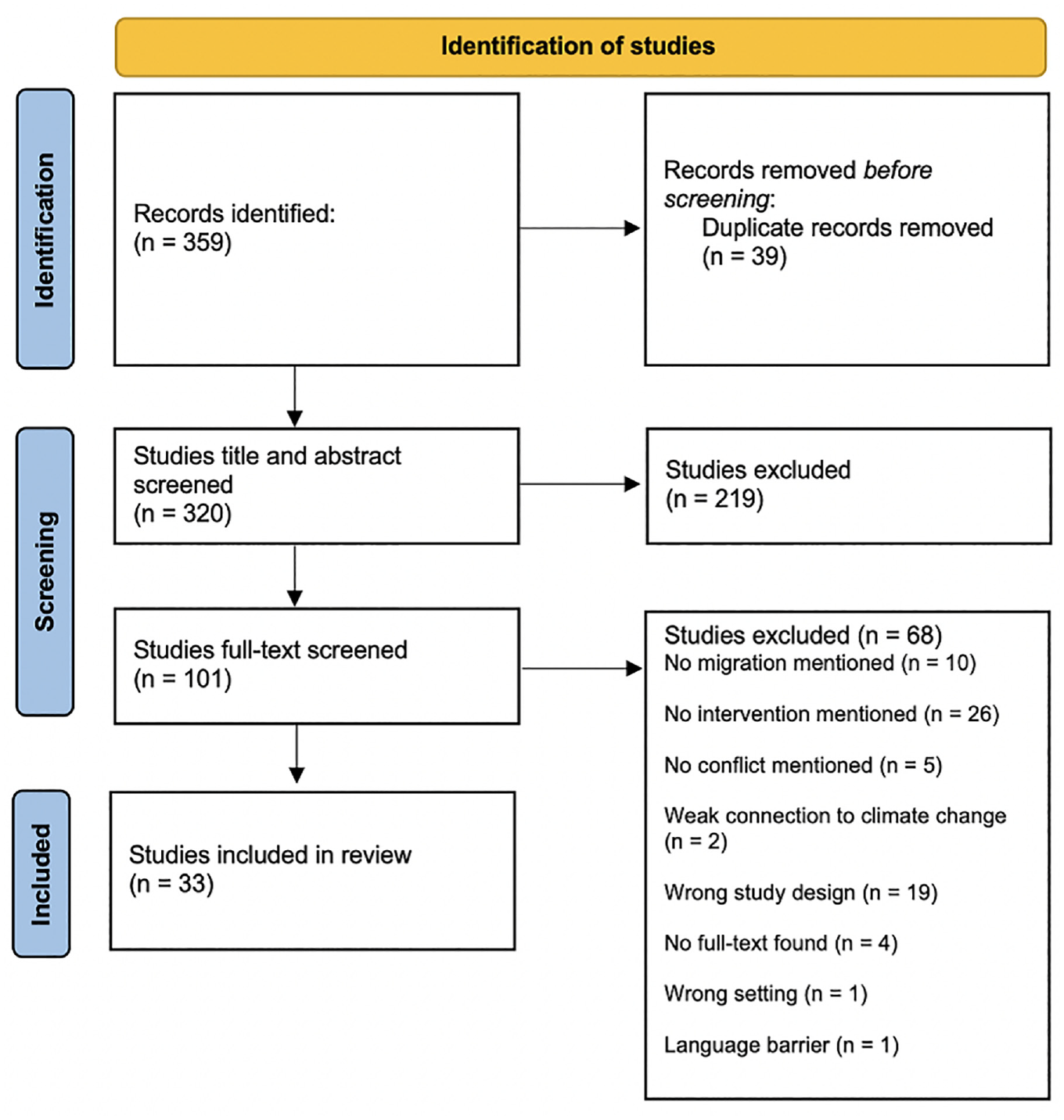
Flow chart of the systematic review process.
2.4. Data extracted from each included study
The data extracted includes location from which people migrated, destination location/community, as well as the respective timeframe, the type and length of the climate event precipitating the migration, the migration impetus, demographics of affected populations, characteristics of migration and resettlement, nature and extent of conflict in the host community, and the nature, scale, and impacts of the attempted policy or intervention.
3. Analysis of existing literature
Table A1 (Supplemental material) summarizes each of the publications reviewed, and Figure 2 shows a summary of these publications by the specific contexts of disasters, conflicts, and migrations that they discuss. As Table A1 demonstrates, a wide range of locations have been studied, addressing a variety of physical and social impacts from climate change and multiple conflict contexts. That said, our studied samples have a heavier focus on slow-onset processes—such as drought, irregular rainfalls, soil erosion, and rising sea level—in African and Asian countries, and most of the conflicts discussed are disputes over land use and water resource access that are either a cause or result of forced human displacement. The over-representation of African countries in our sample literature could be attributed to selection bias in this field of literature, with researchers tending to study the causal links between climate change and conflict in areas that are presumed to be prone to violent conflicts (see Siddiqi in Hendrix et al., 2023), and often without considering examples where conflict did not emerge (Adams et al., 2018). In addition, as shown in Figure 2, the migrations discussed in our reviewed literature are mostly involuntary although they are also a coping strategy voluntarily chosen by migrants in some cases. These migrations happen mostly within national boundaries but the duration of migrants’ stays ranges from seasonal and temporary to semi-permanent and permanent. Moreover, as we will discuss in the upcoming sections, few interventions actually have been evaluated in this literature, and the variety of contexts makes them difficult to compare directly. This is probably the reason why there is minimal cross-citation in the list of articles that we analyzed. 4 Sorting the analyzed articles in chronological order, we see that the primary types of analyzed intervention measures shifted over time from international treaties and national-level relocation incentives to local-level measures. Wiederkehr et al. (2022) demonstrate the importance of some interventions for reducing resource conflict in communities hosting migrants, but they note the difficulty of determining whether conflict differs based on which factors influenced migration. As such, despite pleas for conflict resolution strategies, and the need to consider whether the climate-migration-conflict nexus differs from other migration drivers and communal violence, current scholarship continues to lack broad lessons in this area.
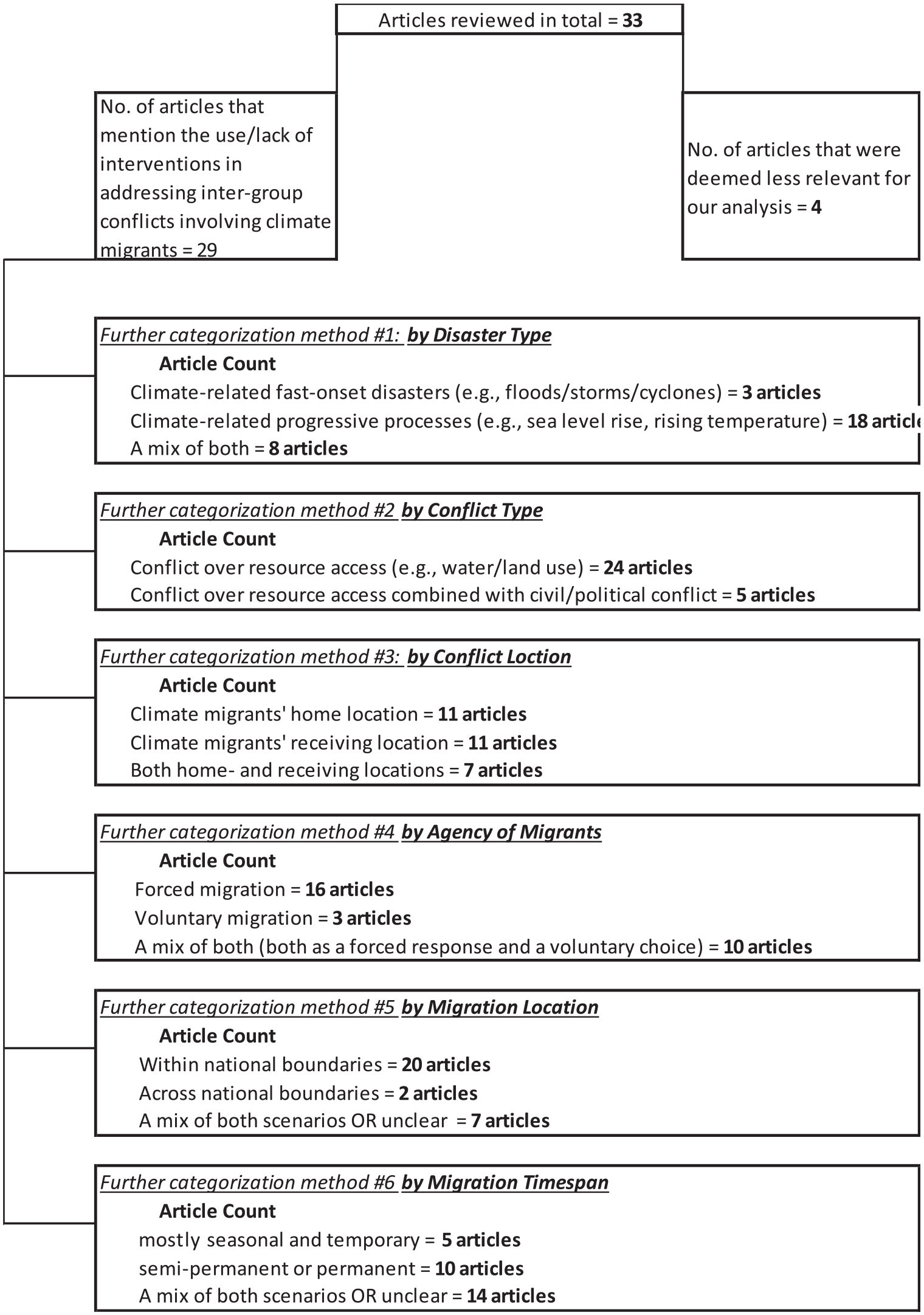
Categorization of reviewed articles by the specific contexts of disasters, conflicts, and migrations discussed.
3.1. Types and scales of interventions mentioned in our analyzed literature
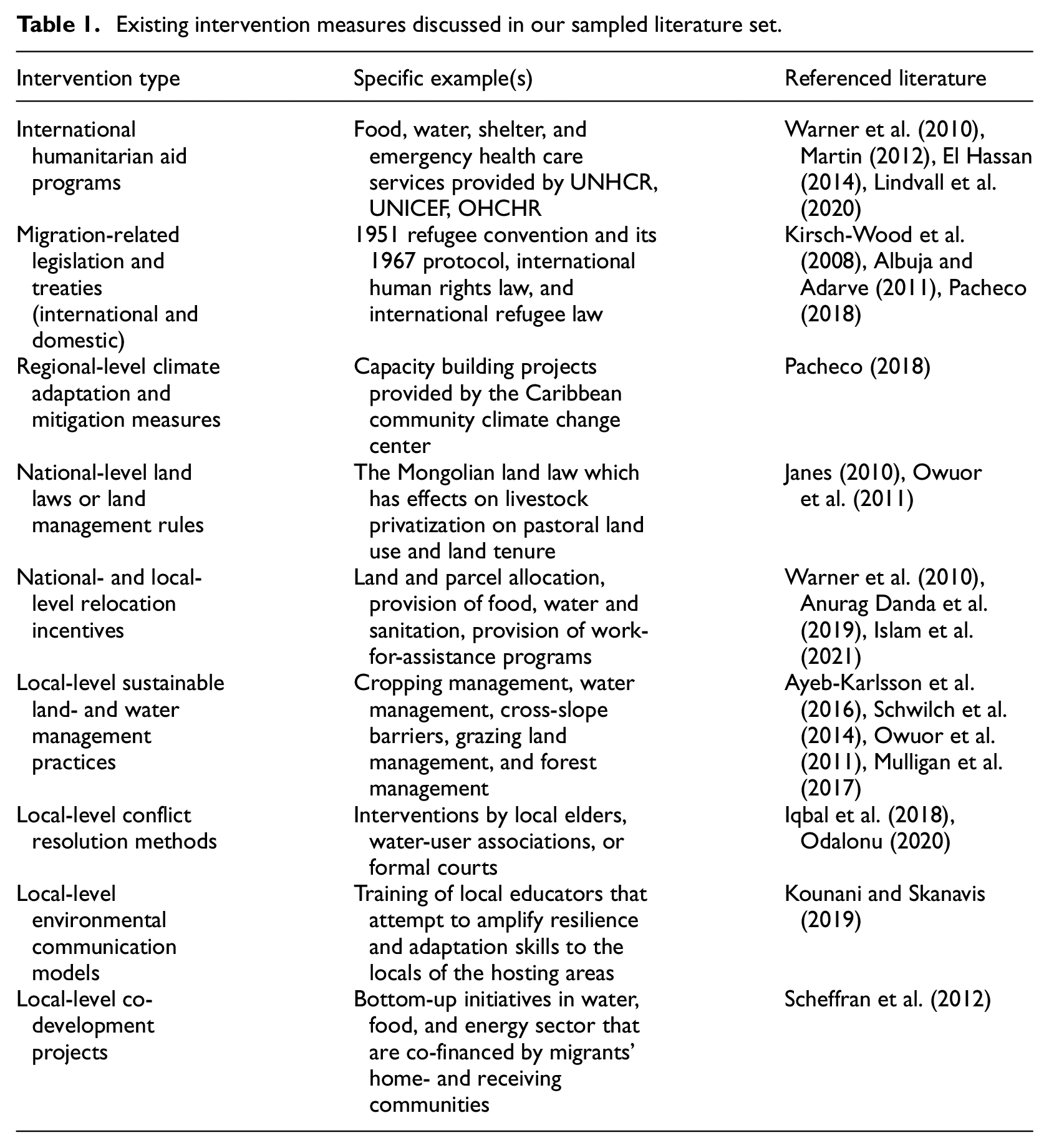
First, our study reveals that there is limited empirical research—18 out of the 33 articles that we analyzed—on the efficacy of interventions to alleviate resource conflict in communities hosting climate-related migrants in general. Table 1 lists these intervention types with a brief example provided. Table 2 summarizes who the main actors are and where the discussed communities are located for the different scales of interventions.
Existing intervention measures discussed in our sampled literature set.
Main actors and geographical hotspots in existing intervention measures.
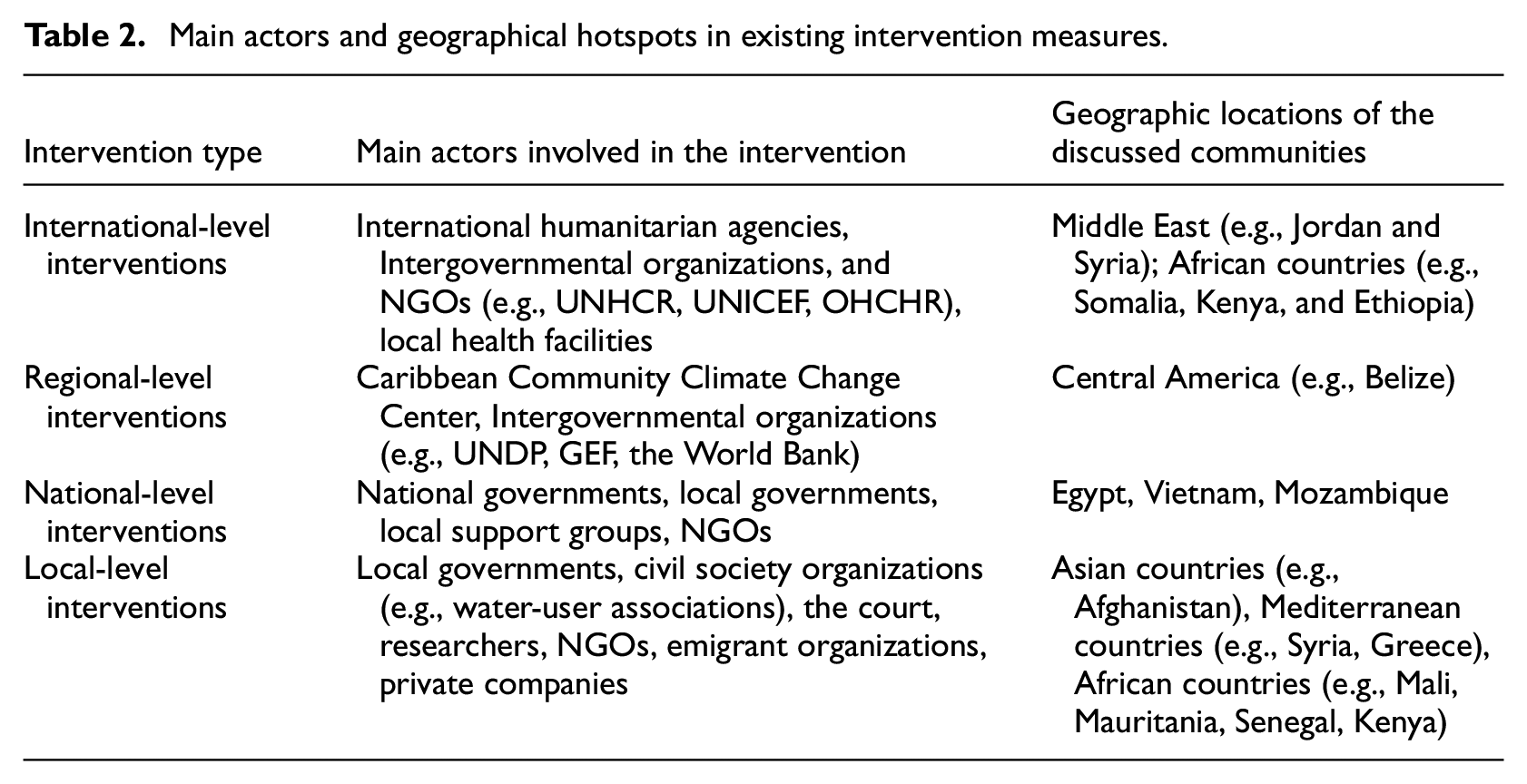
As shown in Tables 1 and 2, the types of these intervention measures can be best categorized based on the scale at which these measures are originated, that is, the administrative level of the leading player that is involved in the intervention process. Despite them having a common purpose of serving the affected communities (which is ultimately at the local-level), some of these interventions are humanitarian aid programs led by international non-governmental organizations (NGOs) such as the United Nations High Commissioner for Refugees (UNCHR) and the United Nations High Commissioner for Human Rights (OHCHR), some are regional climate mitigation and adaptation measures led by regional institutions (such as the Caribbean Community Climate Change Center), which are supported by Intergovernmental organizations such as the United Nations Development Program (UNDP), the Global Environment Facility (GEF), and the World Bank. Others range from national-level land laws and relocation incentives to local-level sustainable land management practices, conflict resolution methods, and environmental communication models. Moreover, it is clear from Table 2 that interventions at different scales are interrelated because there is no clear distinction between the types of actors involved in these interventions or their administrative levels. In fact, Lindvall et al. (2020) points out that the success of international humanitarian aid programs is, to some extent, dependent on how well “the health care services in the refugee camps is integrated with services serving the rest of the local community”. Warner et al. (2010) believe that “national-level relocation schemes are “sources of power as well as the initiatives of local actors.” As noted above, our search criteria also would have uncovered studies on interventions that did not attempt to reduce conflict; however, all of the identified scholarship assessing interventions focuses on those with that intention.
That said, instead of exploring the efficacy of existing interventions, 11 of our analyzed articles highlight scenarios and impacts of a lacking practice, program, or policy (El Kharraz et al., 2012; Hermans & Ide, 2019; Linke et al., 2018; Parsons & Chann, 2019; Wolsko & Marino, 2016) or make recommendations for future intervention measures based on more theoretical arguments (Eckstein, 2009; Grothmann et al., 2017; Godsmark et al., 2019; Levy, 2019; Marques et al., 2019; Scheffran & Battaglini, 2011). As such, very few existing studies actually assess efficacy of attempted interventions.
The following subsections will discuss the different scales of interventions mentioned in our analyzed literature (those highlighted in Tables 1 and 2) in greater detail. In particular, we will answer questions such as what are their context of application? Who are the key actors involved? Do different scales of interventions tend to be tied to different types of hazard- or conflict situations? How are different scales of interventions interrelated?
3.1.1. Interventions at international, regional, and national scales
Post-disaster international humanitarian assistance is critical in protecting the needs and rights of climate-related migrants. International organizations such as UNHCR and OHCHR have played a critical role in providing post-disaster humanitarian assistance to migrants affected by large-scale natural disasters such as in the case of the 2010 earthquake in Haiti (Martin, 2012), during the aftermath of the 2001 Mozambique floods (Warner et al., 2010), and during Somalia’s severe drought in 2017 (Lindvall et al., 2020). In these cases, international organizations provide the immediate livelihood support and protection needed—such as access to medical facilities, sanitation, food, and safe drinking water—to displaced people.
International legal norms and regulations (such as the 1951 Refugee Convention and its 1967 Protocol, International Human Rights Law, and International Refugee Law) are other important forms of interventions at the international scale. While they set out the rights of refugees and establish the standards for their treatment in countries that receive them (RAIO, 2019), they do not directly inform disaster response norms and procedures at the country level (Albuja & Adarve, 2011). So, they need to be translated into, or supplemented by, national laws and relocation incentives to “ensure refugees are protected and can exercise their rights” (Pacheco, 2018; UNHCR, 2023). 5 National-level relocation policies could range from short-term measures such as allocation of food and shelters to long-term investments in infrastructure (Anurag Danda et al., 2019; Islam et al., 2021; Warner et al., 2010). They are indispensable not just for handling resettlement across national borders, but also for dealing with internally displaced persons.
Compared to international legal regimes, regional-level climate adaptation and mitigation measures provide more tailored interventions for displaced people within a specified geographic region. But similar to international regimes, regional-level legislative frameworks on migration are still bounded by national-level immigration laws and policies “that uphold the principle of state sovereignty” (Pacheco, 2018).
3.1.2. Interventions at the local scale
Our analyzed literature also provides a wide range of examples on local-level interventions. We see that sustainable land- and water management practices appear to be most commonly used in communities that are concerned with out-migration in dealing with environmental threats, thereby attempting to reduce migration at the outset. Some of these adaptation measures, such as shifting to planting crops that are less dependent on variations in natural resources—are self-initiated by farmers (Ayeb-Karlsson et al., 2016). Other measures include remediation and adaptation projects and financial incentives supported by governmental- and non-governmental agencies (Mulligan et al., 2017; Owuor et al., 2011; Schwilch et al., 2014). These practices have different degrees of success in different countries (Mulligan et al., 2017; Owuor et al., 2011; Schwilch et al., 2014).
Conflict resolution is another type of local-level intervention more directly tailored to addressing disputes, without necessarily confronting other underlying conditions. Two of our analyzed articles discussed the roles of formal and informal community-based interventions in addressing pastoral and agropastoral populations’ (or farmer-herder) conflicts over water and grazing fields in seasonal migrations (Iqbal et al., 2018; Odalonu, 2020). The implementation of these measures (such as specifying rules of irrigation water management, sensitizing farmers and herdsmen on peaceful co-existence, and setting up a monitoring mechanism) involve local power groups, civil society groups (such as water-user associations), as well as formal institutional platforms such as courts.
Meanwhile, there are local projects that train environmental educators to disseminate information—on realistic impacts of resettling migrants, on resource use, political stability, and employment—and help receiving communities cope with the presence of migrants without feeling their needs and resources being threatened (Kounani & Skanavis, 2019). Co-development projects in water, food, and energy—bottom-up programs initiated by immigrant organizations and co-financed by migrants themselves or institutions in countries of origin and destination (Scheffran et al., 2012) are believed to contribute to resilience and innovation in climate adaptation as well.
3.1.3. Connections among different scales of intervention
It is clear from our analysis that the different scales of interventions are inter-connected and engage actors at different institutional levels. As we mentioned earlier, international- and regional-level legislative frameworks on migration need to be complemented by national-level policies that provide direct guidance for displaced people (Albuja & Adarve, 2011; Kirsch-Wood et al., 2008; Pacheco, 2018). National-level disaster risk reduction plans need to be devolved to community scales before being implemented. Ineffective local-level interventions makes it necessary for international humanitarian agencies to dominate disaster preparedness and post-disaster emergency response (Mulligan et al., 2017), but international humanitarian aid programs—if not integrated well with existing infrastructure and services for the local communities—pose threat for potential conflict between the migrant- and receiving communities (Lindvall et al., 2020). Such external interventions have been criticized in the past for ignoring or undermining local mechanisms to address conflict (Lumumba-Kasongo, 2016) and maintain food and livelihood security (Buntaine et al., 2017; Johnson, 2019). Moreover, the strength of state presence and local-level regulatory institutions are both needed for conflict resolution (Odalonu, 2020) and fair allocation of resources among vulnerable populations who are affected by the consequences of climate change (Janes, 2010). While the literature includes limited examples of success, it does demonstrate the need for both external resources and locally designed interventions that consider the broad range of both host and newcomer community needs. Unfortunately, decades of international development research show how difficult (or impossible) such a balance can be, given different incentives (Escobar, 1995).
3.2. Limitations and limited successes of existing intervention approaches, and lessons for improvement
In this section, we discuss the weaknesses in the existing intervention approaches as well as their success conditions.
3.2.1. International, regional, and national-level interventions
There are limitations in the present interventions at international and regional 6 scale. For instance, the involvement of multiple agencies with no clear division of authority and responsibility makes it slow in establishing a lead agency for the protection of climate-related migrants (Martin, 2012). Also, the availability of international humanitarian assistance may vary from time to time, affecting the long-term sustainability of resettlement centers and disaster-relief efforts (Lindvall et al., 2020; Warner et al., 2010). More importantly, “large humanitarian aid programs’ focus does not necessarily match with the most urgent needs of the local people” and tends to offer a “Band-Aid” on larger problems that may require long-term solutions (Lindvall et al., 2020). Since “internal migration is the most likely outcome for those affected by climate change and other environmental hazards” (Martin, 2012), some argue that future priority should be helping countries themselves to develop adaptation strategies for internally displaced populations (Lindvall et al., 2020).
That said, national-level policies are not without their own weaknesses. To elaborate, resettlement programs in some countries do not provide migrants proper access to infrastructure (for example, public facilities, schools, health care, and well-functioning sewage systems) and hence result in migrants leaving the resettlement sites again (Anurag Danda et al., 2019; Warner et al., 2010). In Kenyan dryland, governments’ efforts to sedentarize pastoralists and forest conservation policies appear to undermine social equity when social equity is broadly defined as “options and capacity for maintaining human, social, and political rights rather than a focus on only human survival and material incomes” (Owuor et al., 2011).
Since some of the climate-related migrations happen across national borders, it is always helpful to “link international human rights law and customary legal norms on internal displacement” to make sure that migrants are fairly treated in the receiving community (Kirsch-Wood et al., 2008). As for the national-level interventions, their success is dependent on whether they can ensure migrants’ fair access to resources (Islam et al., 2021; Owuor et al., 2011; Warner et al., 2010), whether they can leverage on social integration tactics (Janes, 2010), and the degree to which they create meaningful space for public participation (Anurag Danda et al., 2019; Janes, 2010; Warner et al., 2010). Here, resources refer to not just food and shelter for immediate needs but also proper infrastructures for long-term settlement such as health care facilities and schools. Social integration tactics may include things like immersion programs that provide migrants with opportunities to learn the local language. And, examples of meaningful public participation include, but are not limited to, things like involving affected populations in the resettlement planning process (such as the assessment of community needs), in the assessment of relocation programs, and in the establishment of community-level institutions to create sustainable strategies of resource access and management.
3.2.2. Local-level interventions
Existing local-level 7 interventions have their own shortcomings. Hazard mitigation planning at the community-level often excludes community members in the decision-making processes (Ayeb-Karlsson et al., 2016). Similarly, local communities are seldom involved in the actual decision-making processes regarding sustainable land management practices either (Schwilch et al., 2014). In countries like Kenya, the lack of coordination between governmental agencies result in a situation where localized river remediation and adaptation projects were not carried out with a holistic understanding of flood risk (Mulligan et al., 2017). And, the allocation of local development funds (for resource management and infrastructural development) is often done in a way that strengthens the power of local politicians, which creates new social inequities (Owuor et al., 2011).
Our analysis suggests that community-level initiatives that engage community members in the process of decision-making, community needs assessment, or disaster preparedness training (Ayeb-Karlsson et al., 2016; Schwilch et al., 2014) are more likely to resolve conflicts over resource use between climate-related migrants and host communities. The ability to leverage financial and cultural capital of migrants through co-development projects (that are co-financed by the home and host communities) are likely to enable innovative solutions in the migration process as well (Scheffran et al., 2012). In addition, there needs to be a careful balance between formal and informal measures depending on specific context. In some communities of Afghanistan, informal systems for resolution of water conflicts—led by local elders and farmers—are often more trusted by community members than formal courts (Iqbal et al., 2018). On the contrary, in places that have serious security risks due to potential inter-group conflicts, it would be helpful to set up a monitoring committee and punitive enforcement mechanisms (Odalonu, 2020). In the rare event where both formal policies and informal policies seem to “constrain sustainable adaptation,” local adaptation measures need to be supported by a more fundamental change in the national policies and structures to be effective (Owuor et al., 2011). Last, but not least, the provision of environmental education will help receiving communities understand the differences between perceived- and realistic impacts of the arrival of migrants, laying the groundwork for smooth settlement of migrants (Kounani & Skanavis, 2019).
3.2.3. Additional lessons for interventions across different scales
Regardless of the scale of interventions, there are a few additional “ingredients to success,” as suggested by our analyzed articles. These are: a focus on long-term adaptive capacity, the use of community-based measurement frameworks, and the assurance of cross-sectoral coordination and policy congruence.
First, successful intervention schemes need to consist of long-term adaptive and coping mechanisms and can be viewed as “dialog between people, the resources they depend on, and the contexts in which they are articulated” (Parsons & Chann, 2019). They move beyond just meeting the short-term material needs of migrants and explore ways to improve their capacity to ensure long-term success (Albuja & Adarve, 2011; Ayeb-Karlsson et al., 2016; Anurag Danda et al., 2019; Lindvall et al., 2020; Wolsko & Marino, 2016). Although social support networks (such as migrants’ family ties and social networks) contribute to migrants’ adaptation to a new place (Ayeb-Karlsson et al., 2016; Islam et al., 2021; Scheffran et al., 2012; Warner et al., 2010), there is a need to focus more on understanding long-term adaptive capacity of communities in relation to nature’s carrying capacity (Warner et al., 2010). In other words, long-term solutions require consideration of interventions’ impacts on local natural resource sustainability and community access, in order to avoid opportunities for reigniting conflict (Weinthal et al., 2011).
Second, for interventions to be acceptable and sustainable, there is a need to develop community-based evaluation metrics for communities’ needs assessment, resilience capability evaluation, and adaptation programs’ performance evaluation (Lindvall et al., 2020; Martin, 2012; Schwilch et al., 2014). Currently, there is very limited research that assesses community-level vulnerability to climate change (Grothmann et al., 2017). There is also limited effort that makes sure that “local knowledge is used” throughout different steps of community-based needs assessments and evaluations (Lindvall et al., 2020). That said, three of the analyzed articles proposed measurement frameworks that could shed light on future interventions’ policy design, implementation, and evaluation (Grothmann et al., 2017; Kounani & Skanavis, 2019; Schwilch et al., 2014). Schwilch et al. (2014) demonstrate that locally relevant questions can be added successfully to a global assessment questionnaire, a particularly relevant endeavor given the wide variety of climate-related migration influences. Grothmann et al. (2017) present a battery of questions to evaluate both human and ecological vulnerabilities. And Kounani and Skanavis (2019) demonstrate how assessments can be strengthened by asking program implementers about perceived community needs and concerns.
Third, effective intervention measures require cross-sectoral coordination and policy congruence in the management of natural resources (El Kharraz et al, 2012; Marques et al., 2019) and the development of a proactive response for migrants (Lindvall et al., 2020). This is because resource management is a complex process that often engages with stakeholders at different institutional levels, has implications for multiple production sectors, and requires integration of objectives in resource management, environmental sustainability, and development policies (El Kharraz et al., 2012). Similarly, the development of a long-term resettlement plan for migrants could involve careful planning for health care provision, which requires a bridging of short-term services (provided in refugee camps by humanitarian agencies and NGOs) with long-term services provided by the government and the private sector (Lindvall et al., 2020).
Meanwhile, Albuja and Adarve (2011) emphasize that, while it is fine for conflict-focused laws and disaster-focused laws to have different norms and institutions, there are good reasons for them to potentially permeate into each other’s space in safeguarding the rights of climate-related migrants. In fact, multiple literatures point out the fact that policy makers tend to come up with specific categories for migrants that are associated with different causes and draw careful lines based on these categories when designing policies and offering assistance to address their needs (Albuja & Adarve, 2011; Kirsch-Wood et al., 2008; Martin, 2012; Warner et al., 2010). This sometimes results in a “legal and institutional vacuum in the human rights protection of people displaced by disasters” (Albuja & Adarve, 2011).
3.3. Potential determinants of intervention outcomes
Although we did not find connections between scales and types of interventions and types of disasters, the nature of conflicts and migrations seems to have some influence on intervention outcomes. Figure 3 is an illustration of the connections between conflict and migration types and intervention outcomes. As we can see, the only stronger causal link is that in the event of a voluntary migration (i.e., when climate-related migrants have more agency in making the relocation decision), local-level interventions seem to be sufficient in mitigating inter-group conflict over resource use (Iqbal et al., 2018; Kounani & Skanavis, 2019; Schwilch et al., 2014). This is regardless of whether the conflict is happening at migrants’ home or receiving location, whether the migration happens within or across national boundaries, and whether migrants choose to temporarily or permanently settle down. In these scenarios, local interventions range from a combination of formal and informal approaches, involving both institutions like local courts and traditional organizations involving local elders and water-user associations for conflict resolution (Iqbal et al., 2018). A wide variety of actors are involved, including but not limited to local governments, CSOs, researchers, and community representatives. Moreover, intervention measures target not only the climate-related migrants but also members from the receiving communities. By understanding community members’ perceived impact of migrants on their use of food, water, and energy, and communicating what the more realistic impacts could be, such environmental communication programs help reduce receiving communities’ anxiety in dealing with the potential influx of migrants (Kounani & Skanavis, 2019). That said, we avoid making over-generalizations here given the relatively small sample size of studies exploring interventions that address receiving communities’ concerns, though Wiederkehr et al. (2022) also demonstrate the importance of such interventions for reducing inter-group resource conflicts in general.
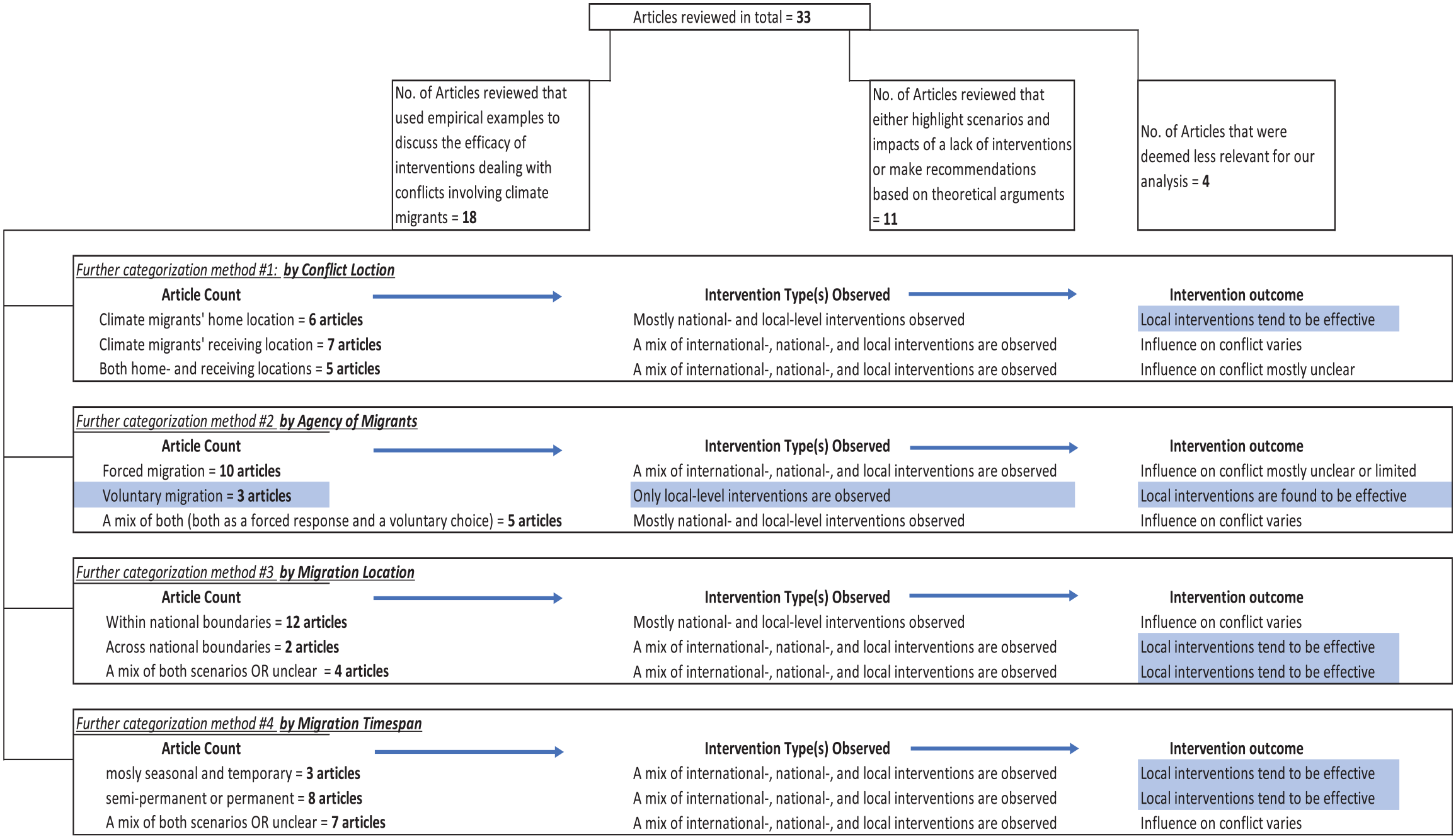
Connections between conflict- and migration types and intervention outcomes.
Another observation is that, compared to interventions that originate from the international- and regional-level, local-level interventions appear to be more effective in mitigating inter-group conflict in general. This is especially true when dealing with voluntary migration (like what we discussed above) and when conflicts over resource use are happening at migrants’ home locations and when it is desirable (if feasible at all) to avoid outmigration (Ayeb-Karlsson et al., 2016; Scheffran et al., 2012; Schwilch et al., 2014). That said, the effectiveness of local-level interventions seems to be unaffected by migrants’ location of settlement or whether the relocation is permanent or temporary.
In addition, we explored whether the different methods of analysis used in our reviewed articles could have influenced the outcomes of interventions that they discussed. Out of the 18 articles that used empirical examples to discuss the efficacy of interventions, five used a mixed-method approach—combining qualitative- and quantitative analysis—while the rest used only qualitative analysis. The predominant use of qualitative methods reflects the challenges in decoding the complex relationships between climate change, migration, resource use conflicts, and interventions using large-sample quantitative analysis, as well as the unique conditions present based on different migration drivers and varied community characteristics.
Comparing the intervention outcomes in articles that used different methods of analysis (i.e., a mixed-method approach vs. a qualitative analysis approach), there is no suggestive evidence that reported intervention outcomes were influenced by authors’ choice of method of analysis. This is not surprising considering that, for the five articles that used a mixed-method approach, quantitative analysis was mainly used for simple descriptive analysis of data or the assessment of survey data’s internal reliability, rather than evaluating the effectiveness of interventions. As such, we see no evidence that the chosen research method biases study results.
Looking closer at articles that used qualitative analysis, they mostly use semi-structured or structured interviews and surveys for data collection and manual coding for content analysis. While carefully designed qualitative studies guide the research process—including but not limited to the design of questionnaires, the determination of sampling procedures, the pilot-testing phase, the data collection protocol, and the actual analysis process—in a way that ensures results’ internal validity, the unique characteristics of each case study make it difficult to determine the external validity of their results.
4. Discussion and conclusion
4.1. Overall implications and contributions to wider academic debates
Our systematic literature review adds to the very thin literature on the nexus between climate change, migration, resource conflict, and interventions, presenting early stages of the research enterprise addressing conflict reduction in communities hosting climate-related migrants. Compared to Wiederkehr et al. (2022), which is the only synthesis study in this field of literature and emphasizes national governments’ actions, our findings emphasize the need for national-level plans to be devolved to community scales and the importance of both formal- and informal local-level intervention mechanisms to address conflict. These are not conflicting results, but rather demonstrate the differences in research focus and studied interventions. Moreover, Wiederkehr et al. (2022) note that their study is not specific to climate-influenced migration, due to the challenges of sorting out precise influences on migration decisions.
Despite the overall dearth of evidence to date, it is clear this effort is necessary for understanding why some communities are better able to dampen potential conflict than others. As we demonstrate above, there are some consistent directions among the small body of existing literature. For instance, many scholars highlight the importance of public participation in ensuring communities’ fair access to resources, as well as social networks that support migrants’ resettlement process. There is also emerging evidence about the need to integrate efforts across scales and policy issue areas, though no specific recommendations have yet crystallized for how to achieve such integration. In addition, our analyzed articles call for a focus on long-term adaptive capacity, a use of community-based measurement frameworks, and an assurance of cross-sectoral coordination and policy congruence in future interventions’ policy design, implementation, and evaluation.
Some of these findings should be familiar to scholars of resource conflict avoidance and resolution, as well as those focused on justice in climate adaptation and international development more generally. In each of these realms, it is clear that multi-scale interventions are necessary but challenging. Community participation and buy-in are essential, but often limited without external support that comes with strings attached (Buntaine et al., 2017; Johnson, 2017). Given the propensity for resource conflict in the face of local power differences (Ide, 2015), emerging inter-group conflicts may necessitate a broader governance scale, if all parties accept the intervention and local participation is also supported in the process (Novak & Axelrod, 2016; Ocampo-Diaz et al., 2022). However, such interventions must be careful not to privilege some stakeholders over others, lest they exacerbate long-term grievances about resource access (Weinthal et al., 2011), particularly when resource dependence is coupled with privileges, constraints, or negative rhetoric directed at one of the groups (Wiederkehr et al., 2022). In these respects, conflict reduction in communities hosting climate-related migrants is similar to other resource conflict avoidance and resolution. However, this type of conflict remains unique in other ways, given the multiple climate hazards driving migration, some of which may make return to home communities impossible, as well as the future climate threats confronting resources and people in host communities. As such, it will be important for future research to identify which findings can be applied from general scholarship on resource conflicts to emerging situations at the climate-migration-conflict nexus. Moreover, future scholarship should consider the extent to which environmental peacebuilding can more generally gain insights from findings about conflict reduction in communities hosting climate-related migrants.
4.2. Limitations
This systematic review provides a comprehensive overview of scholarship in this field. However, it is important to recognize the context in which our findings emerge.
First, we confront the fact that this review is a snapshot at one recent moment in time. This constraint is a typical limitation of literature reviews in constantly evolving academic research, particularly when conducting comprehensive processes that require extensive time reviewing each publication. However, to mitigate this concern, we have provided, above, the relevant search terms, so that any reader can replicate and update our search for new relevant material. Moreover, we also demonstrate how recent contributions to this scholarship grapple with related questions, as a way to demonstrate ongoing research directions.
Second, as with most research on conflict processes, it is more difficult to find examples of non-conflict (Adams et al., 2018) that can demonstrate what conditions help communities avoid violence, in the backdrop of migration. It is necessary to compare conflict situations with cases in which conflict does not emerge but would be otherwise expected (Mahoney & Goertz, 2004), or cases in which resource conflict does not turn violent (Ide, 2015). Nonetheless, while we see only a few examples of successful violence avoidance in our review, this absence does represent the current state of the literature. Such success stories have indeed not been sufficiently researched. Similarly, there is limited existing assessment of interventions that are not intended to reduce conflict. These stories therefore require additional evaluation and analysis in future research.
4.3. Identified gaps to be addressed in future research
In addition to the limited lessons from existing scholarship, our study identifies gaps in the existing climate-migration-conflict intervention literature. The following four points summarize further research that is necessary for understanding interventions to address conflict related to climate-related resettlement.
First, there is a lack of empirical study in general related to resolving conflicts driven by climate change-related migration. Only 18 studies present evidence about intervention effectiveness, whereas others highlight scenarios and impacts of cases where intervention was lacking, or make general recommendations rather than evaluating specific interventions. Press reports and government statements may provide an initial list of attempted interventions that require assessment, providing rich opportunities for future analysis. As this area of research expands, scholars should be better positioned to compare potential interventions for particular contexts.
Second, few scholars explore how adaptive capacity evolves over time in response to multiple repeated threat factors. That is, like other research on human responses to climate change, this scholarship does not address whether conflict risks and intervention needs change over time as climate-related migrants settle in new communities and gradually adapt (or not) to local conditions. Such concerns also lead us to ask the degree to which initial threats wear down adaptive capacity for dealing with new challenges, or conversely strengthen future adaptive capacity through experience (De Juan & Wegenast, 2020; Leichenko & O’Brien, 2008; O’Brien et al., 2004).
Third, there is some suggestion that conflict may be reduced by ensuring climate-related migrants have access to sufficient resources in their new communities. However, there remains limited research on whether and how institutional actors (e.g., foreign NGOs, national governments and municipal authorities) can facilitate such access. Power imbalances between the host community and migrants may limit adaptation options for those newly arriving (Shapiro, 2022; Schwerdtle et al., 2020), unless migrants are viewed as allies strengthening the host community (Ash & Obradovich, 2020). As such, environmental justice approaches counsel a need for addressing such access limitations. In particular, there has been little evaluation of the claim that participatory community-based natural resource management can in fact strengthen resource access and reduce conflict as a result. Moreover, such discussion of access cannot consider the migrating community to be monolithic and experiencing uniform challenges. Rather, particularly given the likelihood of different migration experiences (e.g., Hunter & Simon, 2017; Wrathall & Suckall, 2016), it is crucial that future scholarship clearly explore how various groups within study communities are affected by access and conflict conditions.
Finally, to the extent evidence is provided, it focuses mostly on short-term interventions that limit immediate conflict. However, there is also a need for long-term intervention measures beyond emergency responses. This relates to the above concern regarding long-term socio-ecological adaptation, but specifically highlights the need for interventions that account for community members’ future needs and human security. As in other conflicts, future conflict reduction would appear to require building community resilience with the newly established community members (Ide et al., 2021; Rustad & Binningsbø, 2012; Weinthal et al., 2011). Thus, scholarship will need to evolve in the direction of determining how to measure such long-term impacts and evaluate interventions’ ability to achieve resilient communities.
4.4. Synthesis and conclusion
This literature review demonstrates the early stage of research in the area of interventions that moderate conflict in communities hosting climate-related migrants. Despite the current lack of analysis, these gaps raise opportunities for future research that would be valuable both for advancing knowledge and for supporting policy development. As other scholars demonstrate, there is not a deterministic relationship between climate change and conflict, with attempted interventions that have reduced conflict despite conditions ripe for resource contestation (e.g., Ide et al., 2020; Koubi, 2019; Wiederkehr et al., 2022). Moreover, these interventions and changing conditions may go beyond the realm of policy making (Nash, 2018). Additional evidence would be valuable for better understanding the impact of “climate mobilities” more generally (Boas et al., 2019; Sakdapolrak et al., 2016; Wiegel et al., 2019), including recent concerns that more evidence is needed to ensure climate-influenced migration is not merely a story told to justify increased securitization of climate responses (Boas et al., 2019).
By filling these existing research gaps, future work would develop further nuance related to each stage of causal processes identified above, while also developing a clearer understanding of whether climate-influenced migration and conflict are qualitatively different from migration and conflict with other origins.
Supplemental Material
sj-docx-1-eas-10.1177_27538796231207919 – Supplemental material for Interventions addressing conflict in communities hosting climate-influenced migrants: Literature review
Supplemental material, sj-docx-1-eas-10.1177_27538796231207919 for Interventions addressing conflict in communities hosting climate-influenced migrants: Literature review by Linlang He, Elizabeth Kreske, Stephanie J Nawyn, Amber L Pearson, Mark Axelrod, Yadu Pokhrel, Stephen Gasteyer, Sean Lawrie and Anthony D Kendall in Environment and Security
Footnotes
Acknowledgements
The authors thank Lauren Sawyer for additional research assistance. We appreciate the funding provided by the Michigan State University Honors College for supporting Elizabeth Kreske’s participation in this research. Additionally, we thank the editors and reviewers for their constructive feedback, which improved this manuscript substantially.
Funding
The author(s) disclosed receipt of the following financial support for the research, authorship, and/or publication of this article: This work was supported by the Michigan State University Environmental Science & Policy Program and AgBioResearch Interdisciplinary Team Building Initiative.
Data availability statement
All publications that reached the final stage of review are summarized in Table A1, included in the supplemental material. The literature review search strategy is detailed in the manuscript (including search terms) and registered with PROSPERO (ID CRD42021228483). The manuscript also includes information on how many studies were examined at each stage of the review process. A list of studies excluded at each stage is maintained at  and can be obtained from the authors.
Supplemental material
Supplemental material for this article is available online.
Notes
Author biographies
References
Supplementary Material
Please find the following supplemental material available below.
For Open Access articles published under a Creative Commons License, all supplemental material carries the same license as the article it is associated with.
For non-Open Access articles published, all supplemental material carries a non-exclusive license, and permission requests for re-use of supplemental material or any part of supplemental material shall be sent directly to the copyright owner as specified in the copyright notice associated with the article.
