



Abstract
There is a growing overlap between countries most affected by climate change and those affected by conflict and fragility. This paper addresses the need for a better understanding of how to pursue effective climate action in fragile and conflict-affected settings (FCS) by investigating how and to what extent conflict considerations and peacebuilding efforts are integrated into adaptation projects in these contexts. A purposive sample of 15 projects approved in 2022–2023 from the three main multilateral climate funds were analyzed through a framework analysis method based on a novel three-step approach for the design of adaptation projects in FCS. The results indicate variability and a lack of systematic methodology in integrating conflict aspects and peacebuilding elements into project designs, a tendency of silo-thinking climate–conflict dynamics but also that a considerable share of projects engage with the concept of environmental peacebuilding. The findings imply that to mainstream conflict considerations and peacebuilding efforts more prevalently in adaptation projects in FCS, there is a critical need to develop suitable policies and guidelines to support this work. This includes more widely accepted frameworks and generates more robust evidence on the interaction between climate, conflict, fragility, and peacebuilding.
Keywords
1. Introduction
The impacts of climate change are not distributed equally among the world’s population, as vulnerability to climate change varies significantly both among and within regions (Intergovernmental Panel on Climate Change [IPCC], 2022). That some countries are more vulnerable to the impacts of climate change than others is captured by indices such as the ND-GAIN index developed by the University of Notre Dame, which measures a country’s climate vulnerability based on its exposure, sensitivity, and capacity to adapt to the negative effects of climate change in combination with its readiness to cope with resilience (Chen et al., 2024). Many of the most climate-vulnerable countries are also among the most fragile and conflict-affected territories. Fragility is a broad and comprehensive term that encapsulates a range of different aspects and lacks a uniform definition. The Organization for Economic Co-operation and Development (OECD) describes fragility as “the combination of exposure to risk and insufficient coping capacities of the state, system and/or communities to manage, absorb or mitigate those risks,” and declares in their latest States of Fragility report that there are 60 fragile contexts of which 15 are considered extremely fragile contexts (OECD, 2022). Similarly, the World Bank defines fragility as “a systemic condition or situation characterized by an extremely low level of institutional and governance capacity which significantly impedes the state’s ability to function effectively, maintain peace, and foster economic and social development” (World Bank, 2023a). The World Bank annually releases a list of fragile and conflict-affected situations, which in 2023 comprised 39 countries (World Bank, 2023b). In addition, the non-profit organization, The Fund for Peace, yearly ranks countries based on their level of fragility in the Fragile States Index, a measurement which is based on 12 indicators (demographic pressures, refugees and internally displaced persons, group grievance, human flight and brain drain, economic inequality, economy, state legitimacy, public services, human rights, security apparatus, factionalized elites, and external intervention) (The Fund for Peace, 2017).
Despite being among the most vulnerable to the impacts of climate change, fragile and conflict-affected countries receive a comparably lower share of climate finance. For instance, of all the climate finance distributed by the principal vertical climate funds in 2014–2021, fragile states received an average of $10.8 per capita and extremely fragile states only $2.1 per capita, compared to non-fragile states which received an average of $161.7 per capita (UNDP, 2021). Accordingly, it has been argued that donors seem to favor supporting climate action in safer places (Cao et al., 2022), and it has been advocated that this gap in climate finance to fragile and conflict-affected countries ought to be addressed (Quevedo & Cao, 2022).
Research on the climate–conflict nexus in relation to fragile and conflict-affected settings (FCS) has developed rapidly in the last few years and is also gaining increased attention in the international community in general. This became evident at COP28 when the urgent need to increase climate action in FCS was emphasized (COP28, 2023) and commitments to enhance financial support for climate change adaptation in FCS were declared (COP28, n.d.) Yet, although signs of increased efforts to support climate action in FCS are starting to accumulate, it is still considered insufficiently understood how climate action initiatives that actually do take place in FCS interact with the dynamics of peace and conflict (Meijer et al., 2023). In addition, it is unclear how and to what extent peacebuilding efforts are integrated into climate change adaptation projects in FCS (Läderach et al., 2021). Therefore, this paper aims to assess how and to what extent conflict and peacebuilding dimensions are considered in the design of climate change adaptation projects in FCS. In addition, a sub-aim of this study is to examine how the three-step approach for including conflict considerations in the design of adaptation projects from the Stockholm Hub on Environment, Climate, and Security (Meijer et al., 2023) can be operationalized for evaluating these considerations within research applications.
2. Background
2.1. Research on climate change adaptation in relation to peace and conflict
Concurrently with the rapid growth of general research on the connection between climate and conflict that commenced around 2007 in the aftermath of the first-ever debate on this topic in the UN Security Council (United Nations, 2007), the linkages between climate change adaptation vis-à-vis peace and conflict started to receive increased attention (Hendrix et al., 2023). For instance, as an immediate response to the growing awareness of the climate–conflict nexus that surged at this point in time, Smith and Vivekananda (2007) argued that “peacebuilding and adaptation are effectively the same kind of activity,” and that it is vital to ensure that climate change adaptation is made conflict sensitive while peacebuilding and development activities also must be climate sensitive. This was followed by increased advocacy for harnessing the potential synergies between adaptation and peacebuilding, although challenges in integrating the two fields started to be acknowledged (Hammill & Matthew, 2010). Parallelly, more and more attention was drawn toward the situation for fragile states (Tänzler et al., 2010), and eventually calls for addressing the financing gap for adaptation in fragile and conflict-affected countries started to resonate (Bayat-Renoux & Glemarec, 2016).
As the research on this topic grew and deepened, warnings that adaptation efforts potentially can exacerbate conflict dynamics or generate new conflicts if not designed in a conflict-sensitive manner have been brought into the debate (Läderach et al., 2021). Although parts of the knowledge production on this topic have taken place within academia (Matthew, 2018), non-academic actors have been leading in enhancing the literature (see, e.g., Cao et al., 2022; Mosello & Rüttinger, 2020). This body of gray literature is mostly focused on how to unlock and scale up adaptation finance for FCS, and notable is that various of these reports have been published in the last few years (see, e.g., Jackson et al., 2023; Mercy Corps, 2023).
2.2. Conflict-sensitive adaptation programming within the multilateral climate funds
Läderach et al. (2021) explicitly turn to the Global Environment Facility (GEF), the Adaptation Fund (AF), and the Green Climate Fund (GCF) when arguing that the multilateral climate funds have the capacity and ought to integrate peace and conflict considerations into their climate financing practices. It is advocated that the multilateral climate funds should “address drivers of conflict, reinforce peace drivers, and where possible contribute to sustaining peace,” and it is further asserted that at least targets relating to peacebuilding and conflict avoidance should be included in the environmental and social safeguards of the projects that these actors support (Läderach et al., 2021).
It is still unclear to what extent the multilateral climate funds actually adhere to what is proposed by Läderach et al. (2021). Attempts to evaluate the degree of conflict sensitivity in climate action projects funded by the multilateral climate funds have been done before, but not extensively. UNDP has examined climate finance to FCS from four of the principal multilateral climate funds between 2014 and 2021 (UNDP, 2021), and in addition to this, Scartozzi et al. (2023) published a paper investigating the extent of integrated climate-security programming among 22 multilateral funds. Similarly, Scartozzi (2023) conducted an analysis targeting GCF projects exclusively, albeit without a specific focus on FCS. All of these three studies included mitigation as well as cross-cutting projects and did not target adaptation projects exclusively.
3. Methodology
3.1. Conceptual framework
Although research on the climate–conflict nexus is rapidly progressing forward, there are no generally accepted frameworks on how to address and analyze the connection between climate, conflict, and fragility (Tänzler et al., 2022). Recently, the Stockholm Hub on Environment, Climate, and Security launched a three-step approach on how to include conflict considerations in the design of adaptation projects in FCS (Meijer et al., 2023). An innovative aspect of this work is that it focuses on processes and not just thematic descriptors, which was considered advantageous for this study as it aims to investigate not only if but also how adaptation projects in FCS integrate conflict considerations and peacebuilding efforts.
To be useful for responding to the main aim of this paper, the three-step approach was slightly adapted.
Step 1 of the three-step approach concerns analyzing how climate change and conflict might interact through four specific pathways, and how these might affect the project. This step was applied without any modifications, although additional research on the four pathways from the Stockholm International Peace Research Institute (SIPRI) was used for guidance and deeper comprehension when conducting the analysis (see Mobjörk et al., 2020; Tarif, 2022).
Step 2 of the three-step approach focuses on assessing how the project influences climate–conflict dynamics. It is suggested that visualizations such as a causal loop diagram should be utilized for this purpose and that such a process should be co-created with local actors. This step was interpreted in a broader sense and defined as how and to what extent the project might influence climate–conflict dynamics and whether co-creation processes in regard to conflict considerations or peacebuilding efforts were included.
Step 3 of the three-step approach deals with the concrete integration of climate–conflict analysis into project design and was translated into four sub-themes, namely if and how conflict considerations or peacebuilding efforts are mentioned in the description of the projects:
1) Theory of change
2) Components/activities
3) Objectives, outcomes or outputs
4) Management, Evaluation and Learning (MEL) procedures
An important clarification is that Step 2 and Step 3 of the original three-step approach are aimed at climate–conflict dynamics and not peacebuilding explicitly. However, a peacebuilding dimension was added as part of adapting the three-step approach into a conceptual framework applicable to this study, as the original three-step approach highlights that reducing climate–conflict-related risks also ideally promotes peace. An important clarification is that Step 2 and Step 3 in the original three-step approach are aimed at climate–conflict dynamics and do not explicitly comprise peacebuilding. However, it is pointed out that the three-step approach not only strives to reduce climate–conflict-related risks but also ideally promotes peace. For that reason, it was deemed feasible to also include a peacebuilding dimension when the three-step approach was adapted to serve as a conceptual framework for this thesis. From here on this adaptation of the three-step approach from the Stockholm Hub on Environment, Climate, and Security will be referred to as the three-step framework.
3.2. Data collection and search strategy
Only projects funded by the three main multilateral climate funds (the GEF, the AF, and the GCF) were included due to ease of access to project documentation. Adaptation projects were targeted exclusively since the three-step framework is aimed specifically at adaptation projects. Nevertheless, although the main focus of a project is adaptation some project activities may still target mitigation (i.e., taking a cross-cutting approach), and these kinds of projects were not excluded. The time scope was limited to adaptation projects that were approved in 2022 and 2023, as past studies with similar research aims have already examined data up until 2022 (Scartozzi et al., 2023; UNDP, 2021). Targeting only approved projects deemed the most feasible approach with respect to data availability and relevance, including completed projects might have rendered outdated conclusions while projects at the concept stage would have resulted in less available data in terms of project documentation.
3.3. Data extraction
To be able to sort projects based on region and level of fragility, multiregional projects or projects targeting more than three countries were excluded, and only projects taking part in countries that are classified as fragile contexts by the OECD (OECD, 2022) or as fragile and conflict-affected situations by the World Bank (World Bank, 2023a, 2023b) were targeted. This process resulted in a total of 54 projects approved in 2022–2023 (GEF: 34 projects, GCF: 14 projects, and AF: 6 projects), from which a sample based on geographical location and level of fragility was extracted. It was deemed relevant to include a global portfolio of projects to capture nuances in how climate change adaptation in FCS unfolds in different parts of the world, and therefore the 54 projects were grouped into four regions: Africa, South and Central America & the Caribbean, West Asia (formerly referred to as the Middle East), and Asia & Pacific (which includes Central Asia, East Asia, South Asia, and Oceania). The intention was to select four projects from each region and include at least one project from each of the three donors for each region. However, this turned out unattainable since only three projects based in West Asia were approved in 2022–2023 while the AF did not approve any projects in West Asia or Asia & Pacific in this time period. Thus, the sample had to be adapted to the availability of projects which rendered a total of 15 projects. The projects for each region were selected based on the level of fragility; projects located in countries with the highest average ranking on the Fragile States Index between 2022 and 2023 were targeted (for information on the Fragile States Index, see The Fund for Peace, 2017). Available project documentation for each of the 15 projects that were selected through this sampling process was downloaded from the website of each of the three multilateral climate funds, and these project documents served as the data for the analysis.
3.4. Analysis
The project documents were processed in a two-step process. First, a keyword search was conducted to find the specific parts of the project documents with information relevant to the analysis. Keywords were set up based on the terminology used in the research underpinning the three-step framework, such as conflict, peace, security, fragility, and livelihoods (see the Annex for the complete list of keywords used). Second, an AI assistant called AskYourPDF developed by ProtonLabs Technology was used to perform a supplementary screening of each project document. The AI assistant was fed a set of prompts aimed at detecting sections of the project documents relevant to the analysis (see the Annex for the exact prompts used). The idea behind using an AI assistant to conduct an additional screening of the project documents was to ensure that no information of relevance for the analysis had been missed in the keyword search process. However, the use of the AI assistant turned out to be superfluous, as it did not detect any relevant information that had not already been identified in the keyword search process (Table 1).
All the 15 projects included in the sample, grouped by region.
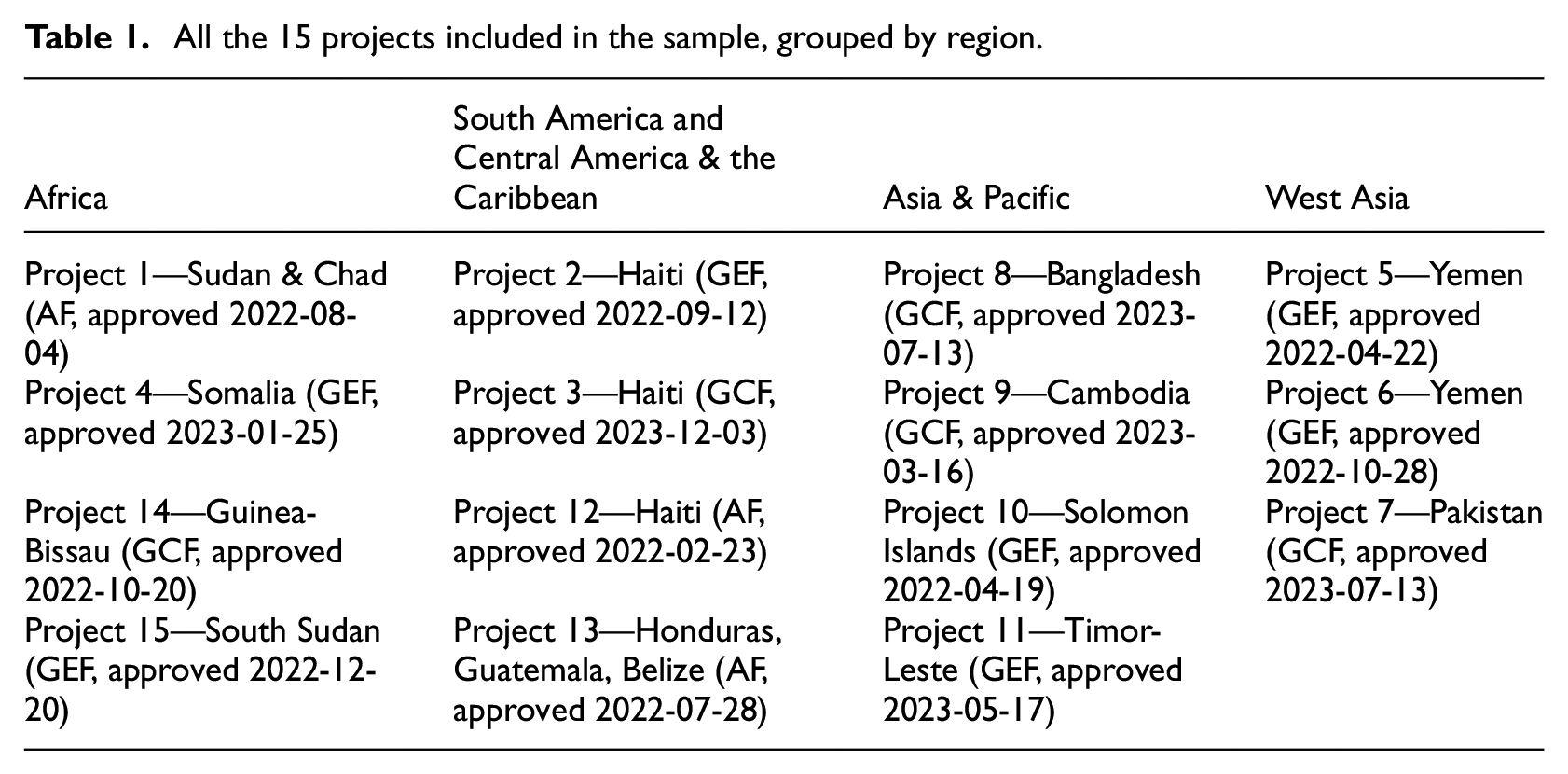
Once this two-step process of detecting relevant information was completed, all the relevant sections of the project documents of each project in the sample were reviewed, and a framework analysis based on the three-step framework was conducted in Excel. After analyzing each project individually, a synthesis was performed and relevant findings were extracted.
4. Results
The purpose of this research project was to examine how and to what extent conflict considerations and peacebuilding efforts are integrated into adaptation projects in FCS through a framework analysis approach. The results are presented according to the three themes and their respective sub-themes outlined in the three-step framework (see Figure 1), according to geography and donor, and according to if and how peacebuilding efforts were incorporated in the analyzed projects.
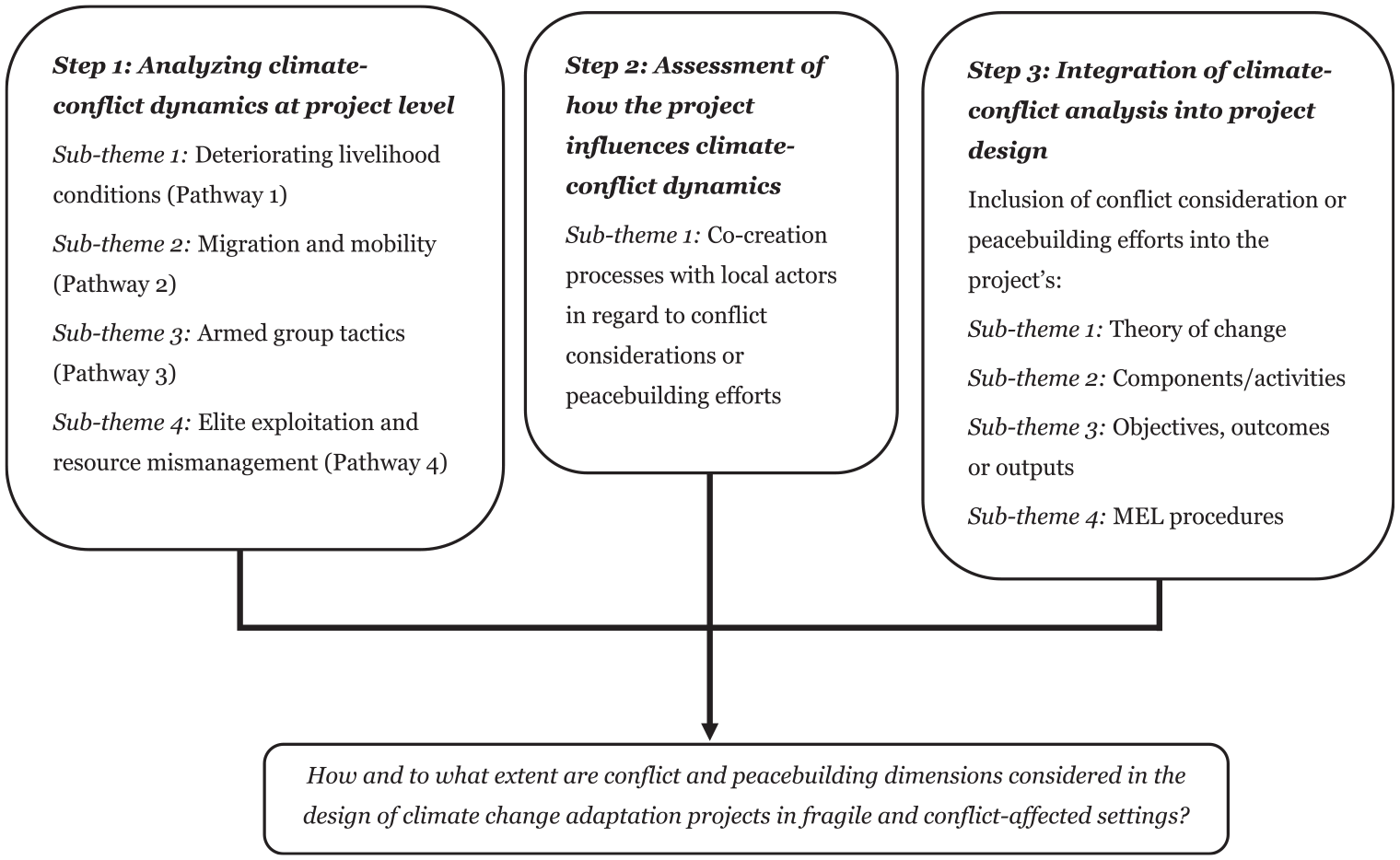
The three-step framework.
4.1. Theme 1—Climate–conflict dynamics at the project level
How and if projects analyzed climate–conflict dynamics varied. Almost all projects addressed how climate change impacts might deteriorate livelihood conditions (Pathway 1) and alter migration patterns (Pathway 2), but only about half of the projects further analyzed how these climate dynamics may interact with conflict dynamics. The themes of Pathway 3 and Pathway 4 were covered to a significantly lesser extent, and their interconnection to climate–conflict dynamics was barely not addressed at all.
4.1.1. Subtheme 1.1—Pathway 1: Deteriorating livelihood conditions
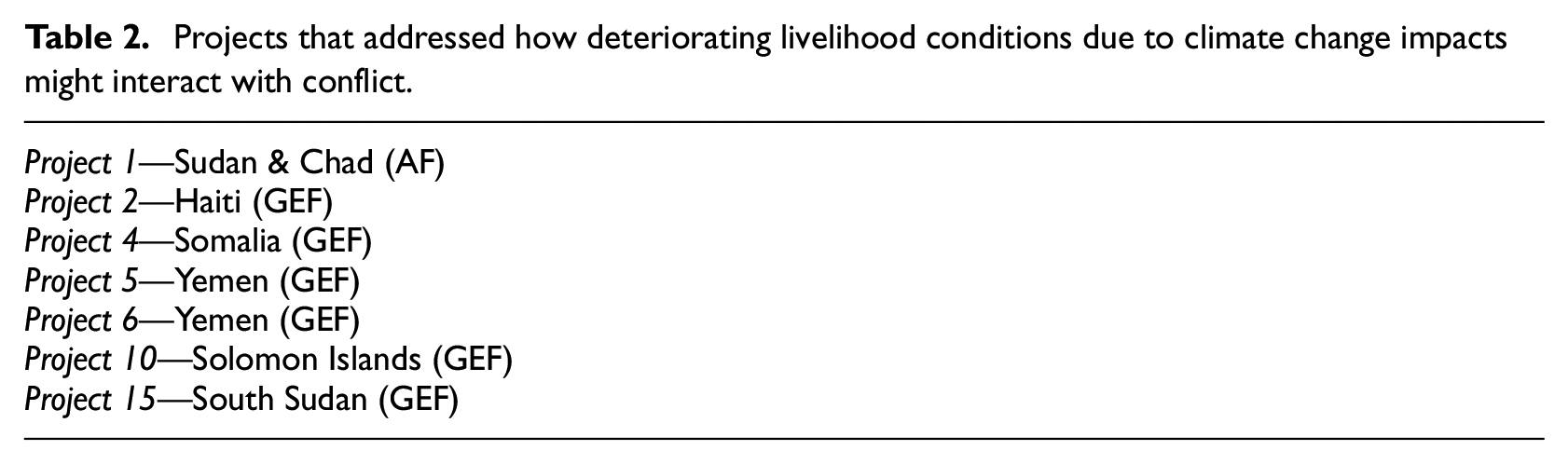
All projects described how the impacts of climate change deteriorate livelihood conditions, but only 7 of 15 projects further addressed how these deteriorating livelihood conditions due to climate change impacts potentially could influence the risk of conflict.
Five projects addressed Pathway 1 in both directions by describing how the impacts of climate change are leading to increased conflict over natural resources while already ongoing conflict and insecurity at the same time aggravate livelihood conditions even more through improper agricultural practices, which cause further land degradation (Table 2).
Projects that addressed how deteriorating livelihood conditions due to climate change impacts might interact with conflict.
Project 10 (Solomon Islands, GEF) addressed Pathway 1 in more general terms by describing how the literature recognizes that the impacts of climate change can lead to conflict and security concerns due to livelihood deterioration, but without applying this to the project context. Project 2 (Haiti, GEF) made a general recognition of Pathway 1 similarly but also applied this insight to the project context by analyzing how climate change impacts could lead to increased social tension over natural resources.
4.1.2. Subtheme 1.2—Pathway 2: Migration and mobility
In all, 14 projects described how climate change gives rise to an increased intensity and frequency of different types of natural hazard-linked disasters that drive migration and displacement in diverse ways. Eight of these 14 projects further discussed how this development might interact with conflict. Four of these eight projects did so by referring to how the risk of gender-based violence increases as women are forced to be displaced after natural hazard-linked disasters occur.
In addition to this, Project 1 (Sudan & Chad, AF) and Project 5 (Yemen, GEF) described how climate change impacts drive urbanization and induce migration from rural areas, which, in turn, increase the risk of conflict over certain water supply structures. Moreover, Project 10 (Solomon Islands, GEF) explained how climate change-induced migration has caused land disputes between different ethnic groups in the past, while Project 15 (South Sudan, GEF) described how climate change might alter migratory patterns of pastoral groups and result in conflicts over land resources.
4.1.3. Subtheme 1.3—Pathway 3: Armed group tactics
Seven of 15 projects made some reference to Pathway 3, for example by mentioning the presence of terrorist groups (Project 4—Somalia, GEF). However, only Project 1 (Sudan & Chad, AF) made a connection between climate change and altered tactics of armed groups, as it outlined how climate change impacts aggravate economic insecurity which, in turn, increases the risk of young men enrolling in armed groups.
4.1.4. Subtheme 1.4—Pathway 4: Elite exploitation and resource mismanagement
None of the projects made an explicit analysis of Pathway 4, but seven projects touched upon this topic indirectly, for instance as it was explained how inter-clan conflicts have led to disputes in the past (Project 4—Somalia, GEF), and how a small group of landowners stemming from the political elite control most of the fertile land (Project 5—Yemen, GEF).
4.2. Theme 2—Assessment of how the project influences climate–conflict dynamics
The degree of conflict sensitivity varied. All of the provided conflict analyses focused unilaterally on conflict dynamics and none of the projects provided an explicit assessment of climate–conflict dynamics, although four of the projects described some type of process that could be interpreted as assessing the project’s influence on climate–conflict dynamics. For example, Project 15 (South Sudan, GEF) clarified that a conflict analysis would be conducted together with an Environmental and Social Impact Assessment. Both Project 10 (Solomon Islands, GEF) and Project 11 (Timor-Leste, GEF) discussed how climate change impacts affect land access, and how land access, in turn, could be a potential conflict driver, and these two projects discussed how they would interact with land-use issues.
4.2.1. Subtheme 2.1—Co-creation processes in regard to conflict considerations or peacebuilding efforts
All of the projects described how they would adopt some kind of general procedures that could be interpreted as resembling co-creation processes, although none of the projects actually utilized the term “co-creation.” Instead, expressions such as “community-based” or “participatory approach” or similar were used. These participatory features were often depicted as thorough and ambitious, for example by stating how “the project has been designed through extensive stakeholder consultations at the national, regional and local level, including consultations with local community-based organizations, indigenous federations and women’s groups” (Project 9—Cambodia, GCF). Similarly, Project 12 (Haiti, AF) claimed that “the sustainability of the project will be achieved by using a participatory community approach, with particular attention to engaging the most vulnerable and marginalized people in all project phases.”
Despite this, only 2 of 15 projects explicitly stated that conflict considerations or peacebuilding efforts would be included in co-creative activities. Project 3 (Haiti, GCF) described how “the peacebuilding potential of the project will be maximized” through a participatory approach to the design of community land-use plans and the mapping of local conflict dynamics. In addition, Project 7 (Pakistan, GCF) mentioned briefly how “consultations with relevant communities” will be part of a screening process of community-based conflict potential.
4.3 Theme 3—Integration of climate–conflict analysis into project design
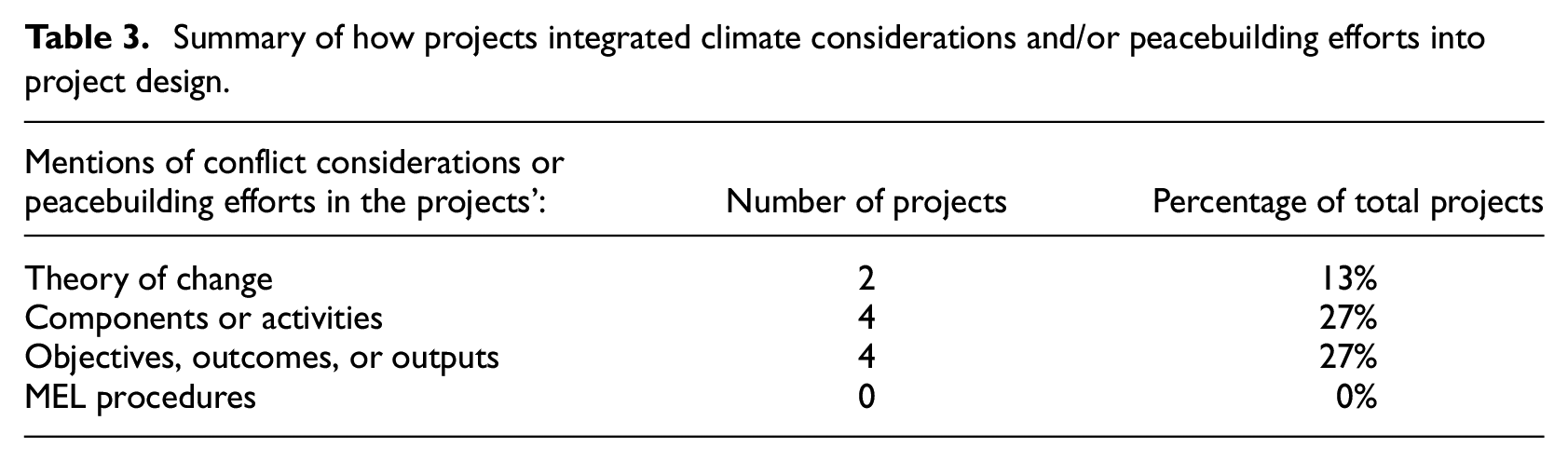
The majority of the projects did not integrate conflict considerations or peacebuilding aspects into the actual project design (see Table 3). The projects that explicitly discussed conflict considerations or peacebuilding did so in other sections of the project documents.
Summary of how projects integrated climate considerations and/or peacebuilding efforts into project design.
4.3.1. Subtheme 3.1: Theory of change
Project 5 (Yemen, GEF) described how the project will be conflict sensitive by “avoiding to build any asset that is potentially conflict generators.” Examples given of such potential conflict generators were investments in grazing lands where the rights to the lands might be defined by local community policies or tribal principles. In Project 15 (South Sudan, GEF), conflict and insecurity were highlighted as the underlying causes behind the main problem the project addressed, namely an urgent need to build climate resilience among agricultural and pastoral communities.
4.3.2. Subtheme 3.2: Components/activities
Providing training on conflict resolution or conflict management was the most common component/activity. Project 1 (Sudan & Chad, AF) did for instance explain in great detail how “Conflict Resolution Committees” will be set up in the local communities, and Project 5 (Yemen, GEF) stated that “extensive training in conflict resolution” will be provided to the local communities. Similarly, Project 14 (Guinea-Bissau, GCF) described how “Water Management Committees” will be established and given training in conflict management.
4.3.3. Subtheme 3.3: Objectives, outcomes, or outputs
Project 1 (Sudan & Chad, AF) had one output called “community mobilization and peacebuilding” which consisted of specific training activities, initial dialogue, and follow-up consultations with the local communities, and another output consisting of the mapping of conflict drivers.
In Project 2 (Haiti, GEF), one output aimed at minimizing the risk of conflict over water and other natural resources through the development of “frameworks” and “instruments” for improved planning and coordination.
Similarly, in Project 4 (Somalia, GEF), one output was the prevention of conflict over water resources, through the “promotion of conflict-sensitive utilization of water resources.”
4.3.4. Subtheme 3.4: MEL procedures
None of the projects explicitly included conflict considerations or peacebuilding efforts in their MEL procedures, despite some projects having these topics included as part of their outputs. However, Project 1 (Sudan & Chad, AF) mentioned in a summary table that its output related to conflict considerations and peacebuilding will be verified through “Progress reports” and “Project M&E reports,” without further specifications.
4.4. Results divided per geography and donor
No clear tendencies regarding geographical differences were observed. The most notable difference was instead tied to the countries’ ranking on the Fragile States Index. For example, the five projects in the most fragile countries all addressed Pathway 1, and four of these five projects made some sort of integration of conflict considerations or peacebuilding efforts into the project design (Table 4).
Summary of all the analyzed projects in the sample and the country ranking on the Fragile States Index of each project.
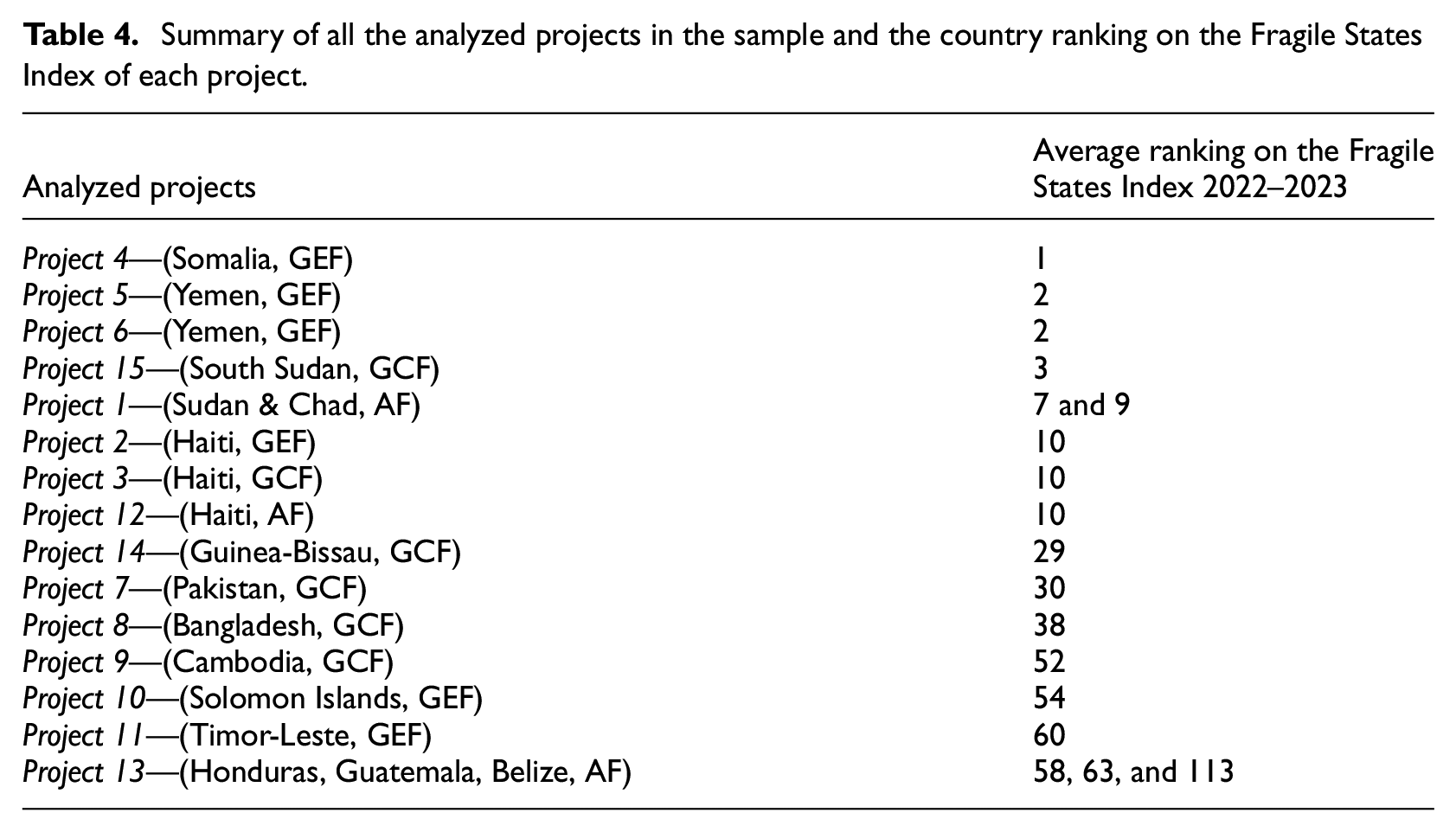
All three analyzed climate funds showed discrepancies and a lack of coherence regarding the integration of conflict considerations or peacebuilding efforts into project design. There were also considerable differences between projects supported by the same donor; four of the seven analyzed projects from the GEF made some sort of integration of conflict considerations or peacebuilding efforts into the project design, while only one of the five GCF projects and one of the three AF projects made this integration.
4.5. Integration of peacebuilding efforts
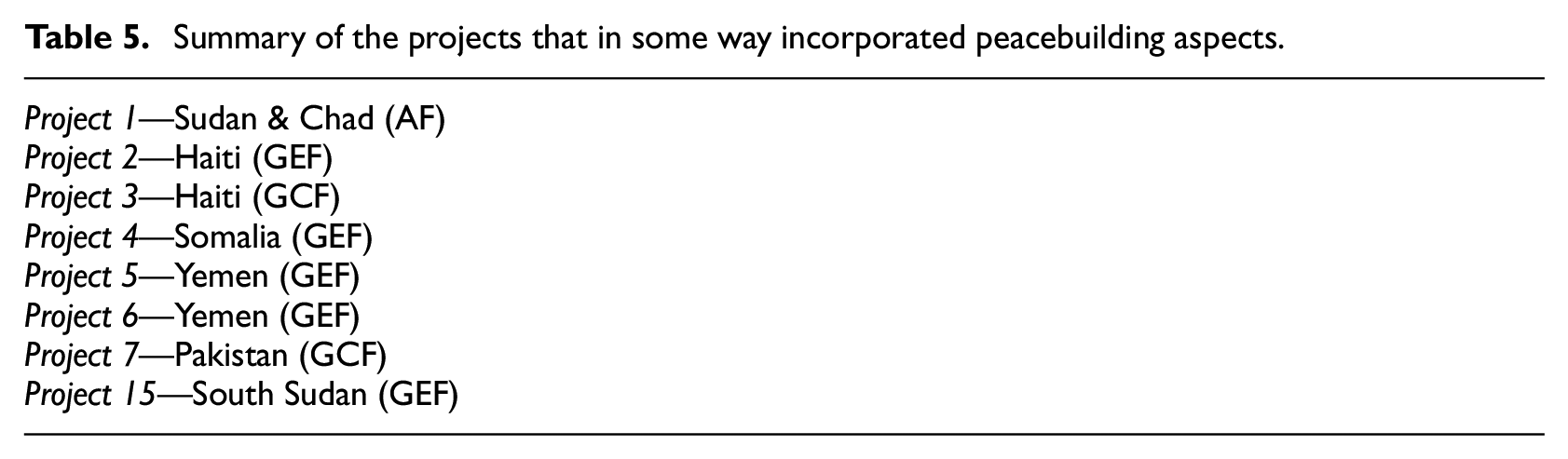
Eight of the 15 analyzed projects made some sort of claim of contributing positively to peacebuilding. These assertions generally occurred through briefer mentions, and the majority of them alluded to the environmental peacebuilding hypothesis. For example by stating that certain groups will be targeted and trained in building climate-resilient and sustainable natural resource management as part of a peacebuilding effort (Project 1—Sudan & Chad, AF), or that “the project will incorporate approaches that intentionally bring together divided groups to cooperate around shared environmental interests” (Project 6—Yemen, GEF). In other cases, it was mentioned that the project would participate in already established peacebuilding initiatives in the area (Project 15—South Sudan, GEF) (Table 5).
Summary of the projects that in some way incorporated peacebuilding aspects.
5. Discussion
5.1. Deficiencies in the integration of climate–conflict dynamics into project design
A key finding from the analysis is that overall, climate finance provided by the three main multilateral climate funds to adaptation projects in FCS seems to lack a coherent and systematic approach regarding the integration of conflict considerations or peacebuilding efforts. While the majority of the analyzed projects made some kind of reference to conflict considerations or peacebuilding efforts, how this was done, what was included, and wherein the project documents this occurred varied considerably between different projects as well as between the three funds. This finding confirms earlier observations by Scartozzi et al. (2023) and UNDP (2021) and provides triangulation as similar results were obtained despite different data inclusion criteria and methodological approach, and this study should thus be viewed as complementary to earlier findings.
The findings of this study should also be considered in light of what the multilateral climate funds themselves declare about their engagement in FCS. Interestingly, both the GEF and the AF published evaluation reports while this study was conducted (Adaptation Fund, 2024; GEF Independent Evaluation Office, 2024). The GEF evaluation report assessed the fund’s interventions in FCS between 2006 and 2019 and found that the identification of conflict risks has not been consistent and that the identification of fragility risks has been minimal, although a growing number of projects have started to acknowledge these risks (GEF Independent Evaluation Office, 2024). The AF’s evaluation was based on learnings from projects approved before 2022–2023 and concludes that conflict dynamics are not to be fully integrated into project design, and highlights that ensuring a conflict-sensitive project design could strengthen climate-related risks and enhance peacebuilding efforts (Adaptation Fund, 2024).
The GEF and the AF concede that the integration of conflict sensitivity tends to be inconsistent and haphazard, and they recommend that specific policies for FCS should be employed. The findings of this paper based on newer data can affirm these conclusions by showing that no major changes seem to have occurred in projects approved between 2022 and 2023. An advantage of the methodological approach of this study—the framework analysis—was that detecting these inconsistencies became relatively straightforward since a core issue is that the funds’ integration of conflict sensitivity is not anchored to a framework and thus is not done systematically.
5.2. Silo-thinking climate–conflict dynamics
Another clear finding is that a tendency of silo-thinking in terms of separately addressing climate change and conflict issues is prevalent. Since all projects targeted adaptation projects analyses of climate dynamics were naturally included in the documentation of all projects, and as all projects also took part in FCS conflict dynamics were also discussed to some extent. However, these elements were in general addressed separately; that is, climate–conflict dynamics were in most cases overlooked.
For example, Project 3 (Haiti, GCF) explained how climate change impacts such as floods and tropical storms “have considerable implications for health and livelihoods” but never analyzed the potential interaction of such climate dynamics with conflict aspects. At the same time, a “conflict and fragility assessment” was provided separately. This assessment extensively discussed conflict dynamics but without making any interconnection to climate dynamics, except for mentioning that “the project will take an environmental peacebuilding approach.”
The tendency of siloing climate action vis-à-vis humanitarian, development, and peacebuilding efforts in international development has been pointed out before (Ide et al., 2023), and researchers have called for breaking these silos (Cao et al., 2022; Mosello & Rüttinger, 2020). Similarly, Scartozzi et al. (2023) found that mentions of security in tandem with the environment were noticeably fewer than mentions of security by itself and highlighted that security concerns often are brought up in the background section of project documents. This study can confirm this tendency, but also add on by clarifying that discussions around security concerns at times seem to be placed in a separate section of the project documents or even in a separate document other than the general project documents.
The fact that climate dynamics and conflict dynamics are analyzed in separate sections of the project documents is not necessarily problematic per se; it is the deficiency in making cross-references between the two, acknowledging their interconnectedness and attempting to understand the complex interplay of climate–conflict dynamics that should evoke concerns. This reasoning does not entail making direct links between climate and conflict; the relationship between the two is obviously extremely intricate, complex, and interwoven. Instead, acknowledging and assessing climate–conflict dynamics should imply examining the circumstances under which climate change impacts might translate into conflict (Meijer et al., 2023), and confronting the complexity of the climate–conflict nexus through the more dynamic pathway approach is an efficient way of overcoming this tendency of siloing climate dynamics and conflict dynamics. This implies considering the impacts of climate change as a potential driver of conflict in a more dynamic way, and not solely as a driver of already existing conflicts.
5.3. Peacebuilding assertions
A novel aspect of this research project was to not only examine how conflict aspects are included in adaptation projects in FCS but also assess the incorporation of peacebuilding dimensions. Intriguingly, about half of the analyzed projects (8 of 15 projects) made some sort of assertion of contributing positively to peacebuilding. This is an interesting finding given that the practice of assuming causal connections between adaptation programming and conflict mitigation, as well as interweaving adaptation initiatives with peacebuilding agendas, has been criticized recently (Raleigh et al., 2024). Moreover, Raleigh et al. (2024) advocate a shift of perspective toward accepting that climate change and conflict can co-occur without causality and that adaptation programming should strive to remain apolitical.
These objections are interesting since many researchers, as well as donors, seem to make presumptions about climate action generating positive peace co-benefits, despite this linkage not being underpinned by a robust evidence base. Already in 2010 Tänzler et al. (2010) argued for including a stronger political dimension into adaptation strategies for fragile states and argued for developing conflict-sensitive adaptation programs “with a positive transformative effect,” and the need of “harnessing the direct co-benefits of adaptation for peacebuilding.” More recent work has argued that approaching climate change and violent conflict in conjunction could enhance peacebuilding and development outcomes, for example through coordinating actions in regard to nature-based adaptation (Morales-Muñoz et al., 2022). A more integrated research agenda on the climate–conflict nexus and environmental peacebuilding also has been called for (Sändig et al., 2024).
Advocates for the potential synergies between adaptation and peacebuilding are found outside of the academic sphere as well. The German Federal Foreign Office supported the think tank Adelphi for a report linking adaptation and peacebuilding, in which “peace-positive climate change adaptation” is promoted (Mosello & Rüttinger, 2020), and likewise UNDP adheres to the environmental peacebuilding hypothesis—that is, the notion that collaboration on environmental issues can function as a pathway toward peace in conflict-affected situations (Rist et al., 2024)—and highlights adaptation as a potential entry point for peace and social cohesion (UNDP, 2021). That adaptation projects in FCS might produce additional peace co-benefits is also suggested in the three-step approach (Meijer et al., 2023).
Given that divided opinions on the role of peacebuilding in adaptation projects exist, it is worthy of notice that all the projects analyzed in this study that made some sort of peacebuilding claims did so without acknowledging that convincing empirical evidence on the causal mechanisms between adaptation and peacebuilding is lacking. A parallel development appears to take place within the peacebuilding community as well, for instance as the UN Peacebuilding Support Office (PBSO) states it might consider engaging in more strategic conversations with multilateral climate funds to strengthen potential synergies (United Nations University Centre for Policy Research [UNU-CPR], 2023). The trend seems to be present also in the mitigation sector. The organization Energy Peace Partners, which promotes renewable energy investments in fragile and conflict-affected countries through a self-established financing mechanism labeled “Peace Renewable Energy Credits,” claims that investments in renewable energy have the potential to produce positive peace co-benefits, referred to as “peace dividends” (Energy Peace Partners, 2023). However, similarly to the critique posed by Raleigh et al. (2024), novel research based on global renewable energy investment data rejects the hypothesis that investments in renewable energy can enhance peace (Braunstein et al., 2023).
Moreover, the organization Interpeace has recently launched a “Peace Finance Impact Framework” and has drafted standards for financial devices labeled “Peace Bonds” and “Peace Equity” (Finance for Peace, 2024). Although not aimed exclusively at the intersection between peacebuilding and climate action, it is noticeable that Mercy Corps proposes that such “Peace Bonds” could be a solution to unlock climate finance for fragile states, for example through lowering the credit risk borrowers to adaptation projects in FCS face (Yue, 2022).
Thus, the notion that climate action has the potential to leverage peace co-benefits is increasingly supported both from the climate action side and the peacebuilding side, although empirical evidence is still scarce. However, as the climate action sector already struggles with greenwashing accusations, it seems plausible to invoke a discussion around whether a risk of allegations of “peacewashing” could become an emerging hazard in the climate action domain. As of today, the notion of peacewashing in relation to climate action has been underexamined within the academic sphere and is a clear gap in the literature. Similarly, it is not a topic that resonates widely in larger policy debates either, although the potential risk of peacewashing in relation to engagement in FCS was recently brought up in panel discussions during the Stockholm Forum on Peace and Development (Stockholm Forum on Peace and Development, 2024), and the issue was also put forth by NGOs before the peace-themed day during COP28 (Conflict and Environment Observatory, 2023). Following critiques by Raleigh et al. (2024) and Braunstein et al. (2023), the emerging trend of blending peace aspirations with climate finance is a development that requires careful consideration and further research.
A related point concerns indicators for measuring peacebuilding results in climate action projects; the multilateral climate funds lack adequate metrics capable of capturing possible co-benefits pertinent to peacebuilding and conflict prevention (Scartozzi et al., 2023; UNDP, 2021). More holistic metrics for monitoring and evaluating peace co-benefits could be a way to impact funding decisions in favor of FCS, and it has previously been pointed out that indicators developed for SDG 16 potentially could be applied to the field of climate security (UNDP, 2021). Furthermore, although principles for monitoring and evaluation within environmental peacebuilding are not very developed in general (Ide et al., 2021), attempts to address this gap have been made recently (Bruch et al., 2023). If this progress continues and peacebuilding metrics that are adequately adjusted to harmonize with adaptation objectives are developed, conflict prevention and peacebuilding efforts could start to become more mainstream in adaptation projects in FCS.
5.4. Re-thinking the three-step framework
These findings provide new insights into the applicability of the three-step framework, although it was not originally designed as an evaluation tool the way it has been applied in this study. However, it was considered tenable to do so, as the three-step approach has the potential to capture qualitative nuances beyond pure numbers while permitting systematic comparisons. This allowed for a possibility to generate knowledge and insights on how issues of peace and conflict are integrated into adaptation programming, not only if they are.
It should be stressed though that none of the projects systematically considered all four pathways of the three-step framework, as the projects neither explicitly nor implicitly addressed all four pathways in their contextual analyses. Certain pathways were addressed to a greater or lesser extent though: the majority of the projects did bring up Pathway 1 (Deteriorating livelihood conditions) and Pathway 2 (Migration and mobility) to some extent, while Pathway 3 (Armed group tactics) and Pathway 4 (Elite exploitation and resource mismanagement) were significantly more overlooked. Similarly, only a minority of the projects were found to concretely integrate conflict considerations or peacebuilding efforts into project design in accordance with Step 3 of the three-step framework. Rightfully, this gives rise to questions of the usefulness of the three-step framework.
First, it seems that the utility of the three-step framework might change depending on the level of fragility of the country where the project takes place. The framework is based on learnings from four projects in Sudan, which is one of the world’s most fragile states (ranked 7th on the Fragile States Index in 2022–2023). In my analysis which draws on a larger portfolio of projects, it was clear that it was mostly projects in countries ranked high on the Fragile States Index that addressed the topics of the three-step framework. This suggests that the three-step framework might be less useful for less fragile settings, and perhaps mainly useful for projects in the most fragile settings.
Second, the original three-step approach promotes visualization of climate–conflict dynamics with the help of causal loop diagrams, and this process preferably is co-created with local actors. It is also argued that such a co-creation approach can enable local ownership of adaptation efforts (Meijer et al., 2023). Similarly, the importance of including local communities and stakeholders, and ensuring local ownership early in the design phase of the project is put forth as a key learning in the AF’s evaluation study (Adaptation Fund, 2024). This is interesting given that all of the analyzed projects in this study had participatory features, but only 2 of the 15 projects stated that these would involve conflict considerations or peacebuilding efforts. Given this, it is logical to argue that co-creation elements of the three-step framework should be given more weight and elaborated to include aspects such as local ownership and early and inclusive stakeholder engagement. An important note though is that a broader understanding of the concept of co-creation processes was applied in the analysis, and it is acknowledged that not all types of participatory features might be considered true co-creation processes.
Third, the absence of adequate peacebuilding and conflict-related metrics tailored for adaptation programming could explain why these topics were very sparsely integrated into project designs in a concrete manner. If the development of such metrics advances, those should be incorporated into the three-step framework to strengthen these dimensions. That a majority of the analyzed projects incorporated peacebuilding dimensions in some way further supports the idea that the three-step framework should involve a more concrete peace-building component. On the other hand, as pointed out above, combining climate action with peacebuilding endeavors might not be as straightforward and uncontroversial as it is often depicted. Hence, before making a more concrete inclusion of peacebuilding aspects in the three-step framework, more rigorous empirical evidence on how climate action can generate peace co-benefits is needed.
6. Conclusion
This paper aimed to explore how conflict dimensions are considered in the design of climate change adaptation projects in FCS. The results suggest that although the majority of adaptation projects taking place in FCS consider conflict risks and/or include peacebuilding components to some extent, this is not done in a systematic and coherent manner. The results further indicate substantial variations among projects from the same donor as well as between projects from different donors, which reflects the fact that none of the analyzed climate funds have adopted specific policies or guidelines for adaptation programming in FCS yet. Furthermore, although projects adhere to principles of conflict sensitivity, there seems to be a general tendency of silo-thinking climate–conflict dynamics, and it was found that only a minority of projects concretely include conflict considerations or peacebuilding efforts in the actual project design. In addition, this study demonstrates that the three-step approach from the Stockholm Hub on Environment, Climate, and Security (Meijer et al., 2023) can be utilized for research purposes if slightly adjusted, although its efficacy might vary depending on the level of fragility of the country where the project takes place. Strengthening and broadening co-creation aspects can also enhance its utility further.
The paper contributes to the climate–conflict scholarship by confirming previous findings on this topic by using more recent data and by applying a more qualitative research method, which allowed for a stronger focus on processes beyond thematic descriptors, complementing previous efforts conducted with automated content analysis. Moreover, the application of the three-step approach to evaluate previously approved adaptation projects should be seen as a contribution toward the development of a general organizing framework interconnecting climate, conflict, fragility, and peacebuilding.
The findings highlight several important research gaps. These include the need for developing more robust conceptual frameworks to explore the climate–conflict nexus, more guidance on how to approach climate–conflict dynamics in both research and practice, as well as evidence on what role peacebuilding can and should play in climate action contexts. Overall, the findings of this paper highlight the complexity of addressing climate change and conflict in a systematic way and the interacting risks that are generated at this nexus. More knowledge and better methods to effectively confront these wicked challenges will be increasingly important as we proceed toward a warmer future.
Footnotes
Appendix
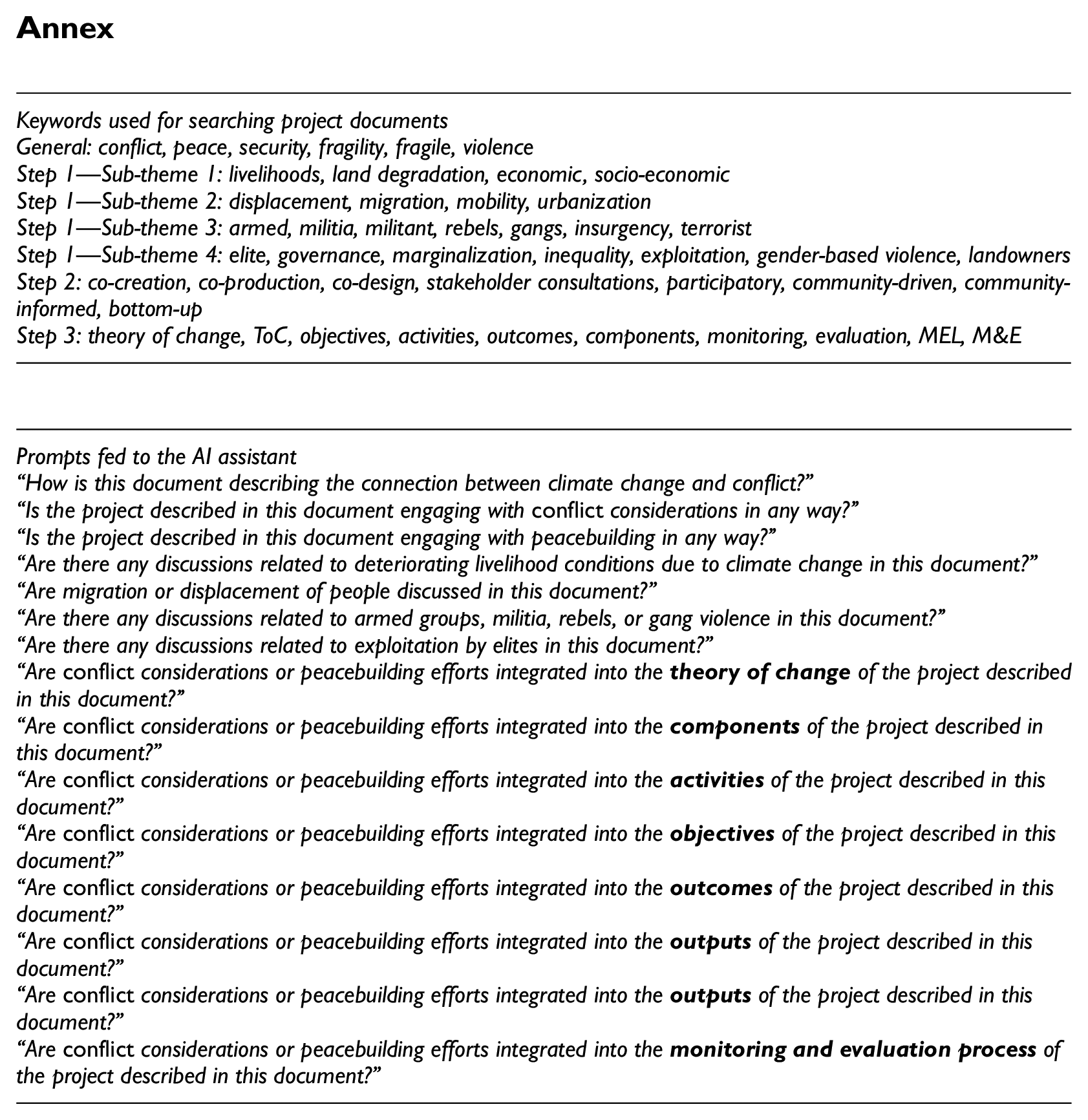
| Keywords used for searching project documents |
| General: conflict, peace, security, fragility, fragile, violence |
| Step 1—Sub-theme 1: livelihoods, land degradation, economic, socio-economic |
| Step 1—Sub-theme 2: displacement, migration, mobility, urbanization |
| Step 1—Sub-theme 3: armed, militia, militant, rebels, gangs, insurgency, terrorist |
| Step 1—Sub-theme 4: elite, governance, marginalization, inequality, exploitation, gender-based violence, landowners |
| Step 2: co-creation, co-production, co-design, stakeholder consultations, participatory, community-driven, community-informed, bottom-up |
| Step 3: theory of change, ToC, objectives, activities, outcomes, components, monitoring, evaluation, MEL, M&E |
| Prompts fed to the AI assistant |
| “How is this document describing the connection between climate change and conflict?” |
| “Is the project described in this document engaging with conflict considerations in any way?” |
| “Is the project described in this document engaging with peacebuilding in any way?” |
| “Are there any discussions related to deteriorating livelihood conditions due to climate change in this document?” |
| “Are migration or displacement of people discussed in this document?” |
| “Are there any discussions related to armed groups, militia, rebels, or gang violence in this document?” |
| “Are there any discussions related to exploitation by elites in this document?” |
| “Are conflict considerations or peacebuilding efforts integrated into the |
| “Are conflict considerations or peacebuilding efforts integrated into the |
| “Are conflict considerations or peacebuilding efforts integrated into the |
| “Are conflict considerations or peacebuilding efforts integrated into the |
| “Are conflict considerations or peacebuilding efforts integrated into the |
| “Are conflict considerations or peacebuilding efforts integrated into the |
| “Are conflict considerations or peacebuilding efforts integrated into the |
| “Are conflict considerations or peacebuilding efforts integrated into the |
Acknowledgements
I would like to express my deepest gratitude to Sarah Dickin at the Centre for Health and Sustainability at Uppsala University for providing invaluable support in reading and providing feedback on my work. Thanks for your constructive mindset, your critical eyes, and for always responding quickly and thoughtfully. My sincere appreciation also goes to Nella Canales at the Stockholm Environment Institute for generously taking the time to advise me on how to proceed forward with this topic.
Funding
The author received no financial support for the research, authorship, and/or publication of this article.
Ethical considerations
This study involved the analysis of publicly available project documents. As such, no human or animal subjects were involved, and no personal or sensitive data were collected or analyzed. Therefore, ethical approval was not required for this research.
