



Abstract
Introduction
Reward crowdfunding is emerging as a relevant and vibrant tool for enhancing entrepreneurship, innovation and creation (Shneor & Vik, 2020). The perception of reward crowdfunding as a financially democratic means by which underrepresented groups can gain access to financial resources (Serwaah, 2022) has led to steady growth in volume and global presence (Statista, 2024). Backers play an important role in securing the success of crowdfunding campaigns and hence driving crowdfunding growth (Deng et al., 2022; Efrat et al., 2020; Sahaym et al., 2021; Shneor & Munim, 2019). Studies of antecedents of backers’ motivations (Efrat et al., 2021; Ryu, 2024; Shneor & Vik, 2020) have shown that while backers’ drivers and motivations vary significantly across crowdfunding types and categories (Kaartemo, 2017), campaign information is unequivocally central to their decisions (Bi et al., 2017; Escudero et al., 2025; Fernández-Vázquez & Álvarez-Delgado, 2020). In fact, campaign information is pivotal for backers’ behaviors throughout a campaign’s cycle (Arshad et al., 2024; Moradi et al., 2024). Backers use information not only to form their own opinion of a campaign but also to engage in promotion efforts, drive herding behavior, and secure success (Rodriguez-Garnica et al., 2024).
The crucial role of information raises the question of whether more information is necessarily better. Studies of the impact of campaign information on backers’ support decisions often use large samples drawn from platforms and objective information elements, such as number of words and images (Bi et al., 2017; Jiang et al., 2020; Liang et al., 2020; Moy et al., 2018). When reviewing the cumulative contribution of these studies, two issues surface. First, most studies refer to only a single type of information (Liang et al., 2020) or specific (and narrow) indicators (Bi et al., 2017; Courtney et al., 2017; Jiang et al., 2020), which risks missing the overall sentiment that manifests through the synergetic effects of information elements. Second, the inconclusive outcomes of this body of research suggest that a piece of the puzzle is missing (Bi et al., 2017; Jiang et al., 2020; Liang et al., 2020; Moy et al., 2018; Oo et al., 2023; Sewaid et al., 2021; Thapa, 2020; Yin et al., 2019). We propose that the strong reliance on objective information indicators neglects the backers’ perspective. Research on consumer decision-making has shown that human information processing capacity is limited and that information overload, i.e., surpassing this capacity, leads to negative feelings about obtaining the best decision (Chen et al., 2009). Drawing on this and motivated by the minimal presence of backers’ perceived information load in the crowdfunding literature, our study aims to advance the understanding of how backers perceive various amounts (loads) of rational and emotional campaign information cues and how these loads influence backers’ decisions.
We adopt the elaboration likelihood model (ELM), which has been used in various studies of the influence of information types on crowdfunding backers’ decisions (Allison et al., 2017; Efrat et al., 2025; Xiang et al., 2019). ELM describes a dual information process for decision-making and persuasion involving central and peripheral routes of elaboration. Arguments based on thoughtful consideration belong to the central route, while arguments based on affective associations and cues belong to the peripheral route (Petty & Cacioppo, 1986). Building on previous research (Allison et al., 2022; Oo et al., 2023; Wood et al., 2024), this study aims to shed light on the inconclusive results regarding the influence of information types on backers’ decisions. Specifically, we implement an experiment that incorporates low and high rational and emotional information load levels (i.e., objective information loads) and test the backers’ subjective perception of the information load and its impact on intentions to back a crowdfunding campaign. Furthermore, we assess the effects of objective and perceived information load on selecting campaign rewards (support levels) and the willingness to share campaign information on social media.
We aim to answer two research questions: (1) How do the two information types and their loads influence backers’ decisions to support a crowdfunding campaign? (2) To what extent do these influences explain financial vs. sharing (non-financial) support? The 2 × 2 × 2 experimental design also includes two types of products - utilitarian and hedonic. Previous studies have confirmed that utilitarian products require a more extensive rational (thinking) process, and therefore it is expected that backers will screen larger amounts of information. Hedonic products draw on more pleasure-related (feeling) goals and aim to fulfill backers’ emotional needs (Ren et al., 2021), and therefore they will differ from utilitarian products in the type and amount of information required.
The study’s contributions are twofold. First, the results of our experiment establish causal relations between rational and emotional information and backers’ perceived information load. We find that emotional information affects backers’ intention to support a campaign and share information about it but does not affect their reward selection. Thus, the support decisions of backers are a two-step process. Campaign information plays a central role in the first step - campaign support - but its influence weakens in the second step, when backers make financial and non-financial support decisions. Second, the study concludes that information should be matched to the characteristics of backers and the product rather than to the product type.
Conceptual Background
Information Load and Decision-Making
Decision-making is bound by an individual’s capacity to absorb and utilize information. Simon’s (1955) pioneering observation that individuals practice “satisficing” when using information for decision-making carries three implications. First, the amount of information needed to form a decision is important - when there is too much information, people often select the information that meets their prior assumptions (Nickerson & Nickerson, 1998; Yu et al., 2020). Second, individuals differ in the snippets of information they choose to support their decisions. Third, individuals vary in the way that they process the information available to them in a decision-making setting. Therefore, information selection is partial, subjective, and prone to varying interpretations.
The subjective nature of information handling implies that the concept of information load goes beyond mere quantity to refer to aspects of the content itself, the system delivering the content, and individual characteristics of the perceiver, as cognitive processing capacities differ between individuals (Raban & Ahituv, 2024). Higher levels of information overload negatively impact the decision quality, and lead to declined purchasing intentions (Hu & Krishen, 2019). Poor decision-making is attributed to decision fatigue, i.e., ongoing exposure to information and the need to make decisions. Fatigued decision-makers are less capable of exerting rational control and more likely to rely on heuristics, impulses, or emotional cues (Baumeister et al., 1998; Vohs et al., 2008). Information overload is also related to emotional aspects, as it may create confusion and even anxiety (Eppler and Mengis, 2004). The impact of information overload on consumers’ online decision-making has been documented. For example, a study of Tripadvisor found that increasing cognitive load by increasing sentiment complexity (number of attributes in a review and sentiment variation) hindered information processing, thereby reducing review helpfulness. Hence, sentiment complexity is associated with information load, particularly detrimental information overload (Zhang, Wei, & Liu, 2024). However, a study of the Airbnb platform concluded that information overload, expressed as the number of choices, had an inverted U-shaped relationship with booking decisions (Athi Karthick et al., 2024). Increasing the number of topics (similar to product attributes) about booking moderated the negative effect of choice overload; i.e., detailed content attenuated information overload. Drawing on these findings and the similarities between crowdfunding backers and online consumers (Lee & Parlour, 2022), it can be assumed that campaign information may have varying and even conflicting effects on crowdfunding backers.
Information Use by Crowdfunding Backers
Campaign information has been a focus of research since the emergence of crowdfunding. In addition to recognizing the value of campaign information and its contribution to crowdfunding success, studies have addressed information asymmetry as a central communication challenge in crowdfunding (Belleflamme et al., 2015). Asymmetry is inherent in such platforms since entrepreneurs possess more knowledge about their product and its attributes than their potential backers do, especially when the product is novel. This situation can lead to higher perceived risk and distrust, which in turn have negative impacts on campaign performance (Escudero et al., 2025; Kim et al., 2022; Wang et al., 2021). Thus, the use of campaign information signaling as a means to reduce information asymmetry and induce positive support decisions has become an issue of interest in crowdfunding research (Arroteia et al., 2025; Kunz et al., 2016; Sewaid et al., 2021; Solodoha, 2024; Zvilichovsky et al., 2018).
Studies of aspects of information and their influence on campaign performance indicators can be differentiated according to their focus on Topics or Means. Studies in the Topics category include analyses of information about the entrepreneur (e.g. experience) or the project (i.e. campaign subject) (Allison et al., 2017; Courtney et al., 2017; Davies & Giovannetti, 2018; Jiang et al., 2020; Rodriguez-Garnica et al., 2024). The Means category includes studies addressing the tools (e.g. text, images and videos) through which information is communicated (Arroteia et al., 2025; Bi et al., 2017; Courtney et al., 2017; Huang et al., 2023; Liang et al., 2020; Moy et al., 2018; Sewaid et al., 2021; Shneor et al., 2022; Solodoha & Blaywais, 2023; Thapa, 2020; Yang et al., 2024). Appendix A presents an overview of previous findings, from which two insights clearly emerge. First, most studies have analyzed objective data retrieved from crowdfunding platforms. Second, research addressing campaign information load and its influence on backers’ decisions has yielded inconclusive results. These insights indicate that a crucial element has been overlooked: the process of perception formation by backers, which relies on information about the entrepreneur and product as well as attitudes and reactions of other backers (Escudero et al., 2025). Despite the recognized weight of backers’ perceptions in their decisions (Efrat et al., 2021), the challenges associated with documenting these perceptions mean that most studies have focused on the information provided to the backers rather than how this information is perceived. This lacuna calls for further investigation.
Crowdfunding and the Elaboration Likelihood Model
ELM provides a suitable framework for modeling the factors that link campaign information with backers’ decisions. Specifically, the model illustrates how information types affect an individual’s perception formation and, consequently, their behavior. ELM incorporates two distinct routes of thinking and postulates that persuasion results from the central route (which involves thorough consideration and evaluation of issue-related information) and the peripheral route (which relies on heuristics and source credibility) (Kitchen et al., 2014). These two routes of information processing occur as part of an individual’s decision-making. The central route involves careful and thoughtful consideration of the content of messages. When individuals are motivated and able to think critically, they are more likely to be influenced by strong arguments (Fernández-Vázquez & Álvarez-Delgado, 2020). The peripheral route involves less rational effort and relies on emotional cues, such as the attractiveness of the speaker or emotional appeals. This route is often used when people are either not motivated to process information deeply or lack the ability to do so (Ho & Bodoff, 2014). The central route is more pronounced when elaboration likelihood is high, whereas the peripheral route is emphasized when elaboration likelihood is low (Petty & Cacioppo, 1986).
The ELM is acknowledged as a valuable framework for studying crowdfunding backers’ behavior (Escudero et al., 2025). Central route elements that significantly impact campaign performance include entrepreneurs’ experience, product quality and usefulness, and image volume, while peripheral route elements include portraying a dream, adopting a group identity, ‘Like’ counts, number of reviews, and reputation and legitimacy of the campaign (Allison et al., 2017; Bi et al., 2017; Maurer et al., 2023). The common denominator of the central and peripheral routes is the information on the campaign and entrepreneur that is incorporated into the appeal aimed at influencing backers’ decisions. Backers are motivated by a combination of both types of information (Efrat et al., 2020, 2024; Steigenberger, 2017), yet existing research often uncouples rational and emotional information, thereby failing to address their synergetic effect. Both types need to be included to gain a more comprehensive understanding of how information influences backers’ decisions. This point is reinforced by evidence that while the impact of rational information load on crowdfunding outcomes tends to follow an inverted U-shape (Liang et al., 2020; Moy et al., 2018), the effect of emotional information on crowdfunding outcomes is linear (Liang et al., 2020).
Hypothesis Development
The central route of persuasion is associated with rational information and knowledge elements. Studies addressing crowdfunding campaign information elements have provided inconclusive results: elements such as images, review count, and detailed information about product pricing have positive influences on various aspects of campaign success (Bi et al., 2017; Jiang et al., 2020; Sewaid et al., 2021), while the effects of the length of campaign text, a central element of campaign pitching, are mixed (Bi et al., 2017; Liang et al., 2020; Majumdar & Bose, 2018; Moy et al., 2018; Thapa, 2020). Results for peripheral information elements, an equally important aspect of crowdfunding campaigns, are also inconclusive (Blohm et al., 2023; Courtney et al., 2017; Jiang et al., 2020; Li et al., 2016; Xiang et al., 2019). These mixed outcomes hint that an additional component may be at play. Prior work on decision fatigue suggests that rational information is processed early to aid decisions. With the onset of fatigue, emotional cues and decision biases come into play (Pignatiello et al., 2018). The perception of information overload is similar to that of decision fatigue, which has been found to decrease consumer decision quality (Huang & Zhou, 2019; See Figure 1). Therefore, we state the following hypothesis: Model 1 – Information and backers’ support intentions (n = 325)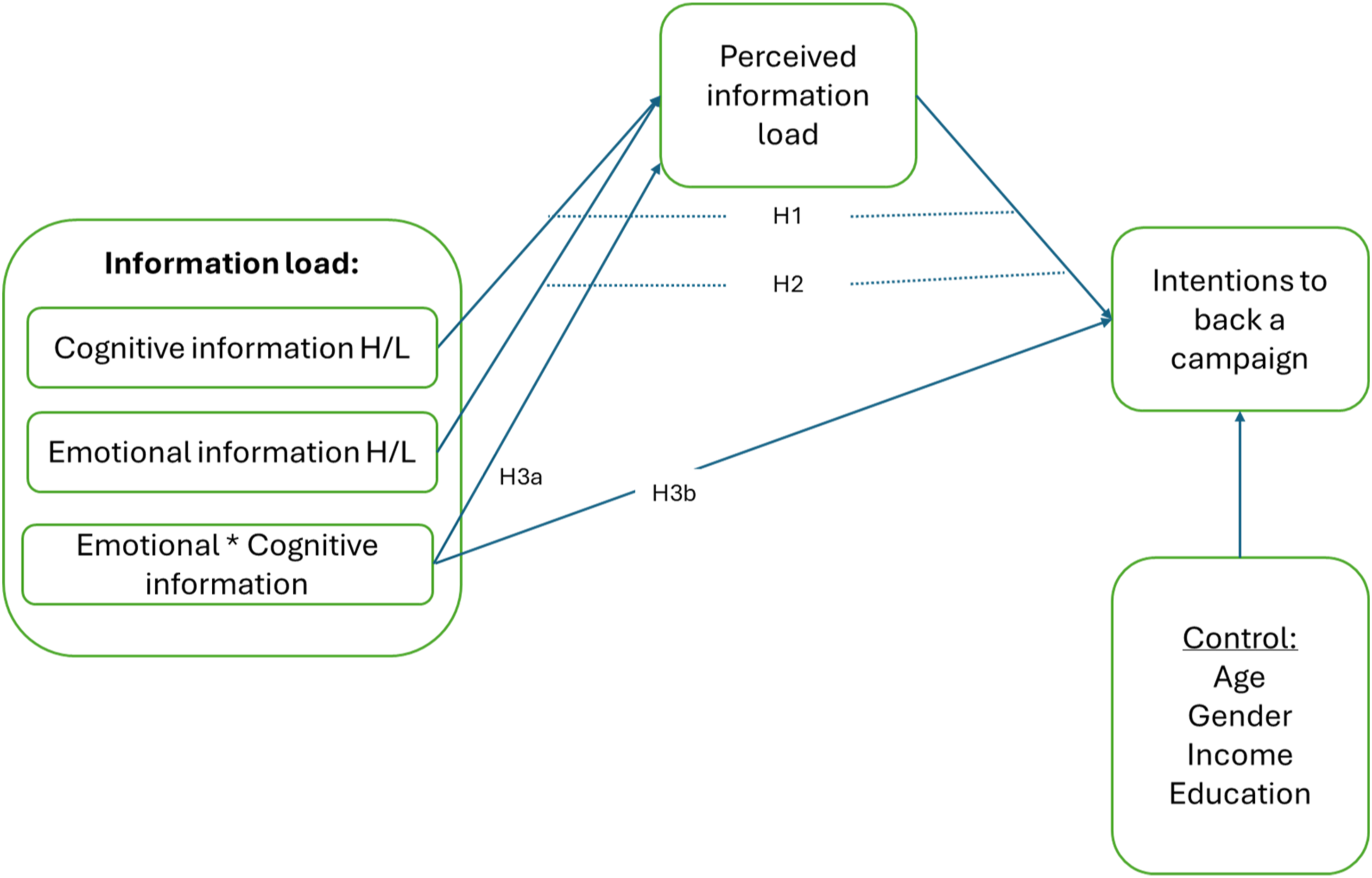
A higher load of rational information cues is mediated by perceived information load to negatively impact backers’ support intentions.
By contrast, Zhang et al. (2023) found that influential celebrities use emotional information overload as a tactic to divert consumer attention from rational quality-related information, leading to increased positive consumer perception of the service offered. Similarly, decision fatigue theory predicts that fatigued consumers will base decisions on emotions and heuristics. Such decisional shortcuts aid quick, intuitive decision-making, giving rise to the following hypothesis:
A higher load of emotional information cues is mediated by perceived information load to positively impact backers’ support intentions.
To the best of our knowledge, no crowdfunding study has addressed the interaction effect of rational and emotional information. However, findings in other contexts indicate that emotional cues can limit the individual sense of perceived information load (Liu et al., 2024) and that information load moderates the influence of peripheral cues on customers’ intentions (Zhang et al., 2016). In general, ELM allows interaction between rational and emotional processing to accommodate the prediction that fatigue lowers cognitive resources and increases reliance on peripheral route processes (Pignatiello et al., 2018). Supporting the presence of this link in the crowdfunding context, crowdfunding research indicates that image-text congruency allows backers to more easily process and remember the information presented to them (Chen et al., 2023; Shneor & Vik, 2020). Furthermore, emotional cues are positively moderated by the number of comments made by other backers on the financial performance of campaigns, indicating a potential interaction effect between rational and emotional campaign elements (Chen et al., 2024). Drawing on this as well as findings from the online review context (Felbermayr & Nanopoulos, 2016), it can be assumed that the emotional information load will counteract the negative effect of the rational information load. Limited findings in the crowdfunding context backed by findings on consumer engagement in the wider social media context (Lapresta-Romero et al., 2024) show that emotional cues and rational information interact to advance campaign success (Adamska-Mieruszewska et al., 2024; Jiang et al., 2019). However, because the interaction effect is not fully resolved in the literature, we examine two possibilities:
The interaction effect between emotional and rational information cues has no influence on perceived information load.
The interaction effect between emotional and rational information cues has a positive influence on backers’ support intentions.
While backers’ support intentions may indicate campaigns’ attractiveness and likelihood of success (Wang & Yang, 2019), intentions have limited predictive scope because they can return a positive or a negative response. Recent reviews on crowdfunding success have included additional campaign success indicators, of which the most pronounced are backers’ financial support and sharing (Deng et al., 2022; Kaartemo, 2017). Studies drawing on ELM have shown that online consumers who experience information overload increase their selectivity (Sicilia & Ruiz, 2010), leading to reduced decision quality (Huang & Zhou, 2019). In the context of crowdfunding performance, research indicates that the associations of the number of words with campaign goal achievement, number of backers, and funds raised follow inverted U-shaped patterns, indicating that beyond a certain level, more words lead to worse outcomes (Liang et al., 2020; Moy et al., 2018). Drawing on these observations, it can be assumed that the non-linear impact of information load indicators such as text length can be explained by perceived information load (See Figure 2): Model 2 – Information and backers’ financial and non-financial support (n = 144)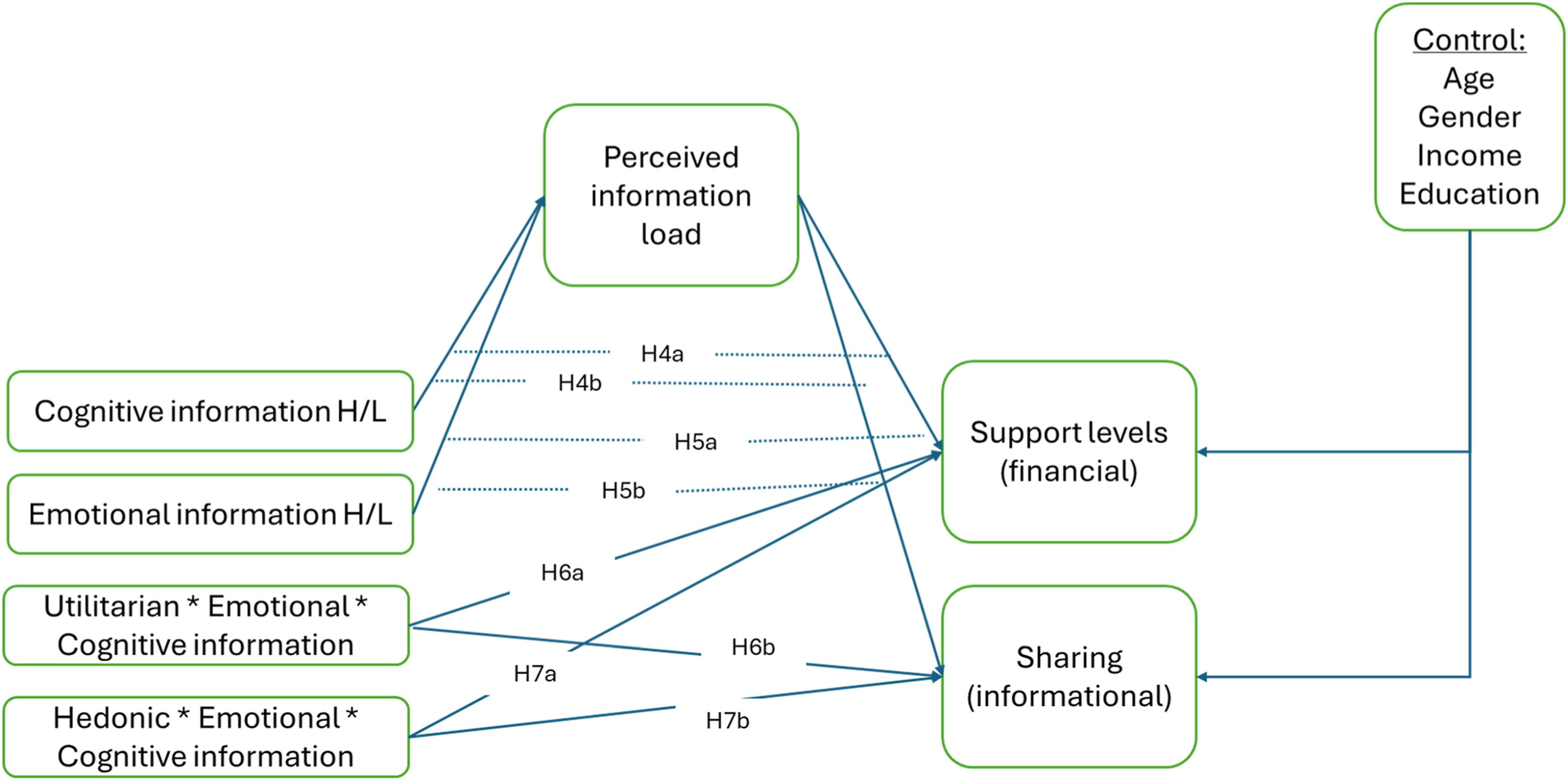
Perceived information load negatively mediates the effect of rational information cues on backers’ support levels.
Perceived information load negatively mediates the effect of rational information cues on backers’ sharing behavior.
Studies incorporating ELM have shown that information cues delivered through images have a positive impact on consumers’ expectations (Xu & Huang, 2019). A study of crowdfunding backers who were exposed to entrepreneurs’ displays of joy produced additional insights: while the projection of joy by the entrepreneurs had a significant linear effect on campaign funding, the measure of joy duration had an inverted U-shaped effect, indicating that exposure enhanced funding only up to a certain point (Jiang et al., 2019). This inverted U-shaped effect was also found in a study examining the effect of valence on online consumption over time (Yuan et al., 2025). Additionally, Naimi et al. (2023) found that too much emotion is detrimental to campaign success. We therefore hypothesize the following:
Perceived information load mediates the negative effect of emotional information cues on backers’ support levels.
Perceived information load mediates the negative effect of emotional information cues on backers’ sharing behavior.
A discussion of the roles of information types and loads in shaping backers’ support decisions must also consider the contribution of the product itself to these decisions. The crowdfunding literature describes various product categorizations, the most prevalent of which is utilitarian vs. hedonic (Ren et al., 2021). Utilitarian products are perceived to be more rationally driven, functional, and practical, while hedonic products are associated with fun, pleasure, and sensory experience (Dhar & Wertenbroch, 2000). The set of values associated with each type of product simultaneously shapes and is shaped by information appeal (Zablocki et al., 2019). Product type-message congruence is suitable for examining the interaction between product and information types. ELM’s central route messaging matches the ‘think’ element associated with utilitarian appeals, as the two encompass the functional congruity element (Choi et al., 2012). Furthermore, utilitarian appeals have a greater impact on consumers’ purchasing intentions when they align with the product’s attributes, that is, when they are used to promote utilitarian products. Moreover, while using hedonic appeal for utilitarian products can positively influence consumers’ intentions, this influence is less significant than that observed for the utilitarian product-appeal congruence (Seo et al., 2024). In the crowdfunding context, studies have found that rational messaging of utilitarian products positively impacts backers’ attitudes toward the campaign as well as funding and sharing intentions (Cheng & Jang, 2024).
For utilitarian products, higher rational and lower emotional information load positively impacts backers’ support levels.
For utilitarian products, higher rational and lower emotional information load positively impacts backers’ sharing behavior.
Previous studies have found that persuasion is influenced by self-congruity, which is manifested through the individual’s value expression. Therefore, hedonic products should be complemented by a ‘feel’ message (Choi et al., 2012). Furthermore, hedonic product-appeal congruence has a greater positive impact on purchase intentions than matching hedonic products with utilitarian appeal (i.e. think) (Seo et al., 2024). Findings in the crowdfunding context are inconclusive. Some studies indicate that emotional appeals increase backers’ funding intentions for hedonic products (Ren et al., 2021) and secure a higher percentage of the funding goal (Chen et al., 2016). By contrast, Cheng et al. (2024) found that emotional appeals for hedonic products have no impact on backers’ funding intentions and negatively impact backers’ sharing intentions. Based on the documented evidence of the positive influence of peripheral cues on various campaign performance indicators (Allison et al., 2017; Jiang et al., 2020; Oo et al., 2023), we hypothesize the following:
For hedonic products, lower rational and higher emotional information load positively impact backers’ support levels.
For hedonic products, lower rational and higher emotional information load positively impact backers’ sharing behavior.
Method
To examine the causal relations between information load and funding decisions for hedonic and utilitarian products, an online experiment was performed using the Qualtrics platform. The experiment consisted of the following components: informed consent, eligibility questions (prior crowdfunding support), random assignment of participants to the experimental variations (section 4.1), and presentation of campaign information. There were 8 variations of the campaign information, corresponding to one variation per group of participants as explained below. Following exposure to the campaign information, the participants responded to questions about supporting the campaign and questions related to information load perception and demographic data, as detailed in section 4.2.
Sampling and Data Source
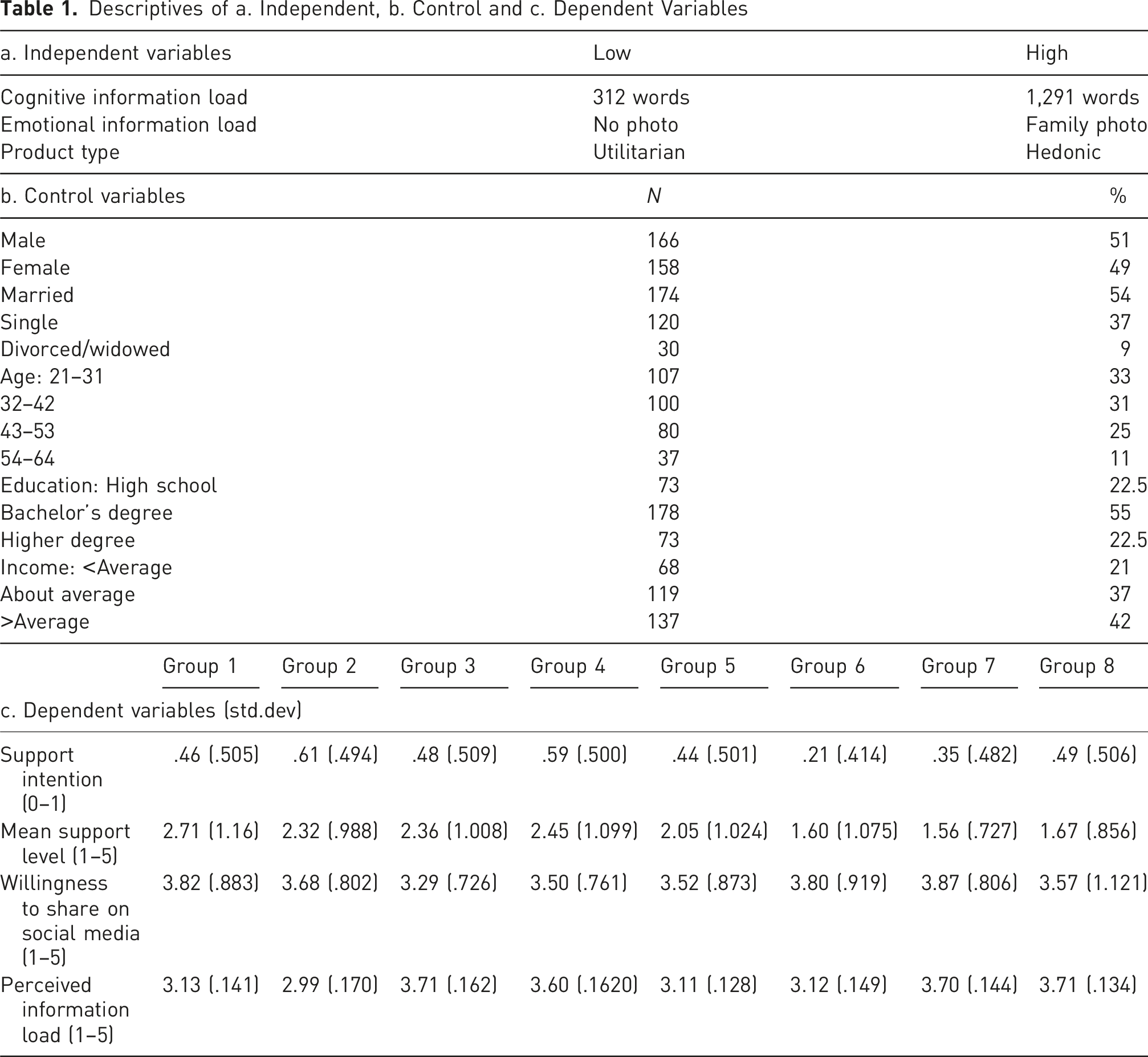
Participants were recruited by a professional polling company. A link was sent to 1,156 respondents, of whom 1,150 agreed to participate in the study. The eligibility criterion for participants to continue in the experiment was prior active support for a crowdfunding campaign through one of the known platforms. A total of 523 participants met this criterion and were randomly assigned to 8 independent groups based on a 2 × 2 × 2 between-subjects factorial design (low and high rational information load, low and high emotional information load, utilitarian and hedonic product campaigns). Groups 1 to 4 referred to a utilitarian product (a novel vehicle cooling system called FreshAir), while Groups 5 to 8 referred to a hedonic product (a social application for holiday planning and documentation called TravelPlus). Appendix B provides details about the eight experiment groups.
For each product, low and high rational and emotional information load levels were designed and embedded in the campaign descriptions. Low and high rational information loads were indicated by the number of words included in the description of each campaign (312 and 1,291 words, respectively). The low emotional information load scenario included minimal emotional textual cues, and the high emotional load included a relevant image in addition to the emotional textual cues. We acknowledge that this may be a somewhat simplified implementation of ELM, but this simplification allowed experimental control to be maintained. Both campaigns were based on real and successful campaigns previously launched on the Headstart platform (the leading crowdfunding platform in Israel).
During the experiment, participants were asked to answer two reading comprehension questions; 199 participants who gave incorrect answers were excluded from the experiment, leaving a total of 324 active participants.
Measures
Descriptives of a. Independent, b. Control and c. Dependent Variables
Findings
Due to the unique type of data, which was collected via an experiment designed to resemble the actual process backers go through when considering supporting a campaign, the analyses for H1–H3 included the full dataset (n = 325) and implemented a moderated mediation using the Hayes (2013) PROCESS macro in R. Because the outcome variable was binary, PROCESS utilized linear regression to examine the effects on the mediator and logistic regression to examine the effects of the outcome. Indirect effects were calculated using the bootstrapping approach.
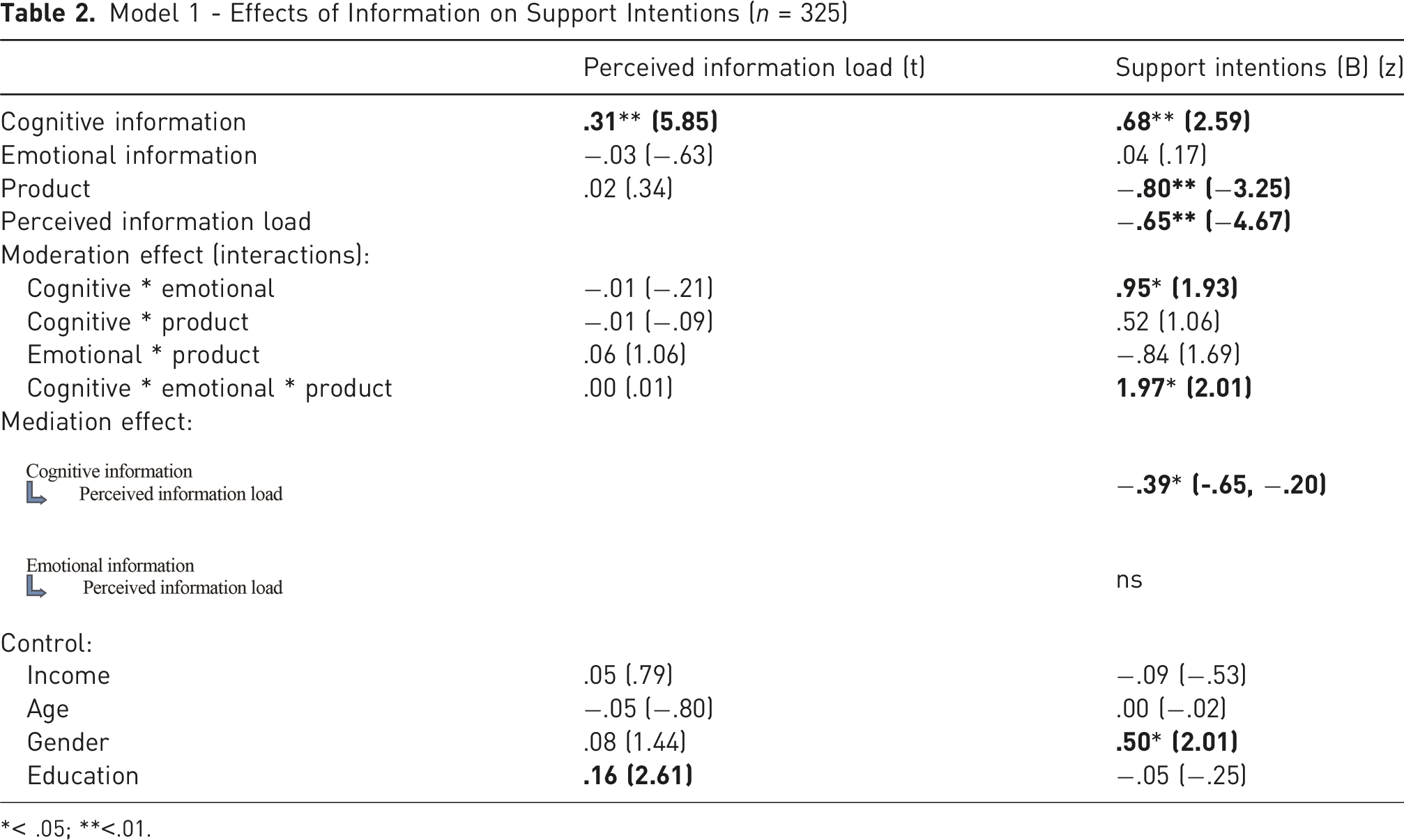
Model 1 - Effects of Information on Support Intentions (n = 325)
*< .05; **<.01.
H2 suggested a positive mediating effect of perceived information load on the relationship between emotional load and the intention to support the crowdfunding campaigns. Since no effect of the perceived information load of emotional information load was observed, H2 was rejected.
H3a hypothesized that the interaction effect of the rational and emotional information loads does not influence the perceived information load. The findings revealed that the interaction was not significant, confirming H3a. H3b speculated an interaction effect on backers’ support intentions. Figure 3 shows a positive effect of the interaction, and Table 2 indicates that there is a significant interaction between low rational and high emotional information load. Therefore, H3b is partially supported. Information levels and type of product drive backers’ support intentions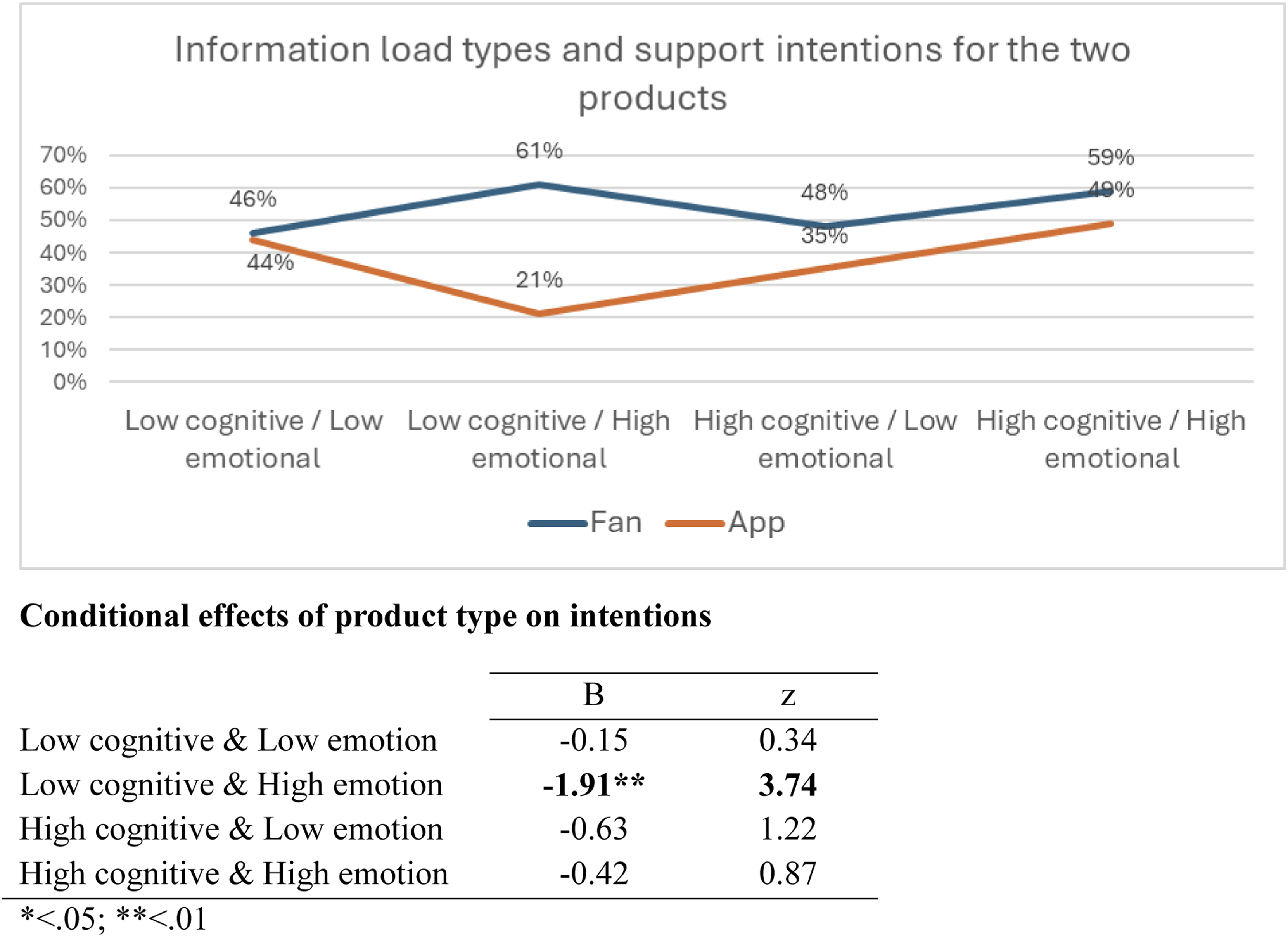
Hypotheses 4–7 refer to the influence of objective and perceived information load on backers’ financial and non-financial (sharing) support. To test these hypotheses, only the data of those who responded “yes” to the support intention question were used (n = 144). Due to the complexity of analyzing the data received from participants who confirmed support intentions while still taking into account those who responded negatively to the support intentions question, we used the R package (Shneor et al., 2025). To calculate power for the indirect effect, we used the Schoemann et al. (2017) Monte Carlo Power Analysis in R. Assuming a moderate effect size (.30 in a correlation metric) between the research variables and α < .05, the current sample (n = 144) yielded a power of .88 for a mediation effect. Power of .80 is considered adequate (Cohen, 1992), and thus the current study was sufficiently powered to test the hypothesized direct and indirect effects.
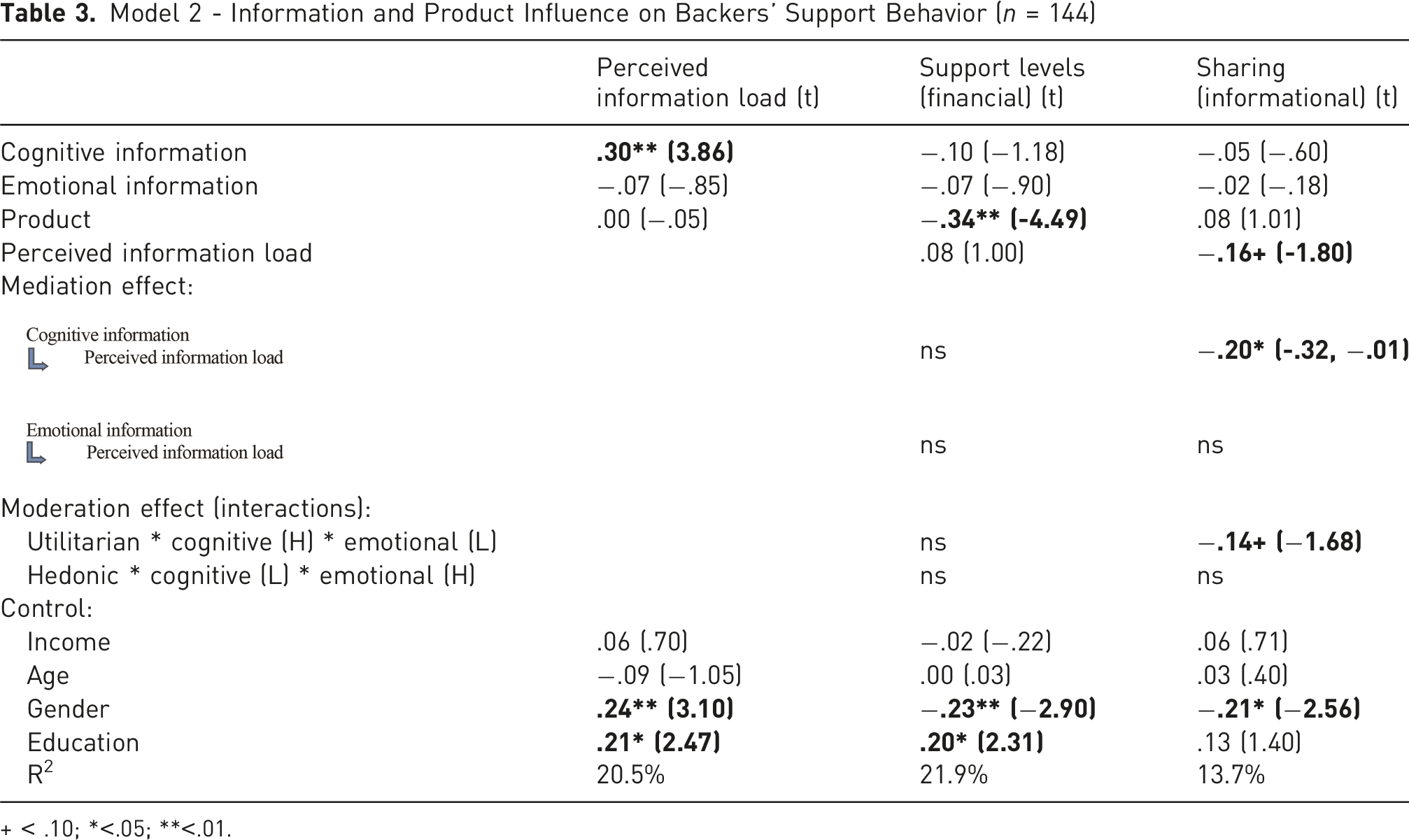
H4a and H4b hypothesized that the negative effect of rational information load on backers’ support levels and sharing behavior, respectively, is negatively mediated by perceived load. Rational information load showed a negative mediating effect on sharing (β = −.20, p < .05), confirming H4b. No significant effect was registered for support levels, and therefore H4a was rejected. H5a and H5b posited a mediation effect of perceived load in the negative effects of emotional information load on backers’ support levels (financial) and sharing, respectively. No significant effects were found, so both H5a and H5b were rejected.
Model 2 - Information and Product Influence on Backers’ Support Behavior (n = 144)
+ < .10; *<.05; **<.01.
Additional findings presented in Appendix C indicated that the product itself plays a crucial role in influencing backers’ intentions to support as well as their support levels (financial), but this effect diminished for sharing (non-financial) behavior.
Discussion and Implications
Early crowdfunding studies advocated a meaningful role of information in advancing success (Agrawal et al., 2015). A decade later, the search for clear indications of how and to what extent campaign information drives backers’ decisions continues. The current study provides experimental data supporting effects of information types and load levels for two product types. In doing so, the study moves beyond speculation to address a core issue in crowdfunding studies: how backers handle information load and its impact on their support decisions.
The key insight from the current study is that backers’ decision-making process comprises two distinct steps. The first step focuses on the initial decision of whether to support a specific campaign (support intention), while the second step concerns actual support and distinguishes between financial and non-financial (i.e. sharing) support. The two steps differ in the drivers of each type of support, specifically, in the impact of the information provided on backers’ decisions. The first step, which focuses on the intention to support a campaign, relies mainly on campaign information processing, which includes both rational and emotional cues. By contrast, the support (financial and sharing) decisions embedded in the second step are both driven by backers’ gender and educational characteristics but are influenced differently by information.
During the first step, rational information leads to support intentions, yet high rational information load triggers high perceived information load, which has a negative effect on the intention to support a campaign. To reiterate, rational information positively influences support intentions when it is not perceived as overload. Once the rational information load triggers a sense of overload, decision fatigue may be at play: the high perceived load mediates a negative effect of rational information on the intention to support the campaign. This implies variability in the ability of backers to handle large amounts of rational information. While some backers can handle large amounts of information, which positively influences their intention to support the campaign, others perceive it as overload, which then reduces their intention to support the campaign. This finding may explain the previous mixed results on the impact of rational information load on campaign success (Liang et al., 2020; Moy et al., 2018) by introducing a missing link: perceived information load. Although previous studies have endeavored to explain various campaign performance outcomes (e.g. goal reaching, progress toward the goal, backers, funds recruited) by using information load as an indicator (Liang et al., 2020; Moy et al., 2018; Shneor et al., 2022; Solodoha, 2024), our study clearly shows that information load impacts backers’ support intention and sharing decisions but has no bearing on their financial decision. The present findings explain the role of campaign information in advancing campaign outcomes and its boundaries for impacting backers’ decisions.
During the second decision step, the contribution of campaign information to the financial and sharing decisions can be further explained by the distinct purpose of each type of support. The financial support decision is mostly personal. Hence, as the backer moves from the first to second step, the campaign information ceases to be of importance; instead, information on the campaign’s benefits for the backer becomes a more pronounced driver of the financial support decision. Similar to previous findings, our study reveals that the level of financial support is affected by the type of product and its perceived value for the backer (Cappa et al., 2021; Steigenberger, 2017). The sharing decision is an information-related decision that addresses a receiving audience (Dehdashti et al., 2022), and our findings indicate that sharing is influenced by campaign information. A possible explanation for the need for campaign information in this decision is the role of backers in facilitating crowdfunding community-building and establishing success through sharing. The crowdfunding literature provides strong support for the importance of backers’ sharing in advancing financial and non-financial campaign performance (Hohen et al., 2025). Several studies of antecedents of sharing behavior have found that trust in and credibility of the backer are building blocks for effective sharing (Liu et al., 2018; Shneor et al., 2021; Shneor & Munim, 2019). Campaign information provides the necessary foundation for both trust and credibility and can strengthen the backer’s sharing activity by providing an additional layer of credibility to the backer’s recommendation (Rodriguez-Garnica et al., 2024).
An additional observation relates to the match between information type - rational vs. emotional - and product type. Based on the literature on product-message congruence (Choi et al., 2012), it was assumed that utilitarian products would benefit from rational messaging, while hedonic products would be better supported by emotional information. Our findings indicate that backers are motivated by a combination of high emotional and low rational information when they consider supporting a utilitarian product, but no information combination was found to impact support for hedonic products. These results are in partial contrast to previous findings (Cheng et al., 2024; Seo et al., 2024). The first finding can be explained by decision fatigue; reducing the weight of rational components enables emotional influences. A possible explanation for the second finding draws on the fundamentals of crowdfunding. Early studies established strong emotional drivers across categories and product types (Efrat et al., 2021; Gerber & Hui, 2013). Adding more emotional cues to an existing emotional engagement might be redundant; hence, we did not find a direct link between product type and emotional information load. Alternatively, the lack of a direct effect of emotional information on backers’ support decisions aligns with previous studies (Koh et al., 2020; Zhang et al., 2024a) suggesting a mismatch between expectations and actual messages. For example, supporters may expect an emotional appeal to relate to product usage, while entrepreneurs may prefer to tell the story of their journey. This insight challenges existing notions by indicating that while information type is influential, so are backers’ characteristics and product type. A well-structured message that emphasizes emotional cues coupled with rational information will advance a campaign to the next step, where individuals’ characteristics will take the lead in the financial support level decision.
Theoretical Implications
The current study makes three theoretical contributions to understanding how campaign information influences backers’ support decisions. First, it advances knowledge on ELM implementation by incorporating both objective and perceived information loads and examining how they interact. Our study emphasizes that in a crowdfunding context where material support is needed, rational information is more crucial than emotional information and should be delivered prominently on the platform. Perceived information load is a crucial component in explaining backers’ decisions, further extending the long-studied role of information value perceptions (Raban & Ahituv, 2024) and adding an important nuance to ELM in the context of crowdfunding. Second, while the influence of rational information load manifested as an inverted U-shape, emotional information load had no main effect. This result somewhat contradicts findings in the literature (Jiang et al., 2020) but may indicate that emotional information load is best viewed as part of a cluster rather than as a stand-alone element. The literature provides grounds for this last indication (Efrat et al., 2021), and the study confirms that emotional information enhances the effect of rational information on the decision to support a campaign. Last, while previous studies linked financial and non-financial decisions, the current findings indicate that financial decisions are mostly dictated by backers’ characteristics and product type, while decisions to share draw on campaign information. This outcome indicates that various performance indicators should be addressed distinctly to ensure a correct picture of which drivers support which outcome.
Practical Implications
Crowdfunding platforms have embraced some ‘rules of thumb’ about campaign features, including the length of information and its content (Yang et al., 2020). These recommendations are grounded in extensive experience developed over a long period of time and large numbers of successful and failed campaigns. They are also supported by studies that have measured text length and its impact on success (Moy et al., 2018). However, most of these studies used data retrieved from platforms, which cannot provide the important insights obtained when examining backers’ perceptions and behavior. The findings clearly indicate that the picture is more complex and requires an approach that takes into consideration not only the technical aspects of the information but also individual perceptions, the content delivered, and the balance between rational and emotional components. To reduce the effect of decision fatigue triggered by information overload, we suggest that crowdfunding platforms implement a two-step information revelation process: essential rational information in the first step, followed by greater detail on demand. Backers will then self-select whether to base their support on basic or detailed information. To elicit a more positive reaction to the campaign, platform managers should balance rational elements with some emotional cues so that the information load does not trigger the perceived load. Furthermore, platform managers should advise entrepreneurs to focus information (rational and emotional) on persuading backers to view the campaign favorably. Once the backers embrace a campaign, this information to recruit others, so it is important to provide information that is understandable and transferable.
Limitations and Future Research
Although the current study provides meaningful insights, it has some limitations. First, the scale measuring perceived information load was adapted to the crowdfunding context and thus may not fully capture the nuances of information usually incorporated into a campaign. Second, the two products used in the study were chosen based on their previously successful crowdfunding campaigns and on their versatile motivations and uses. As a result, they represent specific categories, and as previous studies have shown, backers of different categories may differ in their decision-making processes (Josefy et al., 2017). Future research may address the issue of information load in other campaign categories. Third, while we received significant results for the rational/utilitarian interaction, the hypotheses related to the emotional cues alone or coupled with the hedonic product were not supported. One possible explanation is the sentiment expressed in the campaign. While we aimed to maintain the sentiment from the original campaigns, the process of expanding/reducing the number of words might have altered it, potentially blurring the two levels of emotional information load. In addition, photos were included as images rather than video clips, even though the latter are commonly used in crowdfunding. The decision to include only images was made to avoid overburdening the participants with analyzing videos alongside the various informational items already included in the study. Future research may address the contribution of video to perceived information load and backers’ decisions. Finally, future research may emphasize the causal roots of reward level selection.
Conclusion
To resolve the conflicting results of previous studies of the influence of campaign information on backers’ support decisions, we implemented ELM to posit that these decisions are rooted in perceptions of rational and emotional information. From the results of a controlled experiment consisting of eight groups (2 × 2 × 2 design), the study uncovered a two-step decision process by backers. In the first step, objective and perceived information loads interact to impact backers’ support intentions. In the second step, information remains valuable for the purposes of sharing (non-financial support), while financial support is driven by the backer’s and product’s characteristics. Furthermore, the findings revealed a negative effect of rational information on backers’ support intentions mediated by perceived information load. This effect disappears when emotional cues are introduced, advocating for distinct roles of these two types of information load. In summary, potential campaign backers are influenced not just by the quantity of information but also by its type and perception.
Supplemental Material
Supplemental Material - Facts or Emotions? How Information Load Influences Backers’ Support in Crowdfunding
Supplemental Material for Facts or Emotions? How Information Load Influences Backers’ Support in Crowdfunding by Kalanit Efrat, Daphne R. Raban, and Rozan H. Hakim in Journal of Alternative Finance
Footnotes

Funding
The authors received no financial support for the research, authorship, and/or publication of this article.
Declaration of conflicting interests
The authors declared no potential conflicts of interest with respect to the research, authorship, and/or publication of this article.
Use of AI Statement
AI tool was used to build the campaign information with the different information load, based on real-life campaigns.
Supplemental Material
Supplemental material for this article is available online.
References
Supplementary Material
Please find the following supplemental material available below.
For Open Access articles published under a Creative Commons License, all supplemental material carries the same license as the article it is associated with.
For non-Open Access articles published, all supplemental material carries a non-exclusive license, and permission requests for re-use of supplemental material or any part of supplemental material shall be sent directly to the copyright owner as specified in the copyright notice associated with the article.
