




Abstract
Despite promises of financial democracy, studies find differences between males and females in both the scale of their crowdfunding backing behavior and the factors impacting it. These are often explained by social feminist theory claiming that gender differences arise from dissimilar life experiences or socialization. In the current study we identify the most pervasive of gender differences and examine whether they apply in a relatively more gender equal society, where dissimilar life experiences or socialization should be minimal. Here, crowdfunding is assumed to remove traditional structural and technical barriers, while gender equality is assumed to remove socio-normative barriers for women’s engagement in venture funding. Accordingly, we test related hypotheses based on survey data collected from users of a reward crowdfunding platform in Finland, a society ranking high on gender equality. For both males and females, findings show that self-efficacy has a positive association with intentions; and that risk perceptions and susceptibility to social influence are not associated with intentions. Homophily is positively associated with intentions in females only, while pro-social orientation is positively associated with intentions in males only. Intentions are positively associated with behavior in both genders, and that effects on behavior mediated by intentions follow the same patterns.
Introduction
Women’s engagement in venture funding has largely been underwhelming. Female investors represent a substantially smaller group compared to male investors (Harrison & Mason, 2007), are more risk averse (Eckel & Grossman, 2008), and tend to invest smaller sums while expecting more modest returns (Romaní et al., 2012). Such conditions may contribute to the persistence of a gender gap, where women’s engagement in entrepreneurial venturing is lagging behind their male peers. While various policy initiatives are often focused on improving women’s access to finance (e.g., Coleman et al., 2019), less efforts are placed on enhancing women’s engagement in financially supporting and investing in entrepreneurial ventures.
In the past decade, new forms of venture fundraising mechanisms have emerged, known jointly as ‘Crowdfunding’. Such mechanisms leverage internet-based technologies for the collection of relatively small sums of money from many people via online intermediaries (Belleflamme et al., 2014), while employing a variety of both investment and non-investment models of fundraising (Shneor, 2020). Such lowering of thresholds for involvement in venture funding and its wider accessibility are often argued to represent a ‘democratization’ effect (Mollick & Robb, 2016). As such, crowdfunding provides opportunities for reducing social inequalities and overcoming certain discrimination patterns (Greenberg, 2019), by catering to underserved and overlooked market segments (Venturelli et al., 2020), while facilitating a fairer re-allocation of resources in society (Bruntje & Gajda, 2016; Shneor et al., 2020).
Despite this, gender differences in venture funding seem to persist also in the context of crowdfunding. A recent literature review by Serwaah (2022) argues that gender differences may manifest with respect to motivation, ability, and opportunity to financially back crowdfunding campaigns. Hence, when examining actual compositions of crowdfunding backer groups, recent global statistics from 2020 show that women only represent 30% of equity crowdfunding investors, 18% of real estate crowdfunding investors, 24% of business crowdlenders, 23% of property crowdlenders, and 33% of reward crowdfunding backers (Ziegler et al., 2021).
One explanation for gender differences is provided by social feminist theory, suggesting that women and men are fundamentally different thanks to dissimilar life experiences or socialization leading them to have different (though equally valid) self-perceptions, motivations, and belief structures (Becker-Blease & Sohl, 2007). Overall, societies are often viewed and ranked along a continuum between relatively low levels of gender inequality and relatively high levels of gender inequality, but no society exhibits absolute gender equality or inequality (Conceição et al., 2020; Crotti et al., 2021; Plantenga et al., 2009). In the current study we define the term ‘gender equal society’ as one characterized by low levels of gender inequality. In such societies men and women enjoy more equal sharing of resources including paid work, money, decision-making power, and time (Plantenga et al., 2009), as well as achieve similar degrees of education (Crotti et al., 2021). Living in such environments may represent women and men with less dissimilar socialization experiences, beyond those dictated by their biology; and hence, also exhibit more similar self-perceptions, motivations, and belief structures which guide their decision-making processes.
Taking the above into consideration, in the current study we wish to examine whether and to what extent do gender differences in crowdfunding backer behavior prevail in relatively more gender equal societies? Here, the assumption is that while crowdfunding neutralizes structural and technical barriers to equal engagement by members of both genders, social norms of gender equality should neutralize socio-normative barriers towards having similar self-perceptions and motivations underlying crowdfunding behavior in members of both genders.
To achieve this, we first suggest a series of hypotheses highlighting critical ways in which males and females were consistently found to differ in earlier research. Specifically focusing on identified gender differences in terms of the factors impacting crowdfunding intentionality and behavior. We then empirically examine whether such gender differences continue to exist in a relatively more gender equal social context. More concretely, we examine the extent to which perceived risk, self-efficacy, homophily, prosocial orientation, and susceptibility to social influence affect backer intentions differently in males and females in a more gender equal social environment. These variables represent those for which research has documented consistent and significant gender differences in other contexts of study.
To capture such effects, we conduct our study in Finland, which is considered a suitable context for several reasons. First, it represents a social environment characterized by high levels of gender equality, as identified in a wide variety of international comparisons (Conceição et al., 2020; Crotti et al., 2021; Plantenga et al., 2009). Furthermore, such attitudes have a long history, with Finland being the first country in the world to allow women both unrestricted rights to vote and to stand for political office (Korppi-Tommola, 1990). Second, crowdfunding is a well-established concept in Finland with some 20 active platforms already operating in the market, while jointly overseeing volumes surpassing 390 million USD in 2020 (Ziegler et al., 2021). And third, Finland was one of the first European countries to introduce regulatory amendments in support of a crowdfunding market development, well before the introduction of the European Crowdfunding Service Provider regime (Wenzlaff et al., 2020).
Accordingly, our analyses are based on survey data collected from registered users of Finland’s leading reward crowdfunding platform – Mesenaatti.me. Such a sample ensures a minimal degree of interest and understanding of crowdfunding among our respondents (but does not include unregistered potential backers). This data is then analyzed using Structural Equation Modelling (SEM), which is supplemented by a series of quality tests ensuring that potential biases are sufficiently minimal in our data. Finally, we test our hypotheses by examining the extent to which variables’ estimates significantly differ between sub-samples of male and female respondents.
The context of our study is also focused on reward crowdfunding, which is defined as a ‘non-investment model’ in which backers provide funding to individuals, projects, or companies in exchange for non-monetary rewards or products (Shneor, 2020, p. 25) When compared to investment models (e.g., equity and lending), reward crowdfunding is associated with financial contribution of relatively lower sums (Shneor, 2020), does not involve expectations of financial returns, while still characterized by a risk of non-delivery or deviation from campaign promises (Appio et al., 2020; Macari & Chun Guo, 2021; Seyb, 2022). In this respect, a reward crowdfunding campaign is closer to an investment pitch than an e-commerce advertisement (Shneor & Munim, 2019). Furthermore, when compared to donations, reward crowdfunding involves non-charitable financing in exchange for products, services, or various tokens of appreciation as provided by commercial entities rather than non-profits.
Our findings show that self-efficacy has a positive association with funding intentions; and that risk perceptions and susceptibility to social influence are not associated with funding intentions in both genders. Nevertheless, homophily was found to be positively associated with funding intentions in females only, while pro-social orientation was positively associated with funding intentions in males only. Moreover, funding intentions were positively associated with funding behavior in both genders, and that indirect effects of self-efficacy, homophily, and susceptibility to social influence on funding behavior were mediated by funding intentions.
Overall, our study presents several contributions. First, we provide insights onto gender differences in venture funding decisions, a theme that received limited attention in earlier research (Serwaah & Shneor, 2021), as most studies on gender differences focused on the demand side of funding rather than on the supply side. Second, we provide evidence for context-contingent effects of gender on funding decisions. Third, we provide partial support for the assumptions of social feminist theory, while simultaneously highlighting some of its limitations in explaining gender differences in crowdfunding backer behavior. Fourth, we present a surprising finding that in gender equal societies prosocial value creation is associated with greater funding intentions among males but not females. This is explained by the measurement used in the current study, emphasizing moral obligation and justice rather than the sense of empathy and care. Fifth, we present an additional surprising finding that risk perception is not associated with funding intentions. This can be explained by the unique context, which is not only gender equal, but also characterized as a high-trust society (Delhey & Newton, 2005). Finally, we show that susceptibility to social influence has no effect in both males and females, which may be explained by the prevalence of individualistic cultural values (Hofstede et al., 2010) in addition to gender equality.
In the reminder of the paper, drawing on feminist theory, we first suggest a gender-based framework for explaining crowdfunding backer intentionality, outlined in a series of concrete hypotheses. Each hypothesis is built based on a review of relevant theoretical claims and earlier research findings. Next, we present our methodological choices, followed by the results of our analyses. Our findings are then discussed in comparison to results from earlier studies. Finally, we conclude with suggestions of implications for future research, theory, and practice.
Literature Review: Gender and Funding Decisions
Research at the intersection of crowdfunding backing behavior and gender has primarily focused on the underrepresentation of female entrepreneurs on the demand side (Elitzur & Solodoha, 2021; Johnson et al., 2018), with limited attention given to women as funding providers on the supply side. The few studies that addressed gender differences in crowdfunding backer behavior have generally observed similar patterns to those in traditional entrepreneurial finance (Gafni et al., 2020; Serwaah, 2022).
Nevertheless, this modest body of research presents several important insights. Specifically, research showed that women were less likely to have general awareness of crowdfunding, when compared to men, and that socio-economic conditions contributed to that (Vaznyte et al., 2023). Moreover, when engaged in crowdfunding, women were found to support women fundraisers to a greater extent based, not only on common gender identity (Gafni et al., 2020; Li et al., 2022), but on a shared sense of struggle to overcome structural barriers faced by females in business (Greenberg & Mollick, 2017; Groza et al., 2020). Females were also found to be more likely to invest in projects with a prosocial value creation potential (H. Zhang & Chen, 2019), while being driven by altruism (Ryu et al., 2020). Furthermore, research also suggests that women tend to maintain greater degrees of risk avoidance when engaged in investment forms of crowdfunding (Hervé et al., 2019; Loureiro & Gonzalez, 2015) and invest in campaigns initiated by members of their own social network than outside it (Groza et al., 2020). In order to explain these differences, authors often draw on feminist theory.
Feminist Theory
Research seeking to explain differences in motivations and behaviors between men and women often draw on feminist theory. At the core of this theory are the assumptions that females’ hold oppressed positions in society and that gender conceptualization affects the power relations between males and females in their daily life (Ahl, 2006).
Nevertheless, feminist theory is divided into different streams, each viewing related dilemmas from different perspectives as reflected in three main approaches: liberal, social, and constructionist (Harding, 1987). The liberal feminist stream (sometimes known as the situational perspective) claims that males and females are essentially equal and observed differences are a result of systematic factors or discriminations that lead to unequal access to key resources such as education, networks, and mentors (Cliff, 1998; Fischer et al., 1993). The social feminist stream (sometimes known as the dispositional perspective) emphasizes that women and men are fundamentally different thanks to differing life experiences and socialization, while having equally valid self-perceptions, motivations, and belief systems (e.g., Becker-Blease & Sohl, 2007; Huq et al., 2020). And the constructionist feminist stream (sometimes known as the poststructuralist perspective) postulates that both gender and differences between genders are socially constructed and context specific (e.g., Foss, 2010). Hence, the socially constructed phenomenon of gender is conceptually separate from biological sex (Unger, 1979) and captures socio-cultural perceptions of femininity and masculinity (Ahl, 2006). While the first two streams seek to provide insights into the subordination of females, the constructionist approach integrates the two and focuses on the social construction of gender in specific contexts, and how it affects the social order.
In the current study we adopt the social feminist approach, while seeking to examine its boundaries in studying whether gender differences prevail in an otherwise highly gender equal society. In such social environment, men and women enjoy more equal sharing of paid work, money, decision-making power, and time (Plantenga et al., 2009), as well as achieve similar levels of education (Crotti et al., 2021). As a result, one can assume that life experiences and socialization processes are less dissimilar, and hence, leading men and women to hold more similar self-perceptions, motivations, and belief structures. Accordingly, if differences between genders continue to prevail, despite going through similar life experiences and socialization, such findings may present important boundaries for the social feminist view.
More specifically, the study of gender differences in fundraising engagements may serve as a particularly promising setting for exploring the boundaries of social feminist explanations. Indeed, a recent literature review examining the role of gender in fundraising engagements (Serwaah & Shneor, 2021) has identified both different patterns and more limited engagement of women in venture fundraising versus their male peers across a variety of contexts spanning general investment (e.g., Jianakoplos & Bernasek, 1998; Marinelli et al., 2017), lending (e.g., Bellucci et al., 2010; Carter et al., 2007), entrepreneurial finance investments (e.g., Hervé et al., 2019; Mohammadi & Shafi, 2018), and philanthropic donations (e.g., De Wit & Bekkers, 2015).
Building on such ample evidence for gender differences, we set to develop a framework refining the most pervasive antecedents of financial backing, which exhibit consistent variance across genders in earlier studies in a variety of different contexts. These include perceived risk, self-efficacy, homophily, prosocial orientation, and susceptibility to social influence. In the following subsections, we review each in detail, while suggesting that their effects will not vary in a gender equal society thanks to both men and women going through similar life experiences and socialization processes.
Self-Efficacy
Self-efficacy is defined as one’s perceived ability to accomplish or demonstrate a behavior in a given situation (Bandura, 1986), which, in turn, facilitates action or change (Bandura et al., 2001). Moreover, cognitions related to high levels of self-efficacy included setting high goals and greater likelihood of imagining successful scenarios, while those related to low levels of self-efficacy tended to envision failure (Bandura, 1993). In this respect, earlier research shows that females exhibit lower self-confidence than males with respect to conducting financial analyses (Webster & Ellis, 1996), dealing with money (Prince, 1993), and in making investment decisions, even when controlling for differences in age, education, industry, and experience (Croson & Gneezy, 2009; Estes & Hosseini, 1988).
While self-efficacy and self-confidence have been used interchangeably in earlier research, they are conceptually distinguished in that self-efficacy relates to specific behaviors prior to action, while self-confidence relates to judgments resulting from action (Cramer et al., 2009). Accordingly, we deem self-efficacy as more relevant for capturing effects on funding intentions, as it represents a cognitive and affective component occurring before action takes place (Ajzen, 1991). Indeed, earlier research in the context of crowdfunding shows that self-efficacy is positively associated with funding intentions in both reward (Kuo et al., 2020; Shneor & Munim, 2019) and donation crowdfunding (Y. Chen et al., 2021). Assuming that effects should not vary by gender in gender equal environments, because of socialization into equal sharing of resources and decision-making power (Plantenga et al., 2009), we suggest that the earlier identified positive association will be evident in both males and females in such contexts.
Accordingly, we hypothesize the following:
The positive association between self-efficacy and funding intentions is gender invariant in a gender equal society.
Perceived Risk
Perceived risk is defined as a subjective expectation (Slovic, 1992) about potential loss in pursuing a desired outcome (Ko et al., 2004). Accordingly, actors seeking to avoid loss tend to perceive greater risk and may seek greater degree of assurances before acting. In economic behavior research, most evidence points to significant differences in the levels of risk perceptions among men and women, with the latter exhibiting greater degrees of risk aversion (Charness & Gneezy, 2012; Croson & Gneezy, 2009; Powell & Ansic, 1997). Unsurprisingly, this pattern is also consistent in studies specifically examining gender differences in investment behavior (Serwaah & Shneor, 2021), which is subjected to risks arising from substantial information asymmetries between fundraisers and investors (Glücksman, 2020; Lu et al., 2021; Sewaid et al., 2021). Similarly, research in the context of crowdfunding shows that women tend to invest in lower risk assets (Hervé et al., 2019), as well as in equity campaigns presenting financial indicators congruent with signals of lower risk investments (Cicchiello & Kazemikhasragh, 2022; Mohammadi & Shafi, 2018). While reward crowdfunding is not associated with the same degree of risk as those in financial investments, it nonetheless involves a degree of risk of non-delivery or deviations from campaign promises (Appio et al., 2020; Macari & Chun Guo, 2021; Seyb, 2022).
Since crowdfunding experiences are anchored in interactions that are facilitated by a crowdfunding platform, risks associated with its use may be of particular importance for prospective backers. Indeed, earlier research has highlighted that trust in platforms was significantly associated with contribution attitudes and intentions (Alharbey & Van Hemmen, 2021; Strohmaier et al., 2019; Y. Zhang et al., 2020), and that such trust is more important than trust in the creator or fundraiser (Moysidou & Hausberg, 2020). Platform trust itself is shaped by perceptions of its ability to minimize risks by ensuring pledge security and backer privacy (Strohmaier et al., 2019; Y. Zhang et al., 2020).
Such risks are equally faced by both men and women, and in social environments characterized by gender equal access to resources, decision-making power, and education levels, one can assume that members of both genders will develop similar belief structures about related risks, and how they should be addressed and minimized.
Accordingly, we hypothesize the following:
The negative association between perceived risks of using a crowdfunding platform and funding intentions is gender invariant in a gender equal society.
Prosocial Orientation
Prosocial orientation is defined as a focus on the needs of others and an inclination towards enhancing the welfare of others (Côté et al., 2011). Stimulated by empathic concern and the principle of care, prosocial behavior manifests in expression of compassion towards others and a moral conviction to help them (De Wit & Bekkers, 2015). Evidence about women’s greater engagement in charity and philanthropy (De Wit & Bekkers, 2015; Mesch et al., 2011), has often been explained by insights from psychological research showing that empathy is more strongly developed among women (Jolliffe & Farrington, 2006), and that agreeableness was a personality trait more dominant among women (Schmitt et al., 2008). Nevertheless, the role of empathy is not reserved to charitable giving only and may also explain women’s tendency to invest more in friends and family in what has been termed as ‘love money’, involving a strong relational motivation for investments and lower return expectations (Maula et al., 2005; Romaní et al., 2012).
Crowdfunding research showed that the relationship between other-orientation and funding decision is stronger for women than men (H. Zhang & Chen, 2019), and that women’s tendency to contribute earlier in the campaign process may be explained by them being more driven by an altruistic motivation than by a purely utilitarian reward motivation, which can be associated with late contributions (Ryu et al., 2020). Moreover, when ignoring gender differences, research finds that backers exhibiting greater degree of empathy also have greater funding intentions (Liu et al., 2018), and that campaigns driven by prosocial missions, such as sustainability, also exhibit better outcomes than others (Bento et al., 2019; Calic & Mosakowski, 2016).
When brought into the context of gender equal societies, thanks to similar educational achievements and equal sharing in decision-making power, one may expect that prosocial concerns carry similar weight in financial decision making by both men and women. Furthermore, since prosocial benefits are likely to positively influence the well-being of both men and women, there is no reason to assume an a-priori preference for them among either men or women. This is particularly relevant in an environment where both share similar understanding of the importance of well-being and a similar experience of related needs.
Accordingly, we hypothesize the following:
The positive association between prosocial orientation and funding intentions is gender invariant in a gender equal society.
Homophily
Homophily is defined as the tendency of individuals to associate with others based on shared or similar characteristics (McPherson et al., 2001). On the one hand, it smoothens communication, coordination, and enhances trust between people, while on the other hand it creates redundancy and limits their exposure to alternative yet relevant knowledge and resources (Ertug et al., 2021). Homophily manifests at both structural and individual levels (McPherson et al., 2001). At a structural level it is ‘induced’ by systems of opportunity and constraints, while at the individual level it is a ‘choice’ to associate with others based on perceived similarities (Ertug et al., 2021).
Earlier research shows that choice homophily has been associated with decisions to invest in entrepreneurial ventures based on a sense of shared entrepreneurial experience (Qin et al., 2021), ethnicity (Hegde & Tumlinson, 2012), and gender (Oranburg & Geiger, 2019). In the context of crowdfunding, gender-based homophily, especially with respect to women’s greater tendency to support fellow women, was evident in equity crowdfunding (Venturelli et al., 2019), prosocial crowdlending (Galak et al., 2011), reward-based crowdfunding (Gafni et al., 2020), and donation crowdfunding (Greenberg & Mollick, 2016). While this seems to be the general trend, others found that gender-based homophily had an effect in inexperienced female investors but not experienced ones (Bapna & Ganco, 2020), or that such effect was not evident at all (Giudici et al., 2020).
Interestingly, researchers have suggested that a unique ‘activist’ form of gender-based homophily influences women’s funding behavior, where women develop greater disposition to support other women based on perceptions of shared structural barriers stemming from their common social identity, as well as the struggles that it has implied (Greenberg & Mollick, 2016). However, women raised up in gender equal societies may have not experienced the same struggles that women experience in more gender inequal societies. As such, one can expect that gender equal societies neutralize the need for an activist form of corrective discrimination in project funding, as members of both genders enjoy equal access to resources. Nevertheless, and in line with earlier research in online communities more broadly, other sources of homophily, such as age and attitude (Chu & Kim, 2011; Thelwall, 2009) may still have an impact on funding behavior, only that such impact may be gender invariant. Overall, this research mostly referred to the dyadic relation between fundraiser and backer when discussing homophily. However, one may also broaden this point of reference from the individual to the collective, when considering a sense of homophily towards the crowdfunding community and its members. While we are unaware of studies examining effects of gender and homophilous relations at the crowdfunding community level, one may argue that relations identified at the dyadic level are likely to aggregate to the community level. In this context, research has shown that greater identification with the crowdfunding community was positively associated with greater crowdfunding contribution intentions and behavior (Gunawan et al., 2019; Rodriguez-Ricardo et al., 2018).
Accordingly, we hypothesize the following:
The positive association between an individual’s perceived homophily with other crowdfunding community members and their funding intentions is gender invariant in a gender equal society.
Susceptibility to Social Influence
Interpersonal influence refers to the tendency of individuals to identify and conform with the expectation of others (normative influences) and/or their tendency to learn either by observational learning or by seeking information from significant others (informational influences) (Bearden et al., 1989). Susceptibility to social influence reflects one’s sensitivity to normative and informational influences from others, which translates into changes in their attitudes, intentions, and behavior in response to the actions of others (Stöckli & Hofer, 2020).
Regarding susceptibility to social influence in men and women, earlier psychological research found that women tended to be more conforming than men (Cooper, 1979), and specifically in situations of group pressure (Eagly & Carli, 1981). Furthermore, women were found to be more sensitive to social cues than men (Gilligan, 1982). Such studies attributed their findings to different social role expectations from men and women, where men are expected to demonstrate independence in successful performance, while women are expected to be more communally oriented in fostering relationships and interpersonal cooperation (Guadagno & Cialdini, 2002).
Earlier crowdfunding research has yet to examine gender differences in the role played by susceptibility to social influence in the context of funding behavior. Nevertheless, such research has shown that in mixed samples of males and females the extent to which one experiences encouragement from their close social circle to contribute to crowdfunding campaigns was positively associated with their intentions to do so (Baber, 2020; Y. Chen et al., 2019; Shneor & Munim, 2019; Shneor et al., 2021). Furthermore, studies also found evidence for herding behavior in crowdfunding, where backing dynamics intensify with increasing levels of earlier backing (at least until reaching the set goal), as was evident in equity crowdfunding (e.g., Bade & Walther, 2021; Vismara, 2018), crowdlending (e.g., Herzenstein et al., 2011; Lee & Lee, 2012), and non-investment crowdfunding models (e.g., Kuppuswamy & Bayus, 2017; Petit & Wirtz, 2022).
In relatively more gender equal societies one can expect it to be equally legitimate for both men and women to independently demonstrate successful performance as well as to seek interpersonal cooperation, while the extent to which these are expressed is more likely to be anchored in different personalities than in differing gender role expectations. Accordingly, men and women in such societies are expected to be influenced by social cues to a similar degree. And, in accordance with earlier findings in the context of crowdfunding, are also likely to be equally influenced by encouragement from social circle to fund crowdfunded projects.
Hence, we hypothesize the following:
The positive association between one’s susceptibility to social influence and their funding intention is gender invariant in a gender equal society.
The Mediating Role of Funding Intentions
Thus far, we have argued for a series of antecedents of funding intentions. However, intentions have been found to be positively associated with behavior based on both conceptual arguments and a wide basis of empirical evidence in multiple contexts of study (Ajzen, 1991; Armitage & Conner, 2001; Sheeran, 2002). Such evidence is also available with respect to positive associations between funding intentions and behavior in crowdfunding (Shneor et al., 2021; Shneor & Munim, 2019). However, such association should not be taken for granted, as intentions may not always translate into behavior (e.g., Carrington et al., 2014; Fishbein et al., 2003) due to required sacrifices and tradeoffs, or limited access to relevant opportunities, resources, or legal rights. Similarly, behavior may occur without intention, when one is compelled to engage in a behavior to avoid threats to well-being, or because of being subjected to social pressure or legal obligations.
While we are unaware of crowdfunding research showing gender differences in terms of the association between crowdfunding intentions and behavior, one can envisage social environments in which women’s more limited access to resources, decision-making power, and money management rights may limit their ability to fund crowdfunding projects, regardless of their intentions to do so. On the other hand, relatively more gender equal societies do not pose such limitations, and hence leading us to expect that both men and women will exhibit similar levels of congruence between their crowdfunding contribution intentions and behaviors. Furthermore, as a result, and in line with the large body of research identifying such mediation effects (without gender considerations), one can also expect that intentions may mediate the effects of its antecedents on behavior in a consistent and gender invariant manner.
Accordingly, we hypothesize the following:
The positive association between one’s funding intentions and their funding behavior is gender invariant in a gender equal society.
Funding intentions will mediate the association between (a) self-efficacy; (b) perceived risk; (c) prosocial orientation; (d) homophily; and (e) susceptibility to social influence with funding behavior in a gender invariant manner. In summary, Figure 1 graphically presents the model of our hypothesized relations.
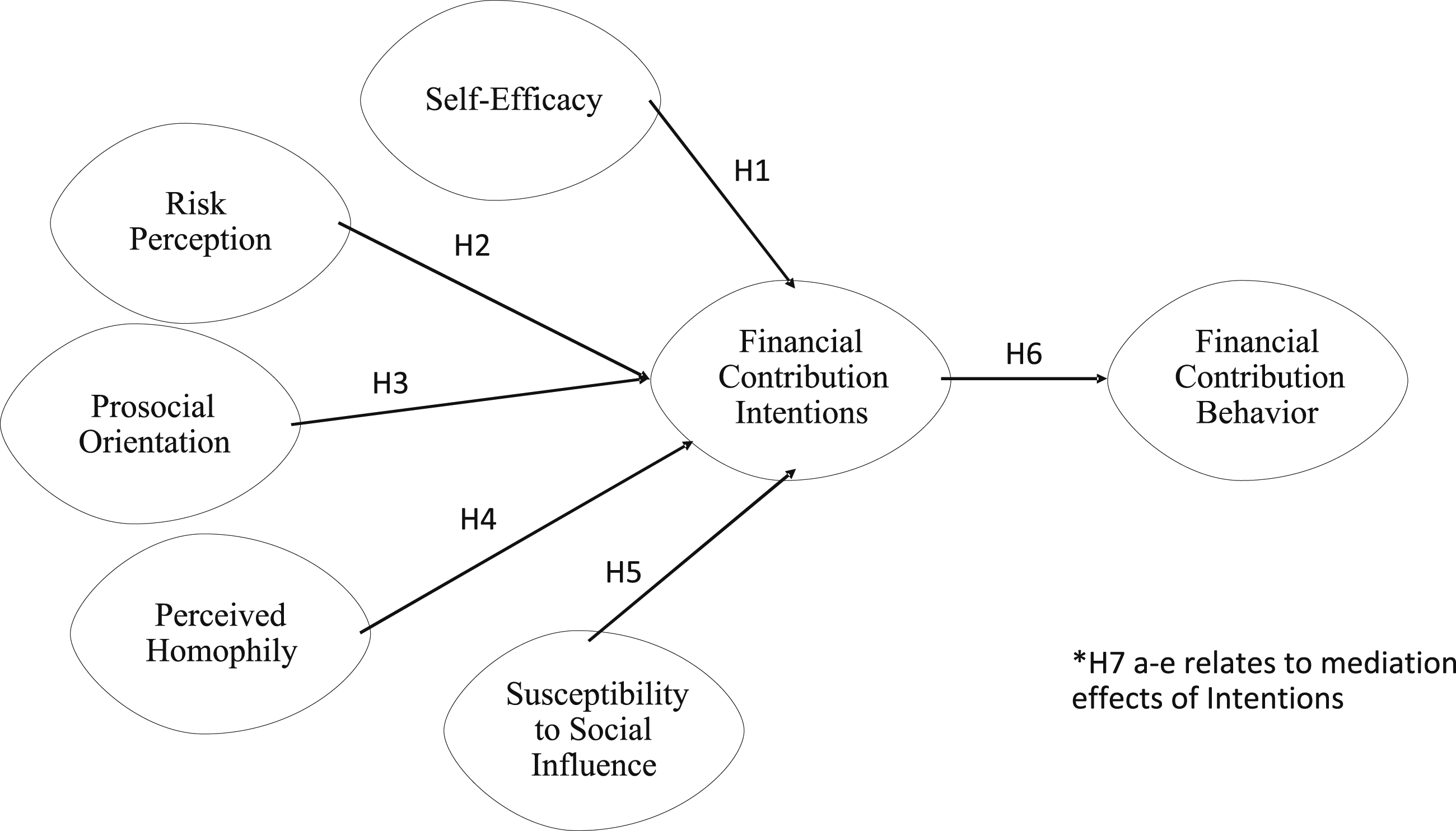
Gender-based model of crowdfunding intentions and behavior.
Data and Methodology
Data collection and Sample
Our data was collected from users of Finland’s largest reward crowdfunding platform: Mesenaatti.me. In the period between 2013-2017, the platform reported raising more than €3 million and a success rate of 68% (Shneor & Munim, 2019). Between 2018 and 2022, the platform has overseen a further €3.5 million raised. A web survey was emailed to the 25,000 registered users of the platform during Spring 2016, administered using the SurveyXact tool, with four reminders sent between April and May 2016. Prior to its distribution, the survey was piloted among 12 individuals (with and without prior crowdfunding contribution experience). Based on feedback received, minor adjustments were made. Furthermore, to ensure relevance and clarity a final review and modification of the survey was performed by the platform’s managers. Since the survey included a long list of items used for other purposes, the overall effort required was viewed as demanding. Hence, to encourage responses, respondents were offered to partake in a lottery-draw of 35 gift cards valued at USD200 each.
Sample Frequency Distribution.
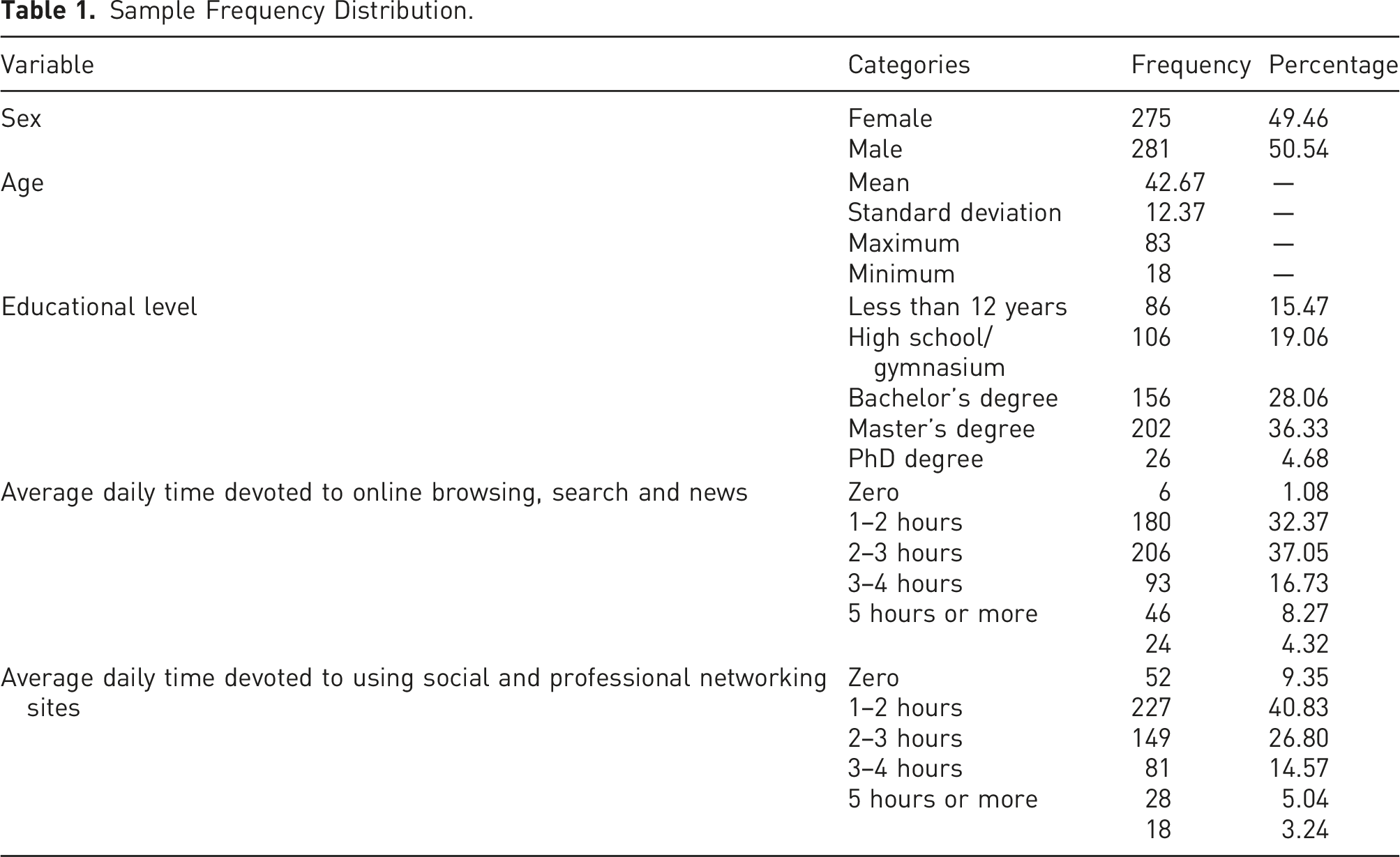
Potential for non-response bias was checked using the wave approach (Armstrong & Overton, 1977). Here, we tested the difference between early and late respondents concerning the means of key demographic variables using an independent-samples T-Test. Based on the proportions of the times at which the survey responses were received, the first 278 observations were taken as early respondents, and the last 278 were taken as late respondents. Except for age the findings show no significant difference between the first and last respondents at 5% statistical significance. Thus, non-response bias is not a serious concern in this study.
Measures
Measurement Items, Properties and Convergent Validity.
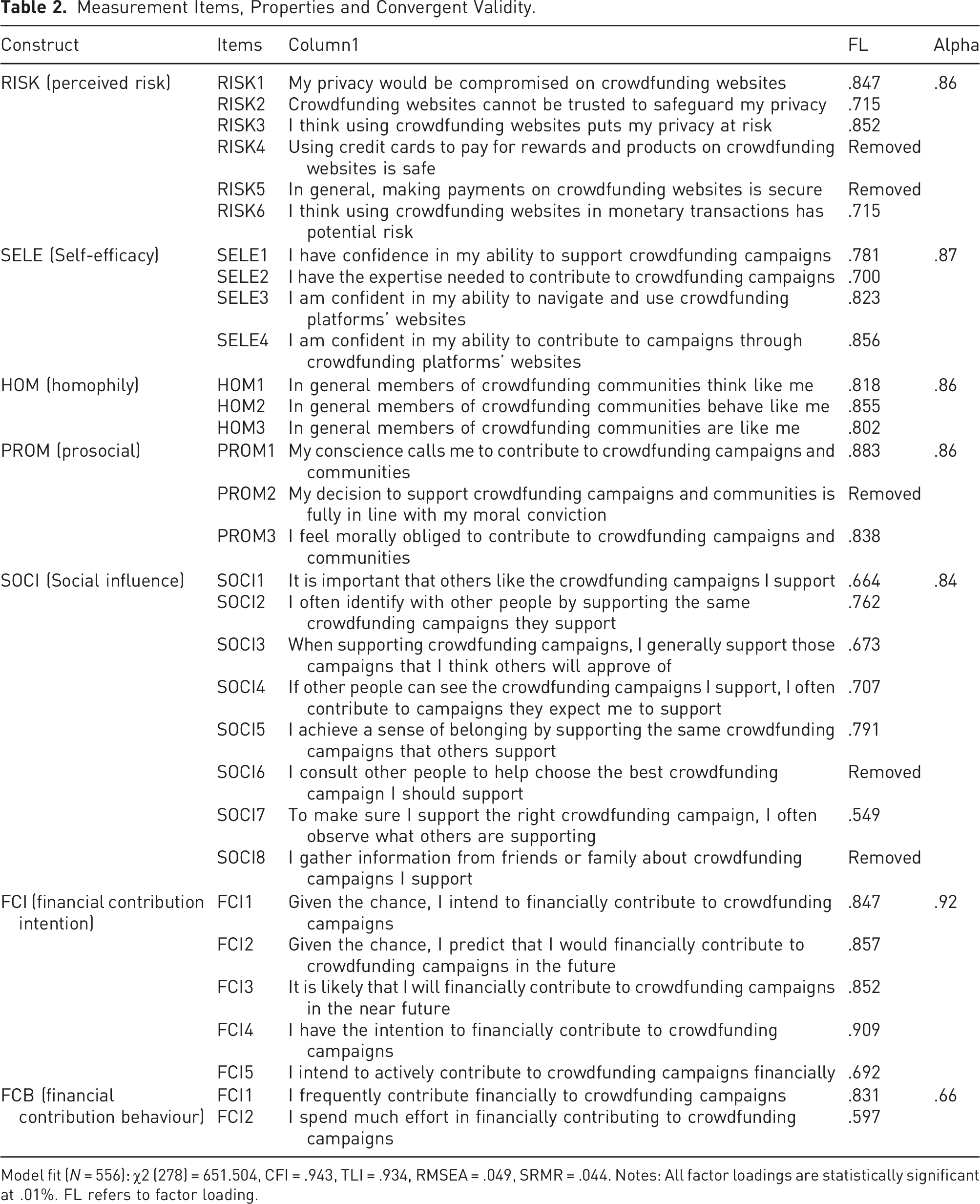
Model fit (N = 556): χ2 (278) = 651.504, CFI = .943, TLI = .934, RMSEA = .049, SRMR = .044. Notes: All factor loadings are statistically significant at .01%. FL refers to factor loading.
Measurement Model
Before estimating the measurement model, we checked for normality using Mardia’s test and Shapiro-Wilk test. The null hypothesis of multivariate normality was rejected by Mardia test (p-value <.05). Similarly, the null hypothesis of univariate normality was rejected by the Shapiro-Wilk test for all measurement items (p-values <.05). Therefore, we used Satorra-Bentler rescaling method (robust maximum likelihood) for the SEM estimation (Rosseel, 2012) using the lavaan package in R-software.
Following the two-step approach (Anderson & Gerbing, 1988), we first conducted exploratory factor analysis (EFA). Two items under perceived risk (RISK4, RISK5), one item under prosocial orientation (PROM2) and two items under susceptibility to social influence (SOCI6, SOCI8) were excluded for either exhibiting low level loadings (less than .5) or cross-loading on multiple factors. In the second stage, we conducted a confirmatory factor analysis (CFA) to validate the internal and external consistency of the various measures (Hair et al., 2010). As shown in Table 2, all measurement items were unidimensional with acceptable model fit statistics. The measurement model fit as indicated by the values for comparative fit index (CFI) and Tuck-Lewis index (TLI) exceeded the recommended threshold of .90, and the root mean square error of approximation (RMSEA) and the standardized root mean square residual (SRMR) had values below the cut-off value of .08, all meeting recommended thresholds (Hair et al., 2010). Hence, the measurement model is satisfactory and can be used for further SEM analyses.
Descriptive Statistics and Correlations Among Constructs.
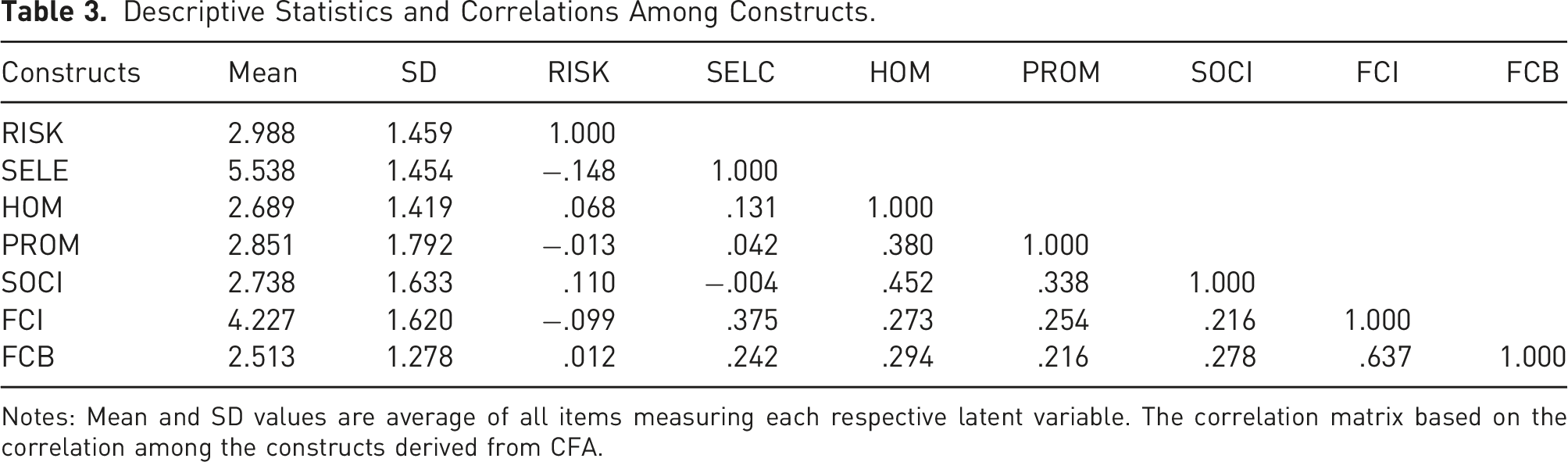
Notes: Mean and SD values are average of all items measuring each respective latent variable. The correlation matrix based on the correlation among the constructs derived from CFA.
Validity and Reliability
Discriminant Validity.
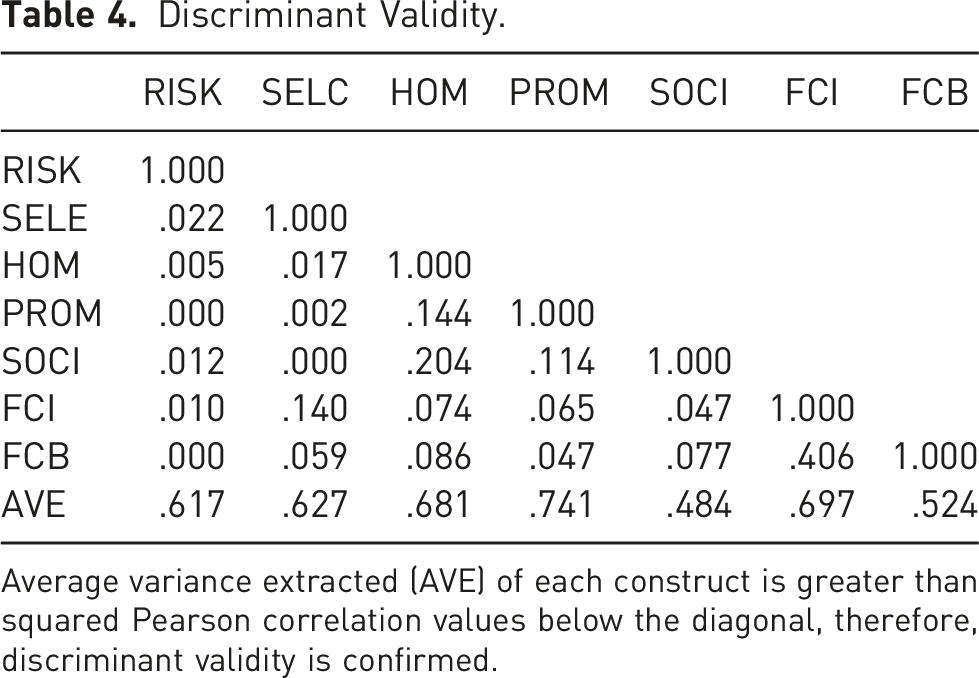
Average variance extracted (AVE) of each construct is greater than squared Pearson correlation values below the diagonal, therefore, discriminant validity is confirmed.
Common Method Bias
To rule out possible problems of common method bias, we followed the suggested approaches by Podsakoff et al. (2003) and adopted Harman’s single factor test. We conducted this test by loading all measurement items (12 items) on one latent variable without any rotation in an exploratory factor analysis. The average variance explained by the single construct is 42% which is below the recommended cut-off of 50%. This suggests that the variations in responses are a result of the actual predispositions of the respondents, rather than the method used to collect the data.
Results
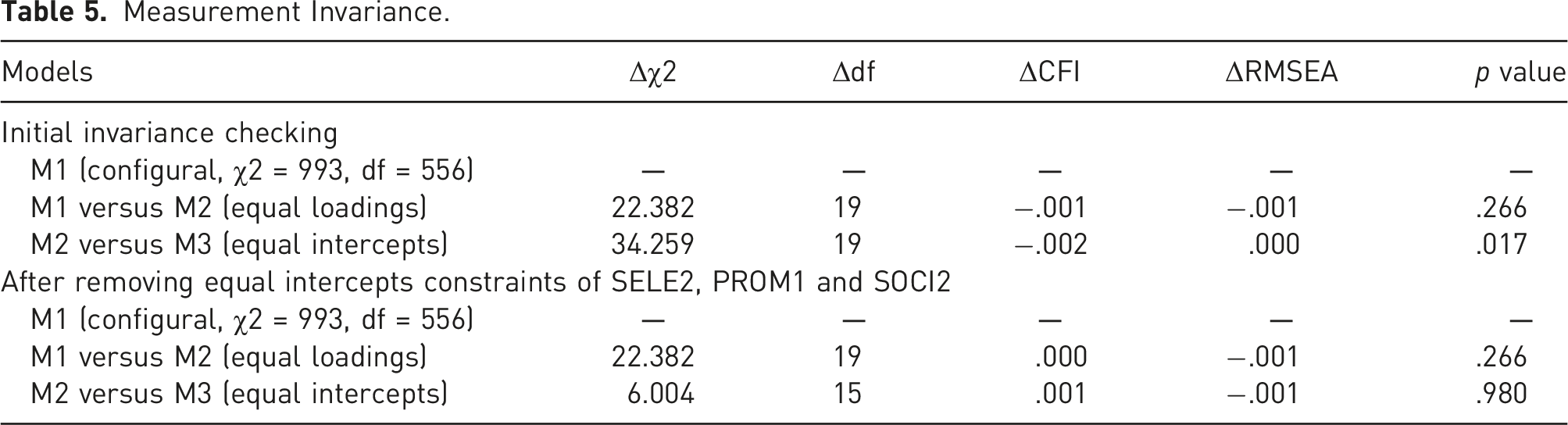
Measurement Invariance.
SEM And Between-Group Estimation Results.
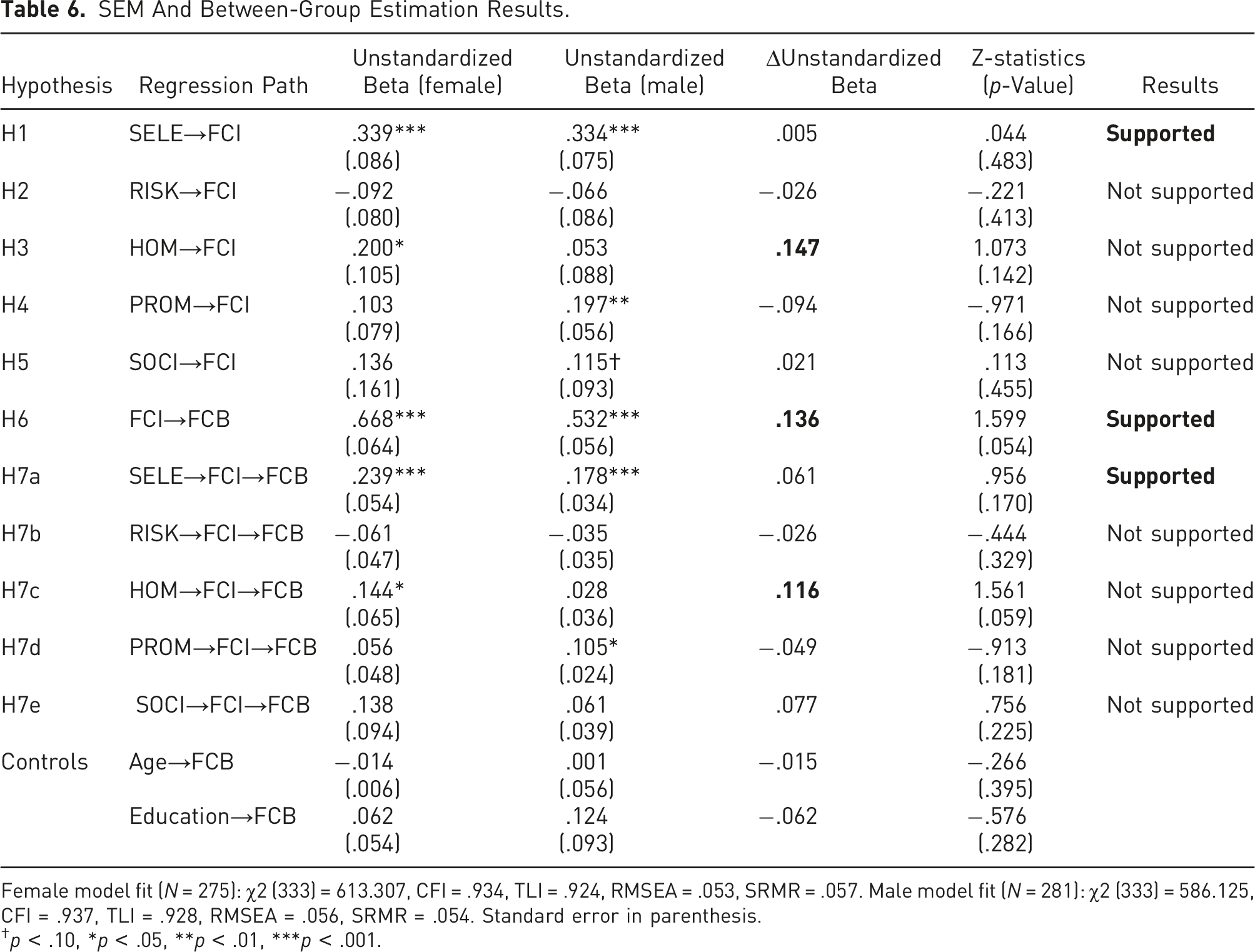
Female model fit (N = 275): χ2 (333) = 613.307, CFI = .934, TLI = .924, RMSEA = .053, SRMR = .057. Male model fit (N = 281): χ2 (333) = 586.125, CFI = .937, TLI = .928, RMSEA = .056, SRMR = .054. Standard error in parenthesis.
†p < .10, *p < .05, **p < .01, ***p < .001.
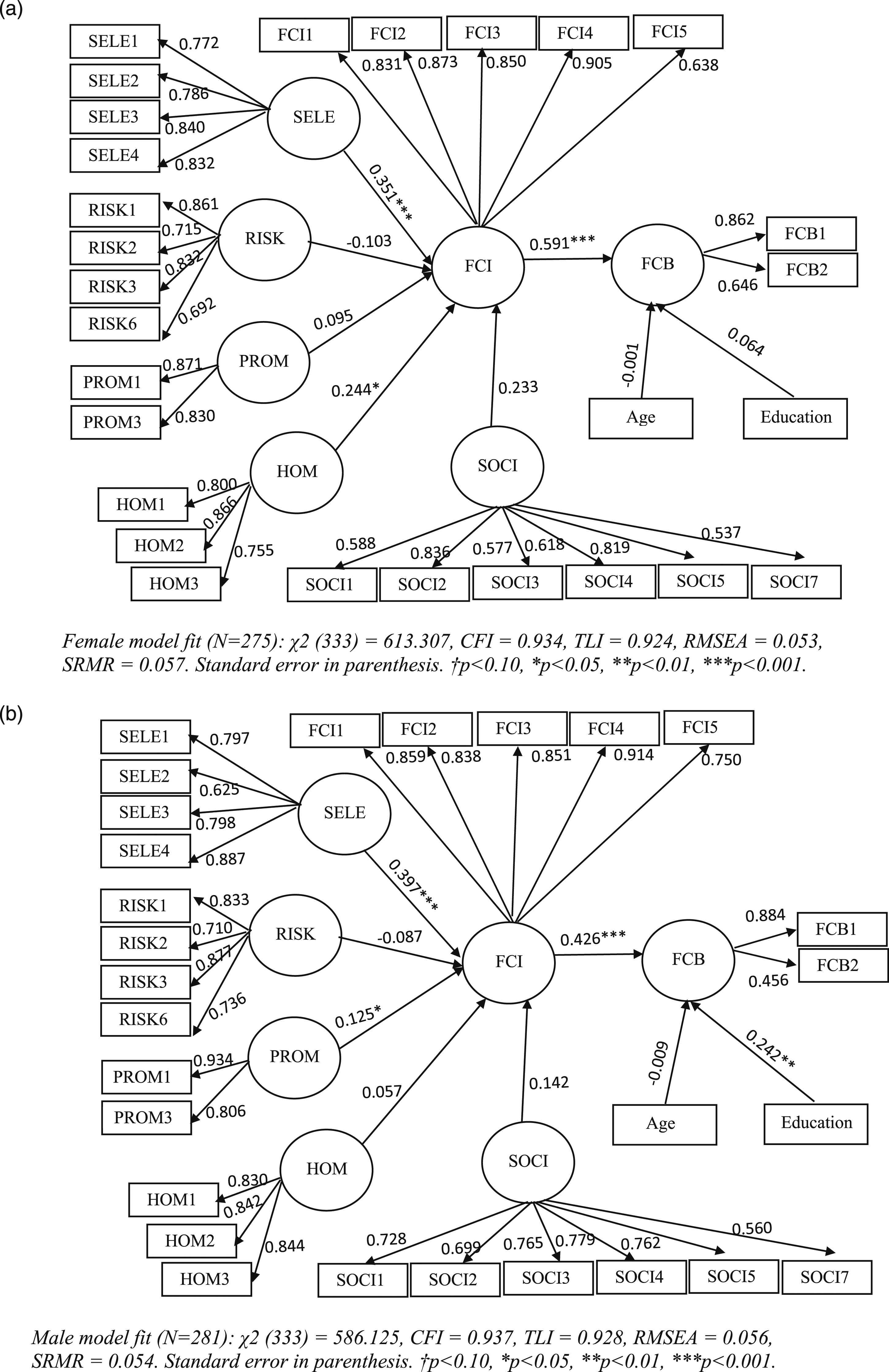
(a) SEM results for female sample. Female model fit (N = 275): χ2 (333) = 613.307, CFI = .934, TLI = .924, RMSEA = .053, SRMR = .057. Standard error in parenthesis. †p < .10, *p < .05, **p < .01, ***p < .001. (b) SEM results for male sample. Male model fit (N = 281): χ2 (333) = 586.125, CFI = .937, TLI = .928, RMSEA = .056, SRMR = .054. Standard error in parenthesis. †p < .10, *p < .05, **p < .01, ***p < .001.
The initial set of hypotheses concerns expected associations between cognitive factors and FCI. First, we find a positive association between self-efficacy and FCI which is gender invariant in support of H1. Second, albeit being gender invariant, we find no significant negative association between perceived risk and FCI, hence rejecting H2. Third, the positive effect of prosocial orientation on FCI is only significant in the male sample, hence rejecting H3. Fourth, the association of homophily with FCI is only significant in the female sample, hence rejecting H5. Moreover, albeit gender invariant, there is no significant positive association between susceptibility to social influence and FCI. Finally, we find gender invariant positive association between FCI and funding behavior, confirming H6. Our control variable of age did not exhibit significant associations in either males or females. Education was significantly associated with behavior in the male but not the female sample.
The Mediation Effects
We used mediation analysis to investigate whether the effects of the selected cognitive antecedents on funding behavior are mediated by FCI. Here, we only find a gender invariant significant mediation effect of FCI between self-efficacy and funding behavior in support of H7a. However, we find that FCI does not mediate the effects of risk perceptions and susceptibility to social influence on funding behavior, rejecting H7b and H7e respectively. We do find FCI to be significantly mediating the effects of prosocial orientation on funding behavior in males only, as well as the effects of homophily on funding behavior in females only, hence rejecting the gender invariance in H7c and H7d respectively.
Discussion
The current study supports research arguing the importance of context for gender discourse in entrepreneurship (Ahl & Marlow, 2012). Here, we specifically examine whether a more gender equal social environment leads members of both genders to be similarly affected by cognitive conditions when deciding to financially support ventures engaged in crowdfunding. Inspired by the assumptions of social feminist theory (Becker-Blease & Sohl, 2007), we have argued that by neutralizing differences in life experiences and socialization (to the extent possible), both male and females are likely to exhibit more similar decision making patterns, as a result of developing more similar self-perceptions, motivations, and belief structures. Overall, our findings present mixed evidence in this respect.
First, our findings do show a gender invariant positive effect of self-efficacy on funding intentions, and that the mediation effect of intentions between self-efficacy and funding behavior is also gender invariant. This implies that self-perceptions of own competence in both males and females have similar impact on their likelihood to develop funding intentions and behaviors. Furthermore, the non-significant differences of Betas in both groups suggests that gender invariance is not only in terms of effect and direction, but also its magnitude. These findings are aligned with our assumptions about possible effects in more gender equal environments. Here, similar access to opportunities, resources, and education (Conceição et al., 2020; Crotti et al., 2021; Plantenga et al., 2009) lead members of both genders to assess the importance of competence in a similar way when making decisions related to crowdfunding contributions.
Second, while we see a gender invariant negative association between risk perception and funding intentions, it is not significant. On the one hand, such findings contradicts most earlier research suggesting that women are more risk averse in a variety of contexts (Charness & Gneezy, 2012; Croson & Gneezy, 2009; Powell & Ansic, 1997), and hence may imply that they are non-affected in a similar way to men. Such a view can still be considered to confirm the gender invariance assumption. However, the non-significance of the effect remains surprising. One possible explanation may be linked to Finland being characterized as a high trust society, where people believe others will not deliberately or knowingly do them harm and hence can be trusted (Delhey & Newton, 2005). Such predispositions may alleviate concerns with untruthful campaigning, fraud, or platform security. This in turn leads both men and women in our context to trust the platform and its community of users, and not consider prospective risks when faced with opportunities to contribute to crowdfunding campaigns. Alternative explanations may be linked to the fact that most reward crowdfunding contributions involve relatively small sums (Shneor, 2020) which may render them less risky overall; or the fact that our respondents may have similar views about the risks of using the crowdfunding platform, as they all have registered on it and have experience with its core functionalities.
Another surprising finding relates to a significant association between prosocial orientation and funding intentions in men, but not women. Such finding does not only refute our assumptions of gender invariance, but also presents opposite results than in earlier research suggesting women to be more concerned with well-being of others in a manner that affects their behavior when providing financial support (Ryu et al., 2020; H. Zhang & Chen, 2019) including in the Finnish context (Maula et al., 2005). A potential explanation may be related to the measure we have used for capturing prosocial orientation. Here, earlier research distinguished between two orientations, one more concerned with justice while the other with care, while showing that the former is more prominent among males and the latter more prominent in females (Gilligan & Attanucci, 1988). Accordingly, we suggest that the items used in our measure better reflect aspects of justice and sense of obligation than compassion and care, and hence may be better attuned to male dominant interpretations of moral orientation.
Less surprising is our findings that homophily is positively associated with funding intentions in females only. Such finding is in accordance with earlier research (Gafni et al., 2020). However, the fact that an homophily effect was absent in males challenges our assumptions of gender invariance in relatively more gender equal societies. On the one hand, this finding may be related to claims that even in relatively gender equal societies, such as Scandinavia, women may still experience less favorable positions in job segregation and its related implications for financial positions (Seierstad & Healy, 2012), which may trigger gender-based homophilous support to fellow women. However, on the other hand, since our measures did not stress gender-based homophily per se, we remain doubtful that the effect identified relates to the activist choice form of homophily (Greenberg & Mollick, 2016). Instead, we believe this relates more to empathy and agreeableness, implying greater ability to be considerate and altruistic. Indeed, earlier research covering 55 countries, have found that women score higher than men on the agreeableness personality trait (Schmitt et al., 2008), and that such findings were also evident in Finland (Feingold, 1994). While the specific sources of this pattern have not yet been resolved, it may represent an exception of aspects in which men and women are indeed fundamentally different, even when experiencing similar life experiences and socialization.
Finally, our finding that susceptibility to social influence was not associated with funding intentions in both males and females, represents a surprising finding as well. Here, again, while gender invariance was observed, it emerged with respect to an absence of an effect rather than the expected effect. A potential explanation may be related to the individualistic nature of Finnish society. Indeed, cross-cultural research identifies Finland as one of the top scoring nations along the individualism-collectivism dimension. Specifically, in individualistic societies the interest of the individual prevails over that of the group, ties between individuals are loose (Hofstede et al., 2010), and premium is placed on self-reliance and separateness from other in-group members (Singelis, 1994). In such social environment, individuals will act independently and will rely less on cues from peers. When viewed from this perspective, susceptibility to social influence is unlikely to affect funding intentions and behavior in societies where it will be observed at low levels only. In this respect, earlier research showed that Finnish crowdfunding backers are affected by various variables differently from backers in a collectivistic society such as China (Shneor et al., 2021).
Conclusion
The current study examines whether gender differences in crowdfunding intentions and behavior prevail under conditions of a relatively more gender equal society. Specifically, we examine whether different cognitive antecedents exert different effects in men and women on decisions related to crowdfunding contribution. Following a social feminist approach, we suggest that such effects should be gender invariant due to similar life experiences and socialization processes for both males and females. Nevertheless, we find mixed evidence and provide possible explanations for surprising findings. We find evidence of gender invariance with respect to the effect of self-efficacy, as well as gender invariance with respect to the non-effect of risk perceptions and susceptibility to social influence. However, we also find differences, where the effect of social orientation is prevalent in males only, and the effect of homophily is prevalent among women only.
Limitations and Implications for Research
Our study, while presenting interesting insights, has limitations that can inform future research. First, our findings may represent context specific results. Accordingly, future research should re-examine the boundaries of generalizability of our findings both by replicating the study in other relatively gender equal societies, as well as in societies that vary along relative gender equality levels. Similarly, the context of reward-crowdfunding also represents a unique set of risks and commercial considerations that may differ significantly from other types of crowdfunding such as investments in equity and loans. Accordingly, re-examining these gender differences and similarities in the context of investment models of crowdfunding may further our understanding of the impacts of gender equality in such contexts.
Second, while focusing our analyses on a sample of registered users on a crowdfunding platform we ensure a minimal degree of interest and understanding of crowdfunding, such choice also implies that our respondents may be different from prospective backers who have not yet registered on a platform. This may be especially evident with respect to some of our antecedent variables and their effects, such as self-efficacy and perceived risk. Accordingly, future studies may explore the same effects examined in the current study while using samples from general members of the public that may have sufficient understanding of crowdfunding but have not yet registered with a platform.
Third, since our survey was long, we did not collect data about the type of campaigns backers have contributed to, as can be defined by different categories of products and services that were offered by the fundraisers. Hence, future research may consider replicating our study while controlling for, or comparing across, different product and service categories.
Finally, while we argue for the inclusion of some cognitive antecedents, others may consider examining same effects with respect to other psychological antecedents that may be of interest, such as personality traits, interest levels, and communication styles to name a few. Specifically, future research may include subjective norms or social norms, for better capturing the impact of actual social cues with respect to contribution behavior, and not only the likelihood of feeling the need to accommodate such cues (as captured by susceptibility to social influence).
Implications for Theory
The study and its findings also present several implications for theory. At a broad sense, the paper provides evidence for the merits of combining social feminist assumptions with those of social behavior theory for capturing the implications of socially constructed gender differences in concrete spheres of economic behavior, such as crowdfunding contribution. Hence helping us to theorize not only about the existence of gender differences, but also about their concrete manifestations and implications for human decisions and behavior. Furthermore, by testing our hypotheses in the theoretically extreme context of a relatively high gender equality society (or low gender inequality society), we strengthen the validity of presented theoretical assumptions about the implications of socially constructed gender positions.
Specifically, our study offers insights into gender differences in venture funding decisions, an area that has received limited attention in previous research (Serwaah & Shneor, 2021). We address this gap by arguing and presenting evidence for context-dependent effects of gender in funding decisions. Using our extreme context of study allows us to uncover some new insights that translate into new theoretical assumptions. First of these, is the insight that in relatively low gender inequal societies, it is men’s contribution intentions rather than women’s that are associated with prosocial orientation. Second, is the insight of no difference between men and women with respect to the effects of risk and susceptibility to social influence, both challenging stereotypes of women as being generally more risk averse and susceptible. Such findings again, provide support to core theoretical argument underlying social feminist critic, that gender differences are a product of context and time (Ahl, 2006; Kelan, 2009).
Finally, the list of hypotheses developed in the current study, represents a new gender-based theoretical framework for explaining crowdfunding contribution behavior, adding to the arsenal of theoretical approaches used in earlier work, which has mostly relied on either signaling (Connelly et al., 2011), planned behavior (Ajzen, 1991), or technology acceptance theories (Venkatesh et al., 2003).
Implications for Practice
Our findings may help inform crowdfunding platform design as well as campaign strategy. From a platform perspective, we show that when serving gender equal markets, certain features may be developed that can answer needs of different segments. Features helping to indicate and visualize prosocial value propositions in campaigns may be of greater interest to male users. Features enhancing shared identity and community feeling may be of greater interest to female users. And features supporting a sense of competence and mastery may be of interest to both. Adding such features in platform interfaces can enhance users’ intentions to make financial contributions as well as do so. These may include relevant badges for backer profiles, badges for campaign pages, indicators or tags for internal search and filtering mechanisms, as well as automatic generator of social media posts drawing from campaign content in targeted messaging towards gender-based segments.
From a fundraiser perspective, our findings can help shape promotional messaging via social media in a more appealing way to gender-based segments, as well as inform campaign designers which messages should be highlighted to ensure congruence with segment members’ preferences. For example, stressing prosocial value creation in campaign media elements and promotional messaging may appeal to men. Stressing shared identity and characteristics with prospective customers may appeal to women. Furthermore, messages reassuring people’s competence or support to make the best decision may appeal to both.
Footnotes
Declaration of Conflicting Interests
The author(s) declared no potential conflicts of interest with respect to the research, authorship, and/or publication of this article.
Funding
The author(s) received no financial support for the research, authorship, and/or publication of this article.
