




Abstract
This article analyzes the determinants of successful crowdfunding initiatives using a sample of 5,251 projects from the reward-based Spanish platform Verkami. In contrast to most of the literature that has measured success with a dichotomous variable, we approach success with a continuous one, namely the ratio of achievement, which is measured as the obtained resources over the total amount requested by the promoter. We consider a set of potential determinants of success, which are theoretically well-grounded and cover a variety of spheres related to project features. Results suggest that factors related to the signaling theories such as partnership, having previous experience and interaction with backers are positively associated with the achievement ratio, whereas no significant impact is found for the number of rewards. In addition, we find uneven effects for low and high ratios of achievement, identifying the key determinants in different project stages.
Introduction
Over the last years, crowdfunding has arisen as an innovative way to fund ventures without having to appeal to the venture capital services or other traditional sources of funding. These new financial mechanisms are particularly important for new or creative entrepreneurial initiatives that have in funding one of their most critical success points (Cumming & Johan, 2017; Gamble et al., 2017; Gompers & Lerner, 2004). In addition, the so-called reward-based crowdfunding is particularly interesting because it extends the crowdfunding beyond exclusive financing purposes. Raising funds using reward-based crowdfunding is, in some cases, a marketing strategy for demand exploration and to build a customer base prior to production (Brown et al., 2017).
In spite of the popularity of this phenomenon in practice, academics have paid only partial attention to the subject. McKenny et al. (2017) highlighted some of the key issues to be addressed on crowdfunding research, being one of them the necessity to better understand the determinants of crowdfunding success (see also Mollick, 2014; Nambisan et al., 2018). Some of the most analyzed determinants are partnership (Courtney et al., 2017), the amount of rewards (Zhou et al., 2018), the previous experience of the promoter (Butticè et al., 2017) or the costless signals (Anglin et al., 2018) such as questions and updates. Lagazio and Querci (2018) link a set of potential determinants to different theories, finding that in some cases empirical results are not aligned with theoretical predictions.
Contradictory results show the great deal of complexity of the determinants of success and also call for additional evidence useful for practitioners. In our view, controversial results could be often explained with a deeper understanding of how determinants behave in different stages of the project. For instance, useful strategies shortly after the project is launched may be not as useful once the project has already received substantial support or even reached the financial target. These issues still remain widely unexplored in the literature.
This article aims to fill that gap by using a wide sample of projects from the Spanish platform Verkami. To do so, it incorporates two major novelties. The first one is how success is measured. The literature agrees on considering a project as successful when it gathers the requested amount of money. In empirical analyses, this is generally identified by a binary variable which is equal to one for successful projects and zero otherwise. That approach may be quite general and vague, as it does not allow to detect differences in projects’ performance, that is, projects are classified into only two categories: successful or failed. 1 In this article, success is measured by a continuous variable, which we label as the ratio of achievement. It is defined as the ratio of collected over requested money by the promoter. Accordingly, from a financial point of view, a project is successful (failed) if the ratio is higher (lower) than one and, more importantly, the variable is able to capture disparities between projects’ performance. 2
The second novelty refers to the exploitation of the results. This article considers a collection of determinants of success and, in order to take advantage of the continuous nature of our measure of success, we apply different statistical techniques. Apart from ordinary least squares (OLS) regressions, which estimate the average effect of the regressors, we also use quantile regressions (QR). The latter allow us to estimate effects of the explanatory variables beyond the average, that is, for projects with low and high ratios of achievement. Then, our approach examines the behavior of the determinants of success in greater detail, since the average effect provided by OLS might be the result of opposite impacts in different parts of the distribution. This allows to prescribe more accurate recommendations to practitioners.
The rest of this article is structured as follows. Section “Theoretical framework” provides an overview of the crowdfunding phenomenon and formulates the research hypotheses. Section “Empirical Framework” describes the empirical setting, including details on the Verkami platform and the sample, variables used, descriptive statistics, and econometric strategy. Section “Results” is devoted to describe the results and, finally, section “Discussion and conclusion” discusses the results, provides policy prescriptions, and concludes.
Theoretical framework
Crowdfunding: overview, success, and its determinants
Crowdfunding represents a specific category of fundraising that has been facilitated by a growing development of Internet sites where individuals may not interact with each other outside the crowdfunding project (Ford et al., 2015). In contrast to the conventional financing sources where a small group of investors are solicited to invest in a project, crowdfunding allows entrepreneurs to raise external financing from a large audience where each individual provides a very small amount (Belleflamme et al., 2014; Miglo & Miglo, 2018; Ordanini, 2009). Any type of activity can be financed: journalism, artistic development, a new company, a film, start-ups, small businesses, or open-source software (Lawton & Marom, 2012) being crowdfunding platforms the most widely used option due to their reduced transaction costs (Agrawal et al., 2011).
Success in crowdfunding is normally associated with the achievement of certain financial requirements (see, among others, Ahlers et al., 2015; Butticè et al., 2017; Courtney et al., 2017; Lagazio & Querci, 2018; Wang et al., 2018). Besides the financial approach, some authors are identifying crowdfunding projects that use platforms for marketing purposes, aware of the great deal of attention that these websites provide (Brown et al., 2017). Furthermore, beyond financial success there are other activities that project managers have to fulfill. This is the case, for example, of delivering goods or services associated with reward-based crowdfunding platforms. In this sense, some projects can be successful from the financial point of view but failed projects when it comes to deliver to supporters what was promised in the campaign (Mollick, 2014).
There are several research questions that stand out (see McKenny et al., 2017). For instance, the characteristics of investors that contribute to crowdfunding campaigns; antecedents, consequences, context, the relationship between crowdfunding and other methods of financing and, finally, the determinants of crowdfunding performance, which is the focus of our research. The latter is coincident with the cornerstone of strategic entrepreneurship trying to understand the entrepreneurial determinants of firm performance (see Allison et al., 2015; Calic & Mosakowski, 2016; Moss et al., 2015), a topic that is still in the spotlight (Chan & Parhankangas, 2017; Josefy et al., 2017).
Among the factors relevant for success, the literature highlights the previous experience and the behavior of crowdfunders (Burtch et al., 2013; Butticè et al., 2017) or the context of the crowdfunding process, as for instance, the effects of the community context. In that respect, Josefy et al. (2017) suggested the need for further integration of community and cultural constructs into models of venture funding.
Other studies emphasized the narratives on financing platforms. Moss et al. (2015), by extending the signaling theory, suggested that narratives on microfinancing platforms are important means to signal valuable characteristics and behavioral intentions to prospective lenders. Results indicate that microenterprises are more likely to receive funding and to receive it more quickly due to their signal autonomy, competitive aggressiveness and risk-taking. Moreover, an important stream of research argued that crowdfunding project signals and attributes of ventures are more likely to induce investors to commit financial resources in a crowdfunding context (Ahlers et al., 2015).
Calic and Mosakowski (2016) argue that a sustainability orientation of the projects affects entrepreneurs’ ability to acquire financial resources through crowdfunding. In addition, project legitimacy and creativity mediate the relationship between a sustainability orientation and funding success. In the same vein, Allison et al. (2015) suggested that lenders respond positively to narratives highlighting the venture as an opportunity to help others, and less positively when the narrative is framed as a business opportunity. Also, Connelly et al. (2010) and Gafni et al. (2019) hold that potential investors evaluate both the observable and unobservable characteristics of venture quality by interpreting the signals sent by entrepreneurs and the company’s attributes.
Research hypotheses
This study focuses on some particular determinants of the success of a crowdfunding initiative. Crowdfunding can be considered as a practice to obtain financial resources for an embryonic project. Consequently, those actions aimed at demonstrating the quality of the project, the credibility of its promoter or the commitment of the community can be of great help in attracting backers.
Among these actions, we can consider the participation of third parties playing the role of prescribers, which can favor the reputation of the promoter and the proposed crowdfunding project (Courtney et al., 2017). In this sense, we need to take into account the information restriction that the backers have about the crowdfunding project. Furthermore, this information is usually originated by the actual promoters of the projects and hence can be biased or potentially opportunistic (Akerlof, 1970; Courtney et al., 2017; Ravenscraft & Scherer, 2011). As a consequence, third parties such as supporting organizations can behave as endorsers which raise the value of the project by signaling its quality. These actions can support the arguments of the promoters of crowdfunding initiatives adding objectivity and removing the fear of the aforementioned opportunistic behaviors (Courtney et al., 2017; Gulati & Higgins, 2003; Hsu, 2004; Plummer et al., 2016; Podolny, 1993, 1994; Stuart et al., 1999).
We consider that receiving support from partners in a crowdfunding platform might substantially improve the positioning of the project in it. In addition, this support can be interpreted by potential investors as a sign of quality and safeguard which may induce potential backers to support the project. Consequently, we formulate our first hypothesis:
The second hypothesis explores questions related to the existence of rewards. A high diversity in the portfolio of options that backers can consider to support a crowdfunding project may increase the potential number of investors, as it is more likely that they find something of their interest among the set of rewards to choose from. However, even though some recent analyses by Kunz et al. (2016), Simons et al. (2017), and Zhou et al. (2018) report a positive relationship, there is also a remarkable body of research that provides contrary results (see Butticè et al., 2017; Courtney et al., 2017; Xiao et al., 2014). In fact, an excessive number of options can produce the overchoice effect, making it difficult to make a decision, as it is explained by the choice overload theory, widely used in the management and economics research fields (see Iyengar & Lepper, 2000; Mogilner et al., 2008; Reutskaja & Hogarth, 2009). Consequently, this effect may negatively impact the purchase action of the backers (Gourville & Soman, 2005). Consequently, we formulate the following hypothesis:
The third hypothesis regards to the experience of the promoter. Having other projects in the platform can be a positive factor, as the promoter might gain expertise, being able to prepare a better proposal using the feedback obtained from past experiences. From the backer’s perspective, trust on the promoter and his or her capabilities to successfully drive the crowdfunding project endeavors can be a motivating factor to contribute. This trust is more difficult to achieve for promoters lacking experience. Consequently, experience may be a powerful signal that can contribute to enhance the credibility and quality of the project and its promoters (Butticè et al., 2017; Courtney et al., 2017). This similar line of reasoning is common in the entrepreneurship literature regarding start-ups. Indeed, human capital and founding teams have been identified by several authors as facilitators to involve investors in funding activities of start-up projects (Beckman et al., 2007; Burton et al., 2002; Gompers et al., 2008; Hsu, 2007; Kaplan & Strömberg, 2004). Furthermore, empirical analyses performed in the crowdfunding field show how the experience and human capital exert a positive effect on the amount of financial resources gathered by promoters (Ahlers et al., 2015; Barbi & Mattioli, 2019; Courtney et al., 2017; Yao & Zhang, 2014). Therefore, we formulate the following hypothesis:
Following the above argumentation, updates in the project pages of the platform can also provide valuable insights aimed at reducing reluctance to contribute. In this sense, the efforts made by the promoters in order to clarify the project intentions and dissipate doubts can be fruitful (Ahlers et al., 2015; Courtney et al., 2017; Mollick, 2014). In the context of our research, project pages on crowdfunding platforms often have the possibility to interact with the audience in order to promote backers’ collaboration. In addition, a higher number of updates in the platform project page might dissipate doubts from backers and clarify the project characteristics. Taking from a starting point, the signaling theory (Spence, 1978, 2002), and considering the information asymmetry between the backers (receivers) and the promoters (signallers), increasing the amount of updates in the platform (signals) can be an option to reduce information asymmetries. Therefore, proactive communication with the potential backers by means of an appropriate number of updates can positively impact the image of the project and enhance the likelihood to receive contributions (Lagazio & Querci, 2018; Wang et al., 2018; Xiao et al., 2014).
Another indicator of interaction between the promoter and the potential backers is the number of questions. Although it can be argued that some questions might reflect lack of clarity of the project, recent evidence by Lagazio and Querci (2018) finds a positive effect, showing that a satisfactory answer may encourage participation. Then, we state:
Empirical framework
Database and sample
This research uses a sample of crowdfunding projects of the Spanish platform Verkami. This initiative was created in 2010, becoming the most important in Spain according to the business volume and number of projects. As defined by its founders, Verkami is a platform aimed at creation lovers that can target their projects among 12 main categories: art, performing arts, music, photography, games, community, publications, comic, film, food, design and science and technology. Since its foundation until June 2016, when we accessed the data, the total amount raised by this platform was €21.23 million. These resources were obtained through 559,324 backers (or patrons in their own jargon) with an average of €37.92 per contribution. In the aforementioned period, Verkami reported 4,239 successful projects in their portfolio of 6,010 projects, leading to a success rate of 70% approximately (www.verkami.com, 2016). Over the last years, these figures have improved. In 2020, the number of financed projects is 8,443 with a success rate of 73%. The total amount of financial resources doubled in this period (€42.8 million) and also the number of backers (1.2 million; www.verkami.com, 2020).
Verkami follows the so-called all or nothing business model. Project creators apply for a certain amount of money to finance their projects and have a maximum of 40 days to achieve it. In case the project is successful, the owners receive the total amount of the backers’ contributions minus the platform commission. On the contrary, if the project does not achieve its target, the backers are not charged and the projects’ owners receive nothing. To raise the financing resources, project owners in Verkami propose different rewards that the backers can obtain by paying the corresponding amount. Obviously, the greater the investment, the better the reward for the supporter. Due to the use of the all or nothing system, backers will only receive the reward in successful campaigns.
Verkami charges the developer with 5% of the total raised in the project, provided the project is successful. Thus, the platform is largely involved in the selection and advice of the projects that will be part of the system. A project has to receive a mandatory approval in order to be published. To do so, creators present their proposals for evaluation. The platform carefully reviews each proposal for accepting or rejecting it within 5 days. Accepted campaigns receive advice from Verkami’s team and the creators get valuable feedback about the quality of their projects. Verkami identifies the aspects of the projects that need special dedication, based on the results of similar projects in the past. In addition, Verkami has external experts who assist in the evaluation of different projects.
Together with the internal efforts made to support project promoters, Verkami has a partnership program. This initiative involves third-party actors of different nature that provide additional help. The variety of partners includes local radio stations, news websites, record labels, creative centers, editorials, cinema schools and festivals, among others. Projects can be associated with these partners, and by doing so will engage in additional channels for communication purposes. As a consequence, partner backed projects in Verkami will have access to a broader audience of potential backers.
Most of the previous research focuses on platforms such as Kickstarter (Anglin et al., 2018; Brown et al., 2017; Butticè et al., 2017; Courtney et al., 2017; Mitra & Gilbert, 2014) or Indiegogo (Brown et al., 2017; Lagazio & Querci, 2018; Li et al., 2017). Analyzing the case of Verkami is therefore interesting, since it is a platform with strong local roots and with a very clear dedication to creative projects, with social commitment and quality. Then, our results can complement those obtained using more generic platforms such as those mentioned above.
Regarding our sample, we collected information and public attributes of 5,251 completed projects from the 12 categories already described in this section. In addition to the category, we were able to gather information on several aspects from the projects, which are described in detail in the next section. 3 In order to retrieve project data, we collected the Verkami‘s URLs of all the completed projects until May 2016 and scraped them on June 2, 2016 using the software tool Import.io. 4 The process consisted in identifying the fields of the relevant variables at the home page of the projects and using the software to download the information. The output comprises the projects and their associated attributes.
Variables
The variables in our analysis proxy the concepts and ideas previously introduced. In particular, our variables of interest are, on the one hand, the monetary achievement of the projects and, on the other hand, the potential determinants of success described by the research hypotheses.
Dependent variable:
Ratio of achievement: Percentage of gathered amount of money over the requested amount by the promoter.
Independent variables:
Partnership: Binary variable that takes a value of 1 when the project receives the support from one or more official partners of the platform and 0 otherwise (H1).
Other projects: Binary variable that equals 1 if the promoter has previous experience in the platform and 0 otherwise (H2).
Number of rewards: Number of different rewards that backers can choose from the project (H3).
Number of updates: Number of interactions (updates) between the promoter and the audience (H4.1).
Number of questions: Number of public questions that backers raised concerning the project (H4.2).
Control variables:
Number of sponsors: Number of backers providing economic resources.
Category: Category of the project from the ones introduced in section “Database and sample.”
Descriptive statistics
This section provides descriptive statistics for our variables. Table 1 reports a summary of the main descriptive statistics for the continuous variables in our sample.
Descriptive statistics for the continuous variables.
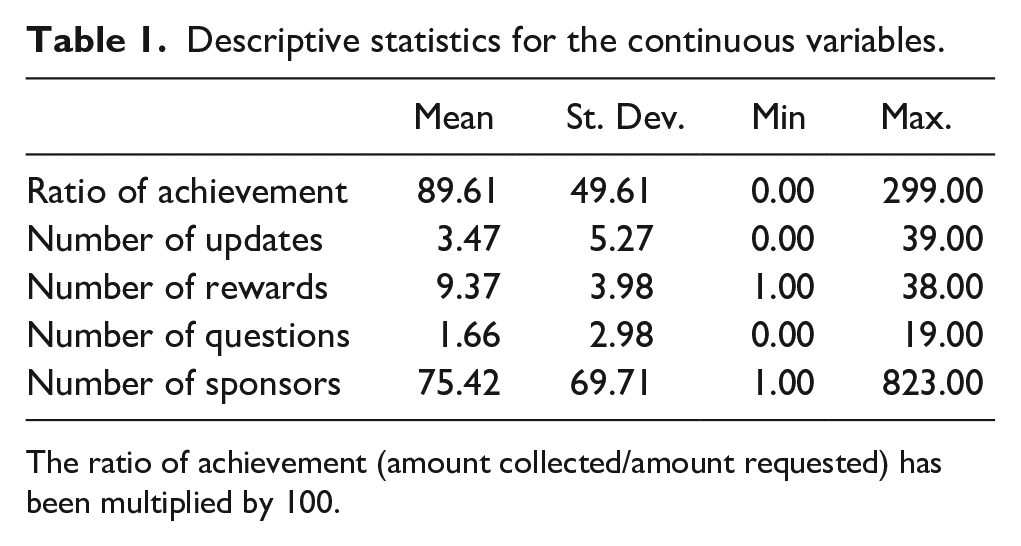
The ratio of achievement (amount collected/amount requested) has been multiplied by 100.
In order to explore the relationship between the variables, we provide in Table 2 a correlation matrix. As it can be observed, correlations are all positive and relatively low or moderate, particularly between the independent variables, which implies that multicollinearity is not an issue in the subsequent regression analysis.
Correlation matrix.
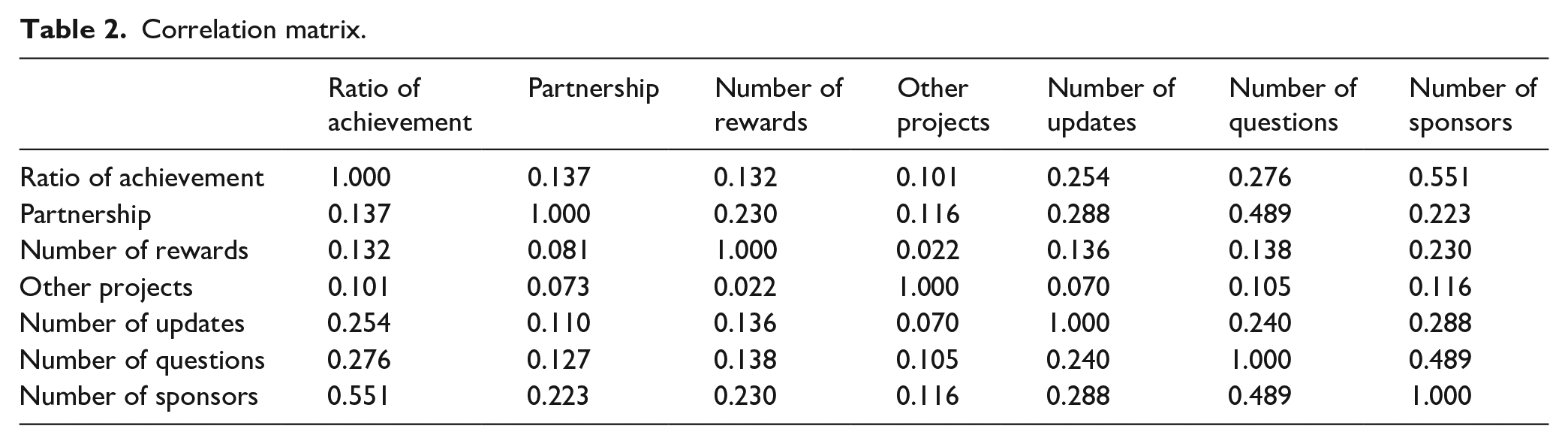
Figure 1 displays the density function of the main variable of interest, the ratio of achievement. The vertical dotted line in the value 100 represents the threshold between failure (left) and success (right). The density is heavily non-normal, showing a clear bimodality. A large proportion of projects accumulates between values 0 and 50, all failed projects. This means that, in general, most of the failed projects are far from getting the requested amount. The main mode, however, is situated around the threshold (100), indicating that most of the projects in the sample are around that ratio. We can also observe some projects far beyond 100, obtaining greater ratios of achievement, which adds interest to considering a continuous ratio and not the more common binary variable (fail/success) used in the literature.
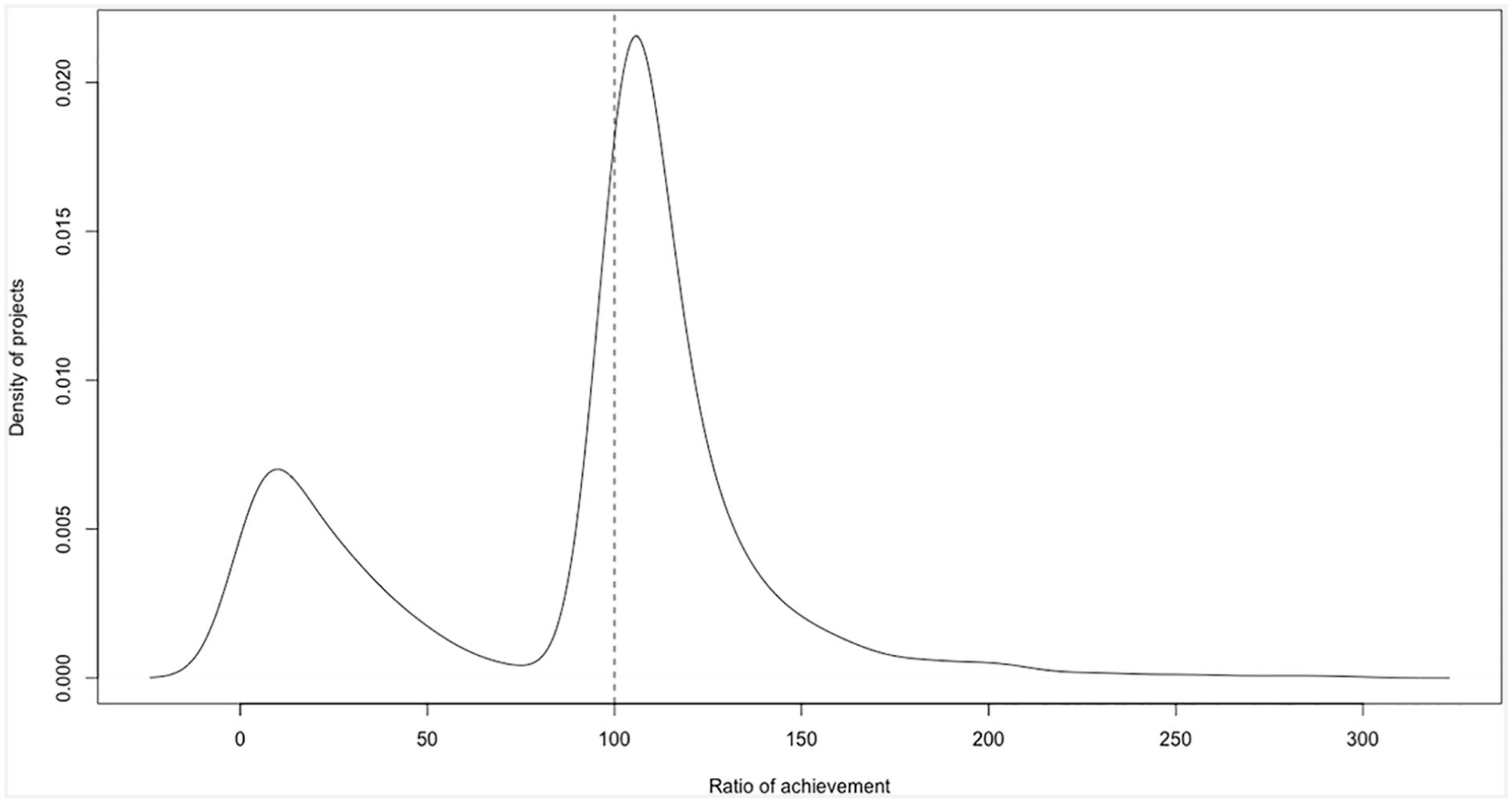
Density for ratio of achievement.
Focusing on project categories, Table 3 reports some descriptive statistics. The first column of the table lists the percentage of successful projects, showing great disparities that range from only 44.9% for art projects to 74.6% for music projects. The last two columns report the mean and median ratios of achievement. The means between categories differ remarkably, whereas the medians are much more similar across groups, slightly above 100.
Success and ratio of achievement by project category.
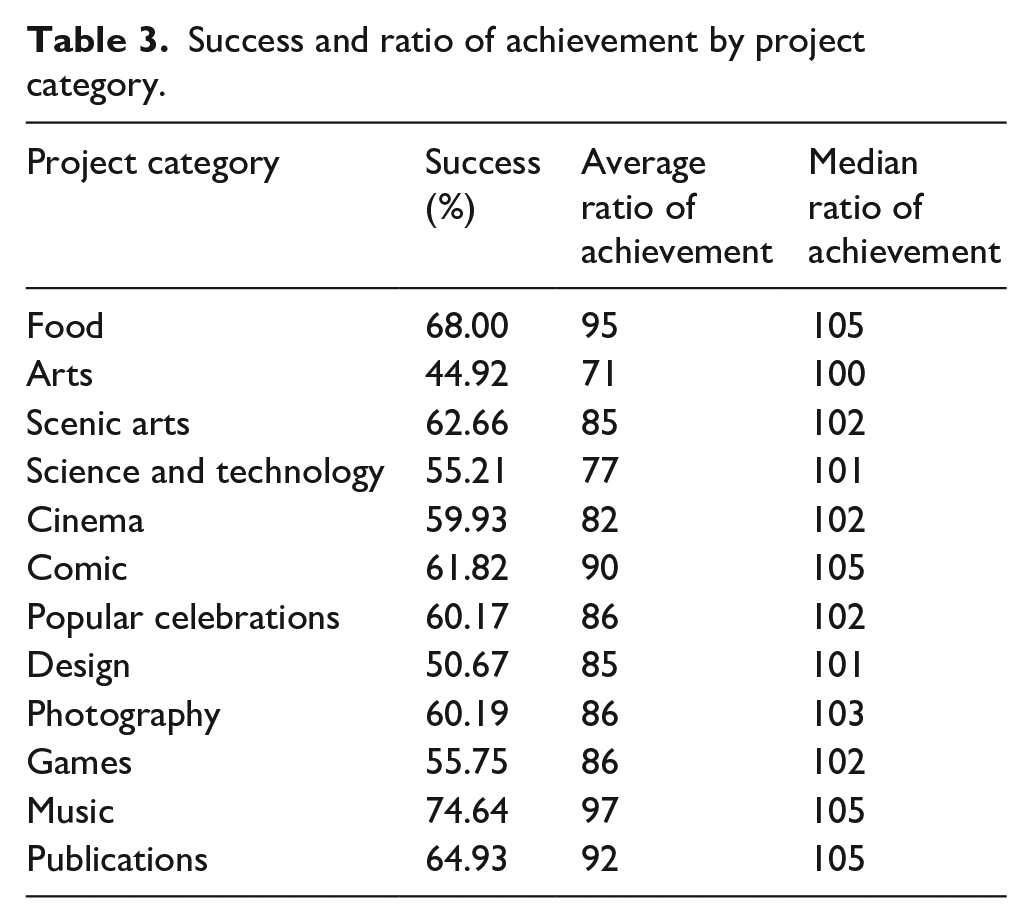
Figure 2 complements the previous descriptive by providing boxplots for the ratio of achievement by category. The gray box contains 50% of the probability mass, corresponding to the lower and upper limits of the box with the percentiles 25 and 75, respectively. The black line inside the box stands for the median. The vertical dotted bars represent the tails of the distribution and, finally, the bullet points beyond these bars are outlier observations. Note that around the median line there are notches, which represent 95% confidence intervals. If these overlap within categories, it means that the median values do not differ for two overlapping categories.
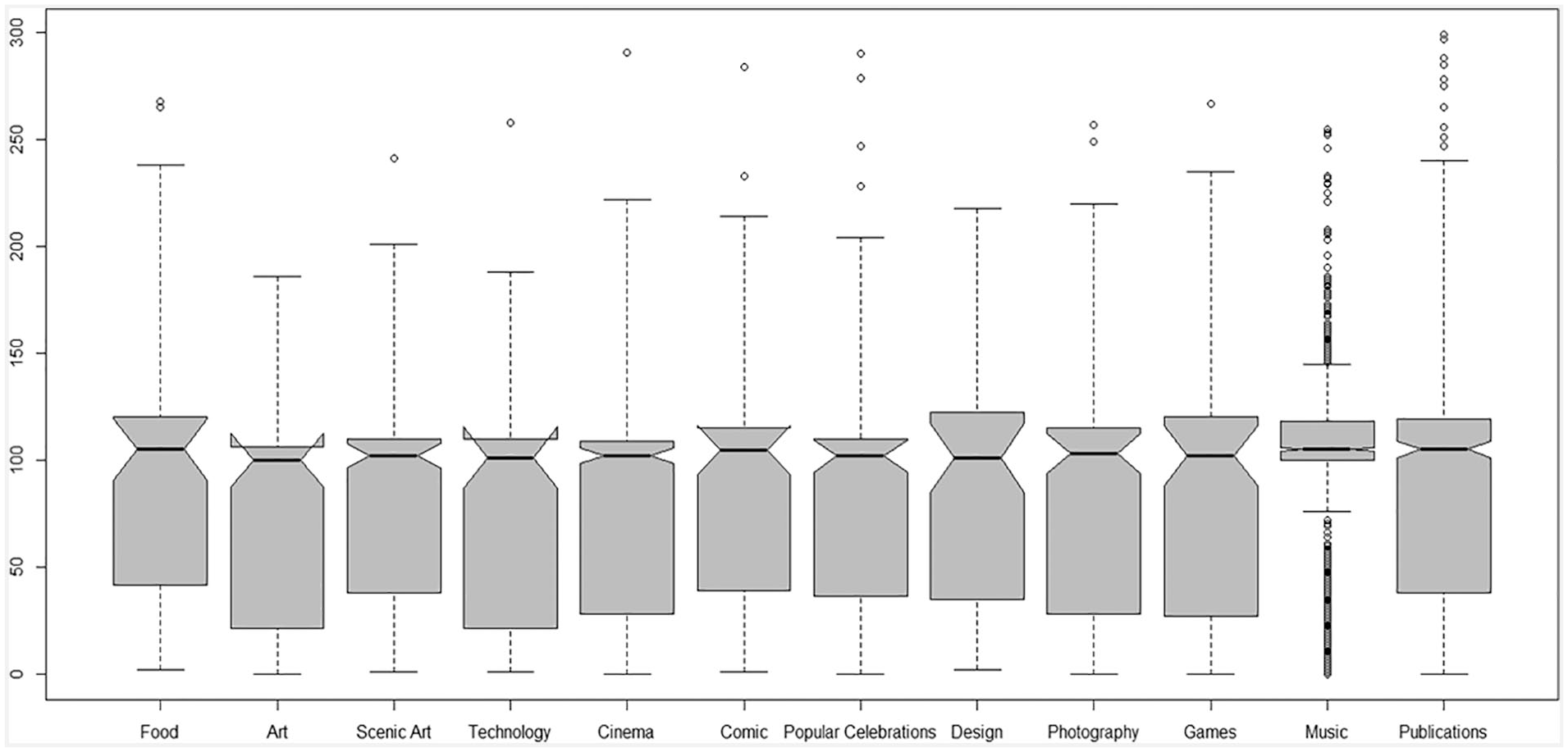
Ratio of achievement, boxplots by project category.
In our case, we can observe that medians overlap for most categories, that is, differences in median are not statistically significant. In addition, the ratio of achievement distributes similarly across categories, with the exception of music, for which we find a highly concentrated distribution around the median and several outliers. Interestingly, our econometric strategy is particularly powerful to provide consistent estimates in the presence of outliers.
Models and econometric strategy
Considering the variables described in section “Variables,” we estimate several econometric specifications. We first report results for simple models in which our variables of interest are included separately. After that, all the independent and the control variables are included together. The most comprehensive version can be specified as follows

where
We used different estimation alternatives, including ordinary least squares (OLS) and QR. OLS estimates yield, ceteris paribus, the average effect of the independent variables on the dependent one. While the average impact is an interesting result, it might be the result of contrary impacts on other parts of the distribution far from the average. In our case, it would imply that the effect of the independent variables differs depending on the ratio of achievement of the project. This concern is particularly relevant in our context, since the distribution of the dependent variable is heavily non-normal and exhibits a clear bimodality. In Figure 1, low ratios of achievement correspond to the lower tail of the distribution, whereas high ratios to the upper one.
In order to address this potential shortcoming, we run QRs, able to provide different estimates
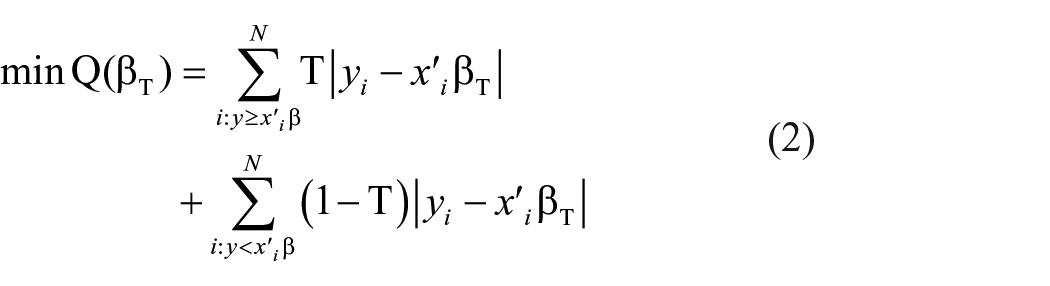
where T in the interval [0, 1] stands for a specific quantile. Equation (2) is optimized by linear programming since it is not differentiable. Each
It is worth noting that results from QR are not equivalent to those obtained from separate OLS regressions for specific quantiles, which would necessarily imply subsampling. First, the estimation procedure is different from OLS. And second, the QR estimation procedure always considers the entire distribution and the whole sample. For instance, when providing estimates for a quantile in the low tail, let us say, Τ = 0.1, it still considers the rest of the distribution, that is (1 − Τ) = 0.9 (see Equation (2)).
Finally, in order to test whether the effects significantly differ across quantiles, we perform tests for the equality of the estimated coefficients. The tests are applied to compare entire estimations, that is, whether the estimated effects for all the regressors jointly considered for a particular quantile are actually different from those for another quantile, and for individual regressors, that is, if the estimated effect for a particular variable differs across quantiles.
Results
This section provides the results from our estimations. Results for OLS regressions are available in Table 4. Despite the correlation matrix in Table 2 suggests that there are no multicollinearity problems, as explained in section “Models and econometric strategy,” we include the independent variables sequentially to analyze their relationship with the achievement ratio in simple models. The results from these regressions indicate that all of them are positively related to the ratio of achievement, although all they have a limited explanatory capacity individually considered. However, although informative, these simple models might be biased insofar as the rest of the independent variables are not accounted for. Accordingly, the last columns in Table 4 include all the variables together, adding also the control variables in the last one. In these models (Models 6 and 7), the results are different. Even though correlations between variables are relatively low, once included together some significant effects disappear.
Determinants of the ratio of achievement, OLS estimates.
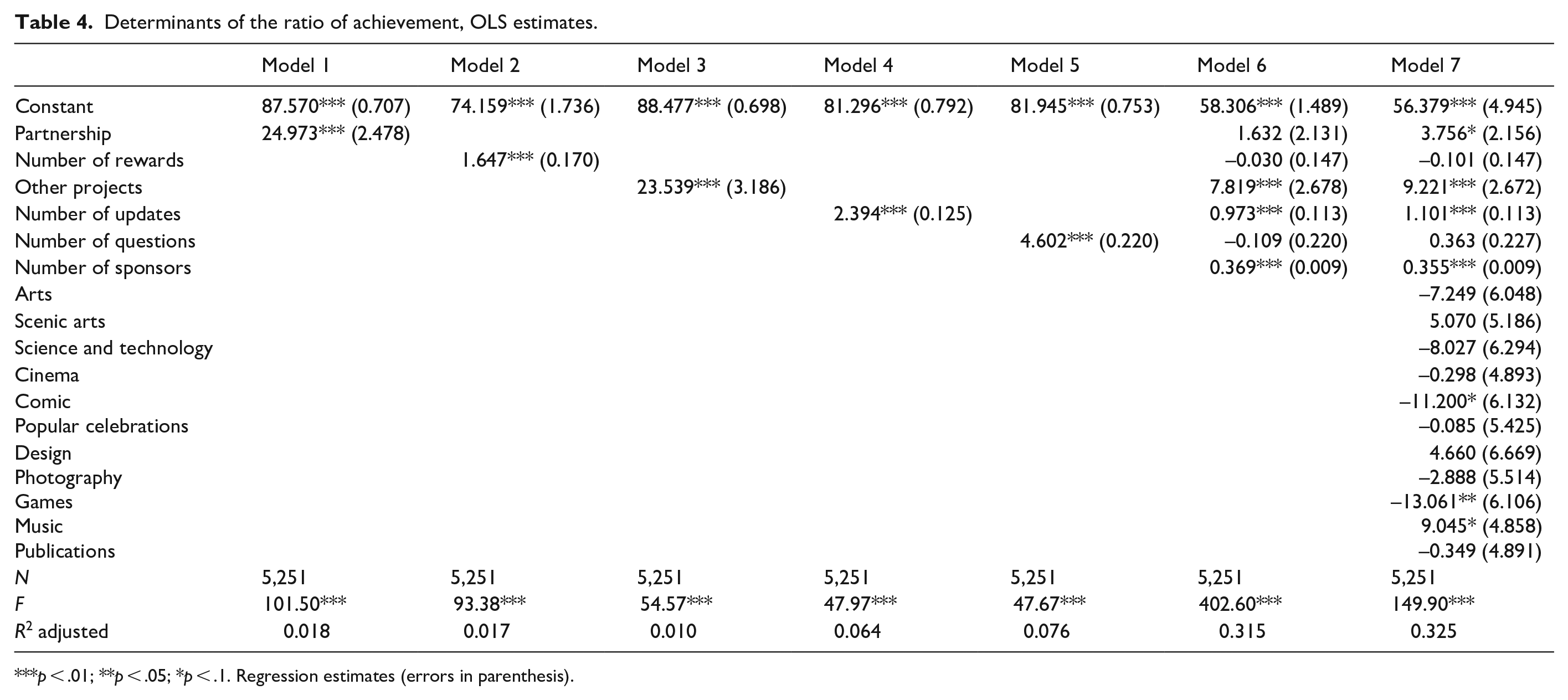
***p < .01; **p < .05; *p < .1. Regression estimates (errors in parenthesis).
Considering Model 6, we find a significant positive coefficient for having other projects in the platform, the number of updates and the control variable number of sponsors. However, the number of rewards, partnership and the number of questions are variables no longer nonsignificant. Focusing on the most comprehensive Model 7, the only difference is that partnership recovers significance. The explanatory capacity of the model barely increases and only the categories comic, games and music show statistical differences compared to the base category food. This is an expected result, given that the boxplots of the descriptive analysis showed only slight differences in the median rate of success across categories. According to these results, hypotheses H1, H3 and H4.1 are confirmed, whereas hypotheses H2 and H4.2 are not supported.
Regarding QRs, these were performed for the most comprehensive model, including the control variables (Model 7). 6 Results are reported in Table 5, including estimates for quantiles 0.10, 0.25, 0.50, 0.75, and 0.90 in the attempt to capture different parts of the distribution from the left tail (quantile 0.10) to the right tail (quantile 0.90), corresponding to low and high ratios of achievement, respectively. The table also reports the goodness of fit (pseudo R2) by quantile. 7
Determinants of the ratio of achievement, QR estimates.
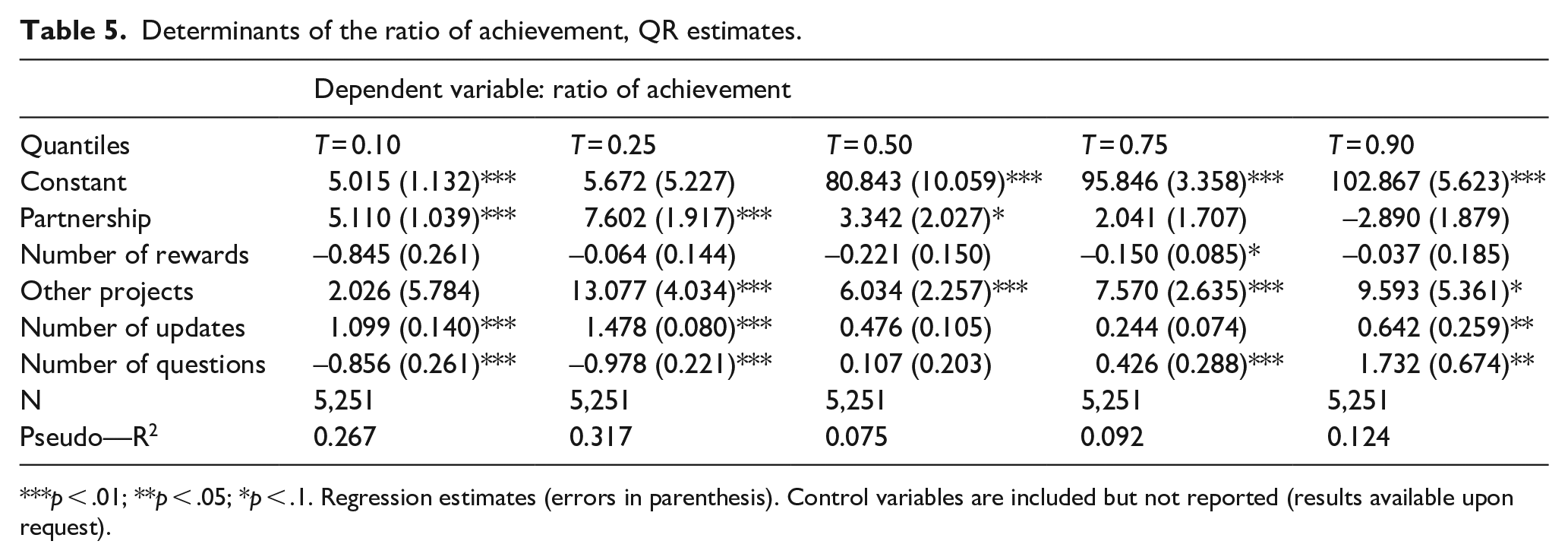
***p < .01; **p < .05; *p < .1. Regression estimates (errors in parenthesis). Control variables are included but not reported (results available upon request).
As it can be observed, there are remarkable differences in terms of both the magnitude and the significance of the coefficients across quantiles. This suggests that the average effects estimated via OLS are far from capturing the effects for those projects far away from the mean value, which are many in our sample (see again Figure 1).
These results are complemented with Figure 3, displaying results for the 100 percentiles of the dependent variable, thus providing a continuum of estimates. In the plots, the estimated magnitude for the parameters (
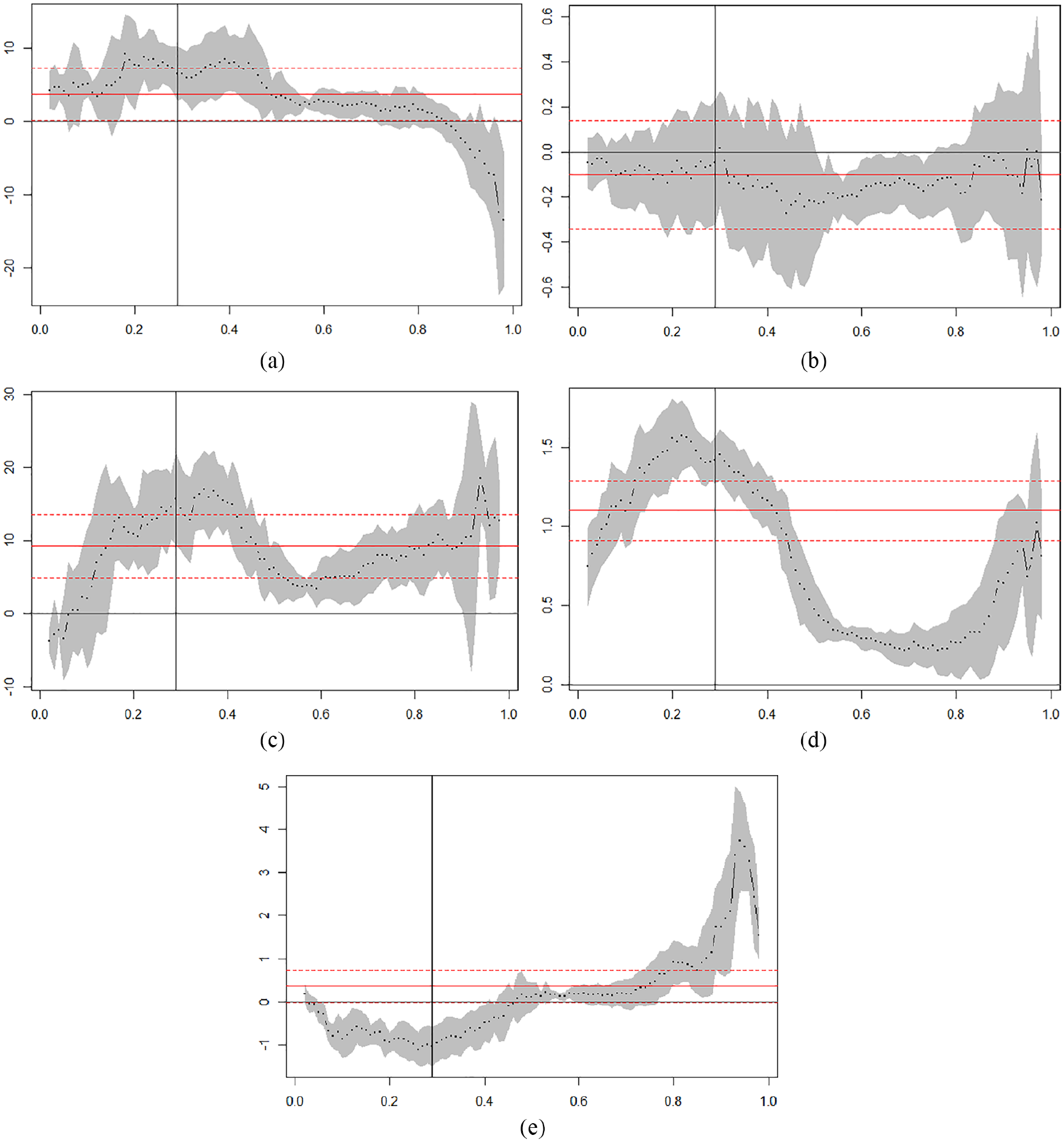
Determinants of the ratio of achievement, quantile regressions: (a) Partnership, (b) Number of rewards, (c) Other projects, (d) Number of updates and (e) Number of questions.
We start by describing the results for partnership, whose effect is positive and relatively stable until quantile 0.45. After a decline for projects in the interval 0.45–0.60, the effect remains only weakly significant, not being different from zero for projects in the highest quantiles. Therefore, we may conclude that, in line with what was suggested in H1, having a partner is especially rewarding for projects with low and medium ratios of achievement, while highly successful projects do not depend on partnership.
Regarding the number of rewards for the backers, we find a nonsignificant effect across the whole range of quantiles, in line with the OLS result. This suggests that the reasons to support a project are beyond pure material rewards, thus concluding that H2 is not supported.
Having experience in the platform, proxied by the existence of other projects by the same promoter, follows a fuzzy trend. It is nonsignificant for projects with the lowest ratios, but the effect increases remarkably between quantiles 0.2 and 0.4, therefore being a booster for projects with relatively low ratios of achievement, supporting H3 for those particular cases. Then, a decline in the impact is observed until quantile 0.6, followed by an increasing effect. Then, we might argue that both low-medium and highly successful projects are those benefiting the most from having experience in the platform. In the first case, the success may critically depend on this factor, whereas in the second, the experience might reinforce the project performance even additional resources are no longer necessary.
Considering the number of updates, the results show an increasing positive trend until approximately the threshold point. Then, we observe a progressive decline in the effect, although always positive until quantile 0.8, when again there is a tendency shift. In any case, updates are particularly relevant for low ratios of achievement. This might be associated with the idea that the effort of the developers is especially relevant for ratios of achievement around the critical threshold of success/failure. For successful projects, the number of updates is still positive but the effect is clearly lower. Finally, highly successful projects benefit from updates with increasing magnitude but far from the size found for projects around the threshold point. According to these results, H4.1 is supported in most quantiles.
We finally consider the number of questions, for which the OLS estimation predicts a nonsignificant effect. In contrast, QR yields a significant negative coefficient until quantile 0.5. Beyond that point, the impact is not different from zero until high rates of achievement, around quantile 0.8. These results are interesting and clarify the ambiguous result provided by the OLS estimations. In particular, the negative effect of the increase in the number of questions for low ratios of achievement might be highlighting shortcomings or weaknesses of the projects as, for instance, lack of clarity and serious doubts/concerns from the backers. In contrast, for highly successful projects, the questions are perhaps more related to particular attributes that make the project interesting and reinforce its value, and the effect found is positive. Consequently, H4.2 is supported for high ratios of achievement (high-end quantiles) and not supported for low ratios of achievement (low quantiles).
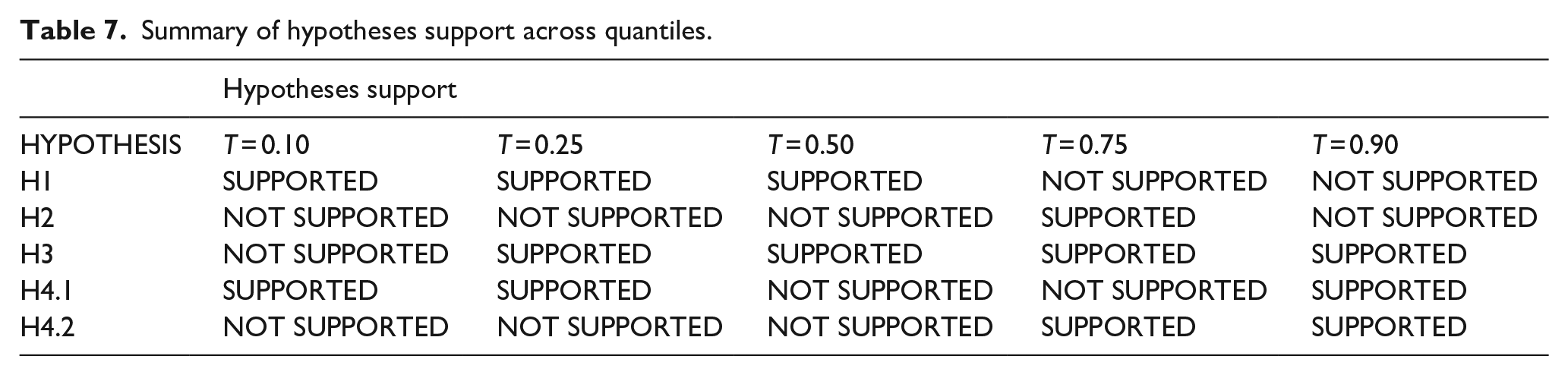
The equality of the estimated coefficients for the selected quantiles is formally tested in Table 6. The null hypothesis of equality is rejected for most comparisons, with logical exceptions for cases in near quantiles, cases with low variation along quantiles, or for comparisons of fuzzy tendencies with similar effects for low and high quantiles. The table also provides the F-statistic for the joint test, comparing the join model across quantiles, and showing that in all cases estimations statistically differ. In Table 7, we summarize the hypotheses support across quantiles.
Anova tests for the equality of estimates across quantiles.
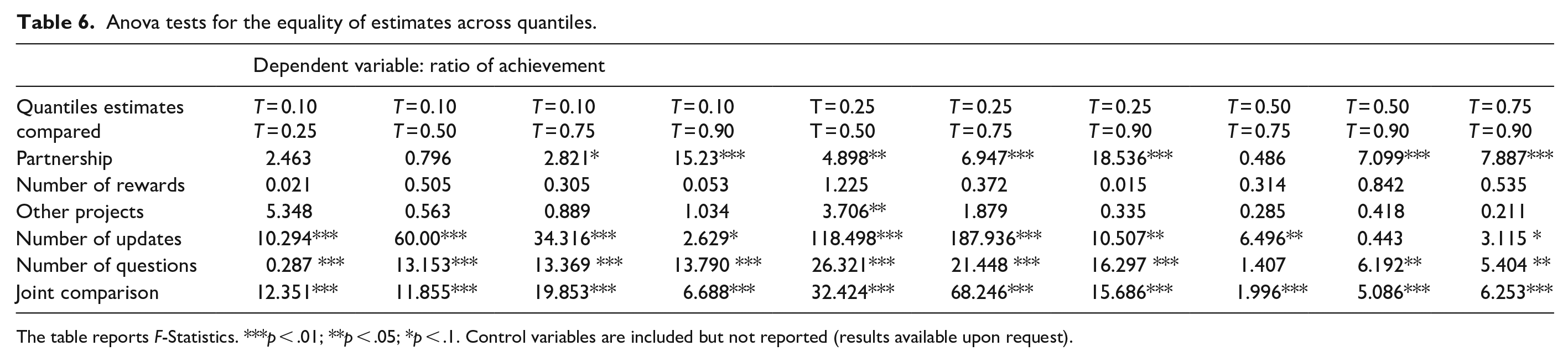
The table reports F-Statistics. ***p < .01; **p < .05; *p < .1. Control variables are included but not reported (results available upon request).
Summary of hypotheses support across quantiles.
Discussion and conclusion
This article provides evidence on the fundamental issue of the determinants of success of crowdfunding projects. Taking into consideration previous research (Butticè et al., 2017; Courtney et al., 2017; Lagazio & Querci, 2018; Mollick, 2014), we considered some potential determinants of success for a large sample of projects from the Spanish platform Verkami. Apart from providing results for a different platform (most research used other platforms such as Kickstarter or Indiegogo), the main novelty of this article comes from the measurement of the performance of projects with a continuous ratio instead of the more common dichotomous variable failure/success.
The econometric techniques applied enabled for a better understanding of how the determinants of success affect projects in different stages of performance. The main results confirm previous findings, although our analysis expands the understanding of the determinants of success offering a more detailed perspective.
Findings from ordinary least squares regressions show a positive effect for partnership, experience in the platform and project updates, whereas no effects are found for the number of rewards and the number of questions raised. However, QRs show that some of the average OLS predictions are not supported for projects far away from the mean performance. In fact, the average prediction is driven in most cases by opposite tendencies for different quantiles. Results also suggest that the effects are more intense around the threshold that separates failed from successful projects. We generally observe that factors lose importance for middle and middle-high ratios of achievement, whereas for highly performing projects the effect of most of the analyzed factors increases again.
The results provide interesting insights for both entrepreneurs that aim at obtaining funding and platform managers who want to improve the quality of their services. In relation to the platform and in line with Courtney et al. (2017), our findings show how the partnership program is quite interesting in order to enhance the achievement ratio. Accordingly, developing the portfolio of partners and designing mechanisms that enable the establishment of relationships between project promoters and partners might be a good strategy.
In the same vein, we might suggest three main ratios of achievement that deserve a special consideration: low, middle, and high quantiles, represented by ratios of achievement below 50%, 85% to 100% and over 120%, respectively. Indeed, the importance of partners is particularly interesting from the point of view of the platform as they impact more intensely those projects that are on the edge of success (85% to 100%). Thus, caring for this feature may have a positive impact on the overall ratio of achievement of the platform. Furthermore, in line with Butticè et al. (2017), the results also support the positive role of the experience. Therefore, the platform should consider management initiatives that strengthen the presence of experienced promoters, for instance, with loyalty programs for promoters that encourage them to participate in successive projects.
From the point of view of the project promoters, the most important goal when a project is launched is to make it possible. Understanding success as a continuous process in which the project starts from zero funds (lowest quantile), the promoters can shift their attention to different factors as the ratio of achievement evolves and potentially increase their odds to achieve the financial target.
Project developers should pay attention to the positive effects of both the partner prescription and the promoter’s previous experience, in line with Butticè et al. (2017) and Courtney et al. (2017). The prescription of a partner considerably increases the chances of success and it seems advisable to maximize efforts to get their support. This will also enhance the communication and promotion channels of the project during the campaign period. With regard to experience, the aim would be to maximize its potential for recurrent developers and to try to obtain alliances with experienced developers for the case of inexperienced entrepreneurs, in line with Lagazio and Querci (2018) and Courtney et al. (2017).
In addition, projects around the success threshold benefit the most from the positive effects of the number of updates. Thus, keeping the audience posted on the project updates seems an appropriate strategy. Furthermore, once the main target is achieved, maximizing the ratio of achievement seems to be tied with the positive effect of the number of updates too.
Among the potential factors that may jeopardize the project success, the promoters should focus the attention on the questions raised by the backers. This is especially relevant for projects in the first stages, when questions have a negative impact. Detecting possible deficiencies in the project communication and solving them quickly can be key for success. Conversely, questions might become a good ally to maximize financial resources due to their positive influence for the highly successful projects and promoters should carefully consider them in that phase.
These findings have certain limitations, some of them related to the individual case study, and we then recommend to be cautious about the generalization of the results. In consequence, an extension of the study to cover additional platforms could be interesting. In addition, we faced important limitations to obtain more potential determinants of success. The variables used are those available at the platform and they are well-grounded in theory and widely used in previous works, although we acknowledge that other factors such as the socioeconomic context, social capital, or the availability of alternative sources of funding can influence crowdfunding initiatives.
Moreover, the concept of success itself deserves more attention, as it is not constrained to financial performance. For instance, some authors have identified project initiatives that use crowdfunding platforms as part of their marketing campaigns (Brown et al., 2017). Other elements of success are related to the promoter’s capacity to deliver the rewards (Mollick, 2014). These are some of the areas where future contributions may shed some light.
Footnotes
Authors’ note
The database used for the elaboration of this manuscript is fully available upon request.
Declaration of conflicting interests
The author(s) declared no potential conflicts of interest with respect to the research, authorship, and/or publication of this article.
Funding
The author(s) disclosed receipt of the following financial support for the research, authorship and/or publication of this article: This research was funded by Universitat Jaume I under Grant [UJI-B2018-29] and by the Spanish Ministry of Science, Innovation and Universities under Grants [RTI2018-100823-B-I00] and [ECO 2017-85746-P].