




Abstract
Crowdfunding has been proclaimed as a new fundraising channel offering multiple benefits to artist-entrepreneurs, yet its use has been surprisingly underwhelming. The study examines the determinants of artist-entrepreneurs’ intentions to use crowdfunding in fundraising for their projects. It does so by suggesting and testing a model combining classical antecedents of intentions adopted from the theory of planned behaviour (i.e., attitudes (ATT), subjective norms (SUBN), perceived behaviour control (PBC), and self-efficacy (SELE)), and aspects specific to creative and artistic work (i.e., conventionality of creative work and the size of existing fanbase (FAB)). The analysis employs survey data collected from artist-entrepreneurs in Norway. Findings show that while ATT towards crowdfunding and SUBN are positively associated with crowdfunding intentions, SELE and PBC are not. Moreover, non-conventionality of creative work and FAB are positively associated with SELE and PBC, though they are not significantly associated with ATT and SUBN. These results remain stable even when controlling for sub-sectoral affiliations of artists based on the type of creative work they do.
Introduction
Cultural crowdfunding (hereafter ‘CCF’) is “the use of crowdfunding for the financing of production, distribution and consumption of cultural expressions” (Rykkja et al., 2020a: 425). Crowdfunding is a fundraising mechanism where projects are funded by collecting small amounts from many contributors (Belleflamme et al., 2014). Its modern manifestation takes place over the internet and often without the involvement of traditional financial intermediaries (Mollick, 2014), hence allowing for potentially greater scale, speed and scope than those afforded by traditional fundraising channels.
Crowdfunding serves as an umbrella term covering a variety of fundraising models ranging from non-investment (such as reward, donation and patronage) to investment types (such as equity, lending and revenue-sharing) (Shneor, 2020). Accordingly, its use is associated with different benefits often going beyond finance, including achievements of market validation and legitimacy (e.g. Chen, 2022; Frydrych et al., 2014), brand awareness and promotions (Brown et al., 2017), collection of inputs for product development (e.g. Brem et al., 2019; Quero and Ventura, 2019) and building a community of consumers (e.g. Chaney, 2019; Sabia et al., 2022), among others.
Specific to CCF, a large-scale study in Europe revealed that most artists experienced crowdfunding as generating benefits beyond financing that include audience development, community engagement, own skill development, self-promotion and enhanced understanding of the market (De Voldere and Zeqo, 2017). Other studies have highlighted the benefits of co-creation with followers (Butticè and Noonan, 2019; Quero et al., 2017), the build-up of fan communities (Galuszka and Brzozowska, 2016), improve control over and returns from produced works (O’Dair and Owen, 2019; Whitaker and Kräussl, 2020), as well as brand development effects (Rykkja and Hauge, 2021).
Thus far, research on CCF reveals a strong preference for non-investment crowdfunding models among artists, with only a small minority exploring investment-type fundraising options (De Voldere and Zeqo, 2017). Furthermore, despite standing at the forefront of crowdfunding development during the industry's earlier years (Moritz and Block, 2016), the cultural and creative industries (hereafter ‘CCIs’) seem to be lagging and underperforming vis-à-vis their crowdfunding potential in more recent years (De Voldere and Zeqo, 2017; Lazzaro and Noonan, 2021). This manifests mostly in small-scale fundraising involving relatively low sums of less than EUR 7000 on average (De Voldere and Zeqo, 2017).
This situation stands at odds with the view of crowdfunding as a potential solution to inherent inefficiencies in CCI markets related to suboptimal resource allocations, uncertain demand behaviour, different levels of willingness and ability to pay by prospective customers, high up-front costs, as well as low interest of commercial investors to pay for projects involving public goods (Handke and Dalla Chiesa, 2022; Loots et al., 2022). Moreover, crowdfunding is also argued to help overcome intensifying competition for public cultural grants in many countries (Boeuf et al., 2014; Inkei, 2019), experienced difficulties in access to funding (Dalla Chiesa, 2022; Demattos Guimarães and Maehle, 2022), and the resulting career and income uncertainties characterizing artistic work (Hesmondhalgh and Baker, 2010; Menger, 1999). Furthermore, crowdfunding can be viewed as being better in tune with the broader digital transformations of industry value chains and the changing nature of artist-fan relations (O’Dair and Owen, 2019; Quero et al., 2017; Thorley, 2012; Tosatto et al., 2021).
Despite significant gaps between promises and realities of crowdfunding use in the CCIs, only a few studies have attempted to explain such gaps. For instance, an analysis of the European cultural crowdfunding market identified several challenges associated with different stakeholders (De Voldere and Zeqo, 2017). It showed that crowdfunding platforms needed to improve transparency about their usage terms and fees; policymakers had limited awareness and understanding of how to treat and incorporate crowdfunding into the existing cultural policy and funding schemes; and prospective backers needed to be better ensured by all other stakeholders about the trustworthiness and integrity of crowdfunding transactions.
More specifically, when examining prospective fundraisers, De Voldere and Zeqo (2017) found artists had limited awareness and understanding of crowdfunding, as well as limited entrepreneurial competence necessary for successful crowdfunding practice. Even when using crowdfunding platforms, artists seem to lack the expertise to persuade people to participate and/or the will to accommodate prospective supporting fans’ needs in their creative work (Thorley, 2012). This led some to conclude that crowdfunding may better fit extrovert artists, but may be less suitable for introvert artists (Davidson and Poor, 2015). Nevertheless, there is a need for more research to understand crowdfunding adoption in the culture sector.
Accordingly, in the current study, we focus on crowdfunding intentions (CINTs), defined as an individual's perceived likelihood of using crowdfunding for funding their projects, while specifically answering: what drives CINTs among artist-entrepreneurs? We do so by suggesting and testing a model combining classical antecedents of intentions adopted from socio-psychological theory, and aspects specific to creative and artistic work. More specifically, we use the antecedents of attitudes (ATT), subjective norms (SUBN), perceived behavioural control (PBC) and self-efficacy (SELE) adopted from the theory of planned behaviour (Ajzen, 1991). We combine them with the aspects of conventionality vs. disruptiveness of artwork (O’Hagan and Neligan, 2005; Pompe et al., 2011) and the existence and scale of fandoms (Galuszka, 2015; Pearson, 2010), both deemed as important aspects specific to the culture sector.
The inclusion of conventionality of creative work as a potential determinant of CINTs is driven by the greater reliance of less conventional artists on public institutional sources of cultural funding (O’Hagan and Neligan, 2005; Pompe et al., 2011). Such dependency may hamper interest in exploring alternative funding opportunities, such as crowdfunding, which can be viewed as dependent on popular appeal and requiring greater promotional efforts. Furthermore, the inclusion of the size of an artist-entrepreneur's fanbase (FAB) as a potential determinant of CINTs is triggered by research showing that larger audiences are associated with higher earnings from online streaming of creative work (Elkins and Fry, 2022; Lu et al., 2021; Watson et al., 2023) and the increasing likelihood of successfully tapping into a sufficient base of crowdfunding backers from such audiences.
For this purpose, we analyse survey data collected from 171 artist-entrepreneurs in Norway, while using the SmartPLS software for PLS–SEM estimations thanks to its robustness when using smaller samples (Hair et al., 2019). Overall, several interesting findings emerge from these analyses. First, we show that while ATT towards crowdfunding and SUBN are positively associated with CINTs, SELE and PBC are not associated with intentions. Second, non-conventionality (NCON) of creative work and FAB size are positively associated with SELE and PBC, though they are not significantly associated with ATT and SUBN. And finally, our controls indicate that intentions are higher among those with prior crowdfunding experience, as well as among those who received funding in the form of public cultural grants in the past.
As such, the current study presents several contributions. First, it enhances the understanding of the determinants of CINTs of artist-entrepreneurs. This is accomplished through the use of planned behaviour theory, whereas earlier work has mostly focused on motivation (e.g. Dalla Chiesa, 2022; Di Pietro, 2021; Estrin et al., 2018; Gerber and Hui, 2013) and technology acceptance theories (e.g. Fanea-Ivanovici and Baber, 2021; Islam and Khan, 2019; Jaziri and Miralam, 2019). Specifically, we show that CINTs depend on favourable ATT and perceived encouragement from social circles. At the same time, both SELE and behavioural control do not influence intentions. Second, our study is the first to examine the potential roles of NCON of artistic work and the size of an artist's fan base, as aspects specifically relevant for the funding of creative work. However, we find they were only significantly associated with SELE and PBC and not with ATT or SUBN, hence also not exerting indirect effects on intentions. Finally, we show that our findings remain stable when controlling for sub-sectoral affiliation of artists, as captured by the type of creative work they engage in (i.e. music, literature, film, visual arts and performing arts).
More broadly, since fundraising is a fundamental action underlying the entrepreneurial venturing process (Kourilsky, 1995; Mazzarol, 2011), the current study presents valuable insights into aspects influencing fundraising entrepreneurs to use crowdfunding. It does so, while accommodating both cognitive antecedents of planned behaviour in combination with aspects particularly important for artist-entrepreneurs. Furthermore, the focus on artist-entrepreneurs represents a unique subset of entrepreneurs, which is characterized by limited awareness and understanding of crowdfunding (De Voldere and Zeqo, 2017) and hence representing an innovation, as well as being a group for whom striking a delicate balance between pressures to produce both artistic and commercial value is challenging (Haynes and Marshall, 2018; Thorley, 2012).
The following sections first review the literature on crowdfunding adoption by fundraisers in general, as well as artist-entrepreneurs more specifically. Next, a series of hypotheses outlining potential effects of psychological antecedents and aspects of cultural work on CINTs is developed. This is followed by a presentation of the methodological choices, conducted analyses and the study's results. Later, these are discussed, and potential contributions, limitations and implications are highlighted.
Literature review
Determinants of CINTs and use
For crowdfunding to function successfully, it needs to be embraced by both fundraisers and backers. Thus far, most research into the determinants of crowdfunding adoption has focused on the backers’ perspectives (e.g. Baah-Peprah, 2023; Baber and Fanea-Ivanovici, 2021; Kang et al., 2016; Miller et al., 2019; Shneor and Munim, 2019), with fewer studies examining fundraisers’ perspectives. Such interest may assume that an improved understanding of how to unlock resources from the crowd will naturally attract those who need such resources. However, resources will not be unlocked without concrete demands for them. And while needs are important, fundraiser engagement in crowdfunding involves potential reputational, plagiarism and financial risks (e.g. Bagheri et al., 2020; Gleasure, 2015; Islam and Khan, 2019; Lenart-Gansiniec and Chen, 2023) and hence cannot be taken for granted.
Studies examining the determinants of crowdfunding use by fundraisers primarily build on either motivation (Deci and Ryan, 1985), technology acceptance (Venkatesh et al., 2003), or personality (Boyle et al., 2008; John and Srivastava, 1999) theories.
Motivation theory suggests explanations for what drives human behaviour. Related research often outlines a distinction between intrinsic versus extrinsic motivation, highlighting that the former is driven by internal rewards (e.g. interest, satisfaction, etc.) while the latter by external rewards (e.g. praise, money, etc.) (Deci and Ryan, 1985). Accordingly, some studies examining determinants of crowdfunding use by fundraisers have identified extrinsic motivations such as financial needs, legitimacy needs, enhancement of branding and promotional effects, as well as network-building (e.g. Di Pietro, 2021; Estrin et al., 2018; Gerber and Hui, 2013; Junge et al., 2022; Lenart-Gansiniec and Chen, 2023; Maehle, 2020; Meghouar et al., 2023). Furthermore, and specific to equity crowdfunding, the needs for retaining ownership of ventures were also identified (e.g. Di Pietro, 2021; Estrin et al., 2018) as important considerations for crowdfunding use by entrepreneurs. The few studies that examined intrinsic motivations for crowdfunding use found that these were associated with interests in learning new skills (Dalla Chiesa, 2022; Gerber and Hui, 2013; Meghouar et al., 2023), a sense of enjoyment (Davidson and Poor, 2015), and a sense of achievement (Meghouar et al., 2023). Others created a typology of project creators based on their underlying motivations (Ryu and Kim, 2018). It distinguished between four types of fundraisers including the social entrepreneur (mainly driven by a prosocial mission), the fund seeker (mainly driven by financial needs), the indie producer (mainly driven by network- and relationship-building in addition to financial needs), and the daring dreamer (mainly driven by a sense of accomplishment and goal attainment).
Technology acceptance theory argues that users’ acceptance and usage of new technologies is primarily driven by perceptions of its usefulness and ease-of-use, which are in turn driven by several antecedents. These antecedents include subjective norms, job relevance, output quality, result demonstrability, image, experience and voluntariness among others (Venkatesh et al., 2003). Accordingly, studies building on this theory, showed that crowdfunding use by fundraisers was positively associated with perceived usefulness, performance expectancy and trust (Fanea-Ivanovici and Baber, 2021; Islam and Khan, 2019; Jaziri and Miralam, 2019).
Finally, personality theories include conceptual typologies of personality dimensions. Such typologies argue that individuals differ in composition and degrees of personality dimensions while creating unique personality profiles, which have implications for these individuals’ preferences and behavioural patterns (Boyle et al., 2008; John and Srivastava, 1999). Few studies have examined the role of personality traits on likelihood of crowdfunding use finding that it was more likely to occur among extrovert rather than introverted artists (Davidson and Poor, 2015), as well as among social entrepreneurs scoring higher on the conscientiousness personality dimension (Bernardino and Santos, 2016).
Characteristics of artist-entrepreneurs
Overall, most early studies on CINTs were conducted in the broad context of entrepreneurship without looking into sectoral particularities. Such consideration may be of special relevance in the CCIs, where the very notion of entrepreneurship is the subject of ongoing tensions. Reviews of these tensions (Bridgstock, 2012; Lindqvist, 2011) highlight that, on the one hand, there is a degree of agreement that both entrepreneurial and artistic careers imply challenging conventions through creative work, engaging in new venture creation, career self-management, being enterprising and playing unique roles in society. But, on the other hand, there is controversy surrounding a balance between artistic value creation (art for art's sake) versus commercial value creation (art for financial gain), and between creative independence and the extent to which consumers’ needs should be accommodated in creative work. These tensions underly challenges in negotiating career identities (Bass et al., 2015), especially when transitioning from amateurs to professionals (Dalla Chiesa, 2022).
Thus, artists often become ‘reluctant entrepreneurs’ (Haynes and Marshall, 2018) as a way to circumvent these challenges. This form of self-employment, also known as ‘artist-entrepreneur’, becomes a solution allowing to combine the pursuit of a professional artistic career with securing their autonomy, independence and the capacity to define one's own career path (Feder and Woronkowicz, 2022). Nevertheless, such form of entrepreneurship is more focused on subsistence than growth, where entrepreneurs are willing to accept limited finances as long as they could make a living from their passions (Jaouen and Lasch, 2013). Furthermore, artists’ emotional attachment to their own creative work, has led some to claim that they may experience the emotional exposure required in entrepreneurial venturing, as an even more significant challenge than efforts to raise funding (Brown, 2005).
In this context, empirical research comparing artists, entrepreneurs and other workers (Arenius et al., 2021) has shown that both artists and entrepreneurs exhibit higher degrees of risk tolerance, openness to experience and the extent of being driven by intrinsic motivations compared to other workers. However, they also showed some differences, where artists scored higher in creativity and emotionality compared to entrepreneurs and entrepreneurs exhibited higher degrees of self-efficacy and extraversion compared to artists.
Artist-entrepreneurs and crowdfunding
Use of crowdfunding poses some challenges for artist-entrepreneurs. First, it is forcing them to negotiate their identities as creators of high quality artistic work that also needs to meet market demand in the form of consumer preferences (Thorley, 2012), sometimes even involving consumers in co-creation activities (Butticè and Noonan, 2019; Demattos Guimarães and Maehle, 2022; Quero et al., 2017). Second, it also pushes artist-entrepreneurs to engage in business and marketing activities, which they often find less interesting and enjoyable than creative work (Haynes and Marshall, 2018; Lee et al., 2018). And third, artists with more emotionally driven and introverted personalities may experience crowdfunding as particularly taxing due to its requirement to publicly engage with multiple people about what the same artists consider intimate and emotionally laden self-expressions (Davidson and Poor, 2015), as part of the necessary trading of financial support in return for the artist's self-disclosure and direct interactions with others (Hair, 2021).
At the same time, crowdfunding presents great promise as a potential solution to various challenges faced by artist-entrepreneurs with respect to career and income uncertainties, growing competition for resources, inefficient allocation of resources, difficulties in access to funding especially for covering high up-front costs and digitally driven reconfiguration of value chains to name a few (e.g. Handke and Dalla Chiesa, 2022; Loots et al., 2022; Tosatto et al., 2021). Accordingly, the current study seeks to understand what influences the intentions of artist-entrepreneurs to take up crowdfunding as a fundraising channel for their creative work. For this purpose, a set of hypotheses is suggested linking classical antecedents of intentions (as adopted from the theory of planned behaviour) and the aspects of conventionality and fan base size, with CINTs.
Theory development
Theory of planned behaviour
Due to its relative novelty and based on the variety of benefits and risks associated with crowdfunding use, it may be assumed that fundraisers are unlikely to engage in crowdfunding campaigning without some preliminary consideration. Such a decision process is well in tune with the notion of a planned behaviour. The theory of planned behaviour (Ajzen, 1991) suggests that one's behaviour is preceded by the development of an intention to engage in such behaviour. And while, not all intentions necessarily translate into actual behaviour, meta-analyses of research on the link between intentions and behaviour have documented the prevalence and consistency of such association across studies (Armitage and Conner, 2001; Sheeran, 2002). Furthermore, the theory suggests that the antecedents of the intention to engage in a behaviour include the extent to which one views the behaviour favourably (ATT), one's perceived ability to engage in the behaviour (SELE), one's perceived control over the behaviour or its outcomes (PBC) and one's perceived encouragement from their close social circle to engage in the behaviour (SUBN).
Indeed, earlier research has adopted the fundamental arguments of the theory of planned behaviour in explaining a variety of behaviours, including those associated with online activities such as participation in online communities (Casaló et al., 2010), online social networking (Baker and White, 2010), e-commerce and shopping (Hsu et al., 2006), e-banking (Shih and Fang, 2004) and e-gaming (Lee, 2009), among others. In the context of crowdfunding, the theory has been used to explain backer behaviour intentions and behaviour (e.g. Baber, 2020; Kim and Petrick, 2021; Shneor and Munim, 2019), however, it has yet to be used for explaining fundraiser adoption of crowdfunding.
ATTs are an individual's overall subjective evaluation of potential outcomes of the behaviour and the extent to which they are considered as favourable (Ajzen, 1991). On the one hand, earlier research has shown that negative fundraiser ATT towards crowdfunding have presented barriers for its adoption. For example, the lack of faith in the effectiveness of crowdfunding expressed by Iranian tourism professionals (Bagheri et al., 2020) and the perception of crowdfunding as a signal of desperation by some UK-based entrepreneurs (Estrin et al., 2018), both represented a barrier for its use. On the other hand, positive ATT viewing crowdfunding as useful by Tunisian entrepreneurs (Jaziri and Miralam, 2019), as enabling successful fundraising by Bangladeshi entrepreneurs (Islam and Khan, 2019), as an opportunity to learn new skills by American entrepreneurs (Gerber and Hui, 2013) and as a more inclusive channel versus traditional financing by Indian micro-entrepreneurs (Kumra et al., 2021), all were positively associated with CINTs. Furthermore, artists with prior crowdfunding experience on the US-based Kickstarter platform who viewed the crowdfunding process as enjoyable also expressed intentions to use it again (Davidson and Poor, 2015). Hence, we hypothesize the following:
SUBN are an individual's beliefs about whether significant others in his or her social circle think he or she should engage in the behaviour under consideration (Ajzen, 1991). When brought into the context of crowdfunding fundraisers, an earlier study among Polish researchers showed that fear of being ostracized by peers for using crowdfunding was a hindrance for its use, while perceived acceptance of crowdfunding by the academic community was a driver for its adoption (Lenart-Gansiniec and Chen, 2023). A different study found that the lack of crowdfunding use by other businesses in the same sector deterred crowdfunding use among tourism professionals in Iran (Bagheri et al., 2020). Similar notions among Norwegian farmers were moderated when presented with the option of running joint campaigns with other farmers rather than individually (Kragt et al., 2021). Moreover, perceived encouragement to use crowdfunding from one's social circle was positively associated with CINTs of entrepreneurs in Bangladesh (Islam and Khan, 2019). Accordingly, the following hypothesis is suggested:
PBC was originally conceptualized as the ease at which one can perform a behaviour (Ajzen, 1991). However, later conceptualizations have recommended splitting it into two distinct concepts (Manstead and Eekelen, 1998; Terry and O'Leary, 1995). One is SELE, which is the individual's perception of the extent to which he or she has the capacity to perform a behaviour, while relating to internal sources of control such as ability, skills and motivations. The second is PBC, which is the individual's perception of the extent to which he or she has control over the behaviour and its outcomes, while relating to external sources of control such as task difficulty, authoritative sanctioning, access to resources, involvement of others, or luck.
When considering SELE, earlier research showed that perceived lack of knowledge about crowdfunding and competencies for using crowdfunding were identified as inhibitors of crowdfunding use by Iranian tourism professionals (Bagheri et al., 2020). At the same time, the extent to which Bangladeshi entrepreneurs considered themselves as skilled enough for using crowdfunding, was positively associated with their CINTs (Islam and Khan, 2019). Specifically in the CCIs, a European survey revealed that the lack of knowledge about the potential of crowdfunding was the most prominent barrier for its adoption (De Voldere and Zeqo, 2017).
When considering PBC, research showed that when crowdfunding was viewed as something relatively easy to use, the likelihood of its use increased both among Bangladeshi and Indian entrepreneurs (Islam and Khan, 2019; Kumra et al., 2021). However, the view of crowdfunding as too complicated and time consuming was provided as one of the main reasons for not using it by artists in Europe (De Voldere and Zeqo, 2017). Furthermore, concerns with insufficient support from crowdfunding platforms was also raised as an inhibitor for its use by UK-based SMEs (Estrin et al., 2018), while positive assessments of platform facilitating conditions were associated with CINTs in Bangladesh (Islam and Khan, 2019).
Accordingly, the following hypotheses are suggested:
Conventionality
For better anchoring the analysis in the realities of CCIs, we also considered conventionality in creative work. Non-conventional works are those that are considered innovative or ground-breaking in their respective fields (Becker, 1974). The current research views conventionality as the outcome of artist-entrepreneurs subjectively evaluating their artwork or creative outputs, as in line with earlier creative works (e.g. Austen-Smith, 1980; Pompe et al., 2011; Silver et al., 2022). Nevertheless, it is worth highlighting that the assessment of conventionality also depends on the assessors themselves, hence it is difficult to disaggregate the perceptions of conventionality of the artwork from the conventionality of its assessors.
In the context of cultural funding, non-conventional creative work was found to be heavily reliant on public funding while more conventional works rely more on sales and commercial sponsorships (Austen-Smith, 1980; O’Hagan and Neligan, 2005; Pompe et al., 2011). On the one hand, some argue that greater financial certainty leads to greater creative experimentation, while lower certainty leads to sticking to the better known and tested productions with wide-appeal (Austen-Smith, 1980). However, on the other hand, one can argue that artists engaging in less conventional artistic productions are more heavily dependent on public funding, since conveying value to prospective market supporters may prove more difficult, while more conventional works may be more easily understood and appreciated by market supporters.
The influence of conventionality on crowdfunding use remains unclear. On the one hand, there is alignment between popular appeal and reliance on a large scale of backers. On the other hand, the internet allows for scaling up niche interests in non-conventional works into a sufficient funding base. Furthermore, it is also uncertain whether co-creation opportunities generated by backer-fundraiser relations are more appealing to artists with more mainstream productions, or to artists that seek interactions facilitating experimentation and leading to less conventional creative outcomes.
Despite these uncertainties, we present the argument that crowdfunding will appeal more to artists that engage in less conventional creative work than those in more conventional work. First, less conventional artists will struggle to build sufficient followership via traditional channels and may therefore seek to leverage mechanisms like crowdfunding to reach online communities of like-minded people, regardless of physical location or existing social network relations (Hagel and Armstrong, 1997). Second, these artists may struggle more to finance their work under conditions of growing competition for limited sources of public funding (Boeuf et al., 2014; Inkei, 2019), while, at the same time, not having the necessary popular appeal for commercialization or attracting business sponsors. Finally, less conventional creators are challengers of conventions (Becker, 1974), and if popular convention in the arts is to rely on public funding, then grassroot democratization of arts funding through crowdfunding, when viewed as a way to circumvent the establishment, may appeal to them on a philosophical level.
Based on the above, we hypothesize that:
Since artists that produce less conventional creative outputs are more limited in their funding options, their close social circle is likely to encourage them to consider alternative funding channels like crowdfunding. People in an artist's social circle may genuinely support his/her creative work but have limited capacities to fully cover related expenses. However, when placed in the context of crowdfunding, allocating their limited resources via a crowdfunding campaign may have multiplication effects. Here, early backing can serve as signals of quality and credibility for unlocking resources from more distant and unrelated prospective backers. Indeed, earlier research shows that early support arrives from friends and family creating momentum and attracting new supporters from a wider social circle (Ordanini et al., 2011). Furthermore, once the campaign reaches critical mass, a herding effect may kick in either thanks to a growing sense of urgency for making-it-happen under an approaching deadline (Zvilichovsky et al., 2018), increased amount of information that becomes available in earlier interactions (Xiao et al., 2021), or mimetic behaviour for avoidance of a missed opportunity (Sabia et al., 2021). Accordingly, one can argue that less conventional creative work will require greater support from the artists’ social circle for triggering the herding and mimetic behaviour than in the case of more conventional creative outputs. In the latter, momentum can be built more easily, based on the popular appeal of the output, and hence depend less on support from immediate social contacts of the artist-entrepreneur. Hence, we hypothesize that:
If we assume that less conventional work is more likely to be produced by less conventional artists, one can draw on a meta-analysis of research at the intersection of creativity and personality traits. This research has shown that creative people tend to be less conventional, more open to new experiences, self-confident, self-accepting, driven, ambitious and dominant (Feist, 1998). Such traits fit with the demands of crowdfunding practice, in the sense of both accepting new methods of fundraising and projecting self-confidence in public. However, even when refusing to accept that less conventional artwork is more likely to be created by less conventional artists, due to the nature of their work, artist-entrepreneurs creating less conventional creative outputs may be more accustomed to dealing with challenging processes in getting their work funded. Such experiences may help them to develop and sharpen relevant marketing and promotional skills, thanks to being faced with growing competition for public funding and greater scepticism from risk-averse commercial sources. Additionally, less conventional work may make it easier to engage in critical strategic marketing activities such as highlighting of unique market positions and value propositions, developing unique brand identities, as well as defining relevant target audience segments (Colbert and St-James, 2014). On the other hand, artists engaged in more conventional productions may find it more difficult to identify unique market positions they can take, value proposition points they can offer and clear segments they can address.
Based on the above, we hypothesize that:
Fanbase
Another aspect which is unique for the CCIs context is the FAB. An artist's relationship with fans is an important aspect of creative work dissemination and development. Fans carry tight bonds with an artist they consider an idol and enjoy their idols’ achievements (Liang and Shen, 2016). According to Galuszka (2015), the digital age has brought about a new fandom economy, where fan communities are empowered to use social media in supporting, funding, communicating and co-creating with artists in more democratic ways, and often without the mediation of the traditional industry intermediaries. Therefore, fan communities can be mobilized to generate funds and word-of-mouth publicity, which has proven to be especially effective when allowing fan participation in creative processes (Booth, 2015), as well as in enhancing commercialization potential of produced works (Butticè and Noonan, 2019).
In crowdfunding, it remains unclear whether having a large FAB may increase interest in the use of crowdfunding thanks to relatively easy access to a potential pool of prospective backers, or whether it will serve as a deterrent due to greater fear of reputational damage in case of campaign failure. Similarly, it is uncertain whether having a small FAB may increase interest in crowdfunding thanks to the embedded opportunity to both raise funds and enlarge the artist's FAB, or whether it will reduce interest in crowdfunding due to fear of failure at critical stages of building an artist's reputation and followership.
Regardless, we present the argument that crowdfunding will appeal more to artists with a large FAB. First, artists with large FABs may feel better positioned to challenge costs of traditional cultural intermediaries by tapping into the disintermediation power of online platforms (such as crowdfunding service providers), which allow them to keep a larger share of the raised income (Thorley, 2012). Second, extroverted artists in particular, who thrive on fan attention, may view crowdfunding as an activity they can enjoy thanks to gaining inspiration and energy from interactions with multiple fans (Davidson and Poor, 2015). Finally, research shows that larger audiences are associated with higher earnings from online streaming of creative work (Elkins and Fry, 2022; Lu et al., 2021; Watson et al., 2023), suggesting greater likelihood of successfully converting enough consumers into crowdfunding backers by offering them access to similar services in return for campaign backing.
Based on the above, we hypothesize that:
An artist's social circle includes individuals that are likely to wish them well, but often have only limited capacities to support them financially. Earlier research has shown that family members, friends and acquaintances constitute an important group for funding artist-entrepreneurs’ crowdfunding campaigns (Dalla Chiesa, 2022; Dalla Chiesa and Dekker, 2021). Here, contributions that are made by this group take the form of symbolic support and loyalty signals (Shneor et al., 2023) rather than substantial material support. Indeed, crowdfunding campaign success has been found to depend on the extent to which artists can tap into wider networks beyond their family and friends (Davidson and Poor, 2016). When realizing scale potentialities in larger FABs, such friends and family members are likely to encourage artists to mobilize their FAB for fundraising. They do so when viewing the FAB as a wider base of resources for covering project costs, which goes beyond what they alone can offer from their own limited funds. Alternatively, since artists with larger FABs are also likely to be more experienced and established, suggesting that financial support from friends and family were already exhausted at earlier career stages and requiring them to expand their support base. Hence, an artist's close social circle may encourage him or her to seek funding from other sources, while pointing to the potential resources that may be unlocked from fans with whom the artist has already established trusting and adoring relationships. Based on the above, we hypothesize that:
Finally, having a larger FAB is also a testimony to the artist's habit and experience with engaging fans and developing a fan community, which can be viewed as the nurturing of social capital ready for mobilization (Tosatto et al., 2021). Moreover, having a large FAB may boost the artist's self-confidence and belief in his/her ability to raise sufficient funds from fans. Similarly, artists with larger FABs may view crowdfunding as less risky than those with more limited followership, assuming that contributions from only a small share of their FAB are needed to ensure a campaign's success.
Moreover, fundraising from a large FAB will allow artists to both maintain greater creative freedom in their work (Gamble et al., 2017) and retain greater shares of intellectual property rights (Gilbert, 2017), compared to contracts with traditional sponsors and commercial entities. Hence, overall, crowdfunding can be viewed as a way of funding and distributing their work while having better control over related processes than previously experienced under traditional value and distribution chains (Gerber and Hui, 2013; Thorley, 2012).
Accordingly, we hypothesize that:
Suggested model
All the hypotheses outlined above form one integrated model outlining the determinants of CINTs. Accordingly, Figure 1 summarizes graphically the model under investigation and its underlining hypotheses.
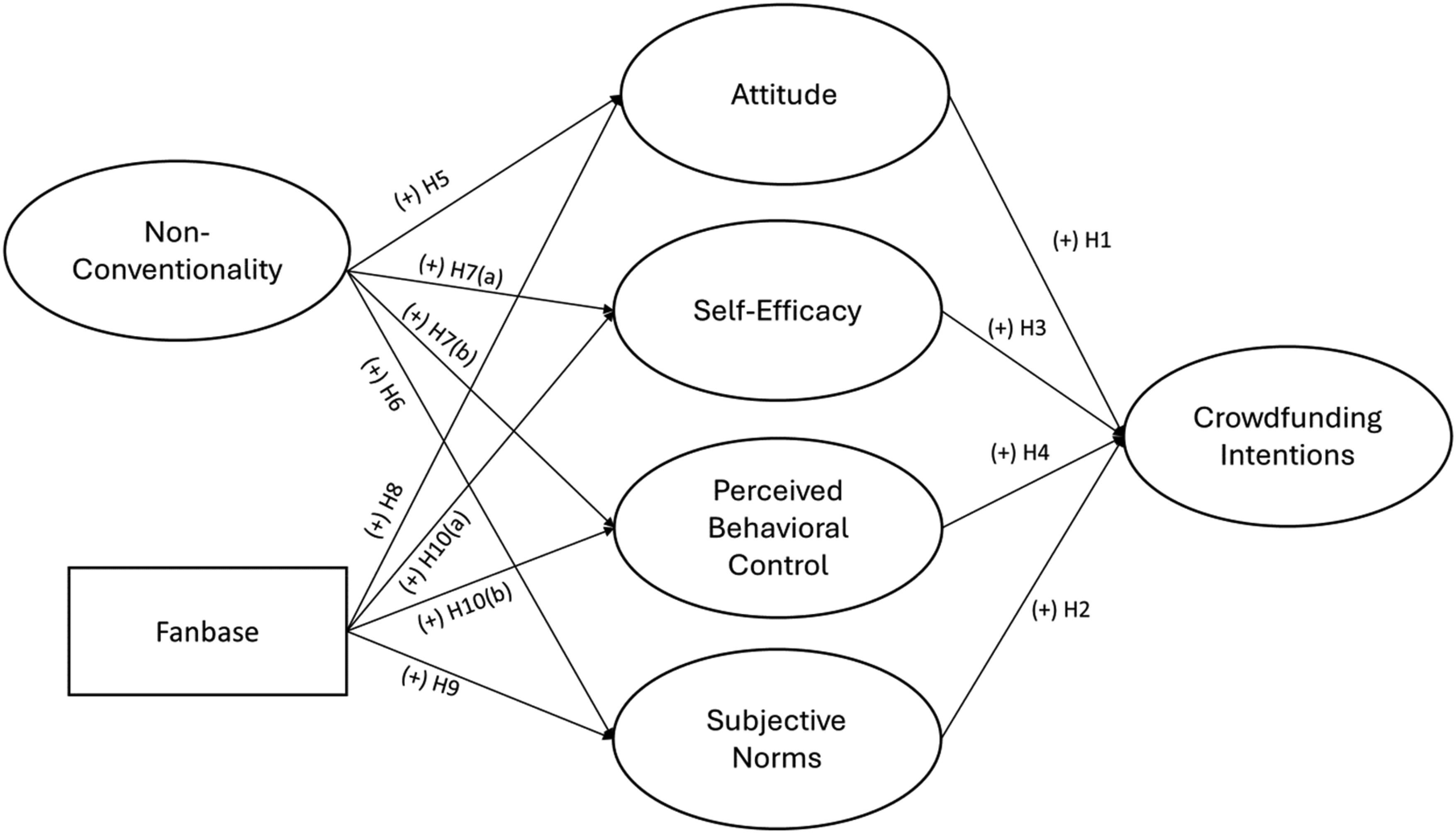
Suggested model of the determinants of artist's CINTs.
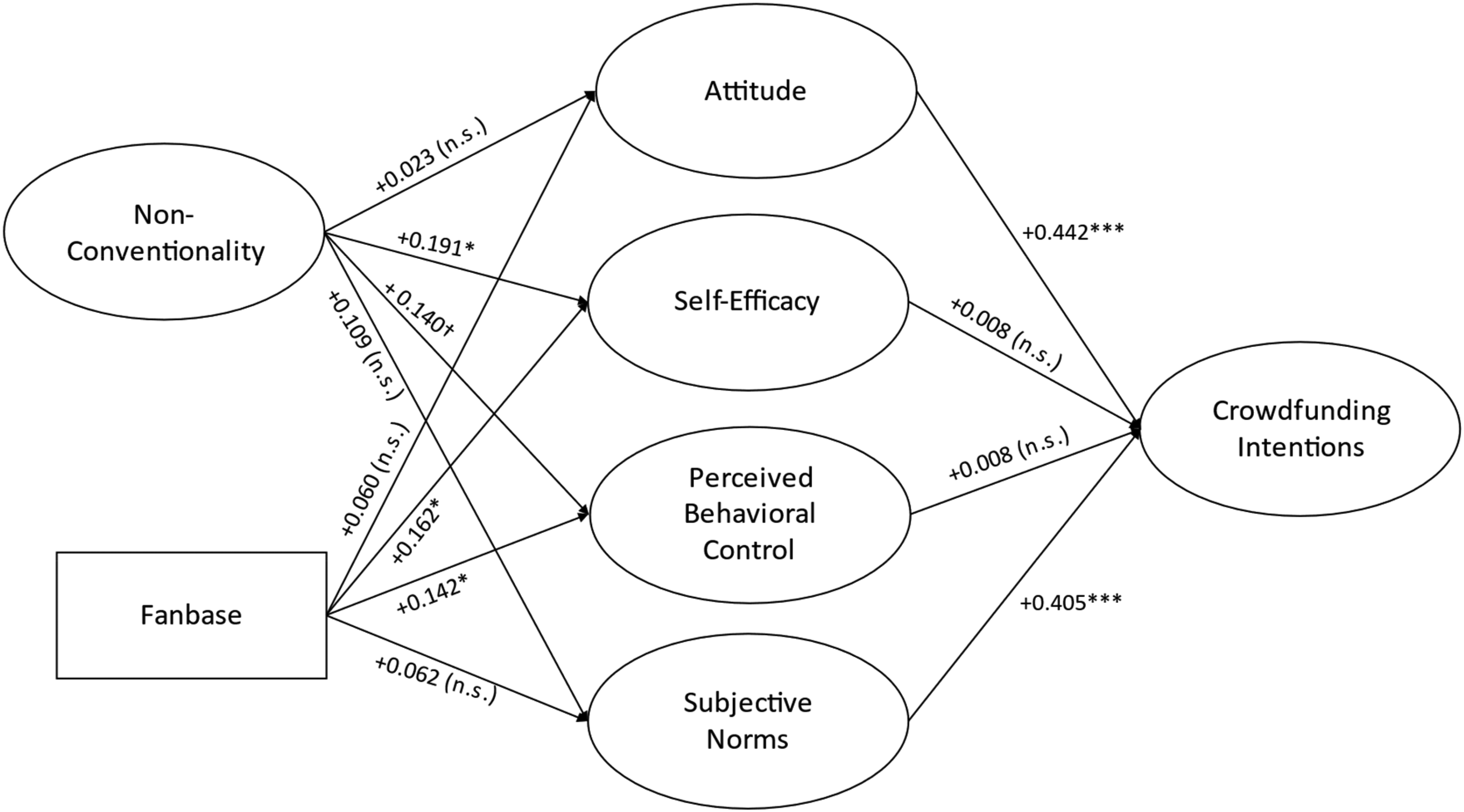
Results: determinants of artist's CINTs.
Methods
Context
To test the suggested hypotheses, data were collected from artist-entrepreneurs active in the CCIs in Norway. This context is of particular interest, as it represents long tradition of high reliance on public subsidies, relatively low levels of private financial support, a weak tradition of commercial sponsorship and a cultural sector that is largely sceptical towards market-oriented solutions for funding (Mangset et al., 2008). At the same time, most artists in Norway characterize their work as self-employment, while reporting lower incomes than others with similar levels of education (Askvik et al., 2022; Mangset et al., 2008). Moreover, crowdfunding in Norway has shown constant growth, growing tenfold from 2018 to 2022, while reaching over USD 240 million in volumes raised in all models. In addition, initial evidence concerning crowdfunding use by Norwegian artists revealed that music projects were the early adopters of crowdfunding in the cultural sector, while the largest sums raised were associated with computer games and design projects (Rykkja et al., 2020b).
Data collection
Data were collected via a web-survey using the SurveyXact system. In the absence of a central public registry of artists in Norway, the survey was distributed via multiple channels in parallel including: targeted ads on social media, fourteen different professional associations 1 , the researchers’ own networks, a list of artists created through own desktop search and art management and entrepreneurship courses in several institutions.
Overall, a total of 667 potential respondents opened the survey, but only 180 entries included complete data. After checking for monotonous response bias, nine observations were removed, as they were found to follow straight lining of answers and had a row-wise standard deviation value below 0.50 in ten or more consecutive measurement items. Thus, 171 observations were left for analysis, representing approximately a 24% response rate. Table 1 depicts the frequency distribution of the respondents’ demographics. Most of the respondents (74.85%) indicated having some knowledge about crowdfunding. Sex distribution among respondents was largely balanced with a slight female majority (54.39%). 83.63% indicated having at least a bachelor's degree level of education. And, in terms of sub-sectors, music is the most represented sector with 80 respondents (46.78% of the sample).
Survey respondents’ demographics.
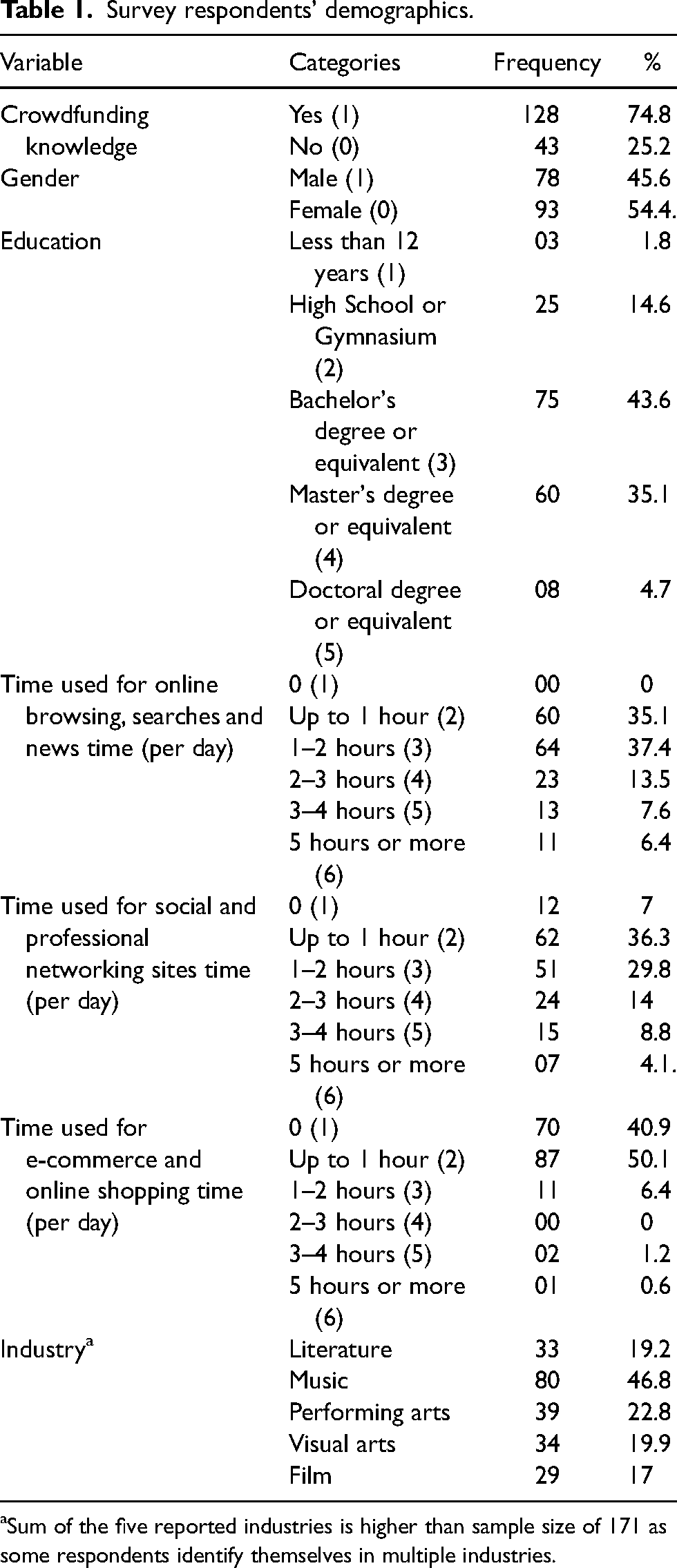
Sum of the five reported industries is higher than sample size of 171 as some respondents identify themselves in multiple industries.
Response bias check
Response bias arises in situations where there may be an unobserved systematic difference between those who participate in the survey and those who do not. Since data about non-participants is unavailable, approximation approaches are often used. The Wave-test is an approach to test for such potential bias (Armstrong and Overton, 1977). Following this approach, we divided the sample respondents into two sub-samples, one capturing the first 85 responders and the second capturing the last 86 responders. Then, we test whether these groups significantly differ from each other in terms of key background demographic variables using the independent-samples t-test. Table 2 reports the results of the Wave-test. Overall, there are no significant differences between the groups with respect to all variables. The exception here is with respect to time devoted for online networking, but even here the difference between 2.7 hours and 3.1 hours is not viewed as theoretically meaningful difference despite the statistical difference observed. Hence, no major issues of response bias are identified in our data.
Response bias test – results of the ‘wave test’.
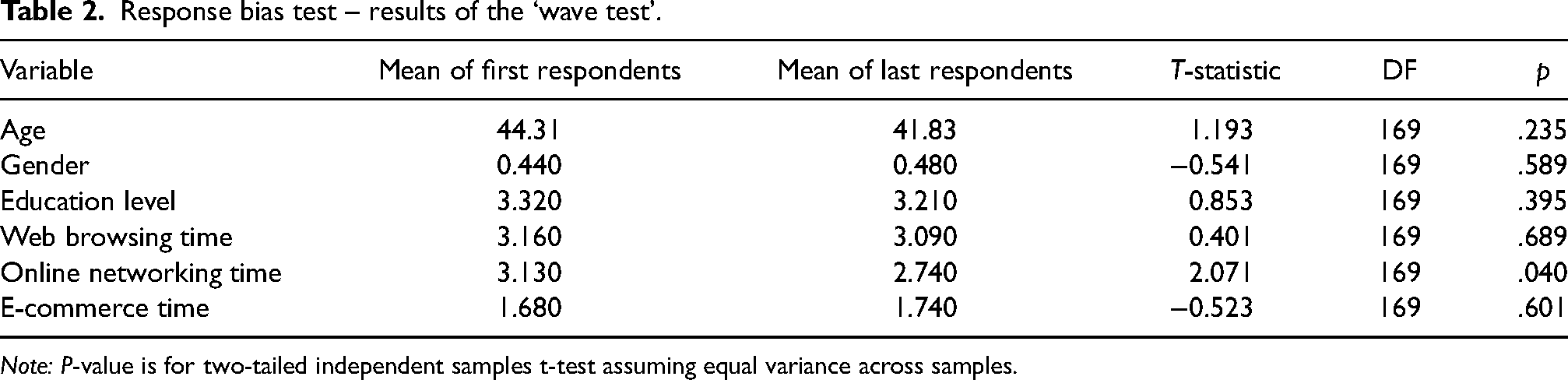
Note: P-value is for two-tailed independent samples t-test assuming equal variance across samples.
Measurement
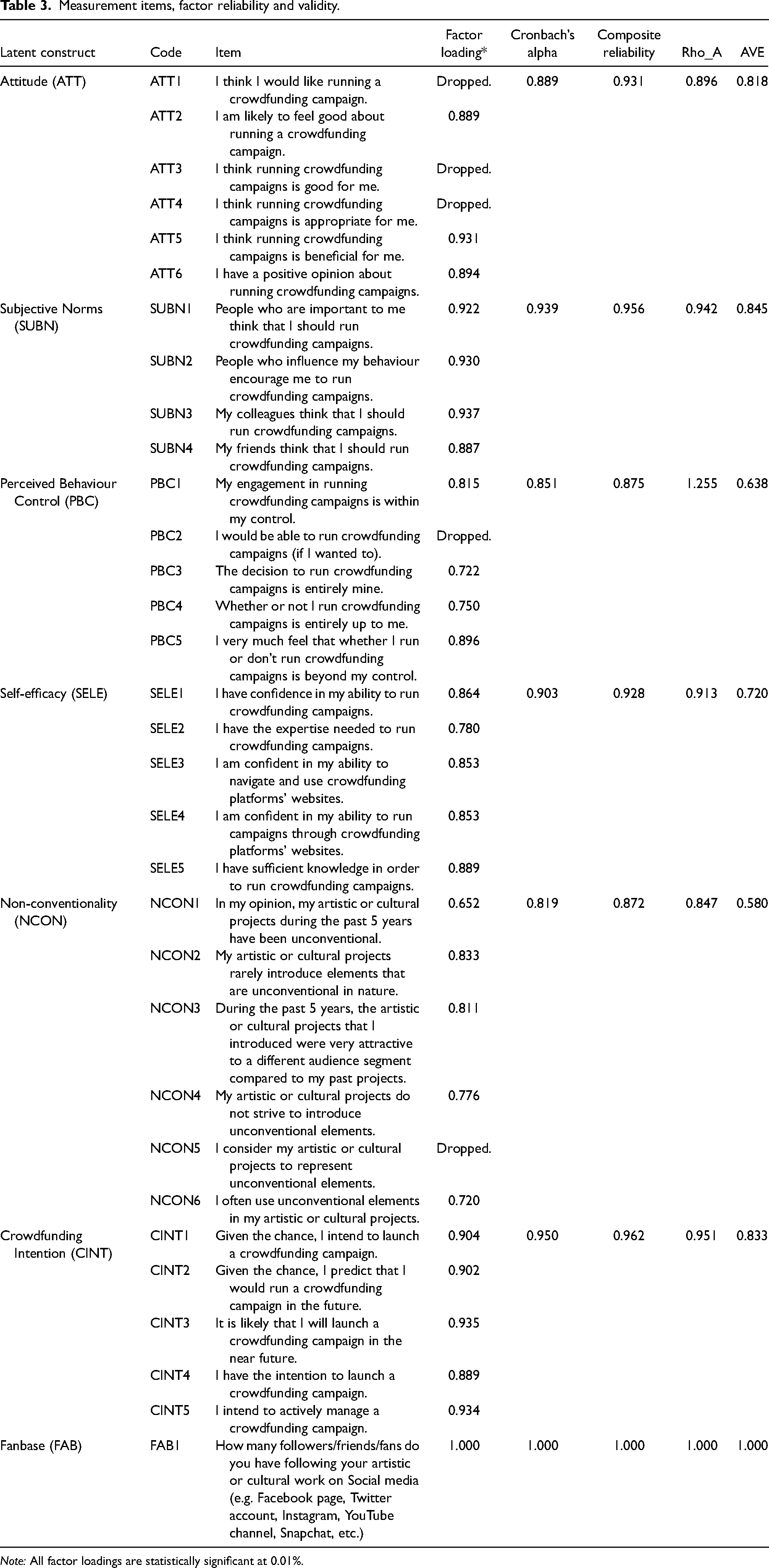
The measurement model in this study has been validated through confirmatory composite analysis (CCA). We use the partial least squares (PLS) estimation using the SmartPLS software. The PLS estimation is deemed robust when using smaller samples and certainly when using larger samples (Hair et al., 2019). The suggested model has eight latent constructs as reported in Table 3, each measured by multiple items and rated on 7-point Likert scale. The only exception is the single item to measure the FAB. It is based on a six-point ordinal scale capturing different numbers of followers on social media (1 denotes 0 followers, 2 denotes 1–100, 3 denotes 101–500, 4 denotes 501–1000, 5 denotes 1001–5000 and 6 denotes more than 5000 followers). Table 4 reports descriptive statsics for the model variables.
Measurement items, factor reliability and validity.
Note: All factor loadings are statistically significant at 0.01%.
Descriptive statistics of model variables.
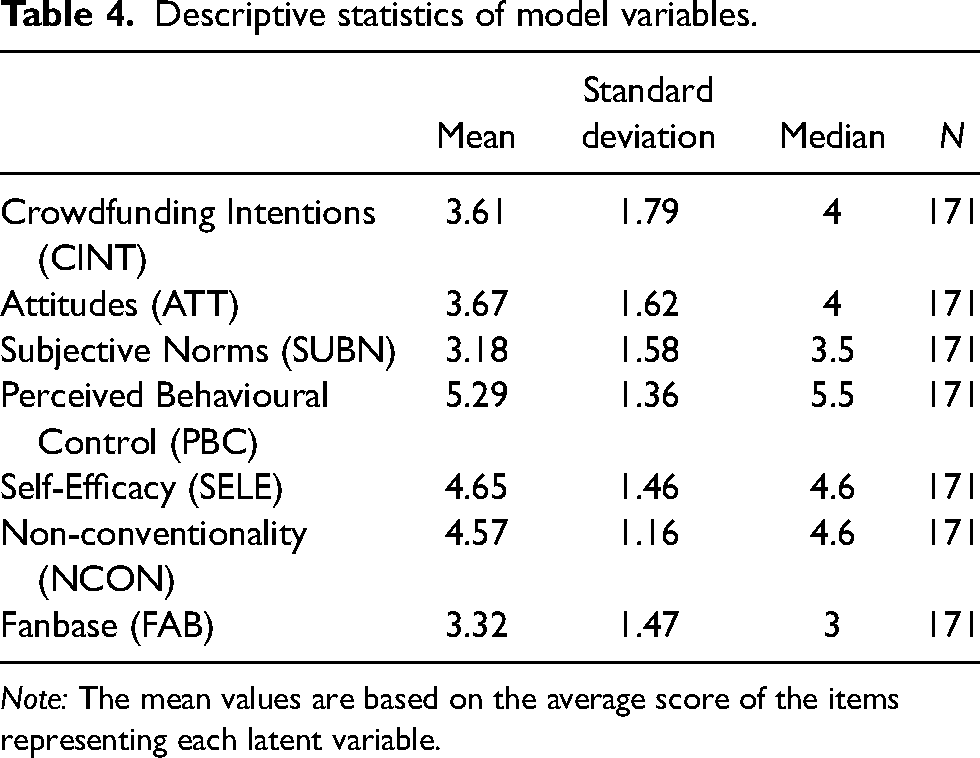
Note: The mean values are based on the average score of the items representing each latent variable.
Like most SEM studies, the measurement items of the latent constructs were adapted from previous studies and slightly adjusted to better relate to the crowdfunding context. First, our dependent variable, CINT, was measured using three items adopted from Pavlou (2003) and three items from Algesheimer et al. (2005).
Second, our independent variables included the following items. Measurement of ATT used two items adopted from Hsu and Lin (2008) and four items adopted from Hsu et al. (2006). Measurement of SUBN included two items from Hsu and Lin (2008) and two items form Hsu et al. (2006). Measurement of PBC included three items from Casaló et al. (2010) and two items from Hsu et al. (2006). Measurement of SELE included two items from Cheung and Lee (2012), two items from Hsu and Chiu (2004) and one self-created item. Measurement of NCON included three items of the disruptiveness scale from Govindarajan and Kopalle (2006) and three self-created items. And the FAB measure included self-created categories, capturing objective ranges of social media followers’ numbers. Items ATT1, ATT3, ATT4, PBC2 and DIS5 were dropped due to either low factor-loadings (less than 0.60 in CCA) or high levels of cross-loading across multiple latent variables.
Reliability and validity
To further confirm the acceptability of the measurement model, we check for reliability and validity of the latent constructs as reported in Table 3. All Cronbach alpha values are higher than 0.70. Moreover, the composite reliability and rho_A values are also higher than 0.70, indicating acceptable reliability of the latent constructs (Hair et al., 2019). Subsequently, convergent validity of the constructs is also confirmed, as all items loaded on their respective construct at 0.01% significance level (Anderson and Gerbing, 1988) and all latent constructs have Average Variance Explained (AVE) higher than 0.50 (Hair et al., 2019).
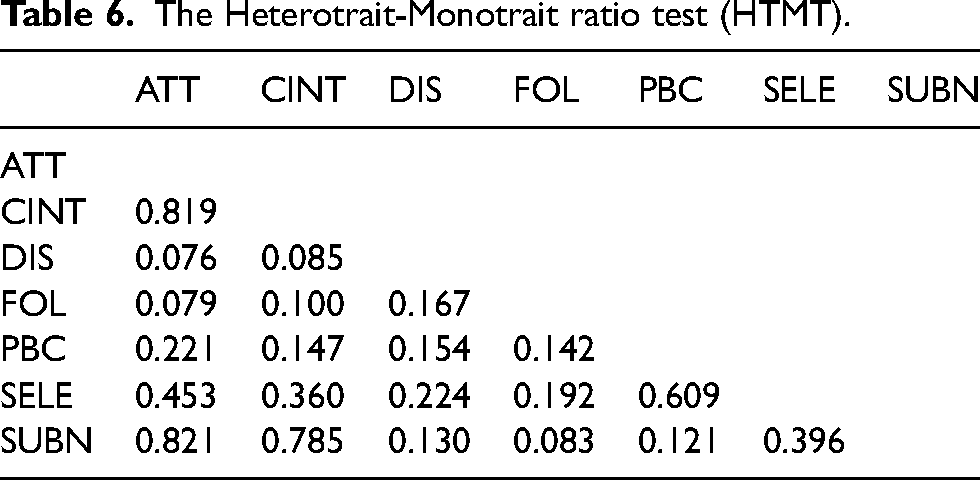
Divergent validity is checked using the Fornell–Larcker criterion test (Fornell and Larcker, 1981). As reported in Table 5, the squared-rooted AVEs on the diagonal are higher than the correlations between the latent constructs below the diagonal. Hence, divergent validity is also confirmed. To further confirm the divergent validity, we performed the Heterotrait-Monotrait ratio (HTMT) test, as reported in Table 6. Some of the latent constructs in our hypothesized model are conceptually similar, hence, the HTMT ratio threshold of 0.90 applies (Henseler et al., 2015). As none of the HTMT ratios in Table 6 exceed this threshold, our measures do not suffer from any divergent validity issues.
Fornell–Larcker criterion test.
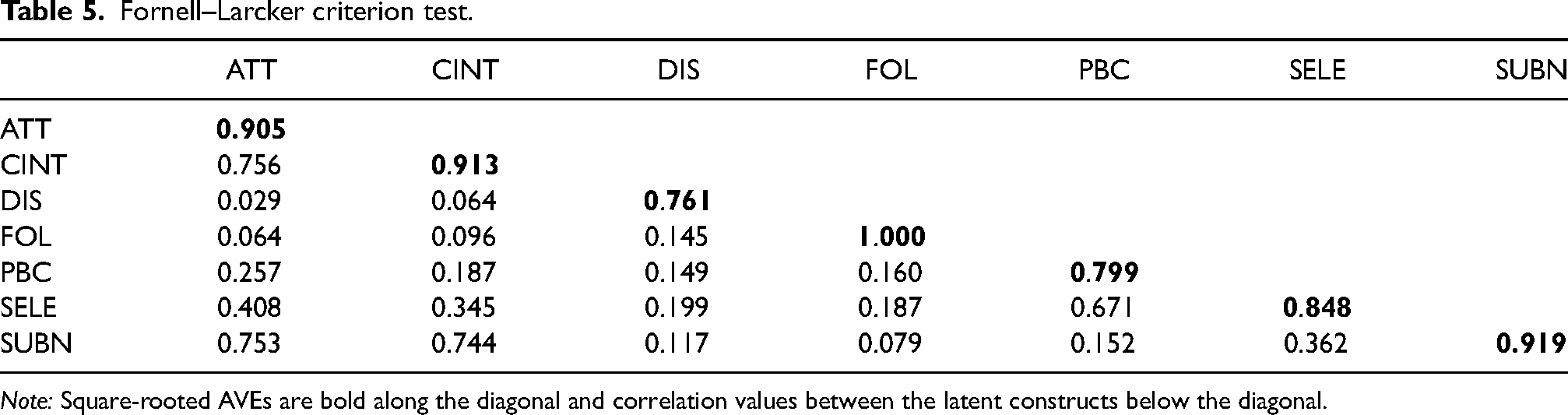
Note: Square-rooted AVEs are bold along the diagonal and correlation values between the latent constructs below the diagonal.
The Heterotrait-Monotrait ratio test (HTMT).
Controls
In addition to the core variables of our model, we also include several controls. First, we control for prior crowdfunding experience (CFEXP), as those who had such experience before are likely to be influenced by it when deciding whether to repeat their crowdfunding efforts. Second, we include several demographic variables such as the respondents’ sex (Sex), years of industry experience (YEXP) and residence in urban vs. rural location (Location). Third, we include several indicators of prior usage of other financial sources i.e. self-funding (OWNF), cultural grants (CULG), public business support grants (BUSG) and business funding from commercial entities (COMF).
Common method bias check
Common method bias (CMB) may emerge when measurement follows the same approach, for example, using the 7-point Likert scale. To check for CMB, Podsakoff et al. (2003) suggest several approaches. In this study, we use both pre-survey and statistical remedies. For example, the exogenous and endogenous variables were presented in separate webpages during the survey, items showed up in randomized order for each respondent and we ensured anonymity of the respondents, all of which can limit CMB. As for statistical verification, we employ the Herman's single factor approach, where all the 27 items from the measurement model were forced to load into a single factor in EFA without any factor rotation. The single factor explained 33% of the covariance among measures, less than the cut-off value of 0.50. For robustness, we ran the same analysis with 26 items excluding the single item of FAB, which increased the variance explained by only 1% to 34%. Hence, no serious CMB problem exists in this study.
Results
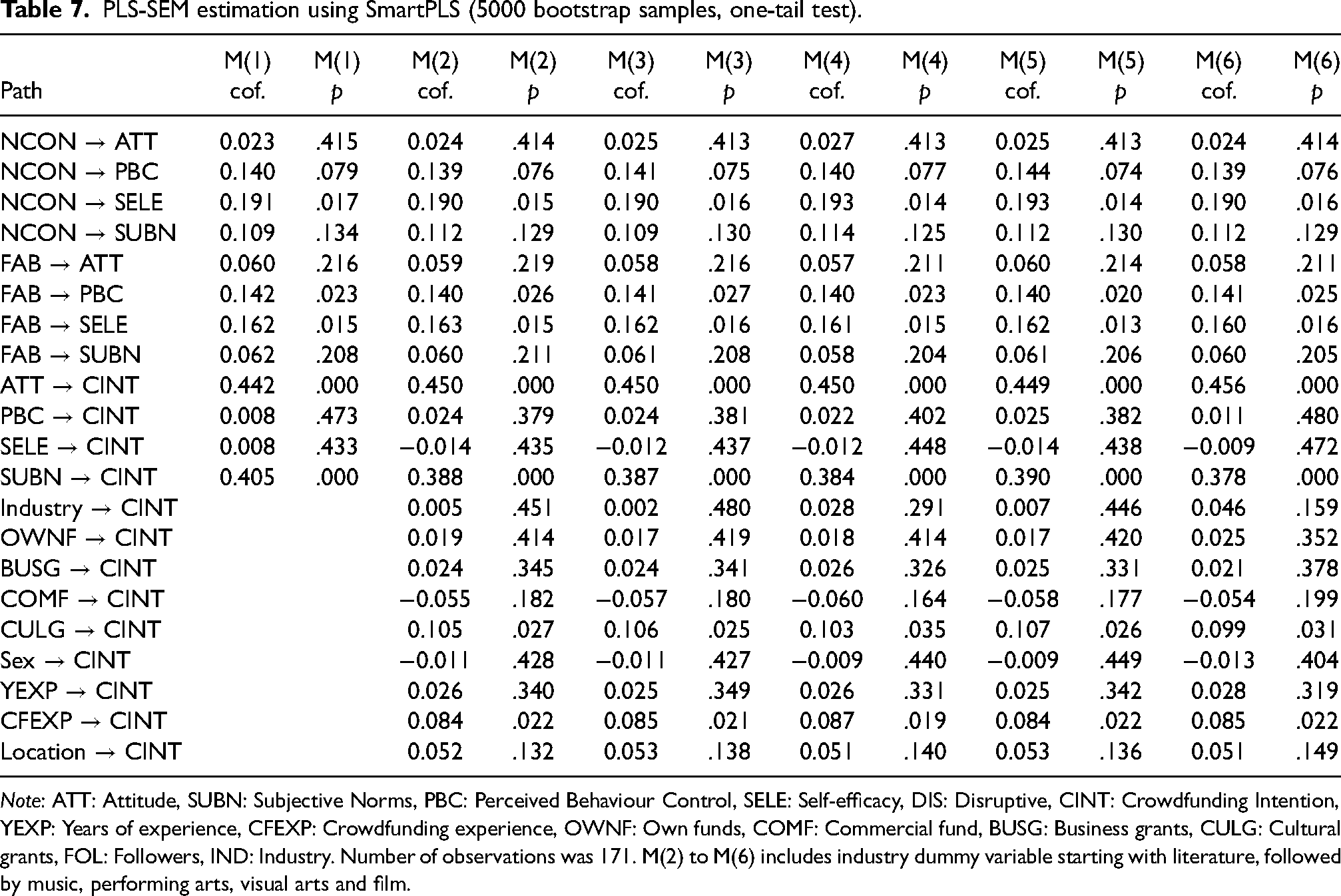
As the measurement model is acceptable, we can proceed with PLS-SEM estimation. Specifically, we estimated six models, as reported in Table 7. The first model (M1), graphically presented in Figure 2, is the base model where CINT is affected by ATT, SUBN, PBC and SELE and ATT, SUBN, PBC and SELE are affected by NCON and FAB. In models M2-M6, we added the effects of our control variables in all models, while we also include a cultural sector dummy variable in each model separately for the literature, music, performing arts, visual arts and film industries, respectively.
PLS-SEM estimation using SmartPLS (5000 bootstrap samples, one-tail test).
Note: ATT: Attitude, SUBN: Subjective Norms, PBC: Perceived Behaviour Control, SELE: Self-efficacy, DIS: Disruptive, CINT: Crowdfunding Intention, YEXP: Years of experience, CFEXP: Crowdfunding experience, OWNF: Own funds, COMF: Commercial fund, BUSG: Business grants, CULG: Cultural grants, FOL: Followers, IND: Industry. Number of observations was 171. M(2) to M(6) includes industry dummy variable starting with literature, followed by music, performing arts, visual arts and film.
As reported in Table 6, NCON (β: 0.190–0.193, p: 0.014–0.017) and the FAB size (β: 0.160–0.163, p: 0.013–0.016) are positively associated with SELE at 5% statistical significance, confirming H7a and H10a. Further, NCON (β: 0.139–0.144, p: 0.074–0.079) and the FAB size (β: 0.140–0.142, p: 0.020–0.027) are positively associated with PBC at 10% and 5% statistical significance, respectively, confirming H10b and weakly confirming H7b. However, no significant associations were identified between NCON and ATT or SUBN, rejecting H5 and H6. Similarly, no significant associations were identified between the FAB size and ATT or SUBN, rejecting H8 and H9.
When examining direct antecedents of intentions, we find that attitude (β: 0.441–0.445, p: 0.001) and SUBN (β: 0.404–0.405, p: 0.001) have significant positive associations with CINT, confirming H1 and H2. However, surprisingly, neither SELE nor PBC are significantly associated with CINTs, rejecting H3 and H4.
Finally, when considering the controls, cultural sectoral affiliations were not significantly associated with intentions, implying there is no special preference or aversion of crowdfunding among artists engaged in music, literature, film, visual arts, or performing arts. Further, intentions did not vary by artist's gender, years of industry experience, or location in urban vs. rural areas. However, when controlling for other sources of funding used in the past, artists who received public cultural grants had higher CINTs than others (β: 0.099–0.107, p: 0.025–0.035) significant at the 5% level, but those who used own funding, public business support grants, or commercial agreements did not exhibit significant preference or aversion of crowdfunding versus others. Finally, those who used crowdfunding before answering the survey exhibited significantly higher intentions to use crowdfunding again than those without such experience (β: 0.084–0.087, p: 0.019–0.020).
Post-hoc mediation analyses
While not hypothesized, we conduct further post-hoc analyses to check for potential mediation effects. Appendix reports the results of these analyses, finding that ATT, SELE, PBC and SUBN do not mediate an effect of neither the FAB nor NCON on crowdfunding use intentions. None of the potential mediation effects were significant.
Discussion
Our study identifies several factors influencing CINTs by artist-entrepreneurs. When considering the classical antecedents of intentionality, based on the theory of planned behaviour (Ajzen, 1991), we find support for the positive and significant associations of ATT and SUBN with CINTs but fail to find significant associations between SELE and PBC with CINTs.
As for the role of ATT, our findings show that artist-entrepreneurs’ expectations of favourable outcomes from the use of crowdfunding for fundraising purposes are positively associated with their intention to use it. In this respect, Norwegian artist-entrepreneurs are no different from entrepreneurs in other national and sectoral contexts whose CINTs were positively associated with their favourable views of crowdfunding as useful (Jaziri and Miralam, 2019), inclusive (Kumra et al., 2021) and enabling both skill development (Gerber and Hui, 2013) and successful fundraising (Islam and Khan, 2019). Similarly, the demonstrated positive association of perceived encouragement from close social circle, as captured by SUBN, with CINTs is also in line with both theory and insights from other sectoral and national contexts investigated in earlier research (Islam and Khan, 2019; Lenart-Gansiniec and Chen, 2023).
However, the lack of significant association between SELE and PBC and CINTs is surprising and contradictory to the theory, as well as to earlier findings in other contexts (De Voldere and Zeqo, 2017; Islam and Khan, 2019; Kumra et al., 2021). First, with respect to SELE, one may consider the composition of our sample, as it mostly includes less knowledgeable and inexperienced crowdfunding users. Such respondents may exhibit similar levels of doubt about their own skills. Hence, we fail to achieve a significant association between SELE and intentions. Alternatively, one may also argue that some of the potential effects of SELE are captured in the significant association between intentions and crowdfunding experience (used as a control variable), as one element of experience is skill development through ‘learning by doing’. Second, with respect to PBC, since crowdfunding is an inherently voluntary action (not externally imposed) and artists are independent spirits by nature, even at expense of potential income (Abbing, 2004), artists may exhibit similar and high levels of PBC, while failing to be significantly associated with CINTs.
Next, our study presents interesting findings with respect to CCI specific antecedents unexplored in earlier research, namely – NCON of creative work and the size of FAB. Here, we find positive significant associations between less conventional creative work and higher degrees of SELE, as well as PBC. Such findings support the notion that less conventional artists may feel more competent in promoting their work in general (Feist, 1998), as they are more used to challenging competition for resources from public grants (Boeuf et al., 2014), as well as scepticism from commercial sponsors who seek wider appeal. These skills may be more easily applied in a crowdfunding campaign. Furthermore, less conventional work may be easier to market in terms of ability to highlight unique features and value propositions (Colbert and St-James, 2014). Another explanation is that they may be more inclined to experiment and try novel methods of fundraising, such as crowdfunding in the Norwegian context. And, in addition, less conventional creators’ need to scale followership in niche areas implies that digital networks are regarded as valuable facilitators of such efforts, allowing them to aggregate interest among wider potential audiences (Galuszka and Brzozowska, 2016; Zhang, 2011). Therefore, they may regard related external conditions as more facilitating than hindering and view the degree of their own behavioural control more favourably overall.
However, contrary to our expectations, we do not find significant associations between NCON and ATT or SUBN. These may be explained by opposite effects taking place simultaneously, hence cancelling each other. First, when considering ATT, on the one hand, less conventional creators may view crowdfunding favourably thanks to it being a new and less institutionalized fundraising channel that expands their options from an otherwise limited set of competitive public grants and less interested commercial entities (Boeuf et al., 2014). But on the other hand, they may also view it negatively, as it depends on the ability to achieve wide public appeal to secure sufficient funding (small sums from many backers) (Davidson and Poor, 2016), something that may contradict the less widely popular nature of their work. Second, when SUBN are considered, people in a creator's close social circle may send mixed signals. On the one hand, they may encourage the use of crowdfunding as an alternative source of funding in an otherwise limited set of options while reducing funding expectations and pressures from themselves. However, they may also discourage such use due to concerns about the less widely popular nature of the creators’ work, which may lead to the failure to attract sufficient support and to reputational or motivational damage because of it.
Finally, our study presents interesting findings with respect to the positive associations between the FAB size and higher degrees of SELE, as well as PBC. Such findings lend support to the arguments that creators with larger FABs may be more versed and experienced in digital interactions with their followers, and hence may feel more competent and comfortable with their mobilization for promotional needs. Crowdfunding may thus be seen as one kind of promotional mobilization of fans (Galuszka, 2015), and an additional opportunity to engage with them. Such assumptions are in line with research showing that larger audiences are associated with higher online earnings (Elkins and Fry, 2022; Lu et al., 2021; Watson et al., 2023). Similarly, having a larger FAB may enhance the sense that successful crowdfunding may be within reach thanks to such favourable external conditions. In this respect, creators may sense that they have better control over a crowdfunding process, as only a relatively small portion of a large FAB needs to be convinced to ensure campaign success.
However, also in the case of FAB size, no significant associations were identified with respect to either ATT or SUBN. Here, again, opposite effects may be in place simultaneously while cancelling each other into non-significant associations overall. First, when considering ATT, creators with large FABs may view crowdfunding favourably as a possibility to tap into sufficient funding from their fans while retaining greater share of earnings (Thorley, 2012), intellectual property rights (Gilbert, 2017) and creative freedoms (Gamble et al., 2017). However, such creators may also view crowdfunding negatively, due to either the risk of reputational damage in case of campaign failure (Davidson and Poor, 2015; Gleasure, 2015), or the idea that large followership finally allows them to outsource funding concerns to other entities and concentrate on their creative work (Dalla Chiesa and Dekker, 2021). Crowdfunding, in this sense, may be seen as something dragging them back into activities they are less interested in pursuing, primarily including marketing and commercial development (Haynes and Marshall, 2018; Lee et al., 2018). Second, when considering SUBN and in a similar fashion, people in a creator's social circle may send mixed signals both encouraging them to tap into the potential FAB for greater benefits and freedoms, but at the same time fearing negative reputational or motivational outcomes if the campaign fails.
Conclusions
Crowdfunding represents a new and growing channel for funding cultural and creative work, as one important element in a systemic transition towards more sustainable and fairer market for the financing of CCIs (Loots et al., 2022). The current study explores the determinants of CINTs of Norwegian artists, while focusing on cognitive antecedents of planned behaviour and the two CCIs relevant aspects, namely the conventionality and FAB size. As such, the current work extends the understanding of crowdfunding use by artists, while complementing earlier studies that have primarily focused on examining motivations and assessments of the technology itself in predicting CINTs and behaviour.
Overall, the current study shows that ATT and SUBN are positively associated with intentions, while SELE and PBC are not. Moreover, NCON and FAB size are associated with SELE and PBC, but not with ATT and SUBN; hence, by extension also not having indirect effects on intentions via the variables included in the studied model. Additionally, when considering controls, prior crowdfunding experience is associated with higher intentions, as is the experience of receiving funds from public cultural grants.
Future research directions
Naturally, the current study has some limitations that can serve as fruitful directions for future research. First, the generalizability of the findings may be limited to the national and institutional context in which the data was collected. Accordingly, future research may collect and analyse data in environments that differ from Norway in terms of cultural policy and funding availability, as well as crowdfunding market development levels.
Second, being the first attempt to combine contextual elements from the CCI (i.e. conventionality and FAB) and cognitive antecedents of intentions, we considered their potential effects on ATT, SUBN, PBC and SELE, as the established cognitive antecedents of intentions. However, an additional possibility is to explore the role of the same aspects as potential moderators of the effects of the same cognitive antecedents on intentions. Accordingly, future studies should explore such possibilities for revealing additional effects of conventionality and FAB.
Finally, while the current study introduced factors capturing aspects specifically relevant to creative work such as NCON and FAB size, other related aspects may have impact on intention and its antecedents. In this respect, future studies may explore the potential effects of factors such as the extent of digital content in the artist's creative work, which may make it easier to distribute and share it online compared to more physical creations and experiences. Furthermore, one may explore the effects of the availability of match-funding schemes for crowdfunded creative projects, either with public or private sources, as a legitimacy enhancing condition, as well as external incentive to engage in crowdfunding to begin with.
Implications for theory
Our study confirms the applicability of the theory of planned behaviour (Ajzen, 1991) to understanding CINTs of artist-entrepreneurs, as well as its current limitations. As such, it provides evidence for the importance of favourable ATT and social support in the decision to use crowdfunding for funding creative work. This complements and adds to earlier insights from research identifying intrinsic and extrinsic motivations based on motivation theory, relevant personality dimensions drawn from personality trait theory, as well as aspects of user value creation derived from technology acceptance theory.
Furthermore, our findings show that PBC and SELE do not influence intentions in this specific context, providing a basis for further theoretical investigations into why these cognitive factors may not impact intentions. To explain these, one may point to relative recency of the crowdfunding phenomenon while drawing on experiential learning theory (Fukami and Armstrong, 2009), suggesting that artist-entrepreneur's levels of SELE and perceived control may change over time thanks to greater opportunities for ‘learning by doing’. Such notions are supported by a positive significant association between crowdfunding experience and intentions. Accordingly, SELE and PBC will subjectively vary to greater extent over time and hence potentially impact intention of some versus others.
Implications for practice
The findings provide helpful insights for both platform operators and cultural policy makers, who may be interested in boosting crowdfunding use by artist-entrepreneurs. To achieve this, investments need to be made towards developing more positive ATT and social support for the use of crowdfunding. Positive ATT may emerge from improved availability and quality of information about successful crowdfunding campaigns in the CCIs and what is needed to achieve them, as well as through creating opportunities for developing own positive experiences through simulation and training. The need for educational support is also demonstrated in our finding that artists may both over- and underestimate their capacity to successfully run campaigns, further signalling the necessity to better calibrate expectations through supportive training. Such training may be offered by both public bodies, as neutral skill developers, as well as platform operators, with particular focus on their own system features and communities of backers. In any case, and regardless of training provider, the availability of sector-specific information, opportunities for positive experiences, and the availability of training as sanctioned by trusted stakeholders may all boost both social acceptance and support, as well as positive ATT towards cultural crowdfunding. Such actions may be in line with earlier research showing that interest in crowdfunding may be triggered by cultural policies (Cicchiello et al., 2023), which may involve training as well-as match funding schemes (Dalla Chiesa, 2022; Loots et al., 2023).
Footnotes
Author note
Anders Rykkja is currently affiliated with Queen's University Belfast, UK.
Declaration of conflicting interests
The authors declared no potential conflicts of interest with respect to the research, authorship, and/or publication of this article.
Funding
The authors disclosed receipt of the following financial support for the research, authorship, and/or publication of this article: This work was supported by the Norges Forskningsråd (grant number RCN 301291).
