




Abstract
Despite the undeniable importance of targeted actions for environmental protection, the research on green crowdfunding campaigns remains limited. The present study aims to address this gap by identifying the factors that influence the intention to support pro-environmental crowdfunding campaigns, conceptualised as a form of pro-environmental behaviour. We conducted a questionnaire survey to explore the interplay among biospheric values, warm-glow, willingness to sacrifice, and green trust in influencing the intention to provide financial support for pro-environmental crowdfunding projects. The results were compelling. Willingness to sacrifice and warm-glow both had a significant effect on the intention to financially support pro-environmental crowdfunding campaigns. Moreover, we discovered that these two variables act as mediators in the relationship between biospheric values and intention. Essentially, they play a role in shaping one’s intention to support pro-environmental crowdfunding initiatives. Lastly, we observed that the relationship between willingness to sacrifice and the intention to support is moderated by green trust. This highlights the importance of trust in environmentally-oriented crowdfunding efforts. Our research sheds light on the factors that drive individuals to participate in pro-environmental crowdfunding campaigns. By understanding these influences, more effective strategies to encourage and promote environmental protection initiatives through crowdfunding can be developed.
Keywords
Introduction
Crowdfunding is the process of raising funds for a specific project “by drawing on relatively small contributions from a relatively large number of individuals using the internet, without standard financial intermediaries” (Mollick, 2014, p. 2). In practice, crowdfunding serves as a valuable means to raise funds for a wide range of projects, including commercial, social, cultural, and environmental endeavours. Numerous studies have demonstrated the effectiveness of crowdfunding as a tool for financing green initiatives (Calic & Mosakowski, 2016; Kim & Hall, 2021; Prędkiewicz & Kalinowska-Beszczyńska, 2021; Rossolini et al., 2021; Tenner & Hörisch, 2021). This is especially crucial considering the pressing need to protect the environment overall and address climate change specifically. In this regard, there is a widespread belief that ordinary people’s perceptions of their connection with the environment play a vital role. Hence, it is significant whether they are willing to engage in actions such as waste segregation or opting for public transport over private cars. In fact, some scholars have argued that these behavioural and attitudinal patterns represent the “most significant obstacle to achieving environmental sustainability” (Berglund & Matti, 2006, p. 550).
This point emphasises the significance of pro-environmental behaviour (PEB), which encompasses all actions that aim to minimise or reduce an individual’s harmful environmental impact (Stern et al., 1999; Tian & Liu, 2022). Stern et al. (1999) distinguished among three types of PEB: green purchase, environmental citizenship behaviour, and activist behaviour. Green purchase refers to consumers’ inclination to choose goods and services that have a lesser negative environmental impact (Chen & Chang, 2012; Joshi & Rahman, 2015). Citizenship behaviour refers to any environmentally positive activity or action that is not directly related to purchasing (Dono et al., 2010; Mackay et al., 2021). Lastly, environmental activist behaviour involves actively engaging in and supporting initiatives aimed at protecting the environment.
Given the role of green crowdfunding in environmental protection, it is reasonable to assume that supporting specific green projects embodies all the hallmarks of pro-environmental behaviour. First of all, the process aligns with sustainable principles and objectives. Supporting green crowdfunding initiatives means that individuals actively contribute to the development of environmentally friendly solutions and innovations. Additionally, green crowdfunding projects often raise awareness about pressing environmental issues and encourage a broader understanding of the importance of undertaking actions aimed at reducing the impact of climate change. Thus, backers not only contribute financially but also actively participate in spreading environmental consciousness within their communities and beyond. In that sense, backing crowdfunding initiatives can be classified as environmental activist behaviour (Tenner & Hörisch, 2021). Furthermore, green crowdfunding projects can be perceived as innovative initiatives that actively promote environmentally conscious solutions. Drawing on the diffusion of innovation theory (Rogers, 2003), early adopters who support green projects will establish a positive model for those who may have initially hesitated to support such endeavours. This process will contribute to the normalisation of backing green crowdfunding projects as a means of engaging in pro-environmental behaviour.
Taking the above into consideration, we propose that participation in crowdfunding constitutes a form of PEB. This raises the question of what motivates individuals to engage in PEB. Previous research has indicated two primary categories of motives for pro-environmental behaviour: self-interest and prosocial motives (Han et al., 2016; Kiatkawsin & Han, 2017; Landon et al., 2018). The former reflects a more conventional perspective, proposing that people’s environmental decisions are influenced by self-interest and external rewards (see also Collin & Collin, 2009). For instance, individuals may use public transportation because it is more convenient or opt for sustainable products because they have a favourable attitude towards the brand. In this regard, PEB may be successfully explained by attitudinal theories, such as the theory of planned behaviour (TPB) (Ajzen, 1991). On the other hand, the latter category of motives pertains to one’s values and personal traits, which are believed to play a significant role in pro-environmental decision-making. In this sense, PEB is underpinned by one’s moral and ethical considerations (de Groot & Thøgersen, 2018; Steg et al., 2014). That is why pro-environmental intentions and behaviours are better explained by the value- and norms-based theories, such as the norm activation model (NAM) (Schwartz, 1997) and the values-beliefs-norms (VBN) theory (Stern et al., 1999). Finally, recent research suggests that interactions among various motivations and combinations of different theoretical approaches are crucial in explaining PEB (Gkargkavouzi et al., 2019; Han, 2015; López-Mosquera & Sánchez, 2012).
We are particularly interested in the motivation for financially supporting green crowdfunding initiatives as a form of PEB. Although there is a vast body of literature on motivation in donation crowdfunding (Bagheri et al., 2019; Zhang et al., 2020; Zhao & Shneor, 2020), we believe that the nature of green projects strongly appeals to backers’ motivational factors. There are several reasons for this. First, since supporting green crowdfunding projects may be perceived as a form of PEB, we believe that, in line with the VBN theory (Stern et al., 1999) strong green (biospheric) values are the key elements that influence potential backers. Green crowdfunding projects appeal to environmentally conscious individuals who are interested in supporting sustainable initiatives (see also Steg, 2023). Thus, values and emotional benefits related to doing “the right thing”, in line with their moral and ethical standards – that is, impure altruism expressed as a warm-glow feeling – may significantly influence potential backers’ intentions to contribute (similarly to PEB, see also Andreoni, 1990; Hartmann et al., 2017; Steg, 2016).
Secondly, contrary to most crowdfunding campaigns, green initiatives bring benefits not only to the backers themselves or the fundraiser directly, but also to future generations and society as a whole. Thus, the decision to contribute financially to a campaign can be viewed not only through the lens of one’s values and impure altruism, but also willingness to sacrifice (Stern et al., 1999), a factor that becomes essential in motivating individuals to support these initiatives. Backers who are willing to make sacrifices to support environmental causes demonstrate a sense of responsibility towards the well-being of future generations and the broader society, which we believe is crucial for the success of these campaigns (see also Doyle, 2022; Thøgersen, 2000). Finally, as green crowdfunding projects may involve higher risks than regular crowdfunding projects, the role of green trust may play a significant role (Baah-Peprah & Shneor, 2022; Kim et al., 2020). On one hand, these projects often involve new solutions or innovative technologies and may not have a proven track record of success. On the other hand, crowdfunding may still be perceived as a relatively novel form of funding green campaigns initiated by different types of fundraisers, including more and less formal entities as well as individuals. To feel confident in putting their money towards green projects, backers need to trust the fundraiser and their ability to deliver on their promises.
Furthermore, trust may reduce perceived uncertainties associated with supporting green crowdfunding initiatives. People may be hesitant to sacrifice their resources or time if they are unsure about the legitimacy of the cause or the transparency of the process. However, when trust is present, individuals feel more confident that their contributions will be utilised responsibly and that the campaign organisers are genuinely committed to achieving environmental goals (Keller et al., 2011). This sense of security can boost their willingness to sacrifice and solidify their intention to support green crowdfunding projects.
That being said, examining the motivation to support green crowdfunding as a form of PEB can be particularly valuable for current and potential fundraiser as well as crowdfunding platforms. This could help create effective campaigns that cater to the target audience and further popularise crowdfunding as a source of funding for environmental projects. Moreover, a better understanding of backer’s motivation in green projects could help platforms redesign their interface to better showcase and highlight environmental projects, attract more environmentally conscious backers, and promote sustainable behaviour. Studying motivation in the context of green crowdfunding may also have broader implications for environmental policy-making and sustainable development. By understanding the factors that drive people to support green crowdfunding campaigns, policymakers and organisations can develop more effective strategies to engage and mobilise the public in environmental initiatives.
The present study, based on data collected through a questionnaire survey conducted among over 300 UK citizens in 2022, aimed to achieve the following objectives: (1) ascertain how the interplay between biospheric values, warm-glow, willingness to sacrifice for the environment and green trust influences intention to financially support pro-environmental crowdfunding projects; (2) assess the direct effects of biospheric values, warm glow and willingness to sacrifice on the intention to support such projects; (3) examine the mediating roles of willingness to sacrifice and warm glow for intention to support such projects; and (4) evaluate the moderating effect of green trust on the relationship between willingness to sacrifice and intention to support green projects.
Given these objectives, the purpose of this work – which is based on a multi-theoretical framework that draws on the implications of the TPB, VBN theory, warm-glow theory and theorising on green trust and environmental concern – is to address the following research gaps. First, while a number of studies have been conducted on motivation for supporting crowdfunding campaigns in general (Bagheri et al., 2019; Bretschneider & Leimeister, 2017; Ryu et al., 2020; H. Zhang & Chen, 2019), little is known about the mechanism underlying intention to support green campaigns. Secondly, despite a lot of research into the role of green values in explaining PEB (Bouman et al., 2020; Han & Hyun, 2018; Kiral Ucar et al., 2023; Rahman & Reynolds, 2016), less is known about the mediating role of warm glow and willingness to sacrifice the crowdfunding context. Thirdly, a lot has been written on the role of green trust in the consumer behaviour literature, but we know little about its moderating role in the relationships between willingness to sacrifice and intention to support pro-environmental campaigns.
Considering these research gaps, the present study makes the following contributions to the literature on pro-environmental crowdfunding. Firstly, we propose an original model that examines the direct, indirect, and moderating effects of biospheric values, warm-glow, willingness to sacrifice, and green trust on the intention to support green crowdfunding campaigns. This model helps us understand how these factors interact and affect individuals’ decision to support pro-environmental crowdfunding campaigns. Moreover, our study offers practical recommendations based on our findings that could benefit both fundraisers and crowdfunding platforms, providing valuable insights for enhancing pro-environmental crowdfunding efforts.
Literature Review and Hypotheses Development
Crowdfunding as a form of PEB
Crowdfunding is a form of community-based financing facilitated through online platforms, where funds are raised through an open call for support (Shneor & Munim, 2019). It may involve providing funds in exchange for various incentives, such as interest or debt security, voting rights, rewards, or without any incentives at all (Shneor et al., 2020). The various forms of crowdfunding include crowd-lending, equity, reward-based, and donation-based models. Unlike debt financing, crowdfunding is characterised by a low level of professionalisation from non-institutional investors (Ziegler et al., 2021), and is driven by individuals who may or may not choose to support a specific project or campaign. The present study focuses specifically on donation-based crowdfunding, which does not offer any reciprocal benefit from the fundraisers to backers (Zhao & Shneor, 2020). We chose to focus on donation-based crowdfunding for two main reasons. Firstly, donation-based crowdfunding is a prevalent form of supporting green crowdfunding projects (such as Crowdfunder) in the UK, where our respondents were from. Secondly, by selecting donation-based crowdfunding, we aimed to minimise potential biases in the results. Focusing solely on donation-based crowdfunding, where no reciprocal benefit is expected, enables us to create a more controlled environment for our study. This approach allows us to concentrate on understanding the motivations and behaviours of individuals who genuinely wish to support green projects without any immediate expectations of personal gain.
Importantly, crowdfunding offers a wide variety of projects initiated by different types of entities, such as individuals, non-formal groups, companies, and non-profit organisations. In particular, fundraisers may propose commercial projects (introducing products or services, often as a presale), social projects (delivering social goods), and green initiatives (aimed at environment protection) (Parhankangas & Renko, 2017; Shneor et al., 2020). Crucially, several studies have shown that crowdfunding campaigns are a successful tool for financing green projects (Bento et al., 2019; Kragt et al., 2021; Maehle, 2020; Tenner & Hörisch, 2021) and that sustainability orientation positively affects campaigns’ success (Calic & Mosakowski, 2016; Hörisch & Tenner, 2020; Maehle et al., 2021). However, Hörisch (2015) found the environmental orientation of crowdfunding projects does not necessarily translate into increased project success. While the environmental aspect may attract some backers, it may not be sufficient by itself to secure funding. A critical challenge lies in the transparency and credibility of crowdfunding campaigns. Hörisch (2019) found that while measures advertised during crowdfunding campaigns are commonly implemented, very few projects disclose information on the actual environmental benefits created. This lack of transparency can leave backers uncertain about whether the promised environmental impacts are being realised. Moreover, as Maehle (2020) noted, building a community of committed backers becomes even more vital in the context of sustainability, as backers who genuinely understand and support the environmental objectives are more likely to contribute to the crowdfunding campaign. Thus, communicating sustainability intentions effectively is an essential aspect of campaign success. Fundraisers need to phrase their campaign descriptions carefully in order to credibly convey their commitment to sustainability (Wehnert & Beckmann, 2023). Furthermore, Maehle (2020) found that sustainable entrepreneurs face a more complex decision-making process when selecting a crowdfunding platform than their conventional counterparts, as they must carefully assess the platform’s sustainability orientation to align with their environmental goals.
At the individual level, backers who support green crowdfunding campaigns participate in the development of ecologically sustainable solutions and innovative advancements. In this sense, they showcase their dedication to achieving sustainable objectives. Furthermore, through green campaigns, fundraisers enhance awareness about pressing ecological issues and emphasise the significance of taking necessary actions to counteract climate change. Within this context, following Stern et al. (1999), both supporting and initiating green crowdfunding campaigns can be categorised as environmental activist behaviour. Thus, at the aggregate level, the crowdfunding market demonstrates significant potential for sustainable development (Tenner & Hörisch, 2021). Additionally, as backers’ support goes beyond purely financial contributions, but also encompass information sharing and opinion dissemination, they spread environmental consciousness within their communities and beyond. Therefore, drawing from the diffusion of innovation theory (Rogers, 2003), individuals or entities that embrace and adopt green innovation (in particular innovators and early adopters) may endorse green crowdfunding projects as a way of aligning their behaviour with their pro-environmental values. The majority of such actors, who may have initially been hesitant towards innovation, are influenced by the positive experiences and social proof of the early adopters. They also support the projects, which further normalises pro-environmental behaviour, such as supporting green crowdfunding projects, within their social circles. This diffusion is particularly important given that environmental crowdfunding projects are preventive innovations that are undertaken to forestall adverse consequences of climate change in the future, even if the desired project’ outcomes are uncertain (Rogers, 2003). Finally, the online nature of these campaigns and their potential for viral spread could facilitate the adoption of this behaviour among a wider audience (Baber & Fanea-Ivanovici, 2023; Chan & Parhankangas, 2017). In other words, green crowdfunding projects can be perceived as innovations that promote environmentally conscious solutions.
Understanding individual motivation for funding a campaign is crucial to a project’s initiator, since this makes it easier for them to increase the number of backers and gain their support. Crucially, it has been argued that motivation in donation-based models differs from that in reward-based and investment crowdfunding. In particular, it can be defined as “inspired motives that mobilise donors’ engagement in charitable crowdfunding projects” (Bagheri et al., 2019, p. 220). Extant research has identified a number of factors affecting motivation for supporting donation-based crowdfunding campaigns (Bagheri et al., 2019; Chen & Chang, 2012; Zhang et al., 2020; Zhao & Shneor, 2020). At the same time, there is a general consensus that crowdfunding backers’ motivation falls into two basic categories: financial and non-financial (Cholakova & Clarysse, 2015; James et al., 2020; Thürridl & Kamleitner, 2016). In particular, scholars argue that backers are mainly motivated by intrinsic and social factors, including altruism, contributing to the community, warm-glow experience, or alignment of a project’s purpose with backers’ values (Bagheri et al., 2019).
However, the academic understanding of motivation behind pro-environmental crowdfunding campaigns remains in its infancy (Böckel et al., 2021). This raises questions about whether the factors that motivate support for pro-environmental crowdfunding are the same as those that motivate engagement in other “more traditional” forms of PEB and more general crowdfunding campaigns. Given the importance and urgency of environmental protection, it is reasonable to expect that the popularity of green crowdfunding campaigns will continue to grow. Therefore, it is crucial to understand the motivational factors that drive backers’ intentions to engage and support green crowdfunding in order to structure effective crowdfunding campaigns that attract potential backers. More research is needed on this topic.
The Role of Values in Pro-Environmental Crowdfunding
It is commonly accepted that values – defined as “desirable trans-situational goals, varying in importance, that serve as guiding principles in people’s lives” (Schwartz, 1996, p. 2) – are strong drivers of PEB. Given that the issue is pro-environmental behaviour, green values are of particular interest. The Schwartz Theory of Basic Values identifies two values-related dimensions: self-transcendence versus self-enhancement and openness to change versus conservation (Schwartz, 1994). Pro-environmental beliefs, norms and behaviours are related to values pertaining to the self-transcendence versus self-enhancement dimension (those who hew to self-transcendence values are more likely to focus on others and the environment). In particular, two self-transcendence values (altruism and biospheric) and one self-enhancement value (egoism) are differentiated within environmental research (de Groot & Steg, 2008; Steg, 2016; Stern et al., 1999).
Specifically, egoistic values reflect a focus on maximising one’s outcomes, while altruistic values motivate people to act for the well-being of others without any personal gain, and biospheric values are focused on the environment. The latter are especially important in fostering pro-environmental behaviour and are considered one of the most significant antecedents of PEB (Wang et al., 2021). People who endorse strong biospheric values “are more likely to consider environmental consequences when making choices” (Steg, 2016, p. 280) and are aware of the impacts of their behaviour on the environment. Several studies have already provided empirical evidence for the positive relationship between biospheric values and PEB (de Groot & Steg, 2009; de Groot & Thøgersen, 2018; Wang et al., 2021).
While little is known about the relationship between biospheric values and supporting pro-environmental crowdfunding campaigns specifically, values in general have been found to be a significant motivator for supporting crowdfunding campaigns (Jiang et al., 2021; Kim & Hall, 2021; Nielsen & Binder, 2021; van den Hoogen, 2020). For instance, research indicates that individuals who are attached to self-transcendence values, particularly altruism, are generally more willing to support crowdfunding campaigns (Allison et al., 2013; Cecere et al., 2017). Therefore, it is reasonable to hypothesise that individuals who strongly endorse biospheric values are more likely to financially support pro-environmental crowdfunding projects. Accordingly, theoretical and empirical foundations exist for the following hypothesis:
There is a positive relationship between biospheric values and the intention to support pro-environmental crowdfunding campaigns.
The Importance of the Warm-Glow Effect in Green Crowdfunding
It is argued that perceiving one’s behaviour as moral and ethical can serve as a motivator for responsible action. It follows that behaving morally and ethically can make people derive pleasure from doing so and, by extension, experience warm-glow (Hartmann et al., 2017; Steg, 2016). The warm-glow theory (Andreoni, 1990) suggests that prosocial behaviour is motivated not only by pure altruism – which is understood as “a selfless exhibition of trading one’s personal resources to benefit another” (Furnham et al., 2016, p. 359) – but also by the joy of giving (time or money) to others (that is, impure altruism). People are intrinsically motivated by the emotional benefits of doing the right thing, in line with their moral and ethical standards (Andreoni, 1990). They experience selfish pleasure when engaging in philanthropic, charitable or pro-environmental action, regardless of its actual impact (Andrews et al., 2014). For example, individuals with strong altruistic values are likely to derive pleasure from donating to charity, while those with strong biospheric values are more likely to enjoy engaging in pro-environmental activities, irrespective of whether their behaviour changes anything.
The concept of warm-glow has been applied to both pro-environmental behaviour (Bazaraa et al., 2022; Kahneman & Knetsch, 1992; Schmitt et al., 2018; Zawadzki et al., 2020) and crowdfunding behaviour crowdfunding (Bi et al., 2019; Cecere et al., 2017; Lagazio & Querci, 2018; Xu et al., 2022), with research providing supportive evidence for its influence in both areas. Specifically, Cecere et al. (2017) found that warm-glow experiences can increase the level of contribution, while Bi et al., (2019) suggested that the warm-glow effect can be perceived as a discount on the price. However, the warm-glow has not yet been studied in the context of green crowdfunding.
Based on this reasoning, it is reasonable to suggest that supporting environmental crowdfunding campaigns can be viewed as a hassle-free, but – given that this involves parting with one’s own money – not entirely costless. Admittedly, it could also be argued that even making a small donation to environmental causes through crowdfunding can trigger the warm-glow effect. Hence, we posit that:
There is a positive relationship between warm-glow effect and the intention to support pro-environmental crowdfunding campaigns.
The Mediating Role of the Warm-Glow Experience
Previous research has shown that the warm-glow effect is linked to an individual’s values (Hartmann et al., 2017; Steg, 2016; Taufik et al., 2015; Zawadzki et al., 2020). Crucially, Steg (2023) noted that “values affect behaviour not only via behaviour-specific cognitions but also via emotions” (p. 397). When individuals engage in pro-environmental activities that align with their values, they are more likely to experience positive emotions and feelings (Jia & van der Linden, 2020; Steg, 2023). This is particularly true for individuals who strongly endorse biospheric values, as they may feel a sense of moral obligation towards the environment, making their pro-environmental behaviour more fulfilling and rewarding (Venhoeven et al., 2020). Therefore, individuals with strong green values are more likely to engage in PEB (especially voluntary forms) and expect to feel good about it, while those who do not hold strong green values are less likely to experience the warm-glow effect, even when engaging in PEB.
Following this logic, we propose that warm glow mediates the relationship between biospheric values and intention to engage in PEB through green crowdfunding campaigns. Prior research has shown that warm glow mediates the association between one’s values and behaviour (Bazaraa et al., 2022; Hartmann et al., 2017). At the same time, we believe that, in the context of green crowdfunding campaigns, where the outcome of the project is often uncertain and the funding that is sought is relatively low, the relationship between green values and intention to engage in PEB may be clarified by the warm-glow effect. There are three reasons for this. First, people may prioritise experiencing warm glow over the actual impact of their pro-environmental actions. In crowdfunding, the project realisation phase is often spread over time and the final result is usually not made known to a project’s backers. Second, backing green crowdfunding campaigns can be perceived as a hassle-free action that technically requires a few mouse clicks. Thus, supporting them can easily generate the warm-glow effect. Third, crowdfunding is an entirely online process, which enables spontaneous decisions to support a particular campaign. In this sense, crowdfunding may be perceived as a mechanism that enables one to increase his or her wellbeing through the warm-glow experience. Consequently, the mediation effect may provide a better explanation for the behavioural consequences of holding biospheric values in the crowdfunding context. Given this line of argumentation, we propose the following hypothesis:
Warm-glow experience mediates the relationship between biospheric values and the intention to support pro-environmental crowdfunding campaigns.
Willingness to Sacrifice for the Environment in Green Crowdfunding
Environmental concern is a key concept that is often used to explain PEB and is defined as “the degree to which people are aware of problems regarding the environment and support efforts to solve them and/or indicate the willingness to contribute personally to their solution” (Dunlap & Jones, 2002, p. 485). Environmental concern has two dimensions: perceptions of environmental issues (operationalised as “environmental attitude”) and the willingness to contribute to their solutions (operationalised as “willingness to sacrifice”) (Arts et al., 2021).
Willingness to sacrifice for the environment refers to the extent to which individuals are willing to give up their money, time or comfort to protect the environment. In this study, we primarily focus on the willingness to sacrifice dimension of environmental concern. In the context of supporting green crowdfunding projects, focusing on the willingness to sacrifice dimension holds particular significance. Firstly, while environmental concern reflects people’s awareness of environmental issues and their general support for solving them, it may not always translate into corresponding action. On the other hand, individuals with a high willingness to sacrifice are more likely to actively support green crowdfunding projects, as they are willing to invest their resources, time or effort, which makes a real difference in terms of funding environmentally beneficial initiatives. Secondly, the dimension of the willingness to sacrifice specifically evaluates the level of personal commitment that individuals are ready to demonstrate in support of environmental causes. In the context of green crowdfunding projects, this commitment is crucial for the success of these initiatives, as they rely heavily on public contributions to achieve their funding goals. A high level of willingness to sacrifice implies a higher likelihood of financial support, which can facilitate the completion of environmental projects.
Stern et al. (1999) argued that any social movement, including environmentalism, requires widespread support of individuals who are willing to make personal sacrifices, such as paying higher taxes, reducing consumption, or choosing less convenient options. Thus, the concept of willingness to sacrifice for the environment includes personal costs and efforts, while no direct immediate personal benefits are in place. It reflects the degree to which people prioritise the environment over self-interest (Davis Jody et al., 2011). The more people exhibit willingness to sacrifice, the more likely the actual protection of the environment will be. Importantly, previous studies on willingness to sacrifice have shown that willingness to sacrifice positively influences PEB (Doyle, 2022; Thøgersen, 2000; Tsai et al., 2021). The point is that, in the context of green crowdfunding, supporting pro-environmental campaigns requires monetary donations, which always means some kind of personal sacrifice for the environment, despite relatively small contributions. In line with this argumentation, there are grounds for assuming that, in the context of green crowdfunding, willingness to sacrifice will positively influence one’s intention to support pro-environmental campaigns. Thus, we propose the following hypothesis:
There is a positive relationship between willingness to sacrifice and the intention to financially support pro-environmental crowdfunding campaigns.
The Mediating Role of Willingness to Sacrifice for the Environment
Furthermore, it is plausible to assume that strong attachment to biospheric values may influence one’s willingness to sacrifice for the environment. People who strongly value the biosphere are more likely to exhibit a higher degree of commitment to the environment, which could positively affect their willingness to sacrifice for the environment (Steg, 2016). This relationship has been supported by various studies in different contexts (Chung et al., 2019; Han & Hyun, 2018; Rahman & Reynolds, 2016, 2017).
Based on the available evidence, it is plausible to suggest that willingness to sacrifice may mediate the relationship between biospheric values and intention to support pro-environmental crowdfunding campaigns. First, several studies have demonstrated that willingness to sacrifice mediates the relationship between biospheric values and PEB (Chung et al., 2019; Han & Hyun, 2018; Marquart-Pyatt, 2012; Oreg & Katz-Gerro, 2006; Tsai et al., 2021). Since supporting crowdfunding campaigns requires a monetary donation, willingness to sacrifice may play a critical role in explaining how biospheric values influence one’s intention to support these campaigns. Finally, the increasing popularity of online charity actions suggests that individuals who strongly endorse biospheric values may be more likely to donate their time and money to protect the environment. Thus, we hypothesise that:
Willingness to sacrifice mediates the relationship between biospheric values and the intention to support pro-environmental crowdfunding campaigns.
The Moderating Role of Green Trust
One of the key drivers of participation in crowdfunding is trust (Baah-Peprah & Shneor, 2022; Kim et al., 2020), which has been defined as “the willingness of a party to be vulnerable to the actions of another party based on the expectation that the other will perform a particular action important to the trustor, irrespective of the ability to monitor or control that other party” (Mayer et al., 1995, p. 712). Trust plays a crucial role in shaping human interactions on many levels, particularly on the personal level, where it is typically associated with reciprocity and underpinned by knowledge gained from daily interactions (Uslaner, 2012). Given the focus of this study, green trust is of special interest. Green trust may be defined as the willingness to purchase and rely on environmentally friendly goods or services based on the conviction of their efficacy, credibility, and pro-environmental performance (Chen, 2010). On one hand, research on consumer behaviour has already established a strong link between green trust and the intention to purchase environmentally friendly products (Ahmad & Zhang, 2020; Amin & Tarun, 2021; Chen & Chang, 2012). It follows that publicised corner-cutting by unscrupulous companies is likely to negatively affect the purchasing intention of socially and environmentally conscious customers. On the other hand, trust was found to play a crucial role in shaping an individual’s willingness to sacrifice for pro-environmental behaviour. Trust in green initiatives, organisations, and social trust fosters a sense of confidence that one’s sacrifices will lead to positive outcomes (Doyle, 2022; Jin & Shriar, 2013; Macias, 2015). When people trust that their contributions will be utilised efficiently and transparently for environmental projects, they are more willing to make sacrifices. Moreover, green trust introduces a belief in the effectiveness of pro-environmental efforts. If individuals have trust in the credibility and competence of environmental initiatives, they are more likely to perceive that their sacrifices are valuable contributions towards achieving environmental goals.
Considering the importance of trust in crowdfunding and the relevance of green trust in sustainable consumer behaviour, it is reasonable to assume that green trust is also significant in explaining backers’ motivation in pro-environmental crowdfunding. Firstly, studies have suggested that the degree of trust required in online transactions is greater than in traditional offline ones (Grabner-Kräuter & Kaluscha, 2003; Lee & Turban, 2001). Secondly, the main source of information about a project and the fundraiser for (potential) backers is the dedicated website on a crowdfunding platform. Therefore, information provided on a project’s website becomes the pitch that signals a project’s legitimacy (Frydrych et al., 2014). The lack of (or insufficient) direct communication may also influence the level of trust towards a project and the fundraiser (Courtney et al., 2017). Third, the information presented on a project’s website is often unverified, leading to relatively high levels of information asymmetry between the fundraiser and backers (Moysidou & Hausberg, 2020). Fourth, for individuals who are strongly attached to biospheric values and willing to sacrifice their money and time for the environment, the successful implementation of a green campaign may be of particular importance. In other words, those who trust the fundraiser and believe in the realisation of their project are more likely to support it. Finally, the role of green trust may be critical for those who are willing to forego their own interests for the environment. When trust is present, individuals feel more confident that their contributions will be used responsibly and that the campaign organisers are genuinely committed to achieving environmental goals. This sense of security can boost their willingness to sacrifice and solidify their intention to support green crowdfunding projects. In other words, the intention of such individuals to support green crowdfunding projects may be strengthened if they trust these initiatives. Thus, we propose the following hypothesis:
Green trust moderates the relationship between willingness to sacrifice and the intention to support pro-environmental crowdfunding campaigns.
Figure 1 presents our conceptual model. Conceptual model.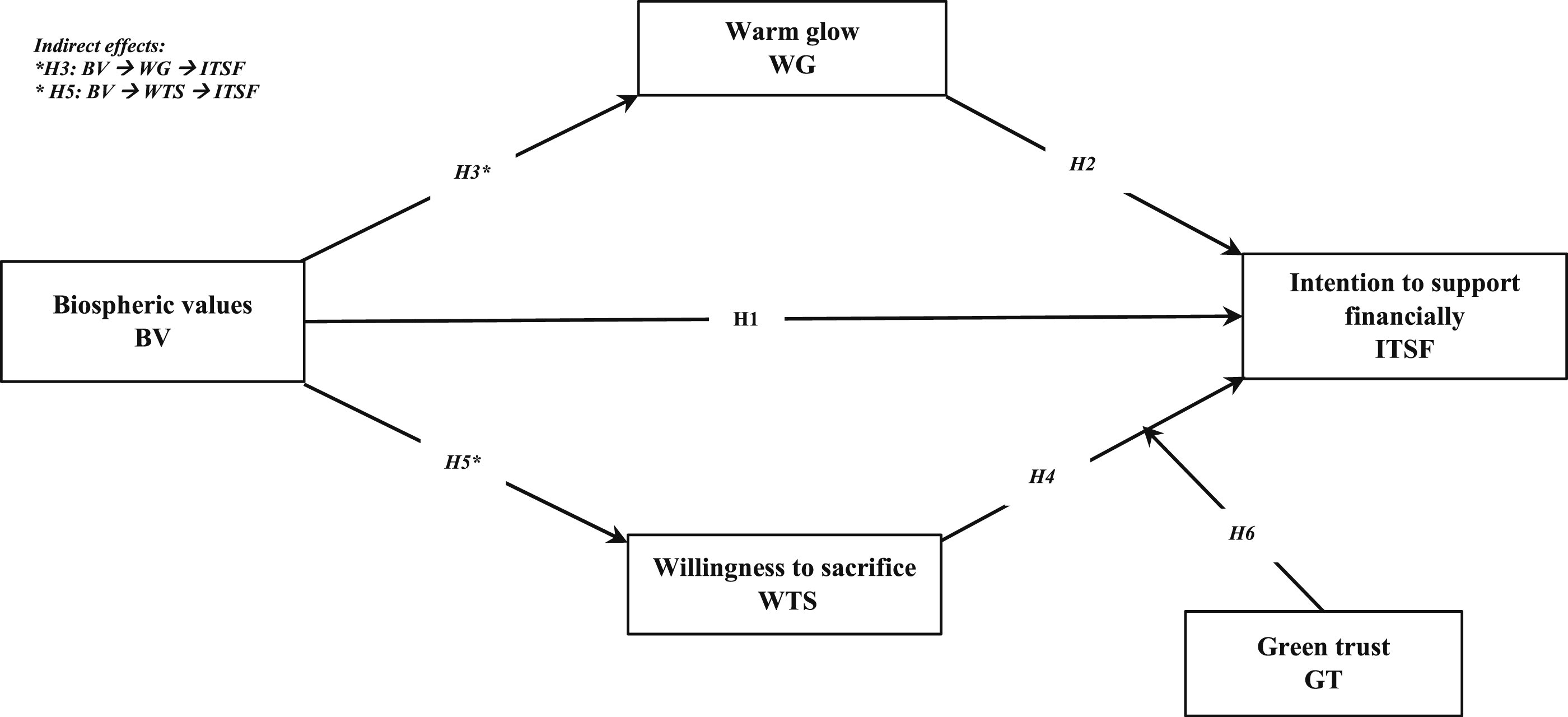
Methodology
Data Collection and Sample
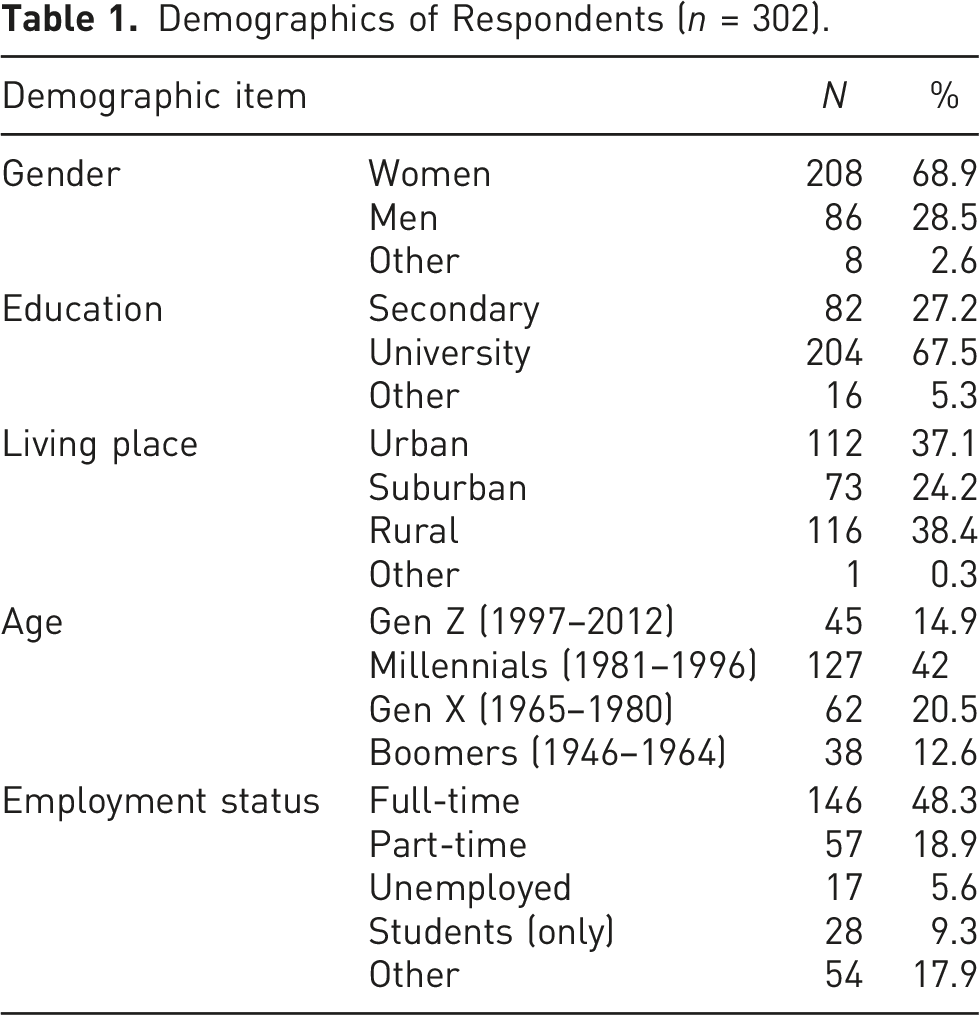
Demographics of Respondents (n = 302).
Measurement Instruments
We took a meticulous approach to gauging respondents’ intention to support green crowdfunding initiatives. To ensure clarity, we provided a clear definition of green crowdfunding and presented six fictitious campaigns related to the UN Sustainable Development Goals. These campaigns closely resembled real-life initiatives, which enabled respondents to relate easily. Using a five-point Likert scale, we asked participants to assess their intention to financially support each campaign. Based on that, we created a construct measuring one’s intention to financially support green crowdfunding campaigns. This systematic method offered several advantages: clear understanding, relevance to real-life scenarios, comprehensive assessment of different causes, and objective measurement. By adopting this approach, we obtained reliable and meaningful insights into individuals’ willingness to support green crowdfunding projects, which contributed to our understanding of their potential for promoting positive environmental impact.
The multi-item constructs used to measure variables in the model were adapted from previous studies. Biospheric values and willingness to sacrifice were measured using items borrowed from Stern et al. (1999). Green trust was adapted from Chen (2010) and warm glow from Jia and van der Linden (2020). Intention to financially support green crowdfunding campaigns was measured using the following statement: If given an opportunity, I would like to make a small financial contribution (approx. 10 GPB) to support this initiative related to each of the six crowdfunding initiatives described in the questionnaire. A seven-point Likert scale was used for all items. We also controlled for gender, employment status, and education.
Data Analysis
Response Bias Check.
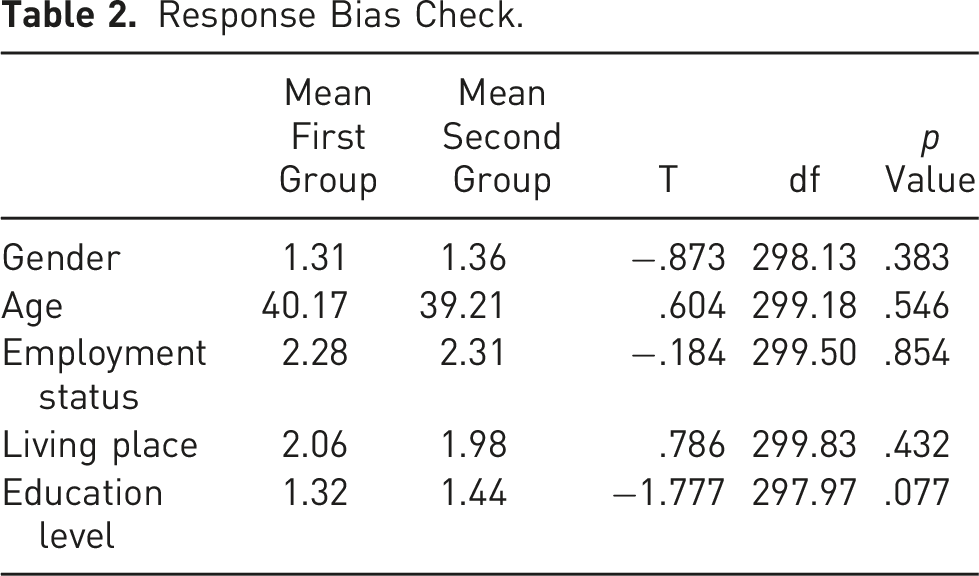
We also checked for the potential issue of CMB (Podsakoff et al., 2003). To that end, we used Harman’s single-factor test. In particular, we conducted exploratory factor analysis with one variable and no rotation. The single factor accounted for 37.65% of the variance in the data, which is below the recommended threshold of 50%, indicating that CMB is not a significant concern in our study. Concerning the sample size, we used the inverse square root method suggested by Kock and Hadaya (2018) (see also Hair et al., 2022). Our sample size of 302 participants exceeded the minimum recommended sample size of 208, estimated with a significance level of .05 and a power level of .80.
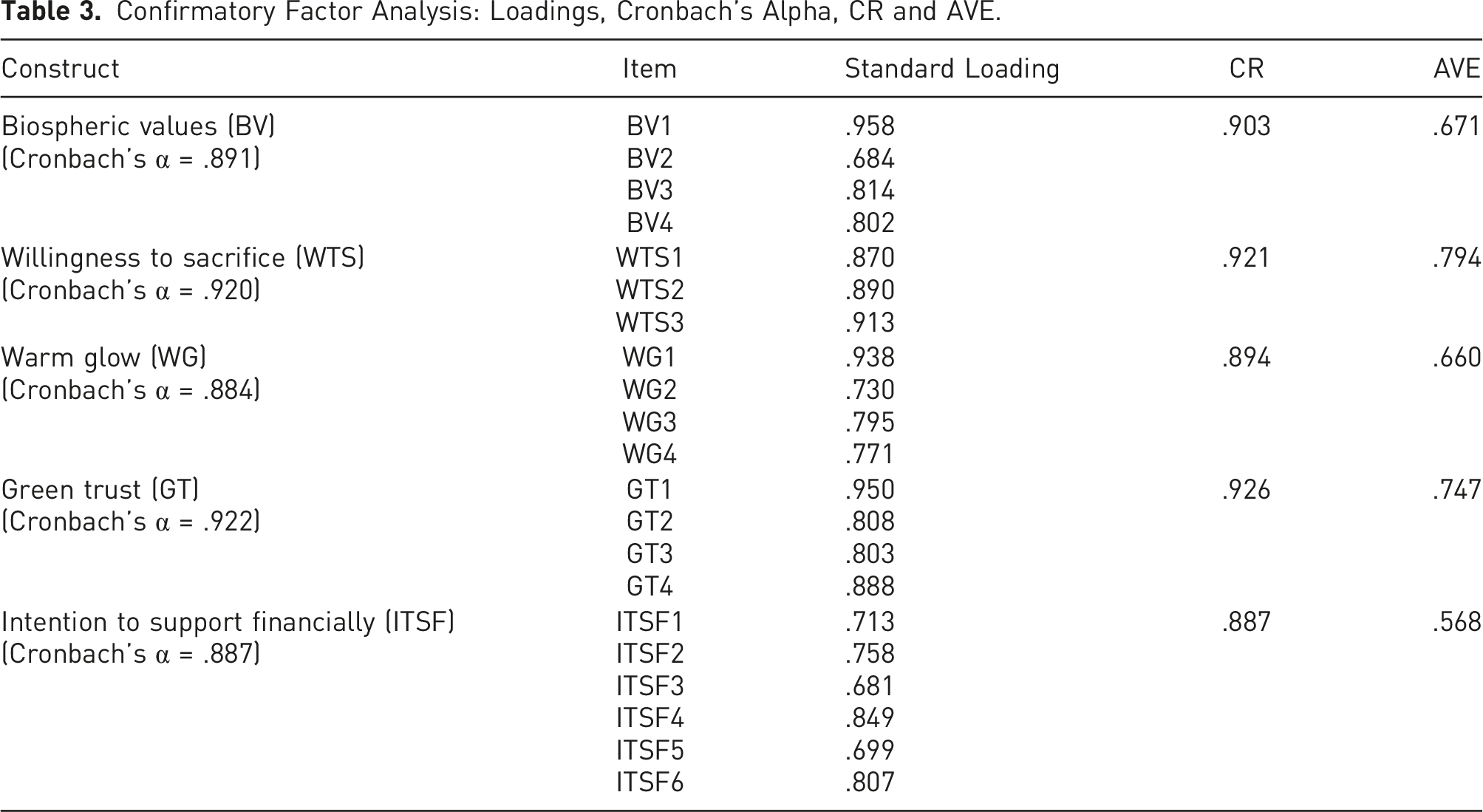
To analyse the proposed model, we utilised consistent partial least squares structural equation modelling (consistent PLS-SEM) with Smart PLS4 software (Ringle et al., 2022). Compared to CB-SEM, PLS-SEM offers greater flexibility in managing non-normal data and small sample sizes. It also allows for the estimation of complex models with moderation and mediation analysis and is specifically used in testing models in an exploratory manner (Hair et al., 2022). We used a two-stage evaluation of PLS-SEM results, beginning with confirmatory factor analysis (CFA) and then proceeding to evaluate the structural model.
Results
Measurement Model
Confirmatory Factor Analysis: Loadings, Cronbach’s Alpha, CR and AVE.
Assessment of Discriminant Validity: Fornell-Larcker Criterium.
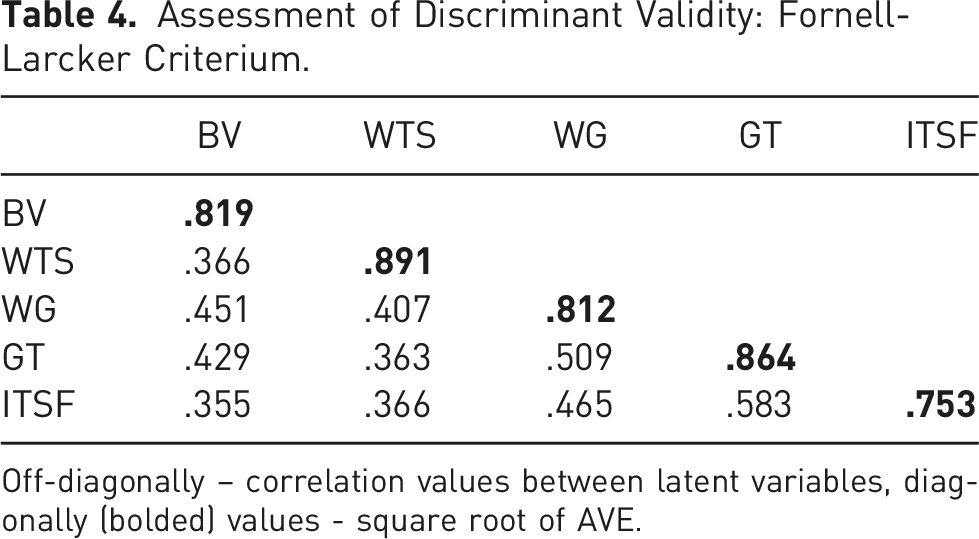
Off-diagonally – correlation values between latent variables, diagonally (bolded) values - square root of AVE.
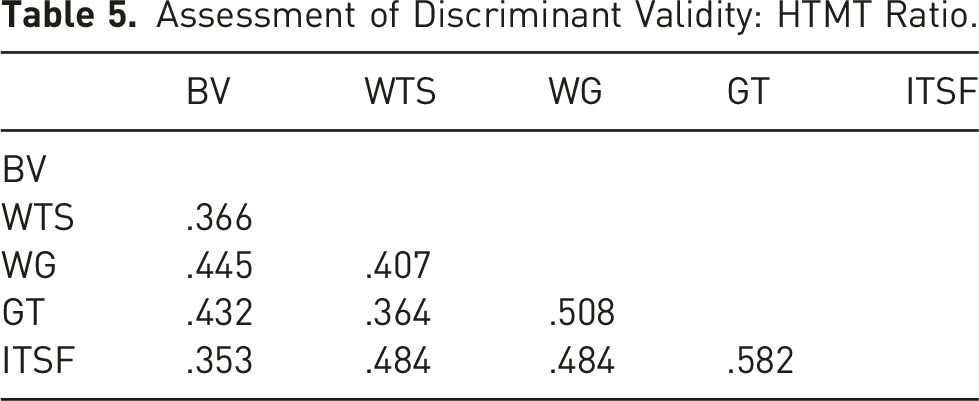
Assessment of Discriminant Validity: HTMT Ratio.
Structural Model and Hypotheses Testing
Prior to assessing the structural model, we conducted a collinearity analysis to ensure that it did not bias the results. The variance inflation factor (VIF) values for the inner model were 1.000 for the relationships between BV and WTS, BV and WG, 1.297 for the relationship between WTS and ITSF, 1.395 between BV and ITSF, 1.496 between GT and ITSF, and 1.625 between WG and ITSF; all of these were below the recommended threshold of 3.0 (Hair et al., 2022). We then evaluated the model’s explanatory power using the coefficient of determination (R2). The R2 value for our main endogenous construct (ITSF) was .45, while the R2 values for WG and GS were .131 and .201, respectively, which were considered satisfactory. Finally, we assessed the model’s predictive power (Q2) using the blindfolding technique. The Q2 value for ITSF was above 0 (Q2 = .281), indicating a moderate degree of predictive relevance for both variables. Similarly, the Q2 values for WG and GS were .151 and .103, respectively, suggesting that they also had predictive relevance.
Main Effects
Hypothesis Testing: Direct effects.

Mediation and Moderation Analysis
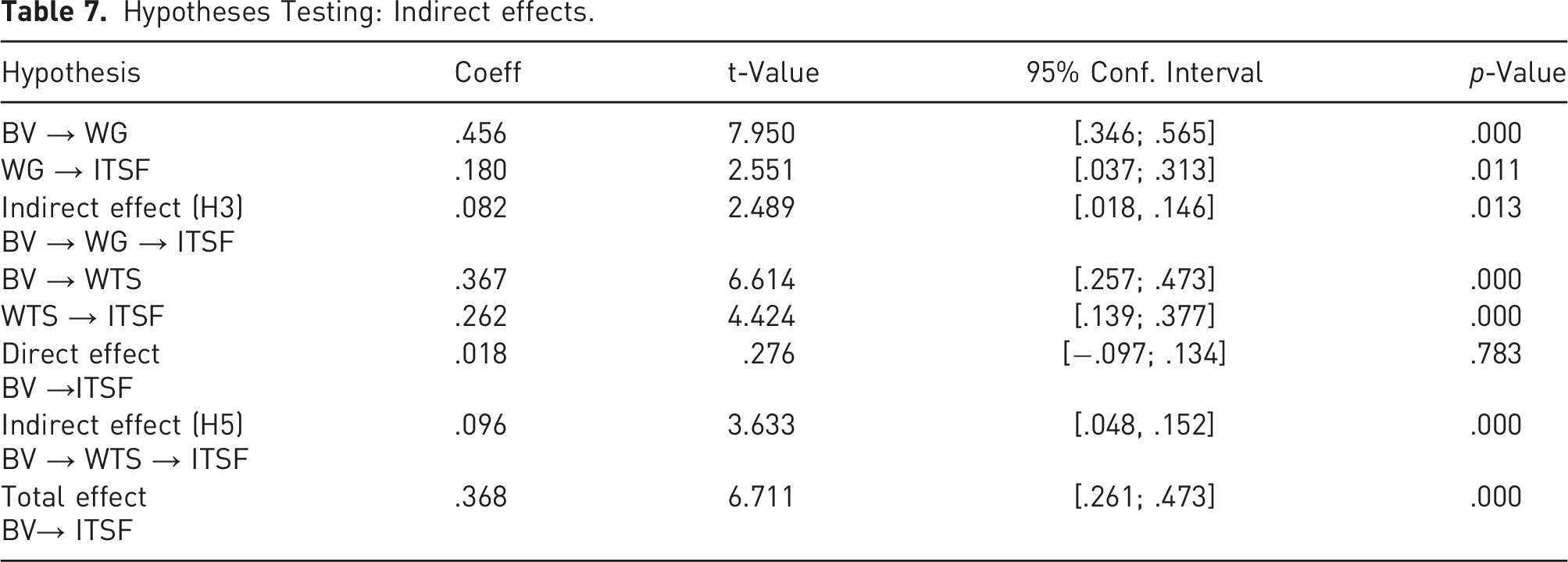
Hypotheses Testing: Indirect effects.
Hypotheses Testing: Moderating Effect.

The simple slope plot illustrates that the positive effect of willingness to sacrifice on intention to support green crowdfunding is strengthened by green trust. The upper line (in green), representing a higher level of GT, has a steeper slope, while the lower line (in red), which represents lower levels of GT, has a slightly flatter slope. Therefore, the simple slope plot confirms the positive interaction term, indicating that higher trust towards green crowdfunding entails a stronger relationship between WTS and ITSF (Figure 2). In summary, H6 was supported, although the effect size was moderate. Moderating effect of GT on the relationship between WTC and ITSF.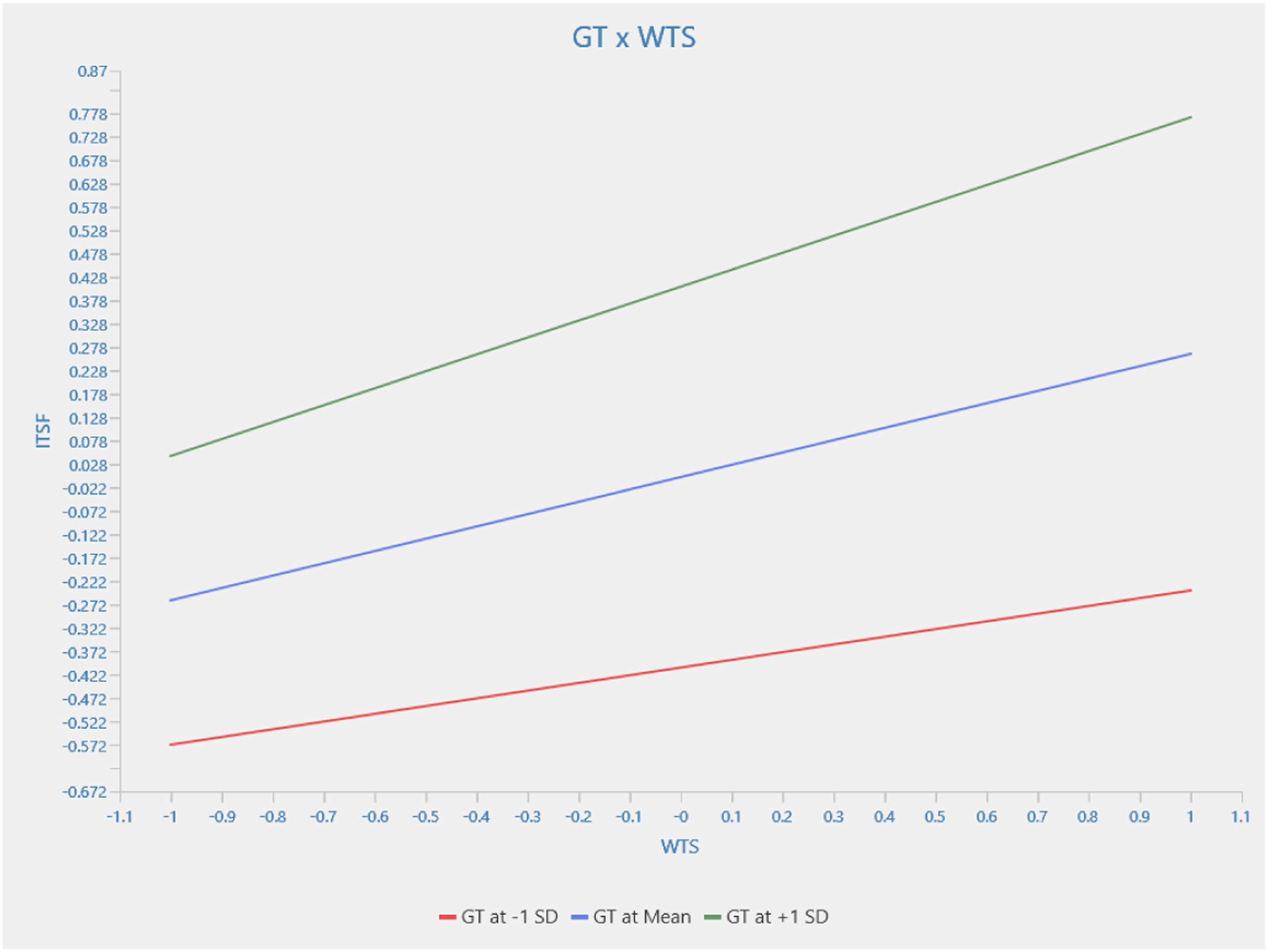
Finally, the employment status (t = .324, p < .756), education level (t = .880, p = .379), and gender (t = .507, p = .612) did not have a significant impact on the intention to support green crowdfunding projects.
Discussion
Supporting green crowdfunding campaigns can be regarded as a novel form of pro-environmental behaviour. Overall, our study’s outcomes suggest that the proposed model effectively identifies the antecedents of the intention to support pro-environmental crowdfunding campaigns. In doing so, it offers new insights into the literature on motivation in green crowdfunding.
First, our study reveals significant mediating effects of the warm-glow experience and willingness to sacrifice for the environment in the relationship between biospheric values and intention to support pro-environmental crowdfunding campaigns. This is consistent with prior PEB research (Bazaraa et al., 2022; Chung et al., 2019; Hartmann et al., 2017). However, we found that biospheric values did not have a significant direct impact on intention, perhaps due to the nascent nature of pro-environmental crowdfunding. This makes it challenging to determine the actual environmental impact of the crowdfunding, which is crucial for individuals with strong biospheric values. Moreover, theoretical frameworks such as the VBN theory suggest that there are other factors between values and intention, such as norms and beliefs that mediate this relationship (de Groot & Thøgersen, 2018; Wang et al., 2021). Consequently, in our study, both willingness to sacrifice and warm glow acted as full mediators. Specifically, strong biospheric values elicited the expected warm-glow effect, leading to a willingness to support green projects, even with uncertain outcomes. Furthermore, activation of biospheric values was linked to a willingness to sacrifice for the environment, which is likely due to the sense of responsibility and awareness associated with strong environmental values. These results support the applicability of the warm-glow theory and environmental concern concept in the green crowdfunding context.
Second, the warm-glow experience’s significant influence on PEB, both directly and as a mediator, aligns with the literature (Hartmann et al., 2017; Zawadzki et al., 2020). However, it may be particularly valid in the context of crowdfunding. The ease of use, online accessibility, and typically low contributions enable individuals to experience the warm-glow effect quickly and with minimal effort, both financially and physically. Additionally, supporting green campaigns often involves helping the fundraisers, reinforcing the altruistic warm-glow effect. Third, our study finds that willingness to sacrifice for the environment is a critical predictor of support for green crowdfunding projects, which adds to the empirical evidence of this association (Chung et al., 2019; Marquart-Pyatt, 2012).
Lastly, our study found a significant moderating effect of green trust on the relationship between willingness to sacrifice and intention to support green projects, which aligns with previous research on the role of green trust (Ahmad & Zhang, 2020; Amin & Tarun, 2021). This suggests that trust towards green crowdfunding may strengthen the relationship between willingness to sacrifice for the environment and intention to support pro-environmental crowdfunding campaigns. In other words, green trust may be a critical factor that influences one’s intention to support such campaigns. However, the effect is not as strong as we had anticipated, partially due to the fact that crowdfunding contributions are typically relatively small. The average donation may be equivalent to the price of a cup of coffee, which may not seem like a substantial sacrifice for someone who is genuinely eager to make an environmental sacrifice.
Theoretical Implications
This study contributes to the existing literature on pro-environmental behaviour (PEB) and crowdfunding in several ways. Firstly, we extend the concept of PEB to the domain of crowdfunding (Stern et al., 1999). Specifically, our study integrates the concept of crowdfunding into the research on PEB by identifying supporting green crowdfunding projects as a form of PEB. This expands the scope of PEB and highlights the potential of crowdfunding as a novel platform for promoting environmental causes. Such an approach is consistent with the diffusion of innovation theory, which suggests that new technologies and platforms can facilitate the adoption of new behaviours (Rogers, 2003). Moreover, as crowdfunding campaigns are conducted entirely online, they have the potential to go viral, which makes them an attractive and popular form of PEB.
Secondly, our study contributes to the literature on motivation in crowdfunding by examining the relationships among warm glow, biospheric values, willingness to sacrifice, green trust, and intention to support green projects. Prior research has mainly focused on motivation in reward-based or charitable crowdfunding (Bagheri et al., 2019; Chen et al., 2021). Importantly, our findings suggest that, in green crowdfunding, selected antecedents of pro-environmental behaviour can explain an individual’s intention to engage and support environmental actions. In particular, the present study provides novel insights into the role of (biospheric) values in shaping individuals’ intention to support green projects. The fact that values are not directly linked to the intention to support crowdfunding initiatives implies that the alignment of backers’ and projects’ values in green campaigns is not straightforward, but is influenced by multiple factors, which is consistent with theoretical frameworks such as the VBN theory, which are commonly used to explain PEB. In particular, by highlighting the significant mediating effects of warm glow and willingness to sacrifice, our study supports the perspective of the value-belief-norm theory (Stern et al., 1999), which suggests that values play a crucial role in the activation of pro-environmental norms and beliefs, ultimately leading to intentions and behaviours. This finding confirms that, in terms of pro-environmental behaviour, values are not directly related to one’s intention, but are mediated by a series of norms and beliefs (Hartmann et al., 2017; Steg et al., 2005; van der Werff et al., 2013). Thus, it can be concluded that the motivation of potential green campaigns’ backers can be better explained by using theoretical frameworks that are often employed in explaining PEB.
Furthermore, the variables that were found to have a significant impact on the intention to support green crowdfunding initiatives, especially warm glow and willingness to sacrifice, can be considered as components of attitudes, which are defined as an individual’s evaluation of how favourably or unfavourably a behaviour, objects, etc. are perceived. Attitudes are a fundamental concept in the theory of planned behaviour, which is commonly used to explain pro-environmental behaviour. In this sense, our study contributes to the integration of green crowdfunding into existing theoretical frameworks. Specifically, our results indicate that attitudes towards supporting green crowdfunding projects are influenced not only by personal beliefs and subjective norms but also by emotional experiences associated with warm glow and the sense of responsibility with willingness to sacrifice for the environment. Thus, incorporating these subcomponents into the measurement of attitudes could provide a more comprehensive understanding of the determinants of intention to support green crowdfunding campaigns. Additionally, by merging values, which are a core element of the VBN theory, with attitudinal factors, our study could further support the need to integrate theories based on values and attitudes. The interactions among various motivations and combinations of different theoretical approaches are crucial in explaining pro-environmental behaviour, including green crowdfunding.
Our findings also provide support for the applicability of the assumptions related to warm-glow theory to green crowdfunding. Previous studies have mainly assessed the warm-glow effect in reward-based crowdfunding (Bi et al., 2019; Cecere et al., 2017). However, to the best of our knowledge, no research has ascertained how warm glow affects intention to support pro-environmental campaigns. Thus, the present study provides evidence that the warm-glow experience not only influences intention but also provides a complementary explanation for the relationship between biospheric values and intention. Moreover, we deepen our knowledge of the concept of willingness to sacrifice for the environment. Although several studies have established a strong link between willingness to sacrifice and PEB (Doyle, 2022; Thøgersen, 2000), none have investigated this relationship in the context of green crowdfunding. In particular, we have shown how this aspect of environmental concern can lead people to support green crowdfunding campaigns. Additionally, our finding that green trust acts as a moderator of the relationship between willingness to sacrifice and intention implies that this particular kind of trust reinforces the effect in question (Hörisch, 2019). Finally, the present study adds to the growing literature on the role of digital platforms in promoting sustainable behaviour. By highlighting the potential of crowdfunding as a means of promoting pro-environmental behaviour, our research contributes to the literature on the use of digital platforms for sustainable development.
Practical Implications
Our study has several implications for crowdfunding practitioners and non-profit institutions working for environmental protection. First, as our findings suggest, in terms of green initiatives, intrinsic motivations such as warm-glow experience or willingness to sacrifice for the environment significantly influence potential backers’ decisions. Therefore, pro-environmental campaigns should be promoted by offering badges or statuses of environmentally friendly projects or creating a special category for green projects, as Kickstarter has done with its dedicated category and “project we love” label for selected projects. In that way, those who hold strong green values may be willing to back a recommended project aimed at environmental protection. Moreover, as green trust seems to be an important factor influencing one’s intention to support environmental projects, platforms should encourage fundraisers to make public and propagate a project’s results after its completion (Hörisch, 2019). In addition, as our study found that green trust is an important factor influencing intention to support environmental projects, platforms should promote the dissemination of projects’ results. Fundraisers and platforms can also consider collaborating with NGOs and external organisations that can provide third-party certifications to ensure that projects have created environmental value. Trusted partner endorsements can also help build green trust, and fundraisers should clearly outline the concrete environmental outcomes of their projects (Maehle, 2020). Finally, local institutions and NGOs should be open to crowdfunding as a source of external funding for pro-environmental actions. Crowdfunding can be a new form of PEB; by using it, organisations can tap into the potential of crowdfunding as a platform for promoting environmental causes and encouraging sustainable behaviour.
Conclusions
This study explores the role of green crowdfunding as a form of pro-environmental behaviour and identifies the factors that influence one’s intention to support such initiatives. Our research suggests that while biospheric values play a significant role in an individual’s decision to support crowdfunding projects, this relationship is fully mediated by willingness to sacrifice and the warm-glow effect. Moreover, our study emphasises the importance of green trust, indicating that it acts as a moderator in the relationship between willingness to sacrifice and intention to support. In that sense, the study deepens our understanding of motivation for supporting pro-environmental projects and highlights the potential use of donation-based crowdfunding by non-profit environmental organisations.
This study has certain limitations, which may also provide opportunities for future research. Firstly, the study relied on self-reported data collected from respondents from one country, so it would be worthwhile replicating the study in different cultural contexts. Secondly, our study focuses on the intention to financially support campaigns and does not consider the dual nature of support in crowdfunding (that is, financial backing and information-sharing). Therefore, future researchers could explore the underlying mechanism of motivation for sharing information about pro-environmental campaigns. Additionally, given that our study uses a quantitative approach and focuses on backers’ perspective, it would be useful to apply a mixed-method research approach and analyse data collected from crowdfunding platforms. Moreover, the participant sample in our study over-represented women compared to men. While this imbalance did not directly influence our analysis, it could be a relevant factor to consider in the context of green crowdfunding. The differing gender proportions might lead to variations in response patterns or decision-making processes, potentially affecting the generalisability of our findings. Exploring the gender-related dynamics in the context of green crowdfunding could provide valuable insights into how men and women engage with and perceive environmentally oriented projects, allowing for a more comprehensive understanding of the motivations driving crowdfunding support in sustainable initiatives. Finally, an interesting area for future research would be to investigate the underlying mechanisms through which trust operates in shaping pro-environmental behaviour; for instance, by examining the link between trust and willingness to sacrifice and exploring how trust in crowdfunding platforms and fundraisers influences one’s level of commitment and dedication to supporting environmental campaigns. Understanding these dynamics could provide valuable insights for promoting and fostering sustainable initiatives in the future.
Footnotes
Declaration of Conflicting Interests
The author(s) declared no potential conflicts of interest with respect to the research, authorship, and/or publication of this article.
Funding
The author(s) received no financial support for the research, authorship, and/or publication of this article.