




Abstract
As the world shifts to renewable energy sources to mitigate climate change, virtual power plants (VPPs) have emerged as an innovative solution for integrating distributed renewable generation. This study conducted a comprehensive Life Cycle Assessment (LCA) for a 40 MW VPP in operation in Aotearoa New Zealand, comprising residential solar photovoltaic systems with battery storage. Unlike traditional LCA studies that focus on individual components, this study evaluates the full life cycle impacts of a VPP, offering a holistic view of its environmental implications. Additionally, the study considered electricity fed back to the grid, which avoids grid electricity, or electricity generation from natural gas. The findings reveal an estimated life cycle greenhouse gas (GHG) emissions of 45.3–78.9 gCO2eq/kWh for the VPP, depending on what the surplus electricity replaces. Notably, avoiding natural gas electricity generation by returning surplus electricity to the grid yields a significant credit of −47.3 gCO2eq/kWh. The life cycle GHG emissions of the VPP are highly sensitive to PV generation. If the systems are operated at their maximum potential, the overall emissions reduce by 17.6%. Conversely, when operated at minimum potential, the emissions increase by 23.2%. Additionally, uncertainties in the energy demand to manufacture the battery cells can alter GHG emissions from a 6.7% reduction to a 14.3% increase. This study underscores the complexity of evaluating environmental performances of VPPs and fills a gap in the literature by presenting the potential environmental impacts and benefits of VPPs, shedding light on their role in fostering sustainability with the energy transition.
Keywords
Introduction
Transforming the energy system is crucial for limiting global warming and reducing GHG emissions, as the energy system transitions from fossil fuel-based to low-carbon energy. Deploying renewable electricity generation is a key strategy within the energy transition (Calvin et al., 2023). Nevertheless, wind and solar power are fluctuating energy sources, because of their variability and intermittency, as they are highly dependent on external factors such as weather conditions, time of day, and season (Anvari et al., 2016). Unlike traditional fossil fuel-based power plants, which typically generate electricity at a relatively constant rate on a large scale within a centralised system, solar and wind power can also be deployed in a decentralised configuration (Johnstone et al., 2020). Transitioning to an electricity system with high shares of wind and solar power generation is challenging as it requires a constant balance of the system (BOS) between electricity supply and demand (Cebulla et al., 2018). To address this challenge, diverse strategies can be used, such as storing electricity, demand-response, diversifying the electricity mix, and changing electricity governance (Cebulla et al., 2018).
In this context, VPPs are a significant innovation in the energy sector, as they aggregate distributed energy resources, such as rooftop solar photovoltaics (PVs), and batteries, unifying them into a network that can operate like a single power plant (Wang et al., 2023). Thus, VPPs can generate electricity from renewable sources as well as balance the electricity load, by responding to fluctuations of electricity supply and demand (Naval and Yusta, 2021). Not only generating electricity from renewable sources but also balancing power with low-carbon technologies has become crucial for sustainability (Emblemsvåg, 2022), and VPPs have emerged as a promising solution in this regard. VPPs are, therefore, a key strategy for controlling complex, decentralised, distributed, and heterogeneous electricity generation (Rädle et al., 2021). The control and operation of VPPs are complex, involving energy management across thousands of distributed residential systems. VPPs are becoming more common worldwide as countries undergo energy transitions. In Aotearoa New Zealand, for example, the SolarZero VPP is in operation. It aggregates decentralised solar PV electricity generation and smart batteries (SolarZero, n.d.). The system is connected to the national grid, enabling electricity supply when demand is high or if there is an outage (SolarZero, n.d.).
Analysing the environmental impacts, such as GHG emissions, of VPPs has become crucial as they play an increasingly significant role in shaping new electricity systems, and understanding their environmental implications is essential for ensuring a sustainable energy transition. The life cycle impacts of products and systems can be evaluated with the standardised LCA approach (ISO 14040, 2006). To the best of the authors’ knowledge, this study represents the first comprehensive LCA conducted specifically for a VPP. Silman et al. (2023) applied a carbon handprint approach to assess potential reductions of GHG emissions of a VPP using demand response strategies and battery storageClick or tap here to enter text. The carbon handprint approach is a useful metric for assessing the potential positive environmental impacts of technologies by measuring the reduction in GHG emissions that these technologies can achieve. However, its scope is often limited to quantifying emission reductions from specific actions or strategies, without providing a holistic view of the environmental impacts throughout the entire life cycle of a system, which is the focus of this study. Previous research has explored related areas. However, they differ significantly from the VPP framework we examine. Previous studies have made significant contributions to understanding the environmental impacts of various components that can integrate into a VPP, such as distributed solar power (Ali et al., 2022; Huber et al., 2023); renewable energy communities (Rossi et al., 2021); and microgrids (Papageorgiou et al., 2020). However, these studies do not comprehensively address the life cycle impacts of an integrated VPP, as the combination of multiple components, along with operational strategies employed by the VPP, can influence the overall environmental impacts. Therefore, a comprehensive LCA study of a VPP is still lacking in the literature.
Objectives of the study
This study aims to develop (potentially) the first comprehensive LCA for a VPP. The overall objectives of the study are to investigate the associated carbon emissions, materials, and energy footprints of a VPP constituting distributed solar PV generation and smart batteries. The life cycle impacts are analysed in terms of the electricity demand of households comprising the VPP. The SolarZero VPP that is already operational in Aotearoa New Zealand is used as a case study. Specific objectives of this study are to analyse i) the GHG emissions saving of avoiding electricity from the grid and gas turbines, ii) the sensitivity to electricity generation, considering different PV generation potentials, iii) the sensitivity to energy demand for battery cell manufacturing, iv) the comparison of manufacturing in different countries, and v) the recycling of the LFP battery. Analysing the environmental impacts of VPPs is essential for making informed decisions regarding their deployment and ensuring that they contribute to a more environmentally responsible energy system.
Literature review: life cycle assessment for virtual power plants
The environmental benefits of a VPP have been studied using the carbon handprint approach, in which the potential reduction of the electricity grid's carbon footprint by implementing VPPs was quantified (Sillman et al., 2023). However, the concept of carbon handprint is still emerging, and there are no standards for the approach (Malabi et al., 2023). The emissions savings of a VPP with electricity consumption reduction strategies were analysed, but using emission factors, and not conducting a LCA (Wang et al., 2023). Other studies have proposed optimisation models for VPP systems, considering emission costs (Nikolaidis and Poullikkas, 2022). Although LCA is a standardised and consolidated method used to provide a comprehensive evaluation of the life cycle environmental impacts of products and services, considering the specifications of those, the literature lacks LCA studies for VPPs.
Unlike previous studies that have focused on individual technologies in isolation, this research uses an integrated approach by considering a VPP configuration. However, it remains crucial to consider the evolution of PV and battery technologies when analysing the potential environmental impacts of a VPP.
Overview of LCAs for distributed systems
The potential life cycle impacts of distributed solar systems have been previously analysed. For instance, the environmental impacts of electricity generation from distributed renewable energy systems (Li et al., 2019; Väisänen et al., 2016), and specifically from distributed solar PV systems, have been assessed (Ali et al., 2022). Other modelling efforts integrated an LCA approach and the estimation of electricity production and consumption for decentralised energy systems (Huber et al., 2023). Only a limited number of studies have evaluated the life cycle impacts associated with solar microgrids connected to the electricity grid (Das et al., 2018; Papageorgiou et al., 2020).
Nevertheless, the literature is scarce on LCA studies for distributed solar PV generation and battery storage systems, although the environmental impacts of single technologies have been extensively studied (Huber et al., 2023). However, the technologies have rapidly evolved to enhance energy efficiency, durability, and improvements within the supply chain. The PV market is currently dominated by the monocrystalline silicon (mono-Si) technology, but wafers and modules have developed to larger formats, and bifacial configurations for cells and modules have increased (Mannino et al., 2023; VDMA, 2023). Efforts have been made to update life cycle inventories for PV modules (Frischknecht et al., 2020b) and specific for PERC technology applications (Müller et al., 2021; Pincelli et al., 2024a).
The life cycle GHG emissions associated with PERC PV modules vary widely in the literature, ranging from 13.3 (Müller et al., 2021) to 29.2 gCO2eq/kWh (Luo et al., 2018). These variations stem from methodological disparities, diverse module designs, including glass-glass and rear aluminium backsheet configurations (Luo et al., 2018), as well as differences between bifacial and monofacial panels (Jia et al., 2021), and manufacturing locations (Müller et al., 2021). The primary contributor to GHG emissions of mono-Si PERC modules is the supply chain of the silicon wafer, due to the energy-intensive nature of silicon crystal growth in the Czochralski process and solar-grade silicon purification in the modified Siemens process (Pincelli et al., 2024a).
Overview of LCAs for lithium-ion batteries for stationary applications
The LCA literature on batteries is vast, although studies differ broadly in scope, assessment framework and quality (Peters, 2023). For instance, end-of-life management strategies have not been sufficiently addressed (Pellow et al., 2020). Furthermore, it is paramount to state the assumed application for the battery, as it defines key parameters for the LCA, such as charging electricity and lifetime (Peters, 2023).
Few studies have analysed the life cycle impact of lithium-ion batteries (LIBs) for stationary applications, and most of the research focused on transportation applications (Pellow et al., 2020). Stationary applications have unique characteristics when compared to transportation applications, such as the BOS configuration, cell size, operational profile, and end-of-life management (Pellow et al., 2020). Nevertheless, LIB inventories for transportation applications can be relevant for stationary systems, when the same chemistry or cells are implemented (Delgado et al., 2019; Pellow et al., 2020). The environmental performance of residential LIBs using the specifications of commercially available batteries has received limited attention (Le Varlet et al., 2020).
The technologies for LIBs are vast, depending on the chemical composition of the cathode. The most used for residential energy storage are phosphate (LFP), nickel manganese and cobalt oxide (NMC), nickel cobalt aluminium oxide (NCA), manganese oxide (LMO) and nickel cobalt oxide (NCO) (Le Varlet et al., 2020). The cycle lives and energy densities of LIBs are usually high, compared to other battery technologies, which determine the amount of electricity over the lifetime per battery mass (Hiremath et al., 2015). The difference in electrode materials is not the primary factor driving variations in the carbon footprints of LIBs. Instead, carbon footprints stem from different assumptions for energy demand and components (Ellingsen et al., 2017), as well as battery cycles and lifetime (Le Varlet et al., 2020).
The GHG emissions related to manufacturing LIBs range from 38 to 356 kgCO2eq/kWh (Ellingsen et al., 2017). One of the sources of variation stems from the wide range estimation for energy demand for cell manufacturing (Ellingsen et al., 2017; Pellow et al., 2020), varying up to an order of magnitude across different studies (Peters et al., 2017). Studies have used different approaches to estimate the energy demand, bottom-up and top-down (Peters and Weil, 2018). Ellingsen et al. (2014) estimate one of the highest energy consumptions for cell manufacturing, in which dry rooms demand most of the energy. Different sources of energy for manufacturing batteries also contribute to the associated wide range of carbon footprints, as fossil fuel-based electricity has higher impacts than renewable sources. Therefore, the environmental impacts of LIB value chains depend greatly on the origin of the raw materials, the location of manufacturing, and the associated energy mix (Peters, 2023).
Method
The LCA approach was used to assess the environmental and energy performance of a VPP in Aotearoa New Zealand that combines PV panels with LIBs. The LCA is a standardised method defined by ISO 14040 and ISO 14044 to evaluate potential environmental impacts caused by a product, process, or service over its entire life cycle. The LCA method consists of defining the goal and scope of the study, analysing the inventory data, assessing environmental impacts, and interpreting the results. Specific to LCAs of PV systems, the IEA PVPS provides guidelines (Frischknecht et al., 2020a).
Goal and scope
The overall goal of this study is to perform an LCA of a 40 MW VPP in Aotearoa New Zealand. The secondary objectives are analysing i) the sensitivity to electricity generation, considering different PV generation potentials, ii) the GHG emission saving of avoiding electricity from the grid or gas turbines, iii) the sensitivity to energy demand for battery cell manufacturing, iv) the comparison of manufacturing in different countries, and v) the recycling of the LFP battery.
The functional unit is 1 kWh of electricity delivered to households that compose the VPP (assuming a 30-year operational life). It is assumed that households consume electricity from the grid, as well as generated from the PV system. Electricity is stored in the LFP batteries, and part of the electricity is dispatched to the grid when PV generations exceeds battery storage capacity and residential consumption. Therefore, the electricity sent back to the grid is regarded as a by-product of the system. The impacts of the VPP on the grid are analysed considering the avoidance of grid consumption, as well as combined cycle gas turbine generation in Aotearoa New Zealand, when the system dispatches electricity back to the grid. Additionally, the functional unit of 1 kWh of electricity generated by the household PV systems is calculated, to compare the VPP system to other conventional generation systems.
The boundaries of the study are cradle-to-grave, including the production of the PV panels and batteries, and BOS components, the installation and operation of household systems, and the end-of-life management of the post-consumer components (see Figure 1). The system was modelled using the Activity-Browser software package (Steubing et al., 2020).

System boundary.
The VPP reached 11,518 installed systems with a combined capacity of around 40 MW in 2023, and other key parameters are presented in Table 1. The VPP consists of contracts with residential households willing to install solar PV generation systems on their rooftops with battery storage. Thus, the VPP operates distributed electricity generation and storage. In terms of the latter, 4272 systems have a battery capacity of 5.4 kWh, 4408 systems have 6.4 kWh batteries, and 2838 systems have 10.8 kWh batteries. Each system is assumed to have a 30-year lifetime, as per the PV warranties, although the contractual arrangement between SolarZero and the residential households is for 20 years. The parameters for a representative household system are shown in Table 2.
Virtual power plant parameters.

Virtual power plant parameters.
Representative household solar generation system.

The household solar generation system consists of an array of PV panels, electricity storage, and BOS components, namely a 10 kW inverter, mounting system, and electrical installation. It was assumed that a common and simple mounting system is used to attach the PV panels on a slanted roof. The electrical installation includes lightning protection, cablings, and a fuse box.
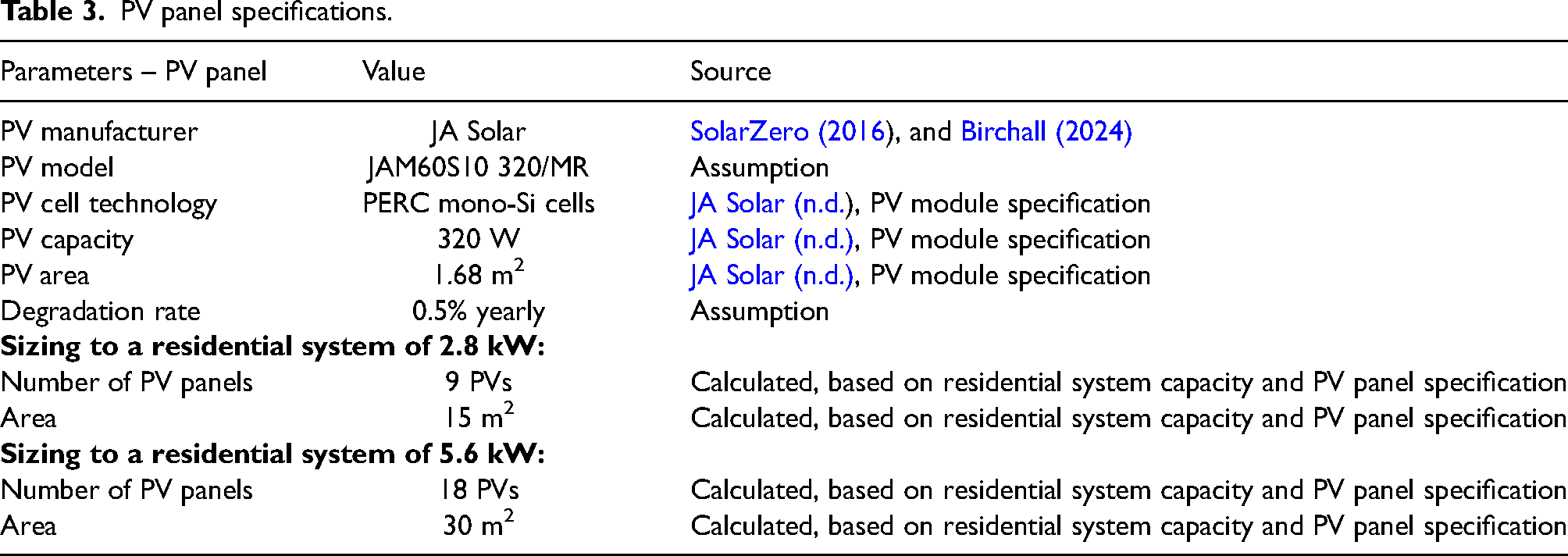
The PV technology has evolved to enhance the efficiency and durability of modules. The PV market is currently dominated by crystal silicon technology, using monocrystalline silicon (mono-Si) cells (VDMA, 2023). The most mature cell technology is the passivated emitter and rear cell (PERC), which uses p-type material with a passivating layer of Al2O3 and a capping layer of SiNx. In 2022, PERC mono-Si represented 80% of the PV cell market (VDMA, 2023). This study considered a PERC mono-Si PV panel with specifications as presented in Table 3.
PV panel specifications.
The stationary electricity storage component is the LFP battery, with an assumed 10 years of operating life. Therefore, 3 batteries are required over the lifetime of the complete system. Specifications for the battery component are presented in Table 4.
Battery specifications.

The PV modules and batteries are assumed to be manufactured in China and shipped to Auckland port in Aotearoa New Zealand. From Auckland, the components are distributed over the country to constitute the VPP as distributed solar electricity generation systems for mainly households. In the installation phase, electricity is required for mounting the rooftop PV system coupled with the battery.
During the operational phase, the batteries are assumed to charge and discharge electricity twice a day – before the (typical) morning and evening peak demand periods. Over the year, on average, the daytime charge demand is provided by the PV panels generation and the grid, and the night-time charge is purely from the grid. A detailed examination of the operational and control aspects of the VPP is beyond the scope of this study. For a comprehensive understanding of the VPP operations, we refer readers to the report of Ara Ake et al. (2024), which provides a detailed description of the dispatch process in the winter peak in New Zealand, including the system's interactions with the market, operational procedures, and response strategies during different grid conditions.
The average household electricity consumption in New Zealand is 7.2 MWh per year, which has been consistent over the past five years, as shown in Figure 2 (Electricity Authority, 2024). The amount of electricity required to charge the batteries in each cycle was calculated, assuming 70% of the State of Charge is utilised – between 20% and 90%. The electricity generated by the PV modules was estimated considering the average solar generation potential in New Zealand (Global Solar Atlas, 2024) (see Table 5). The estimated solar electricity generation for the entire VPP is between 1.3 and 1.8 TWh over the 30-years lifetime, considering the minimum and maximum generation in Aotearoa New Zealand as per the Global Solar Atlas (2024).
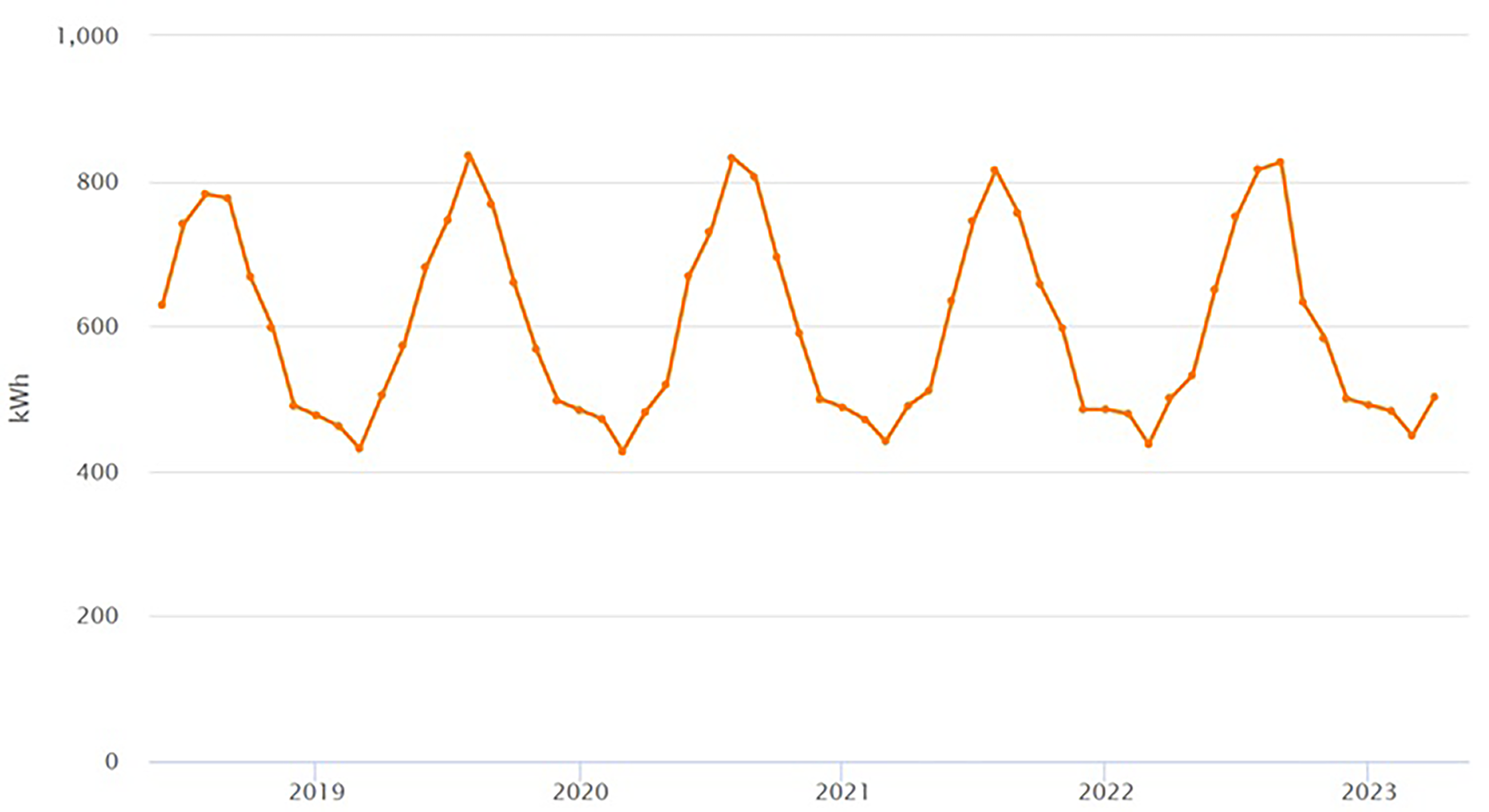
Average household electricity consumption in Aotearoa New Zealand. Source: Electricity Authority (2024).
Estimation of electricity generation in a representative household system.

Considering the household electricity demand, battery charging, and PV generation, it was estimated whether extra electricity from the grid was required or if surplus electricity from the PV generation could feed back to the grid. The VPP contributes to balancing the supply-demand, underscoring its role in not only supporting households to meet their own electricity needs but also participating in the broader electricity infrastructure.
As the systems reach the end of their useful phase, effective end-of-life management solutions are required to ensure resource efficiency and enhance the sustainability of the system. As the system is decommissioned and components dismantled, metal and materials are recovered by recycling. Bulk materials are assumed to be recycled locally and other waste materials are disposed of in landfills. A recycling rate of 75% for the glass and 22% for aluminium and copper was taken (Frischknecht et al., 2020a).
Silicon from PV modules can be recovered as solar-grade silicon by removing doped n-type emitter layers, which reduce the purity of silicon (Pincelli et al., 2024a). Recycling procedures of PV modules consist of mechanical removal of the mounting structure, junction box, and encapsulant, as well as separation of glass from the silicon wafer (Heath et al., 2020). A further recycling scenario was considered, in which silicon is recovered as solar grade silicon, with a recycling rate of 75%. In this scenario, the recycling rate for bulk materials from all the components was increased to 95%, for glasses, and 90%, for metals, as per Pincelli et al. (2024a)'s study.
Direct physical recycling and hydrometallurgy recycling are the dominating technologies for recovering LFP batteries (Quan et al., 2022), and these two recycling routes were considered in different recycling scenarios. In direct physical recycling, after the batteries have been dismantled, the cathode and anode materials are assumed to be repaired for manufacturing new batteries, and aluminium, copper, graphite, the electrolyte, and the separator are recycled (Quan et al., 2022). In hydrometallurgical recycling, the lithium is recovered as lithium chloride. Dismantled LFP batteries are crushed and sieved into powder, and the powder is chemically treated to produce lithium chloride (Quan et al., 2022).
The inventory for the PV panel was based on previous research conducted for a solar utility-scale system utilising PERC mono-Si panels (Pincelli et al., 2024a), with adjustments. Specific databases for the PERC mono-Si technology, for cell and module manufacturing, were utilised (Müller et al., 2021) and the updated IEA PVPS (Frischknecht et al., 2020b) database was selected to represent the entire wafer supply chain, encompassing metallurgical silicon processing, solar grade silicon upgrading, silicon crystal growth and wafer slicing, reflecting current advancements in the silicon processing. In this study, an aluminium backsheet was included in the inventory, as in a previous study – for a utility-scale solar farm – a double-faced glass module was considered (Pincelli et al., 2024a). Additionally, the PV module was adjusted to the utilised PV model size of 320W and 1.68 m2 of surface area. Table 6 presents the simplified inventory data utilised for the PV module manufacturing.
Simplified inventory for manufacturing 1 m2 PERC mono-Si PV module.

Simplified inventory for manufacturing 1 m2 PERC mono-Si PV module.
The inventory for the battery component was derived from the study conducted by Le Varlet et al. (2020), which adapted and disclosed data for commercially available residential LFP batteries. Table 7 presents the inventory data utilised for the stationary LFP battery.
Simplified inventory for manufacturing 1kg of LFP stationary battery.

The energy intensity for cell manufacturing varies widely within the literature. For the base case scenario, the parameterised value of 9 kWh per kg of cell produced was selected from the study of Peters and Weil (2018). The sensitivity to the electricity required for cell production was evaluated, considering lower and upper bounds, from 0.1 (Frischknecht et al., 2020b) to 28 kWh per kg of cell (Ellingsen et al., 2014).
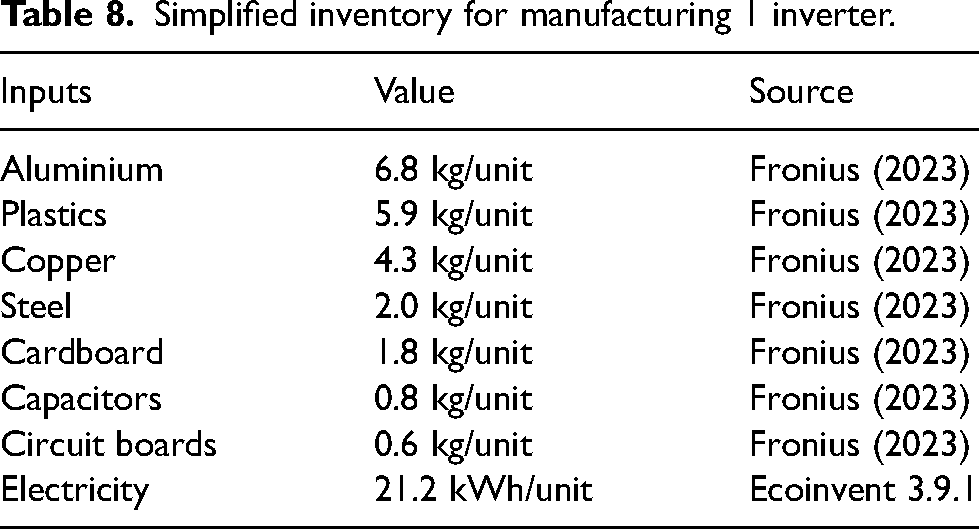
The inventory data for the inverter was modelled based on the bill of materials of the Fronius Symo GEN24 10 kW product (Fronius, 2023). Table 8 presents the simplified inventory for the inverter. It was assumed a 30-year lifetime for the inverter, and that 10% of its parts are replaced every 10 years (Frischknecht et al., 2020a).
Simplified inventory for manufacturing 1 inverter.
For the inventory of the electrical installation, data from the Ecoinvent database v.3.9.1. was utilised, and the parameters were adjusted to represent the specific sizes and designs of the components used in this research.
Background data was sourced from Ecoinvent v.3.9.1. In the base case scenario, components are manufactured in China, and the energy mix corresponding to China was utilised. The sensitivity to the energy mix was evaluated by comparing the outcomes if components were manufactured in Europe using the corresponding energy mix.
The environmental performance of the VPP was analysed with the climate change impact category utilising the indicator global warming potential (GWP100), in terms of electricity consumed by the households. The GWP measures GHG emissions in kg CO2eq, and it was analysed using the CML 2001 method (Guinée et al., 2001). The cumulative energy demand (CED) was also included as part of the energy performance analyses. The activities that contribute the most for the life cycle GHG emissions and energy demand over the VPP's lifetime were identified.
The energy performance was measured using the CED, which is the total primary energy harvested from nature to supply the VPP. It represents the sum of primary energy demand to produce materials, to manufacture and transport the components, to install the systems, and for the end-of-life management. The GWP and CED were calculated considering all life stages of the VPP. For calculating the GWP and CED, it was considered a functional unit of 1 kWh of electricity delivered to households that compose the VPP, as well as 1 kWh of electricity generated by the household PV systems. The latter is used to compare the VPP system to other conventional generation systems.
Energy and environmental indicators
The indicators energy payback time (EPBT), energy return on investment (EROI), and GHG payback time (GPBT) were estimated. To compare to other systems and analyse the influence of battery, the indicators EPBT, EROI, and GPBT were also evaluated without the battery storage system. The EPBT is the time period (in years) for the VPP system to generate the same amount of energy that was used to produce the system, and manage its end-of-life (Fthenakis, 2017). It is calculated with equation (1), in which Egeneration is the mean annual electricity generation (MJel/year), EO&M is the energy demand for operation and maintenance, and ηG is grid efficiency.


Like the approach used to estimate the EPBT, the GPBT was also estimated, as per equation (3). It represents the period the system must operate to offset the GHG emissions embedded in its production phase (including the replacement of the battery and inverter), and end-of-life management phase.
The overall life cycle GHG emissions for the VPP are estimated at 78.9 gCO2eq/kWh of consumed electricity by households (see Figure 3). The main GHG emissions contributor is the electricity consumption from the grid by the households during the use phase of the VPP. The CED of the VPP is estimated at 2.569 MJ/kWh.

Overall global warming potential and cumulative energy demand results for the supply of electricity to households composing the virtual power plant in operation in Aotearoa New Zealand.
The use phase has the largest associated life cycle emissions. This is because the functional unit of the system is delivering electricity to the household, and for that, a significant amount of electricity from the grid is utilised. In the use phase, the battery is charged by solar electricity generated by the PV panels during the daytime, which has no associated direct GHG emissions, augmented with the Aotearoa New Zealand's grid if the generated PV is not sufficient, and during the night. GHG emissions credits were given for surplus PV electricity generation that feeds back to the grid. The findings show that the credit for avoiding emissions from the electricity grid is 13.6 gCO2eq/kWh, contributing to 14.1% of emissions reduction of the VPP.
During the manufacturing of components phase, the LFP batteries and PV modules contribute the most to the GHG emissions. The energy and carbon intensity associated with LFP cell manufacturing is notably high and it is sensitive to energy demand and electricity sources, which are discussed in the subsequent sections. Actions for stricter control and environmental pollution laws result in fewer environmental impacts during the manufacture of materials and components (Arshad et al., 2022).
The recycling credit, which represents the GHG emissions benefits gained from recycling metals and bulk materials, is moderate mitigating approximately 3.9% of the overall life cycle GHG emissions. Section 4.4 analyses further recycling actions and the hydrometallurgical recycling route for batteries.
Comparing this study's LCA findings with other LCA studies is challenging due to variations in functional units and system boundaries. For example, comparing our study on the VPP with a conventional centralised plant is especially challenging because two different functional units are used. Usually, studies for the conventional electricity generation centralised system consider the functional unit as 1 kWh of electricity generated. In contrast, for the VPP, the functional unit of 1 kWh of electricity delivered to households was considered. This means the VPP accounts for not just the PV electricity produced, and battery storage, but also the consumption from the grid by the households and any surplus sent back to the grid. Table 9 presents the GWP and CED results for the VPP, considering different functional units and system boundaries. Comparing the results for 1 kWh of electricity generated by the VPP without a battery to a utility-scale solar plant in New Zealand without a battery system reveals similar approximate carbon emissions, with the VPP at 24 gCO2eq/kWh and the utility system at 26 gCO2eq/kWh (Pincelli et al., 2024a). An onshore wind system in New Zealand might have a lower carbon footprint, ranging on approximately 9.7–10.8 gCO2eq/kWh (Pincelli et al., 2024b). On the other hand, a fossil fuel-based power plant could have a significantly higher carbon footprint; for instance, the emission factor for gas-fired plants in New Zealand is nearly 200 gCO2eq/kWh (Ministry for the Environment, 2022).
GWP and CED results for the VPP, considering different functional units, and system boundaries.

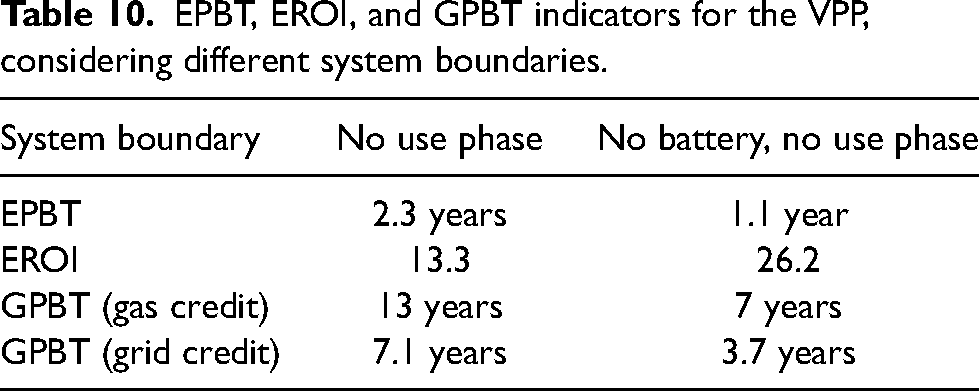
The VPP demonstrates energy and carbon efficiency. The results of EPBT, EROI, and GPBT for the baseline scenario are presented in Table 10. The GPBT is 13 years for avoiding the electricity grid, and 7.1 years for avoiding natural gas electricity generation. Displacing fossil fuels, such as natural gas, offers greater environmental advantages due to the reduction in direct GHG emissions. However, when displacing the Aotearoa New Zealand's grid, while there are still environmental benefits, they might not be as substantial, as the grid is already of low-carbon intensity.
EPBT, EROI, and GPBT indicators for the VPP, considering different system boundaries.
A limitation of this LCA study for the VPP includes analysing only GWP and CED, and other environmental impacts that may arise throughout the VPP's life cycle are overlooked. The study focuses solely on the LCA, overlooking other methods such as multi-criteria decision-making (AlMallahi et al., 2022), which could provide additional insights into the sustainability of the system. The study is constrained by the inventory utilised. However, uncertainties of the inventory were minimised by selecting data specifically for the PERC PV technology, and the LFP battery for residential stationary applications. Unlike some studies that have optimised renewable systems to enhance performance (Alayi et al., 2021), our study did not focus on designing the VPP itself. A limitation of the study lies in the use of average values rather than incorporating hourly electricity data, which overlooks the capacity of batteries to adapt their operations in response to grid fluctuations. However, this limitation is addressed by examining the sensitivity to different daytime charge rate assumptions. Furthermore, the sensitivities to several assumptions and parameters were analysed, namely the source of electricity displaced, PV generation, energy intensity for battery cell manufacturing, and different recycling routes.
The larger household system has a significantly lower carbon footprint, with overall GHG emissions for the 5.6 kW system at 40.6 gCO2eq/kWh, compared to 91.5 gCO2eq/kWh for the smaller system of 2.8 kW (see Figure 4). The larger system relies less on electricity supplied from the grid, and the surplus electricity generated by the PV system is fed back to the grid, providing an emission credit of 55.5 gCO2eq/kWh.

GHG emissions of electricity supplied to household systems that compose the virtual power plant.
The VPP contains a higher number of smaller 2.8 kW PV systems, which have a higher carbon footprint. Thus, one strategy to improve the VPP's environmental impact is to increase the number of 5.6 kW PV systems and 10.8 kWh battery capacities.
It was assumed that both household sizes consume the same average amount of electricity. In reality, larger households might require a greater quantity of electricity, consuming more electricity from the PV system and potentially decreasing the emission credit associated with the electricity sent back to the grid, which would increase their overall emissions. Because of the same reasoning, smaller households might consume a smaller amount of electricity, thus requiring less electricity supply from the grid, which would lower their overall emissions. However, given the large number of households comprising the VPP (11,518) it is argued that the assumption is reasonable across the VPP.
Sensitivity to different electricity credit sources
The electricity credit attributed to sending back to the grid electricity generated with the PV system varies based on what the PV system is substituting. In the baseline scenario, where the PV system replaces the Aotearoa New Zealand grid, the credit stands at 13.6 gCO2eq/kWh. However, when considering the replacement of gas turbine generation, this credit escalates to 47.3 gCO2eq/kWh, and the overall impact of the VPP reduces to 45.3 gCO2eq/kWh (see Figure 5).

Sensitivity to different substituted electricity when using electricity generated by the PV system storage in the LFP battery.
Solar generation across locations in Aotearoa New Zealand varies considerably. The sensitivity to the minimum and maximum solar generation as per the Global Solar Atlas (2024) is analysed. Operating the systems at a minimum generation rate results in an increase in the overall GHG emissions of the VPP to 97.2 gCO2eq/kWh (see Figure 6). On the other hand, when the systems operate at a maximum generation potential, the overall emissions decrease to 65 gCO2eq/kWh.
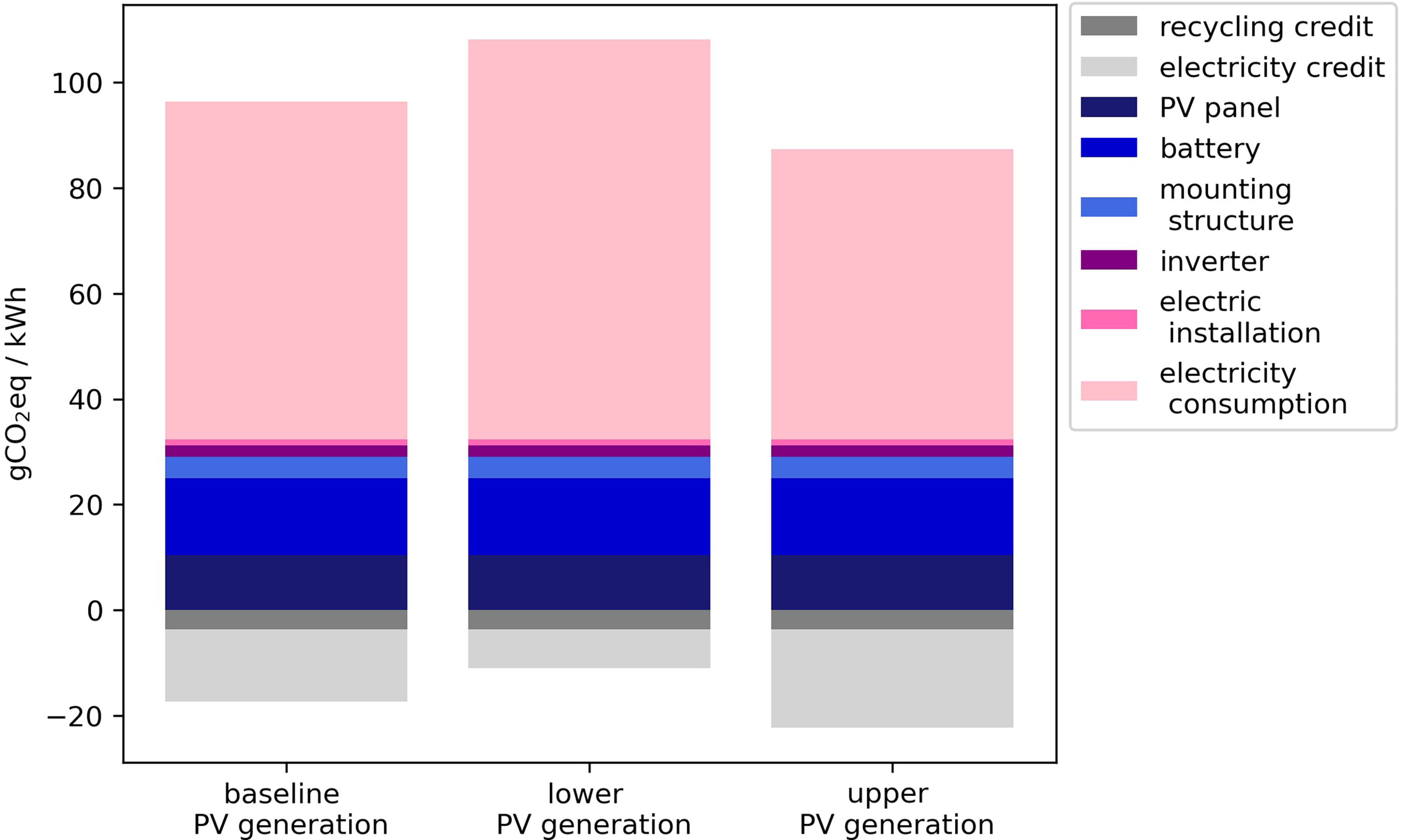
Sensitivity to solar PV generation.
The PV generation rate holds significant importance in determining the overall impact of the electricity delivered by the VPP. A PV system with higher electricity generation potential reduces the overall environmental footprint by maximising electricity output, thereby reducing reliance on grid supply and enabling surplus electricity to be sent back to the grid, generating emissions credits. Thus, optimising PV system performance is crucial for minimising the VPP's GHG emissions.
Sensitivity to different energy requirements for battery cell manufacturing
Within the manufacturing phase, the battery is the larger contributor to GHG emissions. The LCA results for the VPP showed sensitivity to the wide range of energy demand values reported in the literature for cell manufacturing. When employing the upper bound, the VPP GHG emissions increase to 90.2 gCO2eq/kWh, while they decrease to 73.2 gCO2eq/kWh when utilising the lower bound (see Figures 7 and 8). This variance underscores the importance of accurately assessing energy requirements for cell manufacturing processes for a comprehensive understanding of their environmental impacts. Reducing energy demand for battery cell manufacturing and using renewable energy sources are efficient measures to reduce GHG emissions associated with battery production (Ellingsen et al., 2017), and the VPP.

Virtual power plant sensitivity to different energy demands for battery cell manufacturing.
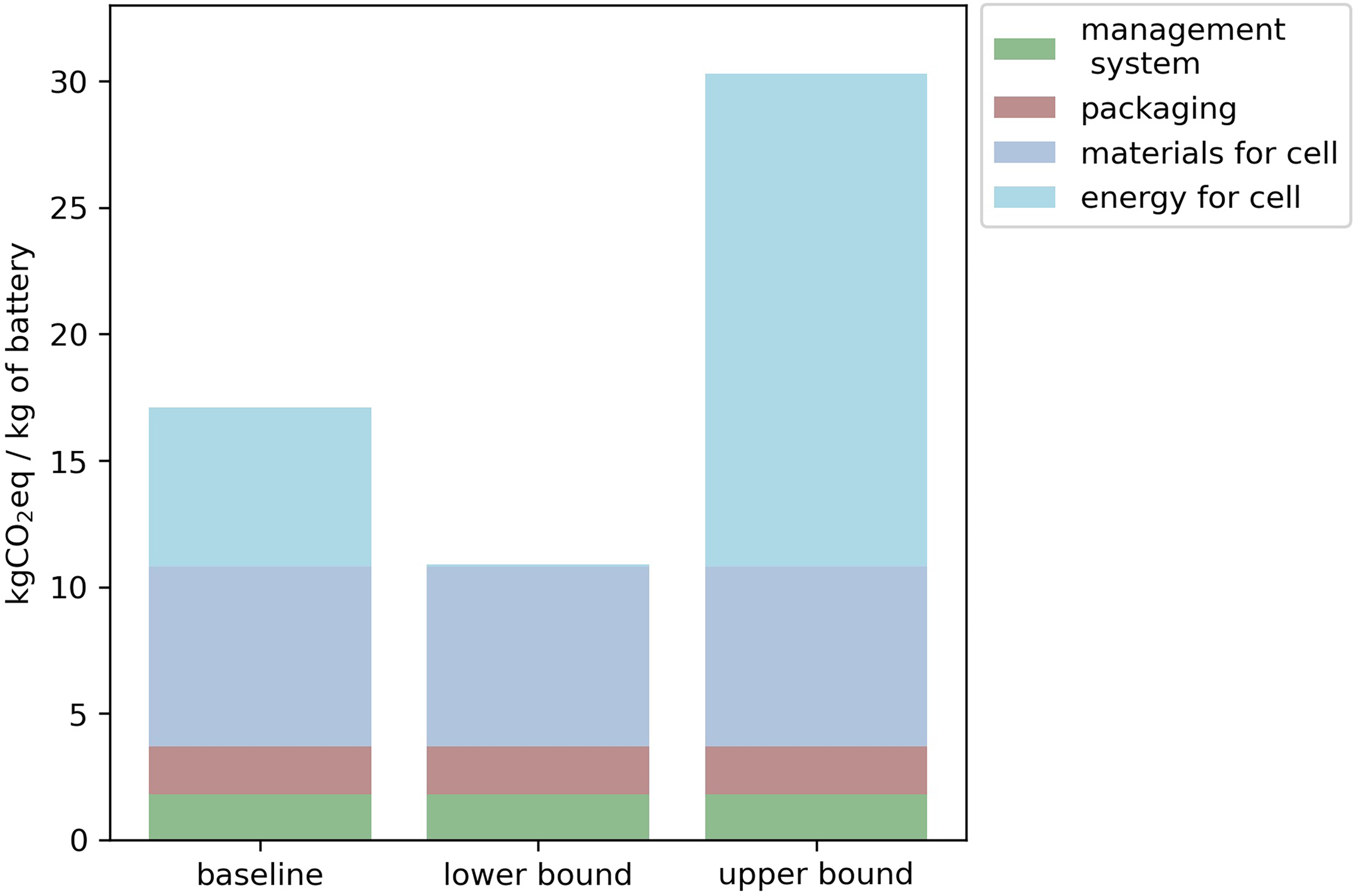
Battery manufacture sensitivity to different energy demands for cell manufacturing.
The findings reveal a pronounced influence and sensitivity of the country of manufacture on the life cycle impacts of the VPP (see Figure 9). In the baseline scenario, where components are manufactured in China, characterised by an electricity grid with a high share of coal power, the GHG emissions are notably higher. However, when compared to manufacturing in Europe, where renewable energy sources are more prevalent, the GHG emissions decrease by 8.8%, reaching 71.9 gCO2eq/kWh. This highlights the critical role of carbon intensity of electricity generation, in shaping the environmental performance of VPPs.

VPP sensitivity to different countries of manufacture for PV panel, battery, and inverter and their respective electricity mix.
The manufacturing phase does not stand out as the primary contributor to the life cycle GHG emissions of the VPP. Therefore, enhancing the sustainability of the manufacturing phase would yield only marginal benefits in reducing the overall carbon footprint of the VPP. Efforts should be focused on reducing emissions from the use phase, related to the electricity consumption from the grid, which is related to the PV system generation potential, capacity of the storage system, and operation of the storage system.
Recycling strategies can play a key role in further reducing life cycle impacts associated with the extraction of virgin materials (Ellingsen et al., 2017). Further recycling of bulk materials from components and resuming the recycling of silicon from PV modules results in an 8.3% reduction in GHG emissions for the VPP (see Figure 10). The benefits of further recycling bulk materials, silicon, and lithium result in a 10.9% reduction, and the overall impact of the VPP reduces to 70.3 gCO2eq/kWh. The findings show moderate effectiveness of enhanced recycling practices in mitigating the life cycle GHG emissions of VPP.

VPP sensitivity to different recycling routes for post-consumer LFP battery. In the figure, scenario a) represents the baseline; b) represents further recycling of bulk materials and the recycling of silicon from the photovoltaic modules; and c) represents further recycling of bulk materials, recycling of silicon, and recycling of battery through the hydrometallurgical process.
The choice between direct physical recycling and hydrometallurgical recycling leads to a minimal environmental benefit for the VPP. In the baseline scenario, direct physical recycling is the default choice. However, if hydrometallurgical recycling is adopted, the life cycle GHG emissions from the VPP decrease by further 2.6%, because of the emission credit for lithium chloride production (see Figure 10). Batteries cells can be designed to be repurposed into other products. For instance, stationary backup batteries for households can be repurposed to be used in data centres for power supply, before dismantling. However, in this study, the focus was only on the service life of batteries used as stationary systems for households, considering direct physical recycling for post-consumer LFP batteries.
This study presents a pioneering effort in conducting an LCA for a VPP, shedding light on its environmental implications within the context of the ongoing energy transition. Larger households’ PV systems generate a surplus of electricity that is sent back to the grid, contributing to reducing the grid's carbon footprint. The findings reveal a range of GHG emissions of 45.3–78.9 gCO2eq/kWh for the VPP, depending on what the surplus electricity replaces. Notably, avoiding natural gas electricity generation by returning surplus electricity to the grid yields the largest carbon credit and the least overall GHG emissions for the VPP. The VPP's carbon footprint is lower than the average grid's carbon footprint, thus underscoring its environmental efficacy.
The use phase contributes the most to the VPP's life cycle GHG emissions, as the functional unit is the electricity delivered to households, thus requiring electricity supply from the grid as the PV generation alone is not sufficient. The VPP's carbon footprint is sensitive to numerous parameters and subject to variation. For instance, if the VPP is operated using the maximum PV generation potential for Aotearoa New Zealand, the overall footprint is reduced by 17.6%. On the other hand, when operated at minimum generation potential, it is increased by 23.2%.
The manufacturing phase is the second largest contributor to the life cycle impacts of the VPP. This study reveals sensitivity for the energy intensity during battery cell manufacturing, which could result in a carbon footprint for VPP ranging from a 6.7% reduction to a 14.3% increase. In addition, the findings also suggest high sensitivity for the location of manufacture, and corresponding source of energy. Different recycling routes for post-consumer batteries have only a marginal contribution to the overall impacts of the VPP.
Prospects for future studies in the field of assessing the environmental performances of VPPs include utilising hourly electricity data, as batteries can adjust their operations to grid fluctuations. Additionally, future studies can explore the implications of future forecasts of electricity grid evolution. As energy systems transition towards greater renewable sources shares, understanding the anticipated changes in grid emissions becomes crucial, which can further reduce the carbon footprint of manufacturing PV panels, batteries, and other components.
Footnotes
Acknowledgements
The research was supported by the Doctoral Scholarship programme of Te Herenga Waka Victoria University of Wellington.
Declaration of conflicting interests
The authors declared no potential conflicts of interest with respect to the research, authorship, and/or publication of this article.
Funding
The authors disclosed receipt of the following financial support for the research, authorship, and/or publication of this article: This work was supported by the Victoria University of Wellington.
