



Abstract
This study examines the transformation of noticing in an early career teacher (ECT) through school-based mathematics lesson study (LS) in Japan. Focusing on Taro, a third-year teacher, the research explores how LS broadened his perception and deepened his interpretation and decision-making, as framed by the perceiving, interpreting, and decision-making model. The findings highlight Taro's newly perceived tedate (proposed methods), alignment of learning problems with lesson objectives, purposeful use of teaching materials, and a shift toward fostering student autonomy through diverse strategies and reflective questioning. This study underscores the importance of iterative discussions and feedback in supporting ECTs’ professional learning, while also addressing implicit assumptions in LS. It provides empirical insights into noticing transformation within authentic LS contexts, offering implications for improving LS practices and supporting ECTs in developing effective classroom practices.
Introduction
Lesson study (LS) is a long-standing practice in Japanese elementary schools, particularly in mathematics education (Bocala, 2015; Ding et al., 2024). It provides a collaborative structure for teachers to examine instructional practice through planning, observation, and reflection (Ding et al., 2024; Lewis, 2016; Stigler & Hiebert, 1999; Takahashi & McDougal, 2016). Although LS encourages collegial reflection, early career teachers (ECTs) often participate less vocally, which should not be mistaken for disengagement or incompetence. This reduced participation reflects legitimate peripheral participation (Lave & Wenger, 1991), where ECTs in certain cultural or organizational settings may feel less inclined to express their views, especially when LS is unfamiliar or not fully integrated. Failing to consider these less vocal forms of participation may overlook internal processes crucial to ECTs’ growth.
ECTs, especially in their first few years, are at a critical stage in their professional development (PD) (e.g., Borko, 2004). Initial classroom experiences significantly shape their teaching practices and beliefs, with lasting effects on their careers. ECTs face challenges in LS, such as understanding instructional intentions in lesson plans, anticipating student thinking, adapting to unexpected classroom events, and engaging in post-lesson discussions (Lilly et al., 2024; Stockero & Van Zoest, 2013). These challenges are closely tied to their noticing: how they perceive classroom events, interpret student thinking, and make both in-the-moment and retrospective decisions (Blömeke et al., 2015; Lee & Choy, 2017; Stahnke et al., 2016; Weyers et al., 2024).
While much of the noticing research has focused on pre-service teachers using video-based analysis of controlled classroom events (König et al., 2022; Stahnke et al., 2016; Weyers et al., 2024), ECTs face more dynamic classroom situations. They navigate a broader array of student behaviors, unexpected events, and immediate teaching demands, making their noticing process multifaceted.
This study examines the transformation of noticing in a longitudinal case study of Taro, a third-year elementary school teacher who participated in five LS cycles over two school years. He served as the instructor of a research lesson in September 2021 and again in October 2022, providing two reference points to trace changes in his noticing. This one-year span allowed for the close examination of transformation across multiple LS experiences.
As a non-Japanese researcher engaged in sustained school-based fieldwork, the author captures not only explicit interactions but also implicit cultural assumptions embedded in LS practices.
The research questions are as follows.
How does an ECT's noticing transform through school-based LS? How do the implicit assumptions embedded in Japanese LS shape the noticing transformation of ECTs, and how can these insights support them?
Literature review and theoretical framework
School-based mathematics LS
LS has a long history in Japan, serving as a community-based practice where teachers share goals, engage in PD, and conduct practice-embedded research activities. The primary goals and activities of LS vary by type. Lewis (2016) categorized LS into four types: school-based LS, district-based LS, LS at university-attached laboratory schools, and LS sponsored by professional associations.
While LS outside Japan is often conducted as pilot programs led by researchers, the most common form in Japan is school-based LS called kounaikenshuu, which is widely implemented in elementary and middle schools (Lewis, 2016; Stigler & Hiebert, 1999; Takahashi & McDougal, 2016). Previous studies have consistently described the phases of school-based LS as follows (Huang & Shimizu, 2016; Lewis, 2016; Stigler & Hiebert, 1999): Teachers first analyze students’ needs and schoolwide challenges to establish long-term goals. Based on these goals, lesson plans are developed, and a research lesson is conducted while other teachers observe and document the lesson. Afterward, observations are shared in a post-lesson discussion, during which external experts provide feedback. This process is repeated over several cycles.
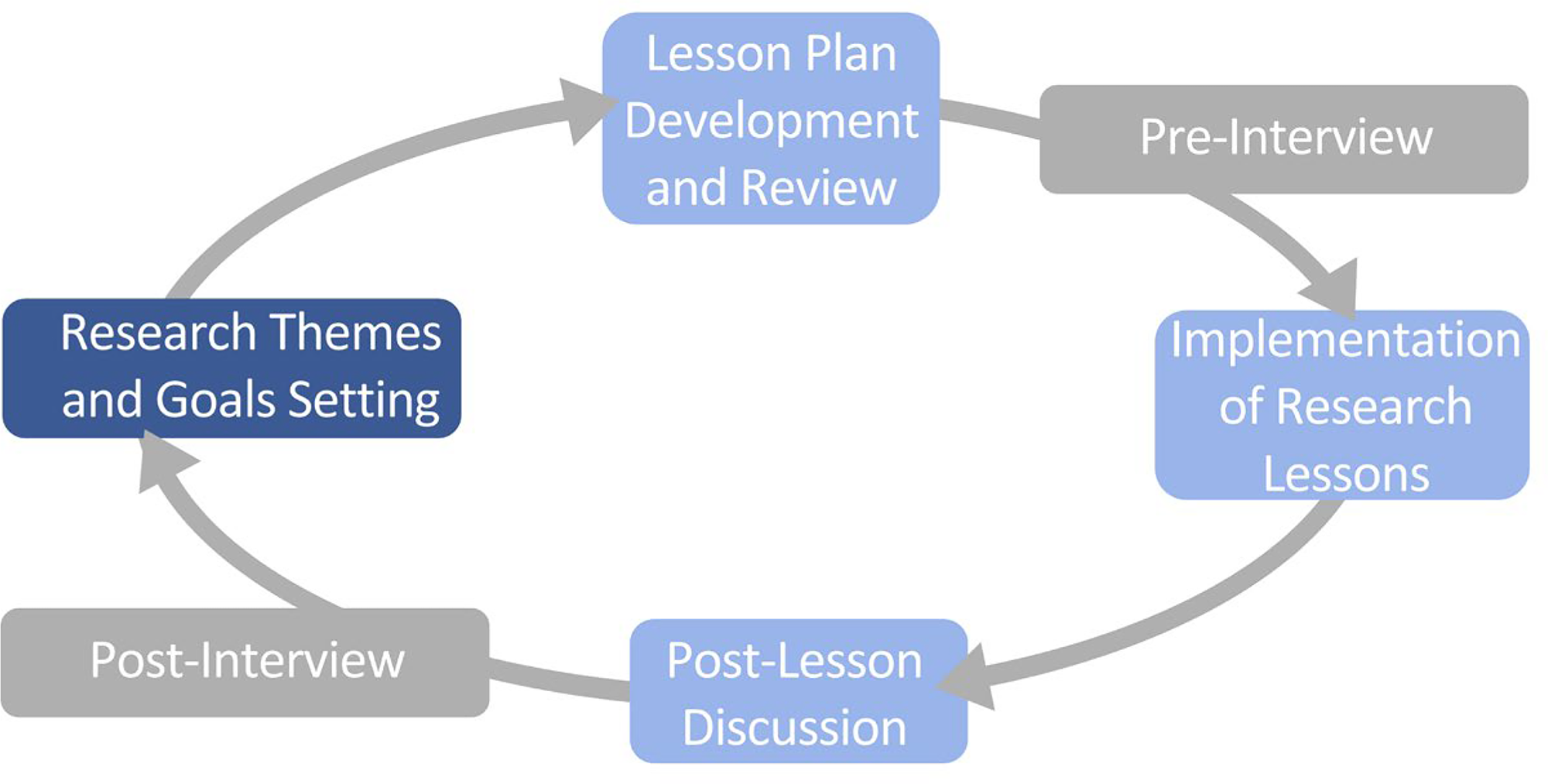
Based on the processes described in prior studies (Huang & Shimizu, 2016; Lewis, 2016; Stigler & Hiebert, 1999), this study establishes the framework for school-based mathematics LS (Figure 1). Research themes and goals are set with a long-term perspective, spanning multiple cycles, and are highlighted in a darker shade to indicate their overarching nature. Each LS cycle consists of three phases: lesson plan development and review (planning); implementation of research lesson (doing/observing); and post-lesson discussion (reflecting). These phases collectively form a single cycle, which typically spans several weeks to months.
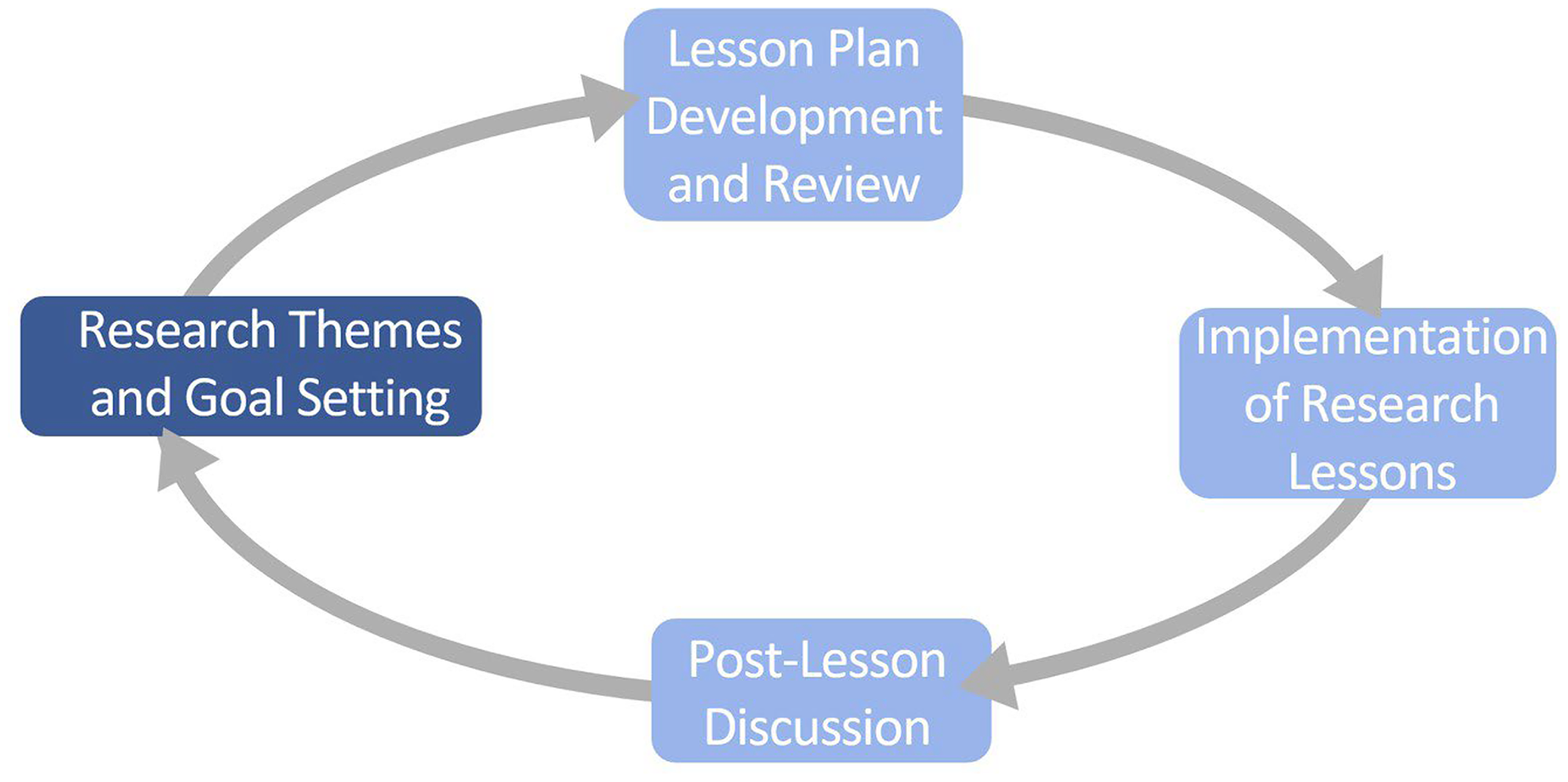
Lesson study cycles.
Previous studies highlight the challenges faced by ECTs in lesson planning, teaching, and participating in LS practice.
In lesson planning, ECTs often struggle to design engaging tasks and anticipate student responses. Lilly et al. (2024) found that ECTs with low evaluations during lesson observations often focused on delivering pre-planned content rather than adapting to student needs. These teachers tended to remove activities that might challenge students, suggesting a relationship between teacher noticing and lesson planning. For ECTs, adapting lesson plans to meet diverse learners’ needs is a particular challenge (Cevikbas et al., 2024). Fear of failure in public research lessons often leads them to plan overly safe or simplified activities, which may limit student growth potential.
During mathematics lessons, ECTs struggle with classroom dynamics and engaging student responses. Kang (2025) discussed how an ECT initially struggled to fully understand students’ responses but improved after post-lesson discussions with experienced teachers. This highlights the difficulty ECTs faced when interpreting student behavior independently. Additionally, ECTs often lack sufficient mathematical and curricular knowledge, which limits their ability to use teaching materials effectively. This knowledge gap affects lesson quality and ability to use classroom resources. Moreover, observing lessons can be challenging for ECTs, as they often miss key teaching moments without sufficient experience as stated by Stockero and Van Zoest (2013). Without sufficient experience, these key moments, where student responses reveal important learning insights, can be easily overlooked, hindering the ability of ECTs to effectively analyze classroom dynamics.
In the post-lesson, ECTs often focus on whether the lesson followed the plan, rather than critically analyzing student learning. Shimizu and Kang (2022) emphasized that effective discussions require more than evaluating whether the lesson was executed as planned. ECTs must reflect on students’ thinking and how well the lesson addressed learning needs. Without structured guidance, ECTs may miss opportunities to deepen their reflections, limiting the impact of the LS process.
Marginalized participation in LS can also hinder ECTs’ development. More experienced teachers often dominate discussions, leaving ECTs feeling uncertain about contributing due to the lack of knowledge and experience. Thomas and Yoon (2014) noted that ECTs often experience conflicts between their beliefs and school realities or classroom practices, making it difficult to set instructional goals. ECTs may adopt a passive role in LS discussion, limiting their opportunities to engage and refine teaching strategies (Cardoso et al., 2025). Difficulties in lesson planning and observing lessons can further hinder their confidence about offering insights during group discussions.
In conclusion, although ECTs face challenges in lesson planning, implementation, and reflection, continued participation in LS provides valuable opportunities for growth. With targeted support in adapting lessons, analyzing student thinking, and engaging in discussions, ECTs can develop more effective teaching practices.
Teacher noticing and Its transformation in LS
Teacher noticing, encompassing perception, interpretation, and decision-making, is a crucial aspect of teacher competence (Kaiser et al., 2015; König et al., 2022). Van Es (2011) analyzed teacher noticing during PD and found that facilitator interventions could promote changes in noticing, signaling teacher learning. Blömeke et al. (2015) highlighted that teacher competence integrates cognitive, affect-motivational, and situational factors, underscoring the importance of situational noticing processes.
Kaiser et al. (2015) further developed the “perceiving, interpreting, and decision-making” model, framing noticing as perceiving classroom events, interpreting student activities, and making instructional decisions. This framework broadens the traditional understanding of noticing by emphasizing dynamic interactions in the classroom. Yang et al. (2021) expanded this model, showing that cultural and professional contexts play a significant role in shaping teacher noticing, particularly in school-based PD.
In Japan, LS provides a natural setting for fostering transformations in teacher noticing through collaborative lesson plans, observations, and reflection. Longitudinal observations in LS can reveal culturally embedded teaching practices and how teachers interpret classroom events. This perspective is essential for understanding how teacher noticing evolves within a social and collaborative framework.
While prior research has often relied on controlled video observations, these studies may not capture the dynamic and unpredictable nature of real classrooms (e.g., König et al., 2022). Amador and Weiland (2015) studied pre-service teachers’ noticing in a U.S. LS context and found improvement but primarily focused on post-lesson discussions. These studies highlight the need for research that examines how noticing transforms in authentic classroom interactions over time, particularly for ECTs who may contribute less to discussions.
This study conceptualizes noticing as a process consisting of three components: perception (identifying significant events), interpretation (reasoning about those events), and decision-making (determining instructional responses) (Table 1). For ECTs, these components often overlap due to their limited experience, leading to ambiguous interpretations and decisions. Within this framework, mathematical content is operationally defined as the specific concepts, representations, and reasoning strategies (e.g., common factors and addition strategies) that inform lesson goals and are directly linked to students’ mathematical thinking and understanding.
Framework for teacher noticing across lesson study (LS).
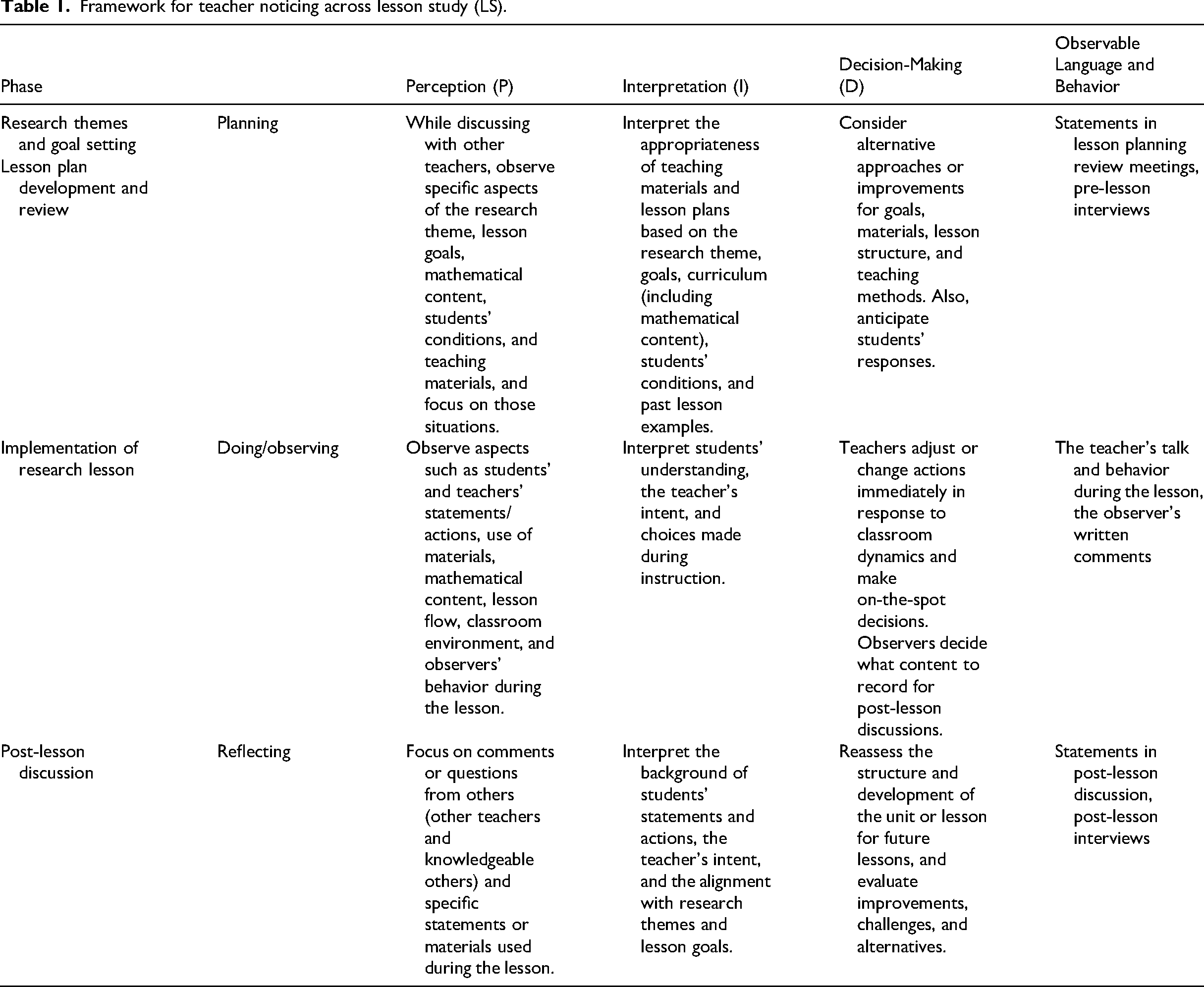
Framework for teacher noticing across lesson study (LS).
Transformation in noticing refers to how teachers recognize previously overlooked aspects of classroom dynamics and make more nuanced interpretations and decisions. This study categorizes these transformations into two dimensions: broadened perception, in which teachers identify new aspects of classroom events, and deepened interpretation and decision-making, in which teachers develop more refined reasoning and strategies. These transformations are evaluated based on diversity (linking interpretations to broader contexts), validity (logical appropriateness), and specificity (concrete strategies), following the frameworks of Van Es (2011) and Amador and Weiland (2015).
The reason for combining interpretation and decision-making into a single dimension stems from the difficulty in clearly separating these two processes in real-time classroom settings. Unlike controlled video-based studies, where teachers can review and reflect on classroom events multiple times, real classrooms are dynamic and unpredictable. In such environments, teachers may perceive similar classroom events (P), but their interpretations (I) and decisions (D) can vary greatly depending on contextual factors such as the students involved, timing, and the teacher's evolving decision-making.
Yang et al. (2021) merged interpretation and decision-making in their study of mathematics teachers’ professional noticing, arguing that these processes are interconnected and evolve together in a teacher's development. This aligns with the perspective that interpretation and decision-making form a unified process within the context of LS.
In this study, the deepening of perception was not directly addressed, as it serves as a precursor to the deepening of interpretation and decision-making. Also, the broadening of interpretation and decision-making was not treated. The deepening of interpretation and decision-making was evaluated based on changes in noticing, using criteria such as diversity, validity, and specificity. These criteria imply that diversity in interpretation and decision-making is inherent in the process. While differing interpretations and decisions may lead to lower diversity, validity, and specificity, this study assumes that teachers transform in a productive direction, focusing on the deepening of interpretation and decision-making. The three elements—diversity, validity, and specificity—are interrelated and contribute to teachers’ noticing. A more precise and specific focus on perception (P) can enhance the quality of interpretation (I) and decision-making (D), leading to improved teaching practices.
Examining these processes within the context of Japanese LS aims to deepen our understanding on how ECT noticing evolves through collaborative practices, providing valuable insights for teacher education and PD.
Participants and context of the study
This study was conducted at School M, a public elementary school in Chiba, Japan, with approximately 360 students (two classes per grade). The majority of students were Japanese, with a small number from diverse cultural backgrounds. Lessons were conducted in Japanese, and the school followed the national mathematics curriculum. LS was used as a method to enhance student learning. In mathematics lessons for Grades 5 and 6, the two classes per grade were divided into three smaller groups for more focused lessons.
The faculty consisted of 21 members during the 2021–2022 school year, with about 15 members typically participating in each LS cycle (Table 2). Changes in personnel occurred during the study, including shifts in the principal and facilitator. A teacher with 9 years of experience facilitated LS in 2021–2022, while a teacher with 18 years of experience took over the role in 2022–2023.
Composition of the faculty members at school M.
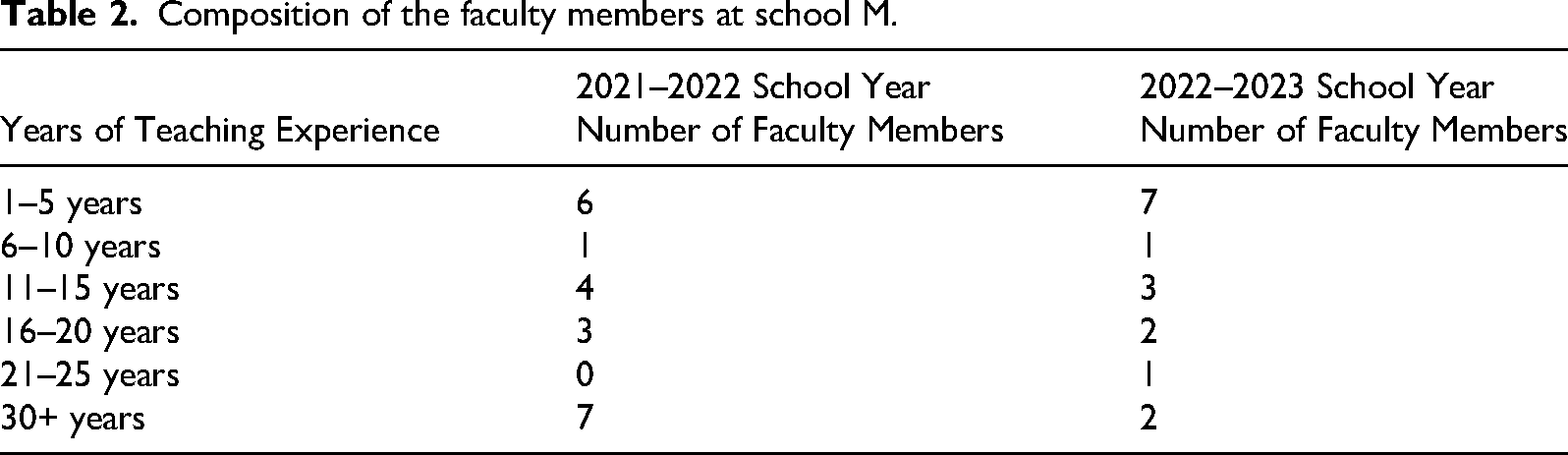
Composition of the faculty members at school M.
Three “knowledgeable others” (Seino & Foster, 2021) provided feedback during the study. In 2021 and 2022, these included a former elementary teacher and a principal. From 2022 to 2023, the role shifted to a former high school mathematics teacher and a former junior high teacher, both serving in superintendent roles.
This study began in the 2021–2022 school year, the second year of a 3-year initiative. The school year runs from April to March and consists of three LS cycles. The overarching theme for this period was “How lessons should be designed to enhance academic proficiency?” The subtheme in 2021–2022 was “Consolidation of knowledge and skills,” which was later revised to “Development of students who continue to learn independently” in 2022–2023. These themes were developed collaboratively by the faculty, facilitator, and principal.
Starting in 2022–2023, LS incorporated research hypothesis setting and the concept of “the proposed method (tedate),” tailored to developmental stages of students. “Tedate” had dual meanings: It referred to instructional strategies, such as planning questions, sequencing tasks, and using materials aligned with goals, as well as student problem-solving methods such as using number lines or diagrams. Teachers discussed the meaning, value, and application of tedate extensively during planning and reflection.
At School M, the LS cycle during the 2022–2023 school year involved several structured collaborative processes that supported the participating teachers’ professional growth. At the beginning of the cycle, considerable time was invested in building a shared understanding of the research theme and hypothesis. The facilitator provided up-to-date information on the new national curriculum and introduced the school's vision for mathematics lessons, including classroom demonstrations that were open for observation.
Teachers first engaged in grade-level discussions and then participated in cross-grade meetings (organized in two-grade bands) to further examine how the research theme and hypothesis could be adapted to students’ developmental stages. The outcomes of these discussions were shared with the entire faculty to ensure coherence and consistency across grade levels.
Before each research lesson, the instructor shared draft versions of lesson plans and any particular concerns with a research steering committee (Takahashi & McDougal, 2016), in which a small group of teachers and a facilitator offered ideas and suggestions for improvement. Based on this discussion, the revised lesson plan was brought to a whole-staff lesson plan development and review (planning) meeting, where further refinements were discussed. Informal follow-up conversations with grade-level peers, the facilitator, and the principal were also held to finalize the plan prior to implementation.
During the implementation of research lessons, observing teachers recorded comments on observation sheets and sometimes documented key teacher–student interactions in writing. They also carried digital cameras to photograph the blackboard work and students’ notebooks, capturing how students’ ideas developed during the lesson.
In the post-lesson discussion, the instructor first shared a self-reflection, followed by small-group discussions where teachers synthesized their observations from the comment sheets. Printed photos of boardwork and students’ notebooks were shared to support collective reflection and examine how instructional intentions were realized. The results of these discussions were then shared with all participants before teachers returned to their groups to verify the research lesson's approach and the underlying theme and hypothesis. During this time, the principal, a knowledgeable other (Seino & Foster, 2021), and the facilitator moved among the groups to observe discussions and joined when needed. In the final stage, the knowledgeable other provided feedback on the research lesson and shared insights on any questions raised by the teachers. After these comments, the principal offered words of thanks to all participants, bringing the discussion to a close.
The author observed LS at School M in both years and conducted interviews with four ECTs and two facilitators. Appendix A presents the LS timelines and interview schedules. This study focuses on Taro (pseudonym), a third-year teacher who was the only ECT to serve as the instructor of two research lessons, one year apart. His case offers a valuable opportunity to trace transformations of noticing over time, and his consistent engagement across five LS cycles provided rich data for examining changes in his professional learning.
Taro taught fifth-grade students from 2021 to 2022 and first-grade students from 2022 to 2023. Prior to joining School M, he worked as a junior high school health and physical education teacher. The author first met him during an LS session in June 2021, and his continued and candid participation throughout the study offered significant insight into his development.
Prior to the interviews, Taro was asked about his daily practices and prior experiences related to mathematics teaching and participation in LS. Taro indicated that, in his daily mathematics lessons, he places particular emphasis on maintaining the flow of the lesson and attending closely to students’ ideas. He explained that he makes deliberate efforts to support students who struggle with mathematics by gathering them during lessons for additional explanations and by displaying relevant visual aids and materials in the classroom to reinforce understanding. Taro had been engaged in school-based LS at School M since his appointment, and the 2021–2022 school year was his third year of continuous participation. Taro also mentioned that he actively participates in regional study groups and other PD programs, particularly during the summer vacation period.
In the 2021–2022 school year, Taro was responsible for information and communications technology (ICT)-related tasks and was actively involved in online training sessions outside the school. In the 2022–2023 school year, he served as a member of the school's research steering committee (Takahashi & McDougal, 2016), which further supported his engagement with collaborative LS activities.
The author conducted participant observations of LS over 2 years, beginning in June 2021, with data collection starting in September. As a non-interventionist observer, rather than as a guest or advisor, the author built rapport with teachers through sustained engagement. This long-term presence enabled natural observation, data collection, and interviews. Positioned in the school staff room, the author interacted regularly with teachers and became familiar with students in an unobtrusive manner.
Although the author had no direct prior experience with Japanese LS, insights from existing literature guided efforts to uncover the implicit “black box” of LS practices. All observations and interviews were conducted in Japanese, utilizing the author's language proficiency to capture nuanced interactions.
Data sources included transcripts of LS meetings, audio-recorded interviews, distributed materials such as lesson plans, and teachers’ written comments during research lessons (Shimizu & Kang, 2022). These materials were analyzed to explore Taro's noticing and his contextual understanding. A summary of the research lessons appears in Table 3.
Outline of research lessons.
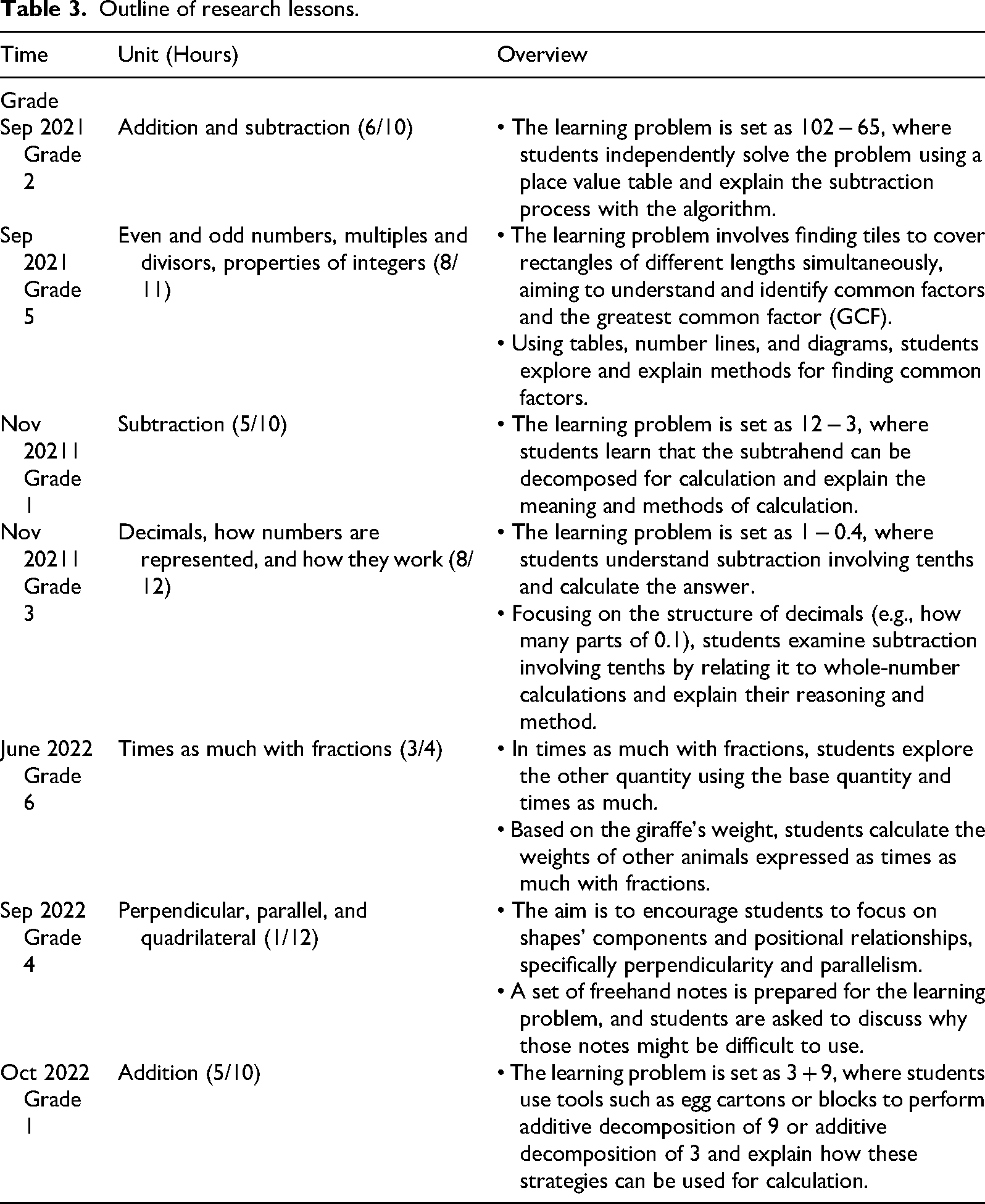
Outline of research lessons.
Ten interviews with Taro were conducted across five LS cycles (Figure 2; see Appendix B). Since post-lesson interviews occurred after the discussion sessions, in-the-moment observations during lessons were not captured directly. Therefore, events during lessons were traced only when mentioned in interviews or documented in written comments.
Interview through lesson study (LS).
Field notes, lesson plans, and related materials were collected, with interview records serving as the primary data source. Written comments and post-lesson discussions were also analyzed to contextualize Taro's responses. Interviews and discussions were transcribed verbatim, and responses were segmented into idea units based on shifts in topics or theme (Damrau et al., 2022; Jacobs et al., 1997). Cues such as “first,” “also,” and “next” were used to identify unit boundaries, while consistent explanations were treated as a single units.
In vivo coding (Corbin & Strauss, 2014) was applied to preserve participants’ perspectives by coding their exact words. The codes were linked to key terms in the responses and contextualized through participant observation. To examine the noticing process in context, the coded data were categorized into three components: perceiving (P), interpreting (I), and decision-making (D). The analysis focused on instances of broadened perception, deepened interpretation, and decision-making with the data organized to account for variation in grade levels and lessons.
Parentheses indicate the timing of the interview, questions, and timestamps (minutes:seconds). Data from research lessons and LS discussions were also timestamped. The responses and relevant keywords were extracted and organized, with codes tracked in Excel to monitor emerging and recurring patterns. The original data were revisited to trace noticeable transformations.
For example, the excerpt below presents a response from Taro in a pre-lesson interview conducted in September 2021, in which he explained his purpose for participating in the school-based LS. He stated: As I am still inexperienced, I always keep in mind that I must learn. For this lesson, I was especially careful not to disalign myself with the neighboring class. I tried to ensure that my instructional goals and lesson progression remained consistent. (September 2022 pre-interview, Q: purpose, 00:11)
The in vivo code extracted from this utterance was “consistency with the neighboring class,” based on Taro's explicit mention of trying “not to disalign myself with the neighboring class.” This phrase reflects his focus on maintaining alignment with the other Grade 5 classes, which became the object of observation.
Taro perceived (P) the need to maintain consistency with the neighboring class when preparing for the Grade 5 research lesson. He interpreted (I) his limited experience as a reason to focus on learning through participation in LS. Based on this interpretation, he decided (D) to prioritize aligning his instructional goals and lesson progression with the neighboring class, rather than engaging with the content-level elements like the greatest common divisor, unit plan, research theme, or task design.
Each code was recorded and organized in an Excel spreadsheet, with the cycles of the LS arranged horizontally and the interview data for each research lesson organized vertically by pre- and post-lesson phases. The original data were revisited repeatedly alongside the coded excerpts to identify patterns of noticing transformation, paying particular attention to newly emerging codes and those that appeared multiple times.
For broadened perception (P), the analysis examined responses that contrasted observed or enacted research lessons and prior experiences. Newly emerging codes during the study period were treated as evidence of broadened perception. To deepen interpretation (I) and decision-making (D), responses showing changes when encountering similar contexts were analyzed. Repeated codes indicating shifts in interpretation or decisions were prioritized.
A constant comparative analysis (Corbin & Strauss, 2014) was used to compare pre- and post-interviews across sessions and with written comments and LS discussions. This method helped explore the different dimensions of noticing.
To ensure reliability, the author engaged in regular meetings (at least every 2 months for over a year) with four Japanese university professors who are experts in mathematics education and frequently serve as knowledgeable others in LS contexts. These meetings provided opportunities to review and verify the coding schemes, interpretation, and emerging analytic memos. In addition to these reliability checks, triangulation across multiple data sources and member checking were used to strengthen the credibility of the findings. The final results were then shared with Taro via email for member checking, which confirmed the accuracy of the interpretation from his perspective.
Results
An overview of taro's noticing transformation
Two categories of noticing transformation were identified. The results of the analysis are presented in Tables 4–8. The first category, broadened perception (P), refers to instances where Taro began noticing events he had previously overlooked, either in past experiences or during lesson planning. These new perceptions prompted shifts in his interpretations and decisions. Two key cases involved noticing “the proposed method (tedate)” and the alignment of “problem sequences” with the learning problem and matome (summing up; see Shimizu et al., 2021).
Cases of broadened perception (P) related to the proposed method (tedate).
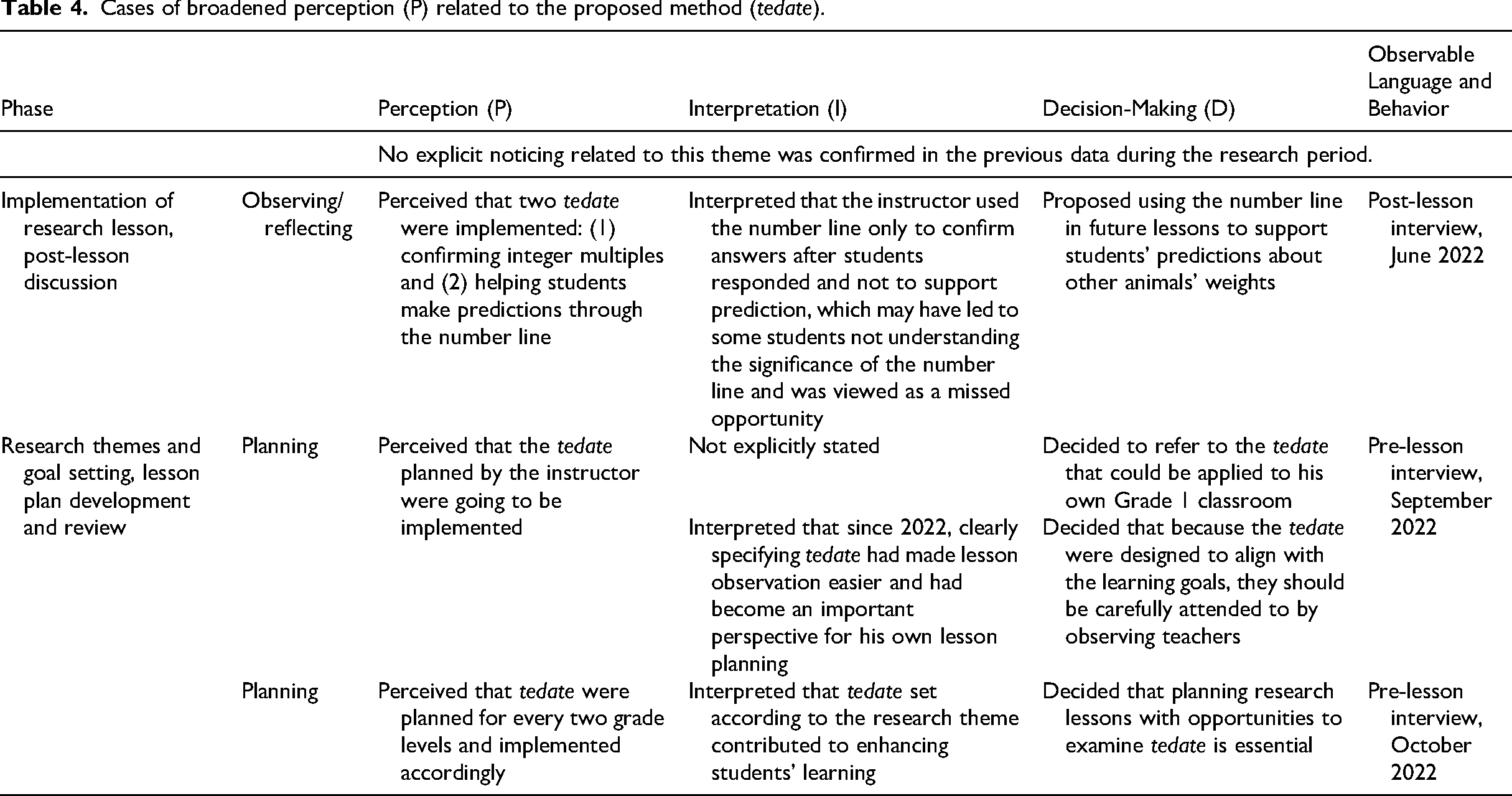
Cases of broadened perception (P) related to the proposed method (tedate).
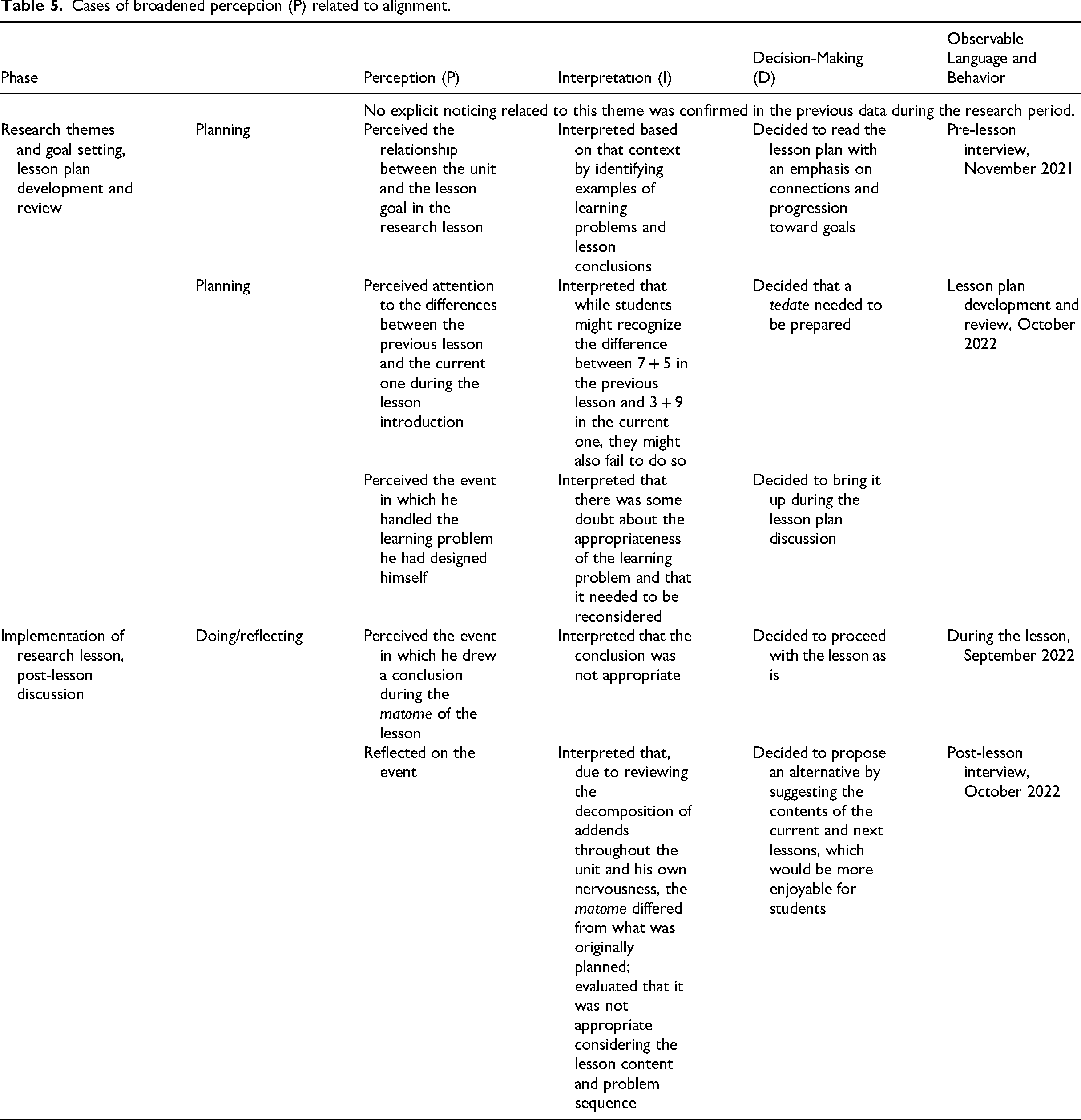
Cases of broadened perception (P) related to alignment.
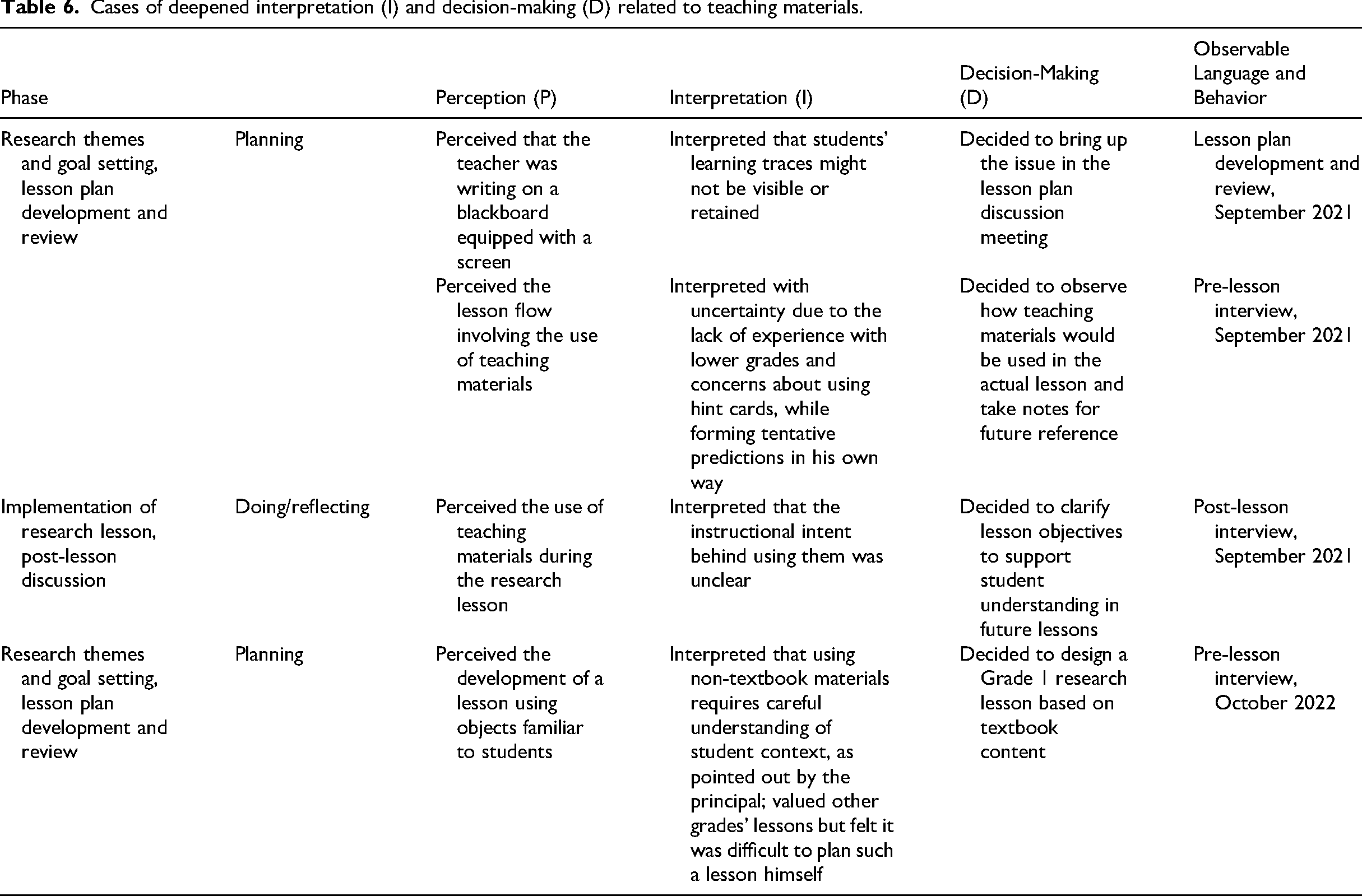
Cases of deepened interpretation (I) and decision-making (D) related to teaching materials.
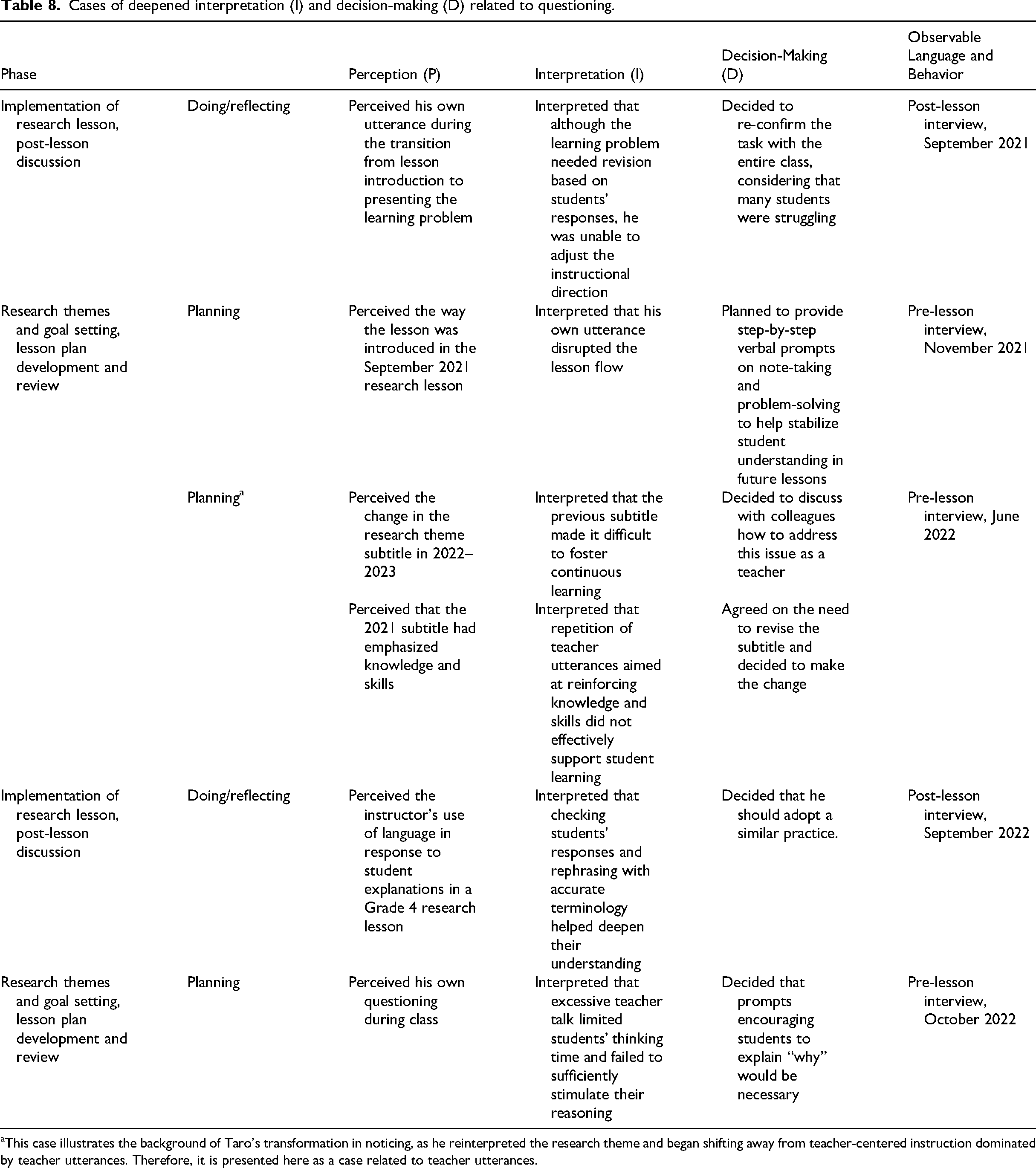
Cases of deepened interpretation (I) and decision-making (D) related to students' problem-solving.
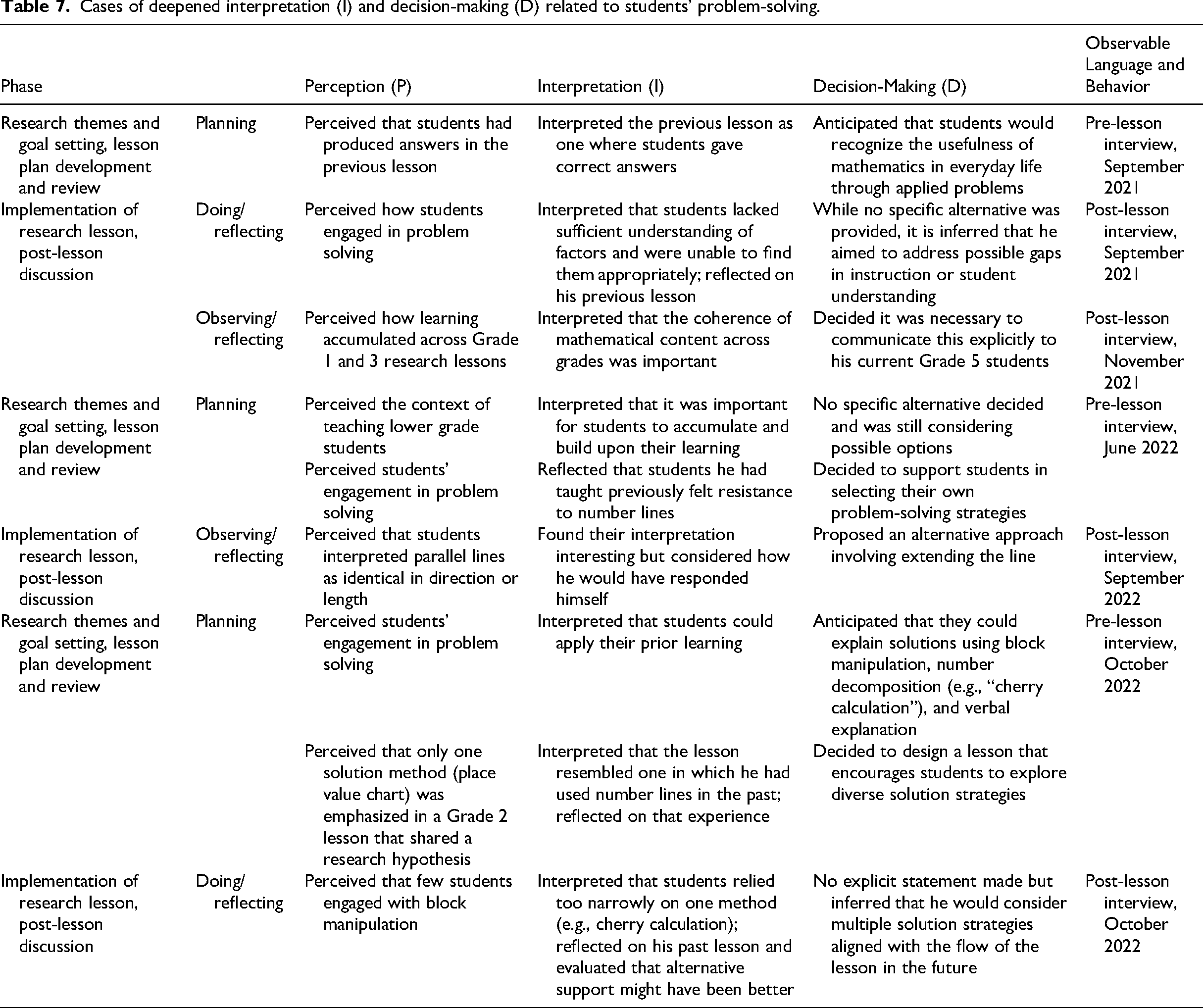
Cases of deepened interpretation (I) and decision-making (D) related to questioning.
This case illustrates the background of Taro's transformation in noticing, as he reinterpreted the research theme and began shifting away from teacher-centered instruction dominated by teacher utterances. Therefore, it is presented here as a case related to teacher utterances.
In 2022, Taro perceived “the proposed method (tedate)” during the planning phase, which led him to focus on specific events and engage more concretely with lesson design. He also reexamined the alignment between the “learning problem” and matome, reflecting on how to improve the coherence of problem sequences.
The second category, deepened interpretation (I) and decision-making (D), encompasses instances where Taro reinterpreted previously perceived events and made different instructional decisions. This category includes his use of teaching materials, his attention to students’ problem-solving processes, and his in-lesson utterances. In September 2021, Taro began reconsidering the purpose of materials and how they influenced students’ understanding. Shifting from an initial focus on specific strategies, he began encouraging students to choose and engage with their own approaches.
Taro reinterpreted his classroom practices through events such as the “Number Line Incident” and the 2022–2023 revision of the research theme's subtitle. He reflected on how to refine his questioning—shortening questions to allow more space for student thinking and using “why” questions to encourage deeper reasoning.
The first category illustrates how ECTs expand their perception by noticing overlooked aspects of teaching through LS. The second category shows how they deepen their engagement by reinterpreting and refining their practices based on accumulated experience and prior knowledge.
4.2.1 Planning and reflecting on research lessons based on the proposed method (Tedate)
Taro began reinterpreting the research theme following the subtitle revision in the 2022–2023 school year, which led him to perceive the concept of “the proposed method (tedate).” He explicitly mentioned tedate for the first time during a June 2022 post-lesson interview, marking a clear instance of broadened perception (Table 4).
In the June 2022 post-lesson interview, Taro again referred to tedate, suggesting a shift from his earlier practices in 2021–2022: This year, I have been paying closer attention to tedate, examining it myself to see how it can be translated into specific strategies for this and other lessons. For reference, I also reflected on how to use it in my current first-grade classroom. (June 2022 post-interview, Q: focus, 01:07)
Taro perceived (P) the implementation of the proposed method (tedate) by the instructor and decided (D) to use its aspects as a reference for his first-grade lessons. The reasoning (I) behind this decision was not explicitly stated.
In the post-lesson discussion held in June 2022, the facilitator guided the teachers to focus on the proposed method (tedate), and the comment sheet was revised accordingly (see Figure 3). Compared to the earlier version on the left side of Figure 3, this version was more explicitly structured to promote tedate-centered discussion.
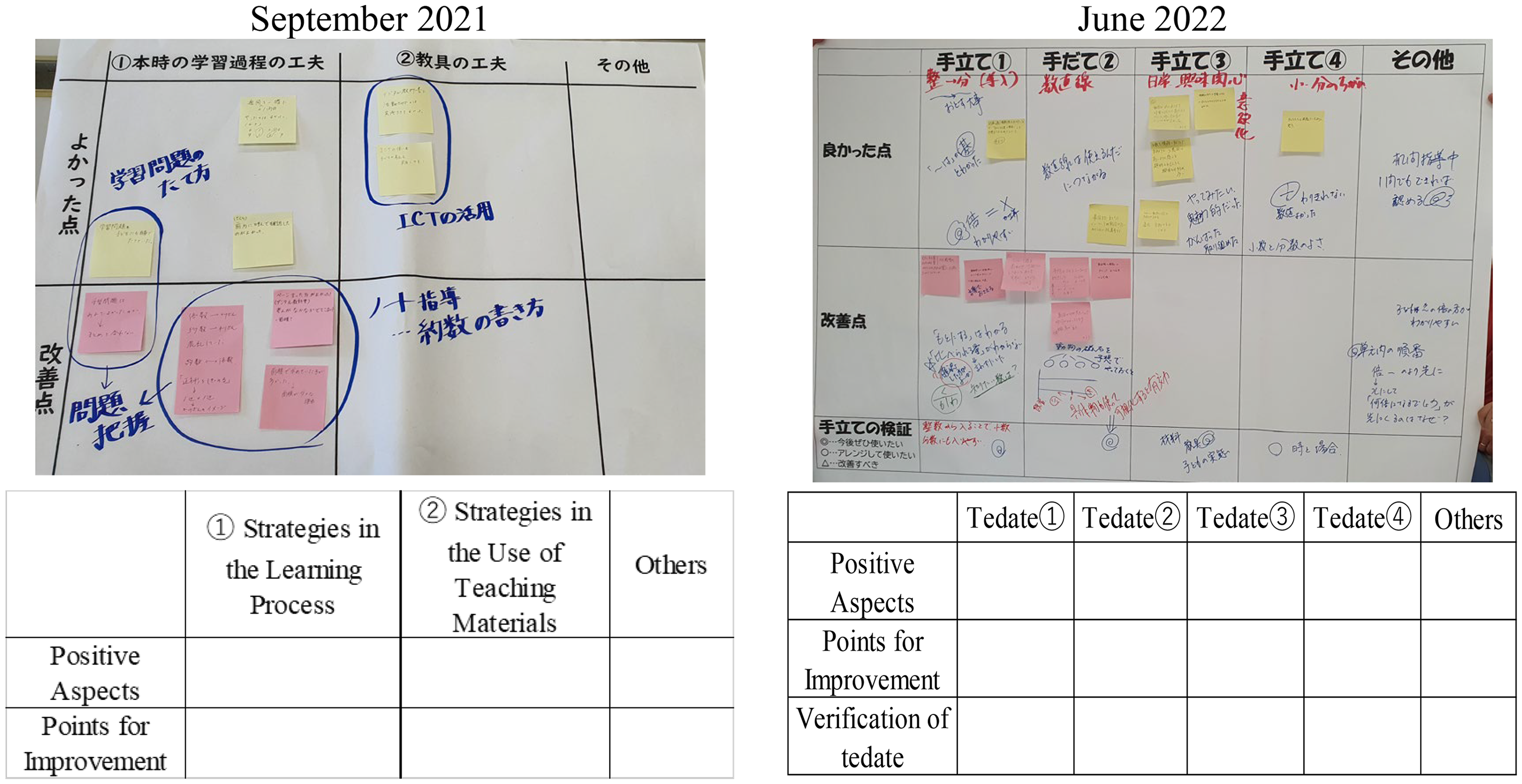
Comment sheets used in post-lesson discussions.
Taro continued to perceived tedate in subsequent interviews. In the September 2022 pre-lesson interview, he mentioned tedate while discussing how he reads lesson plans. When asked why he focused on this, he explained: First, the teachers who create these lesson plans think about how to structure and develop lessons to achieve the desired outcomes. So, in a way, the tedate toward that ultimate goal is what we should focus on. I feel that because the format has changed this year, it has become easier to see. Previously, parts of the plan highlighted key points; however, it is now clearer which tedate should be used at specific points in the lesson. When I work on creating and revising my own lesson plans, I also find myself thinking about where to adjust and how to assist the students effectively. Therefore, we have attempted to pay closer attention to these aspects. (September 2022 pre-interview, Q: reasoning, 13:36)
Taro perceived (P) the implementation of a tedate set by the instructor and decided (D) that these were the key elements for observing teachers, as they were designed to achieve the lesson objectives. He interpreted (I) this focus as being linked to the explicit inclusion of tedate in lesson plans from 2022 to 2023, which made observations clearer and informed his own planning.
In the October 2022 pre-lesson interview, when he again served as an instructor, Taro stated that his focus in the LS was on the proposed method (tedate) included in the lesson plan.
He perceived (P) the incorporation of tedate into the lessons set for each two-grade band. He interpreted (I) them as essential for improving student learning in line with the research theme and decided (D) to plan a research lesson that would enable their examination and ensure alignment with the theme.
Since June 2022, Taro has explicitly perceived tedate, paying closer attention during observations and engaging more deeply in interpretation and decision-making. In planning, he re-evaluated tedate to ensure alignment with research themes and objectives. This explicit focus made lesson observations and discussions more structured. His transformation is also evident in his lesson plans; as shown in Appendix C, the tedate in his October 2022 plan was more specific and aligned with the theme than that in September 2021.
4.2.2 Exploring problem sequences to align learning problems with matome
In the September 2021 research lesson, Taro struggled to formulate a learning problem that was aligned with the lesson's objective. Although he revised the task in the middle of the lesson in response to the students’ answers, the adjustment led to confusion and diverted attention toward identifying common factors. While the problem itself—tiling a 12 × 18 cm rectangle with square tiles—was mathematically appropriate, students used area-based thinking rather than focusing on the greatest common factor (Figure 4).
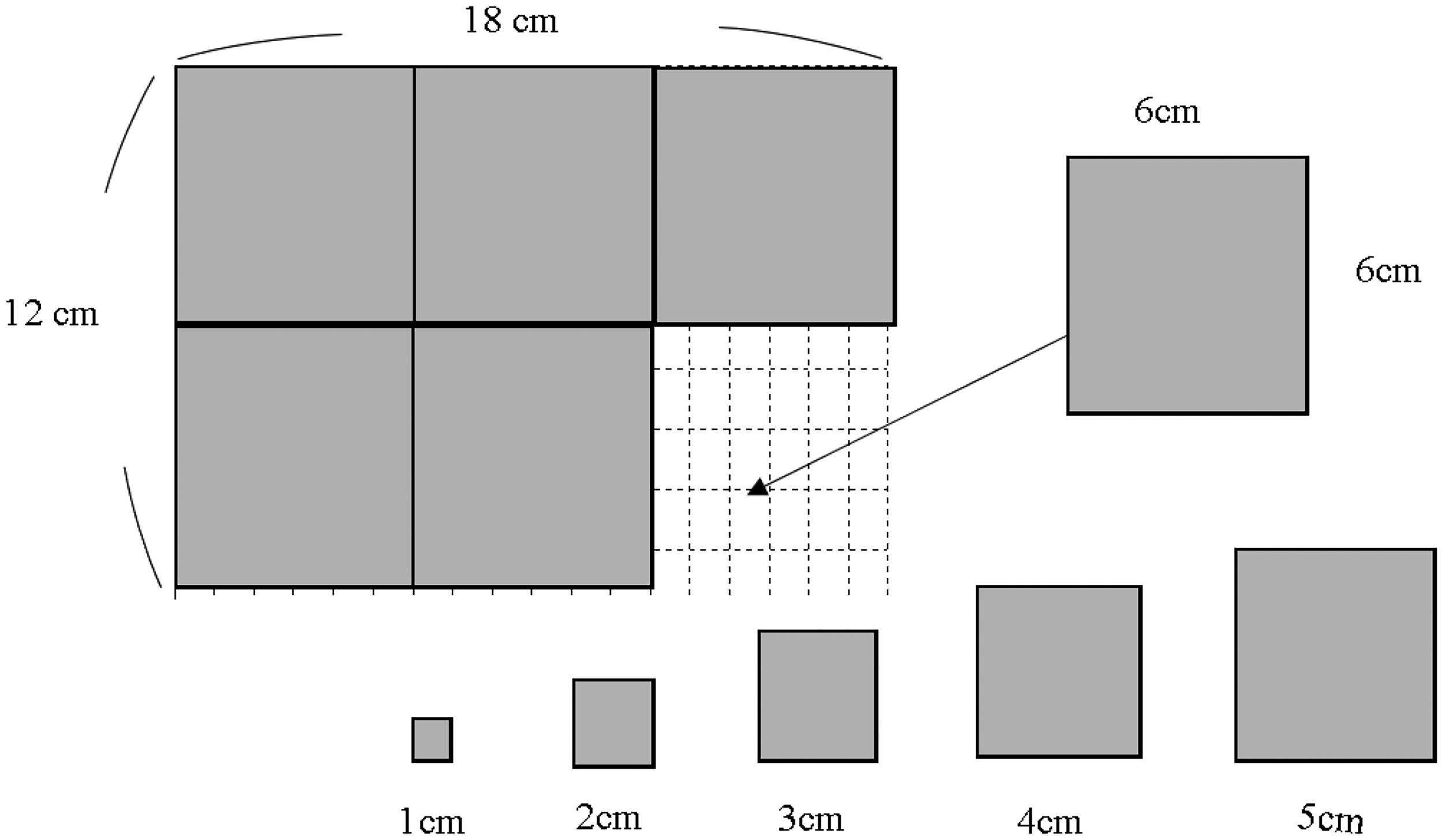
The “tile problem” used in the introduction of the September 2021 research lesson.
Other teachers noted a misalignment between the task and intended summary (matome), indicating how multiplication-oriented reasoning confused the students (Figure 5). In contrast, Taro attributed the confusion to his own phrasing rather than the task design (to be discussed further in the case of questioning).
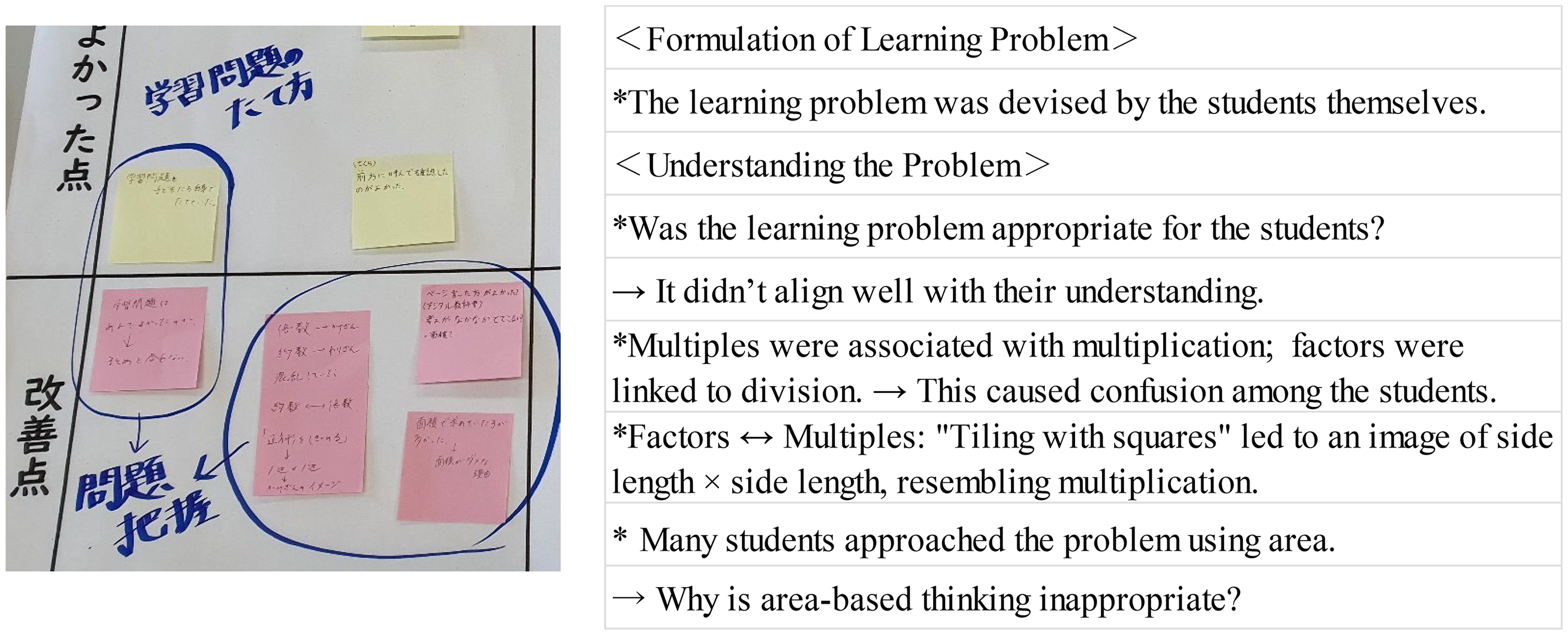
Excerpts of other teachers' written comments on Taro's research lesson (September 2021).
At that time, Taro did not demonstrate noticing during or after the lessons. His attention was more focused on maintaining consistency with the neighboring class than on the lesson's internal coherence, as evidenced in his September 2021 pre-lesson interview (see the example in Section 3.3). However, in November 2021, he began to perceive (P) the need to align lesson objectives and unit structures, marking a turning point (Table 5). He interpreted (I) this connection as critical to lesson quality and decided (D) to attend more closely to the relationship between the learning problem and matome. I begin by identifying the desired outcomes for a unit or lesson. I then connect these to the structure, including the learning problem and its summary (matome). Achieving this objective requires careful attention to how the learning problem is framed and how content aligns with the goal. (November 2021 pre-interview, Q: reading lesson plans, 05:30)
Taro perceived (P) the relationship between the unit (i.e., a major chapter in the mathematics textbook) and lesson objectives and interpreted (I) the connections between the learning problem, summary, and objectives. He decided (D) to prioritize these connections in future lesson plans. This reflected the growth from September 2021, when his focus was primarily on teaching materials without explicit attention to the formulation of learning problems (to be discussed further in the case of teaching materials).
By October 2022, Taro approached lesson planning with an intentional focus on coherence and task progression. In lesson planning, he perceived (P) differences between 7 + 5 and 3 + 9, interpreting (I) that students struggle to articulate their differences. He decided (D) to implement teaching strategies (tedate) to support understanding. Taro: I have been unsure how to frame the learning problem, so I would like to hear your thoughts later. I talked about the principal everywhere, and we discussed the difference between 7 + 5 (prior learning) and 3 + 9. In 3 + 9, the number being added is larger, but just saying “the number that comes after” feels kind of vague. I am not sure if the students really learn that. Perhaps, they would put it into words, but if they do not, what? The research steering committee also told me to bring this up today, so I hope to receive advice on it. (…) Grade 4 Teacher: This is challenging. May I ask for something from my own perspective? Do you want students to notice the strategy of breaking up the three rather than focusing on the nine, right? Taro: Yes, adding 1 to 9. Grade 4 Teacher: This makes it easier to make a ten. Therefore, in this case, should we value students who use that strategy by adding 1 to 9 more highly? Or is the point of the unit just to allow them to observe and learn from each other? Taro: The main goal was to form a group of ten. No matter which number they break apart, as long as they understand that they are making 10, and then adding the leftover 2 to obtain 12, which is the key idea. From the standpoint of calculation fluency, breaking 3 into 1 and 2—adding 9 + 1 to make 10, and then 10 + 2 to get 12—is probably a more accurate and efficient method. However, I do not think the matome aimed to emphasize that strategy too strongly. Grade 4 Teacher: Oh, I see—so if that is the intention, then (…) (October 2022 lesson plan development and review, 11:51)
Taro also began questioning the appropriateness of his learning problems, interpreting (I) the need for revision, and deciding (D) to consult with colleagues. He began to reflect prior learning, anticipated student responses, and the connection between the learning problem and the lesson objective of teaching addition through number decomposition and regrouping. He discussed these concerns in advance with the school principal and the research steering committee and continued the conversation during the LS discussion. Instead of responding immediately, the Grade 4 teacher first asked Taro a question, prompting him to clarify his intention and lesson objective. She then shared her views based on her understanding of his role as the instructor.
However, alignment between matome and practice problems remained an issue. In the October 2022 lesson, Taro reviewed 9 + 3, introduced 3 + 9 for comparison, and posed 5 + 9 as practice problems. While both decomposition strategies led to regrouping by 10, he concluded with the fixed statement, “Dividing the smaller number works best,” rather than inviting student comparison.
During the post-lesson discussion, colleagues noted that the problem would have better supported the conclusion “Either method works.” Taro did not notice this inconsistency until it was pointed out. In a post-lesson interview, he reflected: I rush to conclude by focusing on additive decomposition as the unit's emphasis. Instead, I should have paused to let the students explore both methods and draw their own conclusions. While I realized this during the lesson, I could not adjust in that moment. For the next lesson, I incorporated more problems to guide the students towards the idea that either method works. (October 2022 post-interview, Q: notable points, 01:58)
Taro perceived (P) the inconsistency between his instructional decisions and the lesson objective, interpreted (I) it as a missed opportunity for exploration, and decided (D) to revise future lessons to allow for more open-ended thinking.
This episode illustrates both progress and limitations. After 2021, Taro recognized the need to align the learning problem, practice problems, and matome, and by 2022, he began to consider the sequencing of these problems more deliberately. He also sought feedback from colleagues to refine his plan. However, his ongoing difficulty in connecting the matome to students’ problem-solving activities suggests that his transformation in noticing is still a work in progress.
4.3.1 Rethinking the intention behind the use of teaching materials
In September 2021, Taro prioritized the use of digital textbooks during lesson planning, but his focus was limited to logistical aspects, such as how they might affect chalkboard use (Table 6). He did not consider how the materials supported students’ understanding or aligned with the lesson objectives. During the lesson plan review, discussions centered on operations such as screen projection and visual demonstration, rather than on the learning problem itself. Post-lesson feedback highlighted that the teaching materials lacked clear instructional intent, which led Taro to recognize the importance of purposeful material design.
In the post-lesson interview, Taro reflected on learning from colleagues’ practices: how visible and purposeful materials helped students recall concepts. This reflection marked a shift from planning logistically to recognizing the need for valid instructional use tied to lesson objective. He interpreted (I) that teaching materials should convey what he wants students to learn and decided (D) to use them more purposefully across subjects, including mathematics. I have picked up a lot from colleagues, including my facilitator. They often say, “If that is the goal, this would be a better way to apply it.” (…) Having something visible right away lets students say, “Oh! That is it!” That is why I used teaching materials because I learned from my colleagues and their practices. What stuck with me was the importance of having clear intentions. I always ask myself, “What am I trying to convey? What do I want students to learn today?” (…) I have been reflecting on using materials such as liters and grams to help students understand and am work on refining how I use them. (September 2021 post-interview, Q: application, 18:35)
However, classroom observation data showed that in his everyday practice, Taro still perceived (P) the need for visual support but continued to post an excessive number of visual aids (Figure 6), indicating a gap between intention and specificity in application.
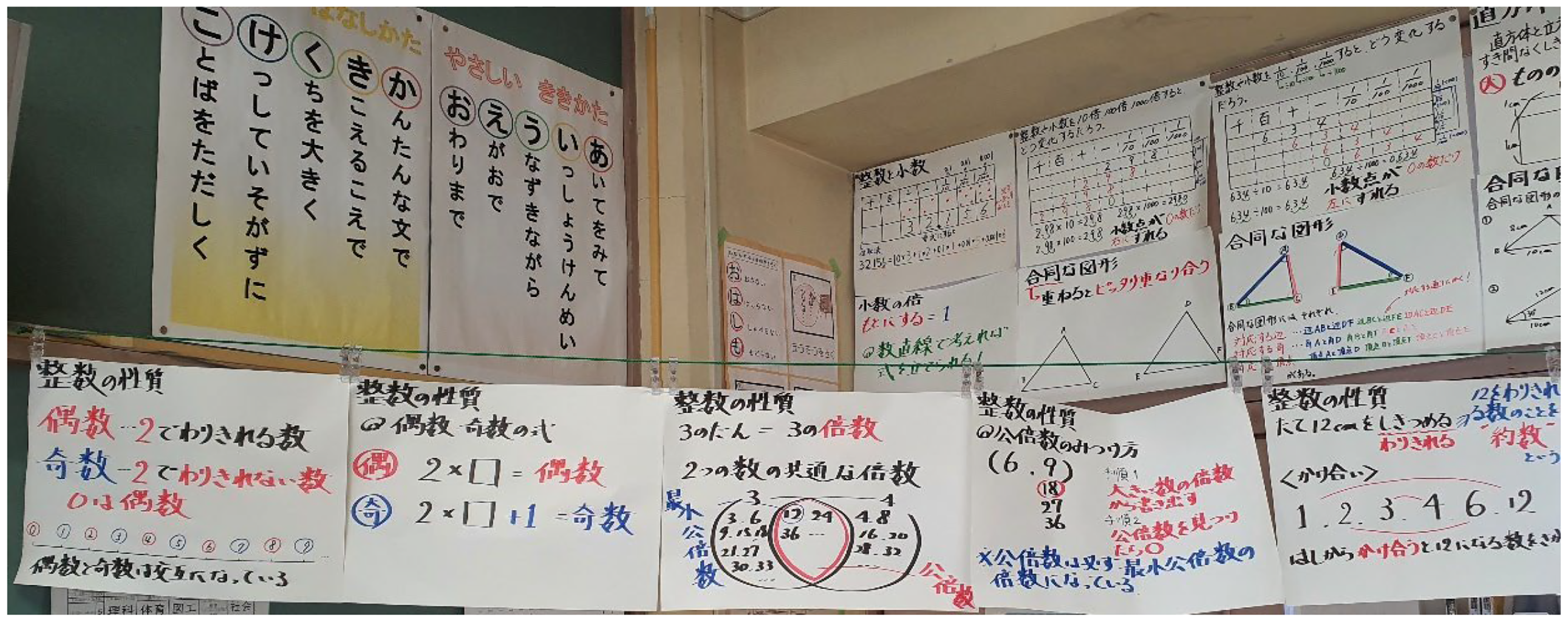
Examples of visual aids related to mathematics lessons displayed in Taro's classroom.
In November 2021, during a first-grade research lesson, Taro showed a strong interest in teaching materials. Four out of six comments he made during the post-lesson discussion focused on design and utilization (Figure 7).
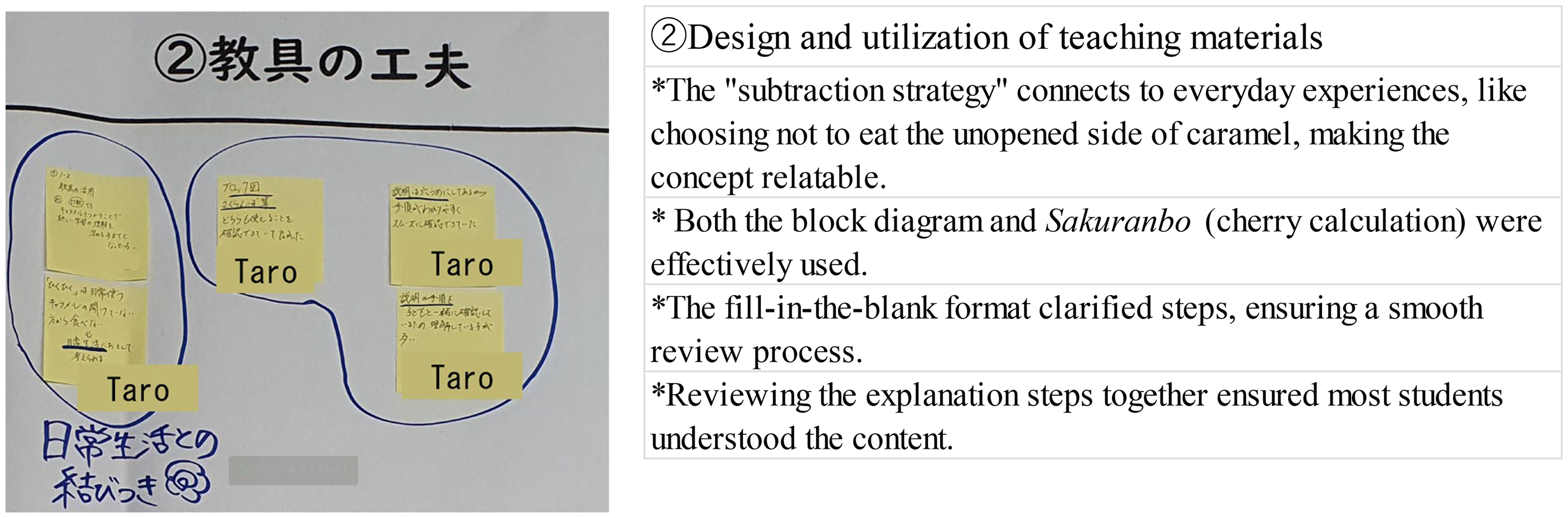
Excerpts from Taro's comments in the November 2021 post-lesson discussion.
By 2022–2023, while teaching lower grades for the first time, Taro faced challenges in selecting materials that resonated with younger students. He perceived (P) that certain objects from previous lessons were more relatable than others and interpreted (I) the importance of starting from familiar contexts to foster connection. During an October 2022 interview, he questioned whether using “eggs” would feel realistic and decided (D) to design the unit so that materials could bridge everyday experiences and addition. In previous lessons, familiar items helped to engage students. I have been considering how to use “eggs” effectively, but I keep questioning if 9 and 3 eggs are realistic quantities students encounter. My goal is to start with something relatable and then connect it to blocks and real-life applications by the end of the unit. Reflecting on earlier lessons, I realized that making the content familiar to the students was essential, and I wanted to work toward this. (October 2022 pre-interview, Q: previous impressions, 12:56)
Despite these challenges, Taro adhered to the textbook content (e.g., using egg models to represent addition problems like 3 + 9) while thoughtfully incorporating teaching materials. Taro perceived (P) that even when following textbook content, the choice and use of teaching materials could influence how students connect mathematical concepts with their lived experiences. He specifically recognized that materials could help students engage in addition through number decomposition and regrouping, the core concept of the unit. Based on this, he interpreted (I) that materials should not merely present content but also serve as a bridge between familiar contexts and abstract ideas. He then decided (D) to plan his unit so that teaching materials would consistently support these connections across multiple lessons.
Over time, Taro's noticing of teaching materials transformed. Previously, he used materials without considering their purpose or connection to student understanding, focusing mainly on visual presentations. Through repeated LS cycles, he began to recognize how the materials could support students’ understanding of addition through number decomposition and regrouping. For example, he selected tools that helped students visualize how 3 and 9 make 12 by forming 10 and adding 2. His noticing became more diverse, as he considered not only visibility but also students’ prior experiences and developmental stages. It also became more valid as he increasingly aligned materials with the lesson objective and anticipated how students would reason using mathematical ideas. His interpretations and decisions reflected clearer intent and pedagogical coherence.
4.3.2 Identifying the need for lesson improvement based on students' problem-solving observations
In September 2021, Taro perceived (P) that students had produced answers in the previous lesson but paid limited attention to how they reasoned through concepts such as common factors (Table 7). He interpreted (I) this as a sign that the lesson had gone well and anticipated that students would grasp the real-life applicability of mathematics through the tiling problem (see Figure 4). However, during the research lesson, he perceived (P) that students struggled to appropriately identify factors. I thought the factors would go as smoothly as multiples, but the factors were much more complex for students. Unlike multiplication, which appears straightforward, division is challenging. Teachers said factors were finite and, thus, easier to grasp, but students found multiples easier because they simply kept multiplying. Pairing several factors confuses them. Despite this practice, students missed pairs or doubted their answers. This caused instability and prevented us from encountering application problems. Later, during online lessons, repeated explanations were used to help 70% of the students grasp the process. I realized that I had not been sufficiently thorough. (September 2021 post-interview, Q: unexpected observations, 07:32)
He interpreted (I) this as a gap in their conceptual understanding of division and factorization, which may have resulted from his earlier lessons not emphasizing these foundations sufficiently. While he did not state a specific revision, it can be inferred that he decided (D) to improve future lessons by better supporting students’ understanding of division and factor relationships.
In November 2021, Taro reflected on the inadequacies of his teaching, particularly the need for continuity and coherence in mathematical content. He decided (D) to emphasize these in his fifth-grade lessons. For instance, he prioritized concepts applicable in higher grades, ensuring systematic understanding through tools such as number lines. However, feedback from the sixth-grade teacher revealed that Taro's focus on number lines in earlier lessons had led to resistance among students, a situation labeled the “Number Line Incident.” Taro recognized (P) this resistance stemming from his teaching and interpreted (I) the need to respect students’ problem-solving. Moving forward, he decided (D) to allow students to choose strategies to foster independence and flexibility.
By October 2022, Taro perceived (P) the value of connecting mathematical content to students’ prior learning, particularly in teaching addition through number decomposition and regrouping. In a pre-lesson interview, he shared the following expectations: I have always valued what I have learned in my lessons. I expect approaches like using cherry calculation (The markers that split, collect, and regroup numbers look like the branches of a cherry, and this expression is called “cherry calculation [Sakuranbo]” in Japanese) or employing blocks to emerge during the lesson. I would most like to see the phrase “making 10” being mentioned by the students. If they can use this phrase, it would give me a sense of the learning they accumulated over time. Therefore, I hope that these three aspects—block manipulation, cherry calculation, and verbal explanations—emerge smoothly during the lesson. (October 2022 pre-interview, Q: anticipated responses, 04:10)
Taro's earlier approach in 2021–2022 was to guide students toward specific methods, such as the number line, resulting in limited autonomy. However, feedback from the sixth-grade teacher about students’ resistance prompted him to reinterpret (I) the need for flexibility and (D) to allow students to select their own strategies.
He further clarified this shift by reflecting on a second-grade lesson with the same research hypothesis: In the second-grade lesson, (…) I will not say, “You must use this method.” Instead, I will ask, ‘What will you use?” and let them decide. (…) This reminds me of last year's fifth-grade number line lesson and the sixth-grade “Number Line Incident,” where the students refused to use the number line. I do not want students to think that there is only one right way. If some students struggled, the blocks were also acceptable. They can compare the methods and determine which method works better. (October 2022 pre-interview, Q: previous impressions, 17:00)
Thus, Taro perceived (P) the lesson design in the Grade 2 research class as overly narrow, focusing only on the place value chart. He interpreted (I) the situation as echoing his past mistake in prescribing number lines and decided (D) to design a new lesson that allowed for diverse problem-solving strategies.
However, during the October research lesson, Taro perceived (P) that a few students had used block manipulation, contrary to his expectations. He interpreted (I) this as a result of his past emphasis on cherry calculations and reflected on his need to better support students’ strategic variety: (…) I thought more students would use the blocks. However, even struggling students relied on cherry calculations. Looking back, I might have unintentionally pressured them. I should consider the lesson flow more carefully. (October 2022, post-interview, Q: unexpected observations, 04:58)
While no explicit decision (D) was made, Taro's reflections implied a commitment to better integrate multiple strategies aligned with the lesson objectives.
In summary, this series of instances of noticing transformation illustrates how Taro's noticing evolved to incorporate greater diversity, validity, and specificity into the problem-solving instruction. In terms of diversity, Taro moved away from promoting a single problem-solving strategy such as number line or cherry calculation and began to interpret (I) the importance of offering students multiple approaches, including block manipulation and verbal explanation. He decided (D) to foster more student autonomy in method selection. Regarding validity, his interpretations became more grounded in students’ thinking and were more clearly linked to the lesson objective of developing an understanding of addition through decomposition and regrouping. Finally, in terms of specificity, his planning began to include deliberate use of teaching tools and goals—such as “making 10”—to support conceptual understanding.
However, this transformation has some limitations. Although Taro intended to support diverse strategies, his October 2022 research lesson revealed a mismatch between his instructional goals and students’ actual responses. Most students relied on cherry calculations despite efforts to allow for varied approaches. In his reflection, he acknowledged that prior lessons may have implicitly narrowed students’ options. This suggests that, while his noticing had shifted to the level of interpretation and decision-making, it had not yet been fully translated into classroom enactment. The transformation remained aspirational rather than being consistently realized.
Nevertheless, the research lesson prompted Taro to reinterpret (I) his prior everyday lessons and to decide (D) that broader changes were required in his regular teaching. This served as a meaningful catalyst for recognizing the gaps between intended and actual instructional practice. Taro's case illustrates both the developmental trajectory and the constraints of noticing transformation as it moves from reflective intention to sustained pedagogical change.
4.3.3 Reinterpreting the research theme and seeking changes in questioning in the lesson
The results are summarized in Table 8. The following excerpt presents part of Taro's utterance during the introduction of his research lesson in September 2021, in which he attempted to guide students toward identifying common factors. Taro: Thank you. Let us start with a review, as usual. Finally, we attempted to tilt a rectangle measuring 12 cm by 18 cm. What does “tiling” mean again? Student: It means divisible. Taro: Divisible. Student: Multiply. Multiply. (…) Taro: Last time, we learned about the numbers called factors. The numbers that are divided evenly are called factors. We have solved problems such as this. Right? (Displays the problem in the digital textbook; see Figure 4.) (…) Taro: Today, let us consider how to tile this. This was what we aimed to determine. How should we address our learning problems? Student: What size square tile would cover the surface completely without gaps? Taro: Great. We will investigate that. Everyone okay with that? (September 2021 research lesson, 00:27)
In the post-lesson interview, Taro perceived (P) for the first time that his omission of key terms from the introduction caused confusion. He interpreted (I) this as a missed opportunity to direct student attention toward the lesson objective and decided (D), retrospectively, that he should have paused and clarified the learning problem: I made a mistake during the introduction, specifically omitting the phrase “divisible by both numbers.” Without this, students could not focus on identifying common factors. Perhaps my previous lessons on finding factors had not been thorough enough. I realized that I had failed in the introduction but lacked the ability to redirect effectively. (…) In hindsight, I think pausing and revisiting is better. (September 2021 post-interview, Q: notable points, 00:20)
By November 2021, Taro perceived (P) that his September lesson had not adequately supported students in understanding the learning objective. Through reflection, he interpreted (I) that a key issue was the lack of connection between lesson introduction and students’ prior learning. He decided (D) to incorporate step-by-step prompts into his everyday teaching to help maintain lesson coherence and support student understanding: Since the last research lesson, I have been more mindful of what needs to be done (…) I now ensure that students are writing in their notebooks, checking their notes step-by-step to identify differences from previous lessons. If they seem to stray, I adjust, asking, “Last time we did this—shouldn’t we approach it this way now?” This approach has helped students improve and is something I learned by reflecting on the last research lesson. (November 2021 pre-interview, Q: previous impressions, 13:35)
In June 2022, Taro perceived (P) that the previous research theme subtitle, which emphasized “consolidation of knowledge and skills,” had not adequately supported the development of student autonomy. He interpreted (I) repeated teacher-led utterances alone as being insufficient to promote sustained learning. Based on this interpretation, he decided (D) to support the revision of the subtitle and collaborate with colleagues to explore how to implement this change in practice. I think the goal of LS (theme) is still to improve students’ academic ability, but the approach (subtitle) has changed. Last year, we focused on knowledge, skills, and thinking that would help but it did not work. (…) Maybe that is why some sixth-graders resisted the number line—they were not choosing it themselves. When a student says, “I’ll use the number line,” or “I’m not good at it, so I’ll try another way,” that already shows self-directed learning. That mindset—how they engage—is significantly different from that of the previous year. I think that this is what the change in the subtitle is about. (June 2022 pre-interview, Q: previous impressions, 12:19)
Later that year, during a Grade 4 post-lesson discussion, Taro observed how a research facilitator responded to students’ utterance. This observation, coupled with his earlier experience in the September 2021 research lesson, prompted further reflection. He perceived (P) that the facilitator's instructional language—especially the way students’ words were gently reformulated through follow-up questions—helped to clarify mathematical concepts. He interpreted (I) this as a powerful means of supporting conceptual understanding and decided (D) to adopt a similar approach in his own teaching. What stood out to me and was really helpful was how much the research facilitator emphasized precise mathematical language. For example, when a student said, “a straight line” (massugu na sen, a colloquial expression), he asked a follow-up question that led the student to revise it to “a line” (chokusen), the proper mathematical term. This made me realize the importance of helping students refine their expressions since it is part of what they carry forward. Seeing how the facilitator built on students’ words and guided them toward accurate terms made an impression of me. (September 2022 post-interview, Q: notable points, 00:13)
In an October 2022 post-lesson interview, Taro reflected on his questioning. He perceived (P) that his questions were too long, interpreted (I) that this hindered student reasoning, and decided (D) to revise his questioning to encourage students to think critically: I really wanted to ask shorter questions to let the students think deeply, but I ended up talking too much and rushing through the questions. Instead of thinking deeply, students just repeat prior learning. I should have paused more to ask, “Why are we doing this?” and provided time for reflection. It is clear that my questions needed improvement. (October 2022 post-interview, Q: notable points, 00:14)
Through these developments, Taro's noticing of his own questioning became more refined. His interpretations have increasingly addressed the validity of classroom communication: How teachers talk supports or limits students’ reasoning. His decisions reflected the growing specificity, including concrete adjustments to questioning and prompting. Moreover, he demonstrated greater diversity in recognizing and evaluating multiple instructional approaches, including examples drawn from peer observations.
However, these developments are primarily situated within the context of research lessons. While his decision-making showed a deepening transformation, it had not yet been fully embedded in his everyday mathematics lessons. This highlights a limitation of Taro's observation: Although his reflection and planning improved in structured LS settings, translating these insights into consistent daily practice remained an ongoing challenge.
Transformation of Taro's noticing in the LS context
In response to RQ1, this study demonstrated that Taro's noticing transformation can be characterized by three overarching features synthesized from five detailed cases: planning and reflecting on lessons using the proposed method (tedate), exploring problem sequences, reconsidering the use of teaching materials, identifying areas for improvement based on students’ problem-solving, and reinterpreting the research theme through changes in questioning.
First, he repeatedly explored the potential uses of tedate, moving beyond surface-level observation to examine its practical application across multiple lessons. Second, he used students’ reactions and problem sequences as a lens for reconsidering the coherence of lesson content and task sequences. Third, he showed an openness to feedback and a clear intent to carry improvement ideas into practice, while also facing persistent challenges in consistently enacting these changes in everyday teaching. These interrelated features highlight that his noticing transformation was not only cumulative but also exploratory, curriculum oriented, and improvement driven within the school's collaborative structures.
Building on this synthesis, this study demonstrated that an ECT's noticing transforms not only through a gradual accumulation of expertise but also through iterative shifts in what is perceived, how it is interpreted, and what decisions are made across planning, teaching, and reflection. Taro's case illustrates that noticing does not follow a linear path of improvement; instead, it includes moments of hesitation, reconsideration, revealing signs of both professional growth and a transformation that, at times, remained aspirational rather than being consistently realized. This nuanced perspective expands on previous research that has often conceptualized noticing as a skill measured by responses to video clips or in-the-moment classroom events (König et al., 2022; Stahnke et al., 2016; Van Es, 2011).
While prior studies using the PID (Perception, Interpretation, Decision-making) model tended to score teachers’ noticing levels quantitatively (e.g., Kaiser et al., 2015; Yang et al., 2021), this study used a qualitative approach to examine how noticing develops and what triggers its transformation.
Taro's case showed a broadened perception as he began noticing previously overlooked elements, such as the tedate and the misalignment between the learning problem and matome. He then reinterpreted (I) their significance and decided (D) to revise his lesson design—evidence of deepened interpretation and decision-making.
While Kang (2025) left the sustainability of newly developed noticing as an open question, the present study shows that once Taro began attending to tedate in June 2022, he continued to do so during the October cycle. This indicates that LS not only triggers but also sustains professional noticing, supporting long-term teacher development. These findings demonstrate that the transformation of noticing is not limited to the teaching moment itself but is distributed across the entire LS cycle, including lesson planning and post-lesson reflection (Amador & Weiland, 2015; Lee & Choy, 2017; Yun et al., 2024).
Importantly, this study also builds on Mason's (2002) perspective that noticing becomes professionalized through interaction and validation with others. Although LS does not replicate specific events as video-based studies do, Taro revisited similar instructional concerns and recurring teaching issues in multiple research lessons. Through observation, peer discussions, and structured comment sheets (Figure 3), he verified and refined his noticing collaboratively, which played a key role in his transformation.
At the same time, this case highlights the ongoing nature of the process. His noticing was often shaped by the LS context and feedback; however, its application to everyday mathematics lessons remained uneven. For instance, while he attempted to promote diverse strategies in his October 2022 lesson, subtle cues in his language still signaled a preferred method. Thus, this study not only captures the signs of transformation but also helps identify the challenges that remain, offering specific directions for future teacher education. This shows that supporting ECTs’ noticing involves not only facilitating growth but also acknowledging and addressing the tensions they experience while applying new insights to daily practice.
Reconsidering assumptions in Japanese LS to better support ECTs
Regarding RQ2, this study suggests that Japanese LS, while offering a rich infrastructure for teacher professional growth, embeds implicit assumptions that may not always serve ECTs. One such assumptions is the expectation that all teachers can independently align abstract research themes with classroom practices or interpret and apply pedagogical constructs such as tedate (proposed methods) without explicit support. Taro's case illustrates that while he began to attend to tedate, he struggled with using it in practice effectively. This highlights the need for clearer support both in the setting and in applying tedate, while also signaling his noticing is growing through trial and error.
Japanese LS operates within a cultural setting where collaboration is underpinned by shared norms of indirect evaluation, mutual inquiry, and professional modesty (Melville & Corey, 2021; Miyakawa & Winsløw, 2019). Teachers often participate in LS discussions “as if they were the research lesson instructor,” contributing reflective questions rather than judgments. This approach was further supported by colleagues at Taro's school.
For example, during lesson planning meetings, senior teachers refrained from directly evaluating their proposals; instead, they asked clarifying questions such as “What were you intending to highlight with this problem?” or “How does this connect to the research theme and hypothesis?”(see Section 4.2). These interactions prompted Taro to articulate his instructional decisions more clearly and revise them based on shared reasoning.
Taro was invited to attend meetings of the research steering committee (Takahashi & McDougal, 2016), in which cross-grade curricular goals and hypotheses were discussed in depth. These sessions, often invisible in LS, provided him with access to how experienced colleagues analyze task design, student responses, and mathematical progression. Observing these conversations gave Taro insight into how lesson objectives are collaboratively negotiated and refined over time, beyond the visible structure of the research lesson.
A notable example of this collaborative infrastructure was the 5-month process of revising the research theme subtitle from 2022 to 2023 (see Section 3.1 and Appendix A). Rather than treating the theme as a static mandate, the school engaged in iterative, multi-grade dialogue to ensure vertical coherence and grade-level relevance. This process helped teachers, including Taro, to build a shared understanding of how lesson-level decisions align with long-term student development goals.
To further scaffold noticing, the comment sheet format was revised (Figure 3) with new prompts that explicitly asked teachers to consider how tedate functions in relation to the research theme. This change helped Taro clarify his instructional intentions and sharpen his observation of peer lessons. These structural tools illustrate how, even within a mature LS system, teachers continue to refine the means by which noticing is scaffolded, interpreted, and validated. Using concrete data also helps ensure that post-lesson group discussions remain focused and evidence based, reducing the risk that feedback will be perceived as mere personal impressions or personal criticism, which can be a challenge in international LS contexts (Cardoso et al., 2025; Fujii, 2014).
However, such supports are not always made clear to ECTs, nor is it consistently formalized. Taro's case shows that transformation in noticing often depends on whether novice teachers have access to structured reflection tools, peer modeling, and a safe environment for tentative interpretation. Without such infrastructure, ECTs may hesitate to challenge dominant narratives, particularly in environments that emphasize deference to seniority.
In response to these findings, this study proposes the following strategies to better support ECTs’ noticing within LS:
Scaffold ECTs’ use of tedate: Provide concrete examples of how tedate is derived from the research theme, and model its instructional application through annotated lesson plans and facilitator debriefs. Design cross-lesson noticing trajectories: Help ECTs track how noticing develops across multiple lessons (e.g., from noticing misalignment between problem and matome to refining their questioning). This longitudinal approach clarifies how ECTs’ noticing evolves over time. Create non-judgmental but verification-oriented spaces: Encourage senior teachers to avoid judging ECTs’ comments and ask questions focused on clarification. Teachers adopt the stance of “If I were the instructor” using the research theme to examine and verify hypotheses, such as using a comment sheet. This approach maintains psychological safety and fosters joint meaning-making. Include ECTs in informal planning meetings: Observing senior teachers’ deliberation in the research steering committee or grade-level groups can expose ECTs to content-specific noticing, such as anticipating common misconceptions or selecting tasks to build toward key concepts. Facilitate intra-grade collaboration in mathematics: Organizing discussions within grade-level clusters (e.g., lower, middle, and upper elementary) allows teachers to examine curricular coherence across units. In Taro's case, discussing addition strategies like 3 + 9 versus 9 + 3 across grades helped clarify how decomposition methods should be logically developed over time.
These recommendations are especially relevant when considering the international adaptation of LS. Studies outside Japan have found that LS discussions sometimes focus primarily on whether lessons are implemented as planned, with less emphasis on instructional reasoning or student thinking (Amador & Weiland, 2015; Cardoso et al., 2025; Fujii, 2014). As a result, collaborative discourse may become somewhat procedural in nature, which might constrain opportunities for deeper professional learning and reflection (Nguyen & Tran, 2023; Shimizu & Kang, 2022). In contrast, the practices observed in Taro's school—such as revising comment sheets, engaging in hypothesis-driven theme negotiation, and maintaining discipline-specific collaboration—demonstrate how LS can be structured to elicit noticing and critical reflection.
In summary, while Japanese LS offers significant opportunities for ECT development, these opportunities are most impactful when their underlying structures are made explicit, cultural expectations are acknowledged, and supports is intentionally scaffolded. Taro's case highlights that transformation of noticing is not just a personal or cognitive achievement but also a socially situated process that relies on tools, norms, and interactions deeply embedded within the LS environment.
Given that LS has been introduced into international contexts for over 25 years now (Stigler & Hiebert, 1999), Taro's case reminds us that meaningful transformation does not result from adoption alone. Even in the Japanese elementary context, where teachers have extensive experience with LS and routinely cover all grades and subjects, sustained effort and repeated cycles are still needed to refine practice, and good results are not automatically guaranteed. The fact that LS continues to be actively adapted and expanded in diverse countries shows the strong commitment of educators worldwide to improving their practice through collaboration. This reality suggests that when LS is adapted in different cultural or school system contexts, especially where teachers specialize in a single subject or work across different school levels, it can be even more challenging to build shared understanding and lesson coherence.
In particular, as previous studies have shown, ECTs often struggle to anticipate student responses, interpret learning moments, and contribute actively in post-lesson discussions (Cevikbas et al., 2024; Kang, 2025; Lilly et al., 2024; Stockero & Van Zoest, 2013). Without targeted support, ECTs may adopt overly cautious lesson plans, miss key student thinking during observations, or take a passive role in group discussions. Therefore, more than simply designing structural frameworks for LS, it is important for facilitators, school leaders, and policymakers to create supportive conditions that explicitly scaffold ECTs’ participation in planning, classroom observation, and critical reflection. This includes strategies such as structuring comment sheets, using concrete data in post-lesson phases, clarifying research themes, and ensuring that experienced teachers provide non-judgmental but verification-oriented feedback. These design choices can help ECTs engage more confidently and develop the capacity to notice, interpret, and adapt lessons in ways that sustain meaningful professional growth.
Concluding remarks
This study explored how an ECT's noticing transformed through school-based mathematics LS, focusing on changes in perception (P), interpretation (I), and decision-making (D). Through longitudinal observation and interviews, the study captured how noticing evolves across the LS cycle, including planning and post-lesson reflection, not just during classroom instruction. The findings highlight the value of authentic, collaborative contexts in supporting both broadened and deepened noticing.
Despite its contributions, this study has some limitations. The scope did not extend to examining the influence of school administrators, facilitators, and knowledgeable others. However, Taro's case suggests that the facilitator played a crucial role in driving changes, particularly in 2022 and 2023, by ensuring that the research subtitle and proposed methods (tedate) were shared and collectively examined. This highlights the need for future research to further explore the impact of facilitators on ECTs’ noticing transformation within LS cycles. Additionally, the author's dual role as both observer and analyst may have introduced bias, which could have influenced the interpretation of the findings. As a single-case study, the findings cannot be generalizable to all ECTs. Future research could also examine how other teachers participating in the same LS cycles notice and transform their practices. These areas are critical for advancing our understanding of teacher noticing and the broader implications of LS for teachers’ PD.
Footnotes
Acknowledgements
I sincerely thank everyone who supported this study and provided invaluable assistance during the research process.

Ethical Approval
This study was approved by the Research Ethics Review Committee of the University of Tsukuba, Approval Number TSU2021-99A.
Informed Consent
Written informed consent was obtained from all participants in this study.
Funding
The author received no financial support for the research, authorship, and/or publication of this article.
Declaration of Conflicting Interests
The author declared no potential conflicts of interest with respect to the research, authorship, and/or publication of this article.
Author Biography
Appendix A: Schedule of Lesson Study and Interviews with Taro (2021–2022 and 2022–2023 School Years)
Appendix B
The interview questions (Table 1) were designed around the Japanese lesson study cycle: (a) goal setting, (b) lesson plan development, (c) research lesson implementation, (d) post-lesson discussions, and (e) reflective practices (Fernandez & Yoshida, 2004; Lewis, 2016). A key component during lesson preparation is (f) anticipating students' responses, which helps clarify the mathematical value of tasks and lesson objectives (Watanabe et al., 2008; Fujii, 2016).
Pre-lesson interviews explored the purpose of lesson study participation (a), approaches to reading lesson plans (b), key points of the lesson (c), anticipated student responses (f), and areas of focus during preparation and observation (c). Post-lesson interviews addressed notable moments from the research lesson (c), differences between anticipated and actual responses (f), reflections on colleagues’ opinions (d), and planned revisions based on insights gained (e). Participants were also asked about emerging interests or concerns and how they intended to apply their learning in future lessons (e).
Appendix C
Taro’s Proposed Methods (tedate) in Research Lessons
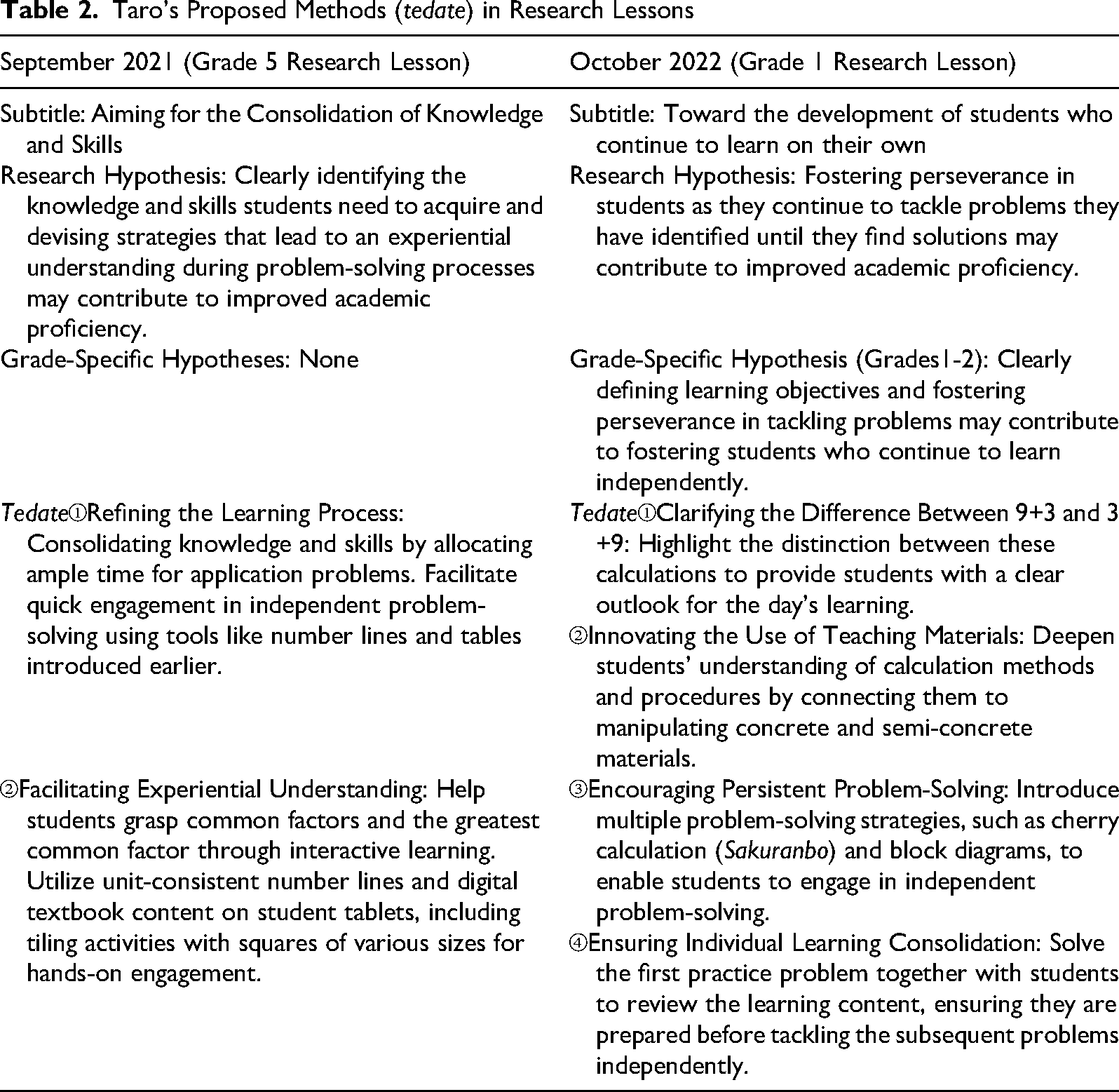
| September 2021 (Grade 5 Research Lesson) | October 2022 (Grade 1 Research Lesson) |
|---|---|
| Subtitle: Aiming for the Consolidation of Knowledge and Skills | Subtitle: Toward the development of students who continue to learn on their own |
| Research Hypothesis: Clearly identifying the knowledge and skills students need to acquire and devising strategies that lead to an experiential understanding during problem-solving processes may contribute to improved academic proficiency. | Research Hypothesis: Fostering perseverance in students as they continue to tackle problems they have identified until they find solutions may contribute to improved academic proficiency. |
| Grade-Specific Hypotheses: None | Grade-Specific Hypothesis (Grades1-2): Clearly defining learning objectives and fostering perseverance in tackling problems may contribute to fostering students who continue to learn independently. |
| Tedate①Refining the Learning Process: Consolidating knowledge and skills by allocating ample time for application problems. Facilitate quick engagement in independent problem-solving using tools like number lines and tables introduced earlier. | Tedate①Clarifying the Difference Between 9+3 and 3+9: Highlight the distinction between these calculations to provide students with a clear outlook for the day’s learning. |
| ②Innovating the Use of Teaching Materials: Deepen students’ understanding of calculation methods and procedures by connecting them to manipulating concrete and semi-concrete materials. | |
| ②Facilitating Experiential Understanding: Help students grasp common factors and the greatest common factor through interactive learning. Utilize unit-consistent number lines and digital textbook content on student tablets, including tiling activities with squares of various sizes for hands-on engagement. | ③Encouraging Persistent Problem-Solving: Introduce multiple problem-solving strategies, such as cherry calculation (Sakuranbo) and block diagrams, to enable students to engage in independent problem-solving. |
| ④Ensuring Individual Learning Consolidation: Solve the first practice problem together with students to review the learning content, ensuring they are prepared before tackling the subsequent problems independently. |