




Abstract
Over the last 15 years, a significant reform of the secondary school mathematics curriculum in Ireland took place. A major aim of the reform was to move away from instrumental learning and to develop mathematical proficiency and problem-solving skills in line with international trends. In this article, we study textbook tasks from popular textbook series in use before and after the reform. Our purpose is to use the task analysis guide to investigate the level of cognitive demand of the tasks, and the opportunities they offer students and teachers to achieve the aims of the curriculum reform. Our analysis shows that the vast majority of the 7635 tasks studied have a low level of cognitive demand; consequently, they mainly offer students opportunities to develop procedural fluency. We note that the post-reform textbooks do contain more tasks with high levels of cognitive demand than their pre-reform counterparts, however, the increases are small. This study will be of relevance to countries where textbooks are not designed or approved by curriculum developers.
Introduction and background to the study
Mathematics Curriculum Reform in Ireland
The second-level mathematics curriculum in Ireland has undergone a major reform over the last 15 years following consultation with both the mathematics and education communities (National Council for Curriculum and Assessment (NCCA), 2006). Prior to the introduction of this curricular reform (which was entitled Project Maths), the curriculum had not undergone a major reform since the late 1980s and the seemingly low problem-solving ability of Irish school children was becoming a major area of concern as had been noted in a number of publications (EGFSN, 2008; Forfás, 2009; OECD, 2007, 2010). It was also recognized that Ireland had “comparatively few very high achievers” (Eivers et al., 2008, p. 62). A growing perception existed that students were not being given an understanding of the subject or of how to apply its concepts (Elwood & Carlisle, 2003), and the teaching of mathematics in Ireland was seen to be encouraging procedural learning, often by rote, rather than promoting the ability to problem solve (Lyons et al., 2003). The major aim of the curriculum reform was for students to develop all strands of mathematical proficiency (Kilpatrick et al., 2001)—that is, procedural fluency, conceptual understanding, strategic competence, adaptive reasoning, and productive disposition—and thus to move away from rote-learning. In keeping with this, the new syllabus places particular emphasis on developing students’ problem-solving skills, deepening their understanding of mathematical concepts, and increasing the use of contexts and applications to enable them to relate mathematics to everyday experience (NCCA, 2012a). This was in line with international trends at the time (Conway & Sloane, 2005; Kadijevich et al., 2023). Conway & Sloane (2005) discussed how globalization has led to “increased attention on pedagogies oriented toward problem-solving” (p. 33) and refered to “a world-wide drive to improve students’ mathematical understanding” (p. 11) following concerns internationally about students’ overall poor understanding of key mathematical concepts and procedures.
Textbook analysis and evaluation of curriculum reform
It can be extremely difficult to investigate whether curriculum reforms are successful or not. However, the study of textbooks has the potential to provide insight into the implemented curriculum, or at least the potentially implemented curriculum (Houang & Schmidt, 2008). It has been found that students’ opportunities to learn mathematics can be influenced by the textbook they use (Stylianides, 2009), and the choice of textbook can result in different teaching strategies (Fan & Kaeley, 2000; Stein et al., 2007) and different student learning outcomes (Haggerty & Pepin, 2002; Tornroos, 2005; van den Ham & Heinze, 2018; Xin, 2007; Yang & Sianturi 2017). Indeed, Fan and Kaeley (2000, p. 8) contend that the choice of textbook “can influence the [reform] practice of mathematics teaching in classrooms, which in turn may help to improve mathematics standards in schools.” Textbooks serve as an intermediary between the curriculum and its implementation in the classroom (Rezat et al., 2021) and thus textbook analysis can provide insight into curriculum reform efforts. This is particularly pertinent in a country such as Ireland where textbook production is effectively deregulated. Textbooks for Irish classrooms are produced as a commercial enterprise and neither the NCCA (i.e., the statutory body charged with the development of curricula for Irish primary and post-primary schools) nor the government Department of Education produce, commission, approve or recommend particular textbooks (Foxman, 1999).
In this article, we report on a study of textbook tasks from before and after the introduction of the Project Maths syllabus. We have chosen to view the curriculum change through the lens of the types of tasks available in textbooks for a number of reasons. Firstly, we agree with Stein and Smith (1998) that the tasks completed by pupils form the basis, not just for their learning, but also for their implicit beliefs about the nature of mathematics, through the opportunities for student thinking they afford. Secondly, mathematics teachers in Ireland rely heavily on textbooks to structure their classes, and as the main resource for classroom and homework tasks (Duffy & Brennan, 2022; Shiel & Kelleher, 2017), despite the lack of government oversight of textbook production. Indeed, very often the textbook is the only resource which students have access to during the lesson aside from the teacher, while most of the tasks assigned for classwork and homework come directly from the textbook (Project Maths, 2017). Thus, the classification of textbook tasks gives us valuable information about the teaching and learning of mathematics in Ireland. Moreover, the important role played by tasks is highlighted explicitly in the Project Maths syllabus documents: The quality of the tasks that learners engage with plays an important role in a problem-solving environment. A task must engage learners and present them with a challenge that requires exploration. (NCCA, 2012b, p. 10)
The current study
In this project, we analyzed textbook tasks using the task analysis guide (TAG) which is concerned with levels of cognitive demand (LCD) (Stein & Smith, 1998). This framework was originally created, as part of the QUASAR project, in order to categorize mathematical tasks and permit a rating of tasks based on the kind of thinking they elicit in students (Arbaugh & Brown, 2005). The four levels of cognitive demand described—namely, lower level (memorization), lower level (procedures without connections to meaning), higher level (procedures with connections to meaning), and higher level (doing mathematics)—allow a spotlight to be shone on the opportunities provided by tasks for pupils to connect to the meanings underlying a procedure being used, for instance, or to engage in complex and non-algorithmic thinking.
Hsu and Yao (2023) noted that TAG has “been widely used as a theoretical lens to examine mathematical tasks included in textbooks or other curricular materials (e.g., tests)” (Hsu & Yao, 2023, p. 238). Researchers have used TAG to analyze the learning opportunities that textbook tasks afford students in relation to a curriculum in a single country (Jones & Tarr, 2007) or across a range of countries (Charalambous et al., 2010). Hadar (2017) found that exposure to tasks at higher LCD can lead to increases in achievement. Using this framework, we hope that an examination of the types of tasks encountered in Irish second-level textbooks—in editions published both before and after the curriculum change—will help to shed light on whether the intention to move away from instrumental learning and towards the development of all five strands of mathematical proficiency (which incorporate conceptual understanding and problem-solving skills) is being achieved.
Secondary-level education in Ireland consists of two parts, namely the junior cycle and the senior cycle. The senior cycle covers the final 2 years of secondary school and finishes with a state examination called the Leaving Certificate. The results of this examination determine entry into further education. Because of the high-stakes nature of this examination, our analysis will focus on textbooks aimed at senior cycle students. We consider pre- and post-reform textbook tasks from three popular textbook series, emphasizing that textbooks in Ireland are usually written by a teacher or group of teachers and are not subject to any official review.
Our research questions are: What is the level of cognitive demand of the tasks analyzed? What differences in the LCD are evident between the textbook tasks from before and after the curriculum reform?
What opportunities to achieve the aims of the curriculum reform (in particular to develop the strands of mathematical proficiency and problem-solving skills) are afforded by the textbook tasks analyzed?
The TAG, LCD framework, and mathematical proficiency
The LCD framework
Tekkumru-Kisa et al. (2020) described how the introduction of the curriculum and evaluation standards for School Mathematics in 1989 represented a watershed moment in mathematics education in the U.S. It was realized that students were spending too much time applying procedures in routine problems but not enough time engaging with non-routine problems which lacked structure. Thus, the students were not learning to think mathematically or developing reasoning and other problem-solving skills. This is very similar to the picture that was emerging of Irish mathematics education in the early 2000s, which highlighted an emphasis on procedural learning and routine problems, poor conceptual understanding, insufficient development of problem-solving skills, or opportunities to work on non-routine problems. In the U.S., it was believed that there was a crucial deficiency in teachers’ access to high-level, “doing mathematics” tasks because the vast majority of available resources consisted of low-level procedural tasks (Tekkumru-Kisa et al., 2020). Mathematics educators worked to specify the kinds of thinking and reasoning that high-level mathematics should elicit. One of the frameworks that subsequently emerged was the LCD framework which was then used as a Task Analysis Guide. The parallels evident between the U.S. and Irish contexts pointed us towards this framework/guide as an appropriate means of investigating whether a lack of suitable tasks was contributing to the perceived problems in Ireland.
The LCD/TAG framework (Smith & Stein, 1998) describes four levels of cognitive demand for tasks: lower-level demands of “memorization” and “procedures without connection to meaning,” and higher-level demands of “procedures with connection to meaning” and “doing mathematics” [abbreviated as LM, LP, HP, DM, respectively, hereafter]. A description of each level of the framework has been reproduced from Smith and Stein (1998) in Figures 1 and 2.
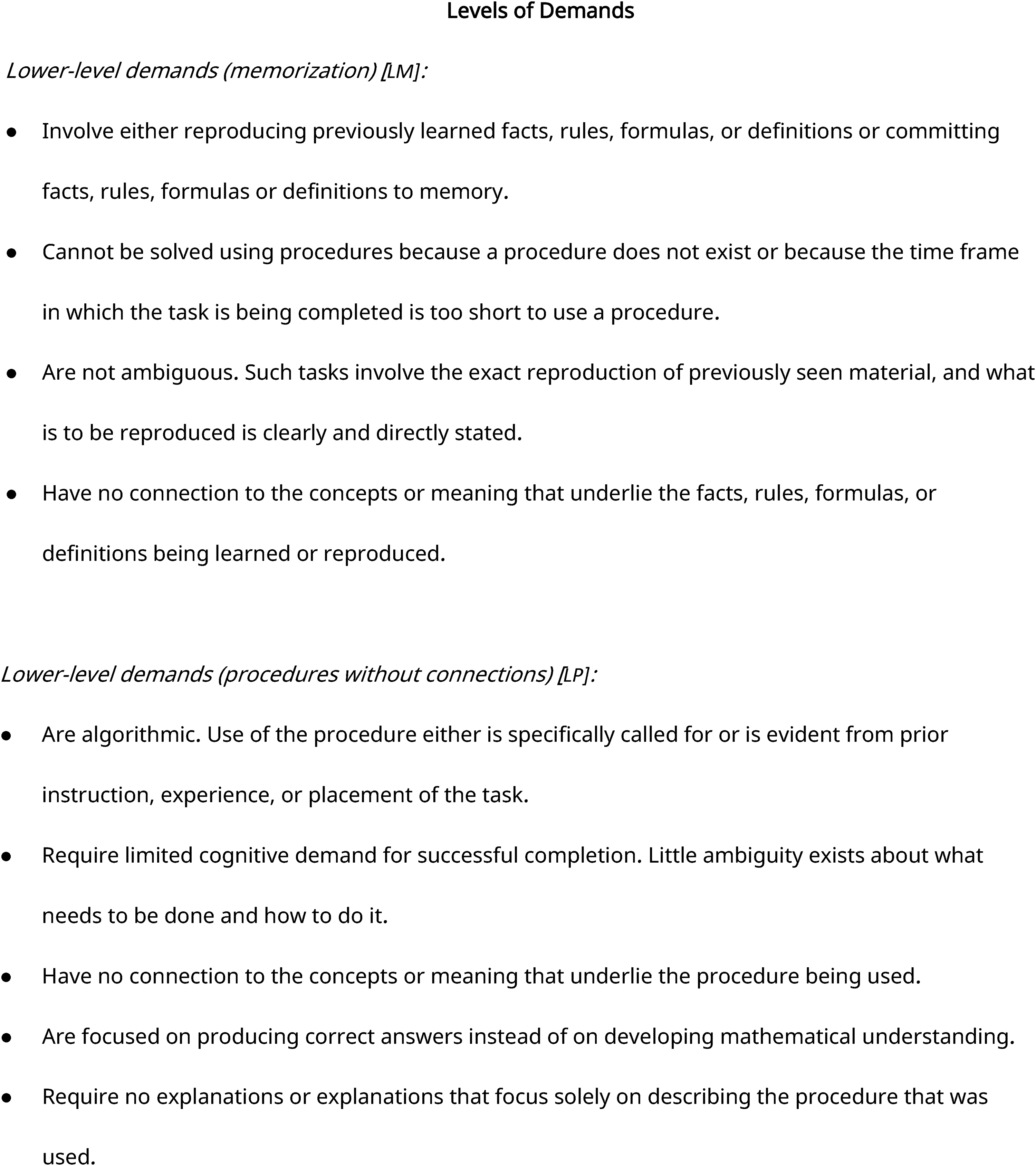
Characteristics of mathematical tasks at lower levels of cognitive demand, from Smith and Stein (1998).
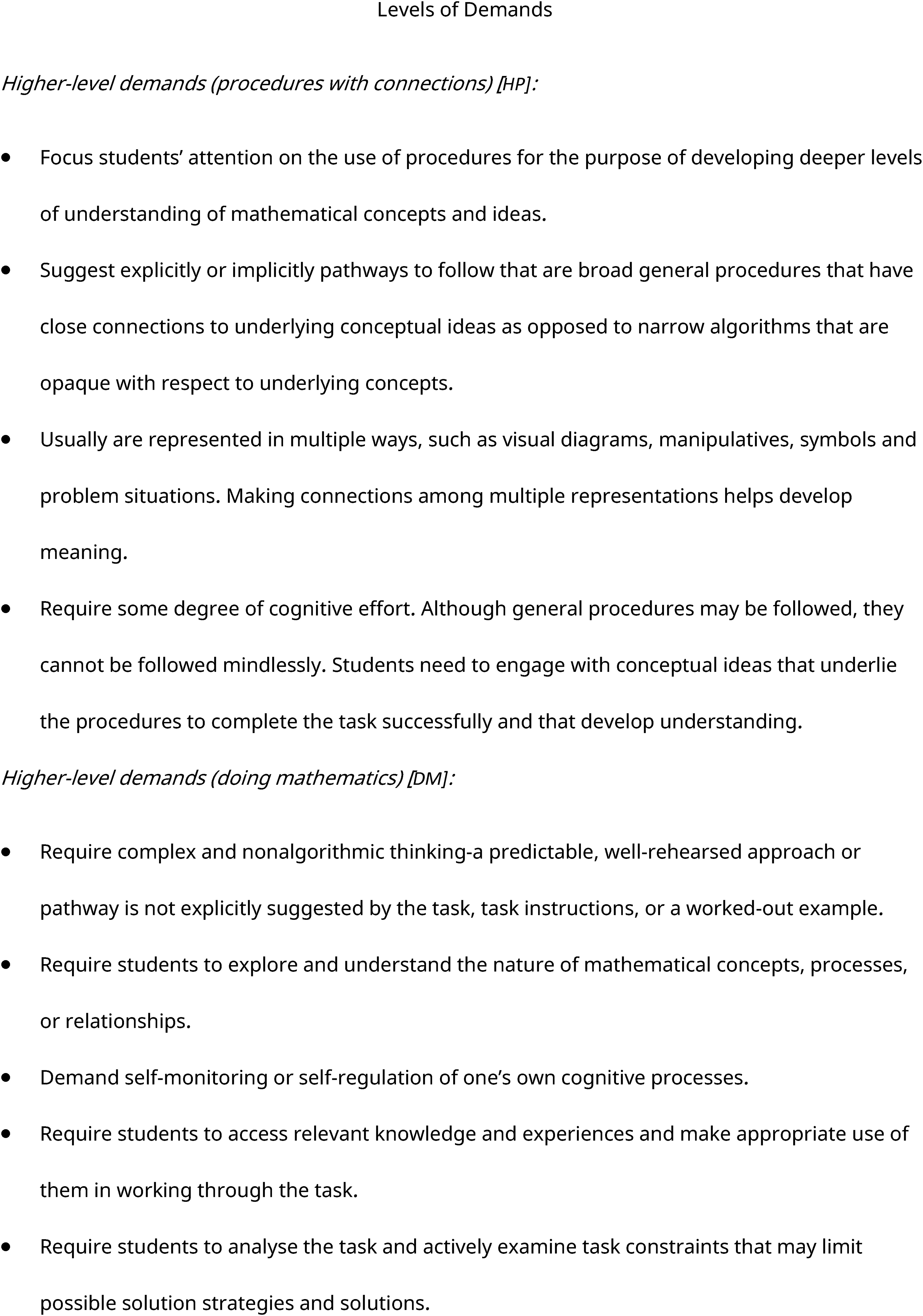
Characteristics of mathematical tasks at higher levels of cognitive demand, from Smith and Stein (1998).
The TAG draws attention to the type of thinking process that students engage in when working on a particular task, and thus it can provide a method of analyzing students’ opportunities to learn in a given setting (Tekkumru-Kisa et al., 2020). This is especially useful when studying curriculum reform, as the tasks used by teachers and students provide valuable information on whether the aims of the syllabus are being met, as has been shown by Glasnović Gracin (2018), for instance. Polikoff (2015) incorporated TAG in their analysis of the alignment of textbooks to the U.S. Common Core State Standards and found that the texts studied had very low amounts of content with higher levels of cognitive demand even though this constituted a significant proportion of the syllabus standards. The TAG has also been used to compare textbook tasks from different syllabi (Jones & Tarr, 2007). We will endeavor to study the implementation of the recent Irish curriculum reform and the achievement of its objectives by analyzing the textbook tasks commonly used in Irish senior cycle mathematics classrooms.
Although analyses of Irish primary school textbooks using TAG have been conducted (Charalambous et al., 2010), very little work has been done in this area at the second level in Ireland. This mirrors the international situation; in fact, Son and Diletti (2017) conducted a review of mathematics textbook analyses in the U.S., Japan, China, Singapore, South Korea, and Taiwan and found that only 15% of the studies concerned high school textbooks and only 5% looked at textbooks used in the final 2 years of high school (equivalent to the senior cycle in Ireland). We should mention that O’Connor et al. (2019) studied senior-cycle mathematics examination tasks before and after the recent reforms in Ireland using TAG and found that there was a significant increase in the proportion of tasks classified as higher-level cognitive demand after the reform.
The Project Maths syllabus states as its objective “that learners develop mathematical proficiency” (NCCA, 2012b, p. 6). It then outlines the five strands of mathematical proficiency (i.e., conceptual understanding, procedural fluency, strategic competence, adaptive reasoning, and productive disposition) by quoting directly from Kilpatrick et al. (2001, p. 116). The syllabus also states that students should develop and reinforce the skills shown in Figure 3 as they engage with each of the five content areas of the syllabus and make connections across these areas.
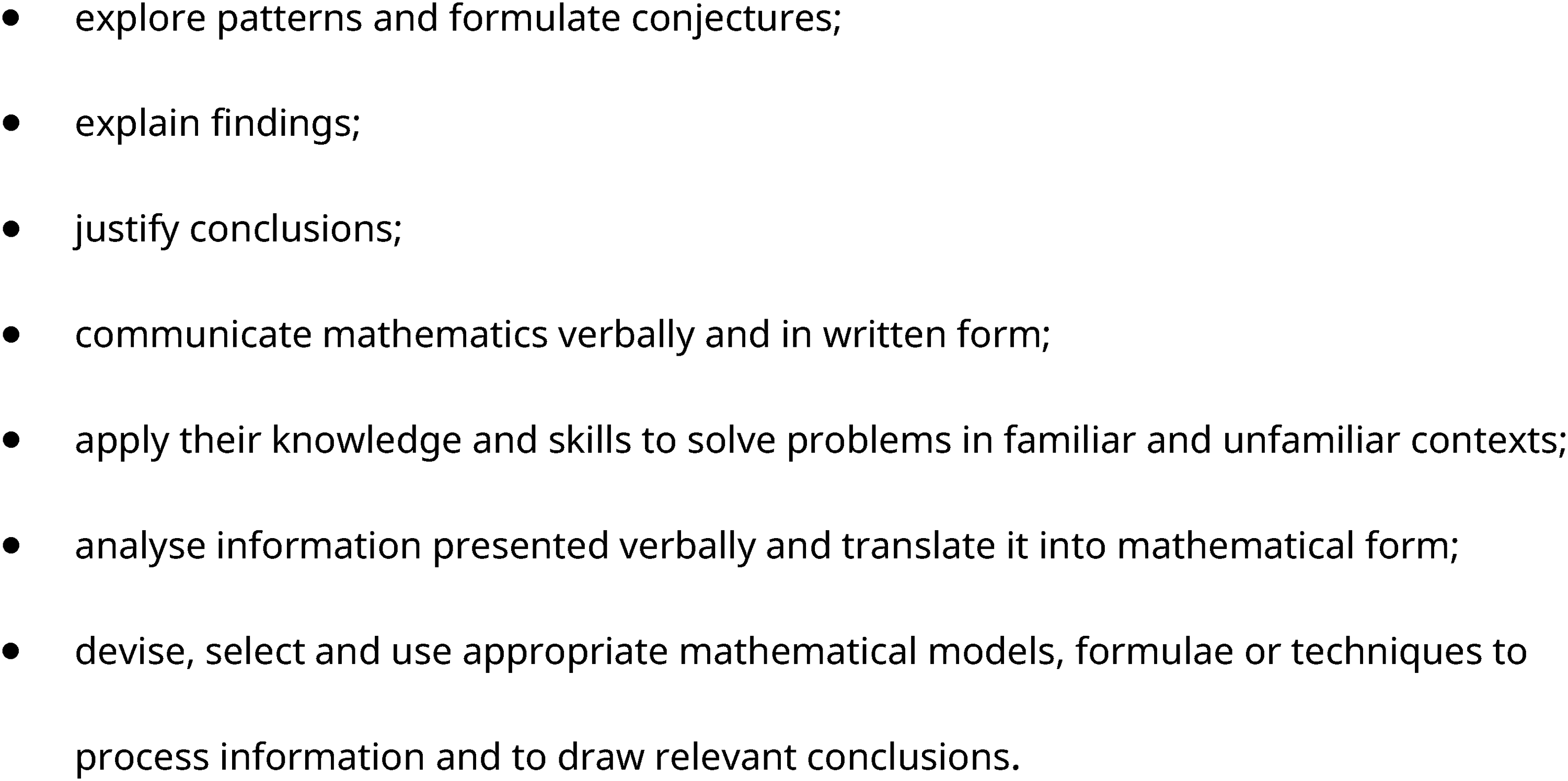
Problem-solving and synthesis skills (NCCA, 2012b, p. 15).
We contend that the TAG framework can be used to decide if textbook tasks give students opportunities to develop competence in each of the strands of mathematical proficiency, as advocated by the curriculum reform, and provide affordances for them to develop the problem-solving and synthesis skills described above. In this way, it will provide us with information on the implementation of the new curriculum. We expand on the relevance of the TAG framework to investigating opportunities to develop mathematical proficiency in the following paragraphs.
Kilpatrick et al. (2001, p. 116) defined mathematical proficiency using the five strands mentioned above and stressed that the strands are “interwoven and interdependent.” They consider each of the strands and the types of activities and cognitive processes required to develop each competency. To begin with, they describe conceptual understanding as “an integrated and functional grasp of mathematical ideas” (Kilpatrick et al., 2001, p. 118). The task features which would see a task being classified as HP in the TAG framework all relate to the understanding of concepts and ideas. Furthermore, Kilpatrick et al. (2001, p. 119) explained that “a significant indicator of conceptual understanding is being able to represent mathematical situations in different ways and knowing how different representations can be useful for different purposes.” This resonates with some of the features of HP tasks in the TAG framework, especially that these tasks usually involve multiple representations and that “making connections among multiple representations helps develop meaning.”
Procedural fluency, according to Kilpatrick et al. (2001, p. 121), “refers to knowledge of procedures, knowledge of when and how to use them appropriately, and skill in performing them flexibly, accurately and efficiently.” It seems clear that tasks in both the LP and HP categories give students opportunities to practice the use of procedures, however, the knowledge of the appropriate use of a method is only evident in HP problems. In addition, Kilpatrick et al. stressed that students’ understanding and procedural fluency are very closely linked and that one supports the other. This link between procedures and understanding echoes one of the attributes of HP tasks, that is to “focus students’ attention on the use of procedures for the purpose of developing deeper levels of understanding of mathematical concepts and ideas.” Another of the features of HP tasks, that is, “suggest explicitly or implicitly pathways to follow that are broad general procedures that have close connections to underlying conceptual ideas as opposed to narrow algorithms that are opaque with respect to underlying concepts” is closely tied to Kilpatick et al.'s (2001, p. 121) assertion that “students need to see that procedures can be developed that will solve entire classes of problems, not just individual problems.” They claim that the study of these general procedures helps students develop insight into the structure of mathematics.
Strategic competence is defined by Kilpatrick et al. (2001, p.124) as “the ability to formulate mathematical problems, represent them, and solve them.” This bears much resemblance to the category of doing mathematics in the TAG framework. In particular, if students need to formulate a problem or solution method then this must be in the context of a non-routine task. Kilpatrick et al. stressed the need for students to be able to think flexibly and contend that this attribute is developed by working on non-routine problems as opposed to routine ones. Thus, tasks that are categorized as DM (or indeed HP) are more likely to promote strategic competence than those in the LP category. Furthermore, a number of the problem-solving and synthesis skills explicitly mentioned in the Project Maths syllabus can clearly be seen to align with the strategic competence strand and/or the doing mathematics level of cognitive demand—namely, the abilities to apply knowledge and skills to solve problems in familiar and unfamiliar contexts; to analyze information verbally and translate it into mathematical form; to devise or select appropriate models, formulae or techniques to process information and draw relevant conclusions.
Kilpatrick et al. (2001, p. 129) explained that adaptive reasoning “refers to the capacity to think logically about the relationships among concepts and situations.” This definition has clear links to the doing maths category; recall that those tasks “require students to explore and understand the nature of mathematical concepts, processes, or relationships.” Kilpatrick et al. go on to say that adaptive reasoning includes inductive and deductive reasoning, as well as informal justifications. This is the type of reasoning that is inherent in the DM (which require complex and non-algorithmic thinking) and HP tasks (where procedures cannot be followed mindlessly). It seems to be largely absent in the LP tasks where one of the criteria is that they “require no explanations or explanations that focus solely on describing the procedure that was used.” Kilpatrick et al. also highlighted the importance of metacognition in the development of both strategic competence and adaptive reasoning. The use of this technique is a vital component of tasks categorized as DM tasks since these problems “demand self-monitoring or self-regulation of one's own cognitive processes.” Again, a number of the problem-solving and synthesis skills explicitly mentioned in the Project Maths syllabus provide further articulation of the characteristics of adaptive reasoning and, in doing so, a link to the doing mathematics level of cognitive demand—namely, the abilities to explore patterns and formulate conjectures; to explain findings; to justify conclusions.
Productive disposition is defined as “the tendency to see sense in mathematics, to perceive it as both useful and worthwhile, to believe that steady effort in learning mathematics pays off, and to see oneself as an effective learner and doer of mathematics” (Kilpatrick et al., 2001, p. 131). In order to develop this disposition students need to have opportunities to make sense of mathematics, and to persevere in the face of difficulty. Therefore, they need to work on tasks with high LCD. As Kilpatrick et al. (2001, p. 131) point out “when students are seldom given challenging mathematical problems to solve, they come to expect that memorizing rather than sense making paves the road to learning mathematics.”
In summary, students need opportunities to work on tasks at HP or DM levels in order to develop the five strands of mathematical proficiency, and students who are only exposed to LM or LP tasks will struggle to develop conceptual understanding and problem-solving skills. Thus the TAG offers a useful method of deciding whether sets of textbook tasks align with the aims of the Project Maths reforms or not.
In Irish post-primary schools, mathematics can be studied at Higher, Ordinary, or Foundation levels. Mathematics at Higher level is intended for those learners who may continue to study mathematics at university while the Foundation level aims to equip learners with the knowledge and skills needed for everyday life (NCCA, 2012b). All students should be able to make sense of the mathematics they are learning, while for Higher-Level students there should be a greater emphasis placed on abstraction, derivations, justification, and rigor. Thus, it might be expected that Higher-Level students should meet more tasks at a higher level of cognitive demand, and in particular, more DM tasks (Note that in 2022, 57% of students who sat the mathematics end-of-school state examination took Ordinary level, while 37% took Higher level and only 6% took the Foundation level examination (SEC, 2022).).
The data
The data for this study comes from three of the most popular textbook series in use in Irish mathematics classrooms—namely, Active Maths (Keating et al., 2012a, 2012b; Murphy, 2001, 2002), Text & Tests (Cooke et al., 2012; Morris, 2003, 2004a, 2004b; Morris & Cooke, 2013; Morris et al., 2012), and Concise Maths (Humphrey, 2003a, 2003b, 2004; Humphrey et al., 2012a, 2012b). All three series had textbooks designed for the pre-Project Maths curriculum as well as for the reformed curriculum. (Before the reform, the Active Maths series had been published under the name “Discovering Maths”; for simplicity, we will use the label “Active Maths” here for both pre- and post-reform books in this series.). Two of these textbooks series (Text & Tests and Concise Maths) have the same author(s) as before the introduction of Project Maths, while in the case of Active Maths the pre-Project Maths author was retained as an advisor to the new writing team.
We chose to focus on the topics of Patterns, Sequences and Series, and of Differential Calculus. Both of these topics were present in the pre- and post-reform syllabi. The Project Maths curriculum was introduced gradually over a period of years (Jeffes et al., 2013); Patterns, Sequences and Series was one of the first topics to be examined under the new guidelines while Differential Calculus was one of the last. Thus, the topics span the whole timeframe of the reform and furthermore belong to two different strands of the curriculum (number and functions, respectively). We identified the chapters from each of the textbooks which dealt with the two topics under consideration. The structure of the textbook chapters was similar across the series. They consisted of many small subsections, each of which dealt with a particular aspect of the topic; each subsection began with an expository section containing some motivation, definitions and worked examples, and ended with a list of exercises.
The unit of analysis in this study was an individual task. We use Stein, Grover, and Henningsen's (1996) description of a task as an “activity, the purpose of which is to focus students’ attention on a particular mathematical idea” (p. 460). In particular, the tasks in this study are those contained in the exercise sections of each textbook chapter. These would normally be assigned as classwork or given to students for homework (Hourigan & O’Donoghue, 2007). Since some tasks had multiple parts (e.g., parts (i) and (ii)), we made the decision to treat each part as a separate task. A small number of tasks (16 in total) were omitted from the study because of ambiguities arising from typographical errors. In all, we classified 7635 tasks (3584 from Pre-Project Maths textbooks and 4051 from Project Maths textbooks). Table 1 contains information on the distribution of the tasks in Project Maths (i.e., post-reform) textbooks according to textbook series, examination level, and topic.
Project maths textbooks: Number of tasks per topic, level, and textbook series.
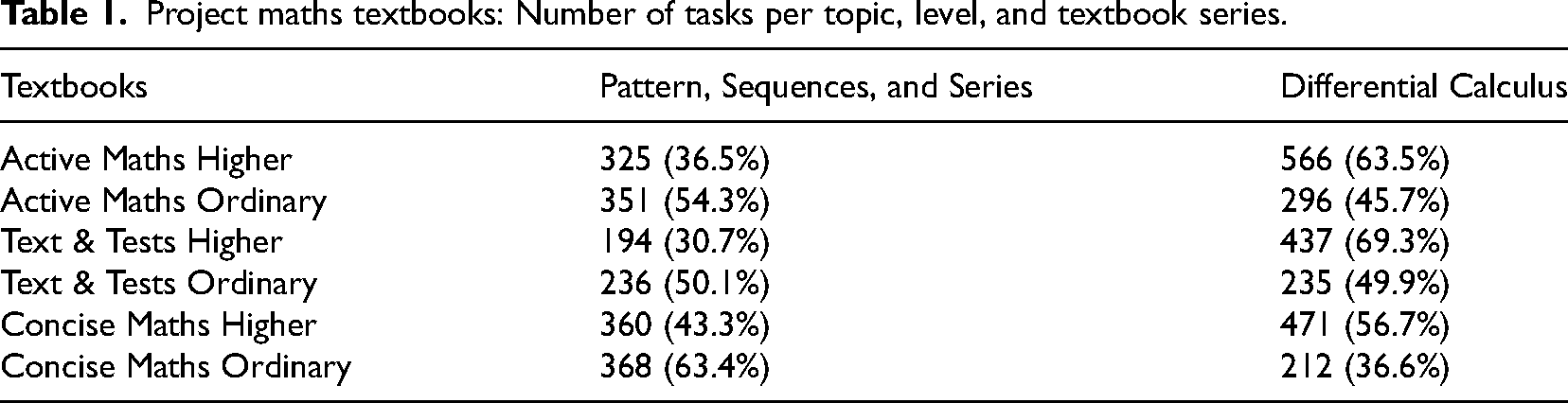
Project maths textbooks: Number of tasks per topic, level, and textbook series.
Our study is situated in the area of document analysis, which Bowen (2009, p. 27) defined as “a systematic procedure for reviewing or evaluating documents.” There is a rich tradition in mathematics education of the analysis of resources, including textbooks (Bingolbali, 2020; Fan et al., 2013; Trouche et al., 2019). Document analysis can be used by researchers in a variety of ways including “to provide a means of tracking change and development” (Bowen, 2009, p. 31). By analyzing textbooks from before and after the curriculum reforms, we hope to shine some light on how the recent curriculum change in Ireland has been implemented and how the textbooks align with the new syllabus. As Jones and Fuijita (2013) explain the “critical link that textbooks provide between the intended and attained curriculum, via the implemented curriculum, is increasingly being recognised as an important topic for research.” One of the advantages of document analysis is stability, that is the “researchers’ presence does not alter what is being studied” (Bowen, 2009, p. 32). This is relevant for us as our analysis can give some information about the teaching and learning of mathematics without classroom observation.
The tasks in this study were coded using the TAG of Smith and Stein (1998). The features of each task were compared to the characteristics of the four LCD outlined in TAG (Figures 1 and 2). Based on this, each task was categorized into one of the four levels (samples are given in the following section). A unique identifier for the task, the level of cognitive demand assigned to it, and the reason for this choice were recorded in an SPSS file. This data was subsequently analyzed using SPSS.
This process was carried out as part of a doctoral thesis (O'Sullivan, 2017) and the analysis took many months. Each task was analyzed by the first author (an experienced teacher) along with at least one of the other authors (both university mathematicians and researchers in mathematics education) to ensure reliability and consistency. The coders considered each task in relation to the explanatory material preceding it in the textbook. This was often crucial in deciding whether a task should be classified as LP or HP, for example. If the explanatory material contained a procedure and very similar examples to the task in question, and students could complete the task by mimicking the examples then we decided that this task was LP. If, however, there was some ambiguity over which procedure to use and successful attempts at the task required more than mindlessly following a well-rehearsed procedure then we coded the task as HP. The results of coding were shared within the group at regular intervals. Any differences in coding were brought to the attention of the team promptly and were discussed in detail until an agreement was reached. Having clarified and resolved our coding, we made any necessary revisions. We also reviewed the existing classifications of previous tasks in light of changes, in order to ensure consistency throughout the analysis. This was necessary, due to the large number of tasks analyzed and the resulting extended time period during which the coding took place. For this reason, we are not able to report coding consistency scores. However, this form of internal refinement and quality control is common practice for this kind of work (Alafaleq & Fan, 2014; Edwards, 2011).
The data from our analysis was inputted into a single SPSS file. We used SPSS to carry out some simple statistical analyses. Our aim was to investigate if variables such as the topic, level, and syllabus era of tasks were associated with their TAG classification. To this end, we used chi-squared tests to investigate if there were significant associations between our categorical variables. We used Fisher exact tests when the number of tasks in some categories was very small.
Sample tasks
We have included examples of tasks from one of the textbook series below to illustrate how the TAG framework was applied.
Task 1: What is the sign of dy/dx when a curve is increasing? (Morris & Cooke, 2013, p. 98)
Classification: LM
Reason: This information has been given earlier in the chapter (pp. 95–96)
Task 2: Find Tn the nth term of the following arithmetic sequence: 8, 13, 18, 23, …. (Cooke et al., 2012, p. 142)
Classification: LP
Reason: This algorithmic task can be successfully completed using the formula
Tn = a + (n–1) d, where a is the first term of the sequence and d is the common difference. This is evident from prior exposition and worked examples shown in the text, and there is limited cognitive demand. The focus is on producing the correct answer.
Task 3: Anna saves money each week to buy a printer which costs €190. Her plan is to start with €10 and to put aside €2 more each week (i.e., €12, €14, etc.) until she has enough money to buy the printer. At this rate, how many weeks will it take Anna to save for the printer? (Cooke et al., 2012, p. 149)
Classification: HP
Reason: The formula, Sn = n(2a + (n–1)d)/2, derived in this section of the textbook can be used to complete the task. However, this cannot be done mindlessly as a real-world problem situation has been presented and the student must engage with the underlying conceptual ideas in order to select an appropriate procedure to use. Some cognitive effort is required.
Task 4: The first eight terms of the Fibonacci sequence are given below. Describe in words how the sequence is formed and hence write out the next four terms in the sequence.
0, 1, 1, 2, 3, 5, 8, 13, 21, … . (Cooke et al., 2012, p. 138)
Classification: DM
Reason: Students have not met the Fibonacci sequence earlier within the textbook or in fact any sequence in which a term depends on more than one previous term. Thus, there is not a predictable, well-rehearsed approach or pathway available to them to follow and considerable cognitive effort is required to analyze the nature of the inherent relationship and complete the task.
Results
Level of cognitive demand of textbook tasks
First, we note that no significant differences were found between the classifications of tasks in the topic of patterns, sequences, and series and those in differential calculus. Thus, in our analysis, we will consider tasks from both topics together.
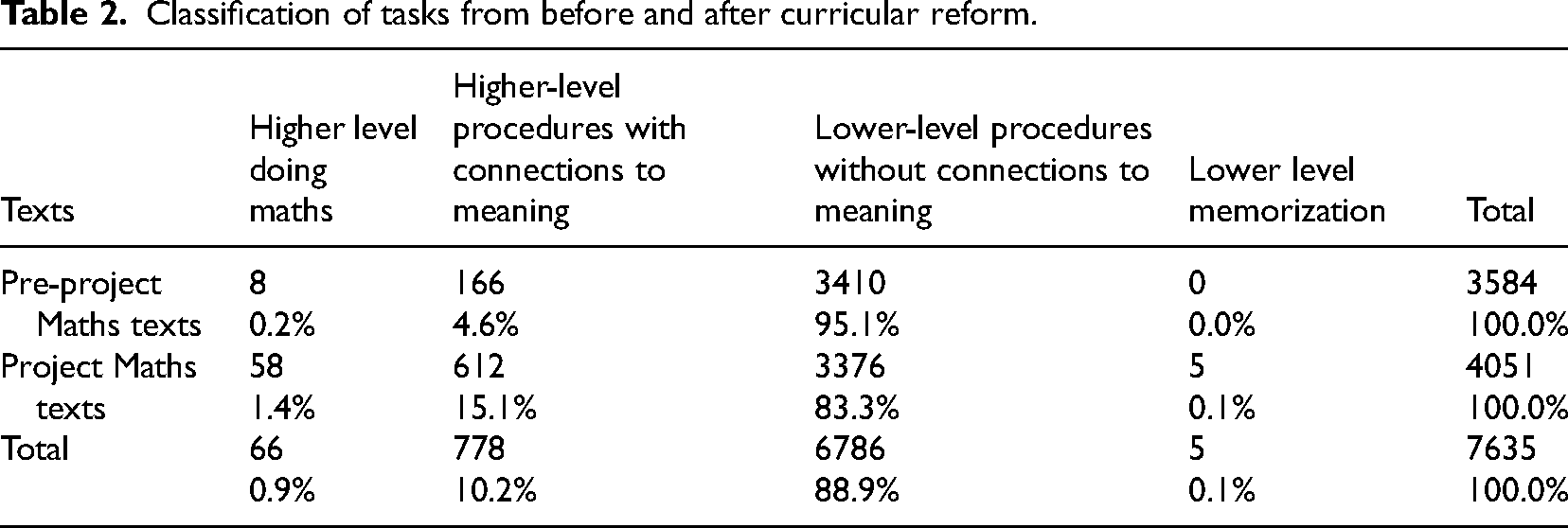
The overall results of our classification of tasks are given in Table 2. We see that the proportion of tasks classified in the lower-level procedures without connection to meaning (LP) category is very high in general (88.9% overall), and consequently, relatively few tasks were classified in the higher-level demand categories. This high proportion of LP tasks remains evident if we consider the pre- and post-Project Maths textbooks separately (95.1% for the pre-curriculum reform texts and 83.3% for the post-curriculum reform texts).
Classification of tasks from before and after curricular reform.
Classification of tasks from before and after curricular reform.
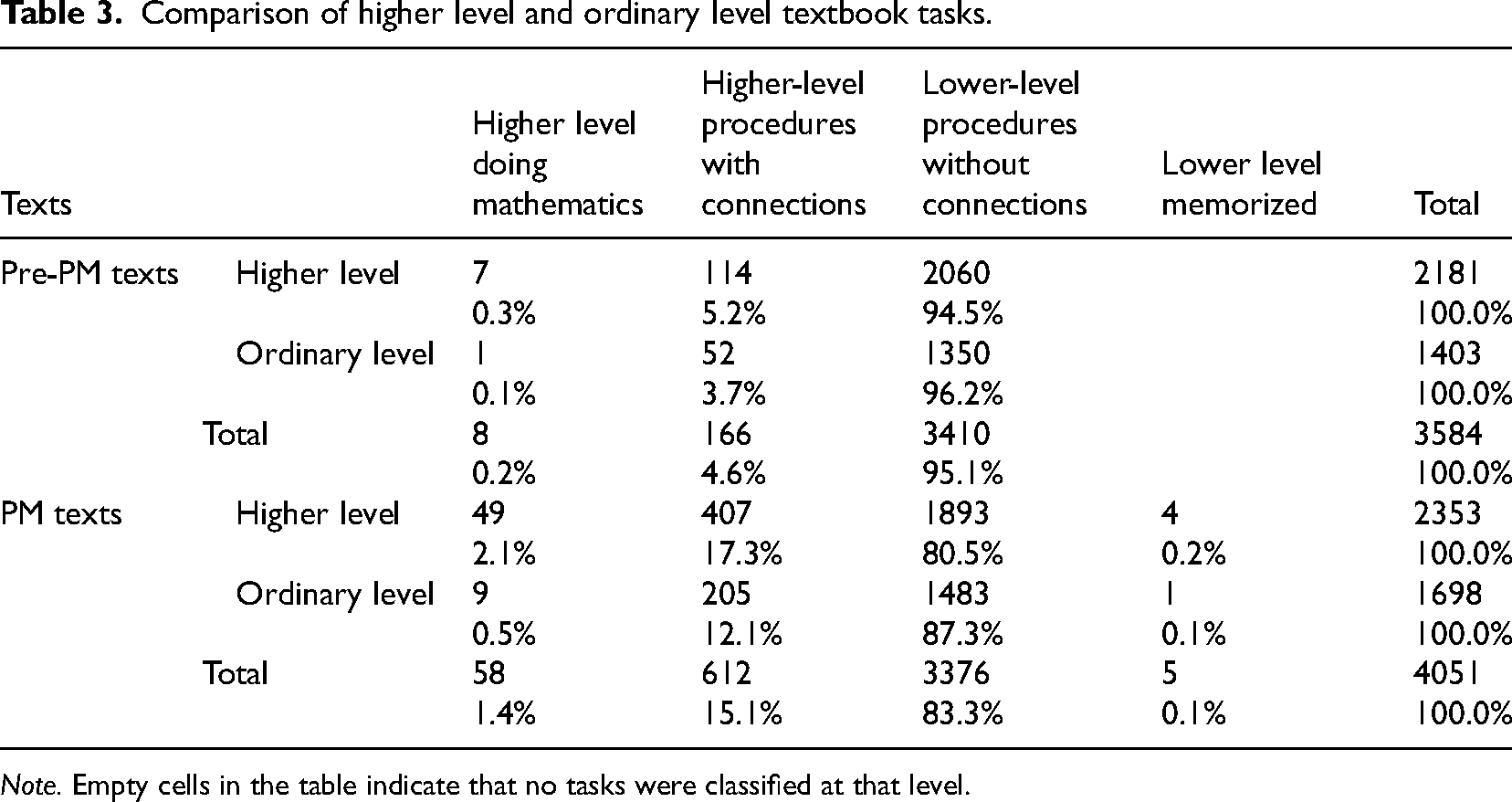
Table 3 gives a breakdown of the task classifications by Leaving Certificate level (recall that the examinations can be taken at Higher (HL) or Ordinary (OL) levels). We see that the classification of tasks is not independent of the syllabus level either for the pre- or post-reform textbooks (Fisher exact tests, pre-reform p = .031, and post-reform p < .001). In both cases, the HL textbooks had fewer lower-level tasks than the OL books; however, the differences were not as large as might be expected.
Comparison of higher level and ordinary level textbook tasks.
Note. Empty cells in the table indicate that no tasks were classified at that level.
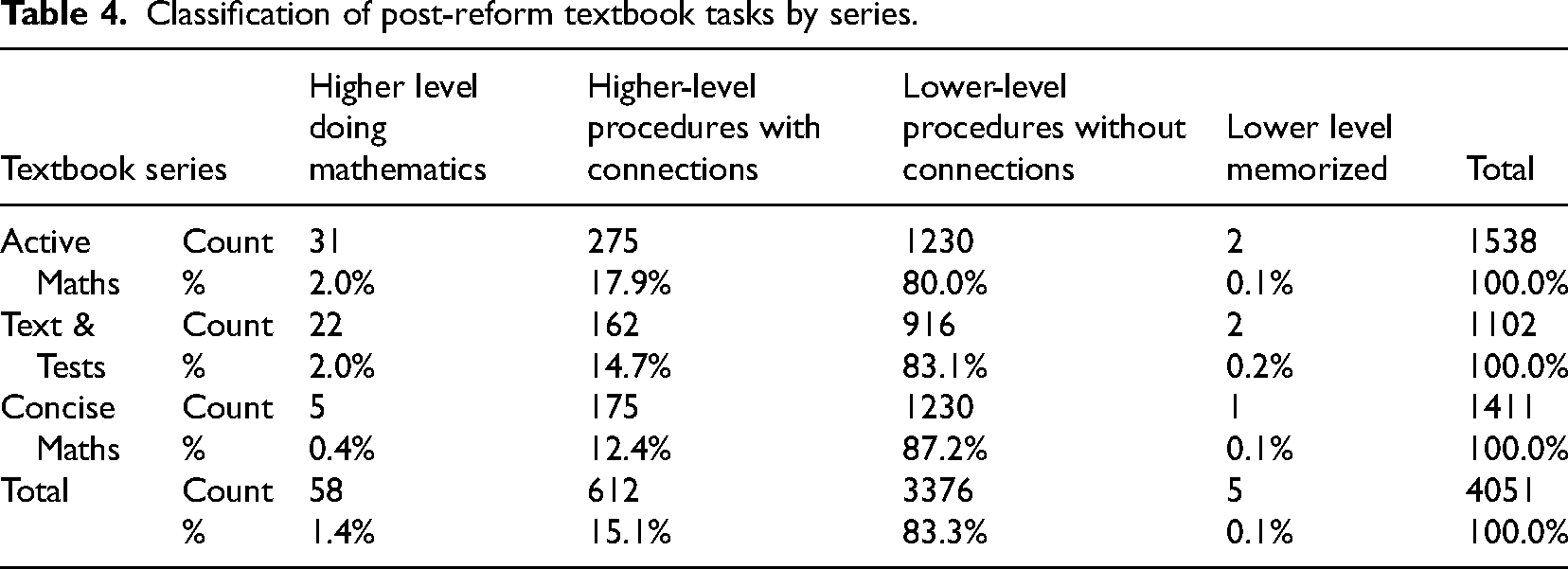
Tables 4 and 5 give a breakdown of the task classifications by looking at the data by textbook series from both the pre- and post-reform eras. The vast majority of the tasks were classified as lower-level demand in all three of the textbook series as shown in both Tables 4 and 5. Most of the series contained no memorization tasks and the number of tasks classified as doing mathematics was very low. When we considered the post-reform books only (Table 4), we found a significant difference in the distributions of classifications for the three textbook series; Active Maths seems to have more HP tasks and fewer LP tasks than the other series.
Classification of post-reform textbook tasks by series.
Classification of pre-reform textbook tasks by series.
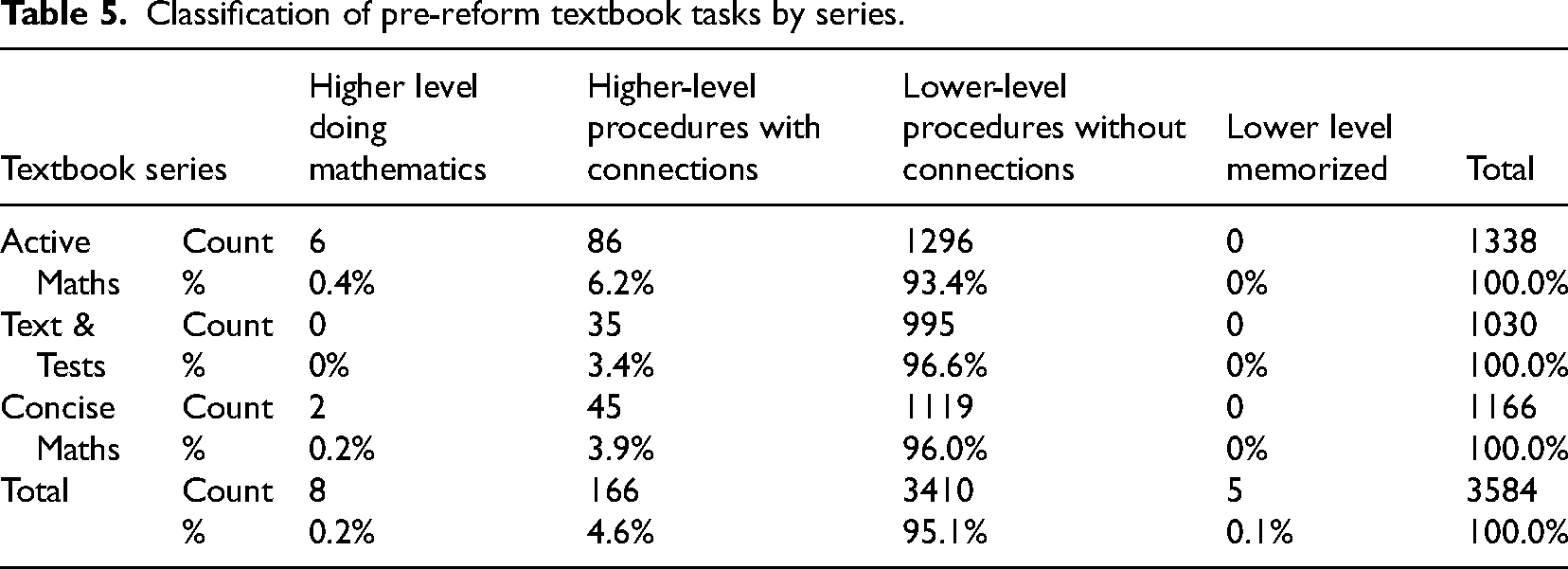
Table 2 shows that there are statistically significant differences in the proportions of tasks classified in each of the four categories for the pre- and post-reform textbooks (Fisher exact test, p < .001). Clearly, some change has occurred; it seems that there are significantly more tasks classified as higher-level procedures with connections to meaning (HP) and correspondingly fewer tasks classified as LP. The proportion of higher-level doing mathematics (HD) has also increased slightly in the newer books.
When we compared the OL textbooks from pre- and post-syllabus reform (Table 3) we found that there were statistically significant differences between the task classifications (Fisher exact test, p < .001) with the more recent texts having a higher proportion of tasks classified as HP. The same was true for the HL textbooks (Fisher exact test, p < .001).
Discussion
Our first research question concerned the levels of cognitive demand of the tasks in our study. Our findings have shown the vast majority of tasks (88.9%) throughout the textbooks examined to be at LP level (lower level procedures without connection to meaning) (Table 2). Thus, there are ample opportunities for students to practice using procedures and to develop the basic skills involved in procedural fluency. However, the ubiquity of LP tasks does not necessarily mean students know how and when to use procedures appropriately, nor that their attention is being focused on a procedure for the purpose of deepening their understanding of concepts or to build an awareness that procedures can be developed to solve an entire class of problems. HP (higher level procedures with connection to meaning) tasks affording opportunities to nurture these latter elements of procedural fluency account for only 10.2% of tasks overall. This relatively small proportion of HP tasks also curtails the development of the proficiency strand of conceptual understanding and, more gravely, may impede students from recognizing the importance of sense-making in mathematics.
This over-emphasis on procedural fluency, at the expense of the development of other strands and facets of proficiency, is also evident when we consider Project Maths textbooks only (Table 2: 83.3% LP tasks; 15.1% HP tasks; and 1.4% DM tasks). However, we found small but statistically significant differences between the pre- and post-reform textbooks in relation to the proportions of tasks in the four levels of cognitive demand (LCD). We were able to answer our second research question by observing that the proportions of tasks which require higher LCD had increased in the reform textbooks from 4.8% to 16.5%. Nevertheless, only a very small proportion of tasks in the reform textbooks examined (1.4%) were classified at the level of DM (doing mathematics) (Table 2). This indicates that students are not getting sufficient opportunities to analyze a task and examine its constraints, access relevant knowledge and experience, and hence, represent a situation accurately and appropriately. Thus, it will be difficult for them to develop the proficiency strand of strategic competence through the completion of textbook tasks. The scarcity of non-routine tasks in the textbooks examined also limits opportunities for students to develop flexibility in their thinking. The occasions in which they must explore the nature of concepts, processes, and relationships and think logically about them are also constrained—and thus, so are the opportunities for improving the adaptive reasoning strand of mathematical proficiency. We saw earlier in this article that an analysis of textbook tasks using TAG gives us information on how the curriculum reforms are being implemented. Thus, if we take these textbook tasks as representative of the questions that students encounter and consider our third research question, we see that the opportunities for them to develop all five strands of mathematical proficiency and problem-solving skills, as the curriculum reform espoused, are relatively rare. This is borne out by the Chief Examiner's Report on Leaving Certificate Mathematics which reviewed performance on the 2015 examination (SEC, 2016), the first such examination after the curriculum reform. Students’ successes in relation to the strategic competence and adaptive reasoning strands of mathematical proficiency were evaluated by considering the quality of the responses to specific parts of examination questions on which it was found students had varying levels of success, with many continuing to struggle with these types of questions.
In addition, the practice of students completing routine questions, whose solution is based on illustrative examples, is one the Project Maths reform had set out to reduce (NCCA, 2012b). We have outlined earlier in this article that tasks that are classified at higher LCD are the ones most likely to help students to develop mathematical proficiency and problem-solving skills. While we did find a significant difference in the distributions of classifications between the three textbook series we examined (see Table 4), it is important to note here that there was very little difference between the series in terms of their response to fundamental Project Maths goals. In particular, more than 80% of tasks in all three series were classified as having lower-level demand. Thus, to further address our third research question we have evidence that all three series do not support the objectives of the new curriculum sufficiently. Our findings reinforce those of Jeffes et al. (2013) from their analysis of samples of students’ work. It is important to remember that the tasks assigned to students determine what they are given the opportunity to think about and subsequently learn, and it is thus essential that the tasks provided have the potential to “spur the kind of thinking and reasoning envisioned by the standards” (Tekkumru-Kisa et al., 2020, p. 606). The Irish curriculum documents (NCCA, 2012b) assert that problem-solving should not be met in isolation but rather should permeate all aspects of the learning experience through high-quality tasks that engage and challenge learners. Given the propensity of Irish post-primary mathematics teachers to rely heavily on the textbook (Shiel & Kelleher, 2017), our finding that the vast majority of textbook tasks demand little in a cognitive sense from students indicates that this ambition will fail to be realized.
NCCA (2012b) explains that Higher Level mathematics at Leaving Certificate level is intended for students who may continue to study mathematics at the university level and consequently should place more emphasis on abstraction, derivations, and justification than Ordinary Level mathematics. From this perspective, it would seem reasonable to expect that there would be more emphasis on developing the proficiency strand of adaptive reasoning for Higher-Level students through DM tasks. While our findings did show that the distribution of classifications of tasks was not independent of the syllabus (Table 2), the differences were not as large as might be expected given the difference in emphasis—2.1% DM tasks at Higher level and 0.5% DM tasks at an Ordinary level for post-Project Maths textbooks. This has implications for students who wish to continue to university. The inability of students to make valid judgments and interpretations or to reason mathematically is one characteristic of an “under-preparedness” for tertiary-level mathematics courses and can result in students becoming “at risk” of failing to make a successful transition to university (Hourigan & O’Donoghue, 2007).
Our findings in relation to the misalignment between textbooks and the Project Maths Reform agenda support the findings of other studies (Davis, 2013; O’Keefe & O’Donoghue, 2009). Ireland is not alone with regard to such misalignments—similar findings were reported by Glasnović Gracin (2018) as mentioned earlier. This raises the question as to why textbook publishers and authors produce books that do not support the relevant syllabus aims. One reason might be that this is often a difficult task for authors, for example, Herbel-Eisenmann (2007) found that the intended curriculum of the NCTM's Standards in the U.S. and its underlying ideological goals may have been more difficult to achieve than policy-makers had envisaged. As mentioned earlier, in Ireland textbooks are produced as a commercial enterprise and while the Department of Education (DES) (i.e., government department) and the NCCA keep the Irish Educational Publishers’ Association (IEPA) informed regarding emerging curricular developments (IEPA, 2023), this may not have been done in a timely manner to give textbook authors sufficient information on the change in ideology and new focus of the curriculum reform. In fact, Lubienski (2011) commented that the leaders of the Project Maths reform seemed to be “circumventing textbooks rather than leveraging them” (p. 45) and suggested that instead, they should be assisting teachers to critically analyze the textbooks available in order to select the one most appropriate to their own and their students’ needs in terms of realizing the goals of Project Maths.
This disconnect between the curriculum designers and the textbooks authors is not just limited to the Irish context with a similar system pertaining to Australia, England, and the Czech Republic for instance (Foxman, 1999, p. 41). One might go further than Lubienski (2011) and suggest that there need to be stronger links between policy and practice and that agencies responsible for curriculum design (such as the NCCA in Ireland) should work directly with textbook authors to ensure that their materials align with the aims of the syllabus. At the very least, it seems that it would be useful if textbooks were subject to review by such bodies. Petersson et al. (2021) agreed that it is particularly important to evaluate a textbook against curricular specifications in countries in which there are no mandated textbooks and textbook production is effectively deregulated (such as Ireland), as teachers should have confidence that the textbooks available are addressing the expectations of the curriculum sufficiently. We hope that studies like ours could alert teachers, especially in those countries where there is no official review of textbooks, to possible shortfalls in the cognitive engagement demanded by textbook tasks.
The endeavors to place a greater emphasis on problem-solving skills and the development of conceptual understanding in Ireland reflects an international trend. While this has driven a move away from a prevalence of routine tasks towards the inclusion of more high-level cognitively demanding tasks, ensuring textbooks contain an appropriate proportion of cognitively demanding tasks is not a panacea. Stein et al. (1996) found that the cognitive demands of high-level tasks had a tendency to decline during implementation in the classroom (a finding later corroborated by a study by Jackson et al. (2013)). As a result, Stein and Smith (1998) compiled lists of common classroom factors, conditions, and practices associated with the maintenance or decline of high-level cognitive demands and recommended that teachers use these lists as a reflection tool. It would also be beneficial if teachers could themselves discriminate carefully between the tasks available in textbooks and their intrinsic levels of cognitive demand, as teachers are “the key players in determining the learning opportunities experienced by students through the tasks they assign” (Tekkumru-Kisa et al., 2020, p. 612). The TAG has been widely used for this purpose in professional development programs for teachers and has been shown to be effective in this regard (Arbaugh & Brown, 2005; Dempsey & O'Shea, 2020; Smith & Stein, 1998). Not only that, but teachers should be enabled to adapt and extend tasks where necessary to address shortfalls in the textbooks and to elicit the type of thinking and cognitive effort required by the curriculum. This is particularly important in a context such as the Irish one in which textbook production is deregulated and yet there is a heavy dependence on textbooks in the classroom.
This study involved the examination of a substantial number of textbook tasks, 7635 in total. However, it is important to acknowledge that the selection of a specific set of tasks, though necessary to ensure the feasibility of the study, may also be a limitation. While the textbook series we examined were the three most commonly used in Irish post-primary classrooms, there are also other textbooks on the market in which the distribution of tasks across levels of cognitive demand may give a different picture. Furthermore, the choice of Patterns, Sequences & Series and Differential Calculus as topics to examine may have had an impact on the results, despite the fact that no significant differences were found between the classifications of tasks on these two topics and the suggestion this may elicit that the choice of topic was immaterial.
It is important to concede that the types of tasks available through textbooks give a limited picture of the teaching and learning that may be happening in a classroom, even in a context in which teachers have been found to rely heavily on textbooks, such as in Ireland (Project Maths, 2017; Shiel & Kelleher, 2017). Teachers may adapt and extend the tasks they find in textbooks in various ways when teaching. They may also use other sources to supplement the collection of tasks they assign to students, particularly in cases in which they find the textbooks to be wanting. However, as Tekkumru-Kisa et al. (2020) state, “tasks are recognizable and consequential units of analysis in the development and implementation of curriculum” (p. 607) and as such “are key channels to communicate the vision of instructional reforms” (p. 607). Thus, it is essential that the tasks available to teachers via textbooks, regardless of whether they are produced by the state or commercially, are carefully designed and sequenced to support the development of students’ mathematical proficiency. We hope we have shown that analyzing and classifying textbook tasks can provide an appropriate means of evaluating how curriculum reform is being implemented and ascertaining whether the textbooks are promoting the reform agenda or prolonging pre-reform practice.
Footnotes
Contributorship
All authors were involved in the planning and design of the research. The task analysis for this paper was carried out by O'Sullivan, with either O'Shea or Breen independently analyzing each task. Breen and O'Shea wrote the initial draft of the paper which was then reviewed and revised by all authors. All authors approved the final manuscript.
Declaration of conflicting interests
The author(s) declared no potential conflicts of interest with respect to the research, authorship, and/or publication of this article.
Funding
The author(s) received no financial support for the research, authorship, and/or publication of this article.
