



Abstract
Given the critical role of mathematical problem posing (MPP) in fostering creative thinking and problem-solving skills, this study examines how MPP has been incorporated into Korean mathematics curricula and textbooks. By analyzing six successive curriculum revisions and their corresponding textbooks, this study explores the alignment between curricular intentions and textbook tasks. Furthermore, it categorizes MPP tasks in recent textbook series according to task type, content area, grade level, use of real-life contexts, and consideration of affective dimensions. The findings reveal that the treatment of MPP in Korean curricula has broadened and become more systematic over time, alongside marked improvements in curricular-textbook alignment. Nevertheless, several challenges remain. MPP tasks continue to be predominantly concentrated in the numbers and operations domain, and those featuring lower levels of mathematical constraint remain underrepresented. Highlighting the need for a wider range of MPP tasks and the integration of affective considerations, this study provides valuable insights for guiding the integration of MPP into curricula and textbooks globally.
Introduction
Mathematical problem posing (MPP) is a fundamental practice in mathematics education, characterized by the reconstruction or creation of new problems derived from a given problem context (Cai & Jiang, 2017; Silver, 1994). It has gained widespread recognition for its potential to enhance mathematical reasoning, problem-solving skills, and creativity (Cai et al., 2015; Silver, 1997; Yuan & Sriraman, 2011). Numerous studies have demonstrated that engaging in MPP enables students to identify mathematical structures, cultivate flexible thinking, and deepen their inquiries into mathematics (Silver & Cai, 1996; Xie & Masingila, 2017). Acknowledging its pedagogical significance, many national curricula—including those of the United States, China, and Korea—explicitly advocate for the integration of MPP into school mathematics (Cai & Hwang, 2021; Jia & Yao, 2021; Korean Ministry of Education [MOE], 2022). This shift in emphasis is further evidenced by a recent special issue of ZDM (Vol. 53, Issue 4) which showed a wide range of research dedicated to MPP.
Despite this increased attention, there is still a paucity of research examining how MPP is represented in curriculum standards and textbooks (Cai & Hwang, 2021). To date, some studies have addressed this issue partially. For example, Cai and Jiang (2017) compared and contrasted MPP tasks in American and Chinese textbooks, whereas Divrik et al. (2020) analyzed problem-solving and MPP tasks in Turkish textbooks. Although these studies have categorized textbook activities by task type, they have not thoroughly investigated the alignment between curricula and textbooks, nor have they provided detailed accounts of how MPP specifications translate into textbook activities.
A mathematics curriculum plays a pivotal role in shaping student learning by delineating the content taught in schools. Textbooks serve as the primary resource for teachers when interpreting and implementing the curriculum. Because teachers typically rely on textbooks rather than official curriculum documents, it is crucial to ensure that the intended curriculum (or textbooks) accurately reflects the planned curriculum for the successful enactment of the curriculum (Remillard, 2005; Valverde et al., 2002). This issue is particularly relevant in Korea, where a national curriculum is implemented and textbooks serve as the primary instructional resource. Over time, the Korean mathematics curriculum has undergone multiple revisions, thereby providing a unique opportunity to examine the evolution of MPP and to analyze how changes in curricular guidelines have influenced the nature of MPP tasks presented in textbooks.
To this end, the present study undertakes a comprehensive analysis of MPP as it has been presented in the Korean curricula over the past three decades. For textbooks, we focus on MPP tasks starting from the curriculum revised in 1992 (or the sixth curriculum
1
), when MPP was officially introduced, up to the most recent curricular revision. Specifically, we analyze MPP tasks according to grade level, content area, and MPP type and examine how they align with the relevant curricular directives. Through this analysis, the study aims to illuminate how curriculum changes have influenced MPP tasks in textbooks and to determine how these tasks might provide opportunities for students to engage in problem creation. The following research questions guide this inquiry:
To address these questions, this study first examines how MPP descriptions have evolved from the sixth curriculum onward. It then explores the degree of alignment between curricular intentions and the MPP tasks found in textbooks, identifying both consistencies and discrepancies. In addition, it analyzes MPP tasks developed under the two most recent curricula to discern emerging trends. Given the growing global interest in MPP, the findings of this study are expected to provide detailed empirical insights into the development of MPP tasks, offering implications that extend beyond the Korean context.
Theoretical background
Overview of mathematical problem posing
MPP encourages students to generate new mathematical problems or reconstruct existing ones, thereby providing opportunities to explore mathematical structures, develop flexible thinking, and connect abstract ideas to real-world contexts. Key areas of research on MPP include its significance in school mathematics, its relationship with problem-solving skills, teachers’ and students’ capabilities in MPP, and its inclusion in mathematics curricula, among other topics (Cai et al., 2015). For example, Silver and Cai (1996) identified a strong correlation between students’ mathematical problem-solving performance and their problem-posing performance, underscoring the importance of incorporating MPP activities into mathematics education. Additionally, Chen and Cai (2020) investigated how teachers can employ MPP to deepen students’ understanding of the distributive property of multiplication over addition. With respect to curricula, Cai and Hwang (2021) noted a lack of guidelines or frameworks for specifying MPP, despite its prominent emphasis in the planned curriculum in China. Moreover, they observed that textbooks in various countries fail to integrate MPP consistently and systematically.
Although a substantial body of research on MPP has focused on cognitive aspects (e.g., its impact on problem-solving abilities), relatively few studies have investigated affective dimensions, such as motivation, curiosity, and self-efficacy (Cai & Leikin, 2020). Nonetheless, several investigations have begun to address these affective aspects. For instance, Guo et al. (2020) examined how self-concept, intrinsic value, and test anxiety influence MPP performance. Likewise, Silber and Cai (2021) reported that students with prior negative experiences in mathematics can re-engage with mathematical activities through MPP, resulting in greater motivation and a more positive learning attitude.
Beyond individual emotional factors, research has also explored how social interactions in MPP shape student engagement and affective experiences. Schindler and Bakker (2020), for example, found that collaborative problem-posing programs can enhance students’ emotional engagement and spark greater interest in mathematics. Similarly, Wang and Hwang (2017) showed that team-based problem-posing tasks not only strengthen social learning but also deepen students’ engagement by promoting peer discussion and collective reasoning.
In addition, structured and interactive learning environments that foster sustained engagement in MPP have been shown to cultivate persistence and self-regulation in mathematical learning. De Corte et al. (2002) highlighted that problem-solving and problem-posing tasks incorporated within a structured learning framework promote long-term engagement, metacognitive awareness, and the development of robust problem-solving strategies. Taken together, these findings suggest that affective dimensions, including collaborative learning environments and sustained engagement in mathematics, play a crucial role in MPP activities.
Review of mathematical problem posing in curricula and textbooks
This section reviews research focused on how MPP is addressed in both curricula and textbooks. Concerning MPP in curricula, McDonald and Smith (2020) reported that Scotland's curriculum lacks explicit guidance on conceptualizing and implementing MPP. Consequently, MPP integration often depends on individual teachers rather than a coordinated national framework, leading to inconsistencies in practice. To mitigate this issue, the researchers emphasized the need for systematic curricular revisions and targeted teacher training to ensure that MPP is effectively incorporated into mathematics instruction.
Studies exploring MPP in mathematics textbooks reveal similar challenges. Jia and Yao (2021), for instance, analyzed MPP tasks in the number and algebra domains of Chinese elementary school mathematics textbooks over a 70-year period. Despite the growing emphasis on MPP in Chinese mathematics education, their results indicated a decline in the number of problem-posing tasks at higher grade levels. Similarly, Divrik et al. (2020) investigated problem-solving and problem-posing tasks in Turkish textbooks as well as teachers’ perceptions of these tasks. Their findings showed that although Turkish textbooks featured enough problem-solving tasks that were evenly distributed across topics, MPP tasks were limited in number and unevenly presented. Drawing on teacher feedback about a lack of tasks requiring diverse MPP strategies, the researchers underscored the need for a more varied and effective integration of MPP into textbooks. Likewise, Tesfamicael et al. (2022) examined mathematics textbooks from Ethiopia, South Sudan, and Norway, reporting a significant shortage of MPP activities across all three countries. Furthermore, Cai and Jiang (2017) compared elementary school mathematics textbooks from China and the United States, revealing marked differences in the proportions of MPP task types in each nation's textbooks. Although both Chinese and U.S. curricula emphasize the importance of MPP, the proportion of MPP tasks included in textbooks remains notably low, with most concentrated in the numbers and operations domain. In the Korean context, research on MPP consistently highlights the insufficient presence of MPP tasks in curricula and textbooks. For instance, M. Park et al. (2019) analyzed middle school mathematics textbooks and reported that MPP tasks accounted for only about 1% of all tasks. Similarly, J. Park (2021) found that MPP tasks constituted only 1.10% to 1.57% of tasks in elementary school textbooks for Grades 5 and 6 as well as an imbalance in the proportions of different task types. Collectively, these studies suggest that many countries face persistent difficulties in incorporating MPP into their curricula and textbooks, underscoring the need for more systematic approaches and structured support.
Studies analyzing MPP tasks often use frameworks based on the degree of mathematical constraint, which reflects the degree of restriction placed on students and the extent to which they must adhere to a prescribed mathematical framework or structure. For instance, tasks with high constraint demand strict compliance with specific arithmetic operations or predetermined structural formats, thus limiting students’ flexibility when composing problems. In contrast, tasks with fewer constraints afford greater autonomy, enabling students to modify given conditions or create problems with more freedom. Stoyanova and Ellerton (1996) classified problem-posing situations as free, semi-structured, or structured. In free situations, students pose problems without any given information; in semi-structured situations, they receive stimuli such as images or open-ended questions; and in structured situations, they must modify conditions or questions to reformulate existing problems. Cai and Jiang (2017) proposed four types of MPP tasks: (a) posing problems aligned with a given operation, (b) posing problems that maintain a similar mathematical relationship or structure, (c) posing additional problems based on provided information and a sample problem, and (d) posing problems based solely on given information. The first type requires problems that directly correspond to the given arithmetic operation, the second type maintains the mathematical structure while allowing changes in context or numbers, the third type involves generating additional questions from provided information and a sample problem without necessarily reflecting the same mathematical relationship, and the fourth type provides only contextual or mathematical information without offering a sample problem.
Meanwhile, Baumanns and Rott (2022) introduced a multidimensional framework for categorizing MPP tasks based on problem-posing processes, the types of posed problems, and metacognitive behaviors. Their framework distinguishes between generating entirely new problems and reformulating given ones. It also classifies posed problems as routine or non-routine, with the former following established procedures and being generally easier to solve and the latter requiring deeper understanding and more innovative thinking. Metacognitive behaviors are assessed by the degree of metacognitive awareness and regulation, considering whether these levels are high or low during the problem-posing process.
Studies analyzing Korean curricula and textbooks have primarily employed Cai and Jiang's (2017) framework, sometimes modifying or expanding it to better fit specific contexts (e.g., J. Park, 2021; M. Park et al., 2019). These studies collectively underscore the need to expand and systematize the inclusion of MPP tasks in curricula and textbooks, ensuring a more balanced representation across various mathematical areas and grade levels.
Background of mathematical problem posing in the Korean curricula and textbooks
Korea operates under a national curriculum that must be followed by all public schools across the country, ensuring consistency in mathematics education nationwide. Within this system, the inclusion of MPP in the Korean curricula began with the sixth curriculum (Korean MOE, 1992), which coincided with the period when the U.S. National Council of Teachers of Mathematics (1991) recommended providing students with opportunities to formulate problems from given situations and create problems by modifying a given problem's conditions. Since the sixth curriculum, MPP has been included in subsequent curricula alongside an emphasis on problem-solving ability. Specifically, the curriculum announced in 2015 (i.e., the 2015 curriculum) defined and emphasized problem-solving competency as “the ability to explore solution strategies and select the optimal solution by utilizing mathematical knowledge and skills to ultimately solve given problems in situations where the method of solution is not already known” while also highlighting the importance of MPP (Korean MOE, 2015). Additionally, it introduced collaborative problem solving and mathematical modeling as key components, encouraging students to address problems in various contexts—such as real-life, societal, and natural phenomena—through balanced responsibility sharing and interaction (Korean MOE, 2022). The curriculum announced in 2022 (i.e., the 2022 curriculum) further reinforced the significance of problem solving by emphasizing experiences of successful problem solving and the development of an attitude marked by confidence and persistence in approaching problem-solving tasks.
Textbooks have been developed in accordance with their corresponding curricula. Given the textbook development guidelines or review criteria (Korea Foundation for the Advancement Science and Creativity, 2023), textbooks must fully implement all elements outlined in the national curriculum, which makes it possible to clearly observe how curricular changes are reflected in these textbooks.
The following provides an overview of the Korean curricula analyzed in this study. From the sixth through the 2022 curriculum, the main content areas have remained consistent (see Table 1), albeit with minor terminological variations. These areas include numbers and operations, geometry, measurement, data and probability, and relations. Notably, earlier curricula designated problem solving as a distinct content area. For instance, the sixth curriculum emphasized problem solving within the relations area; the seventh curriculum, within the letters and expressions area; and the 2007 curriculum, within the regularity and problem-solving area. Beginning with the 2009 curriculum, however, problem solving was treated as a cross-cutting process, integrated throughout all mathematical content areas.
Content areas in the Korean mathematics curricula.
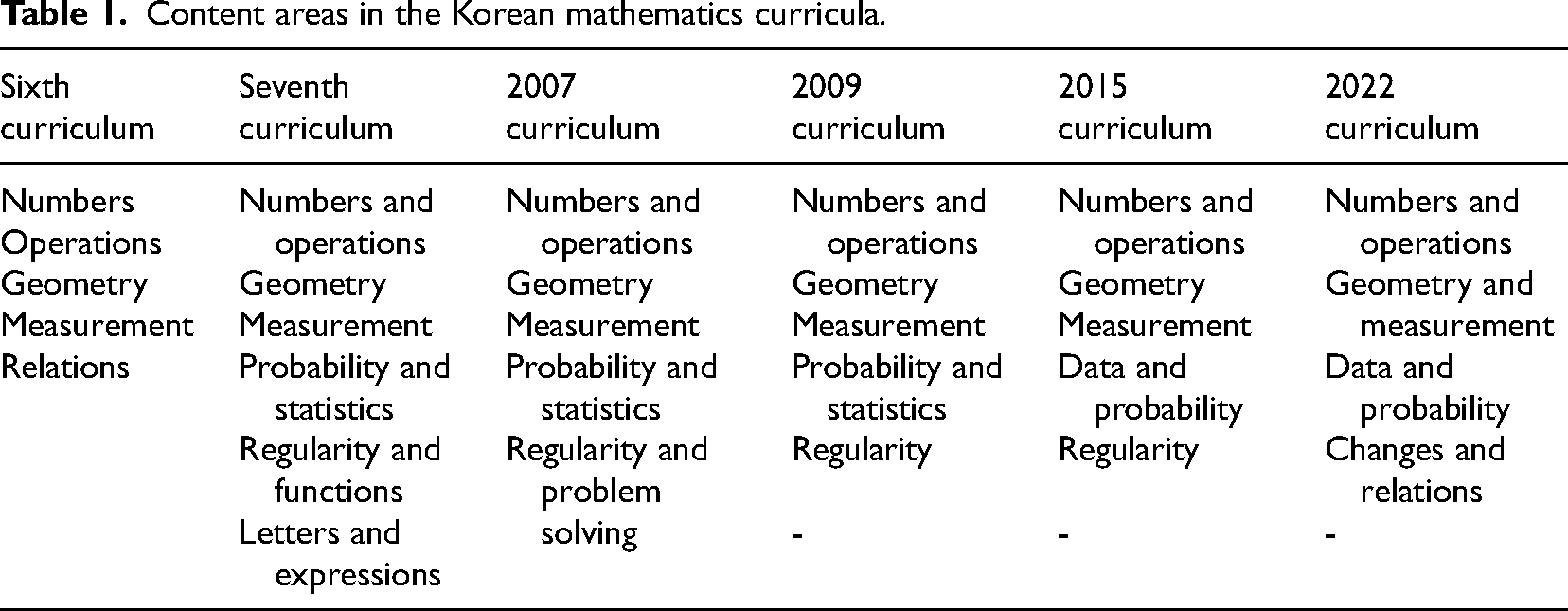
Content areas in the Korean mathematics curricula.
The timeline detailing the announcement and implementation of each curriculum, along with the corresponding textbook publication schedules, is presented in Table 2. Prior to the 2015 curriculum, all elementary textbooks were published by the Korean MOE. Under the 2015 curriculum, textbooks for Grades 1–6 continued to be nationally published, whereas textbooks for Grades 3–6, approved by the MOE, were produced by various publishers. In the 2022 curriculum, textbooks for Grades 1–2 remained nationally published, but Grades 3–6 shifted entirely to authorized textbooks supplied by multiple textbook publishers.
Announcement and implementation timeline of the Korean mathematics curricula and textbooks.
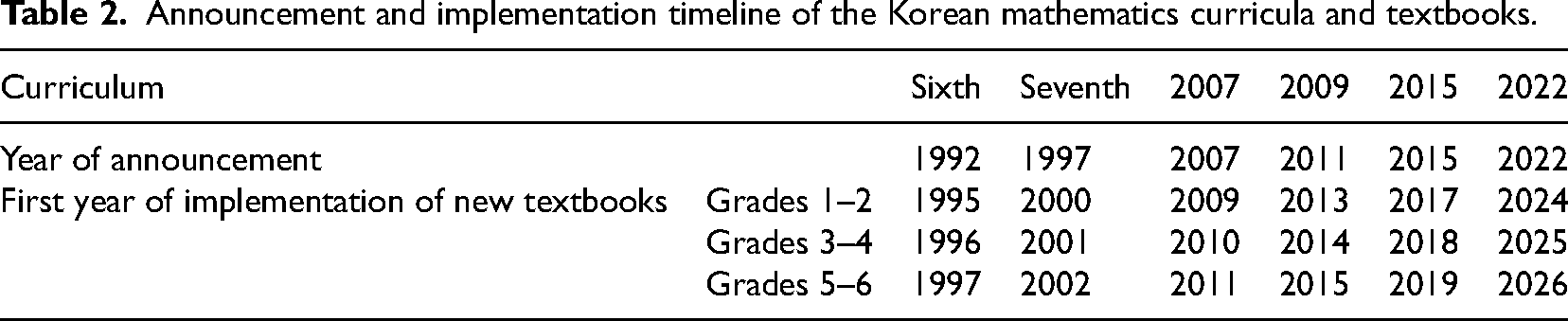
Selection of curricula and textbooks
To examine the alignment between curricula and textbooks relevant to the first research question, this study analyzed the Korean mathematics curricula from the sixth through the 2022 curriculum (Korean MOE, 1992, 1997, 2007, 2011a, 2015, 2022). For textbook analysis, mathematics textbooks for Grades 1–6 associated with each curriculum were included. 2 When national textbooks were available, they served as the primary focus. For authorized textbooks under the 2022 curriculum, the series holding the highest market share was selected for analysis. However, textbooks for Grades 5–6 under the 2022 curriculum have not yet been published, resulting in a total of 68 textbooks being included in this study.
To investigate the detailed characteristics of MPP tasks in textbooks related to the second research question, a total of 20 textbooks were selected. These consisted of textbooks for Grades 1–6 under the 2015 curriculum and Grades 1–4 under the 2022 curriculum.
Analysis of mathematical problem posing in curricula
The present study analyzed MPP in the Korean curricula by examining the national mathematics curriculum documents issued by the Korean MOE. These official documents guide textbook development. Although the structure of each version varies slightly, the curriculum document is generally organized into three main sections: (a) nature and goals; (b) content organization and achievement standards; and (c) teaching, learning, and assessment. The second section—content organization and achievement standards—constitutes the bulk of each curriculum, specifying what students are expected to learn and achieve in mathematics by grade level. As the curriculum provides overarching guidelines, it presents these standards concisely without detailing specific mathematical tasks or activities.
For this study, the analysis focused on two curriculum sections that explicitly address MPP: “content organization and achievement standards” and “teaching and learning methods,” which is a subsection within the broader “teaching, learning, and assessment” category. To systematically identify MPP-related elements, a keyword-based search was conducted using terms such as “problem posing,” “pose problems,” and related phrases.
First, when examining “content organization and achievement standards,” the curriculum was reviewed by content area (e.g., numbers and operations, geometry, measurement) and by grade level. The appearance of MPP-related keywords within the learning objectives or instructional guidelines for a given content area was interpreted as evidence that MPP was intended for incorporation into that domain. Second, for “teaching and learning methods,” which does not distinguish between content areas or grade levels, the same keyword-based approach was applied across the entire section.
Analysis of mathematical problem-posing tasks
All tasks in the textbooks were screened to identify MPP tasks. Following prior studies (e.g., Cai & Hwang, 2020; Silver, 1994), tasks requiring students to create new problems based on given situations or information were classified as MPP tasks. For Research Question 1, all 68 textbooks, ranging from the sixth curriculum to the 2022 curriculum, were examined to determine how MPP was reflected across different editions. However, this phase of analysis did not categorize tasks by types; rather, it focused on whether textbook tasks embodied the curriculum's emphasis on MPP. In contrast, for Research Question 2, 20 textbooks from the 2015 and 2022 curricula were analyzed to investigate the implementation of MPP tasks. These tasks were subsequently categorized by grade level and content area. To further classify the identified MPP tasks, the study adopted the framework developed by Cai and Jiang (2017), which has been widely used in previous textbook analyses. As shown in Table 3, tasks were categorized into four types, ranging from the most mathematically constrained to the least constrained.
Analytical criteria for MPP tasks.
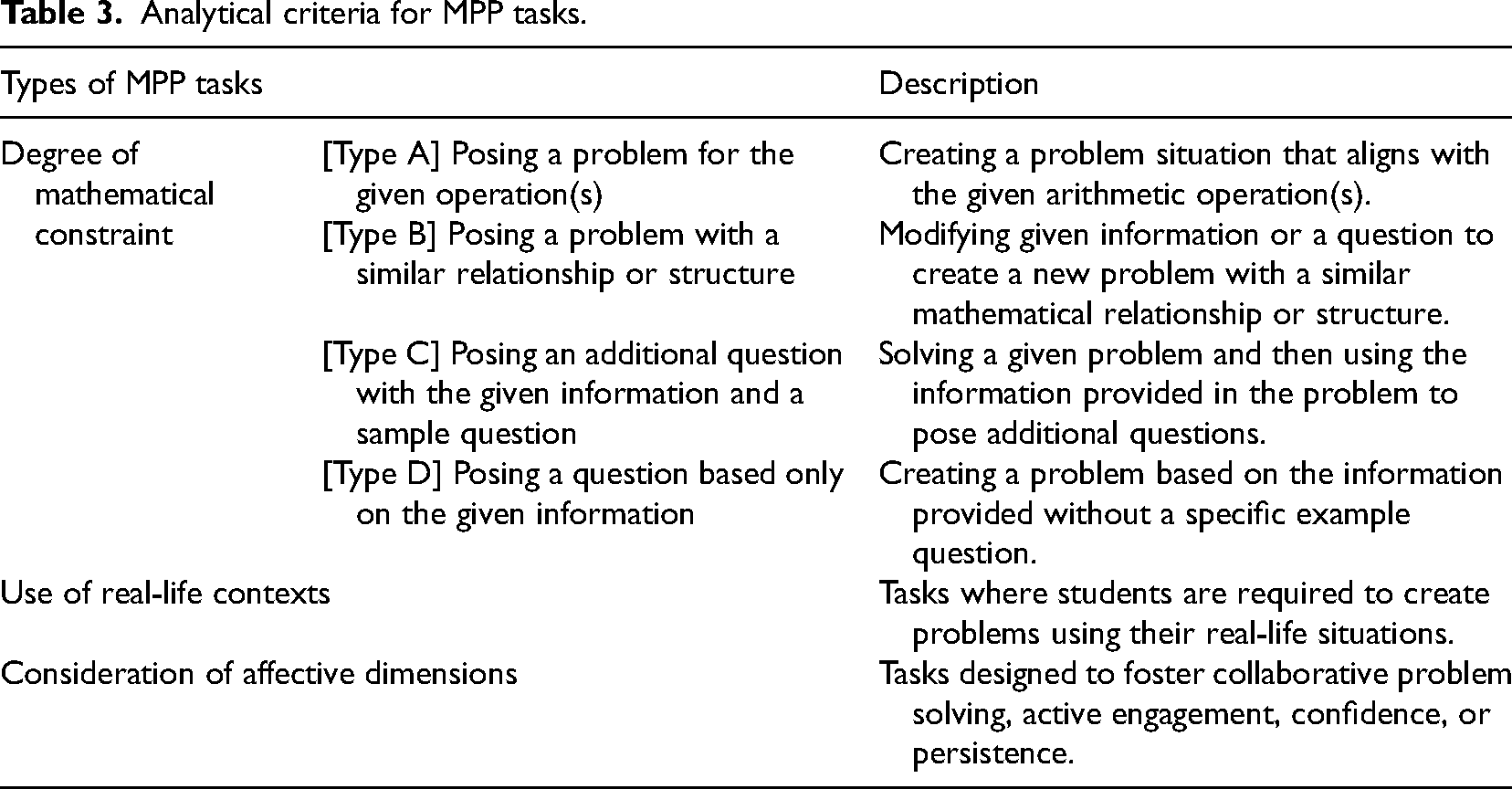
Analytical criteria for MPP tasks.
In addition to this initial framework, this study incorporated two supplementary criteria to capture specific emphases in the Korean curricula: (a) the use of real-life contexts and (b) consideration of affective dimensions. The first criterion, use of real-life contexts, refers to tasks that require students to create problems grounded in actual everyday situations or to employ real-world contexts, thereby encouraging them to connect mathematical concepts with daily experiences. Examples include tasks involving activities such as purchasing school supplies or comparing food quantities. The second criterion, consideration of affective dimensions, involves tasks that aim to foster collaborative problem solving, promote successful problem-solving experiences, and cultivate positive attitudes. Such tasks might be presented as games, playful activities, or team-based problem-solving activities, all designed to encourage active engagement, persistence in tackling challenges, and the development of confidence in mathematics. Each MPP task was coded using this triple-coding framework, meaning that a single task could be assigned to multiple codes across the three dimensions: (a) one of the four MPP types based on the degree of mathematical constraint, (b) use of real-life contexts, and (c) consideration of affective dimensions. Consequently, a single task could simultaneously fit more than one category within this framework.
Regarding the classification of MPP tasks, the researchers of this study first examined inter-rater reliability. Two mathematics textbooks were randomly selected from the set of 68 textbooks related to the first research question. Independently, both researchers identified MPP tasks within these textbooks, achieving a high agreement rate of 95%. Two additional textbooks were also selected from the set of 20 textbooks related to the second research question. Here, the two researchers independently coded the MPP task types, resulting in an agreement rate of 92%. Following these initial steps, both researchers independently coded all MPP tasks in the respective study samples. Any discrepancies in coding were resolved through discussion, ensuring consistency in the classification of MPP tasks across all textbooks.
Given that prior studies analyzing the MPP tasks in Korean textbooks have consistently found that these tasks constitute only about 1% of all textbook tasks, this study prioritized qualitative analysis of the tasks. By focusing on the characteristics of these tasks rather than their frequency, this approach offers a deeper understanding of how MPP tasks are presented in textbooks.
Analysis of mathematical problem posing in the Korean curricula
The analysis of how MPP has been described in the Korean curricula reveals several key features. First, MPP was initially confined to specific content areas, but over time it has been broadened and emphasized across all areas. This shift aligns with broader changes in how problem solving has been addressed in the curricula. As shown in Table 4, from the sixth curriculum to the 2007 curriculum, problem-solving descriptions were associated with specific content areas. For instance, the sixth curriculum emphasized problem solving within the relations area, whereas the 2007 curriculum addressed it within the regularity and problem-solving area. However, since the 2009 curriculum, problem solving has been addressed comprehensively across all content areas. Correspondingly, MPP has also been highlighted throughout all areas for Grades 5–6 since the 2009 curriculum.
Inclusion of MPP in the curricula.
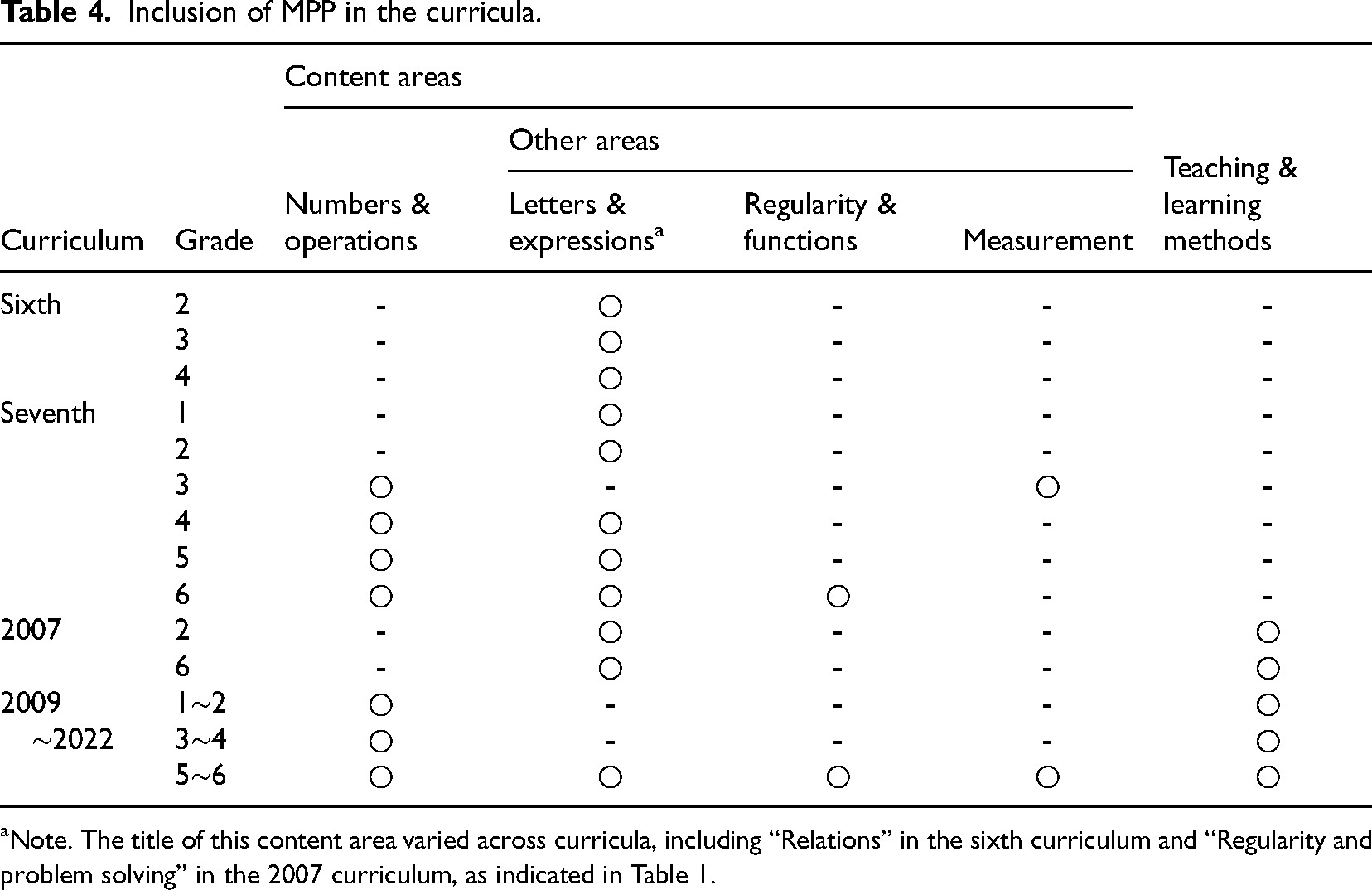
Inclusion of MPP in the curricula.
Note. The title of this content area varied across curricula, including “Relations” in the sixth curriculum and “Regularity and problem solving” in the 2007 curriculum, as indicated in Table 1.
Second, MPP tended to be introduced over time according to the grade-specific characteristics of each curriculum revision. As the curriculum has undergone various updates, MPP has been included in a greater number of grade levels. Specifically, the sixth curriculum introduced MPP in Grades 2–4, the seventh curriculum incorporated MPP across Grades 1–6, and the 2007 curriculum focused on MPP only in Grades 2 and 6. Although it may appear that the 2007 curriculum reduced the number of grades mentioning MPP compared to the seventh curriculum, this change should be interpreted within the broader curricular context. The seventh curriculum employed a level-based structure, offering an advanced course option for students to select based on their learning abilities. As shown in Table 5, MPP under the seventh curriculum was framed as advanced activities, meaning that these were not necessarily intended for all students. Moreover, beginning with the 2007 curriculum, MPP was mentioned not only within specific content areas but also in the teaching and learning methods section, underscoring its importance beyond particular domains. Given these considerations, it cannot be concluded that the scope of MPP in the 2007 curriculum was diminished relative to earlier curricula.
MPP in the area of numbers and operations in the curricula.
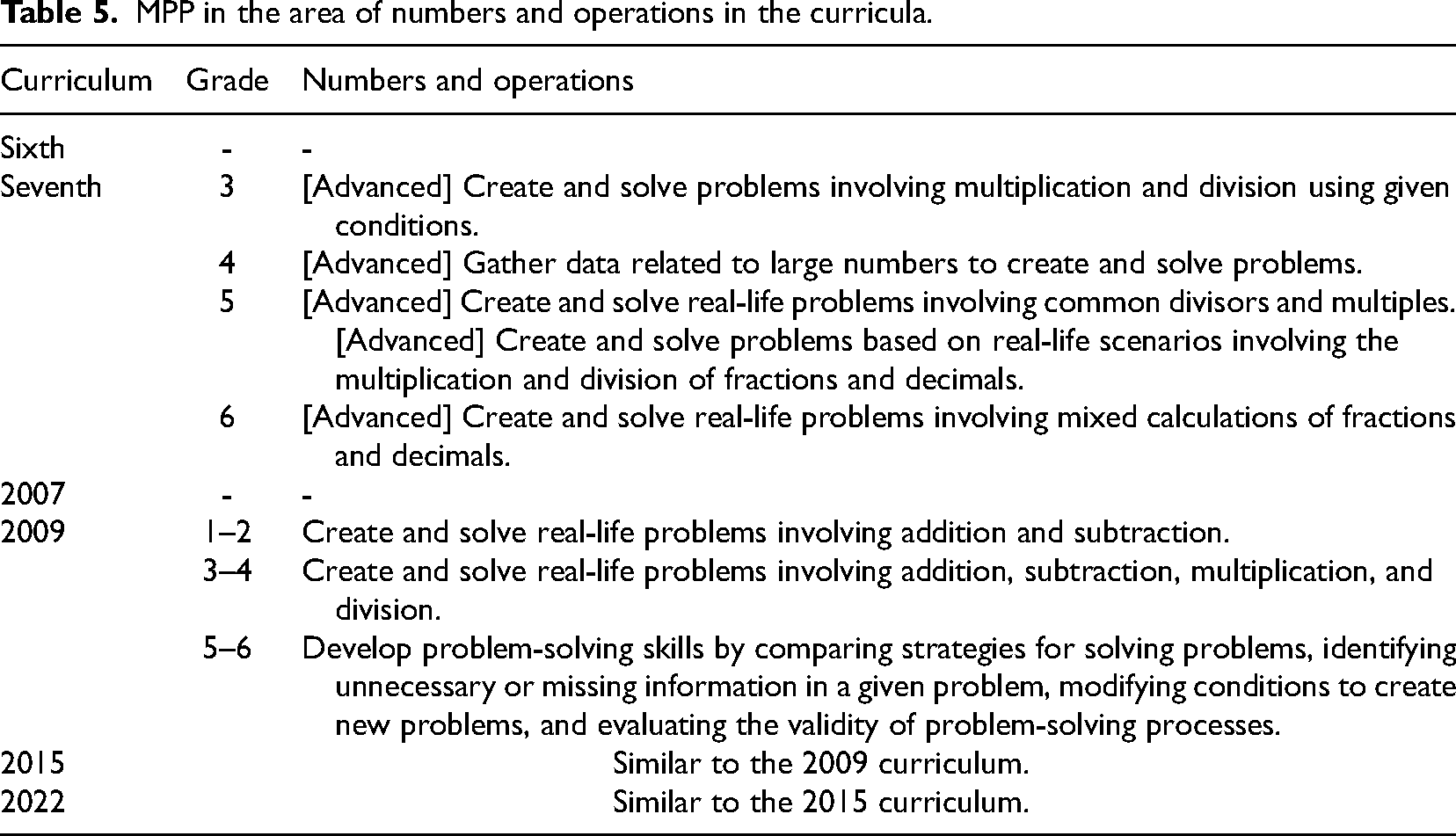
From the 2009 curriculum onward, MPP has been expanded to all grade levels, accompanied by detailed specifications for each grade band. For example, in the numbers and operations area (see Table 5), earlier curricula identified specific topics for MPP tasks. However, starting with the 2009 curriculum, MPP has been integrated beyond particular topics. In Grades 1–4, MPP focuses on the arithmetic operations adequate to each grade band, whereas in Grades 5–6, it can be applied across all content areas.
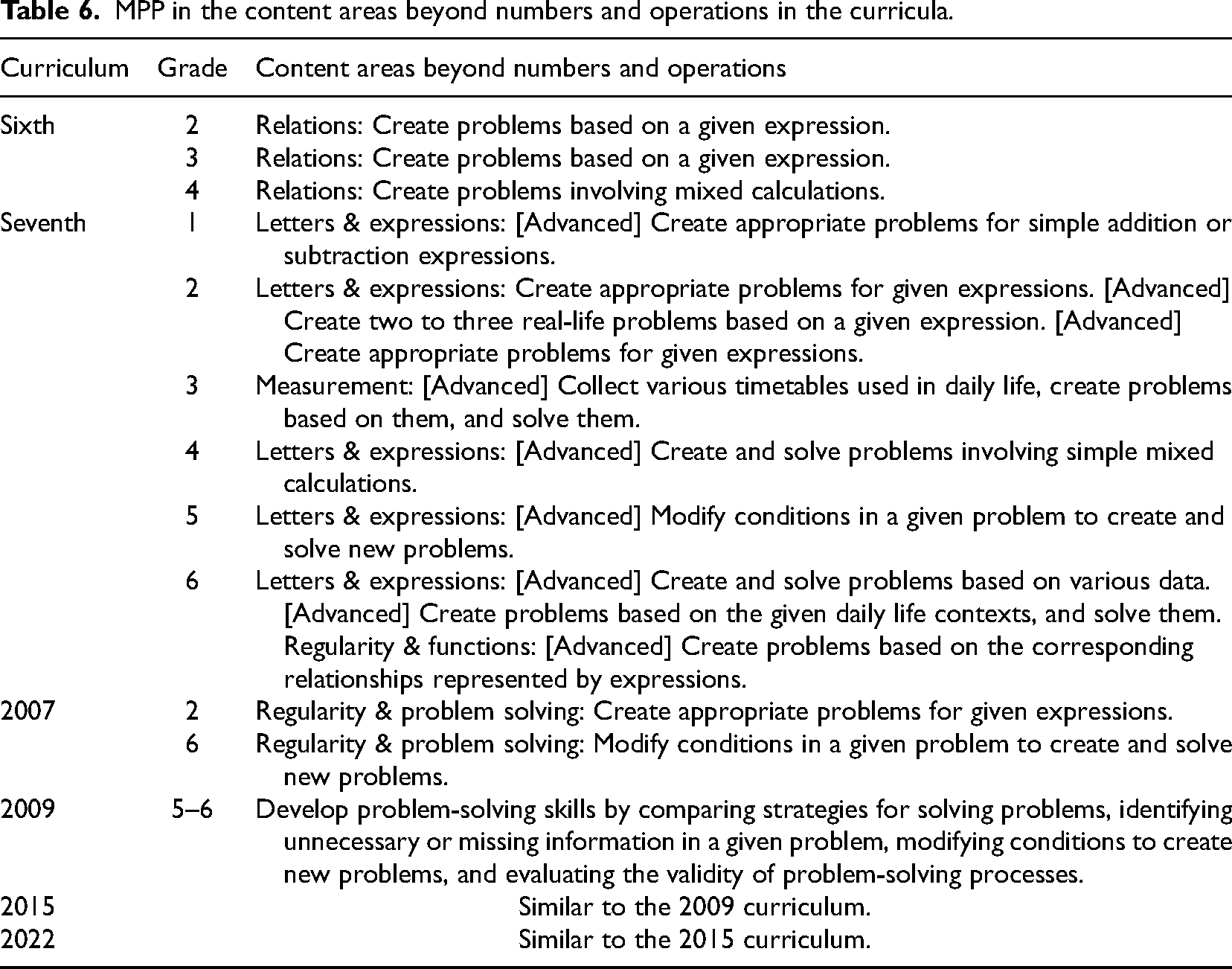
Third, the approach to presenting MPP has evolved from simply instructing students to create problems toward providing more explicit methods. For instance, as shown in Table 6, the sixth curriculum primarily offered simple activities, such as creating problems related to specific content areas. Beginning with the seventh curriculum, however, more detailed strategies for engaging in MPP were introduced, including creating problems based on real-life situations, modifying conditions to generate new problems, and posing problems derived from given data.
MPP in the content areas beyond numbers and operations in the curricula.
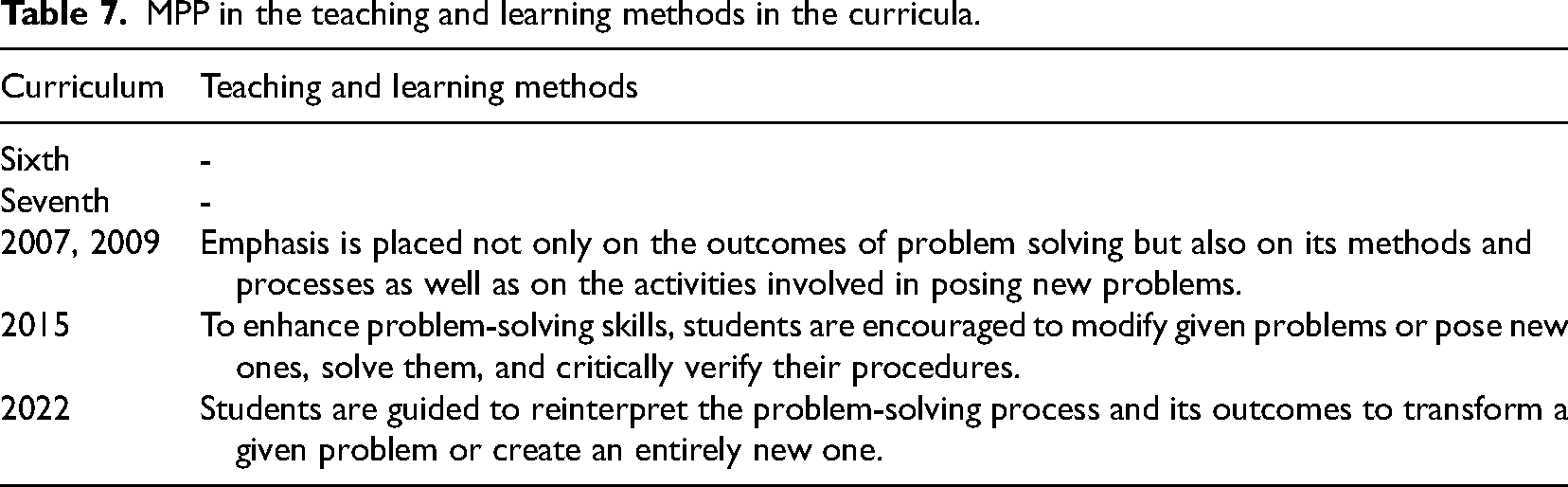
Furthermore, as shown in Table 7, general teaching and learning methods related to MPP first appeared in the 2007 curriculum. Additional strategies were introduced, such as “modifying a given problem” in the 2015 curriculum or “reinterpreting the process and outcomes of problem-solving to transform a given problem or create a new one” in the 2022 curriculum. These approaches provide more concrete methods for incorporating MPP into textbooks and teaching practices.
MPP in the teaching and learning methods in the curricula.
This section analyzes how MPP was represented in textbooks aligned with the curricular revisions described above. First, the changes concerning MPP in the curricula were generally reflected in the corresponding textbooks. For instance, in the sixth curriculum, which addressed MPP within the specific content area related to problem solving, textbooks included MPP tasks in the corresponding units, as shown in Figure 1. However, some exceptions were noted. Although the 2015 curriculum emphasized MPP across all content areas, the associated textbooks did not include MPP tasks in the data and probability area.
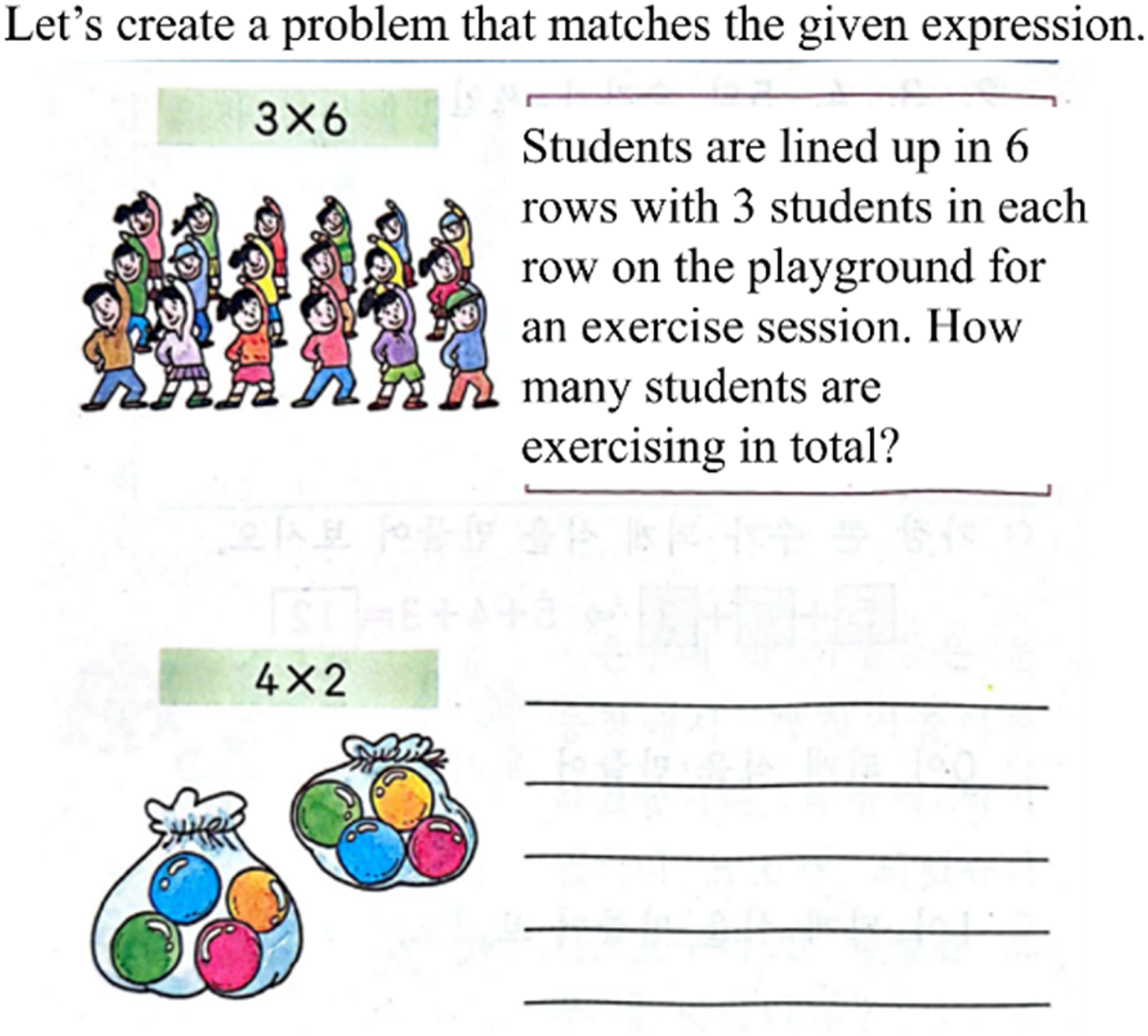
Example of MPP tasks in textbooks tailored to the curriculum (Korean MOE, 1995, p. 64).
Second, textbooks sometimes represented MPP more extensively than what was specified in the curriculum. As noted, beginning with the 2007 curriculum, MPP was included in the teaching and learning methods section, which led textbooks to incorporate additional MPP tasks beyond the specific curriculum standards. For example, the fifth-grade textbook under the 2007 curriculum introduced MPP tasks related to decimal multiplication even though these were not explicitly mentioned in the curriculum standards. Similarly, as shown on the left side of Figure 2, the second-grade textbook under the 2015 curriculum included MPP tasks related to multiplication in the numbers and operations area despite the curriculum referencing only addition and subtraction. Although the areas or units addressing MPP varied across curricula, all first- and second-grade textbooks included MPP tasks related to basic arithmetic operations with whole numbers.
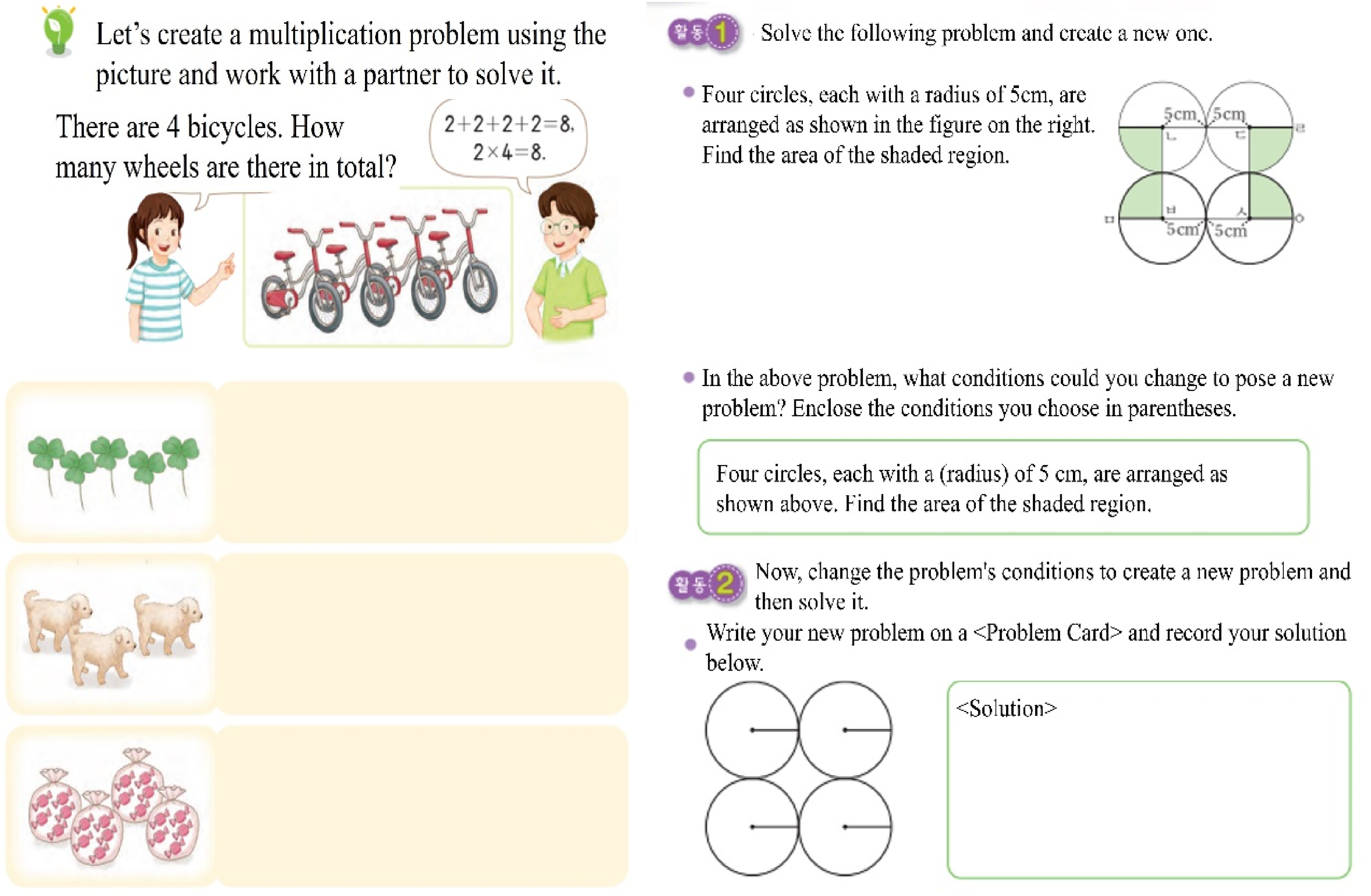
Examples of MPP tasks in textbooks not explicitly specified in the corresponding curricula (Korean MOE, 2017, p. 158; Korean MOE, 2011b, p. 126).
This trend of broader implementation extended beyond the numbers and operations area. Textbooks occasionally included MPP tasks in areas not explicitly addressed by the curriculum. For instance, although the sixth curriculum did not explicitly mention MPP for Grades 5–6, problem-solving units still included MPP tasks. Additionally, the fourth-grade textbook under the seventh curriculum incorporated MPP tasks in the measurement area despite no direct curricular specification, as illustrated on the right side of Figure 2. Similarly, the third-grade textbook under the 2009 curriculum, which primarily focused on MPP tasks within the numbers and operations area, also introduced MPP tasks in the “planar shapes” and “time and length” units. The fourth-grade textbook under the 2015 curriculum extended MPP tasks to the “quadrilaterals” unit.
Overall, the findings indicate that MPP tasks were primarily implemented in textbooks in alignment with the corresponding curriculum content. However, textbooks sometimes went beyond curricular specifications by introducing MPP tasks in areas not explicitly addressed. This trend became particularly evident from the 2007 curriculum onward, when MPP began to be emphasized in the teaching and learning methods section. In Grades 1–2, despite differences across content areas, a common feature was the predominant inclusion of MPP tasks related to basic arithmetic operations with whole numbers. Additionally, compared to Grades 1–2, MPP tasks in Grades 3–6 were presented across a wider range of content areas. These findings reveal that the manner in which MPP is addressed varies depending on the curriculum and grade level. To further examine these variations, the next section provides a detailed analysis of MPP tasks in textbooks under the 2015 and 2022 curricula.
This section examines MPP tasks in textbooks under the 2015 and 2022 curricula using analytical criteria derived from prior studies and the curriculum analysis. First, the number of MPP tasks in textbooks 3 by content area is summarized in Table 8. The results indicate that the total number of MPP tasks in Grades 1–2 is similar for the 2015 and 2022 textbooks, whereas there was an increase in the number of MPP tasks in Grades 3–4 under the 2022 curriculum.
Number of MPP tasks in textbooks by content areas.
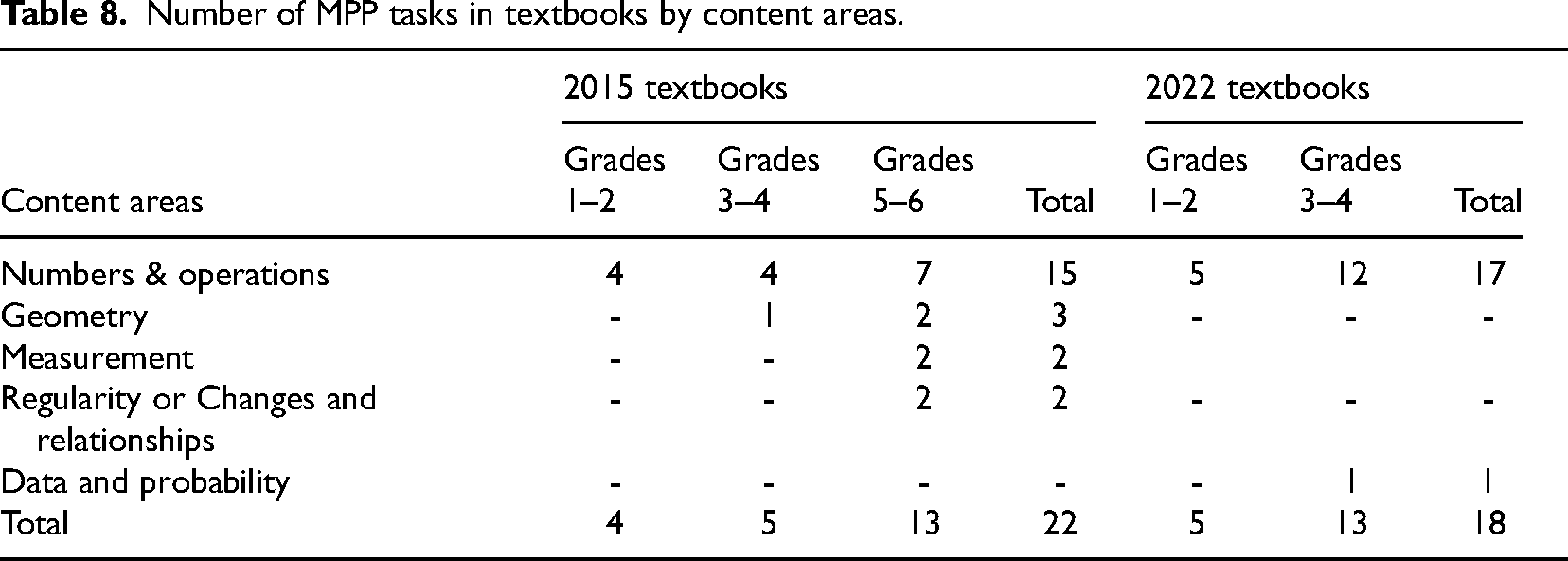
Number of MPP tasks in textbooks by content areas.
The analysis also revealed that most MPP tasks were concentrated in the numbers and operations area, consistent with the findings from the curriculum analysis, which highlighted that the 2015 and 2022 curricula explicitly mention MPP primarily in this area for Grades 1–4. However, notable exceptions emerged, including MPP tasks appearing in the geometry area of the 2015 third- and fourth-grade textbooks and in the data and probability area in the 2022 third- and fourth-grade textbooks. Conversely, the absence of MPP tasks in the data and probability area in the 2015 fifth- and sixth-grade textbooks reflects inconsistencies between the curriculum and its implementation in textbooks.
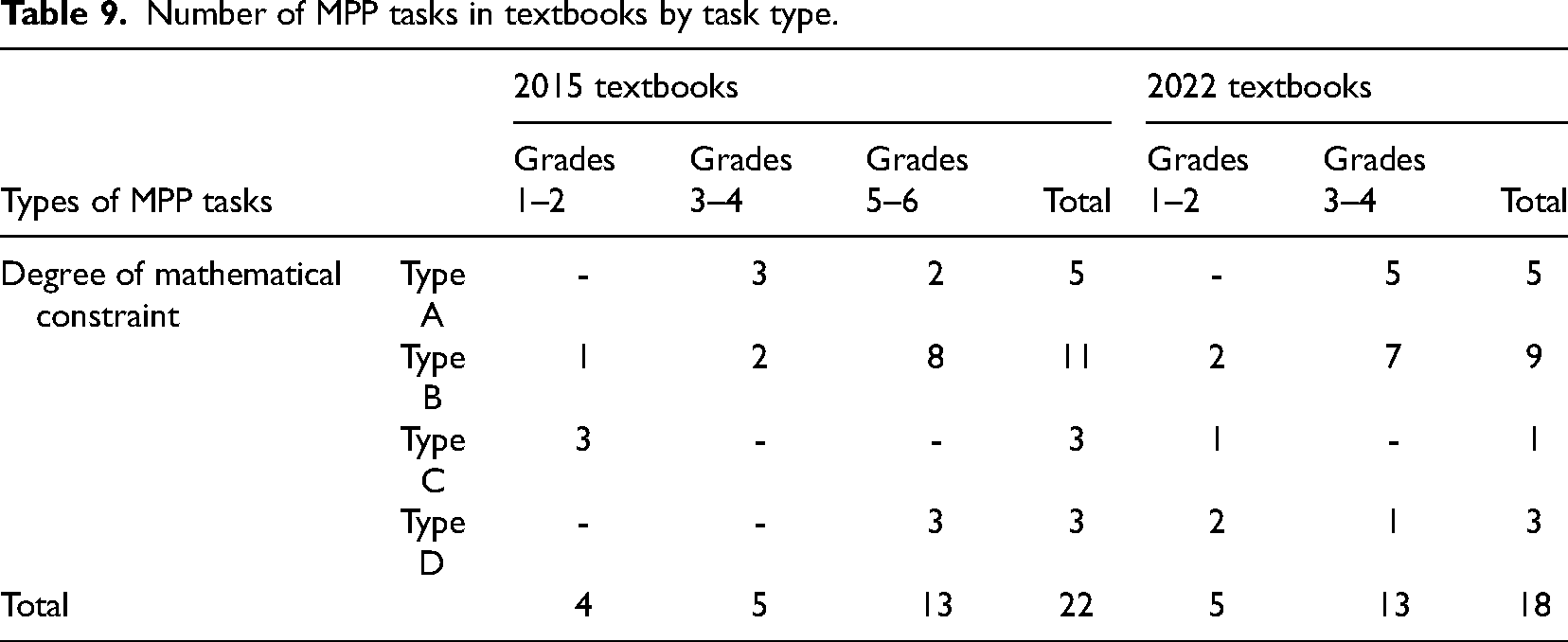
Next, Table 9 presents the number of MPP tasks in textbooks by task type. Type B tasks (i.e., posing a problem with a similar relationship or structure) were the most prevalent, followed by Type A (posing a problem for a given operation), Type D (posing a question based on given information), and Type C (posing an additional question with the given information and a sample question), in that order. Based on these overall results, this study examined how the various MPP task types (except the simplest Type A) were presented in textbooks, accompanied by illustrative examples.
Number of MPP tasks in textbooks by task type.
For Type B, Figure 3 provides a representative example from the 2015 sixth-grade textbook. This task presents a sample question and prompts students to create a new problem by modifying at least one of two given conditions. Specifically, the task asks students to calculate percentages based on refundable deposit amounts for returned bottles using both the original and increased deposit rates. After solving the problem, students are asked to modify one or more conditions, such as the original deposit or the increased deposit, to create a new problem. In contrast, simpler Type B tasks were included in Grades 3–4. For instance, in the 2022 third-grade textbook, students are asked to create problems that meet the condition of dividing a three-digit number by a one-digit number. Similarly, in the 2015 third- and fourth-grade textbooks, three out of five tasks of this type were simpler in form, suggesting that the complexity of Type B tasks might be influenced by grade levels and contextual factors (e.g., whether these activities are stand-alone tasks or integrated into a main lesson).
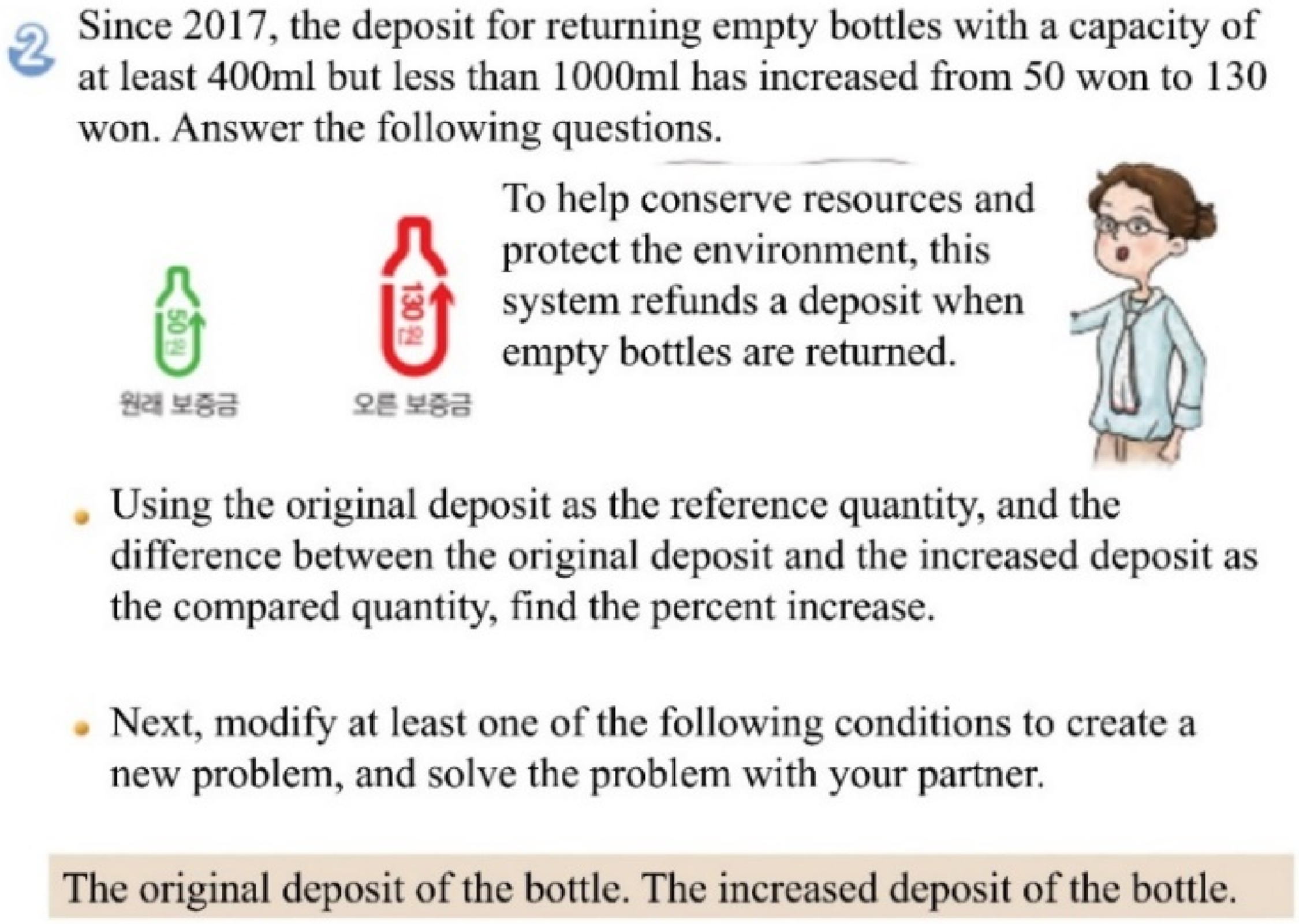
Example of MPP tasks with type B (Korean MOE, 2019a, p. 87).
For Type C, Figure 4 provides a representative example in which students are asked to use given data to solve an initial problem and then pose an additional question based on the same data. Specifically, the task presents rods of various lengths and asks students to determine how many times longer a brown rod is compared to a red rod. After solving this initial problem, students are prompted to use the rods to create their own “how many times” questions and solve them with their peers. Tasks of this type typically provide more data than is strictly necessary for solving the initial problem. For younger students, such as those in Grades 1–2, the tasks often include scaffolding to support problem creation. For instance, an exemplary question—“How many times longer is the green rod than the light green rod?”—may be provided as a guide. Notably, all tasks of this type were presented in Grades 1–2, likely because the problems that students create at these levels are related to basic arithmetic operations and thus require relatively little additional information. It is also easier at these early grade levels to provide extra information beyond what is needed to solve the initial problem.
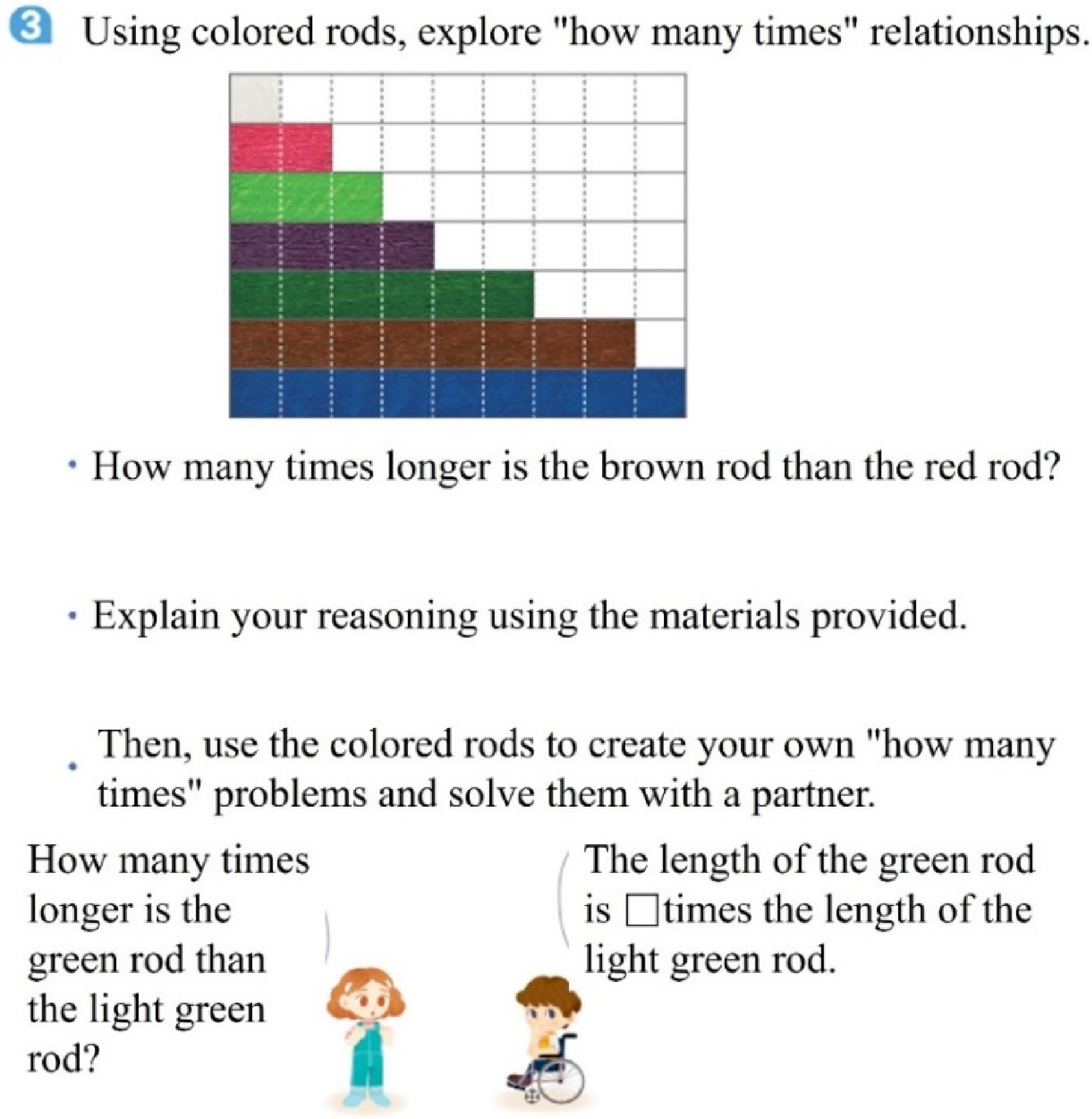
Example of MPP tasks with type C (Korean MOE, 2024, p. 147).
For Type D, students are asked to pose a question based solely on the given information. For instance, as shown in Figure 5, the task presents an image of a power bank indicator displaying four segments, initially uncolored before charging, and three segments colored after 4 h of charging. Students are prompted to create a problem based on this visual representation. Although no explicit examples or guides are provided, the placement of this task within a unit on the division of fractions likely encourages students to create problems, such as calculating the total time required for a full charge or determining the time taken to charge one segment of the indicator. Tasks of Type D often include concrete materials, such as images, graphs, or physical manipulatives like stacking blocks, to provide a basis for problem creation.
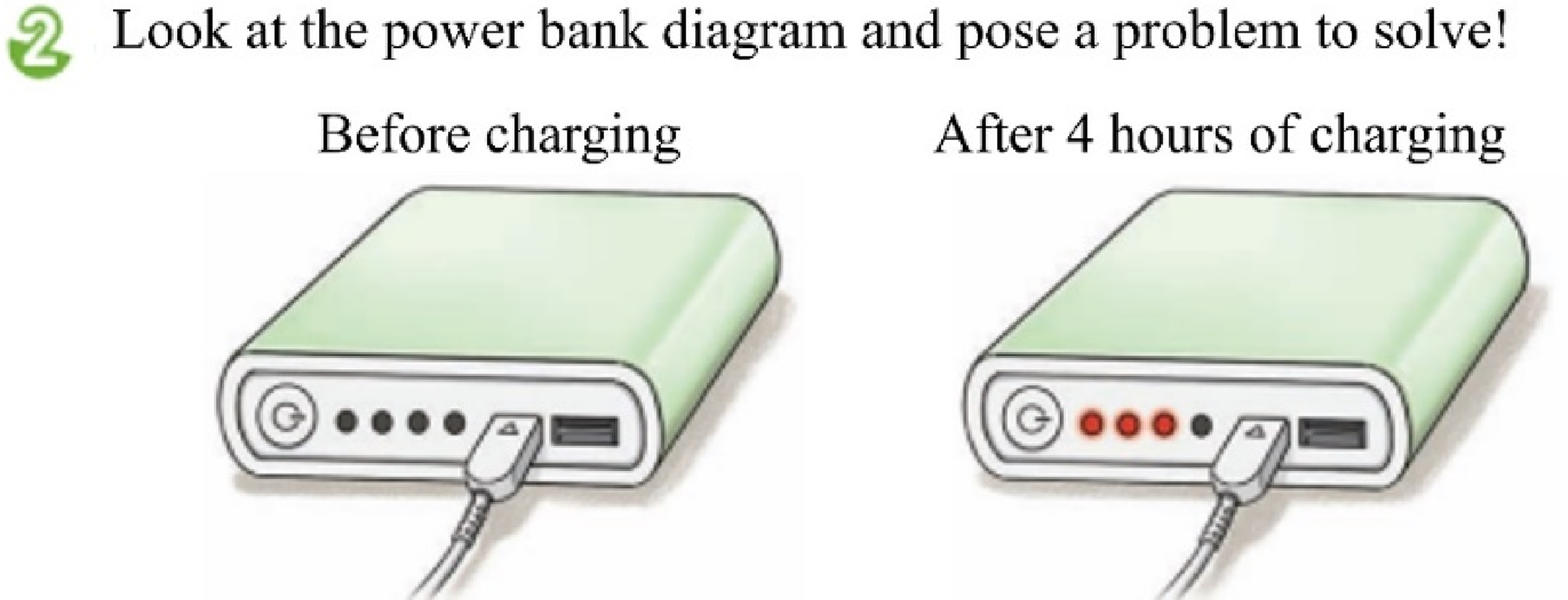
Example of MPP tasks with type D (Korean MOE, 2019b, p. 23).
Table 10 summarizes the number of MPP tasks in textbooks that incorporate real-life contexts or consider affective dimensions. The integration of real-life contexts in MPP tasks varied by grade level. In the 2015 textbooks, most MPP tasks in Grades 1–2 and 5–6 utilized real-life contexts, whereas none of the tasks in Grades 3–4 included such contexts. In contrast, the 2022 textbooks featured more real-life contextualized MPP tasks in Grades 3–4 compared to Grades 1–2. Overall, in both the 2015 and 2022 curricula, MPP tasks that utilized real-life contexts were more prominent in Grades 3–6 than in Grades 1–2. Examples of real-life contexts included topics that students could easily relate to, such as the quantity of food in a refrigerator, the prices of school supplies at a stationery store, and the distances from home to school.
Number of MPP tasks by consideration of real-life contexts or affective dimensions.
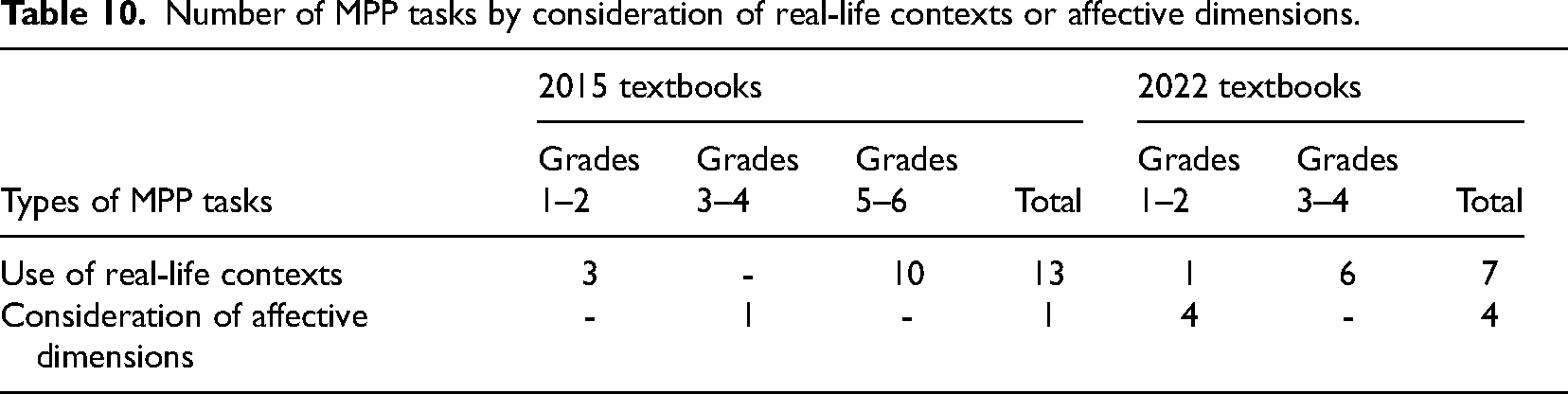
A noticeable finding was the increase in the proportion of MPP tasks that consider affective dimensions in the 2022 textbooks compared to the 2015 textbooks. As previously described, the 2022 curriculum places greater emphasis on affective factors related to problem solving, such as fostering positive experiences, confidence, active engagement, and persistence in tackling challenging tasks—factors that were not explicitly emphasized in the 2015 curriculum. These curricular changes are reflected in the MPP tasks included in the 2022 textbooks for Grades 1 and 2. Such tasks are frequently presented in playful formats designed to capture students’ interest and promote collaboration.
For instance, as illustrated in Figure 6, one task involves selecting a problem creator by rolling a die while the other group members collaboratively solve the problem. The problem creator arranges stacking blocks, prompting the other students to propose various multiplication equations based on the arrangement. According to the teacher's guide, group members might generate responses such as “2 times 5 equals 10,” “The product of 2 and 5 is 10,” or “2 + 2 + 2 + 2 + 2 equals 2 × 5.” The guide also emphasizes active listening, urging students to avoid repeating equations already presented by others. By incorporating a game-like structure and requiring students to work together to solve problems, these tasks effectively highlight affective dimensions such as collaboration, engagement, and attentiveness.
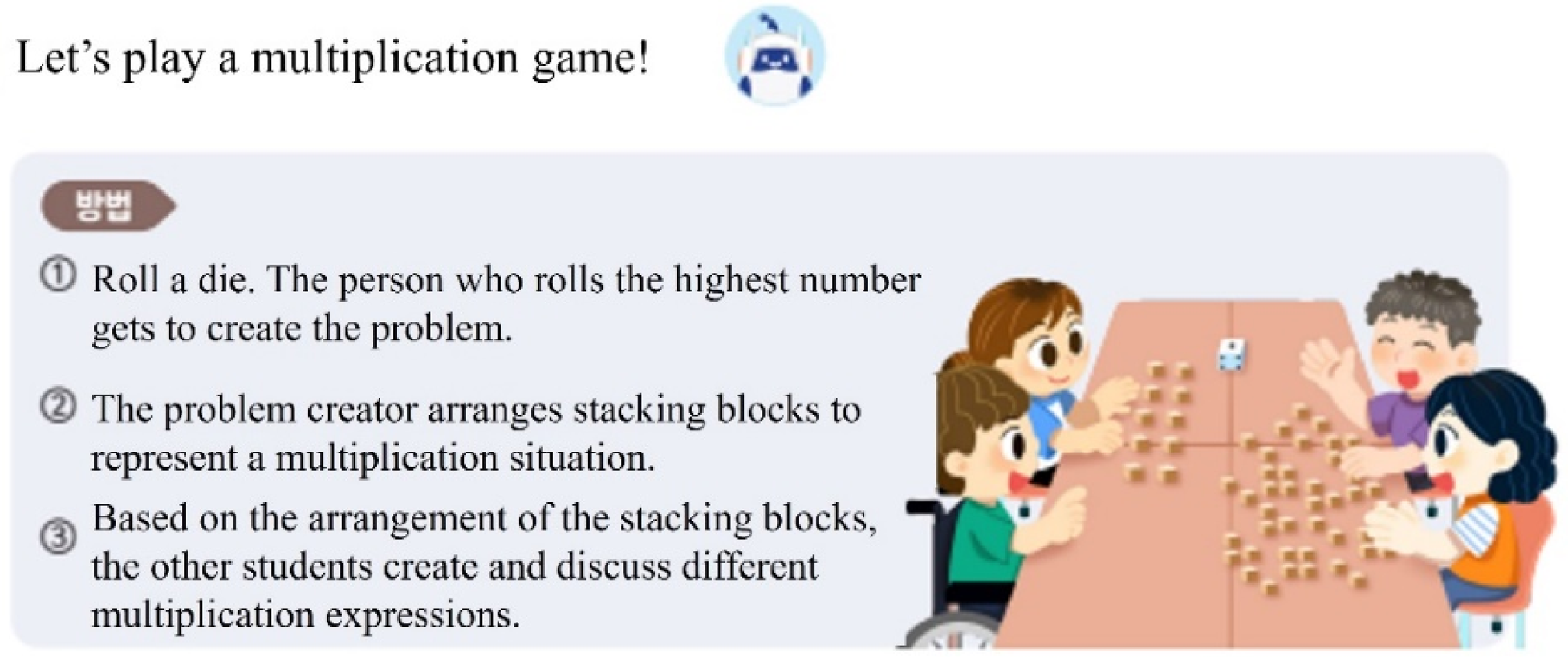
MPP task emphasizing collaborative problem solving (Korean MOE, 2024, p. 149).
Another notable feature of MPP tasks that incorporate affective domains is their emphasis on sustained engagement in meaningful, real-life practices. For instance, the task presented in Figure 7 encourages students to participate in recycling efforts by sorting recyclables, then create addition and subtraction problems based on the quantities of collected items. Rather than confining the activity to a single session of problem posing and solving, the task promotes long-term involvement by requiring students to record their actions in a checklist throughout the unit. This continuous approach highlights the importance of regular application and motivates students to cultivate habits of environmental responsibility.
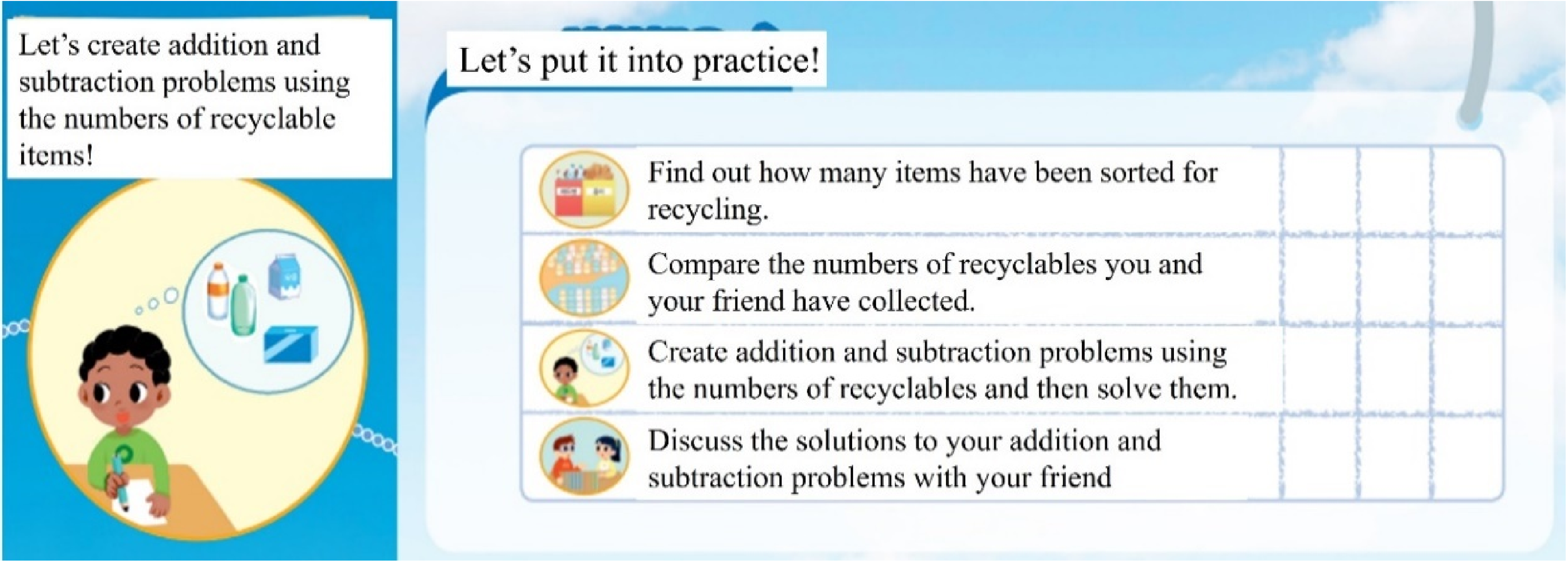
MPP task emphasizing sustained practice and application (Korean MOE, 2024, p. 63).
This study analyzed changes related to MPP across multiple revisions of the Korean mathematics curriculum and examined how these changes were manifested in the corresponding textbooks. In addition, it conducted a detailed analysis of MPP tasks presented in recent textbook series. Drawing on these key findings, this paper discusses four implications for incorporating MPP into curricula and textbooks.
First, this study highlights how MPP has been increasingly articulated and expanded within the Korean mathematics curricula. In the earlier stages, MPP was largely regarded either as a constituent part of the problem-solving process or as a foundational skill underpinning problem solving. Over time, however, MPP has been elaborated and emphasized to a greater extent, as reflected in curricula revisions. Whereas earlier curricula introduced MPP in a sporadic manner, more recent versions delineate it systematically by distinguishing between Grades 1–4 and 5–6. Furthermore, recent curricula present a clear progression, including specific methods for teaching MPP. These findings offer concrete examples of how MPP can be systematically integrated and reinforced through curriculum design. Unlike previous studies that predominantly focused on textbooks or briefly acknowledged the expansion of MPP within the curriculum (e.g., Cai & Jiang, 2017; Divrik et al., 2020; Jia & Yao, 2021; Park, 2021), this study provides an in-depth examination of six successive revisions of the Korean mathematics curriculum, yielding a more nuanced understanding of its evolution.
Second, this study offers empirical evidence of how curricular changes related to MPP are reflected in textbooks. In Korea, MPP as articulated in the curriculum is closely mirrored in textbook tasks, indicating a close alignment between the curriculum and textbooks. This finding seems natural given the national mathematics curriculum and the long-standing practice of having a single set of elementary mathematics textbooks. In other words, when achievement standards for MPP appear in specific content areas and grade levels, the corresponding textbooks tend to incorporate these standards. Interestingly, Korean textbooks sometimes exceed curricular specifications by introducing MPP tasks in domains or grade levels not explicitly addressed in the curriculum, suggesting that MPP is not limited to any particular mathematical content area or grade band. Notably, since the 2007 curriculum, MPP has been identified as a key teaching and learning method for fostering problem-solving competence across all content areas and grade levels. Including MPP as part of the curriculum's instructional strategies is thus expected to promote its more comprehensive and flexible integration into textbooks. This study illustrates how the concept of MPP can be embedded within curriculum guidelines and then transformed into concrete textbook tasks, thereby offering deeper insights into strategies for strengthening the alignment of MPP in both curricula and textbooks.
Third, this study demonstrates that there is considerable room for improvement in how textbooks address MPP tasks. Although the 2022 textbooks exhibit a slight increase in the number of MPP tasks compared to earlier editions, the overall proportion of such tasks remains notably low—consistent with findings from previous studies (e.g., Cai & Jiang, 2017; Divrik et al., 2020; Jia & Yao, 2021). Moreover, despite the recent curricula's emphasis on including MPP in all content domains, textbooks continue to cluster MPP tasks predominantly in the numbers and operations domain. Similar patterns have been observed in other countries, including China and the United States (Cai & Jiang, 2017). These results underscore the need to expand MPP tasks across a broader range of content areas to ensure that curricular intentions are more fully realized in textbooks.
This study also reveals an imbalance in the types of MPP tasks featured in textbooks. The analysis indicated that tasks demanding lower levels of mathematical constraint were minimally represented, seemingly due to the curriculum's descriptions (e.g., “modifying conditions to create new problems”) that disproportionately favored Type B tasks. By contrast, Cai and Jiang (2017) found that Chinese textbooks included a higher proportion of Type C tasks, where students pose an additional question related to the given information and a sample question after solving the original problem. These findings highlight the importance of delineating a broader array of MPP task types within curricula as well as reflecting this diversity in textbooks. Additionally, the sporadic and limited inclusion of MPP tasks restricts students’ opportunities to gain a systematic understanding of MPP strategies and methods. To address this issue, textbooks should present MPP tasks in a more structured and sequential manner, aligning them with students’ developmental stages and prior learning experiences.
Fourth, this study underscores the potential for integrating affective dimensions into MPP tasks. An analysis of the 2022 curriculum revealed an increasing emphasis on affective aspects of problem solving. Prior research likewise identified critical affective components in MPP, including motivation, positive learning attitudes, interest in mathematics, long-term engagement, and social interactions (De Corte et al., 2002; Hartmann et al., 2021; Silber & Cai, 2021). In line with these studies, the present study examined how MPP tasks in textbooks explicitly incorporate affective dimensions. The findings indicated that recent textbooks feature tasks reflecting emotional and attitudinal factors, aligning with the growing recognition of affective considerations in problem posing. Although research on the affective dimensions of MPP remains limited (Cai & Leikin, 2020), particularly in the context of textbook analysis, this study provides concrete examples of MPP tasks that encompass these elements. Overall, these findings offer valuable insights into designing problem-posing tasks that foreground affective components, thus contributing to a more holistic understanding of MPP.
This study provides comprehensive insights into the alignment between curricula and textbooks in the context of MPP by closely analyzing how MPP has been addressed in Korean curricula and textbooks. Whereas prior research has largely focused on MPP in China, the United States, and Turkey (Cai & Jiang, 2017; Divrik et al., 2020), this study extends this discussion by incorporating perspectives from Korea's curricula and textbooks, an area seldom explored in international literature. It also offers important implications for both the representation and analysis of MPP in curricula and textbooks. Specifically, by integrating affective dimensions into the analytical framework for investigating MPP tasks, this study goes beyond conventional approaches that primarily emphasize mathematical constraints. This expanded lens can shed light on how MPP tasks might be designed to foster emotional engagement and promote positive attitudes toward both problem solving and problem posing. Because the affective dimensions of MPP have been relatively underexplored, especially in textbook-based analysis, future studies might further examine how these elements are implemented and assessed in practice. Consequently, this study is expected to serve as a valuable reference for future initiatives aimed at enhancing the design and implementation of MPP across various educational contexts worldwide.
Footnotes
Contributorship
JeongSuk Pang conceptualized the overall research process, provided key ideas during the research and writing phases, and made the final decisions regarding data analysis and interpretation. Yujin Lee summarized the theoretical background and prepared the initial draft for the curriculum and textbook analysis. Both authors read and approved the final manuscript.
Declaration of conflicting interests
The authors declared no potential conflicts of interest with respect to the research, authorship, and/or publication of this article.
Funding
The authors received no financial support for the research, authorship, and/or publication of this article.
