



Abstract
Dividing fractions is often difficult for students to understand. Many GeoGebra applets have been developed to support students’ understanding of fraction division, but it is less clear how fraction division is conceptualized and represented in these tool-based resources. This study aimed to examine the quality of the GeoGebra applets for fraction division by attending to the conceptualizations, representations, and cognitive actions prevalent in these digital resources. The results reveal that a majority of the existing applets conceptualize fraction division as measurement while other conceptualizations of fraction division are underrepresented. Among the various representations used, the length model in the form of fraction bar and area model are the predominant choices, with the number line representation being notably less prominent. The results from this study also show that although most applets attempt to visualize the process of fraction division, there are limited opportunities in most applets for users to enact mental actions associated with fraction division, such as partitioning, unitizing, iterating, and disembedding. These results not only increase our understanding of the affordances and limitations of existing applets for fraction division so that we can become more intentional in our choice of them but also inform the design of new applets that support students’ development of a rich and robust understanding of fraction division.
Introduction
A robust understanding of fractional concepts not only extends students’ understanding of numbers but also is foundational for learning more advanced mathematical content areas and everyday quantitative reasoning. Research has shown that understanding fractions is predictive of students’ long-term success in mathematics (Booth & Newton, 2012; NMAP, 2008; Siegler et al., 2012). Despite its importance, researchers have documented challenges in understanding fraction concepts among students in both elementary and secondary schools (e.g., Pitkethly & Hunting, 1996; Siegler & Pyke, 2013). This is especially the case for fraction division, where the literature indicates that students and even prospective mathematics teachers often struggle to create and use representations appropriately, overgeneralize properties of operations with natural numbers to fractions, interpret division primarily using a primitive partitive model of division, and tend to absorb only mechanical procedure like the invert-and-multiply algorithm and thus create “bugs” in computing division expressions (e.g., Adu-Gyamfi et al., 2019; Lo & Luo, 2012; Tirosh, 2000). In other words, the lack of conceptual understanding and representation fluency in fraction division has been identified as a major issue in learning fraction division.
The past few decades have seen the rise of a large repertoire of mathematics-specific technological tools, which can support teachers and students in visualizing, displaying, acting upon, observing, and validating mathematics relationships (Heid & Blume, 2008). By including dynamic and/or interactive representations, these digital tools have the potential to provide students with new ways to conceive and represent mathematical ideas, which are likely to support their development of conceptual understanding and representation fluency of mathematical concepts. In the domain of fractions, evidence suggests that the use of digital technology can provide opportunities for students to work with/on fractions in interactive and dynamic ways, which are likely to support the development of robust understandings of fractional concepts and their operations (Anat et al., 2020; Poon, 2018; Steffe & Olive, 2002; Yeo & Webel, 2024). For instance, Steffe and Olive (2002) designed JavaBars, a software program designed to provide children with contexts in which they can enact their mathematical operations of unitizing, uniting, fragmenting, segmenting, partitioning, iterating, and measuring. JavaBars enabled children to operationalize their knowledge of fractions and to reflect on their operations, which might lead to accommodations in children's fraction schemes. Anat et al. (2020) built a computerized dynamic environment that allows teachers and students to model and solve fraction division problems. Results from their study suggested that the dynamic environment supported the development of a conceptual understanding of fraction division. Meanwhile, researchers have pointed out that the design of tool-based tasks can utilize different conceptualizations and representations of a mathematical idea (Leung & Bolite-Frant, 2015). For instance, while the Dynamic Ruler in Yeo and Webel (2024) conceptualizes fractions as measurements, the GeoGebra applet in Poon (2018) highlights the part-whole relationship in a fraction. The use of different conceptualizations and representations in the design of tool-based tasks might impact not only what mathematical ideas are learned but also how they are learned. Therefore, it is important to analyze how mathematical ideas are conceptualized and represented in different tool-based tasks and resources. This is particularly true for concepts such as fraction division, which are not only difficult to teach and learn conceptually but also open to multiple conceptualizations and representations.
As an interactive geometry, algebra, statistics, and calculus application that can run on multiple platforms (e.g., desktops, tablets, and online), GeoGebra is developed for learning and teaching mathematics from primary school to university level. Although GeoGebra users can create activities from scratch, existing GeoGebra applets are important resources for educators because GeoGebra Materials cloud service allows users to upload and share GeoGebra applets with others. Currently, it hosts more than one million free activities, simulations, exercises, lessons, and games for mathematics and science, including a significant number of applets created for students to learn fraction division. However, little attention has been given to how fraction division is conceptualized and represented in these tool-based resources (Yohannes & Chen, 2023; Zhang et al., 2023). Given that GeoGebra is a community of millions of students and teachers who are potential users of these applets, it is important to examine the conceptualizations and representations of fraction division in these applets to increase our understanding of the affordances and limitations of existing applets for fraction division.
Conceptual grounding
This study drew from literature on conceptualizations of fraction division, mental actions associated with fraction, and representations of fraction and fraction division to understand the characteristics of GeoGebra applets on fraction division.
Conceptualizations of fraction division
The literature has described diverse conceptualizations of fraction division (e.g., Adu-Gyamfi et al., 2019; Gregg & Gregg, 2007; Lamon, 2020; Sinicrope et al., 2002). Adapted from Adu-Gyamfi et al. (2019), this section presents four conceptualizations of fraction division, namely, division as partition, division as determination of a unit rate, division as measurement, and division as the inverse operation of multiplication.
When interpreting fraction division as partition, fraction division is perceived as the process of equally sharing a given quantity (dividend) between a given number (divisor) of groups in order to determine the amount (quotient) in each group. For example,
When interpreting fraction division as determination of a unit rate, the focus is not on the action of equally sharing but rather on the size of one unit. This conceptualization of fraction division has been discussed in the literature (e.g., Flores, 2002; Gregg & Gregg, 2007). The “cake and container” scenario proposed by Gregg and Gregg (2007) elucidate this interpretation. One of the problems is: “I have
When interpreting fraction division as measurement,
Fraction division can also be interpreted/defined as the inverse operation of fraction multiplication. This conceptualization diverges from others by associating fractions with operator functions. In this context, a fraction acts as an inverse function to that of the multiplication, mapping some set onto another. More specifically, the original amount (product in multiplication, dividend in division) is multiplied by the denominator and divided by the numerator. Symbolically,
Mental actions associated with fraction division
Mental actions constitute the key component of mental schemes. Mental actions, such as unitizing, partitioning, disembedding, iterating, and splitting are essential when working with fractions and their operations (Norton & McCloskey, 2008; McCloskey & Norton, 2009). In this section, a brief explanation of each mental action and examples of how they might work together in each conceptualization of fraction division are provided at the end. However, we would like to encourage interest readers to refer to the articles we cited (Norton & McCloskey, 2008; McCloskey & Norton, 2009) for a more thorough discussion. Unitizing is a mental action that treats an object or collection of objects as a unit, or a whole. Unitizing is essential for understanding fraction division because understanding fraction division demands the ability to visualize reference units, to move between the original unit and the intermediate unit, and to interpret a symbol or operation in terms of those units. Partitioning is the mental action of dividing a unit, or a whole, into equal parts. Equal-sized parts are fundamental to partitioning and to constructing the part-whole conception of fractions. Disembedding is the mental action of imaginatively pulling out a sub-collection of items from a whole while keeping the whole intact. The sub-collection exists simultaneously as part of the whole and as a part out of the whole. The part-whole conception of fraction relies on mental actions of partitioning and disembedding, with which students can project n equal parts in a continuous whole (partitioning) and pull out m of those parts without losing track of their containment within the whole (disembedding), resulting in the fraction
Possible sequence of mental actions in each fraction division conceptualization.
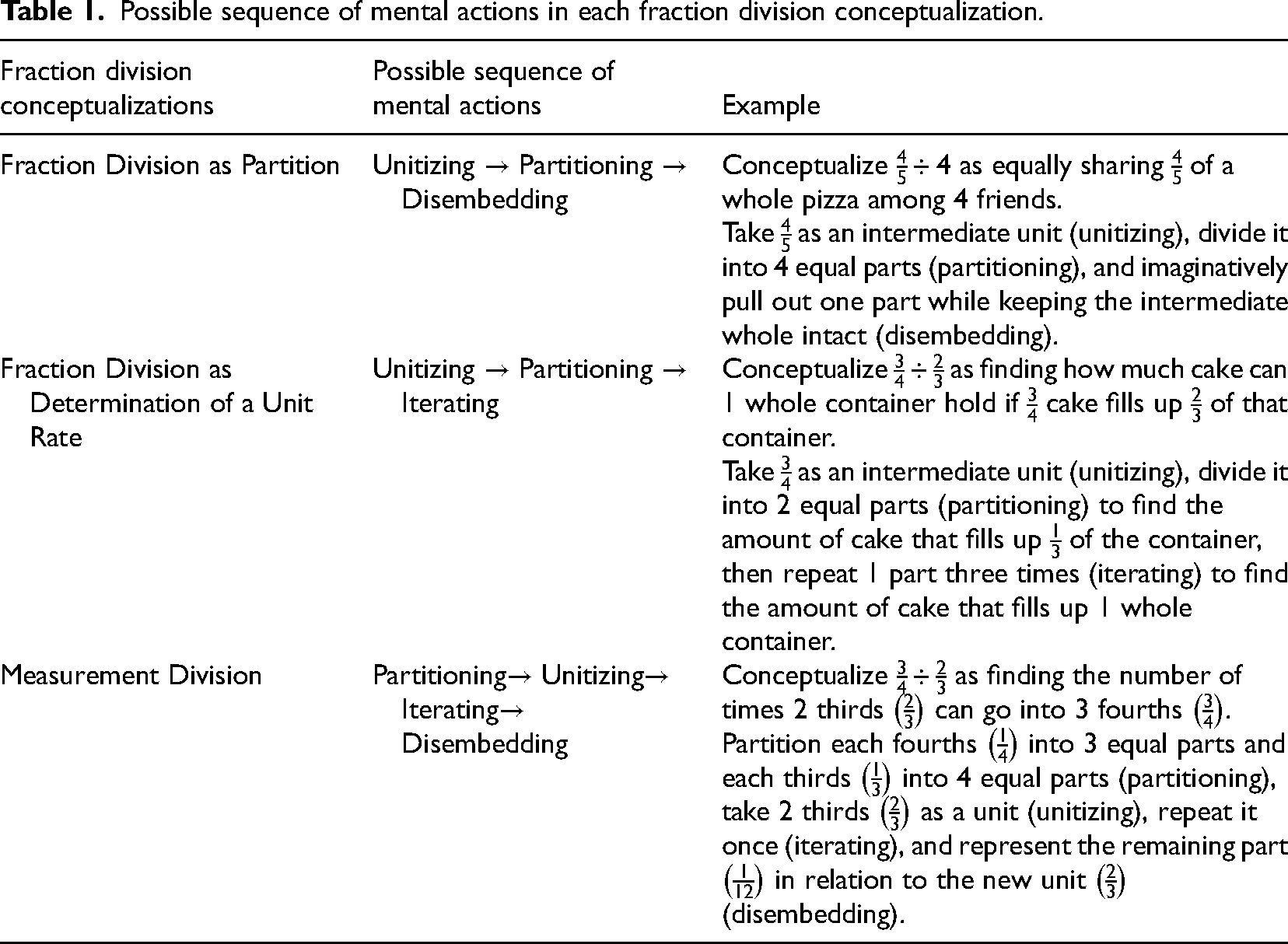
Possible sequence of mental actions in each fraction division conceptualization.
Given the importance of mental actions such as unitizing, partitioning, iterating, and disembedding in different conceptualizations of fraction division, it is important to consider the mental actions that are supported by GeoGebra applets for fraction division.
It has been agreed that mathematical objects such as fractions cannot be directly perceived or observed with instruments, and access to mathematical objects is bound to the use of a system of semiotic representations that allows them to be designated (Goldin, 1998; Duval, 2006). The characteristic feature of mathematical activity is the possibility of changing from one representation to another at any moment or the simultaneous mobilization of at least two semiotic representation systems. As Duval (2008) points out, “there is no mathematical thinking without using semiotic representations to change them into other semiotic representations” (p. 39). Therefore, semiotic representations and their transformations are at the heart of mathematical activities. According to Duval (2017), each semiotic representation consists of three components, namely, the represented object, the content of a representation (i.e., the content from an object represented in a particular representation), and the way it is represented (i.e., the mode of representation). When working with a mathematical representation, it is important to consider the following questions: What is the represented world? What is the representing world? What aspects of the represented world are represented? What aspects of the representation are doing the representing? What is the correspondence between the two worlds? (Kaput, 1985). For instance, fractions (i.e., the represented world) can be represented by circles (i.e., the representing world). Typically, it is the area of a circular sector in relation to the area of the circle rather than other characteristics (e.g., perimeter or size of a circle) that is doing the representation. What is represented is the part-whole relationship rather than other conceptualizations of a fraction. The correspondence is established based on the relationship between the magnitude of a fraction and the area of a circular sector in relation to the area of the circle.
Since a single representation can only emphasize some properties of a mathematical object, multiple representations are usually necessary to develop an appropriate concept image. Indeed, abundant theoretical work (e.g., Ainsworth 2006; National Research Council, 2006) and empirical work (e.g., Davis & Maher, 1997; Hegedus & Kaput, 2007) have supported that the use of multiple representations enables students to develop a deeper understanding of mathematical concepts, relationships, and problem-solving, especially when students are supported to make sense of each single representation and to make connections between different representations (Rau & Matthews, 2017; Renkl et al., 2013). The affordance of creating and manipulating linked dynamic multiple representations has been identified as a key benefit of technology (Zbiek et al., 2007). The use of linked dynamic multiple representations has the potential to not only build deep conceptual understanding but also help overcome the limitation of any single representation system to show important aspects of the mathematical ideas to be learned—especially the dynamic aspects.
In the mathematical domain of fraction division, representations that model the process of division may include but are not limited to set models (i.e., the whole is understood to be a set of objects and subsets of the whole consist of fractional parts, such as pictures of familiar objects and dots), area models (i.e., fractions are represented as parts of an area or region of a shape, such as circles, rectangles, and grids), length models (i.e., a fraction is identified as being a particular distance from the “start” of the whole, such as fraction bars and number lines), numerals (i.e.,
To support students in developing a rich and robust understanding of fraction division, it is important to provide them with the opportunity to work with fraction division constructs (e.g., partition unit, referent units, and whole) via mental actions on representations (e.g., unitizing, partitioning, disembedding, iterating, and splitting) and reflective abstraction of those actions, to utilize multiple representations of the same fraction division conceptualization to observe isomorphic transformations between representations and to utilize multiple representations of the different conceptualizations of fraction division. Figure 1 illustrates three conceptualizations of fraction division in two different representations (i.e., rectangles and number lines). As shown in Figure 1, different representations can emphasize different aspects of a particular conceptualization of fraction division, and the same representation can show different conceptualizations of fraction division. The development of an appropriate multi-faceted concept image of fraction division requires the integration and connection of multiple representations and conceptualizations. In particular, fostering students’ abilities to connect the standard algorithm for fraction division with actions taken on appropriate visual representations can play an important role in developing a conceptual understanding of fraction division.
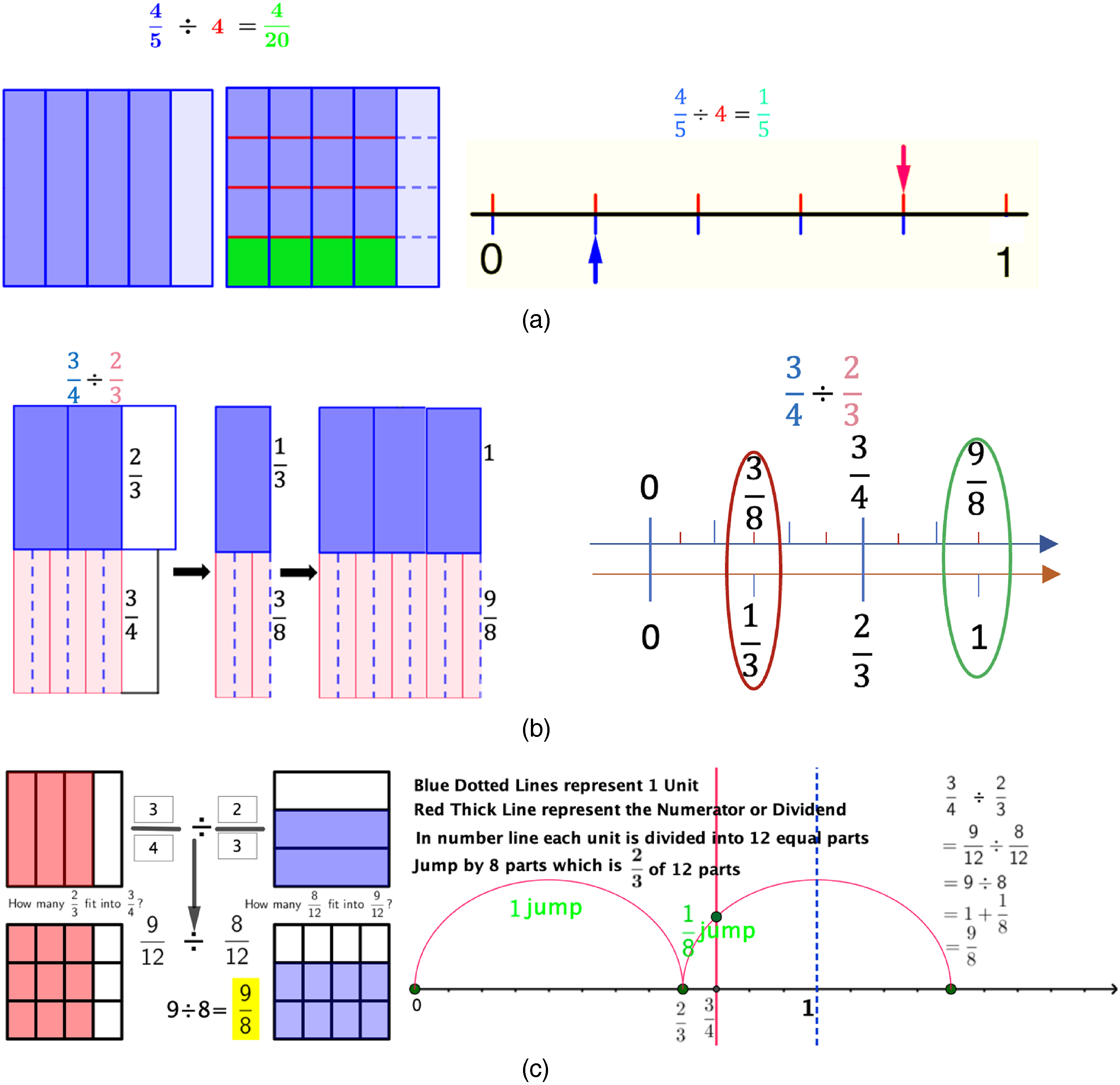
Three conceptualizations of fraction division in different representation systems. (a) Fraction division as partition in two representation systems. (b) Fraction division as determination of a unit rate in two representation systems. (c). Fraction division as measurement in two representations.
Informed by the relevant literature on fraction division, the current study aimed to answer the following questions:
What representations are used in the GeoGebra applets for fraction division? What conceptualizations of fraction division are used in the GeoGebra applets for fraction division? To what extent the conceptualizations of fraction division in the GeoGebra applets differ by representations and types of fraction division? What cognitive actions are supported by the GeoGebra applets for fraction division?
Methodology
Data collection
GeoGebra applets for fraction division were collected from two sources. First, on August 21, 2023, the keywords “fraction division” and “dividing fractions” were typed into the built-in search engine provided by the GeoGebra community resources cloud service (https://www.geogebra.org/materials), which resulted in 156 and 44 outputs, respectively. Data Miner (https://dataminer.io), which is a Google Chrome Extension and Edge Browser Extension that helps its users crawl and scrape data from web pages and export the data into a CSV file or Excel spreadsheet, was used to collect the names and URLs of the GeoGebra applets. After combining the results from the two searches, 11 files were first removed due to identical URLs. Second, a set of GeoGebra applets for fraction division was identified from a larger raw dataset of GeoGebra applets for fractions that were used to investigate the conceptualizations and representations of fraction concepts and their operations in the existing resources on the GeoGebra website. The GeoGebra fraction applets in the larger dataset were collected in two ways. First, the keyword “fraction” was typed into the built-in search engine provided by the GeoGebra community resources cloud service. Second, fraction applets were also identified through the organization chart on the GeoGebra (https://www.geogebra.org/t/fraction). 1054 GeoGebra applets were left in the larger dataset after initial data cleaning, of which 84 GeoGebra applets were likely about fraction division as their names included the word “division.” After combining the results from the two sources, 57 files were first removed due to identical URLs. Among the remaining 216 files with unique URLs, 20 applets were in languages other than English, 75 applets were not on fraction division (e.g., modeling division
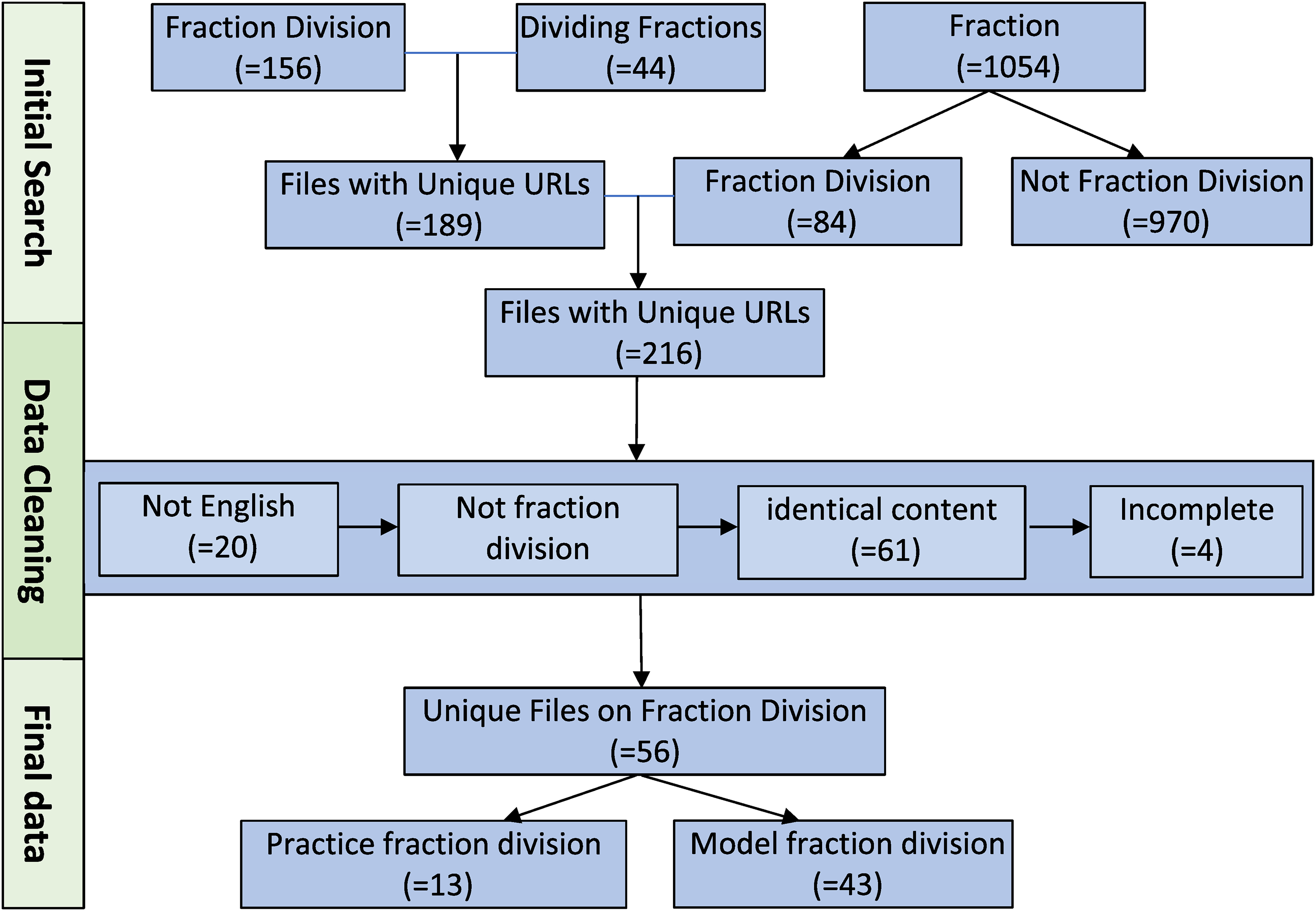
Data collection and cleaning process.
This study used a quantitative descriptive method to understand the characteristics of the 43 GeoGebra applets on fraction division. When analyzing each applet, we considered the conceptualization of fraction division that the applet was based upon, the representation that was used in the applets, and the cognitive actions associated with fraction division that the applet could support. We also considered the type of fraction division being modeled, as it can influence the conceptualization used. For instance, the conceptualization of fraction division as partition is efficient (only) in situations where the divisor is a whole number. Therefore, applet designers might tend to base their applets on this conceptualization when they intend to explain situations where a fraction is divided by a whole number. The types of fraction division include a fraction divided by a whole number
We use one applet (https://www.geogebra.org/m/FAZftQ5x), a screenshot of which is shown below (Figure 3), to illustrate our coding. The applet models “a whole number divided by a fraction”
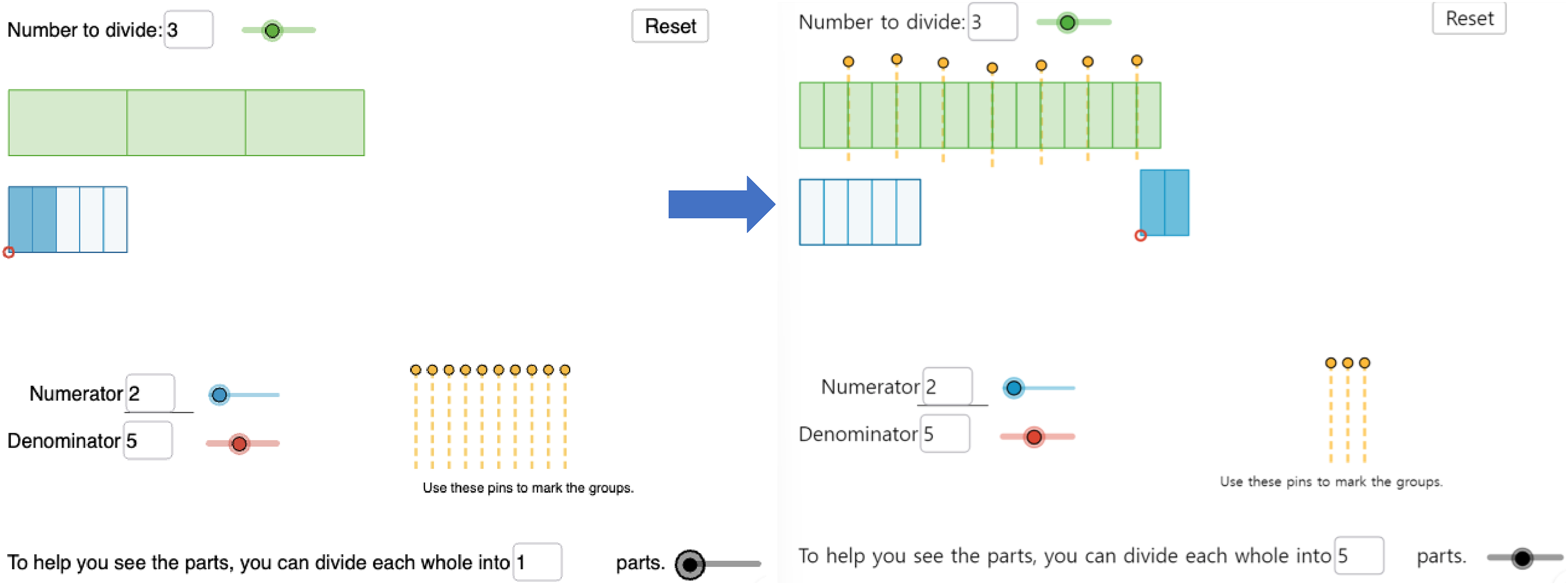
A screenshot of a GeoGebra applet for fraction division.
Representations of fraction division in the GeoGebra applets
As shown in Figure 4, a notable number of applets used the length model (n = 19) and the area model (n = 19) to convey their respective conceptualizations of fraction division. Among the 19 applets using the length model, only one utilized the number line, while the remaining 18 applets used a fraction bar. In the case of the area model, 10 applets used a rectangular area model, while the remaining 9 applets opted for a circular area model. 5 out of the 43 applets provided numerical or algebraic procedural explanation without incorporating any visual representations.
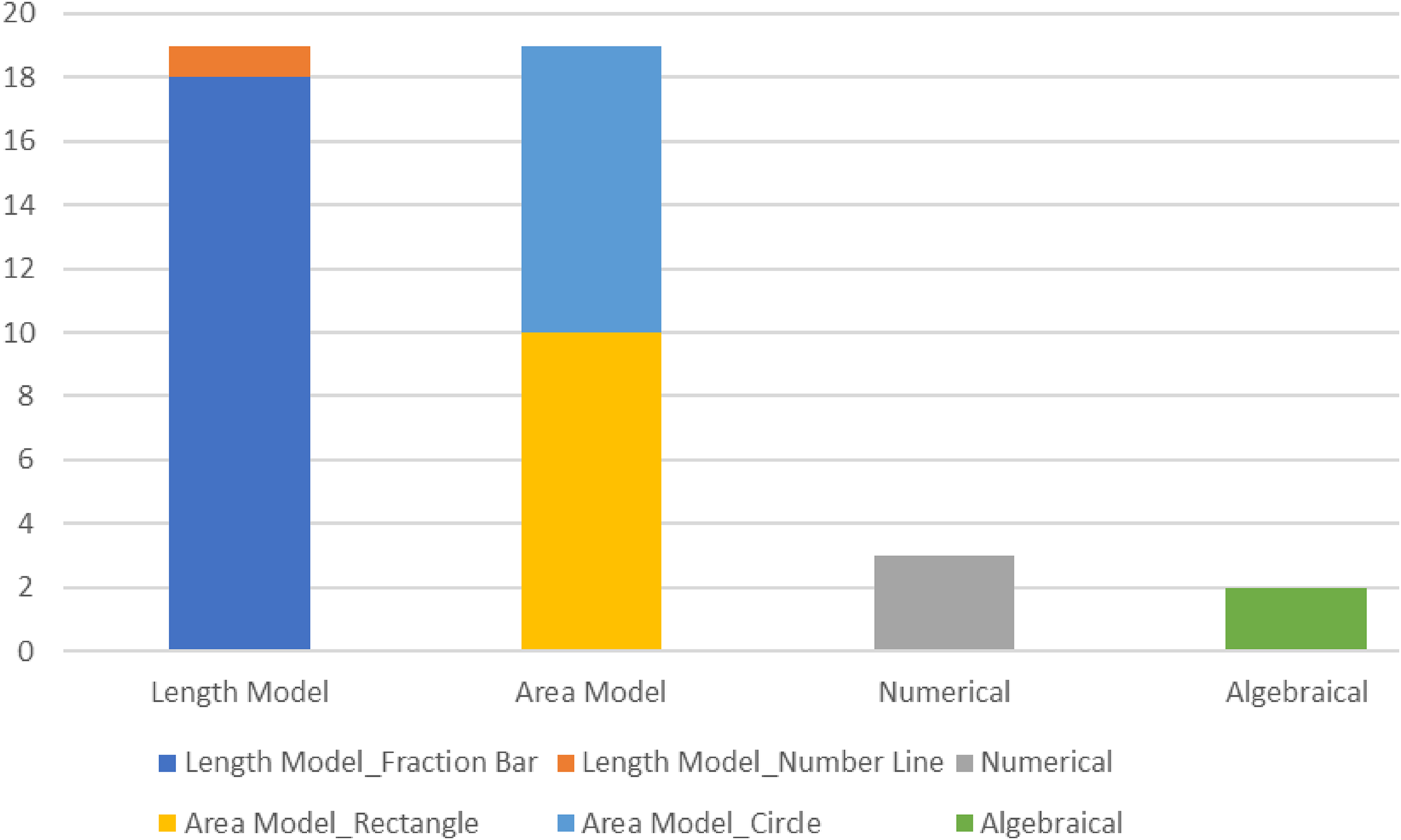
Representations used in the GeoGebra applets for fraction division.
As shown in Figure 5, among the 43 GeoGebra applets designed to model fraction division, 67% (31) of the applets adopted the conceptualization of fraction division as measurement. The remaining conceptualizations were distributed fairly evenly, with 9% (4) applets framing fraction division as determination of a unit rate, 11% (5) as partition, and 13% (6) as the inverse operation of multiplication. There were a small number of applets (n = 3) that integrate two conceptualizations.
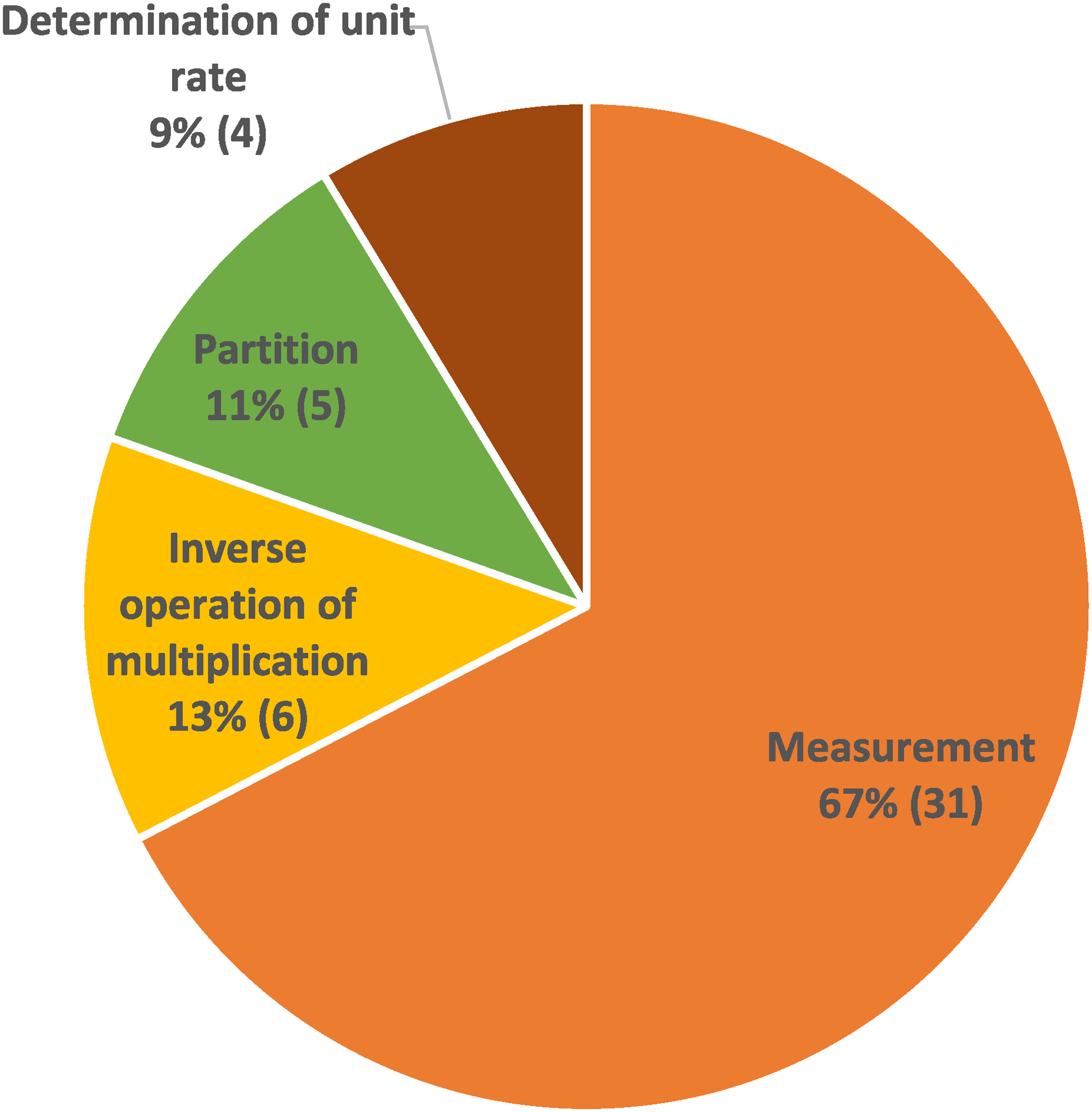
Conceptualizations of fraction division in the GeoGebra applets.
Among the 43 applets, 28 modeled “a fraction divided by a fraction”
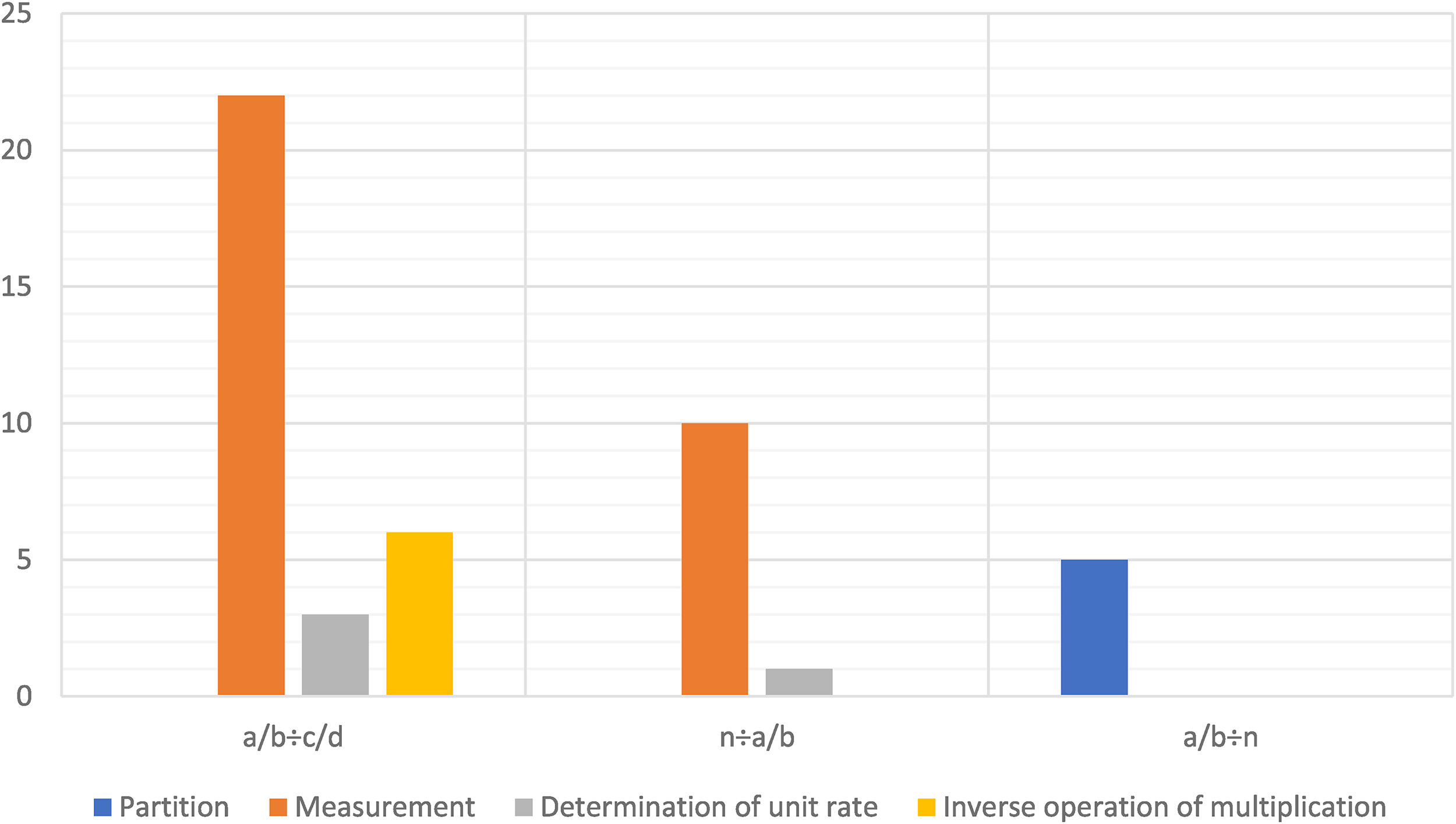
Fraction division conceptualizations by types of fraction division.
A cross-analysis of the use of conceptualizations and representations revealed several noteworthy patterns. As shown in Figure 7, the use of the length model was preferred in the conceptualizations of fraction division as measurement and fraction division as the determination of unit rate. Specifically, among the 31 applets that used the measurement interpretation, the length model was used in 17 instances (16 use fraction bar, and 1 uses number line), followed by 12 instances of area models (6 rectangular, 6 circular). However, in contrast to that, all 5 applets that conceptualized fraction division as partition exclusively used the area model, with 3 instances of the rectangular area model and 2 instances of the circular area model. When fraction division was interpreted as an inverse operation of multiplication, although the length model was not used in any of the 6 applets, there was no distinct preference identified in the use of the other three representations.
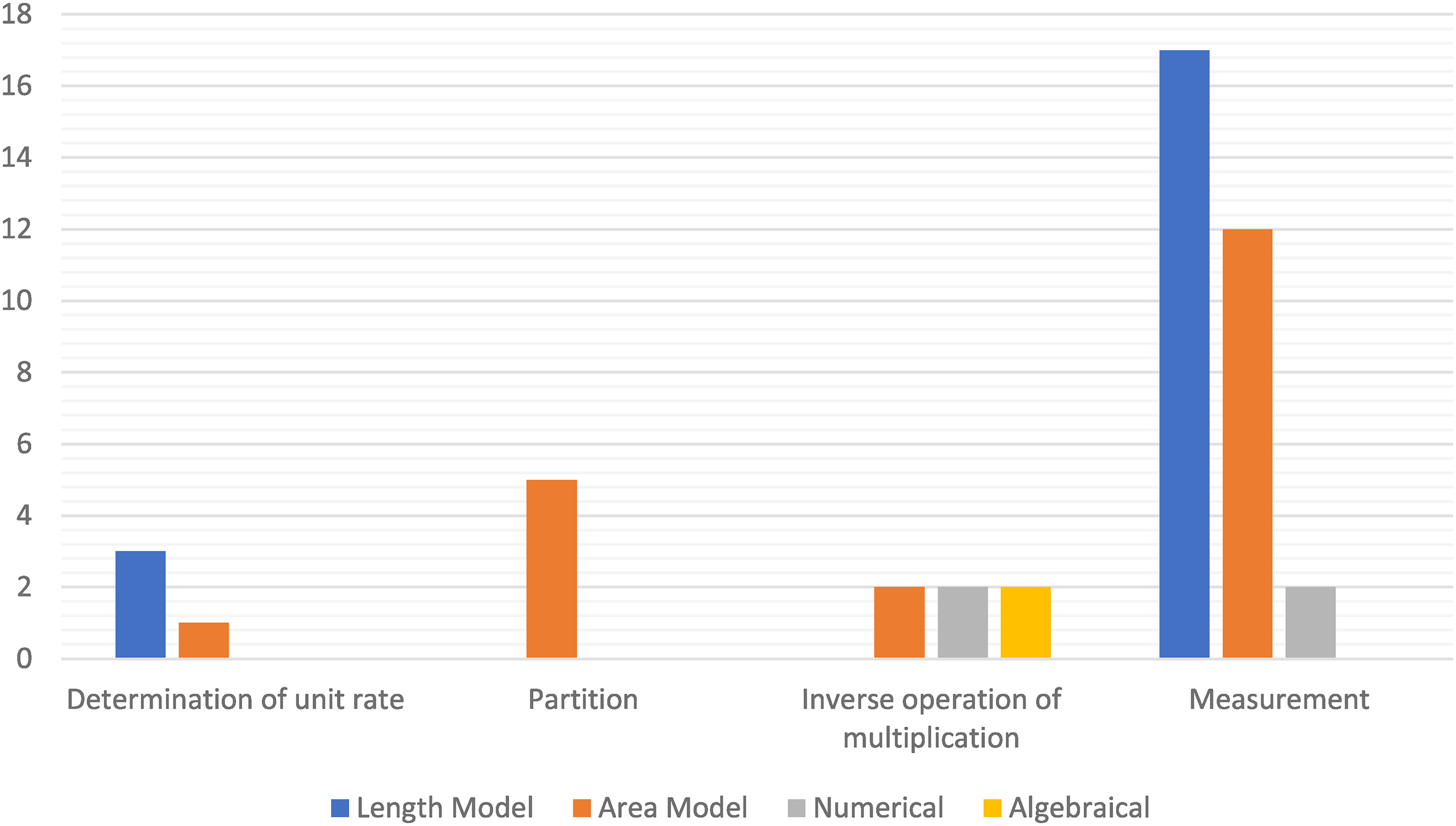
Representations used in each conceptualization.
As shown in Figure 8, among the analyzed applets, 70% (30) applets showcased the action of partitioning, providing a visual representation of the fraction division process without allowing users to execute the partitioning action. Similarly, 42% (18) applets demonstrated the action of unitizing, while 32% (14) applets and 5% (2) applets illustrated the process of iterating and disembedding, respectively.
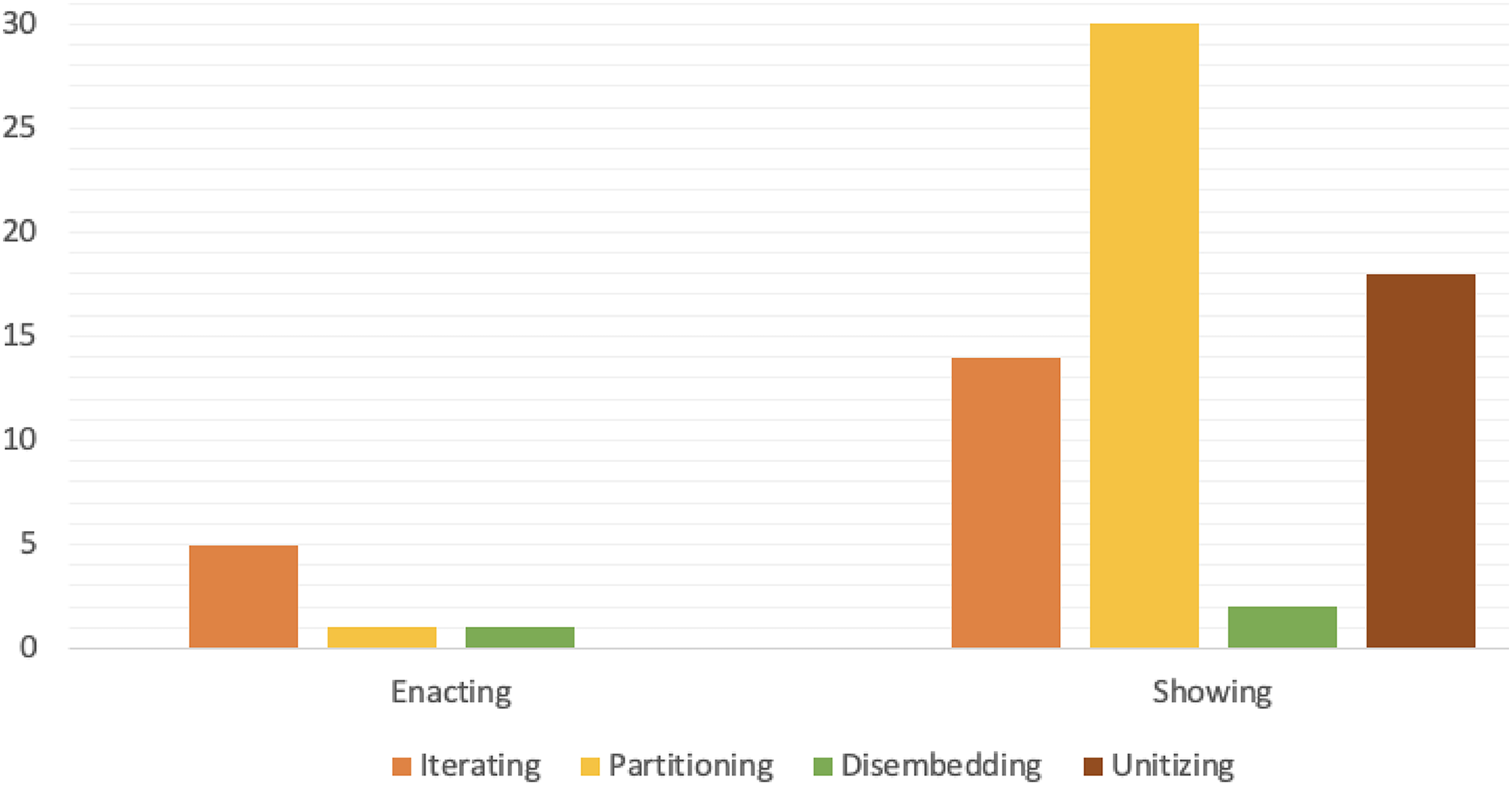
Cognitive actions supported by the GeoGebra applets for fraction division.
Only a small number of applets allowed their users to enact some of the mental actions associated with fraction division. More specifically, as shown in Figure 8, only 11.6% (5) applets allowed their users to iterate a fraction, only 2.3% (1) applet allows its users to partition a fraction, and only 2.3% (1) applet allowed its users to enact the action of disembedding. None of the applets allowed the users to enact the action of unitizing. The results in Figure 8 revealed that many applets included visual clues to demonstrate some mental actions related to fraction division without allowing their users to enact those mental actions in the applets.
The results offer valuable insights into the conceptualizations and representations used in the GeoGebra applets for fraction division, which could inform the choice and design of GeoGebra applets for fraction division. One noteworthy observation is the underutilization of the number line in the GeoGebra applets for fraction division, despite its advocated superiority in various studies (Sidney, Thompson & Rivera, 2019; Hamdan & Gunderson, 2017). While the number line is argued to align well with the measurement conceptualization of fraction division, its scarcity in the analyzed applets suggests a gap in its integration. This might be due to the contradictory facts that the number line is more abstract and cognitively demanding as compared to other visual representations, yet fraction division is usually taught to young students in Grade 5. This also indicates that educators and applet designers may still need to fully explore how the number line can be used to support different conceptualizations of fraction division. Future design of GeoGebra applets for fraction division may consider utilizing the number line to model different conceptualizations of fraction division.
Furthermore, the findings illustrate the popularity of the use of the length model (i.e., fraction bar) to represent the measurement interpretation of fraction division and the use of the area model (both circular and rectangular representations) to represent partition interpretation of fraction division. This may be partially attributed to the common representations that are typically associated with different conceptions of fractions. While area models such as circles and rectangles are often used to highlight the action of equal partitioning, length models such as fraction bar and the number line are often used to underline the action of iterating. Since the partition interpretation does not necessitate the cognitive action of “iterating,” there is no specific need to use a length model, as an area model is more than enough to enable the cognitive actions of “partitioning” and “unitizing.”
It is evident from the findings that the conceptualization of fraction division as measurement is more prominent than the other conceptualizations. This might be partially attributed to the promotion of measurement conception of fractions by the mathematics education research community and curriculum standards. There is no doubt that the conceptualization of fraction division as measurement can support students in developing a conceptual understanding of fraction division and the common denominator algorithm for fraction division, which might make more sense for many students than the invert-and-multiply algorithm for fraction division (Van de Walle, Karp, & Bay-Williams, 2022). However, the dominance of measurement interpretation of fraction division in the analyzed applets also raises concerns about the underrepresentation of other conceptualizations of fraction division. Working with different conceptualizations of fraction division enables students to not only develop a rich and robust understanding of fraction division but also connect fraction division with other mathematical ideas. For instance, developing an understanding of fraction division as the determination of unit rate not only allows students to see how fraction division as partition can be extended to a fraction divided by a fraction but also provides them with an opportunity to use and deepen their understanding of ratio and proportional reasoning. Therefore, the design and choice of GeoGebra applets for fraction division should provide students with opportunities to learn multiple conceptualizations of fraction division to foster a rich and robust understanding of it.
Dick (2008) proposed a method of evaluating digital tools and resources for their pedagogical, mathematical, and cognitive fidelity, claiming that high levels of fidelity in these areas are necessary for a significant impact on student learning. The notion of cognitive fidelity indicates that digital tools and resources for mathematics teaching and learning should reflect students’ cognitive actions with an emphasis on illuminating mathematical thinking processes rather than simply arriving at the final results. A GeoGebra applet with high cognitive fidelity to fraction division should not only demonstrate but also enable its users to enact the mental actions associated with fraction division. However, the results from this study show that most existing open-access GeoGebra applets for fraction division provide their users the opportunity to visualize the process of fraction division but not the opportunity to enact the mental actions associated with fraction division. This might be attributed to the emphasis on visualization and teacher-centered use of technology, in which students are positioned to see, listen, and watch digital information rather than actively act on mathematical objects on the screen. Future design of the GeoGebra applets for fraction division might consider enhancing the cognitive fidelity of the GeoGebra applets for fraction division by enabling students to enact essential mental actions associated with fraction division.
Limitations
This study only analyzed the characteristics of the GeoGebra applets for fraction division as they were designed and did not consider the applet authors’ levels of expertise in using GeoGebra experience, the goals and objectives of the authors, the targeted grade level and student population, and so on. We also did not consider the implementation of these applets. The differences between intended and enacted applets are similar to those between the written and the enacted curricula. We recognize that a teacher might modify or add additional features to an existing applet, and therefore change the characteristics of the applet. Moreover, even though teachers might use an applet without modification, they might use it as a supplement to their instruction and add different types of scaffolding to the applet to meet their instructional needs. Therefore, the results from this study are only limited to the applets themselves and should not be generalized to their implementation.
Conclusion
Although dynamic mathematical software programs such as GeoGebra make it easy for their users to create and share digital applets with interactive and dynamic features, the quality of these applets is less clear. This study aimed to examine the quality of the GeoGebra applets for fraction division by attending to the conceptualizations, representations, and cognitive actions prevalent in these digital resources. The results reveal that a majority of the existing applets conceptualize fraction division as measurement while other conceptualizations of fraction division are underrepresented. Among the various representations used, the fraction bar and area models are the predominant choices, with the number line representation being notably less prominent. This observation raises important questions about the underutilization of the number line representation, given its theoretical advantages highlighted in prior research. The results from this study also shed light on the cognitive actions supported by GeoGebra applets. Although most applets attempt to visualize the process of fraction division, there are very limited opportunities in most applets for users to enact mental actions associated with fraction division, such as partitioning, unitizing, iterating, and disembedding. These results not only increase our understanding of the affordances and limitations of existing applets for fraction division so that we can become more intentional in our choice of them but also inform the design of new applets that support students’ development of a rich and robust understanding of fraction division. Such a contribution is important because it moves beyond the dynamic and interactive features of digital applets and focuses on what they actually can or cannot afford and how they can be improved in terms of supporting the teaching and learning of fraction division. This type of content-specific analysis of GeoGebra applets can enhance our understanding of teaching and learning mathematics with technology at a very fine-grained level.
Footnotes
Contributorship
Xiangquan Yao contributes to conceptualization of the study, review of related literature, development of the methods, data collection and analysis, and manuscript writing. Jiexin Gan contributes to review of related literature, data analysis, and manuscript writing.
Declaration of conflicting interests
The authors declared no potential conflicts of interest with respect to the research, authorship, and/or publication of this article.
Funding
The authors received no financial support for the research, authorship, and/or publication of this article.
Informed consent
No human subjects or animals were used in this research.
