



Abstract
In our educational institution, despite significant progress in educational achievements, there is a prevalent issue of mathematics lessons focusing on rote memorization and superficial understanding, leading to learner dissatisfaction. This study presents a research project conducted by a group of five individuals, including myself as a teacher researcher and four other teachers. The project aimed to address this issue by employing a participatory action research approach. Through innovative planning, teaching, and evaluation methods, the research group successfully demonstrated how making mathematics more relevant and meaningful can increase student engagement and agency. The collaborative nature of the group fostered self-awareness among the teacher researchers regarding social justice issues within their mathematics classrooms. The research project highlighted the potential of mathematics as a powerful tool for developing students’ understanding of social justice issues and establishing meaningful connections between these issues and mathematical concepts. Importantly, the project emphasized the significance of student agency, showcasing how collaborative and problem-solving approaches to teaching, coupled with student autonomy in selecting issues to explore and mathematical procedures to apply, can contribute to the development of student agency.
Introduction
Mathematics education taught from a social justice perspective prioritizes the promotion of access, participation, and advancement in an equitable manner. By adopting fair teaching practices, educators can systematically integrate social justice principles, such as maintaining high expectations for all students, providing comprehensive and relevant mathematical content, and fostering strong community relationships. This approach aims to create a positive learning environment that enhances both learning and achievement levels. Teaching mathematics through a social justice lens addresses the inherent challenges of power dynamics, privilege, and oppression within the current unjust education system and society at large (Panthi et al., 2018).
Teaching mathematics for social justice identifies two pedagogical goals: (1) high-quality mathematics instruction for all students, and (2) mathematics study facilitates the development of sociopolitical consciousness and praxis. When implementing social justice teaching in mathematics, the goal is not only to foster equity within the classroom but also to empower students to recognize and address inequalities beyond the confines of their mathematical education. This approach, often referred to as “social justice math”, aims to equip students with the knowledge and skills to understand and confront societal inequities (Harrison, 2015).
This paper argues against accepting the current state of most classrooms as sufficient for achieving the pedagogical goals mentioned earlier. In order to tackle this issue, teachers must explore alternative approaches that directly address matters of equity, fairness, and social justice. The report is based on a participatory action research project that involved mathematics teachers who were willing to improve their teaching and learning practices while addressing social justice issues. It highlights the teaching experiences of these educators and demonstrates how the development of their thinking and classroom practices can have implications for others involved in mathematics education.
This study aimed to explore how teachers perceive the concept of teaching mathematics through a social justice lens. It also specifically focused on incorporating social justice principles into mathematics education to provide alternative approaches for promoting equity. The paper discusses strategies for improving the current state of mathematics classrooms and developing alternative teaching and learning methods that address issues of equity, fairness, and social justice. It presents findings from a research project in which mathematics teachers willingly participated and implemented some of these ideas in their practice. The paper highlights the teachers’ experiences and explores how their development of thinking and classroom practices can impact others involved in mathematics education.
Research purpose
The overarching purpose of this research is to enhance the relevance and effectiveness of mathematics education by promoting critical thinking, social awareness, and student empowerment to address societal issues within inclusive classroom environments. This research also aims to assess the effectiveness of these educational strategies, provide valuable insights for teaching practices, and investigate their long-term impact. In pursuit of these objectives, the research seeks to answer the following key questions:
How do teachers conceptualize and integrate the notion of social justice within their classroom settings? How can teachers further refine their understanding of social justice through the implementation of a well-designed professional development model? What innovative approaches do teachers develop and implement to align mathematical educational goals with social justice objectives?
Literature review
What is mathematics?
The term mathematics is derived from two Greek words “Manthanein” which means “learning” and “Techne” which means an “art” (or) “technique”. Therefore mathematics means the art of learning related to disciplines (or) facilities. The dictionary meaning of mathematics is: “It is the science of number and space” or “The science of measurement, quantity and magnitude.” According to a new English dictionary, “Mathematics in a strict sense is the abstract science which investigates deductively the conclusions implicit in the elementary conception of spatial and numerical relations.” All the above shared definitions showed real-life connections of this subject and also gave an idea of how it can be used to deal with issues like equity and equal distribution of resources in the society. Furthermore, there exist tangible instances showcasing the practical application of mathematics in the pursuit of social justice. These instances encompass the utilization of mathematical analysis to pinpoint disparities in education linked to factors such as race, socioeconomic status, or gender. This analytical approach serves as a foundation for shaping policies aimed at diminishing educational inequalities. Mathematics also plays a pivotal role in economic analysis and the allocation of resources, contributing to the realization of a more equitable society. Let's delve into how mathematical modeling serves as a valuable asset in tackling healthcare disparities and ensuring a fair distribution of resources in the realm of public health. These examples underscore how mathematics serves as a pragmatic tool for scrutinizing data, distributing resources equitably, and facilitating well-informed decision-making to address social justice concerns across various sectors of society.
Social justice plays a significant role in society as it is intertwined with every aspect of societal activities. It is crucial for teachers to grasp the true essence of social justice and understand its implications. As change agents, teachers are in a prime position to cultivate awareness of social justice within their classrooms. However, it is essential to reflect on whether teachers themselves possess this awareness. If not, steps must be taken to address this situation.
In a recent study by Álvarez (2019), it was argued that social justice entails the fair distribution of resources and equitable treatment of all students. This includes creating an environment where students feel both physically and psychologically safe and secure.
Concept of social justice
This study adopts a conceptualization of teaching mathematics for social justice based on the ideas of Skovsmose (2006) and Gutstein (2005), as outlined by Wright (2015, p.27). The conceptualization includes the following elements:
Utilizing collaborative, discursive, problem-solving, and problem-posing pedagogies to engage learners with mathematics Recognizing and incorporating learners’ real-life experiences to highlight the cultural relevance of mathematics Promoting mathematical inquiries that enable learners to gain a deeper understanding of their social, cultural, political, and economic contexts Facilitating mathematical investigations that empower learners to take part in social action and actualize their potential Developing a critical understanding of the nature of mathematics and its role and significance in education and society
In this study, these principles guide the approach to teaching mathematics from a social justice perspective.
Teaching mathematics for social justice
This study aimed to develop conceptualization of teaching mathematics for social justice, to get a structure of how and what we can achieve by doing so. This research is based on the idea of Freire's notion of “critical education”, which advocates the liberation of learners and the development of critical citizenship (Skovsmose, 2012), and premise mathematics education can and should play a role in addressing problems faced by our society, including growing inequality, human rights abuses, and unsustainable economic growth (Cotton, 2013).
When I examine the work of teaching social justice, its traces lead us to the work of Paulo Freire's Pedagogy of the Oppressed (Freire, 1970/2000). Freire's analyses of issues of power and oppression, agency and alienation, and the inequitable distribution of resources and opportunities are profound. His foundational text offers threads of a theory of critical pedagogy and a language one can use to articulate the purposes of public education in the context of the myriad inequities and injustices faced by students, their families, and their communities. A second thread is Freire's concept of praxis, which refers to “the action and reflection of men and women upon their world in order to transform it” (Freire, 2000, pp. 71–86).
When I analyze the efforts of Gutstein (2006), two of the most central points are visible that students develop both critical consciousness and mathematical competencies, and there is also the view that these two areas of learning need to be dialectically interwoven by both teachers and students in a conscious manner. That is, mathematics should be a vehicle for students to deepen their grasp of the sociopolitical contexts of their lives, and through the process of studying their realities—using mathematics—they should strengthen their conceptual understanding and procedural proficiencies in mathematics. One of the principal ways for teachers to support students in moving toward these interconnected goals is for the students to engage in mathematical investigations in the classroom of specific aspects of their social and physical world (“Rethinking mathematics: Teaching social justice by the numbers,” 2006).
According to Skovsmose (2011), if educational practice and research are to be critical, they must address conflicts and crises in society. He further explained that a critical mathematics education should include reflecting practice and learners should be engaged in such activities which are engaging them in inquiries in which they pose their own questions and make their own decisions, while working in collaboration with others. They should reflect mathematics by using it as a means to develop their understanding of a range of social, cultural, economic, and political issues. They should reflect on mathematics by realizing its nature and its effectiveness in an appreciative way and how it can be used to make and justify decisions affecting their lives.
Social justice in math education advocates for fairness and inclusivity, combating negative assumptions about certain student groups’ math capabilities based on factors like race, gender, or socioeconomic background. The goal is to eliminate the use of math as a gatekeeper, where standardized tests categorize and segregate students by race, class, or gender from an early age, perpetuating educational inequalities. Past research highlights this inequity, prompting the need for change in math education. The research aims to create an environment where all children feel safe and secure participating in math activities connected to real-world events. Addressing the gatekeeper issue requires a comprehensive approach involving policy reforms, diverse curricula, teacher training, early support programs, community engagement, alternative assessment methods, ongoing research, advocacy, and collaboration among stakeholders. These measures work toward promoting equity, inclusivity, and equal opportunities in math education for all students, regardless of their background.
In Dr. Bev Caswell's recent article, “5 ways to explore social justice through mathematics,” the importance of teaching math for equity and social justice is highlighted. Mathematics is often viewed as a subject that can either enable or hinder opportunities for students. Caswell stresses the significance of offering multiple entry points and respecting diverse ways of understanding to empower students and enhance their success in math. By infusing social justice issues into math lessons, students can gain both mathematical and political knowledge, fostering informed citizenship in a democratic society. The article also provides resources and activity examples that integrate math and social justice to create inclusive spaces for students to engage authentically in mathematics (Caswell, 2020).
Student agency
Empower students to take ownership of their learning. Encourage them to ask questions, explore mathematical ideas, and advocate for change. Learner agency teaches students that their actions can create positive impact (Pichel, 2020).
Incorporating social justice into math class requires considering curriculum alignment, relevance, and authenticity. Make interdisciplinary connections, include diverse perspectives, and adapt content to students’ age and maturity. Promote inclusivity, use hands-on activities, encourage critical thinking, and involve students in topic selection. Assess both mathematical understanding and real-world application, and involve the community or experts. Invest in teacher professional development, and be open to feedback. Mind ethical considerations, continuously update content, and foster a respectful and empathetic classroom environment to promote critical thinking and real-world problem-solving with math.
Education in Pakistan
The National Curriculum Framework for School Education in Pakistan, developed in 2018, outlines the vision, principles, goals, and standards for school curricula. It is based on Pakistan's Constitution, the National Education Policy 2017, and Vision 2025. Key features include defining learning outcomes, integrating subjects like STEM, emphasizing diversity, ensuring educational quality, and supporting teacher professional development. This framework promotes inclusive and holistic education aligned with national and international standards.
The Single National Curriculum (SNC) in Pakistan aims to provide uniform education, but obstacles like poverty, cultural barriers, gender disparities, and provincial rights issues hinder equal outcomes. Additional challenges include out-of-school children, inadequate teacher training, and funding shortages. The SNC is a positive step, but a comprehensive approach is required to address these challenges and ensure equal access to quality education for all children in Pakistan (Naqvi, 2021).
The framework provided by the government of Pakistan underscores the importance of achieving social justice in education. Despite constitutional rights and policies aimed at ensuring equity and justice in education, disparities in access to quality education and learning outcomes persist. Traditional math pedagogy lacks social and cultural relevance and does not encourage critical thinking. Challenges include overcrowded classrooms, diverse student and teacher backgrounds, and limited resources. Gender, race, and socioeconomic disparities further worsen educational inequity. To combat these issues, teachers must reorient their approach, fostering an environment that supports inquiry-based learning, minimizes power imbalances, and integrates math into real-life contexts for meaningful learning. To enhance this section, let's incorporate specific examples of how social justice principles have been integrated into mathematics education within the Pakistani education system. Several public schools in Pakistan have adopted a social justice perspective in their mathematics curricula. For example, the Punjab government introduced a program to address educational inequalities, which includes curriculum adjustments to ensure that mathematics education is inclusive and equitable for all students. In the Pakistani context, there are schools that actively encourage student agency in mathematics classrooms. The Dawood Public School in Karachi, for instance, empowers students to take ownership of their learning by allowing them to propose and lead math-related community service projects. The Aga Khan University's Institute for Educational Development (AKU-IED) offers professional development programs for mathematics teachers in Pakistan. These programs emphasize the importance of teaching math with a social justice perspective, equipping educators to create more inclusive and equitable math classrooms. These concrete examples from Pakistan demonstrate the practical application of social justice principles in mathematics education, showcasing how it positively impacts students and teachers alike (Table 1).
A framework for incorporating social justice in the math classroom.
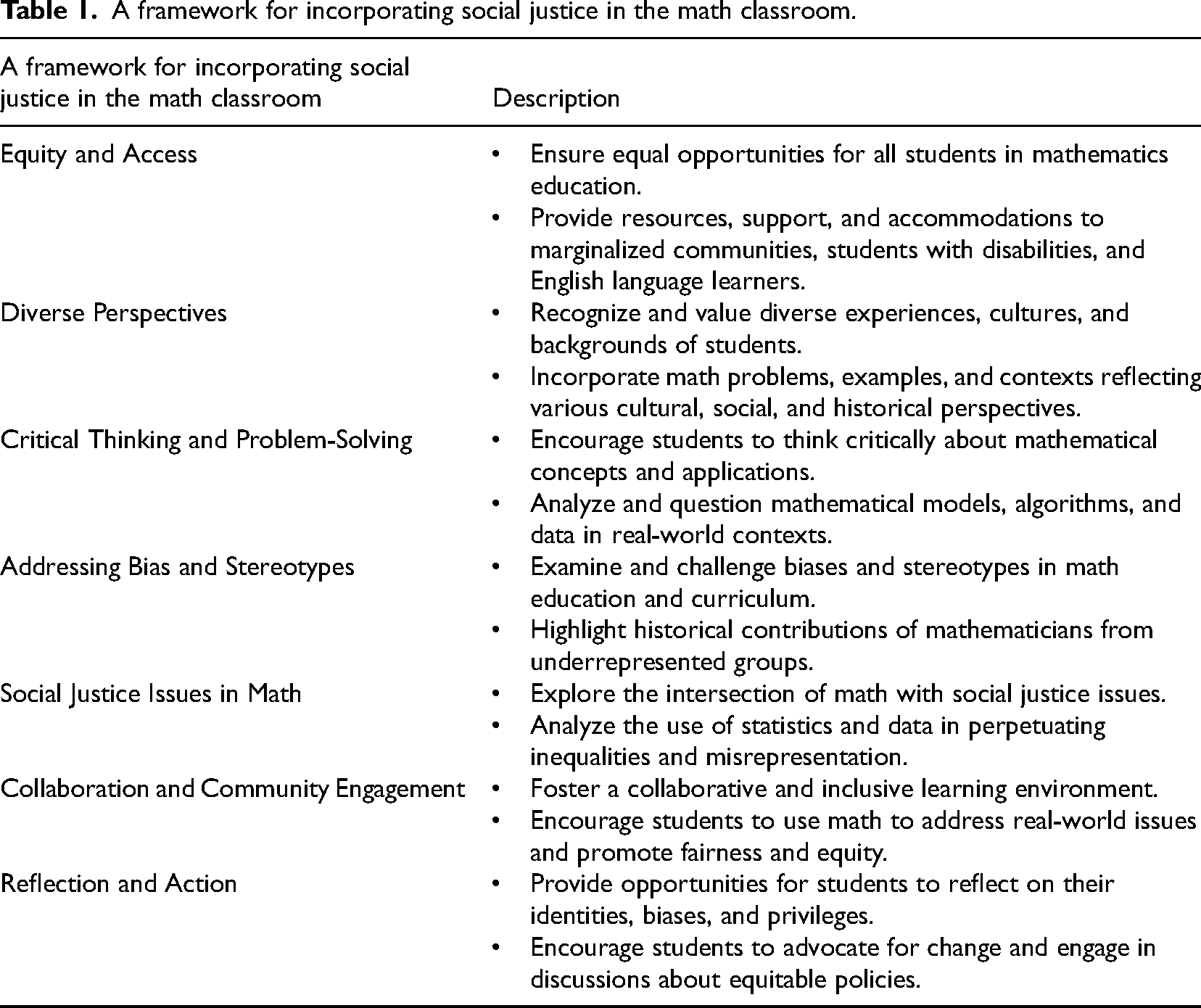
A framework for incorporating social justice in the math classroom.
In recent years, there's a growing focus on integrating social justice into education, even in math classrooms. The aim is to foster equity, inclusiveness, and critical thinking while confronting systemic inequalities and biases within the field of mathematics. This framework serves as a helpful guide for educators looking to incorporate social justice principles into their math lessons.
As implementing social justice in the math classroom is an ongoing process that requires continuous reflection, learning, and adaptation, it is essential to create a safe and inclusive space where students feel comfortable discussing sensitive topics and challenging existing structures. By integrating social justice principles into math education, you can help empower students to become critical thinkers and agents of change.
Research methodology
A participatory action research project involved a team comprising three mathematics teachers and one researcher (the author). The selection of teachers was based on their willingness and commitment to the project. The team conducted seven meetings, observed and taught three classroom lessons each during an academic session, and participated in three interviews at different project stages. Each team member maintained a research journal and prepared a summary report at the project's end.
The research group operated collaboratively, with the author organizing meetings and collecting ongoing research data. Teachers had autonomy in selecting teaching approaches and ideas for development, evaluating them, and engaging in group discussions. These ideas were implemented in their classrooms, with a focus on feedback from learners through assessment for learning tools. This framework aimed to foster a deeper understanding of the project's goals.
Research design
The design of the research project was based on the critical research model of participatory action research (Skovsmose & Borba, 2004). This model works on the grounds that not to accept the current situation of math classrooms as it is “given”, it gives attention to developing alternative options and emphasizes on creating imagined situations.
Research method
This model works on three main core areas which are critical pedagogy, practical organization, and explorative research.
Sampling size
The sample group comprises 80 students and four math teachers. I selected four classes of grades 5 and 6 from each grade level.
Sampling technique
I carefully selected four mathematics teachers who already possessed some understanding of social issues but were interested in effectively incorporating them into their classrooms and understanding the impact on student learning. These teachers expressed a strong desire to be involved in the research program and willingly agreed to be observed and interviewed. Their respective classes were chosen as sample groups for the study.
To gather insights into the teachers’ current understanding of teaching mathematics from a social justice perspective, I conducted an initial interview session. This session served as a fundamental data collection instrument for the research project.
Instruments for data collection
Teacher's observation checklist (Figure 1) was used for collection of data about their progress. This checklist serves as a guide, and teachers adapted it to fit their specific teaching context and student population. The goal is to create an inclusive and empowering math classroom that supports social justice and equitable learning opportunities for all students.
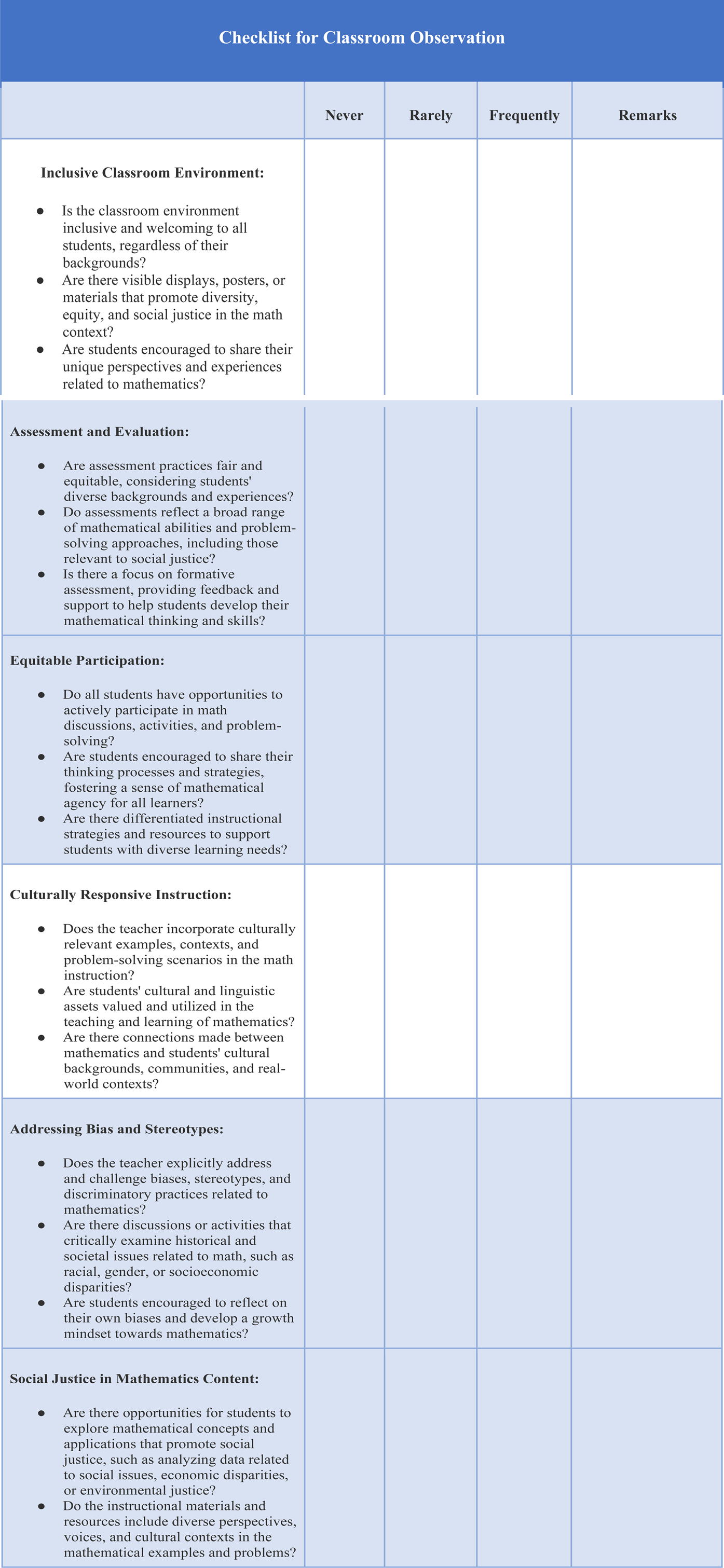
Checklist for classroom observation.
These documents are in use by lead teachers, academic coordinators, and headmistress for formal observations in classrooms. Learner's work was also analyzed by the math daily rubrics (Figure 2). Learners assessed themselves in the beginning of the unit; they referred back to it at the end of the unit to assess their performance. Learners used this rubric to self-assess their progress in integrating social justice in the math classroom. It encourages reflection, critical thinking, and active engagement in social justice issues within the context of mathematics.
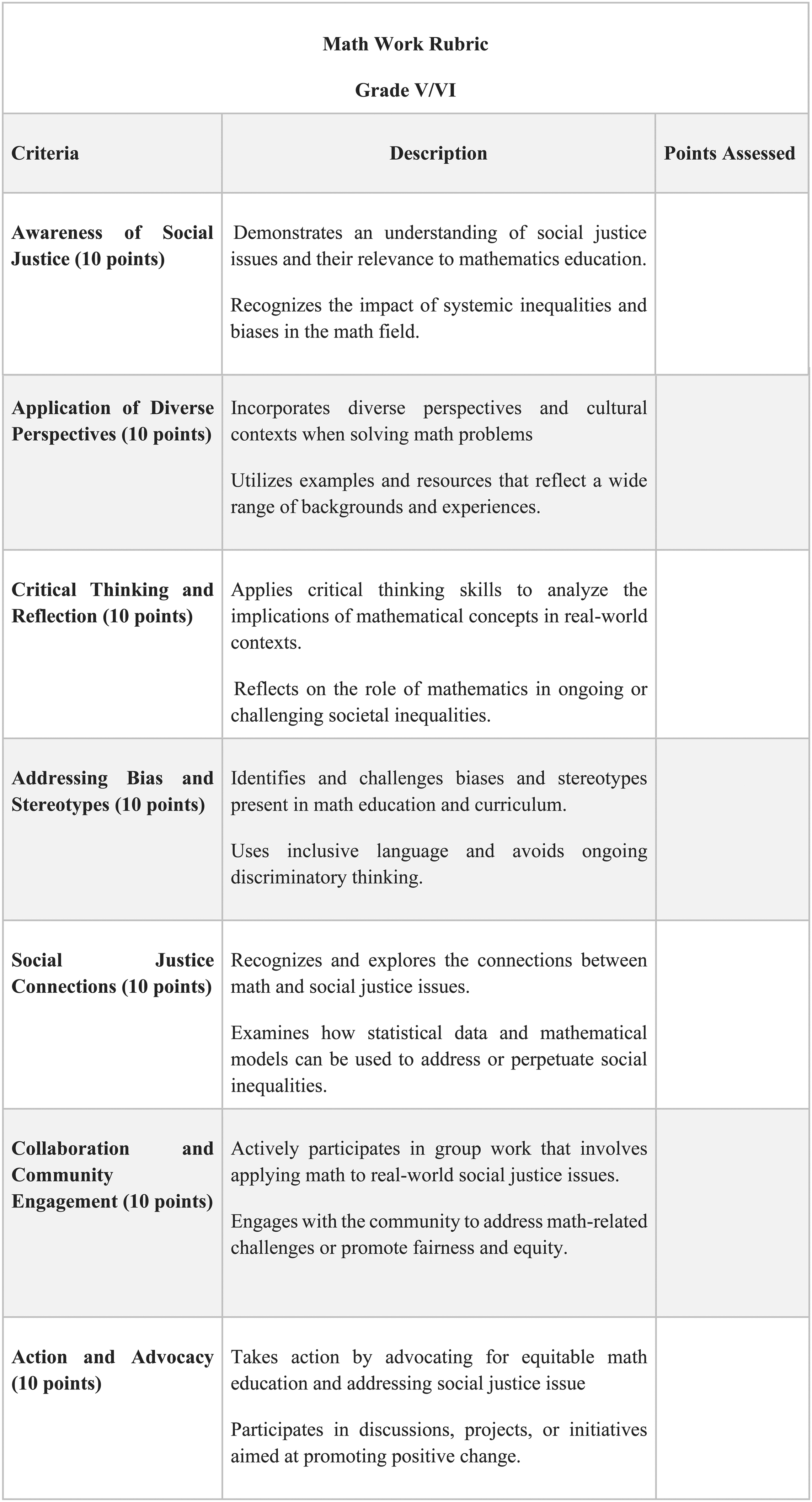
Math work rubric.
I used semi-structured interviews conducted by me, using an “empathetic” approach, in which a relationship of trust is established. Initial questions focused on the development of interviewees’ thinking and classroom practice relating to social justice. Individually designed follow-up questions were used to explore responses in more detail and to stimulate further discussion. The literary style was used to transcribe audio recordings of all research group meetings and individual interviews.
Data analysis and interpretation
Qualitative data were analyzed by using the thematic technique. Thematic analysis was conducted for reading and open coding of responses to determine initial emergent categories which show relationship between responses and suggested framework of dealing with social justice in mathematics classroom. Table 2 is showing this clearly where responses of teachers were coded, and after analyses it's visible that from first interview to third interview there are prominent changes in their thinking ways, whereas Table 3 outlines the intersection of the components for implementing social justice in the math classroom.
Coding qualitative data.
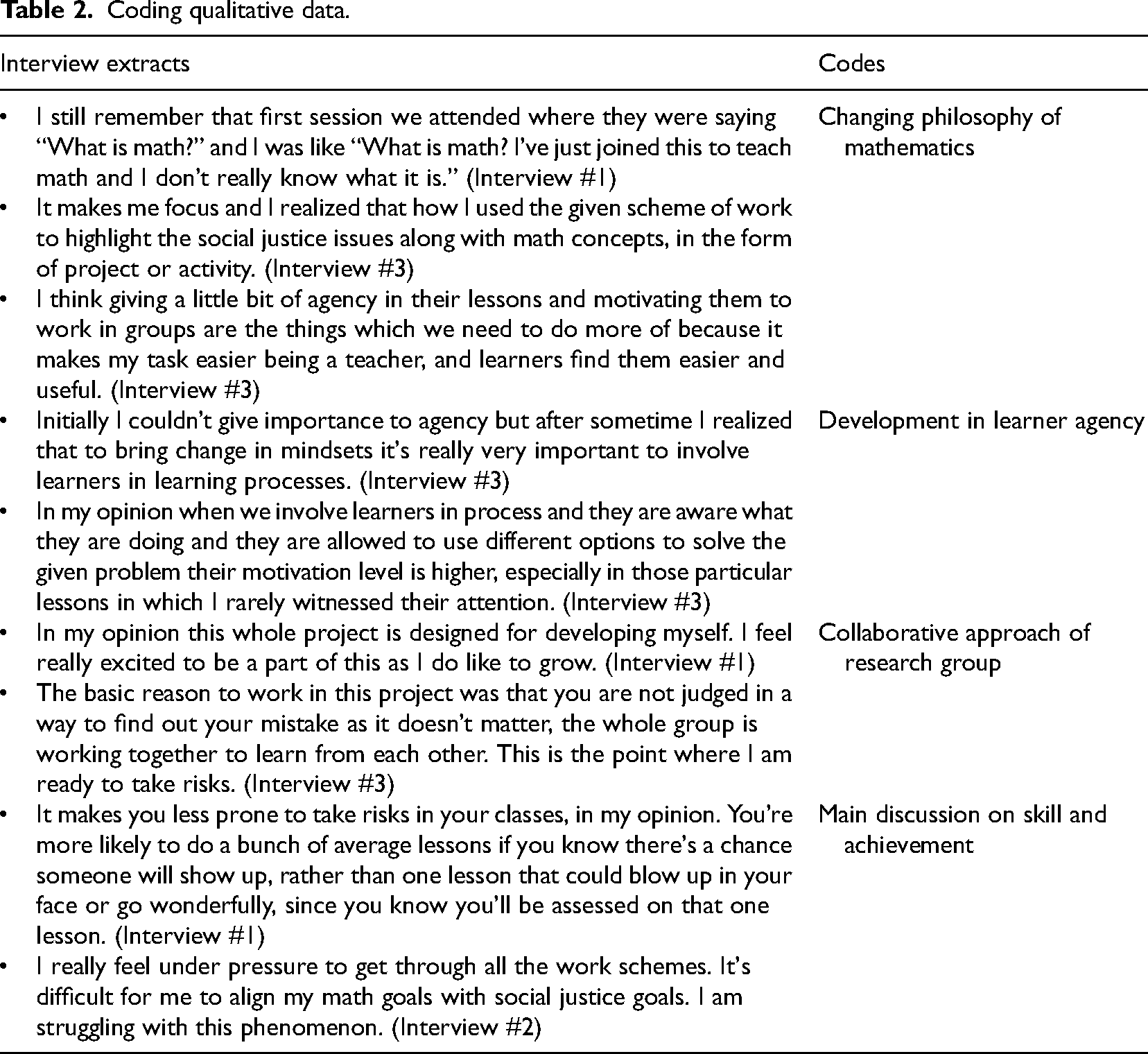
Coding qualitative data.
The intersection of the components for implementing social justice in the math classroom.
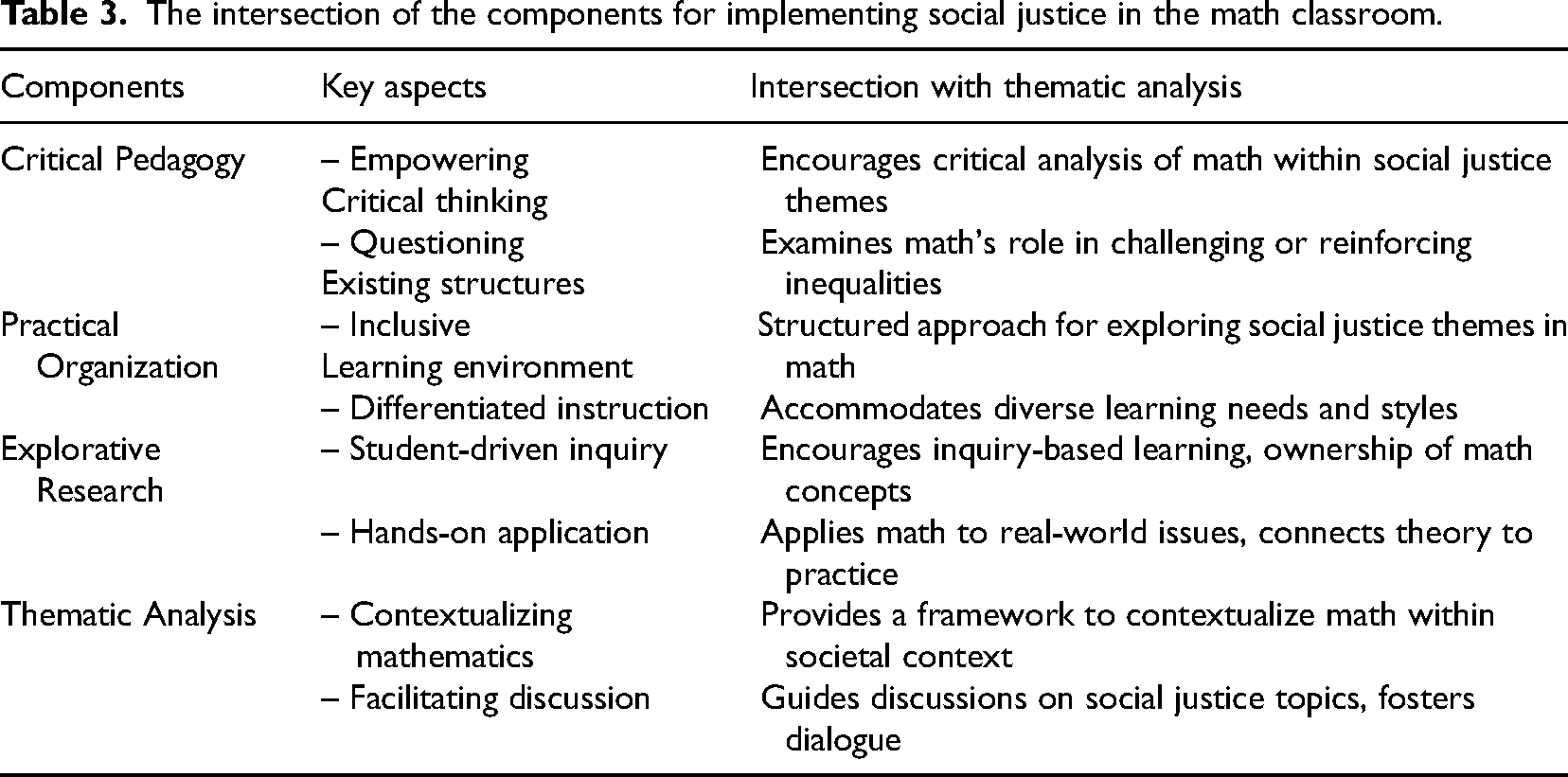
This Table 3 summarizes the key aspects of each component and their intersection with thematic analysis in the context of implementing social justice in the math classroom. It highlights how each component contributes to fostering a safe and inclusive learning environment and empowering students as critical thinkers and agents of change.
Four themes emerged during the analysis of the first set of interviews, and these were used as the basis for the thematic analysis of data from subsequent meetings and interviews. The four themes provided a useful structure for reporting the findings of the research project using a case study approach to narrate the stories of the teacher's engagement in the project and the growth of their thinking and practice.
Theme 1: Changing philosophy of mathematics
Engaging in the research project led to significant changes in teachers’ teaching and learning practices. Students initially saw the subject as purely content-focused but later realized its value-laden and socially constructed nature. The most profound changes in teachers’ philosophy about mathematics occurred during their involvement in the project. The reflective framework used during research group meetings encouraged teachers to rethink the nature of mathematics. Teachers became more conscious of their ideas and practices, recognizing their impact on teaching approaches. The project introduced teachers to learning theories, leading them to use metacognitive skills and align teaching methods with social justice goals and mathematical objectives. Teachers modified their lessons to enhance mathematical understanding, making the subject more relevant and meaningful to students.
Theme 2: Development of learner agency
Teachers recognized the importance of involving learners and creating inclusive lessons in their teaching practices. Learners were given the opportunity to make decisions, solve problems, and actively engage in the learning process. Learners displayed high motivation and engagement during these lessons compared to previous less participatory approaches. Granting learners more agency deepened their understanding of mathematical goals and connected them with sociopolitical issues. Teachers found that learners perform well in group work when motivated and given the freedom to choose problem-solving approaches. Initially, teachers selected activities that used mathematics to explore social justice issues, which captured learners’ genuine interest and appreciation for real-life problem-solving. During the third research cycle, learners were engaged in designing their own residential society, promoting the concept of “change starts with me.” Teacher facilitation and support were found necessary when addressing sensitive social justice issues, ensuring they are handled carefully.
Theme 3: Collaborative approach of research group
Teachers joined a research group to seek professional development and direction for their teaching practices. The group established positive working relationships quickly, which encouraged teachers to take risks and address challenges in developing alternative classroom practices. Teachers engaged with research theories linked to the project, challenging their preconceptions and deepening their understanding. The role of the researcher was instrumental in raising teachers’ awareness of these theories and providing a framework for developing ideas. Involvement with theories, collaborative teaching, planning, and evaluation had a significant impact on teachers’ thinking and practice. Being part of the research group was described as the most transformative period in one teacher's professional life, with a profound impact on their students’ learning and lessons. Teachers gained confidence in using these theories in their classrooms and began sharing their learnings with colleagues and integrating these ideas into their teaching.
Theme 4: Skill and achievement
Teachers face constraints such as syllabus completion pressure, exam-focused education, heavy workloads, and scrutiny, leading to reluctance in promoting social justice in math classrooms. Increasing awareness of these constraints led to a decrease in risk-taking and a shift toward a more conceptual teaching approach. Collaborative support from the research group was instrumental in helping teachers overcome these constraints. The group's support facilitated a better understanding of how to integrate social justice issues with mathematical skills within the curriculum. Sharing ideas and resources within the group proved to be a time-saving strategy for planning meaningful activities within limited time constraints. The project positively impacted learners’ engagement and mathematical knowledge, reassuring teachers that it did not conflict with improving mathematical attainment. Initially, teachers experimented with new ideas primarily with higher-achieving pupils, but they later found that lower-achieving students exhibited significant improvements in engagement and performance. The highest-achieving students were less receptive to the new teaching methods, possibly due to their success being associated with more traditional approaches.
Table 4 illustrates how teachers establish connections between social justice goals and mathematics goals, integrating them into their classroom instruction.
Mathematics and social goals.
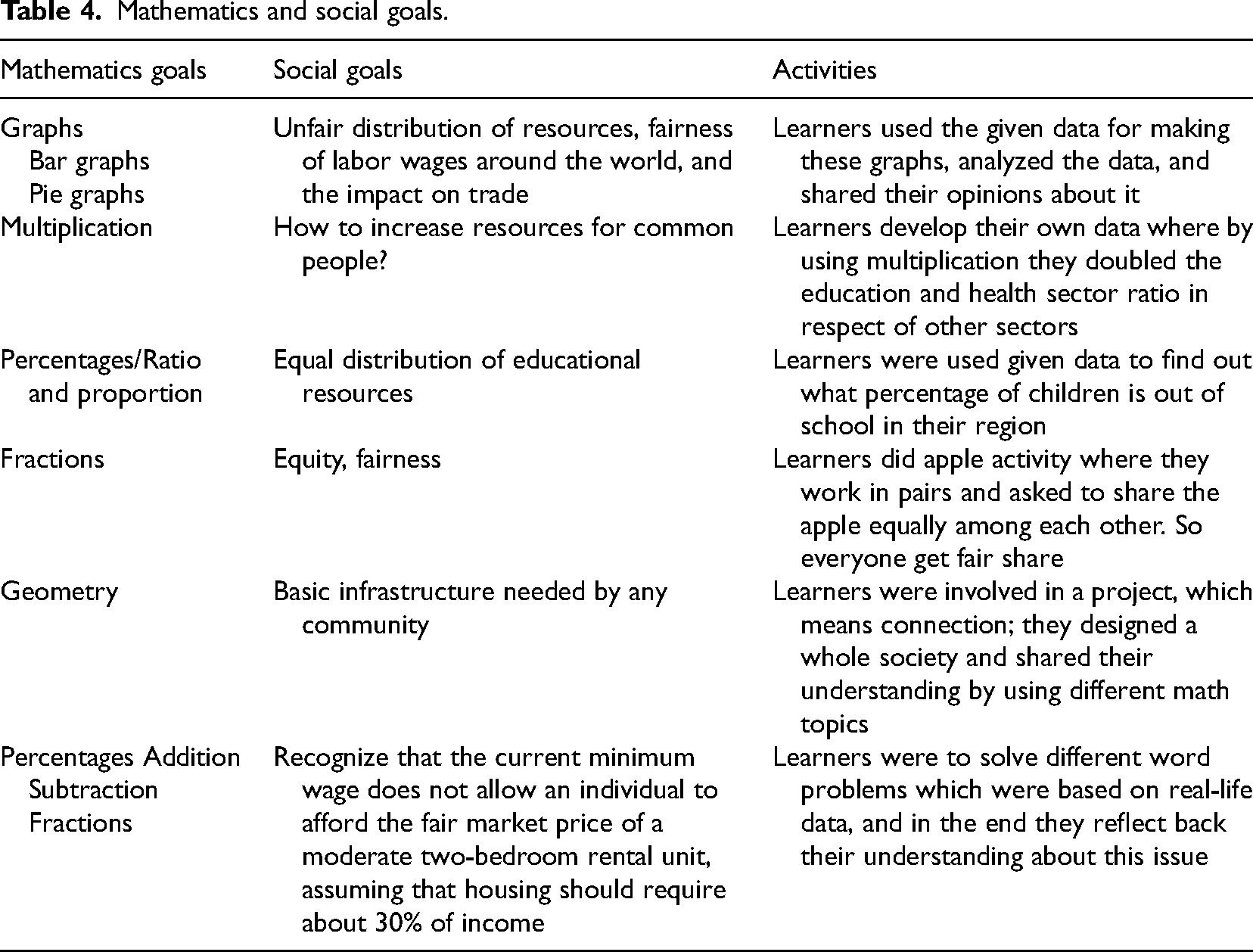
Mathematics and social goals.
This educational approach aims to integrate mathematics with social goals and issues to make math education more relevant and socially conscious. Here are examples of how this approach is implemented:
This approach encourages critical thinking, data analysis, and reflection on social goals and challenges associated with math concepts. By integrating math education with real-world issues, it fosters a socially conscious and engaged generation of learners.
The research achieved these main themes in the context of math education. Table 5 shows corresponding examples and vignettes.
Themes and student vignettes in math education.
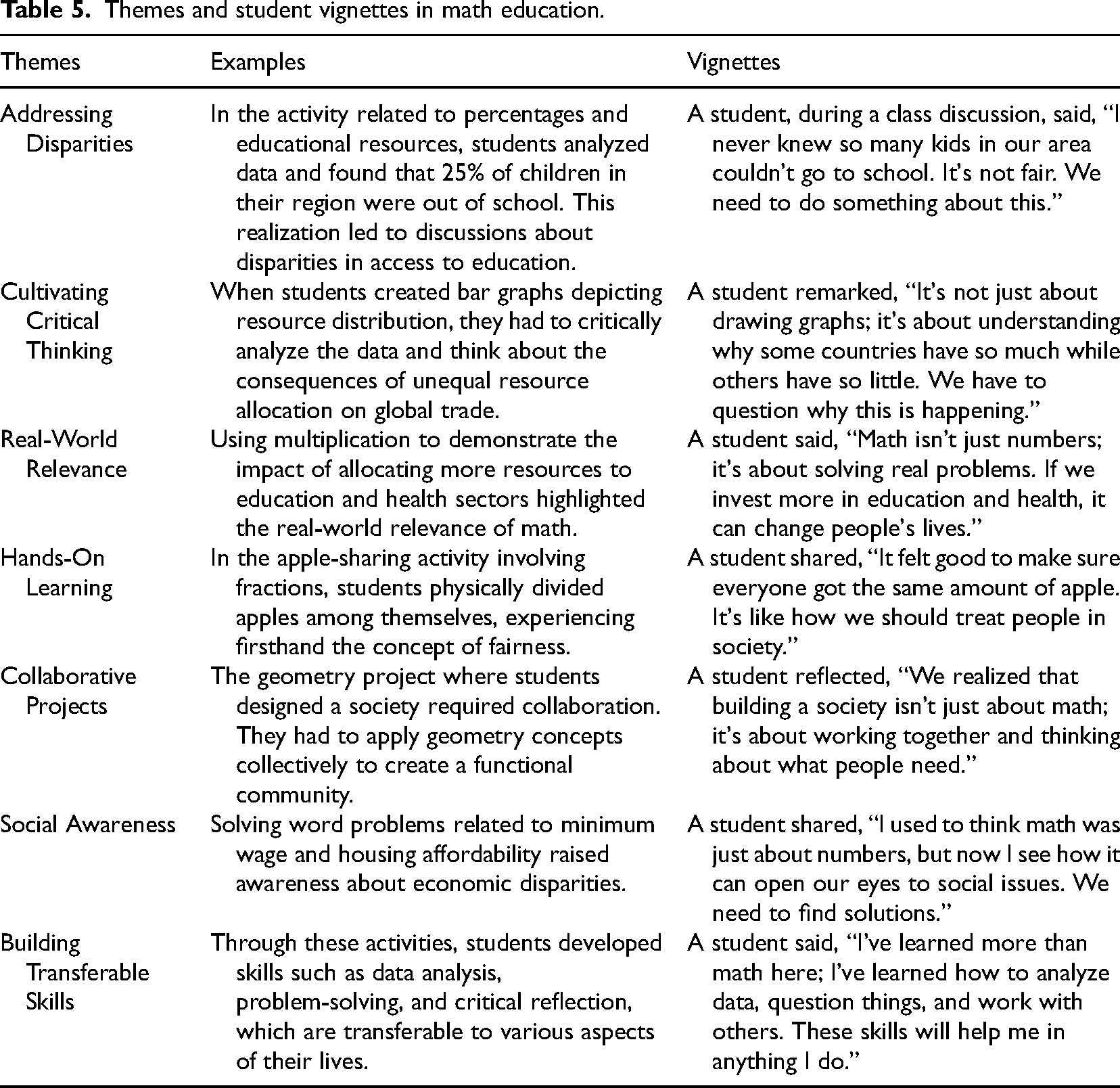
In summary, this research effectively integrated math education with social goals and real-world issues, resulting in improved math skills, deeper understanding of social disparities, critical thinking, and transferable skills. It demonstrates the potential of education to inspire socially conscious and engaged learners.
Feedback from learners on incorporating social justice goals in the math classroom is essential to understand the impact of such an approach on students’ experiences and perspectives. In Table 6 some findings supported by examples and vignettes are extracted from the research.
Learners’ feedback on incorporating social justice goals in math classroom.
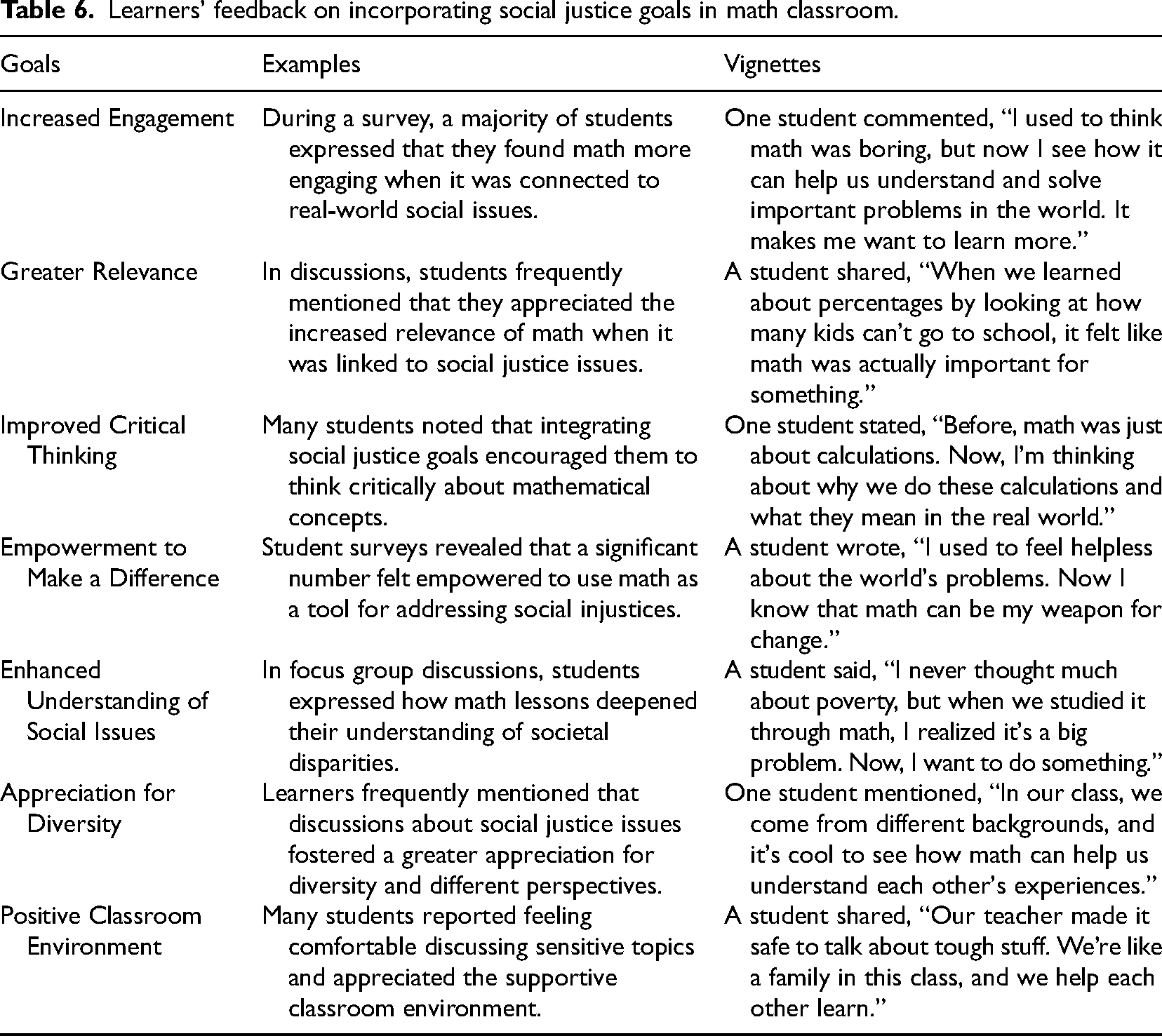
The research project primarily adopts a critical research model focused on teaching and learning mathematics for social justice, emphasizing both the process of change and the final outcomes. It has significant implications in three main areas: mathematics teaching, professional development for mathematics teachers, and mathematics education research. In mathematics teaching, the project demonstrates how math can enhance students’ understanding of social justice issues, fostering collaborative and problem-solving approaches that empower students and bridge achievement gaps. For the professional development of math teachers, the project highlights the importance of critical engagement with research findings, promoting self-reflection and awareness of societal inequalities. In mathematics education research, the project advocates for collaborative, participatory methodologies that challenge existing narratives and generate practical knowledge for positive social change.
Conclusion
In conclusion, this research project offers valuable insights into the implementation of social justice in mathematics education and highlights the importance of effective professional development in promoting this approach. The collaborative efforts of teachers and researchers in conducting systematic inquiry contribute to reliable and credible findings that challenge the perpetuation of inequities and injustices in mathematics teaching. The findings from this project can inform school leaders in supporting their teachers and identifying professional development requirements. Moreover, the project exemplifies how participatory action research, guided by a critical perspective, can be rigorous and systematic while generating knowledge that has the potential to drive positive social change.
Footnotes
Acknowledgements
We thank the math teachers for their invaluable support in the participatory action research journey, shaping a collaborative learning environment and fostering a passion for mathematics.
Declaration of conflicting interests
The author declared no potential conflicts of interest with respect to the research, authorship, and/or publication of this article.
Funding
The author received no financial support for the research, authorship, and/or publication of this article.
Informed consent
This project has obtained the written consent of all participants.

Correction (October 2024):
Article updated to add Informed consent section.
Author biography
Appendix
Interview Responses of Teachers during different levels of research project
One teacher, in the first interview, expressed her perspective, stating, “I feel this whole project is initiated for my professional development” (Fizza, Interview #1). One teacher shared their feedback, expressing surprise at the high level of motivation displayed by learners during these lessons, compared to their previous lack of attention. During the third interview, one teacher mentioned, “Before engaging in this research project, I didn't give much importance to the learner agency and thought it would take too much time to complete tasks. However, I later realized that learners perform well in group work when they are highly motivated and have the freedom to choose steps for problem-solving.” Being part of this research group has been the most transformative period of my life, in my opinion. I have witnessed its profound impact on my learners’ learning and the lessons that I teach. When I compare this experience with routine Continuing Professional Development (CPD) sessions, I find that the impact of this research is far more significant (Ruba, Interview # 3).