




Abstract
Thanks to the fourth industrial revolution, 3D printing has become a fast-emerging technology that is widely applied across industries. In mathematics education, 3D printing is an innovative way to visualize mathematics concepts (e.g., geometry, calculus) that enables students to develop mathematical and design thinking, as well as digital skills and mindsets. Through digital maker education, students can apply multidisciplinary knowledge to build prototypes and create 3D objects that bring many new opportunities in mathematics formal/informal learning. However, to our knowledge, there is no existing review summarizing the existing evidence of how 3D printing has been applied in mathematics education. As such, this review aims to give a synthesis of the up-to-date literature in the burgeoning topic of using 3D printing in mathematics education. A systematic review was conducted to examine the thematic and content analysis of 30 empirical papers from 2015 to 2022. The review aims to evaluate and analyze different types of participants, methodological approaches, challenges, pedagogies, and technologies used in the selected studies. Although 3D printing has a bright prospect to revolutionize mathematics education, there are still many challenges such as hardware and software optimization, processing, formatting, printing, and maintenance issues. After all, a set of recommendations were listed to guide future researchers and educators to use 3D printing effectively in mathematics education.
Introduction
Thanks to the fourth industrial revolution and maker movement, 3D printing has become a fast-emerging technology that is widely used across industries such as manufacturing, mechanical engineering, aerospace, science, and education (Dizon et al., 2018; Dougherty, 2012; Ng & Chu, 2021; Shahrubudin et al., 2019; Tay et al., 2017). This technology is officially known as an additive manufacturing process that turns model files into physical objects through computer-aided design (CAD) (Gao et al., 2015; Tay et al., 2017). It enables designers to print and build up an artifact layer by layer using raw materials such as plastic, cement, and steel (Campbell et al., 2011; Kietzmann et al., 2015). With the popularity of Science, Technology, Engineering, and Mathematics (STEAM) education, reviews have reported the potential of using 3D printing in science and engineering education that foster students’ creativity, collaboration, problem-solving, higher order thinking skills, and impact their interests, engagements, beliefs, and careers toward STEM learning (e.g., Cheng et al., 2021; Hansen et al., 2020; Hsu & Fang, 2019; Schlegel et al., 2019). Students could apply multidisciplinary knowledge to build prototypes and create 3D objects that introduce students to scientific, technological and industrial skills that bring them new learning opportunities across subjects and educational settings (Ford & Minshall, 2019). In recent years, research has documented the impacts of 3D printing on mathematics education which was not possible in the past. First, 3D printing helps students visualize concepts and proofs (e.g., geometry, calculus, area/volume) that enables them to develop mathematical, abstract, and spatial thinking (e.g., Dilling & Witzke, 2020; Ng & Ye, 2022). For example, Ng and Ferrara (2020) have reported how primary students used 3D printing pens to create their own prisms and pyramids to learn the geometric properties and cross-sections. Dilling and Witzke (2020) conducted an empirical study to engage students to derive concepts about functions and calculus in middle school. Furthermore, as creativity is the essence of mathematics, 3D printing enables students’ creative exploration and design (e.g., Chien & Chu, 2018; Ng, 2017). Ng (2017) asked students to design a keychain with their names on it and have it printed in 3D, and they also needed to consider the time and cost of printing in a 3D Keychain Project. Beyond this snapshot, other research reflected that 3D printing could aid students’ spatial and design thinking (Medina Herrera et al., 2019), and facilitate their creativity and critical problem-solving (Song, 2019). We can see that 3D printing not only scaffold students’ mathematical understandings, it is also a powerful tool to stimulate students’ creativity and exploration to design 3D objects using mathematical concepts that add an “A” (arts and design) in STEM education (e.g., Ng & Ferrara, 2020; Song, 2019).
However, to our knowledge, there are no existing reviews summarizing how 3D printing is incorporated in mathematics education. Of this interest, this review contributes to setting an agenda for future conversations on how to build theoretical and pedagogical foundations of using 3D printing in mathematical learning environments through evaluation and synthesis of the existing literature. This review gives an overview of the current trends in empirical research of 3D printing in mathematics education. It provides a foundation for exploring the mathematical research pathways of 3D printing. Moreover, the review provided recommendations for future studies and prescribed a set of obstacles and hurdles to facilitate 3D printing design implementation. The research questions are identified as follows:
What pedagogies, learning contents and technologies have been identified in 3D printing research in mathematics education? What methodological approaches have been used in 3D printing research in mathematics education? What is the potential of implementing 3D printing in mathematics education? What are the underlying challenges used in 3D printing research in mathematics education? How do teachers use 3D pens for mathematics teaching/learning? What are the theoretical frameworks (or theories) to connect 3D printing and mathematics education? What are the unexplored future research areas in 3D printing research in mathematics education?
Methods
Research design
An analysis of 30 refereed journal articles from 2015 to 2021 was conducted in order to compile the empirical evidence for this review. The first article was found in 2015. We implemented a content and thematic analysis to synthesize the data found in the selected studies into themes (e.g., methodological approaches, challenges, learning outcomes) according to the research questions. This systematic method is used to assess research trends in the field of educational technology across review articles (e.g., Ng et al., 2021; Zainuddin et al., 2020). Between 2015 and 2021, the review looked at the overall trends of 3D printing research in mathematics education (e.g., the most common types of tools/platforms and pedagogies used).
The inclusion and exclusion criteria of research studies
To guarantee the generality of the findings and eliminate biases in the study selection, the current study employed rigorous and detailed criteria and methodologies. Only studies that satisfied the following inclusion and exclusion criteria were considered in the analyses:
The research should be focused on 3D printing in mathematics education while 3D printing on pure science/technology/engineering or other topics without mathematical contexts should be excluded. The research should be empirical articles or conference papers published in the journals indexed by the aforementioned databases while review research needs to be excluded. The research should be written in English while other languages should be excluded. Editorials and book chapters should be excluded due to the lack of peer review.
Study selection
To avoid biases and discrepancy during the selection and analysis process, the first and second authors resolved the disagreements to reach a final decision through discussion. The literature first search yielded 92 studies while 37 articles from WoS and 55 articles from Scopus as of 31 March 2022. Figure 1 displays the article selection process using a PRISMA flow chart. Forty articles were excluded since they are duplicates and do not satisfy the selection criteria. Four articles were further excluded since they could not be accessed. In the next step, 48 full-text articles in total were synthesized and reviewed. There were three studies excluded because they are review articles while another 10 articles were also excluded since they are technical papers and do not focus on educational implications. Six studies were also excluded since they focus on science, technology, and engineering education without talking about mathematical contexts. After the selection, there were 30 eligible articles included for further synthesis. Figure 1 illustrates the PRISMA flowchart for the included studies.
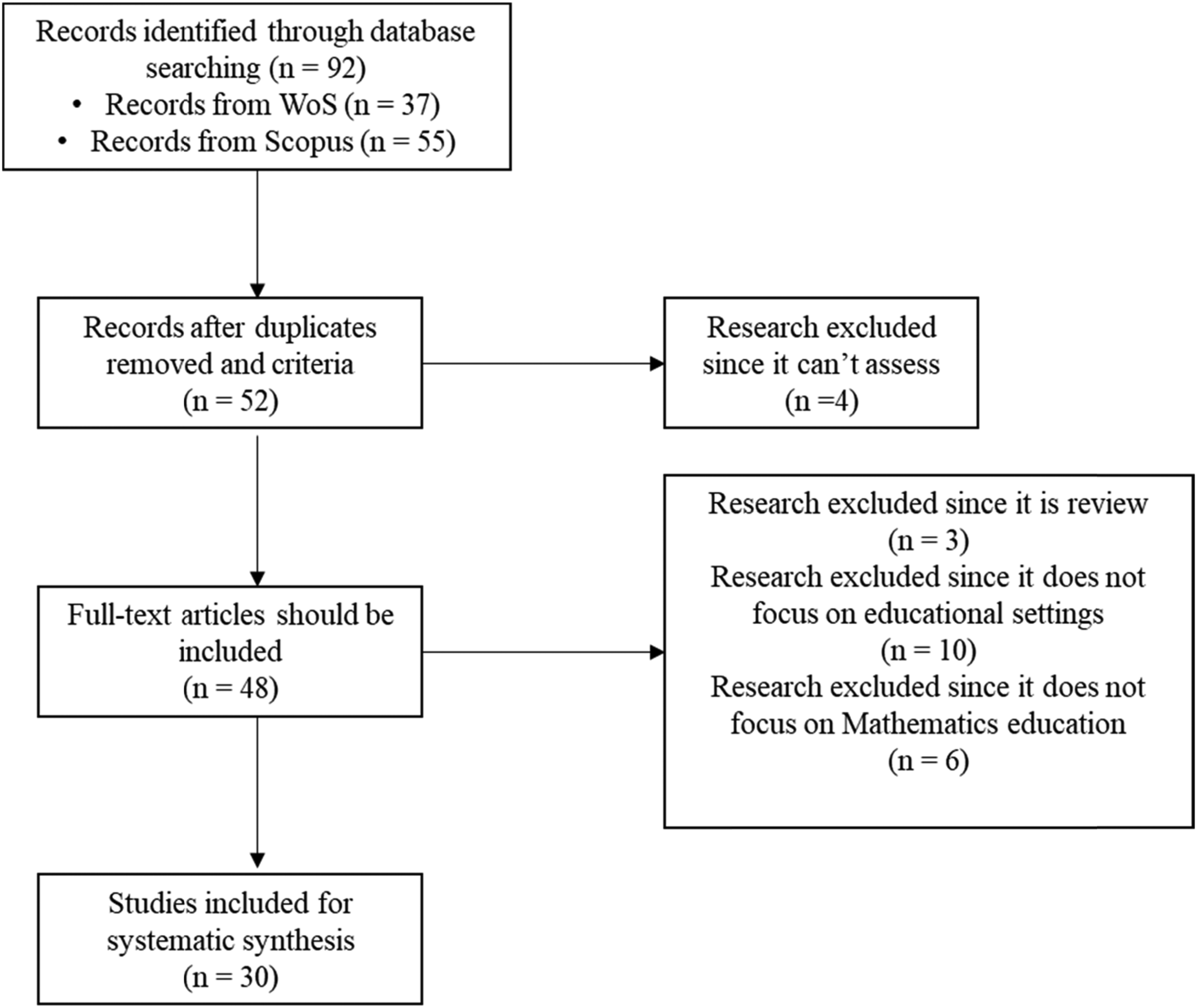
PRISMA flowchart for the included studies.
All of the selected studies were categorized and documented according to the research questions:
Background information of the studies: countries/regions of the author(s), sample size of the research, the research methods (i.e., quantitative, qualitative, mixed methods), background of the participants (i.e., primary, secondary, university educational levels), data collection methods (i.e., questionnaires/surveys, interviews/focus group, experimental test/assessments, observations, and documents analysis), length of the studies, and formats of the learning (formal vs informal). Pedagogies (i.e., problem/project-based learning, collaborative learning, maker/design-based learning), learning contents and technologies (i.e., tools/platforms) used in the research. Learning outcomes (i.e., affective, behavioral, cognitive learning). Challenges of using 3D printing identified in the research. Differences between using 3D printers and 3D pens in mathematics education. Theoretical or conceptual framework mentioned in the selected research. Future research areas of using 3D printing in mathematics education.
After settling the coding theme, the first and second author studied the content in the selected studies, identified and extracted the similar concepts during the content and thematic analysis (Vaismoradi et al., 2013). The data were then recorded and categorized under the coding schemes using the above frame. To show an excellent inter-rater reliability between coders, Cohen's kappa coefficient (0.85) was identified to measure inter-rater reliability of the categorical items (Hallgren, 2012). The findings were descriptively analyzed and summarized in terms of frequency and percentages in each research question. After that, the findings were presented in charts and tables for future discussion.
Results and discussion
Before examining the research questions, the background information (i.e., publication years, countries, participants’ levels of education, formats of learning) of the 30 selected studies is first described in Table 1. After that, the results will be discussed followed by the five research questions.
Frequency (n, percentage) of the background information of the selected articles.
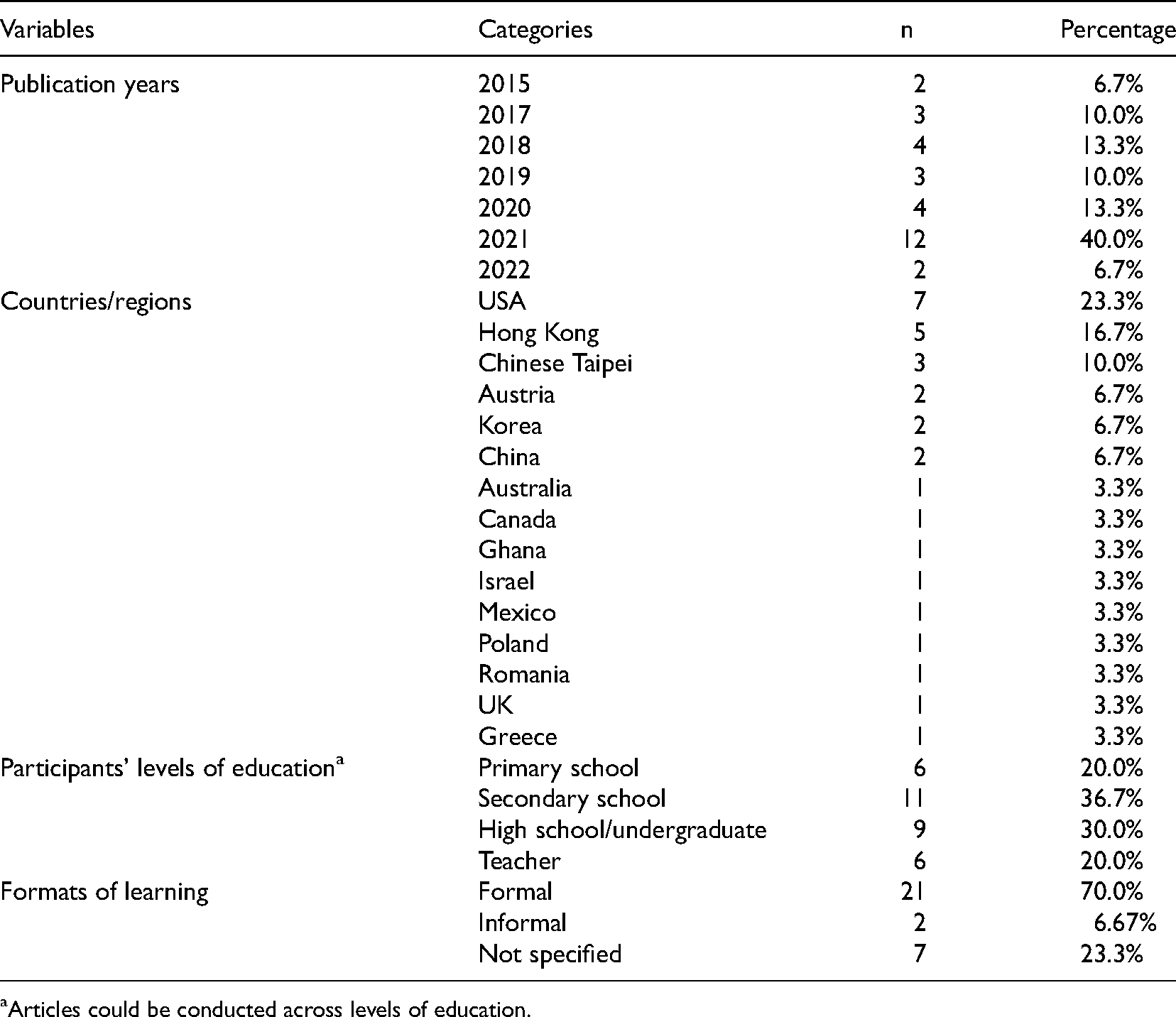
Frequency (n, percentage) of the background information of the selected articles.
Articles could be conducted across levels of education.
Regarding the years of publication, it is observed that the overall trend of using 3D printing in mathematics education started to increase in 2020 (see Figure 2). The statistical presentations for the year of 2022 in Table 1 and Figure 2 are only part of the year until 31 March, rather than the whole year.
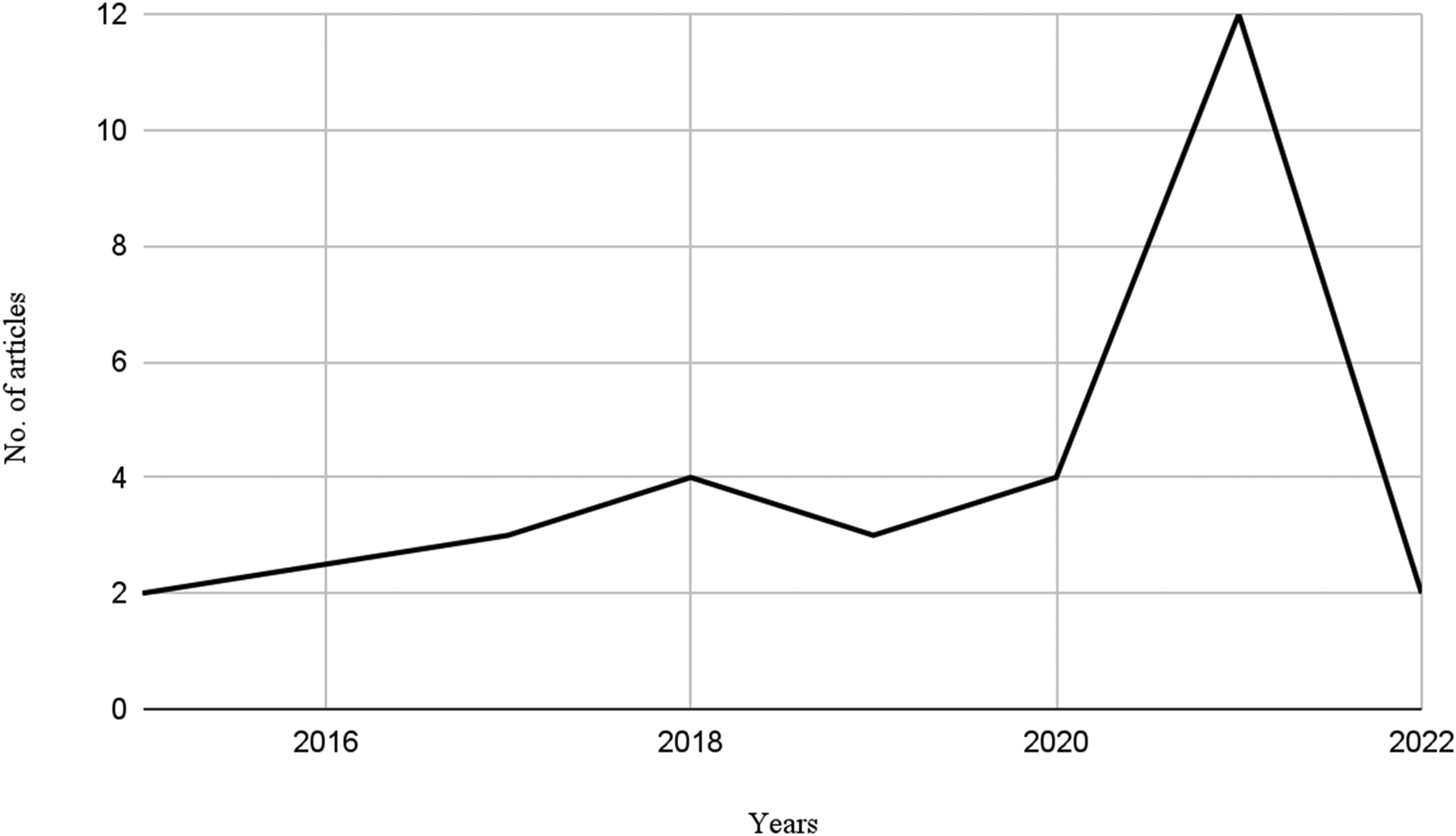
The trend of 3D printing research in mathematics education during 2015–2022.
Before 2020, there are two to four papers on average which means that 3D printing was not very popular at that time. However, there is a triple growth from 2020 (4) to 2021 (12). It is believed that there will be significantly more researchers studying how to incorporate 3D printing in mathematics education in the coming years. Moreover, based on the data about the publication countries/regions, 3D printing was widely applied in mathematics education across the world. The top three countries/regions that study in this field are the United States of America (7), Hong Kong (5), and Chinese Taipei (3).
Researchers conducted studies across different education levels. In comparison, most of the articles studied the secondary school settings (11), followed by primary schools (6) and high school/ undergraduate level (7). This showed that 3D printing can be applied to visualize mathematical concepts and proofs from primary school to high education level. At the same time, it is also important to understand how to prepare primary/secondary teachers (6) to design their 3D printing lessons and understand their feedback and perceptions. There are some articles conducted across two different levels of education such as primary school and secondary school (Cheng at al., 2021), as well as secondary school and college students (Chien & Chu, 2018). There was a wide range of sample size in the articles, varying from four to 1455 participants.
In addition, it is found that most of the studies applied 3D printing in a formal curriculum setting (21) rather than in an informal way (2). It is observed that most studies have tried to incorporate 3D printing in their mathematics curriculum and regular lessons instead of engaging students in after-school projects. For example, Ng and Ferrara (2020) used a diffractive analysis to capture the students’ learning behavior and body-material interactions in their learning tasks using 3D printing pens during the regular lessons. Few studies engaged students in informal activities such as STEM camp (Anand & Dogan, 2021) and experiments/projects (Chiriacescu et al., 2021).
Pedagogies
Three major types of pedagogies were applied in 3D printing studies. The three most common pedagogy used in studies is project/problem-based learning (19), followed by maker/design-based learning (11) and collaborative learning (10) (see Table 2).
Pedagogies applied in the selected studies.
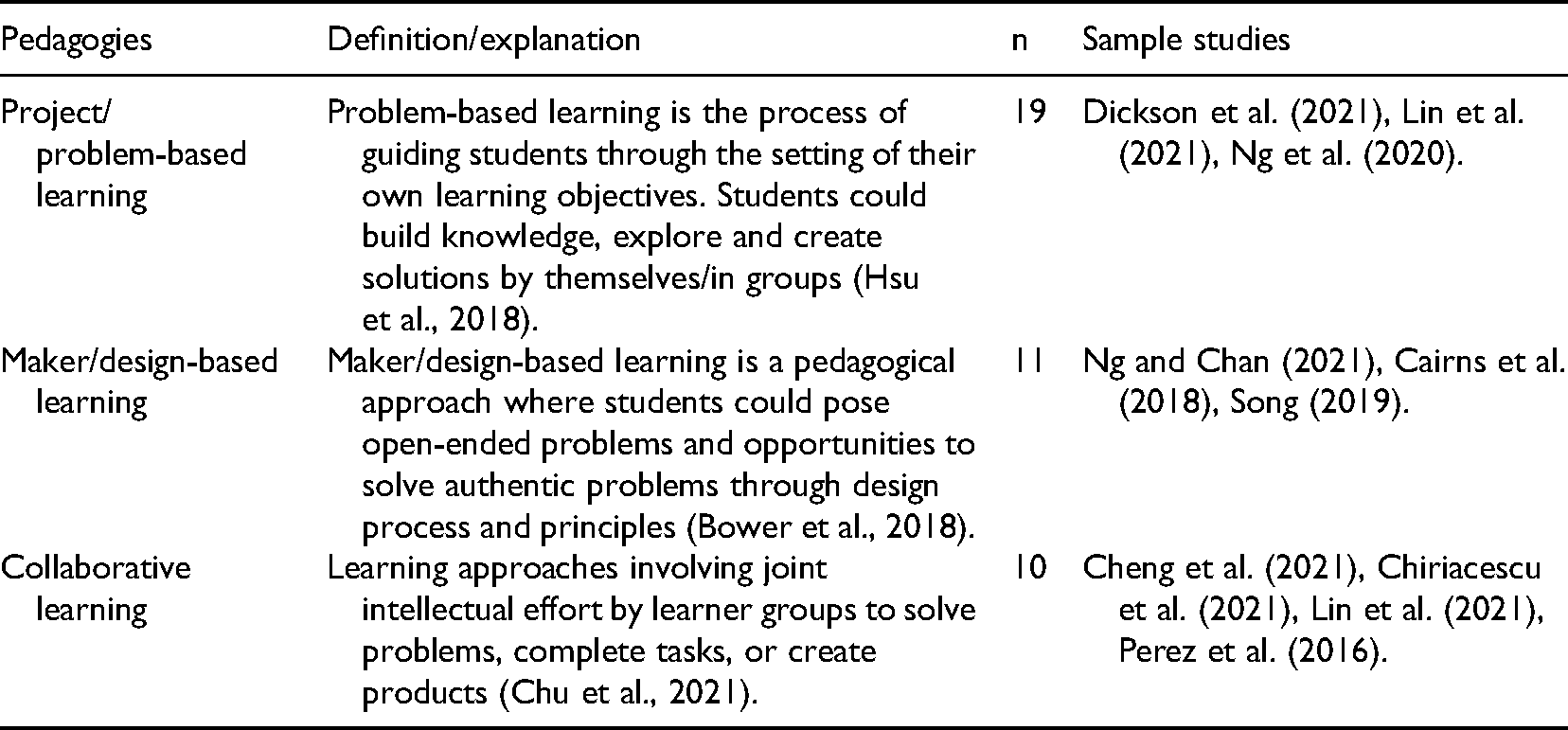
Pedagogies applied in the selected studies.
In our selected studies, most of the studies (15) considered 3D printing as tools to develop geometry concepts (e.g., Asempapa & Love, 2021; Dickson et al., 2021; Ng et al., 2020). For example, Huleihil (2017) applied 3D printing to discuss the volume, lateral area and surface area of cube, rectangular prism, and cylinder. Ng and Ferrara (2020) engaged students in inquiry-based learning in which students used 3D printing pens to express and learn the properties of prisms and the cross-sections of 3D solids. Likewise, Choo et al. (2021) designed a 3D printing instruction to examine how students learn spatial thinking skills, total surface area, and volume of 3D models. Through designing 3D models, prototypes and drawing, students could scaffold their geometric understandings and use 3D printing to express ideas, create solutions, and solve authentic problems (e.g., Ng & Chan, 2021; Chiriacescu et al., 2021; Dickson et al., 2021).
In addition, seven other studies developed students’ other mathematical concepts including multivariable calculus (Medina Herrera et al., 2019; Paul, 2018), matrix and vector (Walentyński et al., 2021), polynomial (El Bedewy et al., 2021a), and engineering-related topics (e.g., principles behind 3D printing) (Anastasiou et al., 2013; Lin et al., 2018; Perez et al., 2016). These four studies were conducted at the higher education level. We can see that 3D printing is more suitable to visualize geometric concepts and proofs in primary/secondary levels; however, it has potential to enable university students to explore and learn more advanced mathematics and build graph functions through 3D modeling and printing.
Furthermore, there were five studies that didn't explicitly state which mathematics concepts students have learnt but they measured mathematics interest, motivation, and abilities. For example, Cheng et al. (2020) examined how the 3D printing activity could increase students’ mathematics motivation and self-efficacy after a STEAM project. Another study conducted by Lin et al. (2021) asked students to design and make earthquake-resistant structures that encouraged students to apply their mathematical knowledge to their designs, thus enhancing their attitudes toward mathematics. Moreover, Chien and Chu (2018) enabled students to design a race car in groups and facilitated high school students to incorporate the mathematical theories in their design. These examples emphasized that mathematics was an important part of a comprehensive STEAM program. Instead of learning and visualizing mathematical concepts, students apply mathematics to design solutions, artifacts, and models to solve authentic problems. We can see that mathematics can also play an important role in STEAM education for real-world problem-solving, and these studies consider 3D printing as one of the 21st century technological skills for their future career and studies.
Technologies
This section documented the essential software equipment that educators need to prepare their 3D printing mathematics lessons. The software applied in the studies were summarized in Table 3. This summary could allow educators to know what types of technologies needed for investments to further motivate and facilitate students’ mathematics learning.
3D printing/modeling related technologies used in the selected studies.
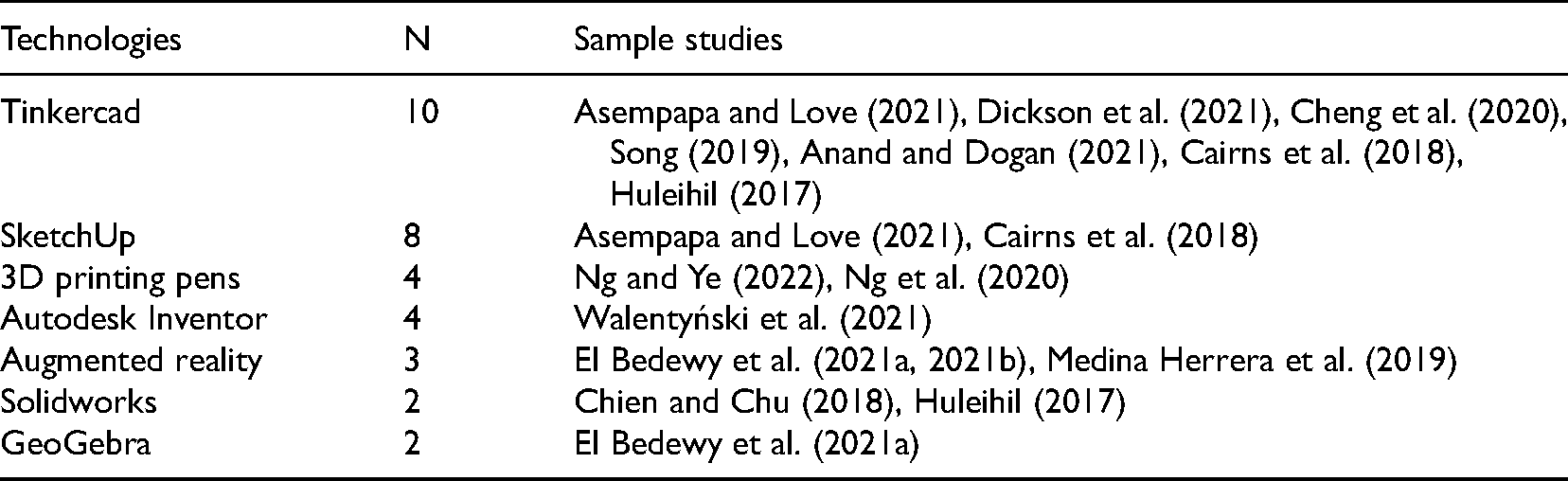
3D printing/modeling related technologies used in the selected studies.
In terms of hardware, studies reported the use of different models of 3D printers to print prototypes (e.g., UP!Plus, Chiriacescu et al., 2021; 3D printed colorimeter, Porter, 2017; 3D printing pens, Ng & Chan, 2021). Educators might consider factors when choosing 3D printers such as size of the print bed, automatic calibrations, build volume, user-friendliness of the software, types of filaments and costs, as well as safety concerns (e.g., Tully & Meloni, 2020). On top of hardware specification, the following will illustrate the types of software and tools used in the studies to facilitate 3D printing in mathematics education.
In terms of software and tools, 3D printing required software that would facilitate the communication between the users and the printer itself. The top three software/tools were identified in the studies: Tinkercad (10), SketchUp (8), and 3D printing pens (4). In primary/secondary education, Tinkercad is frequently used in the studies due to its free and easy-to-use web interface that equips the young learners to build 3D models and learn solid geometry in schools as an entry level. Further, the 3D printing pen is another user-friendly tool for children to get into 3D design and introduce various geometric properties (e.g., Ng & Ye, 2022; Ng et al., 2020). Therefore, educators should apply user-friendly 3D modeling software and tools to reduce students’ technical difficulties so that they could build their final products easily. In higher education, students would use specific software (e.g., SketchUp, SolidWorks, Autodesk) to build finer 3D models for different purposes such as building products, buildings, and cars (e.g., Asempapa & Love, 2021; Chien & Chu, 2018). The software used could be particular to build models for different disciplines which require teachers and students to obtain more advanced 3D modeling, prototyping and graphics design knowledge, techniques, and skills. As such, challenges were reported in later sections that students met various technical challenges such as file exchange, 3D model rendering, and mapping (e.g, Dickson et al., 2021).
Moreover, studies used more than one technology to facilitate students’ learning. For example, students could search for useful ready-made 3D models through online libraries (e.g., Stetchfab, TurboSquid) so that they did not need to draw their models from zero (e.g., Anand & Dogan, 2021). Students could also visualize the 3D models through GeoGebra and augmented reality to further adjust their models before printing their final products (El Bedewy et al., 2021a). All these could provide additional support for students to build their products.
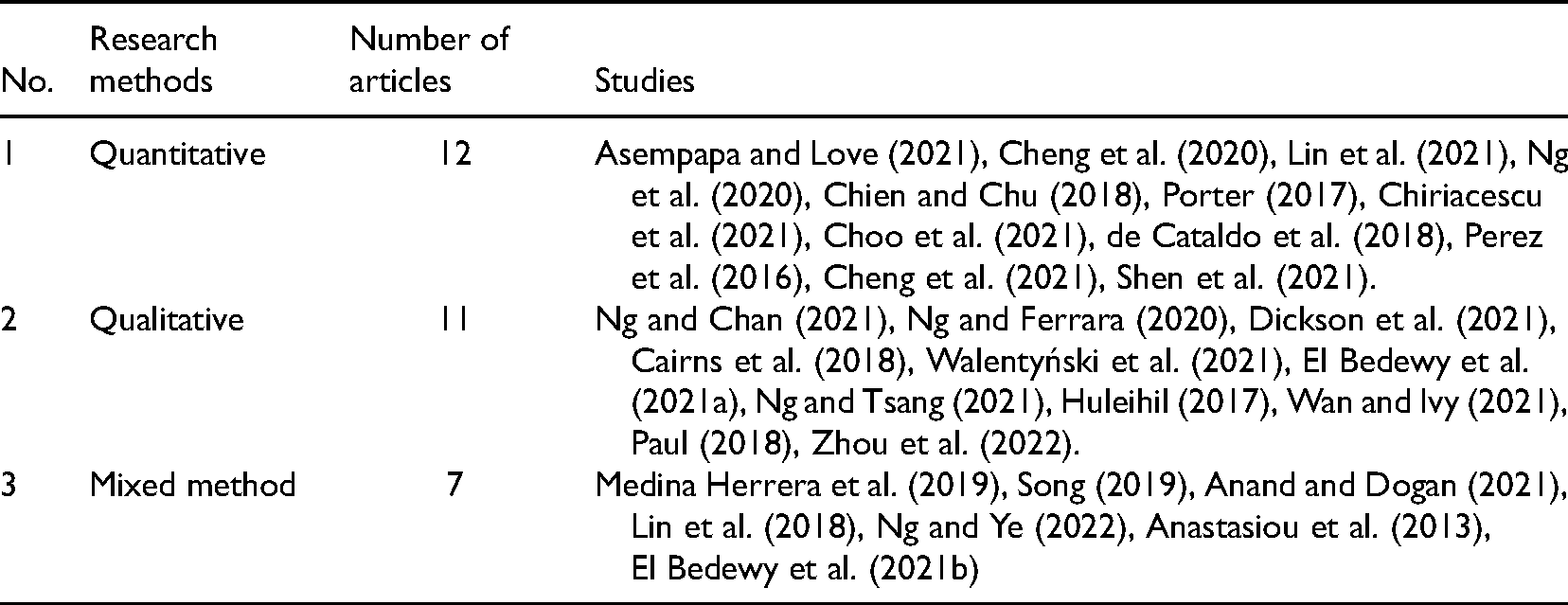
This section responds to the Research Question 2 (RQ2) and presents a summary of the methodological approaches undertaken. The majority of studies used a quantitative approach (12), followed by a qualitative approach (11) and mixed method approach (7) (see Table 4). In the quantitative studies, researchers employed a variety of data collection procedures, such as questionnaires, surveys, knowledge/skill tests, and assessments. Additionally, the qualitative studies collected data via interviews, focus groups, observations, and document analysis. The rest of the papers applied a mixed method using interviews, experimental tests, assessments, focus groups, questionnaires, and surveys. These assessment methods provided examples of how educators assess students’ interest, motivation, engagement, knowledge and skill acquisition, as well as student-student and student-material interaction. Furthermore, data collection methods were summarized in Figure 3. It is identified that the most common methods are questionnaires and surveys (12), followed by interviews and focus groups (8), experimental tests and assessments (8), artifact (8), and documents analysis (1). Students’ learning outcomes in different assessments will be explained in the RQ3.
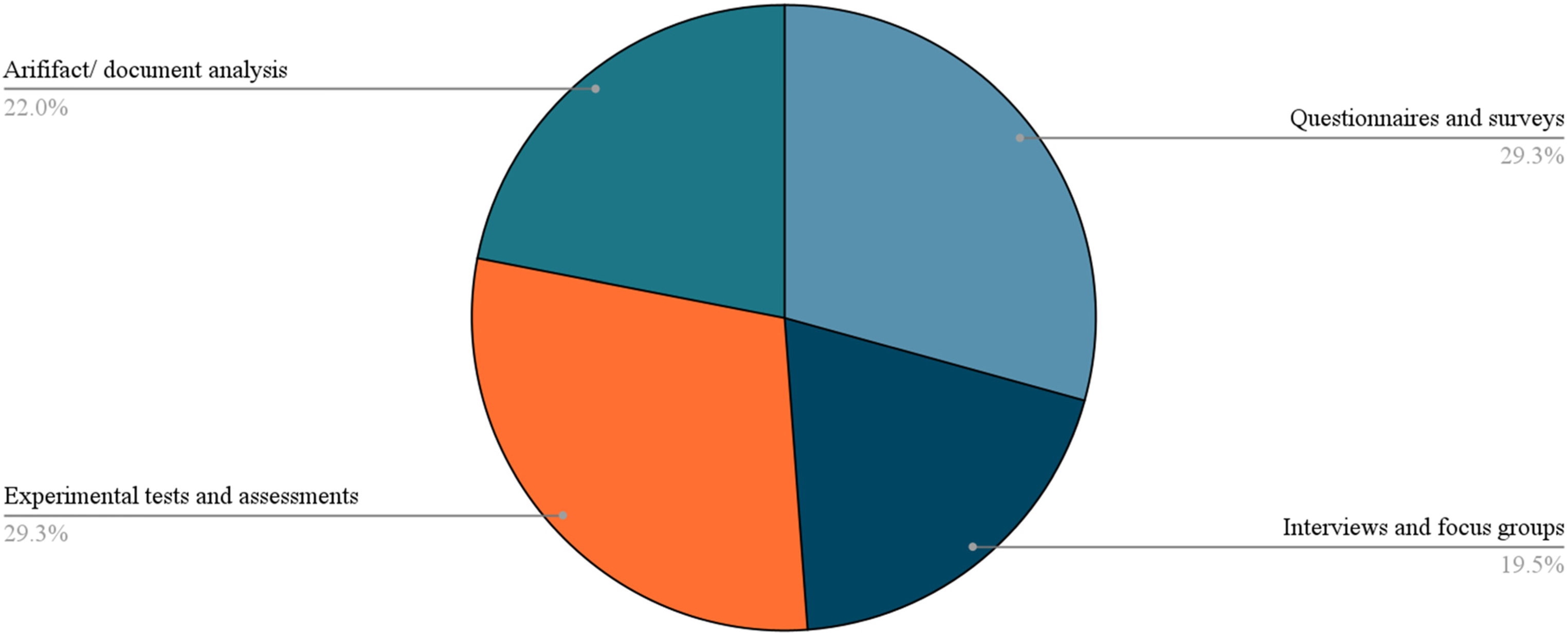
Distribution of data collection procedures.
Methods used in 3D printing studies.
Furthermore, it is important to analyze the average intervention duration across the analyzed articles. Regarding the studies that were conducted within a semester, the majority of intervention studies took place within two months (on average 7.67 weeks). Two studies were implemented over a longer period of time, 5 months (i.e., Walentyński et al., 2021; Ng et al., 2020). There are three longitudinal studies that were undertaken for and over 1 year (Asempapa & Love, 2021), 2 years (Ng & Ye, 2022), 3 years (Cheng et al., 2021), and 4 years (Medina Herrera et al., 2019). The length of intervention is diversified across studies.
This section discusses the potentials of using 3D printing in mathematics education. We categorized the learning opportunities into three domains: cognitive (i.e., knowledge and digital skills) and non-cognitive skills.
Cognitive skills
All of the 30 articles measured cognitive outcomes. Cognitive outcomes are split into knowledge and digital skills. Studies suggest that 3D printing could improve knowledge acquisition and digital skills to facilitate adequate retention of mathematical learning about 3D printing.
In terms of knowledge acquisition, researchers demonstrated a positive cognition gain across studies. Asempapa and Love (2021) have constructed a pre- and post-survey before and after the 3D printing activities. Students gained a significant improvement of correct response percentage from (6–100%) to (50–100%). Furthermore, Ng et al. (2020) found that students could use 3D pens to enhance their geometric understandings (e.g., faces, vertices, and edges of prisms/pyramids) significantly. With 3D printing, students could overcome difficulties about 3D geometry (e.g., mental rotation, mental transformation of 3D figures, imagination, and abstract thinking) (e.g., Huleihil, 2017; Ng et al., 2020). Anastasiou et al. (2013) identified that students could gain the mathematical principles behind 3D printing (e.g., Fubini theorem) to understand how to print the objects through layering. Further, this built a connection between art, design, and technology that encourage students to become an active creator (Ng & Ferrara, 2020), and problem-solvers (Cairns et al., 2018).
In addition, students can reach a higher cognitive level in which students can solve problems, reflect their learning, and collaborate with others to construct knowledge. For example, Song (2019) showed that students were able to learn and make progress together with their classmates most of the time through reflective thinking. Porter (2017) found that students believed 3D printing experience could enhance students to learn how to work as part of a team (mean = 4.8/5). Both examples showed that 3D printing activities require students to collaborate and interact with their classmates in the lesson. Ng and Ferrara (2020) proposed that “Making” played a fundamental role in co-constructing mathematical meanings through students’ body movements and interaction with other students to manipulate their artifacts using 3D pens.
Regarding digital skills gained, researchers found that 3D printing could enhance students’ digital competencies (e.g., 3D printing, modeling, engineering processes, spatial skills). Medina Herrera et al. (2019) found that there is a significant difference in the passing rate of skills tests between the group with (84.2%) and without using 3D printing (48.4%) in terms of spatial skills and mathematical representation. Ng et al. (2020) applied the embodied cognition theory to enable students to use their hands to touch, move and make reference to construct mathematical meanings and concepts. In this way, students could learn spatial, abstract and physical manipulation through the body-material interaction and gesturing (Ng & Ye, 2022). This could promote a long-lasting learning effect to gain knowledge of properties of 3D objects (e.g., prisms, pyramids) to visualize the geometry and strengthen hands-on learning (Ng et al., 2020). Compared with the traditional way of viewing 3D scenes in a 2D screen, the 3D printing environment facilitates a stronger connection between pedagogical and mathematical dynamics. This showed that 3D printing education could not only benefit students’ mathematical knowledge, it also enhances their digital skills which could transfer to other subjects, and encourage them to learn from failures (Dickson et al., 2021; Medina Herrera et al., 2019).
Non-cognitive skills
Eighteen articles measured non-cognitive outcomes. Overall, students reported positive experiences with 3D printing. Three major categories of non-cognitive learning outcomes were identified: interest and motivation (thoughts and feelings about 3D printing), satisfaction (how much students liked 3D printing), and other perceptions (such as usefulness, engagement, appreciation). For example, Lin et al. (2021) designed an experimental and control group setting to examine the relationship of 3D printing activities and career interests in mathematics. Another study conducted by Medina Herrera et al. (2019) stated that 92% of students felt interested and motivated in the 3D modeling process. Song (2019) showed that the 3D printing activities could stimulate students’ interest in the art and design course (mean = 3.25/4).
There were 12 out of 22 articles that have positive course satisfaction after using 3D technologies during the mathematics education. For example, Cheng et al. (2021) studies on how to use 3D printing activity, after the activity, students’ mathematics motivation and mathematics self-efficiency have been increased. Moreover, Song (2019) shows that most of the students stay positive and think the course with 3D printing is valuable to students’ development (mean = 3.30/4). Furthermore, Porter (2017) conducted a survey, and all the students agree with the statement “The experience helped me to develop skills required to integrate theory and practice” (mean = 5/5). The above examples are the feedback from students themselves and they feel satisfied after 3D printing is applied in their courses.
Overall, the integration of 3D printing in STEAM education showed varied impacts on students’ cognitive skills to foster students’ mathematical knowledge, spatial ability, creativity and technical skills, and also non-cognitive learning outcomes such as attitudes, engagement, and motivation. We can see that 3D printing contributes to a paradigm shift that challenges a tradition of teaching and learning in 2D models using paper-and-pencil and computer screen implementation when explaining 3D and spatial concepts (e.g., cross-section, volume, calculus, rotation) in mathematics (Ng & Tsang, 2021). 3D printing could provide effective cognitive support that allows students to produce gestures and visualize mathematical proofs and concepts to build the mathematical abilities and sense (e.g., Ng & Ferrara, 2020; Ng & Tsang, 2021). On top of this, it assembled learners, concepts, and tools that encourage students to socially support each other to solve authentic problems together (e.g., Chien & Chu, 2018; Lin et al., 2021). Furthermore, most of the studies consist of design-based (Cairns et al., 2018), constructionist and constructivist learning design in school mathematics (Ng & Chan, 2021). This means that 3D printing contributes toward characterizing effective student-centered tool-based STEAM learning tasks, and facilitates the potential growth of maker-based pedagogical practices in collaborative classrooms (Ng & Tsang, 2021). In other words, it provides possible reorientations of mathematics curricula and offers new modes of learning mathematics (i.e., how to learn mathematics) (Ng & Ye, 2022).
Challenges
Although studies found success in all of the studies, there were different types of challenges that the researchers needed to tackle during the lessons. In general, there are mainly two major types of challenges identified. Most of the studies report challenges from the students. Students were challenged when the 3D printing integration did not work and became frustrated with technical problems (Cheng et al., 2020). Moreover, it is found that students have different learning paces in the 3D printing projects due to these technical challenges. Students might find the digital making and laser cutting process challenging (Song, 2019). Also, students faced the difficulties of productive failures (e.g., difficulties in constructing and analyzing the building models) (Dickson et al., 2021; Medina Herrera et al., 2019). Further, teachers found it hard to change from a traditional methodology of teaching mathematics to a new setting which required a large amount of preparation time and imagination to design activities and evaluations’ rubrics (Medina Herrera et al., 2019). It is understandable that both students and mathematics teachers may not be familiar with 3D modeling and printing techniques.
On top of technical and functional difficulties, other studies mentioned that students could not express themselves through a new medium using 3D printing. For example, when students were asked to design 3D printing STEM-related products such as wind turbines (Chiriacescu et al., 2021), earthquake-resistant vibration isolators (Lin et al., 2021), racing cars (Chien & Chu, 2018), buildings (El Bedewy et al., 2021a), and keychains (Ng, 2017), which involved much multidisciplinary knowledge such as physics, visual arts, and architecture, they found it difficult to manage different subject knowledge to implement their design through 3D modeling and drawing techniques. In this way, we can see that students were no longer merely apply mathematical concepts (e.g., formulas, 3D spatial sense); instead, they need to incorporate physics concepts, arts sense, calculation to find how much materials students need to purchase, as well as computer graphics and design abilities materials used.
However, these challenges may not be harmful to the audiences in the studies. Students and teachers could also benefit from these challenges to build digital skills and change how they view mathematics learning and improve their teaching/learning in the future (Dickson et al., 2021). Although students believed that the 3D printing activity is challenging, they still found their learning processes are very attractive and appropriate (Medina Herrera et al., 2019). Students became proactive problem-solvers who discovered the mathematical concepts, re-expressed them, and applied multidisciplinary knowledge to solve authentic questions, instead of passively memorizing the mathematical rules and methods (Ng & Ye, 2022).
How to teach and learn using 3D pens
As suggested in the previous section, 3D printers may lead to technical and functional difficulties, and challenges to express mathematical concepts through new mediums. One more practical concern is that 3D printing an artifact usually takes a long time and this activity cannot take place in a classroom teaching setting, unless the teaching is taking place in a “STEM Lab”. Moreover, premade 3D printing manipulatives are predetermined and fixed in size, whereas 3D pens afford open and flexible making (Ng & Ye, 2022). Using 3D printing pens is a solution to solve some practical teaching problems that teachers meet in traditional 3D printing lessons. First, 3D pens involve fewer complex designs than traditional manufacturing processes. Second, 3D pens have no limitations of sizes for making objects that traditional 3D printers require students to draw the 2D models using a design software (e.g., Tinkercad, SketchUp). With a 3D pen, students can create products safely without technical concerns. Therefore, we can see that using 3D pens is an exception in which students can instantly produce physical artifacts according to students’ ideas and creativity.
3D printers enable students to produce exact precision and formal products, while 3D pens usually produce “rough draft” of ideas. These two 3D tools are very different pedagogically and epistemologically. Four studies examined the use of 3D pens in mathematics learning (Ng et al., 2020; Ng & Chan, 2021; Ng & Ferrara, 2020; Ng & Ye, 2022). Making with 3D pens enabled learners to acquire mathematical knowledge and concepts through gesturing and diagramming, embodied mathematical thinking, learning as making and tool-based mathematics learning (Ng & Ye, 2022). Ng and Ferrara (2020) first drew on materialist vision that materials are not inert but are interacting with each other and with the human body through gesturing and diagramming. Students produce gestures to produce geometrical meanings such as tangents and revolutions about an axis in high school calculus lessons (Ng & Ferrara, 2020). Ng et al. (2020) further found that 3D pens work as a cognitive tool to demonstrate a better retention of the mathematical properties of 3D models significantly. This evidence suggests a four-fold framework of making to guide how to use 3D printing pens in mathematics education to encourage students to co-construct meanings with peers, mathematize (i.e., use mathematics to express), assemble with 3D printing and invent their artifacts in mathematics education (Ng & Ferrara, 2020). From teachers’ perspectives, Ng and Chan (2021) analyzed how four teachers noticed upon watching videos about showing 3D pen lessons for teaching shape and space. Teachers learn how to interpret mathematical content via new tools which give them insights for teaching/learning in technology-rich environments. Moreover, interpreting generalizations and lessons learnt is crucial for students to learn with 3D pens, rather than merely using the tools. Table 5 displays some of the pedagogies to use 3D pens in mathematics classrooms that are mentioned by the selected studies.
Pedagogies to use 3D pens in mathematics classrooms.
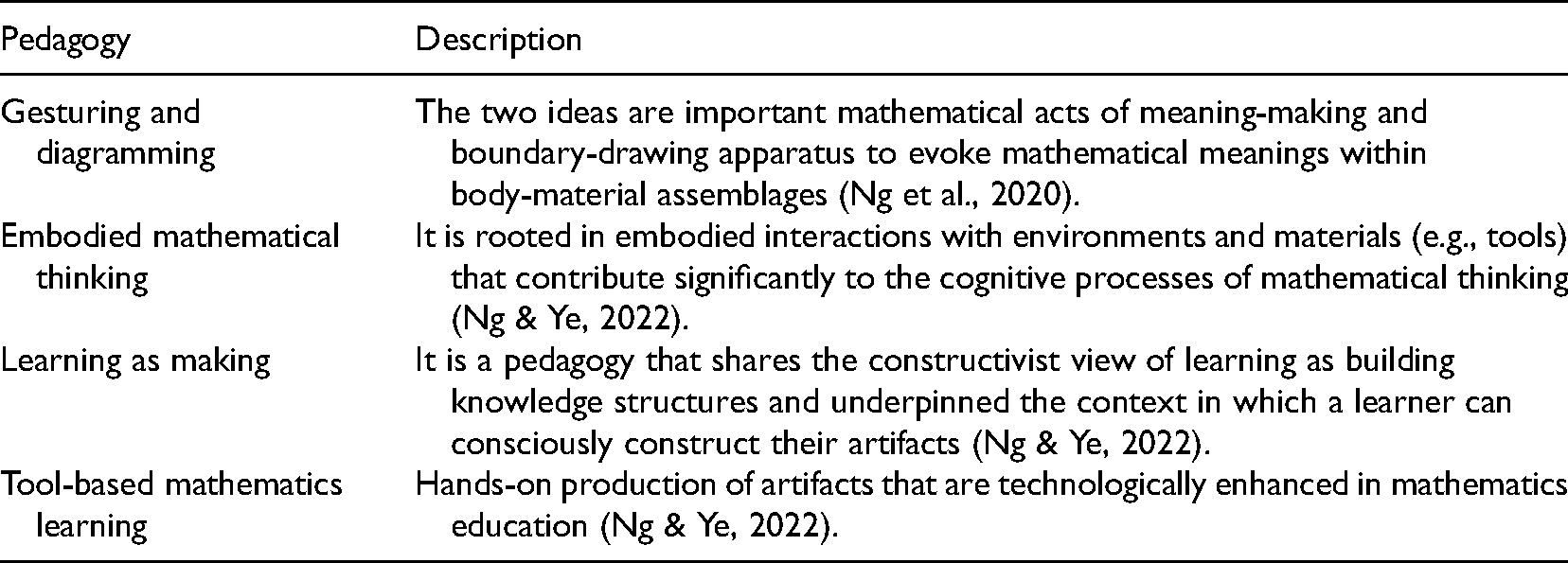
Pedagogies to use 3D pens in mathematics classrooms.
Based on the aforementioned discussions, 3D printing is a powerful technological tool to produce concrete physical objects. Mathematics deals with abstract “non-physical” conceptual ideas such as 3D modeling skills and spatial concepts to express the digital objects (Ng & Ferrara, 2020; Song, 2019). It is curious to know how these two knowledge domains (i.e., 3D printing and mathematics) interact and communicate with each other in mathematics education. To identify the theories mentioned across studies, this study considered theories that could present, organize, and systematize a set of results in 3D printing and mathematics education, which then becomes a tool/guideline for future educators. In addition, theories that can help provide philosophical backgrounds are also identified. This section identified three major theories that shed light to the question (see Table 6).
Theoretical framework to connect knowledge domains.
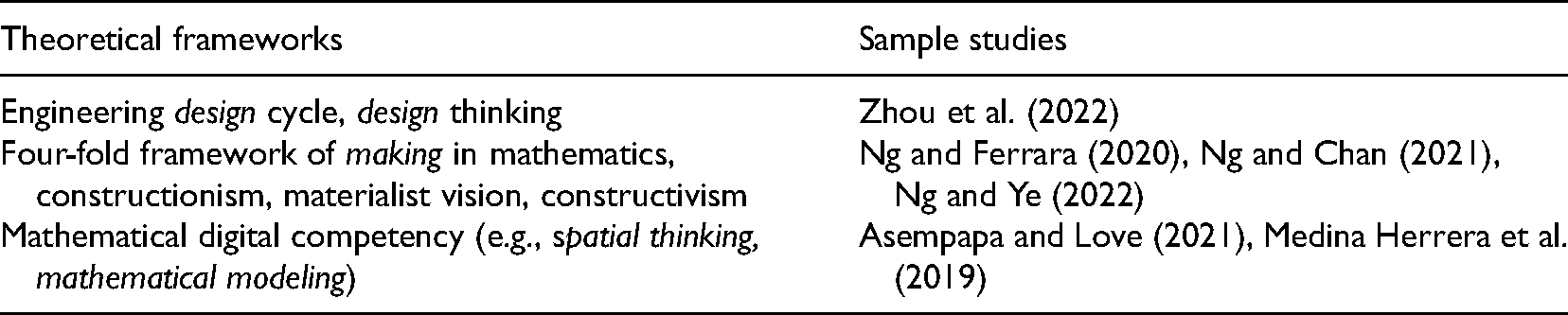
Theoretical framework to connect knowledge domains.
The second commonly mentioned competence is mathematical modeling (n = 6) that acts as a process to use mathematical concepts to represent, analyze, make predictions, and provide insights into real-world phenomena (e.g., Asempapa & Love, 2021; Cairns et al., 2018). When teaching mathematics modeling through 3D printing, technological tools such as computer simulations and computer-aided design can be used to formulate and revise mathematical models so that students can develop mathematical concepts and related skills through 3D design processes (Asempapa & Love, 2021). Lin et al. (2021) adopted repetitive modeling in STEM-based activity to enhance students’ imagination to stimulate students’ mathematics interest and learning performance. Likewise, Cairns et al. (2018) used 2D modeling activities with 3D fabrication to encourage student reflections on their own reasoning, explanations and predictions, as well as their interpretations of problem situations. Although these studies do not establish a sound framework to illustrate how mathematics modeling works, it is an important idea that helps educators to connect 3D printing and mathematics education.
This review provides an overview of empirical research literature that pertains to 3D printing studies within the mathematics educational contexts. According to the prevalent research questions, this study contributes to filling a few of these gaps as well as providing directions for future research on 3D printing and mathematics education:
Recent STEAM models offer science, engineering and technology as the central roles of STEAM and studies may underestimate the importance of mathematics and design elements (e.g., Corlu et al., 2014; Kertil & Gurel, 2016). As mathematics has a close relationship with technological tools, future research should try to rethink the role of mathematics in STEAM education via tool-based pedagogies. Studies have explored more than one technology that facilitates the 3D printing production, no matter in terms of software or hardware. Due to the trend of STEAM education and technological advancement, researchers have applied different platforms and technologies (e.g., 3D printing pens, augmented reality, GeoGebra) to facilitate the 3D printing production and teaching/learning. In the light of a lack of rigorous research methods, future research will develop different quantitative and qualitative assessment methods to evaluate students’ learning performance by using knowledge tests, self-perceived surveys, and learners’ artifacts, projects, and conversations. Furthermore, educators and researchers should construct different pedagogical strategies (e.g., flipped classroom, gamification) and theoretical perspectives (e.g., self-determination theory, constructionism) to understand how students motivate and engage themselves in the making process. Also, more evidence is necessary to understand the learning behavior of students such as student-material and student-student interaction and collaboration so as to develop their multiple learning skills (e.g., problem-solving, creativity) in the context of 3D printing. Challenges were identified in this review that 3D printing is a hurdle for some teachers and students. Students are not familiarized with 3D printing, and they have a few connections with 3D printing in their daily lives. It is suggested that future studies can propose interventions to reduce the technical difficulties through other pedagogies and technologies. Students can also gain much satisfaction from the learning activities and easily express themselves mathematically.
Conclusion
The traditional chalk-and-talk method of classroom delivery has gradually become outmoded. 3D printing offers educators the opportunities to revolutionize mathematics education in that it offers students cognitive and social support to build mathematical concepts especially 3D visual-spatial sense (Iannone & Miller, 2019). Although there are still many challenges such as hardware and software optimization, processing, formatting, printing, and maintenance issues, 3D printing is an effective tool to develop students’ mathematics understandings and attitudes with the trend of STEAM education. The maker movement is promoted rigorously throughout the years and mathematics is one of the core elements of STEAM education (Lin et al., 2020). Applying 3D printing into mathematics education facilitated comprehensively to cooperate with this education trend (Asempapa & Love, 2021). Also, due to the rapid advance of technologies in the fourth industrial revolution, it is also a good opportunity to develop their digital skills for students to learn 3D modeling, drawing and printing in their school life so that they may apply it in their future job and studies (Ng & Tsang, 2021).
There are several limitations in this review. The overall number of selected studies is small and only 30 studies were included in this review. It is suggested that future studies could apply more database searches, not limited to the Web of Science and Scopes databases, in light of the small number of publications. Since 3D printing is an emergent technology, the first article was found in 2015. It is foreseen that more studies will be produced, and a longer time period of studies could be examined to give a more comprehensive picture of how 3D printing technology was implemented in mathematics education. Second, there is a lack of appropriate scientific research related to both longitudinal evaluations and perceptions of 3D printing in mathematics education using rigorous quantitative methods such as factor analysis and structural equation modeling. There is a need to develop quality research outputs to systematically examine the impact of 3D printing on student learning in the field of education.
Footnotes
Contributorship
Davy Tsz Kit Ng: Conceptualization, Methodology, Writing-Original draft preparation. Ming Fung Tsui: Formal analysis, Writing-Original draft preparation. Manwai Yuen: Supervision, Writing-Reviewing and Editing.
Declaration of conflicting interests
The author(s) have no conflicts of interest to disclose. The manuscript has not been published previously and is not being simultaneously submitted elsewhere. There are no any real or potential conflicts of interest that could be seen as having an influence on the research. No reproduction of copyrighted material is evident in this manuscript hence there is no need to apply for any necessary permission.
Funding
The author(s) received no financial support for the research, authorship, and/or publication of this article.
