



Abstract
Given the significance of functional thinking at the elementary school level, there has been growing interest in teachers who play a major role in enhancing students’ functional thinking. This study surveyed 119 elementary school teachers in Korea to investigate their knowledge for teaching functional thinking. A written assessment was developed for this study regarding the knowledge of mathematical tasks, instructional strategies, and mathematical discourse to teach functional thinking. The results of this study showed that many teachers could design mathematical tasks corresponding to simple relationships of two quantities but some of them had difficulties in constructing the task for
Keywords
1. Introduction
Developing algebraic thinking from the early years of schooling has emerged as a central concern in recent mathematics education. In particular, a functional perspective was promoted as one of the two main content areas of early algebra (Kieran et al., 2016). Functional thinking includes “(a) generalizing relationships between covarying quantities; (b) representing and justifying these relationships in multiple ways using natural language, variable notation, tables, and graphs; and (c) reasoning fluently with these generalized representations in order to understand and predict functional behavior.” (Blanton et al., 2015a, p. 512).
The significance of functional thinking in the elementary grades has led to various studies, notably regarding students’ understanding of multiple types of functional relationships including linear relationships (e.g., Ayala-Altamirano & Molina, 2021; Carraher et al., 2008; Moss & McNab, 2011). Recent studies explored how even young students, such as kindergarteners or first graders, came to notice, generalize, and represent relationships between two quantities (e.g., Blanton et al., 2015a, 2017; Mulligan et al., 2020; Pittalis et al., 2020).
Compared to the increasingly accumulated studies on students’ functional thinking, fewer studies have been conducted on the knowledge for teaching functional thinking, specifically pedagogical content knowledge (Wilkie, 2016). In fact, Kieran (2007) claimed it was vital for teachers’ professional development to include developing their knowledge of how to teach a functional approach to algebra. Blanton et al. (2011) summarized five big ideas and their concomitant essential understandings for teachers to teach algebraic thinking in Grades 3–5, including functional thinking as a path to algebra. However, it is only recently that researchers have seemed to turn their attention to the knowledge teachers actually have for teaching functional thinking (Pincheira & Alsina, 2021).
For instance, Wilkie (2014) surveyed 105 upper primary teachers (i.e., who were teaching 8–12-year-old students) to investigate their knowledge for teaching functional thinking and found that they could solve pattern generalization tasks (i.e., content knowledge), whereas they had difficulties interpreting students’ responses and providing them with appropriate feedback (i.e., pedagogical knowledge). Demonty et al. (2018) investigated the knowledge for teaching figural pattern activities, corresponding to
Our intention for this study was to continue investigating teacher knowledge for teaching functional thinking. In doing so, we sought to move beyond a simplistic dichotomy between what teachers know and do not know, which has often led to demonstrating teachers’ overall lack of conceptual understanding of the topics to be analyzed (e.g., Oliveira et al., 2021; Strand & Mills, 2014). Rather, we focused on how teachers know and use functional thinking in realistic teaching contexts. Specifically, we analyzed in detail how teachers might construct a mathematical task to teach a specific functional relationship, understand the pros and cons of instructional strategies used in teaching functional relationships, and interpret students’ common errors and then give them feedback. In short, this study explored the three strands of teacher knowledge for teaching functional thinking: mathematical tasks, instructional strategies, and mathematical discourse.
Considering the lack of research on teacher knowledge for teaching functional thinking, we expect this study to add empirical research to the literature. In addition, as this study analyzes teacher knowledge in the Korean context, it has another significance. Given the increased awareness of functional thinking’s significance from the early stages of schooling, some countries incorporated it into their elementary mathematics curricula (e.g., National Governors Association Center for Best Practices & Council of Chief State School Officers, 2010; Ontario Ministry of Education, 2020). However, like many other Asian countries, Korea does not explicitly include function or functional thinking in the national elementary mathematics curriculum (Ministry of Education, 2015). Consequently, few studies have explored elementary school teacher knowledge for teaching functional thinking in Korea.
Nevertheless, some activities related to functional thinking are covered in the textbooks by urging students to investigate correspondence relationships as well as to notice, generalize, and represent various numeric or geometric patterns. In this circumstance, it is significant for teachers to understand the intentions of such activities and to foster functional thinking for elementary students in teachable moments. Our specific research question was this: What would be the characteristics of elementary school teachers’ knowledge of mathematical tasks, instructional strategies, or mathematical discourse pertinent to teaching functional thinking? The results of this study help to reveal to what extent teachers understand various aspects of teaching functional thinking without any further prompts from the mathematics curriculum or professional development.
2. Theoretical background of teacher knowledge for teaching functional thinking
Teacher knowledge is a critical prerequisite for high-quality teaching and, ultimately, students’ learning (Potari & Chapman, 2021). However, elementary school teachers have often been reported as having limited knowledge of the mathematical content to be taught. For instance, Strand and Mills (2014), who analyzed 21 research papers on teacher knowledge for teaching early algebra, showed that elementary school teachers had difficulties interpreting and efficiently using algebraic symbols or solving algebraic problems, even though they had the procedural skills for understanding patterns. Recently, Pincheira and Alsina (2021) conducted a systematic review on teacher knowledge for teaching early algebra with 17 research papers from the mathematical knowledge for teaching perspective by Ball et al. (2008), in which pedagogical content knowledge consists of three separate categories: (a) knowledge of content and student, (b) knowledge of content and teaching, and (c) knowledge of content and curriculum. Pincheira and Alsina (2021) reported a preponderance of studies addressing functional thinking as a content area, specifically the development of patterns and functions, over general algebraic reasoning. They also found studies addressing subject matter knowledge were more popular than studies about pedagogical content knowledge with in-service elementary school teachers. For pedagogical content knowledge, 7 out of the 17 papers fell in the category “knowledge of content and student,” and only 5 papers covered “knowledge of content and teaching.” Key findings of this study included a lack of mathematical knowledge to teach early algebra. Consequently, the researchers asked for more empirical studies on the mathematical knowledge elementary school teachers must have to teach early algebra, including functional thinking.
Defining what elementary school teachers need to know to teach functional relationships is important not only for effective teacher preparation but also for professional development efforts. Recently, researchers emphasized core aspects of teacher knowledge for teaching functional thinking. They include not only content-specific knowledge but also teaching practices. For instance, McAuliffe and Vermeulen (2018) explored 26 pre-service elementary teachers’ knowledge of teaching functional thinking during their teaching practicum. The researchers argued that it is important for pre-service teachers to know about pattern activities that can be used to support students’ functional thinking. Also, pre-service teachers must be able to transform their knowledge, making it accessible to students through various instructional practices. Wilkie (2016) described how 10 upper primary school teachers’ knowledge for teaching functional thinking had changed through a collaborative professional learning experience focused on the tasks for pattern generalization. Wilkie emphasized the importance of such a professional learning experience so that teachers can develop their own ability to generalize patterns and acquire diverse types of pedagogical knowledge necessary to help their students engage in algebraically meaningful generalization. These studies underline not merely what teachers know but also how they use it for effective teaching. Given this background, we developed a written assessment focused on the use of knowledge for teaching functional thinking. As illustrated earlier, teacher knowledge includes many different dimensions and can be categorized differently, depending on the researchers’ focus or theoretical background. For the current study exploring what kinds of knowledge need to be employed in teaching functional thinking, we specifically underscored the following three strands of knowledge for teaching functional thinking: mathematical tasks, instructional strategies, and mathematical discourse.
The knowledge of mathematical tasks for teaching functional thinking covers the mathematical knowledge needed to design, select, or analyze various tasks concerning a correspondence relationship between two quantities. Pattern tasks, useful to develop the functional thinking of young students, are represented in a variety of forms, including numeric and geometric patterns with diverse types of functions such as
The knowledge of instructional strategies for teaching functional thinking is the knowledge related to understanding the affordances and limitations of instructional strategies to be used specifically in teaching functional thinking. It is important for teachers to teach young students to notice, explore, and generalize a correspondence relationship between two co-variational quantities. There are at least three types of approaches for students to explore functional relationships (Blanton et al., 2011; Smith, 2003), even though recent studies on students’ functional thinking have subdivided them into a total of 8 or 10 levels (e.g., Blanton et al., 2019; Stephens et al., 2017). Recursive thinking attends to the changes in the sequence of only one variable, which makes it difficult to generalize the relationship between two quantities. In contrast, covariation thinking and correspondence thinking attend to the changes in two variables. However, only the latter identifies the variation between two quantities horizontally in a function table, yielding a generalized function rule.
Blanton et al. (2015a) argued that students need to have an opportunity to fill in a function table for the independent variables as well as the dependent variables. Radford (2008) suggested that “algebraic pattern generalizations entail (1) the grasping of a commonality, (2) the generalization of this commonality to all terms of the sequence under consideration, and (3) the formation of a rule or schema that allows one to determine any term of the sequence directly” (p. 93). Based on this suggestion, Twohill (2018) emphasized far generalization (i.e., finding the value of a step distant from given steps) as well as near generalization before jumping into representing a pattern rule. Moss and McNab (2011) emphasized instructional strategies, such as using blocks with which students create their own patterns and using position number cards to represent the order of arrangement for geometry patterns. Teachers need to know which strategies are appropriate for their students and understand the affordances and limitations of such strategies.
The knowledge of mathematical discourse for teaching functional thinking is related to noticing students’ various responses, including typical errors, and sequencing their thinking types according to the functional thinking levels. Crucially, it is also related to providing appropriate feedback for them to recognize such errors and ultimately enhance their functional thinking. It is a challenge for students to generalize and reason about functional relationships between two co-varying quantities and to deal with variables representing these relationships. For instance, Blanton et al. (2011) described that young students tend to confuse an independent variable with a dependent variable and have difficulties representing a function rule with variables. Twohill (2018) reported that students often used a whole-object strategy in pattern generalization (i.e., identifying a term of the sequence as a unit and constructing other terms by generating multiples of the unit). Teachers ought to understand what their students struggle with and why and provide adequate feedback tailored to their misconceptions or difficulties.
In classifying these three categories of knowledge, we do not argue that the categories should be treated as distinct concepts with no unions. In fact, choosing an appropriate task or providing adequate feedback to students can be interpreted as a kind of instructional strategy in a broad sense. Nevertheless, in order to examine teacher knowledge in detail, this study employed operational definitions of the three categories of teacher knowledge, depending on whether the knowledge was related to tasks, instructional strategies, or discourse specific to promoting functional thinking.
3. Method
3.1 Participants
The participants for this study were recruited in Korea using a convenient sampling method but they were from all over the country. A total of 150 questionnaires were distributed to the teachers, and 119 questionnaires were returned. The participant teachers’ teaching experiences were diverse, as shown in Table 1. The diversity of participating teachers, characterized by regions from all over the country and teaching experiences, was intended to alleviate the limitations of a convenient sampling method.
Teaching experience of participants.

3.2 Assessment items
A questionnaire was developed to investigate teacher knowledge for teaching functional thinking. Building on the theoretical background described earlier, a written assessment was developed using the three strands of knowledge: mathematical tasks, instructional strategies, and mathematical discourse. Each strand consisted of three main items, with additional sub-items as needed. Specifically, each item assessing teacher knowledge of mathematical tasks and mathematical discourse had two sub-items (see the examples of main items and their sub-items below). In order to check whether the assessment items would be appropriate for the target research population, three teachers with doctoral degrees in elementary mathematics education reviewed the items’ validity. The questionnaire was then administered to 15 elementary school teachers as a preliminary assessment. Building on the teachers’ responses, a final version of the questionnaire was developed by revising several sentences to convey the intentions of the items more accurately.
This study’s assessment items were designed to be connected with realistic instructional contexts. If possible, textbook activities, including illustrations, were used as they were or, at most, slightly modified for the questionnaire. This fidelity to the source activities reflected this study’s purpose: investigating the knowledge necessary for teachers to teach functional thinking in their familiar teaching contexts. Most assessment items of this study also allowed for multiple responses from teachers to explore their rationales or thinking.
The items for assessing teacher knowledge of mathematical tasks were intended to explore whether teachers could construct tasks corresponding to given functional relationships (i.e.,
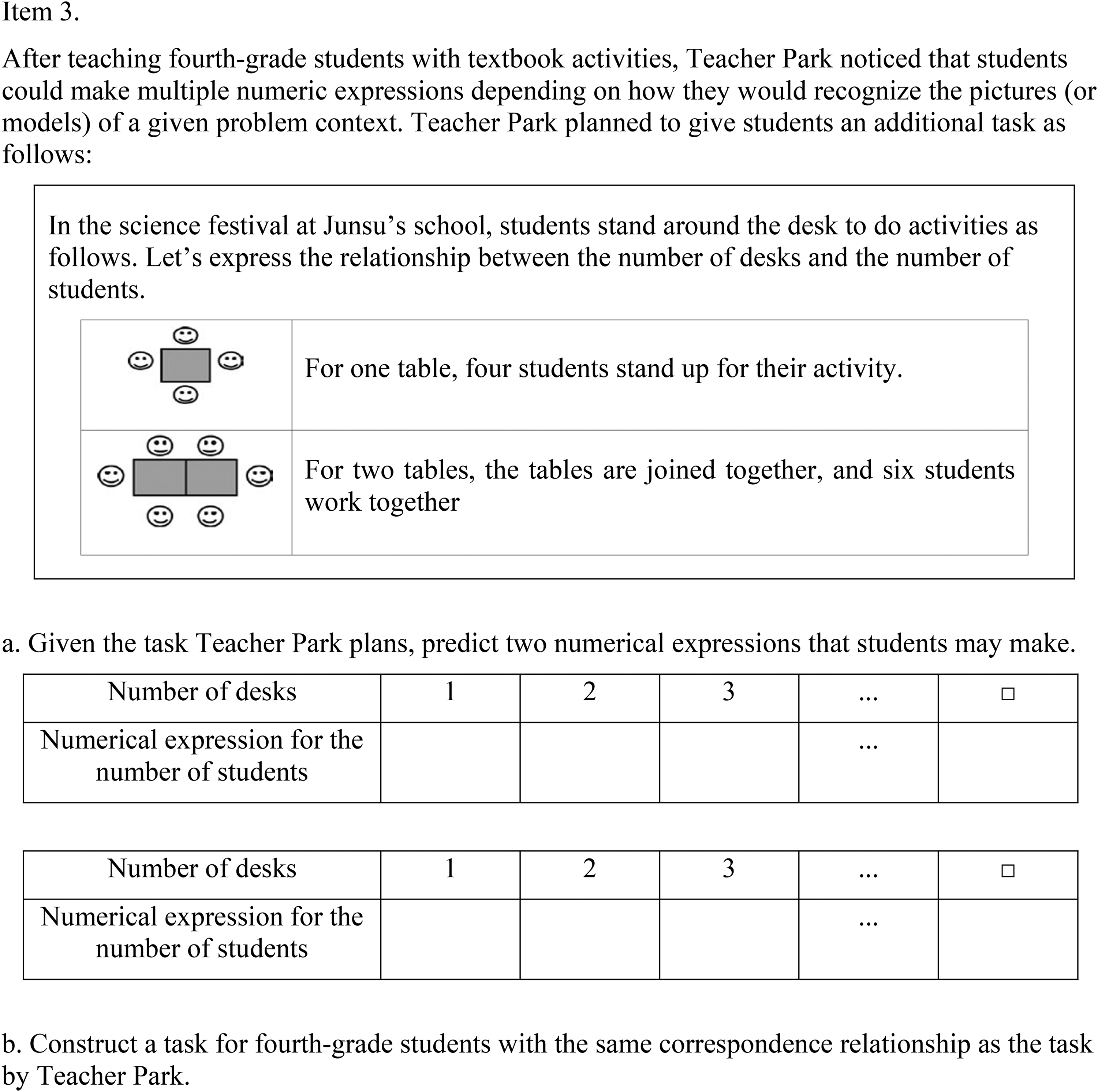
Example of items for assessing teacher knowledge of mathematical tasks.
The items for assessing teacher knowledge of instructional strategies were intended to explore whether teachers could identify the pedagogical affordances of (a) using a non-sequential function table, (b) looking for the dependent terms, specifically for far independent terms, before representing the relationship between two quantities in a numerical expression, and (c) employing position number cards when dealing with geometric patterns. For instance, Item 4 asked teachers to compare and contrast two function tables (see Figure 2).
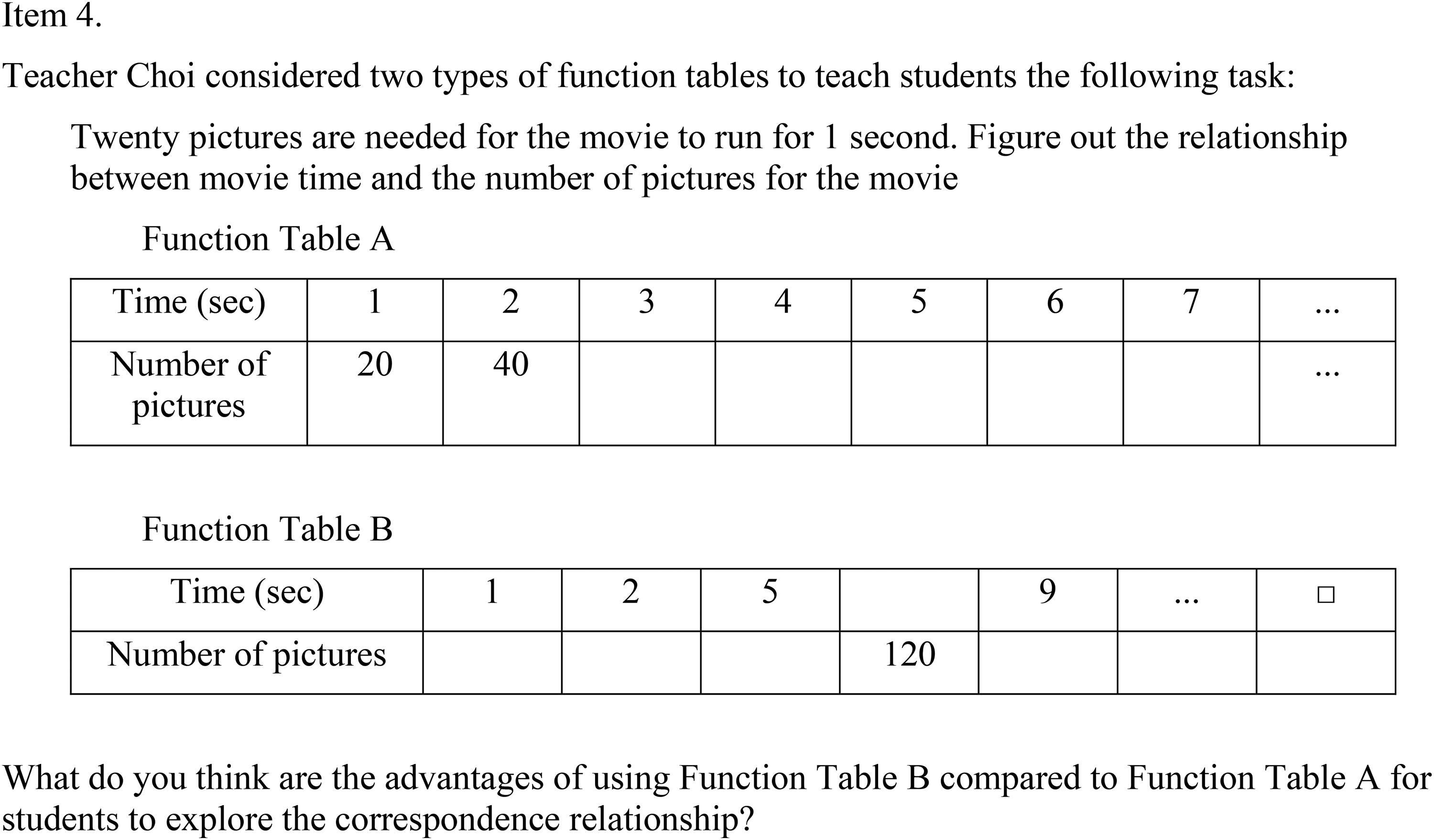
Example of items for assessing teacher knowledge of instructional strategies.
The items for assessing teacher knowledge of mathematical discourse were intended to explore whether teachers could understand various errors that students often make in investigating a correspondence relationship and then provide such students with appropriate feedback. For instance, Item 7 asked teachers to respond to two students who made errors (see Figure 3). Specifically, the student from Sub-item 7a applied an incorrect proportional reasoning strategy to predict a corresponding value for the 10th independent term, and the student from Sub-item 7b focused only on the increased amount “2” in generalizing the intended relationship
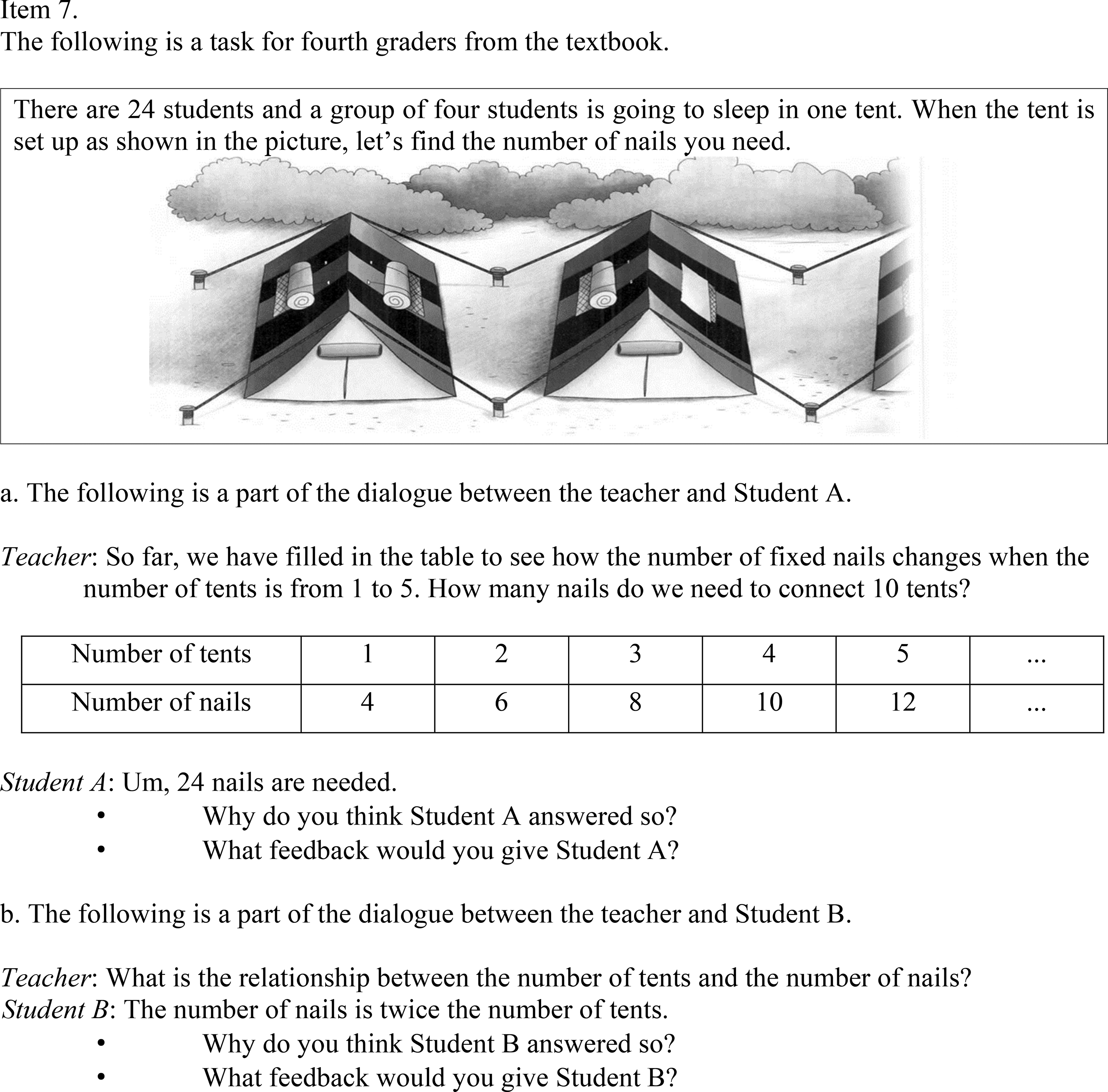
Example of items for assessing teacher knowledge of mathematical discourse.
3.3 Data collection and analysis
A total of 150 questionnaires were distributed to elementary school teachers based on a convenient sampling method. Teachers were guided to answer the questionnaire by themselves for 1 h and 119 questionnaires were returned (i.e., 79.3%). An item-by-item analysis was performed. According to the characteristics of each item, teachers’ responses were analyzed either for the correctness or for adequateness. For instance, regarding Item 3, teachers’ responses were analyzed for correctness. When an item asked for two different answers, such as Item 3a, we counted it as correct only if both answers were correct. Regarding Item 4, teachers’ responses were analyzed for adequateness. Because some responses were adequate but superficial, we further divided teachers’ responses into representative types tailored to each assessment item. For instance, adequate responses to Item 4 included the cases when teachers mentioned a correspondence relationship, a reverse relationship, or a symbol variable in contrasting two different function tables. The adequate responses were then distinguished as either valid or superficial, depending on how detailed the response was (see the “Results” section for examples of such responses). The frequency of teachers’ responses in each item was counted, and representative response types were selected both for correct (or adequate) and for incorrect (or inadequate) answers.
4. Results
4.1 Teachers’ overall performance
Figure 4 shows the results of teachers’ responses for all items. The horizontal axis refers to items, and the vertical axis refers to the percentages of correct or adequate answers. For the overall results, the percentages of correct or adequate responses were more than 60% in all items except for Items 3b and 7b. Regarding the three strands of knowledge for teaching functional thinking, teacher knowledge of instructional strategies was stronger than both that of mathematical tasks and that of discourse, which varied greatly depending on the items. The following sections show a detailed analysis of selected items according to the three strands of teacher knowledge. Considering this article’s space limitations, please note that the results elaborate on a few items representing an overall tendency or noticeable features for each of the three strands of knowledge.
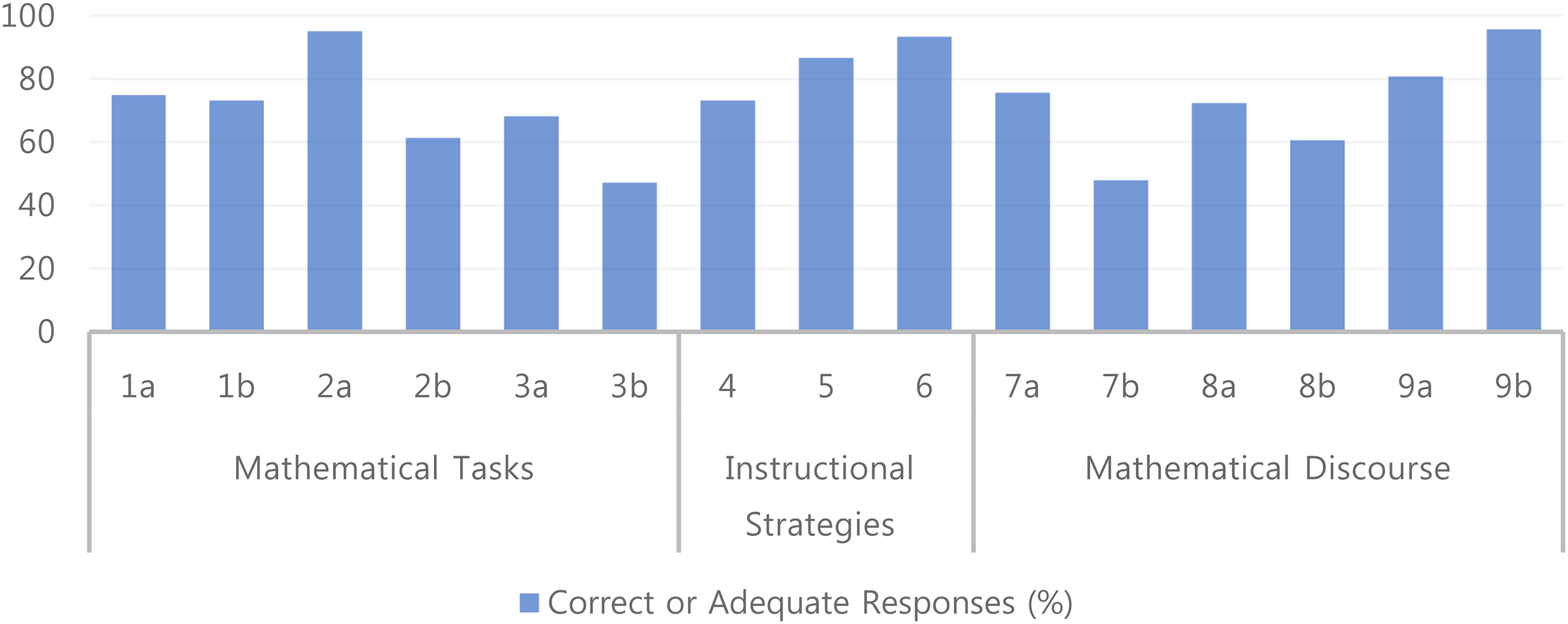
Teachers’ overall performance with respect to correct or adequate responses.
4.2 Teacher knowledge of mathematical tasks
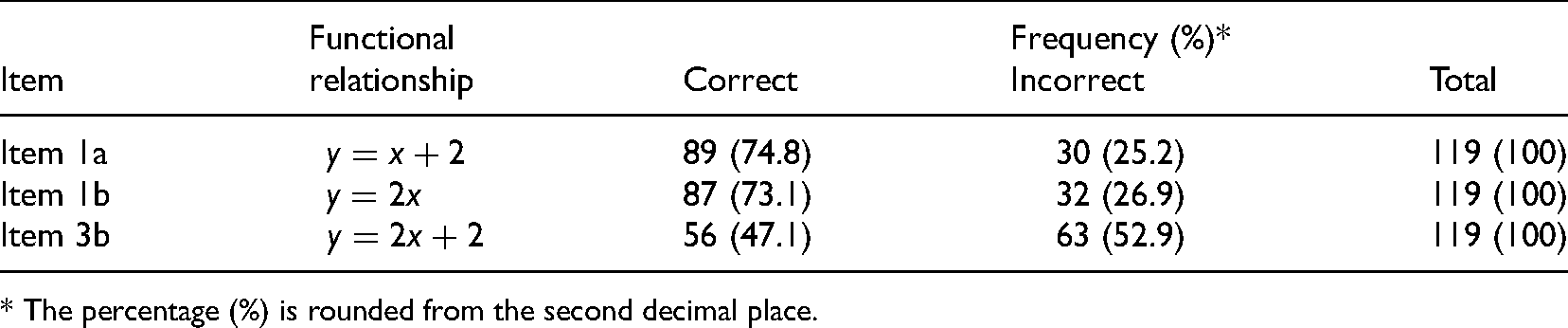
Table 2 shows the results of teacher performance with the items related to task development. Item 1 asked teachers to construct a task with which fourth graders could recognize the given relationship between two quantities and represents it by an equation with symbol variables. Whereas Item 1a dealt with the additive relationship (i.e.,
Teachers’ responses to the items of designing tasks for functional relationships.
* The percentage (%) is rounded from the second decimal place.
More than 70% of the teachers could pose a word problem corresponding to the additive relationship and the multiplicative relationship. Only about a quarter of the teachers provided incorrect responses. The most common incorrect response for Items 1a and 1b concerned the set of tasks focused on finding the correspondence value (or dependent variable) to a fixed number (or independent variable). For instance, correct responses for Item 1a included “Minsu’s brother is two years older than Minsu. What is the relationship between Minsu’s age and his brother’s age?” Incorrect responses for the same functional relationship included “Yuna’s sister is two years older than Yuna. How old is Yuna’s sister when Yuna is 10 years old.” To be clear, the relationship between Yuna’s age and her sister’s age matches well with the given functional relationship. By asking for a specific age of Yuna’s sister, however, the task makes students focus only on finding a fixed value instead of looking for a correspondence relationship between two ages.
Regarding Item 3b, the frequency of correct responses dramatically decreased. As shown in Figure 1, an illustrative task corresponding to the functional relationship of
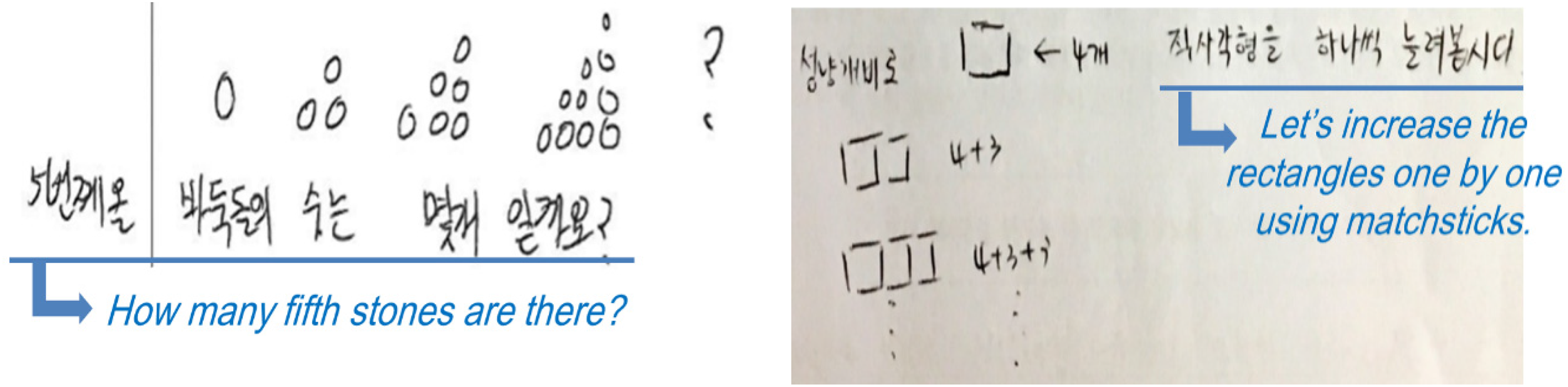
Examples of incorrect responses to
4.3 Teacher knowledge of instructional strategies
Teacher knowledge of instructional strategies was found to be the most successful among the three strands of teacher knowledge in this study. As shown in Figure 4, more than 80% of the teachers could explain the pedagogical benefits of asking students to find a dependent value for a far independent value (i.e., 100th term) before representing a correspondence relationship with symbol variables (Item 5) and using position number cards when dealing with geometric patterns (Item 6). In contrast, 73.1% of the teachers could provide adequate responses for Item 4 (see Figure 2 for the item), which asked them to explain the benefits of using a non-sequential function table for students to investigate a correspondence relationship.
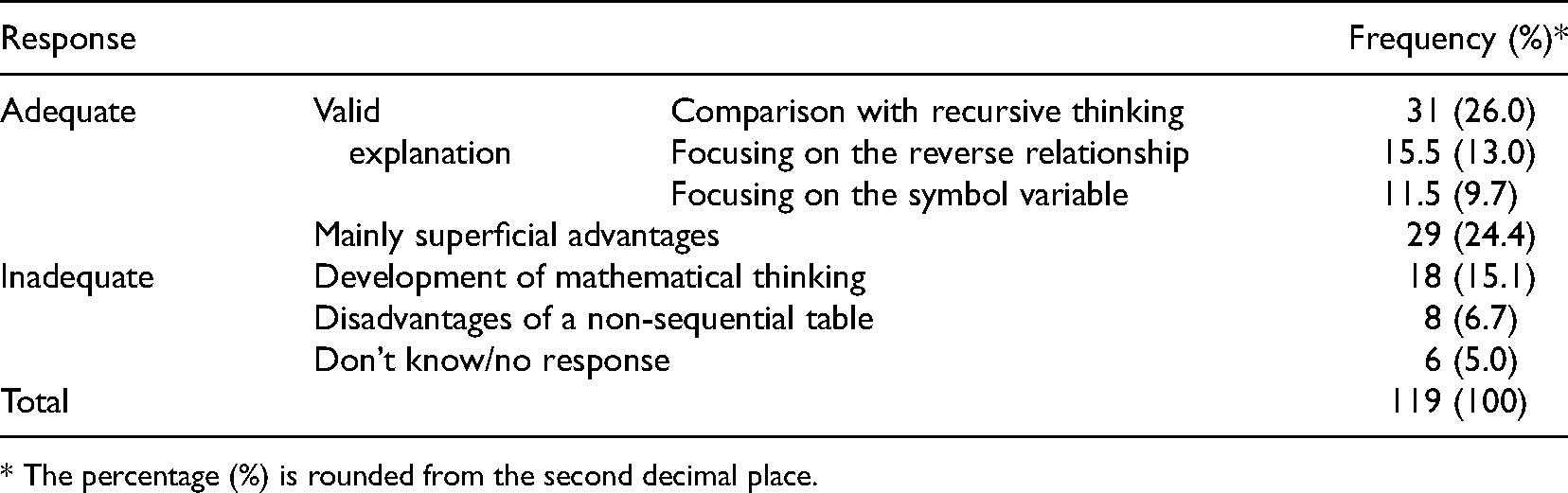
Table 3 shows the results of teachers’ responses for Item 4. Note that 48.7% of the teachers could provide valid explanations. Specifically, 26.0% of them emphasized that the non-sequential function table (i.e., Function Table B in the item) could make students focus on two quantities and their relationship but that the sequential function table (i.e., Function Table A in the item) could make students focus only one variable (i.e., the number of pictures) leading to recursive thinking (i.e., the number of pictures increases by 20). In addition, 13.0% of the teachers noticed that the non-sequential function table asked students to fill in an independent value for a given dependent value, which could stimulate students to explore the correspondence relationship between time and the number of pictures. The remaining 9.7% of the teachers explained that the symbol variable (i.e., □) in the non-sequential function table could highlight the need to generalize the relationship between the two quantities and to represent it with the symbol variable. However, as many as 24.4% of the teachers provided mainly superficial benefits of using the non-sequential function table (e.g., “Function Table B could make students investigate the correspondence relationship more clearly.”).
Teachers’ responses for item 4.
* The percentage (%) is rounded from the second decimal place.
Note also that 26.9% of the teachers provided inadequate explanations. Specifically, 15.1% of the teachers claimed that Function Table B was useful in developing students’ mathematical thinking. We regarded this type of response as inadequate because the item asked teachers to explain the benefits related to investigating the correspondence relationship. Contrary to what was asked in the item, 6.7% of the teachers explained the disadvantages of the non-sequential function table. For instance, a teacher described, “Function Table A is easier for students to understand than Function Table B. The numbers in Function Table B are arranged in a non-sequential manner, so students in an ordinary classroom may feel a great cognitive burden and make a mistake.” These inadequate responses indicate that more than a quarter of the teachers did not understand the significance of using a non-sequential function table to explore a function rule between two co-varying quantities.
4.4 Teacher knowledge of mathematical discourse
The items investigating teacher knowledge of mathematics discourse consisted of analyzing students’ thinking or typical errors and suggesting feedback against the errors. As shown in Figure 4, the percentages of adequate responses for the teacher knowledge of mathematical discourse were more than 60% except Item 7b. Note that Item 7 presented a context in which students set up tents in a specific way followed by a dialog between the teacher and a student regarding the relationship between the number of tents and the number of nails. Items 7a and 7b asked teachers to analyze two students’ errors in exploring and generalizing the correspondence relationship between two quantities (see Figure 3 for the item). Specifically, Student A in Item 7a made an error by employing the whole-object strategy (Twohill, 2018)—incorrect proportional reasoning used in predicting the corresponding value for a relatively large number (e.g., the 10th corresponding value is twice the 5th corresponding value for a linear relationship). Student B in Item 7b focused only on the increased amount “2” for the linear relationship,
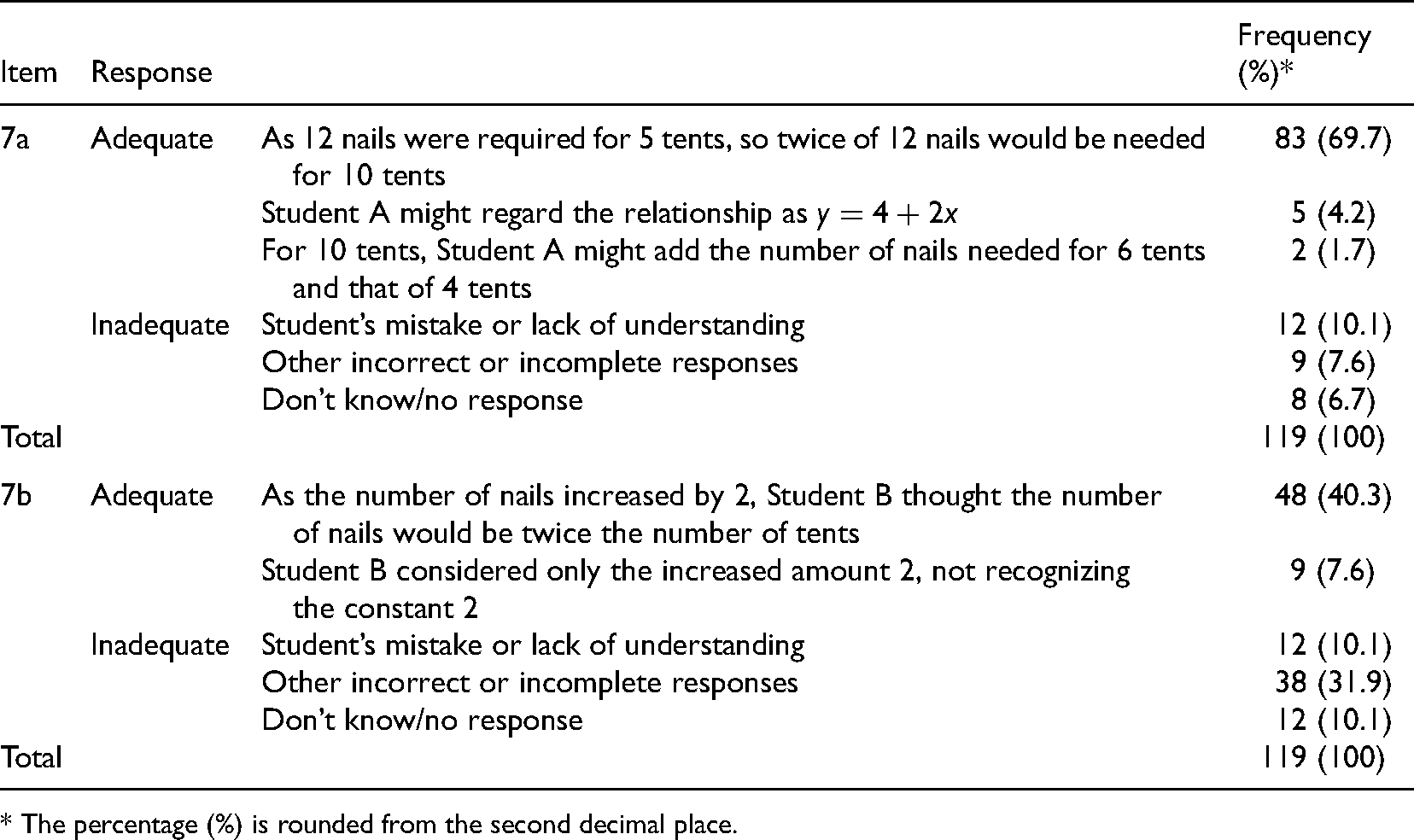
Teachers’ responses on students’ errors for items 7a and 7b.
* The percentage (%) is rounded from the second decimal place.
For Item 7a, as many as 75.6% of the teachers provided adequate responses to analyze Student A’s error. Specifically, their prevalent responses were related to the whole-object strategy. In contrast, for Item 7b, only 47.9% of the teachers could provide adequate responses to Student B’s error. The most frequent response was that Student B thought the number of nails would be twice the number of tents, because the number of nails increased by 2. In other words, the teachers understood that Student B focused only on the number of nails increasing by 2 without perceiving two of the four nails for the first tent as a constant.
Regarding inadequate responses for Items 7a and 7b, the same 10.1% of the teachers attributed students’ errors as their mistakes or lack of understanding. An example of teachers’ responses was, “The student lacks mathematical thinking.” A noteworthy result is that 7.6% of the teachers provided other incorrect or incomplete responses for Item 7a, whereas 31.9% of them did so for Item 7b. Examples of the latter fell into three cases: (a) describing reasons that did not match well with the given problem context (e.g., The student did not think of the case in which only one nail between two tents would be enough to fix them); (b) claiming that the student overlooked the nails shared between tents, analyzed as incomplete in this study because the teachers did not connect the shared nails with either the increased amount or the constant for
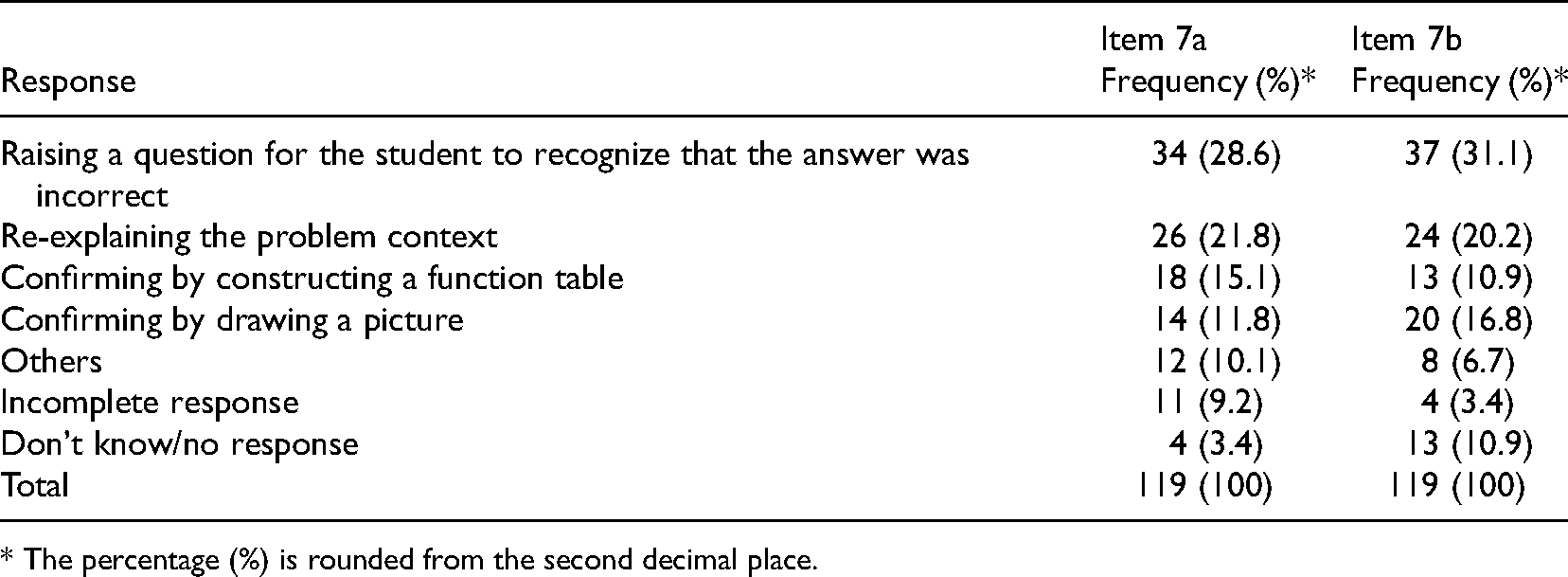
Note that in the second part of Items 7a and 7b, we asked teachers to describe what kinds of feedback they would give the students who made errors. Table 5 shows the results of teachers’ responses on feedback for Items 7a and 7b. Despite the differences between the teachers’ responses to students’ errors for Items 7a and 7b as analyzed above, the types of teacher feedback were very similar.
Teachers’ responses on feedback for items 7a and 7b.
* The percentage (%) is rounded from the second decimal place.
As shown in Table 5, many teachers tended to provide the students with feedback that would lead them to recognize the errors for themselves rather than to point them out directly. The teachers’ most frequent response (i.e., 28.6% for Item 7a; 31.1% for Item 7b) was to pose reflective questions to help students notice that their inference was incorrect, referring to the function table. An example for Item 7a was, “We need 4 nails for 1 tent. Do we need 8 nails for 2 tents? Otherwise, we need 8 nails for 3 tents, then do we need 16 nails for 6 tents?” Owing to the function table given in the task and the teacher’s request of checking specific cases, students were expected to recognize the whole-object strategy was not plausible. Similarly, an example for Item 7b was, “According to you [what you said], if you double the number of tents for 1 tent, you have to get
About 20% of the teachers suggested that they would re-explain the problem context, probably focusing on the number of nails needed for the first two tents. Some teachers chose to confirm students’ thinking with a function table (i.e., 15.1% for Item 7a; 10.9% for Item 7b), and others chose to confirm students’ thinking by drawing a picture (i.e., 11.8% for Item 7a; 16.8% for Item 7b).
5. Discussion and implications
This study analyzed teacher knowledge for teaching functional thinking by surveying in-service elementary school teachers. It is encouraging that the percentages of correct or adequate responses from Korean teachers were more than 60% in almost all questionnaire items. Wilkie (2014) reported that less than half of upper primary teachers demonstrated reasonable pedagogical content knowledge, even though two-thirds of them were teaching-related ideas under the Pattern and Algebra strand of the Australian mathematics curriculum. As mentioned earlier, functional thinking does not appear officially in the current Korean elementary mathematics curriculum and the teachers did not participate in professional development programs related to teaching for functional thinking. Considering these facts, the overall performance of the teachers from this study seems quite successful.
Nevertheless, detailed analysis with sampled items revealed the areas in which the teachers experienced difficulties, which routinely draw much attention from teacher educators and researchers. Regarding the knowledge of mathematical tasks for teaching functional thinking, at least two aspects need to be discussed. The first is that among the participants’ incorrect responses concerning designing a mathematical task, a representative response was to ask students to focus on finding a dependent value. The focus was on a specific incidence, even though the intended task was to encourage students to focus on how the two co-varying quantities relate to each other. As the fundamentals of functional thinking involve noticing the relationship between co-varying quantities, it is important for students to move from investigating individual incidences to looking for the corresponding relationship common across instances (Blanton et al., 2011; Pittalis et al., 2020; Radford, 2008; Stephens et al., 2017). In this respect, it is worthwhile re-considering this representative incorrect response. In fact, such difficulty is not new, as other studies have also reported teachers’ difficulties in helping students shift from focusing solely on the number pattern within one variable to focusing on the relations between two co-varying quantities (McAuliffe & Lubben, 2013).
The second aspect regarding the knowledge of mathematical tasks is that the teachers in this study had difficulties constructing mathematical tasks for a linear relationship (i.e.,
Regarding the knowledge of instructional strategies for teaching functional thinking, consistently high percentages of correct or adequate responses were again quite encouraging. Teachers had a solid understanding of asking for a dependent value for a far independent value before representing a functional relationship with symbol variables and using position number cards when dealing with geometric patterns for students to notice the two co-varying quantities. Nevertheless, of note was that about a quarter of this study’s teachers provided mainly superficial advantages of using a non-sequential function table for students to investigate the correspondence relationship. Another noticeable aspect was that some teachers described the disadvantages of using a non-sequential function table, even though the questionnaire item asked for the benefits of using a non-sequential function table for students to investigate the correspondence relationship. If a teacher does not clearly understand the advantages of core instructional strategies to boost students’ functional thinking, it will be difficult for them to use those strategies properly in class (Wilkie, 2016). Teachers need to have opportunities to fully understand the benefits of specific instructional strategies verified successfully in prior studies.
Regarding the knowledge of mathematical discourse for teaching functional thinking, teachers could explain how a student made an error by employing the whole-object strategy but had difficulties analyzing the case in which a student focused only on the increased amount for
An additional aspect worth underscoring relates to the development of assessment items to investigate teacher knowledge for teaching functional thinking. Studies on pedagogical content knowledge covering functional thinking are less popular than those on content knowledge (Pincheira & Alsina, 2021). Even though the assessment items used in this study fell into pedagogical content knowledge, they were not subdivided into the three sets of knowledge by Ball et al. (2008). Instead, the items were tailored to how such knowledge is often used interconnectedly. For instance, Item 3 included the knowledge of curriculum because it was based on the textbook activities for Grade 4 and, at the same time, the knowledge of content and students because it asked teachers to predict how students could make two different numerical expressions for the desk task. How teachers understand the intentions of textbook activities and anticipate students’ thinking are important factors because they serve as the foundation for constructing a similar task for the students (Dietiker & Richman, 2021). If we consider teaching contexts seriously, the knowledge of students, teaching, and curriculum tend to be intertwined.
This study showed that teacher knowledge for teaching functional thinking was uneven within each strand of teacher knowledge and across the three strands (i.e., mathematical tasks, instructional strategies, and mathematical discourse). This variability implies that we need to probe what exactly teachers understand for teaching functional thinking and what they do not. Considering that there has been a lack of research on the development of an instrument to measure the pedagogical content knowledge of teachers related to functional thinking (Pincheira & Alsina, 2021), this study can provide an example of such an instrument. The study’s assessment items adapted the problem contexts from an existing textbook, if possible, to explore the three strands of teacher knowledge for teaching functional thinking. While maintaining the problem contexts familiar to teachers, this study encompassed and articulated various aspects of teacher knowledge for teaching functional thinking, namely constructing and interpreting mathematical tasks corresponding to the functional relationships to be taught, identifying pedagogical benefits underlying specific instructional strategies, understanding student errors emergent in exploring and representing functional relationships and providing feedback to help them overcome such errors. A detailed diagnosis of teacher knowledge, including multiple and nuanced aspects, is essential for teachers to identify more about what knowledge needs to be improved to better support students’ functional thinking. Furthermore, a follow-up study needs to expand the current study by investigating to what extent teacher knowledge, revealed in the questionnaire of this study, may be employed in actual lessons related to functional thinking.
Finally, this study points to the need for elementary school teachers to have relevant professional learning experiences. Despite overall positive performance from this study, some teachers were not equipped with the knowledge of constructing a task for a linear relationship, describing the role of a non-sequential function table in enhancing students’ functional thinking, and identifying students’ errors in representing a functional relationship. These challenges need to be addressed by professional programs (Kieran, 2007; Wilkie, 2016), providing teachers with learning opportunities to enhance their weak or vague understandings of mathematical tasks, instructional strategies, and mathematical discourse specific to functional thinking in the elementary grades.
Note that students’ functional thinking needs to be continuously supported. Research has shown that even students who had engaged in an effective intervention program concerning early algebra across Grades 3–5 had difficulties maintaining their learning—for example, in representing functional relationships (Stephens et al., 2021). We agree with the claim by Blanton et al. (2019), “[P]art of the answer to how we might further increase student performance lies in better understanding how to support elementary teachers” (p. 1963). To provide sustaining opportunities for students to engage in functional thinking over time, teachers first need professional learning experiences in the targeted areas in which they have difficulties teaching. This study suggests that continually re-learning what teachers need specifically must be coupled with carefully diagnosing teacher knowledge for teaching functional thinking—a research area underrepresented in the literature.
Footnotes
Contributorship
Both authors contributed to the conceptualization and design of the study. Jin Sunwoo collected the data and drafted the results with a preliminary analysis. JeongSuk Pang provided important ideas for the research, refined the data analysis, and completed the manuscript writing. Both authors read and approved the final manuscript.
Declaration of conflicting interests
The author(s) declared no potential conflicts of interest with respect to the research, authorship, and/or publication of this article.
Funding
The author(s) received no financial support for the research, authorship, and/or publication of this article.
Informed consent
The participants provided written informed consent to partake in the study and have been made aware of the publication.

Correction (December 2024):
Article updated to add Informed consent section.