



Abstract
Racialised minorities continue to experience systemic disadvantages, much of which stem from the enduring legacy of colonisation. Efforts to decolonise Eurocentric systems have largely fallen short as social inequalities and injustice persist. This scoping review explored Black racialised minority perspectives on decolonising psychology, identifying systemic barriers, and proposing strategies for more equitable academic environments. A scoping review was conducted including 18 articles. The sources examine racialised minority experiences within psychological disciplines. To preserve the nuance and complexity of the data, this review employed a reflexive thematic analysis approach. The review found systematic issues such as exclusion, underrepresentation, stereotyping, and deprivation. These issues resulted in Black racialised minority students adjusting their personhood to belong, creating a ‘stifled self’. Four themes were identified: (1) Curriculum as a Site of Power; (2) Barriers to Decolonial Practice in Psychology; (3) Recognising Racism as Shaping Racialised Experiences of Failure and Belonging; and (4) Proposed Decolonial Strategies. The study suggests that decolonisation efforts in the field have gained momentum but remain largely superficial and resistant to deeper change. For decolonisation to be effective, institutions must enact structural changes, embrace diversity, and create inclusive frameworks that centre racialised minorities as key contributors.
Introduction
The number of ethnic minority students entering UK Higher Education has increased substantially, with Universities and Colleges Admissions Service (2021) reporting that racially minoritised groups collectively accounted for a notably higher proportion of UK-domiciled accepted applicants in 2020 compared to a decade previously; however, ethnic minorities are less likely to be accepted into top tier institutions (Department of Education, 2018). Statistical figures show attainment gaps in UK universities, with 78.4% of White students achieving a 1st or 2:1 degree classification, compared to 52.4% of Black African Students (McDuff et al., 2018). Further reports show increased negative experiences in higher education for Black Asian Minority Ethnicities (BAME) with feelings of marginalisation and not belonging (Amisi et al., 2024). This helps to explain the increased dropout rates among BAME students reported by Arday et al. (2022).
It is acknowledged that the term BAME (Black, Asian, and Minority Ethnic) is considered outdated and has been discontinued by bodies such as the UK Government and the British Psychological Society (BPS). The term ‘global majority’ is emerging as a preferred collective term in the field (Demby, 2014). However, given its continued presence in several source materials included in this review, it is retained in instances where directly referencing those sources. Throughout this paper, the primary term used is ‘racialised minorities’, which more accurately reflects the process of racialisation as a social construct rather than a fixed biological category.
The highlighted disparities compound the level of disadvantage faced by racial minorities, creating an uphill battle for them to succeed. Such inequalities are detrimental to the personhood and identity of racial minority students (Osbourne et al., 2021). Furthermore, when minority students graduate, they battle persistent career inequalities and struggle to access prestigious careers such as Clinical Psychology and Neuropsychology (Abbas and Farooq, 2022; Bawa et al., 2019; Fernando, 2017a; Tong et al., 2019). The experiences of these students are indicative of broader challenges in higher education, where racialised minorities continue to face exclusion and underrepresentation.
Unsurprisingly, the representation of Black professors and academics within higher education senior roles is sparse (Adams, 2017; Housee, 2022). If the voices of diverse academics are not heard and their presence is not felt, then what hope do racially minoritised students have of being seen? Laing (2021) points out that there is an assumed dependency on lecturers which increases students’ susceptibility to the impact of inequality within the curriculum. Scavotto (2024: 78) stated that ‘Student voice is a powerful tool to leverage to create a curriculum that is relevant, rigorous, and culturally validating. Not only is it a powerful tool, but it also enables an otherwise silent population to be heard and represented’. Student involvement in the curriculum creation cycle led to more inclusive content, belonging and culturally responsive teaching (Amisi et al., 2024; Iweuno et al., 2024; Scavotto, 2024). This echoes Hall and Rajapillai (2021) who emphasise that students ought to be partners in decolonial efforts.
Decolonisation has been defined as delinking, dewhitening, or freeing the consciousness of those held captive by their colonial past; this process requires recognising the pervasive impact colonialism has on modern systems and taking action to confront White supremacist ideologies (Fanon, 2008; Liebert, 2021; Mignolo, 2007). This is particularly difficult due to an apparent White blindness, in which White individuals turn a blind eye to the extent of ongoing injustice and the consequential trauma of colonialism. Nonetheless, the resurgence of decolonial discourse has prompted significant academic interest, particularly in disciplines such as psychology, where South African perspectives have brought attention to the need for contextual, culturally responsive research (Kiguwa and Segalo, 2018). The decolonisation agenda was fuelled by protests which began in South Africa; movements such as #RhodesMustFall led to global reflections on deep-rooted inequalities in higher education (Meda, 2020; Nyamnjoh, 2016). Then the 2020 murder of George Floyd starkly illustrated the ongoing weaponization of Whiteness, sparking widespread calls for decolonisation to address entrenched social inequities (Wood, 2020). Momentum continued, marking a sharp turn in research, historical and political focus, with historical monuments being pulled down during protests (Costandius et al., 2018; Peters, 2015). Such pivotal moments sparked a raging fire demanding change. Yet the smoke begins to dissipate as the reality of initiating change is still met with seemingly immovable barriers. While UK student-led campaigns have supported the movement, there remains no cohesive national strategy for meaningful, lasting change (Felix and Freiberg, 2019).
Moghli and Kadiwal (2021) postulate that a more radical approach is needed to transform institutions and pedagogical practices, with focus on power dynamics and privileges. Heilbronn (2025) rightfully acknowledges that universities are attempting to decolonise; however, the efficacy of these efforts is in question. Heilbronn argues that epistemological recognition and justice is needed. This coincides with Petel (2021) and Winter et al. (2024) who underline the importance of challenging established epistemologies and exhibiting epistemic humility. Furthermore Patel (2021: 8) states that ‘successive governmental policy, as well as movements such as multiculturalism and inclusion appear to simply tinker at the edges, cloaking “race” and education in more palatable terms. They have done little to overturn issues such as the Anglo- and Euro-centric curriculum, disproportionate levels of exclusion and the underrepresentation of minority students’.
Nonetheless, it is more widely recognised that the colonial past continues to permeate every aspect of modern society, usurping the colour-blind era. Amelina et al. (2021: 308) describe society as a ‘nexus of domains’ including the economy, education, politics, and mass media, where racialised minorities face systemic disadvantages. Decolonisation, therefore, must involve comprehensive action across all these domains. A broad, coordinated plan for social change is essential to dismantle the structures that perpetuate oppression, though this will be neither quick nor easy. Decolonisation requires the willingness to repair the harm caused by colonialism and to oppose the racism that remains deeply entrenched in these systems.
The focus on psychology and aligned disciplines is critical, as this discipline has historically upheld and perpetuated racial hierarchies and discrimination through its Eurocentric foundations. Eighteenth-century philosophy contributed to the negative portrayal of Black people which has left a lasting impact on racial attitudes and knowledge production in psychology and other fields (Cooke, 2021; Sugden, 2021). Early research, such as Darwinism, positioned indigenous people as less evolved, and psychometric testing was rife with bias (Newnes, 2021). It is important, however, to distinguish between Darwinism and Social Darwinism, the latter of which was advanced by Herbert Spencer and applied to justify racial hierarchies and colonial practices, a conflation that Darwin himself did not endorse. Critical Historians of Psychology, most notably Gould (1981) in The Mismeasure of Man and Graham, Richards (2012), have provided compelling evidence that psychology has long deployed the veneer of scientific objectivity to construct and legitimise racial power abuse and injustice. These critiques reveal how the discipline’s colonialist trajectory has produced, and continues to produce, knowledge systems that pathologise and diminish racialised communities. Furthermore, psychological research has long propagated the belief that Black people had smaller brain size, lower intelligence, and less morals even after growing opposition (Winston, 2020). The persistence of racism in psychological research is evident in the continued reinforcement of flawed, historical conclusions and measurements that support biological hierarchies (Winston, 2020). These negative narratives have not only reduced Africa’s global persona to a place of primitivism but also propelled stereotypes like Black people are lazy, ignorant, and violent, in need of a ‘Western Saviour’ (Branch, 2018: 14; Liebert, 2021). The challenge lies in refuting these harmful narratives and shifting the language used to describe racialised minorities. Rather than referring to them as merely disadvantaged, focus on how they have been taken advantage of. French et al. (2020) advocated for psychological frameworks that resist Western paradigms, proposing ‘radical healing’ that acknowledges oppressive forces and envisions a path towards emancipation. The importance of addressing psychology-specific literature in this regard is further evidenced by Ghazali-Mohammed et al. (2025) and Gillborn et al. (2023), whose UK-based studies demonstrate the direct impact of the curriculum on the psychological well-being and academic outcomes of Black and racialised minority students. Decolonisation, then, must be twofold: an honest excavation of the oppressive forces at work and the creation of concrete pathways towards equity.
Transformation is difficult, and as Cooke (2021: 9) notes, Western history has consistently elevated Whiteness while devaluing racialised minorities. This pattern is replicated across Western societies and explains the ongoing disadvantage faced by racialised communities. A decolonisation process that is true and intentional requires asking whether Western societies are ready to relinquish the power gained from colonialism. For example, the UK government’s readiness to address staff shortages by recruiting skilled immigrants from overseas reflects how difficult it is to abandon the colonial mindset (Jankowski et al., 2022). Furthermore, the renewed emphasis on immigration since Brexit perpetuates a hostile environment for migrants, characterised as ‘a deliberate attempt…to curtail the lives of …those racialised and impoverished… leaving them physically present, but criminalised, marginalised and precarious… sustaining racialised colonial hierarchies’ (Anderson, 2013; El-Enany, 2020 cited in Griffiths and Yeo, 2021: 538–539). This reveals a duplicitous and disingenuous system that invites diversity while preserving underlining racism.
Case in point: while the horrific practice of eugenics on Black people is concealed in history, the underlining medical injustice and scientific racism lives vicariously through prevailing health inequalities, with the increased misdiagnosis of schizophrenia in Black racialised minorities and significant increases in Black maternal mortality (Garb, 2021; Post et al., 2025; Smaw, 2022). On the other hand, economic disparities persist, with ethnic minority men often stuck in ‘bad jobs’ characterised by poor pay, unsociable hours, and temporary contracts in comparison to White men (Clark and Ochmann, 2022: 1). Although ‘cultural resilience’ within ethnic communities serves as a buffer (Spence et al., 2016: 301), the overwhelming disadvantages faced by these groups are shocking. Hackett et al. (2020) conducted a survey of 4883 ethnic minorities in the United Kingdom; findings showed that those who reported racial discrimination had an increased risk of long-standing illness, psychological distress, poor physical and mental functioning, and lower life satisfaction compared with those that reported no racial discrimination. Despite growing awareness of racial trauma, described as a ‘cumulative wounding’ by Heart and Horse (2000: 246), much of society remains unresponsive to these issues.
While overt racism is more visible and well documented in the United States, the United Kingdom still struggles with its own form of silent racism. Here, racism has long been treated as a forgotten and forbidden issue, resulting in widening social inequality and downplaying the lived experiences of racialised minorities. Crenshaw (2019) warns that conceptualising the elimination of racism as either a future goal or current reality is dangerous. The former leaves room for complacency, while the latter falsely assumes that racism no longer exists.
Decolonisation and racism are inextricably linked; therefore, communication about race must be ongoing and decolonisation should centre on the perspectives of racialised communities. As Felix and Freiberg (2019) and Crenshaw (2019) argue, raising the voices of those historically excluded from the curriculum is key to achieving lasting decolonisation. The growing calls to decolonise psychology are reflected in various academic sources, including Bhambra et al. (2018) and Arday and Mirza (2018), who highlight the need for structural changes in higher education to address systemic inequalities and racism.
The BPS, which accredits psychology curricula in the United Kingdom, issued a letter written by their co-chairs stating that BPS ‘is viewed as a largely whitewashed organisation with little relevance to many Black Psychologists…many see it as a racist organisation and profession, with institutionalised white privilege and power. The BPS is in a position of leadership to make a difference to this now’ (BPS, 2020: 3). The BPS conceded that urgent redress is necessary across multiple areas of psychological practice, exposing a significant and long-standing neglect in addressing the discipline’s colonial legacy.
As the primary accrediting body for psychology education in the United Kingdom, the BPS holds substantial regulatory power, setting the criteria for required course content across all accredited programmes. The BPS accredits over 600 undergraduate and postgraduate psychology courses across UK higher education institutions, encompassing tens of thousands of students annually (BPS, 2020, 2023). This regulatory reach is significant: were the BPS to mandate a fully decolonised curriculum as a condition of accreditation, all accredited institutions would be compelled to meet that standard. Decolonisation, therefore, is not merely the right of racially minoritised students; it is an educational imperative for all students, including White, Western majority students, who must develop the critical understanding necessary to challenge racial hierarchies in their future professional practice within and beyond psychology. While statements of apology and recognition of the colonial past have been released, these are often buried in academic databases, far from the communities they intend to serve. However, there has been progress, with the growing development of cultural toolkits, handbooks, guides, and a diversity and inclusion taskforce aimed at decolonising the curriculum (Husbands and Birkett, 2024; Moncrieffe et al., 2024; The BPS, 2020; Thomas and Quinlan, 2024). The perceived benefits of these initiatives should be interpreted with care. Winter et al. (2024) highlighted that White students and staff had better perceptions of decolonial efforts compared to minority groups; this provides a strong indication that minority perspectives are still overlooked. Moreover, there is a lack of consensus regarding the meaning of decolonisation which leads to varied interpretation and implementation strategies (Omodan et al., 2023).
Despite growing calls to decolonise psychology, the voices of racialised minorities in the United Kingdom are still significantly underrepresented in academic discourse. The research on minority student voices in UK psychology courses is scarce, a gap highlighted by both Gillborn et al. (2023) and Ghazali-Mohammed et al. (2025), whose work illustrates how the exclusion of racialised perspectives from the psychology curriculum has direct consequences for student identity, attainment, and well-being. This gap forms the rationale for the current review, which highlights the problem of systemic exclusion and marginalisation within the field. There has been emerging research on student decolonial perspectives in other subjects like science, geography, and politics (Laing, 2021; O’Neill, 2025; Williams and Benjamin, 2022) which highlights the importance of centring racialised perspectives as part of decolonial practice.
The terms racialised and minoritised acknowledges that race is a social construct (Demby, 2014; Petel, 2021). Racialisation is a process by which individuals or groups are socially constructed as ‘other’ based on race. While race can apply to both non-White and White groups, the latter is often positioned as the norm in mainstream discourse. In this paper, the term ‘racialised minorities’ specifically refers to non-White students of Black decent. This is to capture the intersectionality of experiences that terms like BAME cannot capture (Patel, 2021).
This review is guided by the following research question: What are the perspectives of Black racialised minority students on the decolonisation of psychology in UK higher education, and what systemic barriers and strategies emerge from the existing literature? The novelty of this study lies in its specific focus on pulling together the voices of Black racialised minority students in psychology. The aggregation of these voices will amplify the level of unmet needs in this group. This paper serves as a catalyst for future research and policy to seek racial minority perspectives to promote meaningful and inclusive change within the discipline and other domains of society. This will not only provide empowerment for the disempowered (Omodan et al., 2023) but will balance the power hierarchies of knowledge and meaning.
Methods
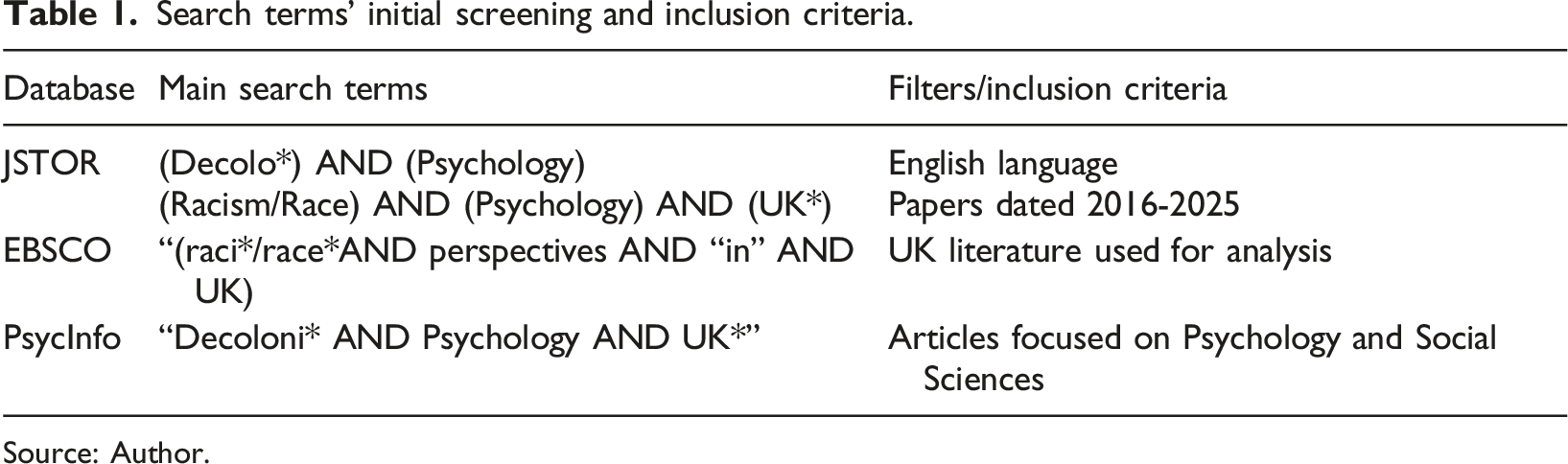
This scoping review was conducted following the PRISMA-ScR (Preferred Reporting Items for Systematic reviews and Meta-Analyses extension for Scoping Reviews) checklist (Page et al., 2021). A PRISMA flow diagram (Figure 1) details the search and selection process. A scoping review was chosen as it allows for synthesising broad themes and summarising findings, enabling the identification of knowledge gaps in the literature (Tricco et al., 2018). This approach is particularly effective in areas where the body of research is still emerging, as is the case with racial perspectives on decolonising psychology in United Kingdom, which lacks a substantial evidence base (Munn et al., 2018). PRISMA flow diagram showing articles included in scoping review. Source: PRISMA 2020, adapted from Page et al. (2021).
Search terms’ initial screening and inclusion criteria.
Source: Author.
Selection and extraction
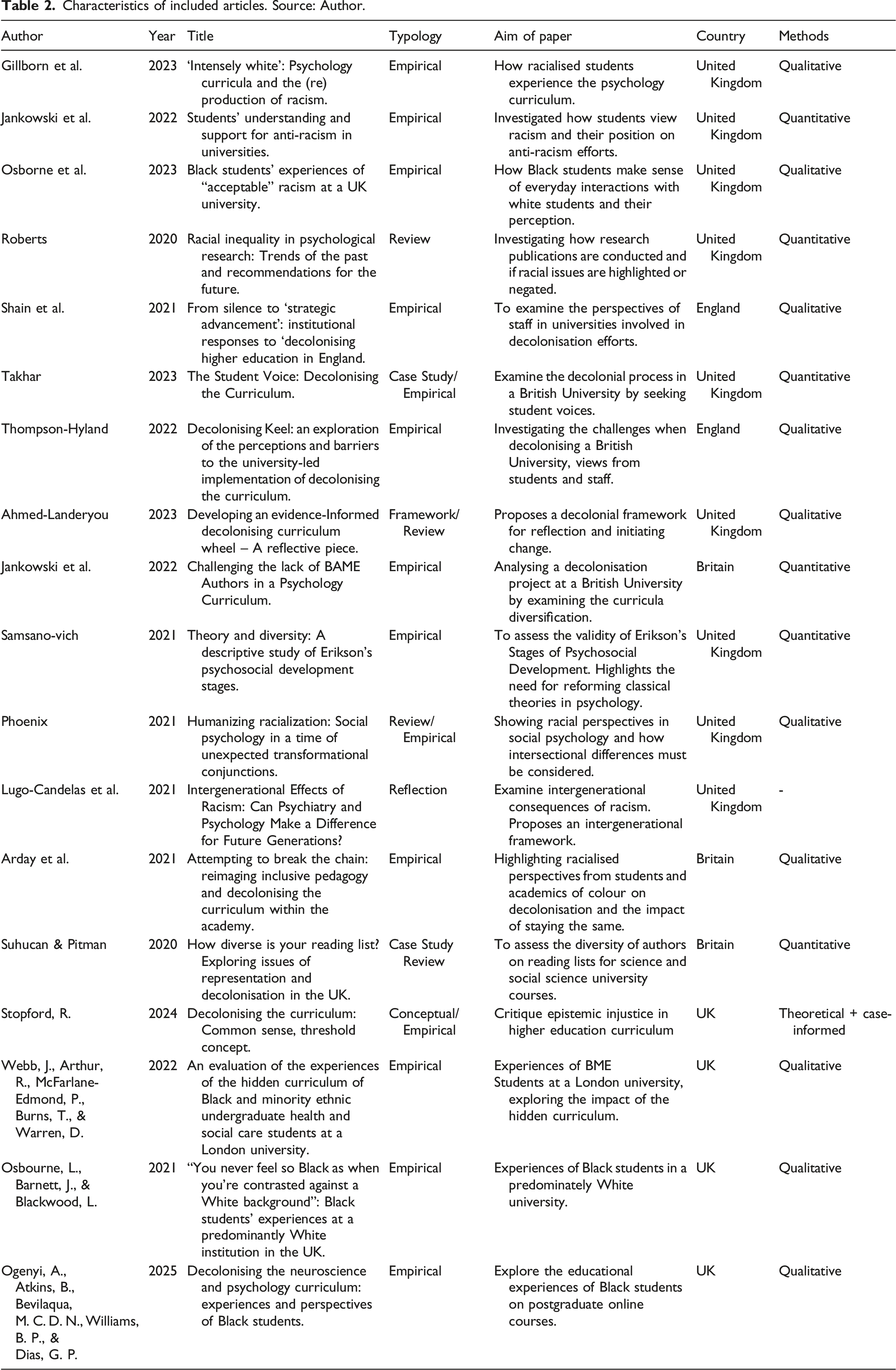
Characteristics of included articles. Source: Author.
While the majority of the reviewed articles (12) were peer-reviewed, a small number of journal articles (6), though not subjected to peer review, were included due to their relevance to the emerging and evolving discourse on racialised perspectives in psychology. These works contribute novel perspectives and insights that are crucial for understanding the systemic challenges and barriers to decolonising psychology. Despite not being peer-reviewed, these articles were published in reputable journals and have been influential in shaping current academic discussions on decolonisation and diversity in higher education. Their inclusion is important for providing a broader range of voices, especially those that challenge traditional academic boundaries and offer critiques not yet fully captured in peer-reviewed research.
These non-peer-reviewed articles are valuable as they often present grassroots perspectives, institutional reflections, and case studies that are not typically found in traditional peer-reviewed journals. They address real-time developments in academia, particularly regarding anti-racist pedagogy and curriculum reform, offering insights from ongoing institutional efforts and student activism that have not yet undergone the lengthy peer-review process. While we acknowledge the limitations associated with non-peer-reviewed sources such as potential bias or lack of rigorous academic review, we have assessed their quality and relevance, ensuring they contribute meaningfully to the study’s aims. The inclusion of these works helps present a more comprehensive view of the state of decolonisation in psychology and the academic world at large.
Trustworthiness
In qualitative research, trustworthiness is paramount and is often assessed through transferability, credibility, reflexivity, and transparency (Williams et al., 2020). These criteria replace traditional measures such as reliability and validity, which focus on the likelihood of replicating results (reliability) and the accuracy of the measurement tools used (validity) (Porritt et al., 2014). Transferability refers to the extent to which the findings can be applied to other settings, while credibility examines how well the research findings align with the participants’ experiences. Reflexivity requires the researcher to critically reflect on their own biases and limitations, and transparency involves clearly documenting and communicating the research process (Vučković, 2022). In terms of reflexivity, the authors acknowledge their position within the research process. While their racial and educational backgrounds may provide context, they have endeavoured to maintain neutrality and objectivity throughout the analysis. The focus has been on ensuring that the study’s outcomes are based on the data rather than personal biases, with a commitment to conveying a balanced and sound interpretation of the barriers to decolonisation. The decision not to explicitly disclose the authors’ racial or educational backgrounds in this paper is an active and intentional choice. The authors recognise that readers may draw assumptions about authorial positionality when the subject matter concerns racial justice assumptions that may either validate or cast doubt upon the work. By acknowledging this dynamic without supplying biographical detail, the authors seek to draw attention to the epistemic weight placed on researchers’ identities in this field, which is itself a site of critical inquiry. This approach has been essential in maintaining the credibility of the analysis.
In this review, the trustworthiness of each article was evaluated using the Joanna Briggs Institute (JBI) standardised critical appraisal checklist, which is widely recognised for assessing the quality of qualitative studies. While the JBI checklist served as a guideline, the selection process also considered the criticisms of rigid frameworks, as noted by Walsh and Downe (2005, 2006). Rather than adhering strictly to checklists, attention was given to preserving the meaning and relevance of the studies, especially when considering methodological differences between articles, such as the use of interviews versus focus groups. This balanced approach ensured that studies contributing meaningful insights from racial perspectives in the United Kingdom were included in the review.
Results
As depicted in Figure 1, the search identified 1181 records. After a detailed screening process, 18 articles were included in this review. The characteristics of the selected articles are summarised in Table 2. All studies focused on the United Kingdom, particularly in the fields of psychology and allied disciplines such as humanities and social sciences, with an emphasis on decolonial themes.
As shown in Figure 2, most of the included studies employed qualitative methodologies, such as in-depth interviews, semi-structured interviews, case studies, and focus groups. Ten of the studies used qualitative methods, while seven used quantitative approaches, primarily through surveys and questionnaires; one article was theoretical. Across these studies, a total of 388 racialised minorities were involved, including both interviewees and survey respondents. Racialised minorities included students identified as Black ethnic minorities. Students were either undergraduate or post graduate students. While the aims of the studies varied, key themes were identified and subsequently grouped into four overarching categories using reflexive thematic analysis. Study characteristics and methodological distributions.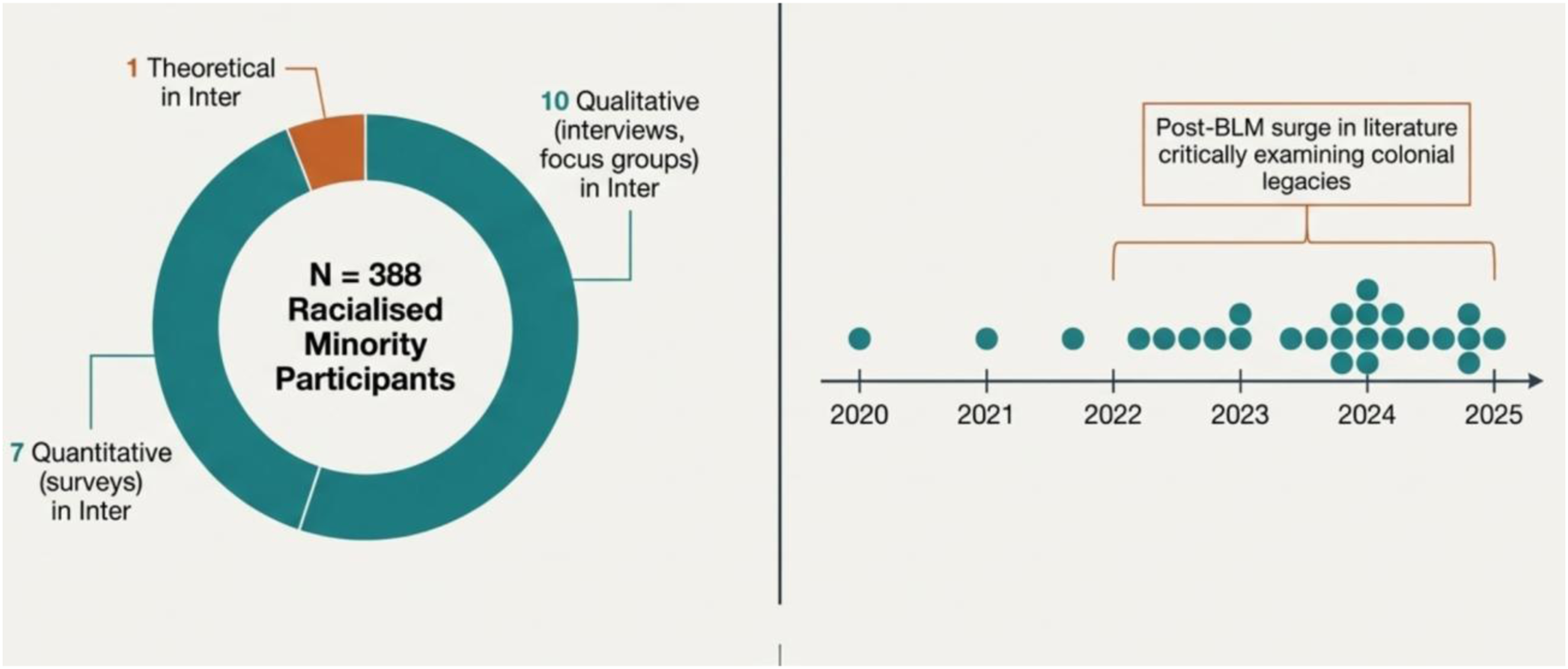
Reflexive thematic analysis, as developed by Braun and Clarke (2006; subsequently refined as Reflexive Thematic Analysis, Braun and Clarke, 2022), is a method for identifying, analysing, and reporting patterns or themes within data. Braun and Clarke (2022) describe this updated approach as placing greater emphasis on the researcher’s active, reflexive role in knowledge construction, moving away from the positivist assumption of ‘finding’ themes within data towards the recognition that themes are actively constructed through the researcher’s interpretive process. It goes beyond merely describing patterns and seeks to find meaning within the data (Javadi and Zarea, 2016). To ensure that interpretation remained faithful to the complexity of the data, this review followed the reflexive thematic analysis process outlined by Braun and Clarke (2022). This process involved six stages: (1) familiarisation with the data through detailed reading, (2) initial coding and categorisation of key ideas, (3) searching for and gathering themes, (4) reviewing themes for coherence, (5) naming and defining themes, and (6) reporting the findings, including analysis and illustrative extracts from the data. Initially, the authors familiarised themselves with the data by reading through the articles multiple times. Studies and texts were summarised, and key findings were extracted. Codes were generated inductively, based on recurring themes, and refined through an iterative process. Twenty-six codes were identified, and final themes were developed by reviewing and combining related codes, ensuring they accurately reflected the data and the research objectives. This yielded four core themes portraying racial minority perspectives. The identification and categorisation of themes provided deeper insights into the experiences of racialised students in psychology, their views on decolonisation, and the broader challenges within the field. The findings illuminate the pervasive effects of colonial legacies and highlight opportunities for creating more inclusive educational and psychological frameworks.
Analysis and discussion
The findings of this review indicate a significant underrepresentation of racialised minorities in the discourse surrounding decolonisation in psychology across the United Kingdom. While the broader literature touches on decolonial themes, there is a notable scarcity of empirical research specifically addressing and seeking racialised perspectives within the UK context. This scarcity highlights the persistent marginalisation of racialised voices in academic discussions about decolonising psychology. Despite the limited number of studies and small sample sizes, thematic analysis revealed several critical issues that are essential for understanding the barriers to and potential strategies for implementing decolonial practices in psychology. The following analysis and discussion expands on the key themes that emerged from the review.
Theme 1: Curriculum as a site of power: Agency, diversity, and the reproduction of colonial knowledge
One of the most pressing issues identified in this review is the lack of diversity in the psychology curriculum. As Gillborn et al (2023: 11) points out, the curriculum is predominantly Eurocentric, with White perspectives dominating academic content; this ‘intensely White’ curriculum not only excludes diverse voices but also actively reproduces systemic racism by pathologising racialised groups. Concepts taught in psychology often position racialised minorities as deviant or inferior, reinforcing the narrative that White practices are normative and correct. This phenomenon reflects the broader issue of gatekeeping within academia, where White elites control knowledge production and exclude racialised perspectives from contributing to the curriculum (Gillborn et al., 2023). Racialised students expressed feeling ostracised because ‘everything is White’ and felt White lecturers were ill-equipped to deal with the sensitivities of being Black (Gillborn et al., 2023: 12; Ogenyi et al., 2025). The underrepresentation of racialised minorities in psychology courses creates a disconnect between the curriculum and the lived experiences of racialised minorities, leaving them feeling alienated and unprepared for work in a multicultural society.
A specific example of the limitations of Eurocentric theories is Erikson’s Stages of Psychosocial Development. Samsanovich (2021) found that this theory lacks predictive power when applied to racialised minorities, as it fails to account for the unique challenges that they face. Racialised minorities often develop by navigating systemic racism and overcoming adversities that are not considered in traditional developmental models. This underscores the need for psychology to embrace diverse cultural contexts and perspectives to ensure that theories are relevant and useful for all populations. Yet it appears that the classic psychological theories are untouchable and remain largely unchanged.
A recurring sentiment was the lack of diversity and representation in UK universities. With Keele University’s Human Resources department described as ‘being run by a group of like Staffordshire ladies’ (Thomas-Hyland, 2022: 47). The issue of diversity can be attributed to inequality in the workforce (West et al., 2023). The lack of genuine representation in staffing has a tremendous effect on content production and the experience of racialised students. This is buttressed by Ogenyi et al. (2025) who found that Black students did not seek help from non-Black staff because they were afraid of being judged. In other words, representation has long-standing implications for the learning and development of Black students. As a student you are sat there and you are listening to your Lecturer talk to you about race…who in many aspects does not understand what it is like to be a person of colour (Arday et al., 2021: 8).
The issue of underrepresentation extends beyond the classroom and into academic publishing. Roberts et al. (2020) found that 93% of research publications in psychology were edited by White editors, with approximately 70% of articles in developmental, cognitive, and racial psychology written by White authors. Similarly, Suhucan and Pitman (2020) revealed that only 2% of science and social science reading lists included articles by Black authors. This overwhelming dominance of White authorship in the field contributes to the ongoing exclusion of racialised perspectives, which has profound implications for research, teaching, and policy development. Without diverse contributions, psychological theories remain limited in their applicability to racialised populations, reinforcing the attainment gap observed among racialised students (Stevenson et al., 2019; Arday et al., 2021).
Another point is that racialised students expressed a lack of power to initiate change and felt Lecturers had more control and responsibility. A racial minority student expressed that they were not listened to by the university, and assessments were restricted as they were told to stick to the question (Osbourne et al., 2021; Thomas-Hyland, 2022). This depicts the unwillingness to absorb wider perspectives into the curriculum and suggests that wider perspectives are deemed as less valuable. Over 50% of racialised students were uncertain about the decolonial climate of their university and could not confidently engage in decolonial dialogue because the environment did not encourage it (Takhar, 2023). Universities ought to create open and transparent spaces where students are not dissuaded from sharing their experiences. Reassuringly, studies did indicate that both Black and White students were eager to engage in decolonial action despite not having the power to do so and Black students did not want to feel they were the only ones targeted (Jankowski, 2022; Ogenyi et al., 2025; Takhar, 2023; Thompson-Hyland, 2022). However, Osbourne et al. (2021) highlighted that Black students in predominantly White institutions may have to adjust to White students with limited exposure to diversity. This suggests that, while decolonial actions are put in place, cultural competence and sensitivity must be enhanced to reduce the emotional burden placed on Black students to compensate for others' inexperence with diversity.
Theme 2: Challenges in implementing decolonial practice in psychology – Resistance and deprivation
The implementation of decolonial strategies in psychology faces several challenges, the most significant of which is resistance from within the academic system. Ahmed-Landeryou (2023) proposed a reflective approach to decolonisation that conceptualises change as continuous and cyclical, represented through a wheel model. Central to this framework are the voices of minoritised students, which is supportive of student-led interventions. However, the author’s difficulty in engaging Allied Health Professionals (AHPs) revealed a deeper form of institutional resistance, suggesting that reflective decolonising frameworks can be constrained when they challenge established professional norms, epistemic authority, and operational priorities, leading to a failure in accomplishing sustained and substantive change.
Shain et al. (2021: 934) identify ‘strategic rejection’ as a common response to decolonial efforts, where institutions engage in tactics of refusal, delay, and silencing. This resistance is often driven by a lack of understanding of what decolonisation entails and a reluctance to acknowledge the need for systemic change. Many White academics and students perceive decolonisation as irrelevant to their experiences or as a threat to their freedoms, as noted by Liebert (2021), who observed that White female students felt their rights were being compromised by decolonial efforts. The resistance to change is unsurprising because to decolonise in effect is to start again. To even out the playing field ultimately requires demolishing centuries of knowledge and traditions that have substantiated White supremacy.
Thompson-Hyland (2022) describes decolonial change as ‘messy, slow, and at times contested’, noting that ill-conceived timelines and poor dissemination of strategies have contributed to frustrations among both students and staff. The centuries-long history of colonialism cannot be undone within a convenient timeframe; attempts to rush the process undermine the complexity of the issues at hand. Additionally, many racialised students expressed concerns that decolonial efforts in their universities were tokenistic, with institutions engaging in performative actions rather than committing to real change (Thompson-Hyland, 2022). I guess fundamentally…surface level, I don’t think there has been much change…I don’t think there’s been any systematic change (Black student, Thompson-Hyland, 2022: 42).
These surface-level gestures, often aimed at securing funding or appeasing external pressures, fail to address the systemic nature of the problem, leaving students disillusioned and distrustful of the institutions meant to support them.
Moreover, financial barriers disproportionately affect racialised students, compounding the challenges they face in engaging with decolonial dialogues. Takhar (2023) and Jankowski et al. (2022) found that racialised students often struggle to afford textbooks and other academic resources, which hampers their ability to fully participate in their education. Black students communicated difficulties accessing basic commodities such as affordable food on campus and hairdressers skilled for Black hair (Webb et al., 2022). Additionally, racialised students reported more difficulty accessing academic support services, such as extenuating circumstances allowances, further contributing to their sense of exclusion from the academic system (Jankowski et al., 2022; Takhar, 2023).
Theme 3: Recognising racism as shaping racialised experiences of failure and belonging
Racism remains a prominent issue in UK universities, deeply shaping the experiences of racialised students. Racialised students reported experiencing significantly more discrimination than White students, which has been linked to poor life outcomes (Hackett et al., 2020). Plus, White students tended to underestimate racism and demonstrate colour-blindness (Jankowski, 2022). Racism should not be overlooked but viewed as a legitimate and disabling construct.
Gillborn et al. (2023) highlight how racism is embedded in the curriculum, with lecturers often uncritically teaching the racist ideologies of historical psychologists. Racialised students recounted instances when their lecturers downplayed or even laughed at overtly racist material, leaving them feeling humiliated and invalidated. This casual treatment of racism in academic settings contributes to the alienation of racialised students and undermines their experiences of discrimination. In second year, actually we were taught about this psychologist, and how he spoke about like other countries in the East and like African countries and would talk about how all the people there were savages ... and our lecturer was just telling us this and like laughing a bit (Black student, Gillborn et al., 2023: 16).
The stereotype threat phenomenon coined by Spencer et al. (2016) provides context that elucidates the academic experience for racialised students. The phenomenon postulates that the fear of being judged based on racial stereotypes can lead to heightened anxiety and stress, which in turn impairs academic performance (Ogenyi et al., 2025; Spencer et al., 2016). As Osbourne et al. (2023) found, Black students in predominantly White universities are often subjected to harmful stereotypes that paint them as ‘loud’, ‘angry’, or ‘stupid’. These stereotypes not only affect how students are perceived by their peers and instructors but also increase the psychological pressure on them to avoid confirming these negative expectations. In other words, racialised students had the daunting task of micromanaging their actions to refute and not reflect negative projections. This is a mentally and physically exhausting task. He cannot risk being a stoner, just dumb or just stupid (Black student, Osbourne et al., 2023: 51).
Yet White interactions with Black students at university were embellished with stereotypes, that is, being solicited for drugs or being spoken to in slang (Osbourne et al., 2021). Microaggressions, or subtle, often unintentional forms of discrimination, play a significant role in shaping the experiences of racialised students. Osbourne et al. (2023: 46) describe how Black students frequently encounter ‘acceptable racism’, disguised as banter or false cultural affiliation, which they feel powerless to challenge. These daily encounters with racism, though seemingly minor, accumulate over time and contribute to poor mental health outcomes, including increased levels of stress, anxiety, and depression (Hackett et al., 2020; Ong, 2021). Furthermore, racialised students often feel the need to adapt their behaviour to conform to the expectations of White people, a phenomenon that has been linked to racial burnout and identity suppression (Phoenix, 2022).
It stands to reason that continuous adaptation of one’s persona can create a stifled self, characterised by the withdrawal of genuine self-expression. This may result in racialised minorities being thought of as aloof, uninterested, disengaged, and lacking confidence or ability. But what is presenting is the discomfort caused by racial stress and anxiety, often disguised by micro-adjustments to belong (Osbourne et al., 2021).
The need to belong is a strong undercurrent in these themes. Belonging means you are accepted and acceptable. Being void of such validation can lead to self-hatred and failure. Webb et al. (2022)observed that while ambition was high in racial minorities, it did not match performance, leading to further self-deprecation and internalisation of failure. However, disparity may be attributed to feelings of disconnectedness and unbelonging felt within the curriculum (Webb et al., 2022). Discrimination fuels feelings of powerlessness and inadequacy which lead to internalised failure, creating an almost unbreakable cycle of defeat and a self-fulfilling prophecy (Merton, 1948). we are lazy, so sometimes the problem lies with us actually the Blacks (Webb et al., 2022: 15).
Theme 4: Proposed decolonial strategies and recommendations
Several studies offer practical recommendations for decolonising psychology, focusing on curriculum reform, research practices, and institutional accountability. Gillborn et al. (2023) argue that psychology must critically examine the context in which knowledge is produced and disseminated, ensuring that research and teaching reflect the diverse realities of racialised individuals. To attain diversity in these areas, a recruitment process that supports equality and fairness is essential (Phillay, 2017). Bell (2020) suggests that psychology must do away with outdated, prejudicial theories that reinforce colonial hierarchies and replace them with more inclusive frameworks. In practice, psychology will need to re-examine its diagnostic tools and measures (Phillay, 2017), through a contextual racial lens. Stopford (2024) asserts that only after common knowledge has been exhausted can cultural context and perspectives be justified through collaborative discussion. Such collaboration requires the expert to humbly put down their expertise. As Stopford (2024: 17) so eloquently put it ‘there is a world of understanding to be had on the other side of my expertise’.
Roberts et al. (2020) propose a comprehensive set of strategies to improve diversity in research and publishing, including the introduction of annual diversity reports, the creation of diversity teams to oversee content production, and the inclusion of racial demographics in research justifications. These steps are necessary to ensure that decolonial efforts are not merely symbolic but lead to substantive changes in the field.
Takhar (2023) and Thompson-Hyland (2020) emphasise the importance of training staff in decolonial pedagogies and encouraging student participation in the development of decolonial modules and assessments. This collaborative approach, which includes both students and educators, is crucial for creating a more inclusive academic environment. Arday et al. (2021: 11) refer to this approach as ‘collective responsibility’. However, individual interventions will require work on internal biases (Skinner-Dorkenoo et al., 2023; Vaccaro, 2019).
Additionally, intersectionality and the intergenerational impact of colonialism must be considered in any decolonial framework. Lugo-Candelas et al. (2021) note, understanding how the experiences of past generations influence the health and well-being of future generations is essential for achieving lasting change. Osbourne et al. (2021) noted that Black student’s interpretations were informed by their experience prior to university. This suggests that a holistic approach is necessary to enhance the educational experiences of Black students. It also coincides with Hackett et al. (2020) who discovered that perceived discrimination was linked to negative life outcomes. In other words, individualised perceptions and experiences should be considered.
The issue of reparations has also been raised as a potential strategy for addressing historical injustices. However, Kumalo et al. (2021) caution that reparations are a complex and contentious issue, with practical challenges such as determining who is liable and what constitutes meaningful compensation. Despite these difficulties, the conversation around reparations opens the door to a broader discussion on how to repair the harms caused by colonialism and create a more just and equitable society. Racialised students emphasised strategies supporting their well-being inside and outside the academic environment, eluding to a holistic stratergy that moves beyond the University walls and into wider society.
For racialised students, stereotyping appeared to exacerbate feelings of exclusion and inadequacy. An antidote is creating a system that increases cultural capital and ‘installs feelings of social and cultural comfort’ (Webb et al., 2022: 23). Racialised minorities want more inclusive practice so they can actively participate in knowledge and learning. This will enable them to overcome stereotypes and systematic biases, rather than being stifled by them. Encouraging more diversity in literature and in staffing will support feelings of connectedness and belonging on campus. Perhaps the beginning of belonging is the validation of truth: for example, a fundamental truth is that racialised minorities are not minorities; in fact, a truer term may be racialised majorities, and a change in terminology can move the psyche from disempowerment to empowerment. Going through the curriculum and creating a ‘lexicon of empowerment’ to replace discriminatory and disempowering terms would be an effective approach.
As shown in Figure 3, the ‘now what’ imperative of this review must be addressed with clarity and urgency. Institutions cannot continue to treat decolonisation as a peripheral aspiration. Drawing directly from the evidence reviewed, the following actionable recommendations are proposed: First, the BPS should integrate decolonial frameworks explicitly into its accreditation criteria, mandating that all psychology programmes demonstrate measurable, evidence-based progress towards curriculum diversification. Second, universities should establish transparent, student-led decolonial committees with genuine decision-making authority, moving beyond tokenistic consultation towards co-production. Third, hiring and retention practices must actively address structural inequalities in academic staffing, with dedicated recruitment pipelines for racialised minority academics. Fourth, psychology’s foundational theories should undergo systematic review, with racially decontextualised or biased content critically contextualised or replaced with more inclusive frameworks and lexicons of empowerment. Fifth, dedicated funding should be established to support racialised minority students’ access to academic resources, pastoral support, and career development. These are not aspirational gestures, they are structural imperatives, and their implementation must be monitored, evaluated, and reported transparently. Structural imperative pillars.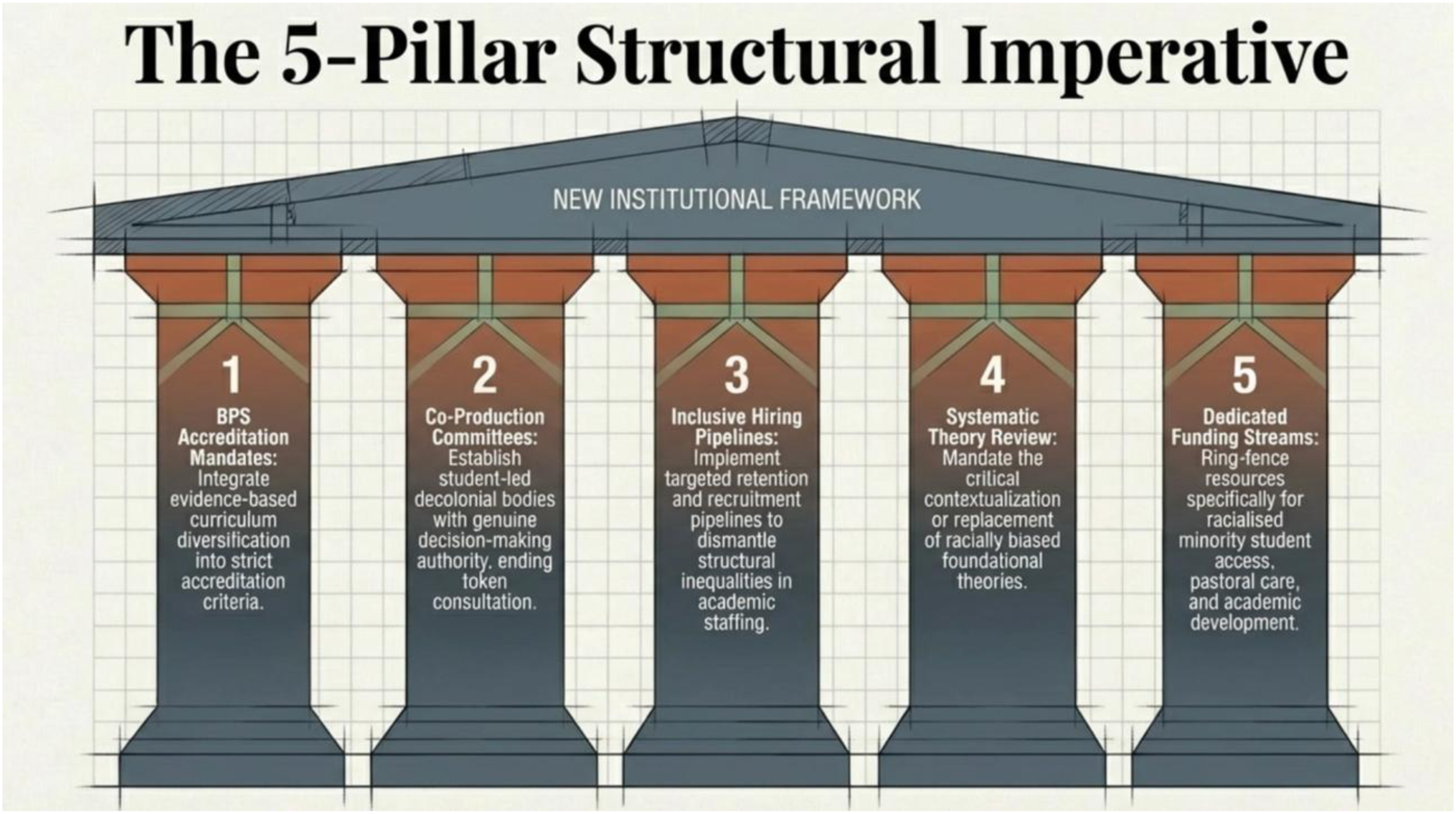
In comparing the results of this study with prior research, several common themes emerge, reinforcing the findings of earlier decolonisation efforts in higher education. For instance, similar to the work of Shahjahan et al. (2021), this study identifies systemic exclusion and underrepresentation of racialised voices as key barriers to meaningful decolonisation. However, while previous studies have primarily focused on highlighting these challenges, this review goes further by critically analysing the limitations of current decolonial strategies and highlighting practical recommendations for improving inclusion and representation within psychology curricula.
This study also expands on existing research by magnifying the voice and contributions of racialised minorities. Unlike some studies that approach decolonisation as a monolithic issue, this paper provides a nuanced understanding of how various forms of racial oppression intersect with academic practices in psychology. The findings suggest that decolonisation efforts must be tailored to account for these intersections, as generic strategies may fail to address the unique challenges faced by racialised minorities.
Moreover, this study critiques the tokenistic nature of many decolonisation initiatives identified in prior research, echoing concerns raised by authors like Takhar (2023) and Thompson-Hyland (2022). While these earlier studies highlight the superficiality of decolonisation measures, this review suggests that meaningful change requires not only structural reforms but also a shift in institutional culture and a holistic approach, which is something that has been largely overlooked in past discussions.
Taken together, the four themes identified in this review present a coherent and troubling picture of a discipline that has not yet meaningfully confronted its colonial foundations. Systemic exclusion, tokenistic decolonisation efforts, endemic racism, and a lack of structural accountability collectively perpetuate the marginalisation of Black racialised minority students in UK psychology. While pockets of progress exist, the evidence reviewed here indicates that sustainable and meaningful change requires coordinated action across curriculum design, staffing, institutional culture, and professional accreditation. The perspectives of racialised minorities must not merely be consulted; they must be centred, valued, and institutionally protected as indispensable contributions to the discipline’s evolution.
Limitations of the review
This study faced several limitations, primarily related to the quality and scope of the available research on racialised minorities in the United Kingdom. Many of the included qualitative studies had small sample sizes, which may limit the generalisability of the findings. In addition, some studies did not fully present demographic data, making it difficult to conduct comprehensive quality assessments. Furthermore, most participants were female. This highlights the need for more robust research that captures the perspectives of racialised minorities on decolonising psychology in the United Kingdom.
It is important to note that the specific focus on the UK context, while limiting generalisability to other national contexts, should be understood as a deliberate methodological strength rather than a constraint. By concentrating the analysis on the United Kingdom, this review is able to present evidence that directly implicates identifiable institutions, policies, and regulatory bodies, most notably the BPS and UK higher education institutions, whose responsibilities are concrete and cannot be deflected by reference to broader global conditions. UK-based policymakers, institutional leaders, and accrediting bodies cannot use the argument that these challenges are too global to be addressed at the national level; the evidence reviewed here demonstrates precisely the opposite. Future reviews might extend this geographically, but the depth of UK-specific insight achieved here has its own distinct and actionable value. This narrow focus was necessary to address the research question; however, it may have led to the omission of relevant articles outside these specific parameters, including studies from other geographical contexts or interdisciplinary fields. Moreover, access to some potentially relevant articles was restricted, further limiting the breadth of the review.
Additionally, the diverse use of terminology in literature posed challenges during the search process. For example, while the search terms focused on race, articles using terms such as ‘BAME’ (Black, Asian, and Minority Ethnic) may not have been fully captured, potentially resulting in the exclusion of relevant studies. Furthermore, racial minorities are not a homogenous group so future studies should consider intersectionality. This variability underscores the need for a more unified approach to terminology and methodology when researching racialised groups.
It is important to note the potential for publication bias within the selected studies. Research highlighting difficulties in decolonisation may be more likely to be published, while studies with more optimistic findings may not reach public dissemination. Additionally, while peer-reviewed publications are critical for ensuring academic rigour, valuable insights can also be found in grey literature. Future research could benefit from considering a broader range of sources to capture the full scope of perspectives on decolonisation.
Conclusion
Decolonisation remains a critical issue, and while much attention has been given to the topic, the focus must shift towards concrete actions that can enhance the overall well-being of racialised minorities. Key areas highlighted in this review include the content and control of psychology curricula, the challenges within decolonisation efforts, the recognition of racism, and the development of effective decolonial strategies. Strategic plans to address these areas comprehensively will have a lasting impact.
The perspectives of racialised minorities in this review reveal a consistent theme: psychology and the higher education system in the United Kingdom fail to adequately represent their experiences. These individuals often feel powerless in the face of microaggressions and racism, and the resulting embarrassment, anxiety, and racial tensions can negatively affect their academic and personal outcomes. To navigate these challenges, many racialised minorities feel pressured to adjust their identity to fit into predominantly White environments, exacerbating the psychological burden. The intergenerational stress and trauma caused by colonisation cannot be overstated, and these realities demand that we move beyond discussion and towards meaningful action. The implications of this study extend beyond psychology, highlighting the need for decolonisation in other spheres of society. The challenges faced by racialised students in psychology are representative of wider systemic issues across various fields of study. Researchers and practitioners in other disciplines can draw on these insights to reconsider their curricula, research practices, and institutional structures, fostering a more inclusive and equitable academic environment.
To effectively decolonise academia, substantial changes are required in perceptions, policies, practices, and pedagogy. BPS accredits the majority of psychology programs across the United Kingdom and occupies a strategic position in shaping the direction of decolonisation within the discipline. Integrating decolonial frameworks into its accreditation standards and endorsing pluralistic epistemologies across psychology curricula would allow the Society to foster institutional inclusivity while setting a precedent for others to emulate. Future research should prioritise empirical studies with larger samples, particularly focusing on Black British students and specific post-colonial groups. Such research will provide a clearer understanding of the day-to-day experiences of racialised minorities in the United Kingdom and identify the systemic infrastructures that continue to perpetuate inequality. Ultimately, sustained and focused efforts are necessary to transform academic institutions into truly inclusive and equitable spaces for all.
Footnotes

Ethical considerations
Ethical approval was not required.
Funding
The authors received no financial support for the research, authorship, and/or publication of this article.
Declaration of conflicting interests
The authors declared no potential conflicts of interest with respect to the research, authorship, and/or publication of this article.