



Abstract
This article presents an evidence-based case study of a co-creation research project aimed to build and improve a sense of belonging and community through co-created activities, events, and campaigns. Various activities brought together both students and staff across a post-92 university in the North of England. The co-created project gathered empirical data to explore how belonging and community were experienced by students, evaluated the impact of the co-created events and campaigns for students, and highlighted key areas for the university to further develop. These included recommendations for how the university supports students to feel a sense of belonging, the efficacy of its Race Equality Charter action plan addressing differential outcomes, the learning and teaching approach around using co-creation, embedding equity and social justice within both curriculum and student support services, improved communication systems with students, and ensuring the concept of belonging is at the forefront of student experience. The article concludes by highlighting the intrinsic connection to retention, progression, and success for students with feeling a sense belonging in higher education and describes how co-creation can be used for social justice and equity activism to bring about positive changes to benefit a whole university community.
Introduction
There is a significant and growing body of research into the barriers affecting the success of BAME students in higher education (Arday and Mirza, 2018; Bhopal, 2018). These include negative progression and retention rates, the degree awarding gap, and poor graduate level employment (Bhopal, 2020). Burgeoning research in the field of higher education (HE) and race, continues to highlight concerns in relation to lack of belonging or not feeling part of the community (Cureton and Gravestock, 2019). These include the experiences of BAME students at university in a relatively ‘white’ space and navigating structures which perpetuate institutional racism (Bhopal, 2018; Sian, 2019).
Further research findings highlight the alarming extent to racial harassment that students of colour face at university and the lack of action taken by institutions to tackle this resulting in significant student drop out (Equality & Human Rights, 2019). All of this evidence supports the argument that HE continues to perpetuate barriers and discriminatory practices which continue to disadvantage and prohibit success for students from a BAME background. Detailing specific experiences for students of colour within HE, their overall journey is shaped by factors highlighted by studies conducted by researchers such as Bunce et al. (2021) and Bernard et al. (2014), who describe issues such as feeling they do not belong, a teaching curriculum that omits a diverse range of perspectives, an academic environment which favours the white majority, staffing and student bodies which are not reflective of marginalised communities, and a system which is set up to accommodate the needs of white students rather than students of colour; these experiences collectively can lead to feelings of ostracisation from the wider university community. Indeed, students not feeling as though they belong to key aspects of their HE journey (including the institution itself, their programme of study, support services, or peer network) are intrinsically connected to student progression, retention, and outcomes (Masika and Jones, 2016; Thomas, 2018), and it is this journey that universities have a moral obligation and responsibility to remedy.
Within this HE context, in a post-92 university in the North of England, a co-creation project was designed to search for insights and solutions for improving the institutional and cultural barriers affecting students’ sense of belonging and to actively promote a culture of inclusivity. Building on previous co-creation work around BAME student experiences (Shakir and Siddiquee, 2023), the aim of this project was to improve
Institutional rationale and justification for the co-creation project
The co-creation project had the backing and affiliation of the HE institution it was delivered in, due to a number of supporting sources: • The previous academic year’s co-creation research project: ‘The realities of racism through student narratives in Higher Education’ (Shakir and Siddiquee, 2023). • Focus groups and Race Equality Charter (REC) actions agreed in response to National Student Survey (NSS) data from the previous 2 years which reported high levels of dissatisfaction of Black students (2020) and Asian students (2021). • Student discussions through the creation of university safe spaces and the compulsory race equality curriculum (as cited in the Whatuni, 2021 award and THE Times Higher nomination 2021). • Impact data gathered from students and staff through delivery of Re:Tension to a number of universities nationally (Barker & Shakir, 2019-present).
Co-creation project aims
The overall research question was: How can we develop students’ sense of belonging and enable them to feel part of a community at a particular HE institution? In response to key data as aforementioned, this project aimed to build a community feeling and increased sense of belonging through a co-creating learning and teaching experiences (Bovill, 2020). This would be charged with the promotion of the cultural and racial diversity of the students (and staff), cultural competence, respect, and equality that is attentive to the intersectional ways in which individuals may experience inequalities or exclusion so as to build a culture of inclusivity at the university.
The co-creation project had four key objectives: 1. To build an increased sense of belonging and feeling of community that promotes the cultural and racial diversity of students (and staff) through embedding cultural competence, inclusivity, and equality. 2. To support students’ role as community actors and civic awareness to enable them to contribute meaningfully to society. 3. To enable students to work in partnership with the university to co-create the curriculum and challenge staff to further innovate the processes and practices which underpin teaching, learning, employability, opportunities, and socialisation in order to embed a culture of inclusivity within all aspects of students’ experiences. 4. To positively contribute to the university’s role within the wider community and its engagement with community actors and beneficiaries such as charity/community organisations/members and cultural partners through the proposed community events, campaigns, and related initiatives arising from these which can be developed beyond the life cycle of this project.
These objectives were addressed through students and staff co-creating the design and delivery of a series of campaigns and events aimed at building community and a sense of belonging. These initiatives included the following: • • •
Due to the nature of co-creation and the organic manner in which projects can evolve (Bovill, 2020), a number of unintended activities which developed as a consequence of the co-creation project included: • A podcast collection by students on gender identity. • Games and gaming that bring people together and build community for people of any age, background, and role. • A lesson plan for equity and social justice in the community for students, practitioners, and staff – a cross-institutional collaboration (LTU and Derby). • A number of flexible, dynamic, and innovative work placement opportunities. • Preparatory work for next steps and future projects already underway. • A social online team page for sharing, chatting, and supporting one another bringing staff and students together.
Implementation of the co-creation project
A co-creation project outline was co-designed by staff and students and gained institutional approval (including that of the institution’s Executive) including ethical approval. This outline, which introduced the project, was shared with students via various work-based or research-based modules at both Levels 5 and 6 (second and third years of undergraduate programmes of the study). The promotion took place in person within lectures, via virtual learning platforms, communication newsletters, emails, and informal conversations with students and staff ‘in the corridor’. By the end of October 2021, the register of core students at Level 6 was complete with the timeline and cutoff point for Level 5 more flexible (due to the nature of deadlines associated with Level 6 assessment components). There were extensive communications and conversations taking place with staff and students throughout the earlier stages and during the project itself which involved significant time commitment by staff project leads.
In total, approximately 36 students were involved from different subject disciplines and evenly split across undergraduate Levels 5 and 6. The Level 6 students undertook this project as part of their assessment and learning outcomes for modules ‘Professional Learning Through Work’ (PLTW) or ‘Research Project’ or ‘Research by Practice’. The co-creation project brief was aligned to each of the module learning outcomes and assessment methods, and all students involved in the project were briefed with the project guidance from the outset. Level 5 students undertook this project as part of their ‘Professional Placement’ module staggered throughout the academic year, and some Level 5 students are still on placement at the time of writing this report.
Co-creation requires significant input and commitment by not only students but also staff (Nkana, 2020). Managing large numbers of students across different levels, disciplines, and different module assessments is an extensive task. Scaffolding the design (McDowell et al., 2011) requires regular ‘bite size’ input by staff involved with ongoing easy communication approaches in between. For this project, hybrid community meetings were held every week or fortnightly for 1–2 h on a time on a day that was agreed by the group members. For this project, the majority of the co-creation designing, planning, and delivery took place within the online environment in response to COVID impact and managing the varying nature of student calendars (Hofer et al., 2021). This teaching and learning approach was agreed with the group from the outset.
As the teaching sessions were co-created with students, an agenda was agreed including what would be covered as a group each week. Collaborative platforms (such as Padlet and a Microsoft Teams site) enabled everyone to always be part of conversations, activities, documents, and planning as a community. As this was a community project and open to any staff and student to join, there were regular visits from other staff colleagues who would ‘dip in’ to share insights and relevant information and enabled a ‘team teach’ approach for students to feel and be part of a much bigger network spanning the university.
Co-creation is much more than enabling students to be creative with their own ideas. It is about empowering students to lead on designing their learning, have a say in what is important to them personally, share knowledge with peers and staff, build confidence and self-esteem, and be ambassadors of their own wisdom. It also involves absolute dedication, compassion, and care from staff to nurture relationships and build rapport with students of all different backgrounds with different personalities and needs. At the same time, there needs to be energy, enthusiasm, and drive embodied by the staff involved which in turn will be instilled in students. The rapport building needs to begin very early for co-creation projects and needs to be built gradually over a period of time to ensure there are trust, respect, and common understanding of the aims amongst the group.
Working with the aforementioned ethos at the heart of the processes of the co-creation project, the co-creation team met from October 2021 through to May 2022 to work on the project. During the sessions, the co-creation team engaged in a whole variety of skill acquisition including problem-solving, developing evidence-based case study work using action research, contributing to policy development, being teachers by sharing and passing on knowledge to students and staff, knowledge exchange activities with our local community, understanding theoretical underpinnings to student belonging and engagement, public speaking, designing and delivering presentations, supporting positive well-being, connecting with our university community through open discussion, and sharing personal experiences to make key decisions about the direction and implementation of the project. For example, when events and campaigns were decided on, developed and implemented, a core team (consisting of staff and students) worked as a collective in a non-hierarchical fashion to effectively deliver the goals of the co-created project.
Empirical research methodology
To conclude and complete the co-creation project, quantitative data were collected and assessed the context of sense of belonging in the student body. Online questionnaires were used to capture student engagement with the community campaigns and events and student feedback on belonging and community. The questionnaires provided evidence for evaluating a number of areas including successes, limitations, and recommendations for future delivery of a community co-creation project such as this.
Research questions
In line with the ethos of co-creation, the co-creation project team developed the following questions to be included in the questionnaire: 1. What are the main barriers to feeling a sense of belonging? 2. How are barriers to belonging experienced by students intersectionally (e.g. across categories of ethnicity, gender, sexuality, class, disability, and age)? 4. What actions can be taken to make students feel part of a community? 5. What impact have the series of events and campaigns had on students’ sense of belonging? 6. What negative experiences/gaps/omissions did students encounter? How might these be addressed to support a culture of inclusivity? 7. Further suggestions, recommendations, and ideas
Procedure
The online questionnaire was designed and issued through Microsoft Forms via a link and posted through meeting links, various Teams pages, module Moodle pages, and forwarded via email by student researchers and staff to module codes and student groups. These were also posted (with the permission of staff) onto various Moodle modules, for example, ace equality in the curriculum and Academic Skills. The questionnaire was set to receive anonymous responses within the settings of Microsoft Forms.
Participants
The online questionnaire was sent out in March 2022 to students at any level or programme for approximately 10 days, and 68 responses were returned within this time period. It must be noted, that an intense discussion had ensued between the co-creation team regarding the inclusion of questions related to demographic data. A majority decision was taken to not include any questions asking for demographic or identifiable data within the questionnaire. This decision was made in order to enhance the ‘inclusivity’ of the student experience within the collection of data including its analysis but also in response to the ‘survey exhaustion/fatigue’ (Porter et al., 2004) experienced by students. Indeed, an interesting discussion arose with regards to the use of research to misinterpret or misrepresent the various communities of individuals who chose to respond to certain questions and a decision was taken that responses would be considered as representative of the student body as a whole.
Data analysis
The data were descriptively analysed using percentages to demonstrate the frequency of responses. Students were also asked to provide qualitative statements to expand on their categorical responses, and these were organised based on the principles of content analysis (Weber, 1990).
Key findings from the data
Data were obtained and analysed to further understand the context in which the co-created project was delivered. Using the data from the questionnaire, descriptive analysis was able to understand student experience of belonging in the HE institution. These aspects will be explored in further detail and include attendance at the programme of events held around belonging, how students felt about their sense of belonging, barriers to sense of belonging, the perceived role of identity in sense of belonging, and ideas for how the institution can build sense of belonging.
Attending programme of ‘belonging events’
In order to understand the context of the sample of students who responded to the questionnaire, one of the questions asked if the respondent had attended any of the activities which had been delivered as part of the co-creation project. Entitled the ‘Our Community Building and Belonging’ diversity celebration events, it seems that the majority of students completing the questionnaire had not attended any events (76% had not, compared to 24% who had). This is interesting, as it means that the sample of respondents to the questionnaire was those who had more than likely not been part of any of the events which were developed and delivered by the co-creation project with the aim of building a sense of belonging.
It is interesting to note, of those who did attend (number of 17 students) all but one stated they found it had a positive impact on their sense of belonging. This is important, as it suggests that the programme of activities was successful in impacting positively on sense of belonging, but that a new goal should be to reach a larger number of students.
The questionnaire furthermore asked students an open question as to why they had not attended any of the events; of the 41 responses received, the following categories were evident:
A total of 25 students stated they did not have the time to attend. Various reasons for this included due to work commitments or studying commitments (including deadlines for assessments).
Twelve students stated that they did not know about the events.
Two students stated they had no interest in the events.
Two replies indicated the university was difficult to travel to.
Thus, there needs to be additional work to engage the student population in these events, but to have them timetabled or scheduled and to also be mindful of popular times when students are on campus.
Building a sense of belonging
One of the questions directly asked students if they had a sense of belonging in their HE institution, and the following result was obtained:
As Figure 1 demonstrates, out of 68 students, the majority (74%) of respondents believed they did have a sense of belonging. In contrast, only 19% responded with ‘maybe’ and 7% felt they did not have a sense of belonging. Do you feel you belong?.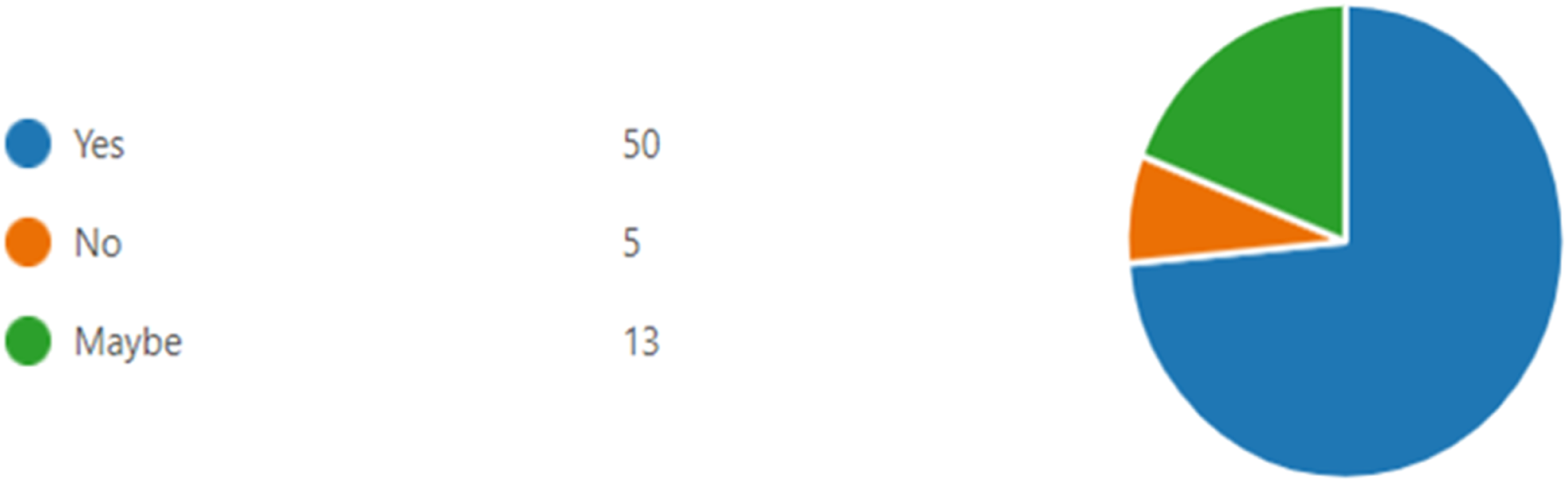
Exploring this area in further detail, a content analysis of the 58 qualitative comments provided by participants to the questionnaire revealed the following:
A total of 22 respondents attributed their sense of belonging to others including networking, friends, and staff (including lecturers and tutors).
Thirteen respondents mentioned elements relating to inclusion such as the HE institution being diverse, inclusive, or encouraging those from different backgrounds and faiths.
Inversely, a number of comments related to a lack of sense of belonging due to age factors (mentioned by two respondents) with mature students feeling their age inhibited their sense of belonging; one student felt their ethnicity (in this instance being black) inhibited their experience; other students referred to a lack of time. These elements demonstrate the various intersections which influence a sense of belonging for students in an HE institution.
Barriers to sense of belonging
Whilst in the previous section, qualitative comments provided by students explored reasons ‘why’ they did not have a sense of belonging (when asked if they do have a sense of belonging), the questionnaire also explicitly asked ‘What are the main barriers to feeling a sense of belonging’? A total of 61 students responded with 3 stating ‘none’ and 3 stating ‘not applicable’; and of the 55 remaining students, content analysis revealed the following areas:
Eight respondents felt this was due to interpersonal reasons, such as a lack of confidence or inability to socialise.
Six respondents argued that as they did not live on campus, or lived far away from campus.
Five students made reference to aspects related to ‘in-group’ factors including a number of students referring to a lack of diversity.
Four students made reference to an element of their characteristic mainly due to age (3 replies) and also one stated having events scheduled during times which were difficult due to childcare responsibilities.
Four students felt they were not invited to events, and one student stated events should be mandatory
Two students stated they had no time to visit the campus that they could not develop a sense of belonging.
Six students referred to rude staff – however, it is unclear whether this includes lecturing staff or wider estates staff on campus.
These aspects demonstrate some of the interlinking ways in which barriers to sense of belonging are experienced by students.
Identity and belonging
One of the questions asked for students to consider how the concept of identity shapes belonging at the HE institution. The following result was obtained:
As Figure 2 demonstrates, the majority of students (51%) believed that identity did impact on sense of belonging; however, 37% were unsure and stated ‘maybe’ whilst 11% felt it did not. Do you think the identity of a person or how they’re perceived shapes students’ sense of belonging?.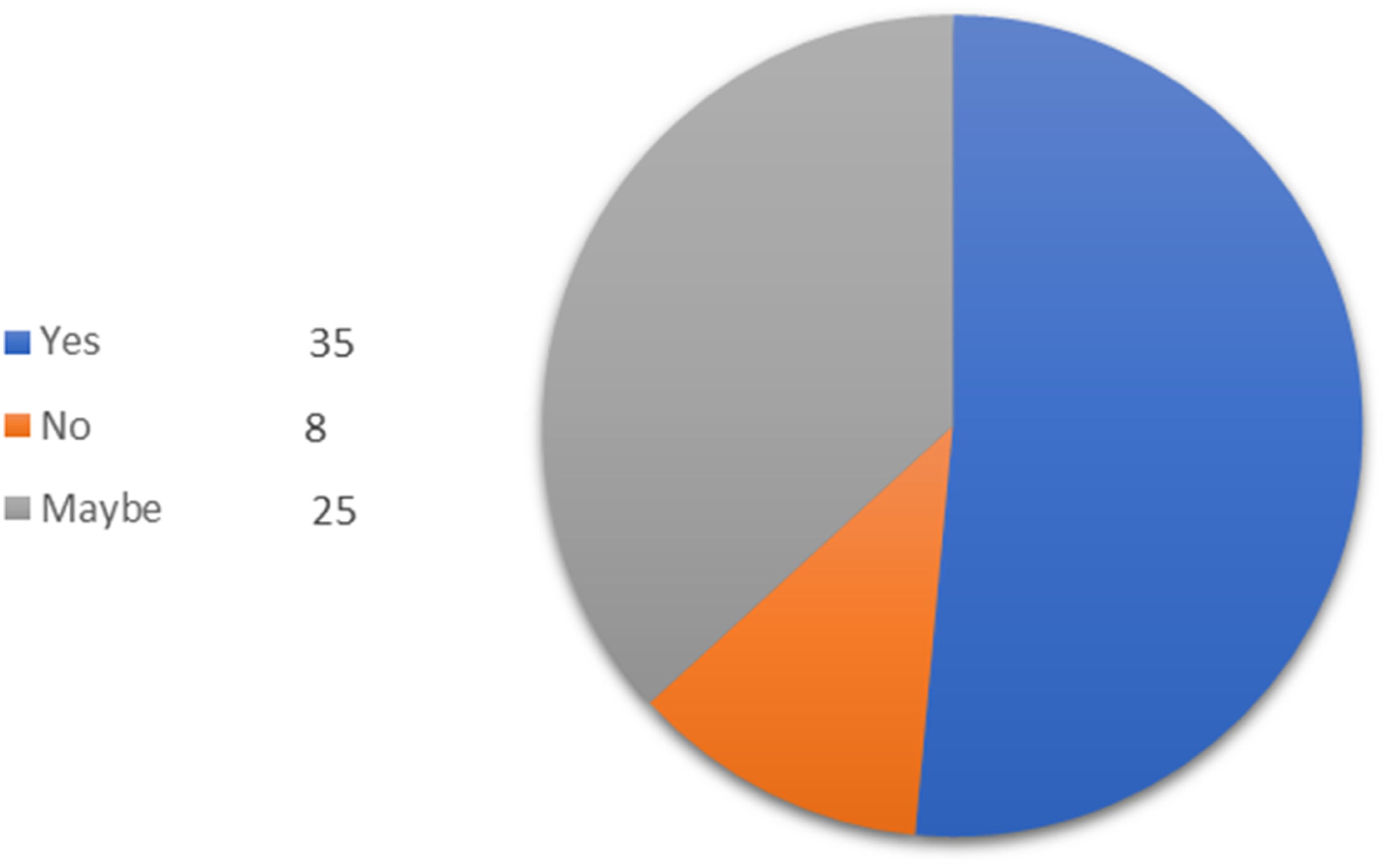
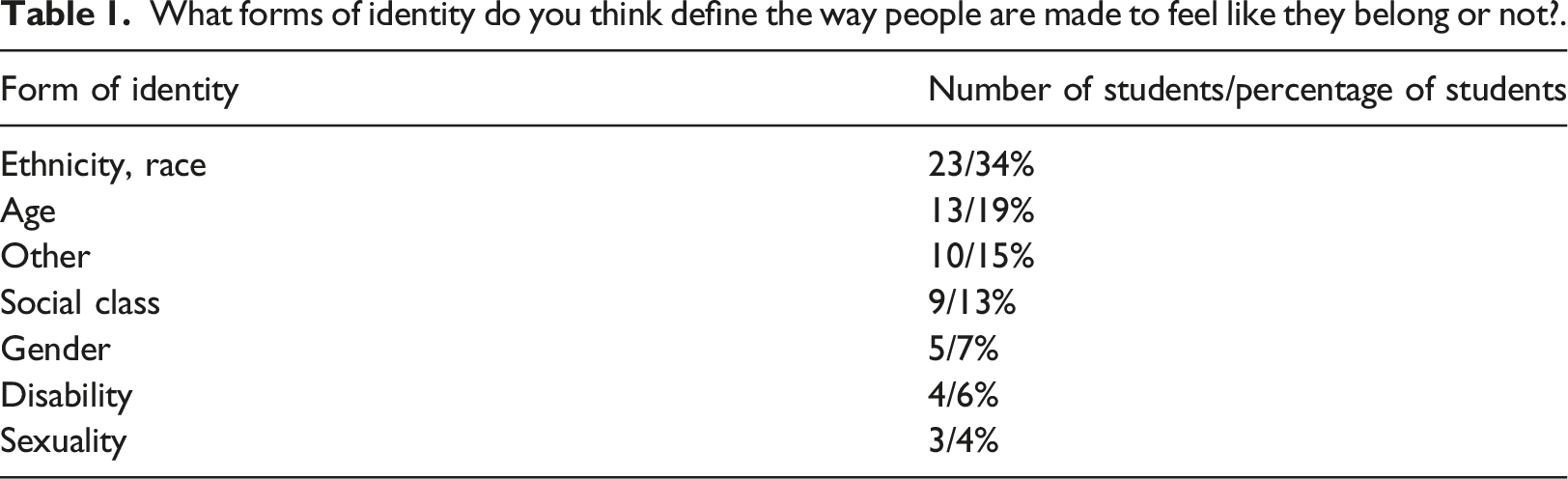
When prompted further about types of identity which define if people feel they belong or not, the following result was obtained from 67 students:
What forms of identity do you think define the way people are made to feel like they belong or not?.
Institutionally building inclusivity
Students were asked to reflect on how the institution could help make students feel part of the community and to engender inclusivity. Various suggestions were made by 38 students, which included the following:
Thirty two students asked for more events or more promotion of events. Interestingly, events focussed around diversity and culture were most often mentioned.
Two students asked for more engagement and events which fostered student engagement.
Two students also recognised more opportunities for mixing student groups were needed.
Another suggestion was that online teaching is used to free up student time to enable students to engage in more belonging activities. Whilst another student requested that attendance at events be mandatory and part of the curriculum.
Discussion: Broader impact of the Co-creation project
Whilst the quantitative data presented previously provides insight into the context, impact, and experience of sense of belonging for a group of students within an HE institution; this section will consider the overall, or holistic, impact of the co-creation project based on key stakeholders involved in its delivery and development.
Strategic-level impact – office for institutional equity
The Executive Team is committed to embedding race equity and challenging inequalities; this is evidenced by the fact that the institution in question is one of a few UK universities to have now established an Office for Institutional Equity (OfIE). This office sits outside of all academic and professional support services, as an independent body and reports directly to the Vice Chancellor. The office is charged with reviewing practices across the university from learning and teaching to student and staff recruitment, to progression and retention of students, the degree awarding gap, reporting processes for discrimination, and many more factors. The OfIE facilitates and enables open dialogue with students and has responded to student voice through this project in the development of a new university strategy around equality diversity and inclusion.
The Director for the OfIE has adopted pertinent activist terms for this new strategy and moved away from the traditional terms of Equality, Diversity, and Inclusion (EDI) which no longer suffice. The new university strategy ‘Equity, Social Justice, and Belonging’ has been co-developed with co-creation students, with belonging at the forefront of the university approach. These terms align with a commitment to hold accountability, to be transparent, and to action student voice and feedback.
It must be recognised that this co-creation project and the students’ voice have been central to bringing about change to the institution in the form of its strategic outlook. However, it must be recognised that a key element of this has been the drive and dedication from staff leading the project. This point will be expanded on in the concluding remarks.
Impact on university student support services – an institutional approach to belonging
The findings from the co-creation project have impacted how to better support students by aligning all student support under a broad banner of ‘belonging’. As a consequence of this co-created project, the institution now has a university-wide ‘belonging strategy’ which sets out key actions and priorities to develop and support belonging for all students (including even before they arrive on campus). The ‘belonging’ branding is now a key headline across digital student spaces and across the campus and one with which all students are greeted with as soon as they start at the institution. This is a huge leap forwards for giving ‘belonging’ as a concept visibility and recognition within student support services which are integral to the student experience within HE. By promoting the work conducted and the impact of the co-creation project, the ripple effect within the institution has brought about change across various spheres.
Impact on communications
HE institutions are recognising and working hard to develop their mechanisms for internal communications (Azziz, 2014). As a consequence of the co-created project, internal communications teams for both students and staff are now jointly connected around events, activities, support, and teaching related to belonging and diversity. This has been a positive impact of the co-created project, as during its life cycle the co-creation team has been feeding into university structures to bring about this change. The overarching aim was so that the university community can come together to participate, engage, and benefit from experiences that promote sense of belonging and bring people together. It has also improved communication with students as there is now a dedicated space on the university APP where advertising and notifications around belonging activities and events make it easier for students to find out about what is taking place across the university and how they can get involved.
Inducting new students: The freshers’ experience
Our welcome periods now commence with ‘belonging’ as the key headline for inducting new students to the university throughout all activities spanning the student union, academic introductions, and student support services. Right from the beginning, one of the aims of the co-created project was to ensure students were inculcated into an environment where regardless of their identity and background they develop a sense of belonging. Hearing student narratives throughout the project highlighted how significant, even before arrival, feeling a sense of connection to the university was crucial in building self-confidence and ultimately belonging (Arday et al., 2022).
Observed impact on the co-creation researchers
Anecdotal reports and shared experiences described a positive sense of belonging associated with the project itself, with its mission and with other students and staff. All co-created researchers described feelings of being more involved and connected to the university. A few students at level 6 have since chose to continue further postgraduate study with us and some have taken up paid employment within the institution. Some of the students at level 5, now starting their final year, have already begun work for the new co-creation belonging projects as they want to continue their legacy in social justice activism, positively impacting both their own experience and that of their fellow students. We are now running 3 co-creation projects this academic year focussing on belonging and community for students.
These impacts are not based on simply staff observations or interactions with the student researchers. Within their research report submissions, students reflected on their personal experience of belonging and community and detailed the impact of the project within their narratives. One student reflection is detailed below: ‘I have personally enjoyed being a part of this project, it has promoted and incorporated varied and productive topics in where everyone can get involved. Allowing people to show their true authentic self-whilst allowing other to just listen and learn. This has been a difficult time for many people. Covid 19 has meant more people than ever have become isolated and unfortunately for some this has negatively impacted on mental health and wellbeing. Participating in this project was a wonderful way to complete my final year at ********, I have thoroughly enjoyed it and I will look forward to seeing how this project develops further in the future’. (final year undergraduate student who achieved an outstanding first for her research project dissertation).
Furthermore, one lead staff member of the project was nominated by students for a university-wide Equality, Diversity, and Inclusion (EDI) academic award as they felt compelled to share the impact of staff support around such critical aspects of their student experience. They submitted the following: ‘*** goes above and beyond to champion Race Equality within Leeds Trinity. Since the moment I met **** she's actively engaged with students and staff to create institutional change and also worked towards the bronze Race Equality Charter Mark. **** is brilliant and dedicates all time, including personal to better the Student Experience for all communities here at Leeds Trinity University’.
National Student Survey (NSS)
Within the open comments of our most recent National Student Survey undertaken in 2022, several students highlighted the co-created project as having a positive impact on their student experience overall. Students reported a feeling of being connected to the university and their peers and an improved sense of belonging. The institution’s NSS results overall have significantly improved the academic year that the co-created project was implemented; and the university is as a consequence ranked top for student experience and second for teaching quality in the North-East of England. This is a highly successful outcome and can also be used as an evidence base for institutional backing around the importance of sense of belonging and the value of co-created projects.
Impact on student academic achievement
Co-creation student researchers demonstrated a high level of personal investment in the project’s ethos, and anecdotal comments suggest that the co-created project spoke to them directly (as highlighted by Freire and Ramos, 2014). The fact that it was tied to a credit-weighted module, evidenced to the students how seriously the university values co-created student social justice activist work that also involves student to student teaching and knowledge exchange. A testament to this is that nearly all of the final year students involved in the project received exceptional Firsts, Firsts, and high 2:1’s. All projects were double marked and by a supervisor who was not involved in the co-creation project (as per protocol). It could be suggested that the high-quality submissions were due to the fact that the student researchers co-created the project from start to finish.
Following the progress of these students, many of the final year student researchers post-graduation have secured employment, places on postgraduate programmes of study including many students choosing to remain with us for further study. Additionally, some graduates have since secured employment at our institution. Continued communication has been maintained with many of the student researchers which is testament to the rapport and relationships developed between students and the university when such value is afforded to student co-creation. Additionally, some of the graduates have since shared how they spoke about the project during job interviews as a real-life case example of sharing knowledge and actioning change for social justice and equity.
Concluding reflections
Connecting co-creation projects to credit-bearing modules for all the students demonstrates institutional commitment to student voice, engagement, and the call to action. Within the current co-creation project, we moved away from the typical form of teaching structures adopted in HE to shifting the power dynamics of the ‘educator and the student’ and created a genuine, authentic knowledge exchange which focused on peer-to-peer communication. It was encouraging and motivating to see our students empowered to be ambassadors of their own wisdom.
In this manner, student-led and designed co-creation projects which can bring about systematic changes to benefit the student community are fundamental to empowering students. It is these kinds of co-creation projects which can add value to sense-of-belonging and community-building for students in HE as students are empowered as agents within a community of practice for cultural and institutional change.
Our university values co-creation, and this is embedded within our new institutional learning, teaching, and student experience strategy, built on six key pillars one of which is race equality. We are also now implementing a mentoring structure to support more staff to embark on co-creation projects with their students with the university providing funding opportunities to financially reward student voice, engagement, and agency in co-creation.
In terms of criticality, it must be noted that whilst the co-created project has demonstrated positive impact and outcomes (including for all those involved and helping with institutional benchmarks and outcomes), the project has been inhibited by the very nature of the HE context in which it resides. This includes the structural limitations imposed (Botas &Huisman, 2012), the hierarchal and bureaucratic nature of the sector (Murphy, 2009), neo liberal outlook and meritocracy (Ball, 2013), students as numbers not a name (Molesworth et al., 2011), being plied with multiple surveys (Porter et al., 2004), used as ‘data mines’, ‘agenda control’ by senior management (O’Connor et al., 2019), potential power differentials as academics engaging in co-created work with students (Watt et al., 2013), and what the authors would argue is potentially using students to enable universities to achieve charter marks and awards with a focus on benchmarks and performativity rather than embodying the values equity and social justice. However, even with these limitations, the co-creation project described in this article demonstrates ways in which one can work within limited parameters to try to bring about transformational change through relational pedagogic approaches (Cook- Sather et al., 2014) by building meaningful relationships and emotional connection with students (Felton, 2017).
To conclude, the authors argue that educators and staff in HE institutions all work with genuine trust and love (as highlighted by Hooks, 2003) as a key approach to building belonging for students. As educators and managers, we occupy a position of privilege and power (Hearn, 2012) which we must use in a socially justice manner to support all our students to succeed. In this paper, we would argue that instilling care, compassion, and respect within our students as they go into society are just as or even more important than graduating with a good university degree; and we would hope that this case study presents an innovative way in which some of these areas can be achieved.
Footnotes
Declaration of conflicting interests
The author(s) declared no potential conflicts of interest with respect to the research, authorship, and/or publication of this article.
Funding
The author(s) received no financial support for the research, authorship, and/or publication of this article.
