



Abstract
Minority ethnic students are well represented in undergraduate and postgraduate taught study, but over a sustained period, representation in postgraduate research (PGR) study has been significantly lower. Various barriers to participation in PGR study have been suggested, however, it is not clear if these barriers are similar across different hierarchies of higher education institution within the UK. Our study explored specifically the perceived barriers that may exist towards PGR study for minority ethnic students at a post-1992 university. Our findings showed that one third of minority ethnic students did not learn about PGR study. To gain more insight into PGR study, minority ethnic students would approach academic staff. The perceived key barriers to participation in PGR study were associated with understanding the application process and feeling if they would not be selected by a research-intensive university. To address these barriers, the solutions that were proposed where to have PGR role models which can provide mentorship on the application process and highlight the career benefits of conducting PGR study. Our findings provide vital insight into key challenges faced by minority ethnic students at a post-1992 university and help identify approaches which can be implemented to address these barriers.
Introduction
UK domiciled minority ethnic students have been unrepresented in postgraduate research (PGR) study over a sustained period of time (Williams et al., 2019) despite increasing representation in undergraduate (UG) study. Minority ethnic representation continues to remain relatively high among full time students in the first year of UG study and taught postgraduate (PGT) study (30.5% and 27.1%, respectively) (HESA, 2021). However, this has been markedly lower for minority ethnic PGR students (which includes Doctor of Philosophy (PhD), Master of philosophy (MPhil), Master of research (MRes) and professional doctoral) which is only at 19.2%. In 2014/15, there were a total of 14,190 full time UK domiciled PGR students within their first year of study within UK HE providers of which 3% of those were Black and 8% were Asian. In 2019/2020, the number of full time UK domiciled PGR students within their first year of study was 14,225, where only 4% were Black and 8% Asian (AdvanceHE, 2022; HESA, 2021). These metrics strongly indicate that the landscape of PGR study has not altered despite greater awareness of the issues and an increased drive to address poor representation of minority ethnic PGR students.
Barriers which may contribute to reduced access to PGR study
Research studies have explicitly examined why there should be such a drop in minority ethnic participation from UG to PGR studies. These studies have attributed the barriers towards PGR study to a variety of factors of which four core themes are widely highlighted (Gibbs and Griffin, 2013; Lynam et al., 2019; McPherson et al., 2017; Mellors-Bourne et al., 2014). The first major factor is attributed to the attainment or degree awarding gap, which highlights that minority ethnic UG students are less likely to secure a first or upper second class degree than white students (Arday and Mirza, 2018; Universities-UK and NUS, 2019). This is particularly prominent between white and black UG students. Given the importance that degree classifications play towards PGR recruitment decision-making, this already creates a barrier towards entry. Students with lower degree classifications will often be asked to conduct a PGT Master course prior to entry for PGR study, thus adding an additional hurdle to entry.
The second major barrier to PGR study has been the application and recruitment process. Firstly, students are less likely to apply for PGR study as many of the available projects are not culturally relevant to minority ethnic students. Research projects often have a westernised and/or Eurocentric focus rather than taking emphasis on challenges of the global south majority (Cutri and Pretorius, 2019; Kurtz, 2013). Additionally, finding an appropriate supervisor can also be challenging as the student may find comfort in a member of academic staff who understands or can appreciates the students cultural background and ethnicity. These key facets are critical in the decision-making of a minority ethnic student when they consider applying for PGR study. With regards to selection, often there is a bias preference for high-tariff university graduates and the selection process is based on resource availability rather than student achievement (Dowey et al., 2021; Jackson-Cole and Chadderton, 2021). Boliver’s 2015 study indicates that students from minority ethnic backgrounds and those from underrepresented socio-economic groups were less likely to be admitted to PGR study, even after differences in UG degree attainment were factored (Boliver, 2015), indicating that other factors may contribute to lower recruitment. One of these factors is associated with the shortlisting and interview processes for PGR recruitment, where often inadequate insight is provided in the process to aid inclusive recruitment (Posselt, 2014). This lack of key understanding on the recruitment process then places minority ethnic students on the backfoot as they often seldom approach potential supervisors for informal conversations with regards to the research study. This then also leads to a greater probability of judgements of an applicant from a minority ethnicity being often made by academics from a British or European descent (Barker, 2016; Jackson-Cole and Chadderton, 2021).
Third key factor is associated with the lack of minority ethnic academic staff representation in higher education as key role models to inspire a future generation of UG students to pursue PGR study. Although staff can play a vital role in providing confidence to UG students to consider applying for PGR study, there is a lack of immediate role models within PGR study to help support and mentor UG students on how to navigate the journey to becoming a PGR student (Arday and Mirza, 2018; Arday, 2020; Universities-UK and NUS, 2019). The leaky pipeline of minority ethnic staff in higher education also has a negative effect on the future generation where they fail to see representation and feel that PGR study is not for them. Thus, even with lower representation, the need to create an environment that provides a sense of belonging is critical to encourage more participation in PGR.
The fourth and final key factor is the financial implication of conducting PGR study. At present, students can be fully supported through the allocation of a stipend, obtain a student loan or self-fund their PGR study. Within the UK, stipends for postgraduate qualifications are limited and are more likely to be provided through higher-tariff institutions. Obtaining a loan or self-funding their PGR study requires an additional financial burden. Students from minority ethnic backgrounds may also be from less privileged socio-economic backgrounds, which makes the financial commitment difficult to undertake and thus may be a major reason for exclusion from PGR study (Pásztor and Wakeling, 2018). It is well-documented that we have a hierarchy of universities in the UK (Boliver, 2015; Croxford and Raffe, 2015). Whilst the number of UK domiciled minority ethnic students attending university has increased by 34% since 2010–11 (HESA, 2021), approximately less than a third of these students are enrolled at higher-tier or research-intensive institutions such as Russell Group institutions (HEFCE, 2013; Boliver, 2015). However, representation of UG minority ethnic students is far greater in lower-tariff universities such as post-1992 universities. Generally, these universities are assumed to be of a lower status and ‘teaching-focused’ suggesting that they prioritise teaching over research. However, this is not the case as research is not confined to higher-tier universities, with many lower-tariff universities achieving high scores in the UK national research audit known as the Research Excellence Framework (Pinar and Horne, 2022). Coupled with this, often these lower-tariff universities also hold minimal numbers of doctoral training partnerships (DTPs) compared to higher-tariff research-intensive universities and thus frequently minority ethnic UG students would need to move to a higher tier university to obtain a stipend to conduct PGR study. The proportion of PhD funded studentships awarded by UK research and innovation (UKRI) research councils collectively to minority ethnic students ranged from 7% to 10% in the last 6 years, with a maximum of 10% in 2019–20 (UKRI, 2020). At present, half of the current minority ethnic PGR students are either self-funded or supporting their PGR study through obtaining a loan (UKCGE, 2022). This further highlights that social mobility of minority ethnic students from lower-tariff to higher-tariff universities may be limited, thus again creating a barrier to conduct PGR study.
Current research study
Studies exploring the participation of minority ethnic students in PGR study have been focused on the entire UK universities landscape; however, given our hierarchical educational system, there is an important need to understand if the same perceptions of students exist at different statuses of university. The greatest representation of UG minority ethnic students is found within post-1992 universities and access to PGR study is not as widely available as that within higher tier research-intensive universities. Therefore, our study is focused on the key perceptions of final year UG minority ethnic students from a post-1992 university on access and participation in PGR study. Alongside understanding the views of all ethnic groups as a collective, we also wanted to explore if the perceptions of specific ethnic groups varied. Within our study we focused on four key research questions: 1. When do minority ethnic students learn about PGR study as an option for further higher-level education? 2. Who would final year minority ethnic UG students’ approach to get more information about PGR study? This includes information on what PGR study entails, the application process and the employability benefits that can be obtained from pursuing PGR study. 3. What do final year UG minority ethnic students feel are the main barriers that prevent them in pursuing PGR study? 4. What do final year UG minority ethnic students feel are the most suitable solutions to increase access and participation of minority ethnic students into PGR study?
Methodology
Questionnaire development
The study was approved by the School of Applied Sciences research ethics committee. The survey comprising of 8 questions, which were focused on demographics, the students’ awareness of PGR study, who they would approach to learn more about PGR study, barriers of why minority ethnic UG students do not participate in PGR study and what potential solutions would help eradicate these barriers. For the question focusing on understanding when students learnt about PGR study, they were asked to select either if they were not aware, aware before or during their UG studies. For questions focusing on who they would approach to learn more about PGR study, barriers of why minority ethnic UG students do not participate in PGR study and what potential solutions would help eradicate these barriers, we provided a host of options for students to select as well as the opportunity for them to provide their own options. The options provided were based on those widely highlighted in the literature and often mentioned by students to the student union. Students were able to select all options that they felt where applicable to their thoughts or perceptions.
Participant information was provided online and in person; consent was given via a compulsory tick box at the start of the online survey. The survey was designed using JISC online survey software (https://www.onlinesurveys.ac.uk/). All students in the final year of UG study across the university who identified as minority ethnic (all ethnic groups except the White British group) were invited to participate in the study via advertisements on Blackboard (virtual learning environment), targeting year groups face to face at lectures and through promotion by the students’ union.
Student focus groups
To gain more in-depth understanding into the survey responses, we made an open call to all final year minority ethnic UG students to particulate in focus groups through communications from the student’s union. Forty students responded with representation across all subject areas (14 STEM subjects, 6 Allied health, 3 Business, 11 humanities and 6 arts) and all ethnicities (11 Black or Black British, 14 Asian or British Asian, 4 Mixed, 6 Arabic or Middle Eastern and 5 other ethnic groups). They were all initially invited to join in four focus groups, which was feasible for most of the students. For 5 students, their opinions were gathered individual through an interview. The focus groups and interviews were all conducted online on Microsoft Teams and were facilitated and transcribed by members of the students’ union.
During the focus group or interviews, students were given the brief explanation of the study highlighting the key statistics behind the participation of minority ethnic students in PGR study. Students were asked consent to their thoughts being noted and were told that their contributions would remain anonymous. All students who participated within the interviews/focus groups had completed the survey. The interview/focus groups followed the same narrative of questions that were present within the survey. The key discussions were on when students learnt about PGR study and if they had learnt this information or if this was provided to them. They were then asked about who they would approach to learn more about PGR study, but also highlight who they would not approach and why. The conversation then focused on the key barriers in which students were asked to give their opinions on what would reduce their probability of participating in PGR study. Lastly the conversation focused on which specific solutions were felt to be key to enhance the representation of minority ethnic students in PGR study.
Data analysis
From the survey responses, we analysed the overall response from minority ethnic UG students and disaggregated the responses to learn about the views of different minority ethnic groups (Asian or British Asian, Black of Black British, Mixed, Arabic or Middle Eastern and Other ethnic groups). This provided important comparison between minority ethnic groups but also provided key trends when comparing responses to the overall minority ethnic group. Most of the questions within the survey allowed students to select multiple options. Therefore, for the analysis, the sum of the responses to a particular option within a question by a specific ethnic group was divided by the total number of participants that represented that specific ethnic group to give a percentage response. This provided the ability to compare responses between the different minority ethnic groups. Comparison between ethnicity and factors were carried out using a chi-squared analysis. For the qualitative information provided from the interview/focus groups, this was organised into themes that linked to the questions within the survey and then further into the specific categories for the barriers and solutions. Where there was a frequency of points raised by students, these were utilised as core points and quotes within the results.
Results and discussion
Response rate and demographics
Within our university, 24% of the UK domiciled, EU and international UG student population identify as minority ethnic students. The demographics of the final year minority ethnic UG students within the university was 33% as Asian or British Asian, 16% as Black or British Black, 15% as mixed race and 33% represent Arab or Middle Eastern and other racial groups. The survey was available to final year UG students on all courses within the university. We received 191 responses from minority ethnic UG students, which represents an 18% response rate. The data were disaggregated to understand the barriers of specific ethnic groups, where 48 students identified as Black or British Black (25%), 59 students identified as Asian or British Asian (31%), 27 students identified as mixed race (14%), 28 students identified as Arab or Middle Eastern (15%) and 28 students identified as other racial background (15%). These percentages are reflective of the demographics of the final year UG student population. There was no difference in the number of male of female participants for all ethnic groups. Disaggregating by specific ethnic groups and by gender resulted in a small sample size, which made it difficult for appropriate comparison. Other demographic data were not obtained within the survey, such as socio-economic group, which would have provided more insight into some intersectional characteristics. For the focus groups and interviews, 40 UG minority ethnic students (11 Black or Black British, 14 Asian or British Asian, 4 Mixed, 6 Arabic or Middle Eastern and 5 other ethnic groups) participated, in which discussions were facilitated by members of the university’s student union.
When do minority ethnic students learn about PGR study
One of the first aspects we explored is when minority ethnic UG students learnt about PGR study as an option for further higher-level education or study. Figure 1 shows responses from all minority ethnic students (black bar) and different racial groups on when they first learnt about PGR study as a possible option for further higher-level education. There was no significant difference between when different groups of minority ethnic students learnt about PGR study (x2 = 15.10, df = 8, p = 0.0572). Figure 1(a) shows that approximately a third of minority ethnic students had not learnt about PGR study at the time the survey was conducted, which was towards the completion of their UG course. Asian and British Asian and Arabic and Middle Eastern students were least likely to have learnt about PGR study at all when compared to Black or Black British and mixed ethnicity students. This is an interesting finding which indicates that many students will complete UG study without any awareness or knowledge of the option of PGR study and thus is suggestive that enough information or opportunities to highlight PGR as an important career option are not well highlighted. For all racial groups, less than 10% learnt about PGR study prior to attending the university to conduct their UG study (Figure 1(b)). Learning about PGR study is most likely to occur through personal networks and with representation of minority ethnic PGR students much lower there is less likelihood to cross paths to learn PGR study prior to attending university. Figure 1(c) shows that approximately 40% of minority ethnic students learnt about PGR study during their UG study. Compared to Asian and British Asian and Arabic and Middle Eastern students, those from mixed race background, Black and British Black and other ethnic groups were more likely to have learnt about PGR study during UG study. When minority ethnic students learnt about PGR study as a possible option of further education. Data shown as percentage of response from total number of students within each ethnicity category. The black bar highlights the overall response from all students who completed the survey.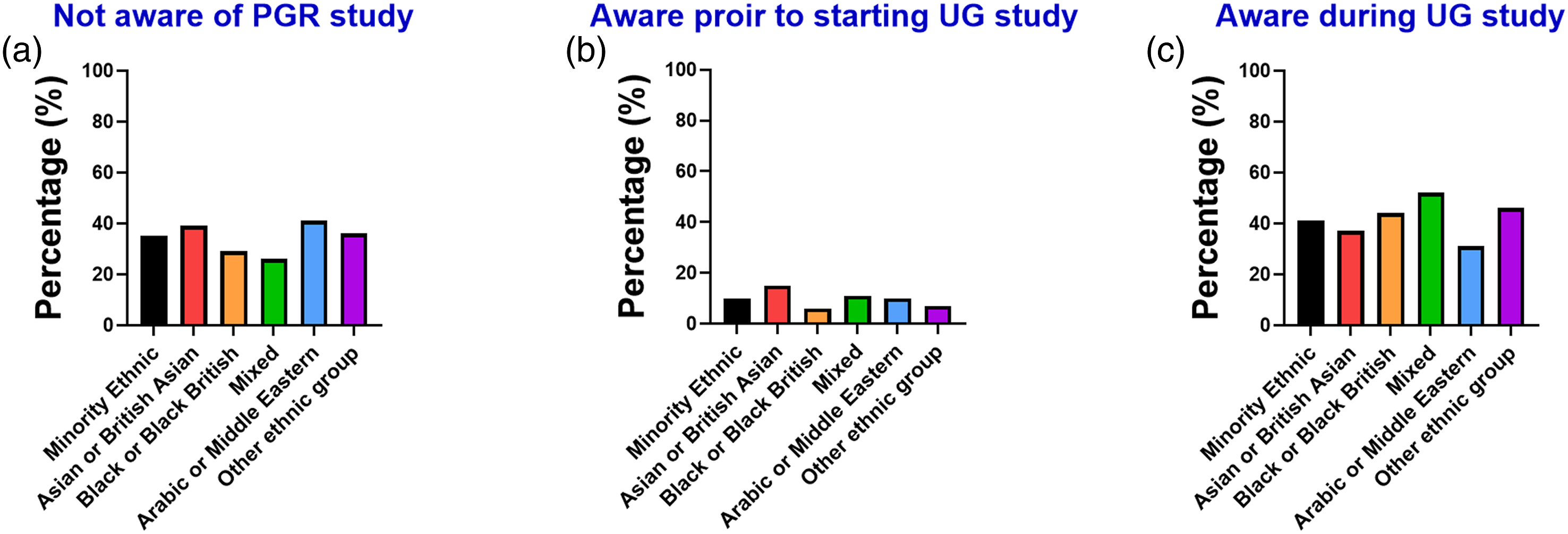
To further understand the responses from the survey, students were asked in the interviews or focus groups to highlight their thoughts. Most of the key views (mentioned 26 times) were associated with it being difficult to obtain suitable information to learn about PGR study or how to seek this information. Examples of student’s quotes were ‘Anything I know about it is from doing my own research – I am not sure why this is not advertised more to UG students’ and ‘While searching, I thought a lot of the information was difficult to find, and I had to spend a considerable amount of time sifting through generic information to get to content pertinent to me’.
Who would minority ethnic students’ approach to seek more information about PGR study?
Given the lack of awareness of over a third of the final year UG minority ethnic students that completed the survey, it was important to get a perspective on who students would approach to seek more information regarding PGR study as an option of further education. Figure 2 highlights who minority ethnic students would have approached to gain more understanding on the benefits of conducting PGR study. It was highlighted to students this would be for any aspect of information for PGR study from what this type of study is, the application process and employability benefits. There was a significant difference in who different groups of minority ethnic students would approach to learn more about PGR study (x2 = 60.58, df = 28, p > 0.001). Who would you have approached to gain more understanding on the benefits of conducting PGR study as a further study option? This includes information on what this type of study entails, the application process and the employability benefits that can be obtained from pursuing this type of study. Data shown as percentage of response from total number of students within each ethnicity category. The black bar highlights the overall response from all students who completed the survey.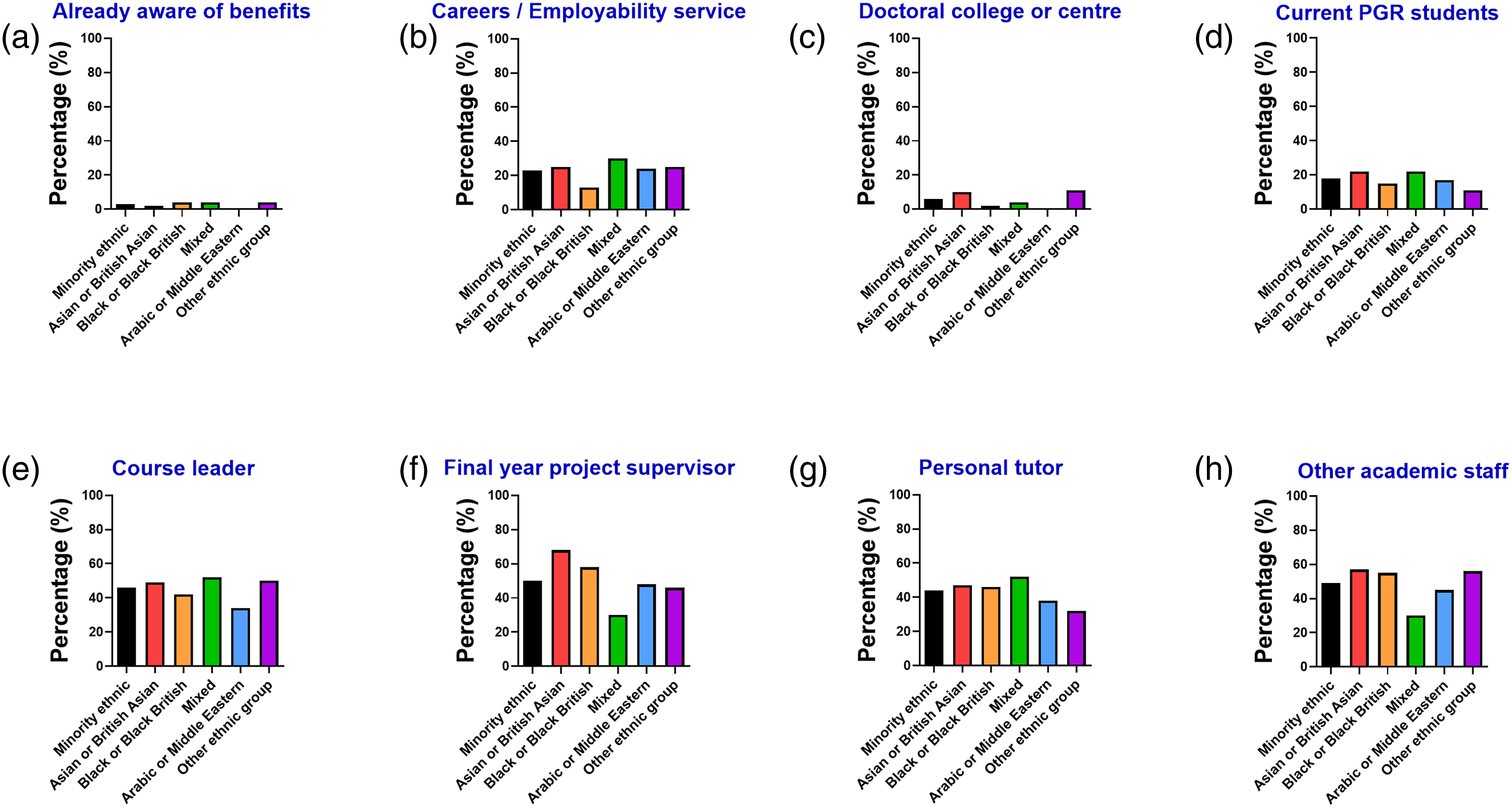
Figure 2(a) shows that less than five percent of all racial groups that completed the survey were aware of the benefits of conducting PGR study. This is surprising given that approximately 60% of students were aware of PGR study, but many within this group where not clear on the benefits of PGR study. This finding suggests the important need to provide more insight into what the overall benefits of PGR study are, which often are biased towards supporting a career in academia. During doctoral studies, the emphasis is often focused on generating research outputs rather than on vital transferable skills. Even though PGR study is widely seen as a key route to lectureships which are stable permanent jobs, they are not considered to be as lucrative as other professional jobs or careers in the finance or corporate sector. Therefore, more emphasis needs to be provided on understanding the outcomes of PGR students and how the benefits of the outcomes of PGR study outweigh those of other career pursuits.
Careers services offered by universities provided an excellent place to support future career directions of students, but our findings highlighted that approximately 20% minority ethnic UG students would see this a first port of call for advice on PGR studies (Figure 2(b)). From the varying racial groups, this was only 7% for Black and British Black final year UG students. Studies have shown that Black students are less likely to approach career counselling as they are often told from these sessions to focus on less prestigious jobs and are seldom recommended to conduct higher-level study. Studies have highlighted that when students from multiple racial background have approached career advisers, they felt that they didn’t have high expectations of them (Carter et al., 2003; Mau and Fernandes, 2001). This may be disheartening to some minority ethnic students, especially those from poor socio-economical background or are immigrants, who the ambition to progress and flourish rather than take on low-paid roles. These studies highlight that it is important for university career services to have representation, adequate training on unconscious bias and provide a welcome environment for minority ethnic students, so that the service can benefit all student communities.
Given the emphasis on a well-rounded training within the PGR study programme to enhance employability post completion of a doctoral study, doctoral colleges or centres have been established in mostly all UK universities. These departments are critical in supporting the recruitment and progression of PGR students and thus would be the most appropriate place to seek advice on PGR study. Figure 2(c) shows that less than 10% of minority ethnic students would approach the doctoral college as the first place for advice. For Black and Black British and Arabic and Middle Eastern students this was significantly lower than Asian and British Asian and other ethnic groups. These findings clearly highlight issues on the visibility and role of the doctoral college in supporting and promoting PGR study to UG students. This was a key aspect highlighted from focus group where 28 of the participants were unaware of the doctoral college and in what circumstances they could approach them. A quote highlighted this stating ‘I know the university has a Doctoral College which I have seen on social media, but I am unsure how to access them on campus or how to get in touch to enquire further’.
Figure 2(d) shows that only 18% minority ethnic UG students would approach current PGR students to learn more about PGR study. Black and Black British and other ethnic groups would be less likely to approach PGR students than the other racial groups. This is a surprising finding as often role models and mentors are considered the best approach to overcome barriers for minority ethnic students. However, our data suggest that this is not the case, which probably is due to the lack of PGR students who identify minority ethnic. Additionally, this could be because there are limited opportunities for UG students to meet PGR students and that PGR students are less visible, making it difficult to make connections. PGR students are often conducting their research unless they are involved in part-time teaching and thus rarely will cross paths with UG students, highlighting the need for a clear space to be available for UG and PGR student interaction.
By far the greatest response observed from minority ethnic final year UG students was to approach a member of academic staff in varying roles (Figures 2(e)–(h)). Approximately 40% of minority ethnic UG students will approach either the course leader, final year project supervisor, personal academic tutor or another academic staff member who may have taught them during their UG degree. However, there are slight differences between the racial groups. Approximately 70% of the Asian or British Asian students and 67% of Black and Black British students would approach the final year project supervisor when compared to other ethnic groups (Figure 2(f)). However, only 30% of mixed-race students would approach the final year supervisor but would rather approach personal academic tutor or course leader. Arabic or Middle Eastern students are least likely to approach the course leader, but overall are less likely to approach academic stuff than other racial groups. Other minority ethnic group students find it more comfortable approaching their current UG course leader and other academic staff from their course than their personal academic tutor. These findings clearly highlight that academic staff are the frontline option for minority ethnic students to gain more information regarding PGR study but the specific member of staff they approach varies by racial background of the student. These specific preferences may be due to also to the ethnicity of the academic staff within their local environment and thus they may find it easier to form personal rapport with specific members of academic staff. Studies have shown that minority ethnic students prefer to speak to staff who share similar identity (Bale et al., 2020). Overall, it’s vital that all academic staff are aware of the application process and benefits of conducting PGR, so they can inspire minority ethnic students to apply and participate in higher-level study. It is most likely that students do not initiate conversation on career support with academic staff with regards to further study and due to pressures on staff, this aspect is also often less highlighted to students during varying interactions. During the focus groups, 35 of the students highlighted that academic staff would be their first port of call for gaining more insight into PGR study. This was emphasised by a student from the focus group who indicated ‘I recently found out my UG lecturer is a PGR supervisor and so this encouraged me to speak to her about it and she gave me a lot of valuable information, but had I not known this, I would not be considering it as much – we need more of this’ suggesting a disconnect between UG and PGR study.
Key factors that would reduce likelihood of conducting PGR study
Figure 3 highlights the major factors perceived by minority ethnic students as key barriers that would reduce their likelihood of conducting PGR study. There was a significant difference in the perceived barriers to PGR study by different groups of minority ethnic students (x2 = 51.34, df = 28, p > 0.01). Figure 3(a) shows that 65% of minority ethnic final year UG students felt that they lacked clarity on how they could apply for PGR study. This is far greater number than the 51% of students who had learnt about PGR study. This suggests that a proportion of students who had not learnt about PGR study may have been interested if they knew how to navigate the application process. The process of application was specifically a greater issue for Asian and British Asian and Black and Black British students of which 73% highlighted the application process a major barrier. From the focus groups, this was highlighted by 30 students, in which one mentioned ‘I can’t even begin to wrap my mind around the application process/what is needed and if there was assistance with this, kind of like how the careers team helps UG with employment applications, then that would be a big step’. This suggests more can be done in supporting and demystifying the application process. Another study supports our findings and has highlighted that the process is barely understood by minority ethnic UG students, thus limiting their participation in PGR study (Wakeling and Kyriacou, 2010). What are the key factors that would limit your likelihood of pursuing PGR study? Data shown as percentage of response from total number of students within each ethnicity category. The black bar highlights the overall response from all students who completed the survey.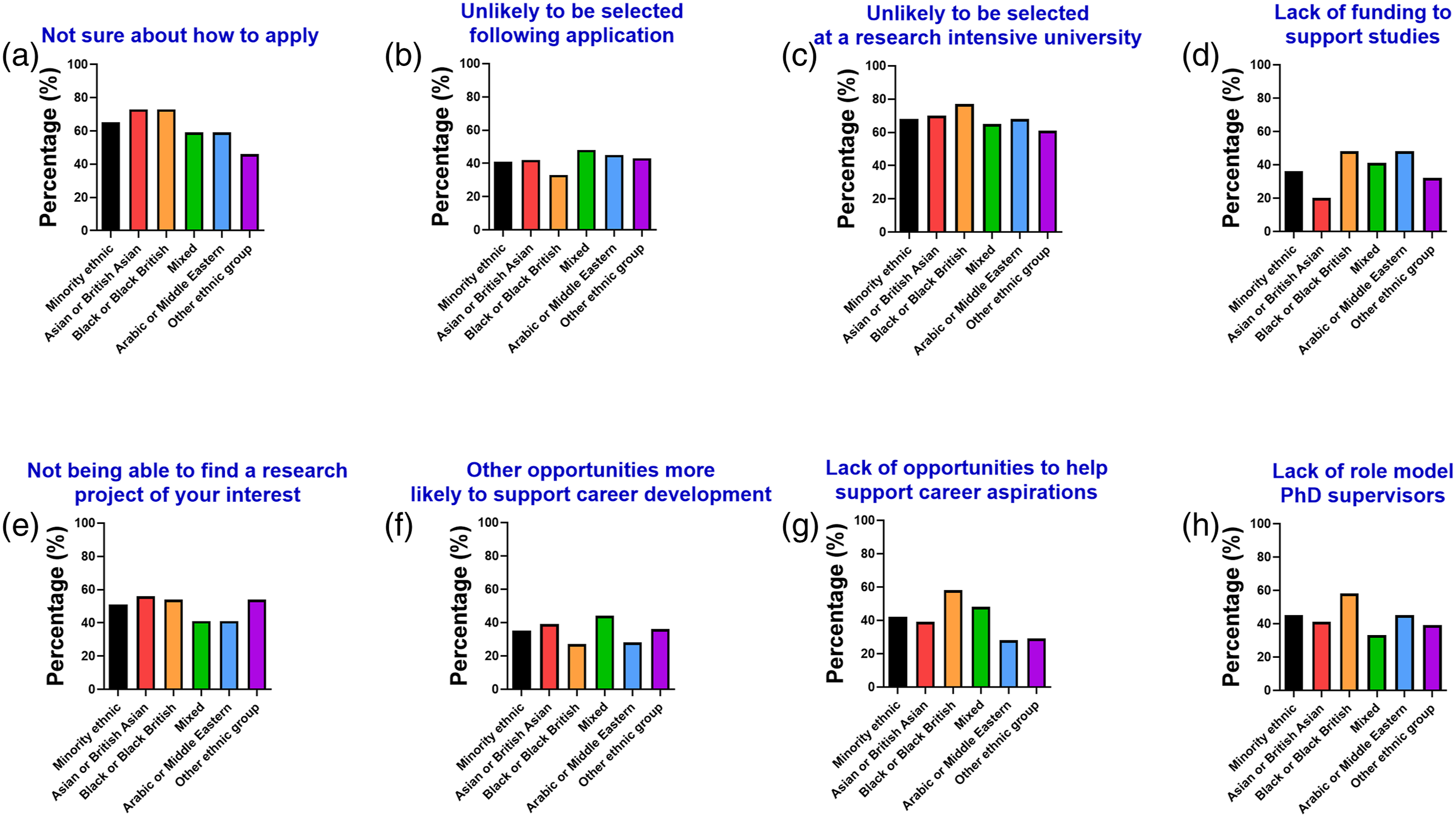
Figure 3(b) shows that 40% of minority ethnic students felt that being selected following application would limit their chances of PGR study of which this was a greater concern for mixed race students, but less of a concern for Black or Black British students. It would have been anticipated this would be a greater concern for minority ethnic students given the reduced numbers of students undertaking PGR study at present and that students may not always have access to the appropriate information, advice and guidance on the application and funding processes. This lower percentage also suggests that students are less worried about the potential bias during the interview process. Another reason on why this was potentially considered to be a lower barrier may be because minority ethnic representation is higher in post-1992 universities and students may feel that if they were selected to conduct UG study, then the same fate may occur when pursing PGR study.
The most significant limitation found from our study for minority ethnic UG students at a post-1992 university was to make the transition to study PGR study at high tier research intensive university (Figure 3(c)). Often higher tier research intensive universities have a greater number of funded students available to recruit PGR students. For the students who responded to the survey, 68% of minority ethnic students felt they would be less likely to be selected by a higher tier research-intensive university. This was 70% for Asian or British Asian and 77% for Black or Black British. These findings clearly highlight the difficulty of moving between lower and higher tariff university providers thus providing social mobility challenges for minority ethnic students when considering options for further higher-level educational study. The major funder for paid studentships within the UK highlighted that Black or British Black student made up only 3.8% of entrants to high tariff providers, compared with 11.4% of entrants to lower tariff providers (UKRI, 2020). These findings support the reservations that minority ethnic students from post-1992 universities struggle to transition into higher tier research intensive universities. This was highlighted by 28 students within the focus groups of which the core theme was a feeling that they would be judged to a greater extent due to the institution they were at for their UG studies. One student highlighted ‘I am sure they would feel that we are not as capable as those who are studying at Russell Group universities and so we would already be disadvantaged in getting a place to conduct PGR study’.
The lack of funding is often a major barrier towards participation in PGR study, however, our study highlighted this was not as significant as other issues for minority ethnic students, where 36% highlighted this to be a key factor (Figure 3(d)). This was, however, greater in Black and British Black (48%), Mixed race (41%) and Arabic and Middle Eastern students (48%). However, this was surprisingly significantly lower for Asian and British Asian students with only 20% of those who completed the survey considering this a key factor. Given that at post-1992 universities, minority ethnic students may also be from poor socio-economic backgrounds, we expected funding to be a far greater limitation than we observed in our outcomes. For all the students who choose lack of funding as a barrier, they also choose other factors as well, but are not clear how much this would be the major priority. Students may have not considered lack of funding as key factor in our study as they may have the perception that if they are unlikely to be selected to conduct PGR study then why worry about the funding implications. Alternatively this may also suggest that new funding processes such as a national loan system may be providing the opportunity for minority ethnic students at post-1992 universities the ability to fund their PGR studies. Within the focus group, funding was highlighted as barrier but more in the context of not being aware of the different funding routes and options available outside fully funded studentships. This was a common point highlighted by 17 students. This was mentioned by a student within the focus group who stated, ‘It would be helpful for someone to assist in “funding research” as I think there are different options, but I don’t know which one, if any, apply to me’, thus indicative that more can be done to showcase the breath of options to fund PGR study.
Figure 3(e) shows that over 51% of minority ethnic students felt that finding a research project of their interest would be a major limitation. This was a slightly greater concern for Asian and British Asian (57%), Black and Black British (54%) and other ethnic group (54%) students. This was a core theme highlighted within the focus groups where 28 students highlighted that it was very difficult finding research opportunities associated with issues of race within the subject area. This was based on their reflection of how difficult this was to do when conducting final year UG projects. To highlight this point, one student within the focus groups indicated ‘There are no supervisors that look like me and I’m not sure if I approach supervisors, they will want to do studies focused on minority ethnic communities’. There is a clear lack of diverse research projects that focus on issues that impact minority ethnic communities and this is mainly due to the lack of minority ethnic staff who may have particular interest in these specific research areas.
tThere is an assumption that minority ethnic students are more likely to be from a poor socio-economic background, and thus they are more likely to pursue other employment opportunities post completion of their UG degree than continue in higher education. Our findings disagree with this perception, as only a third of minority ethnic students felt other opportunities outside academia were more likely to support career development (Figure 3(f)) and 42% of minority ethnic students felt that there was a lack of alterative opportunities outside academia that would help their career aspirations (Figure 3(g)). However, for specific ethnic groups, there were slightly different responses. Black and British Black students (58%) and mixed race (48%) felt that good opportunities existed outside academia to help support career aspirations and thus the need for a PGR study was not important to aid their career trajectory. It was noticeable that approximately 30% of Arabic or Middle Eastern students felt alterative opportunities outside academia to support career development existed post UG and thus where more likely to consider PGR study. These findings suggest that minority ethnic students are very amenable to consider PGR study to aid their career aspirations and thus may consider this route if other barriers were not limiting their opportunities. Within the focus groups, 22 of the attendees highlighted that there was confusion on if they felt they had sufficient skills or could gain them from the employment and thus felt a further qualification may strengthen their career opportunities. This was also evident from students who attended focus groups or were interviewed who mentioned ‘I am but I am not quite sure what careers I’d be able to go into and worry I would require more skills and thus would like to know more on this as I would consider PGR study’ and ‘If I knew more about the career paths that result from PGR study/general benefits, I would be more inclined’.
It is often the PhD supervisor who is critical to students when choosing to conduct PGR study and given the low representation of minority ethnic academic staff it may be assumed this would be a significant limitation on why minority ethnic students do not pursue PGR study. This was the case for 45% of minority ethnic students, in which this is significantly greater for Black and Black British (58%) students (Figure 3(h)). This response highlights that supervisors with cultural awareness are important to support a minority ethnic participation in PGR study.
Overall, the two major barriers which were highlighted by over two thirds of minority ethnic students who completed the survey was the application process for PGR study and that they would be unlikely to be selected by a higher tier research-intensive university. These two factors may be connected given that most PhD opportunities are held within higher-tier research-intensive university, who most likely share and communicate information regarding their application process within their own communities. Addressing these barriers will provide fair and equal playing field for all minority ethnic students when they apply for PGR opportunities. Improving the social mobility of minority ethnic students between different tiered universities requires improved dialogue and communication on ensuring access to opportunities are widely provided.
What solutions would increase the likelihood of minority ethnic students conducting PGR study
Given the key factors that limit the likelihood of minority ethnic students from pursuing PGR study, we asked the participants what they felt would be the best solutions to significantly increase their likelihood to consider PGR study as further higher-level educational study. Figure 4 shows the response of the most frequent responses highlighted by the participants. There was a significant difference in the perceived solution to increase participation to PGR study by different groups of minority ethnic students (x2 = 46.80, df = 28, p > 0.05). What do you feel are the key solutions to the barriers that would significantly increase your likelihood of pursuing PGR study? Data shown as percentage of response from total number of students within each ethnicity category. The black bar highlights the overall response from all students who completed the survey.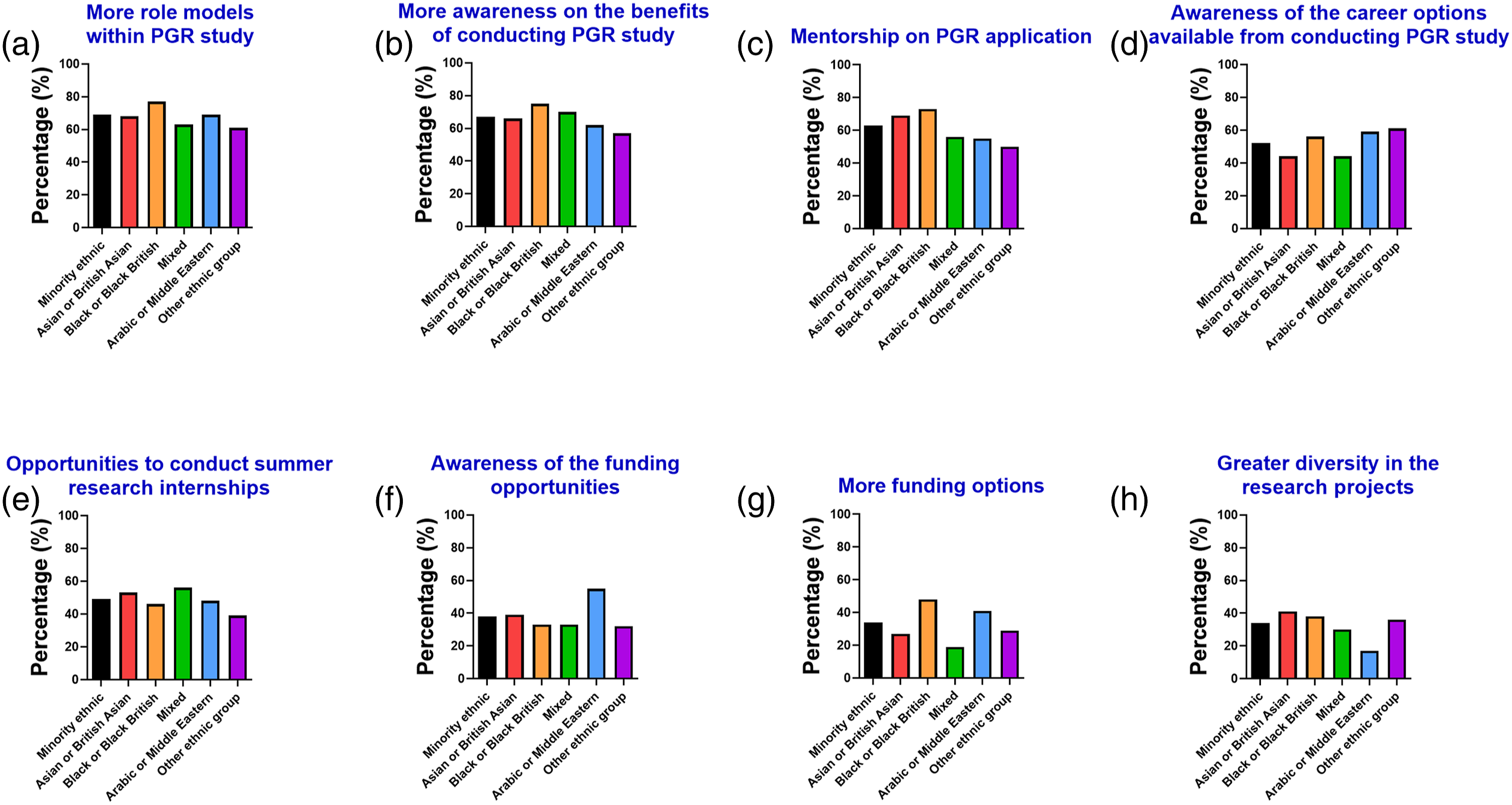
Figure 4(a) shows that more role models in PGR study were highlighted by 69% of minority ethnic students and was by far the key solution that the participants felt would make a key different, this included access to and visibility of minority ethnic PGT students/graduates. This solution was highlighted to a greater extent by Black and British Black (77%) students. Closely followed, as a solution, was to gain more awareness of the benefits of conducting PGR study (Figure 4(b)), which was mentioned by 67% of minority ethnic students; this was to a greater extent highlighted by Black and Black British (75%) and mixed race (70%) students. Given a major barrier is the awareness of the process to apply for PGR study, mentorship on the application process was highlighted by 63% of minority ethnic students but was increased to 69% for Asian and British Asian students and 73% for Black and British Black students (Figure 4(c)). These three core solutions are interconnected and thus can provide a significant change in the PGR landscape if addressed. Within focus groups when solutions to PGR participation was mentioned, all the students highlighted role models and 37 students mentioned that more information on the benefits of conducting PGR study was important to them. One student eloquently said ‘knowing from those who look like you what difference doing a PhD has done for their career would be important for me. It would be amazing just to be able to be coached through the process when applying’.
If there was a greater presence of minority ethnic role models within PGR study, this would provide the opportunity for robust identity matched mentorship process in which UG students can gain the vital information on the benefits of conducting PGR study and key guidance on PGR application. Studies in education and health sectors have shown that ethnic matching is important in enhancing pathways’ for minority ethnic students within the UK (Dare et al., 2022). Unfortunately, within higher education there is a lack of minority ethnic role models and thus it is critical that we address the leaky pipeline within academia, as this is a barrier to future growth and encourage more race allies. These three solutions were highlighted the most frequent by the students who completed the survey and are most likely all linked to the nature of gaining more support and information to make an informed decision on the benefits of conducting PGR study. These solutions should be seen to be more of a priority.
The next two most highlighted solutions were also associated with gaining more awareness of the PGR study programme. Obtaining more knowledge about the career options available from conducting PGR study was highlighted by 52% of minority ethnic students (Figure 4(d)). This was more critical to Arabic or Middle Eastern (59%) and other ethnic group (61%) students. Figure 4(e) shows that half of the minority ethnic students felt that the opportunity to conduct summer research internships would be of significant value, in which Asian and British Asian (53%) and mixed race (56%) students particularly felt this would be of benefit. Summer Internships are well known to provide exposure of research skills to UG/PGT students and thus provide confidence towards participating in PGR study. Minority ethnic students are less likely to apply for internships or are generally not successful in gaining internships to the same extent as White students (Smith, 2017). Much of the reasons why there is a lack of uptake of internships are that there is a reduced knowhow of the application process, a lack of appropriate role models as supervisors and that the financial contribution of the internship was not financially viable for students from disadvantaged socio-economic backgrounds.
Figure 4(f) shows that for 38% of minority ethnic students, greater awareness of funding opportunities would be a vital solution, this was significantly highlighted by Arabic and Middle Eastern students (55%). Gaining more awareness and options for funding are critical to increase the participation but these challenges seem to be secondary to gaining just more understanding on the educational and skill benefits of conducting PGR study. Within focus groups this was raided by 22 of the attendees in which much emphasis was focused on if there should be more positive action funding to increase participation of minority ethnic students in PGR study. One student mentioned ‘given that there has been such more representation of Black students in PGR, is it not time for funding made directly available for these groups or specific scholarships’. Due to the lack of funding available, particular at post-1992 universities to conduct PGR study, Figure 4(g) shows that 34% of minority ethnic students are keen to have more funding options made available. Black and Black British students (48%) and Arabic and Middle Eastern students (41%) would highly welcome more funding being made available.
Lastly in Figure 4(h), 34% of minority ethnic students would like to see more diversity within the research projects that are being offered with PGR study, particularly so for Asian and British Asian students with 41% highly welcome increased diversity. Inclusive approaches to the UG curriculum have been widely utilised in HE (Arday and Mirza, 2018; Arday et al., 2021; Williams et al., 2020), but similar considerations have not been applied to PGR study. Within a PGR study programme, often studies fail to explore barriers associated with ethnicity within the research study design. This can hinder and put off minority ethnic students who are keen to conduct research which may directly impact on their community.
The solutions highlighted by the minority ethnic students who completed the survey from a post-1992 university clearly highlight that mentorship is critical to support the transition from UG to PGR, as this process is vital in providing key understanding on the benefits of conducting PGR study and how to navigate the application process. This coupled with the ability to learn about the career benefits of the PGR programme of study through gaining higher employability skill sets and exposure to experiential learning can encourage minority ethnic student to apply.
What practices could be changed or implemented to increase representation of minority ethnic students conducting PGR study
Based on the findings of the study provided, there are some clear aspects of practices which could be changed or even implemented by higher education institutions, which could have an impact in increasing representation of minority ethnic studies in conducting PGR students.
Communication of PGR study is vital to provide minority ethnic students with greater insight in the benefits of PGR study and the career prospects which come with this. From our study, minority ethnic students are most likely to approach a member of academic staff to understand the benefits of conducting PGR study as a further study option. Therefore, the need for formal references to PGR discussions as part of the Personal Academic Tutoring role or as part of a ‘further study’ campaign could be introduced by all higher education providers. This approach will capture all students, providing an inclusive approach to communicate about PGR study. Additionally, as highlighted by our study, it will ensure that every student from a minority ethnic background becomes aware of PGR study during their time at university, which from our findings currently is not the case.
One key aspect highlighted in the data that would reduce the likelihood of participation in PGR was that minority ethnic students would be less likely to be selected at a research-intensive university. Research intensive universities are more likely to have funded PGR opportunities compared to post-1992 universities in the form of doctoral training centres (Boliver, 2015). To enhance the opportunities for minority ethnic students from all universities in conducting PGR study, it is important for these doctoral training centres to widely promote opportunities to inspire a wider array of applications and create simple guides/resources that demystify the application process. This will have a major impact on social mobility of students in higher education and provide opportunities for all students.
One of the major solutions highlighted by minority ethnic UG students was the access to role models who had conducted PGR study. Therefore, it is important to consider providing opportunities for PGR students and UG students to meet, which if not facilitated doesn’t occur. These could be through the hosting of career sessions which are focused on further higher-level study or additionally through providing more visibility of minority ethnic PGR students via videos or other media formats. Role models who have completed PGR study are also important to highlight to UG students as they can provide self-reflection on why this study made an impact on their careers.
Making such changes is critical to ensure we make higher education more inclusive and provide opportunities for all minority ethnic student to progress into PGR study.
Conclusion
Our study highlights the key factors that reduce the likelihood of final minority ethnic UG students from a post-1992 university to participate in PGR study. Our findings highlighted that one third of minority ethnic students were not aware of PGR study and would seek guidance on PGR study from academic staff. The key barriers were associated with a lack of knowledge on the application process and feeling they would not be selected by a higher tier or research-intensive university. The main perceived solution to these barriers is through providing mentorship that can provide guidance on the application process and the benefits of conducting PGR study. These outcomes provide key insight into key actions that can be implemented to increase the representation of minority ethnic students in PGR study to create a more diverse research culture.
Footnotes
Declaration of conflicting interests
The author(s) declared no potential conflicts of interest with respect to the research, authorship, and/or publication of this article.
Funding
The author(s) received no financial support for the research, authorship, and/or publication of this article.
