



Abstract
This article utilises work from Leisure Studies and various elements of Psychology (Leisure and Ecological Psychology in particular) to frame an empirical exploration of the leisure health receptor theory. We question if being in a leisure state of mind magnifies the feelings of well-being experienced in blue spaces (aquatic environments), namely, the promenade areas of seaside resorts in North-West England. We surveyed two groups in these places, those in a leisure state of mind and those who were not, asking how they viewed these blue spaces and how they made them feel – within the context of leisure and well-being. We devised a Seaside Well-being Index, which summarised well-being-related positive feelings about these leisure and work experiences at the coast. The key finding was that being in a leisure state of mind accentuates feelings of well-being associated with exposure to blue spaces. We also consider the role of savouring and affordance in this process. The potential impact of this research is to encourage a scholarly conversation on the role that leisure mind-states can play in improving well-being outcomes associated with blue spaces – not just in theory but in well-being-related interventions by practitioners.
Introduction
The setting for this research is the Lancastrian seaside on the North-West coast of England. Whilst the case-study is within the United Kingdom, coastal resorts are a global phenomenon; approximately half of holiday makers visit a coastal area. In recent years there has been an increasing body of research around the health benefits relating to spending time in, on and around aquatic environments, or so-called blue spaces – a popular leisure activity. Psychologists, in particular, have demonstrated that exposure to natural environments, whether it be proximal or distal, offers significant well-being-related benefits 1 .
This article assesses potential connections between blue space, the leisure state of mind, and feelings of well-being. It also introduces two relevant theoretical constructs: savouring and affordance theory, as interlinked elements of the accruement of well-being benefits at the coast. By focussing on leisure state of mind, the state in which one feels at leisure, we adopt a subjective approach. Furthermore, this research considers well-being through the lens of hedonic psychology, a field which concerns itself with pain and pleasure, of which well-being is part. For, according to Kahneman et al., subjective well-being (involving judgement and measurement linking to one’s own life) represents the second level in analysis of quality of life, following on from cultural and social contexts (wider definitions of a good life). Nevertheless, well-being is considered a key aspect of hedonics, primarily because, ‘the experience of pleasure and the achievement of a subjective sense of well-being remain at the centre of the story’. 2 Essentially, well-being, represents a positive hedonic state – it is considered to be the presence of positive affect, and the absence of negative affect. It is often associated with satisfying experiences and positive feeling such as happiness and relaxation, thereby linking to leisure. 3 Well-being can be impacted by many real world phenomena but the environment, more specifically the natural environment (as discussed in this article), has been found to be ‘a key factor’. 4
Blue Spaces
We concur with Grillier et al., that blue spaces equate to: Outdoor environments—either natural or manmade—that prominently feature water and are accessible to humans either proximally (being in, on or near water) or distally/virtually (being able to see, hear or otherwise sense water).
5
In the 21st century research has increasingly focused upon the well-being-related benefits of blue spaces. Blue Space is often associated with the coast but also includes inland settings such as lakesides and rivers. Researchers have linked positive feelings (associated with well-being), such as a sense of calmness, refreshment, and enjoyment, with exposure to the blue spaces. Blue spaces have been identified as being particularly efficacious in this regard. 6 However, the extent of these benefits will vary due to a combination of personal and social circumstances, as well as environmental factors.
For example, Severin, et al. considered blue space and COVID-19 lockdowns in Belgium; they suggest a ‘buffer effect of residential proximity to the coast against negative psychological consequences of the COVID-19 pandemic, supporting the notion that the coast has a positive impact on well-being.’ 7 Georgiou et al. found that the salutogenic effects of being exposed to blue spaces by urban dwellers are primarily derived from the healthy activities that often take place there, coupled with the healthier environments that blue spaces emanate. 8
Experiential well-being responses to blue space have started to be to be examined, and there are a range of (non-standardised) methods and interpretations of determining response. 9 However, for the most part, the focus of work on blue spaces has explored the health-giving properties of the environment, rather than the states of mind of those benefiting from the surroundings, let alone those specifically connected to leisure. This is despite the fact that seaside experiences are, for many, only made possible through leisure or leisure-tourism. Indeed, leisure has long been associated with positive benefits to, ‘physical, psychological and spiritual health and well-being through opportunities for making meaningful choices and the benefits provided by specific experiences’. 10
The Leisure State of Mind and Affordances
The leisure state of mind (in which one feels at leisure) is distinct and common to all those who experience it – experience is the focus. 11 In line with this, leisure can be considered, ‘a state of mind which ordinarily is characterised by unobligated time and willing optimism. It can range from extensive activity to very little or no activity. The key ingredient is an attitude which fosters a peaceful and productive co-existence with the elements in one’s environment’. 12 To be in this state most enter into it freely and of their own volition. Indeed, leisure can be ‘characterised by intrinsic motivation and/or satisfaction; by a subjective sense of freedom to choose and of freedom from constraint; and by the understanding that it is accepted by our own reference group as being leisure’. 13
Previous studies have focussed upon how the choices in leisure largely determine the impacts to health and well-being. 14 However, fewer studies have focussed on the intrinsic health-related benefits of simply being at leisure; particularly regarding feelings of well-being. 15 As a result, researchers that focus upon the subjective features of leisure tend to position their work within psychological paradigms. In doing so, emphasis is placed upon the experience of leisure as encountered and defined by the individual. 16 In keeping with this approach, Neulinger proposed leisure as a state of mind that comprises perceived freedom, coupled with the nature of the motivation which can be intrinsic and/or extrinsic. 17 This psychological conception of leisure highlights the key components of entering leisure which separate it from other non-leisure states of mind. It also helps to distinguish the subtle differences between a leisure state and the rich variety of ensuing leisure experiences that follow. Therefore, the leisure state is taken as a mindset that is common to all who enter leisure – irrespective of the nature of a chosen activity or the temporal determinants that would usually define its parameters. 18 In contrast, leisure experiences take place after entering the leisure state and will vary enormously depending on numerous variables linked to personal, social, cultural and environmental factors. 19
Taking a subjective approach to leisure, as we do in this study, reveals the values, needs, and motives that influence not only specific choices in leisure but also the potential therapeutic outcomes that such engagement engenders. 20 This has led to an interest in leisure counselling as a method to encourage those who may be suffering from various psychological illnesses (such as anxiety, depression, trauma, stress, etc) to benefit from leisure involvement. 21 Such counselling strategies do not only prescribe an increase in healthy leisure activities but, in parallel, emphasise the psychological benefits of choosing to do something that individuals find rewarding and engaging. As Iso-Ahola notes, ‘the fact that an individual acknowledges, values and engages in leisure for its own sake, for its inherent characteristics, is one way in which leisure contributes to health.’ 22 As indicated above, research that explores the health-related benefits of leisure in natural environments tends to focus upon the types of activities undertaken, rather than the specific mindsets required to maximise any potential positive impacts to individuals’ well-being. In other words, previous studies have explored the impacts of doing leisure in natural environments rather that the impacts of being at leisure when interacting in and around blue and/or green spaces. We consider the extent that mindsets influence the degree of salutogenic effects at blue spaces. Given the interface between individual and environment that this proposition implies, much of the related research has been positioned within ecological psychology; particularly focussing upon the perceptual theory of affordances. 23
The term affordance was first coined by Gibson in 1966 but made more popular through a later publication which outlined the concept in more detail. 24 In simple terms affordance describes the specific properties offered in a given environment that offers (or affords) action and/or experience. Such action will be dependent on how the environment is perceived. For example, while some individuals would perceive a cliff as a potential danger (i.e. in Gibson’s explanation: fall-off-able) others will perceive it more positively, as an opportunity or invitation to climb – in this case placing emphasis on the climbability of the object. 25 It is also possible that some individuals will be indifferent or less attuned to what a given environment affords. 26
This attunement very much underpins Gammon and Jarratt’s Leisure Health Receptor Theory, which also makes the connection between attunement and savouring. Savouring is a process that involves taking in and appreciating the present moment, in other words being selectively mindful towards the enjoyment of an experience; it is associated with reflective forms of leisure practice. 27 Visiting a leisure space in a state of stress or distraction will mean that the experience is unlikely to achieve its intended function (or the opportunities it potentially affords) – to enjoy and/or relax. Instead, people must ‘notice and savour these spaces if they are going to be fully enjoyed’. 28
The Leisure Health Receptor Theory
According to Gammon and Jarratt a leisure state of mind ‘can nurture, amplify and reify the health-giving properties of blue spaces and that leisure is the intervening variable that helps enable and accentuate the many positive experiences that are on offer.’
29
They argue that the leisure state as an overlooked but potentially important element of the blue-space/well-being nexus. For the leisure state of mind, as described here, may hold the potential to amplify well-being benefits. This proposition is based on the idea that individuals are more open and more sensitive to the health-giving properties of blue spaces when there is time to focus and savour the moment, and when they are attuned to certain properties in the environment. Through analogy we can draw a comparison between affordance attunement and a radio, Human perceptual systems sample information much like a radio. Radio stations broadcast information by using radio waves just as the environment broadcasts informative ambient light, odors, or sound. Reception or detection (sampling) occurs only when radio on perceptual systems tune into the corresponding information and, consequently, filter out other information or noise.
30
The resulting leisure mind-state equates to the widening of an aperture, thus allowing the visitor to be more attuned and receptive to the health-inducing properties of blue spaces (see Figure 1). Moreover, these feelings of well-being can continue after the interaction has taken place.
31
More generally, ‘fun and pleasurable leisure experiences not only enhance the quality of the present moment but cumulatively contribute to long-term psychological well-being.’
32
In addition, there is a duality of value – on one side there is an appreciation of experiencing a valued leisure state, and on the other is the appreciation of a valued environment. Indeed, the perception of this environment maybe shaped through the lens of the leisure state. The Leisure health receptor theory (Gammon and Jarratt 2019).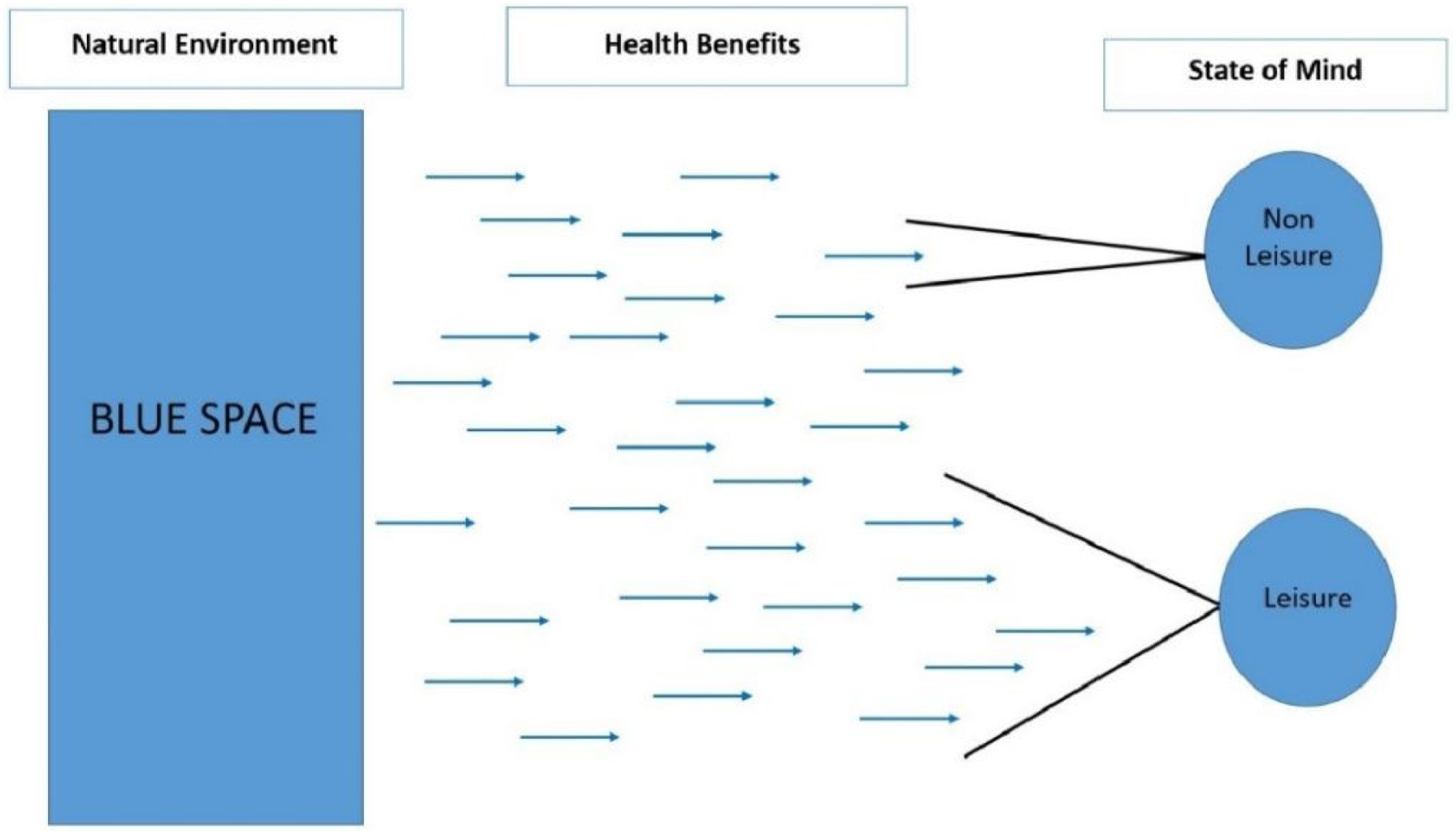
The theory summarised here suggests that there may still be health-related advantages from working in and around blue spaces, but that there is less chance of people in these circumstances (fully) experiencing these benefits – because of lower levels of attunement, in comparison to those in a leisure
33
state of mind. So, attunement, which is suggested by affordance theory, supports Gammon and Jarratt’s theory that being in a leisure state of mind enables the individual to be more receptive to the health-inducing properties of the environment.
34
This perspective differs from more traditional interpretations of affordances in that the environment is collectively perceived as to what it affords to individuals’ well-being. In other words, it is not what it offers for doing – but what it invites for being. Blue space environments such as those encountered on coastlines are often broad vistas that comprise of sea, sand and sky that are sensed collectively or even holistically. In this case the sea is not perceived as necessarily offering an invitation to swim, sail or fish but rather what it offers in terms of health and well-being. To be in a leisure state of mind enables individuals to tune into the environment whilst simultaneously filtering out any unnecessary psychological or physical distractions.
35
This is not to suggest that blue spaces do not afford active leisure (which are linked to health) but rather that more contemplative, less physically dynamic activities will be more efficacious to positive well-being outcomes resulting from spending time in such environments. Gammon and Jarratt offer the concept of savouring of the environment as a likely determinant of more reflective leisure practice where ‘…focussed attending makes a positive experience more distinctive, more vivid and more fully savored’.
36
Similarly, Gibson observes that stillness or relatively slow movement will aid in attunement, especially when perceiving close settings – rather than those in the distance.
37
Research undertaken by Pierskalla and Lee that investigated leisure affordances came to a similar conclusion, noting that: People engaged in slower activities (e.g., backpack camping, picnicking, or hiking) will experience slow optical flows and are more able to actively discriminate among different information in nearby settings. Therefore, by engaging in slower paced activities, a person would increase his or her interaction with a complex environment when conducting detailed investigations. However, faster, more passive information flows somewhat remove people from the immediate environment.
38
As mentioned above the perception of some blue spaces will focus upon more distant markers such as seascapes or skies, whilst others will incorporate nearer settings such as those found at lakes and rivers. In either case, Gammon and Jarratt make the case that the more sedate activities that blue spaces afford are those that are more likely to have beneficial results ‘When the mind is not distracted, there is time and motive to savour and soak in the environment, which may create a reciprocal benefit to both the experience of leisure and to the appreciation of the surroundings’. 39
Others have associated the seaside with sedate activities and slowing down. Baerenholdt et al. place strolling, ‘pottering’ and relaxing as central to the seaside resort experience for many. 40 The seemingly unchanging coastline offers an opportunity to slow down, tune into a natural rhythm of waves or tides and even to contemplate. 41 In a sense we can feel less distracted and more in tune in green or blue spaces (which have different information-processing demands in comparison with urban areas), with concomitant benefits in functioning. 42
Aims of this study
The hypothesis for this study is that leisure status positively impacts feelings of well-being based on spending time in blue spaces. So, this study considers if the blue space-health nexus is more applicable to those in a leisure state of mind, in comparison to those who did not report themselves as being in this mindset – termed here as workers.
Research Methods
In July and August of 2019, a survey was administered to two groups using questionnaires on the coastal strips/promenades of six resorts in Lancashire – Lytham, St Annes, Blackpool, Cleveleys, Fleetwood and Morecambe. By resort we mean a place that is frequented for leisure and tourism purposes. These locations were known to the authors and offer clear vistas to the sea. The questionnaires were conducted face to face, with the participants being asked the questions by a single interviewee (a research intern), and responses recorded on a tablet via Qualtrics software. 43 Two groups of population were approached in person and asked to participate there and then. The groups were those at leisure and those working at their place of employment, along the coast. These places of work were often customer facing tourism-reliant businesses such as catering outlets/concessions and shops. Those at leisure were spending leisure/recreation time at those settings and were either walking, standing still or sitting and not involved in any kind of work (such as street sweeping). The rationale for identifying those at leisure who were walking, standing or sitting was twofold. First, it would limit the potential of the activity itself effecting feelings of well-being. In other words, those who engaged in vigorous activities may identify the activity as the primary determinant of their well-being – rather than the environment. Second, more sedentary forms of leisure would enable respondents to be more focussed on their surroundings and less distracted by other activities. Of course, there can be no guarantee that less active pursuits will automatically equate to more sensitivity to the environment, as individuals will be at the mercy of many of life’s distractions. However, as indicated above, numerous studies in both savouring and affordance have found that those in less physically demanding pursuits were significantly more likely to benefit and value the environments they were in. From here on in, the two groups of interest are described as worker(s) and those at leisure, or sometimes ‘leisure’ for short.
The study was conducted midweek and between 10a.m. and 4p.m. in order to reach those at work, as well as those not at work. Every second person encountered by the interviewer whilst he moved along the promenade (from one end to the other) was approached for interview, in a bid to increase the likelihood of random selection instead of unconscious bias. They were asked if they would complete the survey, which took around 10 min to complete. Where groups of more than two potential survey respondents were encountered on the promenade, approximately half of the members were asked to complete the survey. In terms of intercepting those people at work, virtually all businesses on the coastal strip/promenades were approached to see if there was an opportunity to speak to staff. There were no other inclusion/exclusion criteria.
Please see Appendix A for a copy of the survey questionnaire which is described here. The first few interview questions confirmed if people were at leisure or not. Demographic information was collected from all respondents. Questions were also asked on frequency of visits for leisure (workers were asked about visits on their days off). No personal identifiers were asked of people approached, and none were recorded alongside responses to questions or in any other format. All respondents were asked to rate their responses to a series of well-being-related statements on a Likert Scale. From the answers provided, a seaside well-being index (or SWI) was created. The use of speculative indices based on empirical data collection is common in tourism research (examples being Fetscherin and Stephano’s Medical Tourism index), and as in previous studies, we sought to appraise the validity of introducing an index to understand this particular context and research problem. 44 In this case each statement was given a score of between 0 and 4 determined by the response given by the participant on the following basis; Strongly Agree – 4, Agree – 3, Neither – 2, Disagree – 1, Strongly Disagree – 0. The scores for the eight statements were then summed, providing SWI values of between 0 and 32.
The statements were as follows: 1. I enjoy being at the seaside (SWI 1) – measures enjoyment based on spending time in blue spaces 2. I enjoy spending time looking out to the sea (SWI 2) – measures the visual appeal of the sea and slowing down 3. Being by the sea makes me feel relaxed (SWI 3) – measures the state of relaxation which the sea induces 4. Being by the sea positively affects my well-being (SWI 4) – measures self-reported feelings of well-being attributed to the sea 5. I believe that being by the sea is good for your health (SWI 5) – measures positive affirmation of the sea being good for health 6. I prefer seaside views to countryside views (SWI 6) – assesses whether green or blue space is perceived as more preferable 7. I associate the seaside with happy memories (SWI 7) – measures nostalgic connections with the sea 8. The seaside is one of my favourite places (SWI 8) – measures place attachment in accordance with blue spaces
These statements were chosen because they reflect feelings related to health, well-being, enjoyment and relaxation, specifically in relation to the sea. These had to be designed for this survey, rather than drawn from an existing index, due to the context and aims of understanding the role of being at leisure, therefore requiring specific questions. 45 These choices are a multi-faceted approximation of the benefits of exposure to the seaside as reported by respondents. Within this context, they tell us something about how people feel about these places.
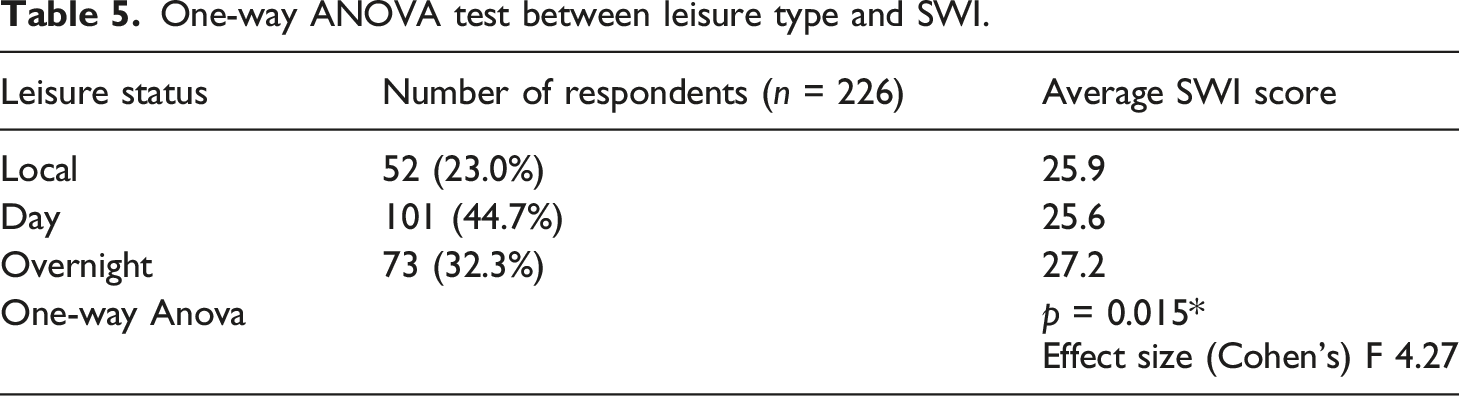
Statistical analysis of the variables, including the SWI scores and other characteristics of the respondents was undertaken using SPSS data software. The initial analysis was based on testing the hypothesis that those at leisure would display higher SWI scores than those at work. The SWI scores of the worker and leisure groups were compared using an independent samples T-test. Tests for normality confirmed approximate normal distribution of the dependent variable (SWI scores) in the groups being compared. Levene’s test was employed to confirm that variances for SWI between groups were equal. Additionally, as the eight SWI scores were measured using Likert scale questions, Chi-Square tests were performed to ascertain any significant differences between the two main groups on individual SWI scores. Next, the leisure group was broken down further in 3 sub-types to assess whether there were differences between locals, visitors on day trips and visitors staying overnight. A one-way ANOVA test was undertaken, including a post-hoc Tukey test to ascertain where differences might lie between groups.
Following this, a potential covariate (the age of respondents in each group) was analysed for differences in adjusted means for using a 1-way ANCOVA test. Additionally, to assess whether proximity of residence to the sea had an influence on SWI score, a one-way ANOVA test was employed, including a post-hoc Tukey test to highlight between-group differences.
Results
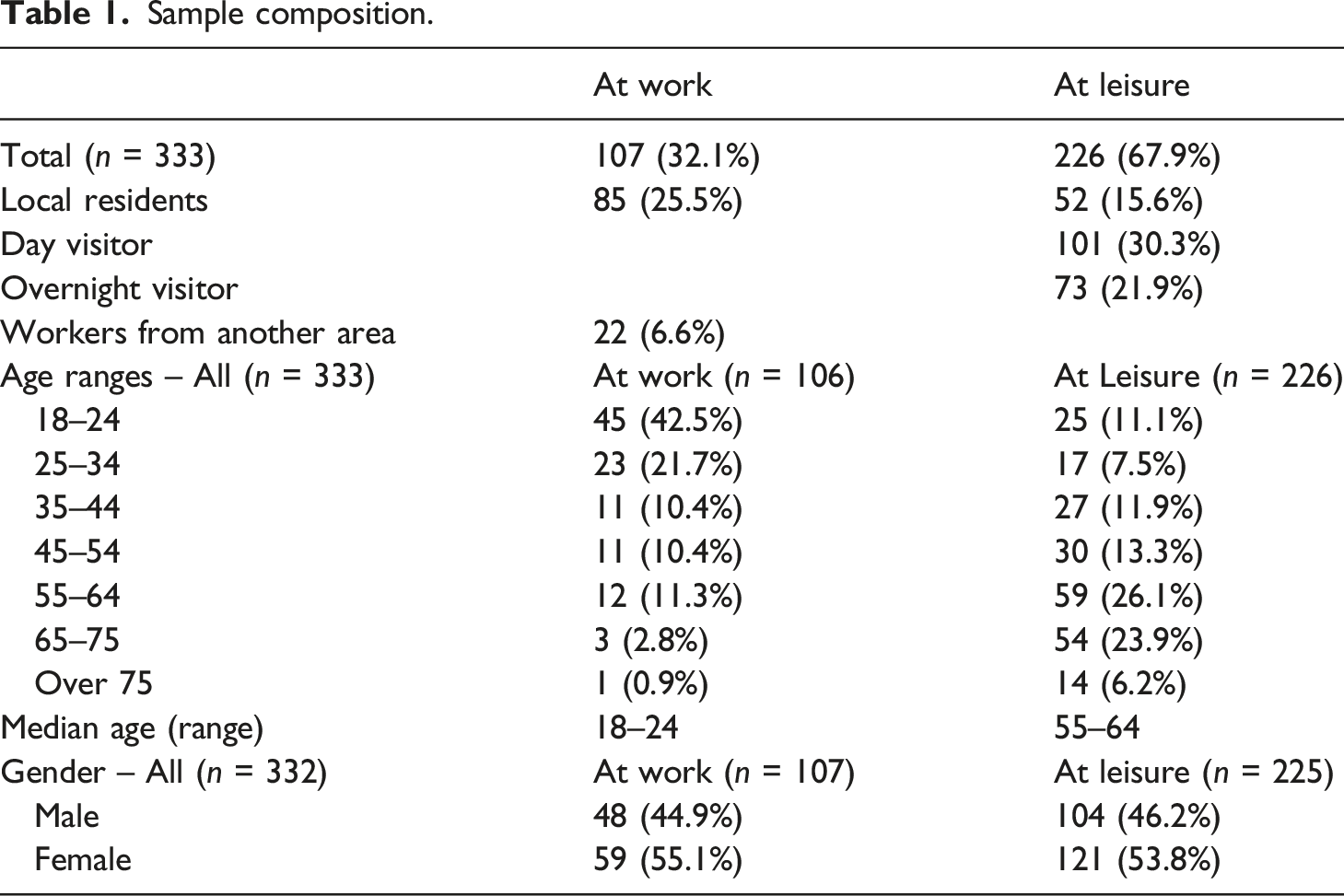
Sample composition.
Description of the Sample
A total of 333 questionnaires were completed. 107 respondents declared themselves as being at work. 226 respondents reported being at leisure. The sample (n = 333) was made up of 41.1% local residents, 30.3% day visitors, 21.9% overnight visitors and 6.6% workers from another area. Workers tended to be considerably younger. Of those at leisure, 56.2% were over 55, whilst of the workers only 15.1% were in that age group. This can be explained because those at leisure were more likely to be of retirement age.
Main Findings
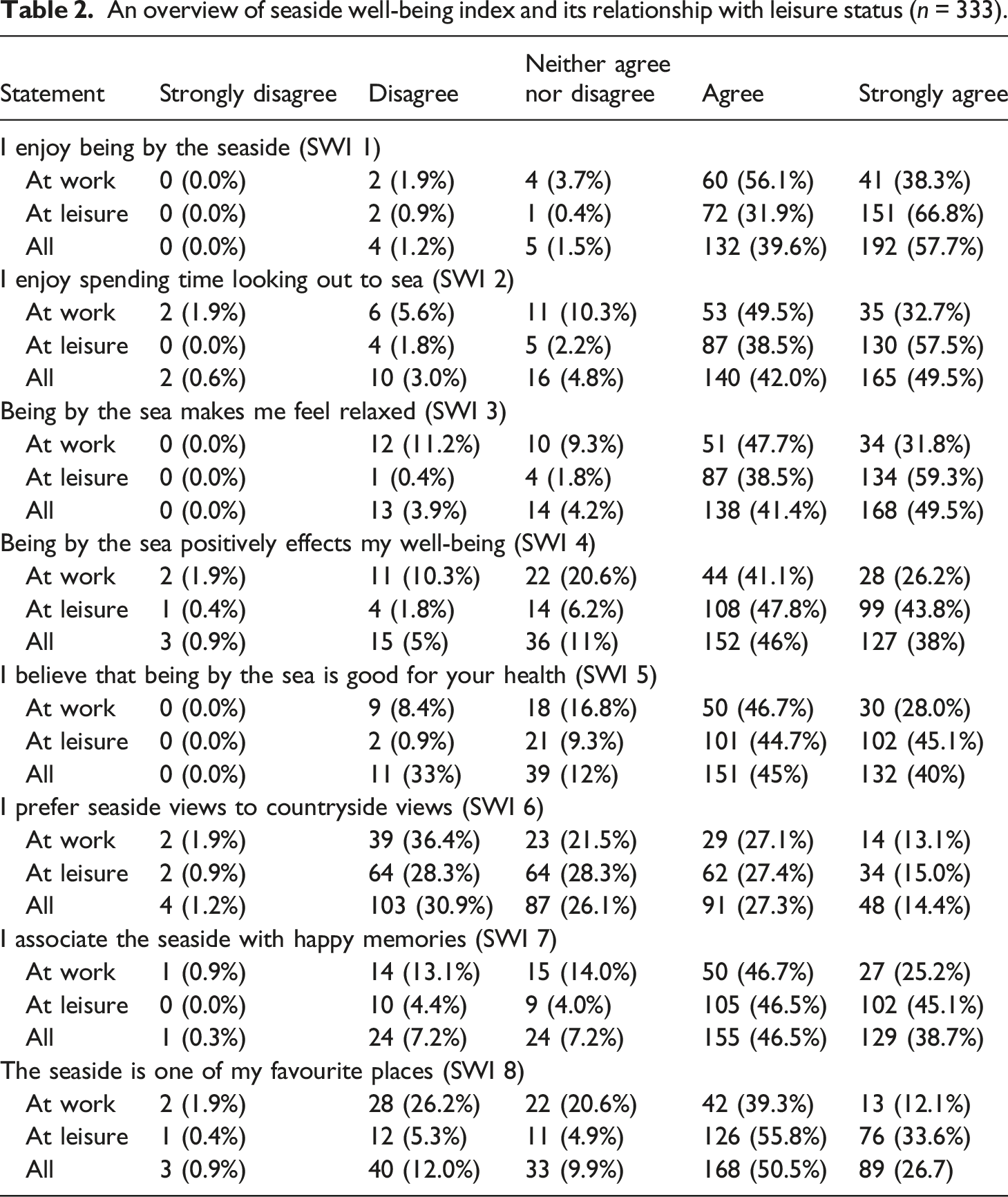
An overview of seaside well-being index and its relationship with leisure status (n = 333).
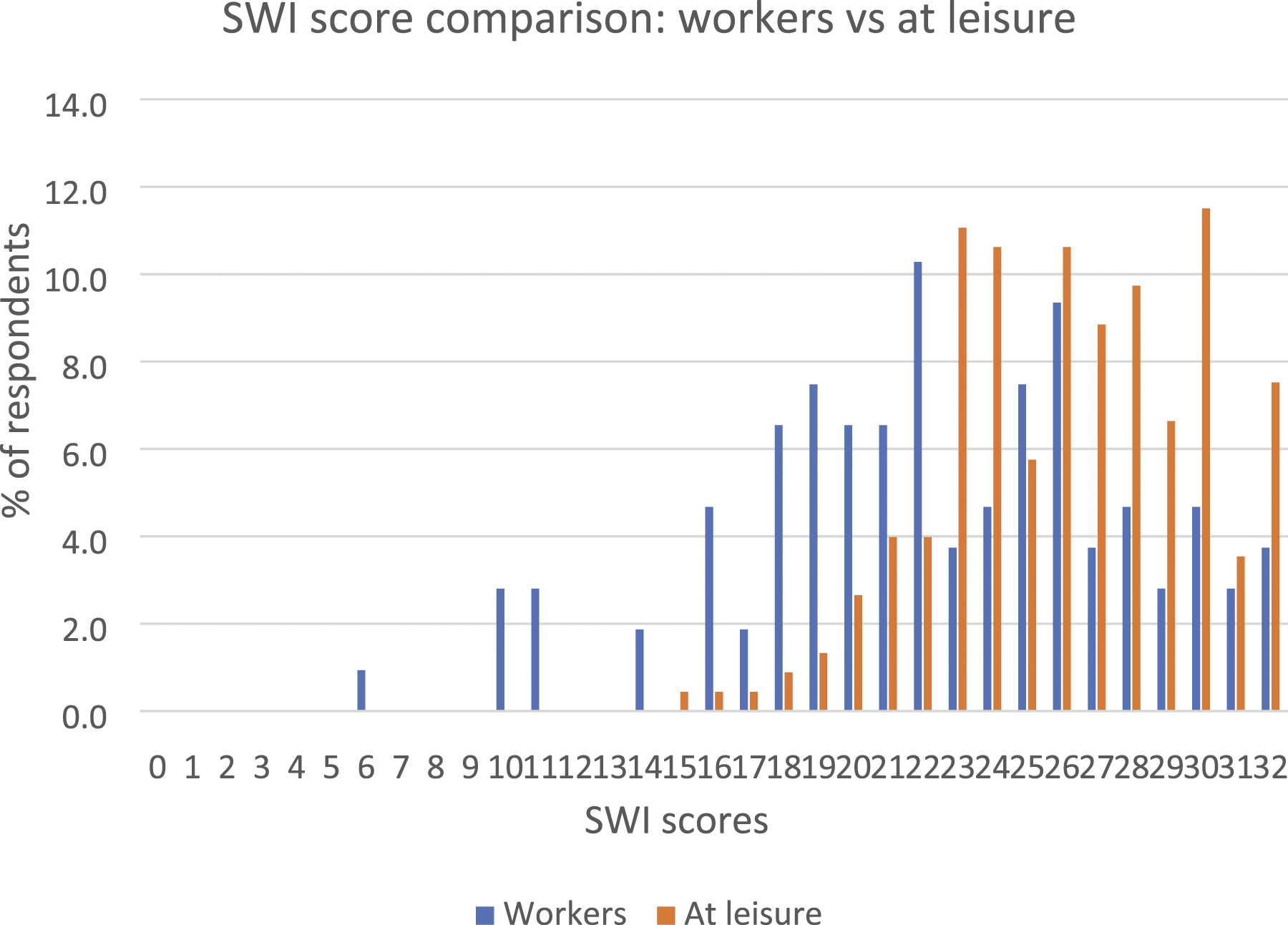
Seaside well-being index scores by leisure status – those at leisure versus workers.
Summary of SWI for all respondents, at work and at leisure (n = 333).
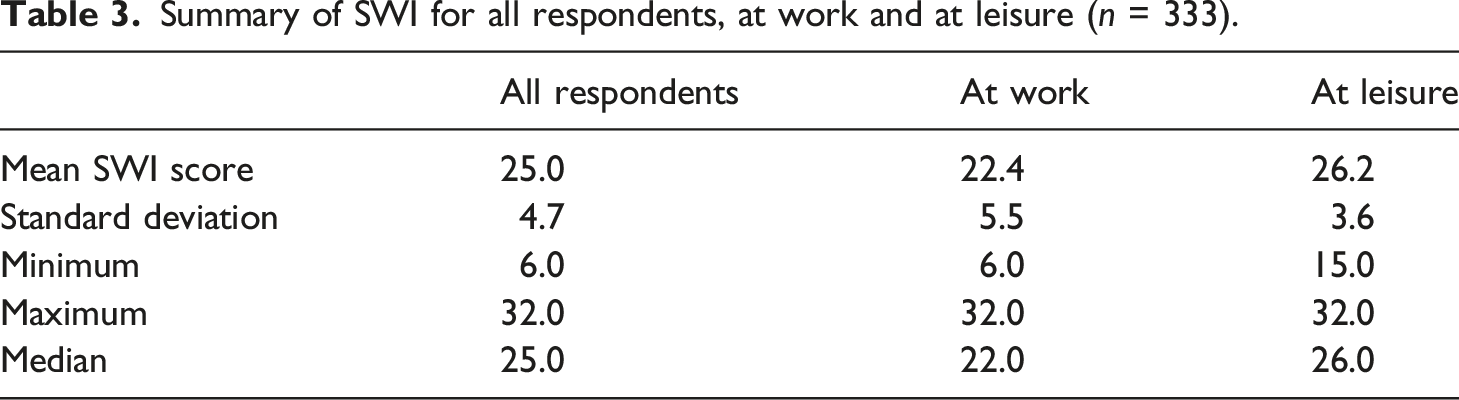
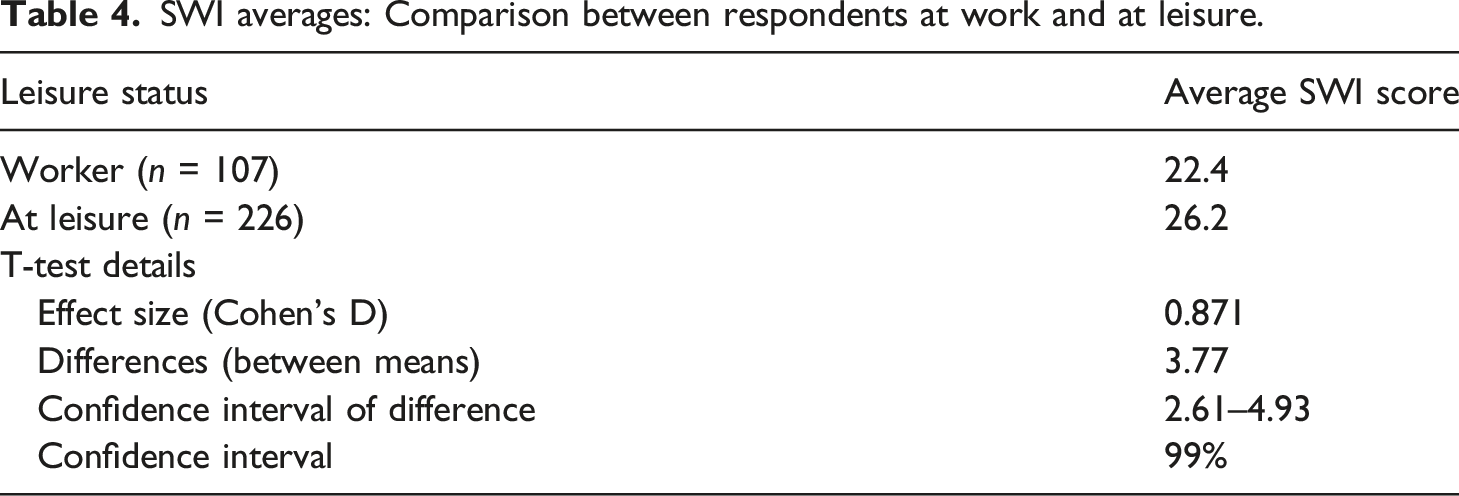
Analysis revealed that those at leisure had significantly higher SWI values (26.2) than workers (22.4), t(331) = −7.4. At the 95% level of confidence, those at leisure displayed SWI scores approximately 3.8 points higher than workers (Table 4). Taken as a whole, the SWI index showed that those at leisure were (during their time at the seaside) more likely to agree or agree strongly that the seaside was a place that held positive well-being-related benefits, than those at work at the seaside (see Table 2 and Figure 3 for these key findings). Seaside well-being index scores by leisure type. SWI averages: Comparison between respondents at work and at leisure.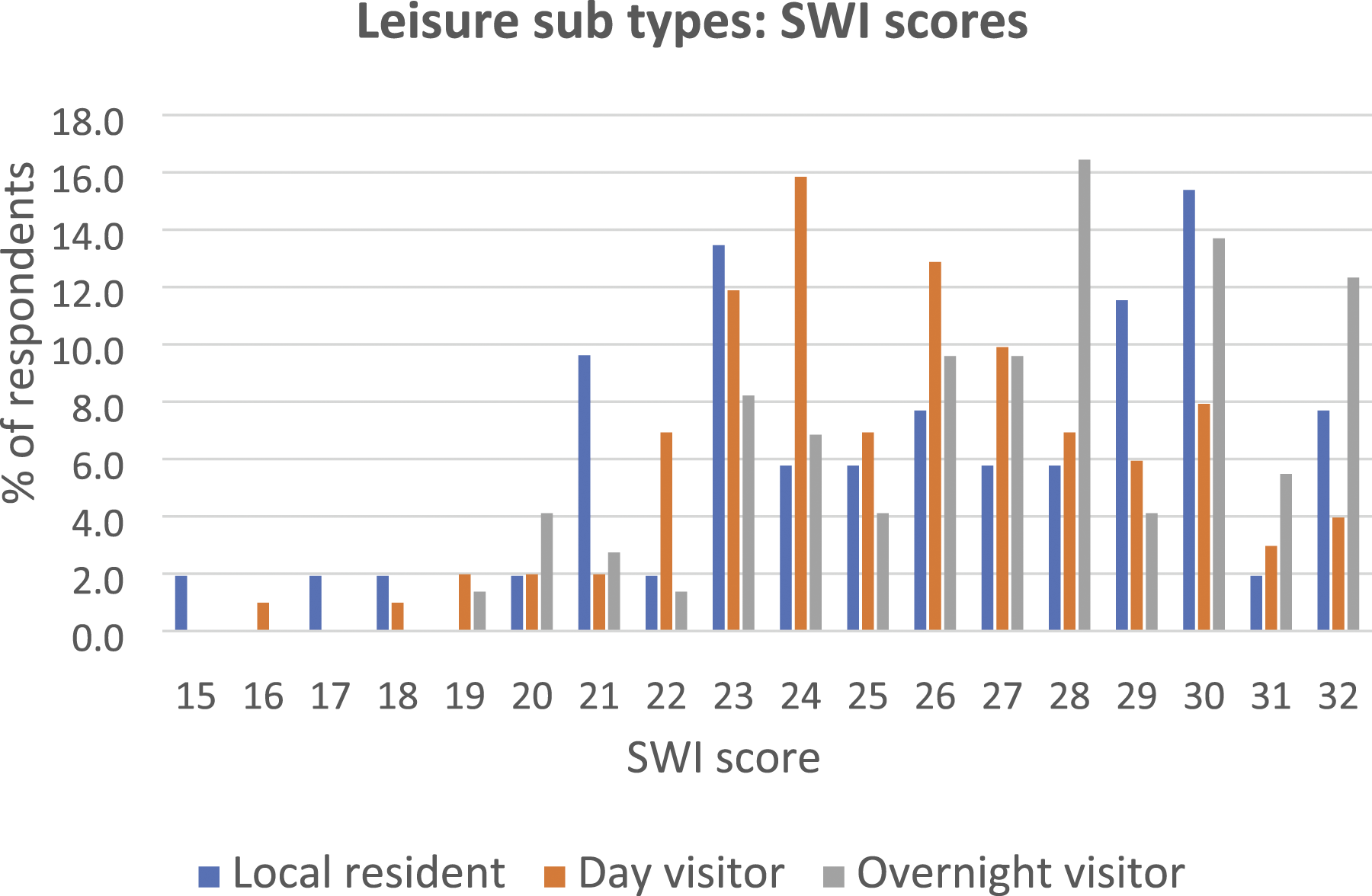
One-way ANOVA test between leisure type and SWI.
Comparisons Between Those at Leisure and Workers
The differences between respondents at leisure and workers in terms of the eight statements that made up the SWI index were explored in more detail using a Chi-square assessment of association. The output of this test can be found in Appendix B. Across the well-being and seaside focused statements that made up the SWI, those at leisure were more likely to agree and, in a number of cases, clearly significant statistical relationships were revealed.
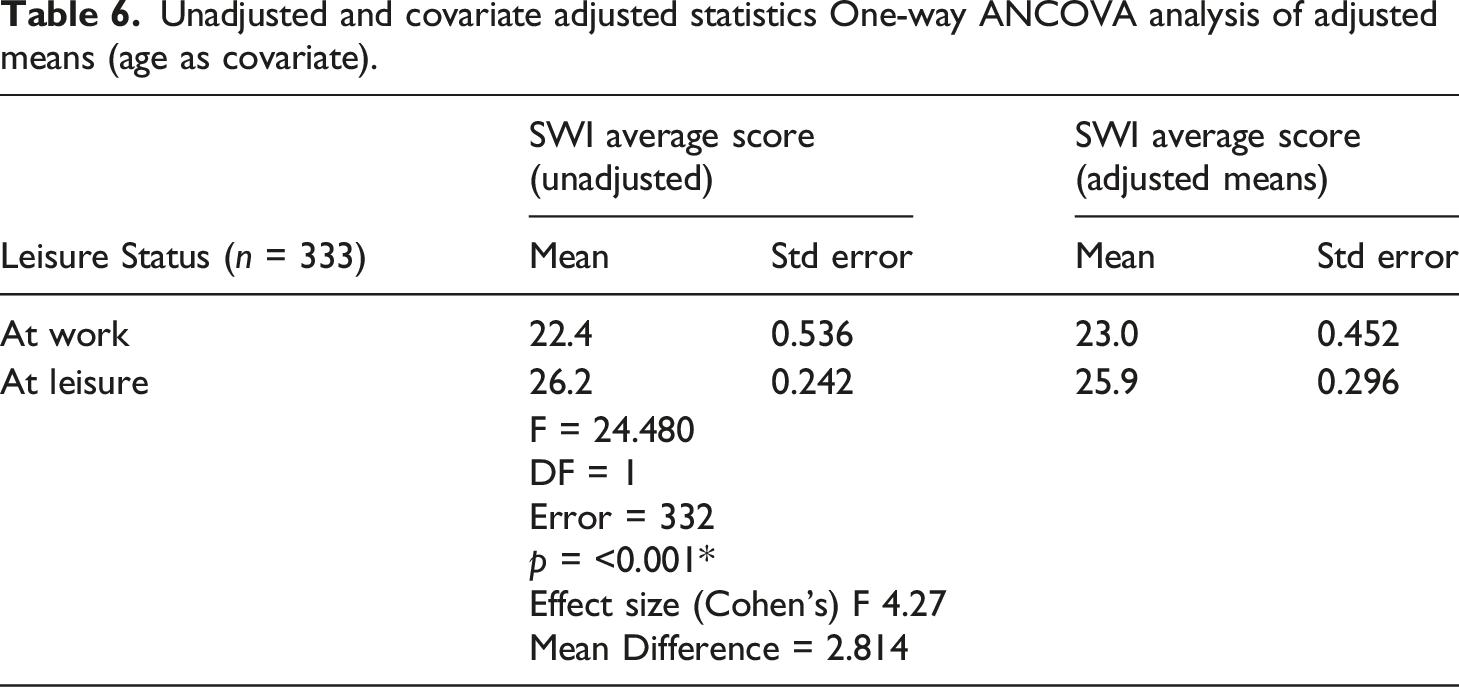
Unadjusted and covariate adjusted statistics One-way ANCOVA analysis of adjusted means (age as covariate).
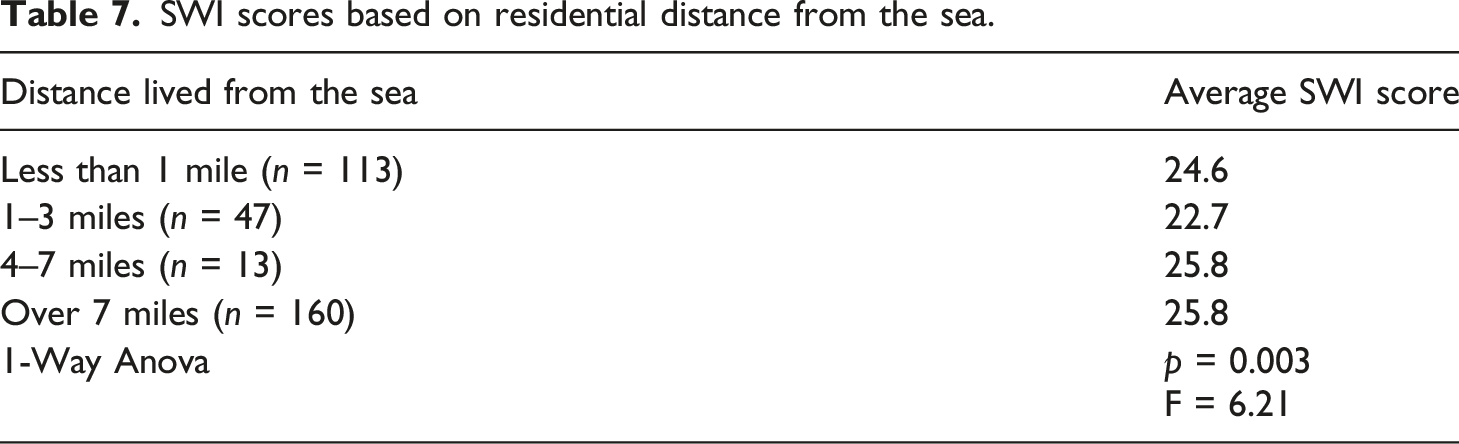
SWI scores based on residential distance from the sea.
This raises a further question: could workers value the seaside environment less, thereby explaining lower scores on the SWI index? This research indicates that those who worked at the seaside valued this environment (Appendix C), as 70% agreed that they would rather work by the sea than inland.
The workers spend more time by the sea on their days off, on average, than the those at leisure with over 51% of workers visiting at least weekly compared to only 31% of those at leisure (Appendix D). This may be partially explained by the home locations of the groups, but the authors suggest that this can be nuanced and based on many factors including mobility and personal circumstances. Based on the analysis in Table 7, distance between home and coast only has a mild impact on SWI scores and there was no evidence of a relative undervaluing of the seaside environment either. Therefore, the significantly lower SWI scores of workers is very likely to reflect that they were at work, and in a related frame of mind, rather than feeling at leisure.
Discussion/Conclusion
The hypothesis is that leisure status positively impacts feelings of well-being based on spending time in coastal blue spaces. The analysis presented in the previous section supports this hypothesis, with the caveat that more research might uncover nuances which affect this relationship. The research establishes a statistically significant relationship between leisure status (split between respondents who were at leisure and those who were not) and self-reported feelings of well-being relating to blue space. In other words, those at leisure were more likely to feel well-being-related benefits from the seaside; unsurprising perhaps, but this is the first study to confirm this. The ANCOVA analysis suggests that even though there were age-related differences between groups, there is still a difference in SWI scores which is statistically significant. Furthermore, the analysis of SWI scores between groups suggests that being in a leisure state of mind, when in a seaside environment, is related to the self-reported feelings of well-being. This is supported by the findings that workers also valued the environment and that the distance one lives from the coast only had a mild impact on scores. Whilst this research aligns with the Leisure Health Receptor Theory as outlined in the literature review (see Figure 1), we cannot entirely rule out other intervening factors.
The survey indicated that those in a leisure state of mind very much linked the seaside to relaxation, health well-being, even in comparison to workers (see Table 2). The Leisure Health Receptor Theory can explain this increased self-reported SWI partly because its two constituent parts. One is the research and theory surrounding the health benefits of exposure to blue spaces.
46
The other is research on the leisure state of mind which links it to positive feelings and well-being.
47
If both, independently, bring about well-being-related benefits then it seems likely that they would also do so when combined. However, according to the aforementioned theories of affordance and savouring there is an interplay between these two elements, and they cannot be fully separated.
48
For the leisure state of mind in these environments is linked to a slowing down and relaxation which facilitates attunement with the environment.
49
This in turn allows the well-being benefits of seaside blue spaces to be fully afforded, rather than partially afforded – as might be more typical amongst coastal workers. So, the combination of exposure to the seaside and a leisure state of mind leads to more than the sum of these two constituent parts, through the amplification of well-being benefits associated with this environment. The relationships described here are summarised as a Venn Diagram (Figure 4). The elements of the leisure health receptor theory.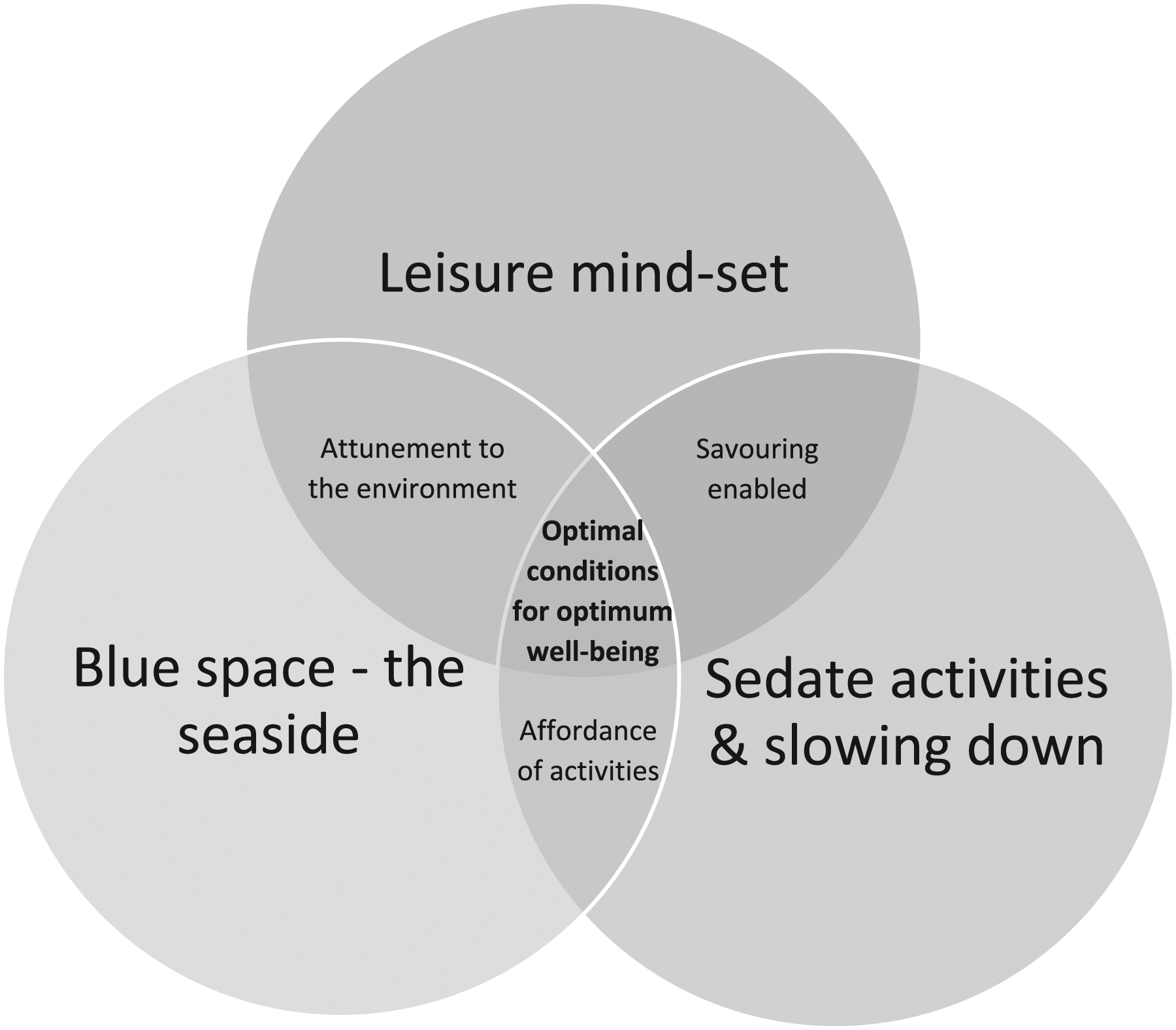
It is worth considering that those who live close to the sea have easier access to coastal leisure than their (socio-economic) equivalents inland – a point made also by Grellier et al., when they summarise research indicating that people living near the coast are ‘generally healthier’ and ‘that mental and physical health are typically better in people for periods spent living closer to the sea.’ 50 In any case, it appears the leisure state of mind will be a key part of reaping the benefits of the seaside, although interestingly our research indicated higher well-being scores (SWI) the further from the coast participants lived (one exception to this was those who lived very close – within 1 mile from the sea). Our findings consider the well-being levels of (often inland dwelling) visitors whilst they are accessing the coast – an experience they value; this may explain the difference here and be relevant to the following observation. For we also found that overnight visitors tend to score higher than day trippers or local people enjoying leisure, which suggests a connection between the length of stay and feelings of being at leisure. Therefore, the geographical and temporal differences indicate that those living further from the coast are more likely to value it. A potential explanation is that where visits to the coast are less frequent and/or accessible, visitors experience an increased sensitivity to the environmental affordances on offer. Furthermore, an increase in length of stay indicates that those staying longer at the coast allows for more opportunities to savour the environment – a factor highlighted in other related research. 51 Indeed, research suggests that getting away for even a short holiday can have a positive impact on perceived stress and well-being. 52
The statistical relationships outlined above are subtle but warrant further investigation in our view, in order to explain more fully the interplay between (leisure) states of mind, accessing the coast and well-being benefits. We appreciate that there is subtlety and subjectivity in determining the work or leisure status of individuals who have nuanced experiences of well-being near the sea. This may prove to be a rich area of future research, potentially through further qualitative means. In particular, studies could focus on coastal leisure experiences and examine if/how leisure activities and mindsets impact upon feelings, especially those positive ones relating to wellbeing.
Leisure states of mind, not only facilitate all of the benefits discussed here but also impacts upon how places are perceived. For leisure in these seaside resorts is about slowing down and relaxing. As W.H. Davies wrote in his poem ‘Leisure’, A poor life this if, full of care, We have no time to stand and stare.
53
It gives individuals time – not just to see, but to look and otherwise soak up various aspects of this multisensory environment. This, along with the well-being afforded by blue space, has potential implications for coastal destinations and associated management organisations in terms of managing the visitor experience, place image and marketing. Another implication of this research is how such environments can be treated in order to maximise well-being benefits. For example, it could be contended that inducing and encouraging a leisure state of mind in natural settings would lead to an improvement of the resulting well-being rewards. This might be something which goes beyond the seaside, to be relevant in other situations where people are purposefully exposed to an environment (most likely blue or green spaces) for well-being-related reasons. The practice of both social and/or nature-based prescriptions have been increasing, with evidence that even the most cynical within the medical community are acquiescing to the benefits that natural environments can have on health and well-being. 54 Not only does this study support the effectiveness of such practices but also introduces the potential significance of leisure state of mind preparedness in maximising these benefits.
If this is the case, leisure will be increasingly associated with outcomes in such environments, especially as the mental health consequences of the COVID-19 pandemic become increasingly clear.
55
It is relevant to refer to a practical example here. One pioneering Lancashire-based project, known as 'The Bay: A Blueprint for Recovery', reflects these possibilities – here are details from their website: The new project designed to fight the isolation and loneliness caused by the COVID-19 pandemic has been awarded £880,000 in funding, raised by players of the People's Postcode Lottery. The project will see around 400 people experiencing poor mental health prescribed nature by GPs and other healthcare professionals. People referred to the project will spend time surrounded by the natural beauty of Morecambe Bay, with growing evidence showing that more time in nature helps improve mental health… Participants will take part in include guided walks to discover marine life, beach cleans and coastal art, enabling local people to take advantage of the therapeutic benefits of the coastal environment.
56
Our study also reveals how these resorts are seen today, albeit through lenses of leisure and well-being, revealing a particular relationship between these coastal resorts and society. 85% of all respondents strongly agreed or agreed that the seaside is good for your health and even more enjoyed spending time there and looking out to sea (see Table 2). For these resorts are still valued as places of leisure and well-being, as they were when they initially developed. 57
Supplemental Material
Supplemental Material - Being at Leisure in blue spaces: The role of Leisure in amplifying the well-being benefits of the seaside
Supplemental Material for Being at Leisure in blue spaces: The role of Leisure in amplifying the well-being benefits of the seaside by David Jarratt, Sean Gammon, Nick Davies and Jason Ward in Coastal Studies & Society
Footnotes
Supplemental Material
Supplemental material for this article is available online.
Notes
Author Biographies
Supplementary Material
Please find the following supplemental material available below.
For Open Access articles published under a Creative Commons License, all supplemental material carries the same license as the article it is associated with.
For non-Open Access articles published, all supplemental material carries a non-exclusive license, and permission requests for re-use of supplemental material or any part of supplemental material shall be sent directly to the copyright owner as specified in the copyright notice associated with the article.
