



Abstract
This paper focuses on the neglect of the heritage of the seaside holiday in England. Many seaside towns feature an idiosyncratic architecture dedicated to entertainment and pleasure which, until recently, was rarely considered in terms of heritage. The paper examines why this heritage has long been neglected, arguing that seaside architecture – associated with fun and entertainment among predominantly working-class tourists – was misaligned with conventional ways of defining heritage. The paper then examines the changing evaluation of this heritage in recent decades. There is growing popular nostalgia for the seaside holiday, along with emerging local activism dedicated to preserving iconic buildings associated with the seaside holiday. Furthermore, national and local policy initiatives have mobilised seaside heritage within economic and social regeneration strategies. Consequently, the heritage of the seaside holiday is increasingly valorised within place promotion, and some seaside towns are repositioning themselves as destinations for heritage tourism. The heritage of the seaside holiday illustrates how conceptions of heritage can be challenged and reshaped by various external political and social factors. It is significant that the state (both national and local) and its agencies are leading the way in this process.
Introduction
England (one of four countries comprising the United Kingdom) has long had a strong attachment to the notion of heritage. Interest in the protection of historic buildings and places dates from the late 19th century when the first legislation was introduced (the 1882 Ancient Monuments Act) and shortly afterwards the National Trust for Places of Historic Interest and Natural Beauty (now the country’s largest conservation charity with over 5 million members) was formed. Post-war legislation (the 1947 Town and Country Planning Act) made further provision for the protection (‘listing’) of buildings of historic or architectural significance. Today there are almost 20,000 ‘scheduled’ ancient monuments identified as archaeological sites of national importance 1 in England, along with approximately 500,000 listed buildings which enjoy statutory protection. 2 Heritage is also central to England’s visitor economy: it generates an annual spend of £17 billion, and accounts for £31 billion of gross added value. 3 Heritage places are central to England’s visitor attraction sector: around one-third of all attractions are historic buildings and a further third are museums. 4
Reflecting this preoccupation with heritage, the nature of England’s heritage product has changed considerably in recent decades, embracing an ever-widening range of resources. Previously dominated by castles, monuments and historic houses, England’s heritage tourism industry now embraces new forms of heritage including factories and other industrial buildings; agricultural buildings and practices; ‘vintage’ forms of transport (particularly steam trains and old buses); buildings associated with scientific advancement (such as Jodrell Bank radio telescope); architecturally significant sport and leisure facilities (such as swimming baths); Cold War nuclear bunkers; landscapes and buildings associated with famous authors and their works; places associated with key figures and developments in popular music; and local stories about ghosts and hauntings. Virtually anything from the past is now embraced by England’s heritage industry. 5
Yet amidst this enthusiasm for heritage, one form has been curiously overlooked: the heritage of the seaside resort. There are over 125 resorts in England which owe their origins to tourism (alongside other towns such as ports where tourism was not a significant part of the local economy).
6
Indeed, England ‘had a system of coastal resorts whose scale and complexity was unmatched anywhere else in the world’.
7
These resorts have diverse origins: some grew up around existing settlements while others were entirely new developments. A first group developed in the 18th century as exclusive and fashionable destinations for a social elite. A second group developed in the 19th century to cater for a growing middle-class market. A third group developed in the late 19th and early 20th centuries to cater for mass seaside holidays among predominantly working-class tourists. There is considerable overlap between these categories: some individual settlements simultaneously (and sometimes uneasily) catered for diverse markets, while others transformed from being elite resorts into centres for mass tourism. Over time a distinctive architecture dedicated to pleasure, entertainment and distraction developed at the seaside. This included extravagant hotels, piers, fairgrounds, theatres, music halls, towers, winter gardens, amusement arcades and bandstands. Such buildings were not found in every resort, but were commonplace in those towns orientated towards mass seaside holiday-making (see Figure 1) where they sometimes sat alongside the architecture associated with earlier forms of the seaside holiday. However, this idiosyncratic ‘architecture of leisure’
8
has long been overlooked and is rarely evaluated as heritage. English towns and cities associated with the mass seaside holiday.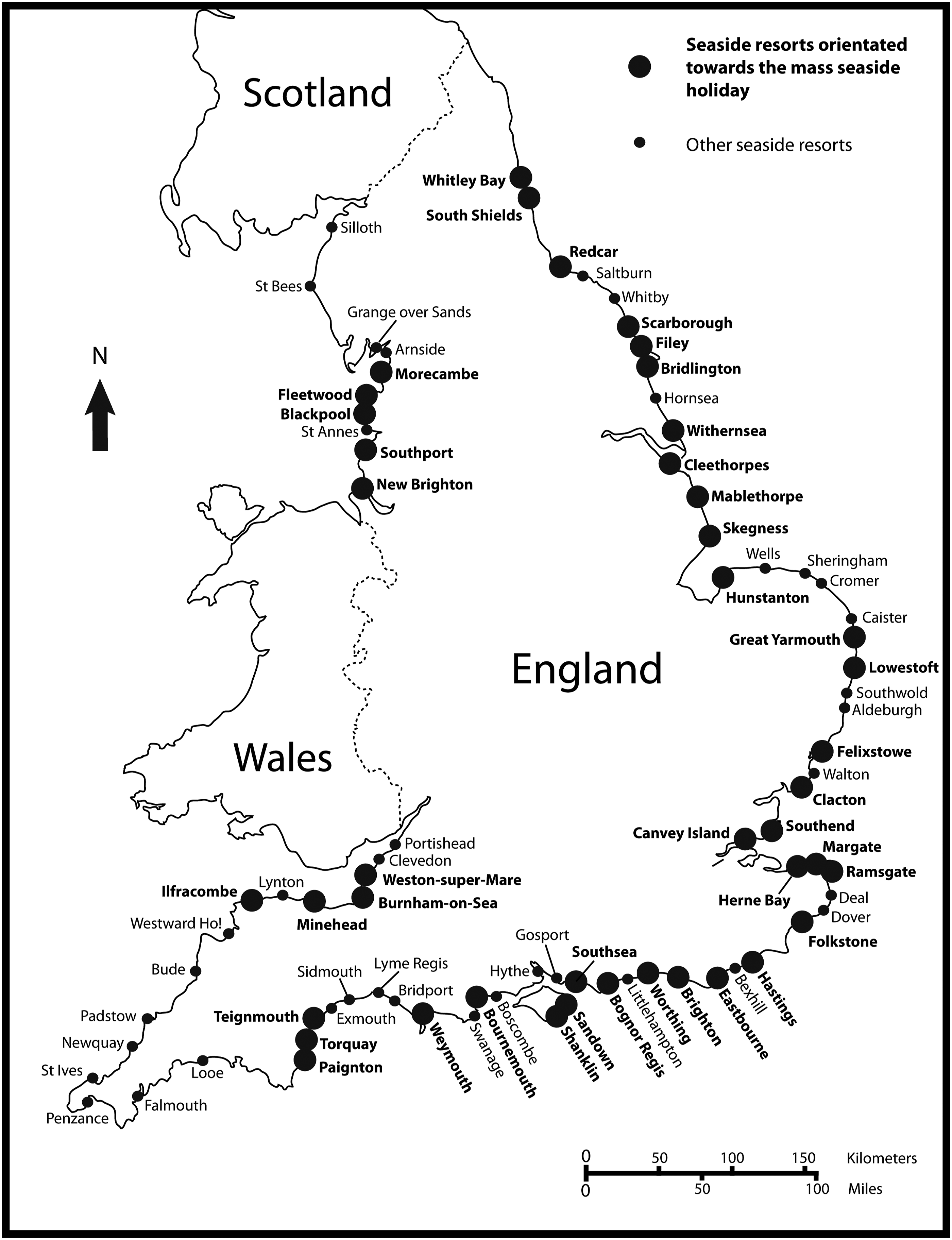
In this paper, we focus on the neglect of this distinctive heritage of the mass seaside holiday in England. We begin with an overview of the architectural forms produced by such holiday-making in the late 19th and early 20th centuries. We then evaluate why this heritage has long been overlooked and neglected, with reference to dominant ideas about what does (and does not) constitute heritage. Finally, we examine the recent growth of interest in the heritage of mass tourism at the seaside. We focus on both ‘bottom-up’ initiatives (including a popular reappraisal of the seaside, and vigorous community activism dedicated to restoring buildings associated with the seaside holiday) and ‘top down’ developments (including the mobilisation of heritage within policies for social inclusion and economic development among successive Labour and Conservative governments), along with the activities of the local state to use heritage within regeneration initiatives in coastal towns. Our analysis is confined to England for two reasons. First, the mass seaside holiday was best developed in England (although this is not to overlook the parallel development of seaside towns in Wales, Scotland and Northern Ireland) where the largest assemblages of distinctive seaside buildings are found. Second, data for both tourism and heritage protection are readily available for England, but are frequently gathered and reported in different ways in other parts of the UK, meaning that a UK-level analysis is rarely possible.
The distinctive heritage of the English seaside holiday
England’s coastal towns emerged as destinations for tourism from the 18th century onwards. Initially, such tourism was confined to an affluent elite and this was reflected in the architecture of such places. Coastal resorts were initially characterised by ‘refined’ and ‘restrained’ architecture 9 and later by ‘grand seafront developments’ 10 such as fine neoclassical Georgian terraces and crescents. However, in the second half of the 19th century seaside towns became increasingly popular with predominantly working-class tourists and many of them transformed into places of mass tourism. This ‘democratisation of travel’ 11 at the seaside had its origins in broader social and economic developments. First, the development of railways connected many resorts to their industrial hinterlands, and the 1844 Railway Regulation Act made train travel affordable for the working classes. Second, employers started granting their workers holiday time enabling them to spend a full week (‘wakes weeks’) at seaside towns, although until after the Second World War these were usually unpaid. 12 The Bank Holiday Act of 1871 also formalised four designated holidays (including the August bank holiday). These developments created additional opportunities for workers to visit the seaside.
Consequently, many seaside towns developed as centres of mass tourism in the second half of the 19th century although at different rates in different parts of England.
13
The economic and social transformation of the English seaside into a place of entertainment and pleasure was mirrored by the emergence of exuberant and ornate forms of architecture. The period from 1860 to the early 20th century featured the most prolific development of ‘riotously decorative buildings’
14
at the seaside to facilitate visitors’ desire for fun and entertainment. Between 1860 and 1905, 85 seaside piers were built,
15
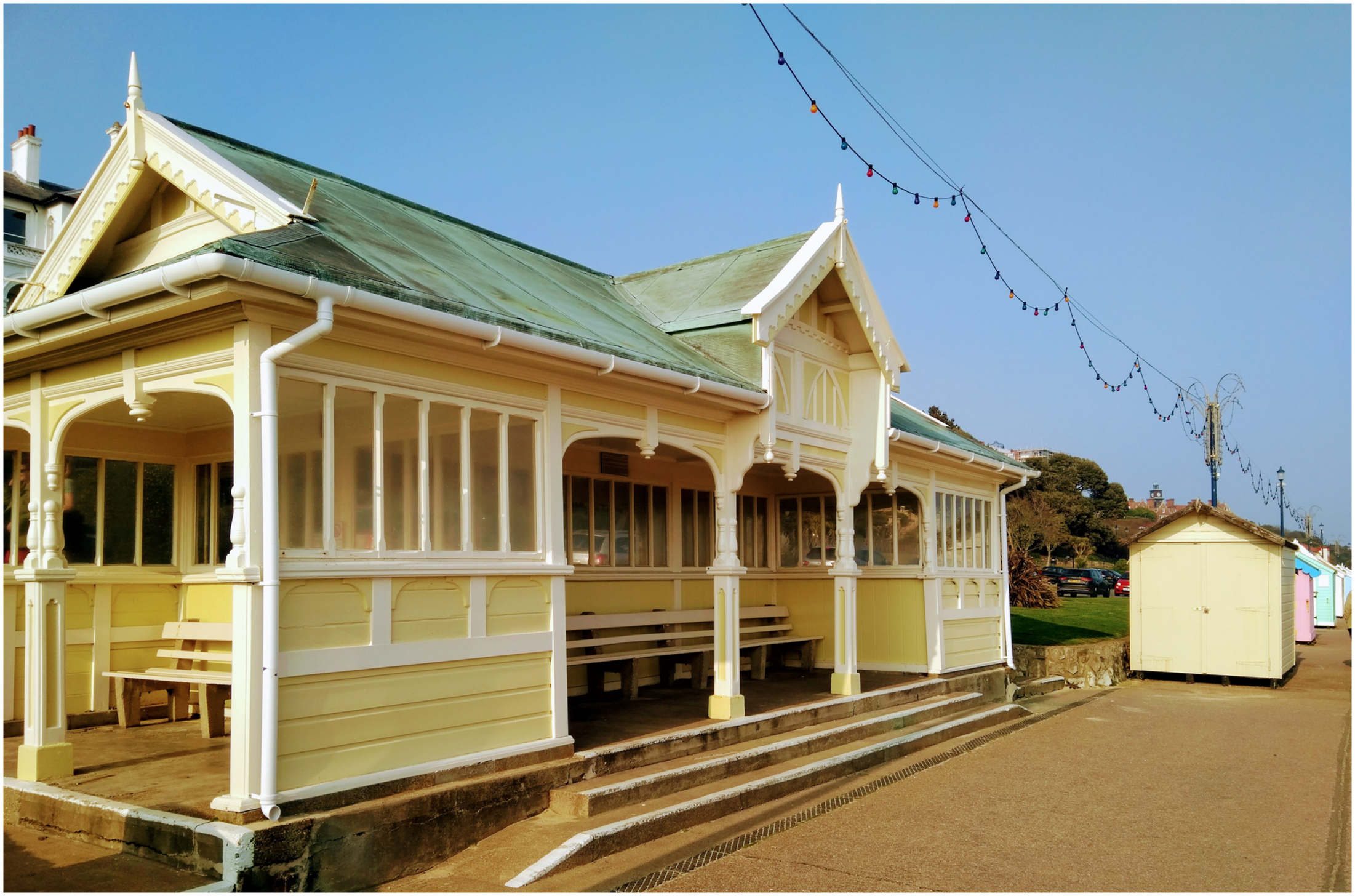
and iconic buildings constructed during this period included Blackpool Tower (see Figure 2); theatres (such as Great Yarmouth’s Hippodrome); Winter Gardens (at Southport, Blackpool, Torquay, Great Yarmouth and Morecambe); promenades, bandstands, and shelters (see Figure 3). This era was also ‘the golden age of the grand seaside hotel, as a showpiece luxury establishment became a must-have for any successful resort’.
16
Examples include Scarborough’s Grand Hotel, Blackpool’s Imperial Hotel and Brighton’s Hotel Metropole. Blackpool Tower. Shelter at Felixstowe.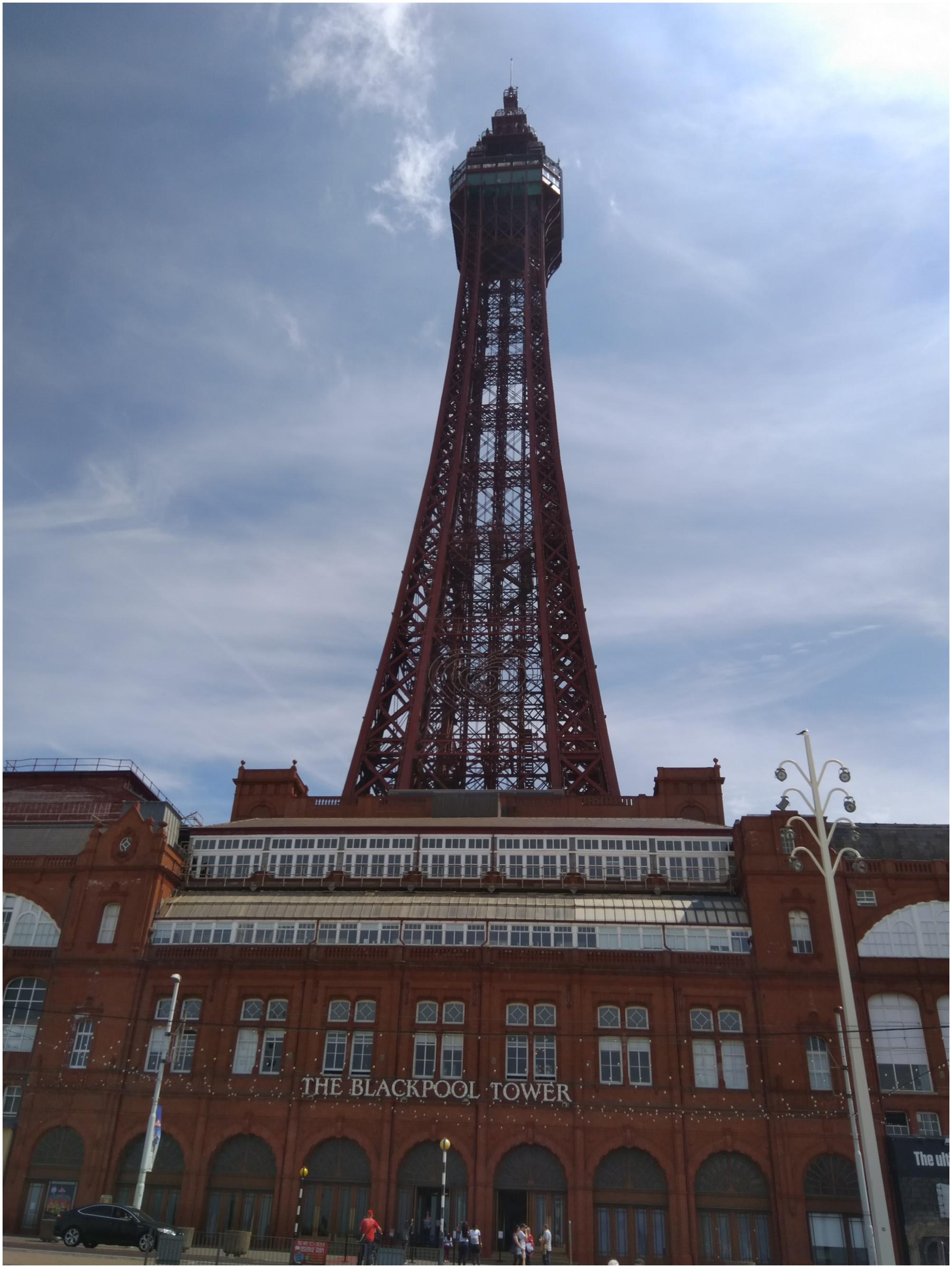
One notable feature of seaside architecture was a free embrace of Orientalism. John Nash’s remodelling of Brighton’s Royal Pavilion (1823) was heavily influenced by architectural styles from India and China, featuring onion domes, minarets and turrets. From the 1860s, Orientalism became a recurring motif within seaside architecture 17 : oriental onion domes graced numerous seaside pier pavilions and kiosks (including those at Brighton, Blackpool North and Hastings), while Moorish-inspired interiors featured in iconic entertainment venues such as the Blackpool Tower Circus. The shift in architectural style – from the refined neo-classicism of the Georgian era to the exotic opulence of the late 19th century – mirrored the changing function of the resorts themselves.
By the 1930s, the architecture of seaside resorts was again transformed by wider socio-economic changes. Changing fashions for an active lifestyle, and the increasingly fashionable pastime of sunbathing, resulted in new architectural forms.
18
The ornate architecture of the Victorian era was replaced with the clean, modern lines of art deco lidos, theatres, sun decks, amusement parks, holiday camps, hotels and pavilions.
19
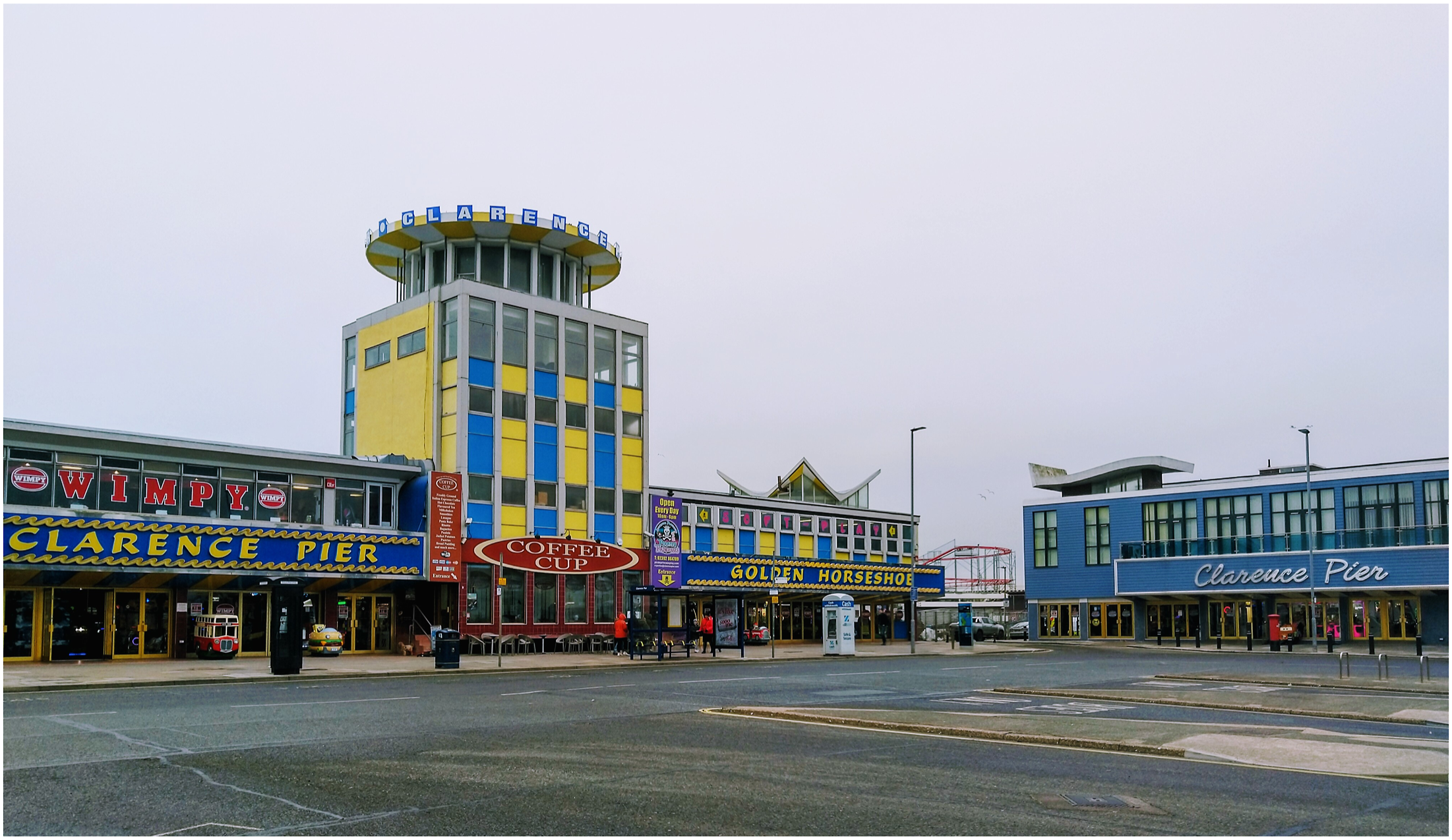
Notable structures opened during this period include Morecambe’s Midland Hotel; the ‘super cinema’ at Dreamland in Margate; New Brighton’s New Palace (see Figure 4); Southport’s Garrick Theatre; and parts of Blackpool’s Pleasure Beach amusement park. The trend for modernity continued in the post-War period, with new structures replacing the seemingly old-fashioned Victorian pleasure palaces. Examples include the remodelling of Boscombe pier entrance buildings in a Modernist style, and the Brutalist pavilion at Southsea Clarence pier (see Figure 5). The New Palace at New Brighton (unlisted and facing demolition). Brutalist architecture at Southsea Clarence Pier.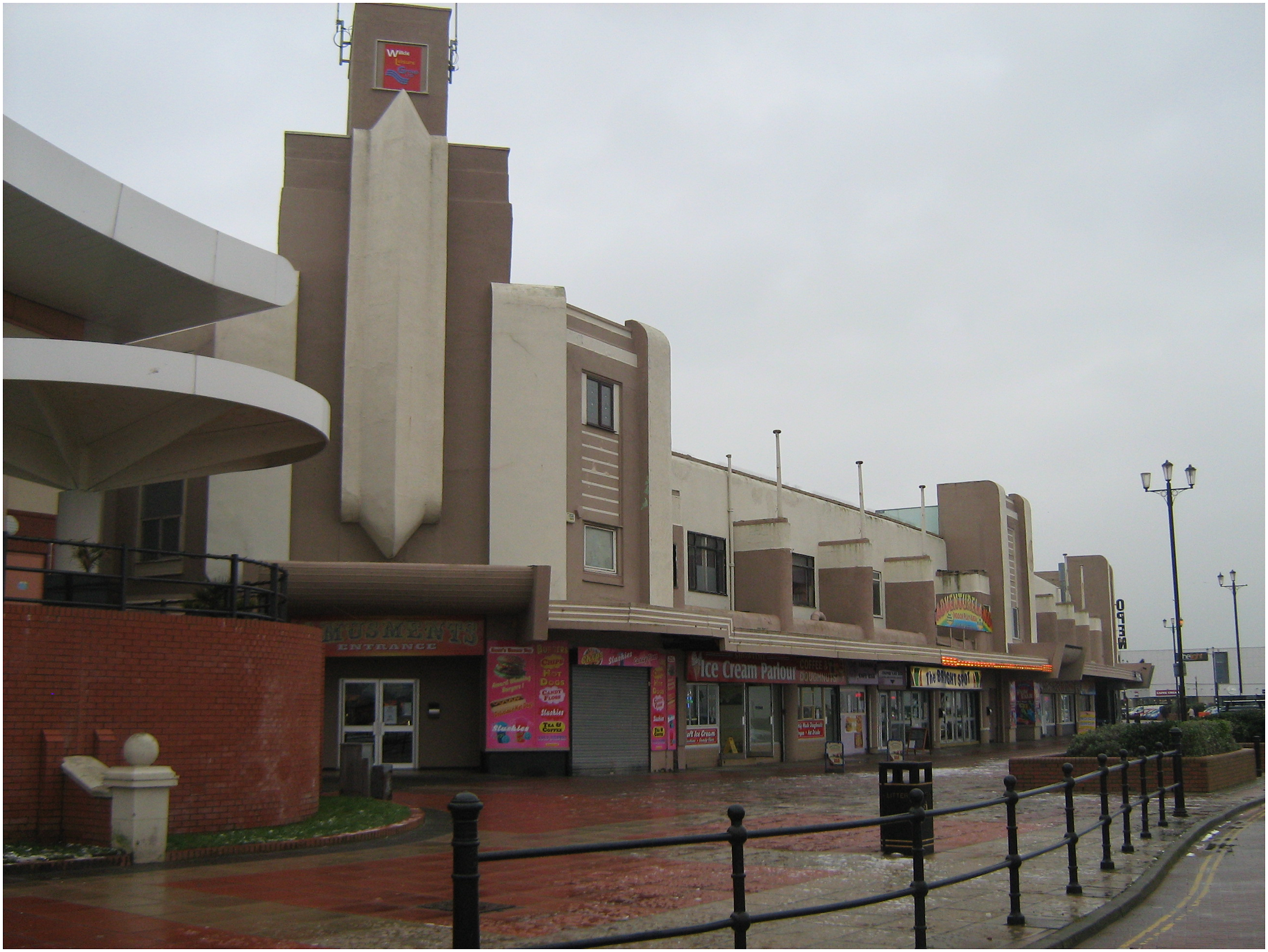
In addition to producing a distinctive architectural heritage, mass tourism at the seaside also gave rise to social practices which constitute the intangible heritage of such holidays. Among the best examples are the rich and diverse forms of popular entertainment intended predominantly for a working-class clientele. These included theatre, music hall, variety shows, dancing, comedy, puppet shows and circuses. 20 To these can be added the distinctive practices and performances (particularly ways of dressing and behaving) associated with the beach, promenade, fairground and amusement park. 21 While frequently overlooked, this intangible heritage was integral to the experience of the seaside holiday, being immediately recognisable to (and much appreciated by) visitors to seaside towns.
However, for all its distinctiveness, the heritage of the English seaside holiday was rarely recognised or valued. For much of the 20th century, historians and conservation bodies paid little attention to the architecture of seaside pleasure. For example, neither English Heritage (a charity which, since 2015, has managed a range of historic buildings in state ownership) nor the National Trust owns a single building associated with popular holiday-making at the seaside. Furthermore, relatively few buildings associated with the seaside holiday received statutory protection. In Blackpool – England’s premier seaside resort – only 57 buildings are ‘listed’ and, of these, 31 are associated with tourism and holiday-making. 22 To put this into context, the industrial towns of Huddersfield, Preston and Middlesbrough (which have a broadly similar population to Blackpool) contain 1681, 492 and 125 listed buildings, respectively. 23 Even when buildings associated with the seaside holiday have received statutory protection they are frequently under-utilised due to declining demand and, in some cases, are close to dereliction. One example is Birnbeck Pier which enjoys Grade 2* listed status, but is derelict and close to collapse. Furthermore, in the absence of statutory protection many notable seaside buildings were demolished in the late 20th century. These included numerous pleasure piers (such as those at Ventnor, Fleetwood and Morecambe); lidos and outdoor swimming pools (such as Weston-Super-Mare, Blackpool and New Brighton); grand seaside hotels (including Southport’s Victoria Hotel, and the Ilfracombe Hotel); and many iconic entertainment venues and pavilions such as the winter gardens in Cleethorpes and Bournemouth, and more recently the Futurist Theatre in Scarborough.
Similarly, there has been little value attached to the intangible heritage of the seaside holiday. Underpinning this situation is the frequently-made distinction between art and entertainment with the assumption that entertainment is trivial and insignificant, while art is worthy and challenging. 24 For this reason, there has been only sporadic academic interest in the intangible heritage of the seaside. Even research which has taken the heritage of seaside entertainment seriously has felt it necessary to label such practices as ‘low’ art with the assumption that it is inferior to higher forms of creative production. 25
Explaining the neglect
Why, then, is the distinctive heritage of the English seaside holiday so neglected? One reason may be a widespread perception of seaside towns in England as places of decline and decay. Many resorts were hit hard by the rise of cheap Mediterranean package holidays from the 1970s onwards 26 leading to struggling economies, closed infrastructure, and social deprivation. 27 Consequently, seaside towns are now stereotyped as marginal, struggling, dilapidated places. As a recent report from the UK parliament noted, ‘the British seaside has been perceived as a sort of national embarrassment’. 28 In this context, the distinctive architectural heritage of seaside towns was overlooked or dismissed as not something to be taken seriously. Another reason for this neglect is a broad reluctance within parts of the Academy to take popular culture (which embraces the seaside holiday) seriously. 29 The heritage of the seaside holiday is one of pleasure, entertainment and distraction and for this reason is often dismissed as a subject for serious academic scrutiny (although, paradoxically, this is countered by a growth of popular and amateur history which has focused on seaside towns).
These arguments are useful starting points, but a more compelling explanation for the neglect of the architectural legacy of the seaside holiday can be found in contemporary heritage theory. In particular, Smith identifies a pervasive ‘authorised heritage discourse’ (AHD) which structures the ways that contemporary societies think about, and define, heritage. 30 The AHD acts to regulate and normalise particular beliefs and assumptions about the nature and meaning of heritage, shaping the way that some things are defined as heritage, while others are not. The AHD is a long-established way of thinking about heritage, particularly in Europe. It has its origins in the 19th century, became dominant in the 20th century, and remains highly influential today. It was initially embraced by state authorities but also by some key non-state (predominantly third sector) heritage conservation actors.
The AHD defines ‘heritage’ in particular ways. 31 First, heritage is construed as material: it takes physical form as discrete buildings, sites or monuments. Non-material heritages are considered of much less importance. Second, heritage is deemed to be innately or inherently valuable, with the principal criterion for value being authenticity. 32 These characteristics underpin justifications for the care and preservation of heritage, and the importance attached to handing it to future generations. Third, heritage is considered to be aesthetically pleasing (itself closely related to concepts of value), normally for being representative of a particular historical or architectural style. Closely related to both value and aesthetics is the notion that heritage is fragile, and so needs safeguarding. Fourth, the AHD emphasises the surviving features from the past that are important as physical and symbolic representations of national identity. The importance of heritage for national identity is, in turn, a further justification for preservation and the importance of securing a nationally significant heritage for the future. Fifth, (and related to the point above) the AHD privileges the values, experiences and worldviews of elite social groups (particularly the ‘great and the good’). For this reason, heritage is frequently centred on imposing and monumental buildings associated with those who, in the past, enjoyed positions of power or authority.
In addition, the AHD privileges expert and professional knowledge about the past so that historians, archaeologists, museum professionals and architects become the legitimate spokespeople for the past. Possession of such expert knowledge allows professionals to identify the historical and aesthetic value that underpins heritage. This is a top-down approach in which experts become the custodians of the past and, in turn, shape the way in which ‘the value of heritage is communicated to and understood by non-expert communities’. 33 At the same time, non-expert knowledge is marginalised within heritage practice and management. Finally, the AHD encourages a broader public engagement with heritage, usually in the form of tourism. However, tourists are expected to engage passively and uncritically with heritage, and accept the interpretations of the past with which they are presented. Furthermore, defining heritage users as tourists effectively distances them from that heritage. Such users are stereotyped as being incapable of, or uninterested in, active or critical engagement with the past.
The notion of the AHD is particularly important for understanding the way that societies think in terms of heritage and the nature of professional practice in the heritage sector. The AHD regulates and normalises what is (and is not) accepted as being heritage. 34 It values particular buildings and objects but at the same time excludes other things (whether buildings, objects or traditions) – which do not accord with these ideas. As Smith argues if ‘heritage is not “good,” grand or monumental, it is not heritage within the AHD’. 35 Furthermore, the AHD marginalises competing concepts of heritage 36 (and largely ignores the heritage of groups such as women, working people, ethnic minorities and indigenous communities). For this reason, the AHD has struggled to embrace intangible heritage. 37
The influence of the AHD helps explain why the heritage of the seaside holiday has been overlooked and neglected. In short, this heritage does not align with the model of heritage encompassed by the AHD. 38 First, with some obvious exceptions (such as Blackpool Tower, Brighton Pavilion or grand hotels) a substantial part of the heritage of the seaside holiday consists of buildings that are commonplace and everyday (such as amusement arcades, hotels, lidos, and promenade shelters) rather than monumental and exceptional. The AHD attaches little importance to the mundane and the ordinary. Second, seaside architecture is frequently playful, brash and ostentatious, meaning that it does not meet traditional criteria for defining heritage in terms of innate aesthetic value. Indeed, seaside architecture is sometimes derided for its ‘tackiness’, vulgarity and poor taste, qualities that are the very antithesis of heritage as defined by the AHD. 39
Third, the architecture of the seaside holiday is a heritage originally associated with working-class people rather than social elites. These are one of the ‘subaltern groups’ 40 whose experiences are marginalised by the AHD which privileges instead ‘the cultural symbols of the White, middle-/upper classes’. 41 Furthermore, the heritage of the seaside holiday is associated with quotidian entertainment, fun and distraction among ordinary people. However, the heritage of fun is often considered to be insufficiently ‘serious’ to merit consideration by heritage experts and professionals.
Furthermore, the heritage of the seaside holiday dates from the late 19th and early 20th centuries and consequently comprises architectural forms which have long attracted scorn and derision. Many seaside buildings are representative of extravagant and eclectic Victorian/Edwardian styles which have long been ignored by art and architecture critics. Some are examples of Art Deco, a form of architecture similarly dismissed by critics as vulgar and trivial because of its playfulness. 42 Moreover, Art Deco is one form of Modernism, an architectural style which has long proved divisive among architectural critics. The AHD is rooted in 19th century thinking about heritage which focused on buildings from earlier centuries and was often ambivalent about the current age. Furthermore, there has been limited consensus among heritage experts and professionals about the value of Victorian and Modernist architecture, which also meant that such buildings were not embraced by the AHD.
A further consideration is that the very ubiquity of 19th and 20th century buildings at the seaside meant that they were not considered to be sufficiently scarce or exceptional to constitute heritage. Matters of age and rarity dominate conceptions of heritage in England. A recent government publication sets out the criteria for applying legal protection to a historic building. 43 The year 1850 is crucial: most buildings which predate 1850 are considered sufficiently rare to qualify for listing. Conversely, those dating after 1850 are considered more numerous and therefore have a weaker case for protection. 44 Since most buildings associated with the seaside holiday were constructed after 1850, they frequently fall beneath the radar of statutory protection and consideration as ‘heritage’. An additional issue is that, as ‘living’ buildings many seaside structures have been subject to ‘continuous embellishment, improvement, piecemeal replacement and responses to damage and disasters over a long period’. This means that they may lack the apparent ‘authenticity’ necessary to justify statutory protection. 45
Sixth
This leads to a further reason why the AHD does not embrace the heritage of the seaside: this is a heritage of tourism itself. The architecture of the seaside holiday testifies to an important stage within the evolution of tourism as a social practice. Yet, as Smith argues, tourism – and tourists – are marginalised within the AHD 47 , and certainly the heritage of the tourism industry is unlikely to be considered sufficiently valuable or aesthetically pleasing to be taken seriously. Finally, the heritage of the seaside is not frozen at some point in the past, a characteristic of heritage as defined by the AHD. 48 Instead, this is a heritage that remains ‘alive’: many of the iconic buildings associated with the seaside holiday are still used for the purpose for which they were constructed.
Perhaps the best illustration of the marginalisation of the heritage of the seaside holiday was the bid in 2010 for World Heritage Site status by the town of Blackpool in northern England. 49 Blackpool’s claim was founded on being the first mass tourism resort in the world. It has a unique assemblage of buildings (including its tower, three piers, and numerous buildings dedicated to entertainment) and a highly distinctive cultural landscape, all created by mass tourism. Blackpool had a strong case to meet UNESCO’s criterion of being ‘an outstanding example of a type of building, architectural or technological ensemble or landscape which illustrates (a) significant stage(s) in human history’. 50 However, the application faced derision in both the press and in archaeological circles, and the UK government declined to nominate Blackpool for World Heritage Site status. This illustrates how the legacy of mass, working-class holidays failed to conform to widespread perceptions about the nature of heritage: 51 in other words, places like Blackpool were excluded by the AHD from being considered as ‘heritage’.
Signs of change
While the AHD remains highly influential it is not entirely dominant, and neither is it static. Instead, the AHD can be reshaped by a range of external influences such as social movements or government policies. 52 It can also be challenged by alternative conceptions of heritage originating with subaltern groups who may feel alienated from traditional forms of heritage. 53 For example, local communities may value particular heritages as important for local identity, even if these heritages are not recognised by experts and professionals. 54 Moreover, the concept of intangible heritage challenges the understanding of heritage – as material, monumental, valuable and aesthetically pleasing – promoted by the AHD. 55 Consequently, as the AHD is challenged and reformulated, Pendlebury argues that there can be multiple ‘sub-AHDs’ existing at the same time. 56
One significant challenge to the AHD arose in Britain in the 1980s with the growing popularity of industrial heritage. During an era of rapid and dramatic deindustrialisation a profound sense of loss emerged for industrial technologies and the communities which developed around industry. 57 Consequently, local activists and communities sought to reclaim, preserve and interpret the industrial past. In other instances, local authorities took the lead in promoting their industrial past for tourism. The result was a plethora of new visitor attractions based on former sites of industry. Thus, industrial heritage emerged as a new (and initially unauthorised) form of heritage. With its focus on the commonplace, the non-monumental and the past of working-class communities, the industrial past represented the very antithesis of heritage as defined by the AHD. 58 Nevertheless, over time the legitimacy of this heritage was acknowledged by both the state and third sector conservation organisations. An increasing number of industrial buildings received statutory protection and were promoted as places for tourists to visit. Furthermore, the UK government nominated some industrial sites for World Heritage Site status (of the 32 World Heritage Sites in the UK, eight are associated with industry). Significantly, most were nominated during the period of the Labour government (1997–2010) which was eager to promote more inclusive conceptions of heritage. 59
Over the past decade a similar process has taken place with seaside architecture which has started to be recognised and evaluated in terms of heritage. Thus, ‘seaside heritage’ is emerging as a distinct (and new) form of heritage. There are two processes which account for this development: first, a growing popular interest in the distinctive heritage of the seaside holiday; and second, increasing recognition from the state and its agencies of the potential of this heritage within regeneration initiatives. Both developments illustrate how the AHD can be challenged and reconfigured in response to external influences. 60
The first development – a popular reappraisal of seaside towns in England – is a ‘bottom-up’ process. There is growing interest in, and appreciation of ‘seasideness’ and the unique aura of seaside towns which arises from the distinctive assemblage of beach, sea and sky. 61 This has been identified as important for emotional and physical well-being, but also for broader senses of spirituality and connectedness. 62 Tourists also appear to be drawn to the seaside by nostalgia for the traditional seaside holiday 63 and a sense of loss for the golden age of the seaside. 64 Most people in England have taken a holiday at the seaside and the material and intangible heritage of the seaside is rooted in personal experiences and memories. For example, Jarratt and Gammon reported that older people used visits to seaside towns to recapture memories of childhood holidays, but also to reflect more broadly upon past and present in a way which offered reassurance and stability. 65
Furthermore, the intangible heritage of the seaside remains alive allowing tourists to participate in many of the traditional features of the seaside holiday (such as dancing, theatre, taking afternoon tea, or paddling in the sea) that they may have enjoyed when younger. In this context, one leading seaside town (Blackpool) is developing a museum of seaside fun and entertainment, celebrating the intangible heritage of the seaside holiday. This heritage is something to which tourists have a far more intimate attachment, and from which they are less distanced in comparison with other forms of heritage. It is a heritage in which they are participants, rather than onlookers. 66
A further ‘bottom up’ development is increased local community activism focused on preserving and promoting local seaside heritage. 67 As many buildings associated with the seaside holiday face high maintenance and operational costs, they have limited appeal to commercial or public sector operators. Yet, for seaside communities they are icons of local identity and community pride. Consequently, the voluntary sector in many seaside towns has been active in pushing for the restoration of buildings associated with the seaside holiday. Examples of such community activism includes the Dreamland Trust in Margate (dedicated to a 1920s amusement park); Blackpool Civic Trust (which campaigns to preserve the town’s architectural heritage and stimulate civic pride); the Access Community Trust in Great Yarmouth which manages the Venetian Waterways on behalf of the local council; and the Birnbeck Regeneration Trust (which campaigns for the restoration of Weston-Super-Mare’s Birnbeck Pier and surrounding area for the benefit of the local community). There are again parallels with industrial heritage where much of the momentum for the preservation of industrial buildings has been underpinned by community involvement and activism in industrial towns. 68
The role of the voluntary sector in restoring seaside heritage was boosted by the 2011 Localism Act (passed by the Conservative/Liberal Democrat coalition government) which sought to enhance the participation of citizens in planning and decision-making at the local level. 69 The Act enabled local communities to register buildings and sites of local interest as ‘Assets of Community Value’ that were considered important for local identity or well-being. 70 This enabled the community to bid to purchase the asset in order to safeguard it from other forms of development. Examples of seaside buildings which have benefitted from this status include the Fairy Dell paddling pool (Skegness), the Pavilion Theatre (Weymouth), Hastings Pier and Folkstone’s Leas Lift (cliff railway).
Other national planning legislation is increasingly supporting community activism to protect seaside heritage. Local planning authorities have the authority to produce a ‘local list’ of historically important buildings that are not considered to be of sufficient historic or architectural significance to merit full statutory protection. 71 A related form of protection is ‘non-designated heritage assets’ for buildings that have ‘a degree of heritage significance meriting consideration in planning decisions but which do not meet the criteria for designated heritage assets’. 72 Both designations mean that an asset’s historic value must be considered in any planning decisions, and in both cases local community and conservation groups play a key role in proposing buildings for inclusion. These designations are especially appropriate for buildings or other structures that are of historic value but which have been extensively modified since they were originally constructed. Consequently, a growing number of sites associated with the seaside holiday are receiving local recognition in this way. These include a casino at Blackpool Pleasure Beach; the Eastern Esplanade in Southend; and the former Midland Hotel in Bournemouth.
One indication of the revival of popular interest in the seaside is a growth in visits to seaside towns: staying overnight visits increased by 13% between 2010 and 2018. 73 During the COVID-19 pandemic of 2020, it was seaside towns to which people flocked at the first opportunity. But it is not only tourists who are reappraising seaside towns: such places are increasingly popular with the creative classes who are drawn to edgy and authentic urban places. 74 Many seaside towns offer a ‘gritty’ form of authenticity 75 and some (such as Hastings and Margate) are gaining a reputation as centres of art and creativity. Together these developments create a context in which there is a new appreciation of seaside towns and a growing recognition of their distinctive material and intangible heritage.
The second key development was ‘top-down’: increasing recognition by the state (and its agencies) of the possibilities of seaside heritage. The broader context for this development was the increasing emphasis by governments on the contribution of heritage to achieving broader policy objectives. 76 In the 1980s, the priority had been economic development and urban regeneration, particularly in areas which had experienced deindustrialisation. For the Labour government elected in 1997, the policy priority was social inclusion, and the historic environment was mobilised to contribute to this objective. 77 Following a government enquiry into the problems facing seaside towns 78 , a range of national and local initiatives sought to stimulate their physical, economic and social regeneration. Heritage became central to these projects and there was growing recognition by state agencies that the distinctive heritage of the seaside (along with culture more broadly) could be mobilised within policies to revive seaside towns. 79
An early intervention came from English Heritage (the state agency responsible for the historic environment in England) which, during the 1990s, had increasingly embraced the potential of heritage to contribute to urban regeneration. 80 In the early 2000s a researcher within the agency developed a proposal for a book series focusing on the neglected architecture of the seaside. 81 There was enthusiastic support within English Heritage and the first publication – England’s Seaside Resorts – was issued in 2007. 82 At the same time English Heritage was collaborating closely with the local authority in Margate to put heritage at the forefront of an urban regeneration project. Subsequently, the first of a series of guides to seaside architecture was published for Margate. 83 In the same year, English Heritage published a report highlighting the contribution of heritage to the regeneration of seaside towns, identifying a range of examples of good practice. The report concluded that ‘heritage can be a dynamic resource for regenerating coastal towns and … can contribute to many different aspects of these towns’s [sic] identities, communities and economies’. 84 English Heritage continued to highlight seaside heritage, publishing further guides to Weymouth and Blackpool, along with a guide to seaside piers. English Heritage’s successor organisation – Historic England, founded in 2015 – also treated seaside architecture seriously, publishing a book about the resort seafront 85 , along with further guides to Weston-Super-Mare and Ramsgate. An issue of Historic England’s regular research magazine was also dedicated to the heritage of the seaside. 86 Given that the AHD gives primacy to professional expertise 87 , English Heritage’s intervention marked a significant moment of official recognition of seaside heritage.
Other government initiatives have focused on the heritage of the seaside. In 2008, a 3-year ‘Sea Change’ project committed £45 million for funding projects to regenerate seaside resorts through investment in arts, culture and heritage projects. 88 A wide range of grants were awarded for refurbishment of buildings in coastal towns, including £4 million for the enhancement of the seafront in Blackpool. A larger initiative – the ‘Coastal Communities Fund’ – was launched in 2012, involving an investment of £229 million intended to revive seaside towns and communities. 89 Again, there has been a significant emphasis on funding heritage projects in order to stimulate wider regeneration and economic development, and boost civic pride. Among the grants awarded were £2 million for the regeneration of the ‘Spanish City’ at Whitley Bay; £2 million for Southport Pier; £2 million for Blackpool’s illuminations; along with smaller grants such as £130,000 for the restoration of seaside shelters in Minehead.
A further project was the
Other state agencies are also looking favourably on the heritage and architecture of the seaside. Foremost among these is the National Lottery Heritage Fund (NLHF), a non-department body, accountable to the Department for Digital, Culture, Media and Sport which, since 1994, has distributed 20% of the funding raised by the National Lottery. Early awards given for heritage were dominated by a focus on high culture and the NLHF’s thinking was clearly closely aligned to the AHD. For example, substantial awards were made to the Royal Opera House, the British Museum, the Victoria and Albert Museum, and the National Gallery. However, the Labour government of 1997–2010 placed a priority on widening public access to culture and heritage, and also challenged established ideas about heritage. Consequently, the nature of the heritage that received NLHF funding changed considerably: there was a new emphasis on allowing people to define for themselves what constitutes their heritage and then seek to support this heritage through grant funding. 93 In addition, NLHF has specified that a compulsory requirement for funding is that a ‘wider range of people will be involved in heritage’. In this context, the NLHF has made substantial grants for the restoration of iconic buildings at the seaside, including £11.4 million for the rebuilding of Hastings Pier; £3 million for Margate’s Dreamland Amusement Park; 94 £4 million for Blackpool Museum; 95 and £1.7 million for Great Yarmouth’s Venetian Waterways. 96
However, the central state is not the only actor promoting the valorisation of the heritage of seaside tourism. Many local authorities are also active in promoting seaside heritage within strategies to regenerate seaside towns, attract more visitors and boost the local economy. Once again, there are parallels with the growth of industrial heritage where local authorities often led on promoting industrial heritage tourism in order to revive local economies hit by deindustrialisation. 97 Indeed, coastal local authorities have formed a partnership (the ‘Coastal Communities Alliance’) which aims to share knowledge and best practice about challenges facing coastal towns and regeneration initiatives. 98 All local authorities in England are required to establish a local plan which sets out a vision for how future development will take place within its area, and those authorities which include seaside towns are frequently giving their heritage of seaside holidays a high priority within these strategies. For example, Great Yarmouth’s local plan seeks to diversify the resort’s tourism offer to reduce seasonality and encourage year-round tourism. Heritage and culture are central to this aspiration. The plan seeks to promote heritage-led regeneration and envisages the restoration or return to use of key heritage assets such as Wellington Pier and the Winter Gardens. 99 Local authorities also develop a range of smaller-level plans. The Morecambe Area Action Plan (produced by Lancaster City Council) sets out regeneration proposals for the resort. These envisage a town that makes the most of its built heritage, with planned investment to enhance the appearance of the town’s central conservation area, and initiatives to increase awareness and understanding of the town’s built heritage. 100
Conclusions
Two decades ago, the architecture of the English seaside holiday was almost completely ignored and rarely spoken of in terms of heritage. Today this architecture (and the broader social practices associated with the seaside holiday) are increasingly recognised and celebrated as heritage. This is both a bottom-up and a top-down development. Local heritage activists have succeeded in highlighting the value of iconic seaside structures, and local communities are valuing and embracing their past as tourism destinations. Moreover, (heritage) tourists themselves are increasingly valuing the distinctive sense of place of the English seaside. Furthermore, both national and local policy-makers are highlighting the heritage of the seaside holiday as an asset which can be mobilised within urban revitalisation policies. Consequently, seaside towns are actively repositioning themselves, by promoting and developing new products for a well-established market: heritage tourism. Even VisitBritain (the UK’s agency responsible for international tourism promotion) is actively promoting the English seaside in terms of heritage. One of its webpages states: “Britain’s seaside resorts have drawn crowds for centuries, lured in by the country’s golden sandy beaches, quiet coves and glistening piers … Get inspired by heritage-filled resorts and quaint harbour villages, enjoy a taste of coastal cuisine and discover how the seaside has helped to shape British culture at these wish-list worthy locations”.
101
The case of the tangible and intangible heritage of English seaside towns illustrates the dynamic nature of heritage itself. The architecture of the seaside has not itself changed: what has changed is the way that this architecture is evaluated. This illustrates Smith’s argument that heritage should not be defined in terms of its material properties: instead, it is a cultural process that is about the present (and the future) as much as the past. 102 Heritage can, therefore, be understood as open, fluid and dynamic, rather than static and fossilised as it is conceived within the AHD. The case of seaside heritage also illustrates changes in the nature of the AHD. The AHD remains influential: after all, the heritage of the seaside holiday continues to be framed predominantly in material terms. 103 At the same time, the AHD can change in response to external forces 104 so that it is weakening in its dominance. This allows new heritages to emerge and be valued: the heritage of the English seaside holiday is one such example.
What is particularly significant is the role of the state and its agencies in this process. In the past, state agencies in the UK tended to conceive of heritage in ways that were closely aligned with the AHD. This situation has changed significantly over the past 2 decades: in various ways the national and local state are leading on the valorisation of iconic heritage structures at the seaside for wider policy purposes. In particular, seaside heritage has become a new asset which can be put to work within policies to promote economic renewal and enhance local civic pride in seaside towns. One implication of the state’s changing evaluation of the heritage of the seaside holiday is that it may only be a matter of time before one of England’s iconic seaside resorts is successful in receiving government support for World Heritage Site status.
Footnotes
Acknowledgements
A version of this paper was first presented at the Sea Change: Coastal Heritage and Climate Change conference in Blackpool Council on 5 September 2019 and we are grateful to other delegates for their feedback. We would also like to thank Allan Brodie and two anonymous referees for their thoughtful and constructive feedback on the first version of this paper.
Declaration of conflicting interests
The author(s) declared no potential conflicts of interest with respect to the research, authorship, and/or publication of this article.
Funding
The author(s) received no financial support for the research, authorship, and/or publication of this article.