



Abstract
This paper aims to introduce educational history to multimodal studies by combining a source-oriented approach with multimodal social semiotics. We trace the role of objects and collections in teaching and learning, and focus on Strängnäs Secondary Grammar School in Sweden 1830-1960 as a case example. Closely examining original documents, remaining physical objects, and examples of their situated use as represented in photographs and drawings, the paper provides a nuanced perspective on how object-based pedagogy was applied. It traces how objects and artefacts were incorporated into the school’s collections, by the actions of different actors, in processes of recontextualisation and framing. The activity types that we use as examples, include: drawing lessons in art, weapons practice in physical education, plant collecting in botany, and map exercises in history. These examples show how objects and their meaning potential were used in teaching and learning, and how they realized certain discourses of schooling. Based on our examples, we can see how educational discourses such as progressivism came to have different impact in different subjects. While an authoritarian and national discourse prevailed in art and physical education, a scientific and progressive discourse seem to have been established in botany and history. By combining multimodality with historical research, we can understand meaning-making within a larger context of sociocultural practices and sociopolitical forces.
Keywords
Introduction: “I love these collections”
I love these collections, which I have under my care, far more than if these were my own, for I know that they remain and will not be dissipated when I pass away. Alas, if Uncle ever found his way to our little town and wanted to visit us for a few days. I think it would amuse Uncle to see how our secondary grammar school library and museum are cared for. 1
This quote (translated from Swedish), in which lecturer J O Pontén expresses his love for the objects and collections of his workplace, seems distant from the horizon of the 21st century. Today schools no longer collect and care for objects and artefacts in the form of stuffed animals, extensive herbariums, rare stones and minerals, not to mention human remains and cultural objects obtained from afar countries. During the 19th century, however, it was not uncommon for schools to harbor significant collections of objects, which students, teachers, and the local community had helped to acquire. On the contrary, the idea that the school too would be museum-like was well established and rested on long historical traditions.
Lecturer J O Pontén was installed as a lecturer of the natural sciences at Strängnäs Secondary Grammar School in Sweden in 1846 and remained in Strängnäs until his retirement in 1882. Strängnäs gymnasium, from 1849 known as Strängnäs Secondary Grammar School, was founded in 1626 as the second gymnasium in Sweden. 2 When Pontén began his service, the school already had large collections of stuffed birds, sea shells, insects, herbs, minerals, coins, and as well as an ethnographic collection. During Pontén’s 40 years of service, the collections expanded considerably. Many objects were added, acquired, and given as gifts to the school over the years. Eventually, the importance of these objects decreased due to societal and educational changes. New teaching materials and new educational ideals were developed, and from 1960 onwards, the collections were scattered.
Engagement with objects and artefacts has long been recognized as a viable pedagogy. Conn (1998) describes how museums at the end of the 19th century were based on an object-based epistemology. This imply an assumption that objects at least as well as texts, were capable of mediating significant meaning and knowledge. The material aspects of education have been described in terms of “materialities of schooling” (Lawn and Grosvenor, 2005). Research of materials and the ways in which they are given meaning in a school context include studies of the school desk (Dussel, 2005), the school uniform (Moreno Martinez, 2005), and wall charts (Evertsson, 2022). These previous studies have contributed to a richer historical account of education, demonstrating how the state, via objects, shaped schooling as well as citizens. The material turn has also contributed methodologically to educational history by opening up “the black box of schooling” (Braster et al., 2011), which includes exploring the everyday life of classrooms using resources like images, design of classrooms, and material objects.
Analyzing artefacts is not new to multimodal researchers, but so far, multimodal research has mainly focused on a contemporary context, by, for example, examining how new media and digital technology have changed the conditions for communication (see e.g., Rowsell, 2011; Björkvall, 2014). There are a few historical approaches to social semiotics (O’Hagan, 2022; Ravelli and Wu, 2022; Bezemer and Kress, 2009; Jewitt and Jones, 2005) as well as attempts within educational history to use multimodality as an analytical framework (Priem and Thyssen, 2013; Thyssen and Priem, 2013). In the paper, we introduce educational history to multimodal research by combining a source-oriented approach with multimodal social semiotics. A source-oriented approach involves close reading of historical primary sources retrieved from archives, in an effort to give us a snapshot of specific moments in teaching and learning practice. In the reading of sources, the historian asks different questions using source criticism. By combining multimodality with historical research, we can understand meaning-making within a larger context of sociocultural practices and sociopolitical forces (cf. O’Hagan, 2022).
Thus, there seems to be a lack of studies which combine a historical perspective with multimodal social semiotics, especially with regards to education. The paper provides empirical evidence of how school artefact collections were shaped, used, and given meaning in an educational context during the period of 1830–1960. Our aim is to contribute knowledge about the history of object-based pedagogy by investigating the role and function of collections at Strängnäs secondary grammar school. We ask the following questions: How did the school collections develop and change? How were the collections and objects given meaning in a school context? What teaching and what learning was implied through the interaction with collections and objects? Both objects (naturally occurring) and artefacts (a result of human action) were included in the school collections. As we do not want to make an analytical point of the difference, we use both words interchangeably in the paper (Baker, 2008).
Objects, collections, and materiality in previous research
The school collections of the late 19th century represent an “object-based epistemology”, as people believed objects to be comparable to books as resources for meaning and information (Conn, 1998). During the end of the 19th century “object lessons” were developed in the US (Carter, 2018), and in Europe (Korda, 2020) as a new teaching method based on the material and the visual. Handbooks explained how, through close study of objects and pictures, students were to learn about the world through their senses instead of through texts and memorization. In Europe and other parts of the world, similar ideas were labelled the “intuitive method”, were students learned through close observation of artefacts. Knowledge of the material world was considered the first stage of intelligence, and the handling of objects could make teaching more pleasant and the students more attentive (Gonçalves Vidal, 2017). Korda (2020) describes how, towards the 20th century, the object lessons were replaced by pictures and “nature study” where students learned through direct observation.
Even if this particular form of pedagogy was abandoned, objects and artefacts continued to have an important role in teaching. Objects could be incorporated into a collection in several different ways. For example, the Museum of Economic Botany in Kew provided British schools with a large number of objects and specimen for teaching purposes during the period 1880-1930 (Newman and Driver, 2020). Objects such as world globes, maps, wall charts, skeletons as well as zoology and botanical specimens were also sold to schools by companies and publishers. Publishers in France, for instance, sent their goods to Brazil and Portugal during this period (Gonçalves Vidal, 2017). This commerce and the practice of collecting for educational purposes may thus be seen as a global trend.
The case study of Strängnäs’ curriculum linked artefact collections may provide a valuable lens into how object-based pedagogy was applied. The relatively elite system of secondary grammar schools in Sweden prepared (male) students for state careers and studies at university. In 1882, only 1.7% of Swedish school-aged children were enrolled in these schools, while the corresponding number for compulsory schools was 84%. Up until this period, the secondary grammar schools had a heavy emphasis on classical languages and the humanities, but a reform in 1905 introduced an option of excluding Latin and Greek in favor of natural science and modern languages (Lövheim, 2006). From the 1920s, progressivism started to have an impact on the curriculum. The progressive movement considered the school as a driving force for developing society in a more democratic direction. This included a student-centered pedagogy in which objects and visuals were used as a way to concretize and enliven the teaching (Samuelsson, 2021). The teaching of geography should, for example, start from the concrete reality of nature and culture, and then move on to the abstractions of map and book (Nelson, 1917). The wall charts, which were used as school materials in many European countries from the 1850s and onwards, were designed to stimulate visual and intuitive learning in the teaching of botany, zoology, geography, geometry, history, and natural sciences (Evertsson, 2022; Gonçalves Vidal, 2017).
Several historians of education have taken interest in the “materialities of schooling”, that is the artefacts, images, and technologies used in the classroom (Lawn and Grosvenor, 2005; Dussel and Priem, 2017). Specific objects, such as the school desk and the school uniform have been studied by Dussel (2005) and Moreno Martínez (2005). More complex ensembles, like the educational exhibitions of the 1930s (Lawn and Grosvenor, 2005) and the universal exhibitions of the 19th century (Landahl, 2019) have been studied as media for modernity and for discussing international comparisons of education. Di Mascio (2012) analyzes the Ottawa Catholic School Board Collection, an “Education Museum” that in some ways differed from the school collection in Strängnäs. The collection in Ottawa contained 700 artefacts mainly originating from the Ottawa area (including school supplies, teaching aids and religious objects), while the one in Strängnäs contained over 30,000 numbers, of which many objects had foreign origin. Di Mascio’s (2012) material analysis of objects from the 19th century to the early 21st century demonstrate a transmission of order and control, as well as of Canadian nationalism. In an ambition to open up “the black box of schooling” (Braster et al., 2011), several studies have set out to explore the everyday life of classrooms by using sources like images, documents, memories, design of classrooms, and material objects. One general conclusion that Braster (2011) draws from in examining Dutch school photographs from the beginning to the end of the 20th century, is that teaching was teacher centered during this entire period.
Although historians have taken interest in both visual and material aspects of education, they have not yet adopted a multimodal perspective to any greater extent. Thyssen and Priem (2013) conclude that the multimodality of teaching and learning, and its far-reaching implications, have not gained sufficient attention in the field. An exception to this is Priem and Thyssen (2013) who highlights the multimodal character of a travelling photo exhibition from 1955. Using photographs as source material, they explore how the whole, rather than the parts, might contribute to learning. Correspondingly, multimodal studies have not, to any great extent, taken a historical perspective. A few studies within multimodal social semiotics have used a historical approach to education. Although not particularly focused on education, Gillen’s (2013) work on Edwardian postcards should be mentioned. The analysis of the writing and multimodality of the postcards is combined with investigations of historical sources. O’ Hagan (2018) studied multimodal representation of gender in a post-Edwardian girls’ school exercise book, using an ethnohistorical approach. Bezemer and Kress (2009) studied changes in textbook design from 1930 to the present day. They argue for the need to account for the multimodal design rather than looking at modes in isolation. Another example is a study by Jewitt and Jones (2005) where they sketch the material cultures of English classrooms in the 1970s and 1980s.
This paper aims to introduce educational history to multimodal studies, as historical perspectives have largely been lacking in the field. The paper can also be seen as a response to Lawn and Grosvenor’s (2005) call for more studies on the didactical role of objects and collections in schools. A multimodal approach involves a more elaborate analysis than in previous historical studies, considering the interplay of several semiotic resources and their affordances.
Combining multimodal social semiotics and educational history
According to Kress (2010), a multimodal social semiotic understanding of communication focuses on the material, the physical, and the sensory, as a movement away from the abstract, towards the specific. The “social” (discourses) in combination with the specific meaning potentials of materials (e.g. size, mobility, number, shape and material) are crucial for meaning-making. Social semiotics thus involves a material approach, where each resource is specific in its place and context; that is, they are situated (Blommaert, 2013). Benefits of a multimodal study are, among other things, close attention to the orchestration of semiotic resources, and how their different meaning potentials are realized in communicative events (Kress and van Leuween, 2001). Artefacts too have a meaning potential and work together with other resources to realize meaning. Multimodal social semiotics investigate how semiotic resources are used in specific historical, cultural, and institutional contexts, for example in education (Björkvall and Karlsson, 2011). So far, (educational) research in this field has mainly paid attention to contemporary communication outside and inside of classrooms (e.g. Jewitt, 2005), while the historical perspective using primary sources has largely been missing. In educational history, we have recently seen a great interest in the materialities of schooling as well as in exploring the lives inside the classrooms.
Investigating meaning-making from an educational historical perspective would mean using historical source material to create a narrative (cf. Lawn and Grosvenor, 2021). The historical perspective enables an understanding of meaning-making within a larger context of sociocultural practices and sociopolitical forces (cf. O’Hagan, 2022) which have largely been missing in multimodal studies. Studies within educational history have often been concerned with the organizational frames that sets conditions for education (e.g., Evertsson, 2022) or single artefacts rather than looking at their meaning potentials and resources as parts of an ensemble (e.g. Dussel, 2005). Our study can be seen as a response to the perceived research gap, as we apply both approaches with mutual benefit. The analysis of original sources contributes to a rich account of the chronological development of the school artefact collections. Multimodal social semiotics offers a rich and valuable toolkit for a close analysis of the meaning potential and educational use of objects. The analysis includes both the level of the collections and the level of the objects as we analyse how collections were shaped and how particular objects were used. Altogether, the paper provides empirical evidence of how school artefact collections were shaped, used, and given meaning in an educational context during the period of 1830–1960.
Method
Case study
The paper uses a case study approach. Our case is bound by time and activity (Creswell, 2009) and has been chosen due to its representativeness (Mitchell, 1983). Strängnäs Secondary Grammar School may be seen as a typical example of how school collections grew and were used in social practice. Harjula and Fjellström conclude in an inventory of the remaining collections in 2012 that: “Few of the teaching materials in the collection are unique and many items are in poor condition with very incomplete information. Any potential for the collection can be seen in what a secondary grammar school was and how multifaceted its role in society was (Harjula and Fjellström, 2012; 21). Another reason for this choice is that, even though the information is limited, it seemed enough for a reconstruction.
Historical records and sources
We first address the research question How did the school collections develop and change? Using a historical approach. To be able to produce a narrative about the collections’ development process, we have used primary sources in the form of annual school reports, inventory, and acquisition lists/catalogues, letters, notes from teachers’ subject conferences, and from the museum’s cash book. These original documents were retrieved from the Swedish National Archives in Uppsala, The Royal Library/Rogge Library in Strängnäs, and Sörmlands museum’s archive in Nyköping. An analysis of the source material, together with previous research and reports, served as the basis for the description of the phases of growth and contents of the collections, as well as the actors that were involved in the process. These primary sources were supplemented by some printed publications. Löwegrens (1976) thorough description of natural history collections in secondary grammar schools provided valuable insights of the collections in the 1970s. Bergquist (1960) and Harjula and Fjellström (2012), respectively, describe the status of Strängnäs museum’s collections in the 1960s and in 2012, and Sellberg (2002) provide biographical information about the teacher Pontén and his relationship with the collections.
We co-apply multimodal social semiotics and educational history to be able to answer the second and third research questions: How were the objects given meaning in a school context? and What teaching and what learning was implied through the interaction with collections and objects? The question of how objects were given meaning in the school context can be understood as an ongoing process in which meanings were temporarily fixed (Kress, 1997). Acquisition lists show when certain objects were incorporated into the collections and how the collections expanded over time. A number of letters regarding particular acquisitions enable us to trace the process and motifs behind acquisitions. Additional primary sources are photos, the remaining physical objects, and drawings/products made by students, which were found in the Swedish National Archives in Uppsala, The Royal Library/Rogge Library in Strängnäs and Sörmlands museum’s archive and museum storage in Nyköping. Pictures from classrooms, excursions and teaching, show how objects were used in teaching and learning activities. These resources also provide pathways into their underlying discourses. Our “data” thus include remaining physical objects as they were found in a museum’s storage, and examples of their situated use as represented in a photograph or in a drawing. Of course, the photos and drawings that show how objects were used are limited in number and therefore represent only one version of practical use. However, together with written texts, they can give us a good insight into how these objects and collections were used in class. The semiotic analysis includes 1) the material resources of the objects themselves, 2) the material resources of the teaching space, which together with the objects, are shaped into a semiotic resource, and 3) the discourses involved (See Björkvall and Karlsson, 2011).
Analytical approach
On the level of the collections, we find the concept of recontextualization of knowledge (Bernstein, 1996) useful in order to understand how general or primary knowledge becomes an educational form of that knowledge. Linell (1998) has assigned the notion a wider applicability that implies that recontextualizations can occur at all levels of discourse: “Recontexualization may be defined as “the dynamic transfer-and-transformation of something from one discourse/text-in-context [...] to another” (Linell, 2009, 144–145). Linell (1998) points out that what is central in one context may become peripheral in the other, and vice versa. Bezemer and Kress (2016) describe recontextualization as “literally, moving ‘meaning-material’ from one context, with its social organization of participants and its modal ensembles, to another, with its different social organization and modal ensembles.” (Bezemer and Kress, 2016; 75). Recontextualization is one point in the process of semiosis that we investigate here, in which meanings are socially produced, materialized, and fixed (Kress, 1997). Transferring an artefact from its primary context to the school context, involves transformations of meanings and meaning potentials in ways that we explore more closely. We exemplify of how artefacts were incorporated in the collections, and by this, charged with new meaning.
Another point in the process of semiosis is related to framing (Kress and Van Leeuwen, 1996/2020; Van Leuween, 2005). Framing has to do with how elements are connected or disconnected, how certain entities have been brought together or been kept apart because of their characteristics. The concept has previously been used in studies of visual composition, magazine layout, interior space, and in relation to speech. In this article the notion of framing is extended to understand classification of artefacts into collections. In this case, frames are abstractions that work to organize meaning, they provide unity, relation and coherence to what is framed. Frames give boundary to interpretation and without them we cannot make meaning (Kress, 2010; see also Goffman, 1974). The collections include objects from different periods and has its origin in several countries. We use the concept framing to show how certain objects and artefacts have been grouped together because of their educational potential, style, geographical origins, and so on. We have identified two main types of framing, based on the way in which certain objects have been grouped together to form particular sets: functional framing and cultural framing.
The functional framing
Has to do with expectations of what the collections would do; that is, the purpose of the collections. A collection could consist of objects that had been acquired for the immediate purposes of teaching, such as stuffed animals or wall charts that were used during lessons in different school subjects. These collections had an educational value. An example is the coin- and medal collection. Until the first half of the 20th century, it was considered natural to use coins and medals as visual material in history lessons at school (Von Heijne, Carberg and Wisén, 2009). There was another purpose of collecting objects that might be characterized as curiosities, like a 1700s collar from Hawaii made of yellow feathers from an extinct bird species. These artefacts were not primarily used in teaching, but was part of an encyclopedic idea. The Ethnographic collection, as mentioned in the inventory lists, had symbolic value as it conferred a certain status to the school and encouraged curiosity of the world (Löwegren, 1976). The Cultural history collection, consisting of objects from the old farming society, demonstrated national character that was common in the Romantic movement in Sweden. These collections had first and foremost a symbolic value.
The cultural framing
Has to do with socially shared assumptions and agreements that manifest when organizing into separate collections. Assumptions about which parts of the geographical world belongs together, such as continents, countries, regions or what constitute academic disciplines/school subjects – biology, history, geography and so forth – constitute the basis for classification. Art styles such as Ancient Egyptian, Classical Greek or Roman also form the basis for which the objects have been grouped together in collections. The teaching materials have been listed in inventories based on different school subjects, for example: “Teaching material for zoology” which in turn has been organized according type of animals: “Collection of birds and eggs”. The curiosities have instead been listed in the inventories based on their geographic location or style, for example, “the Ethnographic collection”, which then was ordered according to countries such as France, New Zealand, Japan and the specific region of “Laponia” in Sweden. The following collections are also mentioned in the inventory lists: the Egyptian collection/The antiquities collection, the Greek collection and the Cultural history collection.
On the level of objects, we use the notion of meaning potential to further our understanding of how the objects were used in teaching and learning. The different material resources of the objects, e.g., their size, mobility, color, number, shape, surface, and the material they are made of (animal/mineral/stone/wood/plant etc.) contribute to meaning-making and can support and reshape communicative practices. The meaning potential of these objects can be realized in different ways in different contexts (Van Leeuwen, 2005; Björkvall and Karlsson, 2011). Our analysis concerns the resources that have been perceived as significant and useful to teachers and students in particular situations, based on their interests and needs. We are interested in the actual (and not the theoretical) meaning potential of the artefacts, exploring how the artefacts were actually used.
The material resources of the objects are shaped into meaning by discourses, and realized in certain communicative practices, here called, activity types. By attending to activity types (Björkvall and Karlsson, 2011), such as plant collecting in botany, we stress the actual use and the social context of the objects. Activity types have recognized purposes, take place in specific physical settings, include activity roles assigned to participants and make use of specific artefacts to achieve the goals of the activity. We have chosen four different examples of activity types that corresponds with certain school subjects: a) drawing lessons in art, b) weapons practice in physical education, c) plant collecting in botany, and d) map exercises in history. The activity types may thus be seen as realizing certain discourses (Björkvall and Karlsson, 2011). Following Foucault (1982) discourses are meaning-resources available to make sense of the world at a larger level. Discourses provide norms for material and semiotic resources to use in meaning-making in different contexts.
The collection as process
Phases of growth and content
The school collections of Strängnäs Secondary Grammar School were not a fixed entity, but consisted of different objects at different points in time. Collecting is an ongoing process in which meanings are only temporarily fixed (Jardina et al., 2019; Kress, 1997). Objects were added to the collections while some objects were removed, destroyed or even stolen. Roughly speaking, we can discern the following four phases: 1830-1845 Establishing the collections: ethnographic, natural history and coin collections. The natural history and ethnographic collections, as well as the coin- and medal collection, were built up via donations and the collaboration of lecturers already in the 18th century. At this time, the natural collection included insects, shellfish, and plants (Löwegren, 1976), stuffed birds, and minerals. The coin and medal collection began in 1822. In 1830, the collections included 80 birds, 800 species of insects, 600 shellfish, an herb collection of 2000 plants, and an unorganized mineral collection. In 1836, an herbarium of 3000 sheets was also included. The ethnographic collection had objects from “Laponia”, Portugal, Greece, North America, South America, Africa, Asia, and Australia, including the South Sea islands. 1845-1880 Starting a provincial museum: continuing acquisitions and losses. From 1846, losses in the collections are mentioned, due to destruction by moth and dust. The collections were separated and annotated into two parts: “Acquisitions Catalogue of natural history collections” and “Acquisitions Catalogue of Provincial Museum”. In 1862, a collection of beetles and butterflies was added, as well as a number of mammals, reptiles, and mollusks. The ethnographic collection now included items from Brazil, Egypt, additional Sami objects, objects from the old peasant society, and archaeological finds. In 1880, the collections summed up to 80 mammals, 400 birds, 150 eggs from different species, 10,000 insects, 100 reptiles, 300 fish, 2000 mollusks, 4000 foreign plants, an almost complete collection of Swedish phanerogams, and 3000 different minerals. The Egyptian/antique collection included 450 objects. The herbaria were constantly growing. Additional objects were added to the coin collection. 1880-1940 Purchasing teaching materials and opening a public museum. The collections expanded through the purchase of teaching materials. Teaching materials in botany and biology, such as botanical paintings, anatomical paintings of the human body, skeletal parts, skulls of humans and animals, developmental series of chickens and human embryos, were purchased together with utensils for laboratories, and preparation tubes, and jars. Teaching materials for history included books, historical wall charts and maps, as well as panels of historical periods. Materials for drawing lessons included models and booklets. The city’s historical collections were organized into a museum in Roggeborgen, resulting in good visitor numbers during this period. The coin collection was expanded throughout the period. 1940-2017 Collections scattered and closing of museum. The school collections began to shatter. Many items were stolen when the door to the museum was left unlocked during a renovation. In 2000, and following years, over 14-16,000 herbarium sheets, and 2000 stuffed, 18th-century birds were given to the National Museum of Natural History. The coin collection of approx. 10,000 items was donated to the Royal Coin Cabinet. Strängnäs museum closed in 2017. The ethnographic collection went to the Ethnographic Museum, the Greek collection was donated to the Mediterranean Museum. Other parts went to the Performing Arts Museum, the History Museum, Sörmland County Museum, and Nordiska Museum. The archaeological dept. at Uppsala University received some objects and the human remains. Some items were auctioned off while others were sent to municipal activities and to schools.
Contributing actors
Lecturers
Had great significance in the growth of the collections. Teachers donated objects to the school’s ethnographic collection since the 18th century. In 1832, a request from Rector Grumaeus was spread within the counties of Södermanland and Närke “that each one in his capacity should contribute to the formation of a provincial museum at Strängnäs gymnasium” (Löwegren, 1976). Important people, who appear frequently in the material, are Lecturer Pontén (natural history) and Lecturer Aminson (history). The collections grew considerably during Pontén´s time, and both Pontén and Aminson donated objects such as antiquities and coins to the collections. Pontén was also in charge of the school library which contained around 20,000 volumes, mostly scientific literature (Sellberg, 2002).
Students
Also contributed to the growth of the collections, primarily through the plants collected on excursions and during holidays, and reported in herbaria. Former students also contributed diligently by donating gifts to their school, and the teachers they were in contact with. Objects from Brazil were donated to the ethnographic collection by sea captains Gültzan and Norvall, who probably were old students at the Gymnasium. Another example is sea captain Göransson, a former student of Pontén, who mediated contact for the purchase of the ancient pottery that later formed the Egyptian/antiquity collection.
Patrons
Contributed with both individual gifts and larger collections. There is a lot of information about how people and local profiles donated items. The coin and medal collection began in 1822, after donations of around 300 issues from a captain Berndes. In 1825, the expedition secretary von Wahrendorff donated a collection of insects. Other examples are the priests Ekström and Pontén who donated birds, insects, mollusks, corals, and tropical plants. During the middle of the 19th century, medical doctor Saklén donated 2000 plants, and counts Gyllenborg, de Geer and Bonde several collections of insects and other animals.
Companies
Became more important for the collections in terms of teaching materials from the later periods. Stuffed animals and embryological materials were purchased, as well as plaster figures and reliefs. Both national and international, industrial and commercial networks were behind these materials. One example was the Kolthoffs taxidermy supply 3 in Uppsala, which was a central actor.
Museums and associations
Also contributed. These could be regionally based and independent, such as Sörmland’s housekeeping society in Nyköping, which in 1817, donated stuffed birds as well as a collection of shells, corals, and minerals. Södermanland’s antiquities association, formed in 1860 with Aminson as chairman and Pontén as custodian of the collections, donated a coin and medal collection (Bergquist, 1960). The Swedish Academy/National Museum of Natural History donated a large number of mammals, birds, and fish.
Overall, the collections grew through the efforts of many different actors. There was a great breadth of objects, both subject-wise and geographically. Although some objects and artefacts were purchased more systematically, a large part of the forming of the collections had to do with chance, both in terms of what was donated and what was purchased. The division of the collections in 1845, into a museum collection and a natural history collection, marks the beginning of the object-based pedagogy, where objects began to have a utilitarian function. Around the year 1900, there were lists (a “curriculum”) of which specimens and types of objects each secondary grammar school should keep, but the Strängnäs example shows how school collections were established in practice, with a strong local and fluid character of the collections.
These four phases may roughly be interpreted in relation to social, historical, and political conditions that effected schooling in Sweden (eg. Larsson and Westberg, 2019; Svanberg, 2009). 1830–1845 marked a period of social inequality, nationalism, and a great interest in history as a subject. This may be seen in relation to the effort to develop a classification system for the already existing collections, based on symbolic values of class and group identity. The national narrative prevailed also during 1845–1880, a period where the church lost some of its influence over school, scientific discoveries, as well as, industrialization which changed the economic and social landscape. This period marks a division in the museum collection between what was symbolic, and what was considered instructive artefacts, serving a utilitarian function. 1880–1940 was a period characterized by class conflicts and democratization, emphasizing a greater difference between the symbolic and “didactic” objects. The 1940, and subsequent years, were characterized by an increased awareness of democratic values, the women’s rights movement, and several school reforms. This modern project might be seen in contrary to the previous periods, where class and group identity seems to have been shaped by the symbolic and nostalgic value of objects.
Teaching and learning through objects
We continue our analysis by examining the parts of the collections that we know were used in teaching. Below we discuss four examples of activity types in which objects were obtained and used for specific teaching purposes. The objects played a central role in the shaping of ideas of the ideal citizen, as well as gender roles.
Example 1: Drawing lessons
The first example includes two drawings made by a student in the 1950s (Figures 1 and 2). There are two sheets of paper, drawn with chalk. The motives are, in the upper one in blue, a jug, and the lower one, a sauce bowl in black. On the back side of the paper there are notes on light and shadows. There is also a plaster cast in the shape of a plant vine with stamps (Figure 3). It has an inscription: “K.K. Oester Museum in Wien". Drawings, student works from Strängnäs, Sörmland Museum's collections. Photograph: Eva Insulander. Drawings, student works from Strängnäs, Sörmland Museum's collections. Photograph: Eva Insulander. Plaster relief, used in drawing lessons in Strängnäs, Sörmland museum’s collections. Photograph: Sörmland’s museum.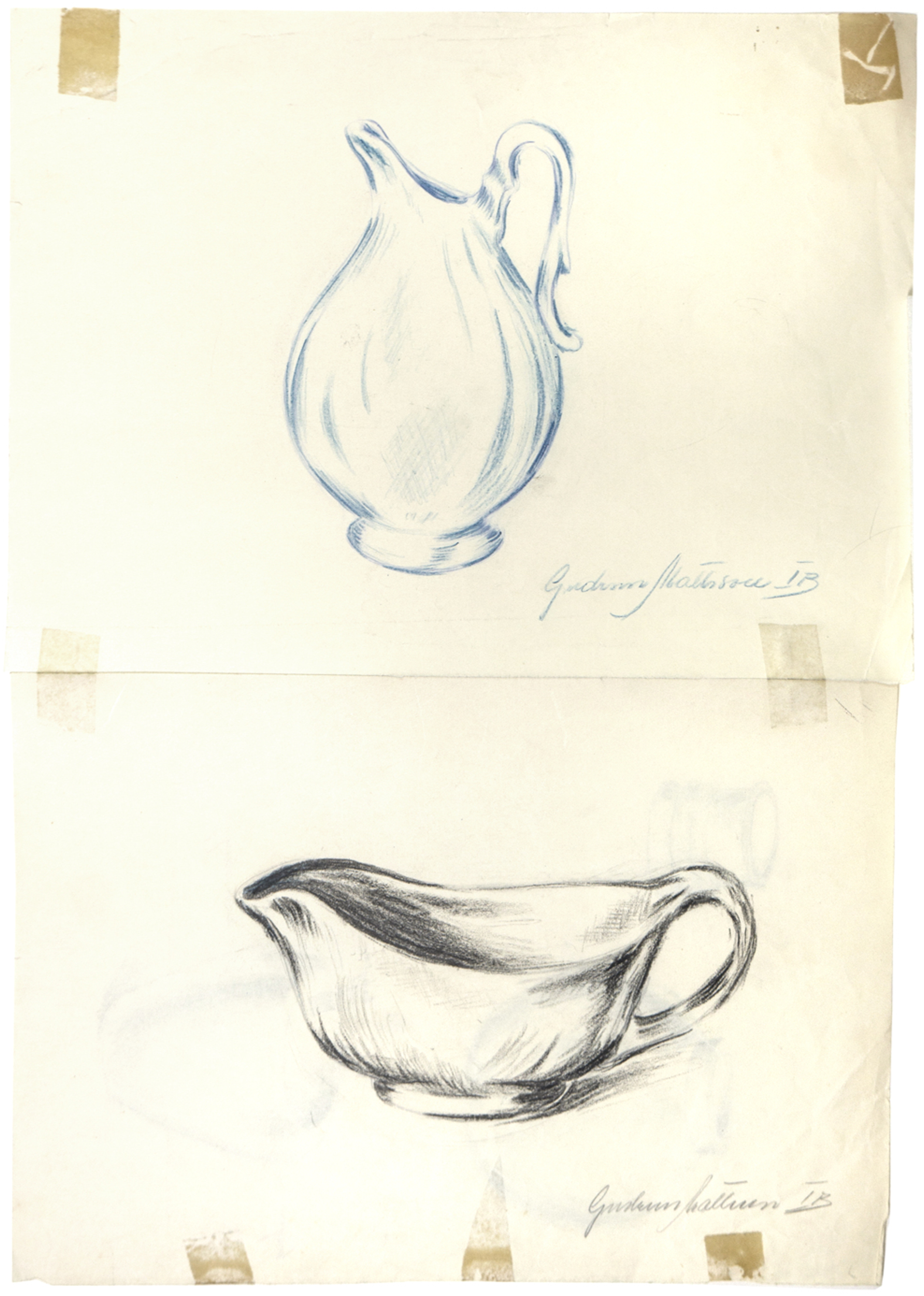
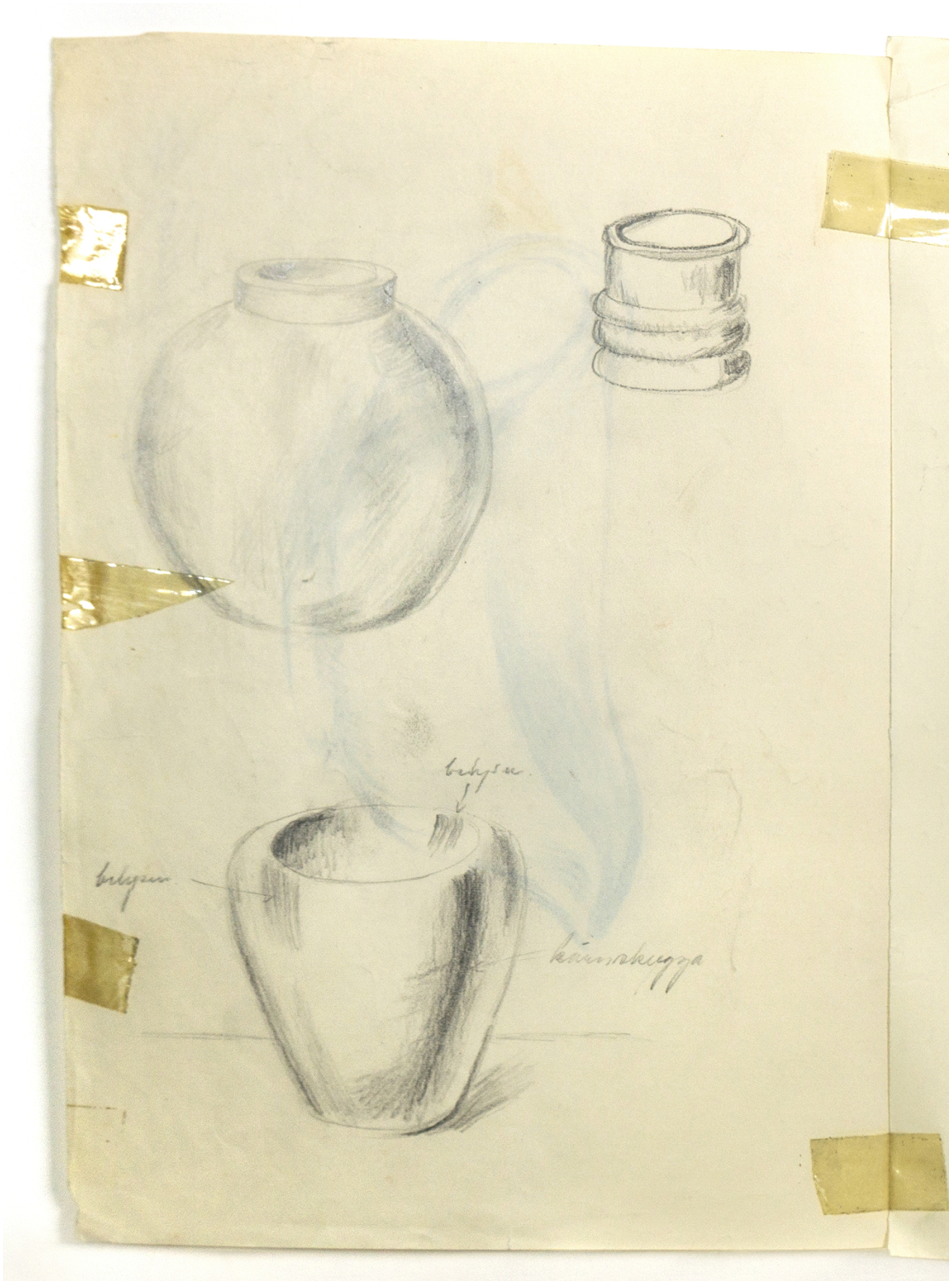
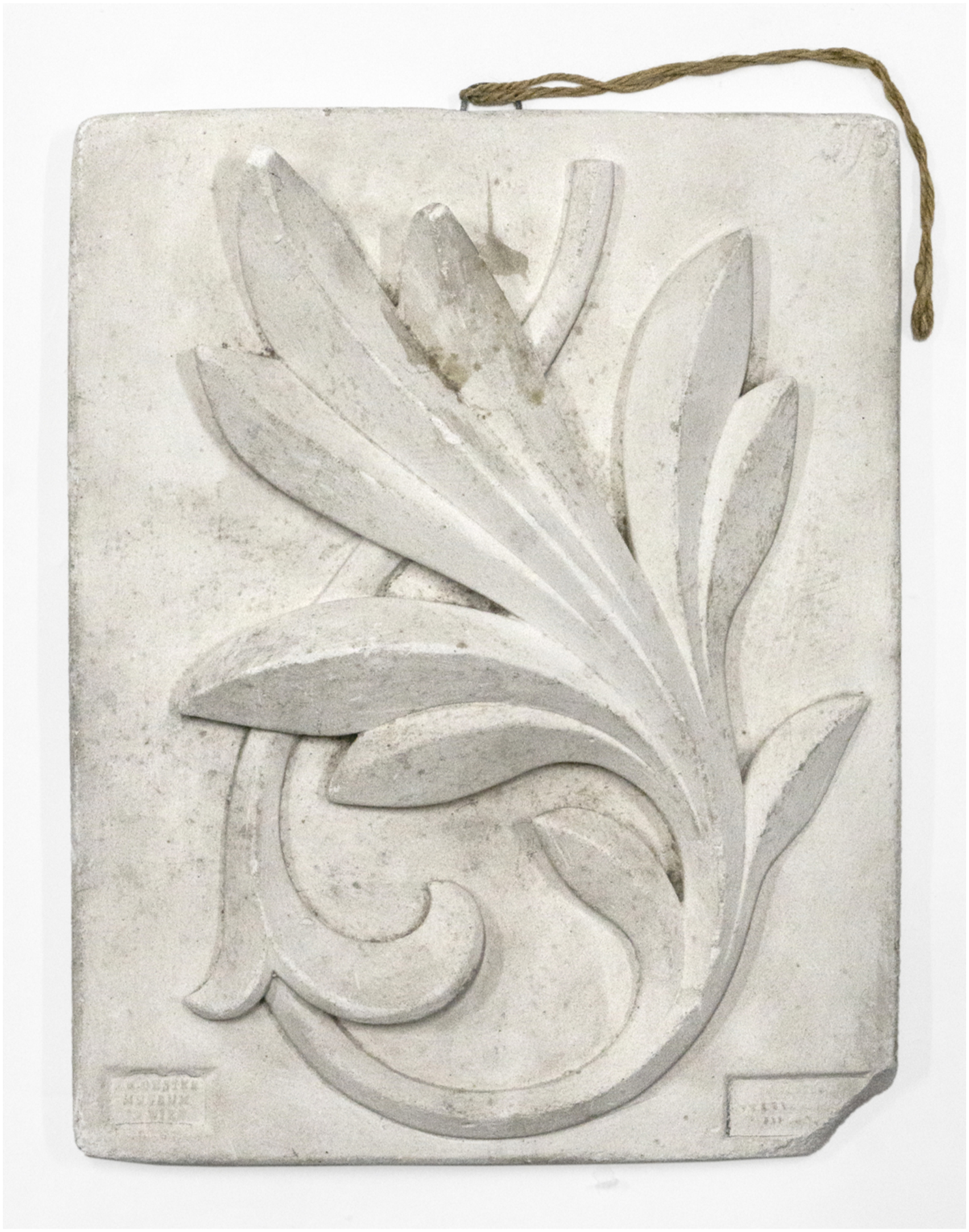
A list of inventories from 1906 include several everyday objects such as: “One flower pot, one bottle, two jugs, one coffee pot”. The list is accompanied by a description: “all items purchased for the drawing lessons at Strängnäs Secondary Grammar School”, signed by the art teacher E. Nilson. When an object is transferred from its primary (everyday) context to the school context, transformations of meanings happen in processes of recontextualization. The primary purpose of a coffee pot is, of course, being able to keep the coffee warm and at the same time, being able to serve the coffee from a nice-looking and functional container. However, in the school context, the objects become charged with the aims of specific school subjects; it is framed according to its perceived educational function. In this case, the subject is “art”. In secondary grammar school, particularly in the natural science program, “reallinjen”, art education, or “drawing studies” was considered important for future technical professions. To be able to make blueprints and produce projection drawings, was essential. The students should also learn of perspectives, and creating shadows by copying and drawing from a model. The jug, the coffee pot, and other everyday objects, as well as plaster casts, stuffed animals and wall charts, were used as models in such lessons. Another inventory list from 1933 include many other types of objects that were used in the drawing lessons: preserved birds, mammals, insects, and butterflies, human and animal skulls, geometric models, household items, tools, and “other inventories” such as sciopticon images. The list also shows signs of cultural framing, where the objects have been listed according to different materials that they were made from: wood, glass or iron.
The material resources of the jug, the sauce bowl, and the plaster cast, in this particular context, has to do with the objects being small, portable, and possible to bring into the classroom to be placed onto a school desk or somewhere else in the classroom. The everyday objects and the plaster cast are made from different materials and have different surfaces, which reflect light in different ways. We know that the everyday objects were noted in the inventory lists, and treat the drawings as signs of student use and learning. The drawings show what art education in Strängnäs could be about: to depict or even copy the world. The drawings, as well as the plaster cast, reveal that close study of objects, as well as technical skills, were highly valued. It is a technical discourse, rather than an aesthetic one, that is being realized. The everyday objects and the plaster cast are examples of how the objects were used to achieve the goals of art education in the 1950s. The motif of such a pedagogy was professional qualification and the goal was to reach an objective realism, which was needed in order to foster future technicians (Marner, 2000). Marner (2000) has shown how copying was part of an “authoritarian pedagogy”, where the student’s interests and needs were subordinated to society’s demands. Students worked with models and copying of wall charts. The development went from the simple, to the more advanced and complex, from drawing straight lines, via geometric shapes, to bricks, and finally objects. Strängnäs Secondary Grammar School had a specific art classroom for this purpose, where the teacher Zacharias Faith-El taught for nearly 30 years in the 1930s–1950s.
Example 2: Weapons practice
The second example includes five rifles, or rather, light weight dummies without bayonets, and with wooden piston, and brass details (Figure 4). The rifles are from Strängnäs, while the photos in Figure 5 demonstrate weapons exercises at Sigtuna secondary grammar school around 1950 (Figure 5). Rifles from Strängnäs, Sörmland museum’s collections. Photograph: Sörmland’s museum. Photo of shooting excercises at Sigtuna secondary grammar school. Sigtuna secondary grammar school archive. Photograph: Eva Insulander.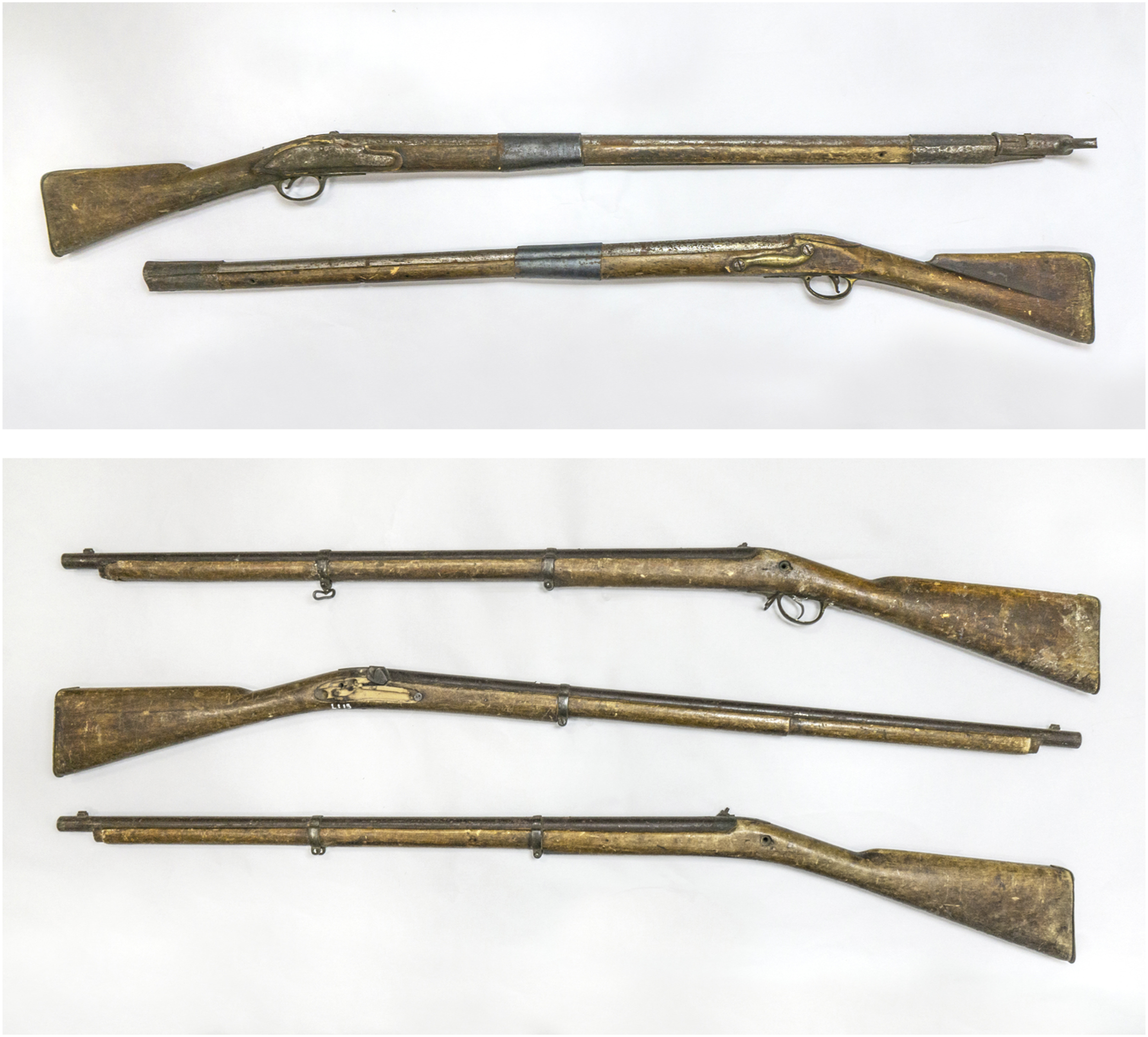
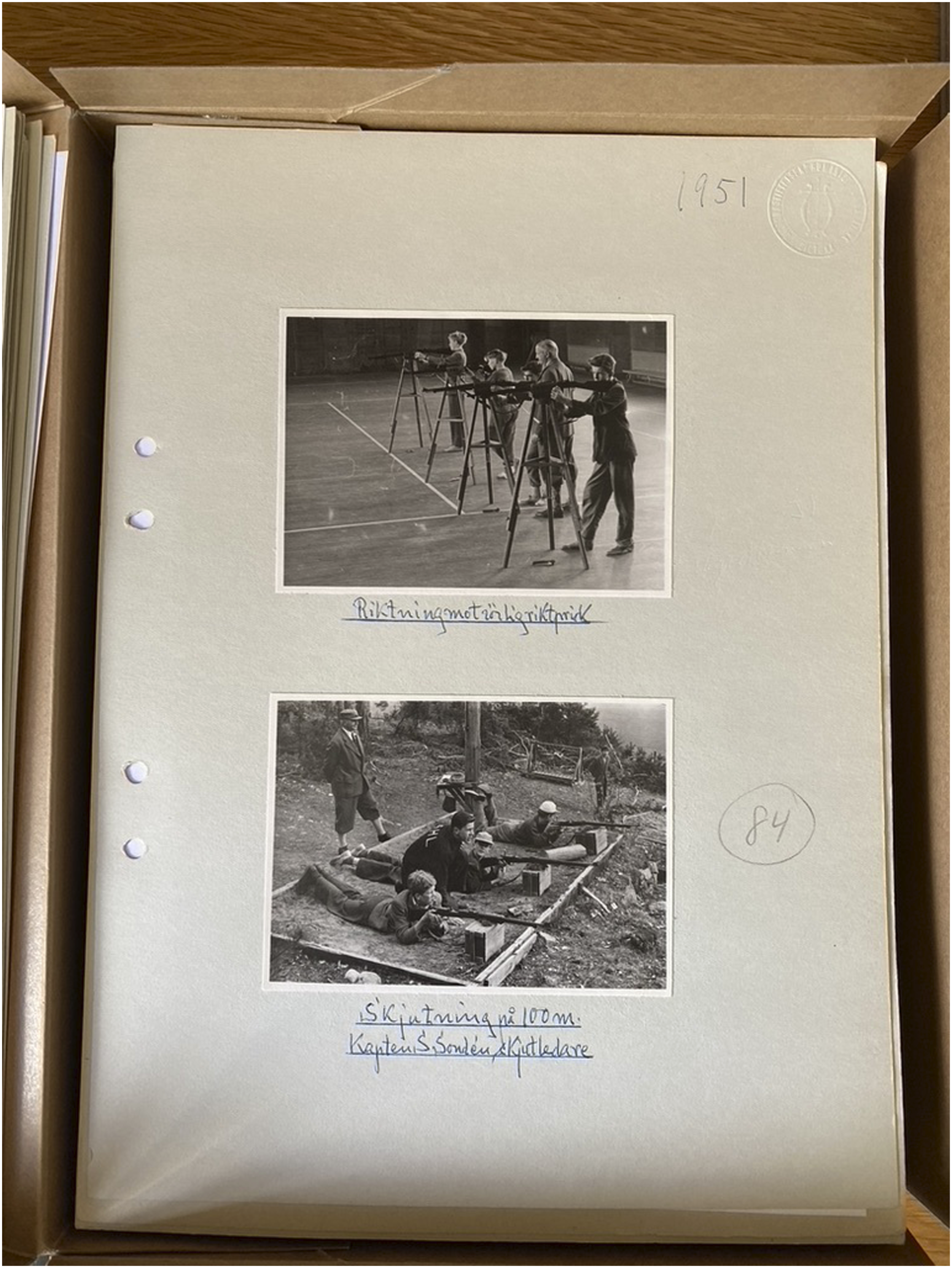
The collection from Strängnäs, and the inventory lists, include several types of rifles, fencing swords, other types of swords and protective suits with armor and protective masks. These weapons were turned into teaching materials/museum objects in a process of recontextualization. The primary function of the weapons and suits were to be used in military defense, but for educational purposes the weapons were sometimes adjusted so that they could not cause any real damage. Weapons exercises, also with real weapons, was part of the physical education and mandatory for all students at secondary grammar schools between the years of 1863–1917 (Trotzig, 1989). In many schools, like the one in Strängnäs, shooting exercises continued even without support from the state. Towards the end of the 1930s, the question of defense as part of formal education was brought up again. According to government instructions, military training in schools was once again established as mandatory between the years 1942–1945. The exercises were motivated by World War II, and even though the training was dropped from the curriculum, the exercises continued in some schools, at least a few more years (Larsson, 2016). The weapons were incorporated into and framed culturally as part of the Cultural history collection, which contained objects such as archaeological material, and objects from Sweden’s old farming society. The objects were ordered according to time period (Stone age, Bronze age) and type of object (horseshoes, locks and keys, weapons, rune staves).
The material resources of the rifles have to do with them being portable, so that teaching/training could happen outside of the classroom, in a gymnasium or in the open air. Some of the rifles are lightweight, where the firing device itself has been removed, which made it also possible for smaller boys to use them. Real weapons were not considered suitable for school youth, and a bill of 1890 proposed that shooting practice should only be carried out by the students from the age of 15 and that lighter rifles should be procured so that the students would not "...exert themselves or incur future injuries”. (Prop, 1890: 17; 40). The exercises involved target shooting, and fencing with sword, saber and bayonet rifle. As early as 1813, the “father of gymnastics” Pehr Henrik Ling advocated that schools introduce gymnastics which include not only fencing with sword, saber and bayonet but also target shooting, and that the students could also practice in their free time. The weapons and dummies used in the school context to realize different discourses, at first, related to physical fitness, and then from 1895, to a national and military discourse. The weapons practice was part of physical education, where learning these practical skills was seen as preparation for military service (Larsson, 2016). The rifles from Strängnäs Secondary Grammar School may be seen as an instrument for fostering a national spirit and an active citizenship. The meaning potential of the rifle was thus shaped by the (global) discourse of the Nation, and mediated locally in the activity type of “weapons practice”. Even though military training was officially dropped from the curriculum in 1945, the military ideals seem to have lingered. A former student at a secondary grammar school in Örebro states in his memories from attending the school in the 50s: “The physical education teachers of that time were characterized by a military pedagogy and were apparently generally ex-military personnel.” (Unpublished document, Lindsten 220325).
Example 3: Plant collecting
The third example includes a portar, which is a cylindrical tin container for collecting plants (Figure 6). It is part of a collection from the Laufke family, which also contains a well-preserved herbarium (Figure 7) from the years 1935–1938. The binder consists of two boxes covered with marbled paper and decorated with applied paper decorations of plants. Two silk bands hold the herbarium together. Figure 8 show students from Strängnäs gymnasium preparing a botanic excursion in 1887. Portar from Strängnäs, Sörmland museum’s collections. Photograph: Sörmland’s museum. Herbarium from Strängnäs, Sörmland museum’s collections. Photograph: Sörmland’s museum. Photo of students from Strängnäs gymnasium preparing a botanic excursion, Sörmland museum’s collections. Photograph: Eva Insulander.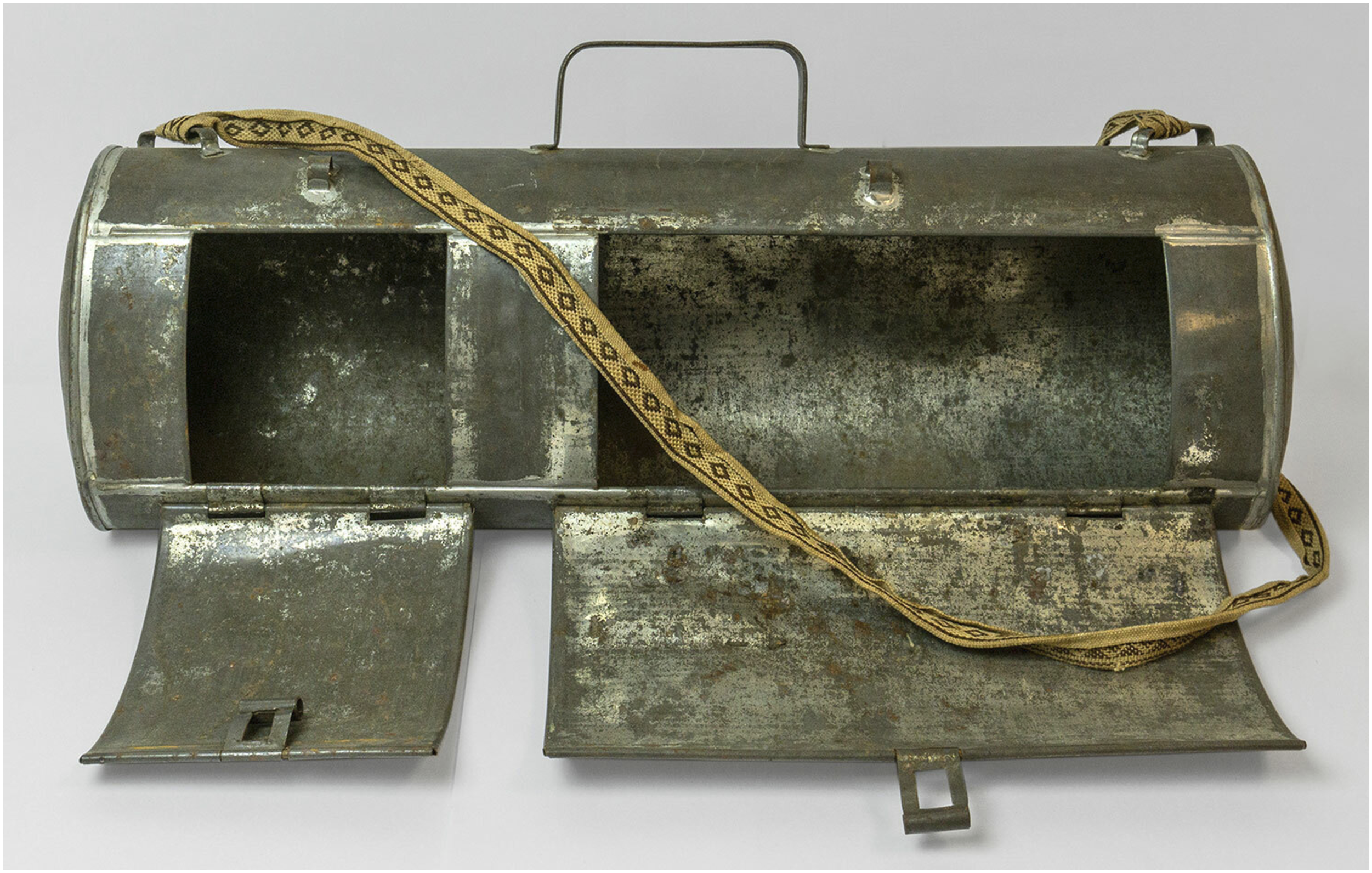
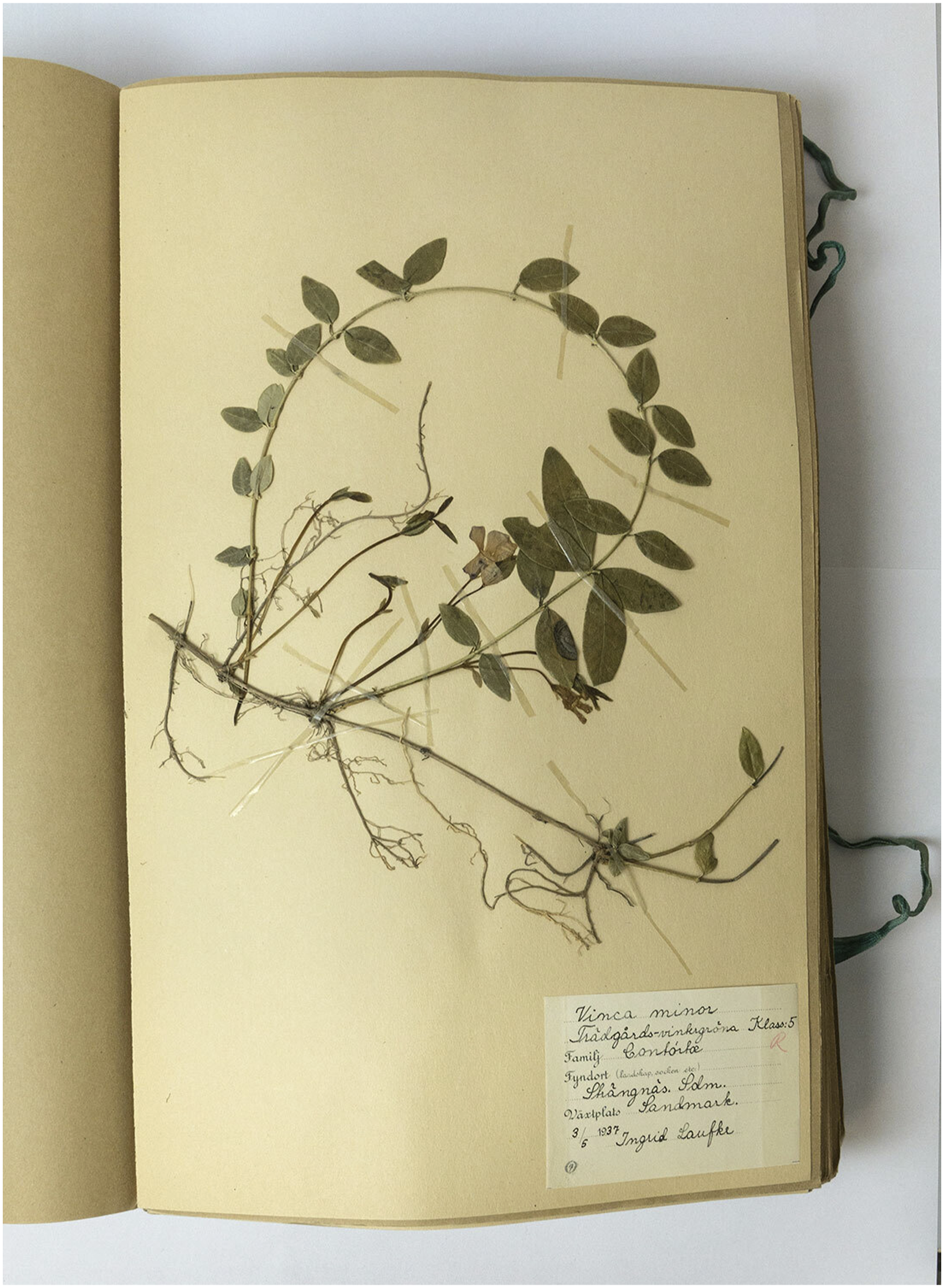
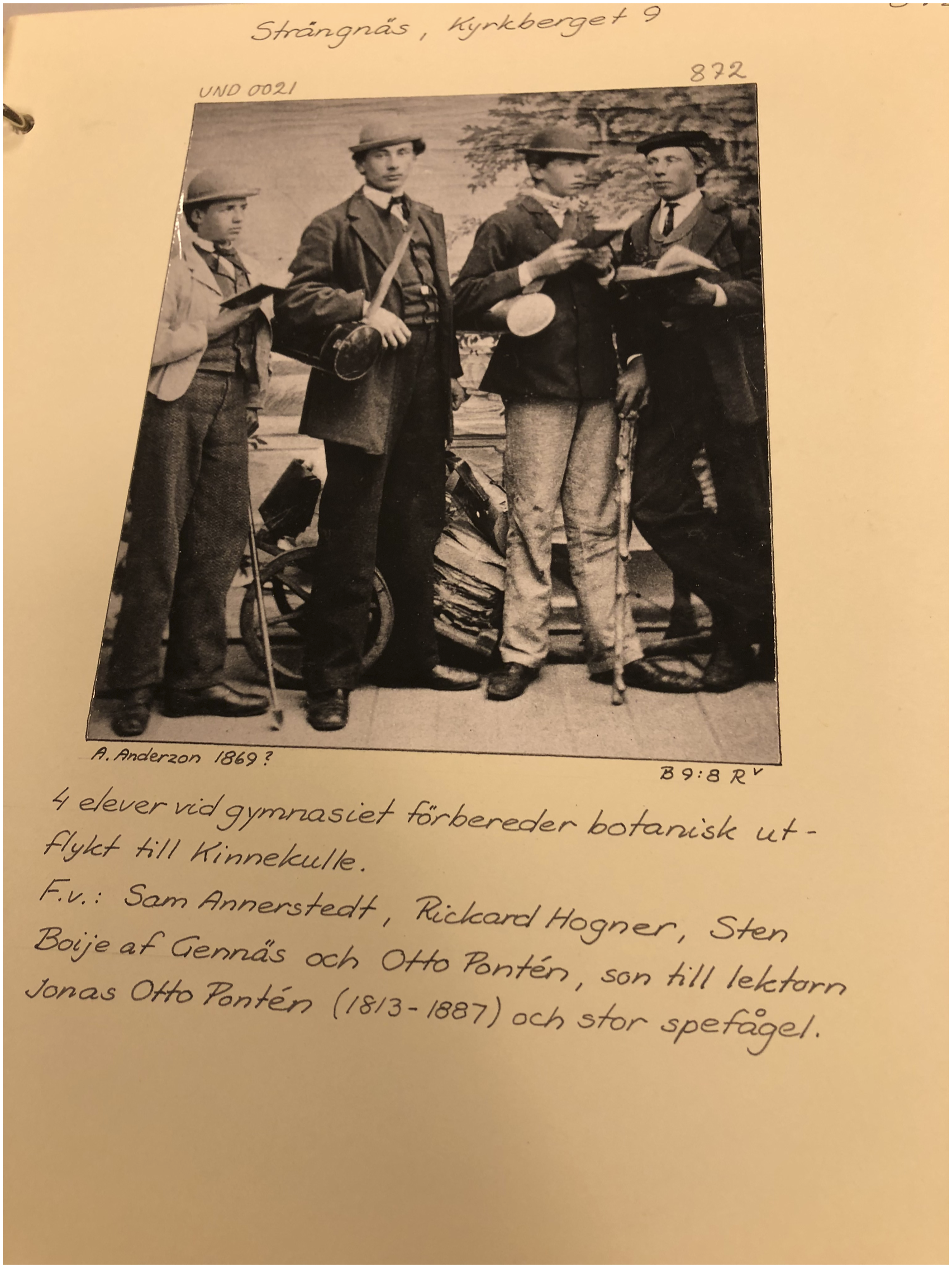
The portar has been designed for the specific purpose of collecting plants, to be used by botanists for scientific purposes. Recontextualization may be seen to take place as the portar is procured for the school and noted as teaching materials in the inventory lists. The herbarium with plants, is another case of recontextualization. In their primary context, the plants are “just plants”, but when collected and preserved in herbaria, their meaning become transformed and charged with scientific meaning. When included in the collections, both the herbarium and portar have been framed according to their function: to be used as teaching material. From 1856, students in secondary grammar schools were required, as carefully specified in the curriculum, to compile herbaria of several hundred plants. The students thus “made” or collected their own teaching materials. They were not merely following strict instruction but could make some choices in terms of which plants to collect and were involved in the process of creating the collection of school herbariums. The curriculum (Lärverksstadgan) specified how many plants were to be collected by the students, between 50-150 species per year, from the second year and for the next 5 years (Beckman, 2014). During the years 1930-32 in Strängnäs, the number of plants collected amounted to between 30-60 per year. Despite curriculum changes, this task remained, and the curriculum of 1933 prescribed 3 years of compulsory collecting (Lövheim, 2006). The practice of collecting remained even as preparations for a comprehensive school system had begun, although the collecting of plants shifted in 1955 from an individual to a class level. Excursions should be made once each semester and the teaching of botany was not limited to the classroom. Students relied on practical handbooks of collecting, as well as on the textbooks, and floras officially in the curriculum (Beckman, 2011). The handbooks contained plant lists, maps and lists of location, and information about how to identify plants, as well as advice on equipment. The skill of collecting and identifying plants was taught and cultivated for moral, physical, pedagogical, as well as for scientific reasons. The practice of making herbariums also involved a certain measure of creativity, where craft skills to create the herbarium was required.
Excursions and the activity of collecting plants were part of the teaching of botany and natural science. The material resources of the portar have to do with its size, weight, shape, and mobility – it’s “portability”. The portar indicates that teaching and learning takes place outside the classroom, in nature where students can learn through direct observation. The portar is relatively large which means that there is room for a lot of plants. At the same time, the strap enables the collector to move relatively freely when walking in the woods and fields. The meaning potential of the portar – it’s affordances and constraints – thus makes a different kind of teaching possible, which could take place outside the walls of the classroom. The material resources of these objects were shaped by several discourses, where a pragmatist and a scientific discourse can be noted. Through botany, the students were taught observation and civic virtues, in addition to the practicalities of collecting. Pragmatic ideas from the end of the 19th century and onwards, stressed practical handling that would lead to an abstract understanding (Beckman, 2011). Students were expected to not only learn about nature and the world, but also to investigate it systematically. Students were to complete the tasks set in a methodical and organized way, and the aims of the teaching was to foster a scientific gaze.
Example 4: Map exercises
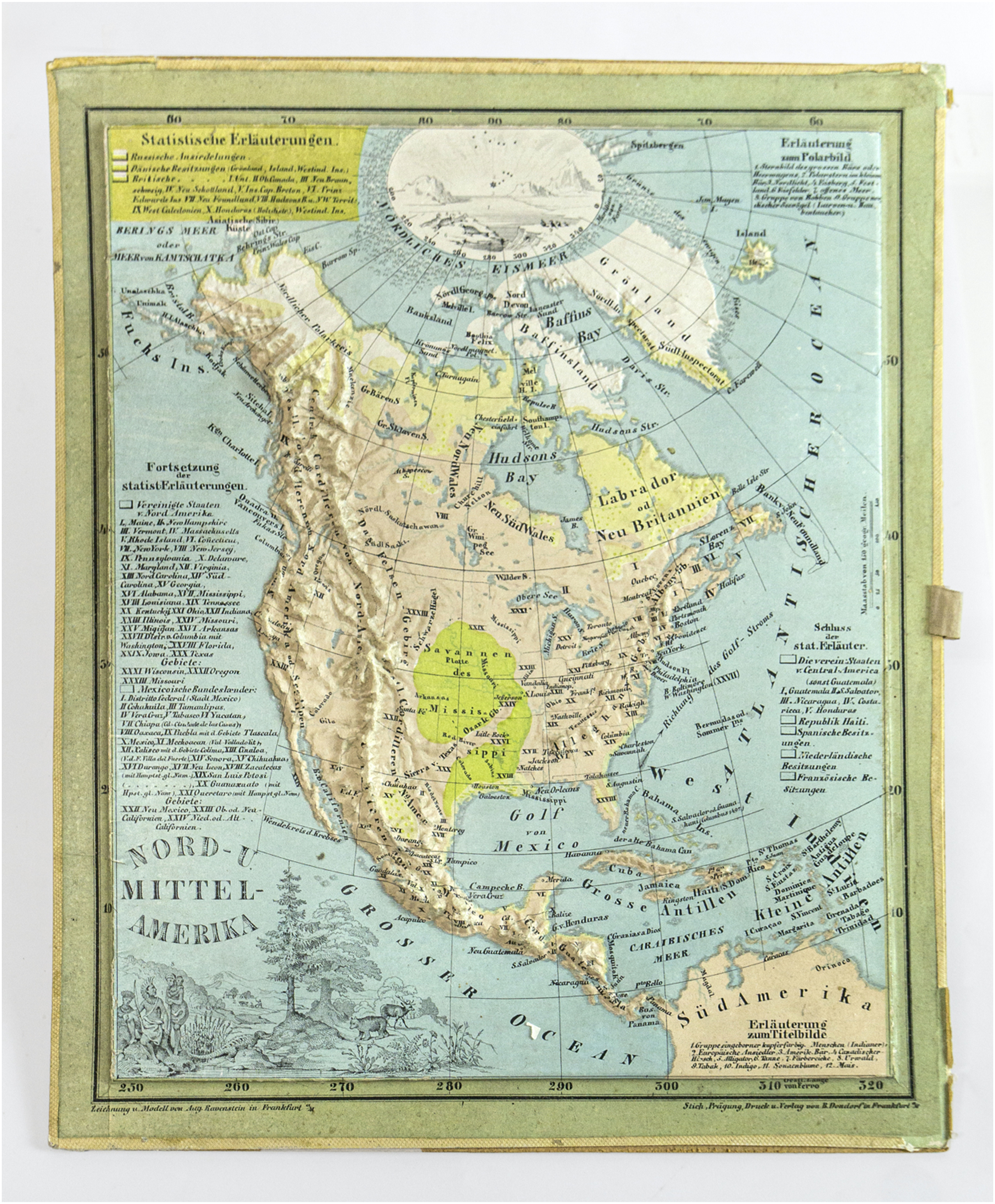
The fourth example (Figure 9) include a photo from 1916 of the teaching of history at Strängnäs Secondary Grammar School. Lecturer Isak Fehr is sitting at his desk at the front of the class, and a boy has been called to point at a large map that is displayed to his right. The photo in Figure 10 is from 1935, showing a lesson prepared for teaching the history of colonialism. A large map has been mounted in the front of the classroom. In Figure 11, there is a map in relief of North and Central America, dated late 19th century. Photo of classroom at Strängnäs gymnasium with lecturer Isak Fehr, Sörmland museum’s collections. Photograph: Eva Insulander. Photo of classroom at Strängnäs gymnasium, Sörmland museum’s collections. Photograph: Eva Insulander. Map in relief, Sörmland museum’s collections. Photograph: Sörmland’s museum.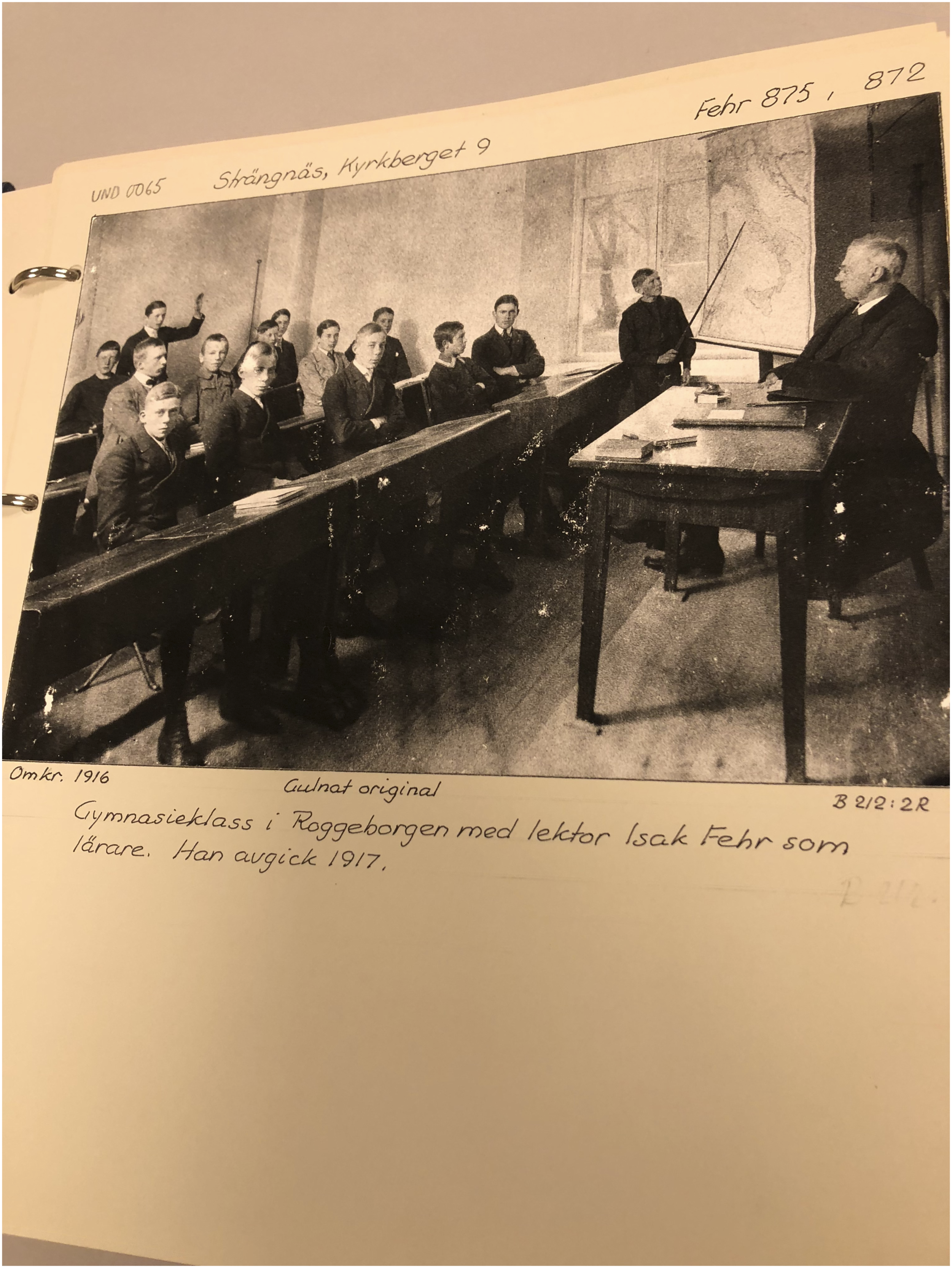
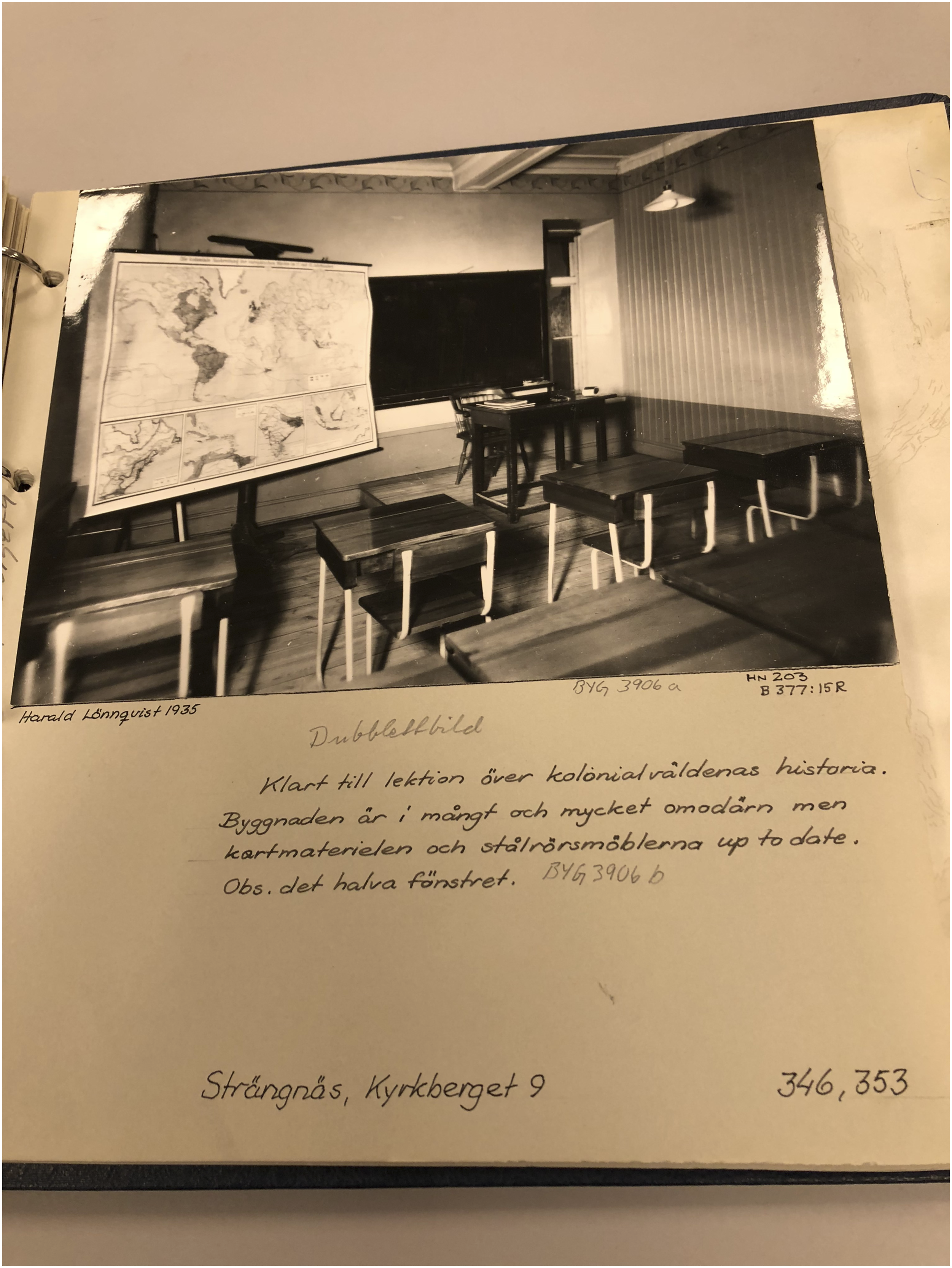
The use of wall charts in European schools began as early as in 1850 and was recommended in the Swedish curriculum from 1875 (Evertsson, 2022). Cartographers and publishing businesses produced these maps directly for educational purposes, so the concept of recontextualization is not relevant here. In the school context, the maps become charged with the aims of the specific school subjects; they are framed according to their perceived educational function. They were also framed culturally and included in inventory lists based on the teaching subject, for example history and geography, and type of artefact, such as wall charts, maps and posters, that the school possessed.
Map exercises were an important part of visual teaching technologies, where concrete objects could be represented in concentrated and concrete form, such as maps and coins. The material resources have to do with size, mobility, and visibility. School maps could come in different sizes to be hung up on the wall, on a special suspension device. They were placed in the front of the classroom, where teachers could teach about certain aspects of the maps. These larger maps made it possible for the teacher to capture everyone’s attention at the same time. As seen in the photograph in Figure 9, students could also be called up to demonstrate their knowledge in front of the class. Maps could also, as in fig. 11, be made in 3D, creating a sense of volume. The different colors provided a pedagogical potential, to be used in teaching and learning. The material resources of the maps, their size, mobility, surface, and colour, thus contributed to the meaning-making in the particular activity type of map exercises.
The material resources were also shaped into meaning by pedagogical discourses of the time. Samuelsson (2021) points out how criticism of the history subject had to do with it being strategically aligned with a national discourse. History teaching of the time was not considered compatible with a modern democratic school (Cuban 1993). Progressivism, as a pedagogical idea and practice, came to have an impact on Swedish secondary schools especially during the years of 1920–1950. It was a reaction against the formalism of traditional education that emphasized memorization of facts. As part of a reform pedagogy in history, teachers used maps, portraits, wall charts, coins, discussions, and debates, as well as field trips/school trips, to make history vivid and interesting. Students’ self-activity and own interest was favored. A focus on the visual would concretize and enliven the teaching and would replace the traditional intellectualist school (Samuelsson, 2021). These ideas were also realized at Strängnäs Secondary Grammar School. In Strängnäs, the notes from the teachers’ subject conference in 1939 state that suspension devices for maps, as well as blackout curtains, were to be procured for all classrooms, so that motion pictures could be used to a greater extent than before. A list of recommended destinations for fieldstrip, and purchase of new textbooks that would enable a relatively independent way of studying, was also mentioned in the teachers’ subject conferences from 1938.
Conclusion
The case study of Strängnäs Secondary Grammar School artefact collections illustrate how educational history can be combined with multimodal social semiotics “in order to strengthen the social of social semiotics” (O’Hagan, 2022; 373). Our paper can be seen as a response to a perceived research gap, as we apply both approaches with mutual benefit. The analysis of original sources contributes to a rich account of the chronological development of the school artefact collections. Greater attention to history, contributes to the understanding of multimodal practices, making visible how meaning was made in different contexts and in different periods of time. The historical approach enables us to understand meaning-making within a larger sociocultural and sociopolitical context (cf. O’Hagan, 2022). Multimodal social semiotics offers a rich and valuable toolkit for a close analysis of the meaning potential and educational use of objects. Altogether, the paper provides empirical evidence of how school artefact collections were shaped, used, and given meaning in an educational context during the period of 1830–1960. The analysis includes both the level of the collections and the level of the objects.
Our analysis shows how the collections grew over time, and how their importance and use changed. We have shown how objects were incorporated into the collections, by the actions of different actors, in processes of recontextualization. As shown, the local community and local actors played a significant role both in collecting, and in the implementation of various teaching and learning strategies in schools. The objects were framed in different ways, according to function and to cultural aspects. Our analysis illustrates how the meaning potential of objects and artefacts were shaped into meaning by discourses and realized in social practice. As the collections increased, a certain hierarchy developed relating to educational usefulness, where certain objects were considered valuable in teaching, while others were given peripheral status and considered as curiosities. An important argument within progressive education was to make education more vivid. The handling of artefacts contributed to a sensory experience, and not just intellectual understanding. Through this object-based pedagogy, the learners could move from concrete observations to inferences about the materials and gain an understanding of facts, and of different perspectives. Teachers could also assess if their students had grasped certain concepts through demonstration and interaction, for example with the 3D map in history.
Even though materiality is essential, we are reminded of how meaning always is shaped culturally, in social practice (Björkvall and Karlsson, 2011). The activity types that we chose as examples, show how material resources and discourses are brought together in situated practices. In physical education, the (male) students were expected to acquire certain skills associated with becoming a man, and the objects – such as the rifles – probably played a central role in shaping of identities. Scientific ideals in botany and technical discourses in art education also interacted with gender norms. Samuelsson has shown how progressive education came to have an impact in Swedish schools around 1920–1950. This change involved a critique against an intellectualist teaching focused on memory and abstract thinking. Instead, progressive pedagogy prescribed using objects and “self-activity” (Samuelsson, 2021). Based on our examples, we can see how educational discourses such as progressivism came to have different impact in different subjects. While an authoritarian and national discourse prevailed in art and physical education, a scientific and progressive discourse seem to have been established in botany and history. An object-based pedagogy encouraged students to closely examine the objects as sources of knowledge. Even though authoritarian pedagogy prescribed technical rather than aesthetic qualities of the artefacts, the handling of artefacts still provided pathways into the different subjects, in a way that was not available in a textbook.
As Samuelsson shows, a group of progressive-oriented teachers took central positions in Swedish secondary grammar schools and propagated their teaching methods in magazines, teachers' associations and investigations. At the same time, the criticism that arose was polarizing and still leaves its mark today (Samuelsson, 2021). Towards the 1960s, the importance of school collections, such as the one in Strängnäs, declined. This happened at the same time as a new school reform was realized, when the Swedish compulsory school was introduced as a school for all children in 1962. Investigating the reasons why the collections lose their importance is beyond the scope of this study. Further studies are needed to be able to answer questions about whether the national, local, or didactical reasons were behind the decline in school collections and/or how these reasons are intertwined. Questions remains, such as if the role of the objects were meant to shape a certain class or group identity which might be seen as the opposite to the democratic modern project. The schools were often recognized through their large collections, which later seems to have become more of a burden. School subjects changed, and in that process (some of) the objects lost their importance. Our approach may broaden our understanding of how a modern school system emerged and how schools used and developed various teaching and learning strategies – including the use of objects and collections in class. By focusing on how teaching was conducted historically, it also contributes to opening up “the black box of schooling” (Samuelsson et al., 2022; Braster et al., 2011) by exploring how educational ideas, curricula, and syllabi were transformed into action.
Footnotes
Declaration of conflicting interests
The author(s) declared no potential conflicts of interest with respect to the research, authorship, and/or publication of this article.
Funding
The author(s) disclosed receipt of the following financial support for the research, authorship, and/or publication of this article: This study is supported by Vetenskapsrådet; 2021-03671.
Correction (June 2023):
Article updated to correct the position of Figure 5 and 6.