



Abstract
This study investigates the virtual semiotic landscape of a South African online advertisement campaign, Vagina Varsity, by sanitary towel company Libresse®. The article extends notions of linguistic landscape studies and virtual semiotic landscape studies to bring attention to the various semiotics used in online spaces for communication and meaning-making. Using a social semiotic approach to multimodality as a theoretical framework, the investigation found that the campaign addressed the topic of menstruation in a manner that assuaged cultural sensitivities towards this topic. The campaign advertised sanitary products by drawing on semiotics usually related to a teaching genre, as well as on popular cultural references. The affordances of the internet allowed for the creation of spaces where the female anatomy and related matters were presented, constructing a conducive atmosphere for young women to share, discuss and motivate others within that space.
Introduction
In recent years, virtual spaces have increasingly been used to highlight gender inequality and to advocate for women’s empowerment (Kumari, 2020). Because of the interactive nature of the internet and its ability to reach many people, it has become a major communication channel for advertisers (Rzemieniak, 2015). One notable example of a company using the internet as an advertising platform, and a space for women’s empowerment, is Libresse®. The feminine hygiene brand, while selling their sanitary towels, attempted to change the narrative on women’s rights and taboo topics for young women. In October 2016, Libresse® set in motion its South African advertising campaign called Vagina Varsity. Their strategy was to empower young women by providing the vocabulary to talk about their bodies in a relaxed, fun and socially trendy way, guided by two YouTube personalities (Makhele, 2016). This campaign was entirely online, allowing young women to access information from mobile phones or laptops in their homes or private, quiet spaces.
This article takes a social semiotic approach to multimodality to examine the virtual semiotic landscape of the online advertising campaign, Vagina Varsity, by Libresse®. The analysis reveals the strategies employed to influence consumer behaviour, including leveraging the affordances of social media to create a safe space for young women to share their experiences, to engage with prospective customers and to disseminate women’s empowerment messaging using a multimodal entertainment-educational approach.
Vagina Varsity
The Vagina Varsity campaign used the online video sharing and social media platform, YouTube as the space for endeavouring to change the narrative surrounding menstruation by instructing young women about the female anatomy and destigmatising the associated discourse. In that way, they would sell their products to the newly educated and empowered young woman. The campaign was therefore aimed at selling Libresse’s® products but also at educating women about their bodies, focusing specifically on vaginas and menstruation (Makhele, 2016). The four-week course included four short weekly YouTube videos, a quiz at the end of each week, and bonus educational content via email. Individuals could register and participate in the course from October 2016 until December 2016 (Makhele, 2016). A counselling sexual psychologist, Avri Spilka, ensured that accurate educational information was provided to the audience. The video content was scripted and directed by popular South African comedian, Anne Hirsch, who created funny and light-hearted campaign content. Lastly, the presenters and faces of the campaign were Thembe Mahlaba and Nwabisa Mda, members of a well-known South African YouTube group, Pap Culture (Makhele, 2016). In Vagina Varsity, they adopted the role of ‘teachers’ while amusingly delivering the content.
This study was guided by these research questions: • Which semiotic resources are employed to create an advertising campaign for a young, female, consumer base? • How are the affordances of the internet utilised in Vagina Varsity to create an engaging space where sensitive topics are taught and discussed?
The next section is a review of the literature on linguistic landscapes, virtual linguistic landscapes and entertainment education, which is followed by an in-depth review of the social semiotic approach to multimodality. The section thereafter describes the steps for conducting a virtual linguistic ethnography and a social semiotic multimodal analysis. This is followed by an analysis of the Vagina Varsity campaign creators’ innovative use of semiotic resources and semiotic remediations to create a virtual entertainment-education campaign for young women, and the deployment of the affordances of the online space to create pathways to a private space where sensitive topics are discussed between the content creators and subscribers, as well as among subscribers. The final section concludes the article and provides a suggestion for future research.
Literature review
Linguistic landscapes and virtual linguistic landscapes
Online health information has become increasingly popular among the public (Tan and Goonawardene, 2017), possibly because the virtual space is an apt place for people to seek information, often about subjects they would not address with others face-to-face. For instance, the internet can provide a space where young people can speak openly and honestly about sensitive body-related issues and ask tough questions that they might not feel comfortable asking parents or guardians due to feeling ashamed or embarrassed. The primary purpose of health-related internet use among young people is to seek information regarding physical well-being, sexual health, mental health, social problems, and the like (Park and Kwon, 2018). For these reasons, teenagers and young adults can access campaigns such as Vagina Varsity, enabling companies such as Libresse® to leverage the internet and its affordances to create spaces where these young people can access valuable information. This illustrates the advantages of using virtual spaces for advertising. In this article, “affordances” refers to the range of functions of the internet that users can leverage (Brown et al., 2022).
The article situates itself within the field of linguistic landscapes (LL) studies, initially defined by Landry and Bourhis (1997: 25) as “[t]he language of public road signs, advertising billboards, street names, place names, commercial shop signs, and public signs on government buildings [which] combines to form the linguistic landscape of a given territory, region, or urban agglomeration”. Due to the expansion of the scope of LL studies, the definition has since been reconceptualised to include, inter alia, the body as a skinscape on which signs can be read (Peck and Stroud, 2015); the body’s senses, like smell in smellscapes (Pennycook and Otsuji, 2015); moving from traditional public linguistic landscapes to private homescapes (Boivin, 2021); and viewing the virtual space as a linguistic landscape (Ivković and Lotherington, 2009).
Observing the opportunities that virtual spaces provide for analysing language behaviour, Ivković and Lotherington (2009) extended and reconceptualised LL studies to include virtual spaces which is regarded as a landscape where signs are read and absorbed in diverse ways, much like conventional linguistic landscapes. Ivković and Lotherington (2009) found that virtual spaces reflect the functions of LL in the physical world in many ways. For example, virtual spaces are described using physical world metaphors (like chat ‘room’, discussion ‘forum’, ‘lurking’ 1 , and ‘surfing’ the net), thereby enabling the internet user to “interact with the virtual domain based on familiar experiences from real world domains” (Ivković and Lotherington, 2009: 20). This resonance with viewers’ familiar world is seen in the Vagina Varsity campaign: the virtual space is meant to mimic a school-like structure normally encountered offline, while simultaneously employing modes and methods not possible in a traditional classroom. By ‘structure’, the author refers to the logical sequence of the course (Kenalemang-Palm and Eriksson, 2021). This article considers virtual space as an extension of the physical world, so aspects of linguistic landscape research are also applied in virtual linguistic landscapes (VLL) research.
The field has also been expanded to include semiotics other than language, which Jaworski and Thurlow (2010) call semiotic landscapes. As this article analyses various modes and social semiotics of the virtual space, this article will refer to ‘virtual semiotic landscapes’. A virtual semiotic landscape is “a virtual world in which computer-mediated communication (CMC) takes place” (Biró, 2018: 183). Virtual spaces, much like traditional linguistic landscapes, are places where one can examine multiple forms of language. The affordances of virtual spaces allow for different modes, such as moving image and sound, as well as written language, to make meaning in the virtual space (Kress, 2010; Shirahata et al., 2023). Biró (2018: 181-182) shares this sentiment, stating that “[t]he term linguistic is now no longer limited to verbal and written languages but embraces the complexity of semiotic spaces as well as of people who are authors, actors, and users, all of which are part of LL analysis”. Therefore, the focus is not only on written language but on all multimodal elements that provide important insights into the landscape.
Notable studies on virtual semiotic landscapes in South Africa include Maseko and Siziba’s (2023) analysis of North-West University’s official website, Oliver’s (2019) virtual ethnography of the Fees WILL Fall movement, and the author’s PhD thesis analysing the multimodal social semiotics of a South African online advertising campaign, Vagina Varsity (Roux, 2019).
Health communication and entertainment-education
Vagina Varsity was an advertising campaign that used a communication facet, entertainment-education, in the context of health communication with the goal of advertising a product in a fun, educational manner. Health communication aims to influence and improve the health outcomes of individuals and communities “by sharing health-related information” (Schiavo, 2007: 5). The role of communication in health communication campaigns is “to create a receptive and favorable environment in which information can be shared, understood, absorbed, and discussed by the program’s intended audiences” (Schiavo, 2007: 6). To create such a campaign, the creators need awareness of the audience’s beliefs, taboos and lifestyles (Schiavo, 2007).
Entertainment-education is a type of entertainment defined as “the intentional placement of health messages in entertainment messages” (Singhal and Rogers, 2002: 117). Vagina Varsity can be considered as exemplifying entertainment-education as a strategy, as defined by Singhal and Rogers (2002). The campaign content comprised short, entertaining health-related educational videos; and the storyline allowed for character development (initially, the presenters were not knowledgeable about vagina-related matters, but they became empowered through learning).
Entertainment-education is a strategy to disseminate messages intended to result in social and behavioural change (Singhal and Rogers, 2002). Within the context of Vagina Varsity, social and behavioural changes refer to ways of interacting with the opposite sex, as well as being more comfortable with speaking about female genitalia and menstruation. If implemented successfully, entertainment-education offers potential advantages for “national governments, broadcasting networks, educators, commercial sponsors, and audiences” (Singhal and Rogers, 2001: 344). This strategy can be implemented through different platforms, online and offline. Pluta and Siuda (2022) analysed entertainment-educational storylines on the video-on-demand platform, Netflix. They found that, when it concerns messages on health and disease, “entertainment narratives raise awareness, change attitudes, and motivate individuals to act considering their health and well-being” (Pluta and Siuda, 2022: 80). For example, storylines on cancer on television shows can influence the attitudes, opinions and behaviours of viewers (Pluta and Siuda, 2022).
Theoretical framework
A social semiotic approach to multimodality
Particularly important for this study is how internet affordances allowed for the creation of an online educational entertainment campaign. This has important implications for the future affordances of the internet in this sphere. In this article, the author investigates the online marketing strategies of Libresse®, specifically how the multimodal features and affordances of the virtual semiotic landscape allow for a space for addressing sensitive matters. Furthermore, through a social semiotic approach to multimodality (Jewitt and Henriksen, 2016; Kress, 2010), the author examines Vagina Varsity to determine the different semiotics present in the course, analysing social meanings, beliefs, purposes, and ideologies put forward by the campaign creators. This will also shed light on how entertainment-educational campaigns deliver their messages.
A mode is defined as a semiotic resource for meaning-making, and includes verbal resources such as speech and writing, and non-verbal resources like image, gesture, gaze, posture, colour, and so forth (Kress, 2010). The application of more than one mode in a communicative turn is called multimodality (Kress, 2010). Semiotic resources are “signs across modes, media, channels, and so on” (Prior et al., 2006: 740). This article takes a social semiotic approach to multimodality. The theory of this approach is that: … signs are always newly made in social interaction; signs are motivated, not arbitrary relations of meaning and form; the motivated relation of a form and a meaning is based on and arises out of the interest of makers of signs; the forms/signifiers which are used in the making of signs are made in social interaction and become part of the semiotic resources of a culture (Kress, 2010: 54-55, italics in original).
This highlights people’s agency in communicating a message, as they can draw on existing signs to create new meaning. The signs are deliberately chosen by and for the person or people. (The sign-maker can also be a company, as argued in this article.) Social semiotic approaches have recently been adopted in different areas, ranging from (offline) landscape architectural design (Price and Archer, 2022) to (online) YouTube roleplay videos (Zappavigna, 2023).
The interest of the article also lies in the application of social media affordances to create a multimodal, mediated campaign. A social semiotic approach to multimodality emphasises the making of a sign, and therefore also the sign-maker, thus acknowledging the human and ultimately social aspect of the creation of multimodal texts (Kress, 2010). From this perspective, the author can derive the social meanings of Vagina Varsity, as created by its producers.
Virtual spaces employ computer software, which is “inherently multimodal, with a range of semiotic modes (e.g., language, image and sounds) integrated in its design, output (in the case of design software, e.g., PowerPoint) and user interaction options” (He and Van Leeuwen, 2020: 665). They also contain links and hyperlinks, directing the internet user to other pages and spaces (Francesconi, 2016; Liu, 2017). Of keen interest to this study is the affordance of the virtual space to offer many pathways through links and hyperlinks. The author will analyse the digitally mediated semiotic resources that the campaign producers used to create a multimodal/multisemiotic entertainment-educational campaign to create a pathway into a ‘private’ space for young women, and to present the topics addressed in the campaign in a fun, entertaining and educational way.
A social semiotic approach to multimodality provides a framework to analyse the inter-connectedness between an individual’s agency, the technology in use and the social context in which meaning is made (Jewitt and Henriksen, 2016). The Hallidayan theory of multimodal sign-making views language as “a product of social processes” (Jewitt and Henriksen, 2016: 146). The Hallidayan approach has since been extended to encompass sign-making in a broader sense, asserting that societies use different semiotic resources to communicate. Jewitt and Henriksen (2016: 146) explain social semiotics as follows: Social semiotics sets out to understand how representations are produced by and contribute to cultural settings, that is, to get at their social function and meaning potential in the communicative landscape. Their textual features are analysed in order to comment on social relations, power, signification, the interests of sign makers, the imagined audience, and the social purposes realized by texts.
With this in mind, the semiotic resources of Vagina Varsity are analysed for a clearer understanding of the resources that were available for meaning-making, the social context wherein this advertising campaign was produced, and the purposes realised by this campaign.
Jewitt and Henriksen (2016) distinguish between affordances and modal affordances. Affordances refer to the abilities and constraints of a particular mode or platform, e.g., the affordances of the virtual platform, YouTube, include video sharing and users’ ability to comment on videos. Modal affordances, however, are defined as the potential of specific modes to make meaning (Kress, 2010). For instance, speech enables people’s verbal expression, while image enables people’s visual expression. People express themselves using semiotic modes available to them (Kress, 2010), which, in the context of this article, are influenced by the affordances and constraints of the virtual platform. In this article, the author sheds light on how the creators of Vagina Varsity designed the campaign using the semiotic resources available to them and how the campaign was shaped by the affordances and constraints of the platform, in this case, YouTube.
This article examined how different semiotics are used in the Vagina Varsity campaign to create pathways in the virtual semiotic landscape where subscribers can learn and engage with the content and with others. The user is led from one webpage or website to another, using prompts or hyperlinks. Pathways are trajectories for users to follow. The multimodal/multisemiotic nature of a webpage creates challenges and opportunities for creators seeking to guide the internet user’s trajectory. For this reason, this article explores the pathways that subscribers needed to follow during the Vagina Varsity campaign, considering the semiotics used to create these pathways.
Methodology
Researching virtual semiotic landscapes: A virtual linguistic ethnography
This study forms part of a larger study that investigated the semiotic resources used by the Vagina Varsity campaign to construct meanings around the female body for empowerment and advertising. Study data were collected through virtual linguistic ethnography (VLE): a combination of linguistic landscape analysis that pays attention to language and other semiotics in use; and virtual ethnography, described as “an ethnography of the Internet” (Hine, 2000: 5). VLE examines meaning-making in online environments and allows for several types of internet engagement, including surfing the internet, observing a specific website, and lurking (Kelly-Holmes, 2015).
The author registered for the four-week course and participated online, watching the videos every weekday as they were released and taking the quizzes released on Fridays. She took screenshots of the course material and the comments sections but did not actively participate by, for example, commenting. No one online knew of her participation and investigation of the site. She could therefore be described as a ‘lurker’, an internet user who frequents online communities but rarely posts anything (Sun et al., 2014). This speaks to the affordance of anonymity on the internet (Angelone, 2019) but also raises the question of the ethics of conducting a VLE study. Should subscribers be aware of the researcher if anonymous participation is possible? Would knowing of the researcher’s online participation change how they engage in conversation, in this case, in the comments section?
According to the Social Research Association, 2021, public access to social media data varies, depending on the platform. However, even where content is posted publicly, it does not mean that the person posting it would want it used for research purposes (Hennell et al., 2020). Unlike a school or university course where one is known and interacts with others, including the teacher/lecturer and fellow learners/students, this Vagina Varsity course was taken somewhat anonymously (one’s information was disclosed only when registering). Vagina Varsity dealt with sensitive matters and required subscribers to take extra steps to access the content. However, some subscribers participated by commenting publicly on the videos, so their presence and real names were known. The author, therefore, chose to conceal the identity of subscribers who revealed their identities. A total of 107 comments were made across the 16 Vagina Varsity course videos, and a select few are included in this article.
Social semiotic multimodal analysis
A social semiotic multimodal analysis comprises three levels: (1) the level of modes and semiotic resources; (2) the interplay between the modes that make up the design; and (3) the larger context of this communication (Jewitt and Henriksen, 2016). To identify the modes, their interplay, and the larger campaign context, the author followed Brookes et al.’s (2021) guidelines for the steps typically followed in a social semiotic study of communication: 1) Describe the modes, or signs, made available by the sign producer. 2) Interpret the linguistic and non-linguistic choices of the sign producer as having been made to suit the interests of the sign producer.
This view of semiotic choices assumes that sign producers know the meaning potentials of the semiotic resources they use (Brookes et al., 2021). Analysts adopting this approach “are therefore interested in documenting the selection of signs from an underlying repertoire of available choices and interpreting their use in terms of the discourses they convey in context” (Brookes et al., 2021: 244). When analysing multimodal healthcare texts, analysts are interested in the sign producer’s chosen modes, which together make meaning and promote or challenge current health-related discourses. These discourses are distributed, based on the sign producer’s purposes.
Analysing the virtual semiotic landscape of Vagina Varsity
This section explores the semiotic affordances of YouTube used by the Vagina Varsity producers to create a space for young women to learn and discuss sensitive matters. The author examined the set pathway that was created for the internet user to navigate to take part in the Vagina Varsity course. Using VLE, the author used fieldwork notes to record how she accessed the advertising campaign, documented observations, followed up on hypertextual links, and took screenshots to document traversals (Kelly-Holmes, 2015). Approaching the virtual space as if one has not previously used it is challenging, but it aids the research when discerning important information regarding the space, including aspects that are taken for granted when using the internet.
Much like a LL whose signage targets a specific, local population, the VLL has virtual communities with restricted membership, creating “a more delineated community” (Ivković and Lotherington, 2009: 19). For example, Vagina Varsity was (and remains) accessible to subscribers only, not via a simple YouTube search for “Vagina Varsity”. The comment sections of the YouTube videos allow subscribers to engage with other subscribers and with Vagina Varsity. This and other strategies used by Vagina Varsity allowed for the creation of an affinity space (Gee, 2004, 2018) and a way to tread carefully in ‘taboo’ terrain.
The next section analyses the steps that the author had to take to access the Vagina Varsity campaign. This ‘step-by-step’ format matches the specific sequence of the campaign stages. Within this analysis, the author analyses the semiotic resources used by the sign producers to make meaning and disseminate information.
A social semiotic multimodal analysis of Vagina Varsity: step by step
This section examines the semiotic resources used to communicate with a young, female audience and to advertise Libresse® sanitary towels. The author will also pay attention to the interplay between the modes and how this is used to communicate, while considering the larger context of this campaign.
Step 1: Watch the Vagina Varsity trailer on YouTube
Modes available on an online platform like YouTube include colour, writing, speech and image (Kress, 2010); plus video – which allows for moving image –sound, gaze, gesture etc. (Domingo et al., 2014). Colours have cultural meanings and are applied in contexts like advertising to impact consumer behaviour (Kress and Van Leeuwen, 2002). For example, the choice of blue, pink and purple in the content design of the email is intentional as these colours are used in the Libresse® product packaging, the Vagina Varsity logo, and the trailer, adding to the cohesiveness of the advertising campaign. In the Vagina Varsity trailer, the background colour is a striking blue with small pink ‘stripes’ which move slightly throughout the video. This is meant to add to the ‘hip’ appearance of the video. The background colours match the blue and pink in the Libresse® logo (see bottom left corner of Figure 1), adding to the visual cohesion of the campaign. The main campaign brand colour is pink, associated with femininity. This colour communicates characteristics like girly, sweet, delicate and romantic, fun and upbeat (Shukla, 2023). Vagina Varsity trailer.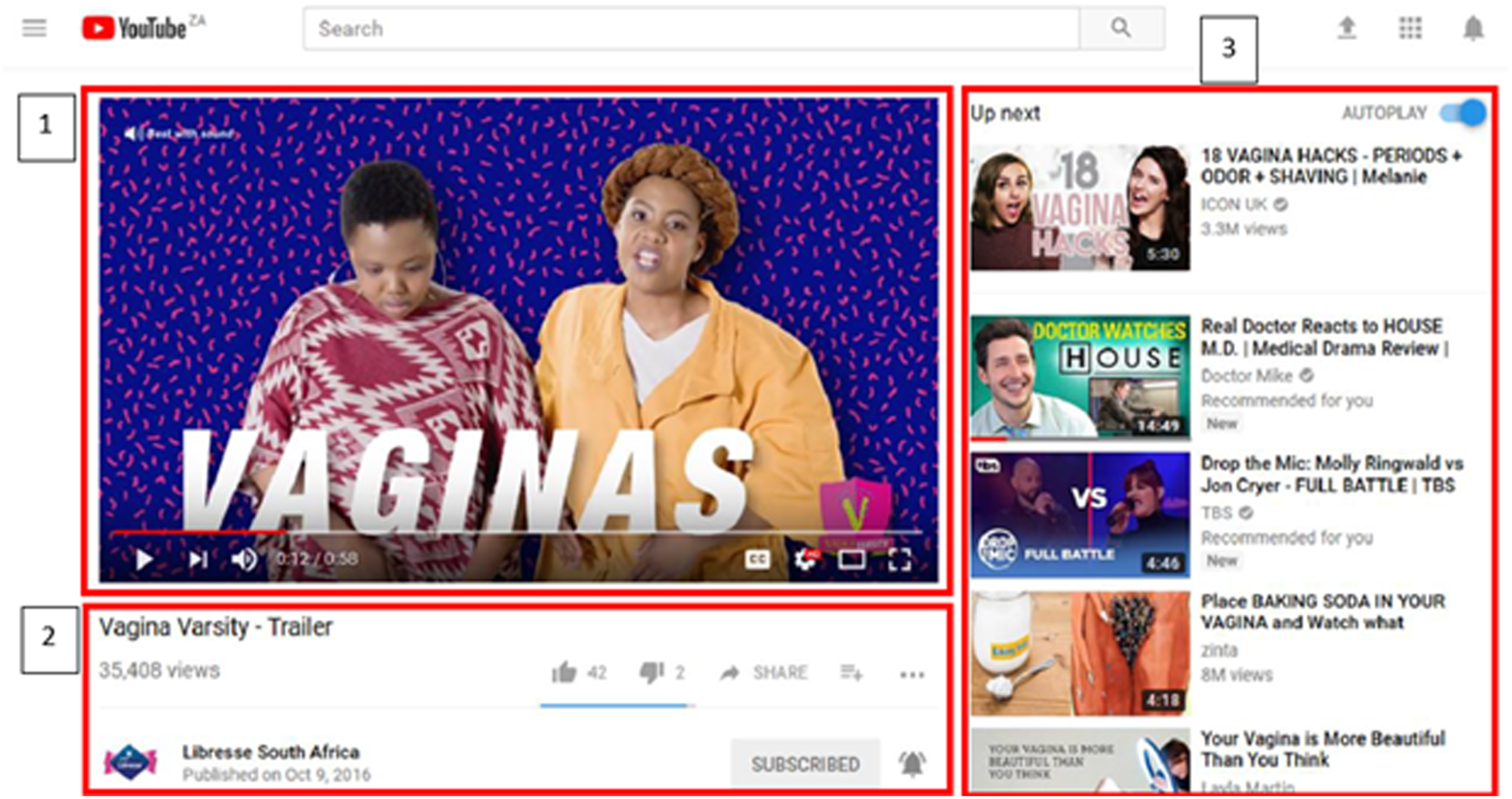
The video also features strategic humour which not only enhances the viewer’s experience of the campaign but also highlights the campaigns’ commercial intent. Humour is an effective advertising tool that strongly impacts consumer attitudes (Eisend, 2017). The 58-second trailer features two presenters, Nwabisa and Thembe. 2
In a low-pitched voice typically associated with movie trailers, Thembe begins: “In a world where the V word is a scary one …”. A confused-looking Nwabisa seemingly breaks character, her gaze moving from the camera to Thembe. She asks if the V word Thembe refers to is ‘Voldemort’, the villain in the Harry Potter series. Thembe responds, “Vaginas”. This intertextual reference to a popular cultural figure illustrates that this video is intended for a younger audience. Thembe continues by saying, “Where women are afraid of what’s down there”, in response to which Nwabisa confusedly asks, “Australia?” (as Australia is also called “down under” due to its location). Still in movie narrator character, Thembe repeats, “Vaginas”. At this, Nwabisa looks down, eyes widened (Figure 1), shocked by hearing the word “vagina”. At this point, the common horror movie sound effect, “dun dun duun!” plays, giving the subscriber insight into Nwabisa’s fear of this topic. She appears to be looking downwards at the word “
As mentioned before, Vagina Varsity contributed to female empowerment discourses, currently popular in advertising. This advertising strategy is known as femvertising (Drake, 2017). From a marketing perspective, femvertising positively impacts viewers’ opinions of the advertisement, brand, intention to purchase, and emotional connection to the brand (Drake, 2017). Nwabisa and Thembe alternately utter this line: “Two women fearlessly go where no man or woman has been before: Vagina Varsity”. This intertextual reference is to the introduction of Star Trek: “to boldly go where no man has gone before”. Nwabisa and Thembe provide a feminist take on this famous line by inserting the word “woman”. Additionally, they use “fearlessly” to describe their journey. This word choice complements the current feminist discourse in advertisements that women are brave and empowered (Drake, 2017). The female empowerment messaging used by Vagina Varsity is therefore a strategic move to sell their feminine hygiene products, not merely a sign of kindness from the company (see Roux and Peck, 2019, for a critique on the capitalist model employed by Libresse® to commodify women’s empowerment).
The video’s audio effects, like tone of voice and typical horror movie sounds, link with the campaign producers’ notice in the left-hand corner, “Best with sound”. This notice, which signals that sound plays a significant role in the video, and the entire course, also illustrates that the interplay of modes is important. For instance, the moment Thembe says, “Vaginas”, Nwabisa’s shocked facial expression is complemented by the horror movie sound effects. Together, these create the idea that she is terrified of the topic. Nwabisa’s reaction reflects the fear of many young women in society to speak about vagina-related issues.
Regarding other semiotic resources in Vagina Varsity, both Thembe and Nwabisa use animated facial expressions and gestures in enacting their roles as hosts and teachers, contributing to their distinct characteristics: Thembe is more confident and comfortable with the subject matter, while Nwabisa is seemingly more uncomfortable.
Notably, Figure 1 reveals that there is not only one pathway through the Vagina Varsity course (which forms a large part of this analysis) but other different pathways accessed by hyperlinks that lead outside the course to related subject matter. The ‘Up next’ panel to the right suggests other related videos, along with videos that YouTube suggests. Due to the nature of the Vagina Varsity video, and the video title containing the word “Vagina”, three of these suggested videos focus on vagina-related topics. Each pathway offers an option to be explored by the internet user. It is therefore the Vagina Varsity creators’ responsibility to guide their prospective students via the ‘right’ pathway. This will be discussed in the next step.
Step 2: Click on the link
The presenters explain that the Vagina Varsity course will start shortly and that the viewer needs to sign up for the course to access its contents. Toward the end of the video, Nwabisa says, “We got an expert to teach us, and we are gonna teach you”. As she says “you”, both presenters point to the camera, while maintaining eye contact and smiling (1) (Figure 2). This engages the viewer, encouraging them to click on the link at the bottom of the screen. The link appears in a white, rectangular ‘box’, instructing the user, “SIGN UP HERE”; and below this, in a smaller font, a message clarifies that the sign-up is “for 16 private email lessons” (2). This ‘box’ is a hyperlink that takes the user to the official Vagina Varsity website, “vaginavarsity.co.za”. At this point, the user is informed that the campaign will be sent privately, speaking to the affordance of the internet to enable a company to disseminate information to individuals via their private email. Link to the Vagina Varsity website.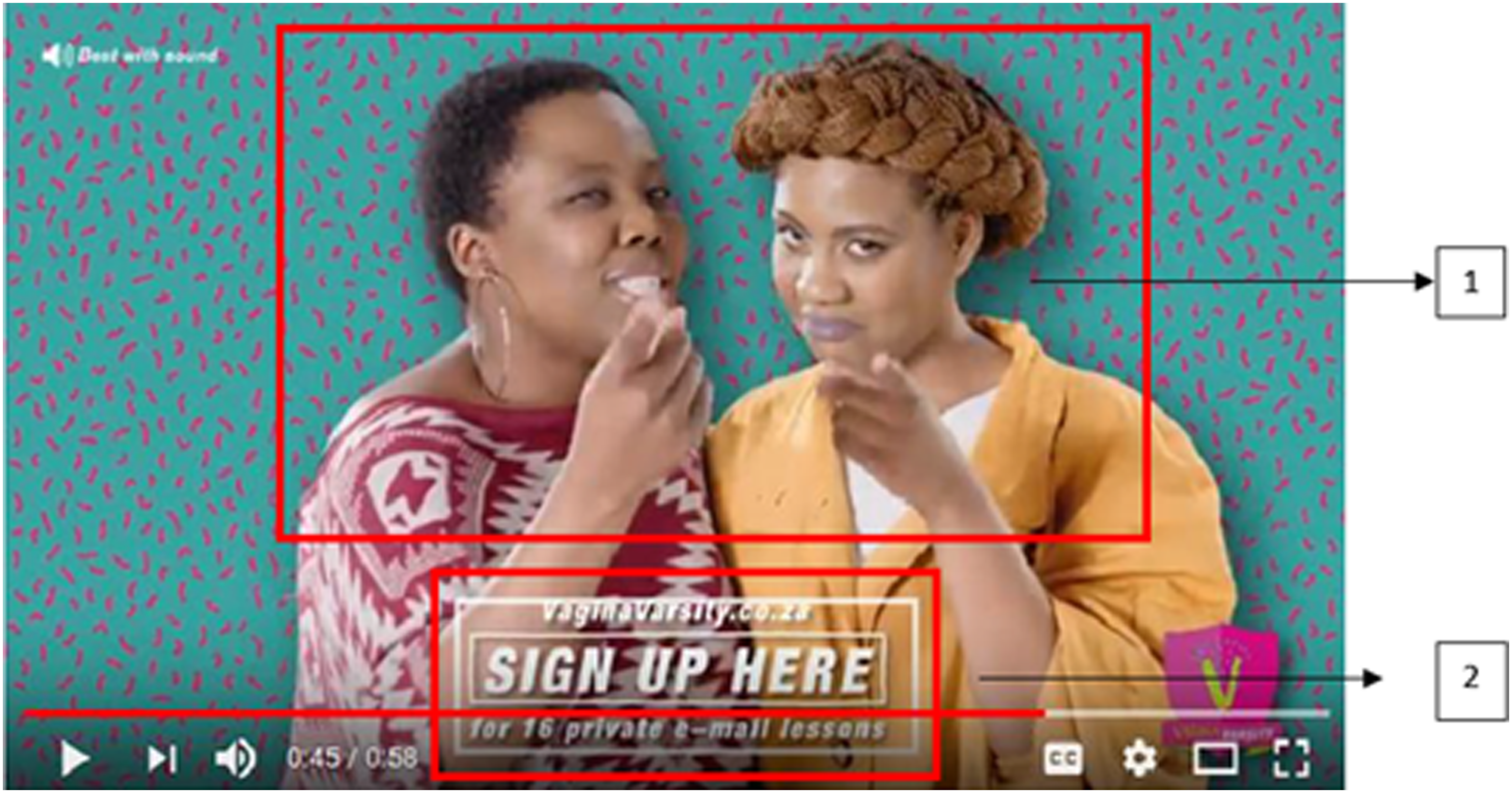
Step 3: Register for the course
The course access pathways were straightforward and clearly explained by the campaign producers, using the available semiotic resources. Signing up required minimal information from the prospective participant as the creators simply asked for the user’s name and email address.
Interestingly, when Vagina Varsity ended in October 2016, the domain name changed from https://www.vaginavarsity.co.za/ to https://www.unembarrassed.co.za/, signalling the start of another Libresse® campaign, also focusing on women’s empowerment (https://www.unembarrassed.co.za/). When this campaign ended, the website was taken down. This change reveals the ability of the virtual space to be ‘reborn’, creating new pathways, thus revealing that online trajectories are not fixed but subject to change. It also reveals that online trajectories can end.
Step 4: Check Inbox for lessons
Although Figure 1 is a screenshot of an email, it resembles the design of the Vagina Varsity course on YouTube, as seen in Figures 2 and 3. This is achieved by using the same, or similar, background shapes and colours like blue, purple and pink, the company colours. Additionally, the company logo appears in the email and the video material. However, regarding composition, the campaign logo and name are bigger and appear above the email image, while the logo is placed in the bottom right-hand corner of the YouTube videos, possibly to avoid hindering the visuals. However, this positioning also reveals the foregrounding of the entertainment-educational aspect (Singhal and Rogers, 2001, 2002) above the advertising aspect: the logo contains the company name, but the size and placement of the logo make the name less discernible. The placement and the size of elements depend on the platform; here, the design results in one cohesive campaign. The first Vagina Varsity email.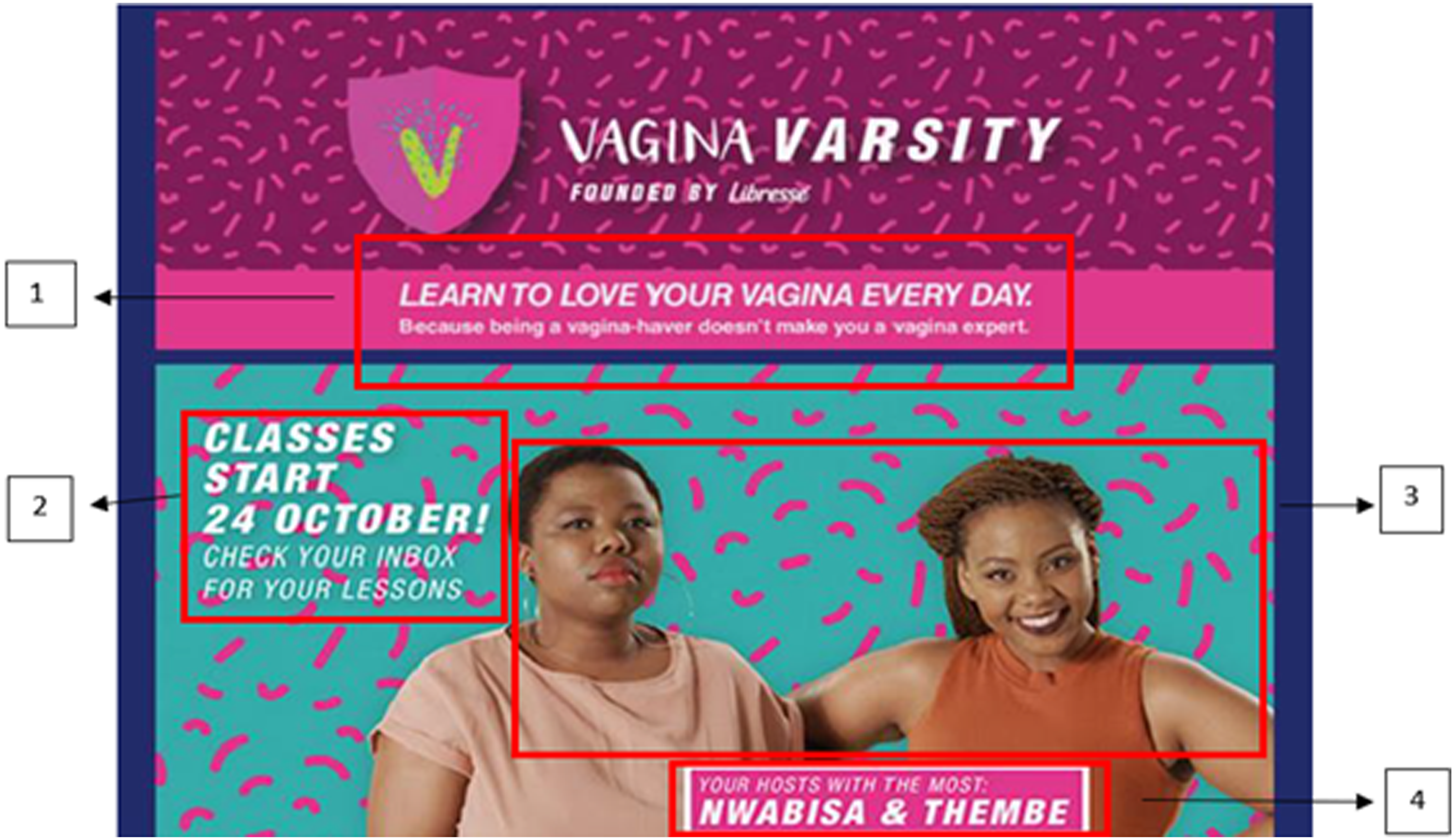
The statement, “Learn to love your vagina every day” (1) has a double meaning in this instance. More generally, “learn (ing)” to love your vagina means to become more comfortable with it. In a second sense, “learn (ing)” alludes to the entertainment-educational aspect of this campaign. The viewer, therefore, educates herself by participating in this campaign. By informing the subscriber that (2) “Classes start 24 October!”, the email creates a sense of anticipation regarding the course. This information significantly indicates that the user’s time will be structured; and the exclamation creates a sense of excitement. The wording “classes start” is also recognisable as educational discourse through which the entire campaign is packaged. In terms of multimodality (Kress, 2010), (3) the image of the presenters, being larger than the other visual modes, is the most salient semiotic resource and, therefore, draws the viewer’s attention to them. Both presenters are looking directly into the camera, creating a sense of engagement with the viewer. Nwabisa, on the left, has a serious facial expression, exuding confidence along with a ‘cool’ demeanour. Thembe, on the right, is smiling, showing friendliness. She also has her hands on her hips, a sign of her confidence (needed to teach and discuss the subject matter at hand). This email also introduces the presenters as (4) “your hosts with the most”, the rhyming of the phrase adding humour.
Step 5: Click on the YouTube play button
Once the “classes started”, subscribers received the first lesson by email. Each email contained the YouTube play button link (Figure 4). To rewatch the lesson, the subscriber needed to return to that specific email and click the play button. The mechanics and reasoning behind the restricted access to the course are explained in the next step. Lesson 1 email.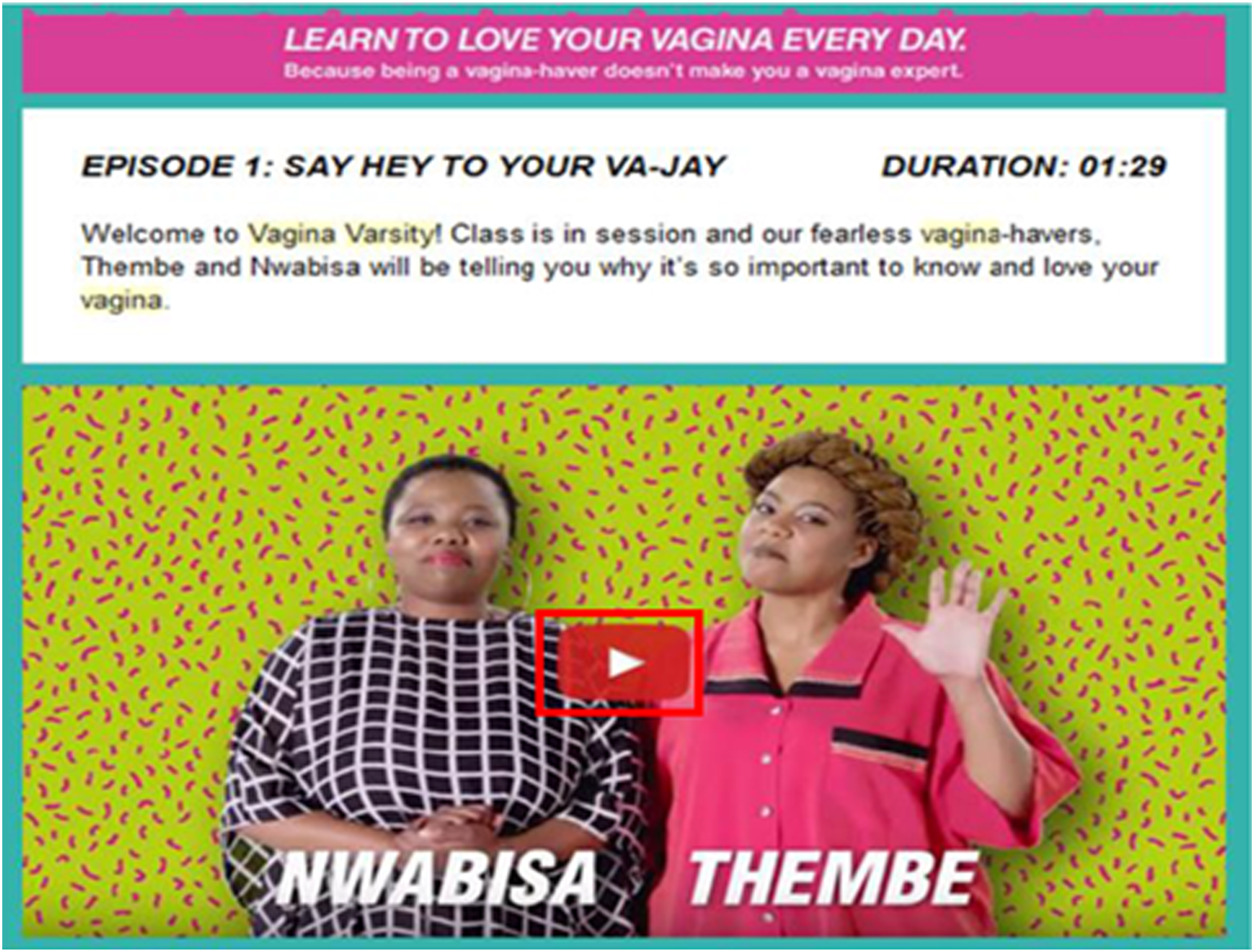
The restricted access enabled by the affordances of the internet creates a space to learn about sensitive topics. The pink banner contains this text: “Learn to love your vagina every day. Because being a vagina-haver doesn’t make you a vagina expert.” Here, learning and becoming a vagina expert is linked to women’s empowerment. This is echoed in the statement beneath where the semiotics of women’s empowerment is linked to women’s health education: “Welcome to Vagina Varsity! Class is in session and our fearless vagina-havers, Thembe and Nwabisa will be telling you why it is important to know and love your vagina.”
Step 6: Watch the lesson
The last step to watch the day’s lesson requires the viewer to click the YouTube play button. Interestingly, in Figure 5, the video is “Unlisted”, as illustrated in the grey box. This refers to one of three visibility options that YouTube creators must choose when posting videos: public, private, and unlisted. Importantly, by listing the campaign videos as “unlisted”, the pathway subscribers followed on YouTube led to a space with restricted access. Also, if unlisted, the video will not appear in search results or on the company’s YouTube channel. By using this approach, the creators of Vagina Varsity could control access to the videos. The decision to restrict the visibility of their videos illustrates that virtual pathways are not always incidental, but sometimes deliberately developed. Vagina Varsity Lesson 1.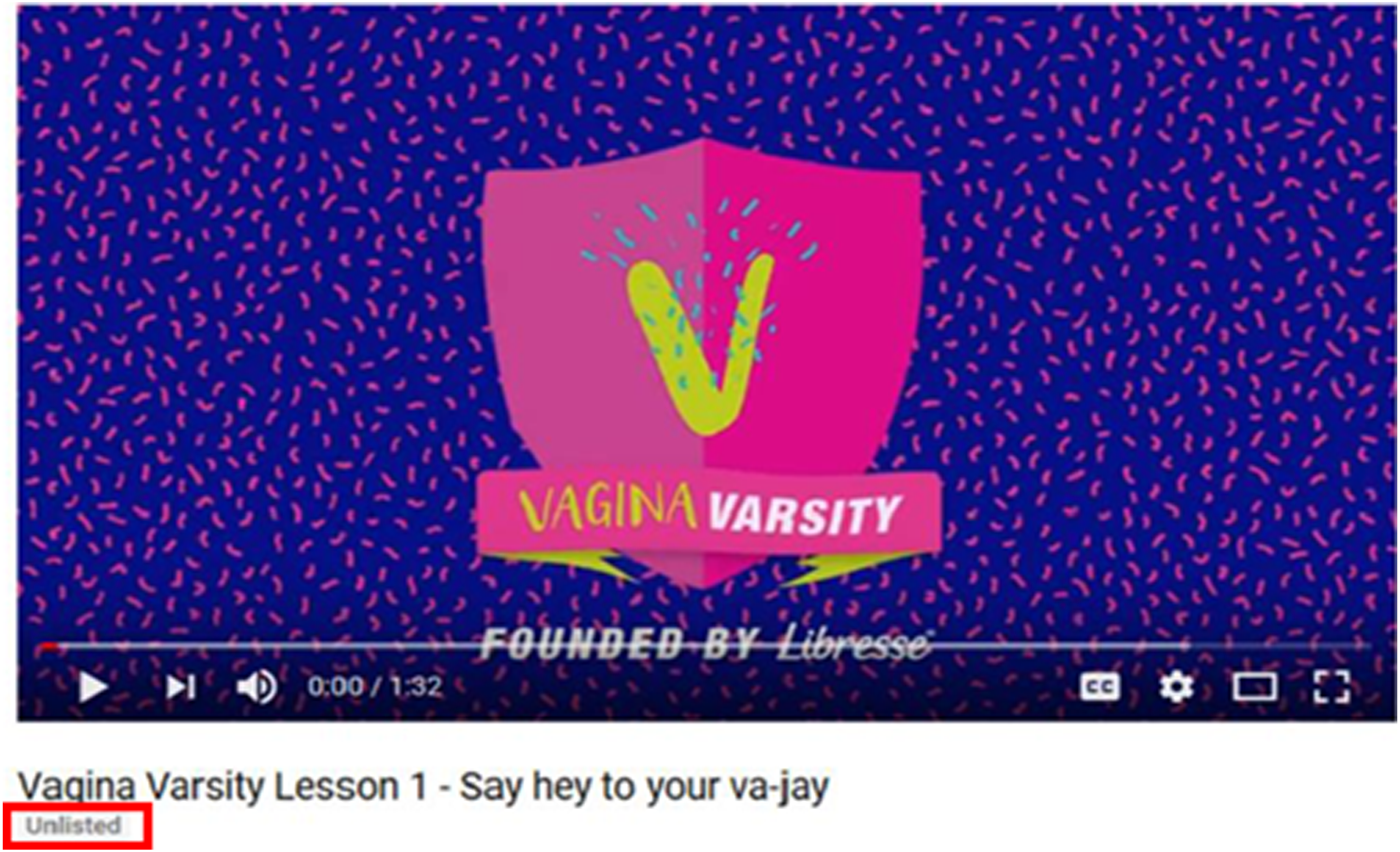
Another deliberately developed feature of Vagina Varsity was the specific sequence in which the course played out. The subscriber had to wait for lessons to be emailed to them in a particular order. This is much like school lessons where the learner has only one daily lesson for a subject (e.g., Biology), and must wait for a day or week for the next lesson. The strategic mapping of the times each lesson would be released illustrates that time is an important semiotic resource within the landscape (Lazar, 2022) and assists in simulating an actual teaching setting where learning is spaced out day-to-day.
Because the videos are unlisted on YouTube, the other lessons do not appear as recommended videos in the ‘Up next’ panel. This is another unconventional approach for an advertising campaign as they might have missed thousands of potential viewers who would have come across them through the recommended videos. However, by opting to have their video unlisted, Vagina Varsity ensured the privacy (and safety) of the space, thereby also ensuring that only interested parties were privy to the information. One can argue that this strategy might also have helped to build a virtual community. This is indicative of an affinity space (Gee, 2004, 2018). Gee (2004) introduced the notion of affinity spaces to account for the innumerable sites of informal learning in which people participate, including online physical or blended spaces where people of all levels of expertise can interact around “a shared affinity for a common goal, endeavour, or interest” (Gee, 2004: 89). The primary reason for the interaction is a common endeavour, such as “shared culture, gender, ethnicity, or face-to-face relationships” secondary (Gee, 2004: 89). Affinity spaces are social, collaborative and multimodal, geared towards gaining competence or knowledge in a specific area (Padgett and Scott Curwood, 2015). Affinity spaces are often spread across multiple sites like web pages, blogs, and face-to-face meetings (Lammers et al., 2012).
Today, there are affinity spaces devoted to many interests including solving women’s health problems and curing diseases (Gee, 2018). It is within affinity spaces that “people are fully engaged in helping each other to learn, act, and produce, regardless of their age, place of origin, formal credentials, or level of expertise” (Gee, 2018: 9). This supportive space would also have created a positive view of the brand, Libresse®, leading to an increase in sales. (It is important to reiterate that this affinity space, which included the videos and their comment sections, no longer exists, as the campaign ran for a brief period only).
The safe space of the YouTube comments section
The trajectories that the subscribers needed to traverse led to a space where they could be mutually candid, as the comment section was less public than on a public YouTube video. This marketing strategy is referred to as ‘safe space marketing’. The notion of a ‘safe space’ has become increasingly popular over the years and refers to a place, either physical or virtual, that is “intended to be free of bias, conflict, criticism, or potentially threatening actions, ideas, or conversations” (Merriam-Webster, 2024). By limiting course access, the Vagina Varsity creators designed a virtual safe space within the advertising campaign, illustrating a wish to protect their subscribers’ privacy, not only sell feminine hygiene products. Given that the subscribers knew that Vagina Varsity was taking place within a semi-private space, with a limited group of individuals seeing the videos and comments sections, it was feasible that subscribers might have been more amenable to sharing confidential information about themselves in the comment sections. As the subscribers were led to feel safe within the space, this virtual pathway enabled an affective response (Singhal and Rogers, 2002; Wee, 2016), emphasising the entertainment rather than the educational aspect of this entertainment-education campaign. In entertainment education, emotions are important as these may trigger a viewer to take preventive health measures (Singhal and Rogers, 2002).
Due to the pathways leading to the Vagina Varsity course, the comments sections of the videos are considered more private, thereby enabling discussions on sensitive matters. One of the affordances of the internet is that Web designers can enable the online reader to become a sign producer (Hiippala et al., 2024). This is realised by sharing knowledge and experiences (Shafirova et al., 2020). For example, in YouTube comment sections, commenters present innovative ideas, add to existing discussions, or suggest future videos. In this sense, they become co-producers, not just co-consumers of the information. The first two conversations presented in this analysis (Figures 6 and 7) took place in the comments section of Lesson 9, ‘Going to the gynae’; and the last conversation took place in the comments section of Lesson 4, ‘That time of the month’ (see Figure 8). Subscriber comment on going to the gynaecologist 1. Subscriber comment on going to the gynaecologist 2. Subscriber’s request for a tampon tutorial.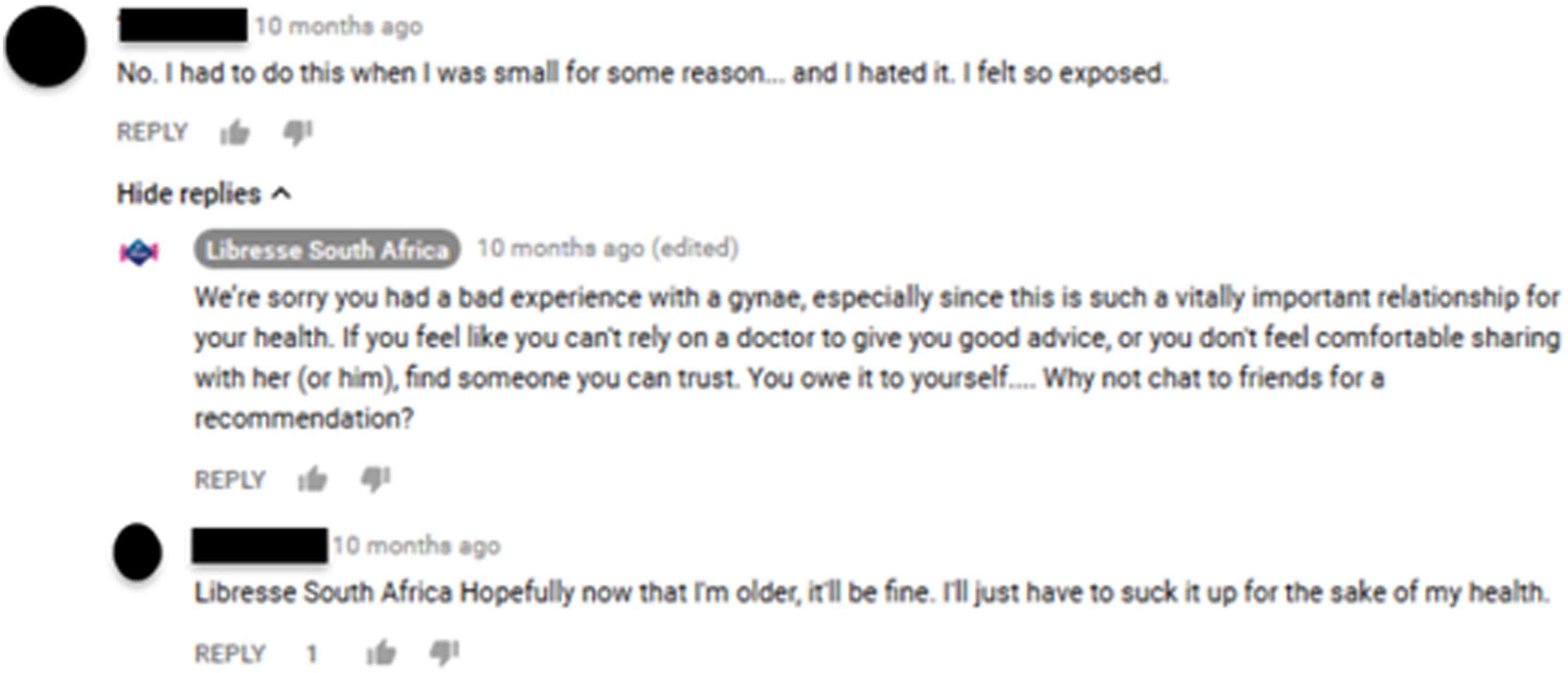
The subscribers used the comments sections to share vulnerable experiences. This is common within affinity spaces (Gee, 2004, 2018). In the comments section of Lesson 9, ‘Going to the gynae’, a commenter expressed her personal feelings: “No. I had to do this when I was small for some reason … and I hated it. I felt so exposed.” By using emotive words such as “hated” and “exposed”, she expresses how she felt about going to a gynaecologist. Interestingly, she starts her comment by pointedly saying, “No”, as if directly responding to the presenters who are advising the subscribers to go to a gynaecologist. Libresse® South Africa then sympathises with her, but still suggests that she goes to a gynaecologist, as this is “such a vitally important relationship for [her] health” – and suggests ways of making the process easier. The private space created by VV allows for this type of subscriber vulnerability. Within this safe space, they can share firsthand experiences with the company and other subscribers.
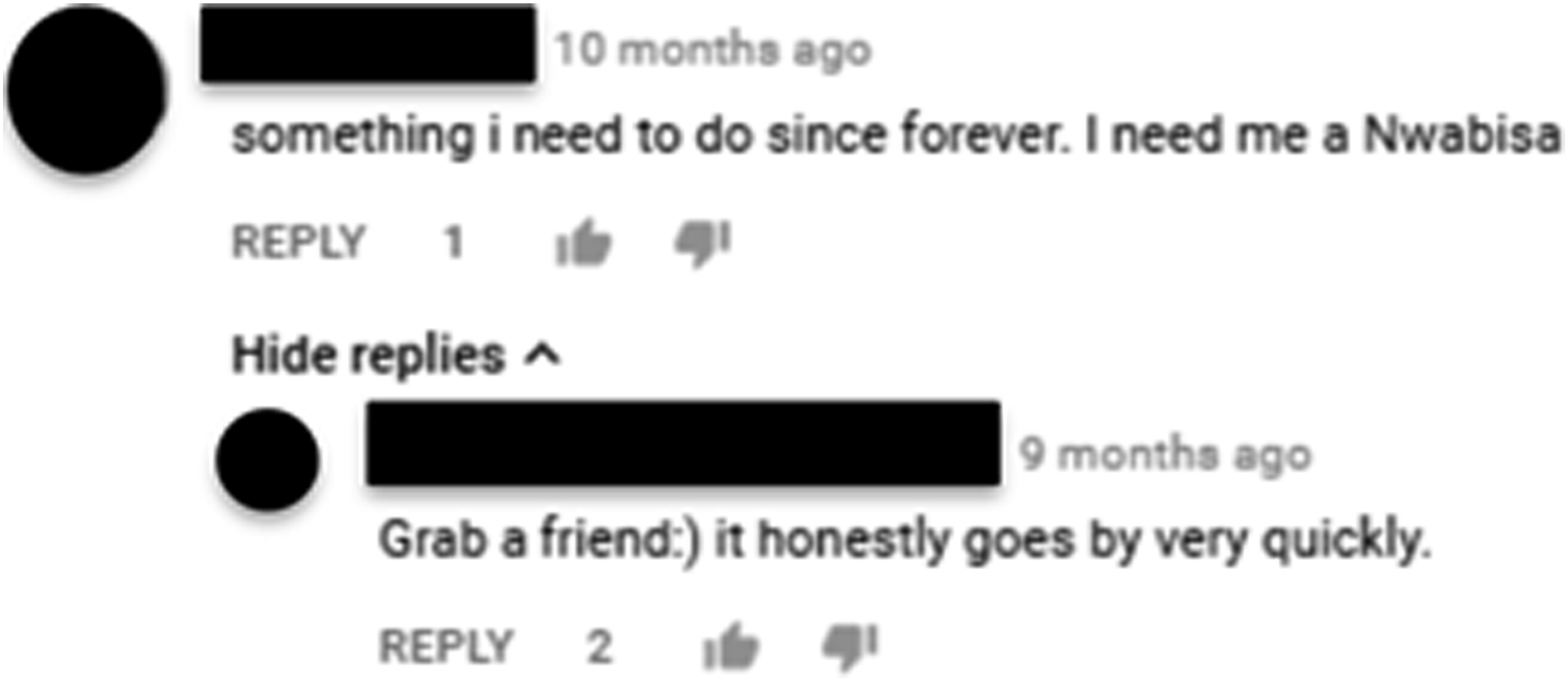
In the Lesson 9 video, Nwabisa plans to go with Thembe to the gynaecologist to provide moral support. In response, a subscriber reveals honestly that going to the gynaecologist is “something I need to do since forever” (Figure 8). Expressing a feeling of vulnerability, she adds: “I need me a Nwabisa”, likely for moral support during the procedure. Another subscriber provides advice, adding a smiley face “:)” to mimic a smile as a way of showing kindness and reassurance to the other subscriber. Having conversations with people you do not know personally is an affordance of the safe online space. This also illustrates that affinity spaces allow for showing support and giving advice. Additionally, the online space allows internet users to connect with people within this community of Vagina Varsity subscribers. Despite not knowing each other personally, they can seek and/or share, information and advice (Gee, 2018).
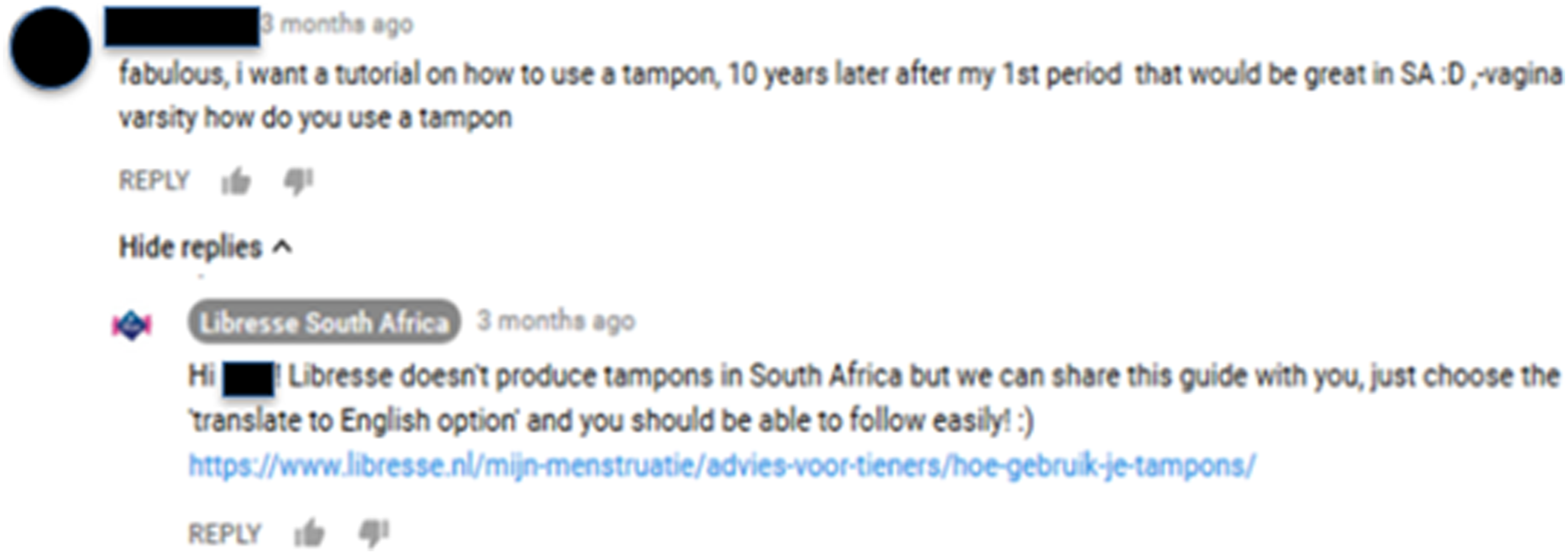
The comments sections were also used by the subscribers to interact with the Vagina Varsity campaign producers, and vice versa. This is illustrated in Figure 8 when a subscriber requests particular content from the campaign’s creators.
Seeing that Lesson 4 included a demonstration of how to use a sanitary towel, the subscriber suggested a topic for a future video by asking that Vagina Varsity post a tutorial video on how to use a tampon. The subscriber can contribute by providing a title for the suggested tutorial video and acknowledging that such a tutorial “would be great in SA,” adding that, at that time, nothing like it existed in South Africa. Her use of the word “tutorial” (when suggesting Libresse® make an instructional video) reinforces the educational genre within the campaign. In response, Libresse® South Africa includes a hyperlink to a Libresse® website from a different country where the subscriber can find a guide. This link creates a different but related pathway that the user can follow. As seen here, affinity spaces often work across platforms, in this case, a YouTube comments section and a company website. The information on both sites relates to women’s intimate care products, specifically those produced by Libresse®. Here, Libresse® is commodifying information, seeing that the campaign producers direct the subscriber to their brand and not to outward sources. When it comes to the commercial dimension of a commodity, “[i]nformation becomes a private good, produced and sold according to profit criteria” (Noam, 2002: 49).
The YouTube comments section allows for multimodal communication, adding meaning to a message. For instance, in Libresse’s® response to the commenter, they add a smiley face “:)”, like the commenter in Figure 7, which could be seen as a sign of kindness and support. However, mimicking the commenter’s writing style using an emoticon could be considered a commercial strategy. Through these semiotic choices, Libresse® positioned itself as a peer, instead of a company, blurring the line between commercial interest and emotional investment.
Discussion and conclusion
This article contributes to virtual semiotic landscape studies in a South African context, as well as discussions on the social semiotics of health communication in an advertising campaign, specifically the advertising of intimate care products for women. By investigating Libresse’s® Vagina Varsity advertising campaign from a social semiotic approach to multimodality, the author was able to identify the careful selection and strategic interplay of modes that make up this entertaining and educational campaign. In Vagina Varsity, the producers created a safe online space intended for young female consumers. The content, accompanied by funky background music and colourful visuals, was relatable and attractive to a younger audience.
As the social semiotic approach (Jewitt and Henriksen, 2016) stipulates, the campaign producers carefully chose the semiotic resources from the resources available to them at that moment, given the constraints and affordances of YouTube.
The analysis of the virtual semiotic landscape of Vagina Varsity highlighted the strategic use of language and the interplay between other modes which together make meaning. The campaign used bright shades of pink and blue to create a funky aesthetic to attract their target audience and to match Libresse’s® packaging. Other modes included written text in the email and video content, and images and sound effects to enhance the humour, upbeat background music to create a cheerful atmosphere, and the modes produced by Nwabisa and Thembe, including spoken language, gesture and gaze. The selection of semiotic resources was shaped by the affordances of the internet such as the multimodal nature of social media (Shirahata et al., 2023) and the affordances of each mode (Jewitt and Henriksen, 2016). The modes were strategically chosen and used to create an entertainment-educational campaign for young females.
This article has established that, by careful selection of semiotic resources (e.g., a university logo and educational discourse), the campaign creators simulated a teaching genre (by naming the campaign Vagina Varsity, and presenters assuming the roles as teachers (“We got an expert to teach us, and we are gonna teach you”), while also using popular cultural references (e.g., Harry Potter and Star Trek) to appeal to young individuals. Additionally, the campaign creators utilised humour in their entertainment-educational strategy (De Ridder, 2022; Singhal and Rogers, 2001, 2002) through written text (e.g., “your hosts with the most”), amusing lines and using the presenters to deliver these lines in a comedic manner through their facial expressions and strategic pauses.
Furthermore, YouTube was harnessed to create a women’s empowerment advertising campaign, seen not only in the subject matter taught, but also in the community created where a group of subscribers focused on a specific goal, and where conversations were geared towards learning together about the female anatomy. The shared goal lends to an affinity space where young women can ask questions and share their experiences and, in this way, become empowered through knowledge within a community of like-minded individuals.
The campaign producers found innovative ways to create a private space on YouTube, which is typically an open public space. The hypertextual and multimodal nature of the internet allows for these pathways and enables the creator to map the course resourcefully (Kelly-Holmes, 2015). Through strategic virtual pathways enabled by the affordances of the internet (and illustrated in this article through a series of steps), a space of safety was created for subscribers to enter and navigate the course in specific ways. Many steps needed to be followed to gain access to the video material (Vagina Varsity, Libresse®, 2016). By following these steps, the author’s trajectory was structured in a specific way, which is unconventional within the YouTube space where most videos are publicly accessible. Interestingly, it was found that, besides the set pathway to access Vagina Varsity, there were pathways that led outwards to other videos with the same subject matter, and pathways generated by the internet user’s video history.
The author presumes that most subscribers were young women of school and university age, as this was the target market. The Vagina Varsity course reinforced a pedagogical orientation by structuring the time of the lessons for subscribers on weekdays and weekends. The course unfolded temporally, like a traditional teaching course, which was useful in simulating this familiar setting. The pedagogical orientation addressed the need for women to be educated about the female reproductive system.
The author found that the semiotics of the advertising campaign was influenced by women’s empowerment (e.g., the presenters being introduced as “fearless vagina-havers” in the email content) and shaped by the affordances of the virtual semiotic landscape of the internet which allow for the interplay between different semiotics, such as Vagina Varsity videos, images such as the drawing of the company logo, sound effects for a horror movie (“dun dun duun”), the bright pink colour, and so forth.
The research limitation of this study is that it analyses only one advertising campaign. Further research should be conducted on other virtual semiotic landscapes (i.e., not only advertising but also other forms of online communication) within the South African context. This will shed light on the multimodal communicative practices of individuals and/or companies online, how these practices are shaped by the affordances and constraints of the internet, and how they are shaped by the dominant narratives within society as well as the larger sociocultural context.
Footnotes
Declaration of conflicting interests
The author(s) declared no potential conflicts of interest with respect to the research, authorship, and/or publication of this article.
Funding
The author(s) disclosed receipt of the following financial support for the research, authorship, and/or publication of this article: This work is based on research supported by the National Institute for the Humanities and Social Sciences.