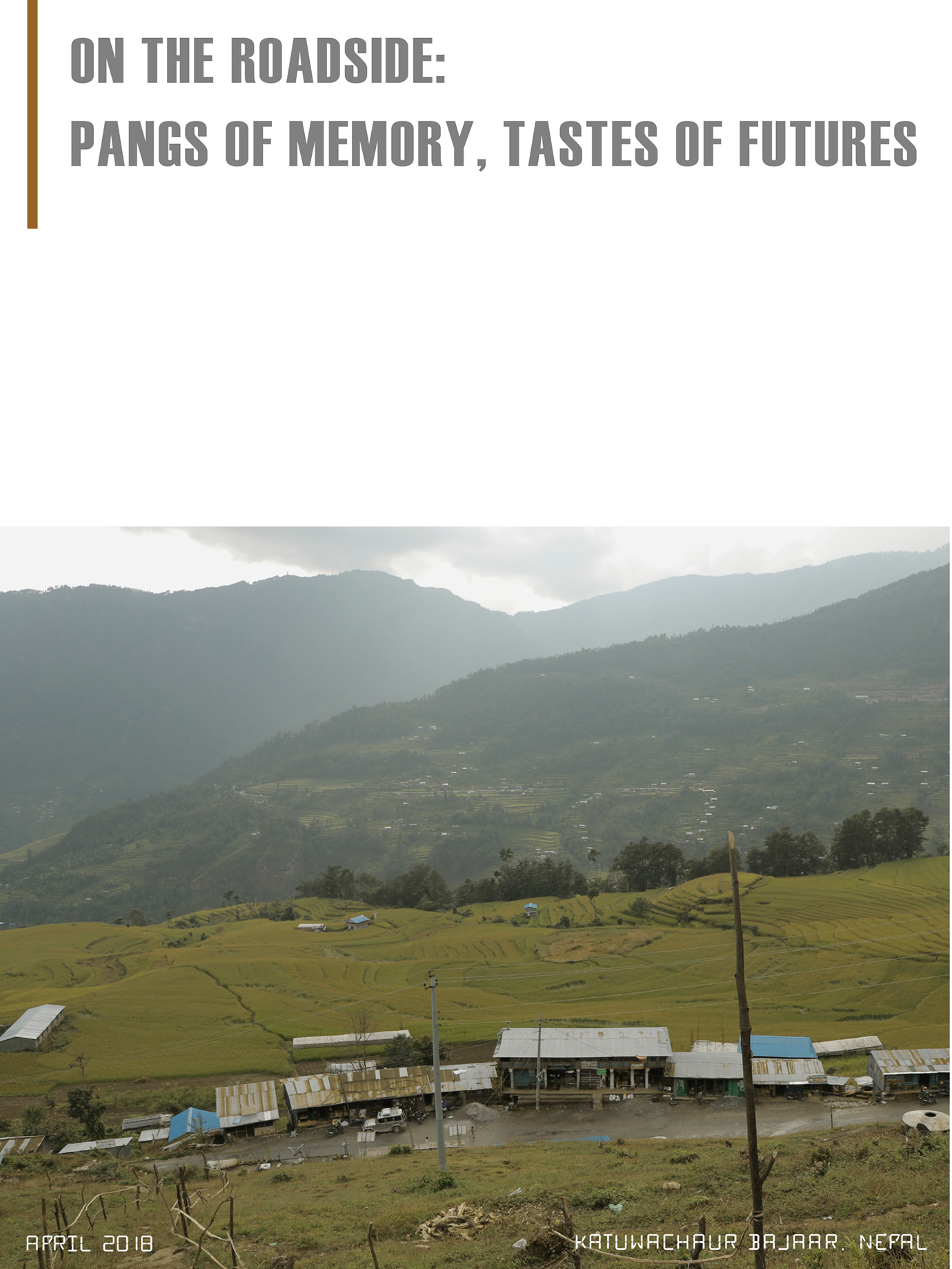
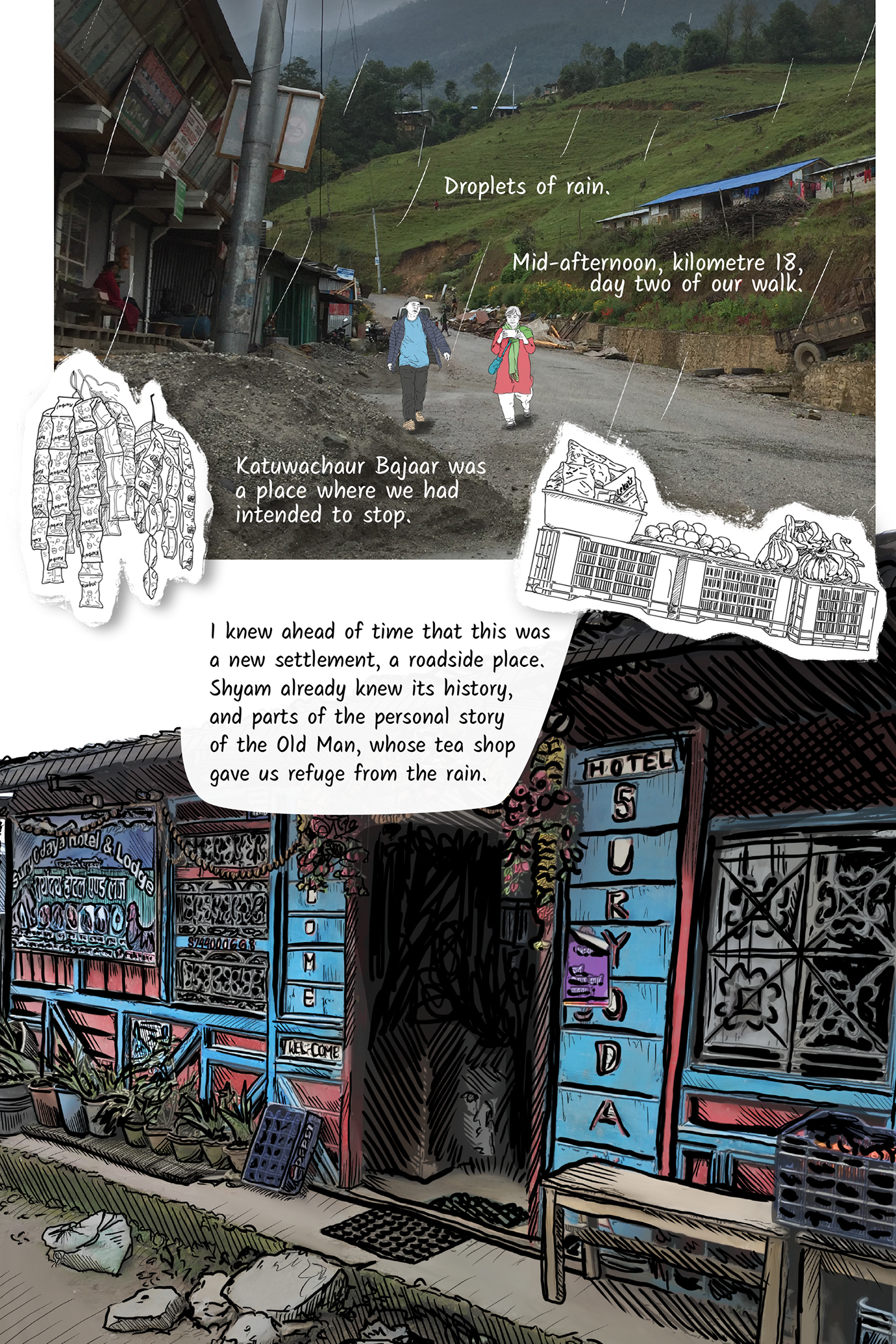
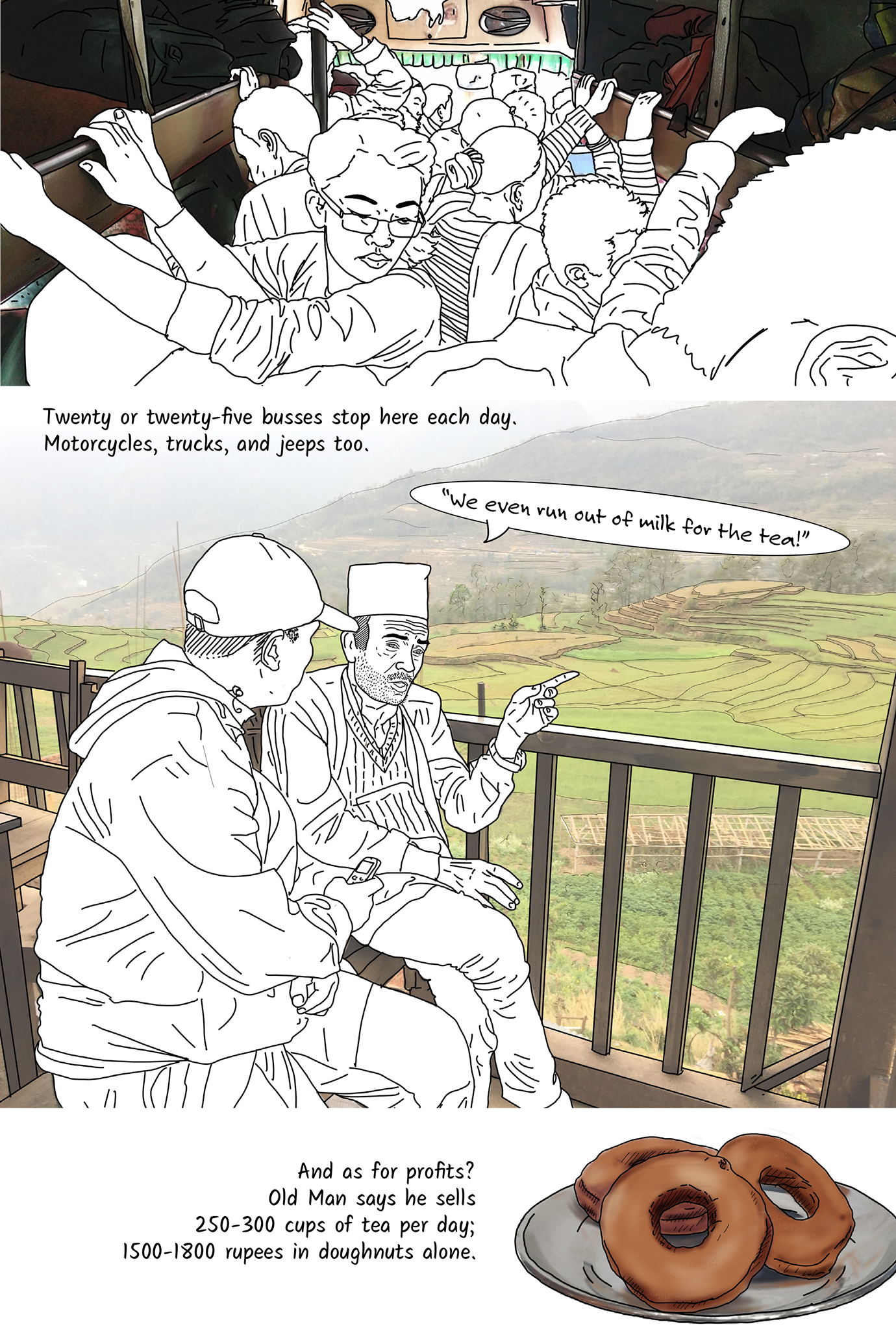
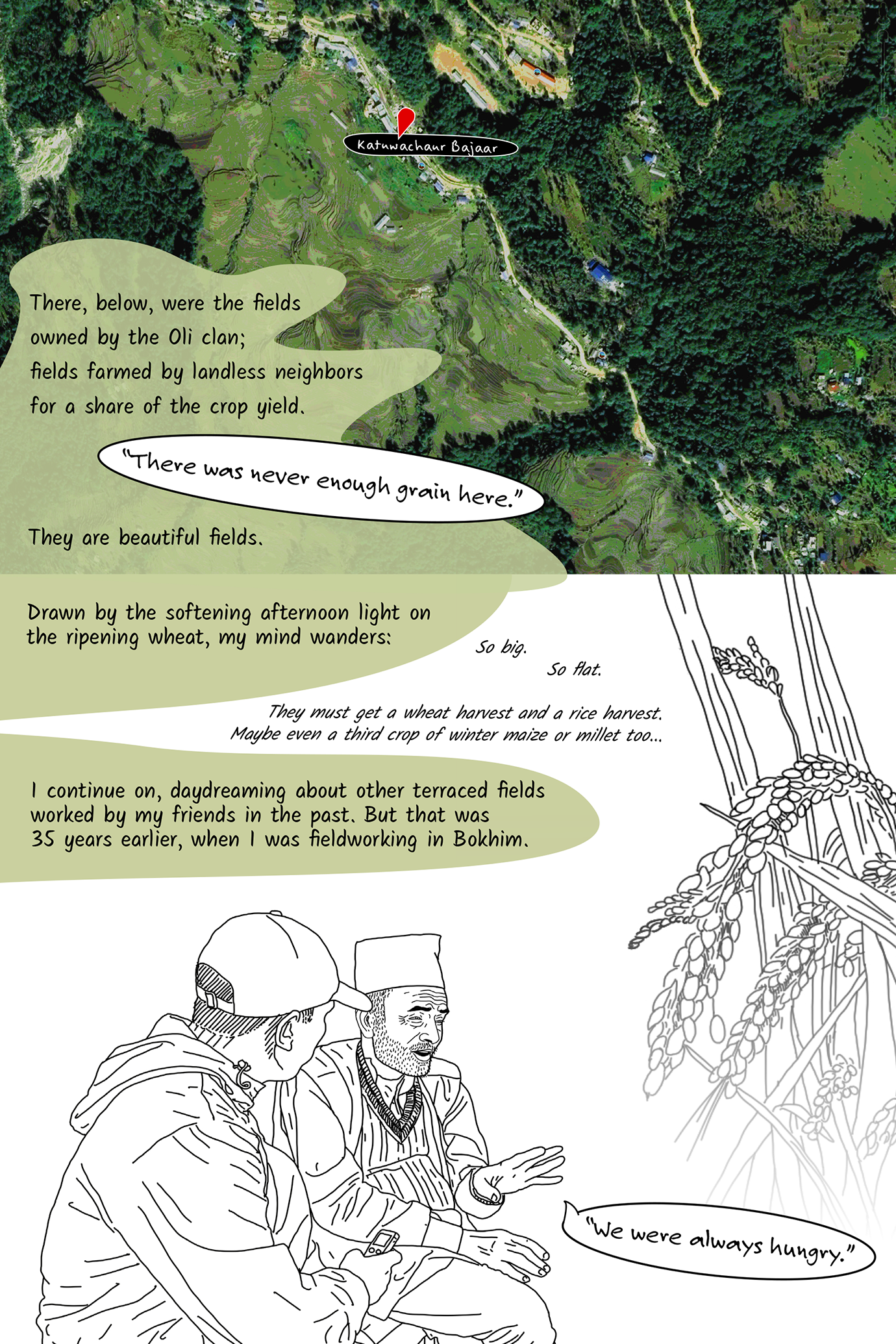
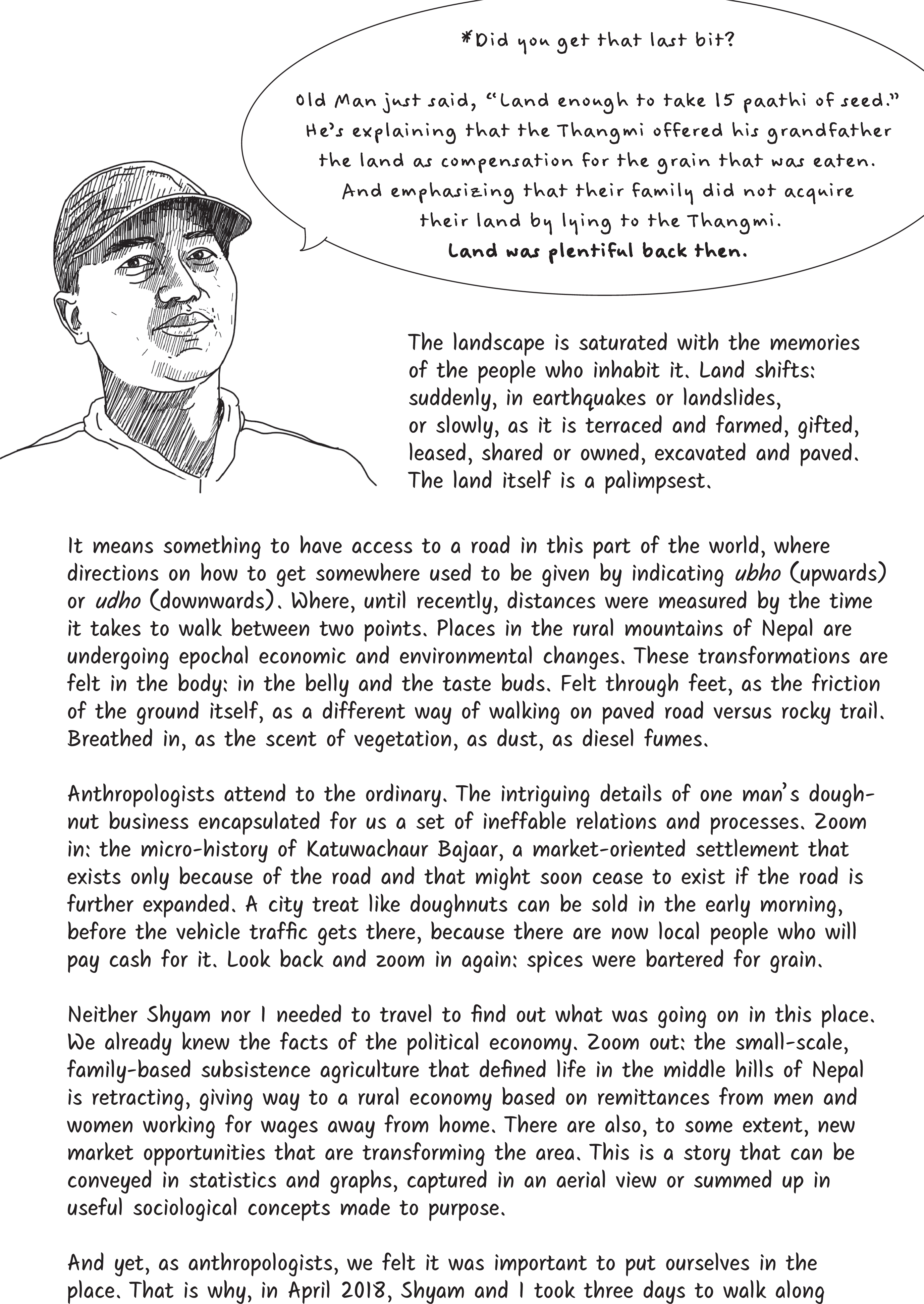
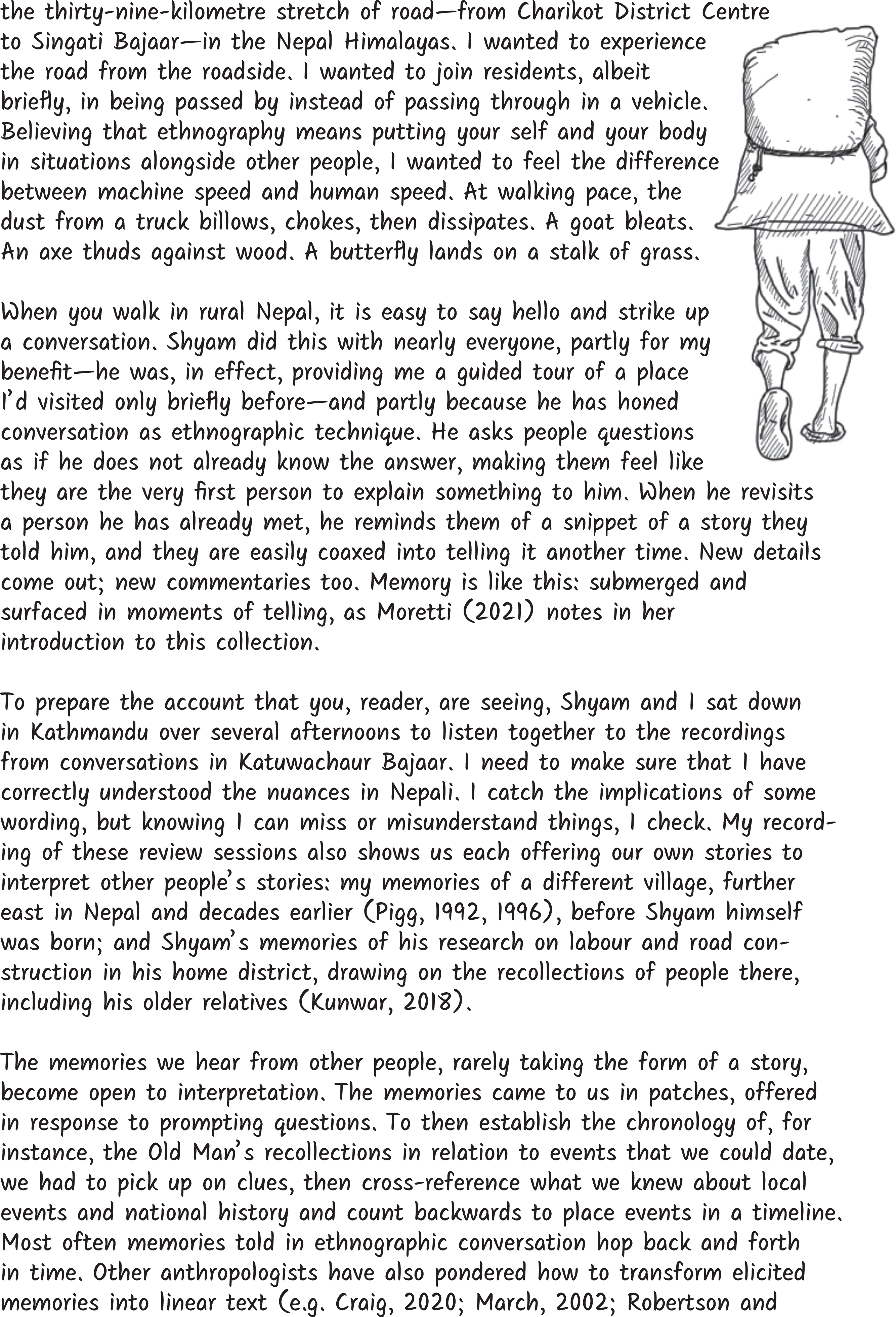
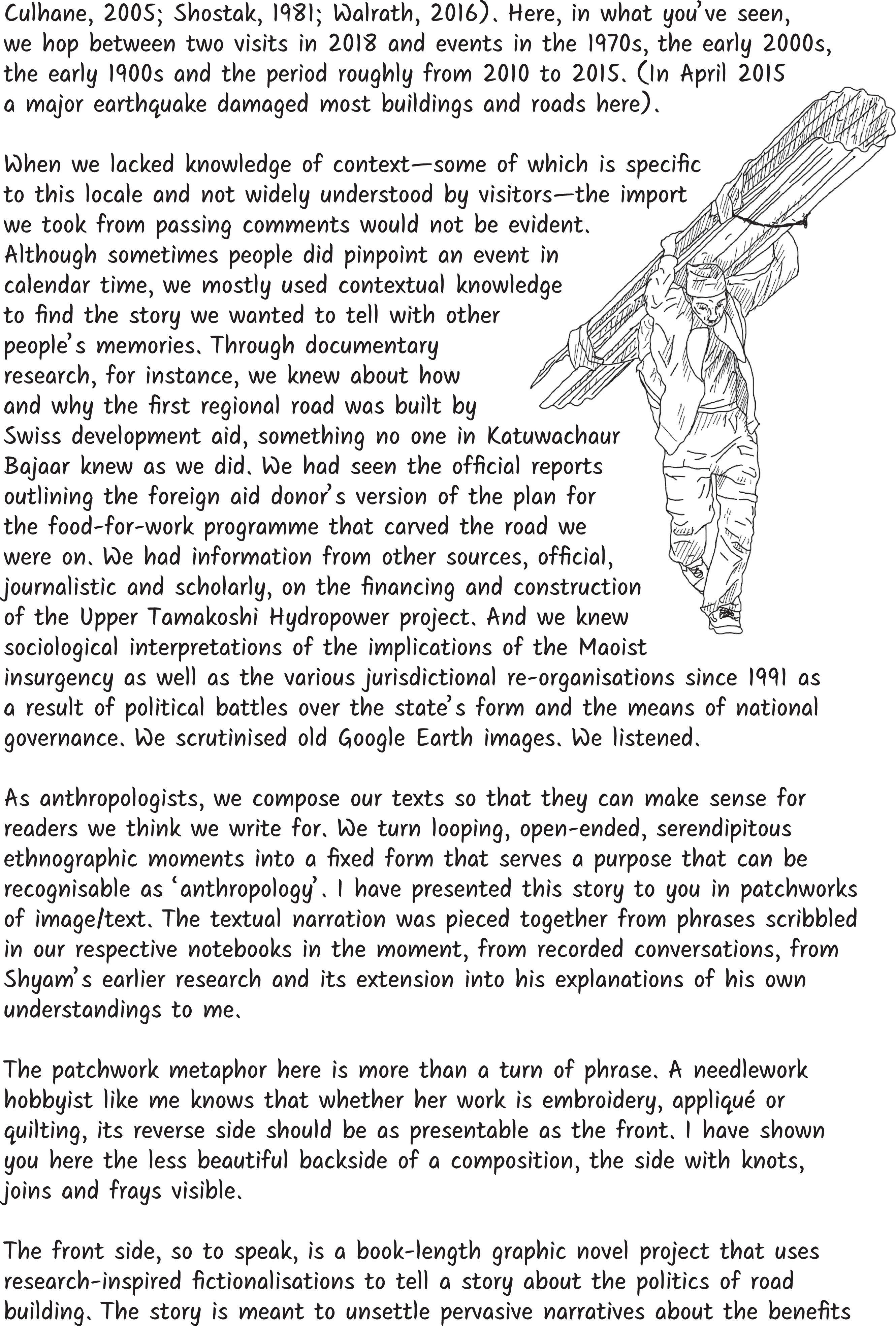
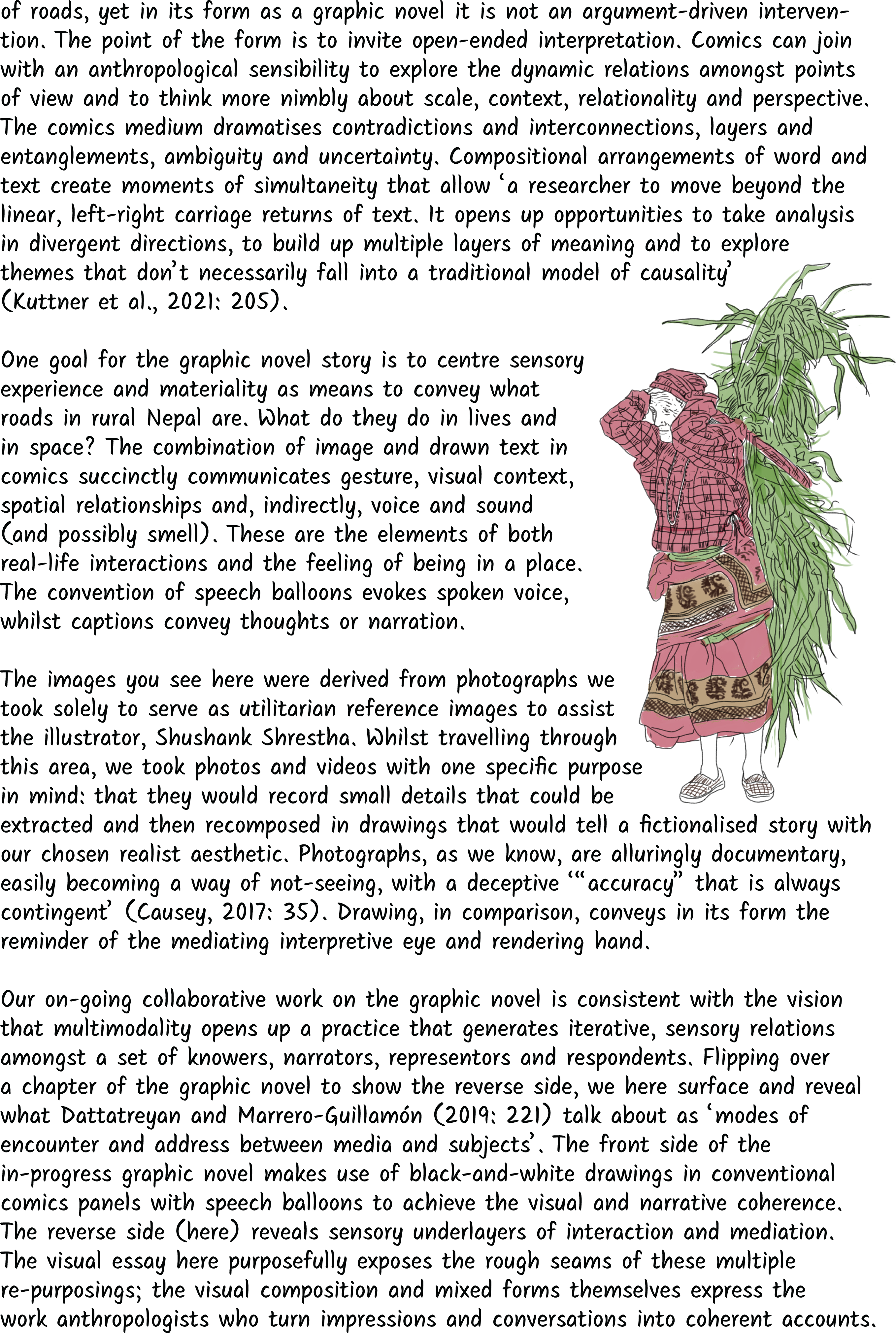
Co-author Shyam Kunwar agreed to be turned into a character in Stacy’s first-person telling. Creative direction from Stacy Leigh Pigg, with assistance from Jana Ghimire. Illustrations and photos are by Shushank Shrestha, with page and image design work from Jana Ghimire, Shushank Shrestha, and Shreya Shrestha. The graphic novel is being created in collaboration with the ‘Infrastructures of Democracy’ research project (co-PIs, Dr Katharine Rankin and Dr Sara Shneiderman), funded by the Social Sciences and Humanities Research Council of Canada. The entire research team, but most especially Tulasi Sigdel and Shanta Thapa, generously helped shape the vision of the graphic novel.
Declaration of conflicting interests
The author(s) declared no potential conflicts of interest with respect to the research, authorship, and/or publication of this article.
Funding
The author(s) disclosed receipt of the following financial support for the research, authorship, and/or publication of this article: The travel and work behind the graphic novel project have been funded in part by the David Lam Centre for International Communication at Simon Fraser University, the Hari Sharma Foundation for South Asian Advancement and the Social Sciences and Humanities Research Council of Canada.
References
1.
CauseyA (2017) Drawn to See: Drawing as an Ethnographic Method. Toronto: University of Toronto Press.
2.
CraigSR (2020) The Ends of Kinship: Connecting Himalayan Lives Between Nepal and New York. Seattle: University of Washington Press.
3.
DattatreyanEGMarrero-GuillamónI (2019) Introduction: multimodal anthropology and the politics of invention. American Anthropologist121(1): 220–228.
4.
KunwarS (2018) The politics of road: an ethnography of Bhalubang-Pyuthan Road of western Nepal. In: UpretyLPPokharelBRaiJ, et al. (eds) Contemporary Nepali Social and Cultural Anthropology: Reader. Kirtipur, Nepal: Central Department of Anthropology, Tribhuwan University, pp. 355–381.
5.
KuttnerPJWeaver-HightowerMBSousanisN (2021) Comics-based research: the affordances of comics for research across disciplines. Qualitative Research21(2): 195–214.
6.
MarchKS (2002) ‘If Each Comes Halfway’: Meeting Tamang Women in Nepal. Ithaca, NY: Cornell University Press.
7.
MorettiC (2021) Sensate memory: an introduction to the special issue. Multimodality and Society. Epub ahead of print 7 July 2021. DOI: 10.1177/26349795211028039.
8.
PiggSL (1992) Inventing social categories through place: social representations and development in Nepal. Comparative Studies in Society and History34(3): 491–513.
9.
PiggSL (1996) The credible and the credulous: the question of ‘villagers’ beliefs’ in Nepal. Cultural Anthropology11(2): 160–201.
10.
RobertsonLACulhaneD (eds) (2005) In Plain Sight: Reflections on Life in Downtown Eastside Vancouver. Vancouver: Talonbooks Limited.
11.
ShostakM (1981) Nisa. Cambridge, MA: Harvard University Press
12.
WalrathD (2016) Aliceheimer’s: Alzheimer’s Through the Looking Glass. University Park, PA: Penn State University Press. For readers who wish to know more about the rural roads, labour and migration, and political economy of Nepal’s infrastructure development:
13.
AdhikariJHobleyM (2015) ‘Everyone is leaving. Who will sow our fields?’ The livelihood effects on women of male migration from Khotang and Udaypur districts, Nepal, to the gulf countries and Malaysia. Himalaya: The Journal of the Association for Nepal and Himalayan Studies35(1): 11–23.
14.
GartaulaHPatelKJohnsonD, et al. (2017) From food security to food wellbeing: Examining food security through the lens of food wellbeing in Nepal’s rapidly changing agrarian landscape. Agriculture and Human Values34(3): 573–589.
15.
GhimireDJAxinnWGBhandariP (2021) Social change, out-migration, and exit from farming in Nepal. Population and Environment42(3): 302–324.
16.
HarmsEHussainSNewellS, et al. (2014) Remote and edgy: New takes on old anthropological themes. Hau: Journal of Ethnographic Theory4(1): 361–381.
17.
KunwarSLewisonERankinKN (2021) Labour and the humanitarian present: thinking through the 2015 Nepal earthquakes. In: HuttMLiechtyMLotterS (eds) Epicentre to Aftermath: Rebuilding and Remembering in the Wake of Nepal’s Earthquakes. Cambridge: Cambridge University Press, pp. 87–109.
18.
LordA (2014) Making a ‘hydropower nation’: subjectivity, mobility, and work in the Nepalese hydroscape. Himalaya: The Journal of the Association for Nepal and Himalayan Studies34(2): 13.
19.
LordADrewGGerganMD (2020) Timescapes of Himalayan hydropower: promises, project life cycles, and precarities. Wiley Interdisciplinary Reviews: Water7(6): e1469.
20.
MurtonG (2020) Roads to China and infrastructural relations in Nepal. Environment and Planning C: Politics and Space38(5): 840–847.
21.
PaudelD (2016) The double life of development: empowerment, USAID and the Maoist uprising in Nepal. Development and Change47(5): 1025–1050.
22.
PaudelDRankinKLe BillonP (2020) Lucrative disaster: financialization, accumulation and Post Earthquake reconstruction in Nepal. Economic Geography96(2): 137–160.
23.
RankinKNNightingaleAJHamalP, et al. (2018) Roads of change: political transition and state formation in Nepal’s agrarian districts. The Journal of Peasant Studies45(2): 280–299.
24.
RankinKSigdelTRaiL, et al. (2017) Political economies and political rationalities of road building in Nepal. Studies in Nepali History and Society22(1): 43–84.
25.
SharmaJR (2008) Practices of male labor migration from the hills of Nepal to India in development discourses: which pathology?Gender, Technology and Development12(3): 303–323.
26.
SharmaJR (2013) Marginal but modern: young Nepali labour migrants in India. Young21(4): 347–362.
27.
ShneidermanS.TurinM (2004) The path to Jan Sarkar in Dolakha district: towards an ethnography of the Maoist movement. In: HuttM (ed.) Himalayan ‘People’s War’: Nepal’s Maoist Rebellion. Indianapolis, IN: Indiana University Press, pp. 79–111.
28.
SugdenF (2013) Pre-capitalist reproduction on the Nepal Tarai: semi-feudal agriculture in an era of globalisation. Journal of Contemporary Asia43(3): 519–545.