



Abstract
Using images, video, and text, I weave together two walks and several conversations on the senses, migration, and memory. I focus on echoes or resonances as a method to attend to the relation between remembering, sensory emplacement and urban materialities. Using comments from my interlocutors who migrated to Metro Vancouver from outside Canada, as well as autobiographical reflections on sensate memories in urban landscapes, I investigate how forgetting and memory are co-implicated, and I propose that echoes can help us think of spatial and social displacements. I include digital meaning making practices like videos, photographs, and montage, as well as hand-written notes, stories, lists, and drawings. These in turn accompany the kinesthetic inhabiting of the city through walking, standing, and sensing in place.
Keywords
What I remember, what takes my breath away, are not so much the giddy experiences of moving and the disorientation of being out of place, but the ways we have of settling; that is, of inhabiting spaces that, in the first instance, are unfamiliar but that we can imagine (…) might come to feel like home. (…) Those ways we have to settle. (…) I hate packing: collecting myself up, pulling myself apart. (…) How I love unpacking. (…) I concentrate on the kitchen. The familiar smell of spices fills the air. I allow the cumin to spill, and then gather it up again. (…) I am never sure where the smell of spices takes me, as it has followed me everywhere. (…) Sometimes it is tears or laughter that makes me realize that I have been pulled to another place and another time.
In Sara Ahmed’s beautiful words, the senses are central to remembering, drawing together well-known and unfamiliar places. I turned to her work to attend to the insights of one of my collaborators, Amal, whose inquiry on the urban sensorium provided a starting point for this paper. In what follows, I combine multimodality with a sensory approach in order to reflect on the relationship between sensate memories and urban space in the context of migration. To do so, I weave together two walks and several conversations that took place between December 2019 and December 2020. These emerged during my ongoing research on urban change in Metro Vancouver, based on walking interviews and community workshops. 1 I chose these moments and conversations because they speak to the links between memory, migration, the senses, and displacement. I invite the reader to attend to them not as representative depictions of memories of/in migration, but rather as open questions grounded in specific encounters.
In this paper I suggest that the concept of echo – and its close counterpart, resonance – are particularly useful in addressing sensate memories. With resonance I mean a quality of correspondence, the way something reverberates, responds to, and recalls another to create provisional meanings and effects. I use echo in a similar way. Making past and present resonate with each other, an echo links an earlier sound, utterance, or event with its existence and apprehension in the present. Echo and memory trouble a simple, linear temporality, confronting us with felt and affective resonances between places, people, ideas, or social worlds. In foregrounding what is missing, they counter the fixity of subjects and social contexts.
Echo is a particularly good idea to think with when considering how remembering includes moments of forgetting and uncertainty. Although it is often imagined as akin to an essence – something we have and persisting through time – memory is perpetually changing. It is never certainly itself, or what we thought it to be, thus always presenting us with its difference. Appadurai suggests that repetition does not necessarily have to be seen as a return of the same. Referring to Deleuze, he argues that repetition is not the recurrence of the same experience at two different moments, but a repetition of difference, thus an always becoming, a new experience that does not rely on sameness, just as difference does not presuppose identity. (Appadurai, 2019: 141)
In what follows, I present three moments highlighting different ways in which echoes address sensate memory. In the first part of this paper, I discuss two of my interlocutors’ comments in relation to migration. 3 Here, I am interested in how the sensorial can be taken up as an anchor for memories, an echo of what was known or experienced. Implicit in this is an attention to memory as always enacted and shifting along complex axes. In other words, echoes remind us that memory is not a thing, but “a practice”, a provisional way of being and knowing “that gain[s] strength from resonating with elsewhere(s) and other-times” (Napolitano, 2015: 57). In the context of migration, I suggest that thinking through echoes underscores the coming together of emplacement and displacement that often accompanies the experiences of settling. 4
My sensory walk in the second section reflects on how the textures encountered in the city might connect to remembering and forgetting. Following Ceraso (2018), Napolitano (2015), Stewart (2011), and Doninielli (2010), I wish to trace a sensorial composition emerging in urban landscapes. In attending to how the sensorium, in the everyday life of the city, becomes “inhabited elements in a space and time” (Stewart, 2011: 445), my intention is to highlight the fleeting and transient character of memory while at the same time showing its recursive and persistent presence. In the third section, I discuss a moment during my research in which memory emerges obliquely. I present fieldnotes from a walk and conversation around construction fences in a changing neighbourhood. Through this anecdote I make a gesture towards open speculative questions and reflect on how echoes help us think of different kinds of absences.
I employ a multimodal format to attend to how we remember in particular places, and to highlight the moments when ruptures or gaps open up new questions or possibilities. With multimodality I refer to the ways anthropologists and their interlocutors create meanings and relate to the world though multiple, interconnected modes – such as photographs, fieldnotes, poems, and more. As I discuss in the Introduction to this issue, anthropology’s interest in multimodality derives from the increasing relevance of various media for both anthropologists and the communities they work with (Collins et al., 2017). It is, moreover, an occasion for rethinking how knowledge is produced, for what ends, and in which contexts. The goal, as Dattatreyan and Marrero-Guillamón explain, is to create an anthropology that is “multisensorial rather than text based, performative rather than representational, and inventive rather than descriptive” (2019: 220).
In this paper, I include videos and photographs, as well as hand-written cards, stories, lists, and drawings. These accompany the kinesthetic inhabiting of the city through walking, standing, and sensing in place. I use multimodality for various purposes. For example, when discussing the comments of Noha, one of my interlocutors, I do so through images of the text she wrote and shared with me. My goal here is to foreground her story as a parallel practice to my own writing and present her as an “epistemic partner” (Marcus, 2008, cited in Dattatreyan and Marrero-Guillamón, 2019: 223). In the second section, a video combines some of the different ways of conveying meaning, relating to place, and remembering that I deploy in my walk. Multimodality helps me attend to “the lingering qualities of materialities” and their links with embodied, sensory memory (Napolitano, 2015: 61; see also Hamilton, 2017). Through the mix of digital and non-digital modalities, I work against privileging only new tools (Takaragawa et al., 2019). More importantly, I seek to foreground the practices of research, a key interest in multimodal anthropology (Collins et al., 2017).
In what follows, I use questions and conversations from my fieldwork as well as what Elliott has called an “experimental” and “performative” “multisensorial ethnographic memoir” (2019: 3). I pay attention to my own embodied sensory emplacement in specific landscapes, not because they are representative of other migrant journeys (they clearly are not 5 ) but because they emerged directly in response to a space and sensorial memory project with newcomers in Metro Vancouver. Placed in this specific context, autobiographical aspects help me complicate simple ideas of memory as an accretion of elements through time. In other words, I use my recollections as part of an “ethnographic methods of investigation that can account for (…) the way in which time ricochets through memory” (Elliott, 2019: 5), while being rooted in embodied experience.
I.
In thinking of memory, I am inspired by Elliott’s (2019) insights about forgetting as a kind of time travel and Pipyrou’s attention to the silences that contour recalled events. Elliot demonstrates that memory is intertwined with moments of forgetting, with ruptures in language and space that allow for the rethinking of commonly held notions of time, the brain, personhood, and experience. Similarly, in her fieldwork in Southern Italy, Pipyrou observes how past events and traumas in history resonate with current crisis and recollections. Memory, she argues, includes moments when multiple “other pasts – forgotten, distant, or buried – indistinguishably swirl, intermixing with each other and intensifying the lived experience” (Pipyrou, 2015: 48).
Yarrow (2017), Muehlebach (2017), Freeman (2016), Napolitano (2015), and Warin and Dennis (2005), among others, point out how objects and materialities are part of the sensory work of remembering. Warin and Dennis, for example, describe how Persian women who moved from Iran to Australia engage in embroidery as a tactile practice of remembering and retracing social connections and of forgetting traumatic events. In Muehlebach’s Italian example, industrial left-over structures and objects embody a sense of working-class “solidarity” that is specific to place and thus signals a particular way of remembering in contested political and social contexts. Songs, sounds, smells, sights, and gestures are all central to recalling people’s relations with factory machines and their materiality. These scholars show that memory, rather than being a thing one can own, accumulate, or lose (Dib, 2012), is more productively thought as a moment in an embodied, sensorial, and processual relationship with places, objects, and histories that come to “matter” – in both senses of the word, as “being important and to have a material form” (Napolitano, 2015: 59).
More directly, this paper is inspired by Amal, who facilitates discussion groups with newcomers to Metro Vancouver. In our conversations during the past 2 years, Amal and I have been thinking about space as both a locus of displacement and a possible anchor. While this holds true for all inhabitants – in different and intersecting ways – we have been particularly interested in how this impacts the lives of people who have moved to Canada. Space and place are a very important dimension of migration, as newcomers navigate a new city and construct spaces that over time can be thought of as (almost) “home” (Ahmed, 2006; Hamilton, 2017).
This process, shaped by race, gender, sexuality, ability, and more (Dossa, 2009; Fikes, 2009; Stuesse and Coleman, 2014), involves engaging the spatial arrangement of a society and urban territory as well as building attachment to lived places, possible sites of future memories (Fobear, 2020). Learning to inhabit unfamiliar spaces is necessarily embodied and sensuous; in the words of Hamilton (2017: 181): Sensory experiences locate us in the world: a sight, a sound, a scent can leave us feeling intimately connected to the place in which we find ourselves, or startlingly out of place as we recall the sensations of places distant in space and time. In this way, sensing, and making sense of, home involves a constant interaction between people, places and memories.
Migrant families with children also have to adjust to new school structures, routines, and environments. For Arabic-speaking communities, like the ones Amal works with, newcomers have to confront deep-rooted anxiety and discrimination (see, for example, Salma and Salami, 2020). My interlocutors also described how difficult it can be for them moving around the city if they are dependent on transit, and the time and energy they need to devote to accessing services and grocery stores. More generally, as Fobear (2020: 63) reminds us, for many migrants and refugees this relation to space and place includes “a sense of not belonging to a particular place (feeling out of place) and, at the same time, (…) a sense of belonging to the same place (feeling in place)”.
Memory is always a part of the landscape but never as a straightforward recognition. Noha, a young Egyptian mother who recently migrated to Vancouver, responded to my questions about settling in her Vancouver neighbourhood with this story:
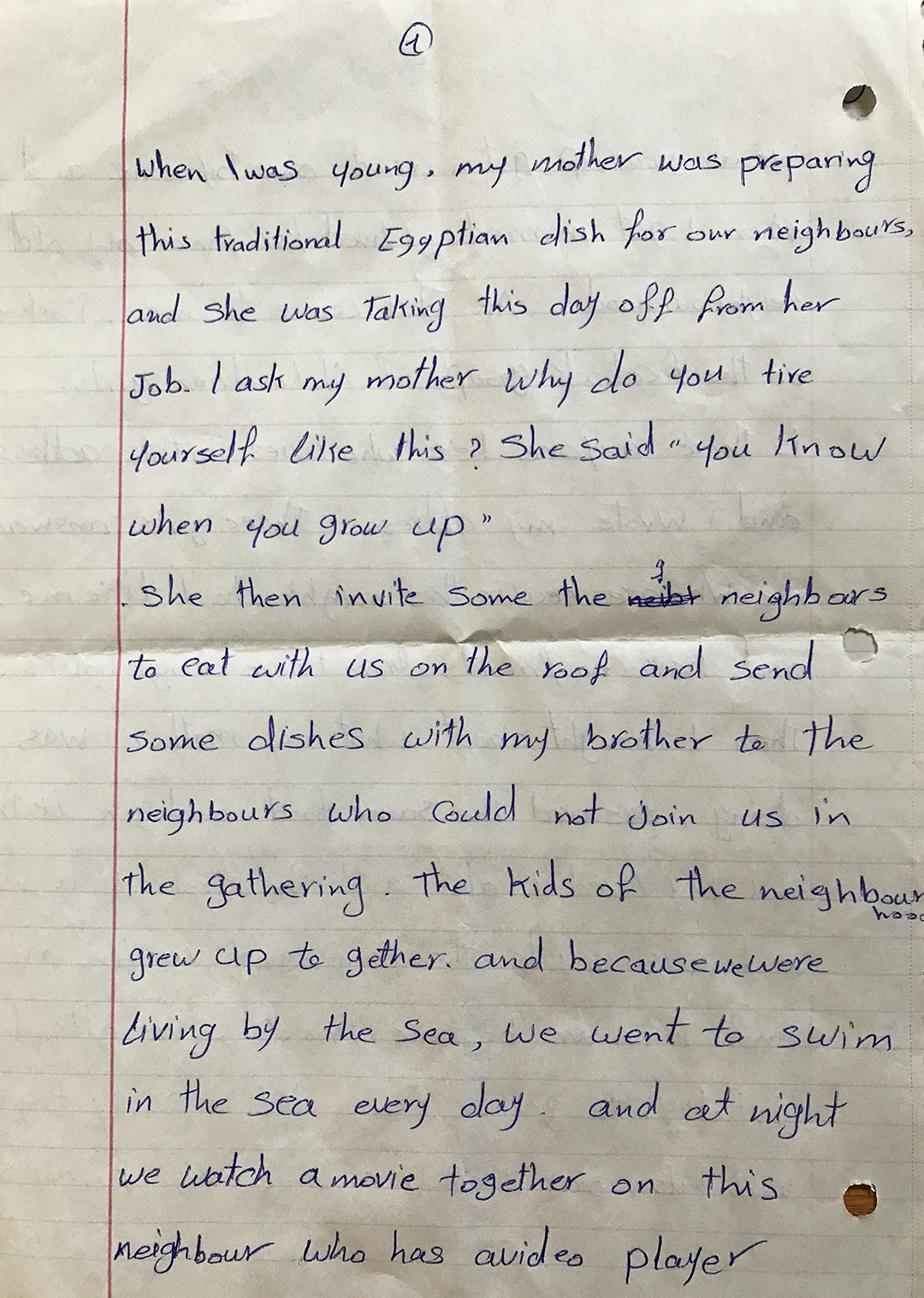
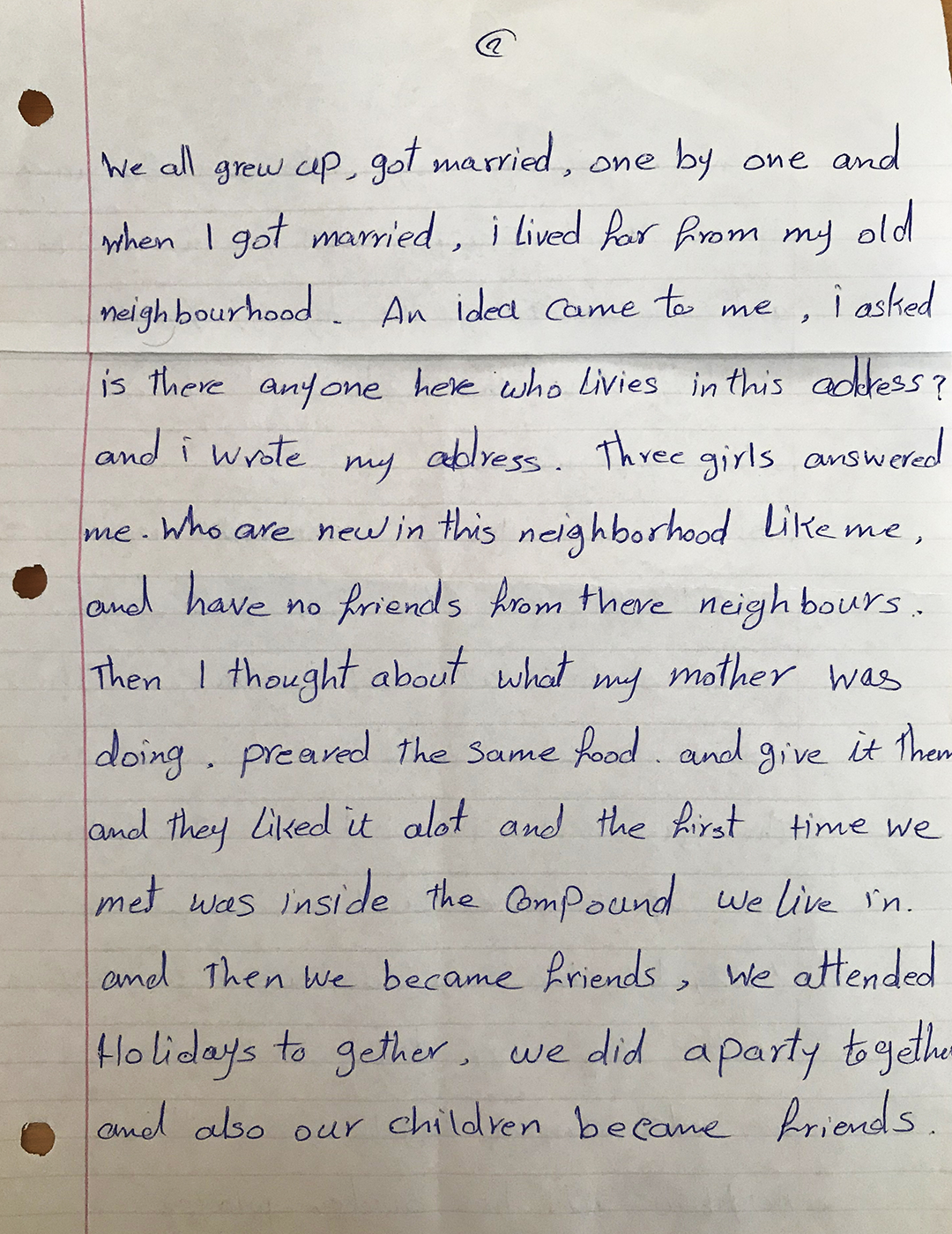
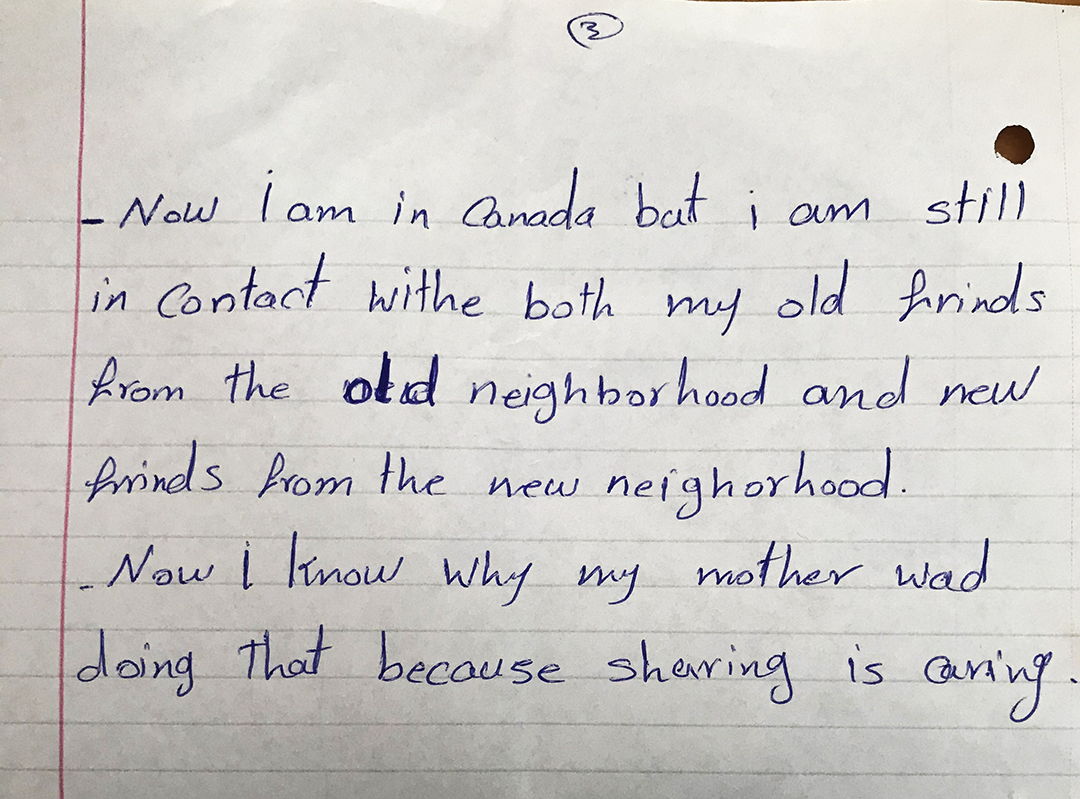
“When I was young, my mother was preparing this traditional Egyptian dish for our neighbours, and she was taking this day off from her job. I ask my mother why do you tire yourself like this? She said “you know when you grow up.” She then invite some the neighbours to eat with us on the roof and send some dishes with my brother to the neighbours who could not join us in the gathering. The kids of the neighbourhood grew up together. And because we were living by the sea, we went to swim in the sea every day. And at night we watch a movie together on this neighbour who has a video player. We all grew up, got married, I lived far from my old neighbourhood. An idea came to me, I asked (…) is there anyone here who lives in this address? And I wrote my address. Three girls answered me, who are new in this neighbourhood like me, and have no friends from their neighbours. Then I thought about what my mother was doing, prepared the same food, and give it to them and they like it a lot and the first time we met was inside the compound we live in. And then we became friends, we attended holidays together, we did a party together and also our children became friends. Now I am in Canada but I am still in contact with both my old friends from the old neighbourhood and new friends from the new neighbourhood. Now I know why my mother was doing that because sharing is caring”.
After handing me the beautifully hand-written story on lined paper, Noha described how, when she arrived in Vancouver, she went to her neighbours with traditional Egyptian foods to introduce herself and make connections, similar to what she had done in Egypt. The neighbours, however, were more surprised than friendly, and did not reciprocate. What struck me in this story is how Noha offered this memory – and its story of attachment to place – to explain what was different in her new, Canadian, neighbourhood.
The memory, written down and told as a story, a repeating event of friendship and of relations with place, is like an anchor to both a past and a possible sociality in a new country. In turn, the reality of this neighbourhood, the one she currently lives in, can only be apprehended in its difference. Moreover, it evokes a sensorium: swimming in the sea, eating on the roof, cooking and sharing food, watching videos at night. As Elliott suggests, here “remembering events [is] (…) a type of sensory act” (Elliott, 2019: 4; Gupta, 2018).
Consider another example (fieldnotes, March 2, 2020): As we are walking through the neighbourhood, B. tells me how flowers remind him of his home country. There are so many flowers in Canada, he tells me, looking at the spring blooms that dot the sidewalk we are on, but they do not smell like anything. In my country we have very few flowers, but their scent is so strong and wonderful. So, seeing flowers here reminds me of my home country.
B. looks at the flowers but does not bend towards them; he does not pick them to attend to their too-faint smell. The way we stand together on the sidewalk, on this grey rainy day, the spring blooms made only of sight, underscores the irreducible distance to other flowers and other olfactory worlds.
Here, sight and smell 6 generate a diffuse, shifting composition in the ways they call upon each other. Listening to his words, I think of an echo: something repeated but in another voice and at another time, leaving us to contemplate what is not present. I am reminded of Hamilton’s words describing her journey to Italy: “While walking the streets I heard the absence of the noisy birds of south-eastern Australia” (Hamilton, 2017: 185, emphasis in original).
If the senses “catch”, anchor, evoke, crystallize memories and accompany remembering, Noha’s story and B.’s comments suggest that sensate memory, like time travel, embodies the coming together of emplacement and displacement in what Ahmed calls “the ways we have of settling” (Ahmed, 2006: 10). As she writes, “migration involves reinhabiting the skin: the different “impressions” of a new landscape, the air, the smells, the sounds (…) accumulate like lines, to create new textures on the surface of the skin” (Ahmed, 2006: 9).
Noha’s story uses repetition to underscore her (dis)placement: cooking the same meal as her mother to forge similar connections leads her to a new cycle of friendships that starts extending to the next generation. It is this repetition that prompts her to do the same gesture of offering food to her neighbours in Vancouver. It is here that the idea of echo might be good to think with. Reaching us repeatedly after – and always shifting – what has occurred, an echo, always involves a difference. Noha’s meals by the sea and B.’s flowers by the sidewalk emerge in the urban landscape as what is missing yet can be remembered. To say it with Seremetakis, “Echo is the creation of a chorus, where the sound from afar is the presencing of the absent others” (2019: 133).
While echo and resonance usually refer to sound and listening, here I use an expanded, multisensorial understanding of these concepts. The Italian word sentire is illustrative here. Meaning at the same time hearing, sensing, and feeling, and referring to the sensations resulting from touching, listening, smelling, and tasting, it points to the senses being inseparable (see also Seremetakis, 2019: 111–112). Similarly, Ceraso (2018: 29) argues that it is crucial to consider not just how we listen with our ears, or how we perceive sound by itself, but how “sound intersects with other sensory modes to shape their embodied experiences in specific contexts”.
Ceraso, seeking to combine multimodality with our embodied, sensorial, and affective practices of listening in everyday life, argues that different modalities do not just make meanings in different (and in real-life connected) ways. They always engage the senses, thus involving a complex multisensorial relationship with the environments and the practices we participate in. Attending to “composition” (Ceraso, 2018: 3; see also O’Dell and Willim, 2013) – the confluence of multiple senses in lived experience in the city and social encounters – then complicates the notion of multimodality and shows that it is necessarily multisensory.
Following his approach, we can understand echo as not simply heard, but sensed, and emerging from our embodied presence and movements in space. Looking at sensuous echoes with our surroundings is also a way of shifting memory away from a solely individual, interior, or “private” matter to instead pay attention to its relationship with spaces, affect, and social worlds (Freeman, 2019; Freeman et al., 2016; Napolitano, 2015; Navaro-Yashin, 2009). As Dib writes, “memory is not simply an amorphous entity that resides in our heads but rather an intimate and social phenomenon that occurs through objects, technologies, people, and places” (2012: 46).
These considerations are helpful for thinking of other aspects of sensorial emplacement as well, such as textures, that I turn to in the next section. When inhabiting and moving in the city, textures are not simply what we can touch. They are felt, seen, and heard. Tiles look brilliant in the sunshine and are smooth to the touch; ivy leaves on building walls feel supple, soft, and damp, and have a distinctive smell; I feel and hear matte grey, granular stones under my footsteps. As Seremetakis writes, in relation to the manifold ways Greek has to refer to “touching”, this reveals the “difficulty in treating these complex sensations as distinct perceptions and to delimit sensuous dispositions within a self-enclosed, individuated body-space” (2019: 112).
Ceraso’s and Seremetakis’ work is part of the growing literature on sensing as a complex way of being in and understanding the world that cannot be limited to a “passive or purely psychophysical” apprehension of reality (Howes, 2019: 18; see also Culhane, 2017; Ingersoll, 2016). The way we understand, distinguish, and define our sensory experiences and the roles they play in particular contexts are shaped, enabled, and constrained by the social, political, and cultural webs we find ourselves in. Gupta (2018), for example, recounts how lower middle-class residents in Bangalore use a “sensorial history” to describe their sense of displacement as the area around them became an enclave of upper-class gated communities. Smells, sounds, heat and “freshness” create an “archive” of change that positions older residents as the ones who intimately know their neighbourhood.
I want to emphasize here that I am not interested in textures and sensory perception of city spaces merely as a more comprehensive way to describe what is already there – the city or inhabitants’ experiences of living, moving, and recalling. Rather, sensory attunement can be a way of thinking and questioning, similar to how Zee (2017) and Archambault (2013) take up sand to write about processes of anticipation and people’s movements. 7 In regard to textures, they not only grab our senses, but actually shape ways of apprehending. As Stoller (2004) and Ingersoll (2016) argue, a sensuous and embodied orientation to scholarship encourages different epistemological approaches, opening up avenues for learning, remembering, and thinking otherwise (for a fuller discussion see the Introduction to this issue).
Returning to echoes, in the next section I ask: How could the sensorium work like echoes, providing ledges and nooks where times and places resonate with each other – where thoughts are interrupted, creating provisional spaces and moments of remembering, rather than a full, straightforward memory that can be easily told as a story?
II.
Referring to the importance of the senses in emplacement and memory, Amal asked: How could a sensory journey through space help immigrant women become more rooted in the neighbourhoods and places they now inhabit? How, in turn, could the everyday sensorium help them voice the sense of displacement that accompanies their being here? This double role of the sensory in migration is encapsulated by Ahmed in this paper’s opening quote. Thinking of a moment of unpacking in a new kitchen, she describes how “the familiar smell of spices (…) fills the air”, as she “allow[s] the cumin to spill, and then gather[s] it up again” (Ahmed, 2006: 10). The rhythm of spreading out and recollecting spices vividly evokes the movements of departing, arriving, and settling in migrant journeys. Moreover, sensory experience helps her recreate a sense of home and also reminds her of other places: “each smell that gathers returns me somewhere; I am not always sure where that somewhere is” (Ahmed, 2006: 10). Both Amal and I are first generation immigrants, and questions about displacement guide our work practices and reflections as much as they pertain to our personal lives.
Following Amal’s inquiry, I started to plan a sensory walk for a group of women who have recently migrated to Canada, in a Metro Vancouver neighbourhood where I had not been in for many years – situated on the unceded land of the xwməθkwəy,əm (Musqueam), S
Walking is a multimodal, sensory method (Lamb et al., 2019; Malmström, 2014; Pink, 2008), because it draws from and deploys many different meaning-making practices and “places the body at the centre of knowledge production” (Springgay, 2011: 636; Springgay and Truman, 2019). Walking necessarily involves learning with, from, and alongside others (Ingold and Vergunst, 2008; Mathews, 2018; Tsing, 2015). In addition, what interests me is how walking invites interruptions, unforeseen detours, and unknowns (Moretti, 2015, 2017). Borrowing Pandian and McLean’s words, “this is not the familiar image of a knower examining the things of the world at a safe remove”. The goal, instead, is for a kind of “unsettling to happen, (…) a transgression of the limits of individual identity and the fixity of the reality at hand” (Pandian and McLean, 2017: 3–4). I invite the reader to follow parts of this walk through this video: https://stream.sfu.ca/Media/Play/54adc941027448b3bcaac5dbaf8abb121d
I walk and make a list (fieldnotes, June 22, 2020):
construction noises
pizza smells
round, matte grey stones
paper hearts
small rental apartment buildings
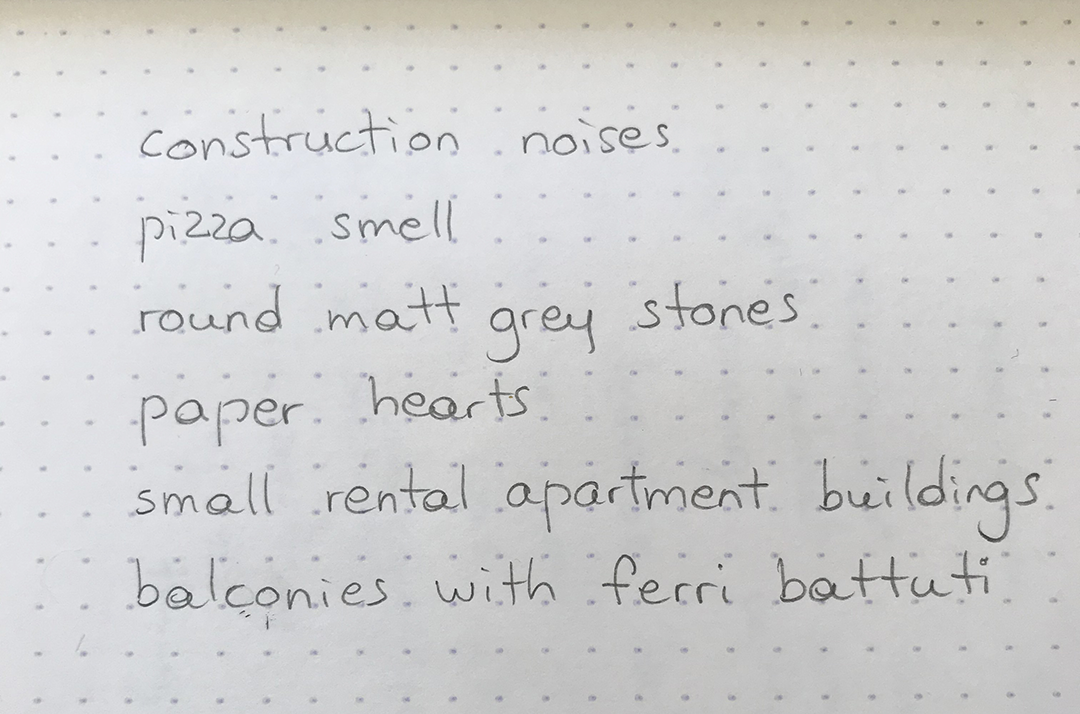
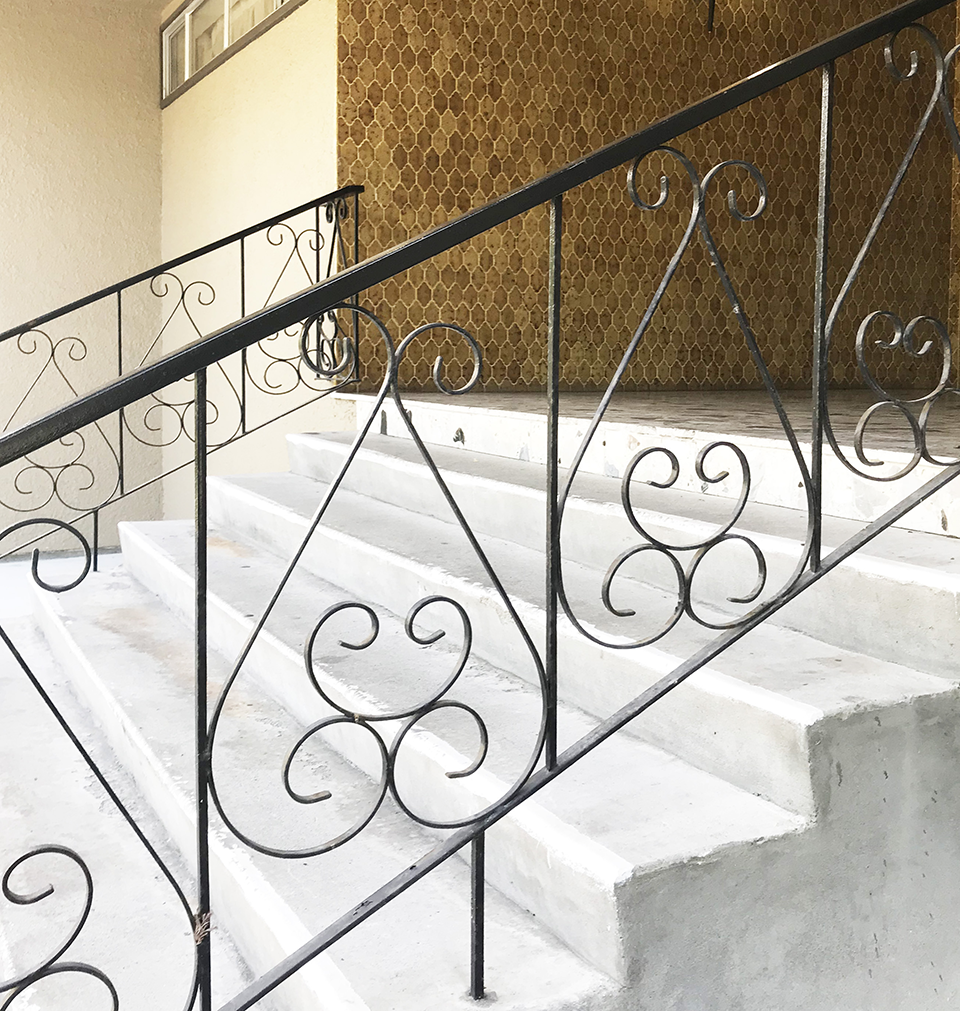
I stop. I had started the journey to plan a walk for others, but objects and textures are drawing me in. I suddenly remember this is where I lived when I first arrived in Vancouver: the old rental apartment buildings. I can still feel their carpet under my feet, the crumbly paint of their wall – their balconies with ferri battuti.
It is with the Italian name of these things that my thoughts are interrupted once more and trip, as if stumbling over a little edge. The Italian names comes in handy when I forget my English words, and it is in this forgetting, in this reaching for words, that a space is made for remembering. 10 It is a peculiar kind of time travelling, as Elliott (2019) suggests.
Taylor’s words come to mind: “traversing (…) historical, national, temporal, and linguistic frames is a thinking/touching/becoming in motion” that exceeds translation. It can help us “to understand between ness, beside-ness, [and] entanglement (…) as integral components of thought and presence itself” (2020: 6).
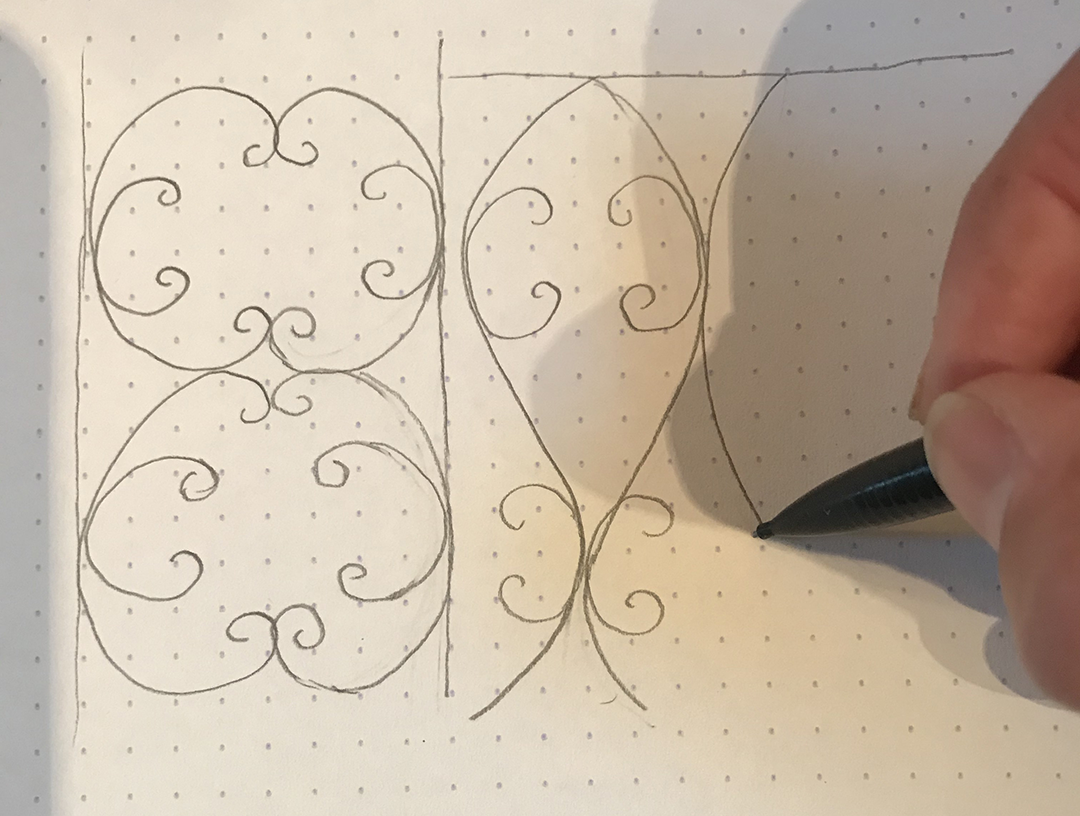
I start to draw the ferri battuti. Now my hand remembers too, the moving of the pencil when I drew them before, in Greece and in Italy. Memory is kinesthetic, threading the seen, the touched, the narrated – and the sound of its name, in my mother’s voice. I remember her teaching me that they are pretty, but I do not recall those other places and other balconies.
Forgetting, here, layers on other forgetting, shaped by long histories of colonialism and resistance. As Grant et al. (2019) remind me, I walk on paths and roads that have been already trails and routes from “time immemorial” but have been rendered largely invisible. They explain that creek and waterways were paved to make streets, and Musqueam trails were converted to paths for cyclists and walkers without acknowledgement: “They weren’t their trails, they were our trails” (Grant et al., 2019: 33). Their words remind me that migration complicates and adds an extra dimension to settler colonialism on unceded Indigenous lands (see Todd’s documentation of the Dialogue Project, 2011, for an inspiring collaboration between Indigenous and immigrant communities).
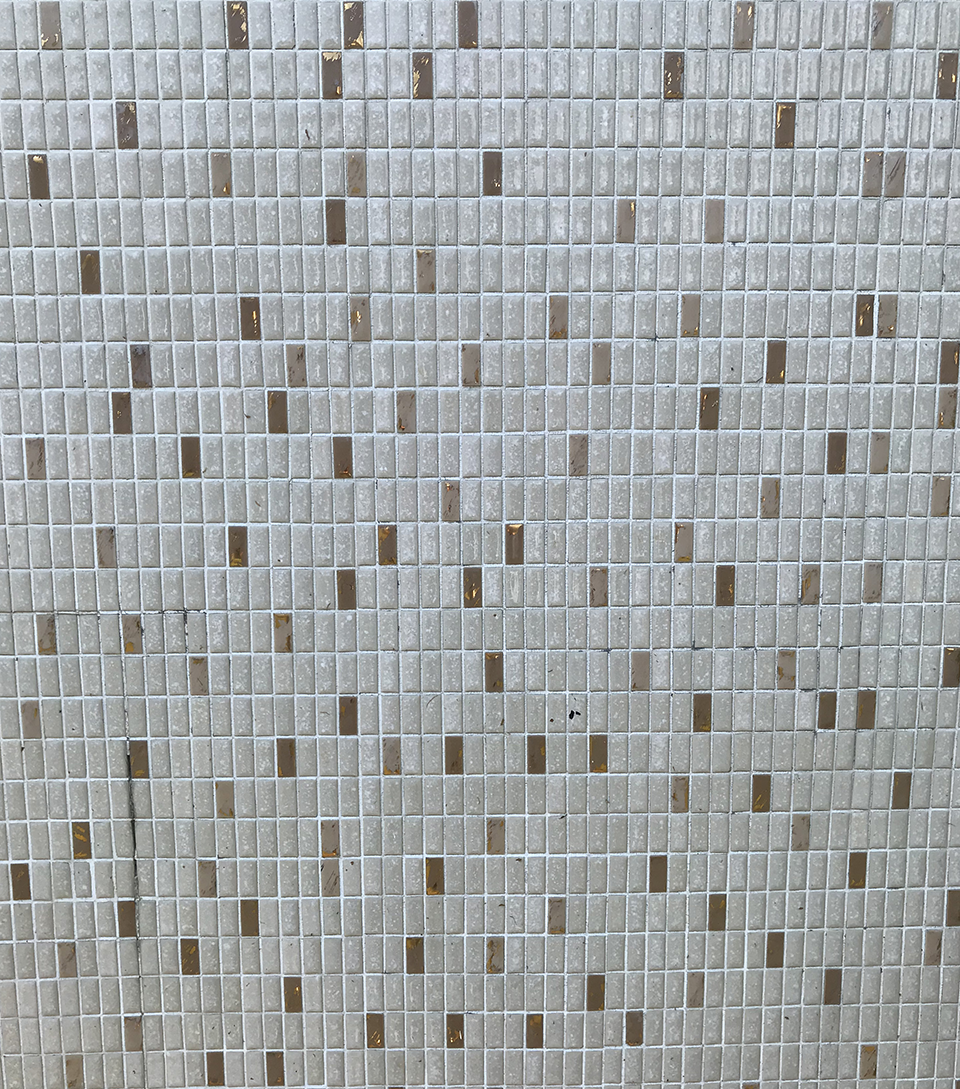
As I continue the walk and the list transforms into drawing, I see several houses covered with small tiles.
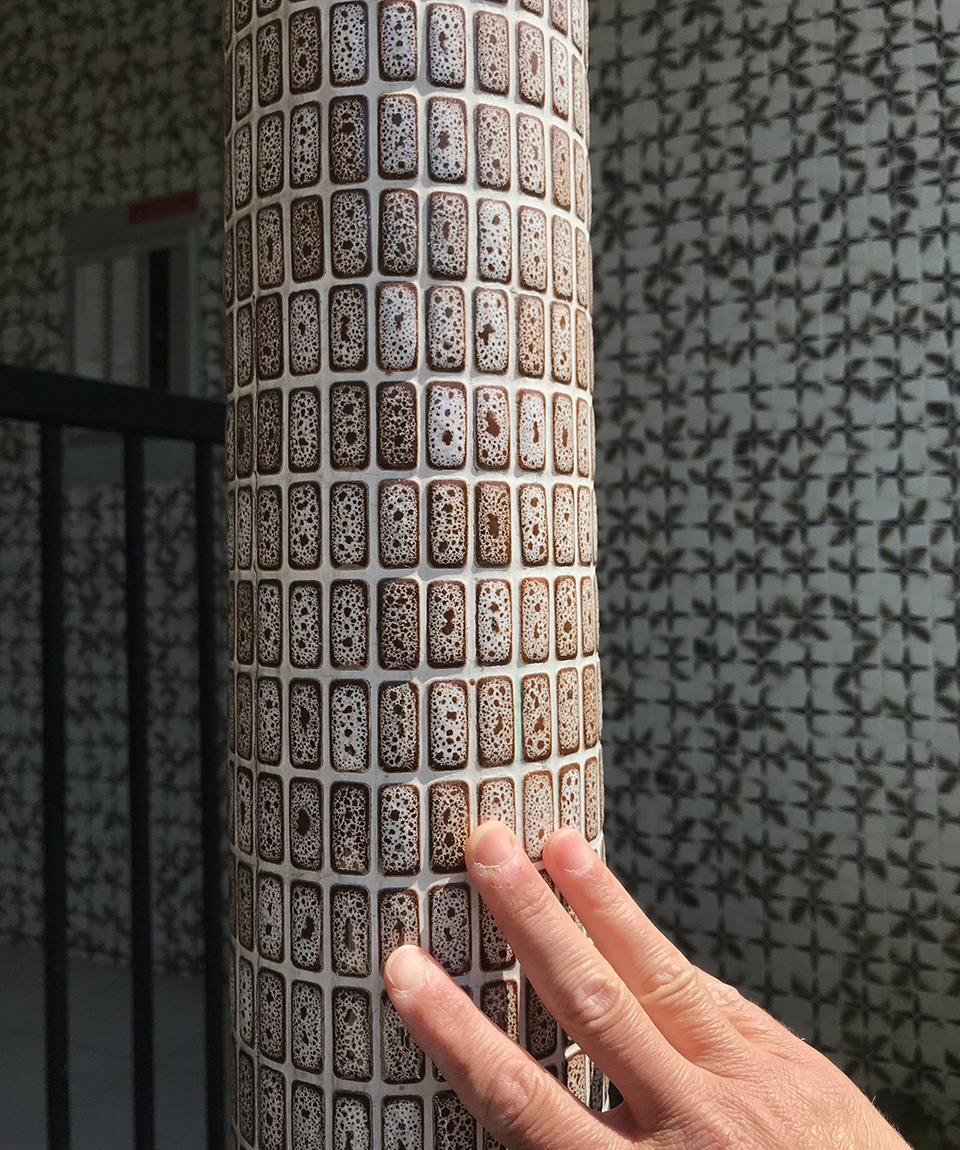
They are tiny, shiny, and smooth, and their sharp angular edges reflect the light differently than other buildings do. Here touch and sight come together – as well as the movement of the wind on surfaces; the sound of my footsteps on stairs; the rhythm of walking, stopping, and recording.
My grandfather, too, used to live in a house with tiles – green tiles – in Milan. I remember eating chocolate mints in that house, and now the green of the tiles tastes like mint to my fingers. Yet I cannot recall where that house is, how I went there, or when. In fact, it is exactly because of all the forgotten that the smooth shiny tiles have become so memorable.
And I realize that memory is not so much about remembering, but is rather a particular relationship with the forgotten, a particular kind of forgetting.
Textures here become little ledges and window frames that I can hold on when sliding across a smooth surface – like the beginning lines of a poem I wrote many years ago:
Eating fresh green mints in the green-tiled house with my grandfather I do not know yet that in my future I will leave Italy and live in the small apartment buildings. And that when I do, textures will be the only thing that I will be able to hold on to, to represent my sense of displacement.
It is a peculiar kind of time travelling.
What does this all mean for emplacement? When is emplacement forgetting? And when is it remembering?
If remembering makes present what we knew, lived, and sensed before, it is always in a different voice, and from a different angle, ricocheting through time and taking shape with(in) forgetting.
On my walk, I return to where I had started, leaving the apartments, the tiled walls, and the ferri battuti. I retrace my steps; it is the same journey, but in the opposite direction everything looks different. I soon stumble upon a borderline: from one block to the next, older buildings and spaces have been replaced by new ones. I notice it first by the sudden change in textures.
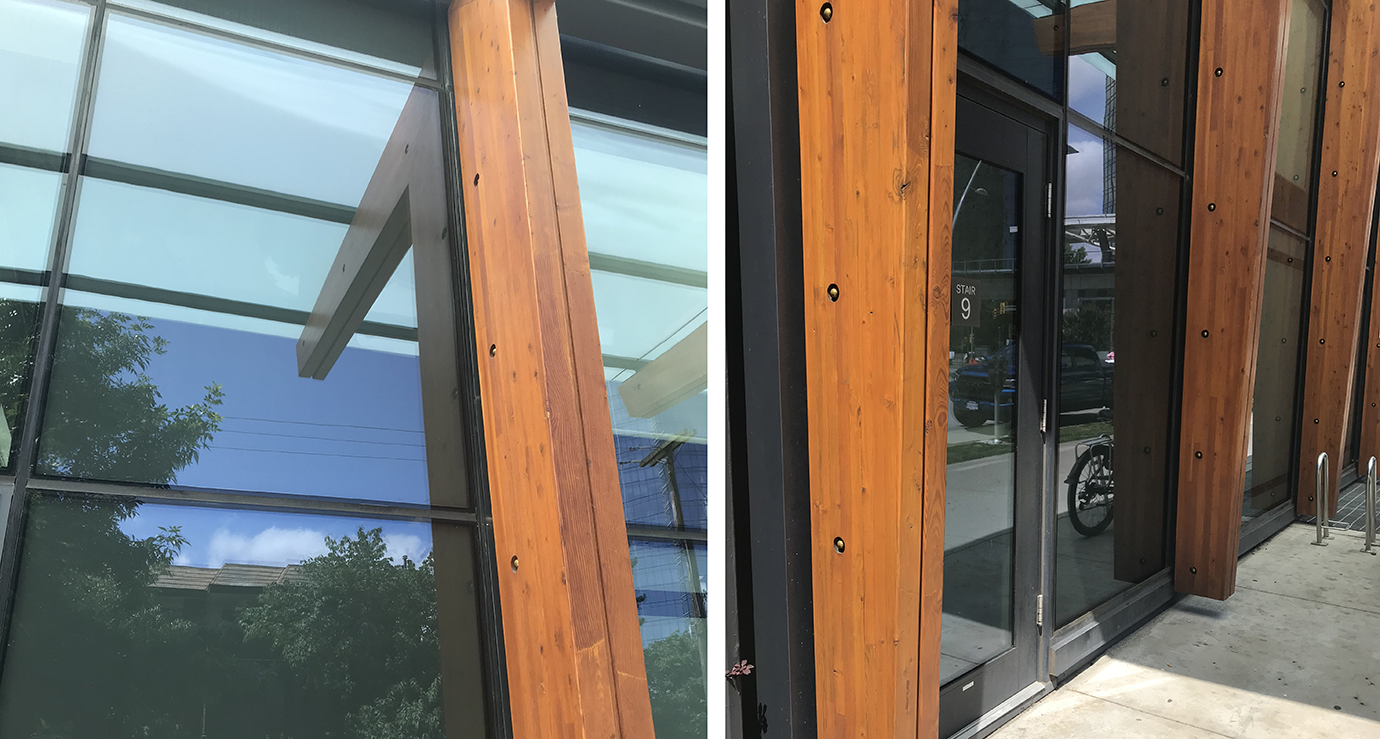
The facades, the yards, the front steps, the roofs and the way they extend into the sky, all of them speak of new and remodelled spaces. My eyes glide over smooth surfaces, uncluttered lines, polished wood, and the reflective gleam of glass and metal. Textures can be a memory of the future. As a circulating language and a repertoire of forms, they do a similar work in different cities (De Koning, 2009; Ghertner, 2011; Salmi, 2019).
As I peer in the windows, I see older buildings within the new frames and surfaces – a visual, textural echo bridging different times. Two blocks away, a crane lifts blocks into the sky, and I spot the ubiquitous “orange fences”. Construction fences, especially the tree protection enclosures with their bright netting, are some of the first signs that buildings – and often entire neighbourhoods – are being redeveloped. Earlier, in front of balconies and curved iron, I was tempted to imagine memory as that which travels across time in a static environment. Here however, another complexity comes in: everything seems to be changing, and memory grasps ephemeral reflections in a moving landscape.
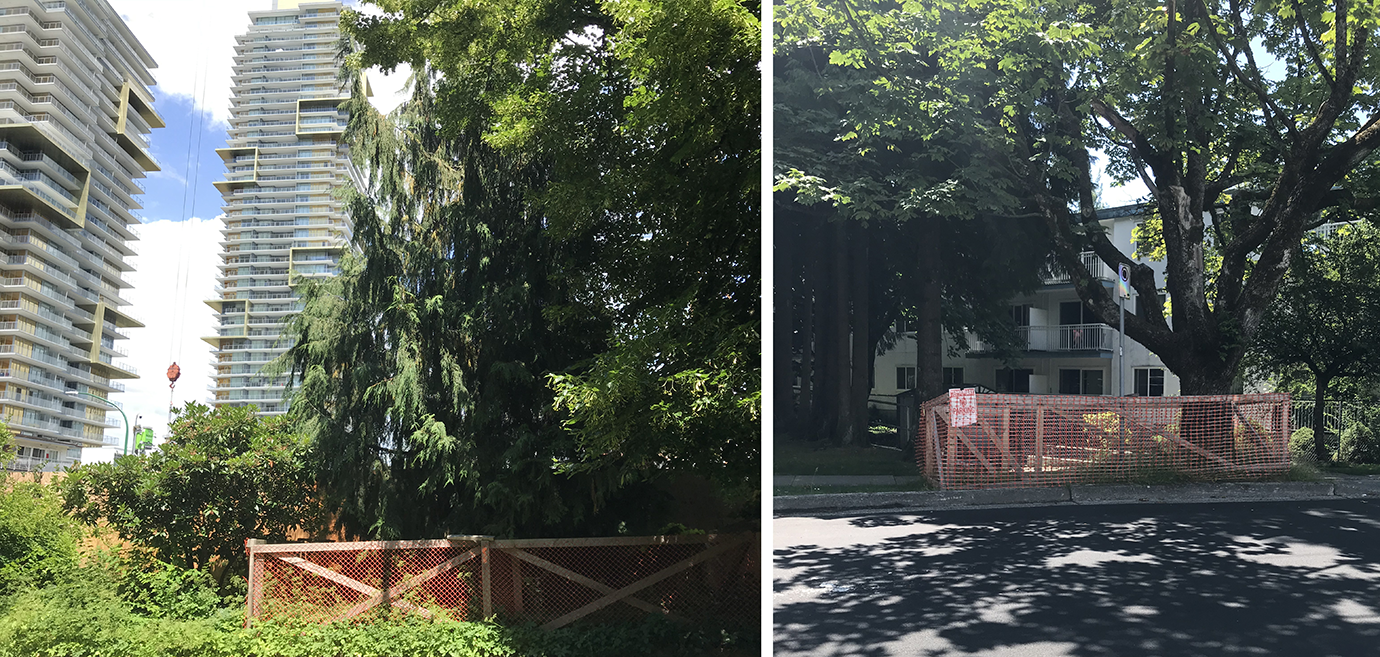
I consider my drawings, the list, photographs, and snippets of video on my smartphone and in my notebook. For a moment the urban sensorium is made of echoes. Memories accrue off its textures, sights, and sounds, contemplating what is missing, as the missing is made present. Yet an echo could be a possibility: it is because memory escapes a straightforward story and is instead akin to a rebounding through places, senses, and times; it is in its shifting, its impossible closure, its epistemic uncertainty, that the walk could become an invitation for different walkers to create itineraries together.
III.
(Fieldnotes, March 2, 2020). 12 B. and our group of eight leave the flowers and their remembered scent and walk a few more blocks in the quiet residential streets. Spring is just arriving, and everything looks green even on this grey, rainy day. We pause by the side of a rectangular orange fence, enclosing a tree on the sidewalk. Before I can start asking, one of the walkers wonders: Why are some fences only around some trees? What do they do? I explain that they are meant to protect trees when construction (or demolition) starts on the houses nearby. It is the frailty of its surface, the flexible, curvy, and thin plastic of its netting that gathers their attention. Its texture contrasts with the sturdy permanence of the tree trunk, making it difficult to imagine how the flimsy fence could safeguard it. We talk about the placement of these structures, and how they will keep machinery away. Just like we did earlier with the flowers, we stand together on the sidewalk and look at the fence – taking in both its familiarity and strangeness.
Back inside the building where we first gathered for the workshop, I ask again about the fences and what they say about construction and change in the city. What do they think about them, I wonder; when and where else have they seen them? What comes to mind when they encounter these objects in the city? How do the fences help us think about changes in their neighbourhoods? In response to my questions my interlocutors talk about the colour of the netting, and debate whether or not the dazzling orange is a good choice for such a structure, something that sits in the middle of the sidewalk. They discuss if the tree fences look good in the streets. One person says: “when they are small and neat, they are nice, but when they are big and disorderly, they are not nice”.
It strikes me how the bright netting now works as a closed, solid, and opaque exterior. The tree inside the fence, the building behind it, the very processes of construction have become temporarily nonexistent – if they enter the conversation, it is, in Gordon’s words, by the “shape [of their] absence” (1997: 6). Are the ubiquitous fences signs of impending transformation, akin to a surface where memory is left without a grip, uncertain of future belongings? Is the fence a case of being suspended, something that cannot be easily said or explained, the point “where one is left with questions rather than answers” (Elliott, 2019: 12)? If the fences as infrastructure, as construction objects, become opaque or irrelevant, they become so in very particular ways. Aesthetics is never just a neutral or innocent matter (Harms, 2012). In this case, it is a quiet, oblique critical commentary.
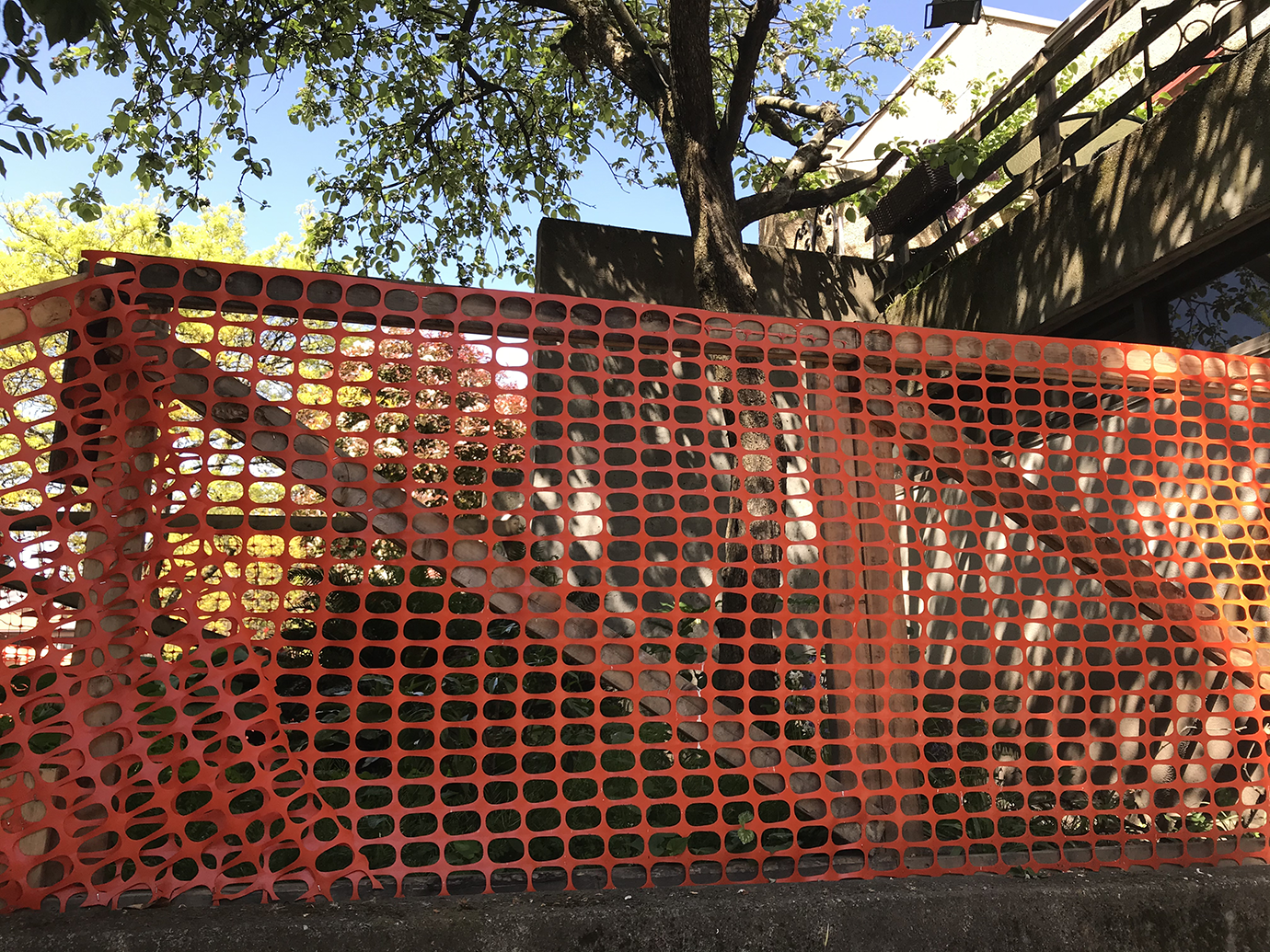
I ask more directly about urban redevelopment and housing. “The orange boxes [fences] are good for the city”, a man says, “good for the city, but not for newcomers”, He says that once a building is demolished and replaced, it is usually more expensive. In the space of one house, he explains, there are many apartments, but all of them cost more.
This sentence “good for the city, but not for newcomers” suggests that my interlocutor understands himself as not quite in “the city”. Could the flat surface of the netting, without anything behind, a surface too slippery for commentary, help us think about this sense of disconnection – being apart from “the city” – that newcomers sometimes experience? Object and textures can be part of what orients us in space because they show the positions from which we speak, the landscapes we inhabit, and the memories entangled with them: “they gather on the ground, and they create a ground upon which we can gather” (Ahmed, 2006: 1).
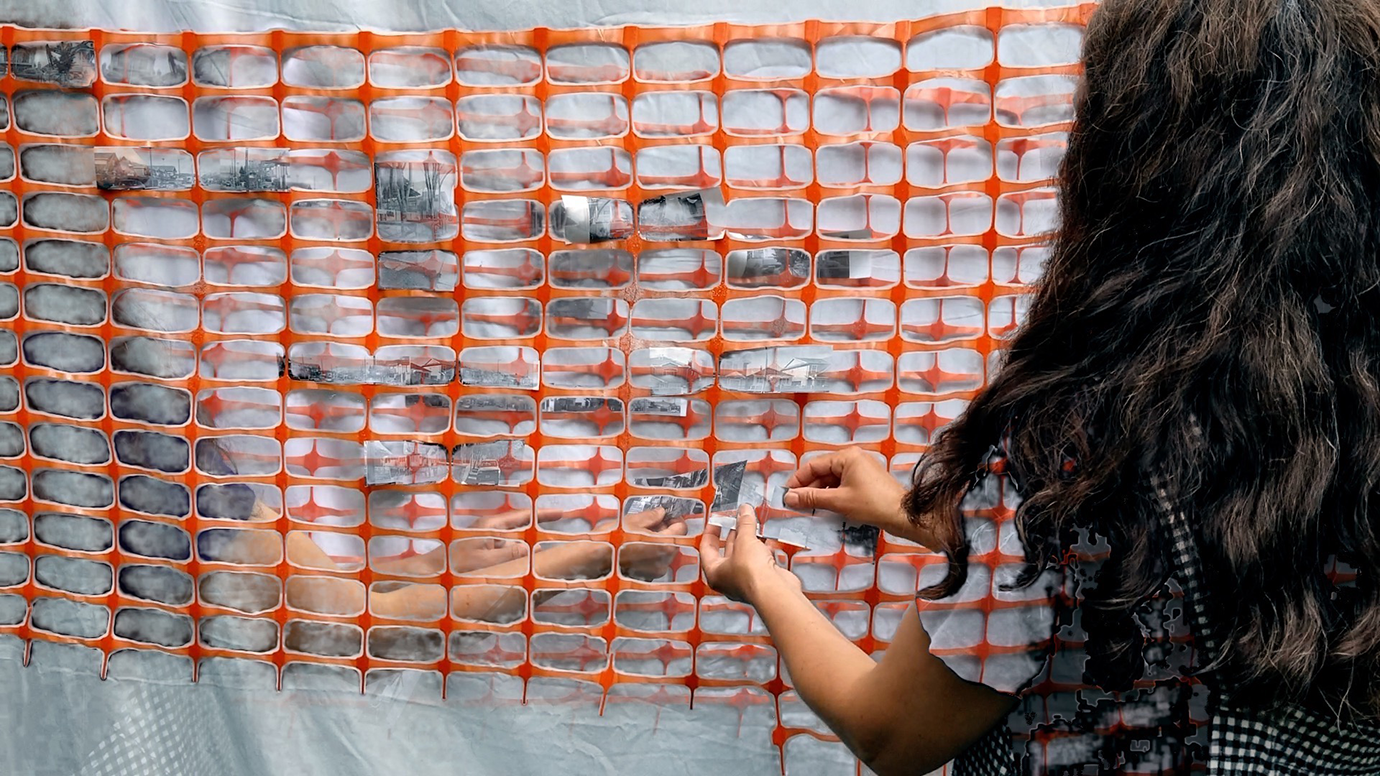
At the end of our conversation, I unroll a few metres of orange netting I had brought with me – a remnant of a construction site – and start pulling at its flexible lines and gaps. As a speculative practice, an exercise in imagining possibilities, I ask: could the fences be transformed in something else? Could they become bulletin boards, a handy place for intervention or interrogations? The first idea that comes up is to make a sign saying: “wanting friends”, as a way to connect with other people in their community, especially people from the same region or speaking the same language. My interlocutors improvise a bulletin board on the repurposed orange netting, creating announcements and notices on small cards and hanging them with white cords from the lines of the net.
They are in English and another language, asking neighbours to join them at the fences for a chat. One of them reads: “I’m living in this neighbourhood. I am coming here every [day] at [time]. If you want to join me for a chat, [you are] welcome”. In another, a painting of flowers accompanies this sentence in the writer’s first language: “A place for making friends, a meeting point to have coffee with our friend and spend time together and chat”. Referring to the nationality and ethnicity of the writers, a card asks for “a friend to talk” with, and another message seeks “a family” from that same country “to befriend and socialize with”.
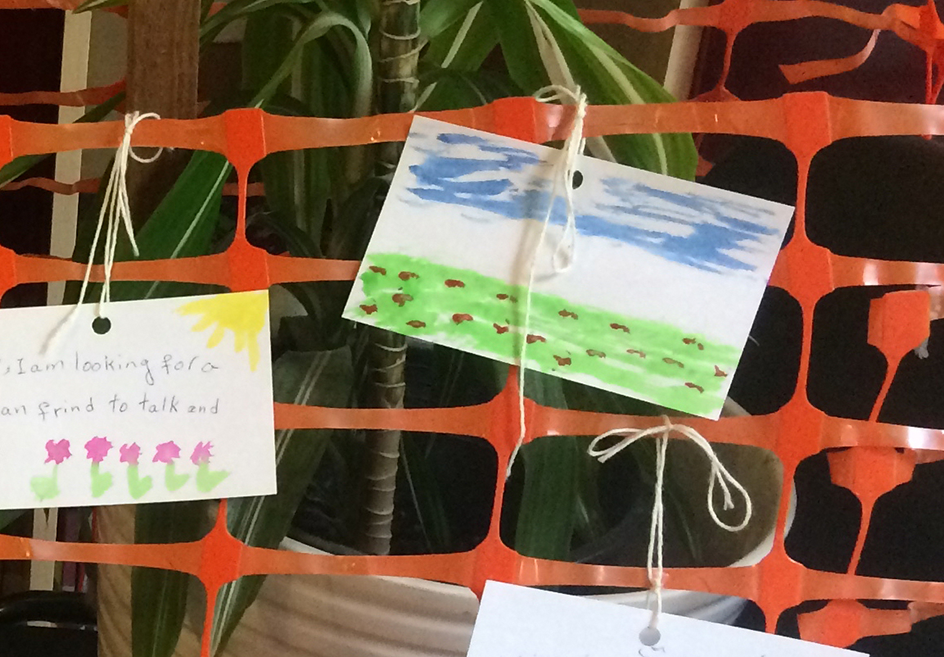
What particularly interests me is how memory emerges obliquely. The collection of cards shows a longing for connections and a remembered sociality from other places and times. Existing for a moment as small notices on an imaginative bulletin board – decorated messages to passersby, bringing together painted images, two languages and scripts – the cards index an aspiration and a missing. In this sense, they are like echoes, moments of resonance: memory gives form to them, but it is not directly present. The idea of echoes also makes visible the performative aspect of remembering. In the case of this bulletin board, remembering is a momentary gesture from a speaker/writer/illustrator towards their audience. It is “an act of embodied, linguistic, epistemic, and emotional translation” (Taylor, 2020: 6) in Taylor’s performative sense: “an evolving dialogic, citational, and performatic movement that builds on meanings and gestures, highlights the slippages and gaps” (2020: 7). If the idea of echo suggests the recurrence of memory – the way it shapes the bulletin board and its messages – it also points to its enacted, momentary occurrence.
Caught in the materiality and texture of the netting, memory is here also tied to the interplay of two different absences (Kabukowski-Houston, 2021) – the one of missed neighbours, encounters, and relations “there” and the invisible construction and redevelopment “behind” the fences, with the oblique critique it brings. Using Napolitano’s expression, absences here “borrow other” absences (Napolitano, 2015: 57). Moreover, the comments of my interlocutors show that the sensory materiality of the netting – first frail, then opaque, then a structure perfect for hanging notices – is not fixed or simply there, but is part of a negotiated, contextual, multimodal, and sensory engagement with the landscape. It grips my interlocutors’ imagination in more ways than one. As such, it can be open to moments of “becoming” (Biehl and Locke, 2017) rather than determine positions and possibilities. For a moment, it is the flexible, semi-transparent, and undulating net, something you can hang things on to that connects with their memories of other places, languages, and social networks.
Conclusion
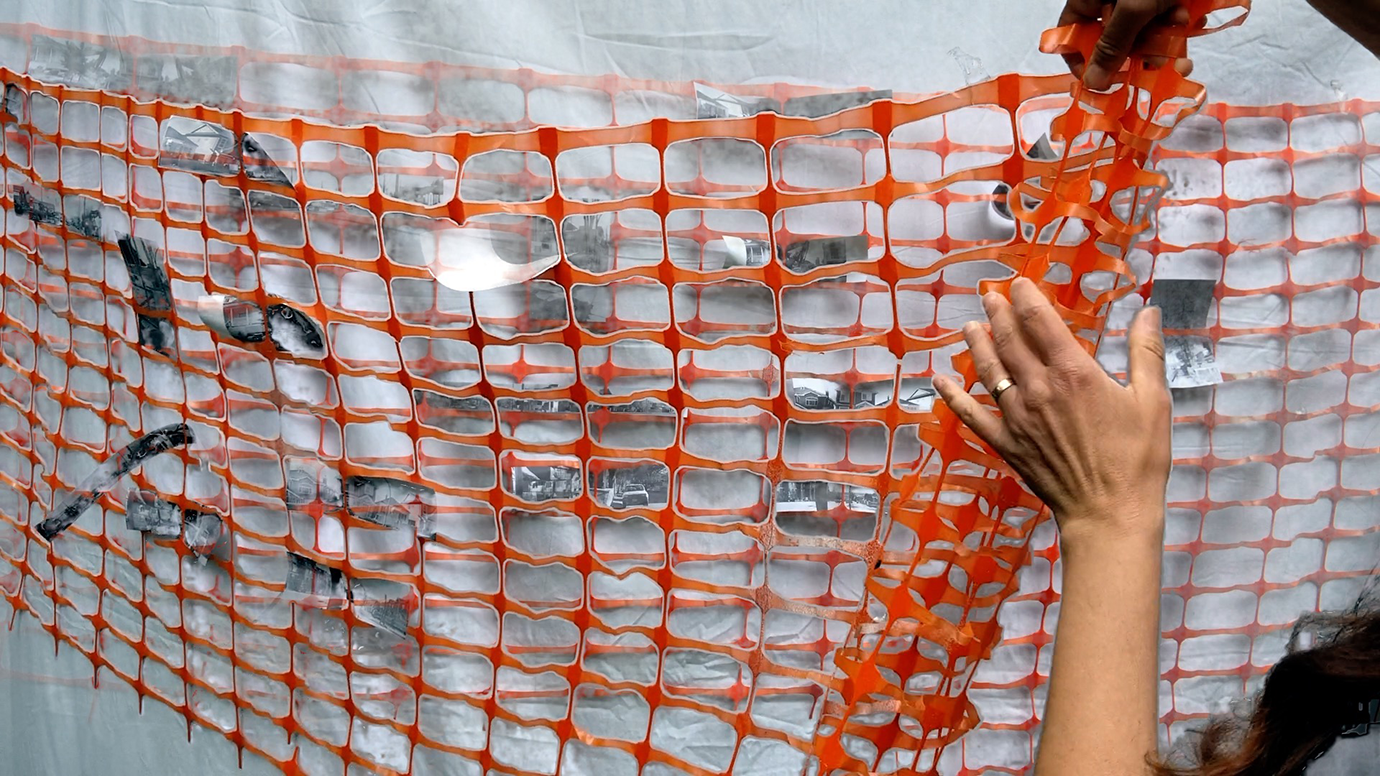
An echo is not just a connection between images, memories, stories, or places. It is something that repeats, but in a different voice, and shifting in time. To illustrate this idea, I offer a second visual reflection: https://stream.sfu.ca/Media/Play/fafc7ccb3f4c4e0593672b399979689f1d
In this video I create visual echoes by juxtaposing two clips from two perspectives and by combining sound, text, and images of construction fences. I use weaving as a metaphorical enactment of memory: black and white images of street scenes evoke other places that have been transformed by redevelopment and can only be remembered. Multimodality, as Dattatreyan and Marrero-Guillamón (2019: 220) have argued, can help me evoke the sensorial, absences, and that “which exceed the textual and conceptual domain”.
Returning to Appadurai’s work, thinking of echo is particularly helpful when addressing remembering, as memory in its sensorial enactment always includes its difference. It is shaped and interlaced with what is forgotten, gliding over the bumpy ridges of what emerges as memorable and weaving possible pasts and imagined, longed for, or anticipated futures. Appadurai compares the “sensation of seeing a film for the second time (even when the viewer is seeing it for the first time)” with “an experience of the repetition of difference” (Appadurai, 2019: 146). The feeling of seeing something always “for the second time” is for Appadurai a key component of the widespread practice of re-watching Bollywood films; it is also an illuminating framework for remembering in the context of migration.
Reminding him of his home country, B. showed me the flowers by the sidewalk as seen “for the second time” (Appadurai, 2019: 146). In the here and now of a Canadian neighbourhood, however, they are too many, and they are missing their distinctive smell. What strikes me is this pervasive sense of displacement in the mundane, everyday walking and standing on familiar city blocks, which, in relation to memory, can be productively understood as an attunement to sensing “always for the second time”.
This repetition mingles the unfamiliarity of the “here” with the familiarity of the “there”. Rather than upholding an original event or experience, Appadurai’s idea of echo suggests that memory always shifts in its trajectory, “home” always a complex referent. It is telling in this respect that in Noha’s story, the recollecting of her mother’s meals, that will eventually involve her in a recurring cycle of hospitality extending into her Canadian life, starts with a question rather than a recognition.
As Freeman et al. show, “memories are sparked and narrated through things, both in their presence and in their absences” (2016: 4). In this paper, I have used the concept of echo to attend to this coming together of presence and absence, of remembering and forgetting. Thinking with different and intersecting modalities has helped me trace the kinesthetic and sensory quality of remembering through touching, walking, and drawing, and the ways in which the materiality of textures and surfaces may resonate with memories.
Going back to Amal’s inquiry on senses and memory that prompted my walk, we can then think of emplacements and displacements as being alive in echoes. In this context the sensory – the smell of flowers, the luminous smoothness of tiles, and the flexible gaps of a fence – is a way of knowing and being in one’s surroundings. As a practice of remembering, it necessarily includes what is missing – gaps and interruptions, and what resonates from other places, times, and relationships.
Footnotes
Acknowledgements
A heartfelt thank you to Amal, Noha, B., and my other interlocutors who shared their insights, ideas, stories, and memories with me. I am grateful to the editors and anonymous reviewers of Multimodality and Society for their insightful comments on this article. Thank you to Bernee Bolton, Blake Evans, Will Romines, and Anna Adhikary for their help with the videos. Thank you to Denielle Elliott for spearheading the “Sensate Memories” roundtable where I presented a brief excerpt of this work.
Declaration of Conflicting Interests
The author(s) declared no potential conflicts of interest with respect to the research, authorship, and/or publication of this article.
Funding
The author(s) received no financial support for the research, authorship, and/or publication of this article.