



Abstract
Decision-making in cultural consumption often hinges on social signals, yet the relative power of anonymous mass behaviour versus local opinion leaders remains unclear. The article presents a controlled lab. experiment that attempted to measure, in real time and in a network setting, the degree to which different mechanisms of influence – expert preferences, local networked opinion leaders’ preferences, and collective social dynamics – shape decision-making in the selection of music, as a case of cultural consumption. The results of the experiment provide evidence that decentralised, impersonal social aggregation can outweigh the influence of local influencers in shaping cultural preferences. The article contributes to research on collective intelligence by demonstrating that mass-level signals can more reliably catalyse coordination around cultural goods than top-down endorsements, with implications for digital platform design and early-warning trend detection.
Keywords
Introduction
The analysis of consumer decision-making in cultural marketplaces has historically been a primary focus of cultural sociology, marketing, and network theory. Although prior research has provided valuable insights into the mechanisms influencing consumer behaviour – encompassing expert authority, peer influence, and collective dynamics – there exists a notable lack in the empirical literature: limited studies have systematically contrasted the impact of identifiable, central figures within a social network (such as opinion leaders or hubs) with the effect of aggregate, anonymous social signals typically linked to the ‘wisdom of crowds’ (Bakshy et al., 2012; Surowiecki, 2004).
The study analysed in this paper attempts to address the gap by concentrating on music consumption, a significant case in cultural industries where credence goods, knowledge asymmetries, and uncertainty are pivotal (Caves, 2000). Previous research has highlighted the influence of local opinion leaders within social networks (Katz and Lazarsfeld, 1955; Watts and Dodds, 2007), the significance of cultural intermediaries (Bourdieu, 1984; Maguire and Matthews, 2012), and, more recently, the efficacy of collective social signals in digital contexts (Muchnik et al., 2013; Salganik et al., 2006). However, the relative impact of these mechanisms under controlled experimental conditions has hardly been examined. To tackle this issue, we devised an experiment that separates and quantifies the individual impact of two separate mechanisms: (1) hubs integrated inside a real-world social network, and (2) anonymous collective preferences. The experiment was performed in a laboratory setting that replicated actual decision-making scenarios, while regulating the distribution of information.
Our findings indicate that collective social dynamics exert a considerably stronger impact on cultural choices than localised influencers. This offers new empirical data supporting theories that prioritise social aggregation mechanisms rather than top-down opinion leadership in cultural decision-making. From a managerial standpoint, the findings highlight the significance of recognising and utilising nascent mass behaviour trends, rather than depending solely on endorsements from prominent figures or cultural authorities.
Literature review
As Beckert et al. (2017) show in their overview of the field, research on cultural consumption mostly originates from the sociology of culture, where the two paradigms of distinction (Bourdieu, 1984) and omnivorousness (Peterson, 2002, 2005; Peterson and Kern, 1996) have largely dominated the debate and relevant empirical research. Contributions based on rational choice theory (Horton and Kraftl, 2020) have focused on consumption behaviour and have attempted to explain ‘behaviour by preferences (taste) and opportunities (resources and restrictions)’ in an effort to produce a model for empirically researching cultural consumption which ‘implies an array of testable predictions’. In agreement with their proposition, this article concentrates on the parameters which shape consumers’ decision-making in their selection of music in the context of uncertainties and information asymmetries of decision-making environments.
Herding in decision-making
The ‘wisdom of crowds’ illustrates how aggregated judgements of independent and diverse individuals can produce highly accurate outcomes. This phenomenon is a core expression of collective intelligence, where decentralised collaboration leads to emergent problem-solving capacities beyond individual cognition (Malone and Bernstein, 2015; Surowiecki, 2004). In the digital world, review seeking is a typical behaviour that reveals trust in the wisdom of the crowd. Comments and consumer reviews can sway and shape potential customer purchase decisions (Berger, 2014; Bulut and Karabulut, 2018; Moore, 2015; Stouthuysen et al., 2018) while, according to Lee et al. (2022), newspaper readers are influenced by online comments and may change their opinion in the direction of these comments if these are perceived as public opinion. People seek and trust valid reviews for two reasons. First, they eliminate risk, and secondly, they minimise consumers’ own efforts (Filieri and McLeay, 2014; Kim and Ratchford, 2012; Mittal et al., 2019). Moreover, consumers trust reviews and comments made by other consumers and distrust traditional marketing advertising (Belk, 2014; Koch and Benlian, 2015), and firm-related reviews, that is, reviews communicated by the brand owner, especially when they appear to be intentionally designed in order to be persuasive (Willemsen et al., 2011).
Research has argued that online user-shared information diffuses rapidly like a virus, producing social contagion phenomena (Luarn et al., 2014). Positive feedback may lead to increasing returns, while negative feedback frequently generates more negative feedback (Duradoni et al., 2020). The average effect size for negative events is about ‘five times the size for positive events’ (Miner et al., 2005:188) and can eventually damage the reputation of a company (Stephen, 2016). The more people talk about or acquire a product, the more word-of-mouth, physical or electronic, gains characteristics of self-empowered dynamics and encourages additional consumption. This practice leads to ‘winner takes all’ types of markets (Liu et al., 2015; Prakash et al., 2012; Robert, 1995) and produces phenomena of consumption where success breeds success. In cases where a product has already been obtained by a large number of people, network externalities arise (Kretschmer et al., 1999; Leibenstein, 1950; Wang and Chiou, 2015), which can function positively or negatively. Taking these into account, the demand, price and/or value of a good or service becomes dependent on the number of people who have already consumed it.
Positive network externalities often produce ‘Bandwagon Effects’, giving rise to the desire to acquire a product that everyone else has, or in the case of communication, to move one’s opinion towards those perceived as public opinion (Lee et al., 2022). Negative externalities, on the other hand, describe a person’s intention to distinguish themselves and stand out from the rest (Leibenstein, 1950). Such network effects are more prevalent in fields where the quality of goods is uncertain (Kretschmer et al., 1999) and it is in these fields that phenomena of herd behaviour are mainly observed (Anderson and Holt, 1997; Banerjee, 1992; Bikhchandani et al., 1992; Einhorn et al., 1977; Gigone and Hastie, 1997).
The use of the general term ‘herding’ is used in order to describe people’s behaviours that follow the observed actions of others (Ding and Li, 2019) or, as (Baddeley, 2010) argues, the cases when an individual choice is guided by group choice. By adopting a Bayesian reasoning process (Shiller, 1995), individuals adjust a posteriori probabilities of making a certain choice (i.e. a decision to accept or reject) as new social information arrives, thus resorting to others’ choices, within a group, in a limited space of action. Ha et al. (2016:12) argue that the choice of the crowd can have a stronger influence on decision than the online ratings, while Filieri and McLeay (2014) showed that the massive choice is considered as a more accurate option. However, despite the negative connotation of being a member of a herd, herding can be conceptualised as a rational reaction, given the uncertainties and information asymmetries of decision-making environments (Drehmann et al., 2007).
Herding phenomena have been the object of analysis in different academic fields. Research in psychology has highlighted that people can make inaccurate decisions despite their own knowledge of a field because they are influenced by the suggestions of previous participants (Asch, 1951) and through imitating group behaviour (Milgram et al., 1969). The concerns and anxieties that consumers experience when they leave the majority (Kang et al., 2019), describe a different reality from the Homo Economicus (Persky, 1995) envisaged by classic economic theory. Therefore, despite traditional economic theories’ conceptualisation of consumers as ‘rational’ in the sense that they select the optimum course of action, research has shown that, in fact, consumers make choices based on imitation mostly as a reaction to the ‘Fear of Missing Out’ sentiment (Hodkinson, 2019). Imitation has also been the object of sociological research, especially in the field of fashion (Simmel, 1904) and as a fundamental concept for understanding the structure and functionality of cultural industries (Hirsch, 1972; Hirsch and Gruber, 2013), where in an attempt to reduce the risk of market failure of innovative cultural products imitation of successful cultural products is employed as a business strategy. In political science herding has been researched in relation to voting and exit polls (Burnap et al., 2016; Fey, 1998) and in relation to the diffusion of political protest information through online social networks (Summerskill, 2009).
Research in marketing has indicated that positive feedback multiplies adoption by creating phenomena of herd behaviour and fashion (Chen et al., 2011). Likewise, research on stock markets showed that when investors receive information about earlier investment decisions of other investors, they tend to disregard their own private information and resort to imitation (Ottaviani and Sørensen, 2000; Welch, 1992). Christie & Huang (1995) calculated the tipping point of herding phenomena in stock markets and measured its statistical significance. Additionally, research (Avery and Zemsky, 1998) has shown that herding can affect or even form the price of a new product. Herding has also been the object of contemporary research in media studies, with a focus on the diffusion of information and the adoption of new ideas through new media (Brahim et al., 2012; Langley et al., 2014; Myers et al., 2012) and in relation to crowdfunding success (Borst et al., 2018).
Cultural consumption
Creative and cultural products encompass a wide variety of goods differing in content, form, and function (Caves, 2006; Vogel, 2015; Williams, 1986). Despite this diversity, they are all symbolic, experiential, and non-utilitarian in a direct sense, being ‘valued for their “meaning”’ (Lawrence and Phillips, 2002) and defined through consumers’ interpretations (Beckert et al., 2017). This interpretative nature creates uncertainty – what Caves (2003) terms an inherent unknowability. This unknowability affects not only the creative process but also the reception of cultural products in the market. As Karpik (2010) argues, such goods exist in the market of singularities and reflect a ‘longstanding struggle between commoditisation and singularisation’ (Karpik, 2010:6). Because demand for cultural goods is unpredictable, creative industries attempt to mitigate market uncertainty through various mechanisms, including those identified by Campbell (2010).
According to Kretschmer et al. (1999), cultural consumption presents some idiosyncratic characteristics, as creative industries have the following structural attributes. (1) There is an oversupply of potential candidates for goods in the industry; (2) The quality of cultural goods is highly uncertain; (3) Consumers of goods in the industry form networks of particular kinds; (4) Demand for goods in the industry is shaped in a cyclical manner.
These features make marketing cultural goods particularly complex. The oversupply necessitates mechanisms to determine which products to commercialise. The inherent uncertainty of quality means that influencing consumer choice becomes essential. Cultural goods function as ‘credence goods’, where quality cannot be reliably assessed even post-consumption, unlike ‘search goods’ and ‘experience goods’, whose quality is apparent before or after use, respectively. Consequently, social networks have become increasingly important in cultural consumption, acting as key mechanisms for collaborative filtering, social recommendation, and influence. The following sections explore how these characteristics and their effects on consumer choice have been theorised and empirically examined, with an emphasis on experimental research.
Collective social dynamics in cultural markets
Mathew Salganik, Peter Sheridan Dodds and Duncan Watts (2006, 2008, 2009) carried out a number of web-based experiments for the study of collective social dynamics in cultural markets. They aimed to investigate the role of social influence on decision-making processes regarding cultural products by using a ‘multiple-worlds’ experimental design. Their experiments contributed to the isolation of the causal effect of an individual-level mechanism on collective social outcomes and gained new insights into the role of individual behaviour on collective outcomes. The researchers recorded that users’ voting on cultural goods was shaped when they gained information regarding the impersonal choices of others, a result termed ‘collective social dynamic’. Their experiments indicated (Salganik et al., 2006; Salganik and Watts, 2008, 2009) that exposure to information on the impersonal choices of crowds was the only factor that could predict the success, confirming the argument put forward by Kretschmer et al. (1999), that ambiguity and uncertainty are inherent characteristics of cultural consumption.
These experiments (Salganik et al., 2006; Salganik and Watts, 2008, 2009), showed that both inequality and unpredictability in cultural markets arise from an individual-level process of social influence, while comparable outcomes were recorded in research by Goel et al. (2010). Salganik’s et al. (2006, 2008, 2009) research showed that even a simple update on the number of sales that turns a cultural product into a best seller can create mass imitating consuming phenomena and ‘success breeds success’ outcomes. Confirming these results, other studies highlighted the relationship between users’ Twitter activity regarding music and forthcoming sales and the prediction of hit songs for the next Billboard chart (Kim et al., 2014; Tsiara and Tjortjis, 2020). In a pre-web context, Anand & Peterson (2000) highlighted the direct and vital relation of the Billboard and music charts, as an institutional field/mechanism, to the overall music market activity. The empirical evidence analysed in these studies supports the argument that collective social dynamics will shape consumers’ choices of credence goods by way of herding phenomena.
Opinion leaders/experts as a source of influence
The identification of influential individuals – commonly termed opinion leaders, hubs, experts, or influencers – is central to understanding information flows in human networks. Strong social ties are particularly important for the dissemination of information and for individuals’ search for guidance within these networks. The foundational work of Katz and Lazarsfeld (1955) on the two-step flow of communication remains a cornerstone in media and communication theory. They argued that media effects are not direct but socially mediated: individuals are more likely to be influenced by trusted peers than by impersonal media sources. Their work redirected attention from mass media content to the relational mechanisms of persuasion, helping to establish the enduring importance of interpersonal influence in shaping consumer and cultural behaviour.
Hubs refer to individuals with numerous social connections who may not be opinion leaders in the strict sense but serve as bridges between communities (Watts and Dodds, 2007). Experts, by contrast, are those with technical or cognitive authority in specific domains (Collins and Evans, 2002). Influencers, often operating on digital platforms, exert their impact through widespread reach and visibility, who are often rewarded for their influence on the consumer, aesthetic, or social choices of the public (Abidin, 2016; Freberg et al., 2011). At an organisational level, ambiguity and failure in cultural markets is regulated by middlemen (experts) who mediate between sellers and consumers. According to West and Broniarczyk (1998), the experts’ privilege of being the first to review the products turns them into the starting link in the diffusion process. Especially within sociology of culture, experts have thus been conceptualised as the industry’s ‘gatekeepers’ (Hirsch, 1972; Peltoniemi, 2015) that scout and select creative talents (Caves, 2003; Janssen and Verboord, 2015) and can be crucial in establishing artists’ reputations (Vayre, 2015). In this perspective, the influence of experts can mediate and structure the entire consumer experience of cultural goods.
Despite the fact that experts are often associated with deceptive practices (‘fraudulent experts’, as Emons (1997) puts it, research on consumption in conventional markets has often conceptualised consumers as information seekers who primarily observe the choices of experts (Bearden and Etzel, 1982), influencers (Johnstone and Lindh, 2018), specialists (McCroskey et al., 1975; Scott, 2012), mavens (Linton, 1998; Verboord, 2021), and cultural intermediaries (Parker et al., 2018). On the basis of this, research has argued that for firms to promote their products to consumers in a successful manner, they need to identify and co-opt those gatekeepers regardless of the gatekeepers’ social (Pinson and Jolibert, 1998) or cultural characteristics (Peter, 2010).
Social networks as mechanisms of contagion
Scholars have also examined social networks as mechanisms of contagion (Christakis and Fowler, 2013). According to Fey (1998), similar people interact with each other and develop similar musical tastes. As he argues, friends and people who are linked with close ties constitute networks that are their main sources of information. This is especially true for younger people who use more interpersonal contacts for gaining information Verboord (2021), while homophily, that is, using trait similarity as a friend selection criterion, can increase the clustering coefficient of the social network (David-Barrett, 2020). Networks have structures and topologies that allow, filter, or deny the flow of information. According to Kostka et al. (2008:185) ‘the underlying network structure decides how fast information can spread and how many people are reached’. In order to decode the flow of information in any given network, it is thus important to analyse the network structure (Piedrahita et al., 2018). The extent to which users are interconnected and the patterns of these connections reflect the intensity and boundaries of information flow (Himelboim et al., 2017).
Social Networks Analysis (SNA) is a contemporary strategy for investigating social structures using network and graph theories. As Zhang (2010) argues, SNA is an interdisciplinary research area, which refers to the process of capturing the social and societal characteristics of networked structures or communities. Others, such as Wetherell et al. (1994:645) defined social network analysis as a method that ‘(1) conceptualises social structure as a network with ties connecting members and channelling resources, (2) focuses on the characteristics of ties rather than on the characteristics of the individual members, and (3) views communities as “personal communities,” that is, as networks of individual relations that people foster, maintain and use in the course of their daily lives’. Taking these into account, social network analysis aims to highlight the characteristics of interpersonal ties with the overall structure of a given social network.
Social networks and opinion leaders
As discussed in section 2.4, experts have been conceptualised as vital for regulating market and consumer behaviour in the cultural industries. Within SNA, this key function is assigned to people inside a network who, on the basis of their position in the network and their links with other members, can function in a central manner in the diffusion of information and its architecture (Brown et al., 2007; Marsden, 1987). Mapping and identifying the emergence and location of these intermediaries, referred to, in different research fields, as opinion leaders, hubs, experts or influencers, is thus crucial for understanding the structure of networks, the possibilities for the diffusion of information within any given network and, therefore, possible processes of influence in opinion building and decision-making in the selection of cultural or other goods.
According to Goldenberg et al. (2009:1) ‘influential people are believed to have three important traits: (1) They are convincing (maybe even charismatic), (2) they know a lot (i.e. are experts), and (3) they have a large number of social ties (i.e. they know a lot of people)’. In addition, Aral and Walker (2012), showed that an individual’s influence and susceptibility to influence are dependent on his or her attributes such as age, gender, and relationship status, while influential individuals act by directly influencing their peers in an impactful way (Chung et al., 2019). In an online setting Watts and Dodds (2007) introduced the term ‘hyperinfluentials’ – that is, internet hubs – while Welbers and Opgenhaffen (2018) argued that newspapers’ social media editors function as gatekeepers in the diffusion of items published in the same papers’ website. Research has also turned its attention to identifying what traits Social Media Influencers (SMIs) have that allow them to exert more or less influence over their followers (Arora et al., 2019; Ki and Kim, 2019).
Within this wider field, empirical research has also concentrated on the more specific issue of measuring the influence of cultural intermediaries on cultural consumption. Steininger and Gatzemeier (2013) associated the influence of a mass choice made by music consumers with the different suggestions of opinion leaders. They concluded that the effects of industry manipulation outweigh the influence of the crowd on chart success. Finally, Gill (2012) argued that a more effective information strategy can be built on homophily/nearby agents rather than reviews by experts, while Eliashberg and Shugan (1997) claimed that critics can predict the performance of a film in the box office but cannot cause it, acting in other words more as leading indicators than as opinion leaders. These approaches suggest that opinion leaders will shape consumer choices of credence goods by way of herding phenomena.
To recapitulate, the literature highlights that cultural consumption unfolds within environments marked by uncertainty, symbolic value, and information asymmetries. Consumer choices in such markets are shaped by a combination of herding behaviour, social contagion, and the influence of opinion leaders. The unpredictability of cultural goods amplifies reliance on collective social dynamics, peer influence, and expert validation. Social networks and their structural features play a central role in the diffusion of preferences, with opinion leaders and influencers acting as key intermediaries who mediate taste, confer legitimacy, and guide attention. Together, these mechanisms underscore the complex interplay between decentralised decision-making and structured influence in shaping decision-making in cultural markets. These insights provide the foundation for the methodological approach outlined in the following section, which seeks to empirically examine how such dynamics operate in the context of music selection.
Method
Methodological rationale and choice of experimental method
Based on the literature reviewed in the previous sections we designed and carried out a controlled experiment in order to measure the degree to which different factors – namely, information on collective preferences, information on specific network participants’/network hubs’ preferences, information on aggregate group preference – shape people’s selection of music. The experiment consisted of the following in a nutshell. A website was constructed that hosted 12 songs from unknown artists. Participants in the experiment were separated into three different groups. Each group was exposed to these 12 songs and one of three information conditions: no additional information regarding other subjects’ choices, additional information on specific participants’ choices, additional information on aggregate group choices. Participants were required to download songs, and the aim of the experiment was to assess the degree to which such selections were influenced by exposure to the different types of information. The experiment was conducted at Panteion University of Athens, Greece. The experimental method was, therefore, chosen because of its ability to control the types of information received by participating subjects, observe and record in real time their selection of music and compare the behaviour/selection of participants exposed to the different types of information. The design of the experiment will be outlined in more detail in the following sections of the article.
Research participants and design of the experiment
Research participants were chosen on the basis of convenience sampling. Undergraduate students enrolled in the degree of the department of Communication, Media and Culture, where the authors are members of staff, were invited to participate in the experiment through announcements in lectures, departmental message boards etc. A total of 196 students of all years of the degree volunteered and participated in the experiment. Purposive sampling was used for the composition of one of the experimental groups, as is explained below.
Honing and Ladinig (2008), argue that in order to minimise participant attrition in field experiments online, these should not last longer than approximately 15 minutes. As, however, the experiment carried out for this study would be carried out in the controlled conditions of a laboratory it was determined to extend the duration of the experiment in order to be able to increase the number of the songs which users would be required to choose from to 12, in order to provide a sufficient range of songs to select from for the subsequent statistical analysis.
Participants were asked to choose a song under the conditions described below. All songs were collected from a music site designed to promote independent artists, fans, and creative professionals who make their songs available free of copyright for promotion purposes. We deliberately chose 12 songs which bore similarities in terms of music style, duration and language, and that were all listed under the category ‘pop music’, so as to minimise the possible effects of musical genre on participants’ choices. For similar reasons, the 12 songs chosen from the initial website and incorporated into the experimental set up had almost equal numbers of downloads and the same rating (5*). Finally, in order to avoid any bias, artists’ names were concealed, whilst songs were presented in a random order to each different participating subject.
The experiment took place in a university computer room. Participants were directed to a computer once they entered the room and were instructed to log on to a web platform. After entering the experiment platform each participant was informed about the purposes and the duration of the experiment and were asked to fill in some basic demographic information (name, surname, age, gender, department and degree year). Confidentiality of their personal data and privacy were guaranteed. Each participant had to choose one song to download, an act that was conceptualised by the experiment as simulating a purchase. After completing their task, gift certificates were given to all participants, regardless of their choice of music.
Subjects were assigned to either a control group or one of the experimental groups. The Control Group consisted of the ‘social influence-free’ group of 50 participants, who downloaded a song without any information about the other subjects’ choices.
Experimental Group A (codenamed Collective Social Dynamics Group) consisted of 99 subjects who were exposed to information about the other subjects’ choices. The purpose of this experimental condition was to assess their purchasing behaviour once they were exposed to information about previous subjects’ choices. The platform was designed so that it facilitated the regulated behaviour of the subjects. Only one subject at a time was allowed to vote on a first come-first served basis. Once the subject had voted, the system closed for some seconds to update the information and would not accept further votes for that period. The 99th participant, for instance, would know the distribution of votes for each song as shaped by the previous 98 participants’ choices before voting/purchasing. The aim of this experimental condition was to assess whether impersonal information about the aggregate choices of previous users can affect the behaviour of new users. In other words, to assess if consumer selections are influenced by the observed actions of others through imitation (Salganik et al., 2006; Salganik and Watts, 2008, 2009) and, if so, if this imitation behaviour can cause phenomena of herding.
Experimental Group B (codenamed Network Group) consisted of 47 final-year students who had spent several years within the same academic cohort and were thus embedded in a network of existing social ties. These subjects were assigned to this group deliberately, on the basis of having been members of the same student cohort for a number of years. This meant that they had already formed social connections and had established relational social networks, a precondition that was central for the network analysis conducted. Therefore, despite the fact that the Network’s Group size was smaller from that of the Collective Social Dynamics Group, the social signalling was expected to be significantly stronger.
These participants had previously completed a sociometric questionnaire, based on a scale developed by Hansell (1984), that allowed us to construct two networks using Gephi 1 : a homophily network based on friendship nominations and a music expertise network based on peer-identified musical knowledge. The homophily network was established on the basis of information provided by the subjects on their friendship groups while the music expertise network was established on the basis of information previously collected through a questionnaire asking subjects to point out which one of their peers they considered knowledgeable in music matters. Five students were identified as central nodes in each network, three of which were common in both. These five students voted first after being instructed to vote for a specific song, specifically one that scored only averagely in the previous conditions (namely scored 6% at the Control Group and 7.1% at the Collective Social Dynamics Group). As with the Collective Social Dynamics Group, each subject was exposed to information about previous subjects’ choices, only this time subject’s names were revealed in the platform together with his/her choice of song. The aim of this experimental condition was to assess whether social influence attributed to specific individuals – opinion leaders, rather than to anonymous majority behaviour, could affect subsequent song choices. and if this imitation behaviour could cause phenomena of herding.
Our experiment used a single, sequential vote structure rather than parallel ‘worlds’, so choices later in the sequence may build on early voters’ behaviour – so-called ordering effects, where early votes disproportionately shape later choices – blending genuine social-influence effects with sequence artifacts. Additionally, group sizes reflect the underlying network: the Control Group comprised 50 participants, the Collective Social Dynamics Group 99, and the Network Group 47. These differences shape the precision with which we can compare popularity distributions across groups. Future studies could introduce matched group sizes and parallel ‘worlds’ to disentangle ordering from influence and to standardise statistical power.
Operationalisation: Variables and hypotheses
As previously mentioned, each participant had to choose one song to download, which within the logic of the experiment was taken as a simulation of a purchase. Both experimental conditions were designed with a view to finding out whether a purchase decision will be determined by imitation, that is, by making the same choices with previous users but what differed was whether these users were identified as specific, named, persons who were thought by the group to have musical expertise or be socially central in their relations or were not identified, and thus functioned within the experiment as majority preference. Hence, the first experimental condition was constructed with the aim to estimate whether information about the impersonal, aggregate, choices of previous voters can affect the behaviour of new users and essentially if a potential imitation factor can cause phenomena of herding. Therefore, for the purposes of this research, for this experimental group the dependent variable was the purchase choice and the independent one was the collective social dynamics (Salganik et al., 2006; Salganik and Watts, 2008, 2009) as the outcome of the mass choice.
Regarding the second experimental condition, its aim was to appraise whether consumer selections are influenced by the opinion leaders’ choices and whether this imitation will cause herding phenomena. Therefore, for this experimental group the purchase choice and the choices of the opinion leaders were defined as the dependent and the independent variable respectively.
The research hypotheses are:
Exposure to information on Collective Social Dynamics in the first experimental group will cause phenomena of herd behaviour.
Exposure to information on specific participants’/opinion leaders’ choices in the second experimental group will cause phenomena of herd behaviour (Figure 1 and Table 1). The dependent and Independent variables of the Collective Social Dynamics and the Network group. Experimental Groups and variables.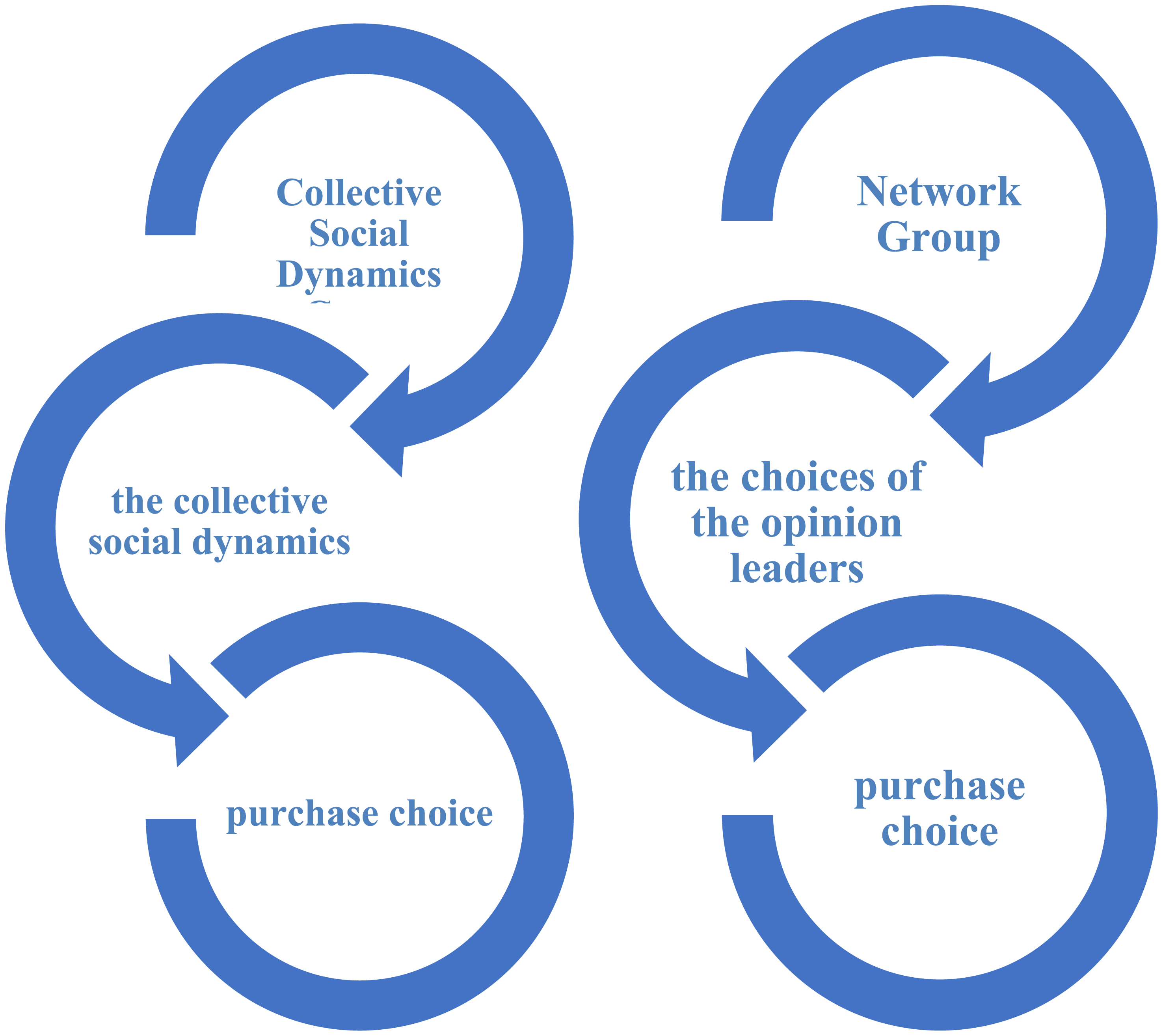

Data analysis and results
To statistically test whether the two independent variables (collective social dynamics or opinion leaders’ choices) shaped the purchase decisions of each group, Fisher’s exact test of independence was used. Fisher’s exact test is used to determine if there are non-random associations between two categorical variables when the assumptions for the Chi-squared test are not met. The test is useful for categorical data that result from classifying objects in two different ways; it is used to examine the significance of the association (contingency) between the two kinds of classification. Fisher’s exact test was applied to the results of the two experimental groups juxtaposed to the control group votes.
Fisher’s exact test of independence showed that the independent variable affected only the Collective Social Dynamics Group. More specifically, the correlations among our three groups showed that high statistical significance was observed only after comparing the Collective Social Dynamics Group with the other two (P Value: 0.056 and 0.067). Therefore, only the independent variable ‘collective social dynamics’ managed to shape the purchase decisions of participants in the experiment.
Control group versus Collective Social Dynamics Group.

Control Group versus Network Group.

Collective Social Dynamics Group versus Network Group.

Fisher’s Exact Test Control Group versus Collective Social Dynamics Group.
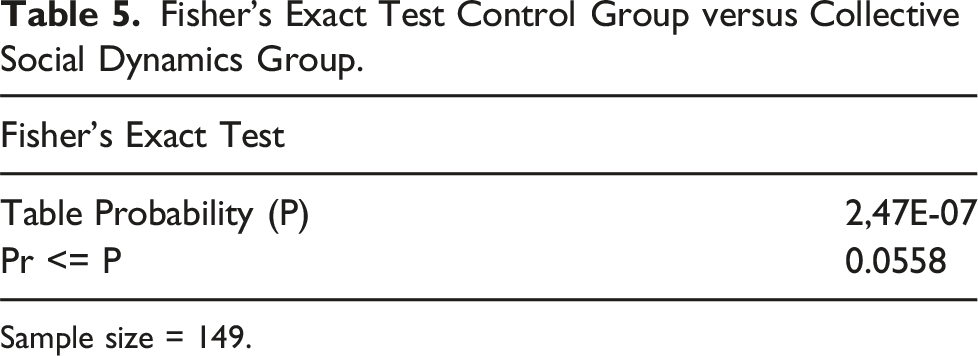
Sample size = 149.
Fisher’s Exact Test Control Group versus Network Group.

Sample size = 92.
Fisher’s Exact Test Collective Social Dynamics Group versus Network Group.

Sample size = 141.
Fisher’s Exact Test for all conditions.
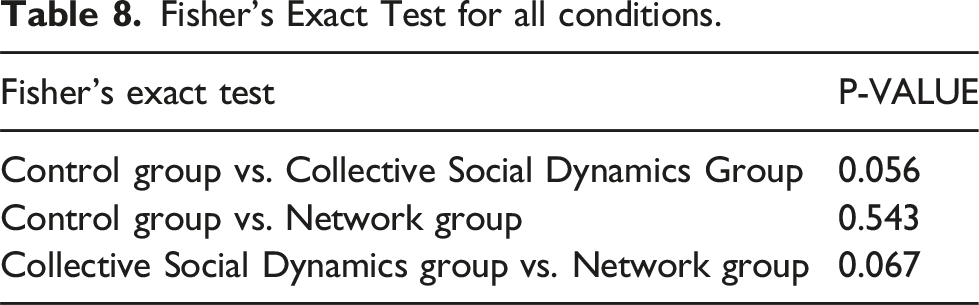
Control Group vs. Collective Social Dynamics Group: The larger difference between row percentages appears in the case of song 4, which was voted by 34% of the Control group but only by 15.2% of the Collective Social Dynamics Group. In addition, song 12 was voted by 9.1% of the Collective Social Dynamics Group but had no votes (0%) in the Control group. Also, a significant difference is evident in the case of Song 5, which was purchased by 12% of the Control group but only 5.1% of the Collective Social Dynamics Group.
Collective Social Dynamics Group vs. Network Group: Significant differences in the row percentages are observed mainly in the songs 4, 5, 7, 9 and 10. Specifically, songs 4, 5 and 7 gained higher percentages choice in the Network group than in the Collective Social Dynamics Group: song 4 was chosen by 28.6% in the Network versus 15.2% in the Collective Social Dynamics, song 5 was chosen by 16.7% in the Network group versus 5.1% in the Collective Social Dynamics and song 7 was chosen by 16.7% in the Network group versus 7.1% in the Collective Social Dynamics. At the same time, song 9 was preferred by the 21.2% of the Collective Social Dynamics Group compared to a lower percentage of 14.3% in the Network group, while song 10 was chosen by 10.1% in the Collective Social Dynamics Group but only by 2.4% in the Network. The P value in the comparison Control group versus Network group was calculated at 0.543, which indicates no statistically significant association between group and track selection (Table 6).
After validating that collective social dynamics shaped the purchase decisions in the Collective Social Dynamics Group, it was examined if herding took place and mass consumption phenomena occurred as a result of the collective social dynamics or the opinion leaders’ influence. In order to estimate this, the Cross-Sectional Absolute Deviation model [CSAD] (Chang et al., 2000) was chosen. The CSAD model is employed to measure the existence and statistical significance of herding behaviour. As originally proposed by Christie and Huang (1995) and later extended by Chang et al. (2000), the model assumes that herding is more likely to occur during periods of high market volatility or uncertainty. Given the inherent uncertainty in the evaluation of credence goods such as cultural products (Kretschmer et al., 1999), the CSAD approach is particularly appropriate for the context of our experiment. The CSAD model helps us understand whether people tend to follow the crowd when making choices – a behaviour known as herding. This is especially relevant when people are unsure about what to choose, like in the case of cultural products such as music, where personal judgement is hard to verify. That’s why this model is a good fit for this experiment.
We first calculate CSAD at each moment by measuring how far each song’s result is from the average result. This gives us a number that shows the overall ‘spread’ of opinions or choices. After that, we look at how this spread changes depending on the overall popularity of songs. For example, if the average popularity of songs goes up, do the differences also go up? Or do they shrink? This helps us see if people are just following the trend. We use a simple equation (called a regression model) to check this. If the model shows a specific pattern – especially if a certain number in the equation (called gamma-2) is negative – then it suggests people are herding, meaning they’re ignoring their personal preferences and just going with the flow. Here’s how we measured popularity in our experiment: for each song, we looked at how much its popularity changed over time. We used a percentage change based on a math function called the logarithm (log), which makes the changes easier to compare.
The Cross-Sectional Absolute Deviation (CSAD) captures the average absolute deviation of individual item returns from the cross-sectional mean return. It is computed at each time period t as - R_{i,t} is the return of item i (in our case, song i) at time t, - - N is the total number of items considered at time t.
This empirical measure is then used as the dependent variable in a regression model designed to detect non-linearities in the relationship between return dispersion and the magnitude of average market return. According to Chang et al. (2000), the following model is estimated: - R_{m,t} is the mean return at time t, - γ1 and γ2 are coefficients to be estimated, - ε_t is the error term.
Under the assumptions of rational asset pricing, return dispersion is expected to increase linearly with market return. However, if herding occurs – that is, when agents suppress their individual signals and mimic the aggregate behaviour – the increase in dispersion becomes less pronounced, or even reverses.
This results in a significantly negative γ2, which is the key indicator of herding in this model.
As Chang et al. (2000, p. 1655) note:
‘If market participants tend to follow aggregate market behaviour and ignore their own priors during periods of large average price movements, then the linear and increasing relation between dispersion and market return will no longer hold. Instead, the relation can become non-linearly increasing with a decreasing rate or even decreasing’.
In our experiment, the return R_{i,t} for each song i at time t was calculated as the percentage logarithmic change in adoption rates: - P_{i,t} is the adoption percentage of song i at time t.
Based on the CSAD regression analysis, herding behaviour was observed only under the condition of exposure to information on collective social dynamics, and not under the condition of exposure to named opinion leaders’ choices. To put it succinctly: people were more likely to follow the crowd only when they saw what everyone else was doing. But when they only saw what certain ‘influential’ people chose, they didn’t follow as much. In addition, the CSAD model helped us detect when people were choosing based on group behaviour rather than their own individual opinions.
CSAD and Absolute Mean Returns
Collective Social Dynamics Group
In cases were herding occurred, the relation between CSAD and │Rm,t│ is either decreasing or increasing but with a decreasing rate.
CSAD results for the Collective Social Dynamics Group.

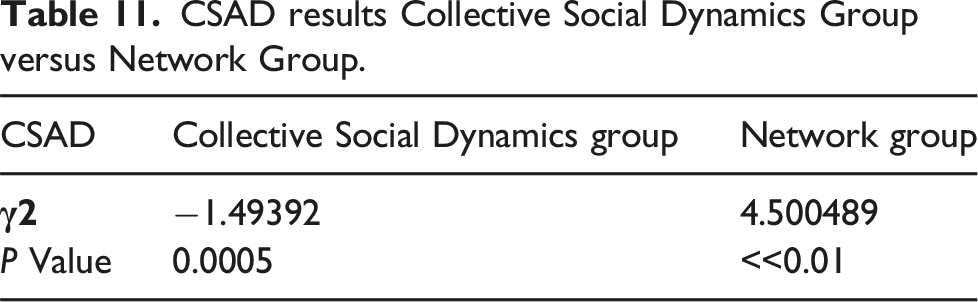
In Collective Social Dynamics Group γ2 was significantly negative, that is, – 1.49,392. This reveals the existence of herding.

CSAD and absolute mean returns –
In cases were herding occurred, the relation appearing between CSAD and │Rm,t│ is either decreasing or increasing but with a decreasing rate.
The Network Group
CSAD results for the Network Group.
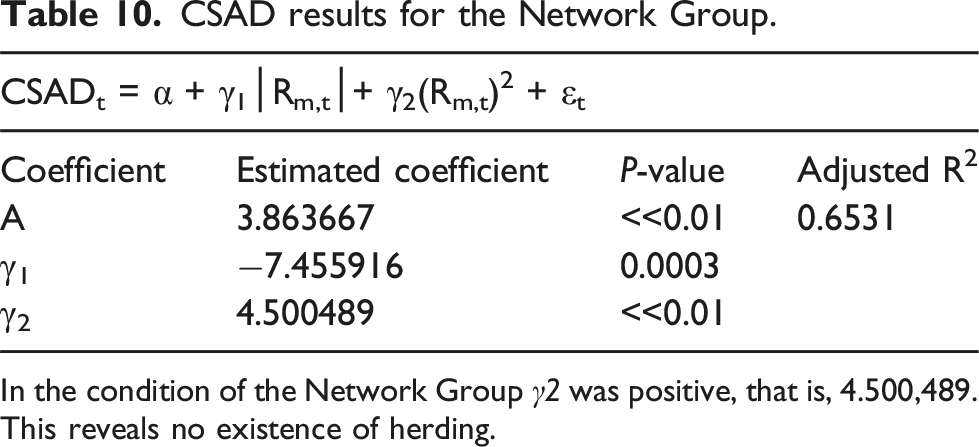
In the condition of the Network Group γ2 was positive, that is, 4.500,489. This reveals no existence of herding.
CSAD results Collective Social Dynamics Group versus Network Group.

CSAD and absolute mean returns – network group. In cases were herding occurred, the relation appearing between CSAD and │Rm,t│ is either decreasing or increasing but with a decreasing rate.
Discussion
The experiment presented in this paper attempted to examine the degree to which information on the decisions of previous consumers’ choices affects whether participants chose to consume a cultural product. In a networked setting, subjects were exposed to information on both the collective social dynamics – the impersonal choices of other consumers within the network – and on the choices made by group nominated as expert opinion leaders, in order to identify and measure whether phenomena of herding are caused by exposure to one of these independent variables and, if so, to which degree (Figure 3).
The main finding of this experiment is that the influence of the collective social dynamics is stronger compared to that of opinion leaders, as the latter failed to cause a phenomenon with high statistical value. Previous research (Salganik et al., 2006; Salganik and Watts, 2008, 2009), indicated that exposure to information on the impersonal choices of others can create mass imitating consuming phenomena and turn a cultural product into a bestseller. Their ‘multiple-worlds’ experimental design, showed that uncertainty is an inherent characteristic of the consumption of cultural goods (Kretschmer et al., 1999). Other research efforts, also previously discussed, have shown that this uncertainty may be regulated by reference to intermediaries/opinion leaders/experts/influencers who structure the entire consumer experience of cultural goods and have a crucial role in the diffusion of information and consequently in opinion building and decision-making. These two mechanisms of influence – local networked opinion leaders’ preferences and the preferences expressed through collective social dynamics – are compared in this research, in order to measure which one acts as the most significant influence on consumer choices of credence goods. The outcomes of this experiment confirmed the findings of Salganik et al. (2006, 2008, 2009), that collective social dynamics decisively shape decision-making in the consumption of music and contradict the results of the research made by Steininger and Gatzemeier (2013).
In terms of theory building, the results of the experiment can be correlated to the real environment of consumption of credence goods. In this light, impersonal mass choice expressed by charts, billboards, numbers of downloads, numbers of likes and so on, exerts a stronger influence on consumers’ decision-making than the reviews and recommendations of established cultural intermediaries such as critics and managers, at least when decision-making takes place within a limited amount of time. Charts, billboards, numbers of downloads, numbers of likes and so on, can be used as an indicator of popularity or perceived quality that influence consumers’ decision-making independently of review ratings. New digital platforms provide cues of early coming hits that can send a clear signal that will cut through the noise. In this sense, firms and organisations in cultural industries need to develop early-recognition mechanisms that will use bottom-up information in time.
However, despite the validity of the experimental design and our results on herding, the research outlined in this article has limitations that have to be taken into account. The first limitation concerns the application of convenience sampling in the experiment conducted. Even though no (self) selection bias was identified in the composition of our sample, convenience sampling does not allow the study to analyse experiment participants as representative of a general youth cohort. Additional limitations arise from the choice of a controlled experiment design. Even though this design allowed higher internal validity as compared to a field experiment, its main drawback is that it observed behaviour which would normally take place in more complex information environments where the information input is not controlled. A field experiment which would take place in an open, non-laboratory, environment and would assess the differential influence of real, publicly recognised, music business intermediaries versus the preferences of people who are central in any given network, would allow us to acquire a better understanding of the microphysics of decision-making in cultural consumption. An experimental design towards this direction would close the research gap.
The Network Group’s smaller size and the fact that only it received initial ‘seed’ votes (from identified hubs) follow from its basis in an existing student network. These design features mean that direct comparisons of popularity shifts across conditions should be interpreted with care. We therefore emphasise the within-group effects of each influence mechanism, rather than cross-group contrasts. Subsequent work might employ equivalent seeding or none at all – and align group sizes – to ensure any observed differences derive from the influence channel itself rather than from initial or structural disparities.
While our study focused on network-central individuals within a peer group, we recognise that other forms of influence – such as that of celebrities or social media macro-influencers – may exert significantly stronger effects. The individuals in our ‘opinion leader’ group were identified by peer nomination for musical expertise and social centrality but lacked public visibility or publicly recognised symbolic capital. In real-world digital ecosystems, influencers with large followings, aesthetic capital, or platform-driven amplification may generate stronger herding effects. Future research should replicate this experiment using externally validated influencers, such as verified TikTok or YouTube personalities, to test the boundaries of peer-based versus platform-based influence.
Future research should explore these dynamics in more ecologically valid environments. For example, field experiments involving macro-influencers, celebrities, or verified online figures would shed light on whether the influence of opinion leaders increases when symbolic capital or institutional recognition is present. Additionally, replications using a multiple-worlds design or in settings involving different types of cultural goods could further refine our understanding of how different forms of social influence operate across market contexts. As platforms increasingly mediate cultural consumption through algorithmic recommendation systems, it will also be crucial to investigate how these systems interact with user-driven social signals and network-based influence.
Finally, while our findings pertain specifically to credence goods – where quality is not easily assessed even post-consumption – the broader relevance of these results depends on the nature of the good in question. In markets where objective features are more discernible (e.g. search or experience goods), the evaluative role of expert intermediaries may be more pronounced. Nonetheless, as even non-credence goods increasingly acquire symbolic dimensions in consumer culture, understanding how social cues and peer dynamics shape perception remains an important line of inquiry.
In sum, this research contributes empirically and theoretically to ongoing debates about how influence is exercised in cultural markets. By demonstrating that decentralised collective dynamics can outperform local expert opinion in shaping cultural preferences, it reaffirms the significance of social context and visibility in consumer behaviour – and opens new avenues for exploring how these mechanisms function in the algorithmically curated spaces of contemporary digital life.
Footnotes
Declaration of conflicting interests
The authors declared no potential conflicts of interest with respect to the research, authorship, and/or publication of this article.
Funding
The authors received no financial support for the research, authorship, and/or publication of this article.
