




Abstract
Compared to the well-established phenomenon of repeat victimisation (experiencing the same crime type repeatedly), poly-victimisation (experiencing multiple crime types) is poorly understood. We argue that advancing understanding of poly-victimisation requires focusing on characteristics that transcend single crime events; the time-stable “flags” that explain why some people experience victimisation across contexts. Given the significant impact of poly-victimisation on wellbeing, this study aims to inform crime prevention policies by identifying personal characteristics associated with poly-victimisation risk within a 12-month period in Aotearoa New Zealand. We used binary logistic regression and Conjunctive Analysis of Case Configurations (CACC) to examine responses to the New Zealand Crime and Victims Survey. Poly-victimisation risk was rarely attributable to a single characteristic but was instead shaped by interactions between them. Consistent with prior studies, psychological distress frequently co-occurred with poly-victimisation, highlighting that victimisation often affects those least equipped to endure it. The case-oriented approach of CACC can provide critical insights into the complex risk dynamics associated with victimisation. Identifying and supporting poly-victims requires targeted interventions that recognise the cumulative impact of multiple vulnerabilities on victimisation risk.
Keywords
Background
Risk of victimisation is not spread equally across the population (O et al., 2017). Nor is it evenly spread among those already victimised; a non-trivial minority of victims suffer a disproportionate amount of harm through re-victimisation (Farrell & Pease, 2014). Re-victimisation occurs in two ways; repeat victimisation, where certain people, places, and products are repeatedly targeted for the same type of crime, and poly-victimisation, where they are targeted for different types of crime. A large body of work examines repeat victimisation (Johnson et al., 2009; Nicholas & Farrell, 2011).
While a substantial body of research has examined poly-victimisation, this work has focused predominantly on youth samples (Ogle et al., 2024). Existing evidence shows that experiencing poly-victimisation reduces health and well-being (Álvarez-Lister et al., 2017; Tanksley et al., 2020) and to a greater degree than single- or repeat-victimisation (Turner et al., 2016). Addressing poly-victimisation should therefore be a critical focus of crime prevention efforts, with research needed to develop effective prevention policies that reduce harm (Farrell & Pease, 2017). Accordingly, in this study, we examine the personal characteristics of adult poly-victims in Aotearoa New Zealand, 1 identifying combinations of characteristics associated with greater risk of poly-victimisation within a 12-month survey period. Our study offers novel insight by situating poly-victimisation within the Aotearoa New Zealand context, where social, cultural, and structural factors—including the experiences of Māori (Indigenous people of Aotearoa)—may shape patterns of risk differently from those observed in other countries (e.g., the United States), where most existing evidence originates. This contextual focus underscores the importance of considering cultural variation in future research.
Defining poly-victimisation
The concept of “poly-victims” was first proposed by Finkelhor et al. (2005), though earlier terminology, such as “multiple victimisation”, “cross-type victimisation”, “recurrent victimisation”, and “chronic victimisation” referred to the same phenomenon (Farrell & Pease, 2014; Tura et al., 2024). Finkelhor et al. initially explored the health impacts of poly-victimisation on children and adolescents, linking it to increased traumatic symptomology (Finkelhor et al., 2009). Since then, research has primarily focused on poly-victimisation among youth (Radtke et al., 2024; Tura et al., 2023) and, to a lesser extent, victims of elder abuse (Ramsey-Klawsnik et al., 2014).
Poly-victimisation has been conceptualised and measured in various ways over studies and over time (Radtke et al., 2024; Tura et al., 2024). One critical issue in measuring poly-victimisation is the time frame over which it occurs. Over their lifetime, many—if not most—people will experience two or more different types of victimisation. Not specifying a restricted timeframe dilutes the focus on people who are at highest immediate risk of re-victimisation. Thus, many studies limit their focus to recent experiences, often within the past 12 months (Finkelhor et al., 2011; Tura et al., 2023), although some studies of poly-victimisation onset consider lifetime prevalence in children (Ellonen & Salmi, 2011; Finkelhor et al., 2009). In this study, poly-victims are defined as people who, within a 12-month period, disclosed re-victimisation involving a different type of crime than their initial victimisation.
Explaining poly-victimisation
Most explanations for re-victimisation have focused on repeat victimisation and derive from environmental criminology theories. The routine activity approach describes how potential victims and offenders come together in time and space, while the rational choice perspective explains how the characteristics of potential victimisation targets factor into offenders’ decision-making processes (Cornish & Clarke, 2008; Johnson et al., 2009; Pease, 1998). Although this literature has focused on repeat victimisation, it provides a starting point for understanding poly-victimisation due to similarities in offender decision-making processes for re-victimisation (Ashton et al., 1998).
Two dominant mechanisms for explaining re-victimisation have been proposed in environmental criminology: risk heterogeneity (“flag”) and event/state dependence (“boost”) (Farrell & Pease, 2014). The flag model proposes that victims/targets have stable characteristics that act as cues to prospective offenders of their suitability for victimisation. For example, some residential properties have characteristics that are conducive to burglary (e.g., insecure doors/windows, poor sightlines from the street; see Bowers & Johnson, 2005) and some people may be more vulnerable because of their physical characteristics (e.g., people with disabilities, ethnic minorities; see Pease, 1998), the places they frequent (e.g., illicit markets), or occupations bringing them into contact with strangers (e.g., taxi drivers, sex workers, nurses; see Farrell & Pease, 2014). Hence the enduring characteristics that flag a target/victim's suitability are independent of their victimisation history (Tseloni & Pease, 2003) and can attract the attention of many would-be offenders (Johnson, 2008).
In contrast, the boost model presumes that an initial victimisation increases the likelihood of future re-victimisation; or, as Farrell and Pease (1997, p. 105) put it, “victimization begets victimization”. This mechanism proposes that offenders learn that a target/victim is associated with a sufficient reward and minimal risk of being caught, justifying re-victimisation. In the case of property crime, a burglar may return to a property because high-value items were observed but not stolen and they are now familiar with the security obstacles that need to be overcome (Tseloni & Pease, 2003). For interpersonal crime, an offender may ascertain victim suitability in the first crime event by learning the likelihood of a victim resisting (Farrell & Pease, 1997) or guardians being absent (Farrell et al., 1995).
The boost mechanism is typically associated with repeat offending by the same person, but repeated victimisation can also alter victim behaviour in ways that signal vulnerability to other offenders. In essence, the consequences of the boost mechanism turn into a flag (Farrell & Pease, 2014). For example, victims of child sexual abuse may develop maladaptive interpersonal behaviours that increase their vulnerability to further victimisation, extending into adulthood (Messman & Long, 1996; Scoglio et al., 2021). Farrell and Pease (2017) call this process the flag-boost-interaction theory of crime concentration, and various empirical studies support the presence of both mechanisms (Johnson, 2008; Tseloni & Pease, 2003; Wittebrood & Nieuwbeerta, 2000).
Re-victimisation research using environmental criminology theory examines the situational context of victimisation. For example, environments like the home for family violence, or the workplace for theft, allow offenders easy access to targets/victims (Farrell et al., 1995). This approach treats human and non-human victimisation similarly; however, Finkelhor and Asdigian (1996) have argued this approach cannot account for the (exclusively) human poly-victims whose vulnerabilities transcend specific contexts. Put simply, they argue the situational approach does not reveal why a person becomes a victim of (say) assault in one situation, and a victim of credit card fraud in another.
Finkelhor and Asdigian (1996) consequently proposed an alternative explanatory framework focusing on personal characteristics and behaviours that increase victimisation risk across situations and crime types. Their “target congruence theory” suggests victim characteristics aligning with offenders’ motives or needs may explain poly-victimisation (Finkelhor & Asdigian, 1996). The theory identifies three factors: target vulnerability (e.g., physical weakness or mental health issues), target gratifiability (e.g., gender for some types of crime) and/or target antagonism (e.g., group identities that rouse resentment). Target congruence theory and environmental criminology are not mutually exclusive; we contend that target congruence aligns with the concept of target suitability from environmental criminology that considers offender perceptions of victim characteristics.
Predictors of poly-victimisation
In combination, target congruence theory and environmental criminology suggest that enduring personal (i.e., socio-demographic) characteristics that flag victim vulnerability or suitability—both driving and resulting from re-victimisation (i.e., boosts)—may explain why some people experience victimisation across contexts. Potential time-stable flags of poly-victimisation span a range of factors in research predominantly conducted with young people. For example, Tura et al. (2023) found poly-victimisation was correlated with younger ages, boys, urban living, familial financial struggles, and parental legal issues. Other studies have echoed the higher risk of poly-victimisation for boys (Turner et al., 2016), including in minority groups such as African American boys (Elsaesser & Voisin, 2015), though ethnicity exhibits mixed relationships with poly-victimisation (Jackson et al., 2016; Lasky et al., 2021).
Furthermore, although arguably less time-stable than demographic characteristics, psychosocial stressors have also been linked to poly-victimisation. For example, adolescent poly-victims are more likely than non- and single-victims to report strained relationships with parents and friends (Romano et al., 2011) and young poly-victims tend to experience more psychosocial stressors compared with their less-victimised peers (Ellonen & Salmi, 2011). In college-age LGBTQ communities, attachment to abusive peers is correlated with increased likelihood of experiencing poly-victimisation (DeKeseredy et al., 2021). Finally, in studies involving adults—particularly those with experience of prison—mental health issues and childhood victimisation emerge as the most consistent correlates of poly-victimisation (Caravaca-Sánchez & Wolff, 2021; Listwan et al., 2014; Snyder et al., 2021). Together, these findings underscore that psychosocial stressors are a common correlate of poly-victimisation across age groups (Finkelhor et al., 2007a, 2007b; Tura et al., 2024). Indeed, within target congruence theory, emotional problems are postulated to “increase risk behavior, engender antagonism, and compromise the ability to protect oneself” (Finkelhor et al., 2009, p. 316).
An intersectional and contextual lens
Given that evidence on predictors suggests overlapping social and psychosocial identities are relevant to poly-victimisation, intersectionality is an apt lens for this research. An intersectional framework recognises that, rather than functioning in isolation, social identity characteristics such as gender, race/ethnicity, age, and sexual identity, combine to shape complex and compounded experiences of marginalisation and vulnerability (Collins & Bilge, 2020; Crenshaw, 1989, 1991). Applying an intersectional perspective to poly-victimisation facilitates examination of how these intersecting characteristics shape patterns of risk, highlighting the complexity of victimisation beyond single-axis analyses. While most research on poly-victimisation has been conducted in the United States (Ogle et al., 2024 2 ), Aotearoa New Zealand has a distinct social and cultural context in which patterns of risk may diverge. Māori, who make up the largest proportionate Indigenous population of any colonised nation globally, 3 are experiencing ongoing cultural revitalisation—marking a sharp departure from the context of the United States. Historically, Māori, as well as Pacific peoples, have experienced disproportionate exposure to violence and contact with the criminal justice system (Bradley & Walters, 2019), due to the enduring impacts of colonisation, systemic racism, and socio-economic inequity (New Zealand Department of Corrections, 2007). In this context, applying an intersectional lens is especially important; for example, justice system statistics reveal that the disproportionate imprisonment of Māori versus non-Māori New Zealanders is more pronounced for women than men. 4 Hence, Aotearoa New Zealand presents a distinct context where the lasting impacts of colonisation on Māori underscores the importance of using an intersectional lens. In this sense, intersectionality is not only a conceptual tool but a necessary framework for capturing how compounded social positions structure experiences of poly-victimisation in this setting.
Current study
We argue that advancing understanding of poly-victimisation requires focusing on characteristics that transcend single crime events; the time-stable flags that explain why some people experience victimisation across contexts. Prior research suggests the factors associated with poly-victimisation will be distinct from those for single-victimisation (Farrell & Pease, 1997; Snyder et al., 2021). Further, victimology theories suggest that people at high risk of re-victimisation will be typified by interacting socio-demographic characteristics (e.g., gender, age, race/ethnicity, disability status, sexual identity, etc.), rather than homogeneous higher-order groups (Shoham et al., 2010; Walklate, 2012). Yet, there is lack of research on how risk factors might interact, or intersect, especially in adults (Hancock, 2022).
Accordingly, in this exploratory study we examine associations between personal characteristics and poly-victimisation in Aotearoa New Zealand. We first examine these characteristics singly, before moving on to consider where the co-occurrence of personal characteristics intensifies victimisation risk. Our research question is: What specific groups, defined by a unique combination of characteristics, are at increased risk of poly-victimisation? That is, who repeatedly experiences multiple, different types of crime, over a 12-month period? Non-victims were excluded from the analysis because the focus of this study is on distinguishing risk factors for poly-victimisation relative to single-victimisation among individuals who have already experienced victimisation.
Based on previous empirical research, we expect to find higher rates of poly-victimisation are associated with being male, younger, experiencing financial stress (Tura et al., 2023) and psychosocial stressors (Caravaca-Sánchez & Wolff, 2021; Ellonen & Salmi, 2011; Listwan et al., 2014; Snyder et al., 2021). Based on target congruence theory, we also expect that people with disabilities (i.e., target vulnerability), women and girls (i.e., target gratifiability) and ethnic and sexual identity minority groups (i.e., target antagonism) will be at increased risk of poly-victimisation. From an intersectional perspective, we further anticipate that these risk factors will interact in complex ways rather than operate independently.
Method
In accordance with Open Research principles, 5 we submitted a peer-reviewed pre-registration document for a broader project including repeat victimisation to AsPredicted prior to analysis commencing (see https://aspredicted.org/3j3x-sxq3.pdf and Tompson et al., 2025 for the project report). The pre-registration outlined the data source, the variable selection and our original analytic strategy. 6 Next, we elaborate on each of these.
Data and measures
We used data from cycles 1–5 of the New Zealand Crime and Victims Survey (NZCVS), accessed within Statistics New Zealand's secure Integrated Data Infrastructure (IDI) with confidentiality obligations. 7 The NZCVS is a rolling annual, nationwide, face-to-face random probability survey of people aged 15 years or older, with a booster sample of Māori. 8
The NZCVS collects demographic details and victimisation experiences in the 12 months prior to the survey, along with respondents’ life circumstances at the time of the survey. A series of behaviourally based questions establish how many incidents of each type of crime respondents have experienced in the past 12 months. Since our focus was poly-victimisation, the initial sample for this study included NZCVS respondents who indicated they had experienced at least one crime type (N ≈ 12,789 9 ).
We created a dataset where each record represented a respondent, with columns indicating the frequency of victimisation for 11 broad crime categories 10 aligned with reporting by New Zealand Ministry of Justice (2023b). Our dependent variable was poly-victim status (yes or no) in the 12 months prior to being surveyed, created by classifying respondents as single victims or poly-victims (having experienced at least two or more different crime types). Our independent variables were respondent age, disability, ethnicity, 11 financial stress, gender, partnership status, psychological distress, 12 and sexual identity. We performed data manipulation in the SQL environment and conducted analyses using R (v4.4.0). 13
Analytic strategy
We first generated descriptive statistics for the characteristics of single-victims and poly-victims. To answer our research question, we used a combination of traditional methods—binary logistic regression—and Conjunctive Analysis of Case Configurations (CACC). Logistic regression is a variable-oriented method that isolates the explanatory power of individual variables, assuming additive-linear causality (Britt & Weisburd, 2010). While useful for identifying statistically significant predictors, it is less suited to modelling intersectionality, because it “depends upon strong homogenizing assumptions about cases” that oversimplify causality (Hart et al., 2023, p. 2). Further, logistic regression assumes variables operate independently and requires explicit specification of interaction terms, which can quickly become complex and difficult to interpret with multiple intersecting factors (Evans et al., 2018). In contrast, CACC is a novel case-oriented method that views causality as plural and conjunctural, emphasising how combinations of factors interact to produce outcomes in different contexts. For a walkthrough of the method, see Hart (2021) and for a walkthrough using a bespoke R package see Hart et al. (2023). By using both methods we can first identify which characteristics are statistically significantly associated with poly-victimisation and then examine how combinations of those characteristics relate to elevated risk, allowing for a richer analysis of intersectional patterns.
In the binary logistic regression models, we used respondent characteristics to estimate the likelihood of being a poly-victim. The reference category for each independent variable was the highest frequency category (e.g., people 25–64 years). We did not include higher-order interaction terms (e.g., three-way or more) given the lack of consistent empirical evidence for specific interaction effects in the victimology literature (Hancock, 2022). Instead, we examined interactions using the exploratory CACC method. We checked the Variance Inflation Factors (VIF), evaluated predictive improvements to a commensurate null model, and generated Nagelkerke R2 (Menard, 2010) and the Akaike Information Criterion to assess model fit. To ease interpretation the model's beta coefficients were transformed into odds ratios and confidence intervals using natural logarithms.
CACC was introduced by Miethe et al. (2008) as an exploratory method that can be used to identify multiple and complex interrelationships among categorical variables. CACC has since been applied in various ways to understand how interactions between independent variables are associated with dependent crime-related variables, including victimisation (e.g., Marteache & Trinidad, 2024). To perform CACC we first created a matrix of possible combinations of respondents’ personal characteristics (i.e., case configurations). The resulting matrix contained one row for each case configuration and additional columns representing the number of respondents, and the proportion of respondents who were poly-victims, in that configuration. We had four independent variables with two categories, three with three categories, and one with four categories, resulting in 1,728 hypothetical case configurations in the CACC matrix (24 × 33 × 41 = 1,728). To avoid having more case configurations than observations—a key recommendation in CACC (Hart et al., 2023)—we collapsed categories wherever possible. For example, age bins were under 25 years, 14 25–64 years and 65+ years. To protect against uncommon case configurations unduly influencing the results, we narrowed the focus to “dominant” case configurations containing at least 10 respondents (Miethe et al., 2008), 15 which resulted in 186 case configurations available for analysis.
If the risk of poly-victimisation is unrelated to respondent characteristics, the proportion of poly-victims should be similar across case configurations that differ in one variable (e.g., gender) but share all others (e.g., age band, ethnicity, psychological distress). These comparisons are the crux of “main effects” analysis in CACC (Hart et al., 2017), which we completed for all characteristics. Main effect analysis calculates each variable's contribution to the outcome while controlling for others, identifying configuration pairs that differ by only one variable (Hart et al., 2023) and computing the differential probability between them. Results include descriptive statistics and a boxplot, which we used to visualise differences in poly-victimisation from the sample mean.
Results
Descriptive statistics
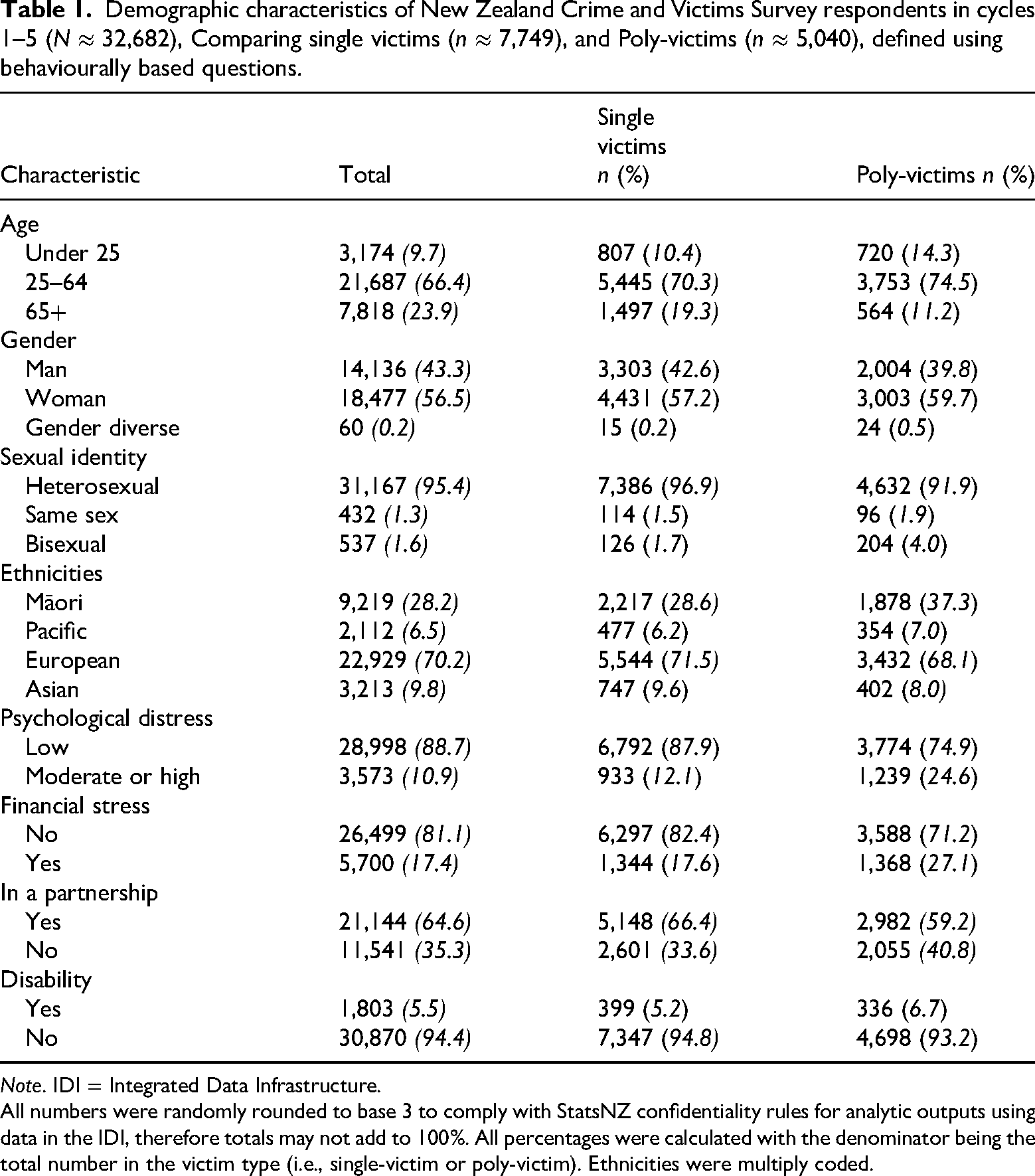
Table 1 shows most respondents were aged between 25 and 64 years, with around one-10th under 25 years (minimum age 15) and around a quarter over 65 years. Just over half were women, just under half men, and less than 1% were gender diverse. Most respondents were heterosexual, with 1.3% attracted to the same sex and 1.6% bisexual. Respondents could identify with multiple ethnicities. Over two-thirds identified as European, just under a third as Māori, a 10th as Asian, and 6.5% as Pacific. Around one in 20 people in the sample reported having a disability. 16 Most respondents reported low levels of psychological distress, with just over a 10th experiencing moderate or high distress. Just under a fifth of respondents faced financial stress; that is, they could not meet an unexpected expense. Two-thirds had a partner (i.e., were in a relationship at the time of the survey). Note from the denominators used to create the percentages in Table 1 that approximately 7,749 were single victims (23.7%), and approximately 5,040 were poly-victims (15.4%).
Demographic characteristics of New Zealand Crime and Victims Survey respondents in cycles 1–5 (N ≈ 32,682), Comparing single victims (n ≈ 7,749), and Poly-victims (n ≈ 5,040), defined using behaviourally based questions.
Note. IDI = Integrated Data Infrastructure.
All numbers were randomly rounded to base 3 to comply with StatsNZ confidentiality rules for analytic outputs using data in the IDI, therefore totals may not add to 100%. All percentages were calculated with the denominator being the total number in the victim type (i.e., single-victim or poly-victim). Ethnicities were multiply coded.
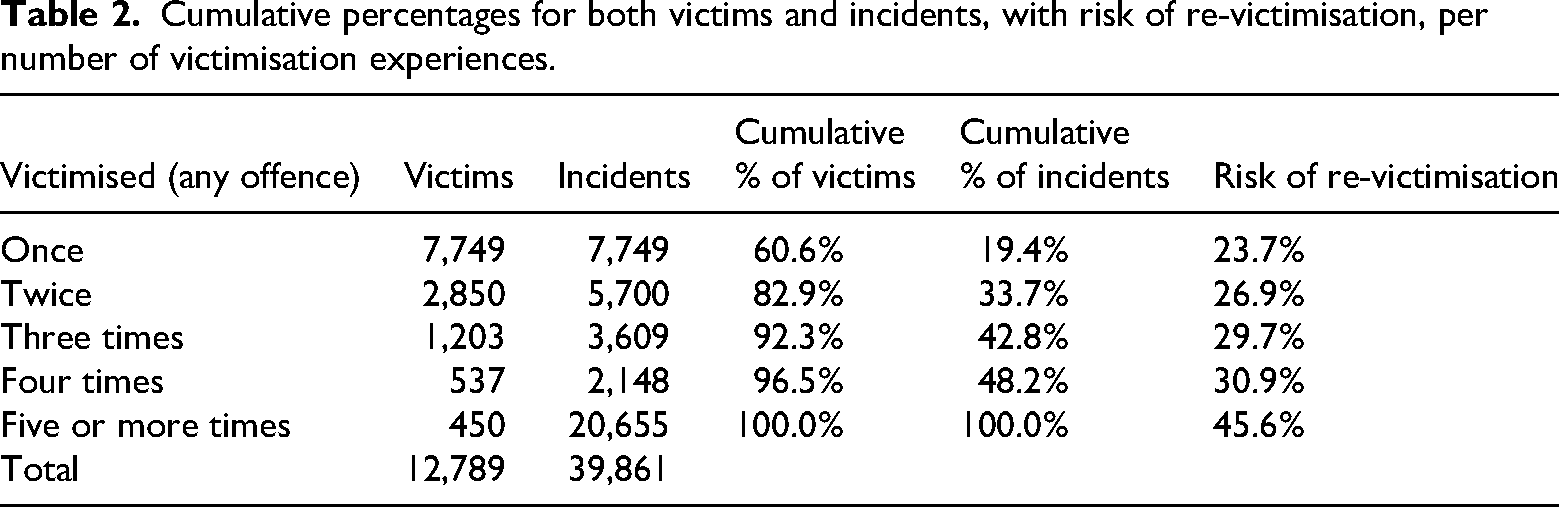
The risk of poly-victimisation was found to increase with each victimisation (Table 2). Just under a quarter of respondents (23.7%) had been victimised at least once in the past year. Among them, 26.9% were victimised two or more times, rising to 29.7% for three or more victimisations and 30.9% for four or more. Nearly half (45.6%) of those victimised four or more times experienced at least five incidents. Some people in this latter group reported experiencing many dozens of incidents, often relating to forms of domestic violence.
Cumulative percentages for both victims and incidents, with risk of re-victimisation, per number of victimisation experiences.
Poly-victims reported significantly higher rates of most crime types than the overall sample (Table 3). For instance, rates of fraud (28.1%) and trespass (18.3%) among poly-victims were more than double those observed in the full sample, while vehicle and bike theft was nearly three times as common among poly-victims (33.1%) compared to all respondents (11.4%). Poly-victims also reported higher rates of assault, harassment, property damage, and robbery than the broader sample, though to a lesser extent. The heightened prevalence of these diverse crime types underscores the disproportionate exposure to harm faced by poly-victims.
Number of New Zealand Crime and Victims Survey respondents and poly-victims who had experienced each crime type, derived from behaviourally based questions.
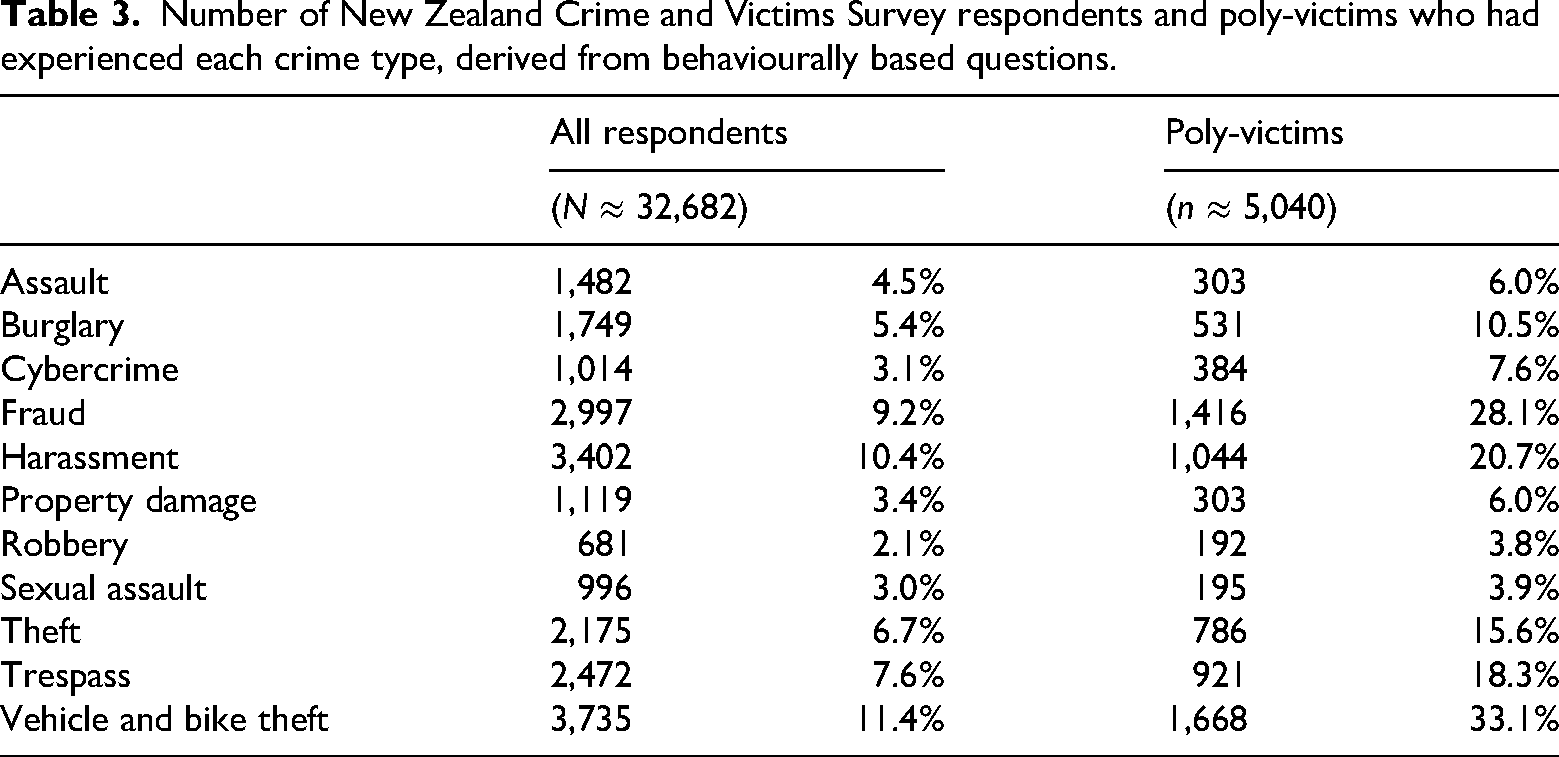
The elevated fraud victimisation rate among poly-victims is especially noteworthy given that fraud has increased overall since 2021, and the demographic groups most affected by fraud—mid-aged, high-income, Asian, and European adults (Ministry of Justice, 2024a)—differ from those typically vulnerable to other forms of victimisation. This divergence may obscure demographic trends within the poly-victim population, suggesting more nuanced analysis is needed to distinguish between overlapping and distinct patterns of victimisation.
Logistic regression
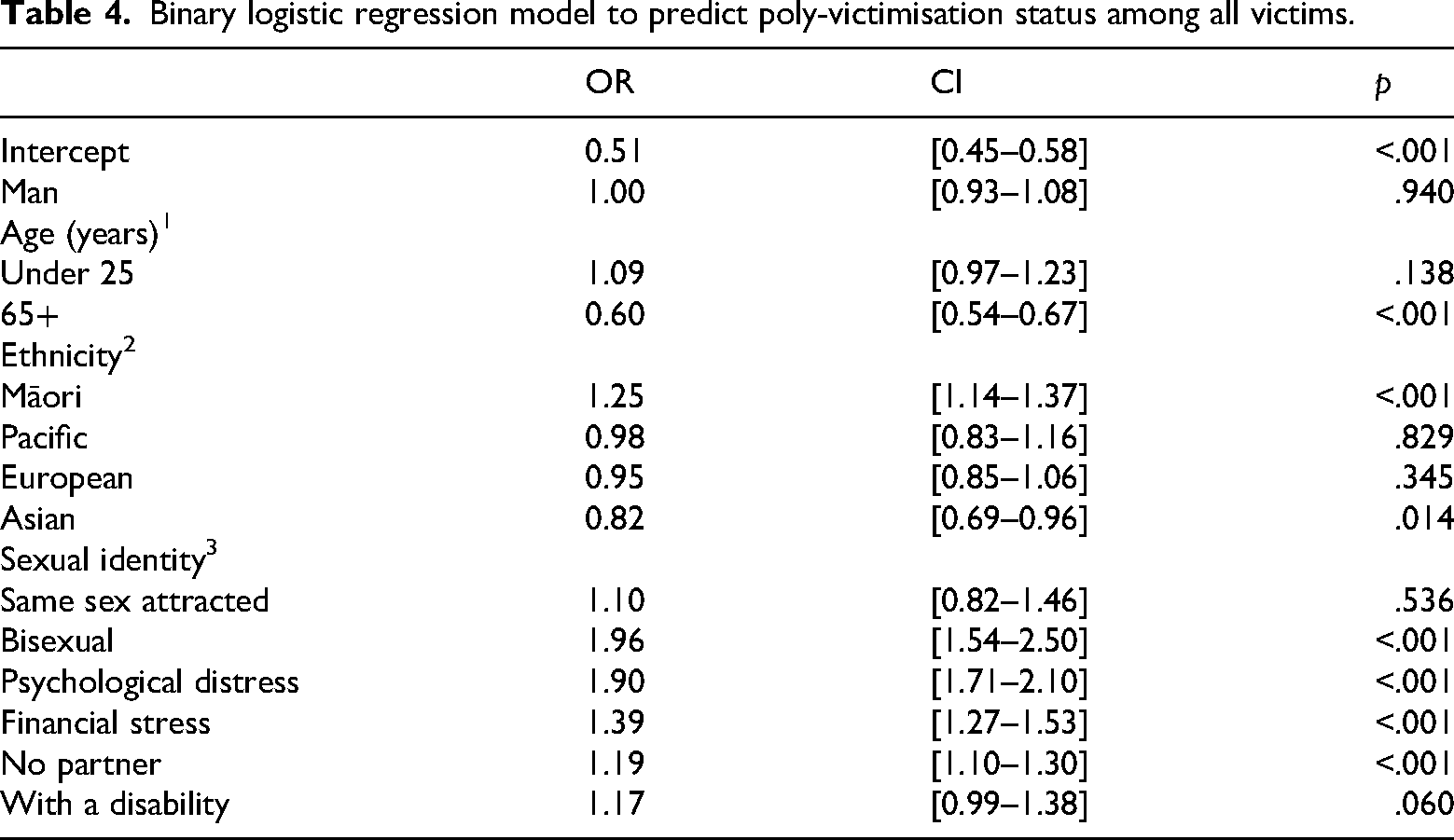
The results of logistic regression model in Table 4 show that, among victims in the survey, people who were 65 years and older and people identifying as Asian had lower odds of experiencing poly-victimisation, whilst people who were Māori, bisexual, had moderate to high psychological distress, were experiencing financial stress, and/or currently had no partner had greater odds of poly-victimisation. Both identifying as bisexual or reporting moderate to high psychological distress were associated with almost two times greater odds of poly-victimisation. All variables had VIFs less than two and hence multicollinearity was not a concern. However, the small pseudo R2 value indicates the model poorly fit the data and there remains a substantial amount of variance unaccounted for.
Binary logistic regression model to predict poly-victimisation status among all victims.
CACC
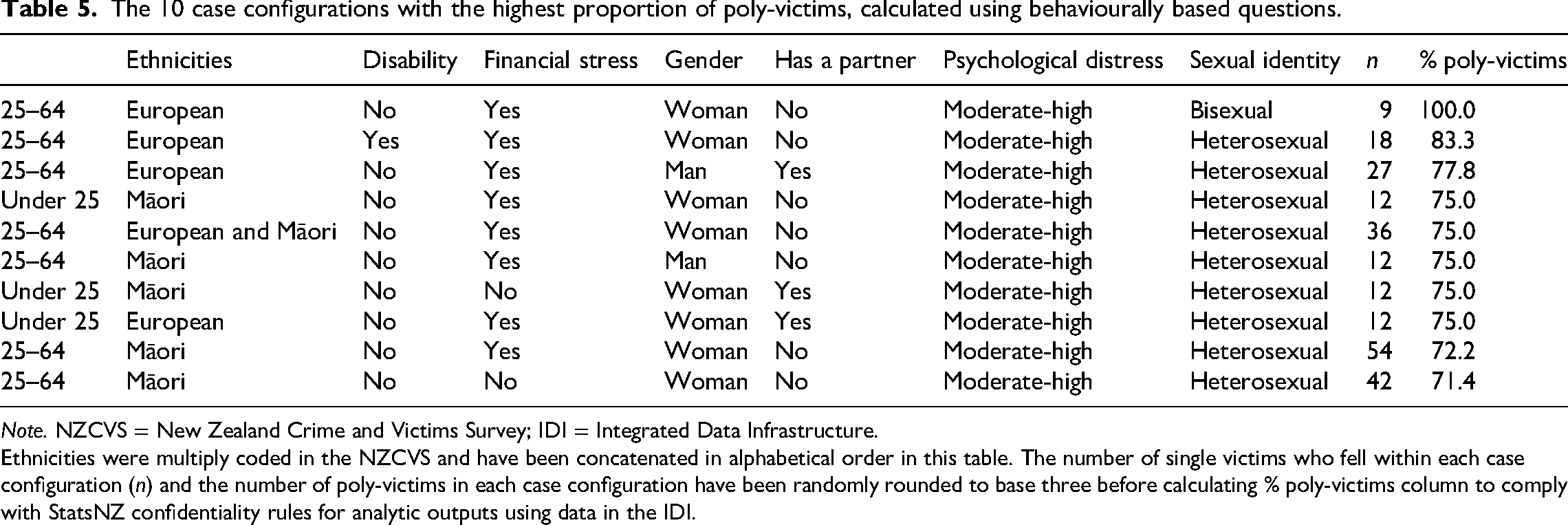
Of the 1,728 possible case configurations, 186 included at least 10 respondents. Table 5 presents the 10 case configurations with the largest proportion of poly-victims. The group with a 100% poly-victimisation rate comprised mid-aged single European women who were bisexual, with a moderate-high level of psychological distress, financial stress, and no disability. The configuration with the next highest poly-victimisation rate was mid-aged single European women, who were heterosexual, with a moderate-high level of psychological distress, financial stress and a disability.
The 10 case configurations with the highest proportion of poly-victims, calculated using behaviourally based questions.
Note. NZCVS = New Zealand Crime and Victims Survey; IDI = Integrated Data Infrastructure.
Ethnicities were multiply coded in the NZCVS and have been concatenated in alphabetical order in this table. The number of single victims who fell within each case configuration (n) and the number of poly-victims in each case configuration have been randomly rounded to base three before calculating % poly-victims column to comply with StatsNZ confidentiality rules for analytic outputs using data in the IDI.
Overrepresented groups in these top configurations (compared to their prevalence in single victims; see Table 1) included people who were under 65 years, Māori, with a disability, experiencing financial stress, women, single, with moderate to high psychological distress, and bisexual.
Main effects
Figures 1 and 2 show boxplots illustrating the distribution of differences from the mean proportion of poly-victims for each characteristic (the “main effect”). In Figure 1, most main effects exhibit a wide range of values that span the zero line, suggesting that poly-victimisation rates are contextually variable. In other words, many characteristics are linked to both higher and lower rates compared with the mean, indicating that poly-victimisation risk is often not reducible to a single characteristic and is instead likely associated with interactions between characteristics. Hence, even though women feature prominently in the top ten most poly-victimised case configurations, it is not just being a woman that increases risk to poly-victimisation, but the intersection of being a woman with other characteristics that intensifies risk.
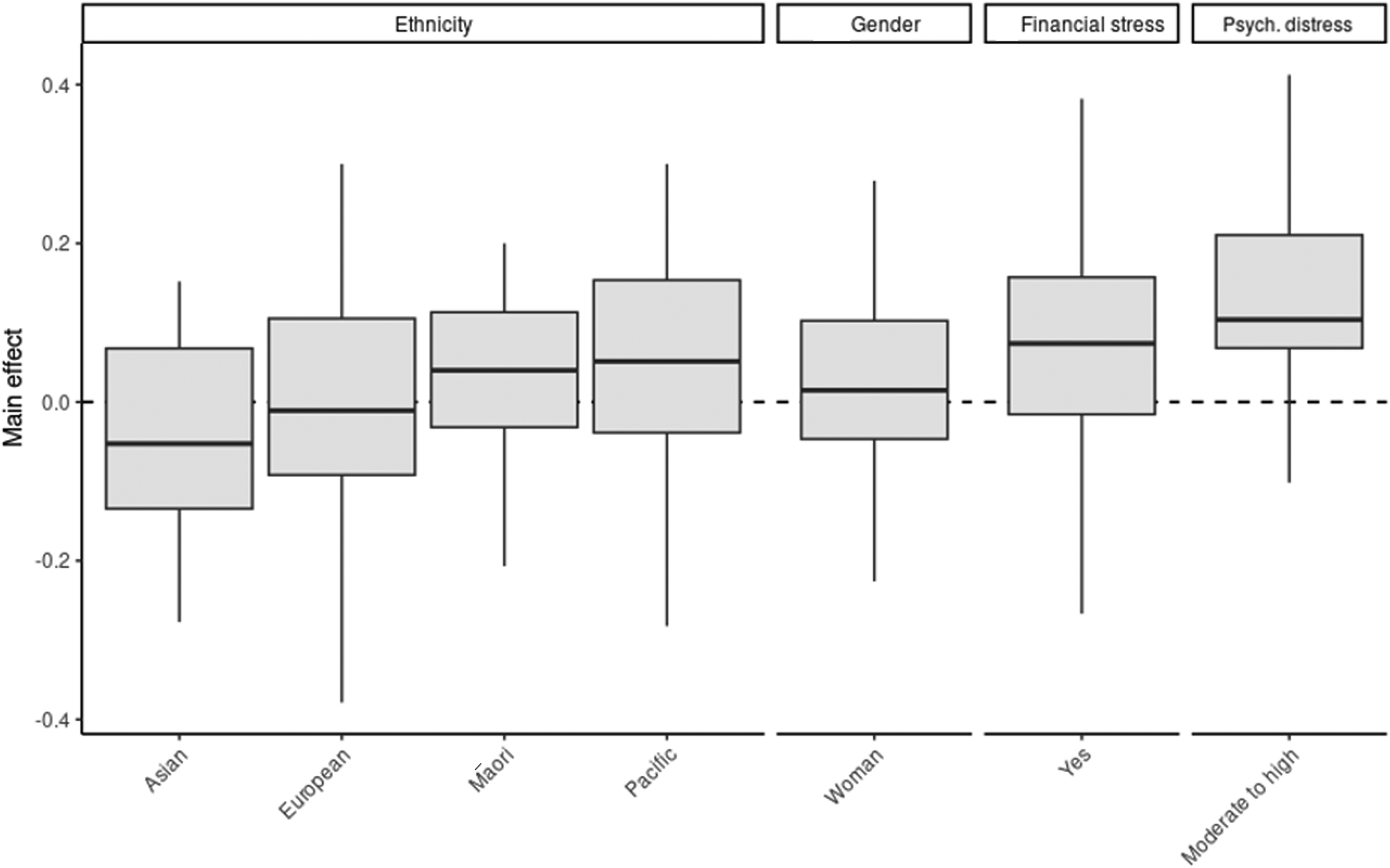
Distribution of “main effects” for poly-victims for ethnicity, gender, financial stress and psychological distress characteristics.
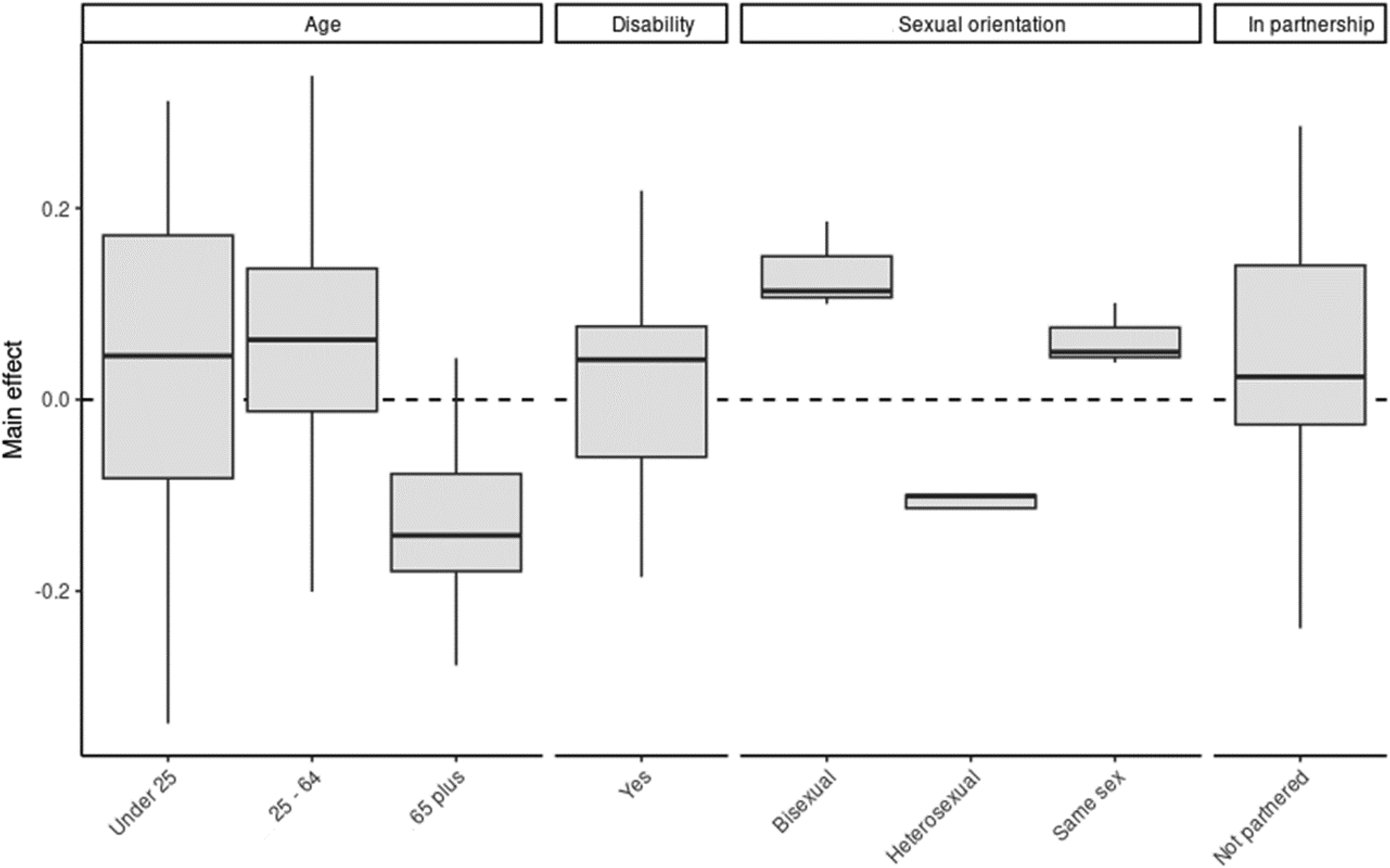
Distribution of “main effects” for poly-victims for age, disability, sexual identity and partnership status characteristics.
Using a conservative cut-off where the boxes in the boxplots do not cross the zero line (the sample mean poly-victimisation rate) in Figures 1 and 2 suggests increased poly-victimisation risk for bisexual or same-sex attracted people and people experiencing moderate to high psychological distress. Conversely, the figures indicate decreased poly-victimisation risk for people aged 65 or older and heterosexual people.
Discussion
Poly-victimisation, the experience of multiple victimisations across different crime types, represents a complex but understudied area of re-victimisation. Scholars suggest that poly-victims exhibit cross-context vulnerability, facing elevated risk of victimisation across contexts (Tanksley et al., 2020). This vulnerability raises the possibility that offenders may target poly-victims based on identifiable visible or non-visible cues, or flags. Drawing on data from the NZCVS, we investigated associations between personal characteristics and poly-victimisation, offering insight into the interplay of factors contributing to this phenomenon.
Our findings underscore the relevance of intersectionality for understanding poly-victimisation in Aotearoa New Zealand. Consistent with Crenshaw's (1989, 1991) framework, risk emerges from the interaction of multiple social identifies and psychosocial characteristics. The combination of minority sexual identity, psychological distress, financial stress, and Māori identity illustrates how intersecting characteristics can compound vulnerability, producing a nuanced pattern of elevated poly-victimisation risk. While minority sexual identity and psychological distress were consistently associated with increased risk, the case-oriented CACC analysis showed that poly-victimisation was primarily driven by combinations of characteristics. This approach provided critical insights into patterns of intersecting risk factors that may be overlooked when examining characteristics independently. The specific combinations identified are sample-dependent; our focus is therefore on general patterns rather than detailing all possible intersections, some of which involve very few respondents.
The consistent association between moderate to high psychological distress and increased poly-victimisation risk aligns with prior research (Caravaca-Sánchez & Wolff, 2021; Ellonen & Salmi, 2011; Listwan et al., 2014; Snyder et al., 2021). Higher risk among same-sex-attracted and bisexual people aligns with target congruence theory, which posits that antagonism is often directed toward minority groups. Conversely, we did not find higher rates of poly-victimisation among other minority groups (e.g., ethnic minorities or people with disabilities) when using behaviourally based screener questions. However, sensitivity analysis (Tompson et al., 2025) indicates that Māori are usually associated with a higher risk of poly-victimisation when using a measure of victimisation classified as a legally defined offence. This may reflect Māori respondents reporting more clearly identifiable or severe incidents, which are more likely to meet legal thresholds. Given that around one-third of incidents reported by NZCVS respondents could not be verified as offences due to vague descriptions, we consider the behaviourally based screener questions a more appropriate measure for this study.
Further, the null effect for people with disabilities may reflect the age distribution of this group in the NZCVS, with many respondents aged over 65. Older people tend to experience lower victimisation rates, potentially obscuring the impact of disability on poly-victimisation risk among younger and mid-aged people (Ministry of Justice, 2024b, p. 13). Similarly, although women were overrepresented in the 10 configurations with the highest poly-victimisation rates, gender disparities were not consistently observed in the main effects analysis, reflecting that interactions with other characteristics are likely more important. Finally, while Tura et al. (2023) found higher poly-victimisation rates among younger people and those under financial stress, these factors were not consistently associated with increased risk in our study.
Strengths and limitations
This study offers several important strengths. First, it draws on a large, national dataset (the NZCVS) that includes a Māori booster sample, enabling analysis of poly-victimisation in Aotearoa New Zealand with greater population-level validity than some previous studies. Second, by employing both variable-oriented (logistic regression) and case-oriented (CACC) analytic strategies, we were able to move beyond the additive assumptions of traditional regression and illuminate the intersecting patterns of risk associated with poly-victimisation. This dual approach draws on a novel method (CACC) and provides both statistical clarity and intersectional nuance. Third, the study contributes to an under-researched geographic context. Most poly-victimisation studies are situated in the United States and United Kingdom, and Aotearoa New Zealand offers a distinct cultural and structural setting, with a high proportion of Indigenous people and a national political context featuring cultural revitalisation efforts and colonial legacies. Studying poly-victimisation in this context therefore generates insights that are locally relevant and extends the international evidence base by emphasising the importance of context in shaping victimisation risk.
We acknowledge this study has several data-related limitations. First, like other research using national victimisation survey data (e.g., Finkelhor et al., 2007b), our analysis relied on a limited set of cross-sectional variables. Without temporal sequencing, we could not determine whether characteristics preceded poly-victimisation (potential predictors) or followed it (potential consequences). The lack of robust causal analysis has been noted by others as a limitation of understanding the relationship between psychological health and poly-victimisation (Tanksley et al., 2020).
Second, while the literature identifies dozens of potential risk factors for poly-victimisation (Ogle et al., 2024), practical and confidentiality constraints restricted the number of variables we could include. Specifically, Statistics New Zealand rules required suppression of any case configuration with fewer than six participants. To reduce suppression rates, we removed two variables after reviewing correlations among original predictors. Despite this, the study is an important step in better understanding some of the potential intersecting risk factors for poly-victimisation in Aotearoa New Zealand.
Third, the NZCVS omitted variables approximating routine activities, including offending, which evidence suggests are causally related to victimisation risk (Fagan & Mazerolle, 2011; Tura et al., 2023). Additionally, our reliance on behaviourally based screener questions to capture victimisation experiences reflects respondent perceptions, which may differ from classifications by official agencies and limit comparability with other studies.
Fourth, the NZCVS's 12-month timeframe for victimisation introduces truncation bias. Respondents who experienced their first victimisation more recently in the prior 12 months have less opportunity for re-victimisation than participants who experienced their first victimisation earlier, likely resulting in an undercount of poly-victimisation (Farrell & Pease, 2014). Finally, gender and sexual minority groups were underrepresented in the survey sample (with sexual minority groups comprising 2.96% of NZCVS respondents, compared with 4.1% of the population in Census estimates 17 ), suggesting challenges in reaching these groups. This underrepresentation necessitates caution when interpreting findings that sexual minorities face elevated poly-victimisation risk.
Implications
Theoretically, the findings suggest that the characteristics associated with poly-victimisation risk—the flags—are complex, and not easily isolated. While there is potentially a role for target congruence theory in explaining risk of poly-victimisation, variables approximating routine activities (e.g., youth reflecting greater mobility and socialisation in public space) likely also hold explanatory value. We encourage future research to consider target congruence as a subcategory of target “suitability” within the routine activity framework (Cohen & Felson, 1979).
Although untested in this study, we hypothesise that poly-victimisation is primarily driven by the flag mechanism. Just as factors making a house vulnerable to burglary may also invite vandalism, or factors that make children vulnerable to neglect may also make them vulnerable to sexual victimisation, flags likely signal general vulnerabilities rather than crime-specific risks, especially for interpersonal crime. These flags may stem from chronic stress, impaired health, or risk-taking behaviours, which weaken a person's ability to assess risks and/or resist antisocial behaviour and thus increase susceptibility to poly-victimisation. This mechanism contrasts with repeat victimisation, where flags often pertain to specific crimes appealing to different offenders (Johnson, 2008). For poly-victims, re-victimisations may involve the same offenders, such as family members or ex-partners, committing different crimes.
If this hypothesis holds, the flag-boost interaction, previously proposed for repeat victimisation, may also apply to poly-victimisation. That is, the boost mechanism (i.e., the same offender re-targeting a victim) may interact with—and amplify—time-stable flags, thereby attracting other offenders to victims. For instance, a child bullied repeatedly by the same person may become socially withdrawn, signalling their vulnerability to others. Similarly, repeated burglaries of a school by the same person may degrade security measures, exposing vulnerabilities to additional offenders.
Practically, this study underscores the high prevalence of poly-victimisation among adults—39.4% of victims experienced multiple crime types—despite likely underestimation due to truncated measurement periods. And, while it has long been known for burglary (Johnson et al., 1997) and intimate partner violence (Lloyd et al., 1994), this is the first study to reveal that each victimisation increases the risk of poly-victimisation. Early interventions to prevent subsequent victimisations could thus significantly reduce both the volume of further victimisation and its associated harms.
However, identifying poly-victims presents challenges. Whether poly-victims report their experiences to police remains unclear, but evidence from repeat victimisation suggests it is unlikely (van Dijk, 2001). Rather, other agencies supporting mental health, financial precarity, sexual identity, or victim support may encounter poly-victims more frequently than police. These agencies might usefully integrate screening questions into their client interactions and receive training to assist poly-victims effectively.
Since some studies have found that predictors of poly-victimisation differ from those associated with single victimisation (Finkelhor et al., 2007a), awareness-raising efforts among agencies serving as first points of contact for support services should not rely solely on single-characteristic approaches, such as targeting specific sociodemographic groups. Instead, previous victimisation offers a more concrete and less intrusive indicator of risk than sociodemographic characteristics (Tseloni & Pease, 2003, p. 210) and should therefore be recognised as the primary risk factor for future poly-victimisation.
Future research
Future research should explore differences in poly-victimisation risk between public spaces, where acquaintances and strangers pose threats, and home environments, where family and friends may be offenders. Opportunity structures for victim-offender contact vary across settings, and characteristics (e.g., age) may influence vulnerability differently depending on the setting. Examining routine activity variables (e.g., frequency of socialising in public spaces) could clarify how victim characteristics moderate or mediate poly-victimisation risk. For instance, disability might increase victimisation risk for people who work and use public transport, but not for those who are economically inactive and use private transport.
To advance the conceptualisation of poly-victimisation, integrating the literature on offender versatility (i.e., the extent to which offenders vary or specialise in crime type and victim selection, see Ashton et al., 1998) could also help test conjectures about whether the boost or flag mechanism is more influential in poly-victimisation. Additionally, while recent research has begun to address the quantitative definition of poly-victimisation (e.g., Tura et al., 2024), more attention is needed on the conceptualisation of different types of crime for defining poly-victimisation. How distinct must victimisation events be to qualify as different types of crime? Conversely, how similar should events be to classify them as repeat variants (Farrell & Pease, 2014)? Answering these questions would facilitate the standardisation of measurement in re-victimisation research, enabling greater comparisons of poly-victimisation prevalence and deeper understanding of the phenomenon.
Conclusion
The findings of this study underscore that poly-victimisation risk is rarely attributable to a single characteristic but is instead shaped by interactions between characteristics. These patterns are contingent on the broader social and cultural context, as shown here in the Aotearoa New Zealand setting, where intersecting factors, such as indigenous identity, socio-economic position, and historical disadvantage may produce different patterns of risk than those observed in other countries. Future research should focus on methods that uncover these complex interactions (e.g., Latent class analysis, multilevel analysis of individual heterogeneity and discriminatory accuracy) to enable more targeted crime prevention efforts for those at acute risk of poly-victimisation. Consistent with prior studies, this research identified psychological distress was frequently associated with poly-victimisation in both types of analyses presented, emphasising that victimisation often affects those least equipped to endure it. These insights highlight the urgency of reducing harm across all forms of victimisation and suggest a need for practical methods for identifying and supporting people at risk of becoming poly-victims.
Supplemental Material
sj-docx-1-anj-10.1177_26338076251409419 - Supplemental material for Understanding poly-victimisation through an intersectional lens
Supplemental material, sj-docx-1-anj-10.1177_26338076251409419 for Understanding poly-victimisation through an intersectional lens by Lisa Tompson, Apriel Jolliffe Simpson and Richard Wortley in Journal of Criminology
Footnotes
Acknowledgements
The authors wish to thank Bridget O’Keeffe for her assistance during the early stages of this research. We are also grateful to Professor Devon Polaschek for her candid and insightful feedback at critical points in the project. Thanks are due to Dr Tadhg Daly from the Ministry of Justice for his support with data access and interpretation, and to our Policy Advisor, Inspector Natasha Allan, for her valuable contributions.

Ethical Approval and Informed Consent Statements
This research received ethics approval from the University of Waikato's Human Research Ethics Committee (REF: HREC(Health)2023#29).
Funding
This research was supported by the New Zealand Ministry of Justice.
Declaration of Conflicting Interests
The authors declared no potential conflicts of interest with respect to the research, authorship, and/or publication of this article.
Data Availability Statement
The data underpinning this research are held in a secure environment and subject to strict controls under the New Zealand Data and Statistics Act (2022). As such, they are not publicly available, and the authors cannot share them. The results presented in this study are the work of the author, not Stats NZ or individual data suppliers.
Supplemental Material
Supplemental material for this article is available online.