




Abstract
Using data from the Crime Survey for England and Wales, this research explores trends in worry about crime and its gender gap between 1998 and 2019/20. Worry about different types of crime follows a downwards trajectory, with worries about car-related crimes showing the strongest decline. Although both men’s and women’s worries decline over time, the gender gap in worry about crime reveals a narrowing trend for crimes that involve physical interaction with the offender (e.g. assault or rape) due to women’s worries decreasing more rapidly than men’s. Potential reasons for the general downwards trend include the steady decline in crime rates, the rise in security standards and a shift in worry from traditional to newer forms of crime (e.g. cybercrime). Rising gender equality and women’s empowerment over the last few decades may explain the narrowing trend in the gender gap in worry about personal crime.
Introduction
Worry about crime shapes many aspects of daily life, as heightened levels of worry can lead to anxious and avoidant behaviours. Due to the constraining effects of worrying about crime, researchers have devoted many resources to this research area to gain a better understanding of the phenomenon and its drivers. As a result, there are now a wide variety of theories and models that aim to explain why people worry about crime. One of the most consistent predictors of worry about crime is gender, with women reporting higher levels of worry than men across different types of crime (Fox et al., 2009; Haynie, 1998). Due to the widespread presence of the gender gap in worry about crime, the so-called ‘gender-fear paradox’ has received a lot of attention in academia, which ultimately led to the development of a variety of explanatory frameworks (May et al., 2010). The higher perceived vulnerability of women, the gendered socialisation of women as fearful individuals and the heightened risk of sexual assault that overshadows the worry about other types of crime are common explanatory frameworks of the gender gap (Henson and Reyns, 2015). Women’s vicarious and altruistic worries about the safety of children and family are also drivers of the gender gap (Snedker, 2006).
Despite the well-researched state of worry about crime, there is a large research gap that has yet to be filled. Most studies on worry about crime examine the phenomenon at a single point in time, while studies that investigate changes in worry about crime over time are scarce (Ditton et al., 2005; Hart et al., 2022). Therefore, the potential impact of macro-level social and political change on the phenomenon is not captured and neglected in contemporary research. Similarly, the gender gap in worry about crime suffers from a lack of longitudinal studies despite the ever-changing social and political climate (Haynie, 1998). The gender gap in worry about crime indicates that women are more likely than men to restrict their everyday behaviour, making the gender gap a marker of gender inequality (May et al., 2010; Van Eijk, 2017). Haynie’s (1998) study, which ended in 1994, found a narrowing trend in the gender gap of worry about crime. Changes in the gender gap after 1994 remain largely unknown.
This study aims to contribute to this research gap by using data from the Crime Survey for England and Wales to explore changes in worry about different types of crimes and its gender differences from 1998 to 2019/20.
Literature review
Conceptualising worry about crime
Worry about crime has been a subject of criminological research for decades. Despite this long history of exploration, a universal definition of the phenomenon is still lacking. The term ‘fear of crime’ is predominantly used in academia and can be defined as ‘an emotional response to danger or threat of an actual or potential criminal incident’ (Henson and Reyns, 2015: 92). However, over the last few decades, many critical voices questioned the appropriateness of the term ‘fear’ and argued for a more fitting term to refer to general concerns and anxieties about the risk of victimisation (Jackson and Gouseti, 2014). Hough (2004) argues that fear is a ‘mental event’ that describes the immediate cognitive, emotional and behavioural reaction to a threatening situation. Since measuring this time-specific mental event is difficult to implement in studies (Castro-Toledo et al., 2017), most research explores the overall tendency to worry about crime rather than the immediate reaction to fear-inducing scenarios. Hough (2004) recommends worry as a more appropriate construct to study constant mental states related to negative emotions about crime which are less affected by context-specific cues.
Current state of research on worry about crime
While there are many aspects that feed into the development of worry about crime as well as many theories aiming at explaining the phenomenon, the following three approaches are the most widely used in contemporary literature: (1) the vulnerability model, (2) the crime and justice model and (3) the disorder model. According to the vulnerability model, worry about crime arises from a person’s perceived vulnerability to criminal victimisation (Snedker, 2015). This vulnerability is shaped by a myriad of factors such as age, gender or employment, and can be subdivided into physical and social vulnerability (Skogan and Maxfield, 1981). The crime and justice model emphasises the importance of public perceptions of the criminal justice system as well as its efficacy and functionality (Box et al., 1988). Accordingly, worry about crime rises when trust in the police and the criminal justice system decreases as feelings of insecurity are heightened. According to the disorder model, worry about crime is explained by the signs of physical and social disorder that a person encounters in their everyday life (Brunton-Smith, 2011; Henson and Reyns, 2015).
Based on these widely accepted theories, the most common variables used to analyse worry about crime are a person’s age, gender, race/ethnicity, social class, previous victimisation and education, as well as the racial heterogeneity and disorder of a neighbourhood (Bolger and Bolger, 2019; Gabriel and Greve, 2003; Rader, 2017). Previous research focusing on worry about crime has mainly used quantitative methods in the form of cross-sectional surveys (Hale, 1996; Hart et al., 2022; Solymosi et al., 2021). This allows for an analysis of the relationship between worry about crime and different variables at a given point in time. However, analysing changes in worry about crime over time tends to be neglected in research (Ditton et al., 2005). This approach could facilitate a more informed discussion of the development of worry about crime and potential social, economic or political events as influential drivers.
Existing studies that explore trends in worry about crime demonstrate a variety of shortcomings which further limits such a discussion. For example, some studies collected several years of data but analysed only a small region within a country, while others use only one or two indicators to measure worry about crime (Glas, 2023; Kurpiel et al., 2023; Smeets and Foekens, 2017; Suzuki, 2023). The importance of using a more nuanced operationalisation of worry about crime that differentiates worry about different types of crime and uses a scale for measuring the intensity of worry is stressed by several researchers (Fox et al., 2009; Hart et al., 2022). In addition, some studies only collect data from a small number of years or use data from years that lie far apart. This limits the exploration of trends as there is not sufficient information to distinguish trends from normal fluctuation in data. For example, the study conducted by Van Dijk et al. (2007) uses data from 5 different years within a 16-year period.
Smeets and Foekens (2017) present one of the first studies to examine changes in worry about crime over a 25-year period (1989–2015) by using different databases with a variety of indicators and measurements of the phenomenon. They analyse changes in worry about crime for 121 countries and develop an international trend index, revealing a ‘fear drop’ in Northern Europe after 2005 (Smeets and Foekens, 2017). However, as the study does not analyse each country individually, it remains unclear whether worry about crime in the United Kingdom follows a similar pattern. Kurpiel et al. (2023) examined trends in ‘being afraid’ of attacks and harm while in school among a sample of adolescents in the United States between 1999 and 2017, noting an overall decline which was more pronounced for Black and Hispanic respondents than for White respondents. Consequently, there is still a lack of research that explores trends in worry about crime in England and Wales using a nuanced and consistent measurement over a long period of time.
Gender gap in worry about crime
One of the most prominent findings in worry about crime research is the difference between men’s and women’s worries, with women consistently reporting significantly higher rates of worry about crime than men (Fox et al., 2009; Haynie, 1998). In the literature, this phenomenon is referred to as the ‘gender-fear paradox’, as women show higher levels of worry despite some data showing they report lower victimisation rates, while men have low rates of worry with higher victimisation rates (May et al., 2010). Due to its seemingly paradoxical nature, the gender gap has undergone extensive research, with various theories proposed to explain the phenomenon. The most common approaches used in previous research to explain the ‘gender-fear paradox’ are the following: (1) the vulnerability model, (2) the gendered socialisation model, (3) the shadow of sexual assault thesis and (4) the hidden nature of victimisation theory. While the first three approaches aim to explain the paradox (i.e. why data shows that women report higher worry while they suffer fewer crimes), the latter provides evidence that the empirical evidence supporting the ‘paradox’ itself may be driven by methodological decisions rather than real-world differences in crime victimisation. Here we describe those approaches that aim to explain or ‘rationalise’ the paradox as well as those that criticise the evidence supporting the paradox itself. These approaches represent the main ways in which research has explained this phenomenon.
While the positive relationship between worry about crime and a person’s vulnerability is used to explain general levels of worry about crime, it is also a common approach for explaining the gender gap specifically. Since women generally have less physical strength and are socially disadvantaged due to patriarchal structures, they are associated with a higher physical and social vulnerability (Henson and Reyns, 2015; Johansson and Haandrikman, 2021). The media perpetuates and reinforces this association by over-reporting violent crimes involving female victims (Cashmore, 2014).
Gender socialisation influences a person’s understanding of themselves and affects perceptions of safety and victimisation likelihood (Cops and Pleysier, 2011). According to Rader and Haynes (2011), gendered worry about crime is shaped by social learning processes which often emphasise women’s vulnerability (particularly concerning sexual violence) as well as the appropriateness of their worry about crime (Rader and Haynes, 2011).
The shadow of sexual assault hypothesis, proposed by Ferraro (1996), posits that women report higher levels of worry about crime because many forms of crime involve the possibility of sexual assault for women, leading to worries about sexual violence to overshadow worries about other crimes (Henson and Reyns, 2015; Hirtenlehner and Farrall, 2014; Rader and Haynes, 2011). Relatedly, women may experience heightened vicarious and altruistic worry about the safety of their children and family (Snedker, 2006).
A final approach argues that research findings supporting the ‘gender-fear paradox’ may be affected by methodological decisions which systematically exclude crimes most suffered by females (Rader, 2017). Once offences such as domestic abuse and sexual violence are included in estimates of crime victimisation, actual rates of victimisation for women are roughly equal, and in some cases higher, to those for men (Cooper and Obolenskaya, 2021; Pullerits and Phoenix, 2024). Particularly in the realm of sexual violence, women’s victimisation often occurs in less severe forms on a daily basis (e.g. catcalling), leading to the normalisation of this victimisation and subsequently lower reporting rates (Walklate, 2017). Moreover, some forms of crime that disproportionately affect women are also highly underreported due to shame or fear (Fernández-Fontelo et al., 2019). Consequently, the perceived paradox may no longer seem paradoxical once all forms of female victimisation are recognised. Relatedly, some argue that the ‘gender-fear paradox’ may be the result of ‘social desirability’ biases in responses from males and females in survey questionnaires (Sutton and Farrall, 2005).
The gender gap has mainly been analysed using cross-sectional surveys. This phenomenon suffers from a lack of studies examining trends over time. Given the increased societal and political focus on gender equality in Western societies (Inglehart and Norris, 2003), changes in the gender gap in worry about crime are very important yet severely under-researched. The study conducted by Haynie (1998) provides a unique piece of work in the field of worry about crime by assessing the changes in the gender gap between 1973 and 1994. The results show significantly higher rates among women throughout the two decades, reinforcing the prevalence of a gender gap in worry about crime over time. The analysis of changes in this gender gap shows a rather static and continuous state of worry about crime among women, while men’s worry fluctuates over the 22 years, with a sharp increase in levels between 1990 and 1994. This rise in worry about crime among men ultimately led to a narrowing of the gender gap. It remains uncertain whether and how the gender gap has changed since 1994.
Methodology
Crime Survey for England and Wales
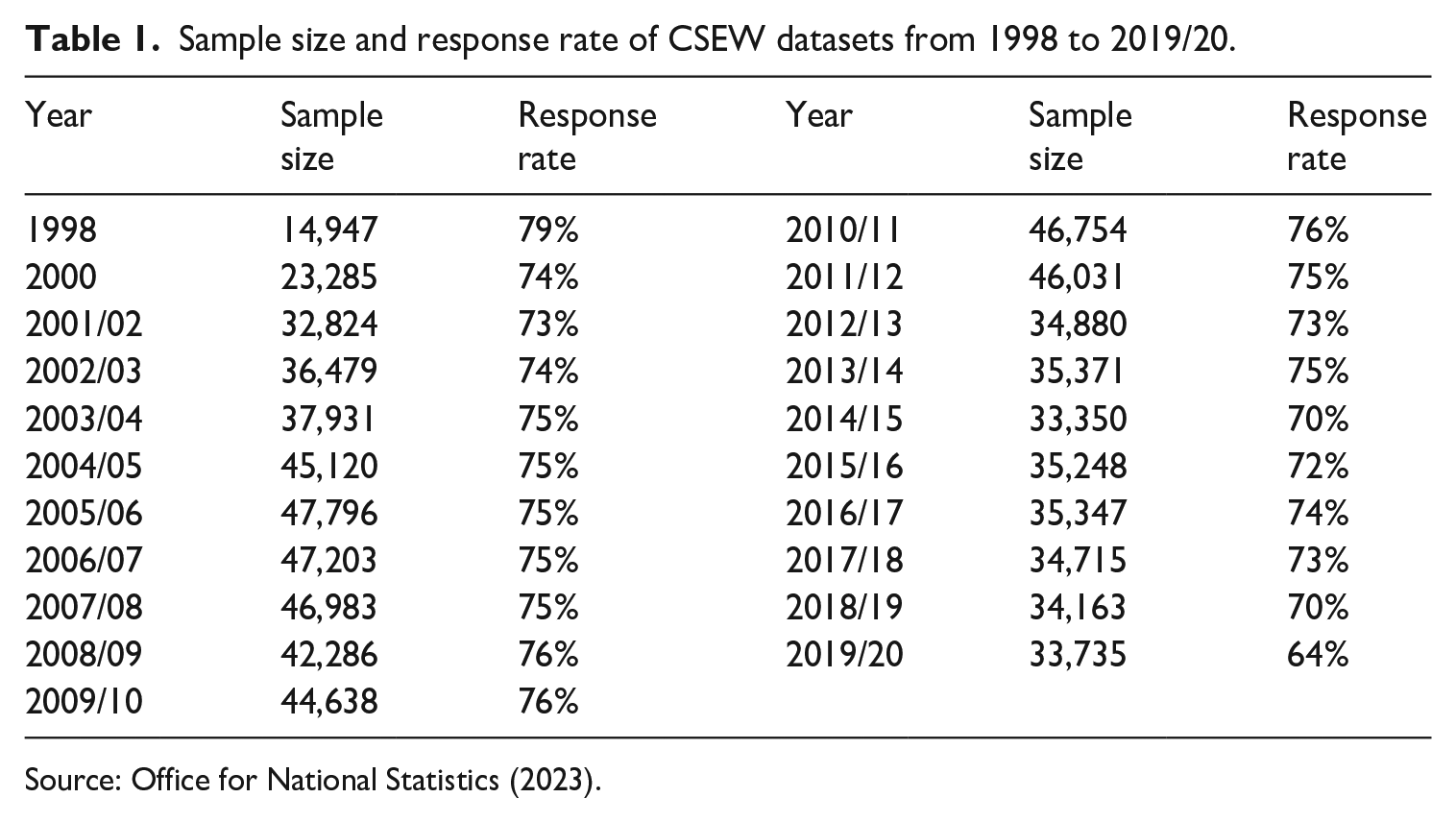
The Crime Survey for England and Wales (CSEW) is a representative annual victimisation survey for England and Wales, which began in 1982 under the name ‘British Crime Survey’. Since April 2001, the CSEW has been a continuous survey, collecting data over the course of a whole year, starting in April and ending in March of the following year (Office for National Statistics, 2023). Prior to the implementation of the continuous data collection method in 2001, the CSEW conducted the interviews between January and July, covering only half of the year. Since 1994, the CSEW records data following structured face-to-face interviews carried out using computer-assisted personal interviewing (CAPI), where interviewers record responses to the questionnaire on computers or tablets. The population sampling frame used to select participants is the Postcode Address File, excluding population living in group residences such as student halls and prisons, and homeless people. Small changes in sampling design have been applied to the CSEW throughout the study period, such as variations in mixed-sampling designs to record information from areas with different levels of population density. These changes are considered to have negligible effects on national estimates derived from the survey. We analyse data recorded since 1998 because most measures of worry about crime have been consistently included in the questionnaire since then. Table 1 presents details about sample sizes and response rates of the CSEW. 1
Sample size and response rate of CSEW datasets from 1998 to 2019/20.
Measurement of worry about crime
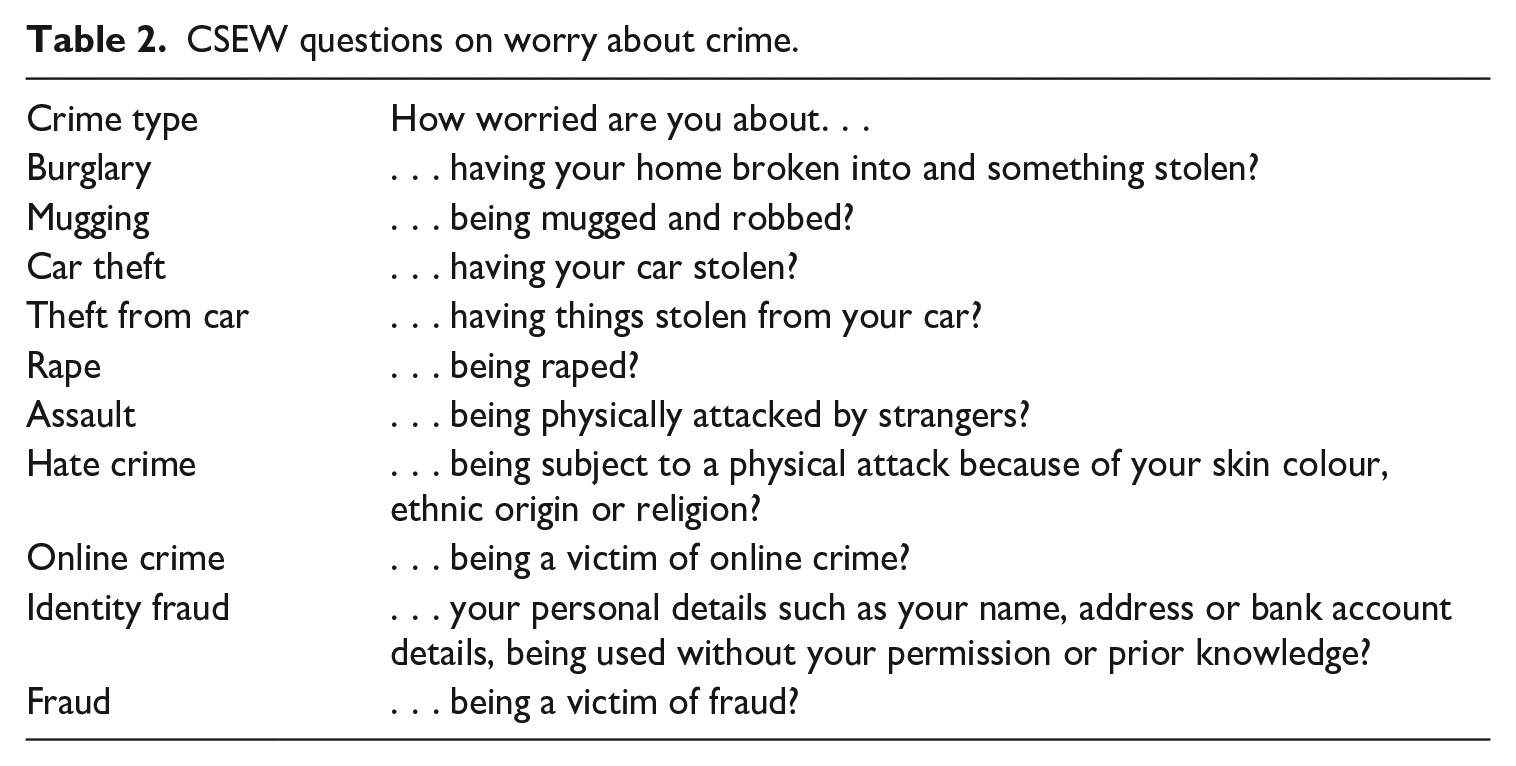
The CSEW has remained consistent in its operationalisation of worry about specific crime types since 1998, using the same wording for the questions each year, starting with ‘How worried are you about . . .’, followed by the specific types of crime (see Table 2). The questions range from inquiring about worries about property crime to personal crimes such as rape or assault, to newer forms of online crime. The last three questions in Table 2 addressing the worry about online crime were added in 2013/14 and later years due to the emergence of new crime opportunities in the digital realm. The question on worry about online crime was included in the survey from 2013/14 until 2017/18, while worry about having personal details used without permission has been inquired since 2014/15. The worry about being the victim of fraud was only added to the questionnaire in 2018/19. By employing a four-point Likert-type scale, the CSEW assesses the intensity of worry about crime. Participants are asked to choose between ‘very worried’ (1), ‘fairly worried’ (2), ‘not very worried’ (3) and ‘not at all worried’ (4) for each type of crime.
CSEW questions on worry about crime.
The CSEW instructs interviewers to select whether respondents are ‘male or female’; thus, in our study, gender is not self-defined and is measured in binary terms. Although the CSEW includes measures of self-selected gender identity and whether gender is the same as sex at birth since 2019, we have used the interviewer-defined classification for respondents to maintain consistency throughout the time series. This measure is used for all crime types.
Data analysis
Data was accessed via the UK Data Service (https://ukdataservice.ac.uk). The scale of all variables of worry was reversed so that a higher value indicates stronger worry. ‘Not applicable’ responses were filtered out. Afterwards, the mean value and its corresponding 95% confidence interval were calculated for each of the 10 worry variables in each round of the survey. 2 The mean value is calculated for each type of worry about crime, each survey round, by considering the total number of respondents who answered the question. 3 Individual weights are applied to obtain annual estimates, thus compensating for unequal probabilities of selection due to sampling design and differential non-response. Finally, a global average of all the worry variables that were asked throughout the entire 22-year period (i.e. all variables except cybercrime worries) was calculated to provide an overview of the general levels of worry. The same procedure was done for female and male respondents separately. Finally, to gain a better understanding of the extent of the gender gap, the difference between women’s and men’s mean scores was calculated.
Changes in the mean worry scores between 2 or more years are only considered statistically significant if the confidence intervals of the respective years do not overlap. To assess the magnitude of observed changes, the relative percentage change between worry scores is calculated. For instance, if worry about crime varied from a score of 1 in a given year to 3 in the following year, the relative percentage change would be 200%, indicating that worry has tripled over this period. This first stage of the analysis is complemented by methods aimed at exploring trends in the data. Due to the novelty of the questions on worry about digital crime, the number of data points for these types of worries is not sufficient for a thorough temporal analysis. Therefore, worry about online crime is not included in the analysis outlined in the following.
The Mann-Kendall (hereafter MK) trend test is applied to worry about crime measures and to the gender gap for each worry about crime. The MK trend test is a non-parametric method typically used in trend research, whose power and significance do not depend on the distribution of the data (Hamed, 2009). The null hypothesis of the MK trend test proposes no trend in the data (i.e. the data is independent and randomly ordered). Therefore, a statistically significant finding indicates either an increasing or decreasing monotonic trend in the data. The Kendall’s tau (τ) value indicates the direction of the trend, with a negative value meaning a decreasing trend and vice versa. Following the example presented above, if worry about crime varied from a score of 1 in a given year to 3, 5 and 7 in the successive years, the τ estimate would be 1, indicating a perfect positive growth of our measure of worry. A decreasing trend 7, 5, 3, 1 would lead to a τ of –1, indicating a perfect decrease. A modified version of the MK trend test (i.e. modified MK trend test) to deal with autocorrelated data will be used in this study (Hamed and Rao, 1998). Although CSEW data is inherently cross-sectional, annual estimates of worry about crime in a given year can be closely related to events and situations in adjacent years (i.e. annual estimates are not independent from one another); hence, it is necessary to incorporate autocorrelation corrections into our estimation methods. This modified test employs the block bootstrap method (2000 bootstrap samples), which separates the time series data into blocks and resamples them to create bootstrap samples (Önöz and Bayazit, 2012).
As the MK trend test can only reveal whether there is an increasing or decreasing monotonic trend in the data, the Sen’s (1968) slope estimator is applied to measure the magnitude of this trend. The value of the slope (Qi) is calculated as the change in the variable per year and therefore acts as an effect size for trends in the data. By revealing the change per year, the slope estimation is not a standardised effect size with a pre-determined interpretation of the results. Instead, the estimation facilitates the comparison of changes in each type of worry by revealing the slope of each trend. If we consider the above example, while the Sen’s slope estimator for a trend 1, 3, 5, 7 would equal 2 (i.e. the variable of interest increases by 2 units for each increase in time), the trend 1, 2, 3, 4 would have a Sen’s slope of 1, demonstrating a less pronounced increase.
All data manipulation and analysis were done using the software R (R Core Team, 2021). All code used in the analysis is published in a GitHub repository: https://github.com/SophieLaetitia/worry_about_crime.
Results
Changes in worry about crime
Figure 1 displays the changes in worry about different types of crime between 1998 and 2019/20, using the mean worry score for each variable per year and its respective 95% confidence interval. Comparing worry scores in 1998 with those in 2019/20, each type of worry shows a decreasing trend. The worries about rape (–33.09%) and car theft (–29.63%) show the largest reductions over the 22-year period, while worries about burglary (–18.34%) and racially motivated hate crime (–8.59%) show the smallest overall declines. Across all types of crime, levels of worry are highest in 1998, after which all worries show a decreasing trend until 2004/05. After the initial drop, there is a slight increase until 2007, followed by a further decline until 2010/11. After 2010/11, changes in worry are more stable but the downwards trend remains. Worry about burglary has consistently remained the highest type of worry, while worry about racially motivated hate crime shows the lowest levels over the whole period. Worries about being the victim of mugging and assault fluctuate similarly over the whole period. Worries about car-related crimes also show similar downwards trends, although worries about car theft were more prevalent until 2013/14, when worries about theft from car took over and showed higher levels.
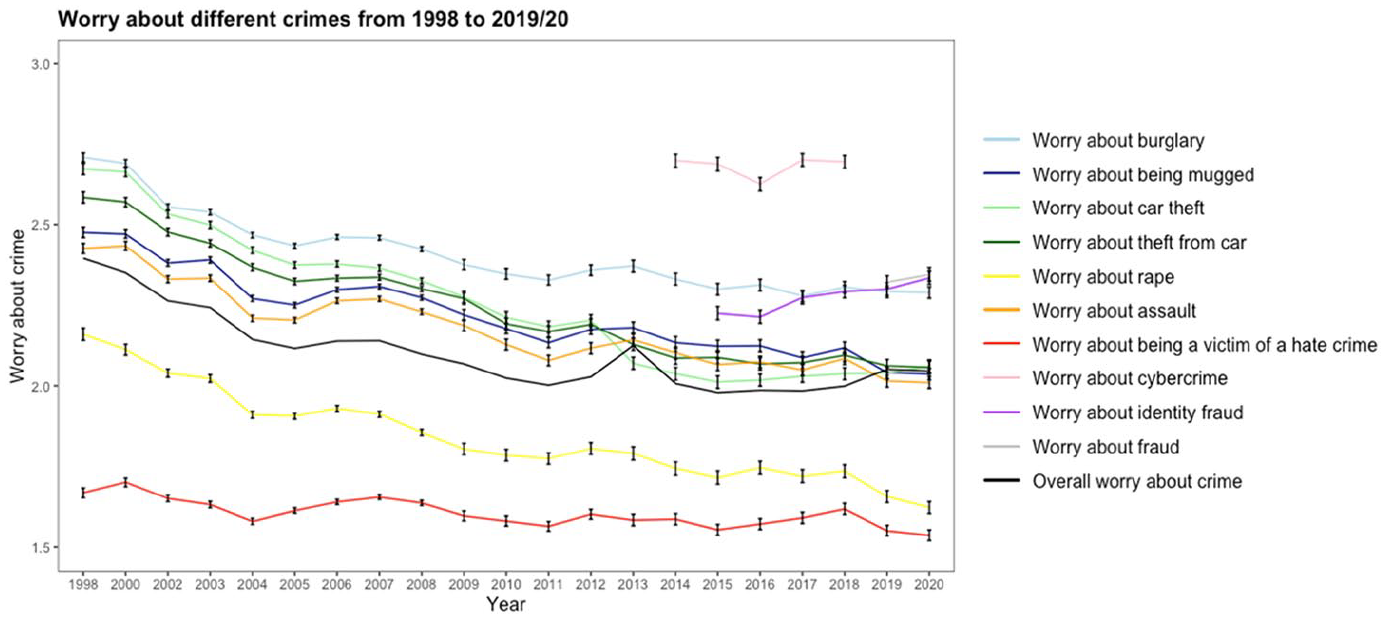
Line graph containing changes in worry about different types of crime between 1998 and 2019/20.
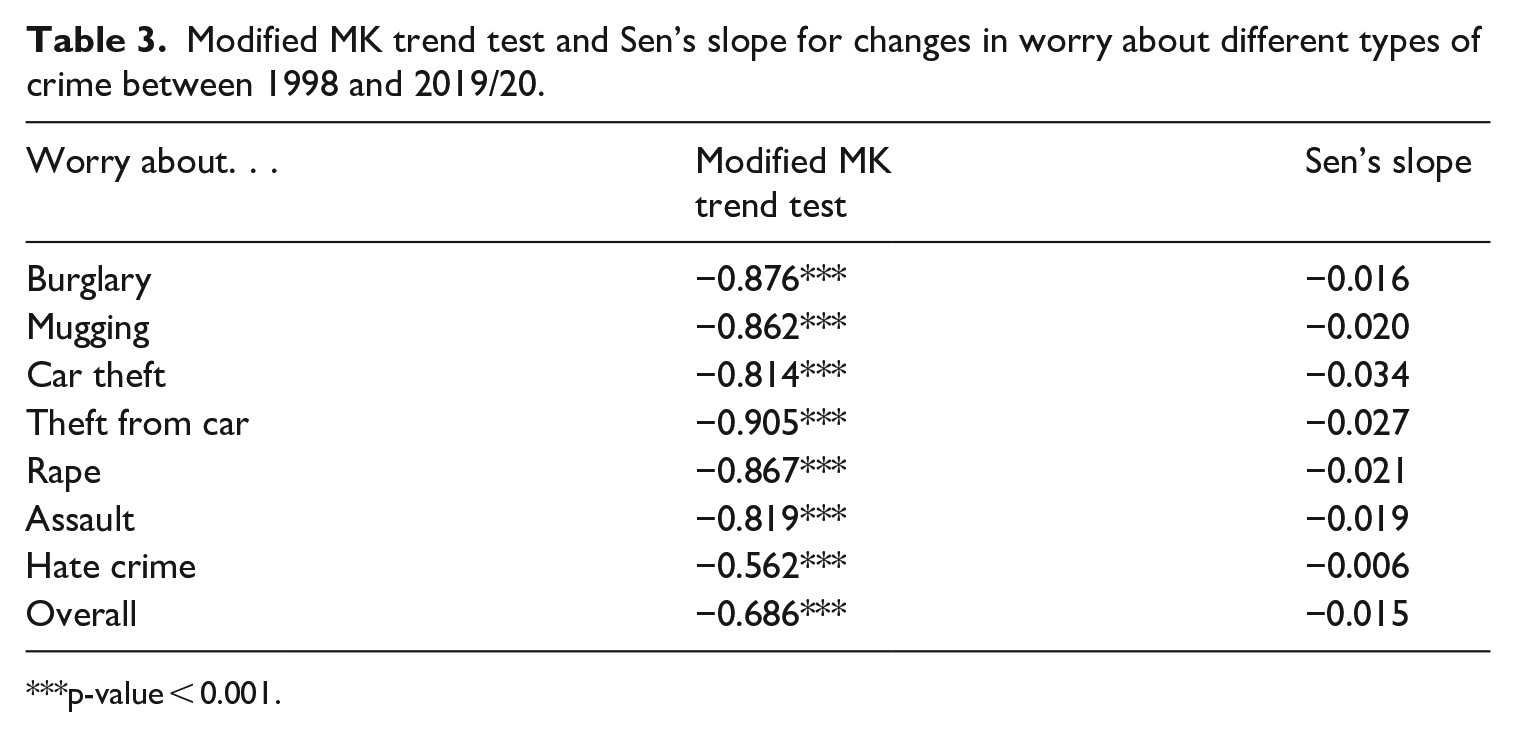
This first indication of a decreasing trend is supported by the MK trend test (Table 3). All worry variables have a statistically significant negative Kendall’s tau (p-value < 0.001), meaning that there is a negative monotonic trend in the data. Sen’s slope measures for the worry variables reveal the magnitude of the downwards trends in worry. According to the test statistic, worry about car-related crimes shows the strongest decrease in worry per year (car theft: Qi = –0.034; theft from car: Qi = –0.027). The worry about burglary shows a weaker change over time than the worry about car theft or theft from a car, with a Sen’s slope of –0.016. The weakest decline over time is for the worry about being the victim of a racially motivated attack. Finally, Sen’s slope estimates for personal crime (i.e. mugging, rape and assault) range from –0.019 to –0.021, indicating a moderate declining trend compared to the other types of worry analysed.
Modified MK trend test and Sen’s slope for changes in worry about different types of crime between 1998 and 2019/20.
p-value < 0.001.
Changes in worry about cybercrime
Although worries about online crime are not the main focus of the analysis, a brief overview of their levels is presented. The worry about cybercrime distinguishes itself from all other forms of crime by revealing the highest levels of worry throughout the entire 21-year period (except for the worry about burglary in 1998, with a slightly higher score). Similarly, identity fraud and other types of fraud are among the types of crime that respondents worried about most during the period of their data collection. Another distinctive feature of worries about the different kinds of online crime is how they have changed over the short period in which they have been included in the survey. Worry about identity fraud shows a rapid increase between 2014/15 and 2019/20. Worry about cybercrime, on the contrary, shows fluctuations, first exhibiting a statistically significant decrease from 2013/14 to 2015/16, followed by a statistically significant increase the following year.
Changes in the gender gap in worry about crime
While changes in worry about crime follow similar decreasing trends, the gender gap shows more heterogeneous results. Figure 2 shows the size of the gender gap per year for each type of worry, whereby a value of 0 indicates a perfectly equal distribution between men and women (i.e. equal levels of worry). A first impression of the graph reveals that women have consistently higher levels of worry than men over the whole period and for most types of crime. All worries about crime, except for the worry about having something stolen from the car, demonstrate the largest gender gap in 1998. The worry about having something stolen from the car differs from the other worries in that it fluctuates around 0 over the 22-year period. This type of worry is the only worry for which scores before 2014 fall below 0, with values from the years 2002/03 and 2003/04 being statistically significant below 0, thus revealing a slightly reversed gender gap with higher scores for men. Worrying about rape is at the other end of the extreme as the type of worry with the largest gender gap of 1.21 scale points in 1998. However, while this type of worry demonstrates the largest differences between men and women, it also shows a strong reduction over time. Starting with a size of 1.21 scale points, the difference in worry between men and women shrinks to 0.73 scale points in 2019/20. Another peculiarity of this type of worry is the peak in 2012/13, which interrupts the narrowing trend of the gender gap for 1 year. There is also a narrowing of the gender gap for the worry of being mugged or assaulted. Worries about burglary, car theft and hate crime show fluctuations in the size of the gender gap over the period with no discernible trend in the data.
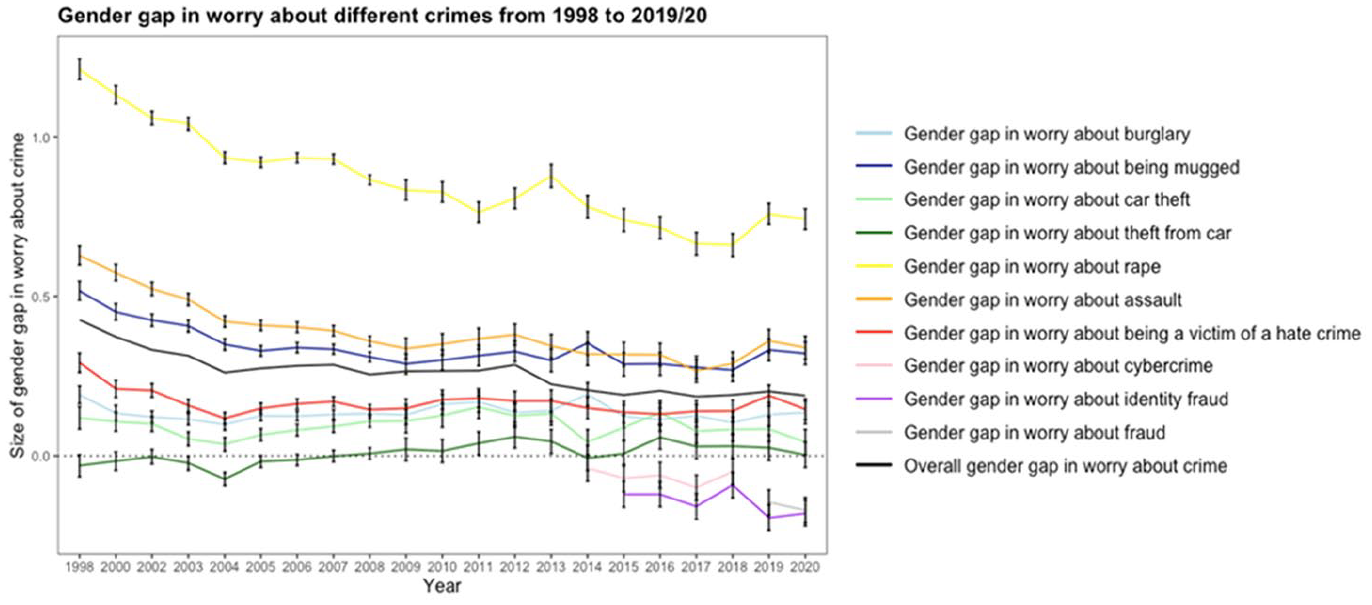
The gender gap in worry about different types of crime from 1998 to 2019/20.
MK trend tests reinforce this visual impression of the presence and absence of trends in the gender gap for different types of worry (Table 4). While the test statistic for the gender gap in worries about burglary, car theft and hate crime is not statistically significant, the gap in worries about rape notes a statistically significant negative Kendall’s tau (τ = –0.829, p < 0.001). This negative Kendall’s tau indicates a decreasing trend in the data, which can be supported by a Sen’s slope of –0.022. The narrowing gender gap in worries about being mugged and assaulted is also statistically significant with negative Sen’s slopes (mugging: Qi = –0.006, p < 0.001; assault: Qi = –0.012, p < 0.001). The MK trend test shows statistically significant results for the trend in the gender gap in worries about theft from the car; however, the trend detected is monotonically increasing (τ = 0.519, p < 0.001). There is a general pattern in the results for changes in the gender gap in worry about crime, in which the types of worry that have a wider gender gap in 1998 also reveal the most drastic changes in their width over the 22-year period. While the gender gap in worry about rape has the widest gender gap, it also marks the strongest reduction, whereas worries about being mugged or assaulted show a weaker declining trend.
Modified MK trend test and Sen’s slope for changes in the gender gap in worry about different types of crime between 1998 and 2019/20.
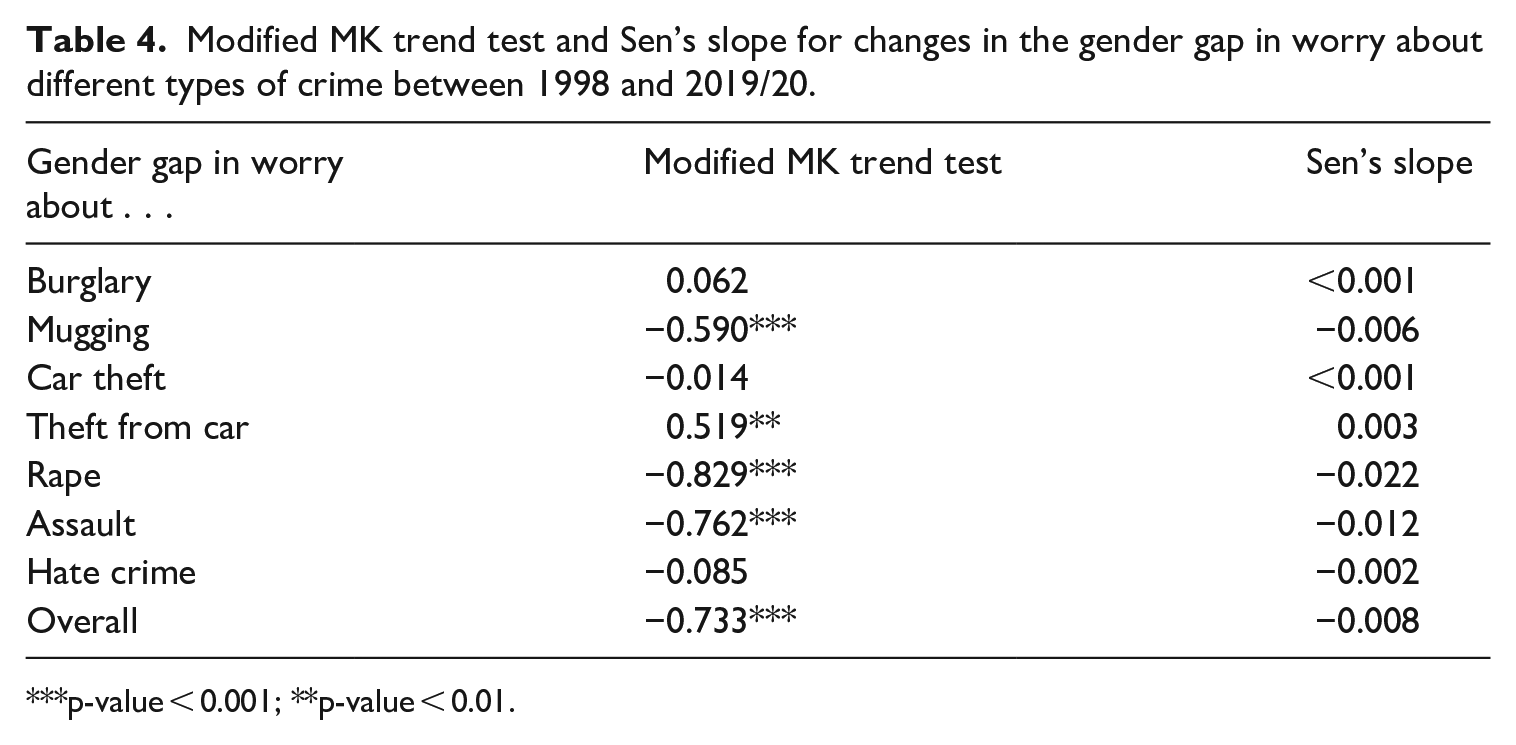
p-value < 0.001; **p-value < 0.01.
Those worries about crime that demonstrate significant changes in the gender gap are examined in more detail to assess whether both men and women, or just one gender, contributed to the trend in the gender gap. This is done by calculating the modified MK trend test for men and women separately (Table 5). The results show statistically significant declining trends for both men and women for each type of worry. Since there is a narrowing trend in the gender gap, with the exception of the worry about having something stolen from the car, there must be a greater decline in worry about crime among women to lead to this finding. The worry about rape in particular confirms this assumption by revealing a decrease of –0.007 scale points per year for men while women’s worry declines more rapidly by –0.027 scale points per year. Worries about being attacked by a stranger and being mugged also show similar findings. The worry about having something stolen from the car appears as an outlier. Here, men show a slightly greater decline in worry (Qi = 0.029) than women (Qi = –0.024) over the two decades.
Modified MK trend test and Sen’s slope for changes in worry about different types of crime between 1998 and 2019/20 separated by gender.
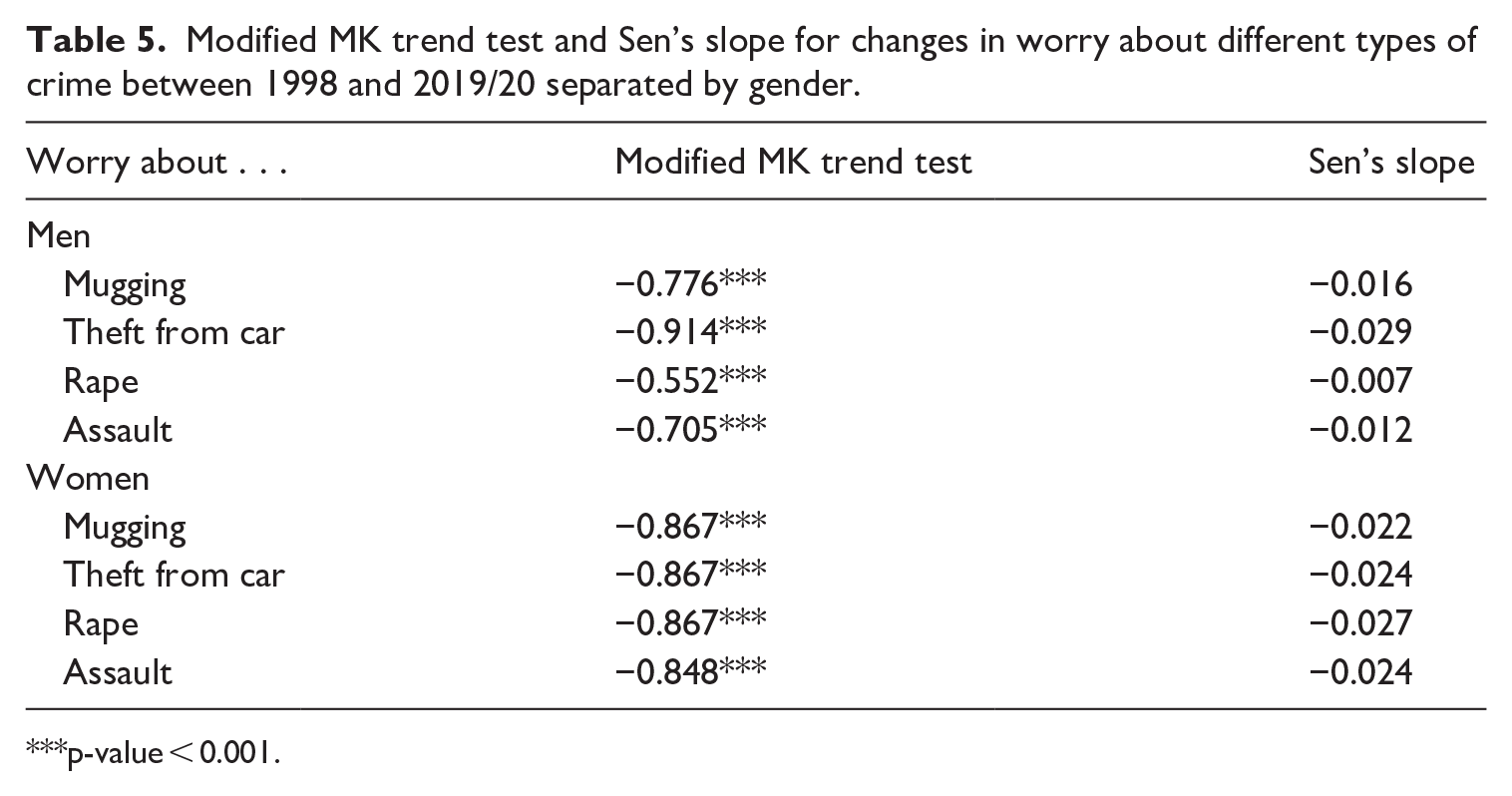
p-value < 0.001.
Changes in the gender gap for worry about cybercrime
The analysis of changes in the gender gap for worry about online crimes is carried out using the visual inspection of graphs. A distinctive feature of all forms of cybercrime is the type of gender gap they exhibit as all variables show a gender gap statistically significant below 0, indicating higher levels of worry about those types of crime among men than women. Worry about cybercrime has the smallest gender gap of the three variables. The gender gap in worry about identity fraud shows some fluctuation, with a slight statistically significant increase in size from 2018/19 to 2019/20.
Discussion
Changes in worry about crime for the general population, and for men and women separately, demonstrate decreasing trends from 1998 to 2019/20, indicating an overall drop in worry about crime. The gender gap observed by many other researchers is also a consistent finding in this research over the 22 years and across most types of worry (Haynie, 1998; Reid and Konrad, 2004). In addition, some worries about specific crimes note a narrowing trend in their gender gap, with women’s worries about crime decreasing more drastically than men’s. These trends are discussed below in light of different explanations that may be associated with the patterns observed. First, the observed changes in worry about crime are compared with other scientific findings, after which three hypotheses are presented and discussed as possible explanations for the results. The same approach is applied to the findings of changes in the gender gap, with one explanatory hypothesis introduced. These hypotheses point towards areas in which future research is needed.
Changes in worry about crime
The analysis of changes in worry about crime reveals decreasing trends for the different types of victimisation, which partially supports the findings by Smeets and Foekens (2017) and Kurpiel et al. (2023). In the present research, worries about car-related crimes decline the strongest, while the worry about being the victim of racially motivated crime shows the smallest decline. Three hypotheses are discussed as potential explanations of the decreasing trend in worry about crime.
Hypothesis 1. The crime drop.
The crime drop describes the observation that the prevalence of different forms of crime has been declining since the 1990s (Farrell et al., 2011). Reductions in vehicle theft, domestic burglary and personal crime in the United Kingdom may have had a spillover effect on perceptions of vulnerability and worries about victimisation (Grove et al., 2012). Crime trends dropped sharply in the late 1990s and then following a more moderate downwards trajectory (Tseloni et al., 2017). This pattern mirrors the findings of this research as all the types of worry examined demonstrate the greatest decline from 1998 to around 2005.
Hypothesis 2: The security hypothesis.
Farrell et al. (2011) argue that rising security standards in homes and cars led to a decline in car-related crime and domestic burglary since the 1990s (Tseloni et al., 2017). Enhanced security devices (e.g. burglar alarms) or having a car with high security standards may also lead to a sense of safety, and in turn fewer worries about car theft or domestic burglary. This argument can be supported by the findings of this study since worry about car-related crimes has decreased the most over the last two decades. Burglary as another property crime that would be covered by the theory shows a weaker, but still moderate downwards trend. This hypothesis may be extended to other types of crime such as rape or assault in the public sphere by considering the increased use of CCTV and environmental designs aimed at preventing crime (Ceccato, 2020).
Hypothesis 3: A shift in worry about crime.
The final potential driver of the decline in worry about crime is the idea that people are not worrying less about crime but that their worries have shifted to newer forms of crime (Zarafonitou et al., 2022). Due to advances in the technological sector, opportunities for crime in the digital realm are constantly increasing (Buil-Gil et al., 2021). As a result of rising rates of cybercrime, people may worry less about traditional forms of crime and shift their attention to the online world (Hille et al., 2015). Although worry about cybercrime has only recently been added to the CSEW, first insights into the worry about cybercrime reveal that both the worry about having personal details used without permission and about fraud have significantly higher rates than the worries about traditional forms of crime. A survey from 2006 indicates that 70% of Internet users from the United States perceived their victimisation likelihood to be higher for cybercrime than for physical forms of crime (Reisig et al., 2009).
Changes in the gender gap
The declining trend in worry about crime among the general population is also present when the population is broken down by gender, with both men and women reporting declining levels of worry about crime over the two decades. However, for personal crime (i.e. mugging, rape and assault), women’s levels of worry show a stronger declining slope, resulting in a narrowing trend in the gender gap from 1998 to 2019/20. Haynie’s (1998) observation of a narrowing gender gap from 1973 to 1994 can also be found after 1994. In Haynie’s (1998) study, however, men’s worries increased over the period while women’s worries remained stable. Based on the findings of the present study, there may be underlying causes for the declining trends in worry about personal crime that affect women more than men. In the following, the increased gender equality is discussed as a potential driver of the observed changes in the gender gap.
Hypothesis 4: The rise of gender equality.
The last few decades of UK history have been shaped by an increase in initiatives and policies enacted to tackle gender inequality and address issues of women’s rights or lack thereof (Ross, 2018). Policies such as the Equality Act 2010 or Shared Parental Leave and Pay have contributed to the rise in gender equality. The Gender Equality Monitor by the Government Equalities Office (2019) notes an increase in women’s participation in the workforce since 1992 and a narrowing trend in the gender pay gap since 1997. The report also highlights changing attitudes in British society, with the number of respondents agreeing with the statement that men should earn the money and women should look after the home and family decreasing from 1987 to 2017. The reduction of gender inequality may also have an impact on women’s worries about crime. As discussed above, the vulnerability model argues for a link between a person’s perceived vulnerability and their worries about crime. Since there has been a notable increase in female participation in the labour force and a trend towards a narrowing of the gender pay gap over the last two decades, this may have had an empowering effect on women and consequently on their perceived social and physical vulnerability and worry about crime. However, gender equality has not yet been achieved, which may explain why there is still a significant gap between men’s and women’s worries about crime.
In line with the rise of egalitarian values, there has been a shift in the discourse surrounding women (Van Eijk, 2017). While women were once portrayed as fearful and weak, characteristics of the ideal victim, there are now many advertisements and awareness campaigns targeting women that describe them as fearless, strong and powerful (Abitbol and Sternadori, 2016). However, while women find more empowerment in the narrative, they are simultaneously the recipients of traditionally gendered messages (e.g. do not walk alone at night), which may be a predictor for the still persisting gender gap (Van Eijk, 2017). Furthermore, the practice of victim blaming as a way of reigniting worry about crime, especially sexual violence, by blaming women for their victimisation continues to affect women (Stubbs-Richardson et al., 2018).
The sharp increase in women’s worry about rape in 2012/13 appears to align with Operation Yewtree, which took place during 4 of the 12 months of data collection in 2012/13. Operation Yewtree was an investigation by the London Metropolitan Police into allegations of sexual abuse by television host and charity fundraiser Jimmy Savile. This strong media presence of the investigation exposed the population to exponentially more news about sexual violence, which may have led to elevated levels of worry about sexual crime.
Conclusion
The aim of this research was to explore the trends in worry about crime and its gender gap in England and Wales. All types of worry reveal a statistically significant declining trend over the two decades, with vehicle-related crimes showing the largest decrease. All remaining worries about the different types of crime demonstrate a moderate decline over time, except for the worry about being the victim of a racially motivated attack, which only shows a weak downwards trend. These findings indicate that even at a time when crime-related ‘moral panics’, reflected, for example, in political speech and news articles (Jennings et al., 2020), are on the rise, the British population is experiencing a steady decline in worry about crime. Possible reasons for these findings include the declining trend in crime rates over the same period, rising security standards leading to a greater sense of safety, and a shift in worries from traditional to newer forms of crime. It is probable that time-persistent emotions about crime are more driven by everyday experiences with crime, as opposed to generalised ‘moral panics’, than we previously thought. While our three hypotheses are closely linked to statements supported by evidence (i.e. crime rates are in decline, security standards have risen and crime records show a shift to cyber incidents), further research is needed to assess the extent to which these explain the trends in worry about crime observed in this study.
When shifting the focus to men’s and women’s worries about crime, all types of crime except for theft from one’s car demonstrate a consistent gender gap in worries over the whole period, with women reporting higher levels of worry than men. A narrowing trend in the gender gap is observed for worries about crimes that require physical interaction with the offender (e.g. mugging or rape). While both men’s and women’s worries about crime decrease over time, women’s worries about personal types of crime decline more strongly than men’s, which explains the narrowing trend in the gender gap. Increasing gender equality and subsequent changes in gender socialisation are discussed as possible hypotheses to explain these findings, in turn highlighting important areas for future research. Due to the secondary nature of the CSEW, in this study and in previous literature, gender is not self-defined and is measured in binary terms. Future research should, where possible, employ more inclusive indicators of self-defined gender identity. Future research should also explore variations in worry about hate crime across different ethnic groups.
Footnotes
Declaration of Conflicting Interests
The author(s) declared no potential conflicts of interest with respect to the research, authorship, and/or publication of this article.
Funding
The author(s) received no financial support for the research, authorship, and/or publication of this article.
