




Abstract
Aboriginal Australians are almost twice as likely as non-Aboriginal Australians to receive a prison sentence. Past research has shown that this difference usually disappears when controls are introduced for relevant legal factors, such as offence seriousness, number of concurrent offences and prior criminal record. It is possible, however, that courts place more weight on certain legal factors when sentencing Aboriginal defendants than when sentencing non-Aboriginal defendants. This study employs an Oaxaca-Blinder decomposition to explore this possibility in relation to assault and theft offences in New South Wales between 2019 and 2023. We find that about 17% of the gap for assault offences and 23% of the gap for property offences is not explicable in terms of sentence-relevant factors. If the weight assigned by courts to legal factors, such as prior criminal record and prior imprisonment, were the same for Aboriginal and non-Aboriginal defendants, around 150 fewer adult Aboriginal defendants would receive a prison sentence for the offences of assault and theft over the period of this study.
“I am a data nerd. I love numbers, but not just for the numbers' sake. These numbers tell stories about people's lives.” Professor Anna Stewart. 2013 Solomon Lecture.
Introduction
Studies using administrative data in the United States have left little doubt that young African American offenders are more likely to receive a prison sentence than otherwise similar White offenders (Mitchell, 2005; Omori & Peterson, 2020). Steffensmeier et al, (2006) theorised that judges have incomplete information about cases and offenders, and cannot therefore easily determine who poses a danger to the community and who does not. According to focal concerns theory (Steffensmeier et al., 2006), this uncertainty leads judges to rely on factors such as age, race and gender as a kind of perceptual shorthand for blameworthiness and the need for community protection. The theory assumes that young, Black males are seen by U.S. judges as posing a greater threat to public safety than other groups of defendants, with the result that judges sentence them more harshly.
Some have argued that racial discrimination is one of the causes of Aboriginal over-representation in prison in Australia (e.g., Anthony, 2013; Anthony et al., 2015; Baldry & Cunneen, 2014; Blagg et al., 2005; Cunneen, 1992; Cunneen et al., 2014). First Nations Australians are more likely to be imprisoned than non-Aboriginal people. In the financial year 2022/2023 16% of Aboriginal Australians appearing in court on criminal charges were imprisoned, compared with 8.8% of non-Aboriginal Australians (Australian Bureau of Statistics, 2024). In contrast to the United States, however, most Australian empirical studies of racial bias in sentencing find little or no evidence of a bias between Aboriginal and non-Aboriginal defendants at sentencing once relevant legal factors (e.g., offence seriousness, prior criminal record) have been considered (Bond & Jeffries, 2010, 2011a, 2011b; Bond et al., 2011; Jeffries & Bond 2009, 2012, 2015; Snowball & Weatherburn, 2006). 1 The standard conclusion reached by these studies is that the Aboriginal/non-Aboriginal difference in imprisonment risk is attributable to (and justifiable in terms of) differences in relevant legal factors. 2
The existence of a residual effect of race on sentencing after adjusting for the effects of legal factors, however, is not the only way in which racial bias might manifest itself. Racial bias in sentencing would also exist if judges placed more weight on certain legal factors (such as the existence of a prior criminal record) when dealing with Aboriginal defendants than when dealing with otherwise similar non-Aboriginal defendants. A judge who imprisoned 40% of Aboriginal defendants with a prior record of three convictions, but only 30% of otherwise similar non-Aboriginal defendants, would be exhibiting this kind of bias, as would a judge who treated Aboriginal people convicted of violent offences more harshly than non-Aboriginal people convicted of similar violent offences (other things being equal). Testing for racial bias by running a regression analysis to see if a variable measuring Indigenous status is significant after controlling for relevant legal factors will not reveal this kind of bias.
The problem of how to quantify bias in the weight assigned to case characteristics is not unique to criminal justice. In the 1970s, economists were grappling with the question of how best to measure gender bias in earnings. Two economists (Blinder, 1973; Oaxaca, 1973) independently developed what became known as the Oaxaca-Blinder decomposition (see Rahimi & Nazari, 2021). The essential idea behind the decomposition was to see whether women would earn the same wages as men if their skill and experience received the same weight as skill and experience among male wage earners. To find out, Oaxaca (1973) took the coefficients measuring the effect of skill and experience on male wages and applied them to the female wage equation. If bias existed, the predicted wage rate for women should increase (and it did). The Oaxaca-Blinder decomposition has since been applied in a wide variety of settings, including investigations into racial bias in criminal justice settings (e.g., Hickert et al., 2022; Light, 2022; MacDonald et al., 2014; Omori & Peterson, 2020; Sorenson et al., 2012).
In this article we use the Oaxaca-Blinder decomposition to separate the difference in imprisonment risk between Aboriginal and non-Aboriginal defendants into a component associated with differences between the two groups in legal factors such as offence, prior criminal record and plea, and a component associated with the weight that courts assign to these factors when sentencing Aboriginal and non-Aboriginal defendants. Our aim in performing this decomposition is to answer the following questions:
How much of the disparity in imprisonment risk between Aboriginal and non-Aboriginal defendants is explicable in terms of factors that courts are required to consider when sentencing an offender? What change in the number of Aboriginal defendants imprisoned would we expect to see if the decision to imprison an offender was determined solely by legal factors? What legal factors play the dominant role in generating a disparity in imprisonment risk between Aboriginal and non-Aboriginal defendants?
Before describing the study in more detail, we first provide a more formal overview of the Oaxaca-Blinder decomposition.
The Oaxaca-Blinder decomposition
The Oaxaca-Blinder decomposition (as employed here) breaks down the difference in the risk of imprisonment between Aboriginal and non-Aboriginal defendants into two components. The first component is the portion of the difference attributable to racial differences in legally relevant offender characteristics (e.g., offence seriousness, prior penalties, number of prior convictions). This is technically referred to as the “endowment effect”. 3 The second component is the portion of the difference attributable to the way courts respond to those characteristics, or, more precisely, the weight they are given in the sentencing process. This component is often interpreted as the contribution of bias, although it is important to note that the size of this component also reflects the effect of any unmeasured factors that influence the sentencing decision. We will come back to this point in the discussion.
To illustrate the approach, let us imagine a situation where the length of the imprisonment term (L) is linearly dependent only on offence seriousness S. So, for non-Aboriginal defendants, we have:




Therefore:

In the Oaxaca-Blinder decomposition, the contribution of offence seriousness is given by:

On the other hand, the potential contribution of bias is given by:

The term (5) captures any difference in the predicted risk of imprisonment attributable to differences between Aboriginal and non-Aboriginal defendants in offence seriousness. The first term in equation (6) (viz., (
Past research
As noted earlier, a number of studies have used the Oaxaca-Blinder decomposition to examine racial bias in criminal justice settings (e.g., Hickert et al., 2022; Light, 2022; MacDonald et al., 2014; Omori & Peterson, 2020; Sorenson et al., 2012). Light (2022), for example, used an extension of the Oaxaca-Blinder decomposition to determine whether the declining gap between African American and white imprisonment rates in the United States between 2009 and 2018 was due to changes in black/white offender characteristics or changes in the way the courts responded to those characteristics. He found that the declining gap was caused by declining average black sentences and increasing average white sentences. The increase in sentences for white offenders came about because of increases in white convictions for gender offences, drug offences, and offences attracting mandatory minimum sentences. The decline in sentences for black offenders was mainly due to a decline in prosecutions attracting mandatory minimum penalties.
Only one study to date has used an Oaxaca-Blinder decomposition to examine racial disparity in an Australian criminal justice setting. Teperski and Rahman (2023) used it to analyse racial disparities in cannabis cautioning in New South Wales (NSW). Cannabis cautioning is an arrangement whereby NSW Police can opt to caution a person found in possession of a small quantity of cannabis for personal use rather than charging them and having the matter dealt with by a court. At the time of Teperski and Rahman's (2023) study there was a 34.4% disparity in NSW between eligible Aboriginal and non-Aboriginal defendants in the likelihood of receiving a cannabis caution (as opposed to being prosecuted for possession of cannabis). The legal factors considered by Teperski and Rahman (2023) as possible explanations for this discrepancy included the defendant's prior criminal record, age, gender, remoteness of residence, disadvantage, month and year of index contact, along with two dummy variables capturing the Police Area Command or police district where the cannabis detection took place. Their decomposition revealed that most (92%) of the difference in cannabis cautioning rates between caution-eligible Aboriginal and non-Aboriginal defendants could be explained by legal factors included in the models for cannabis cautioning.
Police enjoy very considerable discretion when deciding whether or not to issue a cannabis caution. Internal NSW Police Guidelines stipulate the number of cannabis cautions police can issue to any one person, but not what other factors they can or need to consider (NSW Police Force, 2025). Judicial sentencing discretion is much more tightly constrained. Under section 21A of the NSW Crimes (Sentencing Procedure) Act 1999, courts can consider age and gender insofar as these factors bear on a defendant's prospects of rehabilitation. The NSW Crimes (Sentencing Procedure) Act (1999), however, contains no provision that would justify imposing harsher or more lenient sentences on offenders based on whether they live in a remote or urban area, the level of disadvantage in their neighbourhood, or the police district where the offence took place. Nor is there any common law precedent for taking these factors into account (Judicial Commission of New South Wales, 2025).
Only two other Australian studies have explored the possibility that racial bias exists in the way courts respond to relevant legal factors. Snowball and Weatherburn (2007) constructed separate logistic regression models of imprisonment risk for Aboriginal and non-Aboriginal defendants using the same covariates in each and found that the coefficient on prior court appearances for Aboriginal defendants was significantly smaller (0.037) than for non-Aboriginal defendants (0.097); indicating that the courts in that study placed less weight prior criminal record when sentencing an Aboriginal defendant than when sentencing a non-Aboriginal defendant. Thorburn and Weatherburn (2018) used a similar strategy in their study of the effect of Aboriginal status on sentence outcomes for serious assault but obtained a very different result. They found that Aboriginal defendants were more likely to receive a prison sentence than non-Aboriginal defendants when the assault involved domestic violence. Neither of these studies sought to determine how much of the gap between Aboriginal and non-Aboriginal imprisonment risk was attributable to differences in sentence-relevant offender characteristics. Nor did either make any attempt to determine the expected change in the number of Aboriginal defendants imprisoned if courts placed the same weight on relevant legal factors when sentencing Aboriginal defendants as they assign when sentencing non-Aboriginal defendants.
Our overarching aim in this study is to see how much of the gap between Aboriginal and non-Aboriginal imprisonment risks is explicable in terms of relevant legal factors and how much is attributable to racial differences in the way in which courts respond to those factors. In the next section of this article, we describe our methods in more detail.
Method
Choosing the offence
Past studies of racial bias in sentencing have sometimes tended to group offences into large heterogeneous categories. This is ill-advised. The statutory maximum penalty for an offence is a key legislative guide to the seriousness with which Parliament views an offence. Two offences that fall into the same general category may have quite different maximum penalties associated with them and this may influence the penalties imposed on persons convicted of the offence. Under section 33(1) of the NSW Crimes Act, for example, the offence of assault occasioning Grievous Bodily Harm (GBH) has a maximum penalty of 25 years imprisonment, whereas under section 59(1) of the same Act, an assault occasioning Actual Bodily Harm (ABH) attracts a maximum penalty of five years imprisonment. We would expect the likelihood of a prison sentence to be much higher in the case of GBH than ABH. If we place these two offences in a single category of assault, we will obscure any difference between Aboriginal and non-Aboriginal defendants in the relative proportions of GBH versus ABH convictions. If we then decompose the racial difference in imprisonment risk for the general category of assault, we may end up erroneously concluding that racial bias exists in the way courts respond to assault, rather than that the difference in imprisonment risk is due to differences between Aboriginal and non-Aboriginal defendants in proportion of assault offences involving GBH.
There is obviously a trade-off between offence specificity and the number of cases available for comparison. The more narrowly defined the offence type, the less room for extraneous factors (viz., offence heterogeneity) to influence the outcome of our analysis, but the fewer the number of sentencing cases available for comparison. To deal with this trade-off, we restrict our attention to two groups of defendants. The first comprises those convicted of assault or stalking. The second comprises those convicted of a theft offence. We choose these offences because they account for more than one third (37%) of all Aboriginal convictions during the period of the study period (2019 to 2023) and because it is possible to identify subcategories within each of these groups that have the same statutory maximum penalty.
The assault category consists of four subcategories:
Common assault. Assault occasioning ABH. Assault occasioning grievous bodily harm. Stalking.
The theft category also consists of four subcategories:
Motor vehicle theft. Break, enter and steal. Receiving/handling proceeds of crime. Shoplifting/stealing from the person.
Crucially, the offences within each of these subcategories have the same statutory maximum penalty. 4 This allows us to place the subcategories into two groups (assault and theft) without having to worry that Aboriginal and non-Aboriginal defendants are being sentenced for offences that differ in the applicable statutory maxima.
Data source
The source for the data used in this study was the NSW Bureau of Crime Statistics and Research Re-Offending Database (ROD). ROD is a research database compiled from various NSW Police and Justice Department administrative databases. It links all persons proceeded against by police for a suspected offence between 1994 and the present. As well as containing details of each person's criminal history, it also includes important demographic information, such as gender, race (Indigenous status), remoteness of residence and socioeconomic status of local government area. The parent sample for this study consists of 97,075 distinct persons aged 18 and over who were convicted in the NSW Local Court between 2019 and 2023. We choose this period because there were no significant changes to NSW sentencing legislation between 2019 and 2023. A total of 36,690 convicted offenders are included in the analysis, comprising 32,754 whose principal offence involved assault or stalking and 3,936 whose principal offence involved theft. These two groups account for 37% of all convicted Aboriginal defendants over the period of the study.
Dependent variable
The dependent variable is whether the defendant received a full-time sentence of imprisonment, coded “1” if yes and “0” otherwise.
Independent variables
There is no exhaustive statutory or common law list of the factors that courts may or must consider when deciding whether to impose a prison sentence on a convicted offender. Section 21A of the NSW Crimes (Sentencing Procedure) Act 1999 lists a number of aggravating factors, including violence or threatened violence, prior convictions, a vulnerable victim, multiple offences arising out of the same incident, commission of an offence for financial gain, and the commission of an offence while on conditional liberty in relation to an earlier offence or alleged offence. In their analyses of factors influencing sentencing of assault and domestic violence offenders, Snowball and Weatherburn (2006) and Taussig (2011) found that offenders were more likely to receive a prison sentence if:
The offence is more serious (i.e., has a higher statutory maximum penalty). The offender stands convicted of multiple offences. The offender pleads not guilty. The offender has a significant criminal history. The offender has committed violent offence previously. The offender has committed a domestic assault previously. The offender has received a previous sentence involving an alternative to custody. The offender has been imprisoned previously. The offender is male. The offender is young.
These factors are all relevant legal considerations when sentencing an offender in NSW (Judicial Commission of NSW, 2025).
5
Although most of the factors listed in connection with assault are also relevant legal considerations when sentencing an offender for theft (Judicial Commission of NSW, 2025), we were unable to locate an empirical analysis of the factors that influence the risk of imprisonment for theft. We therefore adopt an approach which mimics that adopted for assault, but replaces items (5) and (6) in the above list with two items more relevant to sentencing for a theft offence. More specifically, we assume that, as with assault, a sentence of imprisonment for theft is more likely when:
11. The offence is more serious (i.e., has a higher statutory maximum penalty). 12. The offender stands convicted of multiple offences. 13. The offender pleads not guilty. 14. The offender has a significant criminal history. 15. The offender has received a previous sentence involving an alternative to custody. 16. The offender has been imprisoned previously. 17. The offender is male. 18. The offender is aged 30 or older.
However, because our focus is on theft, we replace items five (the offender has committed violent offence previously) and six (the offender has committed a domestic assault previously) with two measures more relevant to theft, namely:
19. The offender has committed a prior theft offence. 20. The offender has committed a prior Break, Enter and Steal (BES) offence.
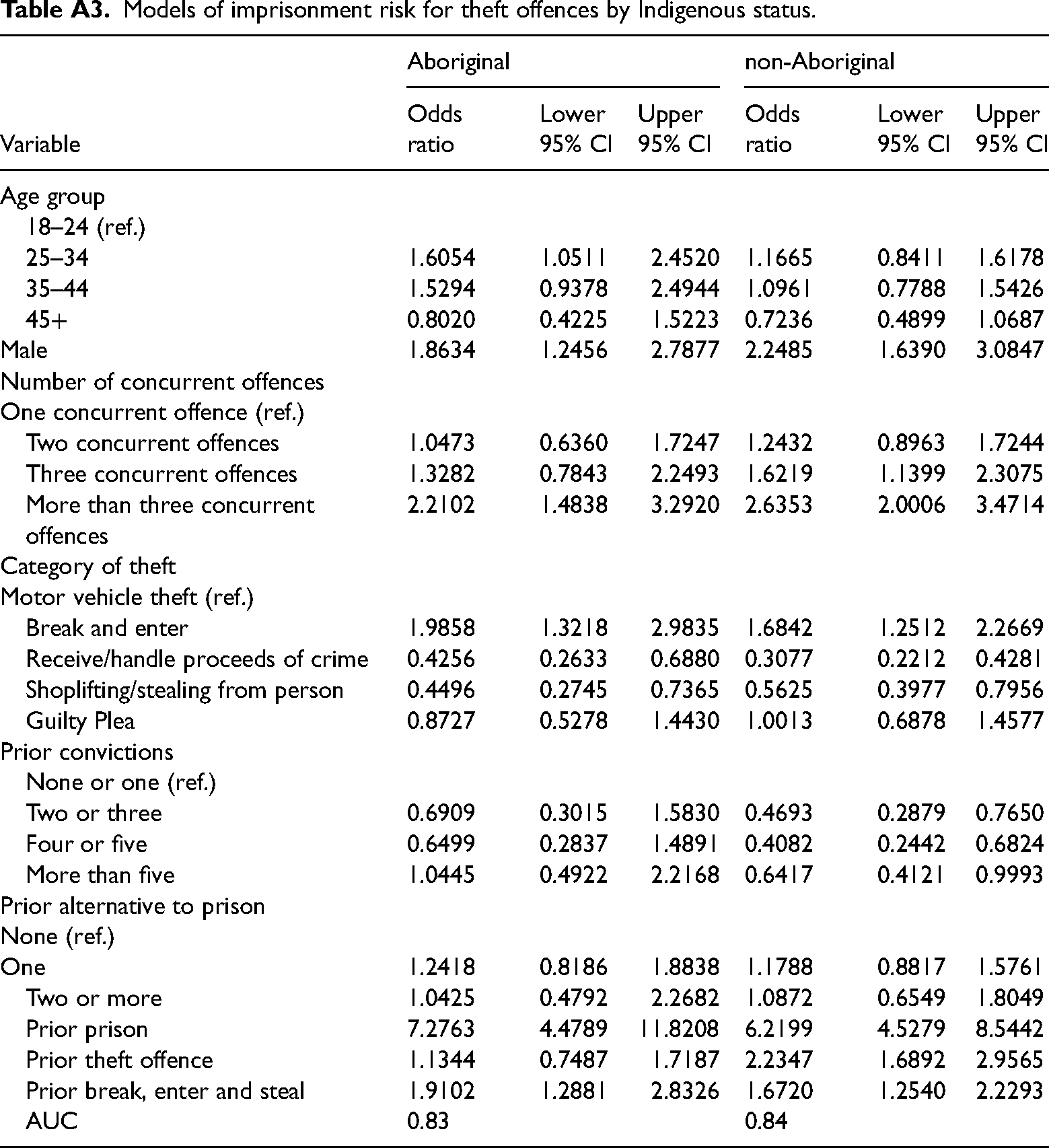
As a check on the relevance of (11) to (20) as predictors of imprisonment for theft, we construct separate models for Aboriginal and non-Aboriginal defendants and separate models for assault and theft using (11) to (20) as covariates. If the covariates we have chosen are key considerations in sentencing, we should be able to provide accurate predictions of imprisonment risk for assault and theft. Details of the models can be found in Appendices Tables A2 (assault) and A3 (theft). Here we simply report the AUC (Area Under the Curve) statistics for all four models. The AUCs for the assault models were 0.87 (Aboriginal) and 0.88 (non-Aboriginal). The AUCs for the theft models were 0.83 (Aboriginal) and 0.84 (non-Aboriginal). On the criteria proposed by Hosmer et al. (2013, p. 177), these figures indicate an excellent fit in all models between predicted and actual risks of imprisonment.
Analysis
Table 1 provides a full list of variables and their coding.
Independent variable names and codes.
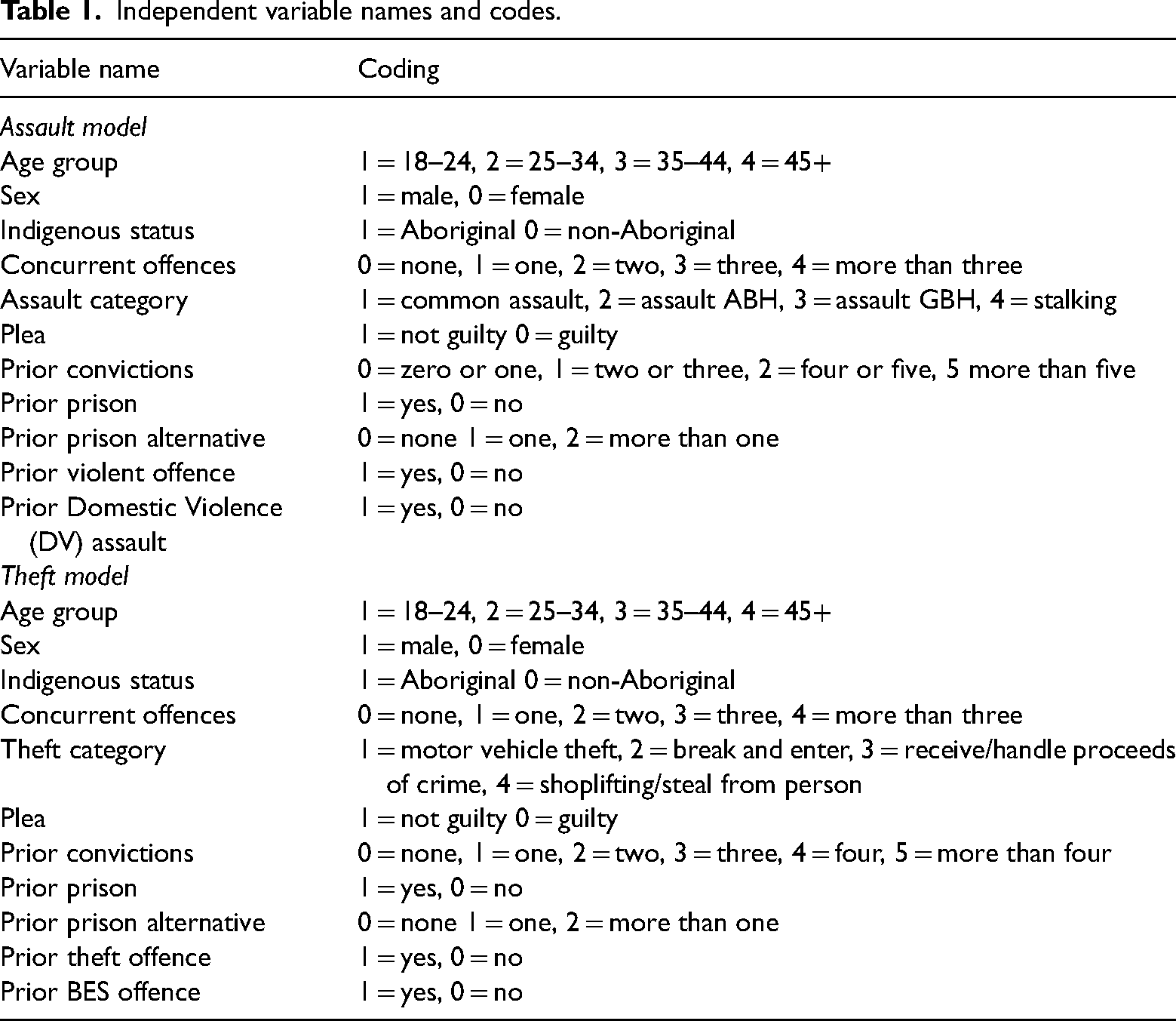
All analyses are carried out in STATA V18. In the first part of the study, we carry out decompositions of assault and theft offences; restricting our attention to the 20 legal factors listed above. The analysis we perform (using the STATA Oaxaca command) breaks the estimated difference between Aboriginal and non-Aboriginal imprisonment risk into an “explained” component and an “unexplained” component. The explained component is the portion of the difference in imprisonment risk attributable to factors 1–10 (for assault) or 11–20 (for theft). The unexplained component is the portion of the imprisonment risk difference in each case attributable to discrimination and/or other unmeasured factors. We use non-Aboriginal defendants as the reference group, which means we examine the impact on Aboriginal imprisonment risk if Aboriginal defendants were sentenced in the same way as non-Aboriginal defendants. This allows us to estimate the change in the number of Aboriginal defendants imprisoned if they were sentenced in the same way as non-Aboriginal defendants.
Results
Sample description
Table 2 shows the frequency distribution of variable values. There are substantial numbers of cases in all variable values, however in 6.89% of cases, the Indigenous status of the defendant is missing. Given the small percentage of missing values on Indigenous status, they have been removed from the analysis.
Variable frequencies.
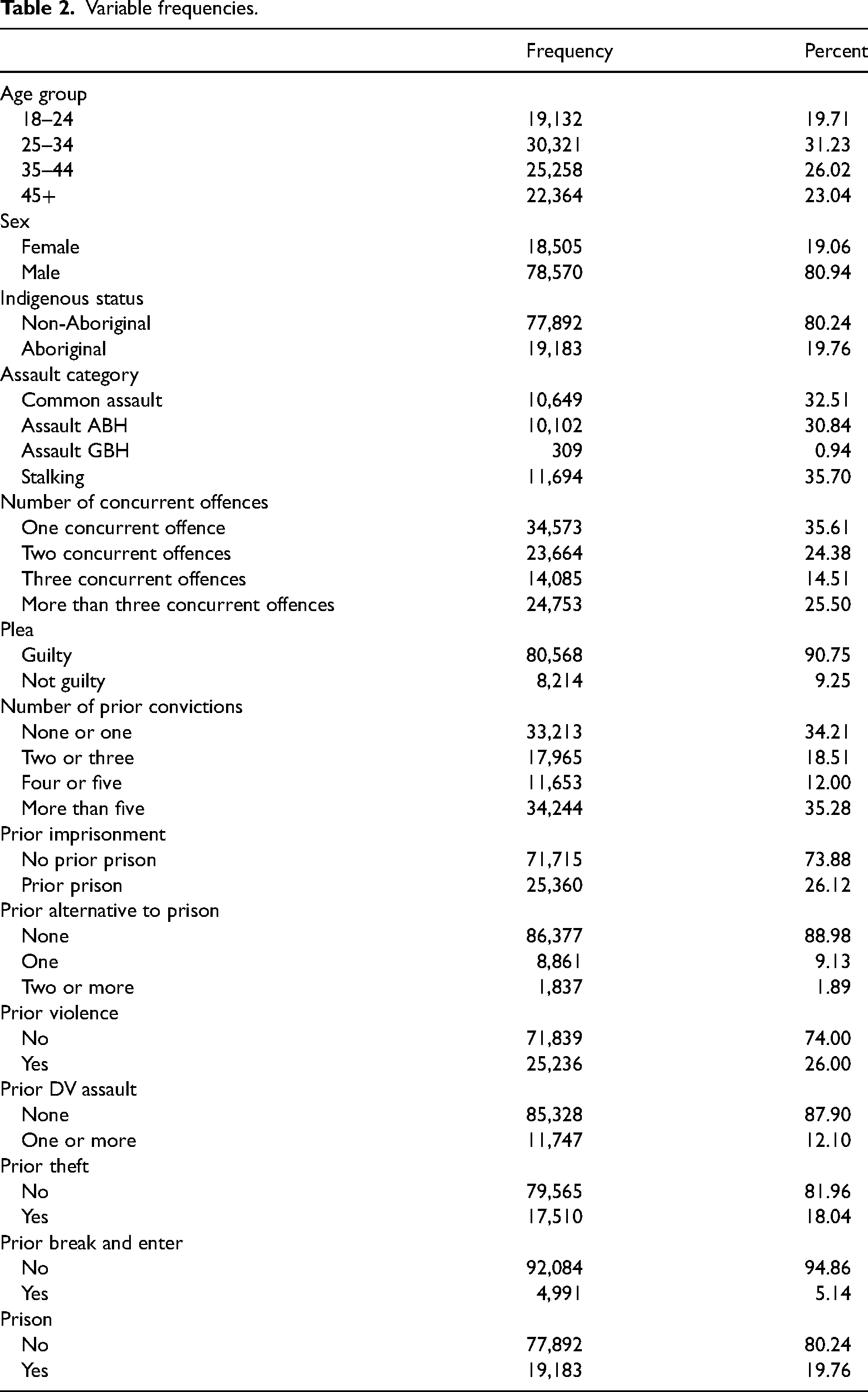
Table 3 shows the bivariate relationships between Indigenous status and the study covariates.
Bivariate relationships with Indigenous status.
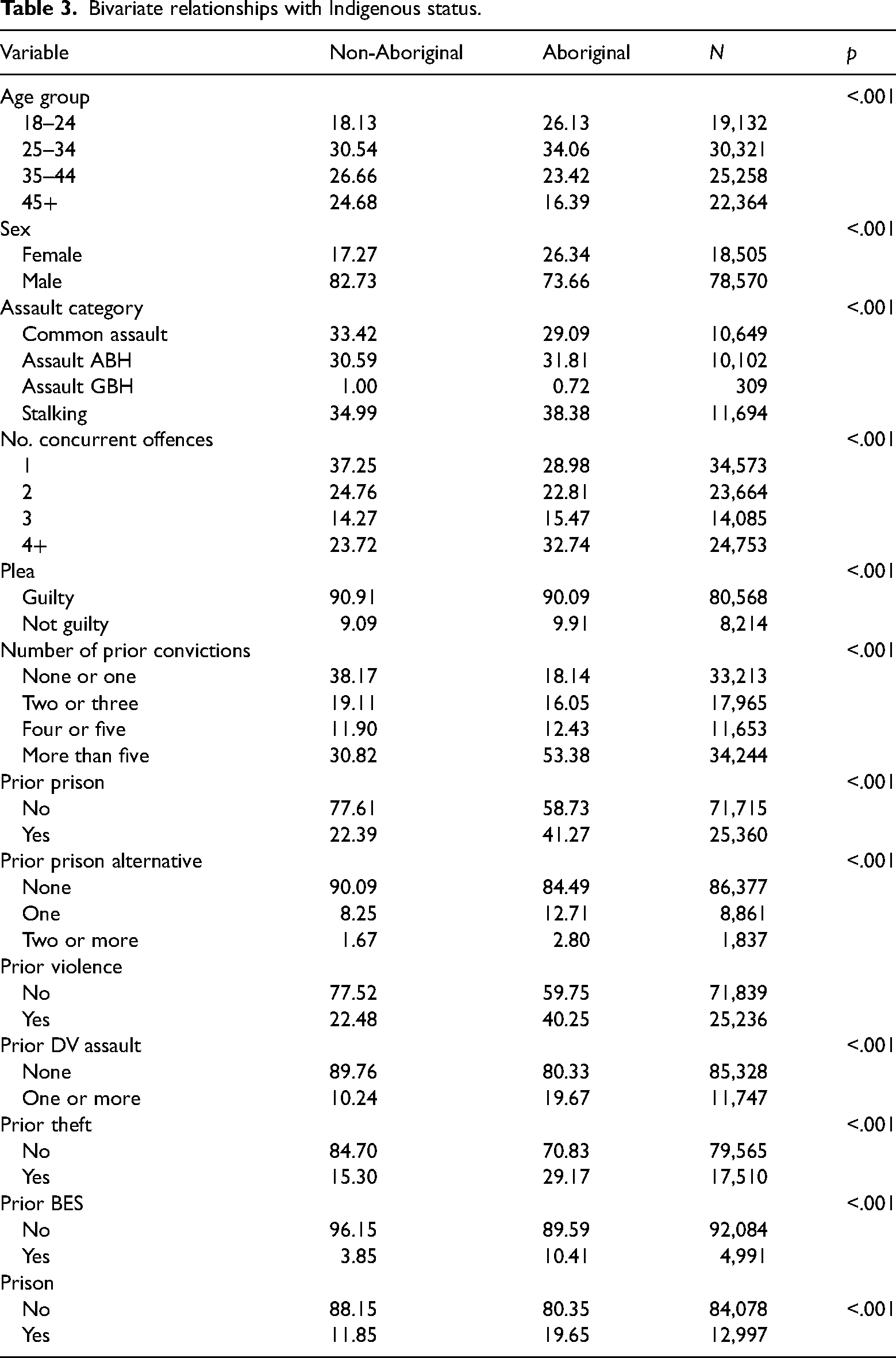
The Aboriginal subgroup possesses many of the characteristics that would increase the risk of imprisonment. Compared with the non-Aboriginal subsample, the Aboriginal subsample has, for example, a higher proportion with four or more concurrent offences, a higher proportion with multiple prior convictions, a higher proportion previously imprisoned, a higher proportion with prior convictions for violence and a higher proportion with previous convictions for theft. Against this, Aboriginal defendants tend to be younger, more often female and less often convicted of assault occasioning grievous bodily harm. The last three factors are clearly not enough to nullify the effects of having a substantial criminal history. The proportion of Aboriginal people imprisoned (19.65%) is significantly higher than the proportion of non-Aboriginal people imprisoned (11.85%). The question of interest is whether this gap in imprisonment risk disappears or diminishes when we adjust for the sentence-relevant factors shown in Table 1. To put the point another way, the question of interest is whether the gap in imprisonment risk between Aboriginal and non-Aboriginal defendants is attributable to differences in sentence-relevant legal factors or to differences in how courts respond to these factors for each group.
The Oaxaca-Blinder decomposition
Table 4 shows the decomposition for assault. Panel A summarises the overall picture. The non-Aboriginal imprisonment risk is 0.0759 or about 7.6%.
Oaxaca-Blinder decomposition for assault.
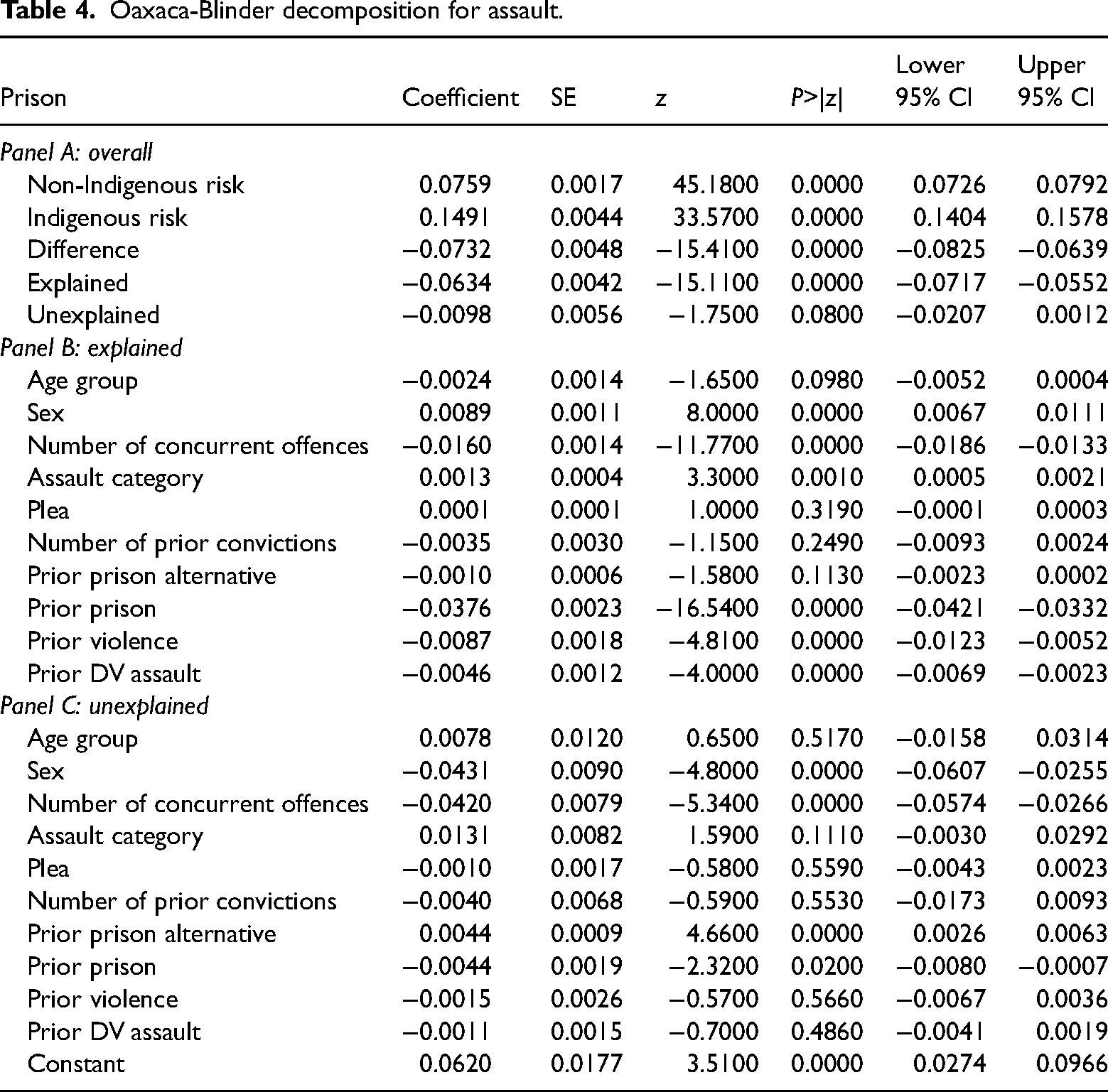
The Indigenous imprisonment risk is 0.1491 or about 15%. The difference between the two risks is 0.0732, or about 7.3% points. The explained part of the difference is the total explained variance divided by the difference between the two predictions. Thus, about (−0.0634/−0.0732 × 100) = 86.6% of the difference between Aboriginal and non-Aboriginal imprisonment risks is attributable to the legal factors in Table 4, leaving around 13.4% of the gap between Aboriginal and non-Aboriginal imprisonment risks unexplained by legal factors.
The variables in Panel B show the contribution of each of our legal factors to the gap between Aboriginal and non-Aboriginal imprisonment risk. A positive sign indicates that the variable increases the gap, whereas a negative sign indicates that the variable reduces it. To get the percentage of explained variance attributable to a particular factor, one divides the coefficient for that factor by the total explained difference. Doing this reveals that prior imprisonment exerts the strongest effect, however sizeable contributions also come from the number of concurrent offences and prior conviction for a violent offence. The effect of these factors is offset to some extent by sex (a higher proportion of Aboriginal defendants are female). Differences between Aboriginal and non-Aboriginal defendants in the number of prior convictions make no significant contribution to the gap, although this is likely because the effects of those differences are masked by differences between the two groups in the proportion previously imprisoned.
The variables in Panel C show the contribution of each of our legal factors to the unexplained portion of the gap between Aboriginal and non-Aboriginal imprisonment risks. A negative sign indicates that the factor in question reduces the unexplained portion of the gap between Aboriginal and non-Aboriginal defendants. A positive sign indicates the reverse. There are significant contributions from sex, number of concurrent convictions, prior prison alternatives and prior prison. The coefficient on sex is negative, which suggests that being an Aboriginal male has less effect on the risk of imprisonment (controlling for other factors) for assault than being a non-Aboriginal male. Having concurrent offences or having been imprisoned also appears to have less effect on the risk of imprisonment among Aboriginal defendants than non-Aboriginal defendants. The coefficient on prior prison alternative is positive, suggesting that courts place more weight on this factor when sentencing Aboriginal defendants for assault offences than when sentencing non-Aboriginal defendants for assault.
Table 5 shows the decomposition for theft. Following the same procedure as we followed in relation to Table 4 reveals that the non-Aboriginal imprisonment risk for property offences is 0.256 or approximately 26%. The corresponding figure for Indigenous imprisonment risk is 0.397, or around 40%, leaving an unexplained difference of 14 percentage points. Dividing the explained variance (−0.1084) by the difference between non-Aboriginal and Aboriginal imprisonment risks, reveals that around 77% of the gap between Aboriginal and non-Aboriginal defendants in their imprisonment risk is explicable in terms of the legal factors shown in Table 3, leaving 23% unexplained.
Oaxaca-Blinder decomposition for theft.
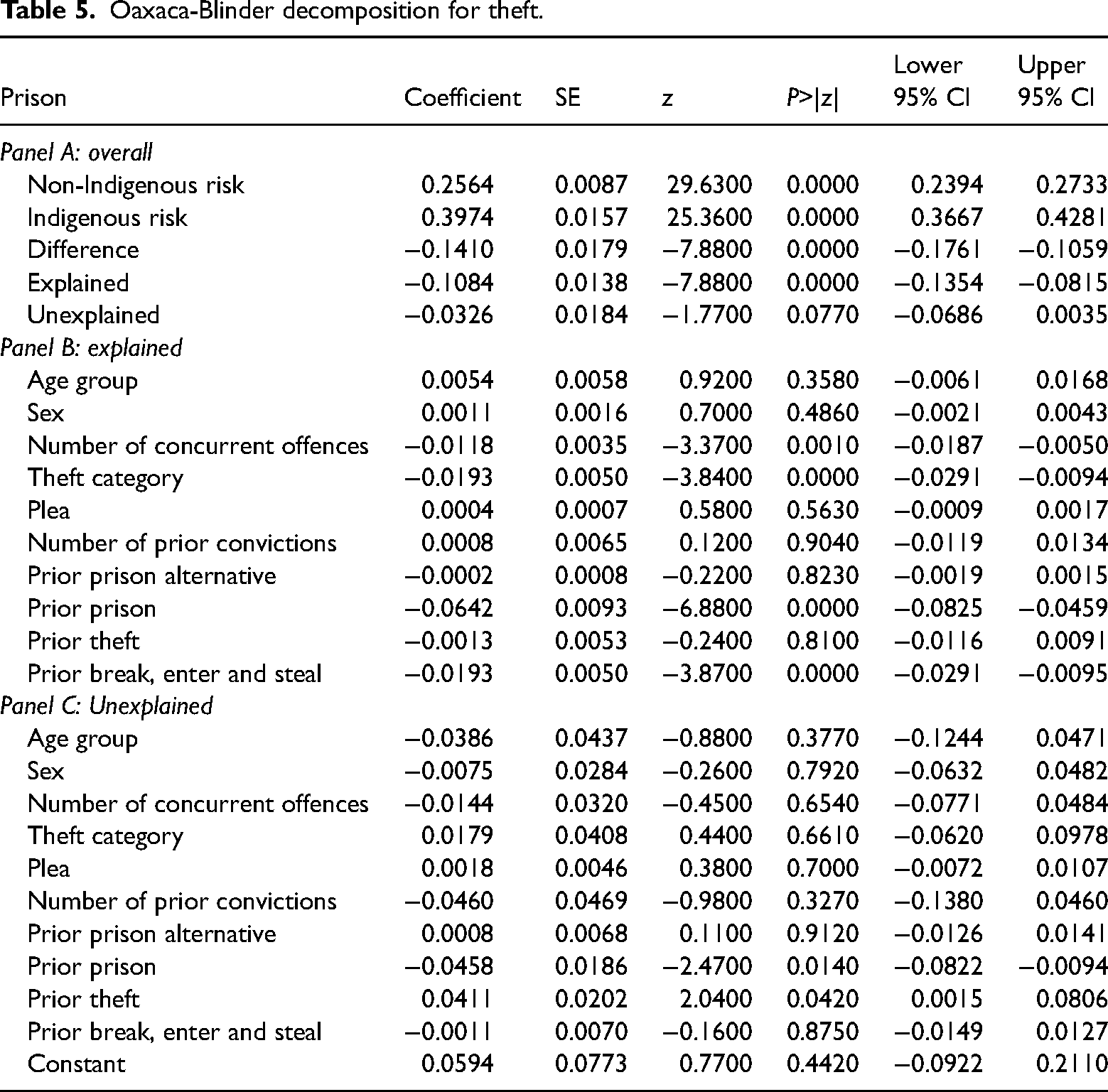
Dividing the coefficients in Panel B by the explained variance in Panel A shows that, among legal factors, differences between Aboriginal and non-Aboriginal defendants in the proportion who have previously been imprisoned exert the strongest influence, although substantial contributions also come from differences between Aboriginal and non-Aboriginal defendants in relation to the type of theft they have committed and in the number of concurrent offences. Panel C reveals that only two variables have different effects on Aboriginal versus non-Aboriginal defendants. The first is prior imprisonment, which appears to have less effect on the risk of imprisonment for Aboriginal people convicted of theft offences than it does on the risk of imprisonment for non-Aboriginal people. The second is having a prior theft offence, which appears to have the opposite effect.
Counterfactual effects
The Oaxaca-Blinder decomposition can be used to determine how many fewer Aboriginal defendants would be imprisoned if the influence of legal factors on their risk of imprisonment were the same as the influence of legal factors on the risk of non-Aboriginal imprisonment. To do this we take the actual number of Aboriginal people imprisoned and subtract the number predicted to be imprisoned if legal factors (e.g., number of concurrent convictions, prior prison alternatives and prior prison) exerted the same influence on Aboriginal imprisonment risk as they exert on non-Aboriginal imprisonment risk. To put the point another way, we use the model of Indigenous imprisonment but with the coefficients and intercept taken from the non-Indigenous model. This allows us to estimate the risk of imprisonment for Aboriginal people if legal factors had the same effect on Aboriginal imprisonment risk as they have on non-Aboriginal imprisonment risk. We then subtract this estimate from the actual number of Aboriginal people imprisoned.
The results of that exercise are as follows. If courts assigned the same weight to the legal factors in the assault model as they assign to non-Aboriginal defendants, it is estimated that for the study period, around 102 (101.9) fewer Aboriginal defendants would receive a prison sentence for the offences included in our four categories of assault over the index years 2019–2023. If courts assigned the same weight to the legal factors included in our theft model as they assign to non-Aboriginal defendants, it is estimated that for the study period, approximately 47 (47.3) fewer Aboriginal defendants would receive a prison sentence for the offences included in our four categories of theft for the index years 2019–2023. In total, around 150 Aboriginal people would have avoided prison if relevant legal factors had the same effect on the risk of imprisonment for Aboriginal and non-Aboriginal defendants.
Discussion
This study sought to answer three questions: (a) how much of the disparity in imprisonment risk between Aboriginal and non-Aboriginal defendants is explicable in terms of factors that courts are required to consider when sentencing an offender? (b) what change in the number of Aboriginal defendants imprisoned would we expect to see if relevant legal factors were given the same weight in sentencing Aboriginal offenders as they are given when sentencing non-Aboriginal offenders? (c) what legal factors play the dominant role in generating a disparity in imprisonment risk between Aboriginal and non-Aboriginal defendents?
Before adjusting for legal factors, the risk of imprisonment for Aboriginal defendants convicted of violent offences is twice that of non-Aboriginal defendants convicted of the same offences (14.9% vs. 7.6%, respectively). Likewise, before adjusting for legal factors, the risk of imprisonment for Aboriginal defendants convicted of theft offences is around 55% higher than that for non-Aboriginal defendants (39.7% vs. 25.6%, respectively). Most of the gap between Aboriginal and non-Aboriginal imprisonment risks (86.6% for violent offending, 77.9% for property offending), can be explained in terms of the legal factors included in our decompositions. The corollary is that 16% of the gap for violent offences and 23% of the gap for property offences is not explicable in terms of differences between Aboriginal and non-Aboriginal defendants in their age, the seriousness of their offences, their willingness to plead guilty, their numbers of concurrent charges, the number and nature of their prior criminal convictions, whether they have been previously imprisoned and/or whether they have previously received an alternative to prison.
This unexplained component is important. If courts assigned the same weight to Aboriginal and non-Aboriginal legal factors included in our model, around 150 fewer Aboriginal defendants would receive a prison sentence for the offences of assault and theft over the period of this study. If the observations made here apply to other categories of crime not examined in this study, the total figures on imprisonment avoided would be higher.
What factors account for the unexplained gap? One possibility is some unmeasured legal factor. Our models do not include every legal factor potentially relevant to the sentencing of an offender. We cannot measure the extent of an offender's culpability, for example, or all the exacerbating or extenuating factors in a particular case. For these sorts of factors to explain the gap between Aboriginal and non-Aboriginal imprisonment risks, however, it is not enough that they influence sentencing in individual cases; their effects must vary between the two groups and in ways not correlated with the legal factors included in our model. It is possible the courts are responding to non-legal factors. Residential location and socioeconomic status are two non-legal factors that might meet this requirement, and at least one study found they influence sentencing decisions (Rahman & Weatherburn, 2021). Preliminary analysis using the data in this study, however, revealed that neither area (remoteness) nor socioeconomic status explained any of the gap between Aboriginal and non-Aboriginal defendants in imprisonment risk for theft.
Differences between Aboriginal and non-Aboriginal drug and alcohol use is another unmeasured non-legal factor that may influence the gap in imprisonment risk. Single occasion and lifetime risky drinking is 1.2 times higher among Aboriginal Australians than non-Aboriginal Australians. Aboriginal Australians are also 1.4 times more likely than non-Aboriginal Australians to report using illicit drugs in the past 12 months (Australian Institute of Health and Welfare, 2024). These differences may lead courts to take a less optimistic view of the prospects for rehabilitation of Aboriginal defendants and therefore render them more willing to sentence Aboriginal defendants to a term of imprisonment. We tested this by running the Oaxaca analysis with the addition of a variable from the Level of Service Inventory (LSIR-Revised) (Andrews & Bonta, 1995; Watkins, 2011) measuring drug/alcohol use, but it made very little difference to the explained portion of the gap between Aboriginal and non-Aboriginal imprisonment risks.
A third possibility is that Aboriginal defendants are treated more harshly by the courts than non-Aboriginal defendants, either because they are seen as a “lost cause” and/or because they are seen as a greater threat to the security and safety of the public than non-Aboriginal defendants. We cannot test either of these explanations with the available data, but the second interpretation would be consistent with focal concerns theory, according to which, race, age and gender come to be treated by the courts as signals of dangerousness when courts lack objective information about the danger posed by an individual offender (Steffensmeier et al., 2006). It is worth noting in this context that police-recorded rates of theft and assault are much higher in north-west NSW (NSW Bureau of Crime Statistics and Research, 2024), an area with a large proportion of Aboriginal residents, a high level of public concern about crime and a fairly conservative approach to law and order (see, for example, Ferguson, 2017). In their review of the available evidence, Glick and Pruet (1985), reported evidence in the United States that, despite what judges say, their sentencing practices are strongly influenced by public opinion. Others have shown that local crime rates also influence judicial sentencing decisions (e.g., Fearn, 2005). If similar influences are at play in regional and remote NSW, Aboriginal defendants may bear the brunt of public demands for harsh penalties.
Some might argue that the distinction between legal and non-legal factors on which this study is based is flawed, and that so-called “legal” factors are racialised, meaning that they are associated with an individual's race. There is a sense in which this claim is true but unimportant and a sense in which it is true but very important. There is no doubt that Aboriginal defendants coming before the courts usually have more prior convictions than non-Aboriginal defendants. There is also no doubt that this is one of the reasons they (Aboriginal defendants) are more likely to receive a prison sentence. As long as the effect of having prior convictions on the risk of a prison sentence is the same for otherwise similar Aboriginal and non-Aboriginal defendants, it is hard to see the issue here. To characterise the relationship between prior record (or some other legal factor) and imprisonment risk as racialised (and therefore worthy of criticism) in these circumstances does little more than beg the question of whether it is appropriate for the courts to punish repeat offenders more harshly than first offenders. That is a question beyond the scope of this article.
A valid criticism would arise, however, if the relationship between some legal factor and imprisonment risk were attributable to bias earlier on in the criminal justice process. Earlier we noted, for example, that the primary reason for the difference in imprisonment risk between Aboriginal and non-Aboriginal defendants is that the former are more likely to have previously served a term of imprisonment. The first sentence of imprisonment for any adult usually occurs following a series of earlier criminal convictions. Any racial bias in the policing, arrest or charging process will therefore have the effect of lengthening the criminal record of an Aboriginal person, relative to that of someone who is not the victim of racial bias in policing or the arrest or charging process. The possibility of such bias is not purely conjectural. Weatherburn and Thomas (2022) recently found evidence that Aboriginal juveniles are less likely to receive the benefit of a police caution than otherwise similar non-Aboriginal juveniles. Others (Alberton et al., 2023; O’Brien, 2021) have remarked on the fact that Aboriginal communities are frequently “over-policed”, with the result that minor transgressions (e.g., illicit drug use), which often escape attention elsewhere, frequently become the subject of police intervention in Aboriginal communities. In short, the bias that generates higher rates of imprisonment among Aboriginal Australians may be located at points earlier than the sentencing stage.
There are several limitations in the current study which should be acknowledged. Firstly, it is important to reiterate the point that, although the unexplained portion of the gap between Aboriginal and non-Aboriginal imprisonment is potentially indicative of racial bias, the unexplained portion includes the influence of any important legal factor not explicitly included in our modelling. Secondly, we have only examined two offences. There is scope for applying the methods here to a much broader range of offences, so long as offence categories can be found that have large numbers of cases and common statutory maxima. Thirdly, we have only examined decisions on whether to imprison an offender. Bias might also arise in decisions about how long a prison sentence to impose. Finally, given our observations in the previous paragraph, more research is needed into the process by which criminal histories are acquired and lead to the first prison sentence. Any bias in the process which leads people to be arrested and prosecuted will inevitably taint the process by which decisions about prison are made. A good deal more research is needed to gain a full understanding of why Aboriginal defendants are at greater risk of imprisonment than their non-Aboriginal counterparts.
The need for such research has never been more pressing. In July 2020, The Australian, State and Territory Governments announced a National Agreement on Closing the Gap between Aboriginal and non-Aboriginal Australians in outcomes, such as health, education, employment, welfare, and justice. One of the goals in that agreement was to reduce the number of Aboriginal adults in prison by 15% by 2031. In the four years since the National Agreement on Closing the Gap, the Aboriginal imprisonment rate has risen by 23% (Australian Bureau of Statistics, 2023, 2024).
Footnotes
Declaration of conflicting interests
The authors declared no potential conflicts of interest with respect to the research, authorship, and/or publication of this article.
Funding
The authors received no financial support for the research, authorship, and/or publication of this article.

Notes
Appendix
Models of imprisonment risk for theft offences by Indigenous status.
| Aboriginal | non-Aboriginal | |||||
|---|---|---|---|---|---|---|
| Variable | Odds ratio | Lower 95% CI | Upper 95% CI | Odds ratio | Lower 95% CI | Upper 95% CI |
| Age group | ||||||
| 18–24 (ref.) | ||||||
| 25–34 | 1.6054 | 1.0511 | 2.4520 | 1.1665 | 0.8411 | 1.6178 |
| 35–44 | 1.5294 | 0.9378 | 2.4944 | 1.0961 | 0.7788 | 1.5426 |
| 45+ | 0.8020 | 0.4225 | 1.5223 | 0.7236 | 0.4899 | 1.0687 |
| Male | 1.8634 | 1.2456 | 2.7877 | 2.2485 | 1.6390 | 3.0847 |
| Number of concurrent offences | ||||||
| One concurrent offence (ref.) | ||||||
| Two concurrent offences | 1.0473 | 0.6360 | 1.7247 | 1.2432 | 0.8963 | 1.7244 |
| Three concurrent offences | 1.3282 | 0.7843 | 2.2493 | 1.6219 | 1.1399 | 2.3075 |
| More than three concurrent offences | 2.2102 | 1.4838 | 3.2920 | 2.6353 | 2.0006 | 3.4714 |
| Category of theft | ||||||
| Motor vehicle theft (ref.) | ||||||
| Break and enter | 1.9858 | 1.3218 | 2.9835 | 1.6842 | 1.2512 | 2.2669 |
| Receive/handle proceeds of crime | 0.4256 | 0.2633 | 0.6880 | 0.3077 | 0.2212 | 0.4281 |
| Shoplifting/stealing from person | 0.4496 | 0.2745 | 0.7365 | 0.5625 | 0.3977 | 0.7956 |
| Guilty Plea | 0.8727 | 0.5278 | 1.4430 | 1.0013 | 0.6878 | 1.4577 |
| Prior convictions | ||||||
| None or one (ref.) | ||||||
| Two or three | 0.6909 | 0.3015 | 1.5830 | 0.4693 | 0.2879 | 0.7650 |
| Four or five | 0.6499 | 0.2837 | 1.4891 | 0.4082 | 0.2442 | 0.6824 |
| More than five | 1.0445 | 0.4922 | 2.2168 | 0.6417 | 0.4121 | 0.9993 |
| Prior alternative to prison | ||||||
| None (ref.) | ||||||
| One | 1.2418 | 0.8186 | 1.8838 | 1.1788 | 0.8817 | 1.5761 |
| Two or more | 1.0425 | 0.4792 | 2.2682 | 1.0872 | 0.6549 | 1.8049 |
| Prior prison | 7.2763 | 4.4789 | 11.8208 | 6.2199 | 4.5279 | 8.5442 |
| Prior theft offence | 1.1344 | 0.7487 | 1.7187 | 2.2347 | 1.6892 | 2.9565 |
| Prior break, enter and steal | 1.9102 | 1.2881 | 2.8326 | 1.6720 | 1.2540 | 2.2293 |
| AUC | 0.83 | 0.84 | ||||