




Abstract
The prevalence of sexual assaults against older people in Residential Aged Care Facilities (RACFs) is estimated to be more than double the incidents in the community, yet there is a paucity of empirical research focused on this context. Considering significant revelations and community concerns stemming from Australia's recent Royal Commission into Aged Care Quality and Safety, the current study sought to assess public knowledge of sexual assaults in RACFs, specifically, the causes, delegations of responsibility, and possible solutions to limit reoccurrences. Thematic analysis was conducted on 2,398 social media comments made in response to posts concerning sexual assault in RACFs (n = 27 sources). Results suggest systemic factors frequently contributed to incidents (e.g., staffing insufficiencies, apathetic management, and meagre regulatory requirements), while improved guardianship, sanctions, and regulation were expected to mitigate risk. Notably, the government was frequently blamed for its role in establishing and maintaining conditions that manifest in abuse within RACFs, with responsibility also delegated to family members. Importantly, public opinion strongly coincided with prior empirical prevention recommendations, endorsing the implementation of identified measures to limit sexual victimisation risk in RACFs.
Global ageing has seen increases in the number of older people requiring care in residential aged care facilities (RACFs) (Smith et al., 2018), yet the cumulation of vulnerabilities in these settings may heighten potential for abuse, specifically sexual assault. In fact, Yon et al. (2018) estimates the prevalence of sexual victimisation in RACFs to be double than that of incidents in the community (1.9% and 0.9%, respectively). Universally, sexual assault against older people is a significantly under-researched phenomenon (Beauregard & Chopin, 2021; Bows, 2018a, 2018b; Smith et al., 2018), perhaps consequential of the clandestine nature of offences and ageist beliefs that older people are asexual beings and therefore not targets for sexual violence (Burgess et al., 2000a; Goldblatt et al., 2022). The paucity of research resulting from these influences has seen literature mainly pertaining to offence prevalence and characteristics (Yon et al., 2018), victimisation risk factors (Burgess & Phillips, 2006; Chopin & Beauregard, 2020; Smith et al., 2018), and the barriers older people face when disclosing abuse (Bows, 2018b; Burnes et al., 2019; Cooper et al., 2013; Gill, 2022). To date, no known literature has examined this issue through the lens of the public, who are poised to guard against such abuse, presenting a unique opportunity to expand research in this field.
It is recognised that older people often rely on others to act as guardians against abuse and neglect, including sexual assault, or, when abuse has occurred, depend on them to formally report alleged incidents (Burgess et al., 2000a; Radermacher et al., 2018). This dependency is reflected in data from Australia's Aged Care Quality and Safety Commission (2023), which states that majority (58.7%) of RACF complaints are raised by resident representatives or family members. Those who have, or know, someone receiving care in a residential facility are evidently key advocates for ensuring the safety and wellbeing of residents, necessitating exploration of what is known about the issue of sexual assaults in RACFs, perceptions of responsibility, and possible opportunities for prevention. Further, it is important to assess how these views align with current empirical knowledge to determine practical implications that carry public endorsement (Richards & McCartan, 2018), therefore increasing likely effectiveness.
Residential aged care facilities
The World Health Organization (2022) estimates that by 2050, the global proportion of people aged 80 years and older will triple to 426 million individuals. This growth is likely to see increasingly more older people requiring permanent care in a RACF as independence diminishes. In Australia, where this study is conducted, the past decade has already seen an 8% increase in the number of older people accommodated in permanent residential care, resulting in approximately 180,750 residents nationally (GEN Aged Care Data, 2023). With an ageing population, and a high proportion of people entering care in later life, it is crucial that RACFs are equipped to provide appropriate care and safely meet diverse resident needs.
Significant concerns around aged care in Australia were subject to a Royal Commission into Aged Care Quality and Safety (the Royal Commission) from 2018 to 2021 (Commonwealth of Australia, 2021). This inquiry revealed that systemic failures, such as insufficient governance, funding deficiencies, inadequate staff ratios, and unsatisfactory training procedures contributed to a high prevalence of abuse in RACFs. Similar findings were identified by the European Commission, with leniencies in regulatory enforcement seen as conducive to adverse aged care outcomes throughout the OECD (OECD/European Commission, 2013). Collectively, these failures may contribute to a high prevalence of abuse in RACFs (including up to 50 sexual assaults each week; Commonwealth of Australia, 2021), therefore undermining the quality of residential care in Australia, and in turn, public confidence. Indeed, most (64.2%) Australians have little or no confidence in the aged care system; only 1.8% report high confidence levels (Biddle & Makkai, 2021).
Sexual assault in RACFs
There is academic consensus that conceptual ambiguity creates difficulties in defining elder sexual abuse (Bows, 2018a; Malmedal et al., 2015; Smith et al., 2018), with Payne (2010) noting inconsistencies impact the detection, prevalence, and prevention of such incidents. Similarly, ageist attitudes and the “hidden” nature of sexual violence, particularly among older victims, further impacts detection and reporting (Goldblatt et al., 2022). Consequently, sexual assault incidents historically have the lowest rates of reporting (Joyce, 2020; Smith et al., 2018), making it difficult to assess the nature and characteristics of these offences within aged care settings (Payne, 2010).
Nonetheless, extant literature shows that characteristics of these incidents vary, though most commonly involve fondling, harmful genital contact (e.g., vaginal or anal rape), and digital or object penetration (Malmedal et al., 2015; Payne, 2010; Ramsey-Klawsnik et al., 2008; Rosen et al., 2010). Non-contact assaults are also reported, comprised of exposure, verbal sexual abuse (e.g., sexualised jokes and humour), and display of offensive pornography.
In RACFs, male residents are reported to perpetrate sexual offences most often, followed by direct care staff (Bows, 2018a; Payne, 2010; Ramsey-Klawsnik et al., 2008; Rosen et al., 2010; Smith et al., 2018). Older females and those with cognitive or physical impairment are identified as being at greatest risk of sexual victimisation in these settings (Bows, 2018a; Burgess & Phillips, 2006; Malmedal et al., 2015; Ramsey-Klawsnik et al., 2008; Smith et al., 2018), further emphasising that age is no barrier to sexual victimisation.
When considering these risk factors against RACF population characteristics, the volatility for abuse is evident. Statistics show that 58% of aged care residents are aged over 85 years, two-thirds are women (Australian Bureau of Statistics, 2021), 88.5% have a physical disability (ABS, 2018), and over half of all residents have dementia (Australian Institute of Health and Welfare, 2021). The culmination of these vulnerabilities, therefore leads to an increased risk of potential exploitation and victimisation in RACFs (Beauregard & Chopin, 2021).
Moreover, it is recognised that sexual assaults perpetrated against older people involve greater violence than the same offences targeting adult victims (Chopin & Beauregard, 2020). Victimisation often results in severe, long-term health issues, including physical injury, sexually transmitted infections, and psychological complications (Rosen et al., 2010). Notably, Burgess et al. (2000b) found that over half of the residents in their sample died within 12 months of being victimised, further emphasising traumatic impacts.
An estimated 43,000 physical and sexual assaults occur in Australian RACFs annually (KPMG, 2019); however, this figure is likely much higher due to underreporting of incidents (Joyce, 2020; Smith et al., 2018). Literature reports that older people face considerable barriers when disclosing or reporting sexual abuse, including feelings of shame, embarrassment, and powerlessness (Bows, 2018b; Phelan & Ayalon, 2020), and dependency on the abuser (Cooper et al., 2013; Gill, 2022; Payne & Fletcher, 2005). Specifically, Burnes et al. (2019) note that older victims often associate lower levels of seriousness with abusive behaviours, thereby accepting abuse in exchange for perceived benefits of care and companionship. Phelan and Ayalon (2020) purport that the internalisation of ageist messages can similarly hinder reporting prospects among older people. Further, cognitive impairment can affect one's ability to recall details of incidents, or understand that the act constituted abuse, subsequently impacting assessment and investigation (Gill, 2022; Payne & Fletcher, 2005; Ramsey-Klawsnik et al., 2007).
Perhaps due to these barriers, sexual abuse reporting processes often involve someone other than the victim, including family members and RACF staff (Burgess et al., 2000a). Yet, literature highlights significant issues around staff reporting, including inability to recognise and adequately respond to instances of sexual abuse (Burgess et al., 2000a; Iversen et al., 2015; Ramsey-Klawsnik et al., 2007). Iversen et al. (2015) revealed that most of their aged care nurse sample found it unfathomable that sexual assault could occur in a RACF – further perpetuating ageist asexual stereotypes. Concerningly, scholarship has identified that RACF staff often minimise the perceived severity of incidents, resulting in failures to intervene in resident-to-resident abuse, as well as misinterpretation of disclosures as delusional thinking (Burgess et al., 2000a; Ramsey-Klawsnik et al., 2007). The impacts of these barriers are recognised as being detrimental not only to the accuracy of prevalence data, but also to the safety and wellbeing of older people in care.
In sum, the multiplicity of vulnerabilities experienced within aged care settings may increase resident risk of sexual victimisation, further compounded by detecting and reporting issues. It is therefore crucial that those relied upon to detect and report incidents (i.e., family members and representatives; Burgess et al., 2000a) are aware of the nature and characteristics of sexual assault in RACFs to activate appropriate guardianship and promote intervention and prevention.
Theoretical explanations of sexual assault
It has been established that RACF residents often rely on others for the provision of safety and guardianship (Burgess et al., 2000a; Radermacher et al., 2018). Consequently, social networks surrounding RACF residents (e.g., family, friends, and carers) play a unique, yet critical, role in the detection, intervention, and prevention of sexual assaults in these settings. Ultimately, the way in which the public perceive sexual assaults to be perpetrated in RACFs will influence recognition and response. To further understand this role, and factors influencing opportunity and motivation for perpetration, it is imperative to consider theoretical explanations of sexual offending and guardianship in aged care institutions.
Mischel's (1968) Person-Situation Interaction theory purports that a person's behaviours are conditional on immediate situations. Certain individuals may be more susceptible to offending when their dispositional tendencies are consistent with situational (e.g., opportunity) factors; offending may even be dynamically influenced by situational factors present within the immediate offence setting (Wortley, 2012; Wortley & Smallbone, 2006). Notably, this interplay has been identified within existing sexual violence research (Farmer et al., 2016; Wortley & Smallbone, 2006), with Farmer et al. (2016) finding over 75% of their sample (individuals convicted of sexual offences) would not have perpetrated the offence if not for situational influences producing opportunities that allowed motivations to be pursued. In aged care settings, this may include understaffing, resulting in unsupervised access to older residents. Similarly, when examining cases of resident-to-resident aggression resulting in death, Murphy et al. (2017) revealed that most incidents occurred in communal areas of larger facilities between 2 p.m. and 10 p.m., and involved cognitively impaired individuals with a history of aggression. These factors further emphasise the complex interplay between individual characteristics and situational influences generating opportunity for abuse in RACFs.
Nonetheless, prevention often focuses on individuals, rather than situational contexts, particularly for sexual offending (Wortley & Smallbone, 2006). This has been linked to Fundamental Attribution Error – an inherent tendency to amplify dispositional explanations for behaviour and under-exaggerate situational factors. Extant literature confirms that the public hold common misconceptions that individuals who sexually offend cannot be rehabilitated, implying that offending motivations are reliant on personal dispositions (Katz-Schiavone et al., 2008; King, 2019; Richards & McCartan, 2018). Opportunities to prevent sexual assaults may therefore be overlooked if efforts are not also focused on situational contexts creating opportunities to pursue such motivations (Wortley & Smallbone, 2006).
From a situational perspective, Eck's (2003) Crime Triangle offers a multi-layered approach to offending. The theory purports that each element involved in crime (offender, target, and place) has an associated controller whose adequate presence can help deter crime: guardians minimise risk for targets, handlers can influence offender behaviours, and managers control events in the places they operate. Additionally, super controllers (e.g., government) can influence regulatory adherence of controllers, ensuring their effective operation (Sampson et al., 2010).
Contemporary research has identified guardianship as being significantly related to severity reduction and disruption of sexual offences (Cook et al., 2021; Leclerc et al., 2015; Wortley et al., 2019). Guardianship intensity (i.e., willingness and capability to actively intervene) was noted as the leading cause of sexual offence cessation (Cook et al., 2021), and has been implicated in sexual abuse within institutional settings (Lockitch et al., 2022). As discussed, literature shows that older people depend on others for the provision of care and guardianship, often relying on third-party intervention to instigate formal reporting and investigation when alleged incidents occur (Burgess et al., 2000a; Radermacher et al., 2018). Consideration of the role and sufficiency of controllers in RACFs (e.g., staff, family, visitors) may therefore give possible insight into factors generating opportunities for victimisation, as well as prevention.
The current study
A review of available literature has provided insight into the characteristics, risk factors, and reporting barriers associated with sexual assault in RACFs. Past systematic reviews show that data sources often focus on victims, care staff, and, more rarely, perpetrators (Malmedal et al., 2015; Smith et al., 2018); however, a perspective currently absent from literature is that of the public – a nonetheless important and relevant perspective for this topic for several reasons.
First, although residents are often considered the main consumer within the aged care sector, relatives are also substantially invested in care-related matters and are primary advocates for the safety and wellbeing of their loved one(s). They are often required to make informed decisions on behalf of resident family members, as well as to recognise and respond to markers of potential abuse and neglect. Moreover, a recent study examining attitudes toward Australia's older population found that almost 95% of respondents agreed that society, as a collective, has an obligation to look after and care for older people (Roy Morgan, 2020). Accordingly, the way in which the issue of sexual assault in RACFs is understood by the public will influence the endorsement of, and engagement with, intervention and prevention measures (Lafferty et al., 2009). It is therefore crucial that third-party views are considered throughout planning and implementation of organisational responses to ensure changes are necessary, effective, and endorsed by the public.
Second, it is acknowledged that the process of establishing government policy is often tainted by assumptions of public desires, rather than responding to actual community views, potentially provoking ineffective resource allocation (Richards & McCartan, 2018) and negatively impacting public confidence. Public opinion research relating to sexual offending has gained popularity in recent years, with analysis of attitudes informing policy discussions (Harper et al., 2017; King & Roberts, 2017; Richards, 2018). As Richards and McCartan (2018) emphasise, effective prevention initiatives, particularly concerning sexual offending, are dependent on collaborative partnerships between government and community. Crucially, areas of consensus between public opinion and empirical scholarship must be considered when developing initiatives to ensure that measures are evidence-based and maintain public support (Fortney et al., 2007; Katz-Schiavone et al., 2008).
Last, the timeliness of this study in light of the recent Royal Commission must be acknowledged. The three-year inquiry revealed the scope of sexual assault incidents in Australian RACFs (Commonwealth of Australia, 2021), generating greater public awareness on the issue. This rising cognisance therefore provides an opportunity to expand current understandings of sexual assault against older people in RACFs through the unique lens offered by the public.
It has been established that older people in RACFs are dependent on others for care and guardianship, yet extant literature has not considered how the public understand the issue of sexual assaults in these settings. The current study sought to address this identified gap by assessing public views on the issue of sexual assaults in RACFs, particularly the perceived nature and causes of incidents, opinions on responsibility, and possible solutions to reduce reoccurrences. An understanding of public attitudes toward this issue, coupled with factors identified within the Royal Commission and theoretical explanations for offending, may then help to develop and direct responses to minimise sexual victimisation risk for older people in RACFs, and potentially increase public confidence in the aged care system.
To achieve this, three research questions were posed:
What are public views on the nature and causes of sexual assaults in RACFs? Who do the public believe is responsible for incidents? What solutions do the public offer about better responding to and preventing sexual assaults in RACFs?
Materials and methods
To assess public views on the occurrence of sexual assaults in RACFs, the current study analysed online comments made in response to social media posts associated with the research topic. Relatively new to criminology, social media analysis seeks to establish themes of public opinion through engagement with social media and is considered a valuable source for gaining insight into public attitudes (Prichard et al., 2015; Richards & McCartan, 2018). Social media has been recognised as an important tool in bringing public awareness to sexual violence, such as the #MeToo movement (Loney-Howes et al., 2022).
Principally, a leading benefit of this approach is that identified social media comments are likely to be from individuals with a vested interest in the matter (e.g., family, friends, carers, and future residents). Analysis of these perspectives may then provide honest and authentic insights into how the public perceive and wish to address the issue of this topic (Prichard et al., 2015), as proffered by those most willing and able to create change.
As comments used for analysis were publicly available, made voluntarily, and deidentified upon collection, the University of the Sunshine Coast's Human Research Ethics Board granted a waiver of consent for this project (Approval #S221709).
Data collection
Public comments on online sources (including news articles, infographics, and television news segments posted to Facebook or Twitter, as well as original sources published on the respective organisation's webpage) were used for this study. Sources were located through general internet and social media searches using key words such as: “sexual assault aged care” and “aged care Royal Commission sexual assault”. 1 Each source was reviewed for appropriateness, with titles being copied across social media platforms to generate further results (see Figure 1). A point of saturation was reached when searches did not produce new content. Sources deemed appropriate for inclusion (of the types listed above) were those that related to sexual assaults in RACFs and had a minimum of one text-based comment response. Content and comments published between 8 October 2017 and 26 February 2022 were collected, as this covered one year prior to the Royal Commission being established, the duration of the inquiry, and one year after the final report was delivered – a period where heightened media attention and community conversation on this issue was expected.
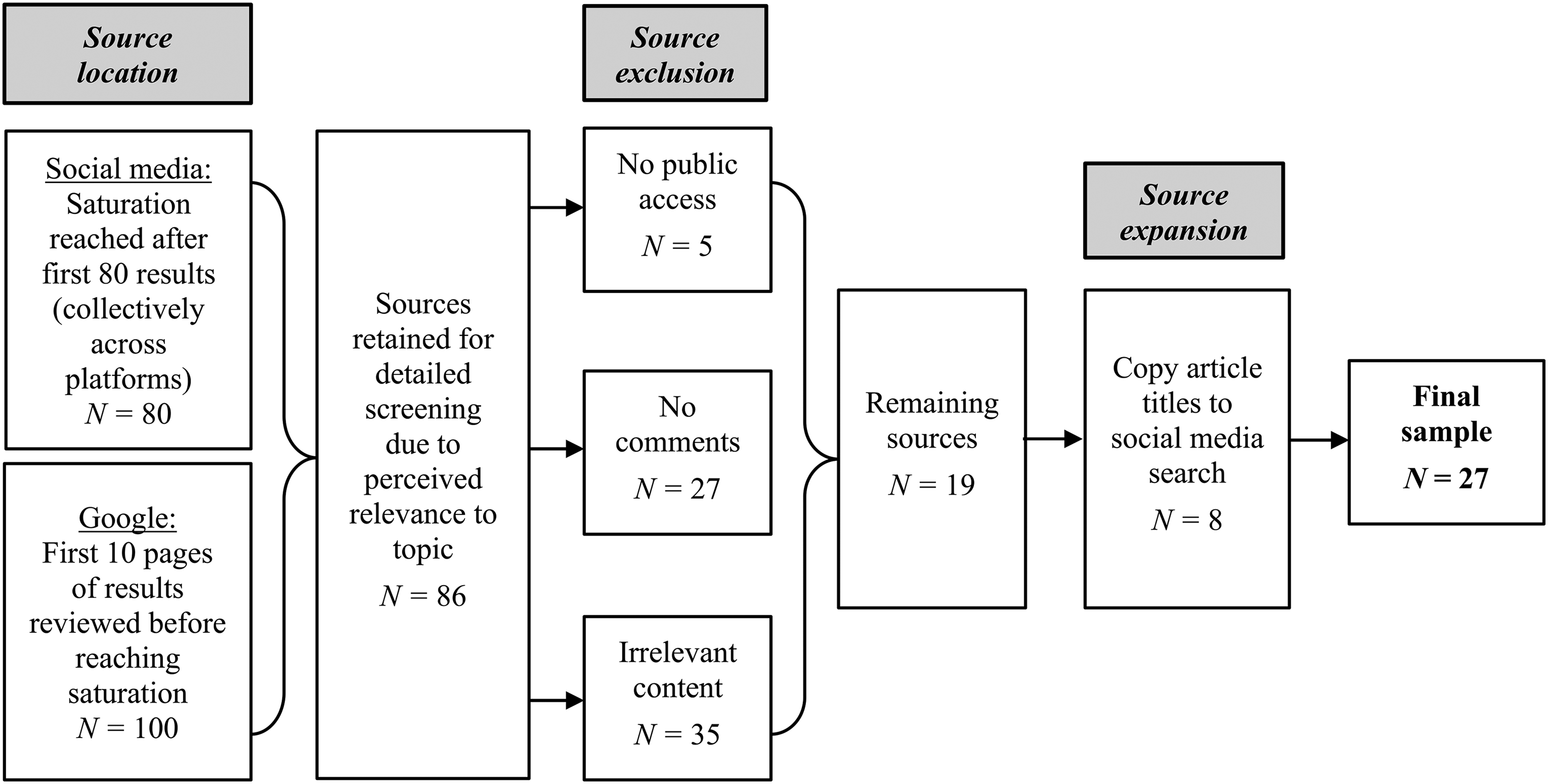
Search strategy.
Based on this strategy, a final sample of 27 sources were selected, with a total of 3,272 associated comments. Cases deemed inappropriate for analysis were excluded, 2 leaving a final sample of 2,398 public comments. Table 1 lists the final sources (and number of comments per source).
Data Sources and Comments (n).
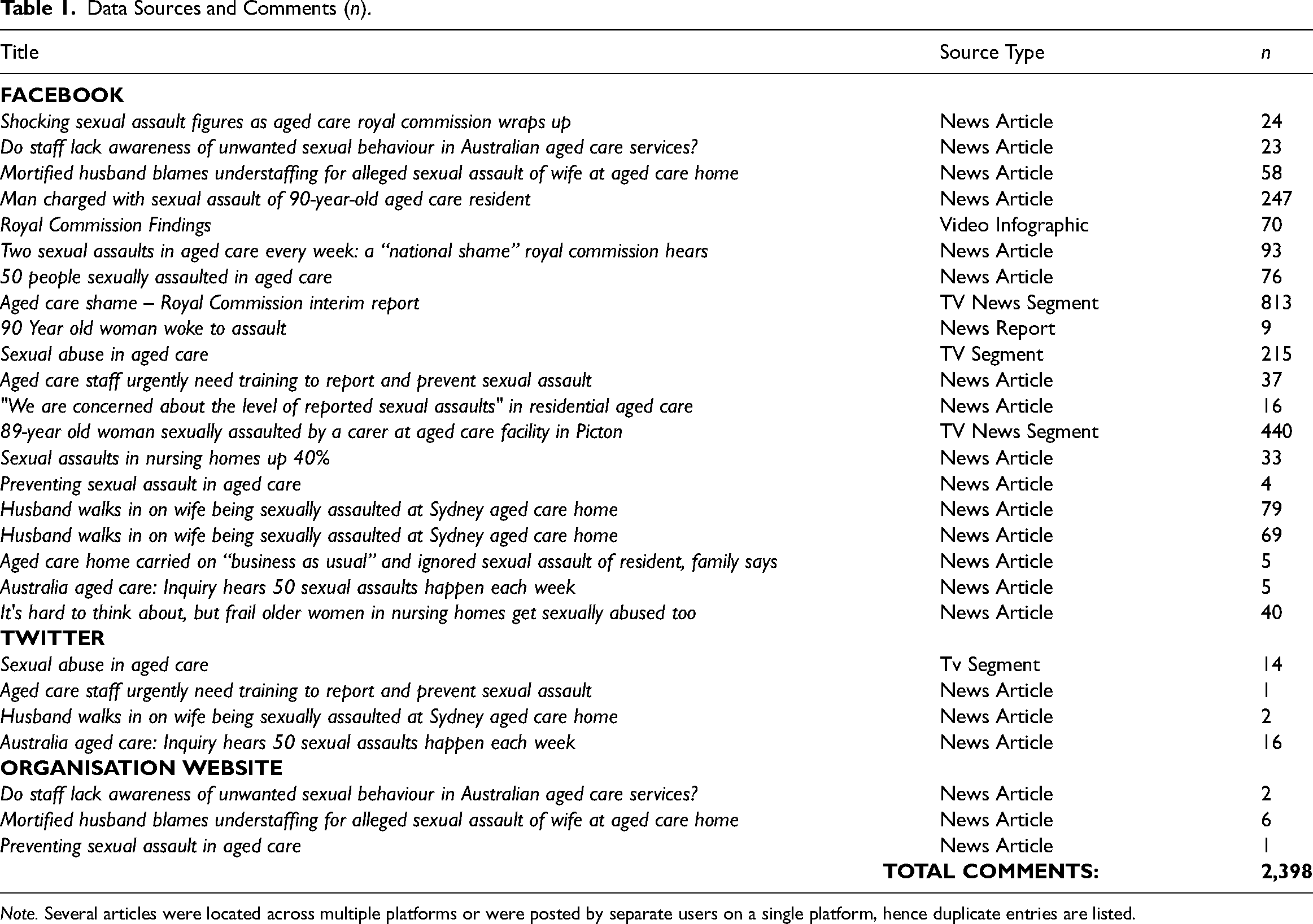
Note. Several articles were located across multiple platforms or were posted by separate users on a single platform, hence duplicate entries are listed.
Analytic strategy
To assess public views on sexual assaults in RACFs, identified social media comments underwent thematic analysis, using NVivo, to establish codes and themes explicitly related to the research questions of the current study. All comments were read to allow familiarisation with the data (Clarke & Braun, 2017) before employing a combination of deductive and inductive coding. Deductive coding produced several codes of theoretical relevance, including guardianship capabilities, target vulnerability, and macro versus micro responsibility. Concepts were also identified directly from the data through inductive coding (Ravitch & Carl, 2021), which produced new codes, such as privatisation, apathetic management, and reporting procedures.
Data underwent two coding rounds, with a subset of comments coded a third time by a project supervisor. The final series included 30 codes, with Crosstab analysis revealing an interrater concordance rate of 85%, indicating rigour and reliability (Rennison & Hart, 2019). Building from these codes, themes were then generated that enabled detection of relationships and divergences between data (Ravitch & Carl, 2021; Rennison & Hart, 2019), ultimately enabling a thorough interpretation of key concepts, as guided by overall research aims (Clarke & Braun, 2017).
Results
Analyses generated several themes distinctly related to the research questions of the current study. Themes and associated codes are discussed in detail below, with quote examples used verbatim.
Public views on nature and causes
Assessment of public views on the nature and causes of incidents identified three key themes related to opportunities for sexual assaults: (1) systemic issues, (2) resident vulnerability, and (3) unsuitable employees (see Figure 2).
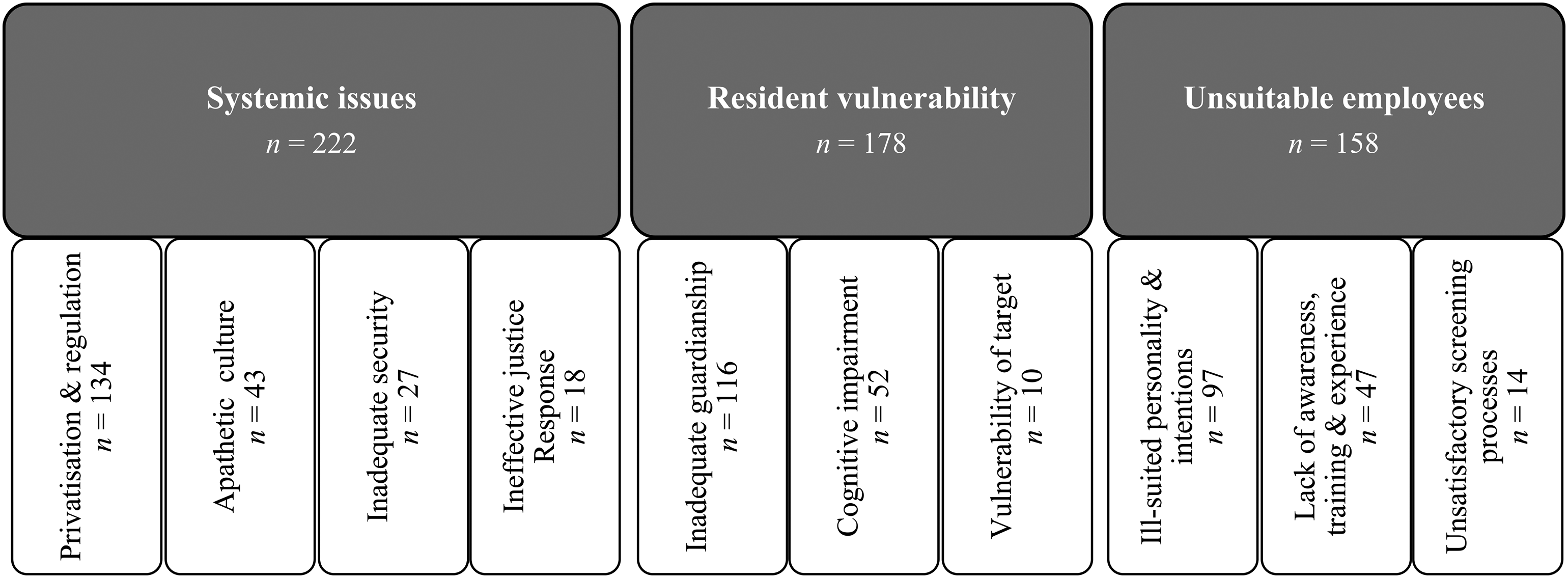
Perceived nature and causes of sexual assault incidents in RACFs.
Systemic issues
The public predominantly accredited the prevalence of sexual assaults in RACFs to systemic issues, including the effects of (1) privatisation and regulation, (2) an apathetic culture, (3) inadequate security, and (4) ineffective justice responses.
Privatisation and regulation surfaced as a prominent influence (n = 134), wherein it was believed that “privatisation hasn’t helped in providing proper care of our most vulnerable” (Article 12), instead leading to meagre regulatory requirements and prioritising profits (e.g., “This is what happens when profit trumps care” [Article 21]).
Similarly, apathetic culture (n = 43) concerned the belief that organisational values and management appeared to permit abuse by way of negligence toward incidents, with comments suggesting, “there is a tolerance to abuse and neglect in residential aged care facilities” (Article 12), which is “due to a culture (…) that has been allowed to continue unabated forever” (Article 5).
Inadequate security (n = 27) and ineffective justice responses (n = 18) encompassed concerns over the adequacy of facility security (e.g., “How did the assailant enter the building? Shouldn’t it be more secure” [Article 6]), and a belief that current procedures do not sufficiently deter potential offenders (e.g., “An awful situation where a vulnerable woman was taken advantage of, repeatedly, then no repercussions” [Article 21]).
Resident vulnerability
Three subthemes comprised resident vulnerability: (1) inadequate guardianship, (2) cognitive impairment, and (3) vulnerability of target.
Principally, the public felt inadequate guardianship within facilities increased opportunities for sexual victimisation (n = 116). A key concern was understaffing, wherein “care staff do not have time to constantly monitor all residents” (Article 21). Similarly, visitor shortages impacted guardianship capacities, with emphasis on shared supervisory obligation: “sad though when some don’t have anyone or others not check on/visited by family very much” (Article 10).
Residents with cognitive impairment were considered to be at a heightened risk of sexual victimisation (n = 52) due to their potential inability to understand or remember abuse had occurred: “If both residents are suffering from dementia I can fully understand how easy this could happen in their world of confusion” (Article 4). Several comments also voiced ideas that “if they have dementia, they can’t be held responsible” (Article 21), indicating impairment acted as a pretext for perpetration and excused harmful behaviours in some cases.
The subtheme, vulnerability of target, connected the perceived defenceless nature of older people as a cause of victimisation (e.g., “Abuse occurs in every area where there are vulnerable voiceless individuals and those who have power over them” [Article 27]). Additionally, this vulnerability was considered a barrier to disclosure, with one individual commenting: “would a frail old man or woman be able to make a complaint, would they be intimidated or scared of complaining? ” (Article 20).
Unsuitable employees
Employee suitability was likewise considered an influencing factor for sexual assaults in facilities, with three subthemes generated: (1) ill-suited personality and intentions, (2) a lack of awareness, training, and experience, and (3) unsatisfactory screening processes.
Ill-suited personality and intentions (n = 97) asserted the need for passion alongside training and skills, wherein: “it's not just training, it's people with the right caring attitude and empathy – this can’t be taught” (Article 8). Many believed negative employee attitudes stemmed from being forced into aged care training courses, with one user sharing: “that's what happens when job agencies urge the unemployed into doing Cert III 3 in Aged Care, to work in a job their character is not suited to, and likely do not wish to do. Result. No care given” (Article 17).
Additionally, staffs’ lack of awareness, training, and experience was identified 47 times, claiming issues arose through many employees “not having the skills or training to recognise when sexual assault has occurred” (Article 14), further contributing to underreporting. Others alluded to inadequacies in formal training requirements, stating: “that's what happens when they just hire people with no qualifications or experience” (Article 17). Taken together, ineffective recruitment and training processes were seen to result in a workforce who are not prepared or willing to fulfil the complex needs associated with aged care work.
Furthermore, the public shared concerns regarding unsatisfactory screening processes, wherein it was argued that current protocols were not stringent enough to identify those unsuitable for aged care work (e.g., “Whilst you do have to pass criminal history check and working with children checks they in themselves are not enough to prevent these types getting in and working in the industry” [Article 17]).
Responsibility
The second research question examined public attributions of blame; three levels were identified: (1) direct, (2) detached, and (3) indirect responsibility (see Figure 3).
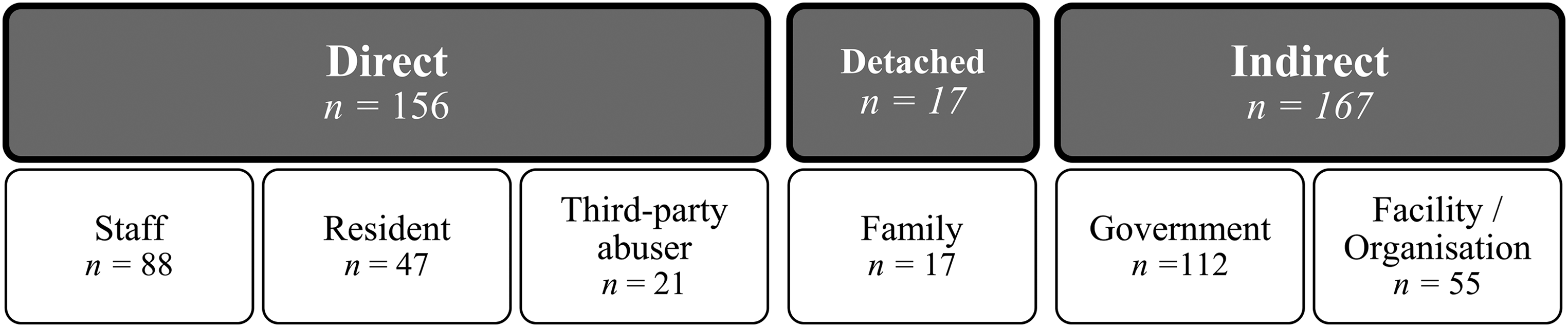
Perceived responsibility for sexual assaults in RACFs.
Direct responsibility
Across a range of contexts, those identified as being directly responsible for sexual assault incidents were (1) staff, (2) residents, and (3) third-party abusers.
Staff were designated responsibility most often (n = 88), with the public believing certain employees abused their power over residents to perpetrate assaults (e.g., “The rare Evil, sick staff member who wish to take advantage of old folk know they can get away with most abuses” [Article 22]).
Residents were similarly identified as perpetrators (n = 47), with comments attributing offending behaviour to external factors, such as cognitive impairment (e.g., “Most assaults occur between residents themselves, they are generally suffering dementia, confusion, frustrated etc.” [Article 12]). Others stated that facility protocols contributed to residents demonstrating harmful behaviours, such as: What honestly do you expect will happen when you get senile old people being pumped full of drugs for this and that and still feeling human instincts, they’re going to be a little randy
4
and inappropriate at times with staff or anyone else they can have access to. (Article 12)
Third-party abusers (external to facilities) were assigned responsibility in 21 comments, often in response to sources specifically identifying this type of offender. In these cases, psychological complications were frequently associated with decisions to offend, with one user stating: “OMG this man is insane, mental illness at its highest level” (Article 6).
Detached responsibility
Detached responsibility voiced perceptions of family having an obligation to resident welfare. In transitioning a parent to a facility, comments suggested relatives were also partly responsible, as inferred in this post: “you know what … if families looked after their own elderly relations like they did in the old days this wouldn't be a problem…” (Article 10).
Indirect responsibility
The final category of responsibility acknowledged the entities who manage the situational contexts facilitating sexual assaults in RACFs, namely the (1) government and (2) organisation or facility.
Government bodies received the highest number of codes across all responsibility levels (n = 112). A prominent discourse was that government departments have power to initiate change, particularly through improved funding and regulation (e.g., “Yes government is failing us. Give our service providers more support and money then we may be able to make a difference” [Article 13]).
Organisation or facility (n = 55) reiterated ideas that facility owners are obligated to address risks within the places under their control, taking action to increase safety. The public agreed that organisational negligence contributed to sexual assaults within facilities, with one user sharing: “strange how everyone is blaming the government, yet the owners, shareholders and directors, are not questioned, named or removed. They are the ones allowing this to happen, not the government” (Article 12). It was a common belief that incidents were “swept under the rug” (Article 2) to protect facilities’ reputations. The public did, however, indicate that this was not inclusive of all RACFs (n = 75), instead sharing that facilities engaging in misconduct impugn the image of those operating appropriately (e.g., “One facility like this wrecks it for the good ones” [Article 17]).
Potential solutions
As depicted in Figure 4, analysis identified four key themes around public views on potential solutions to sexual assault in RACFs: (1) punishment and accountability, (2) increased guardianship, (3) regulation and policy, and (4) creating safer places.
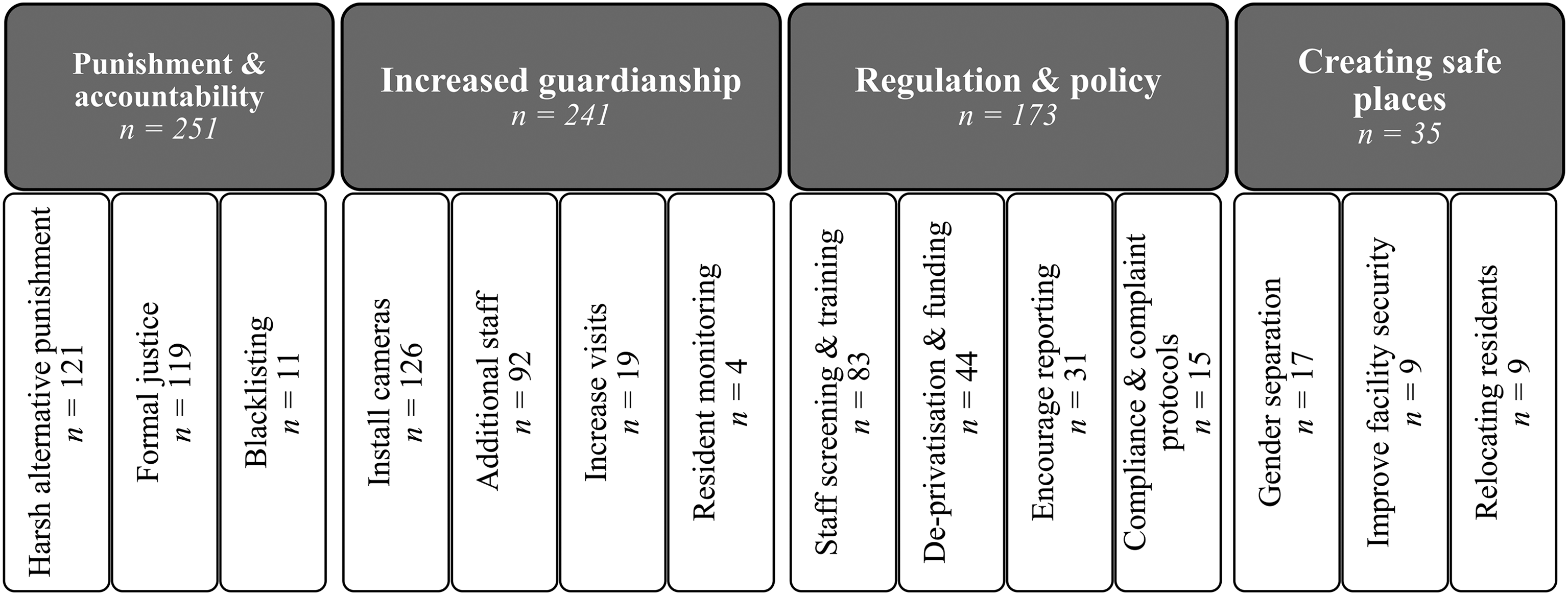
Potential solutions.
Punishment and accountability
Public attitudes articulated a need for greater penalties for perpetrators of sexual assaults in RACFs, including (1) harsh alternative punishments, (2) formal justice, and (3) blacklisting those found guilty of assault.
Harsh alternative punishment was the most prevalent solution offered by the public (n = 121). Punishment types included castration (e.g., “Casterate [sic] him to stop him doing it again” [Article 6]), and capital punishment (e.g., “A bullet to his head is the only decent response!” [Article 6]), to ensure offenders do not reoffend.
Additionally, the public called for stronger reliance on formal justice responses for offenders found guilty of sexual assault in RACFs (n = 119) to curb future behaviours (such as through incarceration), and deter potential offenders. As one user stated, “until there is criminal liability for providers and prosecution for staff found guilty of assault and ill treatment, this appalling behaviour will continue” (Article 16).
Furthermore, blacklisting negligent facilities, and carers found guilty of sexual assault (n = 11), was seen as a necessary accountability measure to encourage compliance.
Increased guardianship
Increased guardianship encompassed views that (1) installing cameras, (2) recruiting additional staff, (3) increasing visits, and (4) resident monitoring would help prevent sexual assault incidents in RACFs.
Installing cameras dominated discourse (n = 126), with support associated with deterrent capabilities of formal surveillance (e.g., “There should be cameras in every resident's room so people know their on camera at all times” [Article 10]). Conversely, debates arose surrounding preservation of residents’ rights if cameras were ubiquitous in facilities (e.g., “stuck between a rock and a hard place. Clients deserve the right to privacy and the right to safety” [Article 18]), The lack of preventative power CCTV surveillance provides was also recognised, with one user sharing: “CCTV is great for proving what's going on but where is the prevention?” (Article 10).
Additional staff was viewed as crucial for minimising risk of sexual victimisation through increasing natural surveillance in facilities (n = 92). Comments emphasised greater staff presence would likely reduce incidents through interference (if approaching actualisation), and general supervision (therefore limiting opportunity). As one commentor shared: “there should be a requirement for a ratio of staff to people like day cares, if there are enough staff a lot of problems would be fixed and there needs to be more supervision” (Article 10).
Increasing visits also served to improve natural surveillance (n = 19). Strongly associated with detached responsibility, it was perceived as beneficial for “relatives with family in Aged Care (…) to be vigilant and check on their family member regularly” (Article 10), wherein purposeful and unconstrained contact (beyond the scope possible by staff) may promote identification of possible victimisation and enact investigation.
Resident monitoring (n = 4) called for stricter observation of high-risk residents to reduce opportunities for further harmful behaviours (e.g., “removing him to another area, and keeping a closer eye on him would be more appropriate” [Article 22]).
Taken together, the public viewed the combination of these factors as increasing guardianship for all parties within RACFs, ultimately minimising opportunities to engage in sexual harm and increasing intervention capacity when necessary.
Regulation and policy
Prominent throughout the analysis was the need to implement stricter regulations and policies to curb identified causes of sexual assaults and enhance incident responses. The public deemed it necessary to (1) improve staff screening and training requirements, (2) assess de-privatisation and funding, (3) encourage reporting of incidents, and (4) develop more effective compliance and complaint protocols.
Staff screening and training (n = 83) was linked to perceptions of unsuitable and under-skilled employees contributing to the prevalence of sexual assault incidents in RACFs, specifically regarding capabilities in recognising and responding to incidents. The public expressed there is a “need to look at improving education, support and offer mentoring to staff. We need recruitment and screening processes that keep older people safe” (Article 18).
De-privatisation and funding (n = 44) encompassed the view that government departments needed to regain control over the aged care sector and arrange better funding to improve working conditions and resources. As one user shared, “if we could fund our age care facilities better and have more staff, I feel we would eradicate a majority of the problems” (Article 10).
The need to encourage reporting surfaced as a crucial measure to overcome barriers and improve incident responses (n = 31). A common recommendation was to immediately involve law enforcement to ensure a proper investigation and outcome is attained (e.g., “report to police, no more investigating themselves only to find out, oh nothing to see here” [Article 13]). There were also calls for improved compliance and complaint protocols (n = 15), emphasising a leniency in current audit procedures, and disregard of complaints by facilities. It was suggested that random inspections occur to realistically assess services (e.g., “What about the inspectors just showing up without any warning because if they are told their [SIC] coming everyone gets things up to date” [Article 10]), as well as calls for “an independent source where reported misconduct is actually fairly investigated” (Article 9), to ensure suitable outcomes.
Creating safe places
The public emphasised the need to improve resident safety through (1) implementing gender separation, (2) improving facility security, and (3) relocating residents who are at higher risk.
Gender separation (n = 17) specified the need to segregate residents into male- and female-only wards, with the notion that this would limit offending propensity (e.g., “until you have dedicated male and female units, it is really difficult to police” [Article 21]). There were also calls for improving facility security to increase efforts required for engaging in offending behaviours, such as through the “use of Electronic swipe cards, Electronic systems that hold that individual accountable, or a finger print system” (Article 10). Relocating residents who had perpetrated abuse was similarly suggested as a preventative measure, with one user sharing: “the best they could do was move the other resident out of that area” (Article 22).
Discussion
Through analysing social media comments, the aim of this study was to assess public perceptions and knowledge of sexual assaults in RACFs, particularly the nature and causes of incidents, delegation of responsibility, and potential prevention strategies. Thematic analysis of social media comments revealed many consistencies between prior empirical knowledge and public views, though also exposed attitudes and ideas not previously recognised within the literature.
As expected, comments comprised predominantly negative attitudes toward sexual assaults in RACFs. Further, the public perceived older people as “frail” and “vulnerable”, who were inherently powerless to abuse. These sentiments echo literature on the intersection between ageism and sexual violence; the clandestine nature of these offences and beliefs that older people are weak and cannot be targets of sexual assault, impacts understandings of the existence of the problem (Goldblatt et al., 2022). Attitudes expressed within the current study exposed calls for harsher punishments, including capital punishment and castration. These methods were seen as “permanent” solutions to reduce risk of reoffending, though speaks to a narrative of reactive retribution rather than rehabilitation and prevention – a finding consistent with extant literature on public opinions of sexual offending (Harper et al., 2017; King, 2019; King & Roberts, 2017).
Fundamental Attribution Error was also evident within public discourse surrounding employee suitability and responsibility. Interestingly, when discussing perpetrators of sexual assault incidents in RACFs, blame was frequently given to ill-suited “evil” staff, despite academic literature identifying male residents as the culprit most often (Bows, 2018a; Smith et al., 2018). A balanced approach is warranted regarding direct implication of staff in sexual assaults, as this may inadvertently impact job satisfaction of current employees, while also tarnishing the appeal of aged care work for potential recruits, further compounding workforce issues.
Alternatively, several themes concerned contextual factors influencing offending behaviours, aligning closely with the principles of Eck's (2003) Crime Triangle and Mischel's (1968) Person-Situation Interaction theory. It was evident that the public believed controller insufficiencies provided opportunities for offending in RACFs, specifically a lack of guardianship and management negligence. Consequently, installation of cameras in residents’ rooms, recruiting additional staff, and implementing mandatory ratio requirements were strongly supported by the public as a way of promoting consistent guardianship and deterring potential offenders. That said, arguments have arisen over in-room CCTV jeopardising resident privacy (Aged & Community Services Australia, 2019), though empirical scholarship linking guardianship with sexual offence mitigation cannot be ignored (Cook et al., 2021; Leclerc et al., 2015).
Concerns were also raised over the adequacy of formal security with calls for more sophisticated access controls and the separation of residents by gender. Though the latter portrays the incorrect assumption that sexual assault incidents do not occur between individuals of the same gender (Ramsey-Klawsnik et al., 2008), the opportunity reduction capacity of this measure is acknowledged. Importantly, these factors have been previously identified as possible preventative measures in RACFs (Payne & Fletcher, 2005; Ramsey-Klawsnik et al., 2008), emphasising the need to assess the feasibility and effectiveness of situational crime prevention approaches in these settings.
It is noted, however, that access control, gender separation, and ubiquitous formal surveillance instils a sense of total institutionalisation, erring toward the operation of RACFs as prisons (Brodaty, 2019; Williams, 2021). Strong debates have arisen over adopting a person-centred approach to aged care, prioritising resident autonomy and independence (Australian Human Rights Commission, 2019) though support for punitive prevention strategies identified within public comments recognises ongoing tension in this area. These attitudes similarly align with prevailing ageist stereotypes, wherein preferences for institutional constraint advance views of powerlessness and inadequacy amongst RACF residents, along with denying self-determination (Phelan & Ayalon, 2020). As such, proposed measures may require thorough deliberation to ensure both the safety and autonomy of residents is upheld.
Additionally, the current study has contributed to understandings of incident blame. The public conveyed that while not directly implicated, government bodies and facility owners maintain responsibility for sexual assaults in RACFs through controlling the situational contexts in which abuse occurs. Perceived negligence and apathy toward this issue at a macro level was believed to foster an environment and culture where abuse incidents are potentially enabled and overlooked (Payne & Fletcher, 2005). As sexual offending is often dependent on the interplay between situational context and individual disposition (Farmer et al., 2016; Wortley, 2012), it is crucial that government departments and facility owners work to bolster controller capabilities, ultimately limiting opportunity, and therefore offending propensity, in RACFs.
The public lens has also provided insight into perceived familial obligation to protect loved ones in RACFs, a theme not known to be explored within extant literature on this topic. The public believed responsibility for safety and prevention included family, even after transitioning an older person into care. Greater family involvement, including frequent visits to enhance guardianship capacities, and additional monitoring for signs of potential abuse, were common public recommendations for reducing occurrences and increasing detection. Recognition of the role that families play as advocates for the safety and wellbeing of residents further verifies the need to explore ways in which this distinctive group can be further empowered and utilised to prevent and respond to sexual assaults in RACFs.
Limitations
Limitations associated with social media analysis must be addressed. First, although over 82% of Australians are estimated to have active social media accounts (We Are Social, 2022), it is acknowledged that social media engagement and usage can fluctuate for various socio-cultural reasons. As Prichard et al. (2015) and Richards and McCartan (2018) discuss, social media analysis can lack representativeness in some circumstances, particularly when certain users are unequally represented (e.g., older people and those in rural and remote areas may have limited access to social media, while others, particularly those with a vested interest in the matter, may purposefully seek to engage in relevant conversations, creating possible response bias). This, coupled with an absence of geographic and demographic data, can subsequently impact generalisability and contextualisation of findings (Richards & McCartan, 2018). Second, data sources used in this study likely demonstrated inherent negative biases toward the identified issue, therefore having the capacity to influence public responses (Kort-Butler & Habecker, 2018). Additionally, it is recognised that data collected for this study was not produced for research purposes, therefore limiting control (for a comprehensive overview of limitations associated with social media analysis, see Prichard et al., 2015). Nevertheless, various advantages of this technique (e.g., large sample sizes, authentic perspectives, and expected engagement from relevant parties) give social media comments status as a valuable data source that provides unique insight into complex issues, and may help to inform effective responses.
Implications and future directions
Notably, high congruence was identified between public views, extant literature, and findings from the Royal Commission, with several premises echoing previous reviews of aged care processes across the OECD (OECD/European Commission, 2013). Inadequate staffing levels, insufficient training, a lack of appropriate funding, and ineffective governance were identified as key factors contributing to the failings of Australia's aged care system within the Royal Commission (Commonwealth of Australia, 2021), and were similarly detected by the public as causes of sexual assault incidents in RACFs. Consistently, prevention considerations include improving reporting protocols and systems (Burgess & Phillips, 2006; Malmedal et al., 2015; Radermacher et al., 2018), policy reform (Bows, 2018a; Malmedal et al., 2015; Smith et al., 2018), implementation of quality hiring practices (Payne, 2010; Ramsey-Klawsnik et al., 2008), increasing guardianship (Ramsey-Klawsnik et al., 2008), and, most prominently, staff training (Bows, 2018b; Burnes et al., 2019; Gill, 2022; Iversen et al., 2015; Payne, 2010; Radermacher et al., 2018; Ramsey-Klawsnik et al., 2008; Yon et al., 2018).
Importantly, Radermacher et al. (2018) specify that staff education level is influential in the likelihood of reporting abuse incidents, signalling the necessity of this measure in RACFs. Moreover, sexual assault specific training has proven to be effective in increasing staff's awareness of how to detect, manage, and prevent incidents (Smith et al., 2022), as well as evidencing significant improvements in knowledge and skills-based competencies for those working directly with older victims of sexual abuse (Du Mont et al., 2017). Development and implementation of training programs should therefore be prioritised to increase controller capabilities. Furthermore, as family members are noted to have an obligation to uphold the safety and wellbeing of residents, future research should examine the effectiveness of similar training and awareness programs for this group.
Recurring recognition of these identified measures in both empirical and public discourse necessitates formal discussion around the implementation of situational crime prevention measures along with individual-focused interventions to potentially limit opportunity and motivation for sexual offending in RACFs. Notwithstanding, some discrepancies between public opinion and academic literature were exposed regarding the nature and characteristics of sexual assault offences in RACFs. Older people were viewed as largely powerless and frail, likely exacerbating negative public views and support for ineffective punitive responses. Also, direct implication of staff as main perpetrators (when literature frequently specifies male residents) evidences some inconsistencies in public awareness. In response to these collective misconceptions, further education may be beneficial to ensure the public, and any subsequent policy discussions, are appropriately informed and ageist stereotypes are combatted (King & Roberts, 2017).
Though increasingly more attention is being paid to this issue, there is a continuing need to expand research in this field and develop initiatives that are practical and effective (Bows, 2018a; Smith et al., 2018). More research is needed to evaluate the application of situational prevention strategies underpinned by Eck's (2003) Crime Triangle and Mischel's (1968) Person-Situation Theory in reducing sexual violence risk in aged care settings. Similarly, family members’ contribution to this issue is a previously unexplored phenomenon, which surfaced throughout the analysis. Continuing research into the role this group plays in the detection and intervention of sexual assaults is therefore warranted to further expand and enhance preventative capacities in RACFs.
In sum, the current study reiterates the importance of assessing public views in response to social issues like sexual assault (Richards & McCartan, 2018). Fundamentally, public perceptions can influence awareness, recognition, and reporting of abuse (Lafferty et al., 2009; Loney-Howes et al., 2022), thus framing ideas around the usefulness and effectiveness of responses. Clear consistencies identified between empirical literature, Royal Commission recommendations, and public views in relation to both the causes and possible solutions to the issue of sexual assaults in RACFs demonstrate strong community support for imminent action. This alignment not only endorses the implementation of identified preventative measures, but exposes the momentum and drive required to create much needed change in this space. Addressing these critical issues will presumably reduce opportunity and motivation for the perpetration of sexual assaults in RACFs, therefore increasing resident safety and limiting sexual victimisation risk in aged care facilities.
Footnotes
Declaration of conflicting interests
The authors declared no potential conflicts of interest with respect to the research, authorship, and/or publication of this article.
Funding
The authors received no financial support for the research, authorship, and/or publication of this article.

Data availability statement
The data that support the findings of this study are available from the corresponding author upon reasonable request.