




Abstract
Despite the mental health crisis afflicting men on university campuses, they vastly underutilize on-campus counseling services. The current study compared 12 demographic characteristics for all men (n = 396) who attended a particular university counseling center (CC) compared to the population of all men at that university over a particular academic year. The study used both a single-sample and two-sample data conceptualization and analysis. The intention was to be able to identify subgroups of university men who are underutilizing counseling services compared to their representation to inform outreach initiatives toward increasing uptake. Replicated findings across the two analytical strategies employed indicated that grade-point average, first-generation student status, major declaration, and the college of one’s academic major significantly predicted CCs utilization amongst this sample of university men. Based on these results, CCs seeking to increase men’s willingness to seek on-campus counseling services should focus outreach efforts toward subgroups of men who appear to most underutilize such services, such as men with lower grades, men who are first-generation college students, men who have not declared their academic major, and men from academic colleges such as business and economics. In addition, results indicated that common predictors of psychological help-seeking derived from samples comprising both men and women from past studies (without analyses of gender differences), such as age, race/ethnicity, international student status, and military experience, may not be generalizable to predicting CC utilization specifically by university men. Suggestions for outreach that considers common forms of masculinity are provided.
University Men’s Mental Health
The mental health of students is the top concern amongst university presidents (Cecil & Melidona, 2022). There is justification for this worry. An estimated 60% of university students report significant mental health concerns according to one population-level survey (Lipson et al., 2022). Another similar survey estimates that 51% of university students are at least moderately distressed (American College Health Association, 2023). These high levels of mental disorder and distress are antithetical to a university’s mission. The abundance of evidence suggests negative mental health adversely affects numerous academic and vocational outcomes (Arria et al., 2013; Thomas et al., 2021).
Greater awareness of the rising mental health crisis facing men in university in particular has been slowly developing (J. Davies et al., 2000, J. A. Davies et al., 2010; Farrell & Gray, 2018; Iwamoto et al., 2014). For example, compared to women, men are consistently demonstrating “lower literacy, lower school grades, lower engagement in school, higher dropout from school, higher rates of repeating a grade, higher rates of emotional disturbance and learning disabilities, higher rates of placement in special education, higher rates of suspensions and expulsions, and lower rates of postsecondary enrollment and graduation” (Kleinfeld, 2009, p. 126). Extremely high rates of hazardous alcohol use as well as high levels of risk-taking amongst men in university further contribute to the mental health crisis of college men, while also highlighting the benefit of increasing campus counseling utilization (Iwamoto et al., 2014; Oliffe et al., 2013; Schafer, 2023). In addition, although most attention and awareness are around men as perpetrators of sexual violence, relatively recent research has uncovered that men attending university are at quite an elevated risk of being sexually victimized themselves (compared to non-university men of the same age), with rates in research studies being as high as 28% (Forsman, 2017; Luetke et al., 2021). This experience and the emotional sequalae that follows such victimization further contribute to the mental health crisis of university men. Overall, these factors and other mental health considerations culminate in a high rate of suicide completion in university men (Oh et al., 2021; Turner et al., 2013).
Men’s Counseling Center Utilization
Despite the great need for counseling services for university men, the evidence is quite consistent and compelling that women on campus use the services of the counseling center (CC) more frequently (Erkan et al., 2012). For example, according to the Center for Collegiate Mental Health (CCMH, 2023), men make up only about one-third of all CC clients – notably below their proportion on campus. Given the serious mental health concerns afflicting many university men and their relatively low rates of professional psychological help-seeking, more research is warranted to identify which subgroups of men are most represented amongst the underserved and could most benefit from targeted outreach services seeking to increase CC utilization.
Much of the research on the low rates of professional psychological help-seeking amongst men has focused on the effects of hegemonic masculinity and the barrier it creates (Seidler et al., 2016; Shepherd et al., 2023), followed by other psychological characteristics like mental health literacy and self-stigma (Nam et al. 2013; Pederson & Vogel, 2007; Rafal et al., 2018). While these constructs have partially explained why men have a decreased level of psychological help-seeking, there is much variance in help-seeking left unexplained. For example, one study found that conformity to masculine norms explained only 7% of help-seeking (Wimer & Levant, 2011). Thus, there is still much to be learned about what predicts professional psychological help-seeking amongst men in general, and university men in particular. Moreover, most of these complex psychological variables are extremely difficult or time-consuming to readily assess, and therefore do not easily translate into efficient, feasible, or practical indicators to inform outreach for university CCs.
In contrast, sociodemographic variables are much easier to assess and determine than complex psychological variables, and thus are more efficient, practical, and feasible to incorporate into broad outreach, and other health promotion efforts. Furthermore, although past research has established the significance of complex psychological constructs like hegemonic masculinity, self-stigma, and mental health literacy, sociodemographic factors (like age, race/ethnicity, military experience, and disability status) are also likely to intersect with them to influence men’s professional psychological help-seeking (Brown et al., 2019; Christensen & Jensen, 2014; Joiner et al., 2022; Nystrom et al., 2024), and therefore merit further examination.
Surprisingly, there is comparatively less information on sociodemographic characteristics as predictors of professional psychological help-seeking in men. Research with large and/or population-representative samples are particularly lacking (Rafal et al., 2018), and this deficiency extends to research with university men. Although there is past research that has investigated demographic variables as predictors of professional psychological help-seeking, almost without exception, these studies have often failed to disaggregate the findings by gender (CCMH, 2023; Doll et al., 2021; Vessey & Howard, 1993). Ignoring gender as a moderating variable could obscure potential interactions between gender and other demographic variables in predicting help-seeking. This deficiency in research is despite longstanding calls to better understand the demographics associated with help-seeking amongst men (Harris, 2010; Levant et al., 2011; Vessey & Howard, 1993).
Demographic Variables and Healthcare Utilization
Certain models of healthcare utilization promote the benefit of focusing on demographic variables. For example, the Behavioral Model of Health Services Use (BMHSU; Andersen, 1995) outlines healthcare utilization as a function of three types of factors: (a) predisposing, (b) enabling, and (c) need. Each of the three components of the model makes an independent contribution to predicting use and are necessary but not sufficient to maximize usage. The development of the BMHSU was precipitated by the well-replicated findings that pro-utilization health-related knowledge, attitudes, and beliefs often did not translate into actual utilization and that certain demographic factors such as gender and geographical location were robust predictors of healthcare utilization (Andersen, 1995).
Predisposing factors (the first part of this model) are of most relevance for the current study. Predisposing factors are conceptualized to include both social identity/social structure demographic variables (e.g., age, race/ethnicity, disability status, international student status, grade-point average [GPA], living on/off-campus, being first-generation university student or not). Some predisposing factors are not mutable (e.g., race/ethnicity), while others may be with effort (e.g., GPA) or time (international student status). Predisposing factors can either promote or hinder service utilization. Enabling factors comprise family/community/social factors, such as office hours, wait times, cost, distance of services, and perceived fit and accessibility of services. Need factors refer to a person’s requirements and/or desires for services.
Some past research has delved into sociodemographic variables as predictors of professional psychological help-seeking, specifically amongst men. For example, older age (Calear et al., 2014; MacKenzie et al., 2019; Neighbors & Howard, 1987) and race/ethnicity (i.e., being racially White; Berke et al., 2022; Chandra et al., 2009) are predictive of more help-seeking. In addition, men with a disability appear to utilize psychological treatment at a similar rate as their non-disabled counterparts (Coduti et al., 2016; Trammell & Hathaway, 2007). However, there is little well-replicated research beyond this. In addition, these reported findings are based on general community samples of men, so the extent to which these findings generalize to university men is unknown. Moreover, university-specific demographic variables (e.g., GPA, on/off-campus residence, academic level, international student status, academic major, and first-generation student status) might also influence help-seeking among university men but are rarely, if ever, investigated.
Purpose of this Study
University CCs are situated as the primary source for mental health services on campus and are therefore well-positioned to recruit more men in need. If these outreach efforts are successful, the results should be highly beneficial. An abundance of evidence indicates that educational outcomes like GPA and graduation rates increase after a reduction in psychological distress facilitated by counseling at the university CC (Kivlighan et al., 2021; Schwitzer et al., 2018). Therefore, it also becomes important to identify which subgroups of men in particular are most underrepresented amongst CC clients in order to pursue more targeted outreach and health promotion. This is because these subgroups of men potentially have the most to gain by visiting the CC due to their lower utilization.
The present research study examined men’s counseling service utilization at a specific university. This study was guided by the overarching research question “How do men who utilize counseling center services differ, in terms of demographic-type variables, from men who do not?” Due to the small amount of past research examining the possible influence of demographic variables, specifically for university men on university CC utilization, this study was designed to be exploratory in nature. By comparing the demographic characteristics of all university men who visit and who do not visit the university CC, we would be able to better differentiate between university men who do and do not take advantage of this on-campus mental health service. With a greater understanding of sociodemographic variables associated with CC utilization, universities will be able to better target outreach toward men of specific sociodemographics who most underutilize these services or are predisposed not to seek help, and potentially eventually increase uptake of counseling services by these subgroups of men. Doing so is within their purview. Outreach is considered one of the core functions of a university CC (International Accreditation of Counseling Services, 2023), with one of the primary goals being to increase utilization for those with mental health needs (Mitchell, 2023).
Method
Participants
The participants in this study were every undergraduate student enrolled in the same academic year at a particular pacific northwest coastal U.S. university that served primarily undergraduate students. The university had an enrollment of approximately 15,000 students at the time of data collection. This study is based on demographic data routinely collected by (a) the university for all attending students by the Registrar’s office (RO), (b) the university’s office of disability services (ODS) on students who have sought disability services, and (c) the university’s CC on students who have sought counseling services.
University Population
There were 5,888 undergraduate men enrolled at time of data collection. They ranged in age from 17 to 66 years (M = 21.25, SD = 3.45) with a median of 21 years. About 26.85% of them lived on-campus with the remaining 73.15% living off-campus. Approximately 17.65% of the men were classified as freshman, 19.33% sophomores, 28.36% juniors, and 34.66% seniors. About 29.25% of them were first-generation university students. The mean GPA for the men was 2.83 (SD = 0.62) and the median GPA was 2.86. Only 0.80% of the men were international students and 2.53% of them currently or previously served in the military. About 49.44% of the men had declared their academic major. For those declaring, 19.00% had a major within the College of Business and Economics, 1.41% within the liberal arts college within the university, 5.23% in the College of Fine and Performing Arts, 32.01% in the College of Humanities and Social Sciences, 5.42% within the College of the Environment, 33.00% within the College of Sciences and Technology, and 1.66% in the College of Education. About 77.51% of the men self-identified as White with 7.18% Multi-Racial, 6.84% Asian, 6.25% Hispanic or Latino, 1.65% African-American, 0.37% Native American, and 0.17% Pacific Islander. About 5.57% of the men were registered with the ODS. About 0.59% of the men were registered with a physical disability, 4.62% registered with a psychiatric disability, and 0.36% with a both.
Counseling Center Attendees
From the population of 5,888 undergraduate men at this university, there were 396 different men who attended the CC during the academic year. These students ranged in age from 18 to 48 years (M = 21.62, SD = 3.97) with a median of 21 years. About 30.56% students lived on-campus with the remaining 71.97% living off-campus. Approximately 17.17% of them were classified as freshmen, 20.45% sophomores, 28.28% juniors, and 32.58% seniors. About 19.44% of the men were the first student in their family to attend university. The mean GPA for the CC group was 3.00 (SD = 0.55) and the median GPA was 3.00. Only 1.52% of the CC men were international students and 3.54% of them currently or previously served in the military. About 60.61% of them had declared their major with 19.95% in the College of Humanities and Social Sciences, 19.19% within the College of Sciences and Technology, 8.33% as a major within the College of Business and Economics, 6.82% in the College of Fine and Performing Arts, 4.04% within a College of the Environment, 2.27% in the College of Education, and 1.27% within the liberal arts college. About 84.85% of the men who attended the CC self-identified as White with 6.81% Multi-Racial, 5.30% Asian, 2.27% Hispanic or Latino, 0.06% African-American, 0.03% Native American, and 0.02% Pacific Islander. These latter three ethnic groups were combined at the request of the CC for the purposes of this research manuscript to provide greater anonymity to men of these low-utilizing ethnic groups to assure a higher degree of patient anonymity. About 9.09% of the CC attending men were registered with the ODS.
Variables and Data Collection
Participant characteristics and the list of variables selected for this study were obtained through cross-referencing the information obtained by the RO and/or ODS with the information collected by the CC at intake. The RO and ODS data were collected by the university based on student application information and current student records at the start of the academic year. The CC data were collected upon student entrance into counseling services based on the intake form from one specific academic year corresponding to the RO and ODS data. The university and CC provided the de-identified information to the researchers. The list of variables used for this study were constrained by the questions asked by both of these two university sources. All demographic variables that were collected by both parties were included.
The 12 variables compared were age, residence (on-campus or off-campus), academic level (freshman, sophomore, junior, senior), international student status, academic major (declared or undeclared), academic college of declared major, GPA, first-generation student status, past/current military service, race/ethnicity, and disability status (presence/absence and general type [physical, psychiatric, or both]). These variables had corresponding data about men from the entire university student population as well as from the men who had attended the CC.
Data Analyses
Each of these variables underwent descriptive and inferential statistical analyses. The researchers framed the analyses in two ways. First, at the request of and for the direct benefit of the CC for outreach purposes (i.e., who is underrepresented at the particular CC and should be targeted for outreach?), the university/RO data were conceptualized as the population and the CC data were used as the sample in order to complete single-sample t-tests as well as chi-square goodness-of-fit analyses. Second, for the benefit of greater research generalizability, the university student group and the CC group were then both conceptualized as samples drawn from their larger respective populations (U.S. university students and U.S. men who visit a university CC). The researchers then performed a two-sample t-test and chi-square test of independence with a statistical correction for the violation in the assumption of complete independence between the two groups. Independence of observations between two groups is an assumption of an independent group t-test and a chi-square test of independence. Violation of this assumption impacts the statistical power and type one error rate in t-tests (Wiedermann & von Eye, 2013; Zimmerman, 1997) and chi-square analyses (Rao & Scott, 1992).
In this study, there was a small and unavoidable overlap (6.73%) n = 396 in the two groups of men being compared, being that the CC sample were also included in the university sample. Due to confidentiality concerns regarding the release of identifying information to the researchers in order to match participants in the two groups, the current study was unable to avoid the violation of this statistical test assumption. Adjustments were performed in order to correct for the biasing affects that this overlap would otherwise have on the statistical analyses performed. Zimmerman (2012) provided a modified t-test with a corrective factor to resolve the type one error rate and power misrepresentation in dependent data as follows: t′ = t√1 − p. While we were unable to locate a direct adjustment to correct for the violation of the assumption of independence for the chi-square test of independence, adjusting the level of type one error to an ultra-conservative alpha level of .01 in comparison to the standard .05 allowed us to address the inflation of type one error rate due to the violation of full statistical independence between the two groups (Kramer & Schmidhammer, 1992; Tideman, 1982).
Results
University CC Program Utilization (Single-Sample Analyses)
In order to provide information useful for targeted outreach for the CC, the first set of analyses were performed using the university data as the population set and the CC data as a sample from that population to test for similarities and goodness of fit with the population. As shown in Table 1, the single-sample t-test found no difference in age between the CC sample and the university population providing support that the CC clients represent the population of all students at this university in regards to age. A t-test did reveal a significantly higher GPA at intake in the sample of men who attended the CC compared to the general university population (d = 0.27).
Single-Sample t-Test for Age and GPA
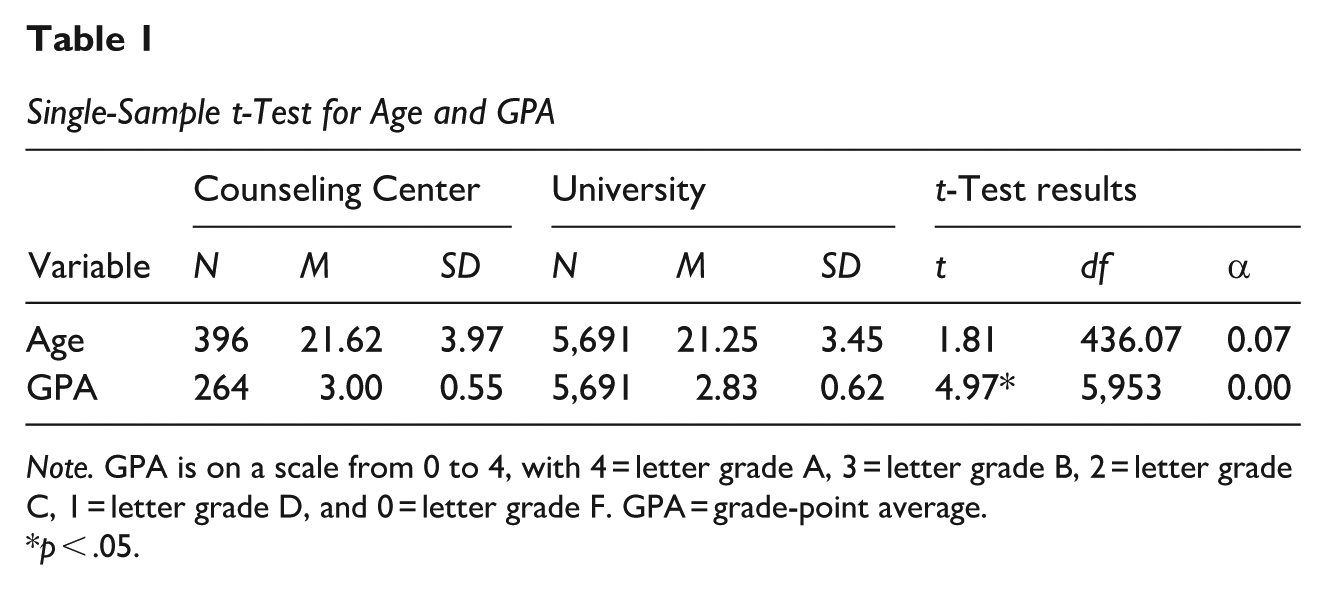
Note. GPA is on a scale from 0 to 4, with 4 = letter grade A, 3 = letter grade B, 2 = letter grade C, 1 = letter grade D, and 0 = letter grade F. GPA = grade-point average.
p < .05.
As shown in Table 2, chi-square goodness-of-fit analyses revealed no significant difference at α = .01 between the CC sample and the university population when comparing academic class status, on- or off-campus living location, international student status, military status, disability status, and type of disability. These analyses found fewer first-generation students in the CC sample than expected given the population value and more students with a declared major than expected. Differences in ethnicity were also found with significantly fewer Hispanic/Latino and Asian men and significantly more White men who attended the CC than expected given their population representation. In addition, the goodness-of-fit analyses found statistical significance based on the college of their declared major. Specifically, less men within the Colleges of Business and Economics, Humanities and Social Sciences, and Sciences and Technologies attended the CC and more men within the liberal arts college, Fine and Performing Arts College, College of the Environment, and College of Education attended than expected. We also found a statistically significant difference with respect to the presence of a registered disability. Less men with a disability than expected visited the CC, especially those with a physical disability and more men with a psychiatric disability specifically visited than expected.
Chi-Square Goodness-of-Fit Analyses for Counseling Center Clients and University Population
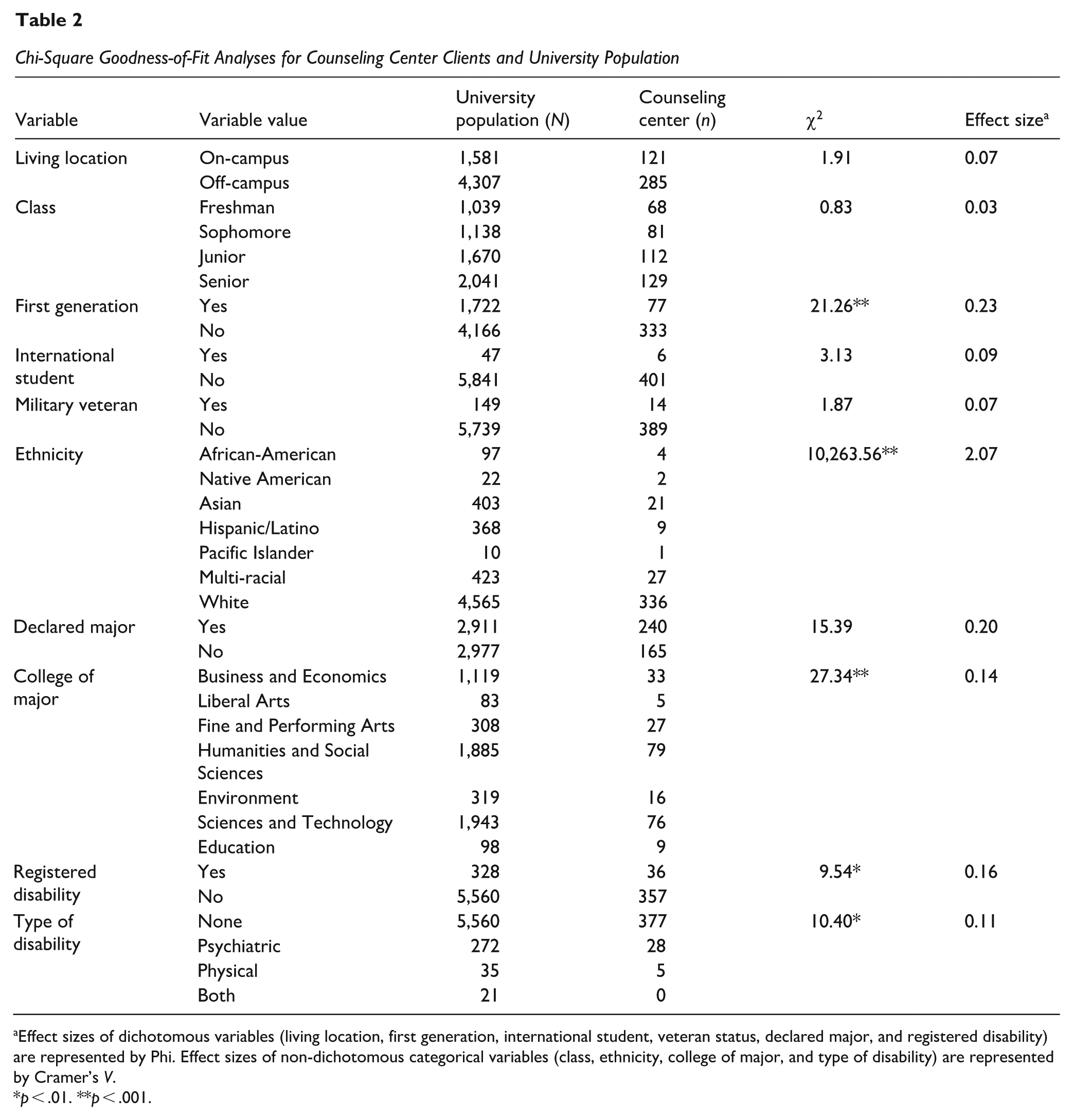
Effect sizes of dichotomous variables (living location, first generation, international student, veteran status, declared major, and registered disability) are represented by Phi. Effect sizes of non-dichotomous categorical variables (class, ethnicity, college of major, and type of disability) are represented by Cramer’s V.
p < .01. **p < .001.
University CC Utilization (Two-Sample Analyses)
As shown in Table 3, a corrected independent sample t-test revealed a statistically significant difference in the mean GPA of men on campus compared to men who visited the CC, t′(264) = 4.12, p < .05, d = −0.29, with men being more likely to visit the CC the higher their GPA is. The corrected t-test did not find a significant difference in the age of men who attended the counseling versus those who did not: t′(396) = 1.72, p > .05.
Two-Sample t-Test Age and GPA
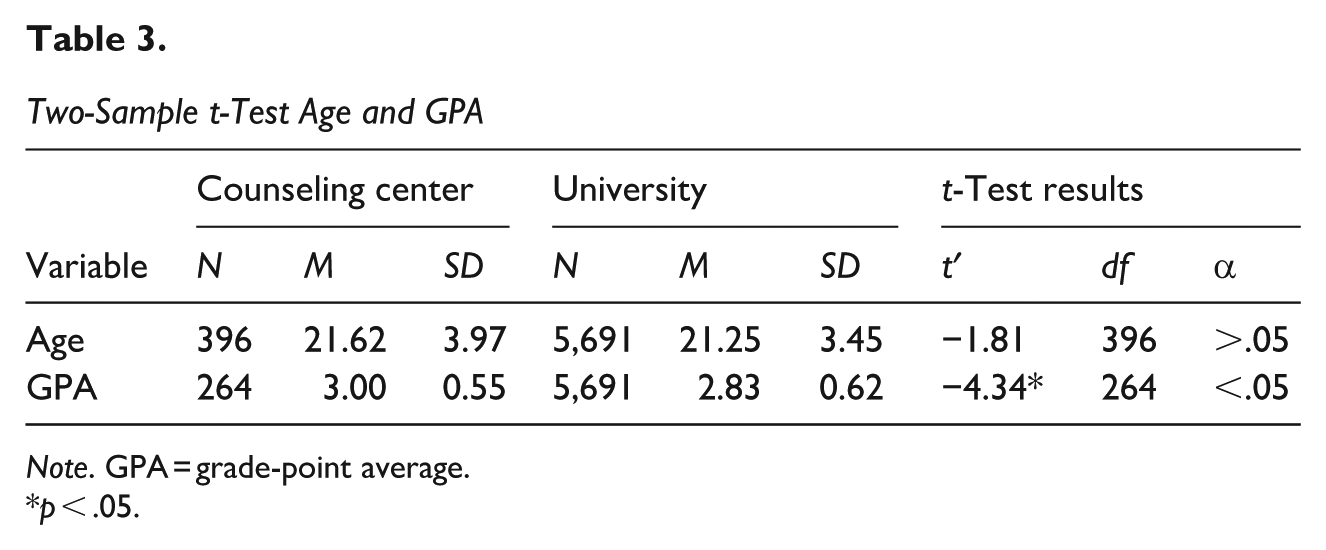
Note. GPA = grade-point average.
p < .05.
As shown in Table 4, an independent sample Pearson’s chi-square test found no significant difference (at α = .01 in order to address the violation of independence assumption) in the academic status, on/off-campus housing location, international student status, military status, ethnicity, or disability status or type. The chi-square cross-tabulation analyses found a significant difference of less first-generation students who attended the CC compared to the general university population with an approximately small effect size. In addition, the analyses found significantly more major-declared students attended the CC than undeclared students, with an approximately small effect size. Furthermore, the chi-square analyses found that the college in which the student’s major belonged to significantly predicted the likelihood of that man visiting the CC at a small effect size. Cross-tabulation analyses found that men within the College of Business and Economics were less likely to attend the CC, whereas men within both the College of Fine and Performing Arts and College of Education are more likely to visit the CC.
Two-Sample Chi-Square Test of Independence
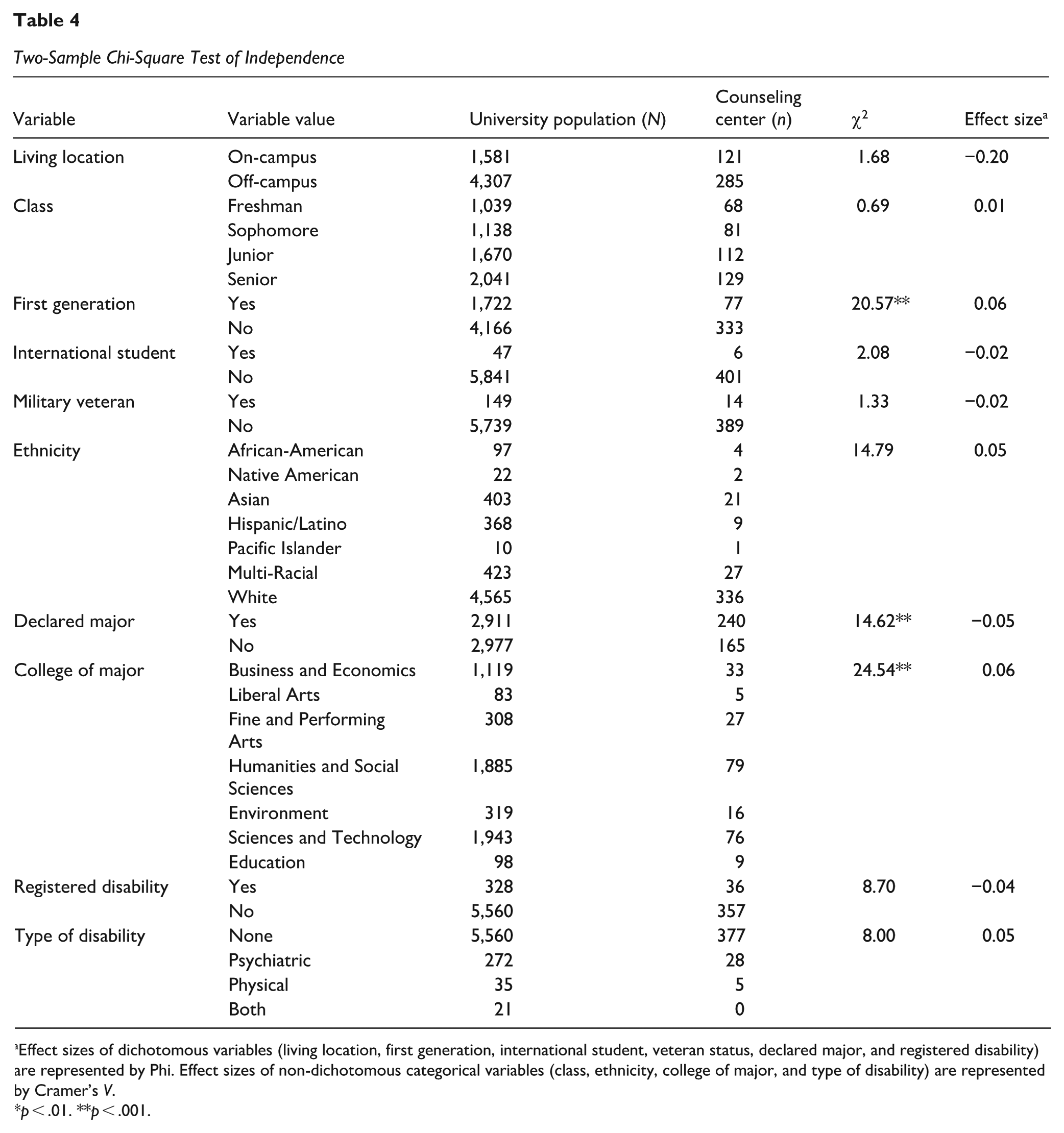
Effect sizes of dichotomous variables (living location, first generation, international student, veteran status, declared major, and registered disability) are represented by Phi. Effect sizes of non-dichotomous categorical variables (class, ethnicity, college of major, and type of disability) are represented by Cramer’s V.
p < .01. **p < .001.
Discussion
There is currently a mental health crisis facing university men on campus, but men continue to underutilize free counseling services on campus compared to women and proportionate to their levels of psychological distress and mental disorder (CCMH, 2023; Farrell & Gray, 2018). Yet it is still unclear what best predicts men’s professional help-seeking on campus and past research on psychological characteristics like hegemonic masculinity leave much variance in help-seeking unexplained (Wimer & Levant, 2011). Drawing on the longstanding strong performance of demographics variables in predicting healthcare utilization (Andersen, 1995), research on the sociodemographic and university-related characteristics of men who do and do not visit the CC on campus is an under-examined area. Information on these variables is more readily accessible or obtainable; thus, they provide a more efficient, practical, and feasible means for university CCs to engage in targeted outreach to subgroups of men who are predisposed to underutilize counseling services on campus in the face of need and likely benefit (International Accreditation of Counseling Services, 2023).
The purpose of this study was to compare the sociodemographic and university attendance related characteristics of undergraduate men who sought help at the CC at a particular university against the full population of undergraduate men who attended that university. The hope was to be able to identify subgroups of university men who are especially underutilizing counseling services on campus to guide future targeted outreach toward increasing their use of counseling services in the future. Single-sample analyses (comparing the population of men who attended that CC vs. the population of all men at that university) were employed to provide information specific to the particular university to guide future outreach services to subgroups of men. Two-sample analyses (considering the men who attended the CC and all men at the university as samples of their respective larger populations) were employed to provide more generalizable information about the differences between men who do and do not seek services at a university CC to again provide information for more targeted outreach.
Results of Single-Sample Analyses
When employing single-sample analyses, there were statistically significant results for 6 of the 12 variables investigated in this study. We found that men who attended the CC (a) had a higher GPA; (b) were less likely to be a first-generation student; (c) were more likely to have declared their major; (d) were less likely to be Hispanic/Latino and more likely to be White; (e) were less likely to be from the College of Business and Economics, College of Humanities and Social Sciences, and College of Sciences and Technologies and more likely to be from the liberal arts college, College of Fine and Performing Arts, College of the Environment, or College of Education; and (f) were more likely to have a psychiatric disability and less likely to have a physical disability. For the particular CC under investigation, these results provide information about what types of men, in particular, are less likely to utilize the services of the CC compared to their population rate at that university. This counseling treatment gap (difference between those who could benefit from counseling and those who actually receive it) among these subgroups of men provides guidance for who the university could target for outreach efforts to increase CC utilization. Universities similar in characteristics to the university sampled could find some relevance in these results as well.
Results of Two-Sample Analyses
Statistically Significant Findings
When envisioning the CC clients who are men as a sample of all CC clients who are men and envisioning the university students in the study as a sample of all U.S. university students who are men, a slightly different profile of predictors emerges with less statistically significant findings. Given the conceptualization of the two groups being investigated this study as samples, not populations, these results should have greater generalizability beyond the university investigated. In contrast to the six significant predictors identified in the single-sample analyses, the two-sample analyses found only four significant predictors of CC utilization/help-seeking amongst university men: (a) GPA, (b) first-generational student status, (c) declared/undeclared major, and (d) academic college of major. Race/ethnicity and disability type were not found to significant, like they were in the single-sample analyses.
GPA was higher among those who attended the CC. There is evidence that GPA increases after receiving counseling services (Kivlighan et al., 2021), but it is less clear from previous research if those with higher or lower GPA are more likely to attend in the first place. This is what can be concluded based on the results of the current study. For the men at this particular university, it appears that those already with a higher GPA are more likely to visit the CC (recall that GPA data were data at counseling intake for the men who visited the CC). The reason why cannot be determined from the analyses in this study but, speculatively, it is possible that those with higher grades believe that they have more to academically lose by not seeking counseling for their mental health concerns. It could also be that those with higher GPAs are more aware of the strong research in support of the effectiveness of counseling for mental health and academic outcomes and thus are more likely to attend. There is some congruent evidence from research on academic help-seeking that a higher GPA generally predicts a greater inclination to seek academic help (Roszkowski, 2013). Based on the results of this study, it seems that outreach efforts to increase CC utilization for men should especially target those men with lower GPAs (whose academic outcomes are possibly already adversely affected by their mental health and who may be less aware of the strong research supporting the efficacy of counseling for men).
There were less first-generation university students who attended the CC compared to non-first-generation students. This finding appears to mimic the finding that first-generation university students, in general, are less likely to seek help on campus in a variety of other domains of functioning like academic and financial difficulties compared to non-first-generation students (Chang et al., 2020). Therefore, based on the results of this study, it seems that outreach efforts to increase CC utilization for men should specifically target those who are first-generation university students.
Men with a declared academic major were more likely to visit the CC. The variable of declared/undeclared major on professional psychological help-seeking is one that does not appear to have garnered much previous research relevant to these findings. We were not able to locate any previous research on men specifically or on university students in general. The reason why men with declared majors are more likely to visit the CC cannot be determined from the analyses in this study but, speculatively, like GPA, it is possible that those with declared majors believe that they have more to lose academically and vocationally (like a particular career path) by not seeking counseling for their mental health concerns.
There was evidence from this study that men who were in certain academic colleges were more or less likely than men in other academic colleges to visit the CC. In particular, this study found that men in business/economics were less likely to visit the CC, and men from education and from fine/performing arts were more likely. Investigating professional psychological help-seeking by university men across a range of academic disciplines is an ignored area of research. We were only able to locate one study that did this previously, and it was conducted in Ireland, not the United States, so its results may not be fully comparable. McLafferty et al. (2022) found that psychology, mental health nursing, and arts students were most likely to obtain counseling services, while engineering and general nursing students were least likely. Given the lack of replicated research on academic college or major, this is a relatively new area for research to determine which students (and men in particular) are more and less likely to visit the CC as a function of academic discipline or general academic field.
Statistically Non-Significant Findings
It is not only important to consider what variables predicted these university men’s CC utilization but also which did not. Out of the 12 variables investigated in the two-sample analyses, 8 did not predict CC utilization. Several of these variables do not appear to have been previously looked at with men in general and university men in particular with respect to predicting their professional psychological help-seeking.
There is some research that indicates that age is a predictor of professional help-seeking (older individuals are more likely to seek such help) in samples composed of both men and women (MacKenzie et al., 2019) and some research that does not (Doll et al., 2021). However, the current study only included university men and found no predictive relationship, so age may not be a factor in differentiating which university men do and not visit the CC. Undergraduate academic level (freshman, sophomore, junior, senior) was also not predictive. Given the expected high correlation between age and academic level, this finding appears consistent with the null finding on age. Furthermore, this study found no predictive relationship between living on-campus or off-campus and use of the CC, meaning residence status was not a useful differentiator to guide targeted outreach. This appears to be the first time this variable has been examined as a predictor of men’s help-seeking at a university CC or other mental health service so we cannot compare it to past research. Therefore, future research on residence status is recommended to assess the robustness of this finding from the present study.
It is documented that international students are less common at university CCs, but these studies typically also sum their results across men and women (CCMH, 2023). Furthermore, the samples upon which these studies are based are typically overrepresented by women, so the applicability of these results to men could be called into question. Indeed, the results of the current study did not find a difference in utilization between men who are international students versus those who are not. Future research should attempt to replicate this finding and, if replicated, investigate reasons for this lack of difference.
There is consistent community-based research that racial and ethnic minority men are even less likely to seek professional psychological help than their White counterparts (Berke et al., 2022). However, race/ethnicity was not found to differentiate CC help-seekers in the current study. It could again very well be that this finding is because much past research on this topic has combined samples of men and women, with the latter generally being dominant in the combined sample. Thus, a differential finding amongst men would be masked in research studies with many more women in the sample.
Given the high presence of hegemonic masculinity in military populations (Clary et al., 2021) and the well-documented relationship between hegemonic masculinity and lack of mental health help-seeking (Seidler et al., 2016), it is somewhat surprising that the current study did not find that military status differentiated between those men who did and did not visit the CC. If replicated in future research, this finding could undue stereotypes of military men as not willing to seek professional psychological help, at least amongst those who attend university.
Finally, research with combined samples has found that individuals with a disability are no more or less likely than their non-disabled counterparts to seek professional psychological help (Coduti et al., 2016; Trammell & Hathaway, 2007). This was also found in the current study with regard to CC utilization, strengthening the conclusion that the results of past research with combined samples of men and women generalize to university men specifically. In the current study, disability type (physical, psychiatric, or both) also did not differentiate between those who did and did not utilize the services of the CC, which contributes to the body of literature because past research on disability and CC attendance did not differentiate between disability type (an exception is CCMH, 2023).
Suggestions for Outreach
According to the BMHSU, for these subgroups of university men to better take advantage of available CC services, three variables need to be considered: need, predisposing individual factors that predict lack of use, and enabling community factors. If we assert need, based on clear evidence of mental health crisis of men on campus, and the relative immutability of most demographic variables that promote underutilization (Andersen, 1995), outreach appears to be the best pathway forward for a university CC to reach men predisposed to avoid the CC.
Given the culture of common masculinities in men, particularly hegemonic masculinity, which clearly exert some influence on mental health help-seeking and CC utilization (Seidler et al., 2016; Shepherd et al., 2023; Wimer & Levant, 2011), outreach strategies are doomed to fail if they do not take these into careful consideration. Based upon a scoping review of successful approaches to engaging men in services (Seidler et al., 2024), the following strategies are evidence-based examples of how best to tailor communication to reach men and encourage them to seek CC services: using informal “laid back” language (e.g., less diagnostic, humor), using language common amongst hegemonic men, raising issues directly in a “matter of fact” and straightforward manner (e.g., [number] men have died on campus this year due to suicide), encouraging men just to tell their stories (without necessarily having to change), using metaphors to help describe men’s experiences in a more accessible and relatable manner, and using gateway conversations (e.g., informal discussions and discussions about other issues). These evidence-based strategies should be employed in any outreach efforts for the subgroups of university men identified in this study as likely to be under-utilizers.
As tailored as an outreach message may be to hegemonic masculinity and other common forms of masculinities on campus, men may still refuse to entertain the idea of a CC if large-scale systemic changes are not made, with such changes communicated clearly to men. According to the BMHSU, community-enabling factors include perceived fit and match of a healthcare service (Andersen, 1995). Therefore, having more men believe that the university CC is a match for them (and their gender), and their mental health needs should further promote increased utilization. So, in addition to obvious enabling accessibility factors (extended office hours, short wait times, geographically close satellite offices, etc.), shifting perceptions of the CC should further promote usage by men.
A small group of scholars have consistently commented that a key contributing factor to men’s reluctance to seek mental health services is the incongruence of conventional counseling services with the most common cultures of men’s masculinities. Many men expect or experience counseling as a feminizing experience, expect to have their masculinity attacked in counseling, and/or believe they will be pressured to become “less of man” in their own eyes (Brooks, 2010; Englar-Carlson, 2006; Rabinowitz & Cochran, 2002; Rochlen, 2005; Sagar-Ouriaghli et al., 2019; Shepherd et al., 2023; Westwood & Black, 2012; also see Seidler et al., 2024, for some concrete themes of man-friendly counseling based upon a scoping review). With this in mind, a potential outreach strategy would be communicating the respect for masculinity and valuing of prosocial and constructive aspects of masculinity that CC staff have (see the Positive Psychology-Positive Masculinity Framework – Kiselica et al., 2016 and the Masculinities Model of Mental Health Care – Seidler et al., 2018). However, this is premised on ensuring or increasing the gender competence of staff for working with men – research clearly shows that some mental health professionals are better at promoting positive outcomes with men than others, but those less competent can improve with appropriate training (Owen et al., 2009; Seidler et al., 2021, 2024). This is very important to address considering the research showing that many mental health professionals hold biases against men who can negatively impact therapeutic and interactions or impair men’s help-seeking (Heatherington et al., 1986; Kugelmass, 2016; Stahre, 2023).
Limitations of the Study
A major limitation of this study was the constrained number of variables that were analyzed due to restrictions in overlapping questions asked by the university and CC and reliance on standard collected data by the university and CC. In addition, this study was not designed to examine interactions between the predictor variables. It is possible that the predictor variables interact with each other to further influence help-seeking for men on campus. Given this study’s findings, interactions between the four variables found to be statistically significant in the two-sample analyses (GPA, first-generation student status, major declaration, and academic college) should be prioritized in future research assessing interactions between demographic variables on help-seeking amongst university men. Furthermore, due to the fact that this research was only conducted at a single university, we can only cautiously generalize these findings to other universities as it is possible that the university used for this study may be an atypical representation of all U.S. universities. However, inspection of the aggregate nationwide demographics of CC clients provided by the CCMH (2023) finds that the CC clients in the current study are quite representative when it comes to age, international student status, first-generation student status, military experience, and disability status. This bodes well for the potential generalizability of the findings. It only appeared that the current study’s sample of CC students was perhaps overrepresented in terms of the proportion of White men who visited the CC compared to racial/ethnic minority men compared to national averages, but this finding appears commensurate to the racial/ethnic make-up of the sampled university as a whole. Therefore, extrapolation of these results to CC utilization amongst men in more racially/ethnically diverse universities demands particular caution. Future research should address the limitations mentioned above through replication, prospective research studies, and investigation of other potential predictor variables, including at universities that host a more racially/ethnically diverse population of men on campus.
Conclusion
The four statistically significant and replicated predictors of CC utilization amongst this population of men are not quickly or easily modifiable personal characteristics, begetting the need to work on increasing utilization through targeted outreach and increased perceived fit of CC services. The results of this study are highly relevant for university CCs whose core mission includes student outreach (International Accreditation of Counseling Services, 2023), including for the purposes of increasing uptake of needed counseling services (Mitchell, 2023). The results of this study provide support for particular demographic variables being predictive of which men are more and less likely to utilize counseling services on campus – in other words, not all subgroups of men are seeking help from the CC comparably. Notably, it appears that men with lower GPAs, first-generation students who are men, men with undeclared majors, and men from certain academic fields (Business and Economics) are less likely to seek help from the university CC (i.e., these variables predispose lower utilization). These groups of men, in particular, could benefit from more targeted outreach and programming given their presumable need but lower representation at the CC. Gender-adapted outreach should aim to portray the CC as a more man-friendly and fitting option that respects students’ endorsed masculinities. This is imperative given that past research suggests men are less likely to seek help than women, despite being in high levels of distress and struggling academically. Finding ways to engage these particular subgroups of men in counseling appears to hold the greatest potential to significantly reduce the mental health crisis facing men on campus.
Footnotes
Acknowledgements
We wish to acknowledge Brennan D. Gilbert for feedback on a very early version of this manuscript and assistance with setting up the study as the counseling center contact.

Funding
The authors received no financial support for the research, authorship, and/or publication of this article.
Declaration of Conflicting Interests
The authors declared no potential conflicts of interest with respect to the research, authorship, and/or publication of this article.
Data Availability Statement
Data for this study is available by contacting the corresponding author.