



Abstract
Background:
Despite the high prevalence of mental health disorders worldwide, a significant proportion of distressed individuals do not seek professional help. Digital technology can be a potential bridge to reduce the treatment gap for mental disorders. A systematic review was undertaken to examine the technology-based interventions aimed at improving help-seeking attitude, intention, or behavior for mental health concerns.
Methods:
The literature search was conducted in January–February 2020 through various e-databases using relevant keywords that targeted help-seeking interventions for mental health disorders via different technology modes.
Results:
21 studies (15 randomized controlled trials and six non-randomized studies) were reviewed. The included studies were published between April 2006 to February 2020. Majority of the interventions led to an increase in the help-seeking variables. The crucial role of online delivery, participant involvement, and embedded links to professional services in encouraging help-seeking is highlighted. The review emphasizes the need for understanding utility of multicomponent interventions with personalized elements targeting help-seeking behavior, particularly in low-middle-income countries, and studies involving longer duration follow-ups.
Conclusion:
This systematic review is the first of its kind to examine technology-based interventions to improve help-seeking for mental health and suggests that such interventions play a crucial role in positively impacting help-seeking. The complex interplay between the relevant variables such as mental health literacy, stigma, help-seeking attitude, intention and behavior, and the intervention components that may have a differential bearing on these variables are issues that merit urgent attention in further research.
Keywords
Mental health disorders continue to be a leading source of disability and disease burden worldwide. 1 Despite prevention and treatment being effective ways to reduce the burden or alleviate the symptoms associated with a mental disorder, nearly two-thirds do not seek professional help, leading to a huge treatment gap. 2
The role of help-seeking as a variable assumes importance in the context of the growing recognition that closing the treatment gap for mental disorders requires attention to the supply-side and the demand-side barriers. 3 Help-seeking intention is defined as the likelihood of seeking help from one or more sources for psychological distress. 4 Help-seeking attitude refers to one’s attitudinal orientation towards seeking help for psychological concerns. 5 Help-seeking behavior refers to “any action or activity carried out by a person who perceives herself/himself as needing personal, psychological, affective assistance or health or social services, with the purpose of meeting this need in a positive way.” 6 Numerous studies have been undertaken to examine factors that promote or impede help-seeking for mental health problems. 7 The paradox is that individuals who experience higher distress or severe mental illness are often less likely to seek help.8–10 This line of research has provided an impetus to developing and testing the effectiveness of various help-seeking interventions for a wide range of mental health problems. 11
Increasing use of the internet and digital platforms in this decade provide significant opportunities to address a population’s unmet mental health needs. 12 As the internet-based interventions provide greater accessibility, acceptability, low cost, anonymity, and flexibility, they are increasingly utilized to make mental health services accessible worldwide.13–15 Such interventions have been used to serve a wide range of functions such as screening, symptom identification, self-care, improving help-seeking attitudes, and prevention and treatment of mental health concerns.16,17
Systematic reviews have examined help-seeking interventions for men, 18 common mental health disorders in particular, 19 and mental health concerns in general. 11 However, to the best of our knowledge, no systematic review has focused specifically on the technology-based or digital interventions promoting help-seeking among the distressed individuals in the community. The current review aims to address this gap by systematically examining empirical studies that utilized technology-based platforms targeting help-seeking attitude, intention, or behavior for mental health concerns.
Materials and Methods
The systematic review was conducted and reported in line with the PRISMA statement. 20 Individual studies were identified by searching the electronic databases of Springer, Wiley Online Library, PubMed, Taylor & Francis, SAGE Journals, IEEE Xplore, and EBSCO from January to February 2020. The supplementary search strategy included the Google search engine and a manual scan of reference lists from the review papers. The following keyword combinations were used for the search: “Help-seeking AND Intervention AND Mental AND Online OR Web OR App OR Internet”; “Improving help-seeking AND mental AND Online OR Web OR App OR Internet.” The keywords aimed to target help-seeking interventions for mental health disorders that were available via different technology modes. The mandatory inclusion of the terms “help-seeking” and “intervention” helped in filtering out a plethora of studies on mental health apps that did not aim at improving help-seeking and hence were beyond the scope of this review (see Figure 1). PICO guidelines were used for the systematic review (Box 1).
PICO Guidelines
The obtained studies were scrutinized based on the following inclusion criteria:
Published intervention studies aimed at improving help-seeking attitude, intention, or behavior for any mental health condition Interventions utilizing internet/app/any other technology partly/completely Help-seeking included as a primary or secondary outcome variable Published in the English language Published between April 2006 and February 2020
The following kinds of articles were excluded: book chapters, conference papers, abstract collections, theoretical papers, reviews, meta-analyses, qualitative studies, and secondary analyses of randomized controlled trials (RCTs). Following this, the duplicates were removed, resulting in 21 relevant studies (see Figure 1).
Flowchart Depicting Search Strategy Using PRISMA Diagram
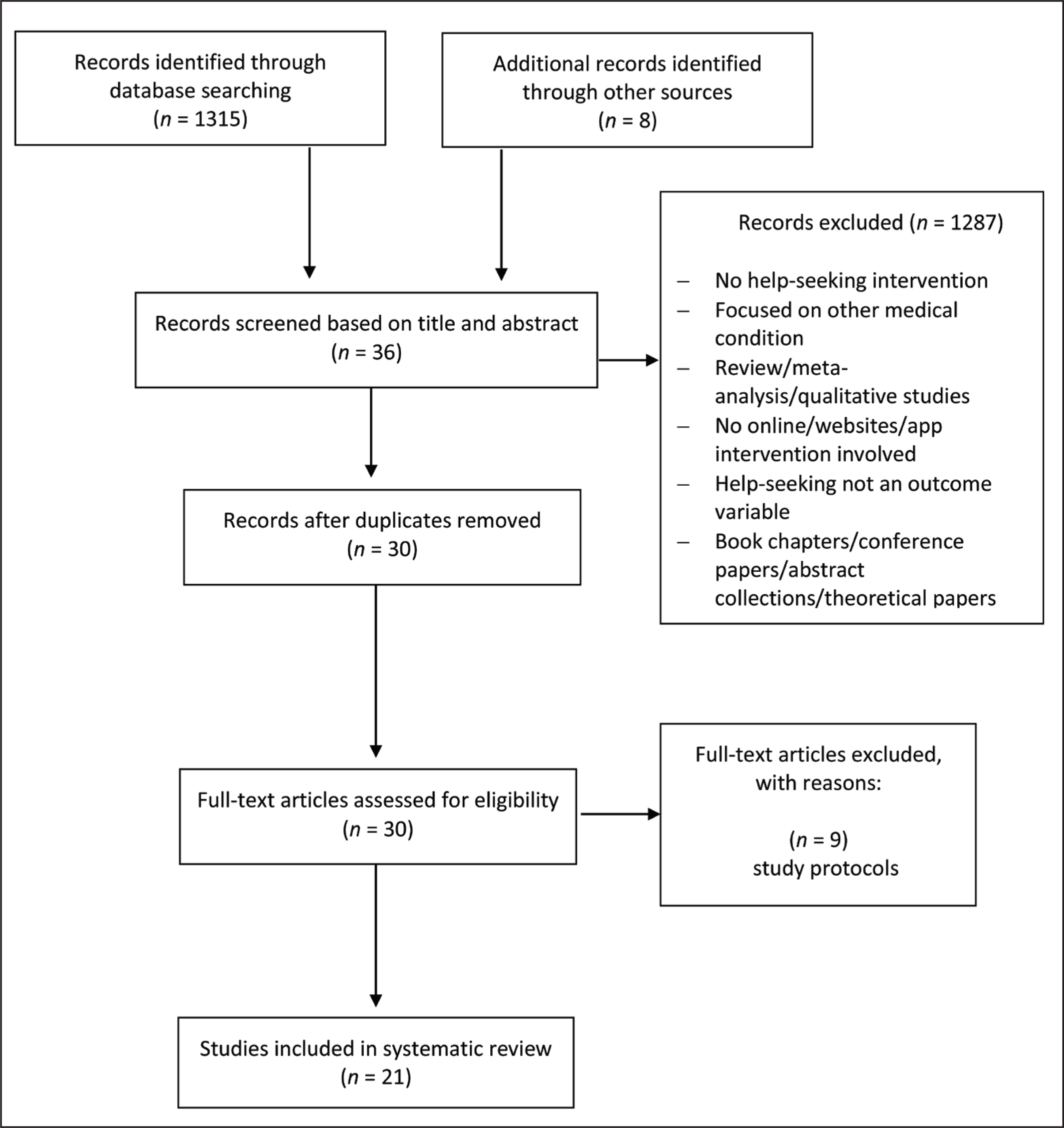
The first and the third authors evaluated the selected studies based on the aim and eligibility criteria independently and discussed to resolve any discrepancies. The relevant data (in Tables 2 and 3) were coded and extracted by the first and second authors. The study relied on the published information, and we did not contact the authors for any additional information.
Methodological Quality Assessment
The quality of individual RCTs was assessed using the Cochrane “Risk of Bias” Tool. 21 The tool is used to rate studies as high, unclear, or low risk on seven domains (random sequence generation, allocation concealment, blinding of participants and personnel, blinding of outcome assessment, incomplete outcome data, selective reporting, and other sources of bias). The modified Newcastle–Ottawa Scale (NOS) was used for the non-randomized studies (NRS). 22 The scale rates quality on three broad categories: selection, comparability, and outcome. The studies were rated as poor, fair, or high quality. The first and second authors assessed the studies independently, and discrepancies were discussed to reach a consensus.
Results
A total of 21 studies (15 RCTs and six NRS) published between 2006 and 2020 were included. The demographic details of the participants are described in Table 1.
Quality of Studies
The risk of bias summary of individual studies (see Figure S1) and the graph (see Figure S2) for the RCTs are available as online-only supplementary files. More than 80% (n = 12) of the studies showed a low risk of selection, performance, and attrition bias. In more than 66% (n = 10) of the studies, low risk was found for reporting and detection bias. There was an unclear risk for the detection bias in five studies (25%) as the material on outcome assessors was missing. Since the interventions were carried out online, the attrition rates were unavoidable. The total NOS scores (Table S1) for the NRS ranged from 5–8, indicating fair and satisfactory quality.
Intervention Characteristics
The characteristics of the target group and interventions used in the reviewed studies are presented in Table 1. Internet-based programs or apps were used as an intervention strategy in 18 (85%) selected studies. The remaining included text messages or multi-component interventions like messages through social media, emails, posters, mental health first aid training, etc. The duration of the interventions ranged from 40 minutes to six weeks and from one to two modules. The majority of the studies included an active control group (e.g., psycho-education, other health-related material, or a list of helpline numbers). However, three studies used inactive control (e.g., no feedback condition, links to online measurement surveys without feedback, or mental health information). One study used a wait-list control, and seven did not have any control condition.
Characteristics of Included Studies (N = 21)
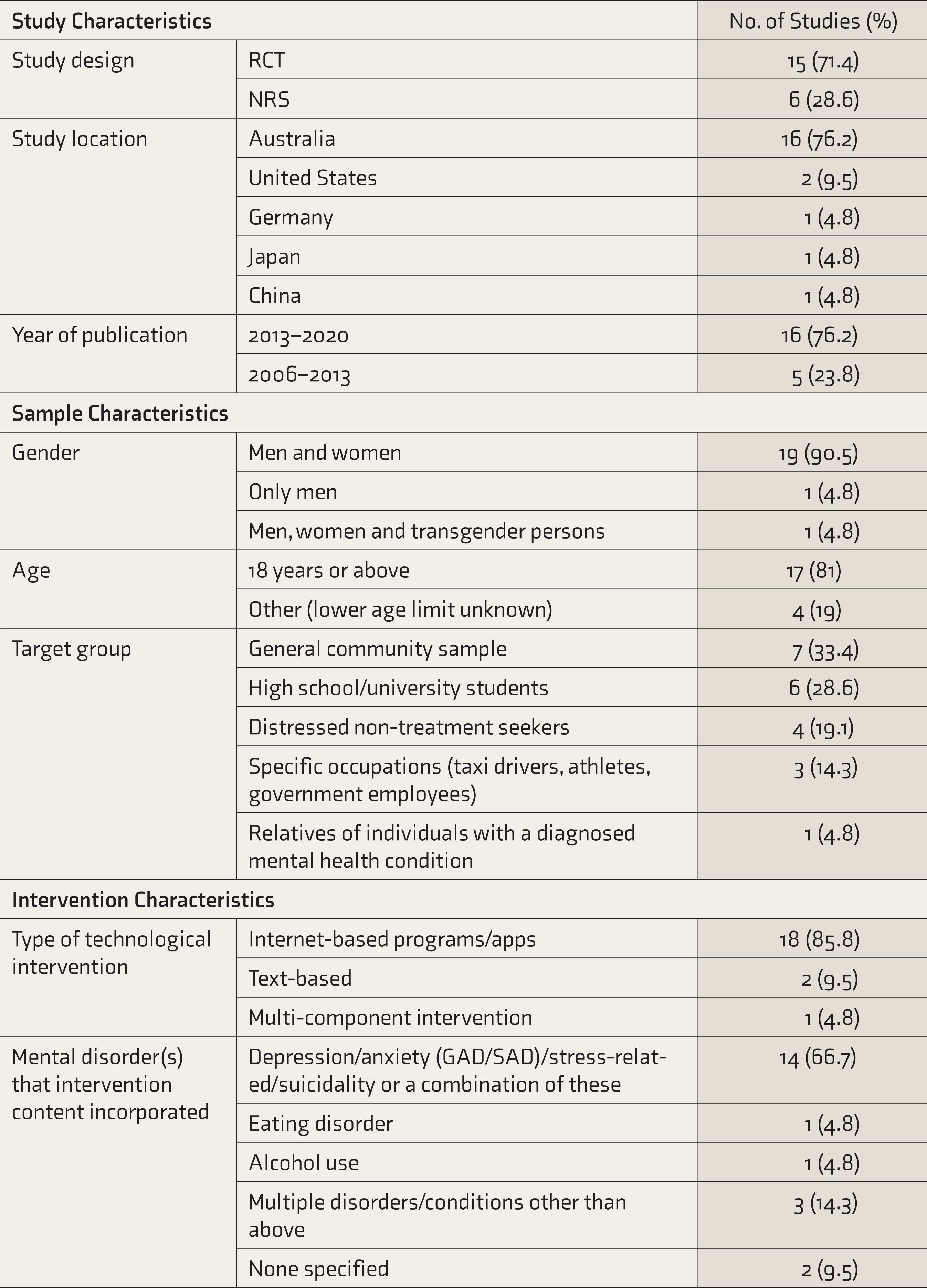
GAD: generalized anxiety disorder, NRS: non-randomized studies, RCT: randomized controlled trials, SAD: social anxiety disorder.
Intervention Components
The interventions in the reviewed studies aimed at online mental health promotion or prevention of or early intervention for mental disorders. A total of 13 interventions (61.9%) had a psychoeducational component aimed at destigmatizing mental illness or improving mental health literacy. Other recurring elements included case vignettes aiding in symptom or problem recognition, personalized feedback, and links or lists to seek help from mental health professionals. Other interventions aimed at symptom awareness and helping a person in distress. Help options included chat sessions with a professional, emergency contacts/helplines, and evidence-based therapy programs. 14 studies (67%) had intervention content that incorporated depression and anxiety disorders along with stress and suicide. Only two (10%) of the studies focused on problem alcohol use or eating disorders.
Effect of Intervention on Help-Seeking
The effect of interventions on help-seeking attitude, intention, and behavior was examined. While most studies aimed at one of these variables, only three targeted all the outcome categories. Eight studies looked at the effectiveness of the intervention on two help-seeking variables. Help-seeking intention was examined in most studies, followed by help-seeking behavior and help-seeking attitude.
Out of 21 studies, seven (33.3%) examined a change in help-seeking attitude post-intervention. Compared to active control, three intervention groups showed an increase in positive help-seeking attitude. However, one study with active control and one with inactive control showed no significant change in the outcome. Two studies with wait-list control or active control showed an overall increase in help-seeking attitude irrespective of the treatment condition.
A total of 16 studies (> 75%) examined help-seeking intention as an outcome variable. Of those, 50% showed an increase, whereas nearly 43% showed no significant effect of the intervention on the outcome variable. However, one intervention against an inactive control showed a reduction. 23
Of the 11 studies that included help-seeking behavior as an outcome (52.4%), five showed an increase in behavior, whereas the other five showed no change. However, a small negative effect of providing feedback was noted in a study on social anxiety. 23
The calculated effect sizes indicate that the effect of the interventions varied for help-seeking intentions (Cohen’s d = –0.27 to 0.78), help-seeking attitudes (Cohen’s d = –0.04 to 0.58), and help-seeking behavior (OR = 0.69 to 3.48, Tables 2 and 3).
Characteristics of Randomized Controlled Trials Included in the Review (n = 15)
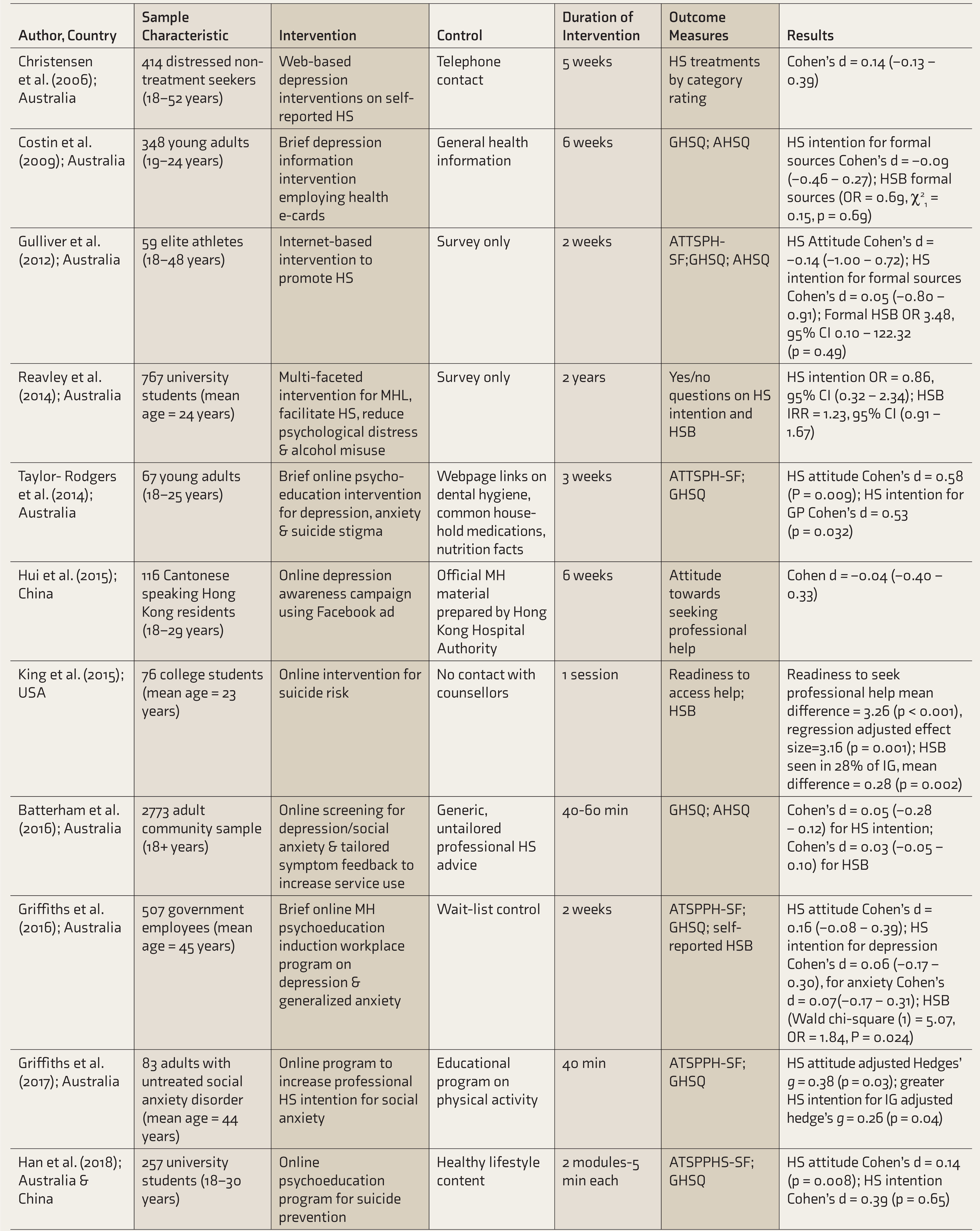
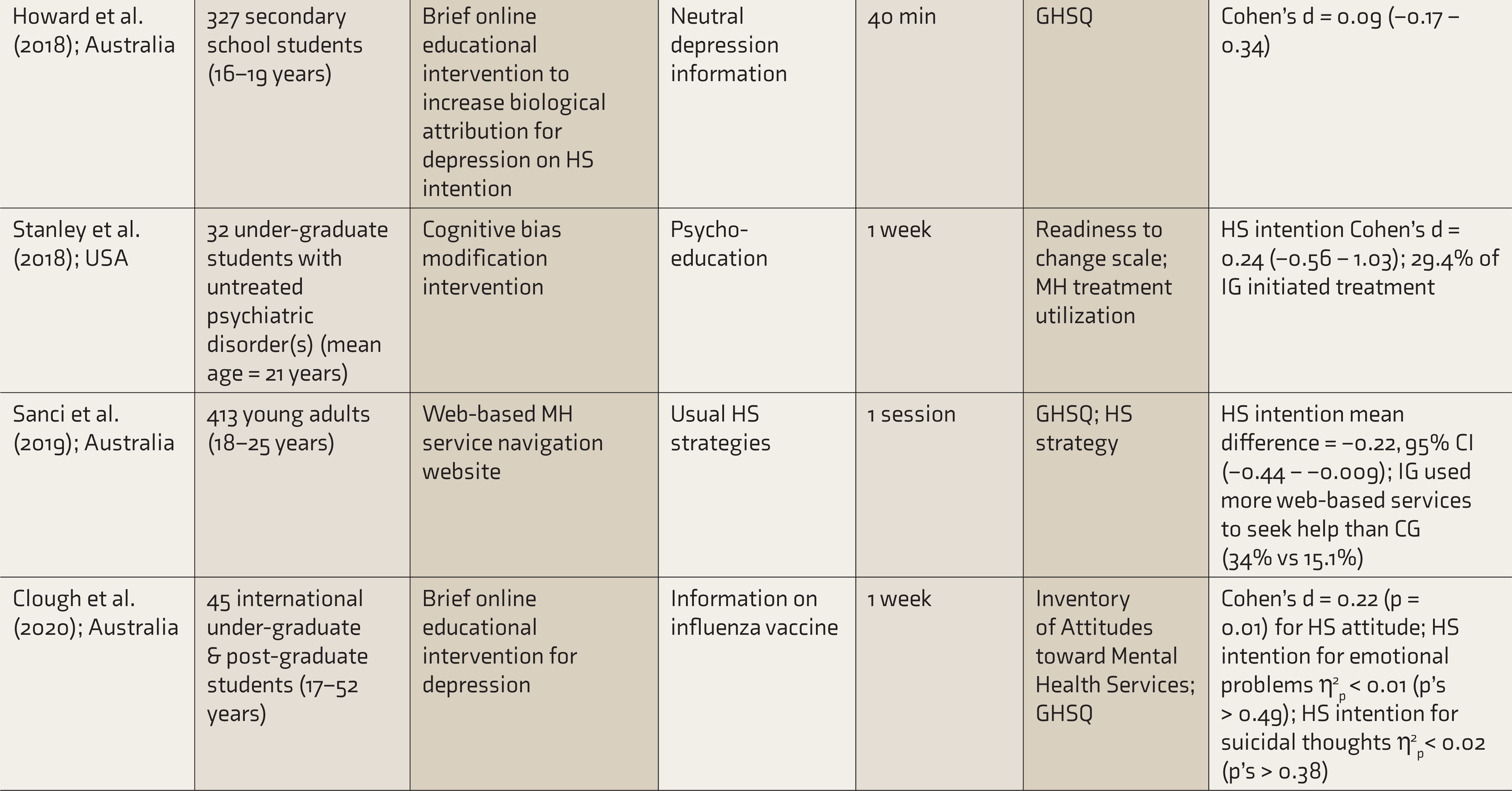
AHSQ: actual help-seeking questionnaire, ATSPPH-SF: attitudes towards seeking professional psychological help scale-short form, CG: comparison group, CI: confidence interval, GHSQ: general help-seeking questionnaire, GP: general practitioner, HS: help-seeking, HSB: help-seeking behavior, IG: intervention group, MH: mental health, IRR: incidence rate ratio, OR: odds ratio, USA: United States of America. Values for P < 0.05 were significant.
Characteristics of Non-randomized Studies Included in the Review (n = 6)
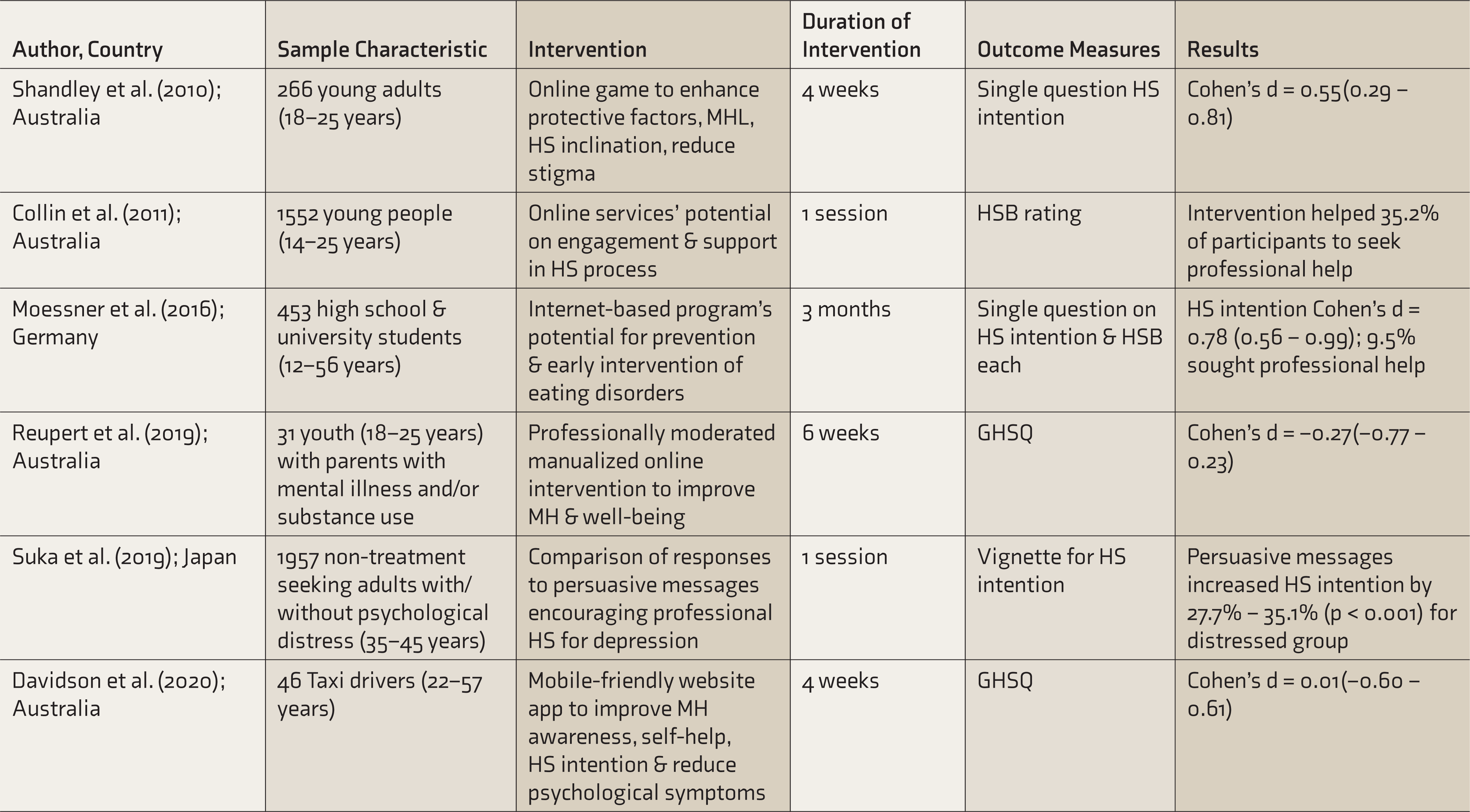
GHSQ: general help-seeking questionnaire, HS: help-seeking, HSB: help-seeking behavior, MH: mental health, MHL: mental health literacy. Values for P < 0.05 were significant.
Effect of Intervention on Other Help-Seeking Related Outcomes
Two studies examined changes in help-seeking beliefs. While the psychoeducational online intervention showed an increase in positive help-seeking beliefs, 24 the health e-card intervention did not show any significant effect.
More than 60% of the studies reported the type of help the participants sought or intended to seek post-intervention. Eight studies measured formal help-seeking and seven examined changes in both formal and informal help-seeking. While seven studies showed an increase in help-seeking from formal sources (general practitioners and mental health professionals), four showed an increase from the informal sources (friends, family, neighbors, internet) during follow-up. Three studies showed no increase in help-seeking intention or behavior from any source. In one study, the intervention group was less likely than the control group to approach formal help sources. 25
Only four studies examined barriers to professional help-seeking at pre-post or post-intervention. Three studies looked at the effectiveness of the intervention in reducing the barriers. One study focused on the frequency of barriers reported post-intervention, where lack of mental health literacy and stigma were the most reported. 26 While in one case the intervention led to a reduction in barriers, 27 in another study, a reduction in barriers was noted in both control and intervention conditions. 25 In yet another study, no change in perceived barriers was observed. 28
More than 60% of the studies examined mental health literacy and/or stigma as outcomes. Seven studies showed an increase in mental health literacy, while two reported no change post-intervention. Moreover, eight studies showed a reduction in stigma after the intervention or at follow-up.
Discussion
This paper systematically reviews a distinct group of studies including technology-based mental health interventions targeting help-seeking attitude, intention, or behavior. The majority of the interventions led to an increase in the help-seeking variables. All the reviewed studies were conducted in upper-middle- or high-income countries. Notably, 15 of the 21 studies were conducted in Australia. This is understandable as the e-mental health sector has received a significant push by the Australian government, particularly from the decade of 2000. This thrust on e-mental health services has been linked to the observation that the proportion of Australian adults with mental health problems utilizing traditional health services had not risen despite changes in primary-care-based approaches and mass awareness campaigns. 29
The focus on young adults in the reviewed studies seems appropriate, given the high prevalence of common mental health problems in this population. 30 While most of the studies targeted the community population, only a handful aimed to examine the effectiveness of interventions specifically for distressed non-treatment seekers or relatives of individuals with a clinical diagnosis.
No particular mode of delivering the intervention was observed to be particularly popular among the researchers. This may be because most studies were internet-based. Studies aimed at improving mental health literacy and help-seeking by utilizing mediums such as emails, posters, campus programs, etc., have shown no significant changes in help-seeking intention or behaviour. 31 This could be due to the intervention’s promotive and informational nature and lack of personalized components. Personalizing the intervention can improve its effectiveness and the lead to provision of quality care. 32
Existing literature recommends multicomponent interventions, and most of the studies incorporated them. The effectiveness of individual components could not be examined in these studies; however, a few studies used a single component. For example, an online educational intervention that provided information on biological causes of depression 33 and persuasive text messages 34 increased help-seeking intention, whereas information on depression provided through a case vignette significantly increased help-seeking attitude. 35 Some components, such as case vignettes, mental health literacy, destigmatizing information, and tailored feedback, were used in numerous studies. These are similar to what may be perceived as useful by potential users of help-seeking interventions. 36 Reviewed studies highlighted the crucial role of online delivery, participant involvement, and embedded links to professional services in encouraging help-seeking. Even though stigma and reduced mental health literacy were hindrances in help-seeking, 26 improving mental health literacy is only “half the battle.” 37 More intensive and tailor-made components need to be incorporated for increased effectiveness of help-seeking interventions. 36
Interestingly, only two interventions explicitly mentioned utilizing a health behavior model.28,38 Reupert et al. 39 utilized a competence enhancement model, whereas Griffiths et al. 40 employed the social anxiety help-seeking behavior framework. A few others incorporated cognitive-behavior principles41–43 and the cognitive bias modification paradigm 27 to develop the intervention. King et al. 38 used the motivational interviewing approach, whereas Suka et al. 34 based their intervention on theories of persuasion, decision-making, and attitude-behavior relations.
It is worth mentioning that almost all the interventions showed an increase in at least one help-seeking outcome. Help-seeking attitude was seen as the most malleable outcome of the intervention, followed by help-seeking intention. The outcome relatively less influenced by the interventions was help-seeking behavior. Research posits that changing help-seeking attitude is a precursor to improving help-seeking behavior. 44 Moreover, many studies reasoned that the interventions’ short duration might not be sufficient to change this outcome variable.
There was a decline in help-seeking intention and behavior in a study on social anxiety disorder. 23 The authors’ reasoned that in social anxiety, providing feedback to the users based solely on the screening may be detrimental for help-seeking outcomes. This highlights the need for further research on the nature of the feedback provided and potential differences in its utility for different clinical conditions. Moreover, the results indicate that screening instruments need to be used with caution via online medium.
Only one study discussed the gender differences in the type of help the participants intended to seek. 42 Reportedly, men were more likely to use informal sources, whereas women preferred to approach a combination of formal and informal sources. This is consistent with the previous findings that men are less likely to seek help for their mental health concerns in general or psychotherapies in particular. 45
Three studies noted an increase in mental health literacy and help-seeking intention, as well as a decrease in stigma. This pattern is consistent with previous findings of greater literacy and diminished stigma being associated with a positive help-seeking intention46,47 and a positive help-seeking attitude. 48 With increased mental health literacy and reduced stigma, Griffiths et al. 40 observed an increase in both help-seeking intention as well as behavior. However, in the current review, it was observed that reduced stigma 33 or improved literacy31,49 are not essential for improving help-seeking intention.
The present review highlights the use of digital interventions to improve help-seeking rates for mental health as a promising area of work. Future studies on digital interventions for help-seeking could benefit from explicitly targeting the distressed non-treatment seekers. There is a need to examine sample recruitment strategies and target help-seeking interventions for specific groups with a low help-seeking rate (e.g., men). Most research has focused on individuals 18 years or older. Future studies may benefit from aiming at improved help-seeking in younger adolescents by involving significant others in the intervention programs. Most studies reviewed herein examined help-seeking interventions for depression and anxiety. The utility of technology-based help-seeking interventions for a broader range of mental health problems (e.g., substance abuse) remains to be explored. Studies also need to explicitly utilize help-seeking models in designing and testing interventions.
Future studies in this area may benefit from a due consideration to cultural factors (e.g., significant others’ role in interdependent cultures) while designing the interventions. For example, the utility of interventions targeting significant others of the distressed persons and empowering them with information and skills to facilitate professional help-seeking may be worth examining. The review highlights the need for multicomponent interventions with personalized elements targeting help-seeking behavior and studies involving longer duration follow-up to capture the changes in the same. Variables that may moderate the effectiveness of technology-based interventions (e.g., age, gender, education level, nature of the concern, level of distress, mode of delivery) remain to be understood.
As most studies were from developed countries, there is an urgent need to explore the utility of technology-based help-seeking interventions in middle- and low-income countries and resource-constrained settings. Previous studies showed that high-income countries use more apps targeting health monitoring while low-middle-income countries use technology to target mental health awareness and promotion. 50 Future studies can utilize this lens to develop interventions specific to high-income and low-middle-income countries.
Limitations of the reviewed studies are worth noting. The nature of recruitment could have led to self-selection bias, leading to over- and under-representation of specific sample characteristics. A few studies relied on self-report alone rather than using standardized measures and hence may be prone to response bias. Since most studies were carried out in upper-middle- and high-income countries, used convenience sampling, and consisted of a small sample size, generalizability of the findings may be affected. Although the outcomes of at least one of the help-seeking variables were significant in most studies, the calculated effect sizes were low. Moreover, several studies did not report correction for multiple testing. Additionally, as the follow-up period was short, the effectiveness of the intervention over time is not known.
Due to the heterogeneity of the studies and the review being broad-based, a meta-analytic approach could not be used. The nature of the interventions (delivery, data security issues, competing interests, etc.) and the digital platforms could not be commented upon due to limited information available in the published papers. An attempt was made to use multiple mainstream health science databases and platforms with technology backgrounds for literature search. However, it is plausible that a few relevant studies in core technology journals might have been missed out. Moreover, we did not include grey literature or studies in languages other than English, which may have excluded relevant studies in this area.
Conclusion
To the best of our knowledge, this systematic review is the first of its kind to examine the research on technology-based interventions to improve help-seeking for mental health and to suggest that such interventions can play a crucial role in positively impacting the same. However, the complex interplay between the relevant variables such as mental health literacy, stigma, help-seeking attitude, intention, and behavior; and intervention components that may have a differential bearing on these variables are issues that merit urgent attention in further research.
Supplemental Material
Supplemental material for this article is available online.
Footnotes
Acknowledgements
The first author gratefully acknowledges funding support for her position as Research Officer by Microsoft Research India in a project at the Department of Clinical Psychology, NIMHANS. The second author gratefully acknowledges support from Indian Council of Medical Research (ICMR) for fellowship support for her ongoing doctoral work on help-seeking in young adults. We are also grateful to Mr Priyesh C. for providing useful suggestions on handling statistical analyses.
Declaration of Conflicting Interests
The author(s) declared no potential conflicts of interest with respect to the research, authorship, and/or publication of this article.
Funding
The author received no financial support for the research, authorship, and/or publication of this article.
References
Supplementary Material
Please find the following supplemental material available below.
For Open Access articles published under a Creative Commons License, all supplemental material carries the same license as the article it is associated with.
For non-Open Access articles published, all supplemental material carries a non-exclusive license, and permission requests for re-use of supplemental material or any part of supplemental material shall be sent directly to the copyright owner as specified in the copyright notice associated with the article.
