




Abstract
Abstract
Introduction
Humans are sexual beings. We are born out of sex. However, humans are the only species who have sex for pleasure apart from procreation. Sexuality is an important aspect of the human personality and influences the thoughts, behaviors and emotions of humans as well as all the other aspects of one’s personality. Sexuality of a person includes orientation, anatomy, sexual drive, gender, and sexual identity among others. With so many aspects of one’s life being influenced by sexuality, it is only natural that humans have always had questions regarding sexuality. Sexuality of a person is not a constant and changes with a person’s physical and emotional development, maturity level, and experiences in life. 1 So the questions one has, also change, but are always present as different aspects of one’s sexuality develop.
Moreover, sexuality and sex are topics that are not discussed openly. One does not feel comfortable asking parents, teachers, and educators questions that are embarrassing and concerned with the intimate part of one’s life, just as most adults are not comfortable answering the questions themselves. Sexual health care is an emerging field and there is a lot of stigma attached to sexual problems. Our society, specially, is not open to discussing or answering questions even today and such topics are taboo, not to be discussed and talked about. So where does one go when one has these questions related to sexuality? A report in a popular newspaper stated, “Sexually frustrated men make a beeline for anyone who calls himself a sexologist, blissfully unaware that India has no medical sexology course.” “Even India’s most famous sexologist, Dr Prakash Kothari, concedes that there is no qualification to become one. One becomes a sexologist either from experience or attending conferences abroad.” 2 As a result, often, one asks their peers who are not experts either or one would hesitatingly go to quacks who did not always give the correct scientific information apart from fleecing the person. Contrast this with western countries such as the United States of America and the United Kingdom where there are courses and training specialists so that people have access to experts in the field where they can head to for help and have their issues resolved. 3
With the advent of the Internet, and the coming of the Information Age, this problem has been resolved to some extent. The Internet has changed the way people get information. With the click of a mouse, there is an abundance of information available on whatever topic one is interested in and chooses to browse. Earlier this year, the Internet celebrated its 25th birthday. 4
Among the information being accessed on the Internet are those seeking health care. From the comfort of their homes and under the cover of the anonymity that the Internet provides, people are free to ask the experts online, all that troubles them, all that intrigues them, even the most intimate of their questions and doubts that they have grappled with but had nowhere to go, to get correct scientific answers from experts in the field.
Interactive health communication is described as the interaction of an individual—consumer, patient, caregiver or professional—with or through an electronic device or communication technology to access or transmit health information or to receive guidance and support on a health-related issue. Perhaps the most common and influential function of interactive health communication today is health-information seeking by consumers.
5
According to a recent United States survey, 52 million adults have used the World Wide Web to obtain health or medical information. By 2005, an estimated 88.5 million adults will use the Internet to research health information and/or health-related products and to communicate with providers. Access to large amounts of medical information is available through an estimated 20,000 to 100,000 health-related Web sites.
6
The Indian Government too realized the reach of the Internet and how it could be used for promoting health care across the country even in the remotest of the rural areas. The government has started a National Health Portal, Gateway to authentic health information. The website www.nhp.gov.in offers a number of services which include mSwasthya—a mobile app which can be used to consult a doctor—among other uses. So the reach is far and wide even in the rural areas of the country and can be accessed by anyone having a smartphone.
With the advent of the smart phones it became even easier to access the Internet and get answers from experts for all that one wanted to know. The Internet Society Global Internet Report 2015 says that “more smart phones than non-smart phones were bought in developing countries,” in September 2015. So it became easier to access the Internet without having to own expensive computers, laptops, or having the hassle of connecting through cables or dial up connections. People could access the network from literally anywhere and seek answers to all their queries. Sexuality-related questions, which were there in people’s minds but they did not have anywhere to clear their doubts or get answers from, were now being asked from the experts. An Internet session would be much cheaper and more convenient than traveling a long distance, especially for simple questions or minor medical or sexual complaints or queries that people have. All questions, sexual and others could now be asked easily, and experts were giving the answers on health care portals.
This pilot study retrospectively examined the sexuality-related questions being asked on 1 online portal. The aim of this study was to know and understand the type of sexuality-related questions being asked and to gain knowledge about the sexual problems that people are facing and want information about. The study helps to understand the demographics of the people asking the questions, what is on their minds and what kind of information related to sexuality they were looking for.
Aims of This Study
The aims of the study are as follows:
To gather and understand information on the sexual issues that different age groups face and are seeking assistance online in India. There seem to be hardly any studies examining the sexuality-related questions asked on online portals. To analyze the content of the queries that are put forth on the portal. To provide an insight to educators and counsellors to help understand and focus their sessions based on the needs and questions being asked in the sexual health care field.
Method
This is a retrospective study. For the purpose of this study, we selected online queries that were asked in the domain of sexual problems. We selected a popular website for health queries that connects patients and doctors. This online portal claims to have connected with over 40 lakh patients and claim to have 90,000 doctors registered on their platform. They claim that 2 lakh patients interact on daily basis. The study sample was selected from the queries that were asked to one of the authors (SD) of this article who is on the website as a specialist for over 18 months. For this study, we chose 500 consecutive queries that were addressed to him privately.
We constructed a data collection pro forma for the purpose of capturing information. The pro forma contained 8 broad sections which included sociodemographic details, namely the patient’s age, gender, relationship status, and place of residence. Where there were questions pertaining to sexual issues connected with men, we divided them into men’s anatomy (eg, queries that pertain to the penis size, foreskin related issues or other anatomy related concerns), men’s physiology (eg, issues concerning sexual desire, arousal including erection-related queries, or issues concerning ejaculation problems, or intercourse-related issues), partner-related sexual problems and queries pertaining to masturbation.
For queries related to women’s sexual functioning, data was gathered and categorized with respect to female anatomy (eg, queries about the vagina, uterus, or the breasts), female physiology (eg, concerns about sexual desire, arousal, orgasm, and sexual pain disorders).
In addition, we also captured data pertaining to queries surrounding other issues such as contraception related, about sexually transmitted infections, about pornography, sexual orientation, and health anxiety.
We also summarized the whole query into a 3 to 5 word phrase which captured the key issues in 3 to 5 words. Any other interesting observations or notable information about the query was also recorded in the pro forma.
The data were analyzed using descriptive statistical methods.
Age Distribution
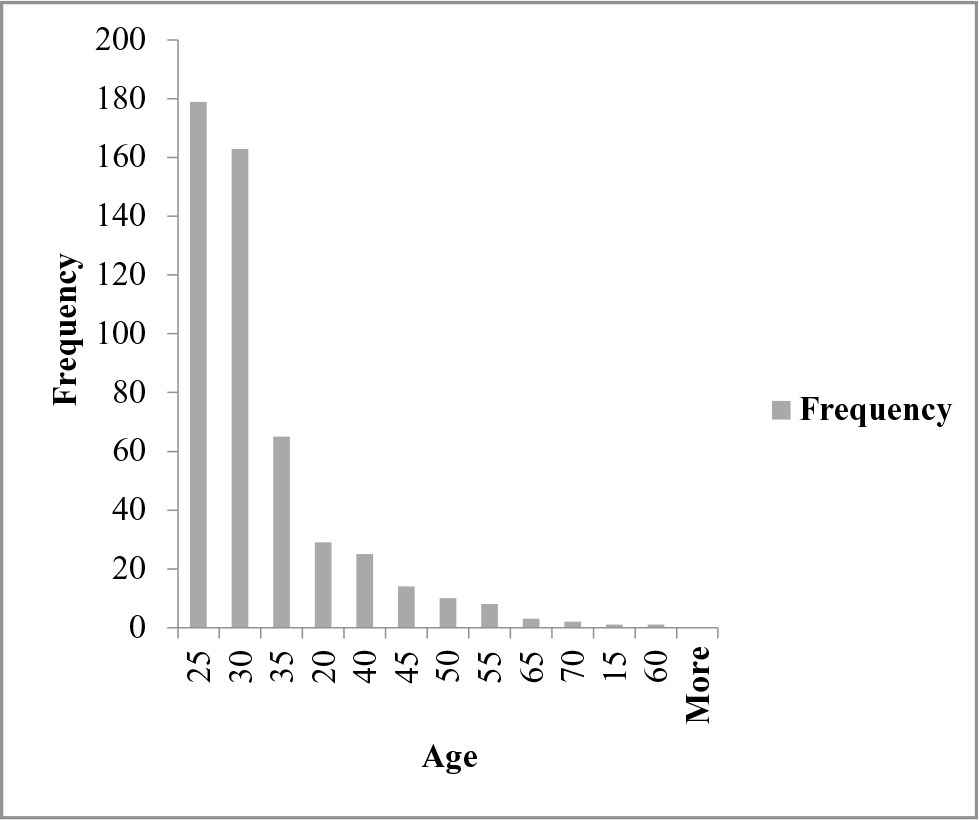
Age-wise Distribution of Sexual Problems
Results
Sociodemographic Details
The total number of queries analyzed (the sample size) for this pilot study was 500. There was an overwhelmingly high number of males—484 (96.8%) men and only 16 women. As can be seen from Figure 1, maximum queries came from young people, especially in the age group of 20 to 35 years.
The mean age of the patients was 28.5 years with the youngest being 15 years and the oldest 67 years of age. The relationship status of 170 patients was mentioned out of which a majority (70%) were either married (86) or in a relationship (33) and the remaining 30% were single (53). The residential status of 438 patients was known, of which 92% of the respondents were from an urban area and only 18% belonged to a rural setting.
Analysis of sexual activity status was known for 230 patients. Of these, 13% were not sexually active and had wanted to seek help online about issues concerning sexual matters.
Sexual Problems Analysis Among Men
On detailed analysis of the sexual complaints, we noted that the commonest sexual problem among men was that of “early ejaculation” in 138 (29%) of the men. The internationally agreed definition of early or premature ejaculation is ejaculating under 2 minutes, all or most of the time. However, for the purpose of this study, we took any man who complained of “early or quick ejaculation” as premature. Responses varied from ejaculation time as low as 20 seconds up to 5 minutes. Three men reported having problems with no ejaculation.
Of these, 22% (107 queries) men reported having problems with their erections. We classed all of these queries as men having an “Erectile Dysfunction.” Here, the large majority of the cases were from those in the younger age group of 20 to 30 years.
There were 156 queries pertaining to the male external genitals. Of these queries, 53% (84 queries) were about having a “small penis” and wanting to have a penis enhancement treatment. And 35 queries were about having a tight foreskin and experiencing pain during intercourse. Other genital related concerns expressed included lesions on the penis head (marks/discoloration) in 12 patients, testis-related queries (size/position) in 10 men, “bending of the penis” (8 patients) and complaints of having a “thin penis” (4 patients).
About 15% of the men (74 men) expressed concerns related to masturbation and addiction to masturbation. And 63% (47) of these men were under the age of 25 years. Among the men having concerns about masturbation, 35% men also had complaints related to early ejaculation and dissatisfaction with their erections.
A total of 13 men complained of having issues in sexual functioning leading to unconsummated sexual relationships.
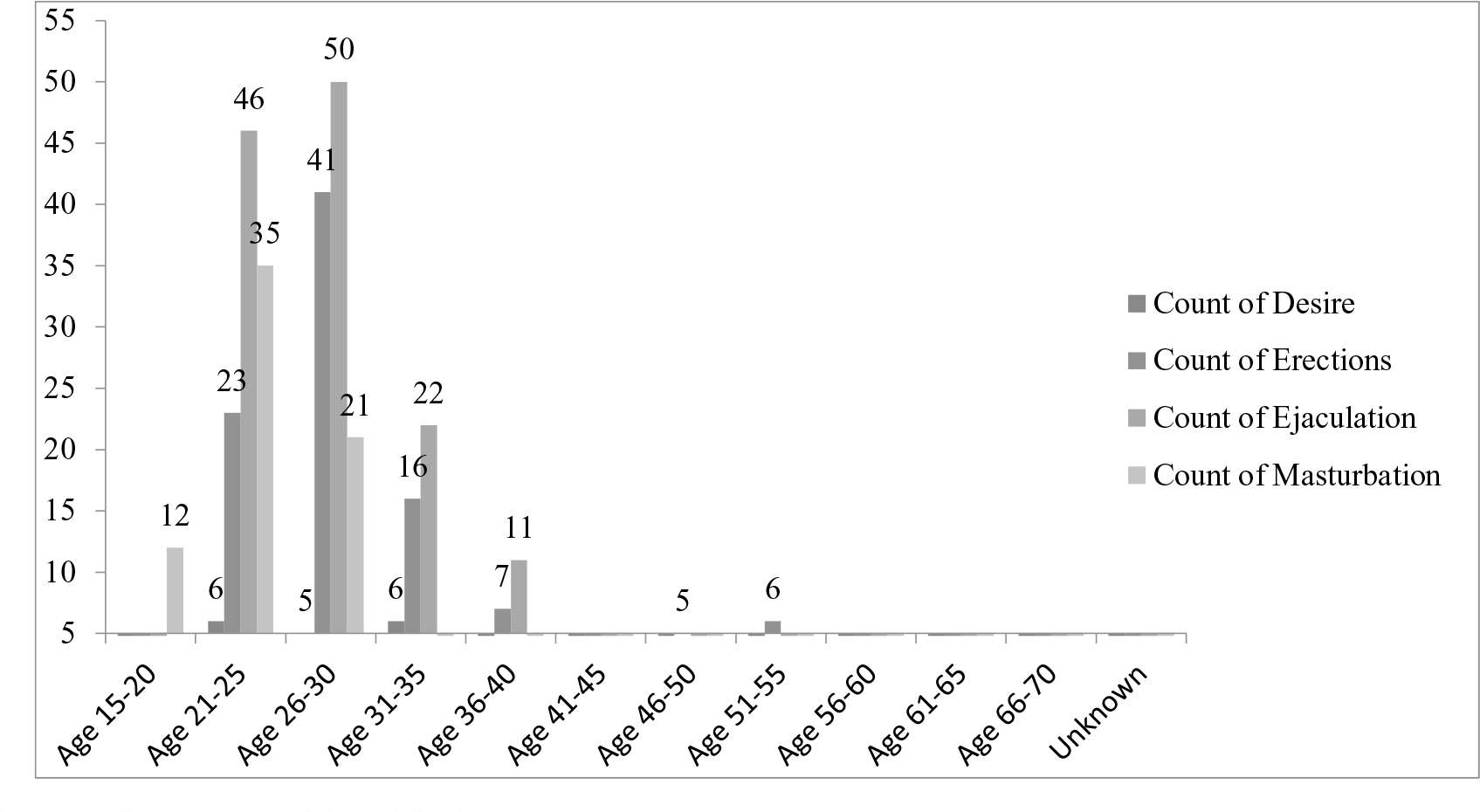
Figure 2 shows the age-wise distribution of sexual problems. Masturbation-related worries were the only concern in the under 20 year olds whereas concerns with ejaculation predominated in the 20 to 40 year age group. All the men over 50 years reported having problems with erectile functioning.
Sexual Problems Analysis Among Women
Sexual problems among women were evenly distributed with regard to complaints of low desire (1), problems with arousal (1), not able to achieve orgasm (1), having pain during intercourse (3). Three women expressed concerns regarding vaginal discharge and an equal number about hymen-related worries. One woman had a query about sexually transmitted infections.
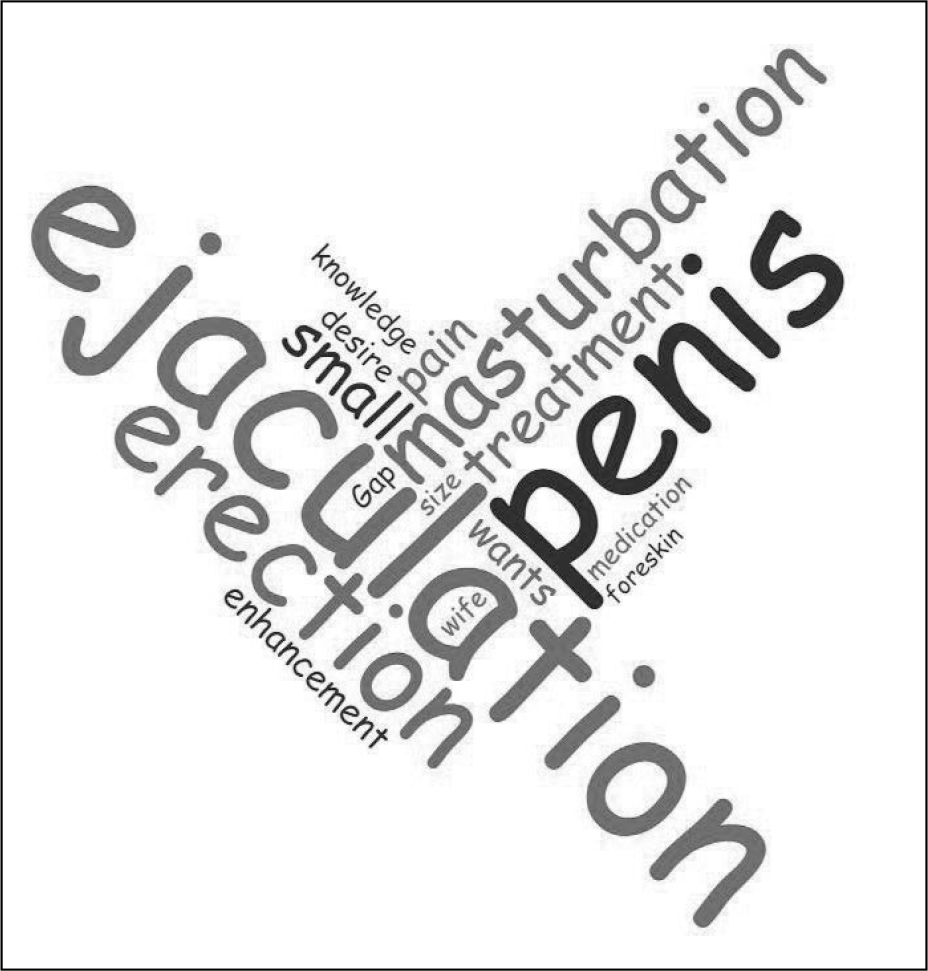
We summarized the query into 3 to 5 words based on the key issues that the patients had asked. This data was used for the analysis of the most commonly used terms. The most popular words in order of frequency of appearance were— “ejaculation” (86 times), “penis” (82), “erection” (54), “masturbation” (42), and “small” (28). This is represented in Figure 3 which is a word cloud with weightage given to the frequency of appearance of the words.
Word Cloud Indicating the Popular Terms Used in the Online Queries
Health Anxiety and Other Emotional Issues
Anxiety about health and wellness was reported in several cases within the issues mentioned by the patients. Fear of adverse effects of masturbation such as weight loss, weakness in body, hair loss, etc were mentioned. Many reported feeling anxious, embarrassed, depressed, guilty, and ashamed either due to the penis size, early ejaculation, or problems with erection or intercourse issues. These were most predominant in the 20 to 30 year olds.
Discussion
Online portals have reduced the distance between health care seekers and health care providers. Health care portals provide a safe haven with the blanket of anonymity where people can seek help right from their comfort zones, at the click of a button. The data is skewed in favor of men, as 96.8% of the queries have come from them. This could be due to the fact that men deem sexual performance more important and have a tendency to seek help with regard to sexual issues. It is surprising how a lesser number of women have come forward to discuss sexuality issues and among those majority of the queries are about their partner and not for themselves. This gender difference could also be due to the clinician being a male, and that this could also have created hesitation in women seeking help. It would be an exaggeration to say that women in India do not experience sexual issues. Their numbers being less could also point out at how sexuality is treated as a taboo, reinforced by parents, prominent personalities, and society at large. Younger men (20 to 35 year olds) seem to be more concerned about their sexual functioning.
It appears that the large majority of the queries by young people was driven by anxieties and gaps in knowledge with regard to human sexuality. Many men wrote about ejaculating within 2 to 5 min of penetration, which more or less comes within the average range. They displayed anxiety, shame, and embarrassment over the duration, and asked for medicines/treatment for prolonging the ejaculation process. Perhaps these men may have been influenced with the idea of “long lasting sex” as seen in pornography. Also, there are illegal advertisements for products aimed at men to “prolong” their lovemaking.
Large epidemiological studies into erectile dysfunction (ED), such as the one by Kubin et al, 7 have shown that it is an illness that is more common in the elderly. Various chronic disorders are associated with elevated rates of ED, including depression, diabetes, and cardiovascular and neurological diseases. Such disorders are more common in the elderly, which may explain the elevated prevalence of ED in men over 60 years of age. 7 Increasingly, as was noticed in our study, younger men have been complaining of ED, and this could possibly be related to myths and misconceptions in addition to lifestyle problems such as smoking, alcohol use, and excessive stress.
Masturbation is another issue that had several of them worried. About 15.28% queries were related to anxieties about “excessive” masturbation and its impact on their body. There appeared to be myths surrounding it such as losing weight, loss of hair, weakness in body, and loss of stamina. Sexual dysfunctions (premature ejaculation [PE], ED) were deemed by these men to be connected to masturbation. It is important to create awareness about masturbation among the youth, primarily, because as seen from the data, masturbation was seen more in the 20 to 25 age group and it is understandable as they are exploring their sexuality. But what is alarming is the higher reported prevalence of PE and ED in that age group. There is an anxiety condition specific to the Indian subcontinent called “Dhat sydrome” where there is a belief that the loss of semen leads to physical weakness. Studies such as the one by Perme et al 8 have indicated that young men with Dhat syndrome have “significantly different illness beliefs and behaviours and have similarities with other functional somatic syndromes.” One particular male shared that he underwent bouts of crying every time he masturbated as he could not control his habit and felt guilty about it.
Young men were also concerned about their penis size. A large majority of the questions concerning the penis were about having a “small penis.” We suspect that this concern could be for many reasons. Primarily, the lack of knowledge of what is a “small penis” or micropenis, medically, may have led some of these people to believe that they have a small penis. 9 Moreover, their perceptions may be based on what they have seen in porn or heard from peers and others. For example, in one of the queries, a young man asked, “I have small penis, it is 6 inches only.” Men with the above problem enquired about treatments for increasing the length of the penis. Unfortunately, there is a grey market which sells counterfeit and spurious drugs, lotions, and oils which perpetuate the myth that penis length can be increased.
One other area that sex educators need to focus on with young people is the fact that the foreskin surrounding the penis is retractable. The lack of this awareness led to many queries about having a tight foreskin only after it caused discomfort or pain with sexual activity. There is a medical condition called “phimosis” where the foreskin is tight and studies have shown that up to 0.6% of boys were affected by their 15th birthday. 10
One other interesting pattern noted was that some of the queries were asked by others on behalf of the person. This was especially true for 5 of the 16 women whose questions were about sexual problems of their male partners. We wondered if general literacy and awareness about the use of the Internet led to this, or if it reflected a poor communication in the sexual domain with their partners.
Health care going online also has its share of problems. Younger people are using diagnostic terms such as “erectile dysfunction” and “premature ejaculation” without having an evaluation. Since medications can now be procured online, in addition to the prevailing practice of getting them over the counter without a valid prescription, there is a fear that this is driving self-medications. One person mentioned taking erectogenic medication (like Viagra) 4 times a month to “prolong” the sexual act, which is the incorrect use of the drug.
Conclusion and Recommendations
This study is an attempt at understanding the pattern among the people who use health care portals for sexual health queries. Being a retrospective study, it has the limitations of data set being incomplete and that the questions were posted to a male clinician only. Also, a specialty like sexual medicine often requires further clarification about the question asked which was not possible in the current design.
While we cannot extrapolate the findings of this study to the whole of the country, but certainly one of our key recommendations would be that comprehensive sexuality education in all schools and colleges is the need of the hour. Most of the queries could be addressed through some basic knowledge and skills that counsellors can be taught. This can follow the popular PLISSIT model of sex therapy where permission giving and providing limited information is sufficient for many of the clients with sexual issues. 11 Then, it is imperative that sexuality-related training is a part of the curriculum of any counsellors training course. Also, there could be a community-based intervention through a contact program for young people who are either to-be or just married or beginning to get sexually active.
Declaration of Conflicting Interests
The authors declared no potential conflicts of interest with respect to the research, authorship, and/or publication of this article.
Funding
The authors received no financial support for the research, authorship, and/or publication of this article.