




Abstract
Cross-border integration is a complex process, but it could bring benefits to the nations involved in motivating trade and tourism. Air transport has been playing an important role in accelerating the integration of the economies of countries in the Association of Southeast Asian Nations (ASEAN). The introduction of a visa-free exemption agreement in 2006 and the ratification of the semi-ASEAN open skies agreement in 2016 have stimulated intra-ASEAN travel and trade. However, since early 2020, the COVID-19 pandemic has demolished most of the efforts when tight border controls returned and flights were suspended. The ASEAN countries were criticised for a lack of coordination over the pandemic. This article examines the ASEAN air transport policies in response to the global pandemic. The data were collected from official government documents, international databases and local media reports to identify the pattern of the air transport policy implemented by each ASEAN member. This article provides insights into the impact of intra-regional travel on the recovery and resilience of the air transport industry in the ASEAN region.
Introduction
The first confirmed case of the latest coronavirus, COVID-19, in Southeast Asia was in Thailand on 13 January 2020. By April 2021, the virus had infected more than 3 million people and caused more than 65,000 deaths across the ten Association of Southeast Asian Nations (ASEAN) countries. However, to date, the rates of infection and death in the ASEAN countries have been significantly lower than in many other parts of the world due to the region’s experience with similar viruses recently (Severe Acute Respiratory Syndrome [SARS, 2003; Septiari, 2020] and swine flu [2009; Beh & Lin, 2020]).
Air transport has been playing an important role in accelerating the integration of ASEAN economies since the ASEAN Sectoral Integration Protocol for Air Travel was announced in 2004 (ASEAN, 2004). The increasing air connectivity in the region has motivated trade and tourist movement and intra-ASEAN tourism is one of the key drivers to support the region’s economic growth (Rasul & Manandhar, 2009). The liberalisation of the region’s aviation sector will be the major catalyst for accelerating the region’s economic growth by 2030 (Dy, 2019).
The COVID-19 pandemic has seriously impacted the air transport industry globally. Closing borders, population lockdowns and travel restriction policies were imposed by governments to slow down the spread of the virus (Zanin & Papo, 2020). Many countries that had regional integration policies temporarily resumed border control practices, and this has contributed to the air transport industry being at a standstill. Jenkins (2020) claimed the pandemic was the greatest-ever crisis for the international air transport industry. Border closures and lockdown measures put in place by many countries have significantly reduced travel demand. To cope with the situation, many airlines have cancelled flights, grounded aircraft and laid off staff to survive.
For ASEAN countries, the pandemic has exposed weaknesses in the air transport industry in the region. The air transport policies of the ASEAN countries in response to the pandemic were diverse. Some countries imposed strict air travel restrictions that prohibited the entry of foreign visitors, while others were somewhat relaxed. From 18 March 2020, Brunei imposed a ban on all inbound and outbound travels; Malaysia restricted citizens from travelling abroad and allowed no entry of foreign arrivals; Cambodia, Indonesia, Myanmar and Vietnam restricted visitors from selected countries; Lao PDR, The Philippines and Singapore restricted entry of all foreigners; and Thailand continued to give international passenger entry as long as they fulfil the health requirements (PwC, 2020).
This article argues that the existing regional air transport cooperation among the ASEAN members has not been effectively facilitated, which is expected to slow down the economic recovery process. The study aimed to examine the ASEAN member countries’ responses to the pandemic by analysing the ASEAN members’ air transport policies. The data was collected from the ASEAN countries from official government documents, international databases and local media reports in the period from January 2018 to April 2021, which corresponds to the time before and after the pandemic began in the region. The data were analysed to identify the pattern of the air transport policies implemented and to define the impact of intra-regional travel toward the recovery and resilience of the air transport industry in the ASEAN region by comparing it with other economically integrated regions, including the European Union (EU) and the African Union.
ASEAN Aviation Market Overview
ASEAN is an economic union consisting of 10 member states—Brunei, Cambodia, Indonesia, Lao PDR, Malaysia, Myanmar, the Philippines, Singapore, Thailand and Vietnam. Economic integration is aimed at promoting government corporations to facilitate regional growth. The integration process has been challenging due to substantial differences in the political and economic development of the members (Onyusheva et al., 2018). However, integration has brought enormous benefits to the members. By combining resources, tremendous economic and growth opportunities are created (Zaheer & Bukhari, 2016). Tourism has been one of the key growth sectors in the ASEAN region. Tourism has contributed 12% of the ASEAN GDP (ASEAN, 2019), and the aviation industry has been playing an important role in providing connectivity and motivating peoples’ movements within the region (Chia, 2016).
The ASEAN countries were diverse, with different languages, cultures and levels of per capita income and development (Forsyth et al., 2006). The level of aviation development was also disparate. Aviation development in Brunei, the Philippines, Indonesia, Malaysia, Singapore, Thailand and Vietnam was more advanced than in Cambodia, Lao PDR and Myanmar. This was primarily due to the differences in history, politics and landform. The former group was more advanced due to their archipelagos, maritime background and degree of political freedom, whereas aviation development lagged in the latter because of the delay in political liberalisation (Frost, 2008). In addition, Lao PDR and Cambodia are landlocked nations in which land-based transport is the key to internal connectivity, while Myanmar is much more reliant on water-based transport through its river network for domestic transport (Nam & Win, 2014). As the travel and tourism industries began to be important drivers of economic growth in the region (Walton, 1993), governments began putting more focus on the aviation sector and began deregulating the domestic aviation market to motivate travel. The introduction of air deregulation policies was aimed at facilitating the entry of new airlines into the market to improve the quality of the services available to the public at a competitive price (Dempsey, 1990). Foreign capital was allowed to invest in airlines and airports, which helped to further develop air connectivity in the region (Smith & Cox, 2011). However, the different levels of development in the ASEAN countries were reflected in the contrasting dates for implementing the individual policies (Trace et al., 2009).
The initiation of the visa-free exemption agreement in 2006 further inspired intra-ASEAN travel (ASEAN, 2012). Under the agreement, free entry was allowed for the citizens of ASEAN countries for temporary visits to other member countries. To further foster regional travel, international air liberalisation was promoted by the ASEAN countries to expand and deepen the integration of the aviation sector in the expectation of bringing more benefits to the region (Forsyth et al., 2006).
Under air liberalisation, airlines can compete for customers by lowering airfares and offering better services (Law et al., 2019; Mazzeo, 2003). To promote competitiveness in the airline industry and consideration of regional implications, in the 1990s, the EU used air liberalisation to promote regional integration by forming a single domestic aviation market between the EU member states to generate economic benefits regionally (Mawson, 1997). Thus, a similar endeavour was planned to be accepted in Southeast Asia.
The formation of a single aviation market within the ASEAN region was first discussed in 1996 (Laplace et al., 2019; Lee, 2015) after the single aviation market was proven to be successful in Europe. The industry revolutionised mobility by offering lower airfares and creating more job opportunities, which led to economic growth (European Commission, 2017). The initial proposal of the ASEAN Single Aviation Market (ASAM), also known as ASEAN open skies is aimed to form an integrated aviation market in the ASEAN region by the end of 2015 by redefining the terms of the air freedom rights and removing ownership restrictions (ASEAN, 2010; Lee, 2015). However, ASAM’s progress was delayed for years by the fragmented political and economic contexts. Despite various restrictions imposed by the individual members, the ASAM agreement was ratified by all ASEAN members in April 2016. The ratified version of the agreement was not yet a full open skies agreement as several countries continued to uphold protective policies to limit foreign airlines from establishing operations and accessing their markets (Maslen, 2016).
The Impact of COVID-19 on the ASEAN Intra-regional Travel
As with other countries, the ASEAN countries were seriously impacted by the COVID-19 pandemic. The slowdown in air transport connectivity has affected all ASEAN members. The ASEAN region has benefitted from the strong growth of inbound tourism, especially from intra-regional travel, over the past decade. The emergence of low-cost carriers has led to improved air connectivity within the region. The intra-regional travel market has been huge for the ASEAN countries: it contributed more than 40% of all trips made in the Asia-Pacific in 2019 (Pitakdumrongkit, 2020) and it makes up about one-fifth of the total air passengers in the region (Yong, 2021). Intra-ASEAN travel increased 47%from 35 million people in 2010 to more than 51.57 million in 2019 (OAG, 2021).
Figure 1 shows the number of intra-ASEAN air passengers between 2018 and 2020. The number of intra-ASEAN travellers dropped 5% in February 2020 compared with the previous year, and the drop widened to 95%by April 2020. Most of the remaining air travellers are people repatriating or workers returning to their home country (Sobie, 2020).
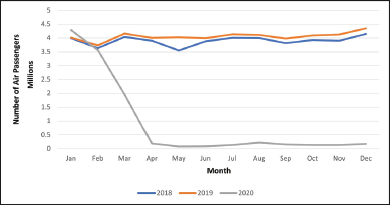
Following the spread of COVID-19 throughout Southeast Asia, the number of intra-ASEAN travellers has significantly decreased, and the situation has worsened after several countries announced closed border policies, which have seriously impacted the air transport industry. ASEAN’s visa exemption scheme was also put on hold in April 2020 (Worrachaddejchai, 2020). The reduced travel demand has led to airlines cancelling flights, grounding aircraft and laying off staff. Also, some airlines in the region were pressured to declare bankruptcy (Yu, 2020). The ASEAN countries were criticised for a lack of coordination over the pandemic. Soon after the pandemic hit the region, several meetings were hosted by the ASEAN secretariat to discuss plans for responding to the pandemic. However, little action was taken (Ha, 2020). The chief executives of several airlines have forecast that short-haul and regional travel will be the first to recover. Michael O’Leary (Ryanair) and Tony Fernades (Air Asia) believe that short-haul travel will recover strongly and quickly, followed by long haul trips in a few years (O’Halloran, 2020; The Straits Times, 2021). As the ASEAN region is heavily reliant on exports and tourism, regional coordination over air transport policies on intra-regional connectivity will be essential for the post-pandemic economic recovery (Caballero, 2021).
Overview of ASEAN Nations’ Border and Air Transport Responses during the Pandemic
Governments in the ASEAN region have imposed travel restrictions domestically and internationally during the pandemic, which has led to a decline in air transport demand. Although some demand for domestic air transport has returned as several governments have relaxed internal travel restrictions, international air travel has remained uncertain. ASEAN has established the ASEAN Coordinating Council to manage a collective response to COVID-19, but each country is implementing its own measures on border controls and quarantine requirements. The unharmonised standards make the restarting of regional air travel difficult. Individual countries were negotiating to form travel bubbles, skipping the coordination from the ASEAN Secretariat (Sobie, 2020).
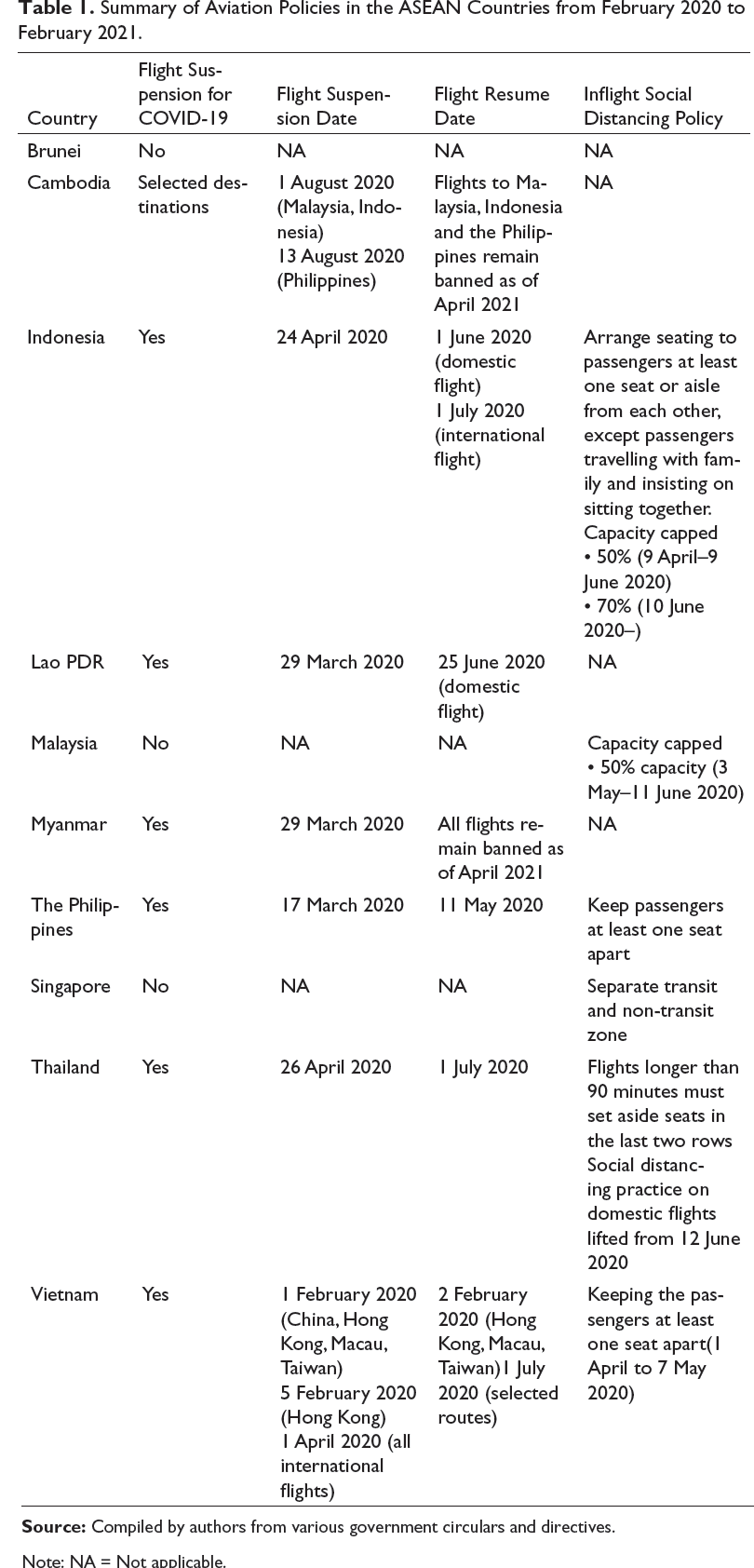
The ASEAN countries imposed different management policies during the COVID-19 pandemic. This was the case for their respective aviation industries as well. In the international sector, Indonesia, Lao PDR, Myanmar, the Philippines and Thailand imposed bans on all commercial air transport, while Cambodia and Vietnam banned flights to selected destinations, and Brunei, Malaysia and Singapore did not impose bans and allowed airlines to make their own business decisions based on travel demand. Some ASEAN countries progressively re-established cross-border travel by implementing Reciprocal Green Lane (RGL) and Air Travel Pass programmes, such as Singapore’s RGL arrangements with Malaysia, Brunei and Indonesia. The RGL programme allowed travellers on essential business and official travel to avoid the need to be quarantined on arrival provided they tested negative for COVID-19 (ICA, 2021).
Summary of Aviation Policies in the ASEAN Countries from February 2020 to February 2021.
Comparative Analysis of ASEAN Aviation Policy Responses
Political science studies refer to the study of government decisions and actions toward implementing public policies (Brik & Pal, 2021). Lasswell (1956) first proposed the framework to analyse the decision-making process of policy outcomes in public policy. The process consists of seven categories—intelligence, promotion, prescription, invocation, application, termination and appraisal. Lasswell’s idea of policy science was implemented in multiple policy analysis studies (Garson, 1980; Jenkins-Smith & Sabatier, 2003; Torgerson, 1985). The Lasswell framework was adopted by Weible et al. (2020) with other policy science literature, and in a study on government policy decisions during the COVID-19 pandemic, they proposed a ten category perspective framework. The categories are: policymaking (within the country), crisis response and management, global policymaking and transnational administration, policy networks, implementation and administration, scientific and technical expertise, emotions, narratives and messaging, learning and policy success and failure. Weible et al.’s framework promoted strategic cooperation and collaborative responses between territories (Migone, 2020). The approach was adopted by Djalante et al. (2020) in their study of COVID-19 and ASEAN countries’ responses to regional cooperation on health measures and disasters. Their study organised the ten categories into three main groups—policy and decision making, communication and perceptions and science and learning.
To examine the pattern of air transport policy responses implemented in the ASEAN region during the pandemic, the policy science framework of Weible et al. (2020) was adopted. The textual data was collected from official government documents, international databases and local media reports. The data were compared and analysed to identify the pattern of the air transport policy implemented by the ASEAN members.
Policymaking (Within the Country)
The key reference points utilised by the ASEAN countries involved the World Health Organization (WHO), the International Civil Aviation Organization (ICAO) and the International Air Transport Association (IATA). The WHO has set benchmarks for international health regulations and issued recommendations on preventing, detecting, containing and treating disease outbreaks (WHO, 2021). The ICAO issues, health and safety advice, operational measures, passenger facilitation measures and recovery approaches for the aviation industry (ICAO, 2021). IATA facilitates industry collaboration in passenger experiences and vaccine transportation, and it recommends practical guidelines, preparing governments for reopening borders, restarting air transport and managing airport slots (IATA, 2021).
At the country level, each ASEAN country adopted different approaches to aviation policymaking during the pandemic. All countries have restricted international passenger arrivals (except for national, diplomatic and approved business arrivals) and transit passengers. Some countries have suspended flights to limit peoples’ movements (Sobie, 2020). Their policies are aimed at relieving pressure on their country’s healthcare system (Han et al., 2020). Airlines in Brunei, Malaysia and Singapore were allowed to resume normal operations. However, those airlines were adjusting their operations based on border control policies and air travel demand. Meanwhile, the authorities in Indonesia, Lao PDR, Myanmar, the Philippines, Thailand and Vietnam banned commercial flights. After the situation was steadied, these restrictions were relaxed and the borders were gradually reopened with additional entry requirements and quarantine procedures. The standard operating procedures of airlines and airports were also revised. Some countries required airlines to block seats and/or restrict the full capacity of flights to allow social distancing in the cabin (Garuda Indonesia, 2021), while others banned inflight food, drinks and magazines (Marcus & Olarn, 2021). At some airports, arriving aircraft were parked in designated areas to allow the segregation of passengers based on a country’s risk level (Ganapathy, 2021).
At the ASEAN level, the ASEAN secretaries have framed ASEAN’s COVID-19 guidelines for the protection and safety of operational aircrew and the cleaning and disinfection measures of aircraft specifications. This is aimed at coordinating the ASEAN members in preparing for the recovery process and strengthening the ASEAN air transport sector (ASEAN, 2021).
Crisis Response and Management
Crisis management describes and explains actions in response to a situation that creates a threat that could harm a country (Pattyn et al.,2020). In response to the pandemic, ASEAN countries have taken different approaches towards air travel. Border closures and aggressive lockdowns have led to a rapid decline in air travel demand. Some governments in the region have ordered the suspension of international and domestic air connectivity (OECD, 2020). With the previous experience of SARS in 2003 and swine flu in 2009, countries in Asia have reacted promptly in response to the global pandemic (Searight, 2020). As the crisis developed, each country adjusted its responses. Depending on the level of aviation development in each country, the national governments made adjustments to policies trying to obtain a balance between the social and economic impacts, such as resuming domestic air transport with additional health measures to motivate internal movements and fund flows (Palmer, 2009). These moves were made to ease the political tension in some countries, especially in those countries with weak and unstable governments, such as Malaysia (Lee, 2019), Myanmar (Bjarnegård, 2020) and Thailand (Chalermpalanupap, 2020). To maintain their airline industry, governments such as Vietnam and Thailand provide liquidity support to airlines to help them stay afloat.
The Vietnamese government purchased additional shares from Vietnam Airlines (Reuters, 2020), while the Thai government spent 24 billion baht to support seven public and private airlines in the country (Powell, 2020). Some governments offered subsidies to residents, motivating their spending and domestic travel intentions. The Malaysian government issued discount vouchers worth US$113 million in total for the recipients to purchase air tickets and accommodation (Medina, 2020). A similar programme was introduced in Indonesia to encourage local spending (Ulung, 2020). At the ASEAN level, due to the differences among countries, the responses from the ASEAN countries were disjointed in the early stages of the outbreak. As the crisis developed, there was an increasing policy convergence in the regional responses. During the 26th ASEAN Economic Ministers’ retreat in Vietnam, improving the region’s supply chain towards the implementation of the Master Plan on ASEAN Connectivity 2025 was addressed in response to the pandemic crisis (ASEAN, 2020d). Discussions during the 37th ASEAN summit in November 2020 considered how to facilitate travel between ASEAN countries through travel bubble/corridor framework initiatives (Othman, 2020).
Global Policymaking and Transnational Administration
The global policy process refers to a process that creates transcontinental or interregional policies through intergovernmental organisations to facilitate relations among countries and collective decision-making (Picard, 2020). Typically, public policy and public administration focus on the state, influencing national policy creation. Due to the increasing cross-national interaction of globalisation, the role of the state in the global order cannot be ignored (Moloney & Stone, 2019). The unequal development of the aviation industry by ASEAN countries is affecting regional integration. The COVID-19 pandemic has brought big changes to the global economy as countries shut their borders, supply chains were disrupted and established working patterns changed. The crisis has also brought back the era of big government (Seib & McCormick, 2020). The pandemic has demolished the theory of air liberalisation when many governments re-imposed restrictions on international travel to control peoples’ movements, which led to the cancellation of flights (CAPA, 2020). The governments of Brunei, Malaysia, Thailand and Vietnam in the ASEAN region imposed strict lockdowns in which air transport was put on halt. Some governments in the region have invested in airline operators to support their survival. Their increasing interest in airlines is restoring protectionism to the air transport industry (Abate et al., 2020). Governments are expected to further develop policies to protect their interests, which is expected to create additional hurdles to further integrating the air transport industry in the region.
Policy Network
A policy network is defined as stakeholders influencing the decision making of policies, their relationship and the outcomes (Bruijn & Heuvelhof, 2002). Policy networks involve policymakers, politicians, public servants, technocrats, consultants, academics and policy researchers worldwide who have joined together to develop and share policies (Goodin et al., 2011). In the aviation industry, the policy network involves the government ministries, the national civil aviation authority, international organisations (ICAO, IATA and ACI [Airports Council International]), airlines, airport operators, consumer groups, environmental groups, academic researchers and so on. In the ASEAN context, the ASEAN Secretariat and ASEAN’s Air Transport Working Group set policy directions for the air transport sector and discuss issues of common interest across the members. Several months after the pandemic hit the region, the working group started talking about a coordinated approach to implementing air transport policies to facilitate health, safety and security issues. However, there is no evidence of how this coordination contributed to policy creation in each country. Countries were working at their own pace against the pandemic and developing plans for recovery (Chew, 2020). For example, some ASEAN countries negotiated travel arrangements such as the RGL and travel corridor arrangements. Singapore and other countries, including Brunei and Indonesia, formed a corridor for essential business travel. The ASEAN countries also work on their own to set up additional measures within the aviation sector. According to ICAO (2020), social distancing does not apply on aircraft. However, most of the countries set limits on aircraft capacity to reduce the number of passengers on board to enforce social distancing.
Implementation and Administration
Implementation and administration is the system that puts the planned policy into action. To delay the spread of the virus across the region, governments implemented measures to limit peoples’ movement while maintaining the passage of cargo. The levels of movement restrictions, from domestic lockdown to border closures, have affected many peoples’ lives. Implementing movement restriction policies required coordination across different agencies and levels of government (ESCAP, 2012). Soon after the outbreak of COVID-19, each ASEAN country has set up individual policies to limit the arrival of air passengers into their country. For those who were approved to enter, additional health and quarantine procedures were required. Different government authorities and air transport service providers acted together, including the foreign affairs department, border control authority, health department, civil aviation authority, airport management and the airlines, to implement the policies. At the country level, the civil aviation authority in most countries is taking the lead in coordinating, implementing and administering the policies (CAAS, 2020). This work includes communicating with the parties to ensure their understanding of the measures and, specifically, the roles of each stakeholder; providing training to the parties to ensure they can perform their tasks efficiently; and establishing a continuous monitoring and auditing routine. At the regional level, the recovery phase will require a collective effort. The region was observed as lacking pandemic preparedness and responsiveness, having poor coordination between government agencies, bad crisis communication and weak enforcement of public health measures (Caballero, 2021). The ‘ASEAN COVID-19 Guidelines’ was published to give recommendations to the airlines operating in the region (ASEAN, 2020b). The guidelines provide recommendations on a set of baseline measures for air operators to implement in their passenger and cargo operations. However, implementation and monitoring practices were lacking across the region, and each country carried out its own pandemic management system (Kliem, 2021).
Emotion and Public Policy
Policymakers were relying on scientific information to develop policies. However, the emotions of people have a direct effect on political decision making (Capelos & van Troost, 2011). Social distancing and maintaining good hygiene practices were the key measures to slow down the spread of COVID-19. Domestic flights in most ASEAN countries resumed when the governments understood more about the infection and implemented policies to control the spread of the virus. New operating procedures were set up by the airlines to protect staff and passengers. These actions created an image of emotional control and aimed to restore confidence in air travel. For example, airlines in Indonesia are required to arrange seats so passengers sit with at least one seat or an aisle between each other, except for passengers travelling with family and insisting on sitting close together (Garuda Indonesia, 2021). In Thailand, flights longer than 90 minutes must set aside seats in the last two rows of the cabin in case someone falls sick on board (TAT, 2021). Airlines and airports promoted their improved sanitising programmes intending to reduce the anxiety of passengers towards travelling by air and thereby restoring confidence in air travel.
Narrative and Massaging
To reduce public fears and develop trust, it is important to have sufficient communication between the government and the public. Distributing messages to the public allows them to understand the policies and their effectiveness. This information allows the receiver to carry out a risk assessment and change behaviour toward air travel (McCallum, 1995). Accurate information and policy transparency are playing a key role in redeveloping confidence in air travel for ASEAN travellers. The governments used press conferences, news releases and websites to give updates on the crisis and explain policies to the public. For example, the Vietnamese government developed the ‘info for travelling on Covid-19 in Vietnam’ webpage to provide the government’s information and plans for travelling during the pandemic (Vietnam Tourism, 2021). In addition, news articles emphasising expert advice on the low risk of coronavirus exposure risk on aeroplanes were published (Toh, 2020). Airports and airlines also promoted government policies. Singapore Airlines and the Changi Airport Group created information material to promote the safety measures implemented at the airport and for the aircraft through their official website and the online YouTube channel. These measures included the use of contactless technology throughout the journey and the details of cleaning and sanitising procedures of aircraft cabin cleaning (Singapore Airlines, 2021). At the ASEAN level, no communication related to air travel was announced collectively, except for the ‘ASEAN COVID-19 Guidelines’ published in September 2020 (ASEAN, 2020b).
Scientific and Technical Experts on Information
As the pandemic is a public health concern, scientific and technical experts collaborated with the medical sector. Many governments set up task forces combining different ministries and experts sharing information to develop appropriate policies, including those implemented in the aviation sector. The scientific and technical experts were there to support the government responses and reassure the public about the policy implementation (Cairney & Wellstead, 2021). The Malaysian government approved the resumption of domestic air travel in December 2020 based on the expert’s recommendations. Their working group consisted of regulators, local governments and civil aviation and health authorities who worked together to develop the operating procedures set under the Recovery Movement Control Order (Bernama, 2020). Domestic air travel was allowed to resume with additional requirements for the passengers, the procedures of aircraft cleaning and the pre-flight, inflight and arrival processes (Air Asia, 2020). A similar policy was implemented in Thailand where the government announced guidelines for air travel before domestic flights could resume, including social distancing in the cabin, wearing masks and prohibiting inflight food and drinks (Bangkok Post, 2020). In addition to the health-related concerns, experts were focussed on supporting the air transport industry. Aviation experts in Vietnam supported the government’s offer of financial aid to public and private airlines in Vietnam as they supported the country’s economy (VNA, 2021). At the regional level, ASEAN hosted the ‘High-Level Dialogue on ASEAN Post-Pandemic Recovery’ with global experts in July 2020 to share views on responses to the pandemic (ASEAN, 2020c). Arising from the 37th ASEAN summit, ASEAN released a comprehensive recovery framework. The idea of developing a travel bubble/corridor framework was addressed, with ASEAN members discussing the creation of an ASEAN Travel Corridor Arrangement co-led by the ASEAN Senior Officials’ Meeting (ASEAN, 2020a). However, little progress was achieved on that. Nevertheless, many experts have urged ASEAN to take a more active role in coordinating the resumption of intra-ASEAN travel (Sobie, 2020; Waldron, 2020; Yong, 2021).
Learning
Learning from history plays an important role in supporting governments to address complex policy issues. COVID-19 shares some similar symptoms and transmission modes with the outbreaks of SARS in 2003 and the Middle East Respiratory Syndrome in 2012 (Zhu et al., 2020). The ASEAN region was affected by SARS and swine flu; the coping strategy was to isolate and contain the infected persons to ensure those countries not affected by the virus remained open (ASEAN, 2003). Past experiences have helped to boost the speedy action taken by the governments to achieve the first-mover advantage and slow down the spread of COVID-19 (Septiari, 2020). After the first severe pneumonia-like cases were reported in Wuhan, China, late in 2019, the authorities in the ASEAN region reacted quickly and setup temperature screening checkpoints at most international airports to detect arriving passengers showing symptoms of fever so they could be quarantined (Santos, 2020). Other methods used by the airlines and airports to protect their staff and passengers include the use of protective gear and face masks by the staff and establishing procedures for the disinfection of aircraft and facilities in the airport terminals (WHO, 2003). Although regional collaboration on air transport among ASEAN members was harmonised in 2001 (Forsyth et al., 2006), there was still a lack of experience in regional collaboration on air connectivity during epidemic crises.
Policy Success and Failure
Policy decisions are likely to benefit some people and harm others. Governments are implementing policies to minimise both the damage created by the crisis and its impact on the economy (OECD, 2020). The common means of ASEAN members handling the pandemic were closing borders and banning flights to slow the spread of the virus. However, these also created social problems. For example, border closures create unemployment due to the absence of travellers. Cancelling passenger flights creates difficulties for the country’s imports and exports. Several countries turned to their domestic market by resuming domestic flights and offering subsidies to the population to motivate travel. As a result, the policies implemented by countries individually have had some success in both controlling the spread of the virus and promoting domestic travel. As mentioned, ASEAN members see the importance and benefits of intra-ASEAN travel to the region’s economy, and they considered a travel bubble/corridor framework during the 37th ASEAN summit (ASEAN, 2020a). However, the lack of a strong institution in implementing collective decisions is slowing down the recovery process for the region. Little action was taken to implement the travel bubble/corridor framework. The members’ diverse social, economic and political structures meant each nation focussed on itself ahead of the regional level.
Discussion: The Recovery Plan
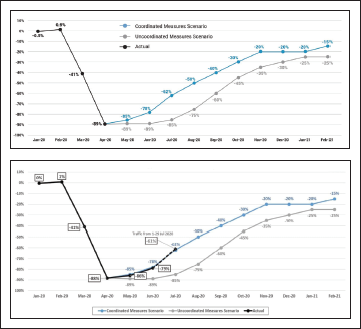
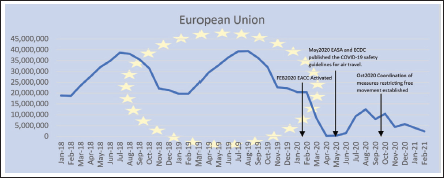
The number of COVID-19 cases in Asia is relatively low compared with the European, North American and African continents. However, due to a lack of coordination, the reopening of borders is still a long way off as each country adopts individual policies across all sectors of society. ASEAN’s aforementioned travel bubble/corridor framework is a case in point. Progress to create a safe travel framework for intra-ASEAN travel remains slow (Yuniar & Sim, 2021). The EU’s skies were more coordinated than ASEAN’s. The European Aviation Crisis Coordination Cell was established in 2010 to coordinate and respond to network crises affecting aviation in the EU. However, its single aviation market was dismantled in March 2020 when some EU members imposed international travel restrictions unilaterally, leading to a collapse of seat capacity and air connectivity (CAPA, 2020). In May 2020, the European Union Aviation Safety Agency and the European Centre for Disease Prevention and Control issued joint guidelines to assure the health safety of air travellers and aviation personnel (EASA, 2020). By October, a coordinated approach was established for EU members to manage the restrictions on free movement in response to the COVID-19 pandemic (European Commission, 2021). The data on the air traffic recovery forecast in April 2020 (Figure 2(a)) shows the recovery rate of coordinated measures could improve at a much faster rate than uncoordinated measures (Eurocontrol, 2020). The accuracy of the prediction was demonstrated when Eurocontrol released additional data in July 2020 (Figure 2(b)). As a result, we can conclude that coordinated measures positively contribute to speeding up the recovery rate of air traffic.
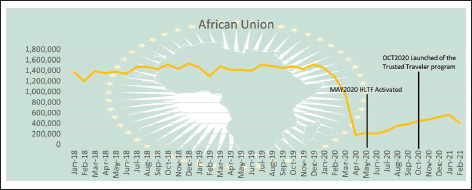
Similar action was taken in Africa, where the African Union is taking the lead in coordinating the recovery of the aviation industry through the Single African Air Transport Market (African Union, 2020). A High-Level Task Force was formed in May 2020 to coordinate responses to the impact of COVID-19 on the African aviation sector. The task force developed a post-COVID-19 recovery strategy by collaborating with all African countries, regional economic communities and international and regional organisations for a coordinated allocation of adequate resources to support the recovery plan for the aviation industry in Africa through the African Union Commission (AFCAC, 2020). In addition, the rollout of the ‘Trusted Traveller’ programme in October 2020 has standardised the travel and health screening policies among the African Union’s 54 members (Rains, 2021).
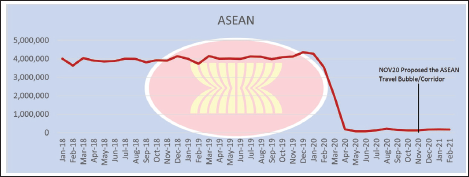
In comparison, ASEAN has a reputation as ‘Slow ASEAN’ (Connors, 2020) and the regional collaboration on COVID-19 recovery is relatively slow. Multiple meetings in 2020 and 2021 discussed the responses to COVID-19 and the recovery from the pandemic, but there was little action. The framework for an ASEAN travel corridor arrangement was proposed in November 2020 (Sobie, 2020), but the main activity has been the appointment in February 2021 of Indonesia to lead ASEAN’s Travel Corridor Arrangement Task Force (TTR Weekly, 2021). According to Incalcaterra (2021), ASEAN is expected to face a slow recovery process due to this lack of coordination.
A comparison of the intra-regional passenger movements in the EU, the African Union and ASEAN between January 2018 and February 2021 can be seen in Figures 3–5. Both the EU and the African Union indicate a substantial reduction in air travel demand from January 2020 for the African Union and February 2020 for the EU. A return of intra-regional air passengers in both regions occurred in May 2020, with the trend fluctuating according to the situation with COVID-19 and the implementation of government policies. In comparison, the air travel trend for ASEAN countries fell significantly from January 2020 and has since remained very low.
Conclusion
Decades of increasing global integration with the cross-border flows of people and goods have benefitted many countries socially and economically. Air connectivity plays a crucial role in tourism and trade at regional and international levels. But the COVID-19 pandemic has strengthened the nationalism and isolation of countries. However, according to the air transport mobility prediction projection from Eurocontrol (2020), the recent coordinated measures of air transport activity in the EU are achieving a higher rate of recovery from the pandemic compared with the uncoordinated measure scenario. Based on the examples of the EU and the African Union, closer regional coordination is the way for ASEAN countries to achieve a rapid recovery too. Tourism revenue is a major contribution to ASEAN member states. Joint cooperation between the ASEAN members allows a rapid relaunch of intra-ASEAN regional tourism, leading to a quicker regional economic recovery. Regional air connectivity plays an important role in fostering resilience and sustainability. However, regional coordination in the aviation industry alone is not enough, coordinating other sectors is essential also. Exchange of information, sharing best practices for infection prevention and effectively responding to COVID-19 are equally important for ASEAN member states in adopting a ‘new normal’. Importantly, this period could provide an opportunity to promote the ASEAN Single Aviation Market as a means to speed up the region’s recovery.
Footnotes
Acknowledgement
The authors are grateful to the anonymous referee of the journal. Views are the authors own. Usual disclaimers apply.
Declaration of Conflicting Interests
The authors have declared no potential conflicts of interest with respect to the research, authorship and/or publication of this article.
Funding
The authors received no financial support for the research, authorship and/or publication of this article.