




Abstract
Digital transformation (DT) of science and education reveals complex challenges related to technological integration, institutional adaptation, governance coherence, and human capital development. While existing studies often address these dimensions separately, a systemic assessment framework remains insufficiently developed. This study proposes an integrated multi-level framework for interpreting DT readiness within the paradigmatic shift from Industry 4.0 to Society 5.0. Drawing on socio-technical systems theory and a systematic literature review combined with comparative analysis of international practices, the paper conceptualizes digital readiness (DR) not as a quantitative index, but as a qualitative and systemic configuration of interdependent technological, research, educational, and socio-institutional dimensions. The findings demonstrate that the effectiveness of DT depends on cross-level coherence, institutional alignment, and ethical governance rather than isolated technological adoption. By reframing DR as an enabling condition for sustained transformation, the study contributes to a value-oriented and context-sensitive understanding of DT aligned with the goals of Society 5.0.
Keywords
Introduction
Scientific research today is inseparably linked with the use of information and communication technologies, networked resources, and distributed computing, which have become the foundational infrastructure of modern science. These technologies enable data integration, collaborative research, and the acceleration of innovation processes. In the early 2000s, the digitalization of science was viewed as “e-science” (Hey & Trefethen, 2002), whereas today it has evolved into a broader phenomenon—the digital transformation (DT) of science and education, encompassing research, educational, and socio-organizational dimensions. DT has become an integral part of strategic development, ensuring the sustainable functioning of scientific and educational ecosystems. It contributes to the development of digital competencies and the formation of new models of collaboration. At present, there is a growing interest in the concept of “Society 5.0” (Government of Japan, 2016), which envisions a harmonious integration of technological progress with the resolution of social challenges based on a human-centered and sustainable approach (Deguchi et al., 2020; Topcuoglu et al., 2024). In light of this, it becomes particularly important to explore how DT shapes these processes and supports the transition toward such a model. Thus, DT becomes a key tool for the transition to a socially embedded model of Society 5.0, where technologies are aimed at sustainable development and improving the quality of life.
In most publications and strategic documents, DT of science and education is presented as an unquestionable progress promising increased efficiency, openness, and inclusiveness. This techno-centric narrative, however, often overlooks the complex socio-institutional implications and unintended consequences of DT. As a result, a one-sided view is formed, in which digitalization is perceived as a universal solution to the problems of science and education, whereas in practice, its consequences are often ambiguous. While extensive research explores technological applications of DT (e.g., Artificial Intelligence [AI], Learning Management System [LMS]) or isolated challenges (e.g., the digital divide), there is a lack of a systemic assessment framework that integrates the technological, research, educational, and socio-institutional dimensions and can be used to diagnose an institution's digital maturity. This study aims to address this gap.
DT of science and education can be examined based on the theoretical traditions of socio-technical systems and innovation diffusion. The socio-technical approach emphasizes the importance of aligning technological changes with human and organizational subsystems (Bostrom & Heinen, 1977; Emery & Trist, 1960). Innovation diffusion theory helps to understand how new technologies are implemented and spread within organizations and among participants in the educational process (Greenhalgh et al., 2004; Rogers, 1983). Within the knowledge-based view of the organization (Grant, 1996; Nonaka, 2007), institutions are considered dynamic systems for creating, integrating, and applying knowledge, a principle directly applicable to research and educational organizations.
From this perspective, DT can be understood as a socio-technical process that reshapes modes of knowledge production, dissemination, and governance. This interpretation aligns with the concept of digital ecosystems (Jacobides et al., 2018), where actors from different domains, such as universities, industry, and government, interact through digital platforms, data infrastructures, and AI-supported collaboration tools.
At the same time, several studies (Fawns, 2022; García-Peñalvo, 2021; Gkrimpizi et al., 2023; McCarthy et al., 2023; Trofimov & Trofimova, 2023) highlight institutional, social, and ethical risks such as:
– underdeveloped infrastructure and digital inequality; – insufficient digital literacy among educators and learners; – threats associated with unstable management of educational content and unethical data use.
These studies emphasize that digital technologies cannot be regarded as neutral tools; successful transformation requires sensitivity to pedagogical contexts, organizational values, and systemic barriers.
Nevertheless, addressing these risks and human factors provides a foundation for a more balanced and sustainable approach to DT.
Thus, the contribution of this study lies in providing a multi-level assessment tool with both diagnostic function and strategic guidance, helping institutions move beyond fragmented technology deployment towards a systemic transformation aligned with the Society 5.0 vision.
Context of the Study and Scope
Digital development represents a central direction of global transformation, shaping socio-economic and technological dynamics across countries and institutions. At its core lies DT, which establishes new models of interaction, alters user behavior, and necessitates adaptation in organizations, including scientific and educational institutions. Understanding the mechanisms through which digital technologies influence these domains is critical for identifying development patterns and defining strategic digital policy priorities. According to international analytical agencies, global spending on digital technologies and services exceeded USD 2.16 trillion in 2023 and is projected to reach USD 3.5 trillion, confirming the strategic importance of digitalization for economic and institutional growth (Statista, 2025).
The Digital Development Global Practice plays a prominent role in shaping the international digital development agenda, operating in over 100 developing countries. In collaboration with the World Bank's global practices, the International Finance Corporation (IFC), and the Multilateral Investment Guarantee Agency (MIGA), the World Bank Group provides a range of products, services, and partnerships aimed at advancing global knowledge on key DT topics and supporting countries in defining and implementing national digital development strategies (World Bank, 2023).
Digitalization is profoundly transforming the functioning of public institutions, including science and education. Digital government initiatives employ technology to enhance efficiency, transparency, and the quality of public services. Key areas of transformation include the digitalization of administrative processes, the development of cybersecurity, citizen engagement, open data utilization, and improved decision-making mechanisms (Güler & Büyüközkan, 2023).
Successful digitalization depends heavily on the level of digital literacy among staff in scientific and educational organizations. UNESCO defines digital literacy as the ability to safely and effectively access, process, create, and share information using digital technologies, encompassing critical thinking, information management, ICT, and media skills (UNESCO, 2018). Similarly, the European DigComp framework identifies 21 competencies across five areas: information and data literacy, communication and collaboration, digital content creation, safety, and problem-solving (Vuorikari et al., 2022).
Advances in cloud services, open databases, computing resources, online learning, AI, the Internet of Things (IoT), and big data analytics have expanded the capabilities of scientific and educational activities. Analysis of international initiatives indicates that an integrated approach is essential for effective DT of science and education, ensuring coherence across technological, institutional, and social dimensions. Programs such as the European Union's digital education initiatives or UNESCO's framework strategies emphasize the creation of integrated digital ecosystems, where infrastructure, human capital, data, and governance are interconnected elements of sustainable development.
Common principles across these initiatives include: the development of digital infrastructure, enhancement of digital competencies, implementation of data-driven management and analytics, and increased inclusion and openness in scientific and educational processes. Concepts such as Society 5.0 illustrate the trend of moving beyond simple automation toward intelligent coordination of knowledge and human-centered innovation ecosystems. For the scientific and educational sectors, this implies expanded opportunities for collaboration, data sharing, and integration of digital technologies into everyday operations, without being restricted to a single country or initiative.
In summary, DT of science and education, as an integral element of broader digital development, provides the foundation for implementing Society 5.0, enabling a smooth transition from the Industry 4.0 paradigm to a human-centered societal model. Effective implementation requires multi-level solutions from technological to institutional levels that ensure sustainability, inclusiveness, and innovation within scientific and educational environments.
Accordingly, this study aims to assess the readiness of scientific and educational institutions for DT through a multi-level socio-technical framework that captures the interdependence between technological, organizational, and human dimensions.
Focus of the Literature Review
Building on this context, the review examines the application of advanced digital technologies in enhancing scientific research and educational processes. It explores the characteristics of emerging technologies, such as AI, big data analytics, cyber-physical systems (CPS), digital twins, and cloud computing, which support effective management, learning, and collaboration in science and education. The review also highlights global trends, policy frameworks, conceptual models, and practical examples that contribute to understanding and implementing DT in the context of Industry 4.0 and Society 5.0.
Digital learning frameworks and policy initiatives
At the Education Transformation Summit (United Nations, 2022), three key dimensions of digital learning were identified: connectivity, capacity, and content. These dimensions were subsequently expanded into six structural elements, including coordination and leadership, sustainability and financing, and the use of data and evidence for effectiveness (UNESCO, 2024). This framework provides a conceptual basis for assessing the maturity and planning of DT in education.
The OECD working paper examines AI's impact on equity and inclusion in educational environments, highlighting student-centered approaches, teacher governance, and other institutional AI tools (Varsik & Vosberg, 2024). The study demonstrates that AI's potential manifests in adaptive learning, expanded access to education, mitigation of biases, and comprehensive teacher preparation. Ethical standards, data privacy, technological skill development, and continuous professional learning are emphasized, alongside maintaining the integrity of educational processes amid growing commercial influence.
Beyond individual national strategies, comparative international evidence highlights the role of coordinated policy ecosystems in shaping DR for transformation. According to the World Bank (2024), the evolution of DT policies across East Asia and the Pacific demonstrates a consistent emphasis on three interrelated pillars: digital skills policy, enabling digital infrastructure, and lifelong digital skills development. Based on country studies from China, Indonesia, Korea, Mongolia, the Philippines, and Singapore, the World Bank analytical framework conceptualizes DR as a structural and institutional capability, embedded in policy coherence, human capital development, and governance mechanisms, rather than as a purely quantitative metric. These findings support the qualitative interpretation of DR adopted in this study and reinforce its role as an enabling condition for systemic DT aligned with broader societal goals.
AI adoption and generative AI in education
The rapid proliferation of AI across education and scientific research presents both opportunities and challenges for teaching, learning, and research management. AI's role extends beyond automation, shaping new models of personalization, analytics, and knowledge management, in line with the Society 5.0 vision of a synergistic human–intelligent system ecosystem. Comprehensive evaluations highlight technical, ethical, and social considerations, as well as stakeholders’ perceptions of AI's impact on educational and research processes (Al-Zahrani & Alasmari, 2024).
Generative AI tools, particularly OpenAI's ChatGPT, have attracted significant attention for their potential to provide personalized learning, real-time feedback, and multilingual support, thereby enhancing accessibility and flexibility in education (Pedersen, 2024; Zhang et al., 2023). At the same time, their limitations—including reasoning constraints, domain-specific expertise gaps, and privacy or misinformation risks—underscore the need for careful regulation, curriculum adaptation, and promotion of digital literacy, higher-order thinking, and academic ethics.
Beyond higher education, AI and digitalization pose challenges and opportunities for pre-tertiary education and teacher training. Sustainable education must address rapidly evolving digital technologies by equipping students with fundamental competencies in general and digital literacy and by combining virtual and “natural” learning environments (Zeinz, 2019).
Digital literacy in education and science
Digital literacy has become a core competency for success in personal, professional, and academic life. In education, it is crucial to support timely learning and enable students to master relevant content. Siregar (2024) evaluated challenges and prospects in enhancing digital literacy, identifying obstacles such as rapid technological change, lack of access, inadequate curricula, insufficient teacher preparation, and inequality. Suggested interventions include technology-integrated curricula, improved access to digital infrastructure and devices, and continuous professional development for educators.
Dašić et al. (2024) analyzed digital literacy in science, highlighting its interdependence with effective communication and its critical role in knowledge dissemination and scientific advancement.
AI in management and organizational processes
DT has a profound impact on organizational management, reshaping decision-making, planning, and control processes across various sectors. Sundström (2024) highlights the role of AI, particularly machine learning (ML) and large language processing, in transforming managerial control by enabling adaptive practices, emergent organizational forms, and more efficient infrastructures.
These developments are particularly relevant to the management of scientific and educational institutions, where AI technologies contribute to optimizing administrative workflows, enhancing institutional governance, and supporting evidence-based decision-making. AI-driven analytics help universities and research organizations monitor performance, forecast resource needs, and design personalized strategies for academic and research management.
Ifenthaler et al. (2024) note that the integration of AI into higher education management facilitates digital leadership, data-based policy planning, and improved communication among institutional stakeholders. Thus, AI catalyzes organizational innovation and more effective coordination within the science and education ecosystem, paving the way for intelligent administrative systems and smart campuses.
Learning Management Systems
LMS are digital platforms supporting the administration, documentation, implementation, and assessment of educational processes in online and blended formats. They allow for course organization, material distribution, assignment management, student progress tracking, and automated assessment. Popular examples include Moodle (Qaddumi & Smith, 2024) and Google Classroom (Piaralal et al., 2023). Moodle, an open-source system, is widely used in higher education, whereas Google Classroom has gained popularity in schools due to its integration with the Google ecosystem and user-friendliness. Both platforms support digitalization of learning but differ in target audience, architecture, and adaptability to educational scenarios.
Smart campuses, Education 5.0, digital twins, and smart laboratories
The concept of “smart cities” is increasingly extending into the scientific and educational domains, forming the foundations of intelligent ecosystems where digital technologies are integrated into everyday processes of learning, research, and management. Smart campuses, as part of this evolution, combine the principles of Science 4.0 and Education 5.0, aimed at creating a personalized, inclusive, and sustainable environment. Education 5.0 represents a transition from digitalization and automation toward a human-centered approach, where creativity, emotional intelligence, and social responsibility become key priorities (Ahmad et al., 2023).
Recent university-level practices further illustrate how DT can drive deep educational reform when approached as a systemic and human-centered process. Wang et al. (2025), analyzing the experience of Xidian University, demonstrate how data-driven and AI-empowered institutional architectures, such as intelligent education platforms and integrated teaching–learning ecosystems, enable comprehensive transformation of educational processes. Their study highlights that successful DT relies not on isolated technological adoption, but on coordinated changes in governance, pedagogy, assessment, and human–technology collaboration. Importantly, this case underscores a qualitative understanding of DR as an institutional capability supporting sustained transformation, rather than as a narrowly defined quantitative indicator, aligning closely with the conceptual approach adopted in this study.
In parallel, the notion of Science 5.0 is emerging as the next stage in the evolution of Science 4.0. Science 4.0 builds on the technological foundations of the Industry 4.0 era, particularly IoT, CPS, AI, and big data analytics, and conceptualizes these technologies as elements of an integrated socio-technical model aimed at transforming research and education (Mehdiyev & Fataliyev, 2024). Science 5.0, in turn, emphasizes the synergy between humans and machines, openness, sustainability, and the social relevance of scientific outcomes. Within this paradigm, digital twins, intelligent laboratories, and distributed computing become not only tools for accelerating research but also essential components of a human-centered scientific ecosystem, forming the basis for comprehensive DT in science and education.
In recent years, the concept of the digital twin has been rapidly evolving, extending beyond its traditional applications in industry and healthcare to the field of education. A digital twin represents a virtual replica of a physical system that can reflect its real-time state, predict its behavior, and control its operation through algorithms (Sharma et al., 2022).
In the educational context, digital twins can be employed to create virtual laboratories, simulate learning processes, and enable personalized instruction (Karanam & Hartman, 2025). The integration of DT technologies bridges the gap between physical and digital learning environments, providing real-time feedback and fostering a more interactive, adaptive educational experience (Palmer et al., 2022).
The concept of smart and autonomous laboratories has emerged as a practical implementation of digital twin principles within scientific and educational ecosystems. Such laboratories integrate AI, robotics, the IoT, and digital automation to autonomously conduct experiments, collect and analyze data, and support learning in both remote and hybrid formats (Häse et al., 2019; Hysmith et al., 2024).
However, fully autonomous laboratories remain technologically complex and financially demanding. In this regard, the concept of the “frugal twin” has gained attention—an affordable, simplified physical model enhanced with digital components. These systems enable students and researchers to perform safe experiments, test control algorithms, and develop optimization software without significant infrastructure costs or risks (Stanley et al., 2024).
CPS transforms both research and educational environments by providing real-time data collection, intelligent automation, and advanced modeling capabilities. In scientific contexts, CPS facilitates complex simulations and experiments, while in education, they support interactive, hands-on learning in STEM fields and develop systems thinking and interdisciplinary problem-solving skills (Fataliyev & Mehdiyev, 2019).
Big data analytics and cloud technologies are key components of DT. In research, they enable accelerated processing of large datasets, foster interdisciplinary studies, and strengthen global scientific collaboration. In education, these technologies support adaptive learning environments, increase student engagement, and facilitate data-driven educational management (Abueid, 2024).
DT and Sustainable Development Goals
The alignment of DT with the Sustainable Development Goals (SDGs) further highlights its social and environmental relevance (Adel & Alani, 2024).
Health and Well-being (SDG 3): digital platforms and monitoring systems facilitate faster dissemination of medical knowledge, enhance the digital literacy of professionals, support telemedicine and educational initiatives, and contribute to improved healthcare delivery and public safety (World Health Organization, 2021).
Climate Action and Environmental Sustainability (SDGs 13 and 15): DT supports the use of climate, satellite, and biological data, big data analytics, and educational programs to develop adaptation strategies, forecast environmental risks, monitor biodiversity through AI applications, and protect terrestrial ecosystems (Dupuits et al., 2024; Geller et al., 2022).
Quality Education (SDG 4): Digitalization provides access to leading universities and online platforms, lowering barriers to knowledge acquisition (Komljenovic et al., 2024). It also promotes international collaboration among researchers, universities, and technology companies, fostering partnerships for sustainable development (SDG 17), knowledge exchange, and the creation of a global digital infrastructure (United Nations, 2020).
Evolution of the Science and Education Ecosystem in the Context of Society 5.0
The shift from the Industry 4.0 paradigm to Society 5.0 reflects a move from purely technological modernization toward building a human-centered, sustainable, and inclusive knowledge ecosystem. As Fukuda (2020) observes, Society 5.0 emerged from Japan's ambition to go beyond the industrial model of digitalization, which focused mainly on efficiency and automation, aiming instead for a “super-smart” society where science, technology, and innovation directly enhance quality of life. This vision entails transforming the entire Science, Technology, and Innovation (STI) system, from production processes to knowledge management structures, into a resilient and interconnected ecosystem.
In this context, Society 5.0 is explicitly framed as an ethically grounded and socially embedded societal paradigm, where digital technologies are integrated into social systems to enhance human well-being, inclusiveness, and sustainability rather than merely to optimize technological efficiency. This perspective emphasizes human-technology integration, ethical governance, and social value creation as core principles of the transition beyond the Industry 4.0 paradigm (Monja, 2025).
Recent research further develops this perspective by framing education and science as interdependent subsystems within a broader socio-technical environment (Shahidi Hamedani et al., 2024; Yaras & Kanatli-Ozturk, 2022). Education 5.0 represents an evolutionary stage in which digital technologies are not only tools for automation or distance learning but also instruments for cultivating soft skills, critical and creative thinking, social responsibility, and value-driven engagement. In this way, the educational system actively participates in DT rather than merely being a passive object of it.
De Villiers (2024) argues that moving toward Society 5.0 necessitates a fundamental redesign of curricula and institutional strategies in higher education. Traditional disciplinary structures are gradually giving way to interdisciplinary and project-based approaches, while technical training is increasingly complemented by ethical reflection and sustainability-oriented objectives. Complementing this perspective, Gois (2024) situates these developments within the broader adaptation of higher education to Industry 5.0 and Society 5.0, emphasizing that universities must evolve as value-driven organizations aligned with social mission and responsible innovation. Together, these studies suggest that DT extends beyond technological modernization and requires coordinated transformation of governance models, academic structures, and institutional priorities.
Finally, Nasir et al. (2023) emphasize that the success of Society 5.0 relies on developing a new generation of citizens equipped not only with digital skills but also with socio-emotional competencies. Digital literacy, creativity, collaboration, and empathy are central to this new educational paradigm, enabling a balance between technological advancement and humanistic values.
Together, these studies indicate that DT of the science and education ecosystem in Society 5.0 extends well beyond technological innovation. It forms a foundational basis for renewing socio-technical relationships, requiring interdisciplinary approaches to change management, rethinking the role of universities and research institutions, and devising strategies that effectively integrate people, technology, and knowledge.
Identified Research Gaps and Opportunities
The analysis of existing literature reveals several persistent limitations that constrain a comprehensive understanding and assessment of DT in science and education.
First, a fragmented perspective dominates current research. Existing studies often focus on single dimensions (technology, pedagogy, policy) rather than a consistent socio-technical systems perspective that integrates them all.
Second, there is limited operationalization of conceptual models. While frameworks such as Education 5.0 or Society 5.0 provide valuable normative visions, they often lack quantifiable assessment indicators and empirically validated methodologies that would enable systematic evaluation across institutions.
Third, a decoupling between assessment and societal goals is evident. Existing evaluations of institutional DR or maturity are frequently detached from the human-centric, inclusive, and sustainability-oriented objectives emphasized in the Society 5.0 paradigm.
These gaps indicate the need for an integrated assessment approach that aligns technological advancement with institutional missions, human capital development, and societal impact.
Summary
Addressing the identified gaps, this study proposes an integrated multi-level model for interpreting DT readiness in science and education. Rather than treating digital maturity as a purely technological or metric-based construct, the model conceptualizes it as a systemic and institutional configuration aligned with the Society 5.0 paradigm. This approach provides the foundation for a qualitative comparative analysis aimed at examining structural coherence, governance alignment, and the broader societal orientation of DT processes.
Methodology
This study adopts a systemic approach to the analysis of DT of the scientific and educational landscape. The methodological framework combines several complementary methods:
Systematic literature review conducted across major academic databases (Scopus, Web of Science, IEEE Xplore) and open online sources, using keywords related to the digitalization of science and education, the application of AI, the development of digital competencies, and the integration of digital infrastructure. Comparative analysis of international and national practices, including approaches adopted by leading and regional universities, as well as strategic initiatives of international organizations such as the OECD and UNESCO. This analysis made it possible to identify current trends, exemplary practices, and institutional features of DT implementation. Development of a conceptual model of DT encompassing technological, organizational, institutional, and social–integrative levels. Each level represents a potential point of influence for strategies aimed at supporting the sustainable development of the scientific and educational digital landscape.
Based on the systematic literature review and comparative analysis, key components and levels of DT were identified, providing a deeper understanding of the interactions between technological, organizational, and social elements within the scientific and educational landscape. These components are integrated into a multi-level model that illustrates the interrelations among technological, organizational, institutional, and social dimensions, as well as their impact on the efficiency and sustainability of the digital landscape.
Multi-Level Framework for DT of Science and Education
DT of science and education within the Society 5.0 paradigm calls for a holistic approach that considers technological, research, educational, and socio-institutional aspects. Based on current research and best practices, a multi-level model is proposed (Figure 1), integrating the key components of digital development and illustrating their interconnections to foster a sustainable and innovative scientific and educational ecosystem.
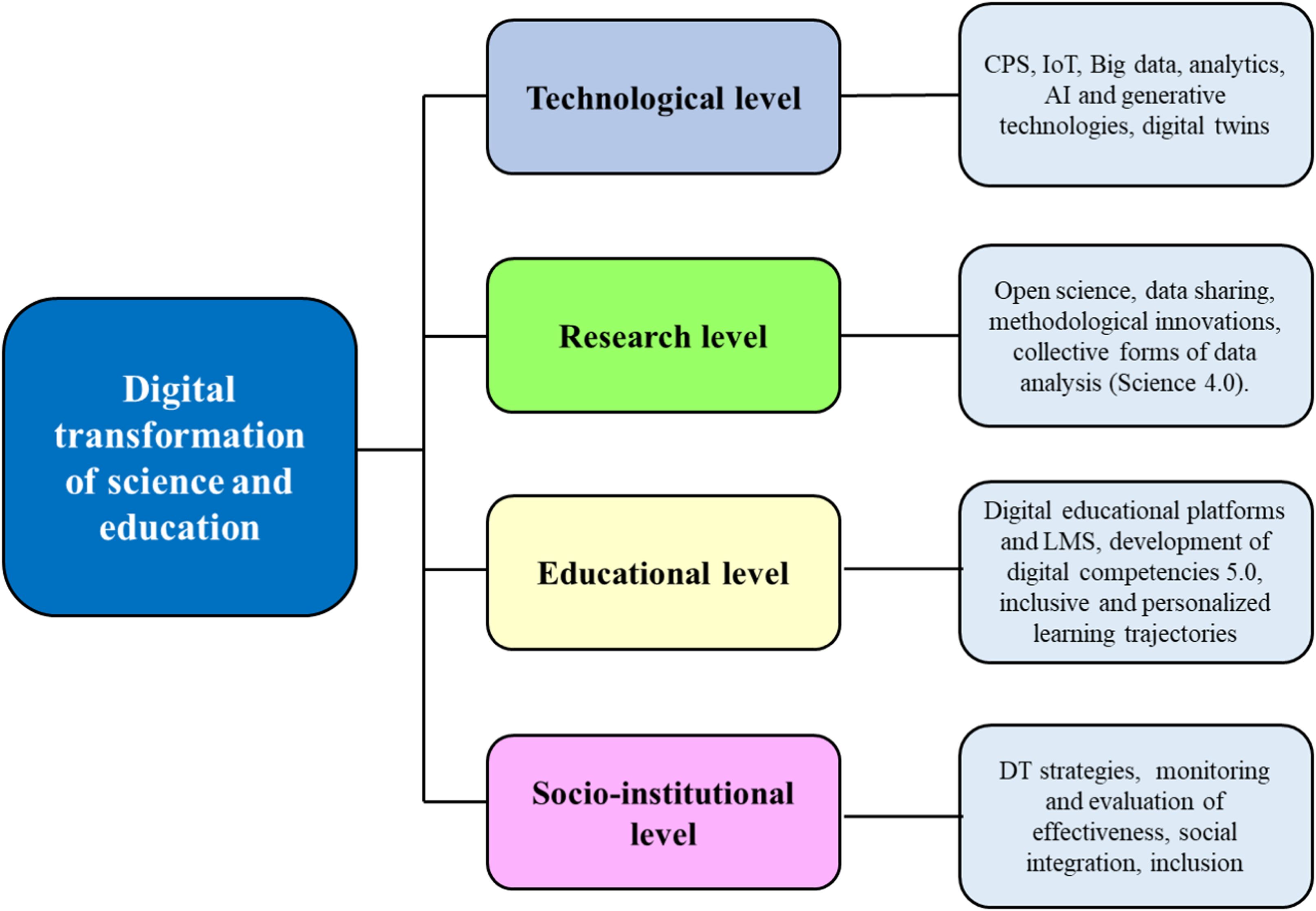
Conceptual diagram of a multi-level model for DT in science and education.
The multi-level conceptual model shown in Figure 1 illustrates how technological, research, educational, and socio-institutional elements of DT interact. Each level plays a distinct role in shaping a cohesive digital ecosystem for science and education, as described below.
A detailed description of each level of the model is provided below.
Technological Level
The technological level forms the foundation for DT. Key elements include CPS and IoT for real-time data collection and processing, big data and analytics platforms for predictive modeling, AI and generative technologies that enable process automation and knowledge creation, and digital twins for simulating and forecasting complex processes. Together, these tools integrate physical and virtual environments, creating a flexible and adaptive infrastructure that supports both science and education.
Research level
The research level focuses on advancing Science 4.0 and promoting open science. It encompasses the integration of open data and collaborative tools, enhancing transparency, reproducibility, and research efficiency. Methodological innovations help adapt research practices to the needs of the digital era, including modeling, ML, and collaborative data analysis.
Educational level
The educational level centers on digital platforms, LMS, and adaptive learning tools that support personalized learning pathways. Developing digital literacy and Competencies 5.0 equips learners to engage effectively with emerging technologies. Inclusive, learner-centered educational practices, combined with the cultivation of critical and creative thinking, lay the foundation for preparing a highly skilled future workforce.
Socio-institutional level
The socio-institutional level provides strategic governance of DT across organizations and fosters the development of a sustainable digital ecosystem. Key components include DT strategies, performance monitoring and evaluation, and initiatives that promote inclusion and social integration. This level ensures coordination between technological and educational initiatives, aligning them with broader social and institutional goals.
The proposed multi-level model illustrates an integrative approach to the DT of science and education. It highlights the dynamic interaction among technologies, research practices, educational processes, and social institutions, forming a foundation for the sustainable development of knowledge and competencies in the era of Society 5.0.
Applying this model provides a structured framework for guiding DT by strengthening cross-dimensional coordination in scientific and educational environments.
DT further creates significant opportunities for advancing and integrating open science and open education initiatives. European Commission (2021) explores open science in relation to educational practices and resources, offering recommendations for enhancing institutional support and infrastructure for open practices.
Analytical Interpretation of DR Within the Multi-Level Framework
While the section “Multi-Level Framework for DT of Science and Education” established the structural architecture of the multi-level model of DT, the present section clarifies how this structure can be analytically interpreted in terms of DR.
DR is understood as an emergent institutional condition resulting from the degree of coordination and systemic alignment among the technological, research, educational, and socio-institutional dimensions. Rather than representing a measurable index, readiness reflects the structural coherence that enables institutions to implement and sustain transformation processes across interconnected domains.
In this framework, each dimension contributes to readiness only insofar as it interacts effectively with the others. Technological advancement without research integration limits knowledge generation; educational innovation without institutional governance reduces sustainability; strategic planning without technological capacity constrains implementation. DR, consequently, depends on balanced development and cross-dimensional integration.
Institutional and contextual conditions further influence this configuration. Regulatory stability, ethical governance, organizational culture, and resource distribution shape how effectively the four dimensions reinforce one another. These factors influence not only the existence of digital initiatives but also their systemic consolidation and long-term resilience.
This interpretation provides the conceptual foundation for the qualitative application presented in the following section, where different institutional configurations are analyzed in terms of structural coherence and integration rather than numerical performance indicators.
Application of the Proposed Methodology
To illustrate the analytical applicability of the proposed multi-level framework for DT in science and education, this section presents a qualitative scenario-based comparison between two ideal-typical institutional configurations: a benchmark university characterized by systemic integration and a typical national university reflecting moderate levels of structural coordination. Such contrasts are consistent with recent studies examining differentiated patterns of DT in higher education institutions (Hofmans et al., 2024; Suprun et al., 2024; Zhu et al., 2024)
The comparison does not imply institutional ranking. Rather, it serves as an analytical contrast highlighting different configurations of DR across technological, research, educational, and socio-institutional dimensions.
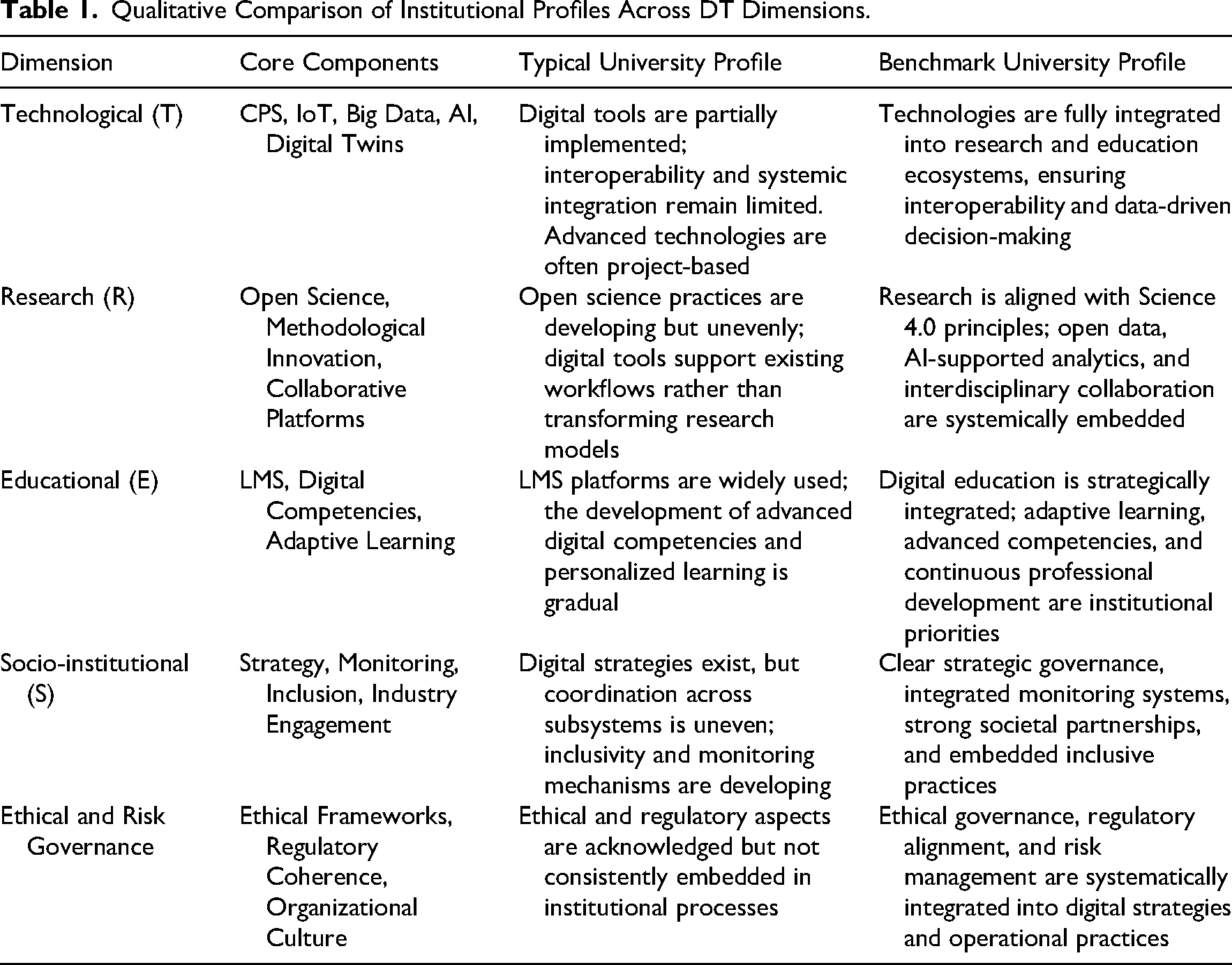
Table 1 presents a structured qualitative comparison of these institutional profiles.
Qualitative Comparison of Institutional Profiles Across DT Dimensions.
Benchmark University Profile
The benchmark university represents an institution where DT is systemically embedded across all dimensions. Technological infrastructures are interoperable and closely integrated with research and educational processes. Advanced digital environments support interdisciplinary collaboration, data-intensive research, and adaptive educational practices. Similar characteristics of system-level digital integration are discussed in recent analyses of digitally mature universities (Von der Heyde, 2023).
Research activities are aligned with open science principles and Science 4.0 practices. Digital tools enable new modes of knowledge production rather than merely supporting existing workflows.
Educational processes are strategically integrated with institutional DT objectives. Personalized learning pathways, advanced digital competencies, and continuous professional development are embedded within governance structures.
At the socio-institutional level, clear digital strategies, coordinated monitoring mechanisms, and strong ethical governance frameworks ensure sustainable and inclusive transformation.
Typical National University Profile
The typical national university reflects partial and uneven implementation of DT initiatives. Digital infrastructures are present but lack full interoperability and systemic coordination.
Research practices incorporate selected digital tools; however, open science principles and collaborative digital environments remain inconsistently implemented.
Educational initiatives rely primarily on standard LMS platforms and online delivery mechanisms. The development of advanced digital competencies and adaptive learning models is gradual and often project-based.
Institutional governance structures acknowledge DT priorities, yet coordination mechanisms, ethical integration, and long-term strategic alignment remain in development.
Comparative Interpretation
The qualitative contrast between these institutional profiles reveals differences in structural coherence, cross-dimensional integration, and governance alignment. The benchmark profile demonstrates balanced development and systemic coordination across all dimensions, while the typical profile illustrates fragmented implementation and limited integration.
This comparison illustrates how the proposed framework can support institutional reflection by identifying structural imbalances, coordination gaps, and areas requiring strategic alignment.
Implications for DT and Society 5.0
Within the Society 5.0 paradigm, DR should be interpreted as a qualitative condition reflecting systemic coherence, institutional capacity, and ethical governance. Sustainable DT in science and education depends not solely on technological adoption, but on coordinated development across research, education, governance, and societal engagement.
The proposed framework, therefore, serves as an analytical instrument for understanding institutional transformation as a context-sensitive and ethically grounded process rather than as a metric-driven evaluation exercise.
Discussion and Conclusion
The analysis demonstrates that DT in the 21st century is no longer limited to the technological modernization of science and education. It represents a multidimensional and human-centered process embedded in the broader paradigm of Society 5.0. In this context, technologies merge with ethical, institutional, and educational mechanisms to promote collective intelligence and social well-being.
The theoretical contribution of this study lies in reframing DR not as a measurable index but as a systemic configuration of interdependent institutional dimensions. By integrating socio-technical systems theory with the Society 5.0 paradigm, the study advances a qualitatively grounded framework for interpreting DT as a context-dependent and institutionally embedded process rather than a purely technology-driven upgrade.
From this perspective, the transition from Industry 4.0 to Society 5.0 should be understood not as a purely technological upgrade but as a paradigmatic shift in the relationship between technology, institutions, and society. While Industry 4.0 prioritizes efficiency, automation, and optimization, Society 5.0 emphasizes human-centricity, ethical governance, and social inclusion. DT in science and education, therefore, plays a mediating role in enabling this transition by embedding technological innovation within broader societal and institutional contexts.
The analysis reveals several interrelated challenges affecting DT success. These include: the technological challenge of integrating AI, high-performance computing, and digital twins into research and learning environments; the institutional challenge of establishing effective governance; and the human capital challenge of developing digital literacy, adaptive skills, and leadership competencies.
This study confirms, in line with previous research (e.g., Fawns, 2022; García-Peñalvo, 2021), that DT is fundamentally a socio-technical process rather than a mere technological upgrade. Within this conceptual framing, DR should be interpreted primarily as a qualitative and systemic capacity rather than a strictly quantitative metric. It reflects an institution's ability to align technological infrastructure, research practices, educational models, and socio-institutional governance in support of sustained DT. In this sense, DR functions as a mediating construct that enables DT, rather than as an end in itself.
The findings emphasize that DT must be viewed as an evolving interaction between technologies, pedagogical practices, research processes, and managerial decisions. Institutions that align these dimensions through coordinated strategies demonstrate higher adaptability and resilience.
From a systemic perspective, successful DT requires coherence across interconnected levels, including the following:
Technological level: developing data infrastructures, AI-enabled mechanisms, and intelligent educational platforms; Research and innovation level: fostering open science, interdisciplinarity, and methodological adaptability; Educational practice: promoting digital competence, personalized learning, and flexible educational pathways; Socio-institutional level: ensuring ethical oversight, inclusive access, and data-informed governance.
A key conclusion of this study is that the primary challenge of DT lies in maintaining a continuous dialogue between technology and society. The proposed multi-level framework should be understood as a heuristic and interpretative tool designed to support structured institutional reflection and strategic dialogue rather than as a prescriptive or metric-based evaluation model. The effectiveness of this dialogue depends on how successfully scientific advances translate into educational reforms, which in turn influence national policies. Aligning DT with human-centered and ethical principles is essential for building a sustainable and inclusive knowledge society.
Ethical considerations, including data privacy, algorithmic transparency, and the balance between public interest and commercialization, emerge as cross-cutting constraints that shape the boundaries of responsible DT in science and education.
Future research should focus on empirically validating digital maturity models, comparing organizational readiness across contexts, and evaluating the impact of AI-enabled governance mechanisms. Such studies will help address persistent challenges related to inequality, data ethics, and institutional inertia, ensuring that the goals of Society 5.0 are achieved through balanced and responsible DT. These efforts will strengthen the theoretical and practical understanding of how DT can serve as a driver of equitable and human-centered progress in science and education.
Footnotes

Ethical Statement
Ethical approval was not required for this study since this research did not involve human participants, animals, or any data collected from individuals.
Funding
The authors received no financial support for the research, authorship, and/or publication of this article.
Declaration of Conflicting Interests
The authors declared no potential conflicts of interest with respect to the research, authorship, and/or publication of this article.