




Abstract
Small and medium-sized enterprises (SMEs) operating in Thailand’s food manufacturing sector face increasing pressure to embrace digital transformation. This study explores the critical factors influencing digital transformation in SMEs, focusing on digital organizational culture, knowledge acquisition, and organizational readiness. Drawing upon the Technology–Organization–Environment (TOE) framework, we investigate the relationships between digital organizational culture, knowledge acquisition, organizational readiness, and digital transformation. Data were collected from 198 food manufacturing SMEs using purposive sampling and analyzed using Partial Least Squares Structural Equation Modeling (PLS-SEM). Our findings underscore the pivotal role of digital organizational culture and knowledge acquisition in facilitating digital transformation within Thai SMEs. We also reveal that organizational readiness acts as a full mediator, significantly impacting the success of digital transformation initiatives. Practically, this study highlights the importance of fostering a robust digital organizational culture through collaborative efforts and advocating for knowledge exchange from external sources. Additionally, it emphasizes the need for SMEs to allocate resources and prioritize readiness for change to ensure seamless digital transformation. Theoretically, our research contributes to a deeper understanding of the digital transformation journey within the context of SMEs in the food manufacturing industry. By aligning with the TOE framework, we provide valuable insights tailored to SMEs, offering guidance for navigating the complexities of digital transformation in today’s rapidly evolving business landscape.
Keywords
Introduction
Currently, small and medium-sized enterprises (SMEs) in Thailand are considered to play a crucial role in the country’s economic activities. According to the Office of SMEs Promotion (OSMEP), these firms contributed approximately 34.6% to the total value of the Thailand’s gross domestic product (GDP) in 2021. Furthermore, SMEs accounted for approximately 99.6% of all businesses in the country (The Office of SMEs Promotion, 2021). However, due to the outbreak of COVID-19, the contribution of SMEs to the GDP was less valuable owing to reduced income. As a result, many SMEs had to close down or lay off a substantial number of employees (Key et al., 2021). Thai SMEs have encountered significant challenges during the COVID-19 pandemic, including economic impacts, uncertainty, and e-commerce capabilities (Hirankasi & Klungjaturavet, 2021; Kaendera & Leigh, 2021).
The digital transformation, which refers to the process of leveraging digital technologies to radically change how firms operate and deliver value to customers (Chutijirawong et al., 2021) has played a crucial role in helping Thai SMEs navigate the challenges posed by COVID-19 and adapt to the post-pandemic situation (Khalid & Naumova, 2021). This transformation is necessary to address the expected transformative digital disruption over the next 5 years, as Thailand is lagging behind globally by approximately 5 years (Chutijirawong et al., 2021).
The food manufacturing sector holds a significant position in Thailand’s economy, particularly in the manufacturing industry, contributing the highest value to the GDP at around 941,693 million baht (Charoenpanich, 2019). Aligned with Thailand’s Industry 4.0 policy, food manufacturing is identified as one of the five S-Curve industries that embraces advanced technology to become a global center for processed food (Chummee, 2018).
The food export industry withing the manufacturing sector has witnessed an 11.8% increase, particularly in terms of processed food, agricultural products, and food raw materials (Arunmas, 2022). Due to the rising global demand for home-cooked and ready-to-eat meals, the food industry’s exports have continued to grow (Ploymee, 2021). The National Food Institute also anticipated an 8.4% increase in the value of food exports, reaching to 1.2 trillion baht by 2022. However, the industry faced inflationary barriers, such as the rising prices of agricultural products, electricity, and transportation, resulting in decreased purchasing power among customers due to increased item prices (The Nation, 2022).
SMEs in the food manufacturing sector generated 33.2 % of the total GDP, employing 524,497 individuals (Charoenpanich, 2019). While the Thai government has implemented key strategies for Industry 4.0 development in the food industry, including digital transformation of the manufacturing sector through advanced technologies to enhance productivity, quality, and competitiveness, SMEs in the food industry still face limited resources. Digital transformation provides an opportunity for business growth and enables SMEs to overcome challenges in the Industry 4.0 era. Firms must prioritize innovation and utilize technology to enhance competitiveness, respond to rapidly changing consumer needs, and ensure sustainable business operations (Ceptureanu et al., 2017; Schuettler, 2021). As an example, Siemens remains steadfast in its commitment to driving digital transformation across industries, particularly in the pivotal food and beverage sector. Recognizing its profound environmental footprint, with food manufacturing and packaging alone contributing to 30% of greenhouse gas emissions and consuming 70% of global fresh water, Siemens is dedicated to revolutionizing production processes toward sustainability. As Siemens showcases innovative solutions designed to expedite digital transformation, aiming to mitigate CO2 emissions and minimize waste generation. By leveraging cutting-edge technology and software, alongside robust 5G wireless networks, Siemens optimizes production planning and scheduling, enhancing efficiency, reducing inventory, and ensuring timely product delivery. Furthermore, seamless communication among diverse devices, internal systems, and operational technologies is facilitated, supported by high-speed networks. Integration of mobile robots and guided vehicles further streamlines operations. Through these initiatives, Siemens exemplifies how digital transformation significantly enhances production speed, adaptability, and resource efficiency, thereby contributing to a reduced environmental footprint in the food manufacturing sector (Siemens, 2023).
Despite gradual improvements in the situation of SMEs towards digital transformation in Thailand, there are still challenges to overcome (Royal Thai Embassy WDC, 2021). According to the IMD World Digital Competitiveness Ranking in 2020, which assessed knowledge, technology, and future readiness, Thailand ranked 39th out of 63 countries, with a ranking of 43rd in terms of knowledge, 55th in terms of training and education, and 45th in terms of future readiness. This highlights the need for Thailand to expedite knowledge development, skill acquisition, and digital organizational culture transformation to thrive in the current digital age (Bris & Cabolis, 2020). Previous studies conducted in Thailand have examined the readiness of enterprises to implement digital transformation-related changes, demonstrating how digital transformation influences business sustainability and creates a competitive advantage. Therefore, businesses need to plan for future readiness and enhance employees’ knowledge while developing a digital corporate culture to facilitate change.
To drive digital transformation, it is essential for organizations to foster a digital organizational culture that promotes the adoption of technologies and encourages innovation, thereby driving digital transformation efforts within the organization (Alkhamery et al., 2021). Moreover, it’s recognized that the significance of a digital organizational culture is particularly pronounced in companies utilizing technology in their operations, where success in digital transformation hinges on cohesive teamwork and employees’ embrace of change (Leal-Rodríguez et al., 2023). Additionally, organizational readiness, which refers to the organization’s ability to implement change, plays a crucial role in improving digital transformation within the organization. Furthermore, knowledge acquisition, which involves staying updated with industry trends, understanding customer requirements, and keeping abreast of technological advancements from suppliers, is a key factor in facilitating improved digital transformation (Kumar, 2019; Trantopoulos et al., 2017). It is evident that digital transformation is indispensable in responding to evolving customer behaviors. Leveraging knowledge acquisition from customer interactions and external sources not only enriches organizational insights but also contributes significantly to the success of digital transformation initiatives (Lukito et al., 2023).
From the above, it becomes evident that digital transformation holds immense significance within the food manufacturing industry, a crucial sector of Thailand’s economy characterized by notable environmental impacts and production challenges. In this context, knowledge acquisition, organizational readiness, and digital organizational culture emerge as the cornerstone of successful digital transformation. To the best of our knowledge, no research has been conducted on improving digital transformation specifically in the manufacturing sector of SMEs, particularly within the context of an emerging country like Thailand. This gap in knowledge is particularly relevant for the food industry, which has had a significant impact worldwide and represents a key sector for Thai manufacturers (America, 2022; The National Science and Technology Development Agency [NSTDA], 2020).
Furthermore, in this study, we adopt the Technology–Organization–Environment (TOE) framework, which comprised three constructs: (1) Digital organizational culture (technology context), (2) Organizational readiness (organization context), and (3) Knowledge acquisition (environment context) to examine the factors influencing SMEs’ digital transformation in the food manufacturing industry. The purpose of this study is to investigate these aspects and their impact on digital transformation. Besides, the TOE framework will be used in this study to describe the phenomenon of digital transformation in developing SMEs in the manufacturing sector, which could potentially provide support for SMEs in the emerging country.
Regarding the structure of this paper, the next section presents a comprehensive literature review that includes definitions of the aforementioned terms, an overview of the TOE framework, hypotheses development, and the conceptual framework. Following that, the research method is explained, and the results are provided. Subsequently, the conclusion is presented, along with discussions, implications, limitations and further research of the study.
Literature Review
Digital Transformation (DT)
Digital transformation pertains to a process of structural change that combines technologies, such as G5, artificial intelligence, the cloud, the Internet of Things (IoT), operating models, and data management in order to improve the business’s performance in all dimensions. In other words, it implicates a change in the way a company uses digital technology or leveraging digital technologies or tools to develop a digital business model that will help create and add appropriate value for the company by impact the customer experience and enhance business performance in order to maintain competitiveness (Alkhamery et al., 2021; Deja et al., 2021; Melanie Pfaff et al., 2023; Trenerry et al., 2021) The digital transformation of an enterprise includes five core elements: technology and automation, operations, organization, leadership and strategy, and customer experience (Ghaleb et al., 2021; Maria, 2021; Scopism, 2021; Westerman et al., 2014).
Digital Organizational Culture (DOC)
Digital organizational culture pertains to the values, expectations, beliefs, and a collective understanding of how an organization conducts itself in a digital context to lead a new approach to collaboration within organizations (Al-Faihani & Al-Alawi, 2020). Equality in shared decision-making and the integration of information technology are fundamental prerequisites for cultivating a digital organizational culture that fosters positive employee attitudes (Melanie Pfaff et al., 2023), which include integrating IT with innovation and integrating employee mindset with digital strategy. It has become a crucial component of the new business model to accommodate the organization’s emerging technologies (Martínez-Caro et al., 2020; Zhen et al., 2021).
Organizational Readiness (OR)
Organizational readiness in implementing change refers to the level of readiness of personnel within the company to follow organizational development guidelines (Alkhamery et al., 2021), including assessing the scope of the business in awareness, commitment, and the availability of resources that enable organizations to adopt new technologies to use or design innovative services (Yaqub & Alsabban, 2023; Zhen et al., 2021). Organizational readiness is linked to change commitment and efficiency, and it entails assessing an organization’s ability to implement changes in accordance with organizational development (Alkhamery et al., 2021; Ruest et al., 2019; Weiner, 2009). It entails evaluating issues such as resource allocation, skills, and openness to change.
Knowledge Acquisition (KA)
Knowledge acquisition refers to the dynamic process of increasing an organization’s individual and collective learning capacities through the absorption of current knowledge as well as the acquisition of new knowledge. To effectively identify and solidify newly acquired knowledge, this process requires a concerted effort and cumulative experience (Lin & Lee, 2005). Notably, knowledge can be obtained from outside sources such as suppliers, consumers, and competitors, increasing the corporate knowledge base. In other words, knowledge acquisition involves collecting knowledge from external sources and integrating it within the organization to develop understanding and enhance the potential for innovating processes, products, or technologies (Lukito et al., 2023). Furthermore, it is essential for every employee to engage in the transformation of existing knowledge while simultaneously generating new knowledge, thereby facilitating the generation of innovative solutions to emerging challenges and opportunities (Kör & Maden, 2013).
TOE Framework
This study involved using the TOE framework, developed by Tornatzky et al. (1990). The TOE is a conceptual framework that assists in comprehending administrative strategies that lead to the use and transformation of technology and information systems within the context of the organization. The administrative components are divided into three parts: (1) Technology context, which refers to understanding the external characteristics required for the use of technology; (2) Organizational context, which relates to the readiness of the organization through top management support, thereby resulting in the use of technology; and (3) Environmental context, which involves external stakeholder, such as business pressures from customers, suppliers, and/or external support which impact the company’s efforts influencing the use of technology.
Hypothesis Development
According to the TOE framework, one of the primary factors to be examined in determining the critical role of digital transformation success is the digital organizational culture. It is considered the initial aspect for hypothesis testing as a technology context that shapes and influences digital transformation outcomes. Another crucial aspect is organizational readiness, which represents the organizational context and is necessary to explore its impact on digital transformation. Lastly, knowledge acquisition which involves external parties to gain the understanding of technology serves as the environmental context within the TOE framework and is the final aspect for hypothesis testing in this study.
When planning or implementing digital transformation initiatives, it is crucial to take the digital organizational culture into account. Before implementing the digital transformation process, the culture must be evaluated and refined to successfully implement digital transformation (Al-Faihani & Al-Alawi, 2020). In addition, the development of digital organizational culture enables employees to understand the goal of digital transformation. Companies should provide digital training and instruction to their employees. To successfully lead a digital transformation in the digital era by bridging the digital talent gap and the capabilities already available to the company’s workers (Trushkina et al., 2020). Hie (2019) and Martínez-Peláez et al. (2023) found that digital organizational culture has a significant positive impact on digital transformation. Leaders should adopt a positive attitude, develop new ways of working and collaborate as a team. This includes involving employees in decision-making processes to achieve the aims of digital transformation. A robust digital organizational culture not only engages employees in the transformation process but also supports the development of sustainable practices. Organizations that promote and support digital organizational culture equip their employees with the necessary skills to embrace and utilize technology efficiently and sustainably. In order for digital organizational culture to adapt and lead to digital transformation. The following research hypotheses were derived from reviewing the extant literature:
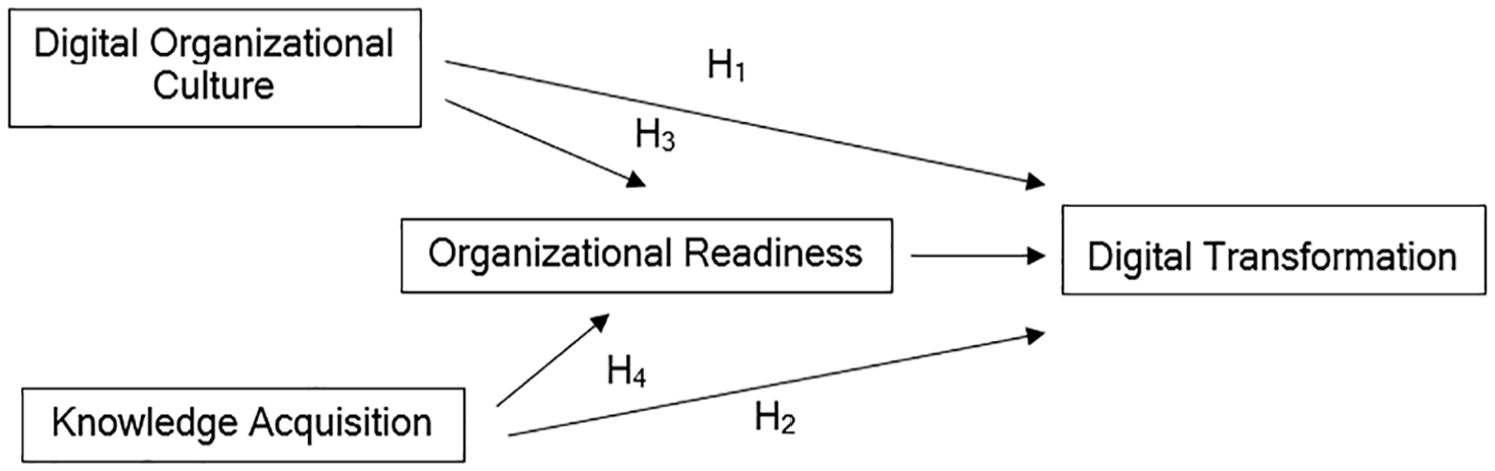
H1: Digital organizational culture has a positive influence on digital transformation.
The acquisition of knowledge from external sources, such as consumers and competitors, assumes a key role in ensuring a company’s innovative success within the contemporary landscape of digital transformation. Consequently, organizations must proactively manage external knowledge to optimize their innovation capabilities (Trantopoulos et al., 2017). Since knowledge leads to strategic decisions, the business acquires, manages, and analyzes data. Develop competence in gathering business information from many sources, allowing employees to make strategic decisions inside the organization that contribute to the organization’s ability to acquire knowledge. Furthermore, knowledge acquisition helps to stimulate the firm to have more possibilities to experiment in the search of innovation. As a result, conventional knowledge management approaches necessitate adaptation as part of the broader digital transformation initiatives. To ensure favorable outcomes, manufacturers must embrace innovative learning, adapt to changes, and continuously improve by actively acquiring knowledge from external sources. This entails revising how an organization engages with stakeholders, including consumers and employees, with the explicit aim of enhancing the firm’s capacity for innovation, resulting in digital transformation (Sahoo et al., 2023). Moreover, the acquisition of external partner knowledge emerges as an imperative for firms aiming to not only survive but also thrive in the long-term digital transformation journey. Due of the partnership, knowledge that the seeker of knowledge still lacks will be transmitted. In essence, the organization’s ability to effectively acquire knowledge will significantly influence the efficacy of its digital transformation efforts. Because knowledge improves competitive advantage, which leads to products, services, and innovative processes that competitors find difficult to imitate. It is possible to say that an organization’s ability to learn through acquiring knowledge from partners is related to digital transformation (Siachou et al., 2021). Through an extensive examination of prior literature, the following research hypothesis was formulated:
H2: Knowledge acquisition has a positive influence on digital transformation.
A digital organizational culture is related to organizational readiness, leading to successful digital transformation. Collaboration to analyze organizational readiness for implementing change in a company with high organizational readiness for digital transformation. There will be a high level of employee ready to change positions, as well as a high level of support for digital transformation, in terms of motivation and willingness to change (Stoianova et al., 2020). Digital organizational culture has a positive influence on an organization’s readiness to implement change, because it is the foundation or premise for attempting transformation. Changes in the organization’s digital culture, including beliefs, values, and acceptance of change, will contribute to the organization’s readiness for digital transformation (Novitskaya & Rajput, 2014). In other words, culture is the foundation of readiness for digital transformation. This is because shifting the attitudes of both employees and organizational leaders constitutes the initial step towards achieving successful digital transformation (Chwiłkowska-Kubala et al., 2023). Also, a digital organizational culture contributes to the organization’s transformation readiness through operations and the use of available firm resources to enhance business processes. It enhances the organization’s ability to use resources for business activities as it equips the organization with the necessary preparedness to navigate rapid changes and enables it to adopt existing technologies for essential business activities. It is possible to argue that organizational readiness to implement change is critical and serves as a links the relationship between digital organizational culture and digital transformation (Zhen et al., 2021). Thus, we propose:
H3: Digital organizational culture influences digital transformation through organizational readiness.
Knowledge acquisition plays a vital role in fostering the development of skills and knowledge, thereby enhancing cognitive abilities. This, in turn, contributes to the process of business transformation, as organizations that leverage acquired insights effectively enhance their organizational readiness for successful transformation endeavors. Specifically, in the context of small and medium-sized enterprises (SMEs), knowledge acquisition yields significant benefits by bolstering organizational readiness for transformation (Hartarto et al., 2020). By fostering a collaborative relationship with their customers and actively acquiring requisite knowledge and resources from external sources, organizations gain the capacity to adapt to changes, comprehend their prospects for survival, and facilitate overall growth (Chen et al., 2019). Furthermore, the value of individuals acquiring knowledge is dependent on their willingness to engage in the process that is taking place. Modifying each person’s thinking creates an organizational readiness to embrace new ideas for integrating and understanding new knowledge. Changes in organizational procedures and behaviors will lead to a greater readiness to participate in the knowledge-seeking process, which can lead to changes in a person’s behavior and better performance. As a result, the ability to adapt to organizational readiness for change resulting from acquiring knowledge is critical (Rusly et al., 2015). Notably, organizational readiness assumes critical importance in ensuring the successful execution of digital transformation initiatives because technology is constantly changing. It provides the organization with the necessary preparedness to navigate rapid changes for the organization’s survival and establishes a trajectory for technology consumption within the organization. Clarity and leadership support, as well as the capabilities of the organization’s digital talents and resources, are critical to achieving change. It also adds to increased organizational readiness and the progression of gradual digital transformation (Halpern et al., 2021). Consequently, improved organizational readiness likely translates into enhanced outcomes in the realm of digital transformation. Based on these observations, the following hypothesis was formulated:
H4: Knowledge acquisition influences digital transformation through organizational readiness.
Conceptual Framework
Based on our hypothesis development from relevant research, we then introduce a conceptual framework for this study, as shown in Figure 1.
Conceptual framework.
Research Methodology
The research for this study was focused on SMEs in Thai food manufacturing industry. The size of the sample used was calculated by the inverse square root method (Kock & Hadaya, 2018; Memon et al., 2020) in the WarpPLS 8.0 program, with the power level requiring a value of .80 and a significance level value of .05. The minimum absolute significant path coefficient in the model was .197, resulting in the number of samples as being 160.
We used a questionnaire administered through a purposive sampling method to collect data from the samples, who were representatives of SMEs in the food manufacturing industry. The data collection took place at several expos in Bangkok, Thailand. Additionally, we used criteria for screening to identify samples who met SMEs classification within this industry: (1) Number of employees (not exceeding 200 peoples) and (2) Firm revenue (not exceeding 500 million baht) (The Office of SMEs Promotion, 2021).
The questionnaire consisted of five parts: (1) general information about SMEs, comprising seven items using a nominal scale; (2) the measurement of the level of opinions related to digital organizational culture, comprising four items (Martínez-Caro et al., 2020; Zhen et al., 2021); (3) the measurement of the level of opinions related to knowledge acquisition, comprising four items (Garrido-Moreno & Padilla-Meléndez, 2011; Lin & Lee, 2005; Lee et al., 2007; Suroso et al., 2021); (4) the measurement of the level of opinions related to organizational readiness in digital transformation, comprising of two dimensions with a total of 11 items (Arthur et al., 2020; Bomfim et al., 2020; Lindig et al., 2020; Shea et al., 2014; Storkholm et al., 2019); and (5) the measurement of the level of opinions related to digital transformation, comprising of five dimensions with a total of 21 items (Ghaleb et al., 2021; Maria, 2021; Scopism, 2021; Westerman et al., 2014), where parts 2 to 5 used a 7-level Likert scale.
The data obtained from the questionnaire were analyzed using statistical software to obtain the means and standard deviations. In addition, Partial Least Square SEM (PLS-SEM) through the ADANCO program was applied for hypothesis testing.
Research Finding
A total of 240 questionnaires were distributed at several expos: Food Pack Asia 2022, Farmers’ Market, and Pet Exo Thailand 2022, to collect data from respondents who were representatives of SMEs in the food manufacturing industry, namely entrepreneurs, managers, and employees. After the screening process, a total of 198 valid questionnaires were used for statistical analysis.
The majority of the 198 respondents from food SMEs were either employees (58.59%) or business owners (32.89%). The most common period of working was between 1 and 3 years (35.35%), followed by less than a year (28.28%). 31.28% of the enterprises had been in operation for between 1 and 3 years, while 28.28% had been in operation for over six. The companies’ annual income did not exceed 1.8 million baht (65.15%). The majority of the companies had between six and 50 employees (38.89%) or less than five (50.51%). There were 45.45% limited companies and 34.45% sole proprietorships, as shown in Table 1.
General Information About Respondents and Firms.

Regarding the type of food manufacturing sector, 32.83% of all food manufacturing establishments included the manufacture of snacks and noodles, ready-to-eat foods, coffee, tea, spices, and herbs. Processing and preservation of fruits and vegetables involved around 18%, while meat processing and preservation related to 13.64%.
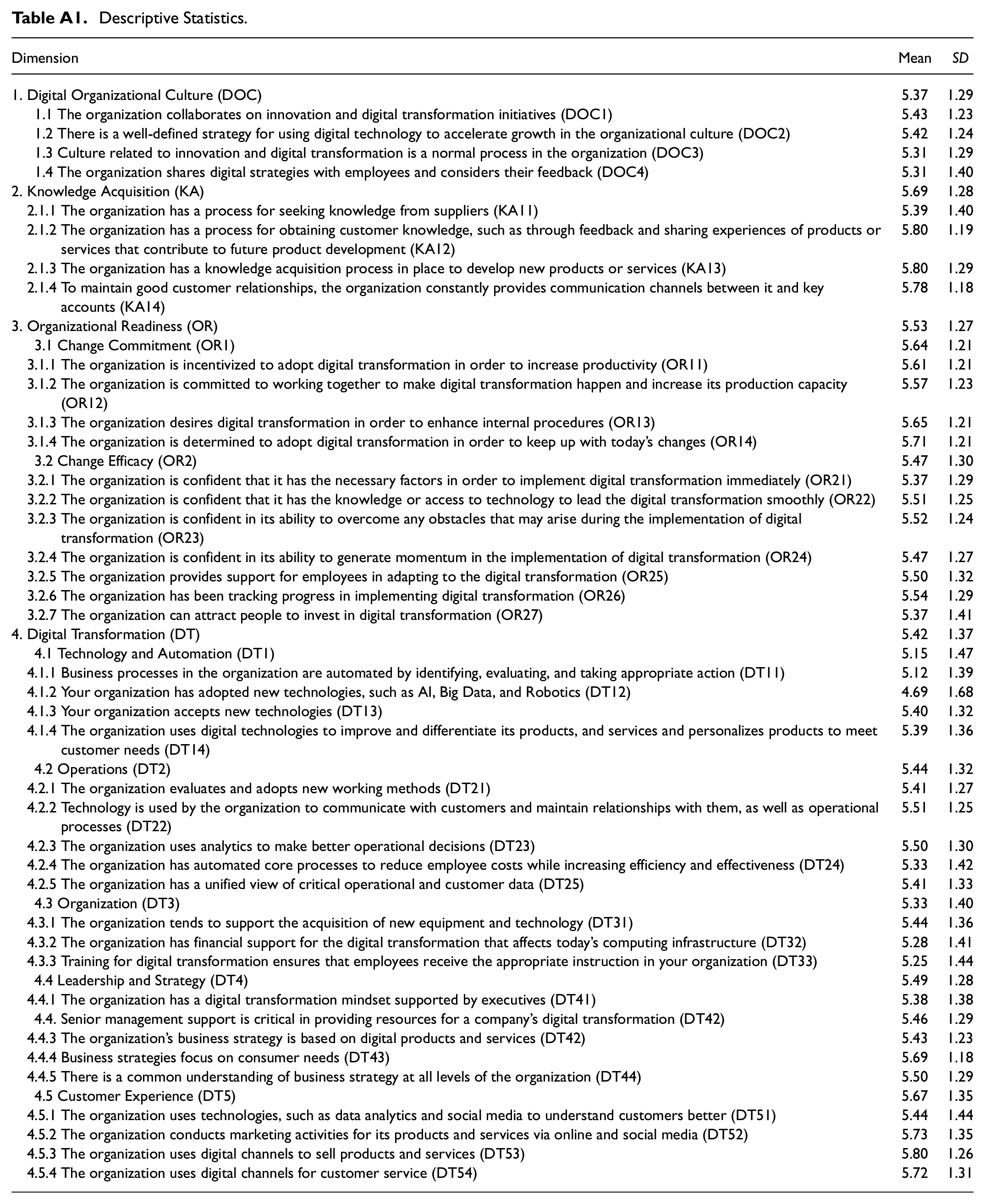
The descriptive statistics shown in Appendix (Table A1) reveal that SMEs in the food manufacturing industry have acquired a high degree of digital transformation. Customer experience associated with the use of technology and digital channels to gain customers and fully understand their requirements were rated as the highest in terms of the mean, followed by leadership and strategy, and operations, respectively, while technology and automation was evaluated as the lowest on the mean, but as can be seen this was still relatively high. SMEs in this industry should adopt new technologies, such as artificial intelligence, big data, and robotics to increasingly apply to their businesses. Moreover, companies must increase their adoption of business process automation.
Given the organizational readiness of SMEs in the food production industry to implement change was high, this indicates that businesses intended to adopt digital transformation to facilitate organizational processes. In this study, digital organizational culture of SMEs in the food production industry was also demonstrated as being at a high level. Various firms reported having been able to develop a strong digital organizational culture by collaborating with their employees to form a digital strategy, which included the promotion of innovation and digital transformation for organizational operations.
Furthermore, it is noteworthy to highlight the commendable level of knowledge acquisition demonstrated by small and medium-sized enterprises (SMEs) within the food manufacturing industry. To further augment knowledge acquisition within this sector, businesses involved in food production should actively support the process of gathering valuable information from suppliers. In addition, fostering strong customer relationships by facilitating effective communication channels between SMEs and their customers will prove instrumental in enhancing knowledge acquisition efforts.
Measurement Model
In the analysis of structural equation modeling (SEM), we tested multicollinearity to ensure that they were not significantly correlated. The findings of this study demonstrate that the VIF value of the majority of variables was less than 5.00, thus indicating that, of the 40 latent variables in structural equation modeling, 36 had an acceptable linear relationship between the causal factors (Hair et al., 2011). Therefore, we excluded four variables for which the values were greater than the threshold, namely OR22, OR23, DT42, and DT53.
Regarding convergent validity, we tested Dijkstra–Henseler’s rho (ρA), Jöreskog’s rho (ρc), Cronbach’s alpha coefficient, and Average Variance Extracted (AVE). According to Hair et al. (2010), the Cronbach’s alpha coefficient and AVE values should be greater than .70 and .50, respectively, while Henseler et al. (2016) suggested that the Dijkstra–Henseler’s rho (ρA) and Jöreskog’s rho (ρc) value should exceed .70. As can be seen in Table 2, it was determined that all values met the specified criteria. Considering the outer loadings test, according to the recommended criteria of Hair et al. (2014), the value should be greater than .7. However, the value of the DT12 variable was .6480 which fell below the threshold and was subsequently removed from our analysis. In contrast, the other 35 variables exhibited values greater than .70. As a result, the convergent validity of the construct in this study is acceptable as presented in Table 3.
The Results of Convergent Validity Assessment.

The Results of Outer Loading.

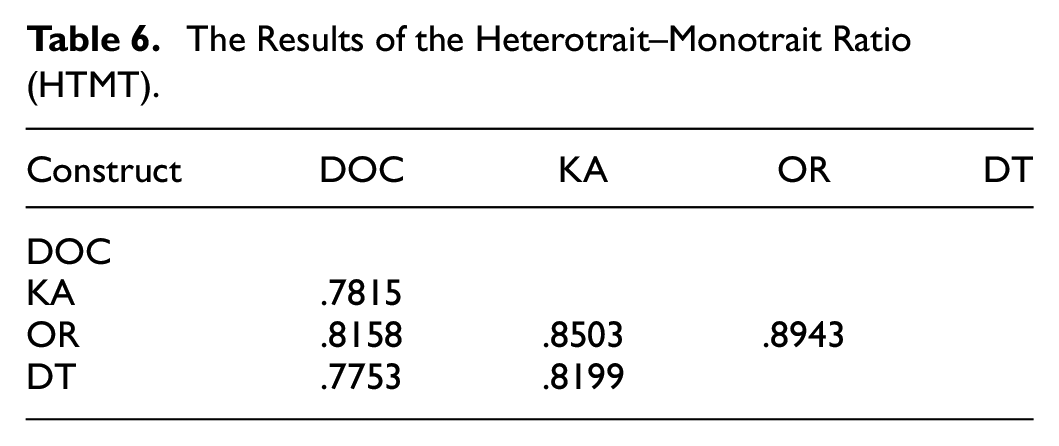
For testing discriminant validity, Fornell and Bookstein (1982) recommended using the within-class covariance criteria, such that the values on the diagonal must be greater than the covariance from all the other cross classes. Moreover, regarding the discriminant validity of the Heterotrait–Monotrait Ratio (HTMT), the value should be less than .90 (Henseler et al., 2015). However, the results indicate that some did not meet the Fornell–Larcker criterion. Also, the ORIC and DT variables had HTMT values greater than .90. Consequently, the researcher excluded each variable separately by comparing cross-loadings (see Table 4) that were greater than those on the diagonal line from the highest, respectively. In total, 15 items, namely OR12, OR14, OR27, DT11, DT13, DT21, DT22, DT23, DT24, DT25, DT31, DT32, DT41, DT45, and DT51, were eliminated. Then, we tested the results of discriminant validity again. According to Fornell–Larcker criterion and HTMT condition, they indicated that the discriminant validity was acceptable, as presented in Tables 5 and 6.
The Results of Cross Loading.

The Results of the Fornell–Larcker Criterion.

The Results of the Heterotrait–Monotrait Ratio (HTMT).
Structural Model
This study examined the relationship among digital organizational culture, organizational readiness, knowledge acquisition, and digital transformation according to the conceptual framework which a second-order construct was utilized. The results of the hypothesis testing, as evidenced by the findings presented in Table 7 and Table 8, reveal that the digital organizational culture had a direct influence on digital transformation (β = .1404) at a significance level of .05, which was lower than the indirect influence on digital transformation through organizational readiness (β = .2303) at a significance level of .001. Consequently, it can be stated that organizational readiness acts as a mediator positive relationship between the digital organizational culture and the digital transformation of SMEs in the food manufacturing industry. In addition, knowledge acquisition had a direct influence on digital transformation at a significance level of .05 (β = .2064), which also was lower than the indirect influence on digital transformation through organizational readiness at a significance level of .001 (β = .2755). Therefore, it can be argued that knowledge acquisition required organizational readiness to enhance SMEs’ digital transformation in this sector.
The Results of Hypothesis Testing.

p-value < .05. ***p-value < .001.
The Results of Direct Effect, Indirect Effect, and Total Effect.
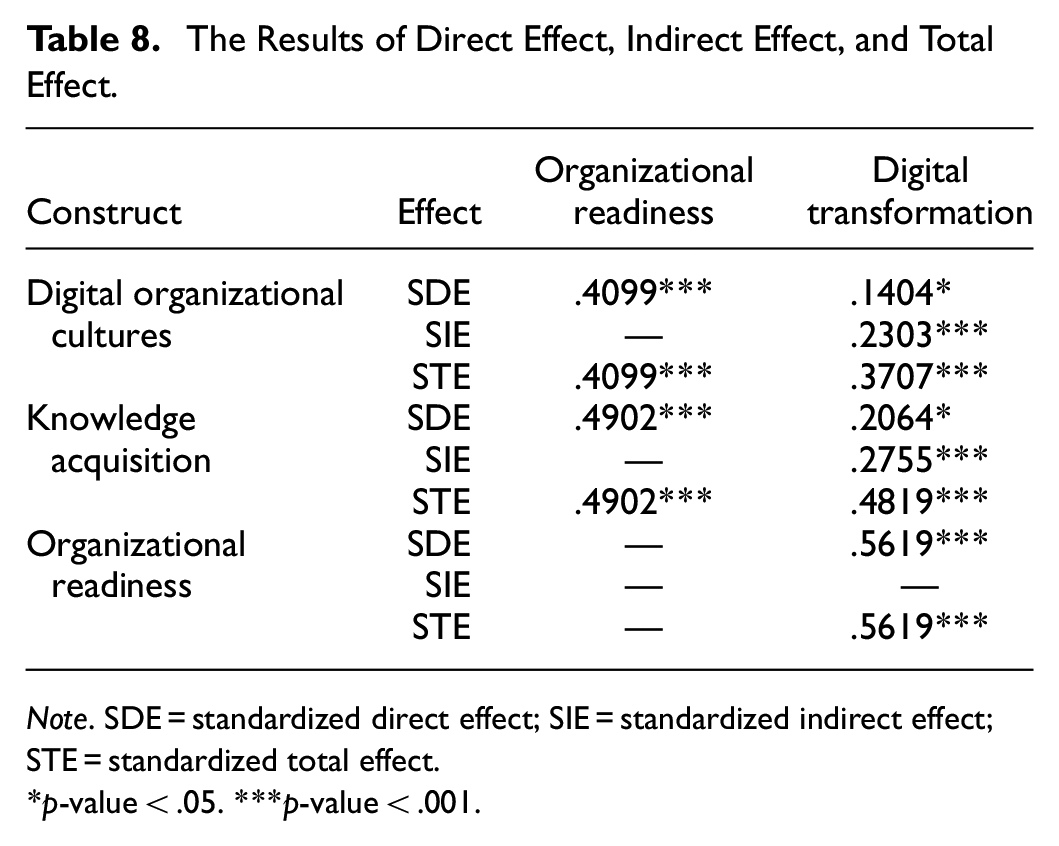
Note. SDE = standardized direct effect; SIE = standardized indirect effect; STE = standardized total effect.
p-value < .05. ***p-value < .001.
Furthermore, we invested how effectively a statistical model predicts a result regarding conceptual framework. Based on the analysis results, it showed that organizational readiness (OR) had an adjusted R2 value of .6899. Likewise, the adjusted R2 value of the digital transformation is .7154. Thus, it indicated that the independent variable could explain the variance in the dependent variable in this model effectively (Hair et al., 2010)
Therefore, we could present the research framework in accordance with structural equation model, as shown in Figure 2.

Structural equation model.
Discussions
For this research, the aim was to study the relationship among digital organizational culture, knowledge acquisition, organizational readiness, and digital transformation based on the TOE framework in Thai SMEs in the food manufacturing sector. Our research collected data from 198 Thai food manufacturing SMEs through a questionnaire. It was determined that SMEs in Thailand’s food industry have adapted by improving the digital organizational culture within their technologies to facilitate digital transformation at a high level. Additionally, SMEs in the food manufacturing industry acquired knowledge from external parties such as suppliers and customers, contributing to their level of digital transformation at high level. Moreover, their organizational readiness to implement change was found to be high, indicating their capability for digital transformation as well as digital transformation for Thai SMEs in this sector was recognized at high level.
It can be said that, SMEs in Thailand’s food industry have improved their digital organizational culture, developed knowledge acquisition, prepared the organizational readiness, and performed a good digital transformation. In addition, organizational readiness is identified as the most important aspect that fully mediates digital organizational cultures and knowledge acquisition, thereby influencing digital transformation significantly.
The findings are in line with research by Hie (2019), who studied the impact of transforming organizational culture and digital transformation governance on digital maturity in an Indonesian Bank. It was found that transforming organizational culture had a positive significant correlation with digital maturity. Therefore, the expansion or transformation of organizational culture can enhance the effectiveness of digital transformation by finding new ways for employees to work together as a team to successfully achieve the goals of digital transformation in the organization. Additionally, Martínez-Peláez et al. (2023) underscores the importance of fostering a corporate culture that embraces digital transformation, citing its potential to drive innovation, improve efficiency, and have a positive environmental impact. Therefore, digital organizational culture shift is deemed essential for developing the necessary digital skills that facilitate sustainable digital transformations. Moreover, the research findings align with a study conducted by Siachou et al. (2021) that revealed a significant relationship between these two processes, highlighting the importance of knowledge management for the successful implementation of digital transformation within an organization. Knowledge acquisition encompasses the process of acquiring external knowledge and assimilating new technological knowledge through strategic planning, with the aim of comprehending and enhancing the digital transformation process. Additionally, Lukito et al. (2023) stress the significance of knowledge acquisition in the context of digital transformation, particularly in recognizing emerging digital trends, engaging with customers, and co-creating value. Continuous data collection from customers is emphasized as crucial for gaining insights vital to the success of digital transformation.
Moreover, the results show that organizational readiness acts as a full mediator leading to the enhancement of digital transformation in food manufacturing SMEs for both digital organizational culture and knowledge acquisition. The findings of this study are consistent with previous research conducted by Hartarto et al. (2020), Chen et al. (2019), Rusly et al. (2015), and Halpern et al. (2021), which also indicate a relationship between knowledge acquisition and organizational readiness, ultimately leading to digital transformation. Furthermore, the alignment of our findings with those of Stoianova et al. (2020), Novitskaya and Rajput (2014), and Zhen et al. (2021) supports the notion that digital organizational culture is influenced by organizational readiness, thus facilitating digital transformation within the organization. When a business cultivates a digital organizational culture, characterized by the utilization of technology and collaborative efforts towards digital integration, it enhances the organization’s readiness to embrace and drive change towards digital transformation. Moreover, Chwiłkowska-Kubala et al. (2023) support the notion that organizational readiness is paramount in navigating digital transformation. This readiness entails recognizing the cultural shift required and prioritizing resources and technology investments to facilitate smoother transitions into digital transformation.
Theoretical Contributions
This research study employs the TOE framework as a conceptual lens to explain the developmental aspects of digital transformation within SMEs in Thai food manufacturing industry. This industry holds significance as a dominant force in the global food landscape. The findings obtained from this study not only validate the applicability and efficacy of the TOE framework in explaining the process of digital transformation but also yield key insights for SMEs operating in the food manufacturing sector. These understandings pertain to leveraging technology, optimizing organizational factors, and considering environmental contexts as foundational elements for enhancing digital transformation within the specified industry, all within the framework of TOE.
Managerial Implications
This study revealed the impact of promoting and developing a digital organizational culture, as well as acquiring knowledge, on the digital transformation through organizational readiness of SMEs in the food manufacturing industry. These SMEs, which have access to a diverse range of fresh and flavorful local ingredients, represent unique aspects that contribute to the appeal of this typical industry in both the domestic and international markets.
The findings provide valuable insights for SMEs in the food manufacturing sector, which is a key industry for the development of Thailand, particularly in relation to the strategic plans for Industry 4.0. SMEs can draw important lessons from this study to guide their own digital transformation initiatives.
SMEs in this sector should devise a plan to enhance their digital organizational culture. Additionally, they should emphasize collaboration and innovation within the organization when implementing new digital technology. Moreover, utilizing technology to streamline work processes is crucial for establishing a digital organizational culture.
Furthermore, SMEs that adopt new technology through knowledge acquisition can drive and facilitate digital transformation. To strengthen knowledge acquisition in the business, SMEs in the food manufacturing industry should actively seek new knowledge, as many may not communicate information with suppliers or disclose any information with other organizations. A clear need for information from suppliers exists. Furthermore, maintaining effective communication and exchanging information with customers is essential for gaining new insights that lead to digital transformation.
Specifically, SMEs should foster collaboration within the firm to encourage and support employees with appropriate technology and resources in terms of organizational readiness. SMEs in this particular sector must develop readiness for change by adopting new technologies for SME development, with a focus on promoting their use and conducting research and development. By doing so, SMEs can adequately prepare for their digital transformation.
Limitations and Future Research
In this study, the researchers encountered several challenges related to data collection, primarily due to the unprecedented circumstances posed by the COVID-19 pandemic. This situation significantly hindered the collection of questionnaires from Thai food manufacturing SMEs. Additionally, the data collection process was limited to expo events held exclusively in Bangkok and its surrounding areas. To enhance the generalizability of the study findings, it is recommended that future research endeavors encompass data collection from a more diverse range of geographic regions within the country. This would enable a broader representation of the focal industry and facilitate a more comprehensive understanding of the research outcomes. Moreover, while this study exclusively focuses on the food manufacturing sector, which holds significant importance for Thailand, it is advisable for future research to extend its scope to other SME manufacturing industries to foster greater generalizability of the study’s findings.
Footnotes
Appendix
Descriptive Statistics.
| Dimension | Mean | SD |
|---|---|---|
| 1. Digital Organizational Culture (DOC) | 5.37 | 1.29 |
| 1.1 The organization collaborates on innovation and digital transformation initiatives (DOC1) | 5.43 | 1.23 |
| 1.2 There is a well-defined strategy for using digital technology to accelerate growth in the organizational culture (DOC2) | 5.42 | 1.24 |
| 1.3 Culture related to innovation and digital transformation is a normal process in the organization (DOC3) | 5.31 | 1.29 |
| 1.4 The organization shares digital strategies with employees and considers their feedback (DOC4) | 5.31 | 1.40 |
| 2. Knowledge Acquisition (KA) | 5.69 | 1.28 |
| 2.1.1 The organization has a process for seeking knowledge from suppliers (KA11) | 5.39 | 1.40 |
| 2.1.2 The organization has a process for obtaining customer knowledge, such as through feedback and sharing experiences of products or services that contribute to future product development (KA12) | 5.80 | 1.19 |
| 2.1.3 The organization has a knowledge acquisition process in place to develop new products or services (KA13) | 5.80 | 1.29 |
| 2.1.4 To maintain good customer relationships, the organization constantly provides communication channels between it and key accounts (KA14) | 5.78 | 1.18 |
| 3. Organizational Readiness (OR) | 5.53 | 1.27 |
| 3.1 Change Commitment (OR1) | 5.64 | 1.21 |
| 3.1.1 The organization is incentivized to adopt digital transformation in order to increase productivity (OR11) | 5.61 | 1.21 |
| 3.1.2 The organization is committed to working together to make digital transformation happen and increase its production capacity (OR12) | 5.57 | 1.23 |
| 3.1.3 The organization desires digital transformation in order to enhance internal procedures (OR13) | 5.65 | 1.21 |
| 3.1.4 The organization is determined to adopt digital transformation in order to keep up with today’s changes (OR14) | 5.71 | 1.21 |
| 3.2 Change Efficacy (OR2) | 5.47 | 1.30 |
| 3.2.1 The organization is confident that it has the necessary factors in order to implement digital transformation immediately (OR21) | 5.37 | 1.29 |
| 3.2.2 The organization is confident that it has the knowledge or access to technology to lead the digital transformation smoothly (OR22) | 5.51 | 1.25 |
| 3.2.3 The organization is confident in its ability to overcome any obstacles that may arise during the implementation of digital transformation (OR23) | 5.52 | 1.24 |
| 3.2.4 The organization is confident in its ability to generate momentum in the implementation of digital transformation (OR24) | 5.47 | 1.27 |
| 3.2.5 The organization provides support for employees in adapting to the digital transformation (OR25) | 5.50 | 1.32 |
| 3.2.6 The organization has been tracking progress in implementing digital transformation (OR26) | 5.54 | 1.29 |
| 3.2.7 The organization can attract people to invest in digital transformation (OR27) | 5.37 | 1.41 |
| 4. Digital Transformation (DT) | 5.42 | 1.37 |
| 4.1 Technology and Automation (DT1) | 5.15 | 1.47 |
| 4.1.1 Business processes in the organization are automated by identifying, evaluating, and taking appropriate action (DT11) | 5.12 | 1.39 |
| 4.1.2 Your organization has adopted new technologies, such as AI, Big Data, and Robotics (DT12) | 4.69 | 1.68 |
| 4.1.3 Your organization accepts new technologies (DT13) | 5.40 | 1.32 |
| 4.1.4 The organization uses digital technologies to improve and differentiate its products, and services and personalizes products to meet customer needs (DT14) | 5.39 | 1.36 |
| 4.2 Operations (DT2) | 5.44 | 1.32 |
| 4.2.1 The organization evaluates and adopts new working methods (DT21) | 5.41 | 1.27 |
| 4.2.2 Technology is used by the organization to communicate with customers and maintain relationships with them, as well as operational processes (DT22) | 5.51 | 1.25 |
| 4.2.3 The organization uses analytics to make better operational decisions (DT23) | 5.50 | 1.30 |
| 4.2.4 The organization has automated core processes to reduce employee costs while increasing efficiency and effectiveness (DT24) | 5.33 | 1.42 |
| 4.2.5 The organization has a unified view of critical operational and customer data (DT25) | 5.41 | 1.33 |
| 4.3 Organization (DT3) | 5.33 | 1.40 |
| 4.3.1 The organization tends to support the acquisition of new equipment and technology (DT31) | 5.44 | 1.36 |
| 4.3.2 The organization has financial support for the digital transformation that affects today’s computing infrastructure (DT32) | 5.28 | 1.41 |
| 4.3.3 Training for digital transformation ensures that employees receive the appropriate instruction in your organization (DT33) | 5.25 | 1.44 |
| 4.4 Leadership and Strategy (DT4) | 5.49 | 1.28 |
| 4.4.1 The organization has a digital transformation mindset supported by executives (DT41) | 5.38 | 1.38 |
| 4.4. Senior management support is critical in providing resources for a company’s digital transformation (DT42) | 5.46 | 1.29 |
| 4.4.3 The organization’s business strategy is based on digital products and services (DT42) | 5.43 | 1.23 |
| 4.4.4 Business strategies focus on consumer needs (DT43) | 5.69 | 1.18 |
| 4.4.5 There is a common understanding of business strategy at all levels of the organization (DT44) | 5.50 | 1.29 |
| 4.5 Customer Experience (DT5) | 5.67 | 1.35 |
| 4.5.1 The organization uses technologies, such as data analytics and social media to understand customers better (DT51) | 5.44 | 1.44 |
| 4.5.2 The organization conducts marketing activities for its products and services via online and social media (DT52) | 5.73 | 1.35 |
| 4.5.3 The organization uses digital channels to sell products and services (DT53) | 5.80 | 1.26 |
| 4.5.4 The organization uses digital channels for customer service (DT54) | 5.72 | 1.31 |
Declaration of Conflicting Interests
The author(s) declared no potential conflicts of interest with respect to the research, authorship, and/or publication of this article.
Funding
The author(s) received no financial support for the research, authorship, and/or publication of this article.

Data Availability Statement
Data sharing not applicable to this article as no datasets were generated or analyzed during the current study.