



Abstract
Grounded in the concept of sustainable development, the study aims to develop a green education scale for Chinese higher education. Faculty members are from eight Chinese universities participating in the United Nations Principles for Responsible Management Education. Drawing on a comprehensive literature review, the initial scale was constructed and refined through expert review and pilot testing. The final scale comprised 39 items across five dimensions: green/sustainable campus, communication and participation, green administration, teaching and learning, and green research. Data were collected from 454 faculty members. Correlation coefficients among the five dimensions ranged from .368 to .473. The square roots of the average variance extracted for each dimension exceeded the corresponding inter-construct correlations, indicating good discriminant validity. The scale demonstrated good reliability, with an overall Cronbach's alpha of .947 and dimension-level alphas ranging from .881 to .925, supporting its internal consistency and stability.
Introduction
Research indicates that environmental education remains underdeveloped in higher education. For instance, only 13% of U.S. universities offer environmental courses, and even these are often underutilized (Aithal & Rao, 2016). Although scholars conceptualize green education as a holistic, school-based approach that integrates sustainability into teaching, management, and campus development (Aiali & Aboud, 2024), its practical implementation remains uneven. In China, universities have increasingly acknowledged the need for infrastructure- and people-centered green education (Li et al., 2024), particularly in light of the country's “dual-carbon” goals of peaking emissions and achieving carbon neutrality (Ding et al., 2025).
Universities are central to this agenda because they cultivate talent, promote sustainable values, and model institutional transformation (Meng & Hao, 2024; Sakarya et al., 2025). The United Nations (UN)-supported Principles for Responsible Management Education (PRME) initiative further underscores this responsibility by urging higher education institutions to integrate sustainability, ethics, and responsibility into curricula, research, and governance. Closely aligned with the UN Sustainable Development Goals, PRME has become a global framework for embedding responsible management and sustainability-oriented practices in business and management education (de Paula Arruda Filho & Przybylowicz Beuter, 2020). For Chinese universities, which are striving to align with both national carbon neutrality commitments and global sustainability norms, PRME provides an important reference point for rethinking green education, encouraging integration beyond isolated courses toward systemic institutional reform (PRME, 2025).
From macro to micro levels, green education has been linked to ecological civilization building, the greening of higher education systems, and the cultivation of environmentally responsible graduates (Biancardi et al., 2023). Yet despite policy emphasis and UNESCO's long-standing advocacy (Mamedov & Babych, 2020), research on green education in Chinese universities remains limited and fragmented (Wen et al., 2024). This study addresses this gap by developing a Green Education Scale for Chinese universities, with the aim of providing a systematic tool to assess and advance the integration of green education into higher education.
Green Education
Early initiatives such as George Washington University's “Green Education” (1994) and Harvard's Green Campus Initiative demonstrated universities’ potential to act as living laboratories for sustainability (Cai et al., 2019; Dagiliute et al., 2018). In China, Tsinghua University's 1998 “Green University” project laid the groundwork for subsequent national policies, embedding green development into higher education reform (Wang, 1998a; Yang & Tao, 2025). Yet despite these advances, definitions and practices of green education remain fragmented.
Scholars distinguish between narrow and broad understandings. The narrow approach reduces green education to environmental literacy and awareness campaigns (Corcoran et al., 2004). The broad perspective, by contrast, views it as a transformative agenda requiring integration of sustainability across teaching, research, administration, and campus culture (Zhao & Zou, 2015). While Chinese universities have increasingly adopted the broad approach, critics highlight a gap between rhetoric and practice: infrastructure receives priority, while cultural change and behavioral transformation remain weak (Kirsop-Taylor, 2020; Sonetti et al., 2016). Recent literature converges on five interrelated dimensions of green education:
Green/Sustainable Campus
Infrastructure development guided by ecological design, renewable energy, waste management, and low-carbon mobility (Sonetti et al., 2016; Wu & Wang, 2013). While progress is evident in standards and evaluation systems, emphasis on hardware often overshadows softer cultural and pedagogical elements.
Communication and Participation
Formal and informal learning that promotes environmental knowledge and student participation. Yet, knowledge-behavior gaps persist, as awareness does not automatically lead to sustainable action (Frick et al., 2004). Emerging work stresses experiential and motivational factors, such as connectedness with nature, as stronger drivers of ecological behavior (Roczen et al., 2014).
Green Administration
Institutional governance that aligns policies, curricula, and campus management with sustainability principles (Chen & Zhang, 2003). Although policies increasingly reflect green commitments, structural inertia and resistance to change limit their transformative potential (Ferrer-Balas et al., 2010).
Teaching and Learning
Curriculum design and cocurricular activities that foster sustainability competencies. Research distinguishes between task-related participation (compulsory, policy-driven) and voluntary participation (extra-role behaviors motivated by green values; Kousar et al., 2022; Qian, 2017). A persistent concern is tokenism, where sustainability is addressed superficially rather than integrated systematically.
Green Research
The reorientation of research agendas toward sustainability, encompassing both technological innovation and soft-science approaches to ecological challenges (Winter et al., 2022). While universities are expected to generate green technologies and solutions, studies show limited evidence of consistent institutional commitment or adequate funding (Al-Emran & Griffy-Brown, 2023).
Taken together, these dimensions underscore that green education is multilayered, spanning infrastructure, pedagogy, governance, culture, and research. Yet the literature also highlights unresolved tensions: between narrow and broad definitions, between policy aspirations and practice, and between knowledge acquisition and behavioral transformation. International frameworks such as PRME and UNESCO's Education for Sustainable Development provide useful benchmarks (PRME, 2025), but their operationalization in Chinese higher education remains undertheorized. Addressing these gaps requires systematic tools to conceptualize and measure green education, which this study seeks to provide.
Research Method
This study, based on a review of the literature and reference to scholars’ research on green education, developed a measurement scale and items for green education. To fit the context of Chinese universities, the study first conducted expert content validity evaluation of the items to confirm the scale and items (Dong et al., 2017). Additionally, the questionnaire and items were reviewed and rated by experts. Based on their feedback, the initial questionnaire design was revised to ensure that the questionnaire items effectively meet the survey objectives (Lizarondo et al., 2022).
Expert Panel
This study categorizes green competencies into four dimensions based on the literature review: understanding of green knowledge, mastery of green skills, application of green skills, and development of green skills. To assess the comprehensiveness and appropriateness of the questionnaire in measuring green competencies, expert evaluation was conducted. The questionnaire was distributed to five experts for review. Feedback deemed appropriate would be retained. Item revisions would be modified according to expert suggestions. If any expert raises concerns about the appropriateness of an item, it might be revised accordingly. If even one expert deems an item inappropriate, it would be removed.
Following expert evaluation and review, a total of four items in the Green Education Scale were identified as unsuitable and thus removed from the final version of the study. The final green education scale consists of five key dimensions: green/sustainable campus, communication and participation, green administration, teaching and learning, and green research (Supplemental table). The green/sustainable campus dimension was developed with reference to the Ministry of Housing and Urban–Rural Development of the People's Republic of China (2019), Cai et al. (2019), Jiang et al. (2022), and the European University Association (EUA). The communication and participation dimension drew upon the works of Wang (1998b) and guidelines from the EUA. The green administration dimension was constructed based on studies by Jiang et al. (2022) and the EUA. The teaching and learning dimension was developed with reference to the EUA framework as well as Li and Wang (2019). Lastly, the green research dimension incorporated insights from the EUA, Chen (2016), Li and Wang (2019), who have all contributed significantly to the development of green education research. The final version of the scale includes 11 items under green/sustainable campus, eight items under communication and participation, five items under green administration, six items under teaching and learning, and nine items under green research, totaling 39 items.
Participants
The PRME was officially established in 2007 at the Global Compact Leaders Summit in Geneva. As of August 2025, only 32 institutions in China (including Hong Kong and Macau), including the School of Economics and Management at Tsinghua University, are signatory members of this organization (PRME, 2025). Therefore, this study selected faculty members from eight Chinese universities that have joined the PRME initiative as the sample. Among the eight universities, three are located in northern China, one in the southern region, one in the western region, and three in the eastern region. Of these institutions, six are comprehensive universities, and two are science and engineering universities.
Research Procedure
To develop a robust scale, this study employed a two-stage process involving a pilot study followed by a formal study.
Pilot
The pilot sample consisted of faculty members from eight Chinese universities that are members of the PRME organization. To ensure the scientific validity of the research findings, the participants covered a range of academic disciplines, including business, education, arts, engineering, and medicine. According to Hinkin (1998) recommendation that the number of pilot participants should be three to five times the number of scale items, a total of 195 green education questionnaires were distributed, and 158 valid responses were collected, yielding a response rate of approximately 81%. Based on the data collected from this small-scale survey, reliability analysis and exploratory factor analysis (EFA) were conducted. The extraction values for the variables in the factor analysis were all >.700, indicating that the variables were well represented by the common factors. The reliability analysis showed that the internal consistency of each variable did not improve significantly after the deletion of any item. Moreover, the Cronbach's alpha coefficients for all five dimensions were >.800.
Formal Study
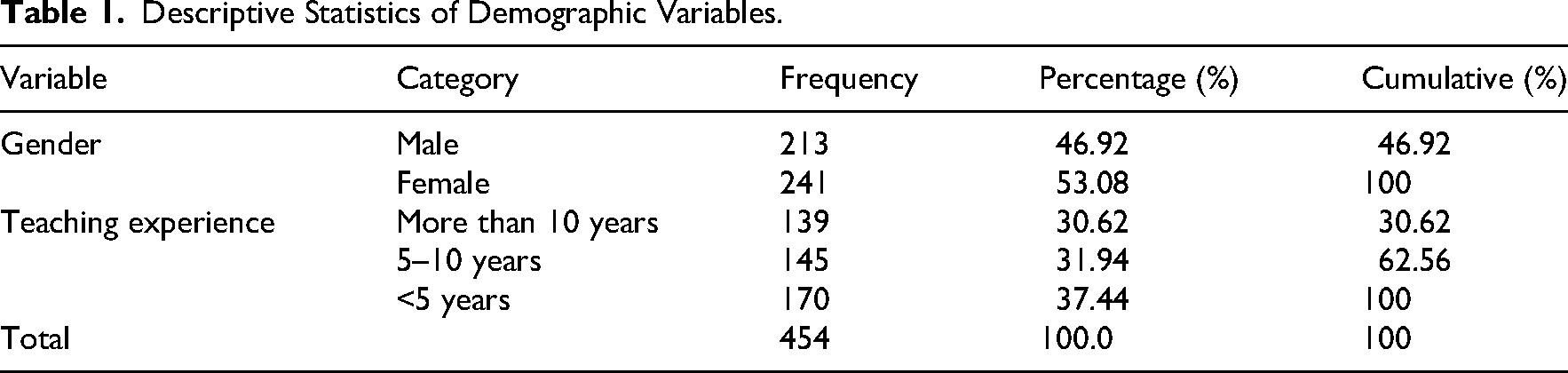
The research sample consisted of faculty members from eight Chinese universities that are members of the PRME organization. Based on previous scholars’ recommendations, the number of questionnaires distributed in the formal survey should be five to 10 times the number of items in the questionnaire scale (Comrey & Lee, 1992). A total of 500 questionnaires were distributed, and 454 valid responses were collected, resulting in a response rate of 90.800%. Among the green education samples collected, the gender distribution of faculty was 213 males and 241 females. The distribution of faculty teaching experience was as follows: <5 years (33.48%), 5–10 years (32.60%), and more than 10 years (33.92%). The collected data were subjected to descriptive statistical analysis, reliability analysis, validity analysis, and confirmatory factor analysis to examine the validity of the scale.
Results
Descriptive Statistical Analysis
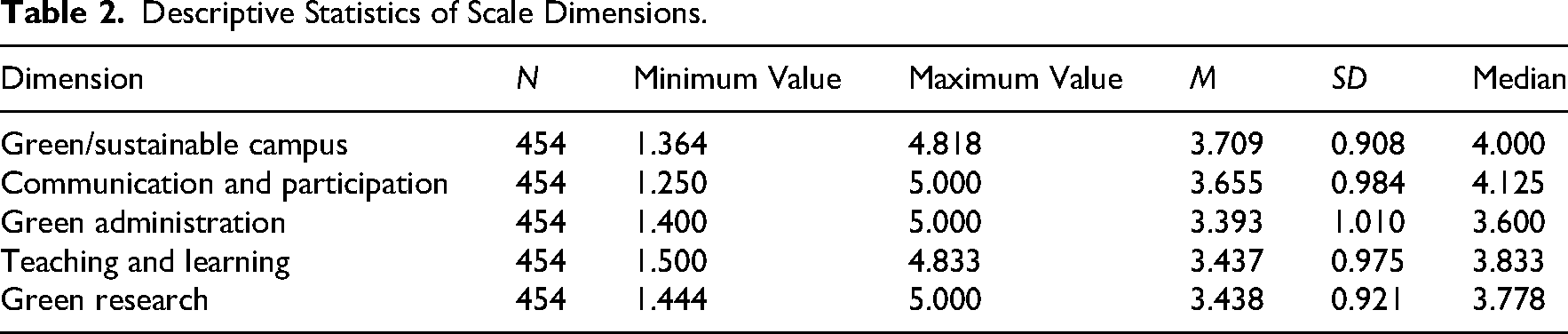
Among the collected green education sample, the gender distribution of faculty was 213 males and 241 females. As shown in Table 1, 53.08% of the sample were female faculty, while 46.92% were male. The distribution of teaching experience was as follows: <5 years (37.44%), 5–10 years (31.94%), and more than 10 years (30.62%). The means and standard deviations for each background variable and dimension are presented in Table 2. The study also examined differences across gender and teaching experience; however, no significant effects were found.
Descriptive Statistics of Demographic Variables.
Descriptive Statistics of Scale Dimensions.
Reliability Analysis
This study primarily used Cronbach's alpha to assess the reliability of the green education scale. Generally, an alpha coefficient above .700 indicates good internal consistency, while a coefficient above .800 suggests good reliability (Nunnally & Bernstein, 1994).
The questionnaire on green education in this study includes five dimensions. The data was analyzed using the method described above. The results showed that the reliability of each variable did not significantly improve after deleting any single item. Moreover, the overall reliability of the scale was .947, with the reliability coefficients for each dimension ranging from .881 to .929, indicating that both the overall scale and each dimension have high reliability, as well as good stability and consistency. The Cronbach's alpha coefficients for the scale and each dimension are shown in Table 3.
Reliability Analysis.
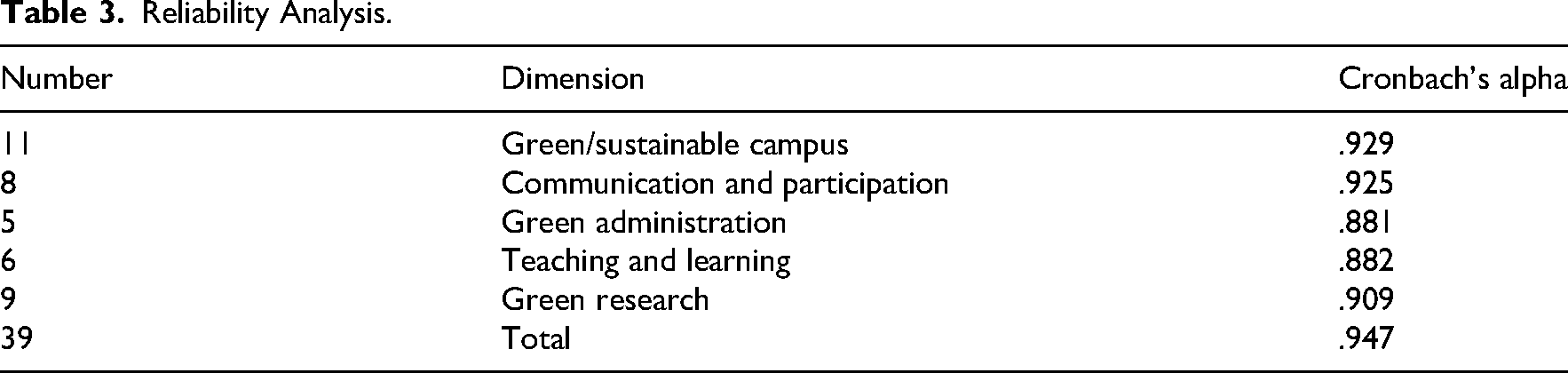
From Table 3, it can be seen that the reliability coefficients for all variables, as well as the overall scale, are above .800, indicating a good internal consistency. This suggests that the data has good reliability quality and is suitable for further analysis.
Exploratory Factor Analysis (EFA)
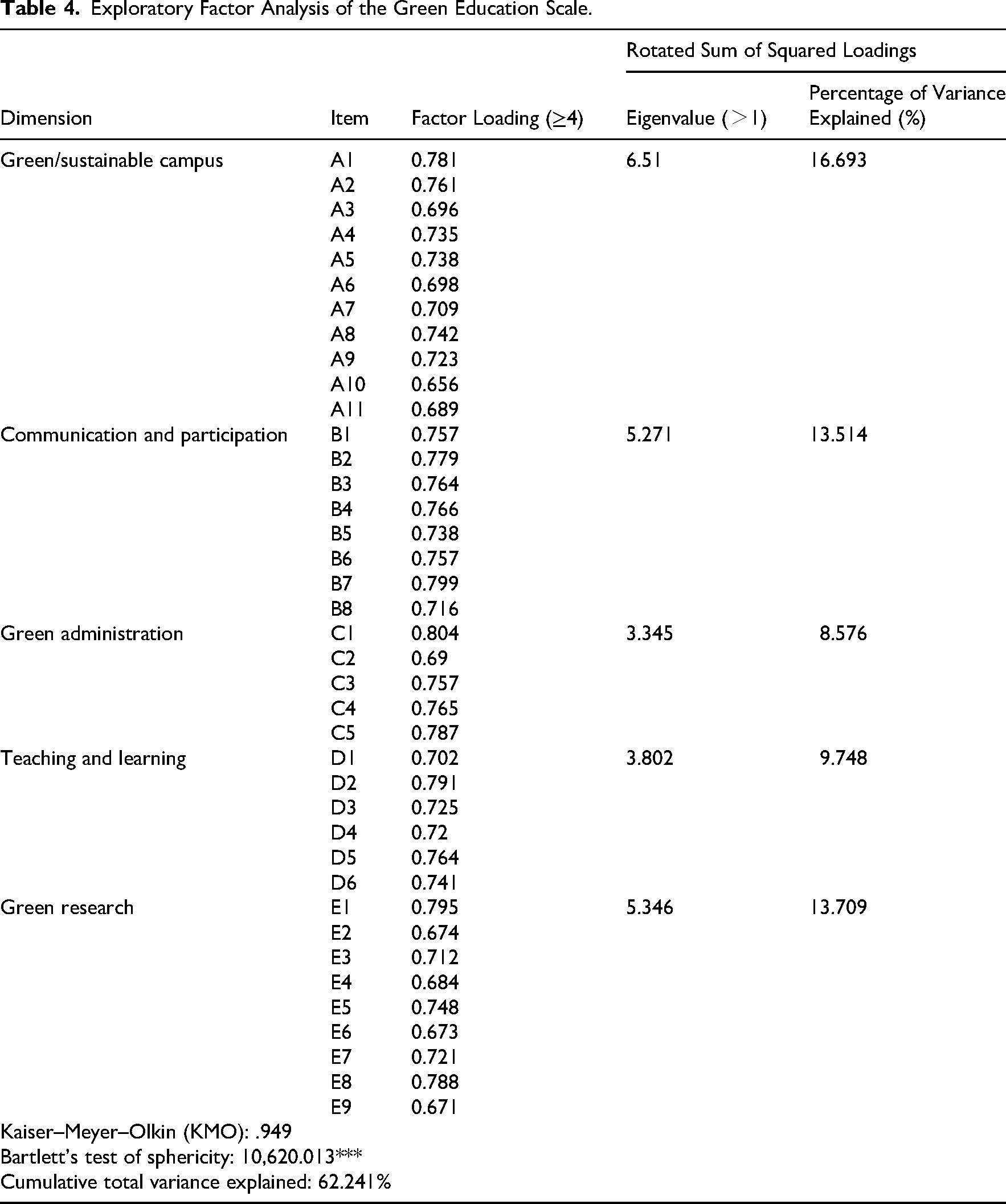
This study conducted a validity analysis to evaluate the construct validity of the measures for each research variable, as shown. First, the suitability of the data for EFA was assessed using the Kaiser–Meyer–Olkin (KMO) test and Bartlett's test of sphericity. A KMO value >.700 and a significant Bartlett's test (p < .001) indicate that the data are appropriate for EFA. Subsequently, factors were extracted using principal component analysis, with a cumulative variance exceeding 50%. Each item was required to have a factor loading >.400 on its corresponding dimension, indicating that the scale demonstrates good validity (Fornell & Larcker, 1981).
As shown in Table 4, the KMO value was .949 (>.700), and Bartlett's test of sphericity reached a significant level (p < .001). The EFA extracted five factors, with a cumulative variance explained of 62.241% (>50%). All items had factor loadings ≥.400, indicating that the scale demonstrates a clear structure and a reasonable five-dimensional division, suggesting good construct validity.
Exploratory Factor Analysis of the Green Education Scale.
Confirmatory Factor Analysis (CFA)
CFA is a type of factor analysis that differs from EFA in that it is used to test the reliability of existing theoretical models (Kline, 2016). CFA involves three main aspects: structural validity, composite reliability (CR) and convergent validity, and discriminant validity. In this section, AMOS was used to analyze the structural validity of the model. The model fit indices were as follows: goodness-of-fit index (GFI) = .892, adjusted GFI (AGFI) = .929, root mean square error of approximation (RMSEA) = .035, and comparative fit index (CFI) = .963. The results are shown in Table 5.
Model Fit Indices.
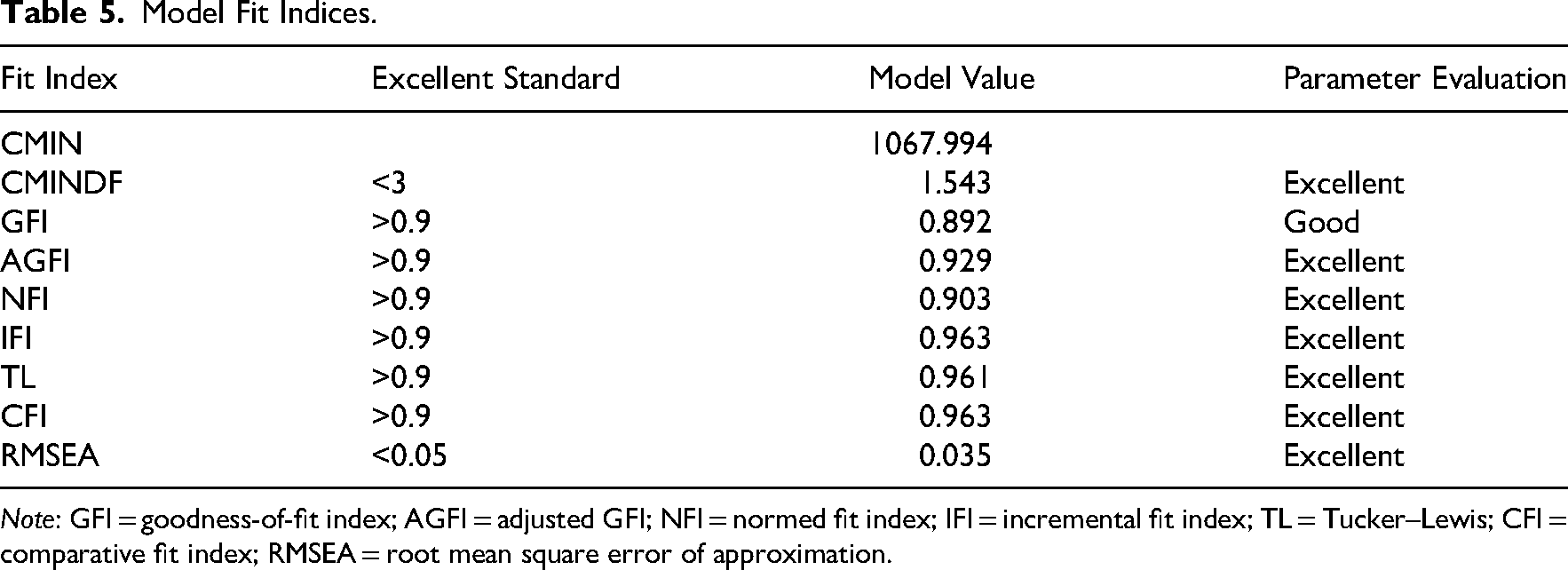
Note: GFI = goodness-of-fit index; AGFI = adjusted GFI; NFI = normed fit index; IFI = incremental fit index; TL = Tucker–Lewis; CFI = comparative fit index; RMSEA = root mean square error of approximation.
As shown in Table 5 and Figure 1, the absolute fit indices, incremental fit indices, and parsimonious fit indices of the CFA model generally meet the recommended thresholds, indicating that the model has good overall fit and is acceptable.
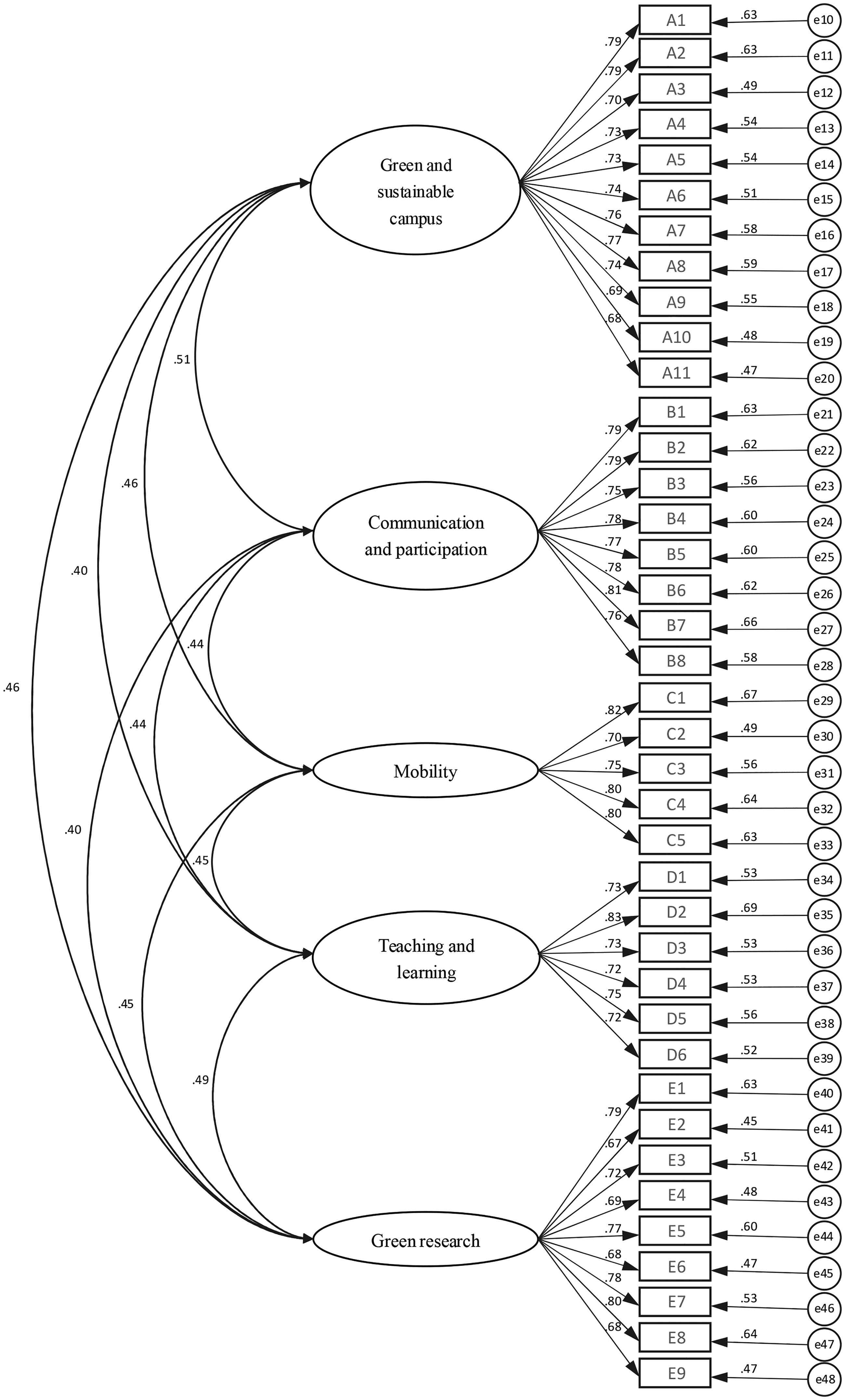
Confirmatory factor analysis.
Path Coefficients
As shown in Table 6, the standardized path coefficients between the observed variables and the latent variables are all above .500 and significant at the 1% level, indicating that each factor effectively explains the theoretical model proposed in this study and that the model demonstrates a good overall fit with the data. In addition, the CR and average variance extracted (AVE) were calculated using their respective formulas. The results show that the CR values for all factors exceed .700 and the AVE values are all above .500, indicating that the model meets the required levels of CR and convergent validity. This also suggests that the model has good internal quality.
Green Education Path Coefficients.
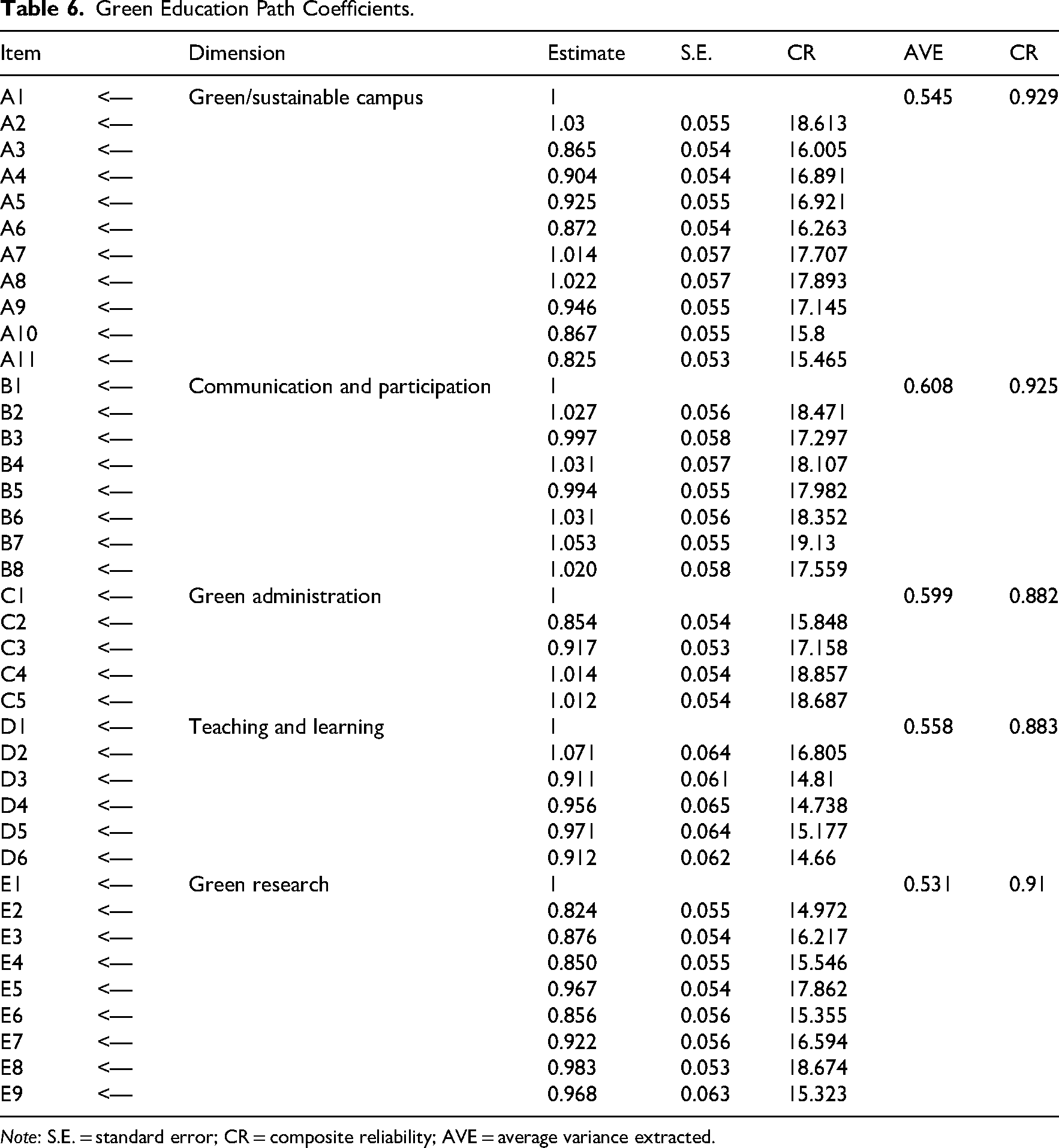
Note: S.E. = standard error; CR = composite reliability; AVE = average variance extracted.
Finally, discriminant validity was assessed using the AVE method recommended by Fornell. The results showed that all five dimensions: green/sustainable campus, communication and participation, green administration, teaching and learning, and green research, were significantly positively correlated (p < .05). Discriminant validity is typically evaluated by comparing the square root of the AVE for each construct with its correlations with other constructs. When the square root of the AVE for a given construct is greater than its correlation coefficients with other constructs, the scale is considered to have good discriminant validity. As shown in Table 7, all correlation coefficients among the constructs are smaller than their respective AVE square roots, indicating that the scale possesses good discriminant validity.
Discriminant Validity.
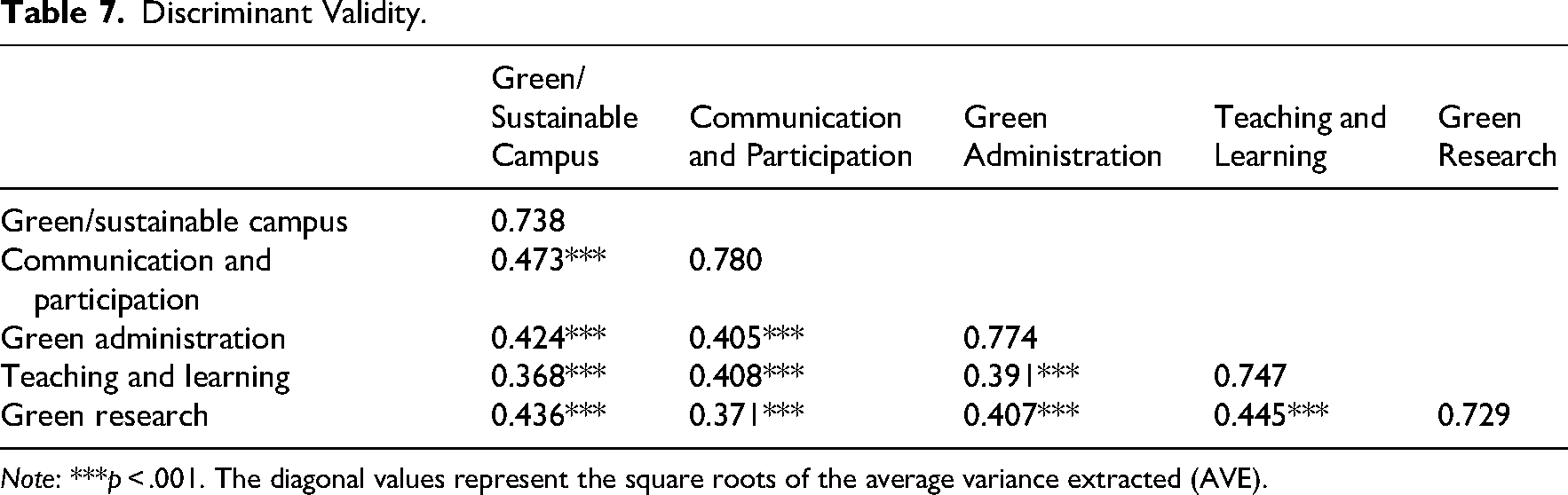
Note: ***p < .001. The diagonal values represent the square roots of the average variance extracted (AVE).
According to the statistical results, the model demonstrates acceptable levels of structural validity, CR, convergent validity, and discriminant validity, indicating that the model is acceptable. The development of the green education questionnaire for Chinese universities further confirms that green education in China consists of five dimensions: green/sustainable campus, communication and participation, green administration, teaching and learning, and green research, comprising a total of 39 items.
Discussion
Development of the Green Education Scale in China
With the introduction of the concept of green education into China, Chinese universities have begun constructing and developing green universities (Tian et al., 2024). However, as the content of green university development has not yet been fully standardized, the specific indicators are designed based on the principles of green education. Consequently, scholars hold differing views regarding the content of evaluation indicator systems. Research on constructing green education evaluation indicators in China has gradually increased since the introduction of the green education concept (Meng & Hao, 2024).
In this study, the development of the green education scale for Chinese universities was informed by the EUA framework, as well as domestic and international studies on green education measurement instruments. Taking into account China's national context, the final scale was developed through expert review and pilot testing. Data analysis and validation confirmed the scale's reliability and scientific rigor. The final green education scale comprises five dimensions: green/sustainable campus, communication and participation, green administration, teaching and learning, and green research, including a total of 39 items.
The development of this scale transforms abstract concepts into quantifiable and operational indicators. Existing green education research in China has limitations, as most prior studies were based on qualitative approaches (Tian et al., 2024). The indicators in the scale can serve as a checklist for universities to identify gaps in their green education implementation. By measuring these dimensions, universities can accurately assess their strengths and weaknesses in green/sustainable campus, communication and participation, green administration, teaching and learning, and green research, and take targeted corrective actions, thereby avoiding blind or ineffective practices.
Current Status of Green Education in Chinese Universities
This study categorizes green education in Chinese universities into five dimensions: green/sustainable campus, communication and participation, green administration, teaching and learning, and green research. A survey of faculty members from eight PRME-participating universities revealed that overall green education practices among Chinese university faculty are at an above-average level. This indicates that universities have achieved certain foundational results in green education, which is consistent with the findings of Yang et al. (2022). Different observations were noted across each dimension, reflecting variations in implementation and engagement.
From descriptive analysis, the green/sustainable campus dimension received the highest scores, indicating that university campus greening and resource recycling practices are well established. This may be attributed to the national policy support for sustainable development education under the “dual-carbon” targets, as well as universities’ increased attention to environmental education (Ding et al., 2025). The teaching and learning dimension suggests a high degree of integration between green concepts and green education curricula in Chinese universities, with appropriate green infrastructure on campus, reflecting a relatively good level of implementation, consistent with previous studies (Tian et al., 2024; Yang et al., 2022).
Implications
In recent years, UNESCO has been committed to promoting equitable, inclusive, and sustainable quality education across countries. Green education was initially conceptualized as a form of implicit green quality education (Figueiró et al., 2022), but through scholarly efforts, its connotation has gradually been enriched, and it has evolved into an internationally recognized explicit educational concept (Abo-Khalil, 2024). The goal of green education is to cultivate “green talents,” with green skills, knowledge, and attitudes as its core components.
To meet the needs of China's economic transformation, industrial restructuring, and the objectives of green education, integrating the concept of green development into the education system and broadening educational approaches can promote the green transformation and intrinsic development of Chinese education (Tian et al., 2024). University-level green education is a necessary condition for China's transition toward a green economy, green ecology, and green society (Yang et al., 2022). Educational transformation can be summarized as a shift from quantitative expansion to quality-oriented development, with key measures including reforming educational models, strengthening faculty capacity, optimizing academic structures, improving management, refining evaluation systems, and establishing robust safeguards (Yang et al., 2022).
However, despite the development of the green education concept promoted by UNESCO, academic research, particularly in China, remains limited (Tian et al., 2024). Building on recent international literature on green education and taking Chinese university faculty as the primary respondents, this study, informed by the EUA framework, categorizes green education in Chinese universities into five dimensions: green/sustainable campus, environmental education (communication and participation), green administration, teaching and learning, and green research. This scale provides a theoretical foundation for enriching and developing China's quality education theory.
Limitations and Recommendations
This study focuses on students and faculty from PRME-member universities. Although Chinese universities have increasingly recognized the importance of green education since 1997, only 32 institutions had joined PRME by 2025. Non-PRME universities also implement green education initiatives, but were not included in this study. Due to limitations in resources, networks, and geography, only eight PRME universities were sampled.
Future research could expand coverage by comparing PRME and non-PRME universities to explore differences in green education adoption. Samples could also be stratified by university ranking and region, as well as by instructor gender and teaching experience. Finally, this scale targets faculty; future studies could develop a complementary student-focused green education scale.
Supplemental Material
sj-pdf-1-bre-10.1177_25902547261421652 - Supplemental material for Development and Validation of a Green Education Scale for Chinese Universities
Supplemental material, sj-pdf-1-bre-10.1177_25902547261421652 for Development and Validation of a Green Education Scale for Chinese Universities by Quan Su, Yuan-Cheng Chang, Peng-Fei Chen, Huan Cao and Weixin Lin in Beijing International Review of Education
Footnotes

Ethical Approval
This study was conducted with the ethical approval of the Human Research Ethics Committee, Dhurakij Pundit University, Thailand (Approval/Reference No. DPUHREC 075/65NA). Informed consent was obtained from all participating students prior to their involvement. The confidentiality and anonymity of all participants have been rigorously protected throughout the research process; all data were collected and analyzed anonymously, with no personally identifiable information retained. The study's purpose and procedures were fully explained to participants, and their right to withdraw at any time without penalty was emphasized.
Funding
The authors received no financial support for the research, authorship, and/or publication of this article.
Declaration of Conflicting Interests
The authors declared no potential conflicts of interest with respect to the research, authorship, and/or publication of this article.
Supplemental Material
Supplemental material for this article is available online.
References
Supplementary Material
Please find the following supplemental material available below.
For Open Access articles published under a Creative Commons License, all supplemental material carries the same license as the article it is associated with.
For non-Open Access articles published, all supplemental material carries a non-exclusive license, and permission requests for re-use of supplemental material or any part of supplemental material shall be sent directly to the copyright owner as specified in the copyright notice associated with the article.
