




Abstract
Whilst previous studies have begun to provide information regarding the benefits of gratitude and hope in relation to sexual violence survivors (SVS), the current understanding of how this facilitates coping is still limited and subject to narrow methods of inquiry. The purpose of this study was to explore how gratitude and hope impacted the well-being of three SVS and three support staff at Chester Sexual Abuse Support Services (CSASS) and is an important area for exploration due to the additional adversity of the recent COVID-19 pandemic. Data from semi-structured interviews were analysed using interpretative phenomenological analysis revealing two superordinate themes directly related to gratitude and hope. Understanding strengths-based strategies adopted by SVS and those who support them is critical when considering times of adversity. We, therefore, highlight how our findings might be used in future research and practice contexts.
Introduction
Sexual violence (SV) is defined as any unwanted sexual act or activity including rape, sexual assault, sexual abuse and unwanted touching (Dosdale & Skarparis, 2020; Stripe, 2021). It is estimated that 20 per cent of women in England and Wales have experienced SV since the age of 16, with around 90 per cent of offences being committed by a person known to the victim (Flatley, 2018). According to the World Health Organization (WHO), almost a third (30 per cent) of all women in the United Kingdom have experienced some form of physical and/or SV in their lifetime. The negative psychological sequelae associated with SV is complex with over half of survivors suffering psychological as well as physical health-related consequences (Schroeder et al., 2018). This ranges from poor functioning and inability to form positive healthy relationships to extreme mental health conditions such as prolonged anxiety, depression, post-traumatic stress disorder (PTSD) and even suicidal ideation (Gregory et al., 2021; Risdale et al., 2020). Given the breadth and magnitude of impacts on those suffering the conditions of SV within the United Kingdom, and the disparity between the level of need and access to support, SV has recently received more attention with growing recognition for inadequacies in provision for this disregarded cohort (Little, 2021; Saleem et al., 2021).
Impact of the COVID-19 Pandemic
In 2020, the world was hit with a global pandemic, creating massive strains on almost every sector across the world (Arslan, 2020; Usher et al., 2020). The WHO declared COVID-19 to be a public health emergency in January 2020 and then a global pandemic by March 2020. Isolation measures were deemed imperative for stopping the spread of the infection, which had considerable consequences for people’s mental health due to issues such as social isolation, lack of social support and limited social activities causing increased cases of anxiety and depression (Bernabe-Valero et al., 2021; Gregory et al., 2021). Although important in controlling the virus, such restrictions posed further unfavourable consequences for vulnerable groups such as sexual violence survivors (SVS) (Kofman & Garfin, 2020); many of whom were forced to stay in dangerous environments or at the very least were unable to access the support compulsory for their own well-being (Dosdale & Skarparis, 2020; Schroeder et al., 2018). The consequences of lockdown restrictions imposed by the UK government are believed to be related to an increase in sexual and domestic violence, with at least 26 women and girls murdered in suspected domestic homicide cases (Taub & Bradley, 2020). Furthermore, restrictions failed to recognize the needs of SVS and the provision victim services provide (Sri et al., 2021), leaving SVS absent of social ties, socially, emotionally and practically isolated, often from friends and family who may have provided previous social support (Kofman & Garfin, 2020).
As a result, many services expected to see a rise in those accessing support; however, according to the Office for National Statistics, during the period between April and June 2020, there was a 24 per cent decrease in reported sexual offences in comparison to the previous year (Stripe, 2021). This trend was also replicated within local data, which saw a decline in the number of total contacts accessing support (CSASS Statistics, 2020). Data suggest that for some women experiencing intimate partner sexual violence (IPSV), access to support was restricted and risk increased.
While prevalence rates (not necessarily official reported rates) of IPSV were believed to increase during this time, the converse was noted in terms of stranger or acquaintance SV. Thus, the pandemic may have had the opposite effect and acted as a protective barrier against stranger or acquaintance SV (Dosdale & Skarparis, 2020). Indeed, further positive aspects of the pandemic witnessed a shift towards people experiencing feelings of gratitude and hope (Khosla & Kumar, 2021). It was found that even minor improvements in circumstances helped people generate more goal-oriented attitudes towards their own lives (Khosla & Kumar, 2021; Oettingen & Gollwitzer, 2002) particularly in terms of the value of relationships and social connections (Yilmdrim et al., 2021). Examination of SVS resilience during these difficult times is of great interest.
Positive Psychology, Character Strengths and Coping
Positive psychology, as a recognized science, was developed by Martin Seligman in the early 1990s (Seligman & Csikzentmihalyi, 2000), with its key constructs being linked throughout empirical work to increased health-related behaviour (Millstein et al., 2016) and improved subjective and psychological well-being (Peterson & Seligman, 2004). This has been further supported by scholars who have demonstrated that people with higher psychological well-being have been perceived to have more resilience when faced with adverse situations and adopt less maladaptive coping mechanisms (Syn & Lyubomirsky, 2009). They are also seen to suffer less from symptoms such as anxiety and depression (Philip & Cherian, 2020).
Much of the theory underpinning positive psychology’s scientific explanation of well-being stems from research on the power of 24 character strengths that have been considered theoretically important across different religions, cultures and traditions for over 3,000 years (Peterson & Seligman, 2004). Character strengths are inherent in all humans (Huber et al., 2020) and became a vastly recognized field of importance in the social sciences following the development of a psychometrical personality test known as the Values in Action (VIA) survey. Developed in the early 2000s, the survey was based on pivotal work on the nature of positive character (Peterson & Seligman, 2004). Each character’s strength has been described as both stable and malleable, encompassing its own benefits (Seligman & Csikzentmihalyi, 2000). However, some scholars believe that specific strengths are more strongly linked to satisfaction with life and well-being than others. Curiosity, love and zest have been directly associated with increased overall well-being (Peterson, 2006) whereas hope and gratitude have been linked closer to life satisfaction (Littman-Ovadia et al., 2016). There is a significant amount of research that looks at the correlation between character strengths and well-being. One of the most well-known studies is that of Park et al. (2004), which found that gratitude and hope were amongst the top five-character strengths most correlated with positive subjective well-being (Peterson & Park, 2009). This study has been replicated by other researchers across different cultures, reaching the same results. Even though there has been vast empirical research supporting the strength of gratitude and hope to both subjective and psychological well-being across a range of settings (Diener & Chan, 2011; Snyder, 2011), these studies have mostly been quantitative in nature and fail to accurately analyse any in-depth information to explain why this is so. There are even fewer studies that directly relate to the reasons why gratitude and hope are important factors in alleviating the negative impacts of adversity on SVS and those supporting them. It has, however, been suggested that certain strengths are more important for well-being within specific job roles or circumstances and this representation can be linked to those working in supporting roles. For example, healthcare professionals have been seen to be subject to increased demands, work-related pressure and burnout, specifically during the pandemic (Kachel et al., 2020). As a result, it suggests that strengths related to resilience and perseverance may be of more importance to their mental health and well-being (Dunn et al., 2008). Although SV support workers’ duties may slightly differ from those of healthcare workers the underlying principles of their job roles remain similar and many suffer from work-related stress, fatigue and burnout (Kadambi & Truscott, 2004), suggesting that the effects of certain strengths may have similar consequences. As the significant importance of gratitude and hope for coping through adversity is well documented throughout empirical research it was deemed important to explore what meaning these strengths had for this under-represented group. Similarly, as previously discussed, the impact of SV on survivors is not compounded by the physical trauma they have experienced (Pegram & Abbey, 2016). Moreover, psychological, or mental health conditions, such as anxiety and depression (Jina & Thomas, 2013; Seery, 2011) and PTSD, are especially prevalent (Dworkin, 2018). This assumes that although the initial reason for seeking help may be the direct experience of trauma, to enhance their overall well-being, there is a compendium of supplementary issues that also need to be addressed. As a result, although there are few studies looking directly at the impact of gratitude and hope for SVS, empirical research has studied the effects of character strengths on mental health conditions of other populations (Hausler et al., 2017; Park et al., 2004; Peterson et al., 2007; Schutte & Malouff, 2019), and therefore this research is useful when analysing the information for this marginalized population. However, these studies have mostly been quantitative in nature, suggesting that more qualitative analysis is needed to be able to fully understand the meaning of gratitude and hope for coping through adversity.
Furthermore, complex empirical research has suggested that character strengths afford the active benefit of providing a buffering effect to the detrimental impact of being subjected to adverse life events, by promoting post-traumatic character growth (Peterson & Seligman, 2003; Peterson et al., 2008; Schueller et al., 2015). As SVS have been through one adverse life event and are now dealing with the consequences of COVID-19, these results will be reflective of the coping experience they are having and the significance of gratitude and hope when dealing with additional adversity. As research suggests that individuals with higher levels of gratitude and hope have greater resilience to stress and illness and general increased happiness, this makes it a viable area to explore further (Billington et al., 2008). This is further supported by research specifically examining a person’s adjusting to, processing and coping with adversity (Snyder et al., 2000). In 2011, Diener and Chan discovered that hopeful people are happier people and that happy people do better on a whole range of metrics related to health and well-being, suggesting that they would be beneficial when considering the complex problems faced by SVS. Even so, as these studies used quantitative statistical data, they fail to explore the meanings of why these strengths have such an impact on positive well-being and in buffering the negative consequences of being subjected to adverse events. There is also a growing body of literature suggesting that support staff of SVS are likely to experience vicarious traumatization and secondary post-traumatic stress due to the work they undergo (Baird & Jenkins, 2003; Kadambi & Truscott, 2004; Samios et al., 2012). As a result, they are more likely to suffer from work-related exhaustion, stress and depression (Johnson & Hunter, 1997), which has been exacerbated by the pandemic. This affords this study another perspective on the significance of gratitude and hope for the support staff of SVS specifically when facing their own adverse life events. Due to the strong link between gratitude and hope for coping through adversity and promoting positive well-being, this qualitative research aims to report on a more detailed exploration of gratitude and hope from the perspective of SVS and those who support them. It specifically aims to:
Explore the meaning of gratitude as a coping strategy for SVS and those supporting them in times of adversity. Examine the effects of hope on the future well-being of SVS and those supporting them.
Methods
Design
Interpretative phenomenological analysis (IPA) was deemed most appropriate for the study of people’s experiences of SVS and those supporting them. IPA examines how people make sense and meaning of their personal experience. It does so in relation to their personal and social world, rather than attempting to develop an objective statement about the events themselves (Smith & Osborne, 2003, p. 53). IPA considers the examination of participants’ lived experience in a way that is expressed in their own terms (Smith et al., 2003). It aims to provide a richer analysis of the phenomena under investigation. It is very much an action-based method in which the researcher gets close to the participants’ own personal perspective through an interpretative inquiry, developing meaning from their narrative (Malcolm & Golsworthy, 2020). Subsequently, it makes it appropriate for the nature of the current study, as it aims to gain a personal account of the participants’ experiences of character strengths and coping in times of adversity. The study received the approval of the Liverpool John Moores Research Ethics Committee.
Gatekeeper Organization
The study was carried out at CSASS, a small, registered charity founded in the mid-1990s (CSASS, 2022). It is composed of a small team of paid business operational staff, supported by volunteers who hold a variety of roles, from counsellors to general support. CSASS is a women-led, feminist organization that realizes that SV is an abuse of power predominantly caused by gender inequality. Their aim is to provide a ‘safe space’ for women to be able to attend and access services to support them in their recovery.
The first author has volunteered with the organization for several years and through her own lived experiences of SV, has connections with some of the staff and survivors at CSASS. When engaging with research participants, the first author made clear her role was as a researcher, not a volunteer; this was provided both verbally and outlined in participant information sheets. The lived experience of the first author not only helped provide access to this population but also meant that rapport could be quickly developed between researcher and participant. Indeed, the research design allowed for both a reflexive examination of participant experience while also embracing the unique and idiosyncratic nature of the sample and the researchers’ own lived experience.
Participant Selection
IPA examines the experiences of small samples but in great detail to obtain ‘rich’ data from their unique experiences (Smith & Osborne, 2004). Our sample consisted of three front-line workers and three SVS. Support staff were purposively sampled we required them to have had working experience of over 6 months prior to the COVID-19 initial lockdown directly with survivors of SV. The SVS’s eligibility was determined by the gatekeeper organization to ensure their suitability for the study. This included them being current clients who had been with the service for a minimum of six months and whose mental health was reported as stable. Consent was acquired before the project commenced with each participant given the opportunity to withdraw at any given time. As the nature of the study was to explore participants’ experiences of gratitude and hope in relation to coping strategies during COVID-19, no further requirements were specified.
Materials
The VIA Character Strengths Questionnaire: The VIA character strengths questionnaire was developed in the early 2000s by a team of 55 scientists led by Peterson and Seligman. It is a free psychometrically validated personality test that takes less than 15 minutes to complete. It is a self-assessment survey that allows a person to identify their core character strengths and qualities, giving a detailed list of the proposed 24 strengths in order of those which are most prominent to the individual (Park et al., 2004). It is suggested that each of us have all 24 strengths; however, some are more prominent than others, and some may be left dormant. As a result, identifying this may assist a person with a greater understanding of how they behave and react in life, and what they may like to do to change this to achieve greater well-being (Niemiec & McGrath, 2019).
Interview Schedule: An interview schedule was developed to help the researchers explore participants’ experiences and the meanings they made to these experiences in relation to things they were grateful for, as well as their future hopes. Example questions include: Can you explain the strengths that you feel are important to you when dealing with/addressing stressful or difficult situations? What are you most looking forward to in the future?
Data Collection
Prior to interviews, participants were sent a link to the VIA online questionnaire to complete prior to the interview. This was not used as a measurement per se, but, moreover, a means to engage participants with the subject of character strengths. The results were emailed to each participant automatically, and results were used as an initial discussion point from which the interview discussion evolved.
Given the open-ended nature of the questions, the interview enabled a more conversational style of discussion as opposed to a structured interview. This process further enabled the discussion to centre upon participants’ own personal experiences and meanings attributed to their personal and social world (Smith et al., 2003). Due to COVID-19 restrictions, all interviews were conducted over ZOOM with participants given the opportunity to have their cameras on or off. Interviews lasted between 30 and 60 minutes. On completion, the audio recording of interviews was transcribed into a Word document, removing any identifiable information such as names, places, specific SV-related support needs and/or offences to ensure anonymity, and participants were offered a copy to check for accuracy.
Analysis
The analysis of data adhered to the IPA framework to ensure rigour and consistency. In the first instance, the researcher sought to understand the participants’ perceptions without judgement. Here, a two-stage process was used by reading and then rereading each transcript (Yardley, 2000). Further critical analysis was then developed using the remaining three steps of Osborne and Smith’s (1998) four-step process. Step 2 involved returning to each transcript to identify any emerging patterns or themes that arose organizing them tentatively to begin. At this stage, notes were made on the transcripts examining semantic context and language at an exploratory level, whilst maintaining a clear and open mind. This process increased familiarity with the transcripts regarding the context of the information provided and helped to identify the specific ways in which the participants talked about the subject (Smith et al., 2003). Step 3 developed from this by identifying emergent themes with a focus on defining them and identifying any key interrelationships, looking at the psychological content of the phenomenon being researched. Further notes were taken to reduce the amount of data whilst maintaining its complexity. The final stage looked to organize the shared themes into consistent and meaningful statements that encapsulate the essence and meaning of the participant’s own experiences but are grounded in their own words rather than looking for preconceived themes the researcher has deemed important.
Results
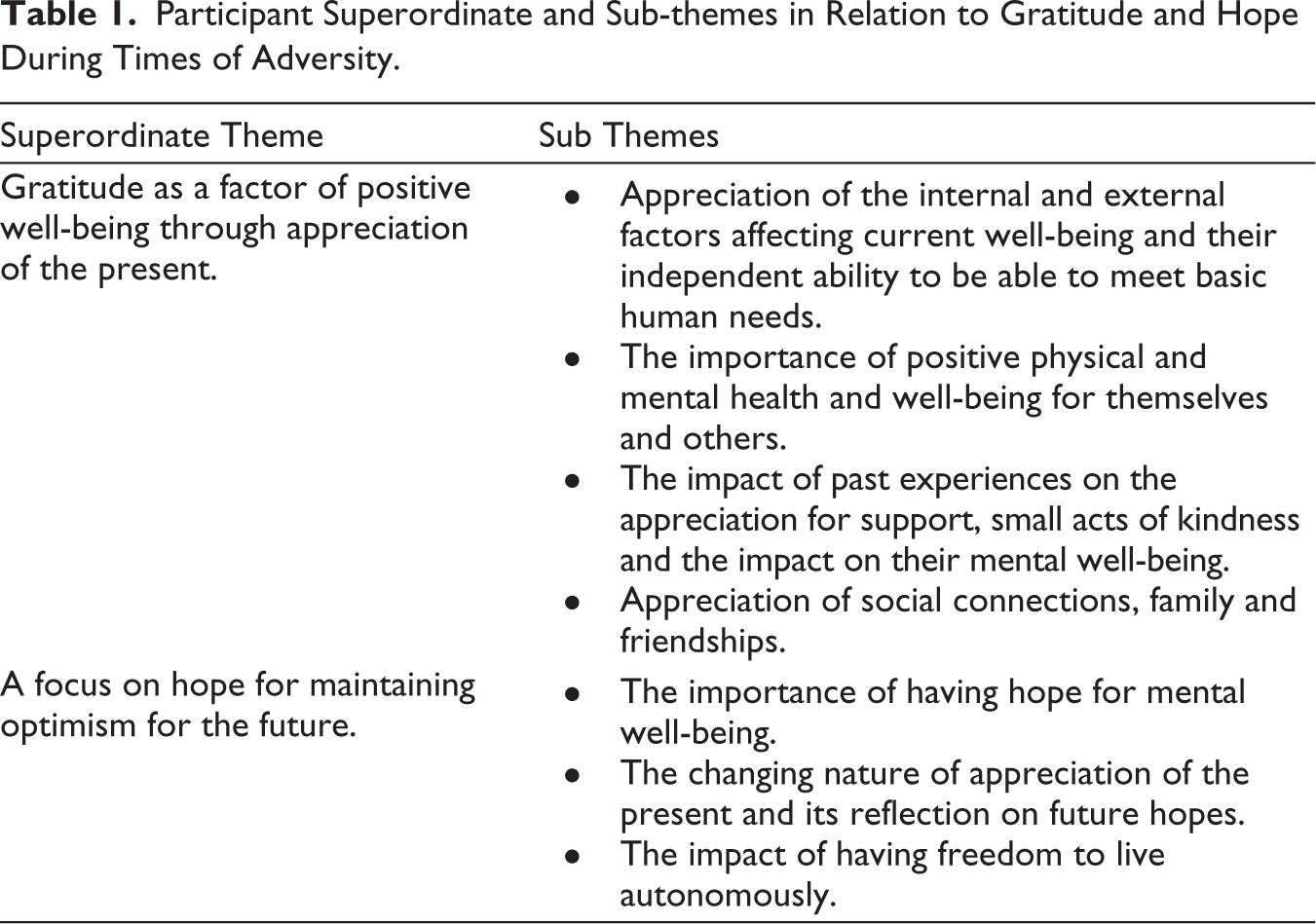
This study examined the importance of gratitude and hope in times of adversity for those impacted by SV. IPA of the six participants resulted in the identification of two superordinate themes: Gratitude as a factor of positive well-being through appreciation of the present, and a focus on hope for maintaining optimism for the future. These and their related sub-themes are detailed in Table 1, followed by an account of each of these.
Participant Superordinate and Sub-themes in Relation to Gratitude and Hope During Times of Adversity.
Gratitude as a Factor of Positive Well-being Through Appreciation of the Present
All six participants described their sense of appreciation and how this had changed due to the pandemic and its restrictions. This sense of gratitude appeared to directly link to the fact that participants’ current position was stable when compared to those directly affected by covid, or, by adverse situations outside of their control. In all cases, there was a definite shift towards being grateful for what they had and less focus on what they wanted, expected or thought they should have. It also appeared to be directly impacted by the people that they had been in contact with.
Appreciation of the Internal and External Factors Affecting Current Well-being and Their Independent Ability to Be Able to Meet Basic Human Needs
Despite some providing formal support roles within the organization, similarities across their lived experiences were found. There were, however, some interesting differences in the elements of gratitude that affected their current state of well-being. Support workers’ appreciation appeared to come more from a reflection of the fact they were able to support people whose lives they perceived to be less fortunate than their own. Indeed, their interpretation of their well-being appeared to be linked to how others may perceive them for this. For example, when Jo reflected on this point, she appeared almost ashamed to admit that she might not have been as grateful as she should as ‘the situation of some of the clients…(sighs)…you know…you should have a lot to be grateful for’. Jo expressed gratitude throughout the interview for her job, her home and her husband, but the use of ‘should be’ and her audible sigh suggests that although grateful, she may not express this appreciation enough. Kate furthers this stating, ‘I enjoy that I’m in a position where I can help and guide people, you know, grateful to be in a position to do that’. She reiterates being ‘in a position’ as important, perhaps an indication that once she was not but being able to help others has a positive impact on her own happiness and mental well-being.
Within the survivor’s experiences, their appreciation for their current position appeared to be more internally focused on their own ability to meet their basic human needs, Alice reported; ‘I know I can cope, and I can look after myself and her [daughter]. I have a place for us to be safe and healthy…I’m grateful to her for that’. Alices’ daughter was the catalyst for getting to a place of independence and suggests her being able to provide support for her daughter is something she appreciates and thus, contributes towards her own well-being. Jan, likewise, asserted, ‘looking after my boys, and knowing I can provide for them, makes me grateful regardless’. For both survivors and those supporting them, well-being is very much linked to having a benevolent attitude and being able to support others as opposed to a self-centred approach to caring for their own.
The Importance of Positive Physical and Mental Health and Well-being for Themselves and Others
Both groups of participants expressed appreciation for their own health and well-being (in the context of the pandemic) as well as that of their family and friends. This subtheme was evident across all six participants. Responses demonstrated that although isolation was a positive element for their physical health, it equally had a negative impact on their mental well-being. Beth, a survivor of SV who has both physical and mental health conditions, stated, ‘one of my friend’s cousins died of COVID, which is shit, and I am lucky I have not caught it, but I had self-isolate to feel safe for ages you know and that’s shit too’. Beth recognizes the importance of isolating for her health but expresses how challenging this isolation left her affecting her mental well-being. This point was also furthered by Scarlett, a support worker who retained her role throughout the pandemic. Scarlett extended appreciation for her family’s well-being during the pandemic stating, ‘there’s an awful lot to be grateful for. I’m grateful that nobody passed away, … although I haven’t been able to see them which makes me sad, I feel grateful they are OK’. But she equally recognized the need to keep herself safe against factors affecting her mental state. This internal conflict between one’s own health and safety, against the impact of this on their state of mental well-being was only further magnified due to the current pandemic.
The Impact of Past Experiences on the Appreciation for Support, Small Acts of Kindness, and the Impact on Their Mental Well-being.
The SV support workers showed an appreciation for the support they received in terms of the roles they were performing. Jo talked about how she lacks ‘confidence and I have terrible imposter syndrome (laughs), which comes from my past experiences (pause) but my new supervisor always reassures me and, you know that means everything’. Indeed, Kate echoes this this saying, ‘we’re creative and we work very well together….and so together we felt very supported and less stressed, and erm, well purposeful’. This type of reflection indicates the gratitude support workers feel following the support they received. While mostly related to job performance it does indicate a link between this type of support and well-being, indeed, through small acts of supervisory kindness and support, their health is improved. Interestingly, the SVS participants appeared to experience less appreciation from family, friends and places of formal support might be expected. Instead, they appeared to experience gratitude towards help from strangers. Alice stated, ‘Cos of COVID (sighs) and, um, when you, when you have a baby, people tend to like not care as much…So, when someone makes the effort, even if you don’t know them, it matters’. This may reflect the fact that as an SVS she experienced betrayal by people she trusted, understandably, Alice maintains distance even to those who ought to be emotionally and socially close to her (such as family and friends). The kindness of strangers is not equitable, as for Beth, her experiences of strangers have not been positive but have negatively impacted her mental health; in an effort to mask her disabilities, she would ‘try and go out with no crutches, no wheelchair, no nuthin as you wouldn’t get the shit I do’. Despite her efforts she has received abuse from passengers/strangers when she travels, but the consideration given to her by staff is encouraging ‘they know that for me to be really stressed out, somethins gone on, on somewhere, you know so they understand and try to help’.
Appreciation of Social Connections, Family and Friendships
All six participants pointed out the significance of positive relationships in their ability to cope in times of adversity. Interestingly, five of the six participants described fragmented family relationships and how this had negatively impacted their perception of the level of support they received from other sources. Jan stated that ‘not having much family except my boys means I have to be strong as I have to be there for them as don’t have family to support us’. Despite having her sons, this is not enough, she asserts how ‘they’re my life, my sons, but I’ve missed adult, you know, friend connections’. Feeling isolated from adult connection was felt by Alice who proclaimed, ‘I was on my own completely on my own with no support and it really affected my mental health’. Scarlett too, despite having ‘a big family, but with friends, when you’re single that’s a different kind of support’. The importance of connecting with others (outside of one’s own children) was vital for participants, particularly because without this, it negatively impacted their mental health. Indeed, even for those with a stable partnership, this was sometimes not sufficient and wider social connections were noted as important. Jo felt that even though she has a ‘husband, but, well you know he has to work, and (laughs) you have to see other people for support as well don’t you?’ Thus, having actual and perceived social support appears to act as a buffer against the pathological consequences of coping with adversity. For this unique sample of women in the context of CSASS, there was a greater focus on the significance of social connectedness with friends rather than family when perceiving support.
A Focus on Hope for Maintaining Optimism for the Future
This theme moves away from exploring how participants currently feel, towards consideration of their hopes for the future. All six participants expressed hope that their futures would change, some reflected optimism in life returning to some degree of normality, whereas some saw benefits during lockdowns and were hopeful these would remain. All six participants did, however, stress their main hope was to be given back their basic right of freedom of choice.
The Importance of Having Hope on Mental Well-being and Optimism
Heightened levels of hope, positive well-being and gratitude were clearly connected by Scarlett, who stated that she thought being ‘grateful is, is needed, because it provides light, and it provides hope, and without hope you could be in a dark place’. Reflective of her experience of SV, there was a time she felt she had less to be grateful for, which in turn impacted her mental well-being. Jan also lost hope when her ‘marriage broke up, I lost any sense of hope’. This removal of hope in a state of adversity is linked to a lack of optimism.
The Changing Nature of Appreciation on the Present and Its Reflection on Future Hopes
It is important to note that participants shared experiences of isolation during the pandemic lockdowns which indicate elements of post-traumatic growth and re-adaptation processes as participants begin to think and behave in a different way. The nature of SVS experiences appears to have influenced how they feel about the present, and the future and impacted how they adapted their lives. For example, Jo states, ‘we appreciate different things now, little things and, I dunno, don’t want to, or expect so much in the future’, and Jan relishes the changes stating that ‘I don’t want it to go back. Nature has flourished and people seem more considerate’. She goes on, ‘we should be appreciating small things more. Like focusing on beauty, which has always helped my anxiety’. Her description of the current adversity indicates growth and appreciation of the benefits she has felt personally and professionally.
The Impact of having Freedom to Live Autonomously
A resounding response throughout all six participants was the need to be given ‘freedom of choice’. Alice spoke passionately stating ‘it’s about choice you know, I’m sick of being told what’s good for me when I know that already’. Although referring to restrictions and issues specific to the pandemic, this very much resonates with participants’ past experiences of SV, where power and control over basic freedoms were prevalent. All participants described wanting to get back to ‘normal’ whether that be an ‘old or new normal’. Kate stated, ‘I look forward to having freedom in planning for the future. I now have hope that I can do this again’. Jo wants to meet ‘up with people, eating, drinking and hugging (laughs) yes I want the choice again’. All six expressed feelings that if this freedom of choice was taken away it would hugely impact their mental health and well-being. The impact of this was articulated by Scarlett felt ‘the hope that you had, has kind of just been smashed’. The narrative of all six participants suggests that control over their environment during the pandemic either directly (primary control) or indirectly through psychological adaptation (secondary control) enabled them to cope with the changes they faced in the present. This idea of freedom to live autonomously may be even more important to those who have experienced SV or relationship breakdowns. After their experiences of regaining control, having this removed again may resurface past trauma and negative experiences causing anxiety about the future.
Discussion
This study sought to examine the role of gratitude and hope for SVS and those supporting them when facing adversity. Much of the theory underpinning positive psychology has stemmed from research around the power of character strengths in coping through times of difficulty (Peterson & Seligman, 2004), with a focus on the importance of gratitude and hope (Diener & Chan, 2011; Snyder, 2011). The consequences for survivors of SV are pervasive and extensive, yet little is understood of the extent to which character strengths might assist in buffering or helping to develop resilience in SVS and those who support them, particularly when facing additional periods of adversity. This study did not originally aim to consider this phenomenon through the lens of a global pandemic, however, with some irony, government lockdowns and of course the social and health consequences of the COVID-19 pandemic added an interesting layer of adversity to explore.
Findings from this study suggest that both gratitude and hope play a significant role in enhancing and maintaining optimism and well-being when coping with adverse life events. Interestingly, it finds that gratitude has strong links to having a benevolent attitude and that the ability to be able to support others further enhances feelings of gratitude towards one’s own life. This was noted through both practical supports, in providing for basic human needs, and, in relation to the emotional support to others. In addition, the notion that having the freedom to live autonomously played a significant role concerning participants’ hopes for the future. It appeared that although participants had various responses to trauma, adversity and how they would like their future to look, they all encompassed the same hope that they would have the freedom to be able to make that choice for themselves. This theme of autonomy and freedom dominated and was perhaps heightened by the imposed lockdown restrictions. Restrictions meant certain freedoms were removed and detrimental to mental health and well-being. However, SV populations tend to be, by their very nature, survivors of trauma (Pyles, 2008; Robinson et al., 2017; Williamson, 2020) and often marginalized populations; thus, freedom to choose and access professional services is of critical importance; any context of restriction and control imposed on SVS (even when for personal health) must be recognized as synonymous to past experiences. Thus, a strong desire not to conform understandably resonates.
Utilizing the VIA survey as an initial introduction and context setting for participants in this study, prior to the interview, enabled participants to consider how gratitude and hope played a role in life satisfaction throughout the participants’ lives. According to Peterson and Seligman (2003), people often describe experiencing growth and positive change despite personal struggles and adversity. Indeed, people report when specifically focusing on gratitude and hope, a positive trajectory following trauma or when facing adversity, can be realized and post-traumatic growth can be achieved (Chen et al., 2021; Park & Al, 2006; Peterson & Seligman, 2003; Peterson et al., 2008; Schueller et al., 2015). This is reflected in several empirical studies within the field, from coping with daily difficulties at work (Littman-Ovadia et al., 2016) to extreme adversity such as a worldwide pandemic (Rashid & McGrath, 2020).
Hope particularly appeared to have a significant impact on participants’ optimism, in this study, for their future. Khosla and Kumar (2021) also found that even having the slightest hope towards the future leads people to feel more optimistic, thus, improving their well-being. Fredrickson (2001) found that hope served as a buffer; it provides resilience in stressful situations, when people are optimistic and hopeful that things will turn out well in the future. While participants in our study stressed the importance of hope for their future well-being, they did express caution. The threat of expectations and hopes not being realized had a negative effect on their current well-being, meaning hope alone is not sufficient (Greenway et al., 2016).
The link between gratitude and positive mental well-being was further interesting finding in this study which was also found in a recent study by Feng and Yin (2021). They found gratitude increased hope amongst front-line medical staff, which, in turn, acted as a buffer against mental health conditions such as stress and depression. Interestingly, participants in this study appeared to have a benevolent attitude with respect to their feelings of gratitude and expressed their gratitude at helping others, whether this be as a professional or personal response. Appreciating the ability to provide care for others was related to their own well-being. Indeed, Dosdale and Skarporis (2020) found that helping others increases well-being and gratitude for one’s own life. Although participants were grateful for their current position, this was not a direct reflection of the family connections they had.
Social connectedness is important to maintaining positive mental well-being and coping in times of adversity (Nitschke et al., 2020). Larger or wider social networks are seen to provide greater means of support. Interestingly, the participants in this study were more inclined to describe gratitude for social support from friends or strangers, rather than immediate family. This may be a response to previous interpersonal experiences encountered where family support networks were strained. Participants’ who were parents had taken on the role of being the supportive figure in their children’s lives and the ability to be able to do so left them with feelings of gratitude. Support workers had a similar outlook in terms of those they supported. The need to focus on their own well-being to maintain the well-being of others may also reflect a lack of support they have felt in the past. A lack of social connectedness causes increased mental health conditions and throughout the pandemic with the need to socially isolate (Sacco et al., 2020) this requirement was perhaps experienced more negatively for people with experiences of SV or intimate partner violence (Sweet, 2019).
Indeed, the lockdown requirements because of the pandemic likely resurfaced past trauma for many SVS (Hesse, 2002; Khosla & Kumar, 2021). This type of re-traumatization or vicarious traumatization for support staff (Williamson et al., 2020) was reported as a significant factor affecting well-being of all participants.
Conclusion
This small-scale qualitative study provides a unique lens into the experiences of SVS and those supporting them, during the adversities of the COVID-19 pandemic; it shines a light on the role of character strengths during adversity. We found hope had a significant impact on participants’ sense of well-being and that was strongly related to their desire to live autonomously. Despite facing historic and current adversity, all six participants expressed hope for greater future social connections as well as high levels of gratitude towards their current position. The focus of appreciation differed slightly between participants; however, having a benevolent attitude appeared important throughout. Findings of this research support the notion that gratitude and hope are important character strengths for coping in times of adversity (Niemiec, 2020; Park et al., 2005; Peterson & Seligman, 2003). Indeed, during periods of adversity, such as the COVID-19 pandemic, participants embraced the opportunity to self-reflect and consider what was important to them, and view their lives in a positive and strengths-based manner. Arguably, each of the six participants demonstrated signs of post-traumatic growth.
Limitations
One limitation of this work was the focus on COVID-19, understandably this dominated the lives of all participants and the research team, it is therefore likely that this context will have to some extent played a role in both meaning made by participants as well as that of the researcher during periods of analysis and interpretation. In addition, the lead author was known to participants in her capacity as a volunteer at CSASS, despite efforts to maintain a ‘researcher’ identity, we recognize participants may not have accepted this, and thus, responses and interactions may have been shaped by previous relationships and experiences. Finally, to mitigate and reduce the risk of distress, we chose not to pursue detailed accounts of women’s SV experiences. While this was a sound ethical decision we stand by, under different parameters in which higher levels of support could have been provided (for example, interviews being held face to face at the women’s centre) some focus on these experiences might strengthen this study.
Future Research
Increasing our knowledge of the role of character strengths in women’s recovery and post-traumatic growth from SV experiences is an interesting and important avenue worthy of further exploration. One of the outcomes of understanding the role of character strengths might be for services such as CSASS to design and develop interventions or treatment that help foster and promote both the understanding and use of character strengths, when SVS and those who support survivors, face periods of adversity to help promote health and well-being. Likewise, future research could seek to examine the meaning behind gratitude and hope in wider populations, in particular young people who experience SV or indeed male survivors. By doing so, positive psychological interventions encompassing gratitude and hope in the context of solution-focused therapy could be further explored as an option for broader populations. Additionally, as the study only considered coping with adversity in the context of COVID-19 due to the pandemic, other stress indicators could be considered to see whether the same cohort felt gratitude and hope were as meaningful in different contexts.
Footnotes
Data Availability
Due to the sensitive nature of the data pertaining to accounts from survivors of sexual violence, permission to make data freely available was not sought from participants, data cannot be made publicly or freely available.
Declaration of Conflicting Interests
The authors declared no potential conflicts of interest with respect to the research, authorship and/or publication of this article.
Funding
The authors received no financial support for the research, authorship and/or publication of this article.