



Abstract
The Shiksha Knowledge Solutions case study highlights the entrepreneurial journey of the chief executive officer. Sam and his dilemma about whether to serve the local Indian market or go international by entering the Middle East and North Africa region to offer its services for education and training business. The company is a turnkey solution provider in India that provides computer-aided tools and is a one-stop solution for the kindergarten to intermediate (K-12) segment. The company also imparted training to teachers before initiating contracts with client schools. This case study discussed how this startup was clueless about the next move and lacked a suitable strategy for entering an international market.
Keywords
Background
It was a sunny day on 13 July 2007, when Sam visited a nearby school to attend a parents–teachers’ Meeting alongside his nephew. He observed that college management was struggling with academic pressures regarding examination-related data management, as the school was not using any software to manage administrative/academic work. He then managed to interact with the school principal, Dr David. He learned that school staff had to work very hard to design tutorials, prepare examinations, manage students’ records, manage admission-related data, etc., which led to a lot of paperwork that was like a stress booster for school staff. Sam also observed that David had good technical knowledge, and he told him about his idea to develop a new product which would be turnkey solutions (computer-based teaching and learning, administrative software) for the education and training business (ETB) in the K-12 segment. This instance was the turning point for Sam, and he then conceptualized the idea of providing turnkey solutions for the schools, and this is the beginning of ‘Shiksha Knowledge Solutions’.
David liked the idea and advised Sam to offer a free demo version, and if he found it useful, he would give references to those schools run by Christian missionary dioceses. Sam realized that numerous different schools were confronting similar challenges, and this gave him the idea of starting his business as an educational service provider of computer-based tutorials in the ETB. This was an incredible business opportunity for Sam in the education sector, with a particular focus on the kindergarten to intermediate (K-12) segment. Just after finishing his master’s degree in business management, Sam, the eldest member of his middle-class family, was forced to search for a job opportunity to support his family.
Level of Competition in the Education and Training Business
Sam’s decision to start a business was too risky, as he would lose a fixed source of income from his current job. He approached a consultant for guidance, and the consultant did a market analysis tool known as Porter’s five forces. The tool has five elements, namely (a) threat of new entrants, (b) bargaining power of suppliers, (c) bargaining power of buyers, (d) threat of substitute products or services and (e) rivalry among existing competitors. After the market analysis, the consultant advised Sam that the competition in the ETB business was very high and the schools from K-12 segments wanted to buy ETB product offerings at lower prices. Sam finally decided to start his own company named ‘Shiksha Knowledge Solutions’ in 2008 with an initial investment of Indian Rupee (INR) 1,000,000 (approx. USD 20, 618—the currency exchange rate in 2008 against USD to INR was 48.50).
Initially, he confronted difficulties in entering the education sector because of the presence of information technology (IT) giants like the National Institute of Information Technology (NIIT), Educomp, Everon and other ETB industry players who were already present and enjoying the business. So, Sam collaborated with NIIT as a franchise to get entry into the schools and received an initial easy entry into his dream world. He started rendering services to ETB on behalf of the parent company for the K-12 segment and generated revenue. Still, soon, he realized a large size of its profit was being shared with NIIT, and at the end of the day, he did not know what he was anticipating. At that point, he decided to go on his own, and very soon, his business reached a national presence. The company had grown tremendously with Sam at its helm, leveraging his expertise in IT and educational services, and with his proficiency in spearheading the team through unique, challenging situations, he brought the company towards success. Immensely happy with the rewarding development, Sam started focusing on an exclusive solution for the K-12 segment, where this company had introduced diverse technologies like a school management app, a principal desk and a digital platform that catered to all stakeholders of the school along with full-cycle services, starting from product conceptualization to implementation and support. Firmly believing in growing a proactive and systematic approach, his company achieved client satisfaction by implementing thoughtful actions like asking the right questions to clients and paying attention to them to resolve problems quickly.
Company Profile
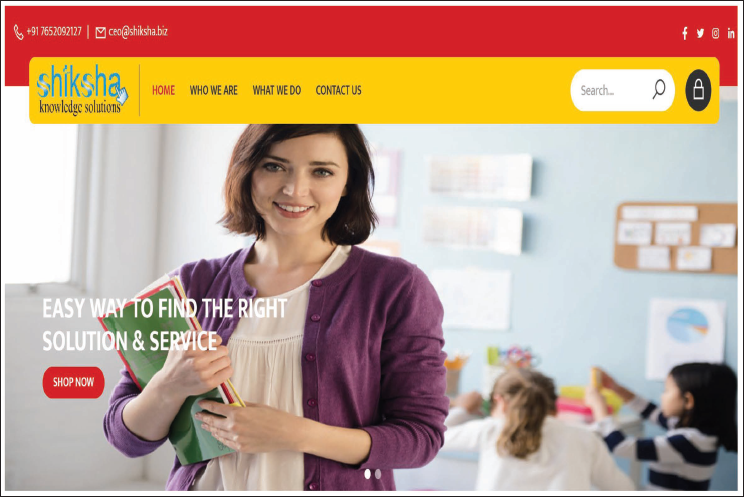
Shiksha Knowledge Solutions is a leading school & IT service provider in Lucknow, India, started in 2008, providing full-cycle services, including implementation and product development. The company has been constantly looking for new technologies that make solutions even more valuable and exciting, using its proven experience by delivering services to more than 200 clients nationwide. Figure 1 depicts the company website screenshot, which shows all information related to the company.
Shiksha Knowledge Solutions also provides turnkey computer teaching and learning solutions for the K-12 segment, Shiksha enterprise resource planning (ERP), Smart class and many other products. The company is among the few education and training business companies that have effectively combined conventional classroom training with the latest training and methodologies like computer-based teaching (CBT).
Product Offerings
The product range for the K-12 segment involved Shiksha ERP, Shiksha education management systems (EMS), SMART class,
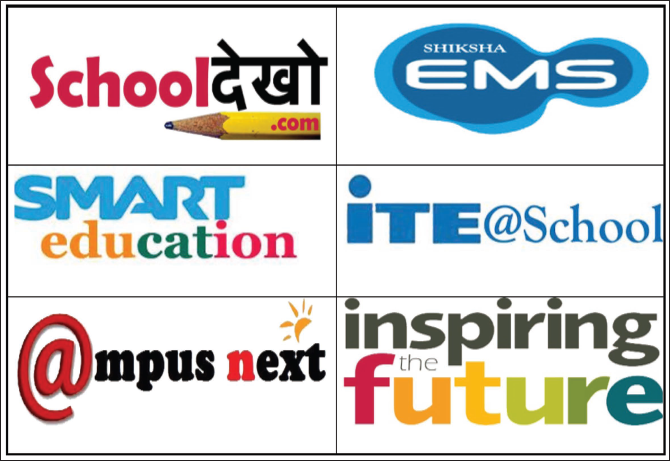
Key product offerings were as stated:
The Dilemma
All was going well until 2019, but Sam realized that it was the right time to expand the business of Shiksha Knowledge Solutions to attract new customers and retain existing ones; otherwise, its business would be confined to the local market. The key customers of the company were schools from the kindergarten to intermediate (K-12) segment in Uttar Pradesh, such as City Montessori School, Christ Church College, Emma Thompson School, Mary Lucas School and Lucknow Christian College, amongst others. Shiksha Knowledge Solutions provides turnkey solutions for schools, with product offerings ranging from smart education web portal services, EMS, teacher’s manpower recourses, computer-based tutorials, hardware, software and school ERP, and school students were the end users of their product offerings. The company was targeting only private schools, but the plan was to target new schools from the public sector as well as schools run by Christian missionary dioceses. Sam started working towards this plan to achieve the company’s vision and the aspiration to build a leading company in the K-12 segment with a presence in the local and international markets. However, he noticed that it needed much more work than he had imagined, and the amount of work stopped him from living a healthy lifestyle. Other than this, some relevant issues came on the track, like financial and technological issues and maintaining the customer base and the right person for the right job. He was engaged with the day-to-day marketing activities instead of working on the marketing plan developed by its consultant.
Meanwhile, the outbreak of the COVID-19 pandemic disrupted the education industry globally and resulted in creating business opportunities for the ETB industry. Sam thought this was not enough for his business and started planning his next move to go on the road ahead. Shiksha Knowledge Solutions’ business suffered a lot because of the absence of suitable marketing strategies. To overcome the ongoing business challenges, Sam took the assistance of a marketing expert who analysed Shiksha Knowledge Solutions using the SWOT analysis technique which was used to identify strengths (S), weaknesses (W), opportunities (O) and threats (T) for a business. The marketing expert observed that the company’s biggest weaknesses were the limited market presence with stiff competition in the local market and the lack of suitable marketing strategies. He further added that the company had to develop a plan to enter the international markets, as the local market was highly competitive and seemed like a threat to the business. The company was among the leading providers of turnkey computer teaching and learning solutions for the K-12 segment with more than a decade of experience of serving over 200 clients in the local market, including several prestigious schools. A company with these strengths could think of entering an international market. At that point, after getting the market expert’s guidance, Sam decided to move to the international market and started developing his company’s distributor network in the United Arab Emirates (UAE). This move helped him understand the needs and wants of target customers of the K-12 segment in the UAE market with its presence through the distributor network.
The Road Ahead
Considering the COVID-19 epidemic and the adoption of online education globally, Sam thought to infuse huge capital into product development, international collaboration and international market study. However, the apprehension was that the existing big players in the education sector might copy his business idea and might spoil his chances to make the big difference that he earnestly worked for a decade. However, the demographics of the Middle East and North Africa (MENA) region were young with a digital upbringing. There was an increased digital adoption, and income levels were moderate in some areas and very high in countries, such as the United Arab Emirates (UAE), Qatar, Bahrain, Kuwait, etc. Moreover, MENA was at a sweet junction of development in many respects. The MENA region had much potential for the ETB industry.
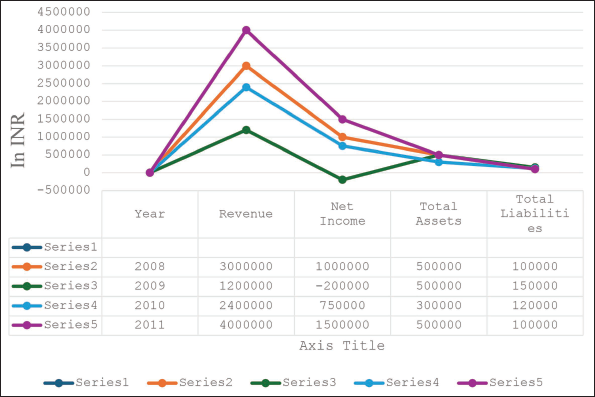
Table 1 and Figure 3 depict the company’s financial data, revealing the financial performance in the initial phases of its inception between 2008 and 2011. However, during the COVID-19 pandemic, Shiksha appointed its distributors in the UAE market based on the marketing expert’s guidance and started selling its product offerings remotely. The company’s vision was to go international by registering its physical presence in the MENA region. Sam might be able to augment his business by entering this market, but he was confronted with a decision and needed to be more knowledgeable. Whether to concentrate on serving the local market by serving the international market remotely or expand internationally with its physical presence by entering the MENA region was a big question for Sam, and he was clueless about his next move.
Shiksha Financial Metrics Summary (in INR).

Shiksha Financial Performance Data Provided by the Chief Executive Officer.
Footnotes
Acknowledgements
The authors would like to thank all anonymous reviewers and the journal editorial team for their substantial contributions to making this work impactful.
Data Availability
All data sources used to support the results of this study are mentioned in this case study.
Declaration of Conflicting Interests
The authors declared no potential conflicts of interest with respect to the research, authorship and/or publication of this article.
Funding
The authors received no financial support for the research, authorship and/or publication of this article.
